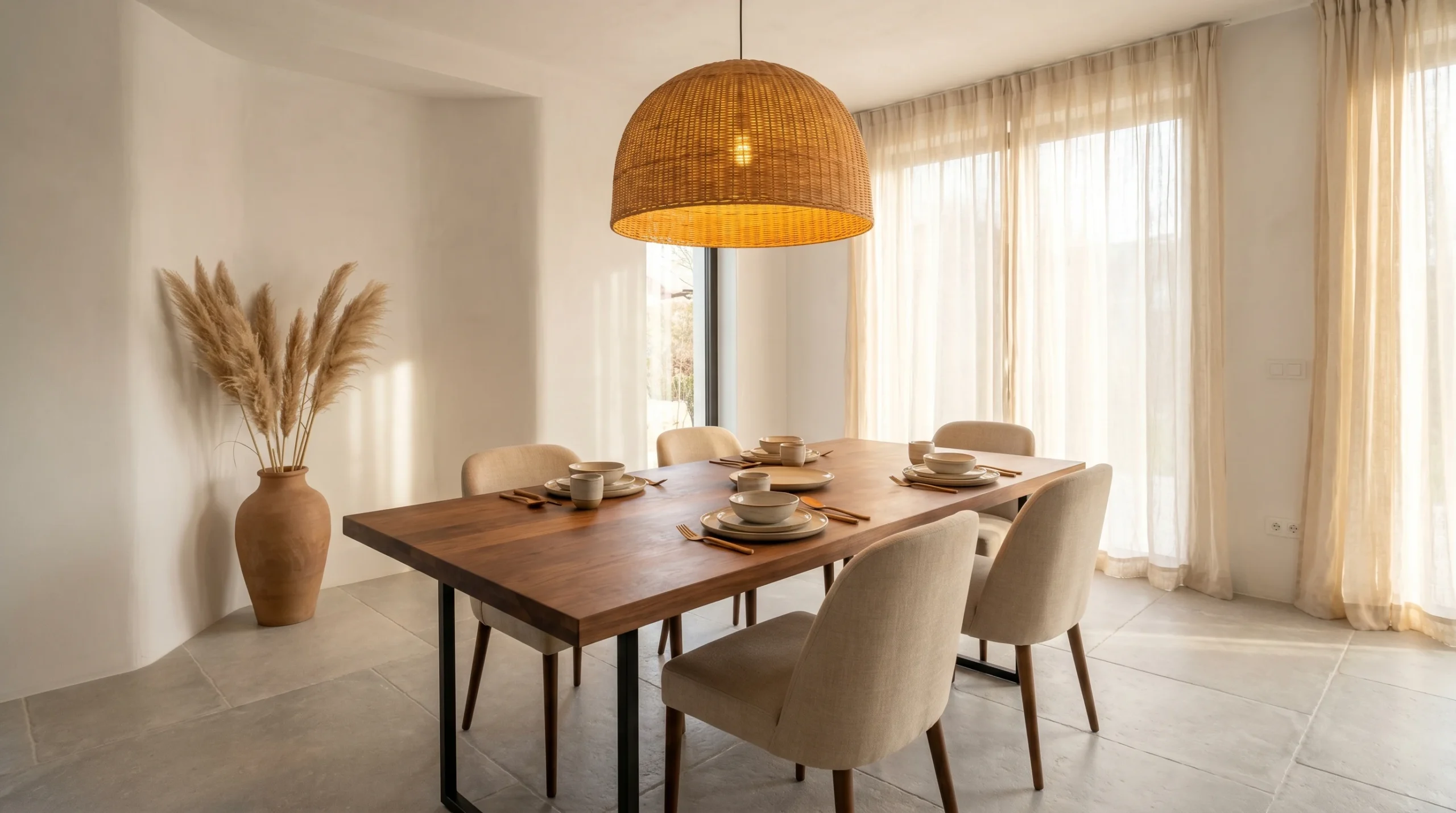
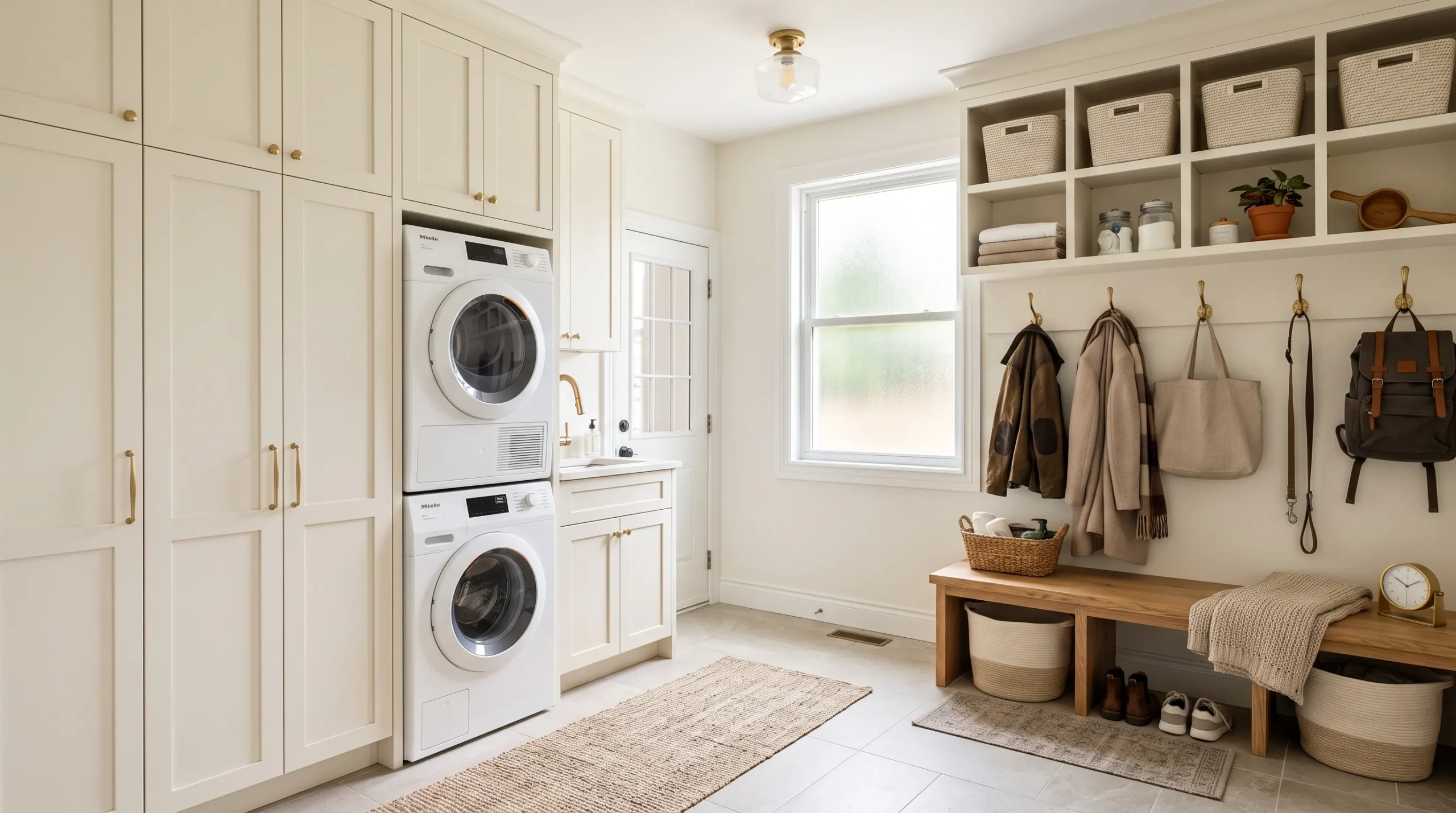
Earthy Cottage Decorating
🏠 21 Real Ideas
⏱ Quick Read
🔥 Always Trending
21 Earthy Cottage Decorating Ideas
That Transform Your Home Into a Calm and Cozy Retreat
There is a certain kind of home that wraps around you the moment you step inside. It smells like beeswax and dried flowers, feels like soft linen against bare feet, and looks like it has always been there. These earthy cottage decorating ideas are exactly that kind of comfort made visible. They pull from nature, from handmade things, from slow living and genuine warmth.
In this article you will find 21 ideas that cover every room and every budget. Whether you are starting from scratch or want to refresh what you already have, these ideas will help you build a home that feels grounded, personal, and beautifully calm. Save this post before you scroll because you will want to come back to it.
01
Stone Fireplace Focal Points
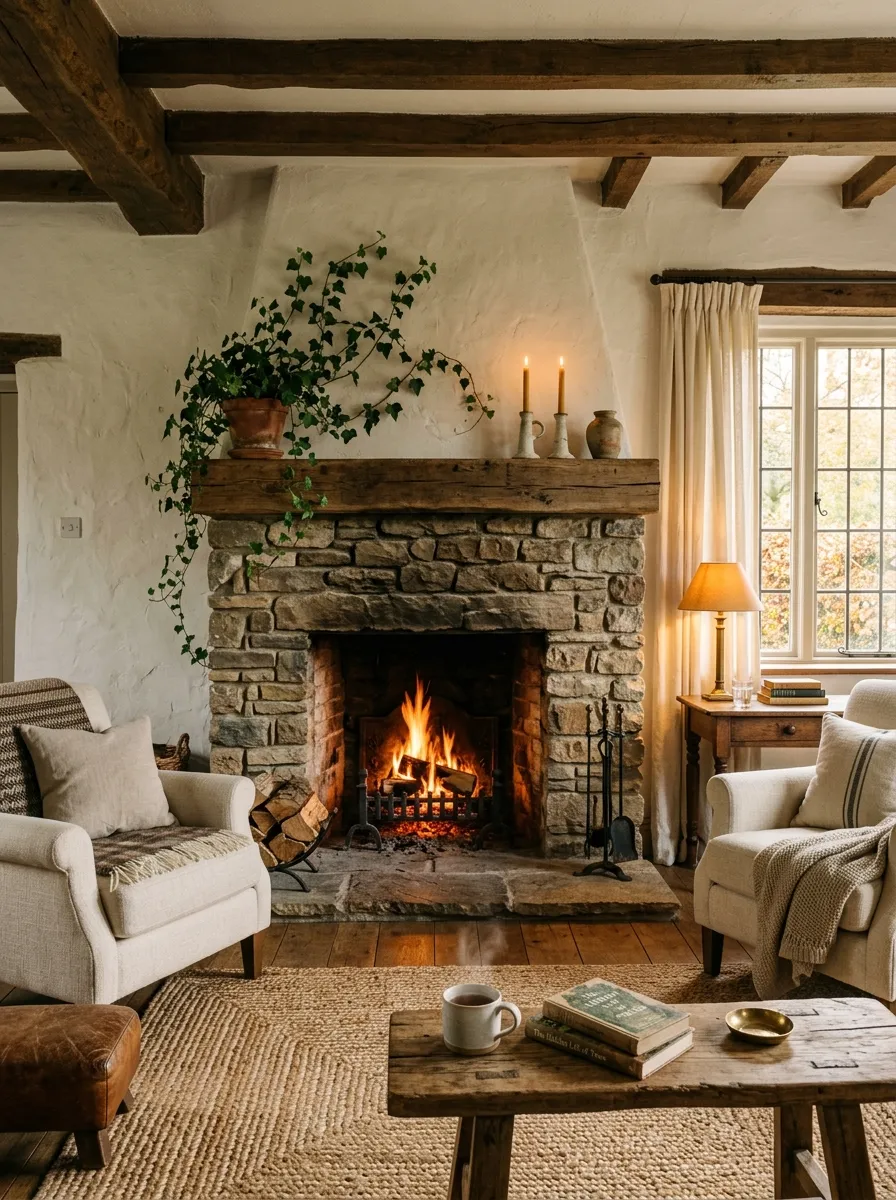
A stone fireplace does not just heat a room. It changes the entire emotional register of a space, pulling every piece of furniture toward it like a gathering point. In earthy cottage interior design, a stacked stone or fieldstone surround is the most powerful single move you can make toward creating that grounded, timeless feeling you are after. If you want to see how a well designed fireplace can completely transform a living space, the options go far beyond the cottage style alone.
The magic comes from what surrounds the hearth. Keep the mantel simple: two or three ceramic objects, a trailing plant, and a single framed piece of pressed botanicals. Pair rough stone with the softest textiles you own. The contrast between hard and soft is what makes this look feel complete rather than cold.
The Key: Let the stone be the star. Keep everything around the fireplace in the same warm neutral family so the texture reads clearly.
02
Warm Neutral Wall Colors
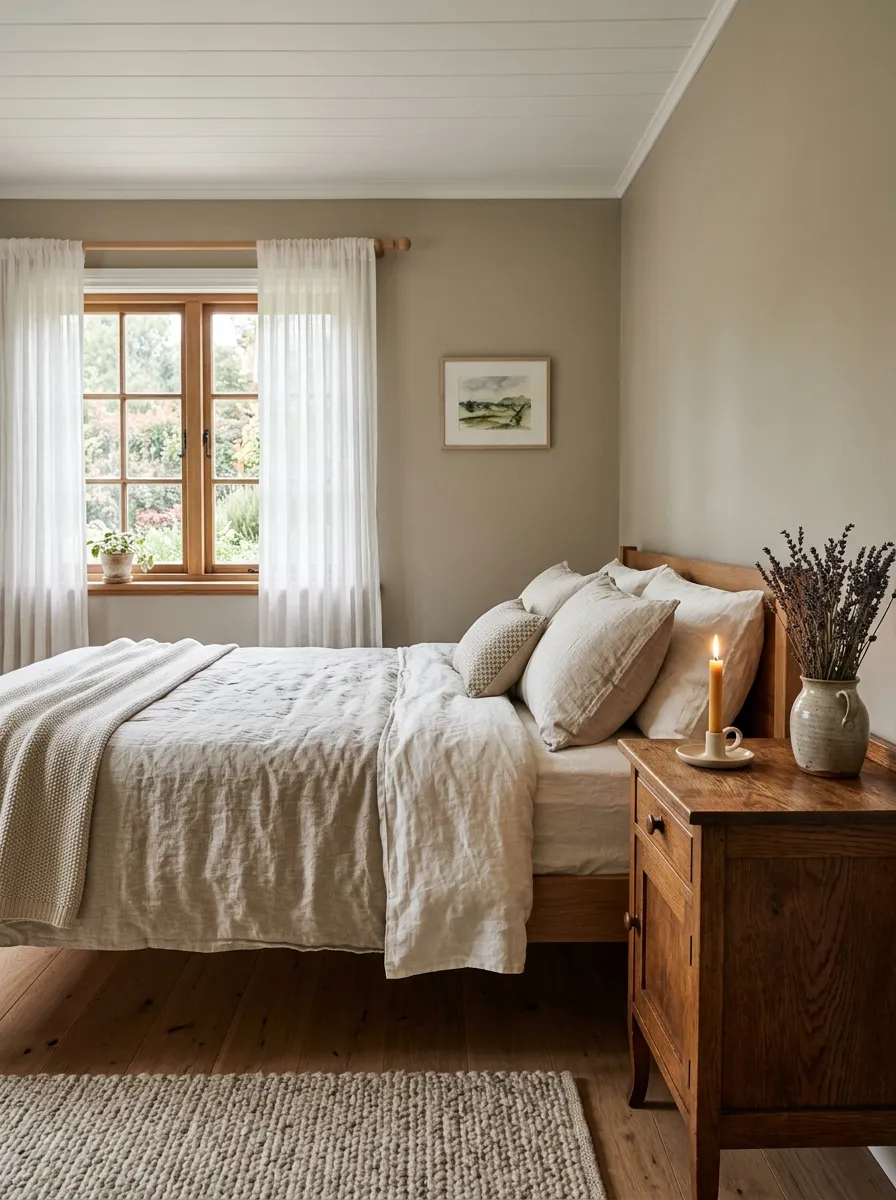
The color on your walls is the first thing that sets the emotional tone of a room, and in cozy cottage decorating, warm neutrals do the heavy lifting. Think soft clay, raw linen, aged parchment, and greige tones with just enough warmth to glow in natural light. These shades do not fight with anything. They let your textures, your furniture, and your plants take center stage.
I have noticed that the biggest mistake people make is choosing a neutral that reads cool or gray in natural light. Always test paint swatches in the actual room at different times of day. A tone that looks golden at noon can feel washed out by evening. Warm undertones like amber, pink, or yellow keep a cottage wall looking alive no matter the hour.
The Key: The best cottage wall color is the one that makes your wooden furniture look warmer and your textiles look softer. Test before committing.
03
Woven Texture Layering
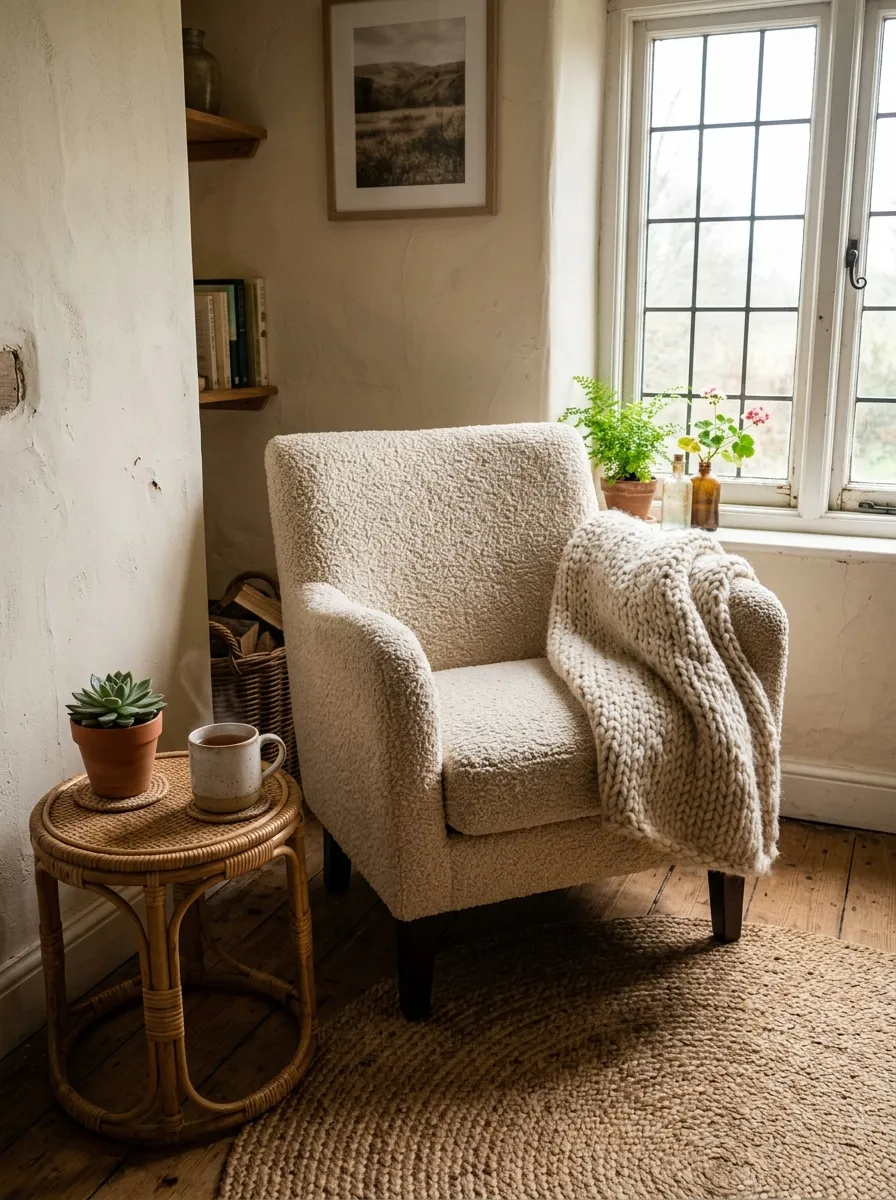
Texture is what separates a flat, lifeless neutral room from a space that genuinely feels like home. In rustic cottage style, the rule is simple: layer at least four different woven or natural materials in every seating area. Think jute under your feet, linen on your sofa, boucle on your accent chair, and wool draped over the arm. Each material catches light differently and adds a layer of sensory richness that no paint color can replicate.
The trick is staying within the same warm tonal family while varying the weave and weight. A chunky hand knotted rug pairs beautifully with a fine linen throw because they share earthy tone but differ completely in texture. You can also mix machine made and handmade pieces freely. What matters is that every surface has something interesting to touch and look at from across the room.
The Key: Four textures minimum per seating area: one underfoot, one on the sofa, one draped, and one structural like rattan or wicker.
04
Sage Green Cabinet Kitchens
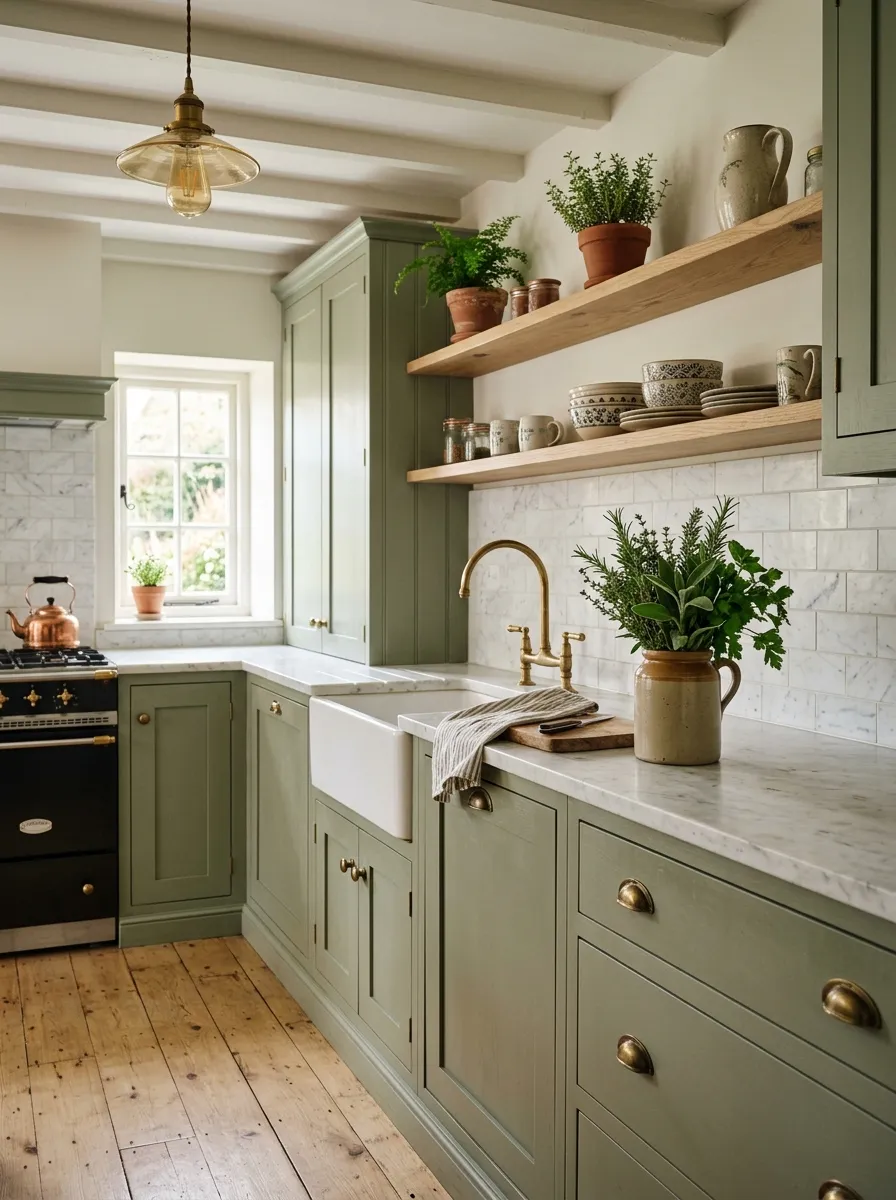
Few color choices in the home are as universally flattering as sage green cabinetry. In a cottage home decor ideas context, sage green sits exactly at the crossroads of nature inspired and timeless. It reads as neither too bold nor too safe. It works morning and evening. It pairs beautifully with brass, with aged copper, with raw wood, and with every neutral tone from cream to warm white to sandy beige.
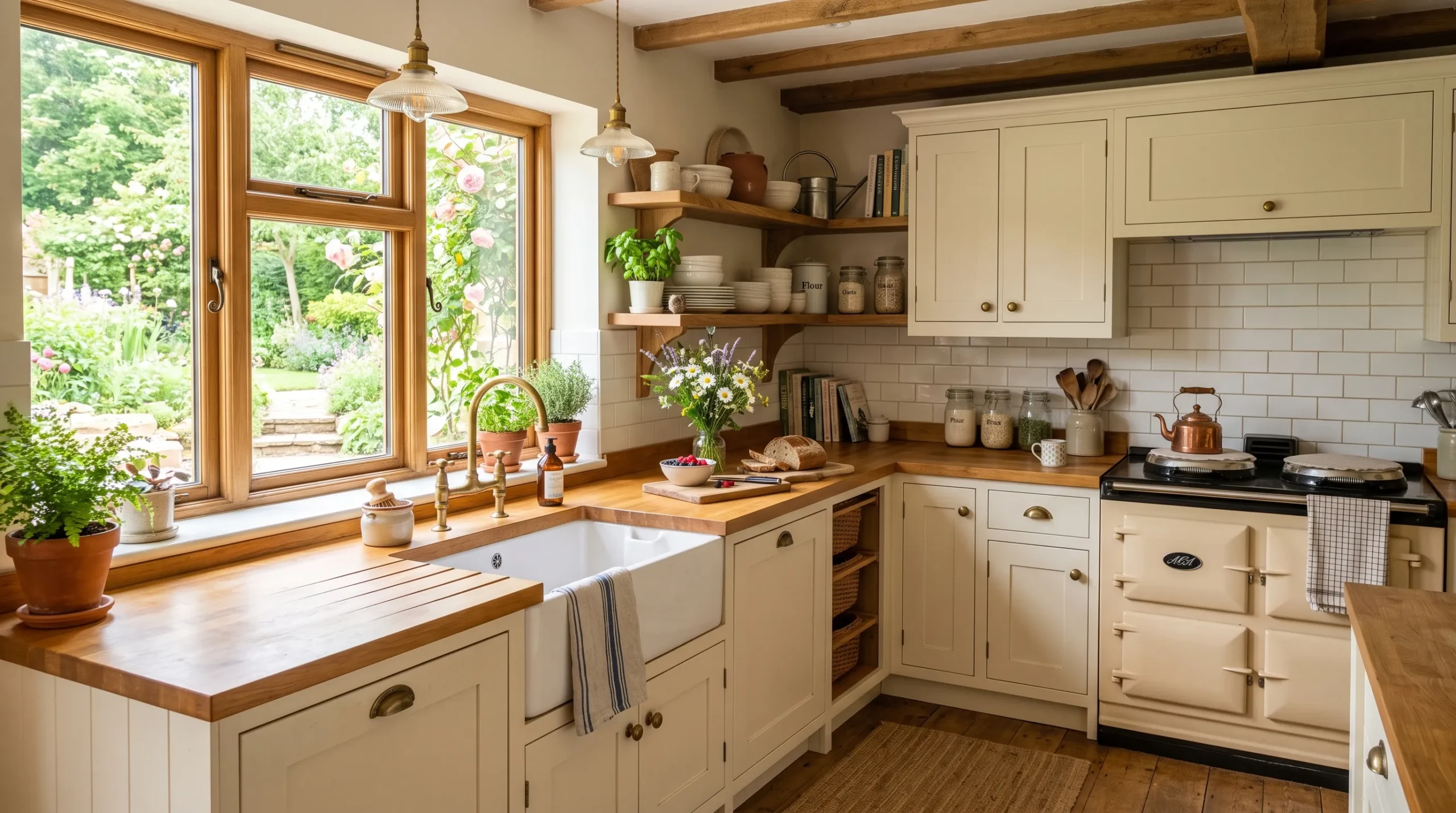
The key is in the hardware. Aged brass knobs and pulls are the detail that lifts sage green from pretty to genuinely special. Add open shelving on one wall to display stoneware, linen wrapped cookbooks, and a small pot of fresh herbs. The combination of color, handcrafted objects, and plants is what gives a sage green kitchen its soul. Keep countertops simple and surfaces mostly clear to let the cabinet color breathe.
The Key: Sage green cabinets need one warm metal tone to keep them from reading cold. Aged brass is the most forgiving and flattering choice.
05
Botanical Wallpaper Accents
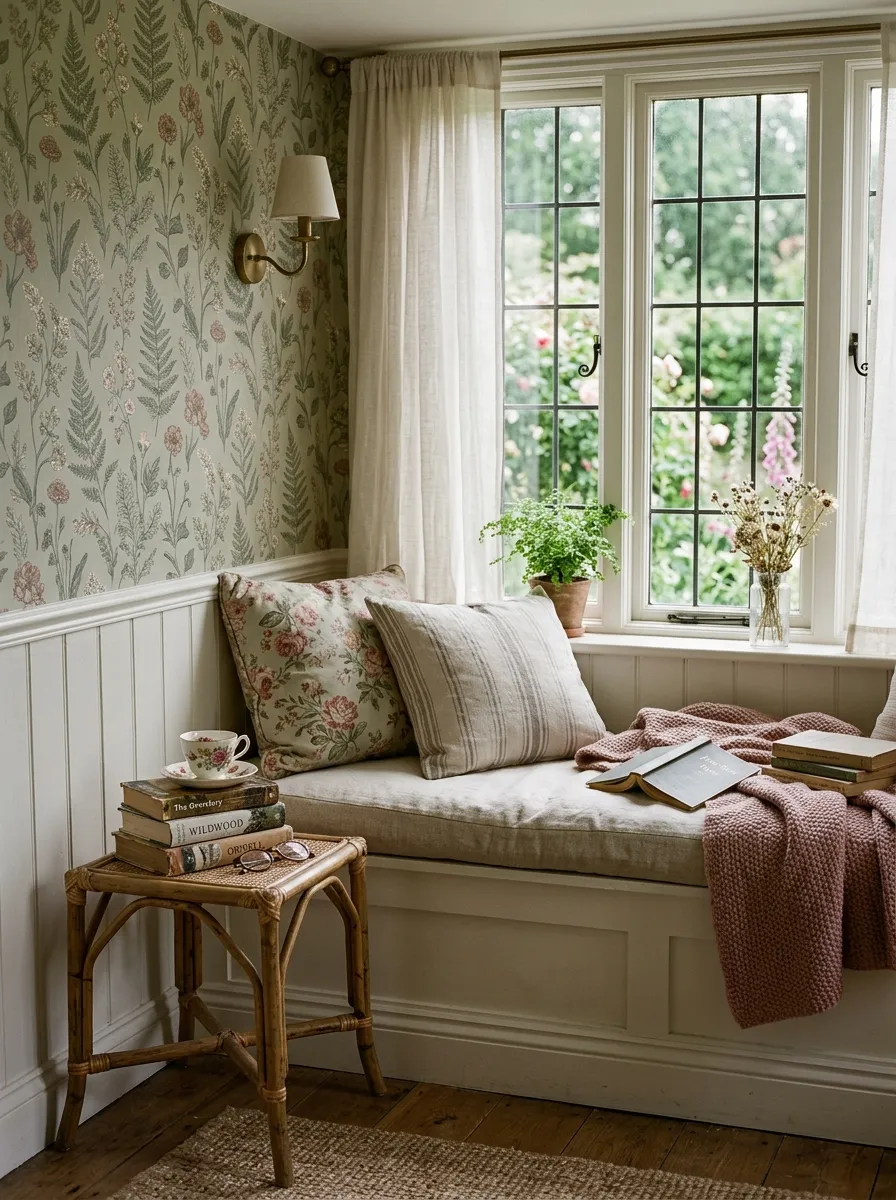
Botanical wallpaper is having a quiet revival, and in cottage spaces it has never really left. The key to using it well is choosing a print that feels hand illustrated rather than digitally produced. Muted palettes with dusty rose, sage, cream, and warm brown look like they came from a Victorian botanical journal rather than a trend report. That aged quality is what gives the pattern long term staying power in your home.
Pair bold botanical wallpaper with white painted wainscoting below to give the wall visual grounding. Use it on one accent wall rather than all four, especially in smaller rooms, so the pattern has space to breathe. A reading nook or hallway is perfect because these are transitional spaces where a moment of visual richness feels rewarding rather than overwhelming. Keep everything else in the room soft and plain so the wallpaper remains the clear focal point.
The Key: Choose a botanical print where at least three of the colors already exist naturally in your room. Pattern and space must feel like one conversation.
06
Earthy Cottage Decorating Ideas for Bedrooms
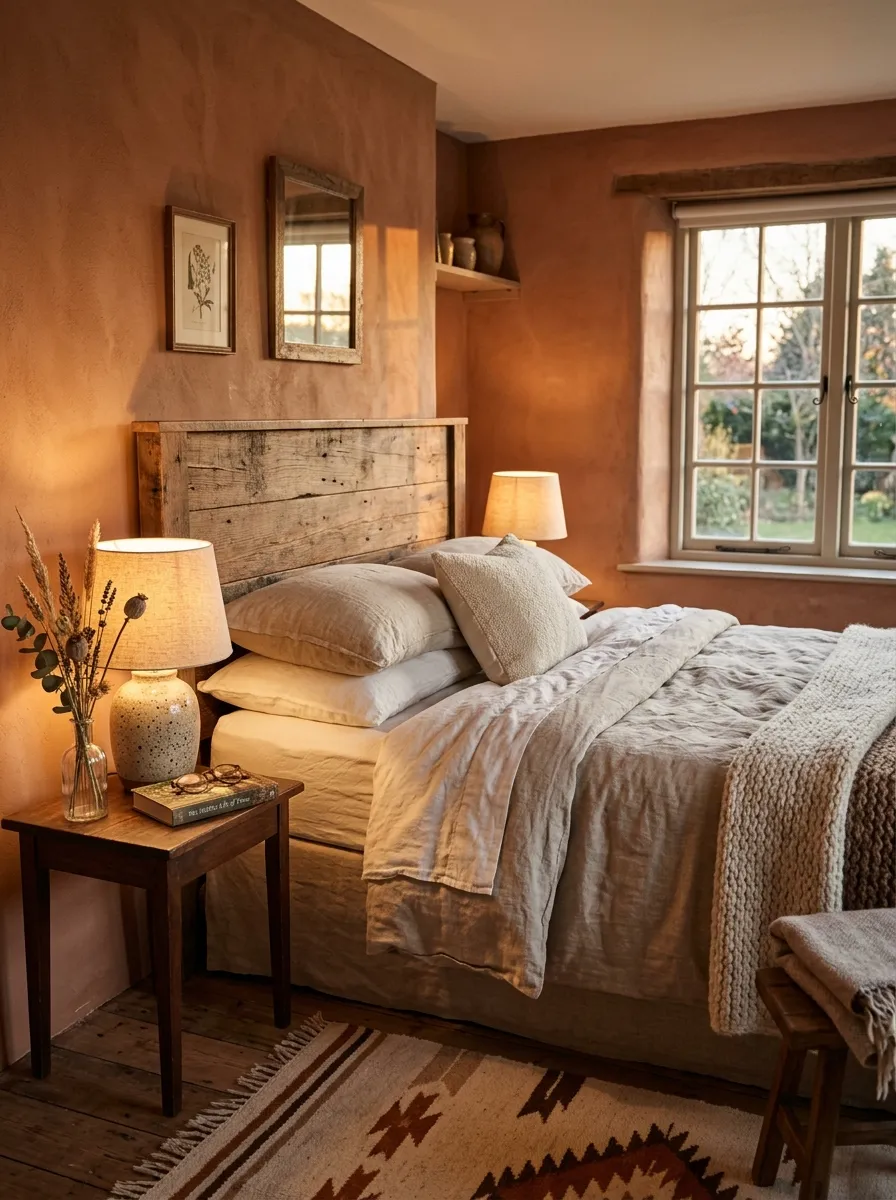
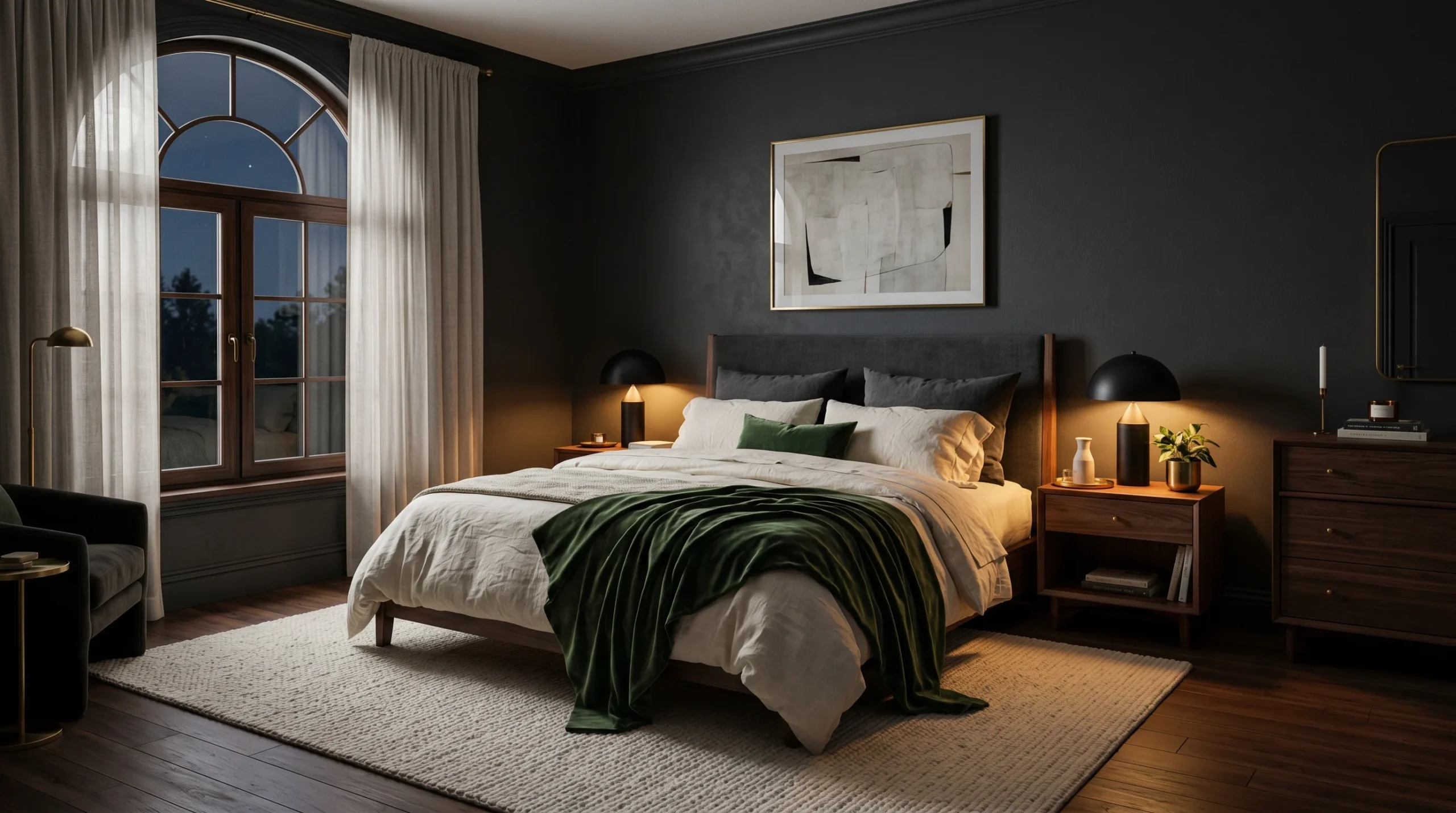
The bedroom is where earthy cottage decorating ideas have the most personal impact because this is the room your body wakes up inside every single morning. The goal here is complete sensory calm. Start with your walls: terracotta, warm clay, aged linen, or even a deep warm taupe if you want something moodier. These tones feel like the earth itself and they wrap around you rather than recede. For anyone who wants to push this further, a full boho bedroom aesthetic layers these same earthy tones with even more texture and organic depth.
Layer your bedding with intention. Start with a fitted linen sheet, add a flat sheet in a slightly warmer tone, then a quilted coverlet, then a chunky throw at the foot. Each layer adds warmth and visual depth. A reclaimed wood headboard grounds the bed visually and brings in that essential natural material. Keep lighting warm and low: bedside lamps with amber bulbs are far more restorative than overhead light and instantly shift the room into rest mode.
The Key: Treat your bedroom like a nest. Every surface should have at least one natural material: wood, linen, wool, or clay.
07
Reclaimed Wood Furniture
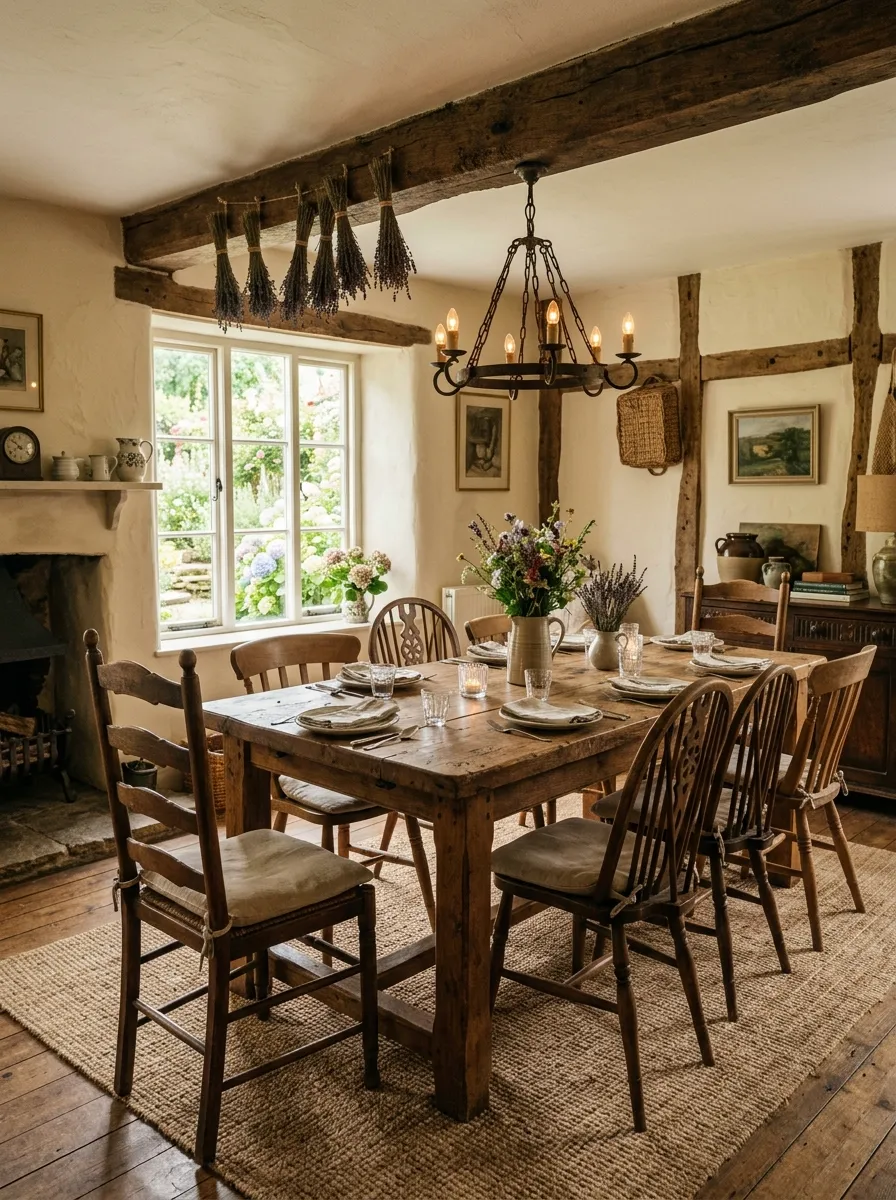
Reclaimed wood carries something that new furniture simply cannot replicate: time. Every knot, grain line, and worn edge is a record of a life already lived, and in cottage decorating that history is exactly the point. A reclaimed oak dining table does not just seat people. It becomes the center of a home, the place where everything important happens, and it only gets better as the years pass.
When shopping for reclaimed pieces, look for consistency in wood tone rather than consistency in finish. A table in aged honey oak can carry mismatched chairs beautifully if they share the same warm wood family. Mix styles freely: a Victorian turned leg next to a simple Shaker silhouette reads as collected and intentional rather than chaotic. Add linen seat cushions to soften hard chairs and a simple iron chandelier overhead to complete the picture without competing with the wood.
The Key: Reclaimed wood furniture needs nothing except a good wax or oil finish applied once a year to stay beautiful for decades.
08
Dried Flower and Herb Displays
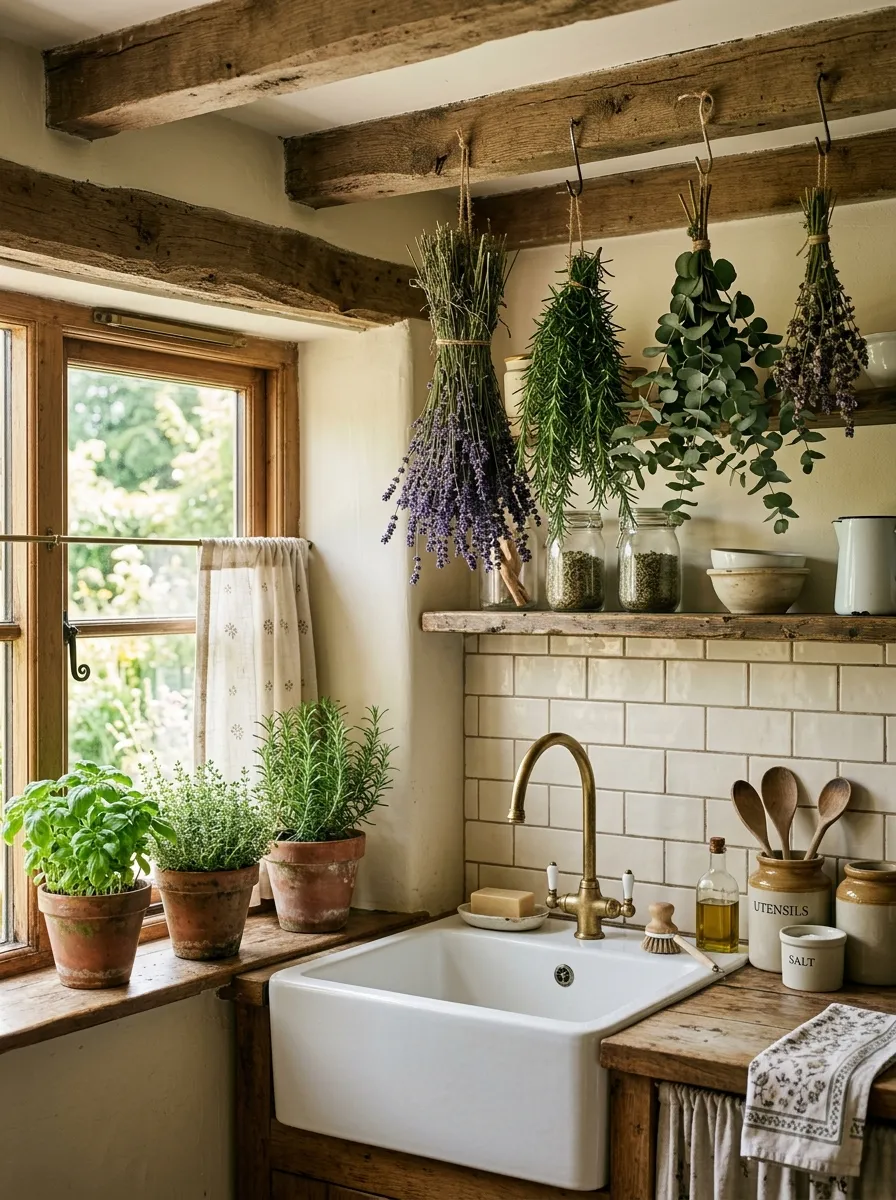
Dried flowers and herbs are one of the most affordable and most impactful earthy cottage decorating moves you can make. A bundle of dried lavender tied with cotton twine and hung from a kitchen beam costs almost nothing and lasts for months. It adds color, texture, fragrance, and a sense of deliberate beauty to a room that might otherwise feel purely functional. That combination of the sensory and the visual is central to cottage living at its best.
Beyond the kitchen, dried arrangements work beautifully on bedroom nightstands, in entryway ceramic vases, and on bathroom shelving. Dried pampas grass in a tall rattan basket is a living room statement piece that requires zero maintenance. Dried strawflowers in a small terracotta pot work on a windowsill. The key across all of these is choosing earthy tones: wheat, dusty rose, sage, and dried lavender blue all sit comfortably within the cottage palette without pulling attention.
The Key: Group dried stems in odd numbers and varying heights. Three bundles at different lengths always look more intentional than two at the same height.
09
Rattan and Wicker Accents
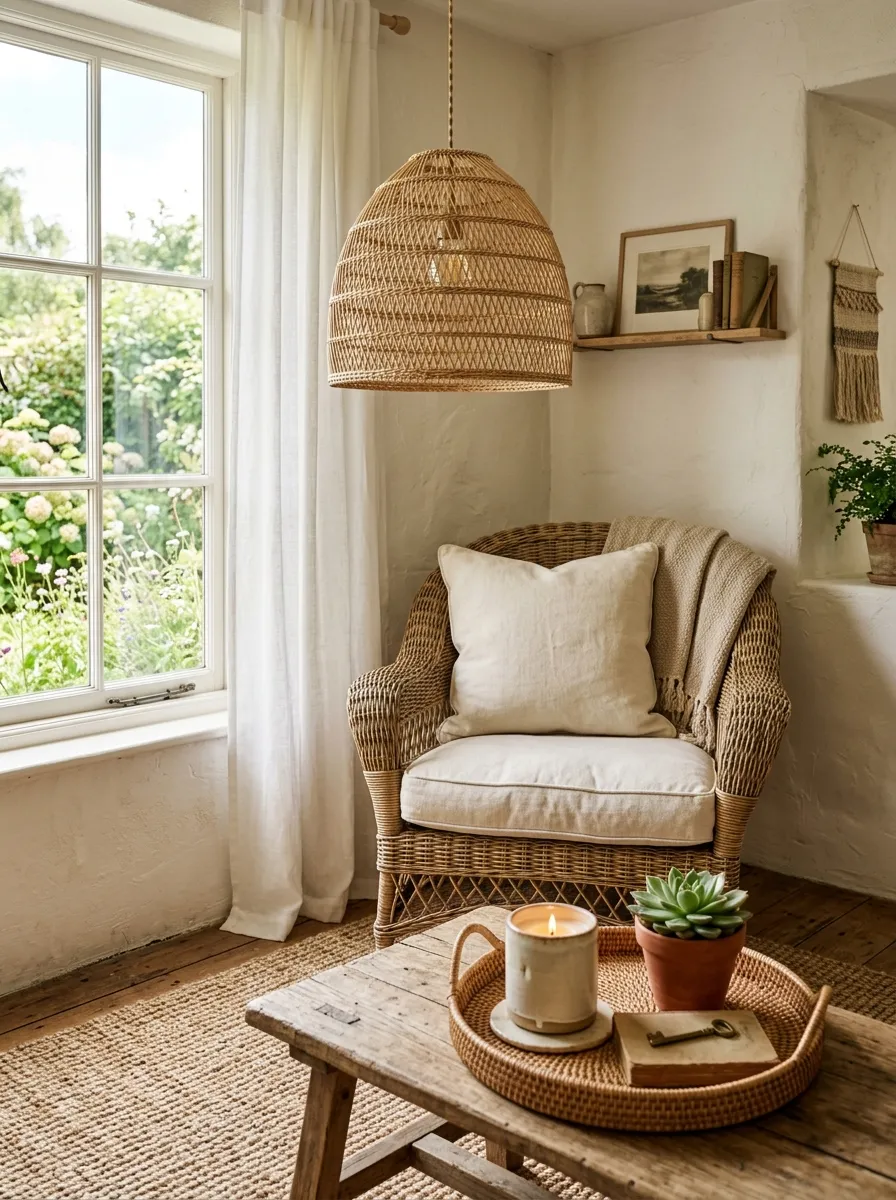
Rattan and wicker are the defining material signatures of cottage home decor ideas and they work in every room of the house. A rattan pendant lamp brings organic texture to a ceiling that would otherwise be forgotten. A wicker side chair adds warmth to a corner that might otherwise feel empty. Woven baskets on open shelves add storage that looks beautiful rather than purely practical. This same instinct for natural, layered texture sits at the heart of the best cottage core approaches to decorating an entire home.
The key to using rattan and wicker well is contrast. Pair them against smooth plaster walls, linen upholstery, and stone or ceramic objects to give the weave somewhere to stand out. Avoid using too many woven pieces in the same corner or the room begins to feel like a market stall rather than a curated home. One large rattan statement piece, such as a pendant lamp or a chair, is usually enough. Smaller wicker accents like baskets and trays can fill in around it freely.
The Key: One large rattan statement piece is all a room needs. Support it with smaller wicker accents rather than competing with a second large piece.
10
Terracotta Tile and Pottery
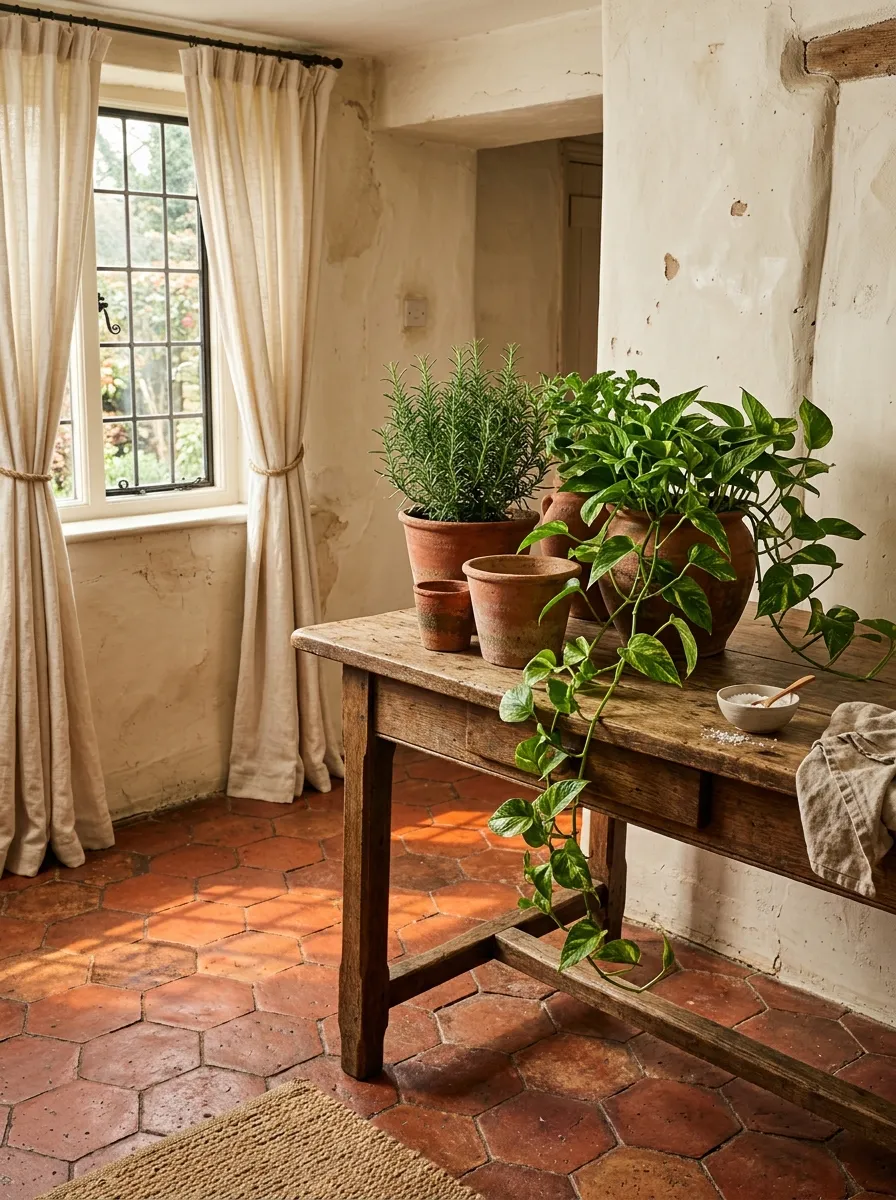
Terracotta is the color of the earth itself, and in cottage decorating it brings an instant sense of warmth and rootedness that almost nothing else matches. As a floor tile it is incomparable: the warm burnt orange deepens in morning light and glows amber by lamplight in the evening. Terracotta hexagonal or square tiles in a kitchen or sunroom create a foundation that makes every other element in the room look richer and more intentional simply by existing beneath them.
As pottery and accessories, terracotta is equally powerful. Handthrown pots in varying sizes grouped together on a kitchen counter or windowsill create a sculptural display that is also genuinely useful for growing herbs. The imperfections in handmade terracotta, the uneven rims, the subtle fingerprints left in the clay, are not flaws in cottage design. They are precisely what makes the space feel human and real rather than staged for a photograph.
The Key: Group terracotta pots in clusters of three or five at varied heights. The odd number and height variation create visual rhythm without effort.
11
Linen Curtains and Soft Drapery
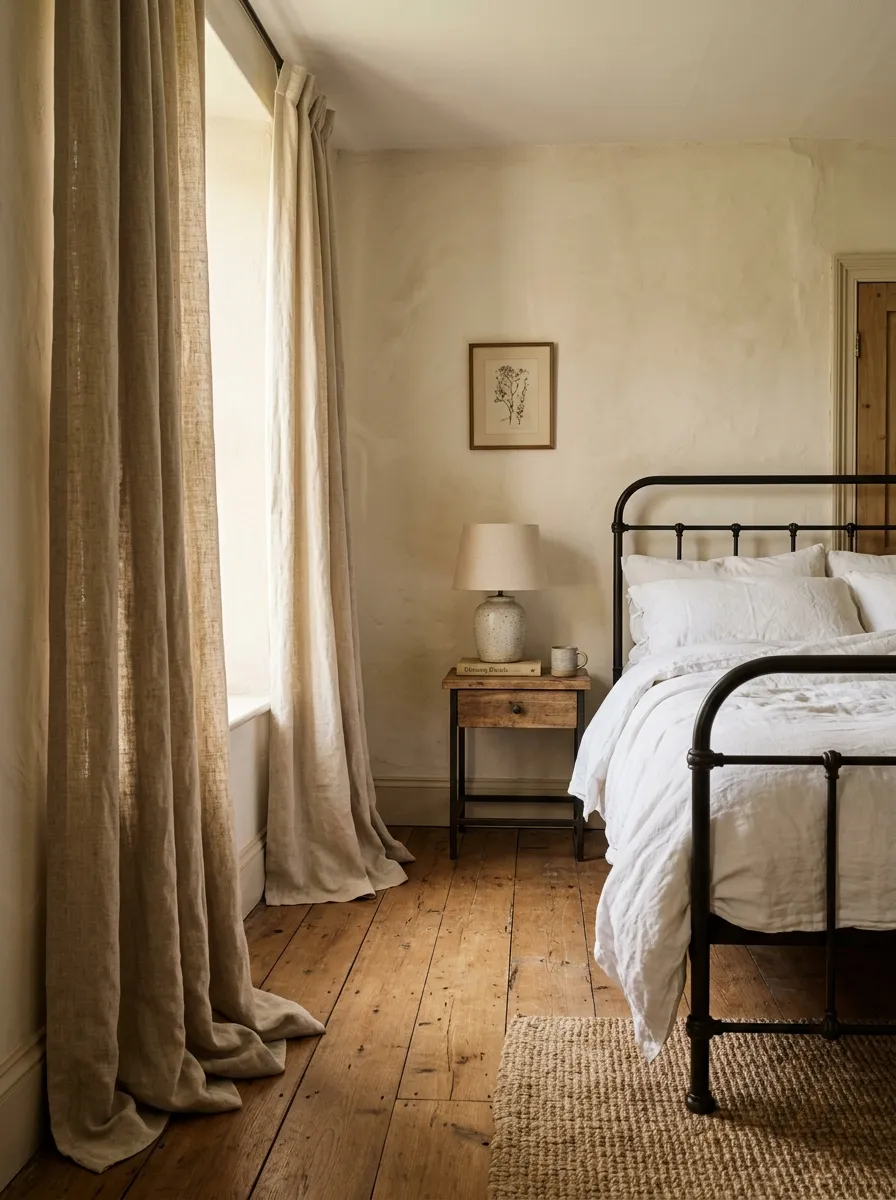
Linen curtains are the single most transformative window treatment in cozy cottage decorating. They filter rather than block light, turning harsh afternoon sun into the kind of warm, diffused glow that feels like being inside a painting. Floor to ceiling panels in natural oatmeal or undyed linen make any room feel taller and more generous than it actually is. The slight wrinkle that linen always carries is not a flaw. In cottage design, that soft rumple is exactly right.
Hang your curtain rod several inches above the window frame and extend it well beyond the window edges on both sides. This simple trick makes the window appear dramatically wider and lets in maximum light when the curtains are open. Choose a weight of linen that is heavy enough to drape beautifully but light enough to move when a breeze comes through. Letting curtains pool slightly on the floor adds a romantic, unhurried quality that is central to the cottage aesthetic.
The Key: Hang curtain rods eight to twelve inches above the window frame and six inches beyond each side. This single step visually transforms the entire wall.
12
Vintage and Antique Finds
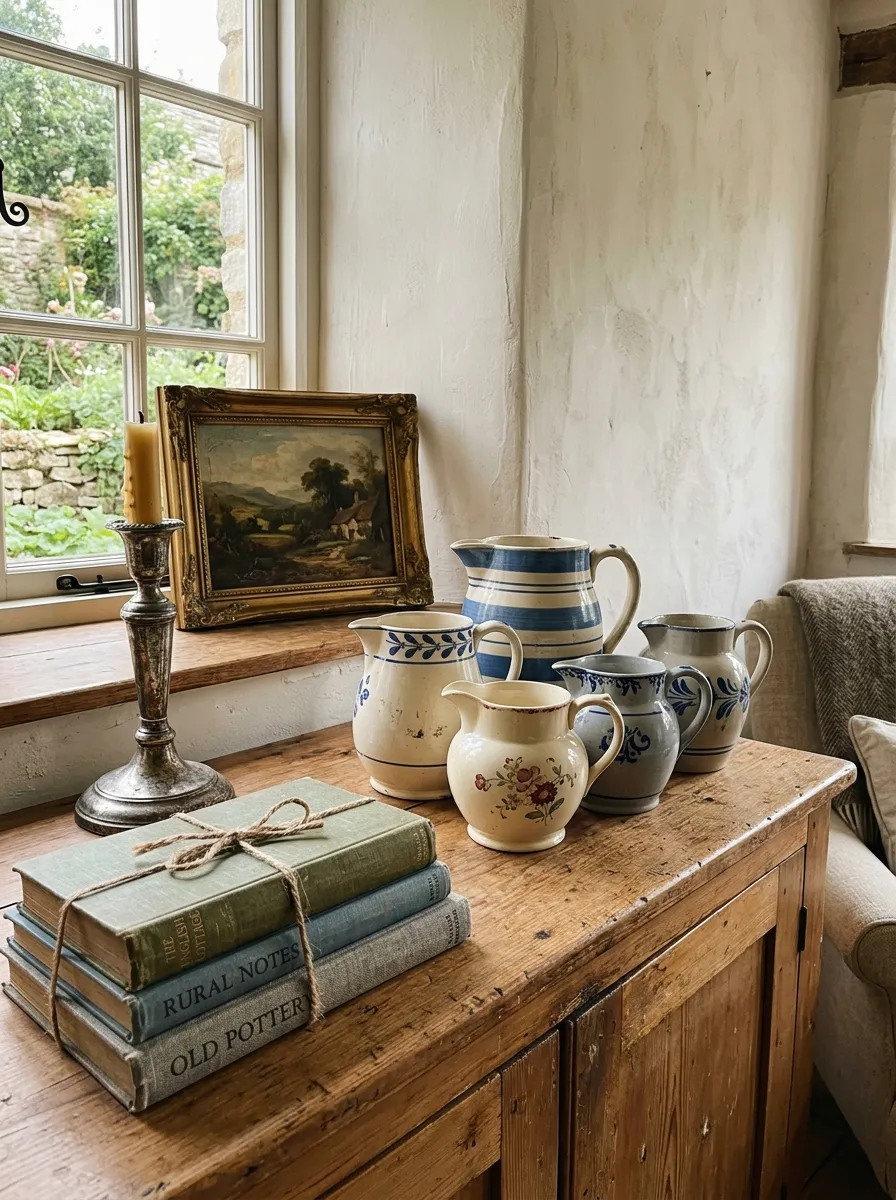
Antique and vintage pieces are the soul of a cottage home. They carry history, personality, and a sense of imperfection that new pieces simply cannot replicate. A tarnished silver candlestick on a windowsill, a chipped ceramic pitcher repurposed as a vase, a small oil painting picked up at an estate sale: these objects give a home the feeling that it has been lived in and loved across more than one generation. That quality is what people mean when they say a house has character.
The key to decorating with vintage finds is restraint and grouping. Do not scatter individual pieces randomly across a room. Instead, create intentional vignettes: three to five objects grouped together on a surface, chosen for complementary tones and varying heights. A tall candlestick next to a round ceramic bowl next to a small framed print creates a composition that reads as curated rather than random. The objects do not need to match. They need to belong to the same tonal story.
The Key: Group vintage objects by color tone first, then vary the silhouette. Shared warmth unifies pieces even when their style and era differ completely.
13
Indoor Plants and Greenery
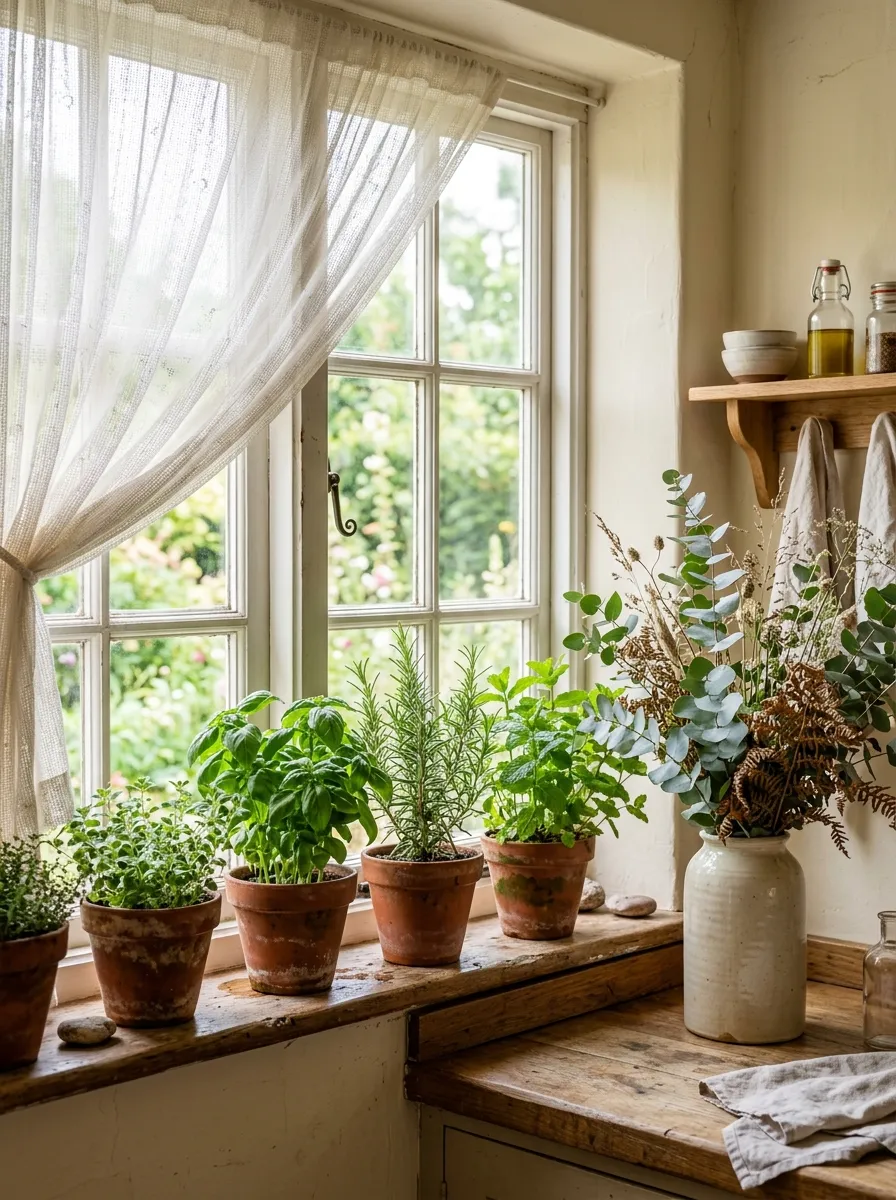
Plants are non negotiable in a truly alive cottage interior. They bring color, texture, oxygen, and the kind of organic imperfection that no purchased object can provide. In earthy cottage interior spaces, the most appropriate plants are those that look like they belong in a garden: trailing pothos, soft ferns, small olive trees in aged terracotta, eucalyptus branches in a tall ceramic vase, and fresh herbs on a kitchen windowsill. These choices all feel gathered rather than selected from a decor catalog.
The placement of plants matters as much as the plants themselves. A single large plant in a floor planter, such as a fiddle leaf fig or an olive tree, anchors a corner and draws the eye upward in a way that a small table plant never could. Groupings of small pots in varying heights on a windowsill create a miniature garden effect that costs almost nothing and delivers outsized visual warmth. The one rule: always choose planters in natural materials. Terracotta, aged stone, raw wood, and unglazed ceramic all feel correct. Plastic and bright colors break the spell.
The Key: One large floor plant plus a windowsill grouping of small pots is the simplest formula for making any cottage room feel genuinely alive.
14
Exposed Beam Ceilings
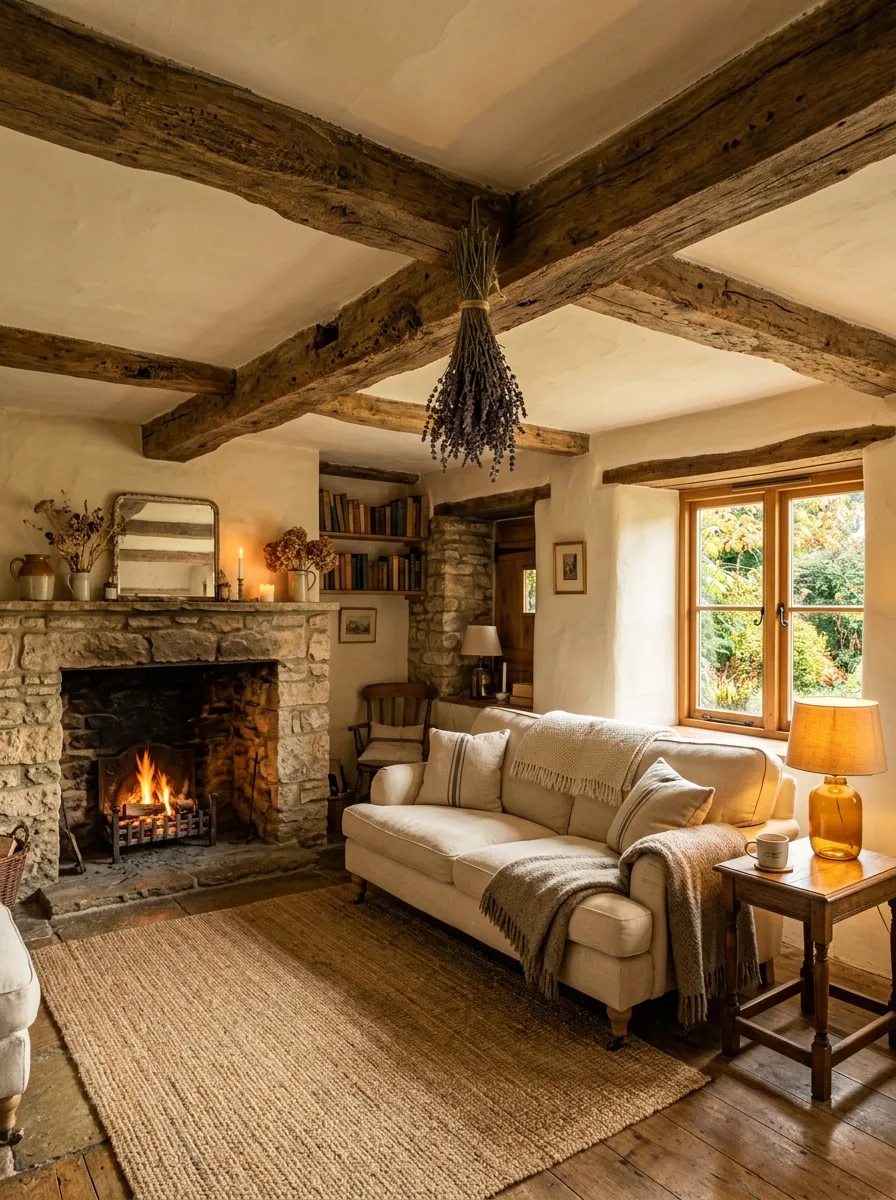
Exposed ceiling beams are one of the architectural elements that most instantly communicate cottage character. They add visual weight and warmth to a space that might otherwise feel nondescript, and they do it without requiring any furniture change at all. In rustic cottage style, beams in natural wood tones, whether rough hewn oak, reclaimed pine, or smooth whitewashed timber, give a ceiling something to say. They pull the eye upward and make even an average height ceiling feel purposeful and considered.
If your home does not have original beams, faux wood beam wraps are now extraordinarily convincing and much easier to install than most people expect. They wrap around a hollow core and can be stained to match any wood tone. The key is spacing: beams should feel generous and unhurried, not crowded. Two or three beams running the length of a room is almost always more impactful than five or six crammed together. Hang dried herbs or a small basket or two from a central beam to add that layered, lived in quality that photographs beautifully.
The Key: Stain exposed beams two shades darker than your floor for the strongest visual anchor. Too close in tone and the beams disappear into the ceiling.
15
Cozy Reading Nook Corners
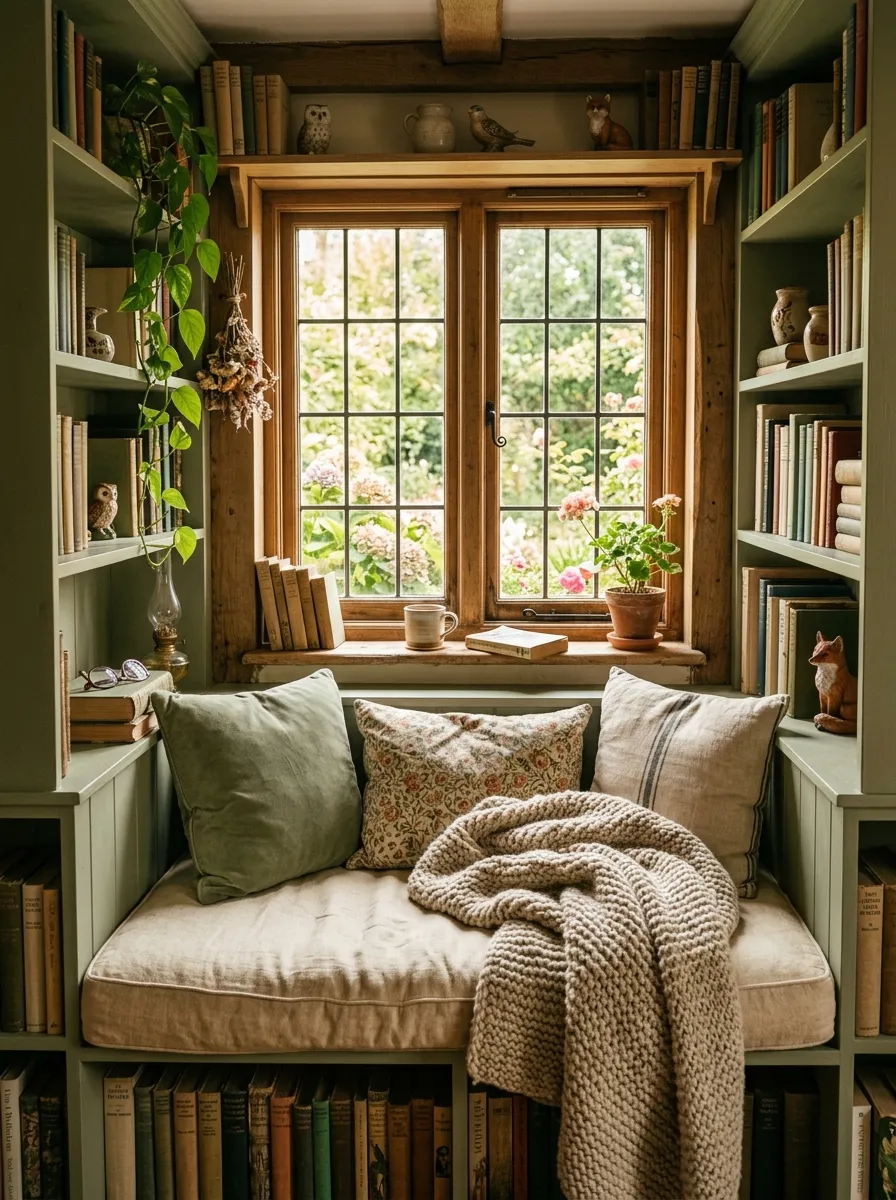
A reading nook is not a luxury in a cottage home. It is a necessity. Every truly comfortable cottage has at least one corner that exists purely for the purpose of sitting still and being absorbed by something. In practice this means a built in window seat or a deeply cushioned armchair tucked beside a bookshelf, with good lamp light at reading height and a small surface nearby for a cup of tea. That is all it takes, and the impact on how the home feels is enormous.
The details are what elevate a reading corner from comfortable to genuinely special. A thick linen cushion with a removable cover for washing. A built in bookshelf painted in sage green or warm white to frame the nook. A chunky knit throw folded casually over the seat back. Books arranged by color rather than alphabetically for a visual display that doubles as decor. A small ceramic lamp with an amber bulb that casts light exactly where you need it without washing the rest of the corner in brightness.
The Key: Good reading nook light must be warm, directional, and at shoulder height. Overhead light or cool toned bulbs completely undermine the cozy atmosphere.
16
Farmhouse Kitchen Shelving
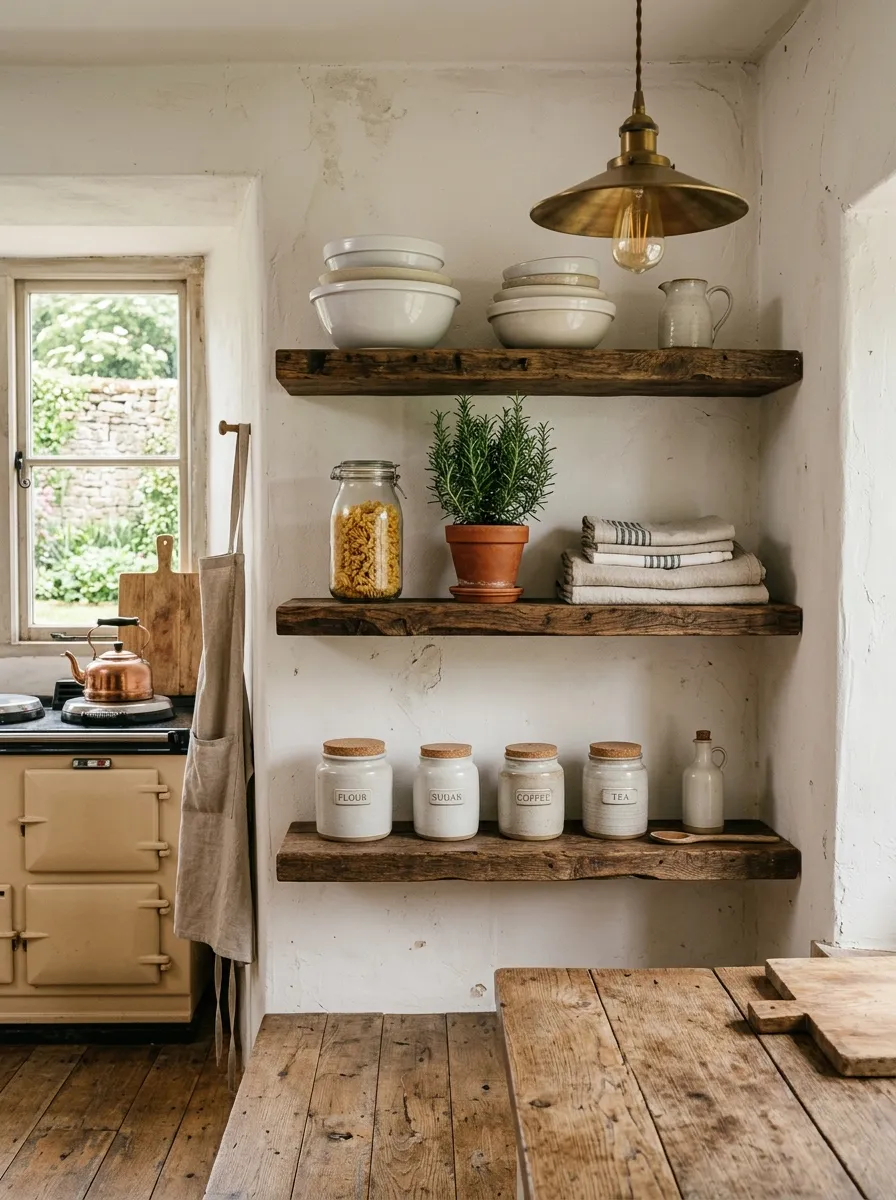
Open shelving in a cottage kitchen is not about minimalism. It is about displaying the objects you genuinely use and genuinely love in a way that makes the kitchen feel more personal than any upper cabinet could ever manage. Reclaimed wood brackets and shelves in a warm honey or aged gray tone are the foundation. What you place on them is where the personality lives. Stack stoneware bowls of varying sizes, line up matching ceramic canisters, tuck a small plant between the cookbooks, and fold your best linen towels into a neat pile at one end.
The arrangement needs editing once a month. Clear off the shelves entirely and start again with only the things that belong there, removing anything that has drifted onto the shelf without intention. This reset keeps the display looking curated rather than cluttered. I have seen this process completely transform a kitchen that felt chaotic into one that feels considered and calm simply by removing six unnecessary items from the open shelving. Restraint is the defining skill in open shelf styling.
The Key: Style open shelves with a back to front hierarchy: tallest items at the back, medium in the middle, small in front. This creates depth and visual interest instantly.
17
Soft Ambient Cottage Lighting
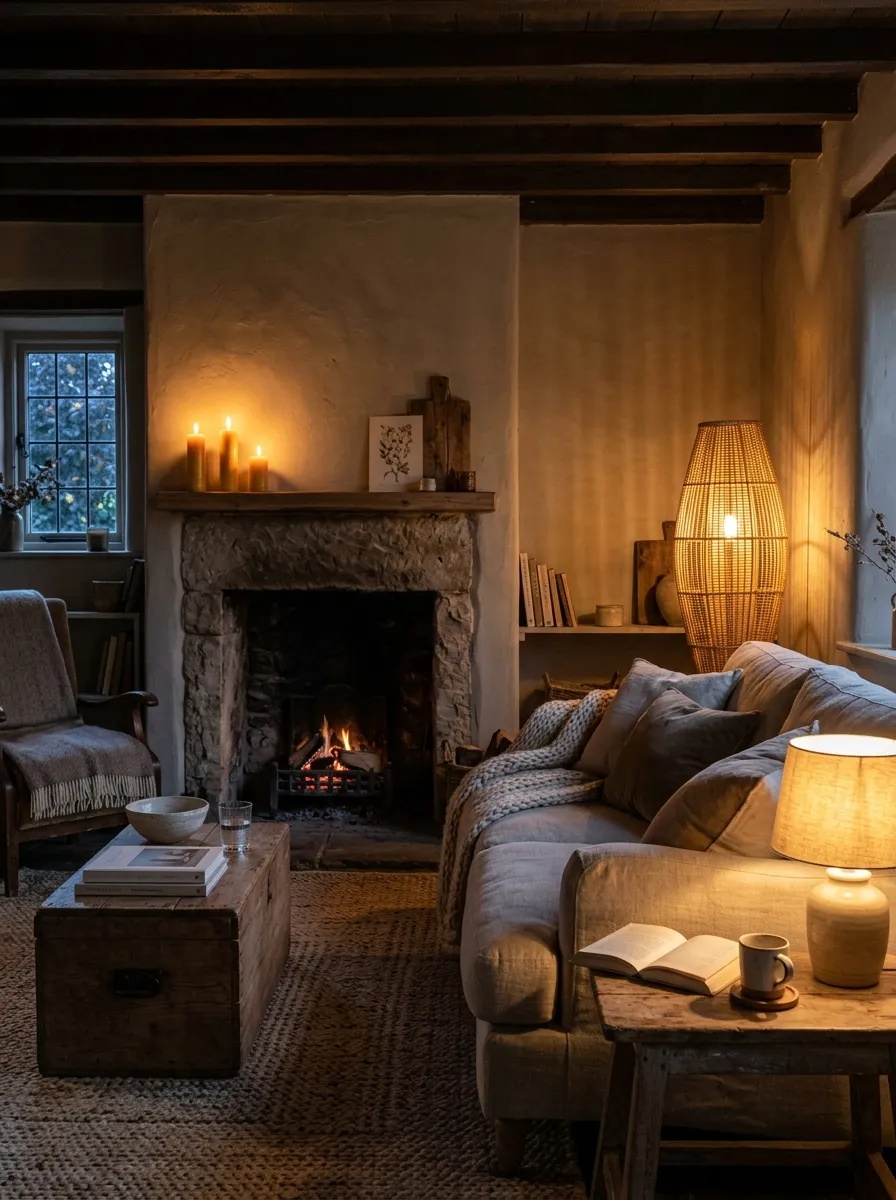
Lighting is the element that most people address last in a room and should address first. In a cottage home, overhead lighting is the enemy of atmosphere. A single ceiling fixture turned on at full brightness will flatten every beautiful texture, warm tone, and carefully chosen object in the room instantly. Cottage lighting is built from layers: a floor lamp in one corner, a table lamp on a side surface, candles on the mantel, and perhaps a pendant over the dining table. These layers work together to create pools of warm light that make a room feel inhabited and alive.
The bulb choice matters as much as the fixture. Always use warm white bulbs in the 2700K range or lower throughout a cottage home. Anything higher begins to read as clinical and strips the warmth from wood tones, linen, and terracotta. Dimmers are worth the small cost of installation on every circuit you can manage. The ability to lower lighting by just thirty percent in the evening shifts the emotional quality of a room from functional to genuinely restorative, which is precisely what cozy cottage decorating is built to achieve. This same warm, layered approach to light works equally beautifully in a living room built around soft, natural tones.
The Key: Layer at minimum three light sources at different heights in every main living space. Never rely on a single overhead source for an entire room.
18
Entryway Natural Material Styling
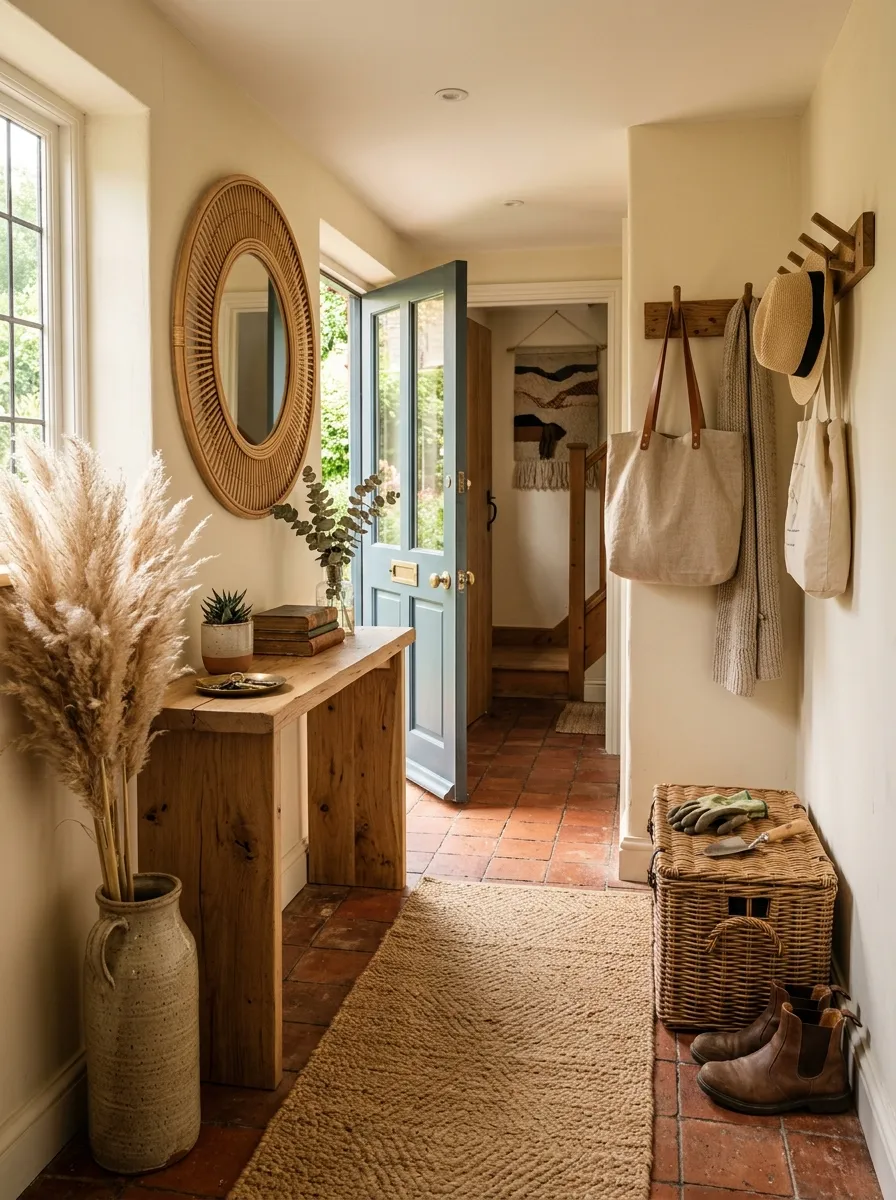
The entryway is the first room anyone enters and the last room most people decorate with genuine intention. In a cottage home, the entry sets the entire emotional tone of the house before a single interior space is seen. Natural materials are the right foundation here: a raw oak or reclaimed wood console table, a jute or seagrass runner underfoot, a rattan framed mirror overhead, and one or two ceramic pieces that hold keys or mail. These five elements are enough to create an entry that feels genuinely welcoming rather than simply functional.
The secret in a small entry is vertical thinking. A wall mounted coat rack in raw wood takes no floor space but adds enormous warmth. A tall narrow console table with a single ceramic vase holding dried branches draws the eye upward. A round mirror instead of a rectangular one softens the lines of a narrow hallway dramatically. Lighting should be warm and placed at eye level if possible. A small ceramic wall sconce with an amber bulb transforms a corridor that would otherwise be forgotten into a moment of genuine beauty.
The Key: Every entryway needs one tall element, one round element, and one natural material underfoot. These three create the layered visual welcome that a cottage entry demands.
19
Bathroom Spa Cottage Touches
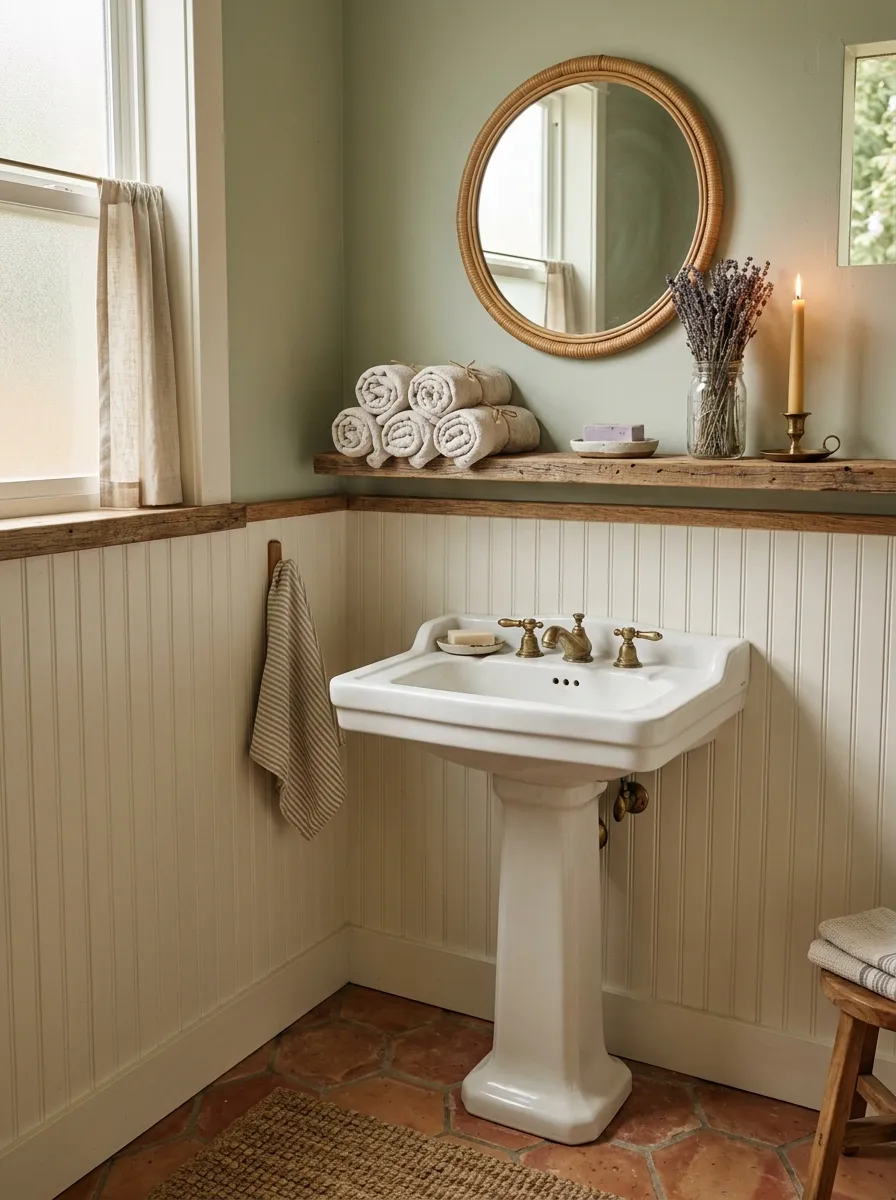
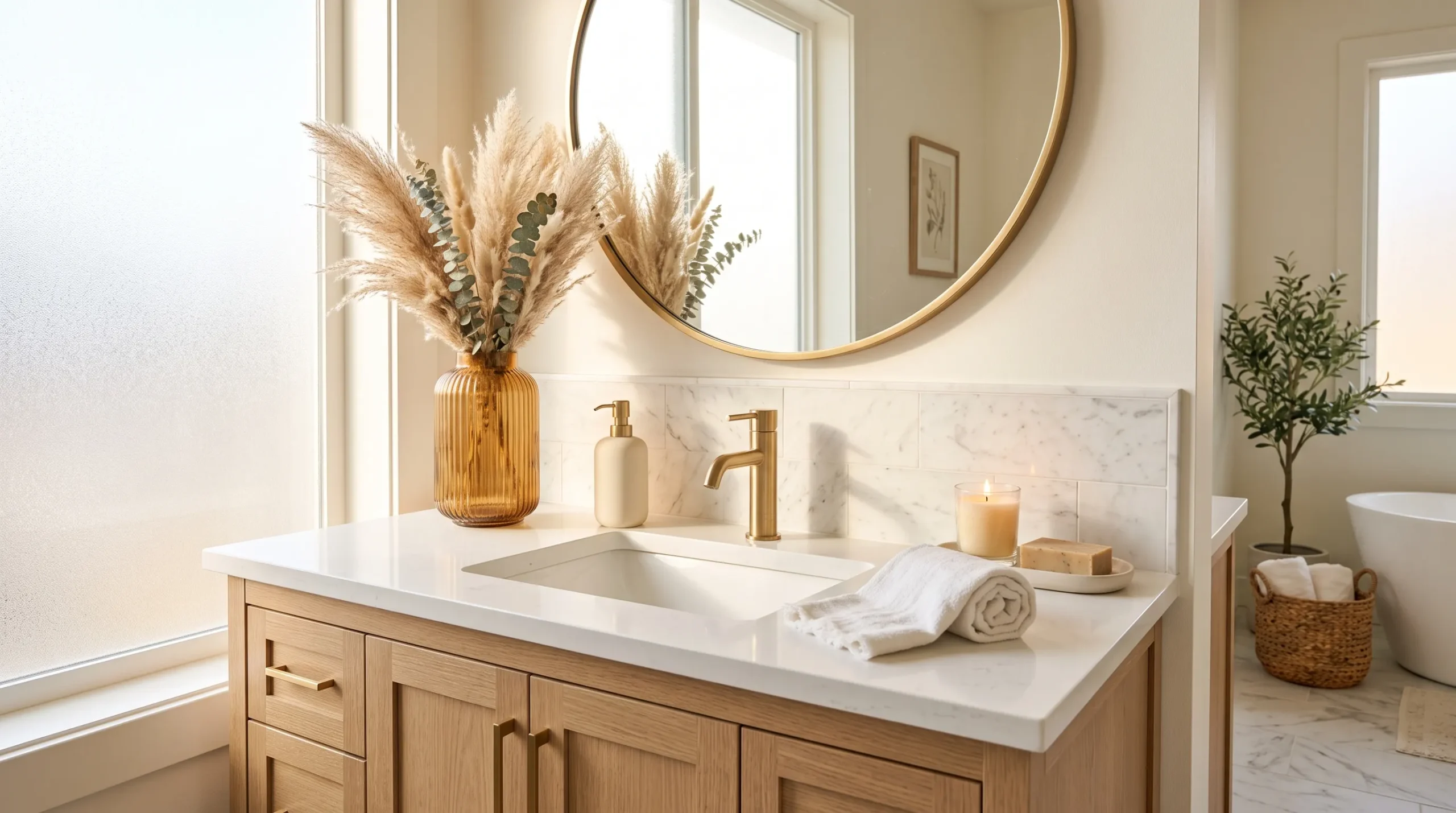
A cottage bathroom does not need to be large to feel luxurious. The whole point of cottage bathroom styling is that warmth and comfort come from material choices and layering rather than square footage. Beadboard wainscoting painted in warm white gives walls immediate cottage character and is one of the more affordable DIY improvements you can undertake in a weekend. Pair it with aged brass or unlacquered bronze fixtures, which both develop a beautiful patina over time and look far richer than chrome in this context.
The shelf or windowsill is where cottage bathroom styling truly shines. Rolled linen hand towels in natural white or soft gray, a small ceramic soap dish, a glass jar of dried lavender, and a single beeswax candle create a display that is simultaneously beautiful and functional. Swap the standard bathroom mirror for a rattan framed round mirror and replace the toilet paper holder and towel ring with aged brass versions. These small hardware changes cost very little and shift the entire feeling of the room more dramatically than any paint color could manage.
The Key: Aged brass fixtures are the fastest single upgrade in a cottage bathroom. They add warmth, character, and genuine visual richness to even the plainest fittings.
20
Outdoor Cottage Porch Living
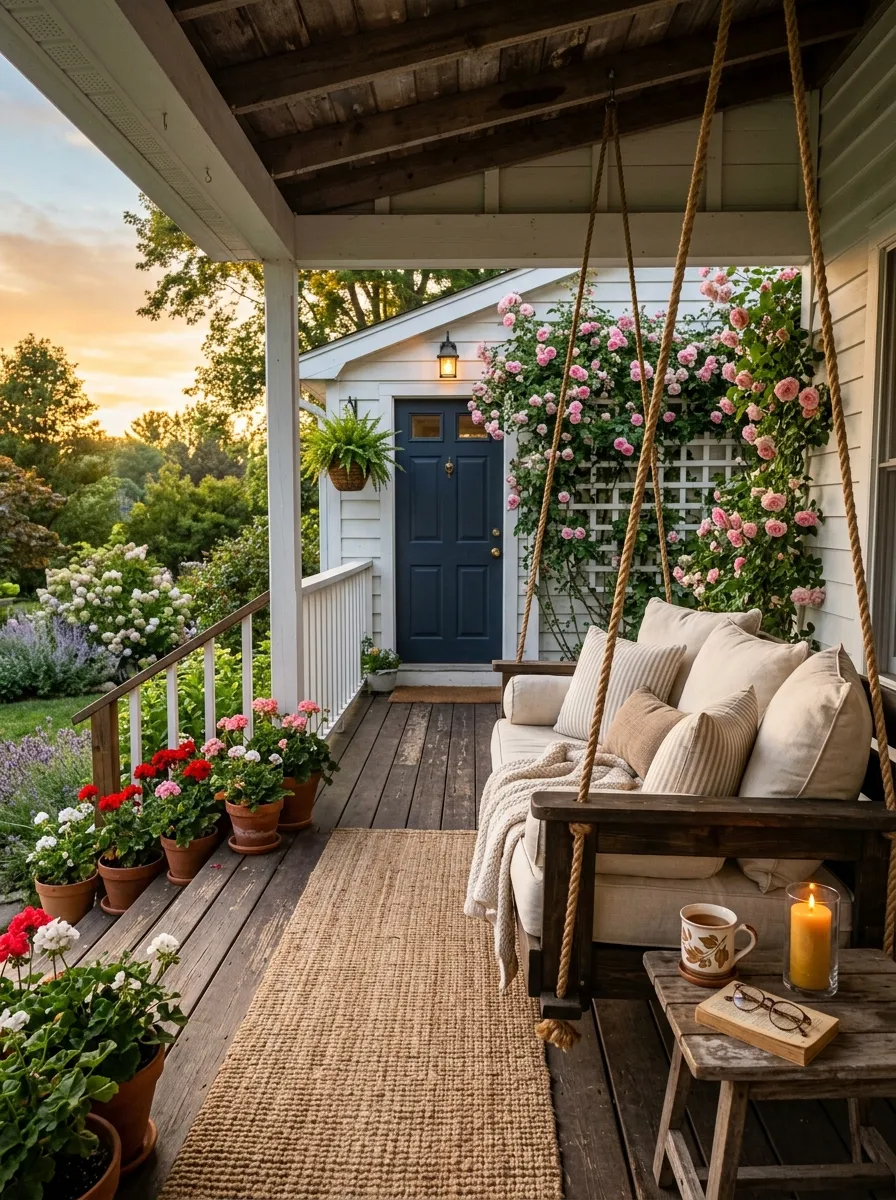
A cottage porch is an outdoor room, and it deserves the same thoughtful layering that you would bring to any interior space. A wooden porch swing with thick linen cushions is the defining piece: it invites lingering in a way that a standard chair never quite achieves. Add a natural fiber outdoor rug to define the space and give bare feet something soft to land on. A small side table for a mug of tea or a book is not optional. It is the detail that transforms a place for sitting into a place for genuinely staying.
Planting around the porch adds the finishing layer that makes the outdoor space feel continuous with the cottage aesthetic rather than separate from it. Terracotta pots of geraniums in deep red or soft pink along the steps, a climbing rose on a painted trellis at one side, a lavender plant in a large aged urn near the front door. These choices bring fragrance, color, and texture to the entry experience and make arriving home feel like a small pleasure every single time. The same care given to a cottage porch translates beautifully into a fall porch setup that carries all of that organic warmth into the cooler months.
The Key: A porch swing must have cushions thick enough to sit in for an hour. Thin cushions are uncomfortable and get ignored. Invest in at least four inches of fill.
21
Handmade Pottery and Ceramics
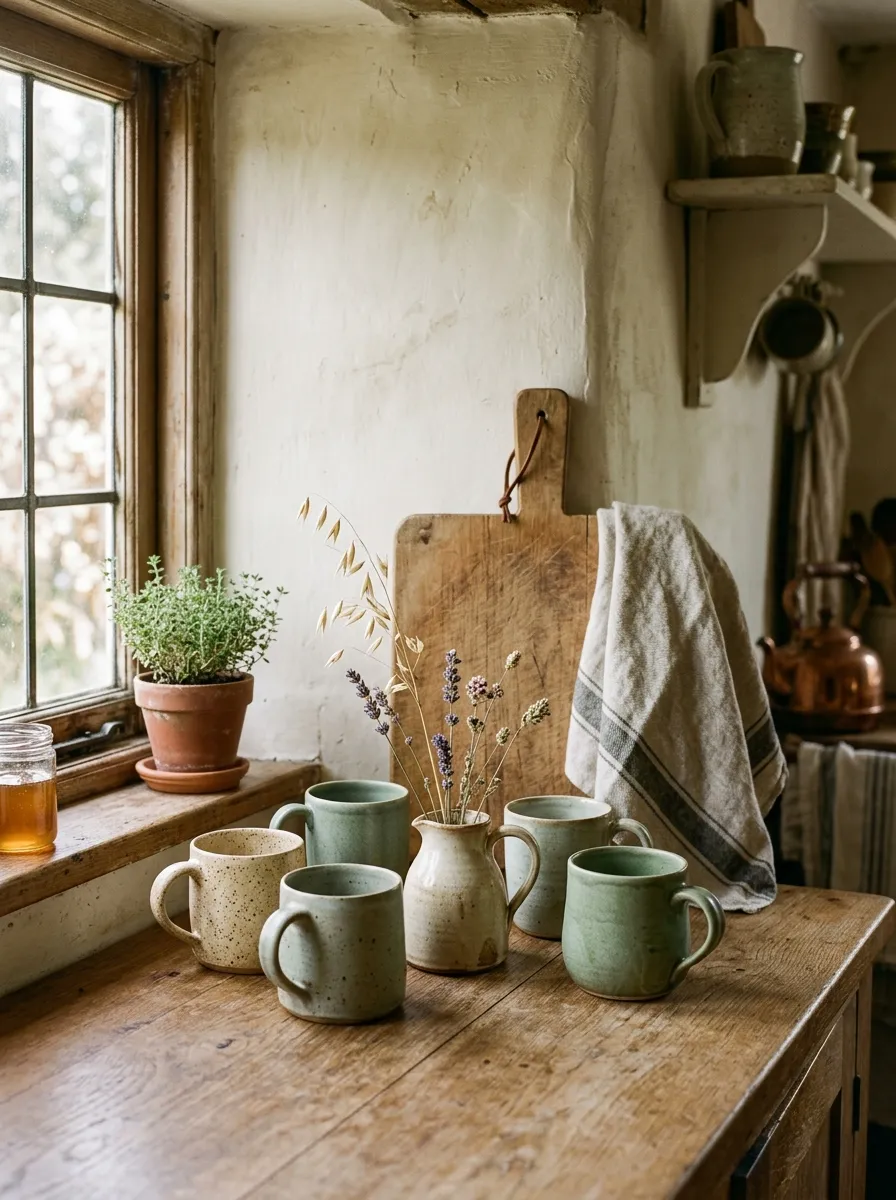
Handmade pottery and ceramics are the most human objects you can bring into a cottage home. They carry the fingerprints of the person who made them, quite literally, in the clay. A set of handthrown stoneware mugs in varying shades of cream, warm white, and dusty sage grouped together on a kitchen counter creates a display that is more beautiful and more meaningful than any matching set from a mass retailer. The variations in glaze, the slight irregularities in rim and handle, the occasional thumb mark pressed into the clay: these are features, not flaws.
Beyond mugs, handmade ceramics serve every corner of a cottage home. A large stoneware serving bowl on a dining table, a ceramic soap dish in the bathroom, a bud vase in matte terracotta on a nightstand, a wide shallow bowl holding keys in the entryway. Each of these pieces adds a quiet moment of handmade beauty to a functional daily ritual. I have found that collecting ceramics slowly over time, one or two pieces from a local maker or craft market at a time, results in a collection that feels genuinely personal and tells the story of places visited and makers supported.
The Key: Buy ceramics from local makers when you can. The connection to a real person who made the object adds a layer of meaning that mass produced pieces simply cannot offer.
Every cottage home begins with a feeling rather than a floor plan. The earthy cottage decorating ideas in this article are really about one thing: choosing materials, colors, and objects that connect your daily life to something slower, warmer, and more intentional. Stone, linen, reclaimed wood, handmade clay, dried flowers, soft amber light. These are not trends. They are the building blocks of a home that genuinely restores you at the end of a long day and welcomes you back every single morning.
Save this post so you can return to it room by room as you build your own version of this style. Share it with a friend who has been dreaming of a warmer, cozier home and does not quite know where to begin. These ideas work in apartments and farmhouses alike, in budgets large and small, and in any climate. The only requirement is that you start, and you let the space grow gradually into something that feels completely and beautifully yours.