Ornamental Grasses
🏠 23 Real Ideas
⏱ Quick Read
🔥 Always Trending
23 Stunning Ways Ornamental Grasses
Can Transform Your Landscape With Texture, Movement, Privacy, and Year-Round Style
Picture stepping outside on a breezy morning and watching your garden come alive. That gentle, rhythmic swaying, that soft rustling sound, that effortless beauty, it all belongs to ornamental grasses. These remarkable plants do something no static shrub or flat lawn ever could: they move, they breathe, and they make your whole yard feel like a living, flowing scene straight from a design magazine.
This article walks you through 23 stunning ways ornamental grasses can completely change how your landscape looks and feels, from creating lush privacy screens and dramatic focal points to softening hardscapes and adding four-season color. Whether you have a sprawling backyard or a compact urban garden, these ideas will show you exactly how decorative grasses can work beautifully for your space.
01
Bold Entryway Grass Clusters
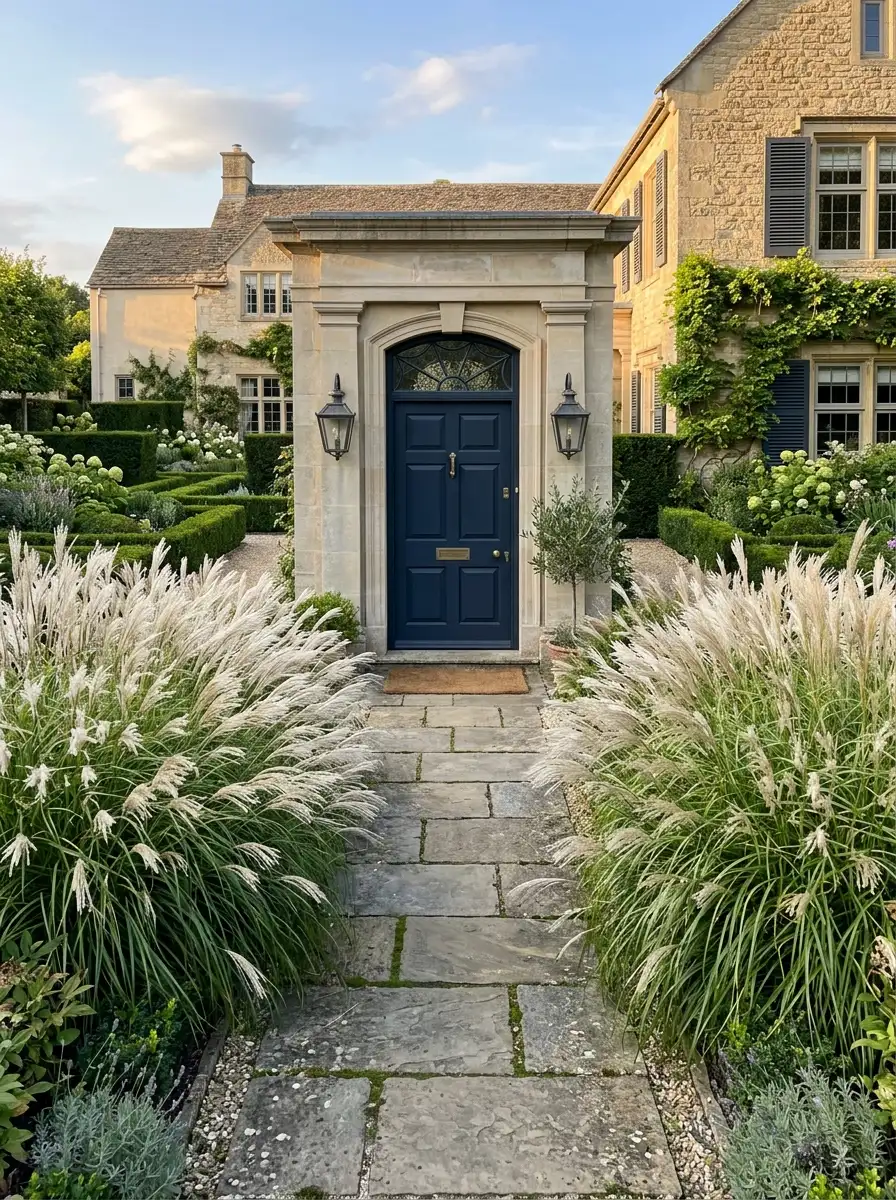
Your front entrance sets the tone for everything that follows, and nothing commands attention quite like two sweeping clusters of ornamental grasses placed on either side of a pathway. Their height creates instant architectural presence, while the soft plumes introduce a graceful, welcoming movement that rigid hedges simply cannot replicate.
Choose a tall variety like Miscanthus sinensis for this purpose. The feathery tops catch morning sunlight and cast beautiful shadows across stone or pavers below. Pair them with tightly clipped evergreen shrubs for contrast, and your entryway becomes a signature moment that guests will notice and remember long after they arrive.
The Key: Symmetrical grass placement at entryways creates powerful visual balance and a welcoming sense of arrival that feels both intentional and naturally beautiful.
02
Feathery Privacy Screen Along Fences
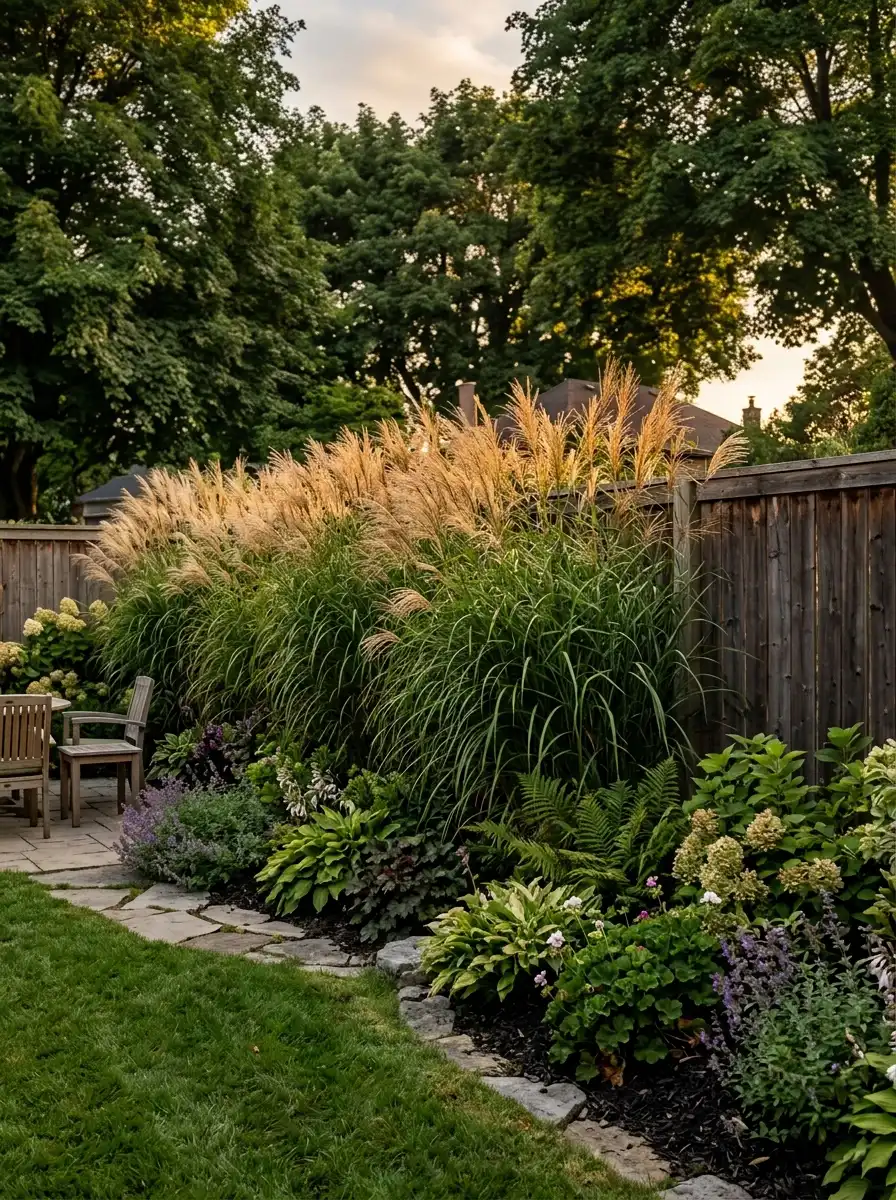
Privacy does not have to mean a solid wall or an imposing wooden structure. A dense planting of tall landscape grasses along your fence line creates a natural, living screen that blocks sightlines while adding incredible softness and beauty to what would otherwise be a flat, forgettable boundary. If your outdoor seating area needs even more separation, these deck privacy ideas offer additional ways to create a secluded retreat without making the space feel closed in.
Pampas grass or Karl Foerster feather reed grass work especially well for this purpose, growing quickly to six feet or more. Unlike a wooden fence, this green wall shifts and shimmers with every breeze, making your yard feel lush, relaxed, and entirely private without the visual heaviness of built structures or masonry dividers.
The Key: A grass privacy screen grows taller each season, giving you increasing seclusion without the cold, permanent feel of a solid fence or wall.
03
Dramatic Slope Erosion Control
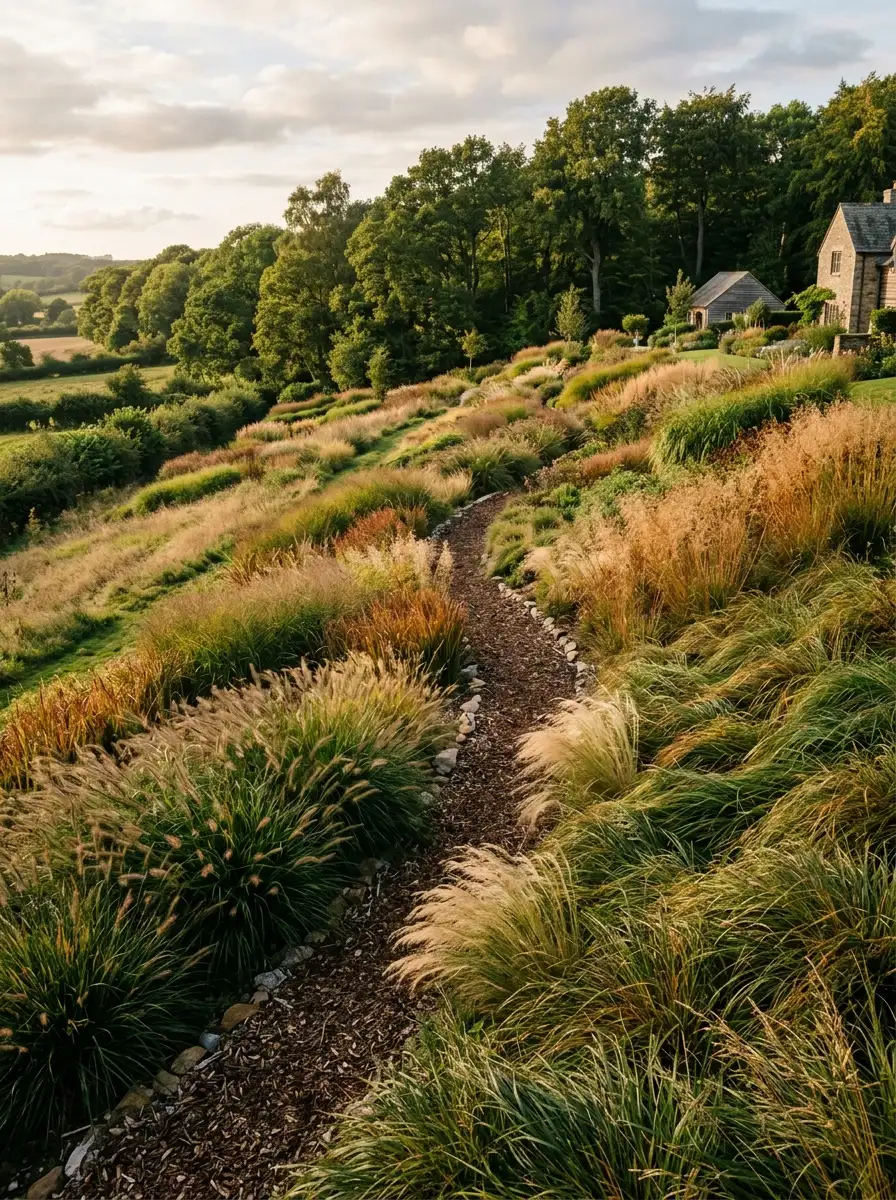
A bare slope is one of the most challenging areas of any yard, prone to erosion, mudslides, and the frustrating task of trying to mow difficult terrain. Ornamental grasses are nature’s own erosion-control solution, sending deep root systems into the soil that stabilize slopes brilliantly while looking effortlessly beautiful year-round.
Blue oat grass and switchgrass are both excellent choices for slope planting. Their spreading root networks lock soil in place during heavy rains, while their arching foliage covers bare ground with rich color and texture. The result is a slope that looks intentional and designed rather than neglected or overgrown.
The Key: Grasses stabilize soil with minimal maintenance once established, making sloped areas one of the most practical and attractive places to plant them.
04
Minimalist Modern Accent Planting
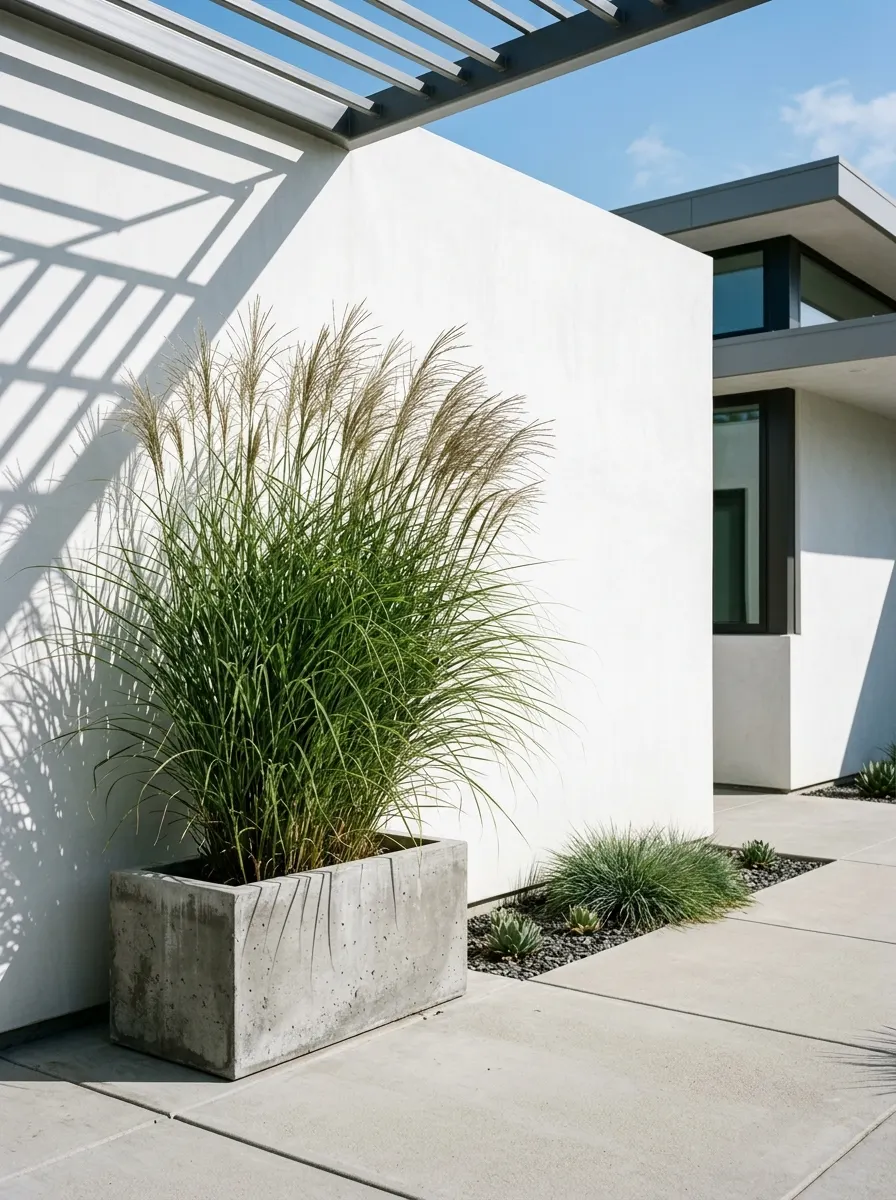
Less is genuinely more when it comes to modern garden design, and a single statement decorative grass planted in a clean concrete or stone planter against a bare wall can look more sophisticated than an entire elaborate garden bed. The contrast between the fluid, organic grass and rigid architectural surfaces is visually striking.
Japanese silver grass or blue fescue work beautifully in this role. Their fine texture and arching habit create natural sculptural forms that complement contemporary architecture. Place one bold specimen near a patio entrance or beside a glass wall and let it serve as living art that requires almost no upkeep to look professionally designed.
The Key: In minimalist spaces, one perfectly placed grass specimen creates more visual impact than a crowded collection of mixed plantings ever could.
05
Cottage Garden Pathway Borders
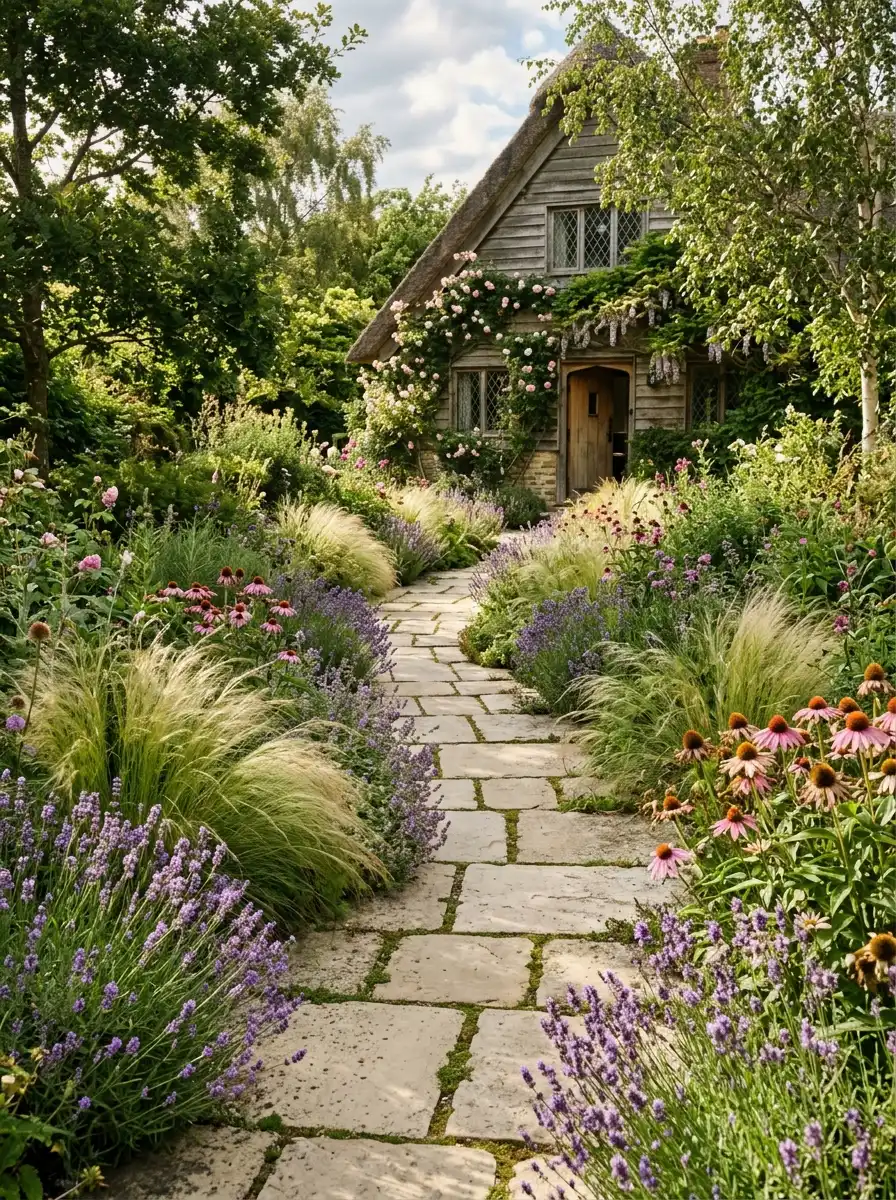
A garden path becomes a journey when it is lined with soft, mounding garden grasses that brush lightly against your legs as you walk. This romantic, cottage-inspired approach to pathway borders feels wildly abundant, deeply personal, and utterly Pinterest-worthy without requiring the kind of precise pruning that formal hedges demand.
Pair soft blue fescue or fountain grass with lavender, echinacea, and rudbeckia for a pathway border that changes color and texture with every season. The grasses provide structure and volume throughout winter when flowers fade, making sure your path remains beautiful and well-defined even during the quieter months of the gardening year.
The Key: Grasses mixed into cottage borders provide structure through winter when perennial flowers disappear, keeping pathways defined and visually interesting year-round.
06
Japanese-Inspired Zen Garden Focal Point
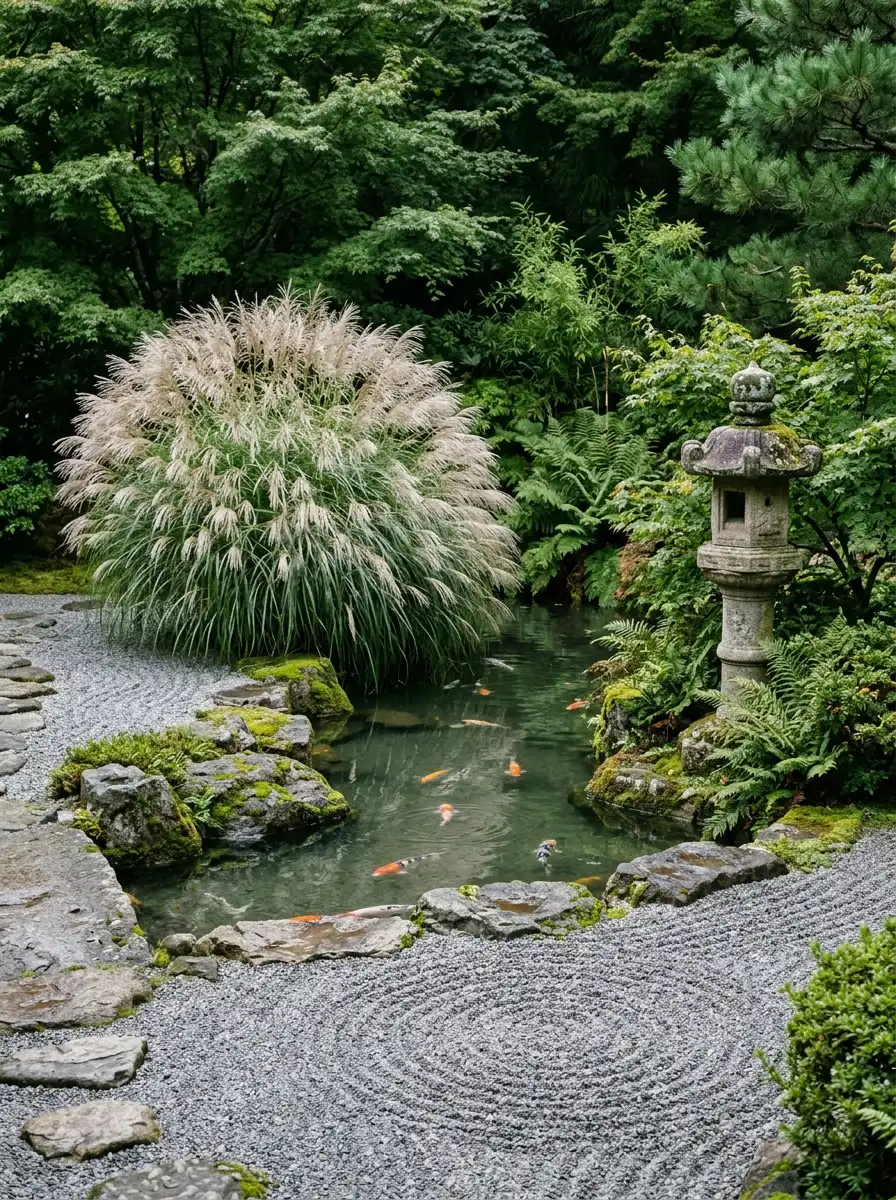
Japanese garden design teaches us that one perfect plant placed thoughtfully is worth more than a dozen plants placed carelessly. A single large ornamental grass positioned beside a still pond or a raked gravel area becomes a living focal point, its arching plumes echoing the fluidity of water and drawing the eye into a moment of quiet contemplation.
Hakone grass or a large specimen of Miscanthus pairs naturally with stone lanterns, mossy boulders, and bamboo fencing. The soft movement of the plumes creates the impression of water in motion even on a perfectly still day. This style works especially well in small gardens where one well-chosen element can define an entire mood.
The Key: In a Japanese-inspired garden, one beautifully placed grass specimen adds movement and meditative depth that no static stone or shrub can replicate.
07
Ornamental Grasses in Containers
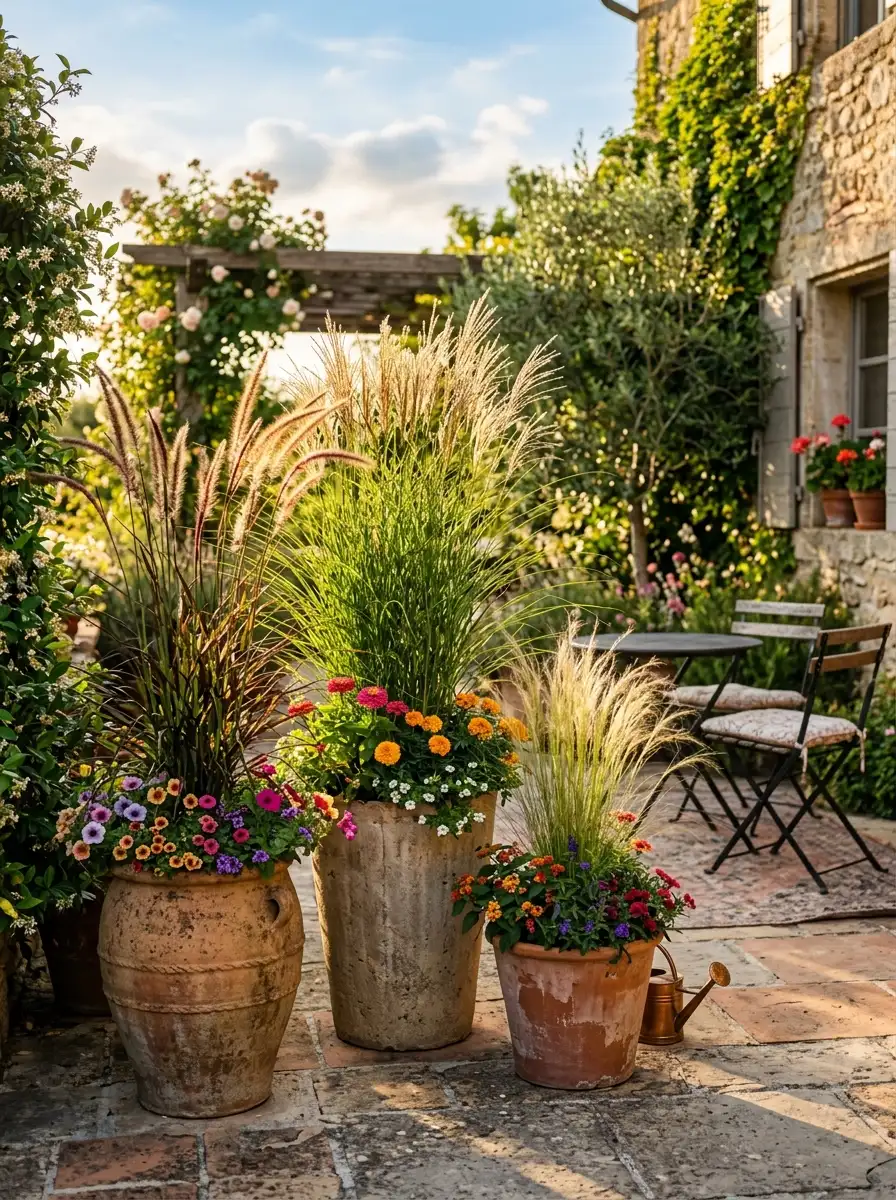
No ground space? No problem at all. Ornamental grasses thrive in containers and bring remarkable height, texture, and movement to patios, balconies, and entryways that would otherwise feel flat and uninspired. A single large pot planted with a dramatic grass instantly becomes a statement piece that anchors an entire outdoor living area.
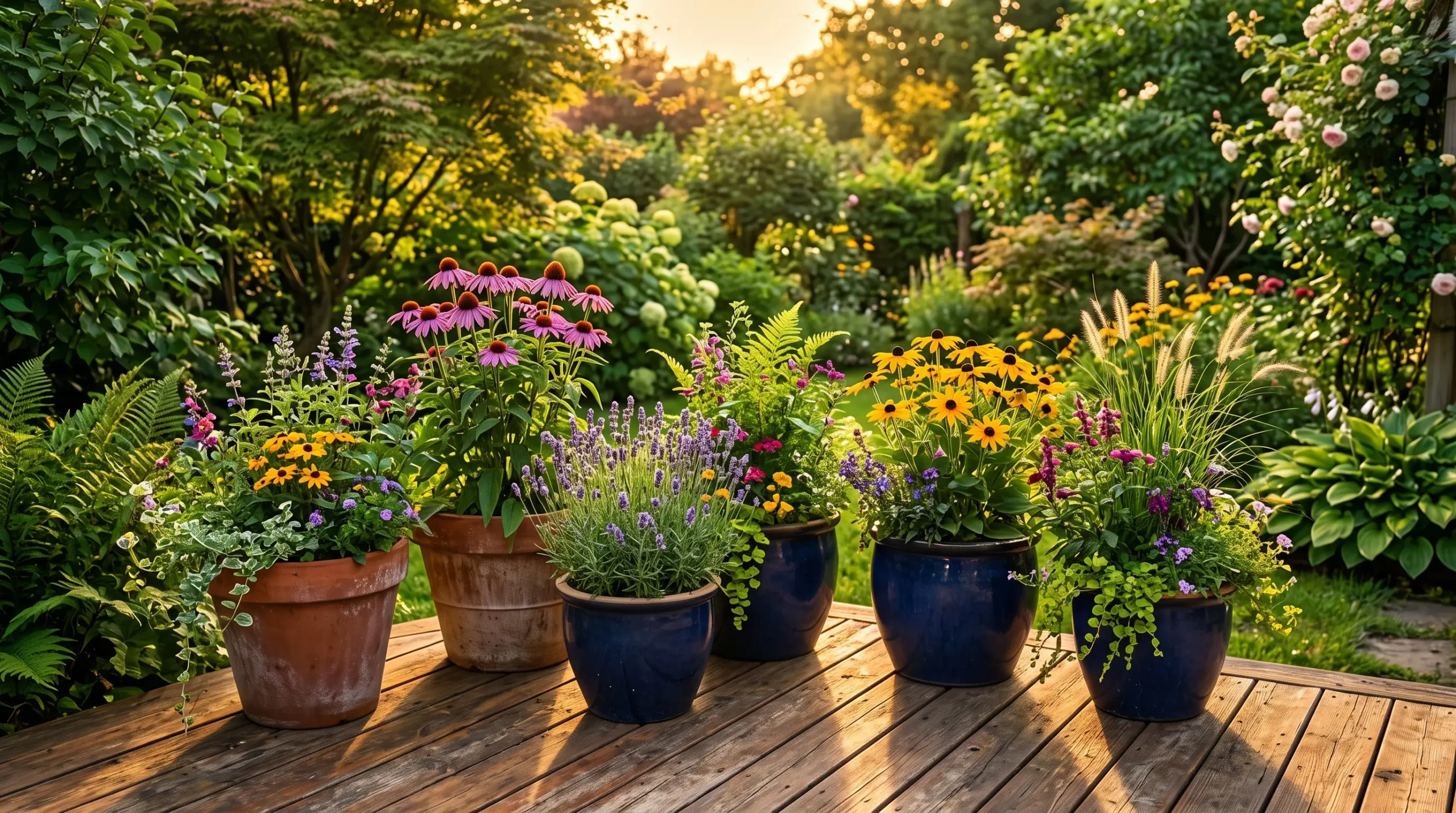
Purple fountain grass is a standout container choice, its burgundy blades and rose-pink plumes creating beautiful contrast against terracotta, aged concrete, or glazed ceramic pots. Combine it with trailing sweet potato vine or compact annuals at the base for a layered, full look that keeps performing from spring through first frost.
The Key: Container-grown grasses offer total flexibility, letting you move seasonal color and height around your outdoor space wherever it is needed most.
08
Layered Texture Garden Beds
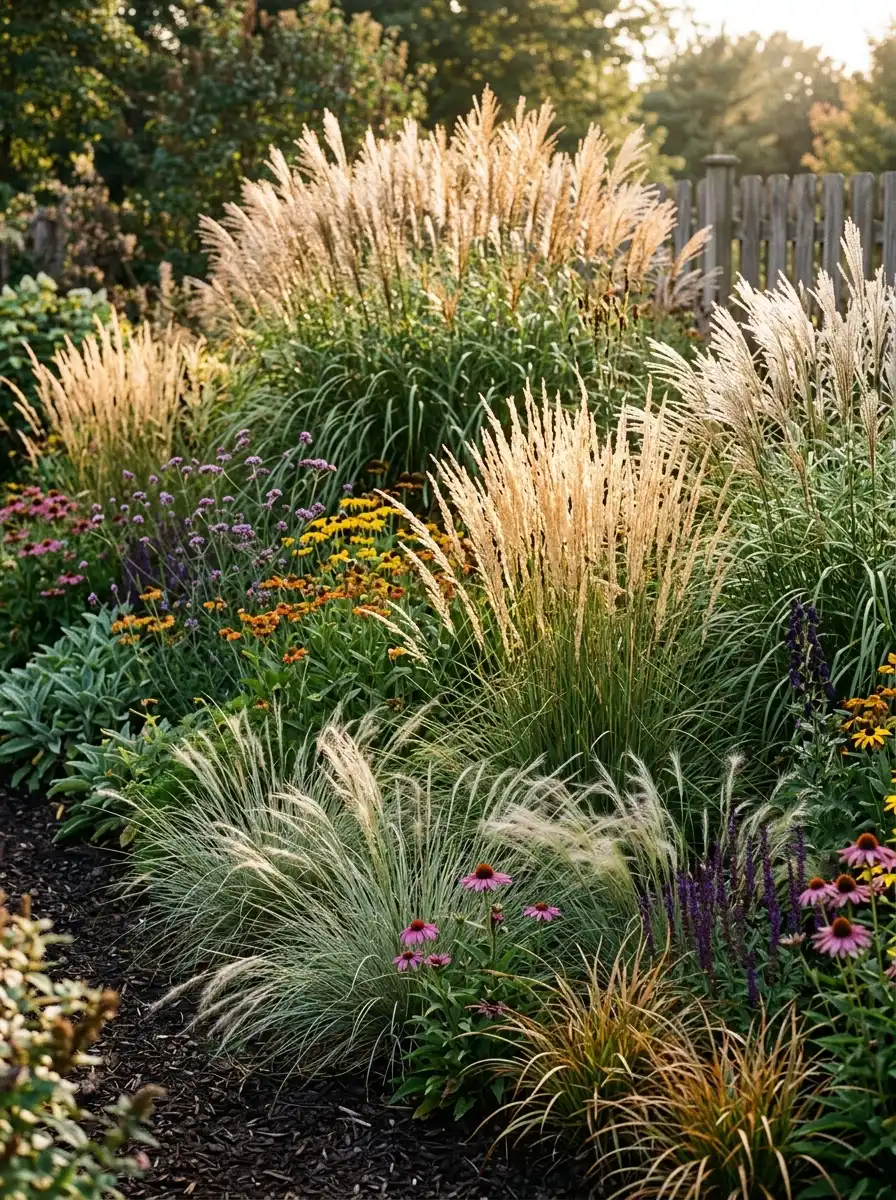
The most beautiful garden beds are those with multiple layers of height and texture, and ornamental grass varieties are the secret ingredient that makes this possible. By combining short, medium, and tall grasses in a single bed, you create depth and visual rhythm that draws the eye through the entire planting from front to back.
Place low blue fescue at the front edge, mid-height switchgrass in the middle, and tall Miscanthus at the rear for a naturally staggered effect. Weave in flowering perennials between each layer to add seasonal pops of color. This approach creates a planting so rich and intentional it looks professionally designed even in a modest backyard setting.
The Key: Layering grasses by height in a single bed creates natural depth and draws the eye through the entire garden in a way flat plantings never achieve.
09
Dramatic Poolside Planting
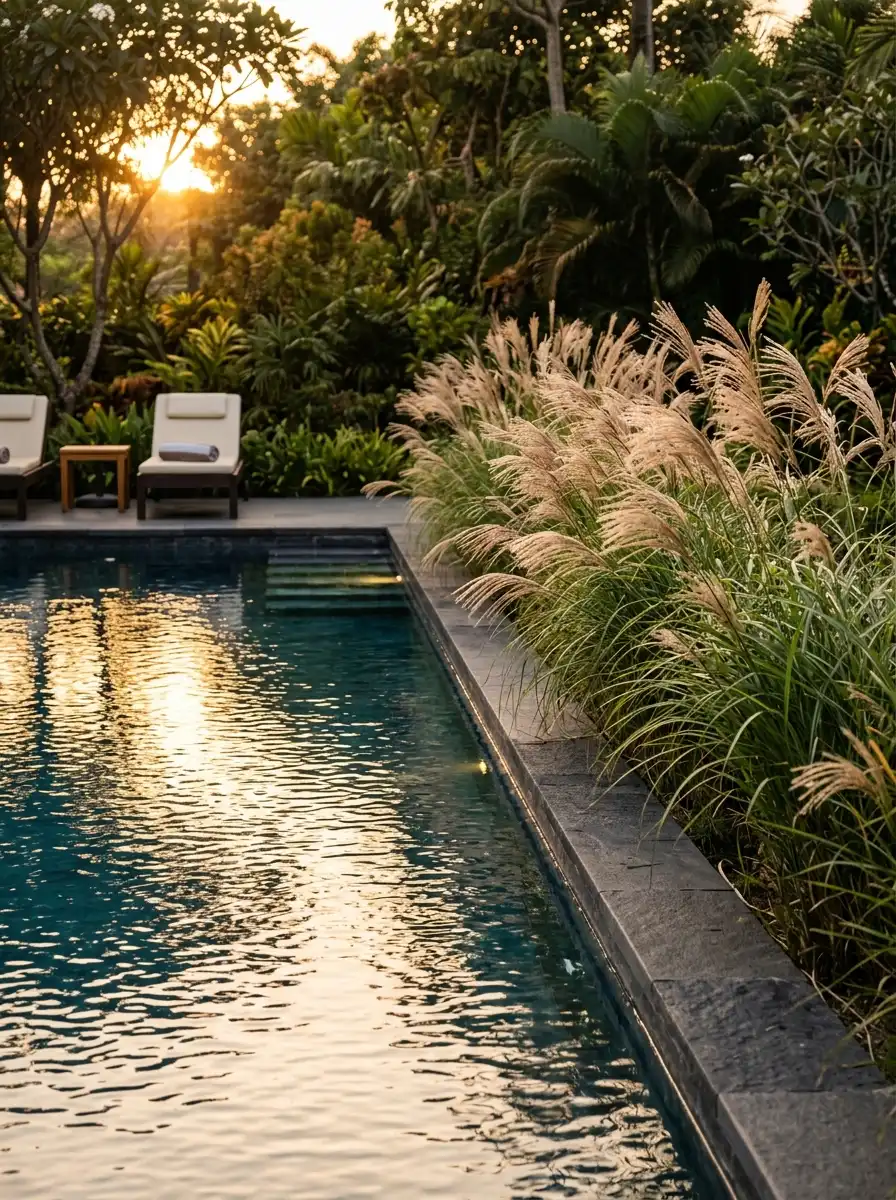
A pool surrounded by hard concrete or stone alone can feel stark and industrial. Adding clusters of landscape grasses along the pool edge immediately softens the hardscape, introduces natural movement and color, and creates the kind of lush, resort-style atmosphere that makes you feel like you are somewhere far more exotic than your own backyard.
Choose salt-tolerant and wind-resistant varieties like maiden grass or yellow groove bamboo grass for pool surrounds. Their graceful forms reflect beautifully in still water at golden hour, creating magical double-image effects. Keep plantings away from pool equipment and skimmers, and use decorative gravel mulch at the base to simplify maintenance near water.
The Key: Poolside grasses add movement and softness to an otherwise hard, reflective environment, transforming a basic pool area into a luxurious outdoor retreat.
10
Four-Season Winter Interest Display
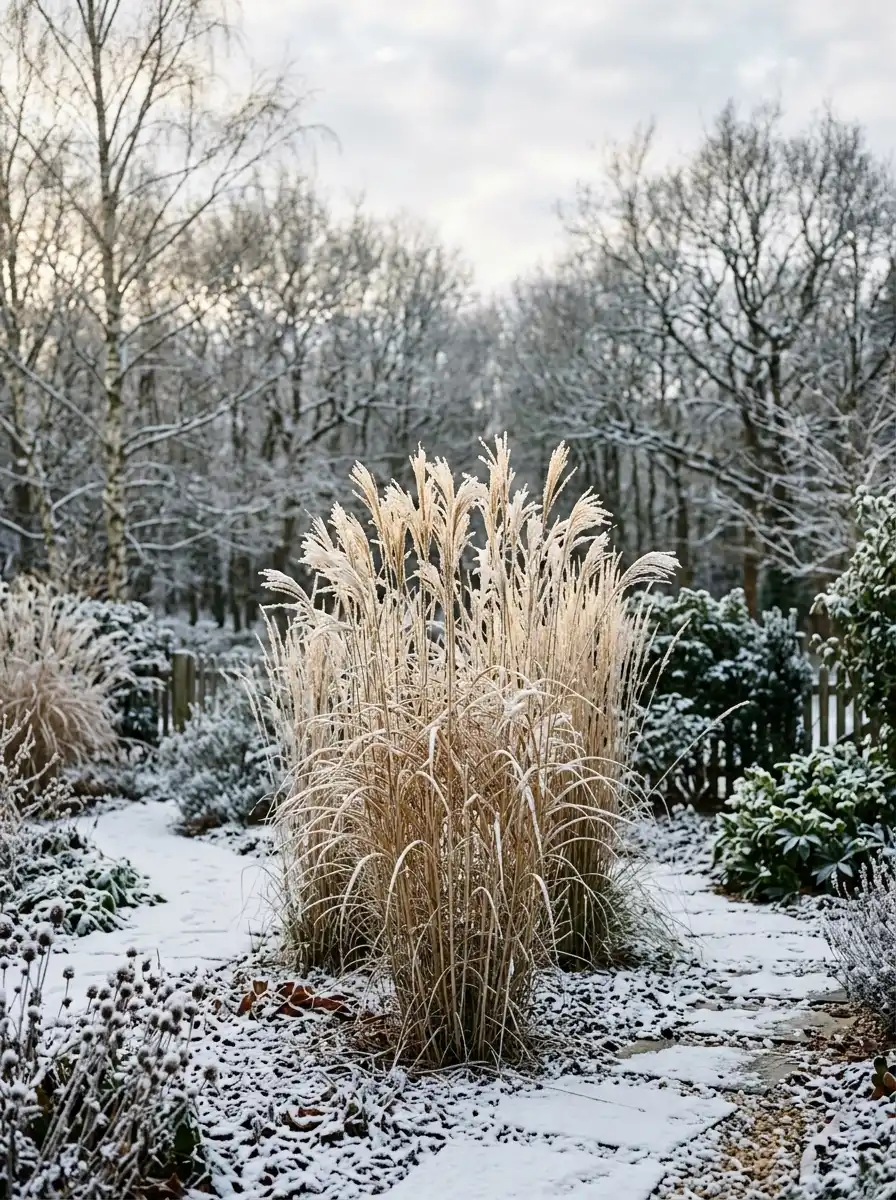
Most plants disappear in winter, leaving gardens bare and lifeless for months. Ornamental grasses refuse to do this. Their dried plumes, golden seed heads, and stiff upright forms become sculptural features when everything else has gone dormant, turning your winter garden into something genuinely beautiful rather than bleak and abandoned.
Karl Foerster feather reed grass is a winter standout, holding its upright form through snow and ice while its tawny seed heads catch low winter sunlight in a way that looks almost luminous. Leave grasses uncut until early spring to enjoy their structural winter beauty, and you will find your garden becomes a source of visual joy even in the coldest months.
The Key: Leaving grasses standing through winter provides season-long visual interest and also offers essential seed head food sources for birds and wildlife.
11
Rain Garden and Drainage Solutions
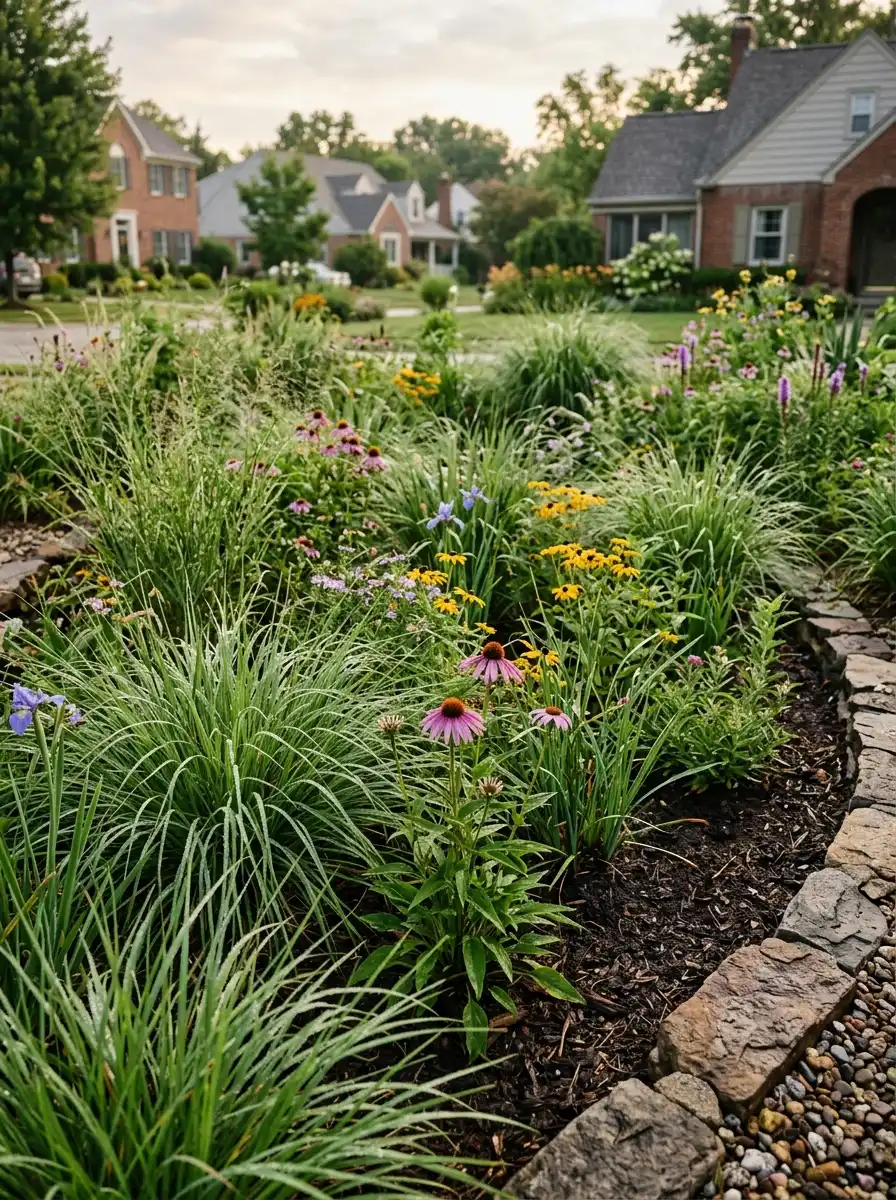
Low-lying areas of your yard that collect standing water after rain are frustrating problems for most homeowners. Turning that soggy depression into a purposeful rain garden planted with moisture-loving decorative grasses solves the drainage issue while creating a habitat that looks wildly beautiful and supports local birds, bees, and butterflies.
Switchgrass and prairie dropseed are both excellent rain garden choices, handling periods of flooding followed by drier conditions without complaint. Their deep roots absorb excess moisture rapidly while their above-ground foliage adds texture and movement to what was previously just a muddy eyesore. This is sustainable gardening that genuinely looks gorgeous in every season.
The Key: Rain garden grasses work double duty, solving water drainage problems while creating a lush, wildlife-friendly habitat that improves the ecosystem of your yard.
12
Wildflower Meadow Companion Planting
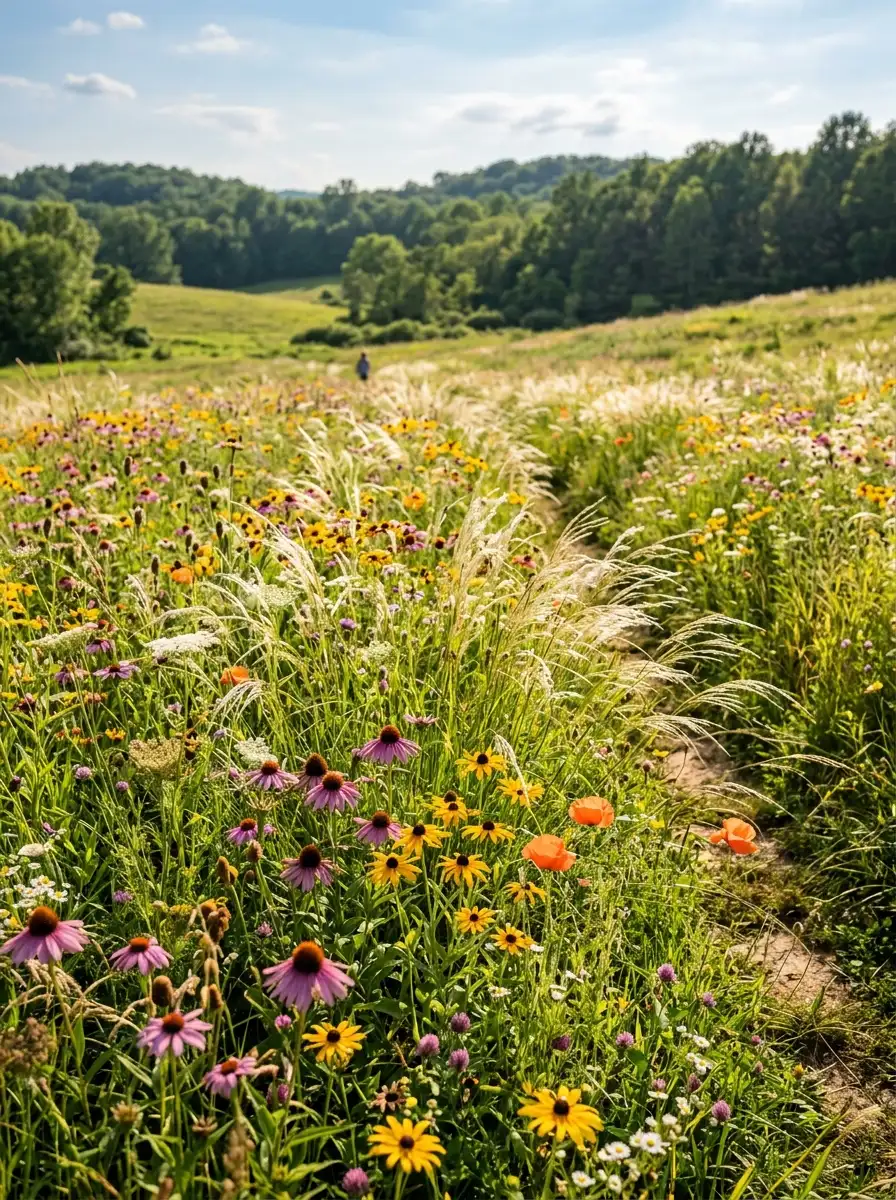
One of the most breathtaking landscape styles of the past decade is the naturalistic meadow planting, and ornamental grasses are the essential framework that holds a wildflower meadow together. Their arching forms weave between colorful blooms, creating a tapestry of movement and color that looks like a painting come to life throughout the summer months.
Little bluestem grass is a meadow favorite, its fine blue-green summer blades turning brilliant orange-red in autumn for double-season beauty. Mix it with black-eyed Susans, purple coneflowers, and wild bergamot for a pollinator paradise that attracts butterflies, bees, and hummingbirds. Mow the whole area back to four inches each spring and watch it return stronger and more beautiful every year.
The Key: Grasses provide the structural backbone of wildflower meadows, giving blooms the support and visual contrast they need to shine at every scale.
13
Rustic Woodland Garden Layering
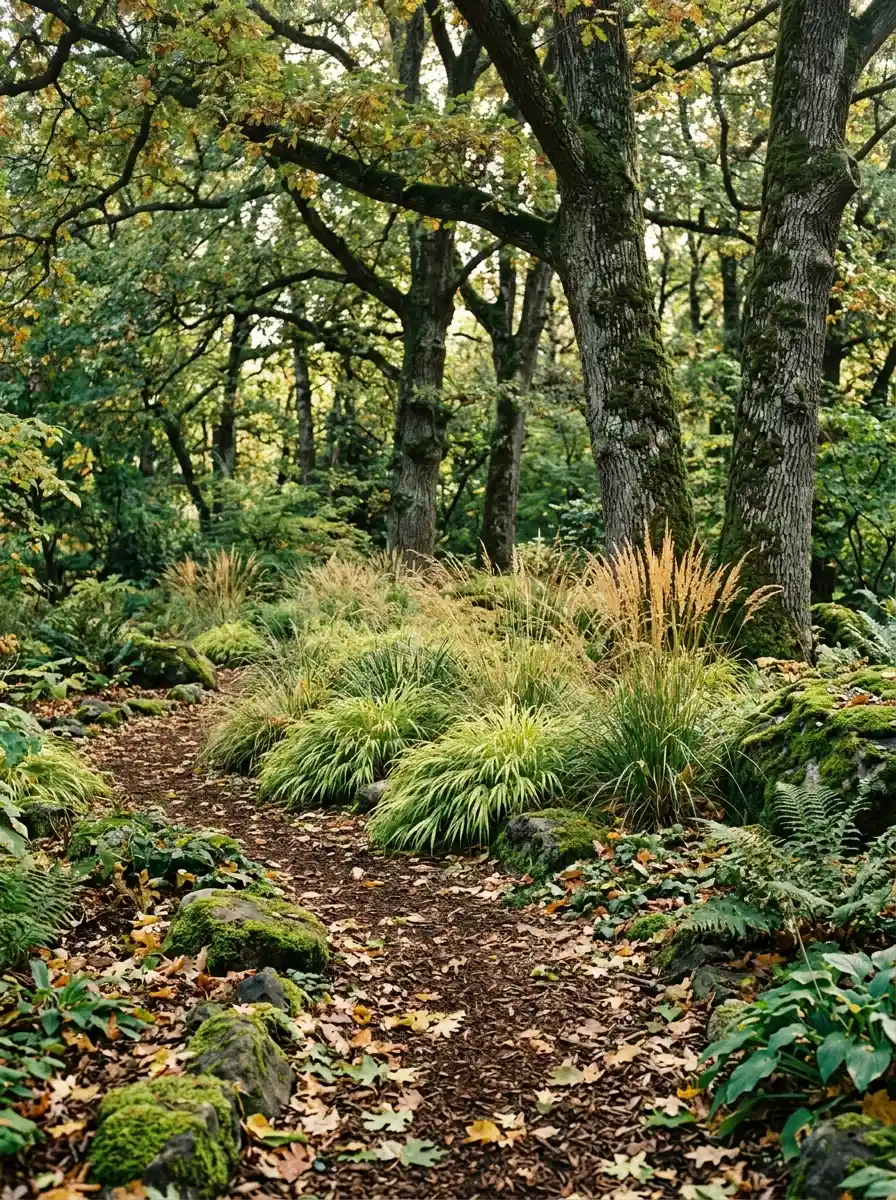
Shaded areas beneath large trees present one of gardening’s biggest challenges since most plants struggle without direct sunlight. Shade-tolerant ornamental grass varieties fill these difficult spaces beautifully, bringing lush green color and gentle movement to spots that would otherwise be bare, mossy disappointments under your tree canopy.
Hakone grass is the gold standard for shaded woodland gardens, its bright chartreuse or variegated blades practically glowing in low light conditions. Pair it with hostas, ferns, and astilbe for a layered, lush woodland floor that feels like a private forest retreat. These combinations require almost no watering once established beneath a canopy of mature trees.
The Key: Shade-loving grasses solve the perennial problem of bare soil under large trees, transforming problem areas into lush, layered woodland garden scenes.
14
Colorful Seasonal Border Transitions
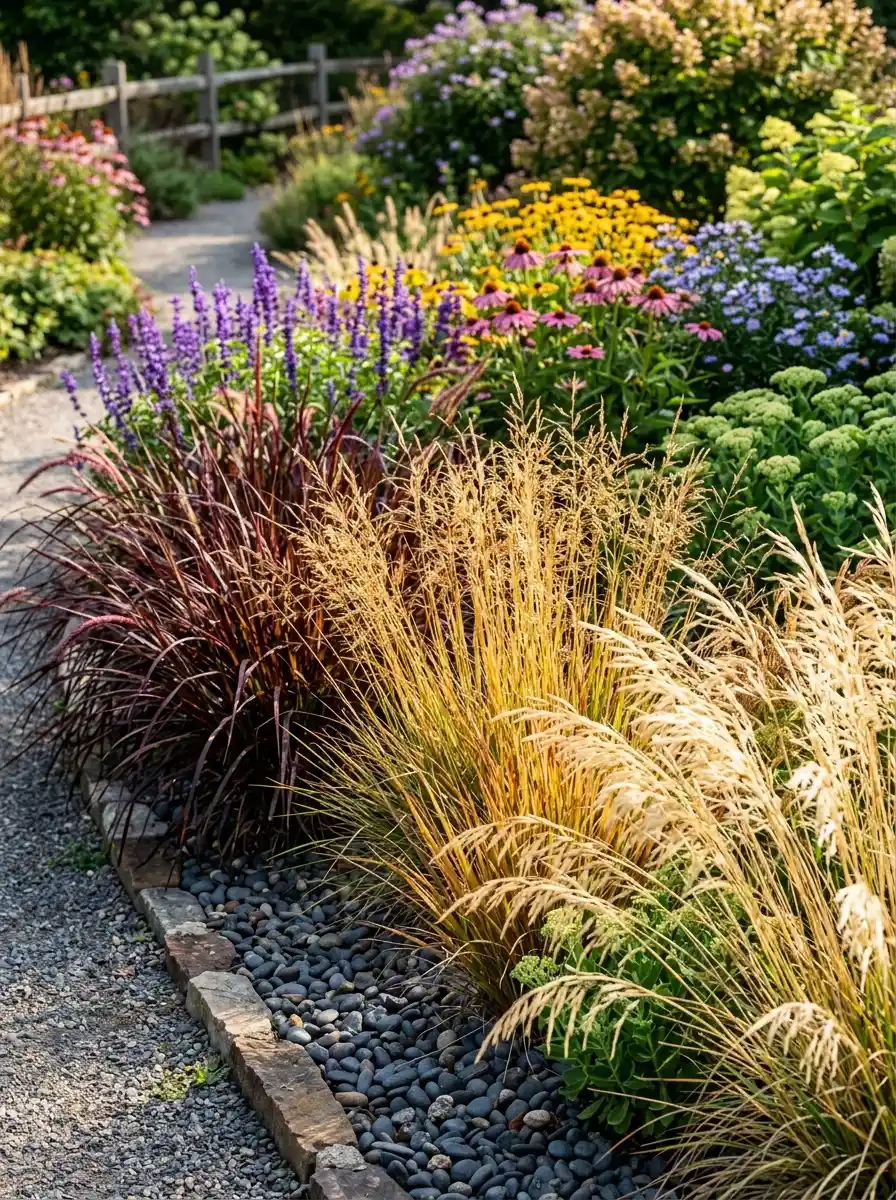
Garden borders do not have to fade into monochrome green monotony between seasons. Selecting ornamental grasses specifically for their changing seasonal color means your border evolves beautifully from spring through winter, shifting from green to gold, burgundy, silver, or orange as the months progress without requiring any replanting or major intervention.
Hakonechloa shifts from green in spring to brilliant golden yellow in fall. Japanese blood grass blazes red all summer. Pennisetum ‘Rubrum’ shows deep burgundy all season long. Plant these varieties together in a repeating pattern along a border for a progression of color that keeps the eye moving and the garden feeling fresh and dynamic across every single season.
The Key: Choosing grasses specifically for their seasonal color shifts creates a border that changes beautifully throughout the year without requiring replanting or intensive maintenance.
15
Sculptural Specimen in Gravel Gardens
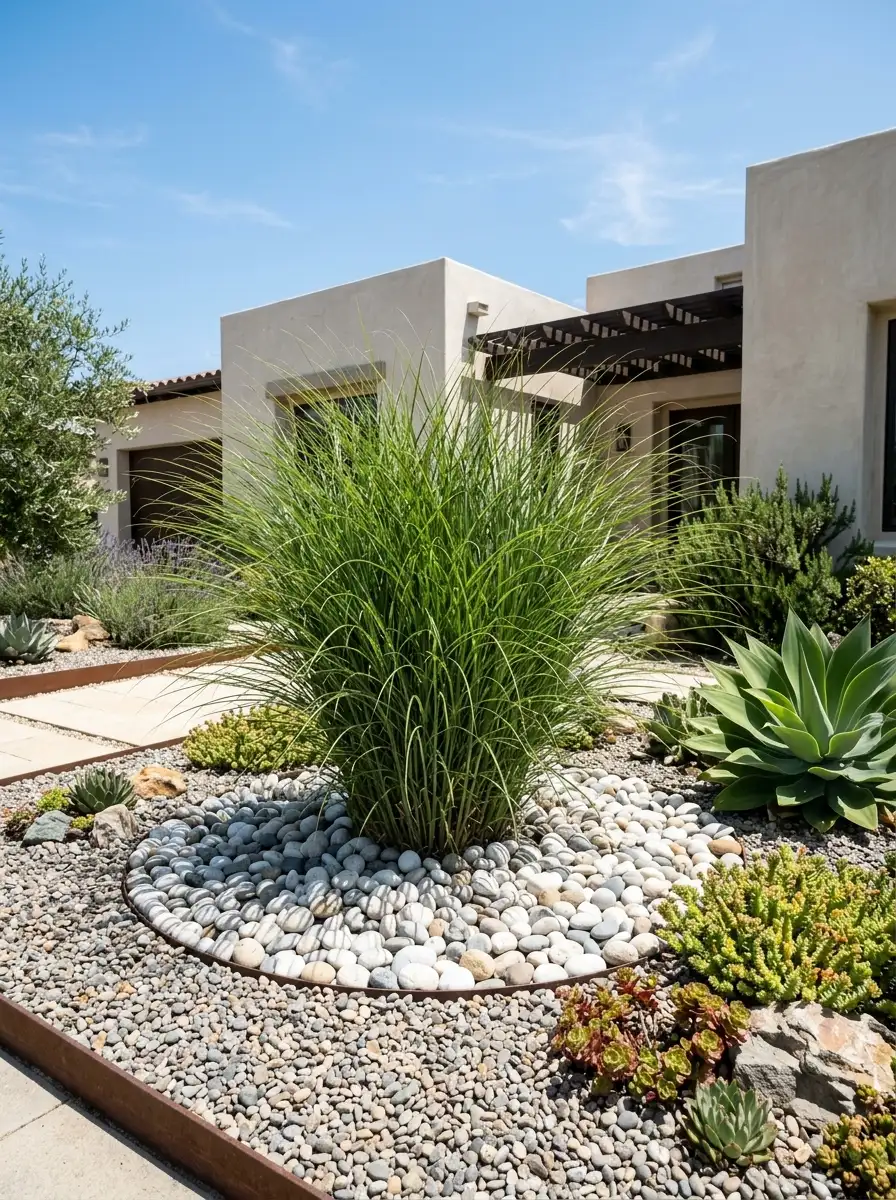
Gravel gardens thrive on strong sculptural plants that look beautiful against a clean, minimalist background, and a single large ornamental grass specimen delivers exactly this kind of bold, architectural impact. Planted centrally in a sea of smooth river pebbles, a well-chosen grass becomes the undisputed star of a low-water, high-impact garden design.
Blue oat grass looks especially striking in gravel settings, its silvery-blue blades and golden seed heads creating beautiful color contrast against pale stones. Combine it with drought-tolerant companions like agave, sedum, and lavender for a Mediterranean-inspired garden that requires almost no irrigation once established and looks stunning throughout the entire year.
The Key: A single bold grass planted as a specimen in a gravel garden creates sculptural drama that requires almost no maintenance but delivers maximum year-round visual impact.
16
Soft Screening Around Outdoor Seating
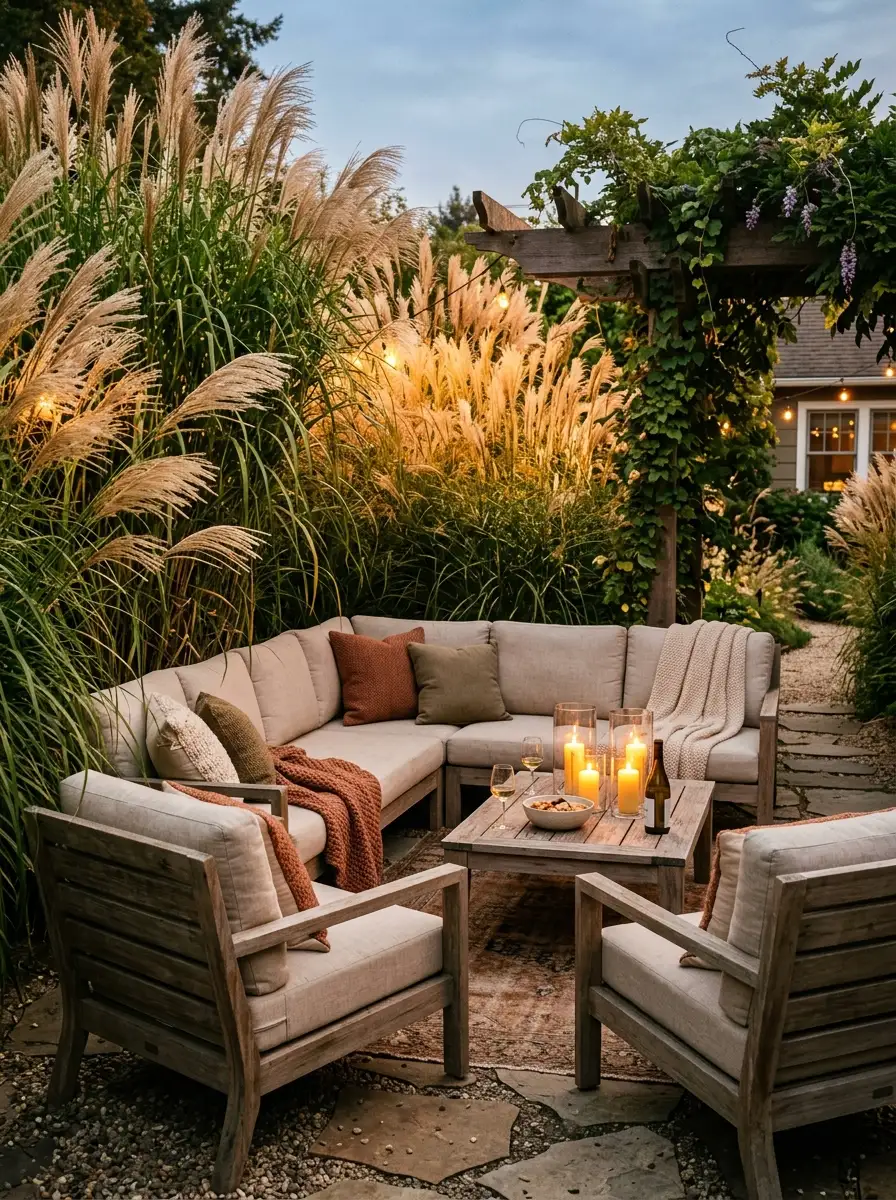
A beautiful outdoor seating area needs a sense of enclosure to feel truly intimate and inviting. Using tall decorative grasses to form a soft, living backdrop on two or three sides of a seating nook creates a garden room effect that feels both private and deeply connected to nature without the heaviness of fences or walls.
Miscanthus varieties work wonderfully for this purpose, growing tall enough to create a real sense of enclosure while their feathery plumes add visual softness that no fence can match. As evening light falls, the plumes glow golden and catch candlelight from nearby lanterns, creating an atmosphere so beautiful and warm it will make every outdoor dinner feel like a special occasion.
The Key: Framing outdoor seating with tall grasses creates a natural garden room that feels private and immersive without the visual weight of built structures.
17
Naturalistic Driveway Edge Planting
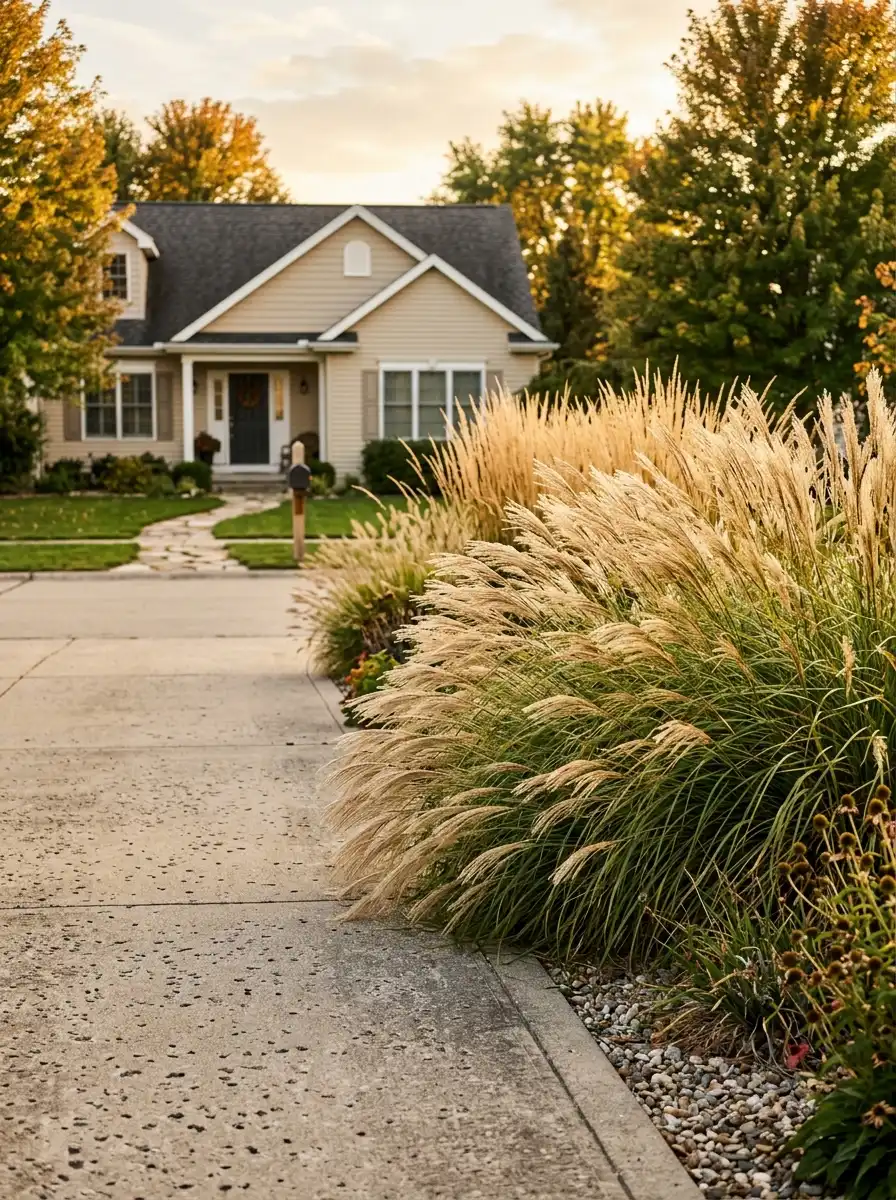
Driveway edges are often among the most neglected landscaping opportunities in a front yard. Planting sweeping masses of landscape grasses along one or both sides of a driveway immediately transforms a purely utilitarian strip into a beautiful, welcoming approach that makes your entire property feel more intentional, curated, and beautifully designed.
Fountain grass planted in flowing, naturalistic drifts along a driveway edge creates a soft, arching border that softens the hard edge of concrete or asphalt beautifully. Its burgundy or green blades and bottlebrush plumes add color and movement at eye level from a car window, making the arrival experience at your home feel genuinely special and considered.
The Key: Driveway grass planting creates one of the highest-impact curb appeal upgrades available, transforming a utilitarian edge into a beautifully intentional landscape feature.
18
Vibrant Color Contrast Pairings
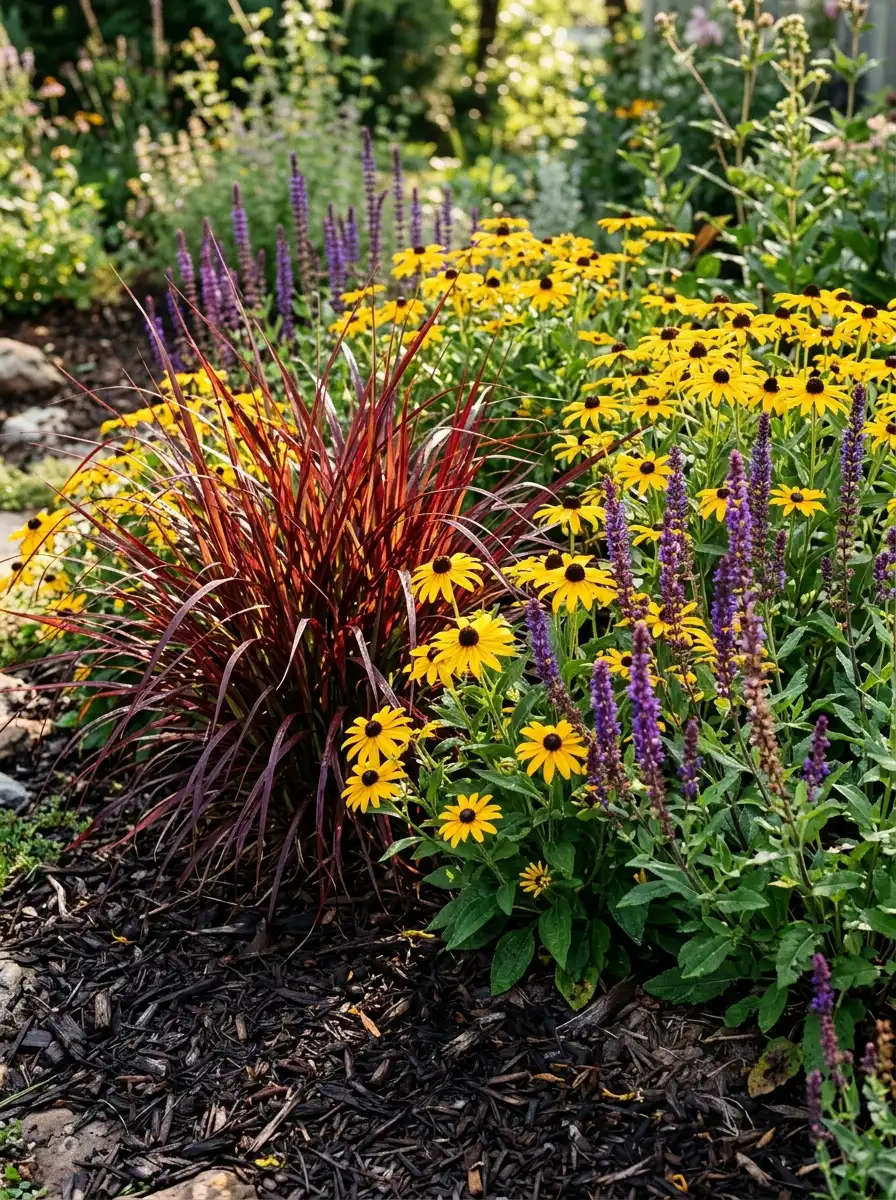
Color pairing is one of gardening’s great pleasures, and ornamental grasses offer some of the most exciting foliage colors in the plant world to work with. Deep burgundy, silver-blue, chartreuse, and warm gold grass varieties all become stunning counterpoints to flowering perennials when planted with a thoughtful eye for contrast and complementary color relationships.
Try pairing purple fountain grass with bright yellow rudbeckia for a bold warm-cool contrast that absolutely pops in photographs. Or combine silver blue fescue with coral salvia and white gaura for a softer, more romantic palette. The grasses provide consistent foliage color all season while flowers come and go, making the overall composition reliable and continuously interesting.
The Key: Using colored grass foliage as a permanent anchor color allows you to change surrounding flowers seasonally while keeping your garden’s overall palette cohesive.
19
Waterside and Pond Edge Planting
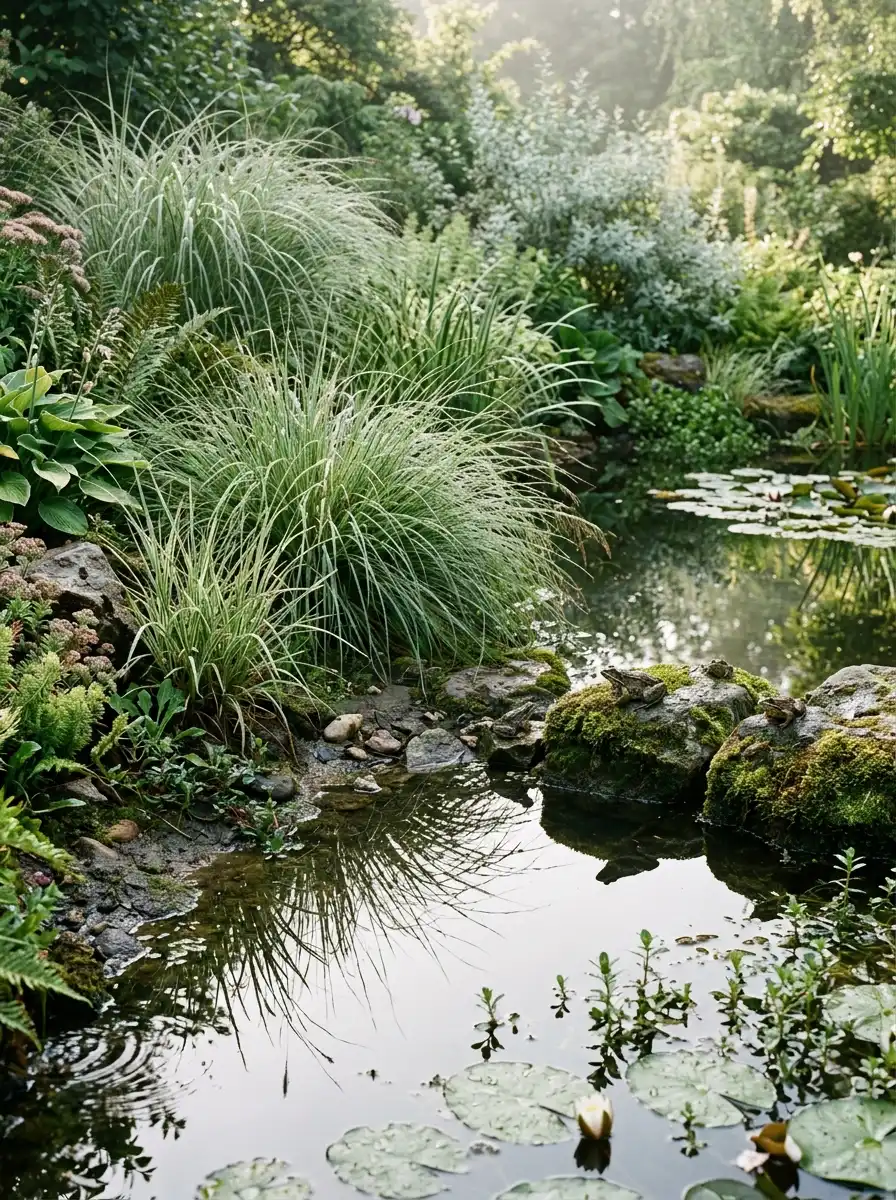
Water features become exponentially more beautiful when their edges are softened with ornamental grasses that reflect in the surface below. The double image of graceful grass plumes and water reflections creates a sense of depth and serenity that makes even a modest backyard pond look like a professionally designed water garden destination.
Carex and sedge grasses are particularly well-suited to wet pond edges, thriving in consistently moist conditions where other ornamental varieties would struggle. Their arching, fine-textured blades drape naturally over the water surface, creating a soft transition between land and water that feels entirely natural. Birds love these grass-edged ponds, visiting frequently to drink and bathe.
The Key: Grass-edged water features look dramatically more natural and designed than hard, unplanted pond edges, and the reflections in still water double the visual impact.
20
Formal Parterre-Style Grass Geometry
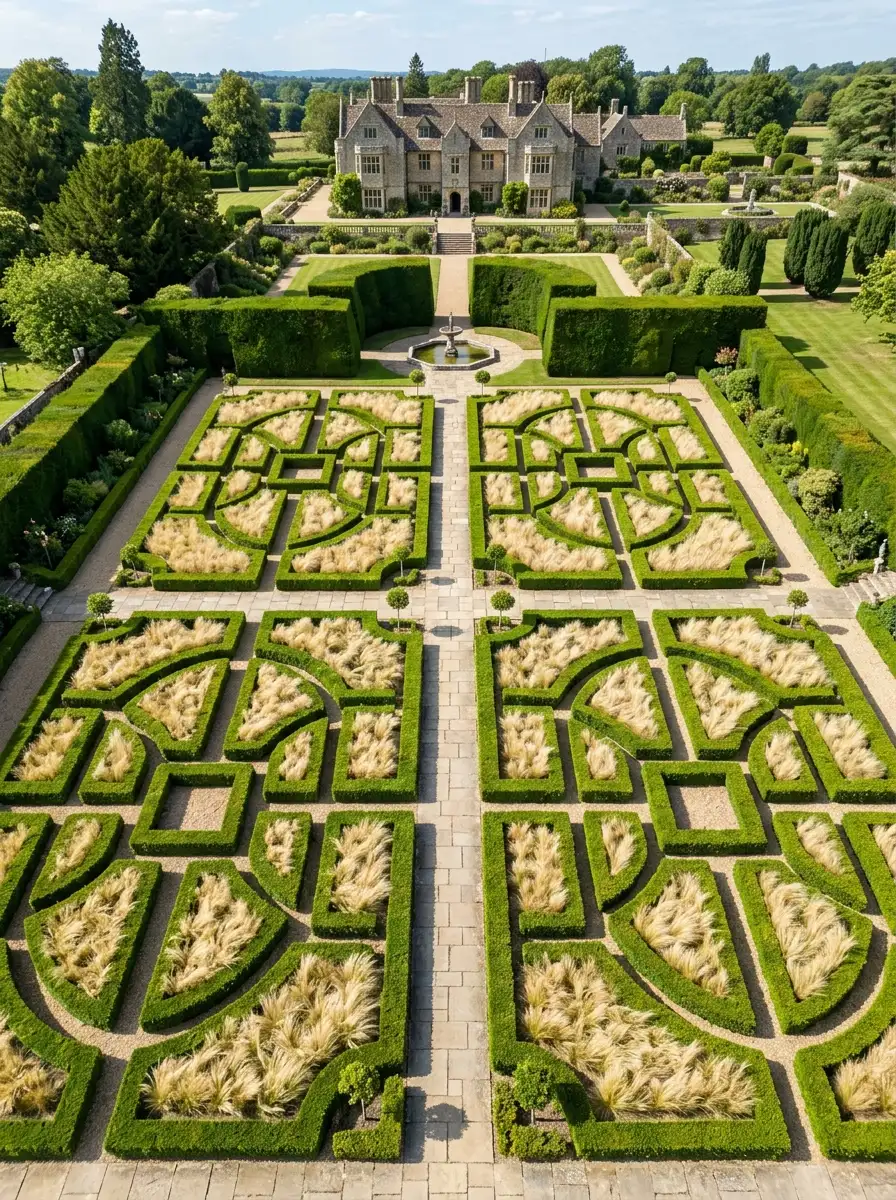
Who says ornamental grasses belong only in naturalistic or casual garden styles? Planted in precise geometric patterns within a formal parterre layout, grasses become surprisingly disciplined design elements. Their soft, fluid texture creates beautiful contrast against the rigid geometry of clipped boxwood edging and stone pathways in a way that feels both classical and refreshingly contemporary.
Blue fescue planted in repeated circular or square blocks within a formal parterre creates a striking tonal contrast between cool silvery-blue grass and deep green box hedging. This style works beautifully in symmetrical front gardens, courtyard spaces, and heritage-style properties where traditional formality meets the relaxed beauty of natural planting for a sophisticated result.
The Key: Using grasses inside formal geometric designs softens rigid structure without compromising the sense of order and intention that formal garden style requires.
21
Rock Garden Texture Companions
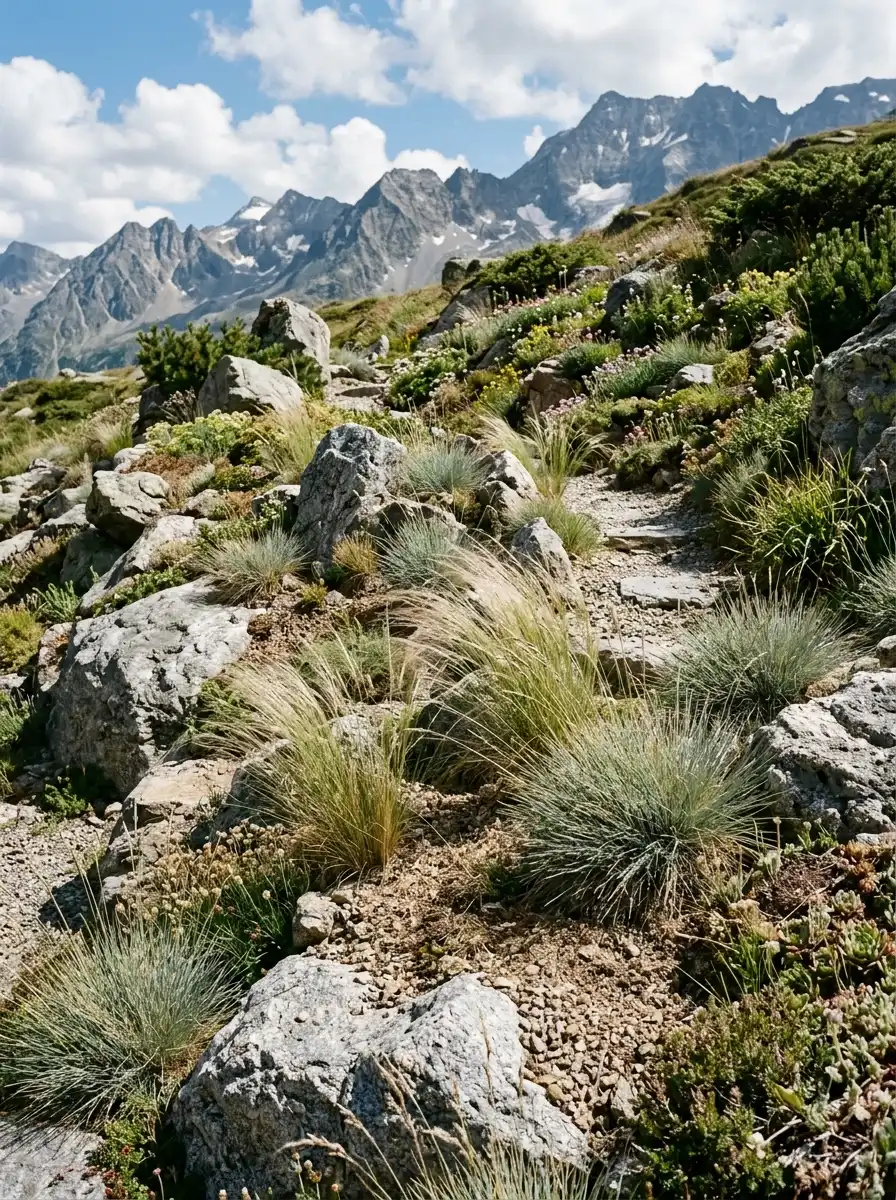
Rock gardens come alive when soft, fine-textured plants are tucked between the hard, angular surfaces of boulders and stones, and compact ornamental grass varieties are perfectly scaled for exactly this purpose. Their delicate blades and seed heads provide gentle movement and organic softness that makes a rock garden feel genuinely natural rather than artificially composed.
Blue fescue, Mexican feather grass, and prairie dropseed all scale beautifully in rock garden settings, their clumping habits keeping them tidy without formal pruning. Plant them in pockets of amended soil between large stones where they will spill gently over rock edges. Pair with sedums, thyme, and small alliums for a rock garden that looks both deliberate and wildly naturalistic.
The Key: Compact clumping grasses add the soft texture that makes a rock garden feel lived-in and natural rather than like a static collection of stones and alpines.
22
Sustainable Native Grass Meadow
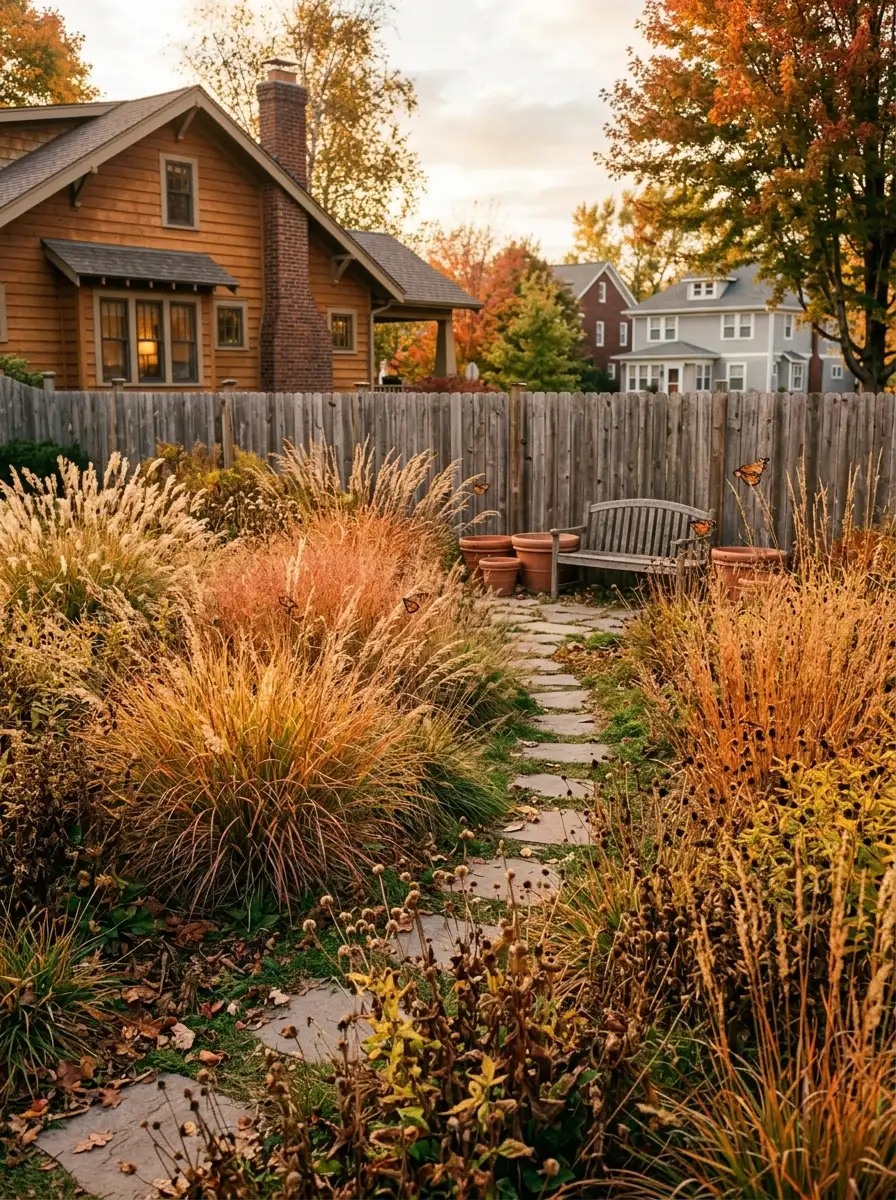
Replacing water-hungry lawn with a native ornamental grass meadow is one of the most rewarding and environmentally meaningful landscaping choices any homeowner can make. Native grasses require zero supplemental irrigation once established, need no fertilizers, and provide critical habitat for native pollinators, songbirds, and ground-nesting insects throughout the year.
Little bluestem is a native meadow star, its summer blue-green blades turning brilliant copper-orange in autumn and holding through winter as wildlife habitat. Combine with switchgrass and prairie dropseed for a diverse, layered native meadow that changes color with every season. This kind of planting gets more beautiful each year with almost no intervention beyond an annual spring cutback.
The Key: Native ornamental grasses are the most sustainable landscaping choice available, requiring almost no resources while providing maximum ecological benefit and seasonal beauty.
23
Statement Grass Wall Backdrop
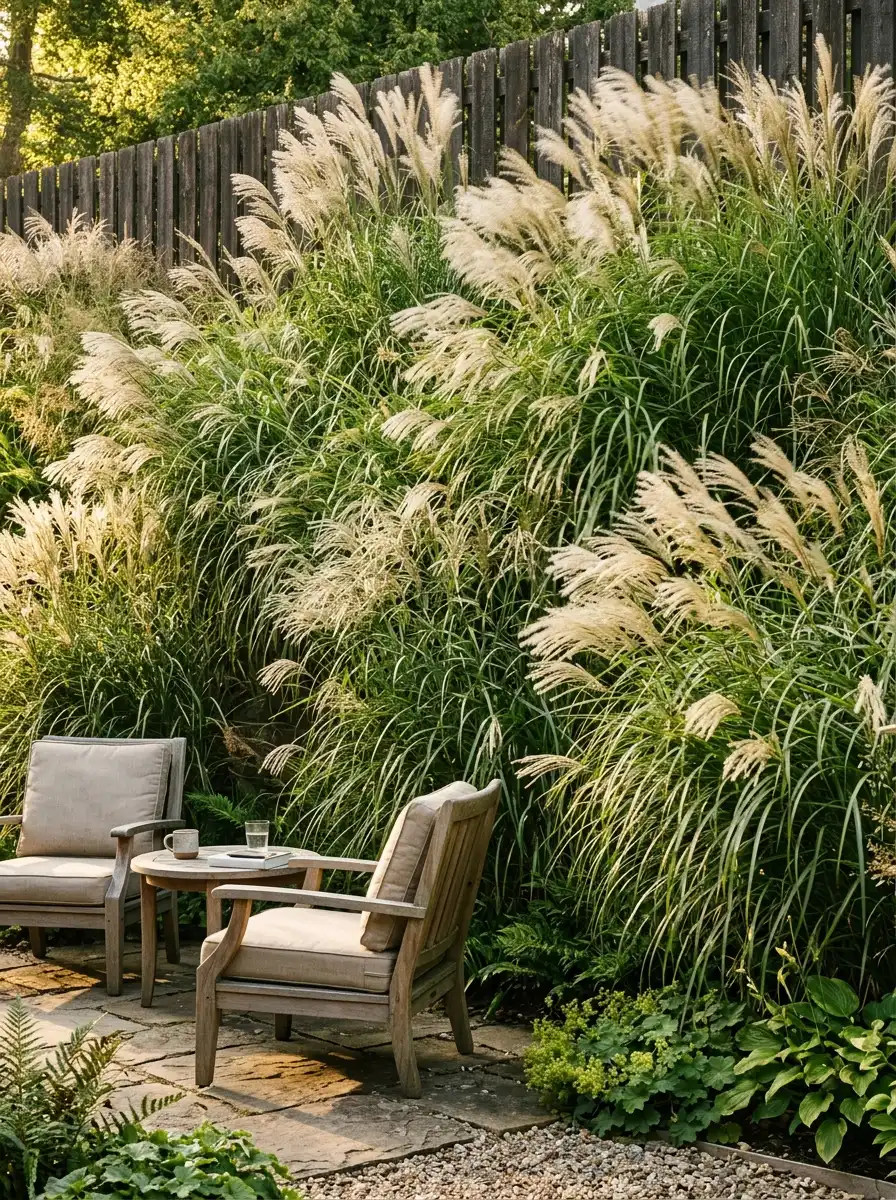
A mass planting of tall decorative grasses covering an entire fence or garden wall creates one of the most dramatic backdrops in landscape design. Unlike a flat painted wall or a rigid hedge, a living grass wall moves, breathes, changes color with the seasons, and creates a sense of depth and layering that makes any outdoor space feel expansive and beautifully designed.
Plant a single variety in a bold mass for maximum impact, choosing a tall, upright grass like Karl Foerster or giant miscanthus. The repetition of a single species creates a sense of visual rhythm and intentionality that mixed plantings cannot achieve. This backdrop works behind seating areas, raised beds, water features, and sculpture for a dramatic, professional landscape result. You can find additional inspiration in our guide to layered garden design ideas for more ways to build depth and drama in your outdoor space.
The Key: A mass-planted grass wall backdrop creates visual depth and seasonal movement behind focal points in ways that static fences and hedges simply cannot replicate.
There is something quietly extraordinary about a garden that moves. Ornamental grasses bring that quality to any outdoor space, from the smallest patio container to the grandest sloping meadow. They soften hard edges, create privacy, attract wildlife, hold soil, and add color in every season without demanding constant care. I have always believed that the best gardens feel effortless, even when thought and love have gone into every planting decision, and decorative grasses make that effortless feeling genuinely achievable for any gardener.
Whether you start with one bold container grass on your patio or transform your entire back slope into a native meadow, these 23 ideas are here to help you find the perfect starting point for your vision. Save this post to your Pinterest boards so you can come back to it throughout the seasons as your garden evolves. And if someone in your life is dreaming about a landscape refresh, share it with them because the most beautiful gardens are always more fun when you have someone to be inspired alongside you.