Mobile Home Exterior
🏠 22 Real Ideas
⏱ Quick Read
🔥 Always Trending
22 Mobile Home Exterior Ideas
That Make Your Home Look Like a Real House Using Smart Design Principles
Picture driving past a street of homes and stopping at one that makes you think, “That is a beautiful house.” Now imagine discovering it is a mobile home that was transformed using smart design choices. That is the quiet power of intention, and it is completely within reach. Mobile home exterior ideas like these have been reshaping how manufactured housing looks, feels, and is perceived across entire neighborhoods.
In this article, you will find 22 practical, visually powerful ideas that use architectural tricks, layering techniques, and curb appeal strategies to make your home look permanent, polished, and beautifully designed. Whether you are working with a tight budget or planning a full mobile home outside makeover, these ideas give you a clear, inspired roadmap to a home that genuinely looks and feels like a real house from the outside in.
01
Pitched Roof Gable Addition
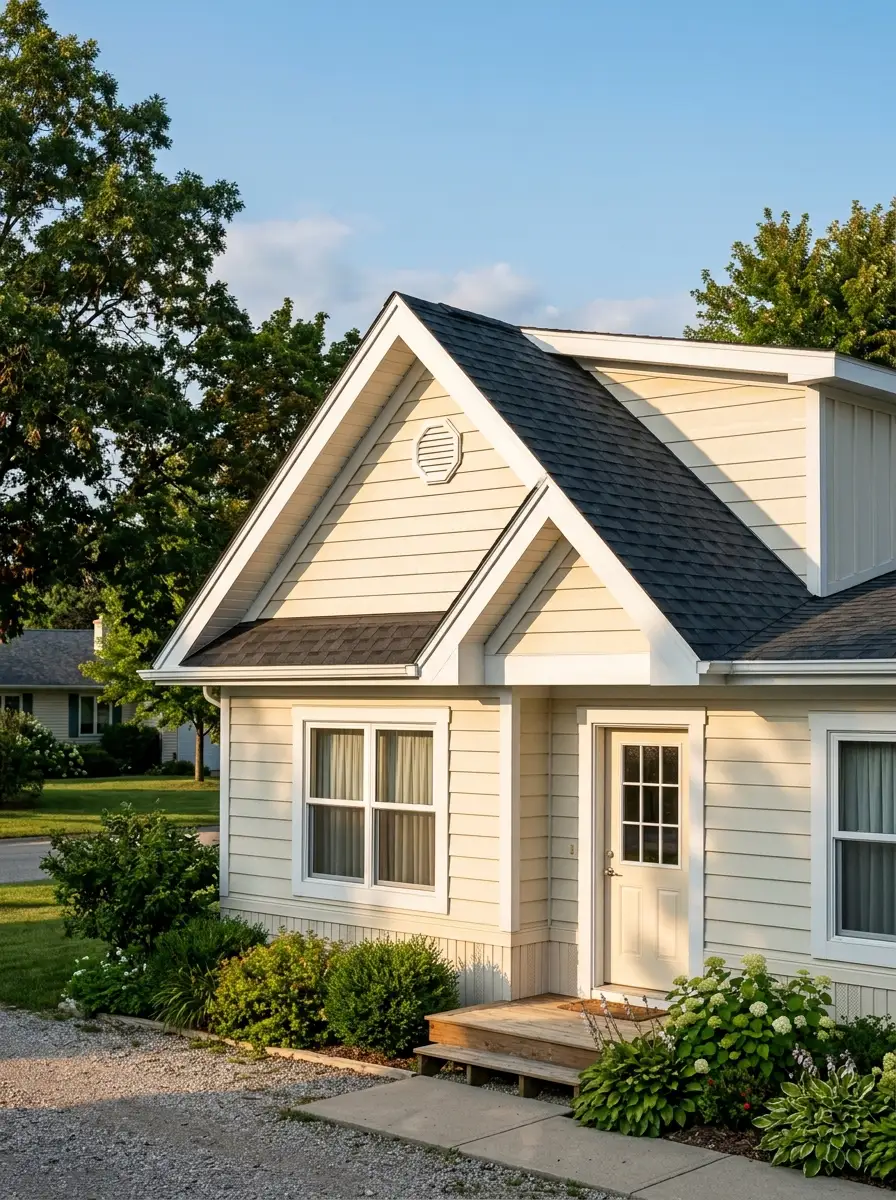
One of the most transformative mobile home exterior ideas you can invest in is adding a pitched gable roof. The steep angle immediately creates height, visual weight, and the architectural vocabulary that most people associate with permanent, site-built homes. It breaks the long, flat roofline that gives manufactured homes their temporary appearance.
Beyond the visual impact, a gable roof improves drainage, creates attic ventilation, and adds meaningful structural character. Once the gable is in place, every other design choice you make, from siding to trim, naturally looks more intentional and polished. This single upgrade shifts the entire perception of the home in a way that no surface-level decoration can match.
The Key: A gable roof upgrade is the fastest single change that signals permanence, adding architectural height that fundamentally reframes the entire exterior.
02
Board and Batten Vertical Siding
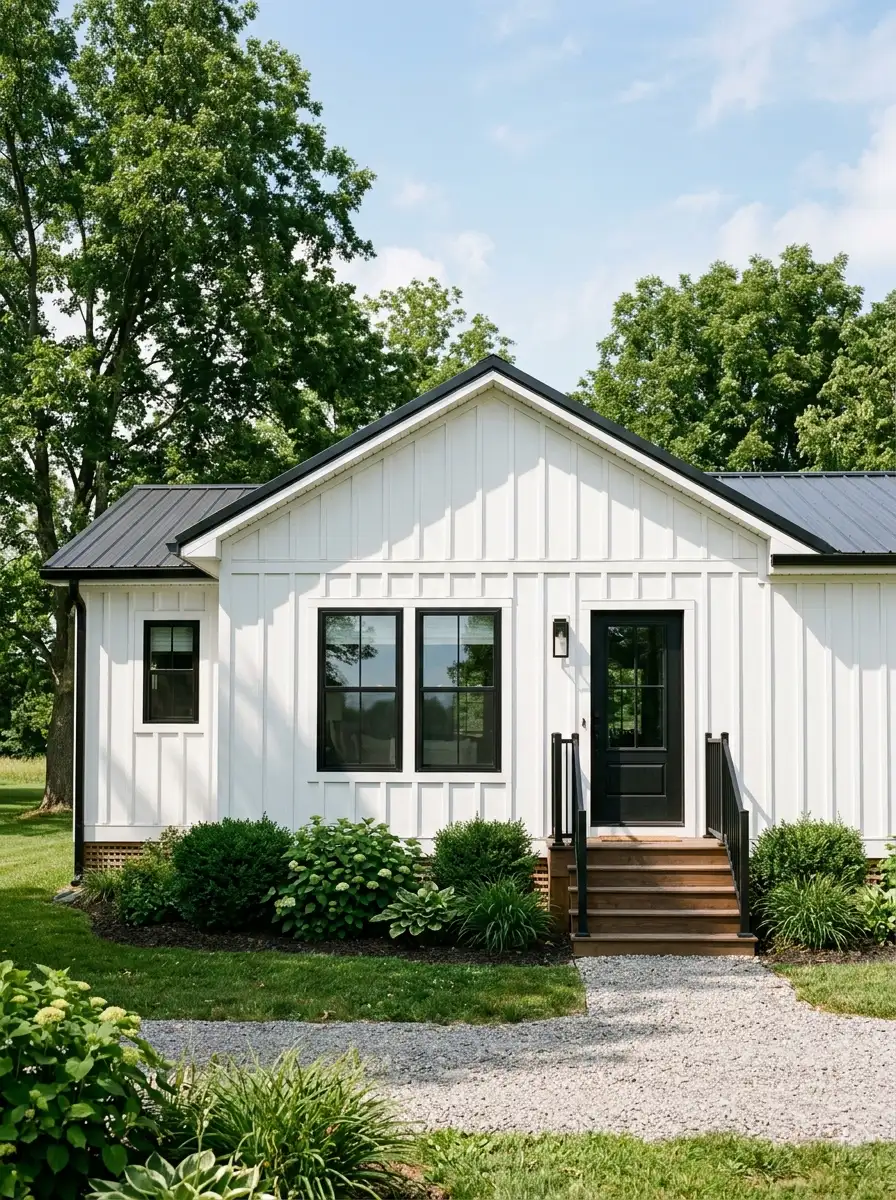
Vertical siding is one of the cleverest manufactured home exterior upgrades because it does exactly what the eye needs: it pulls the gaze upward. Board and batten siding creates strong vertical shadow lines that make the home appear taller than it actually is, counteracting that stretched, low-to-the-ground silhouette that defines most mobile home profiles.
The beauty of board and batten is its versatility. Whether you paint it bright white for a clean farmhouse look, warm greige for a modern country feel, or deep navy for bold character, the vertical rhythm reads as intentional and substantial. I have noticed that homes using this siding treatment immediately look more architect-designed even without any other changes. The proportional correction alone is remarkable.
The Key: Vertical lines are a visual illusion tool. Board and batten siding tricks the eye into reading your home as taller, more grounded, and fully built.
03
Bold Front Door Color
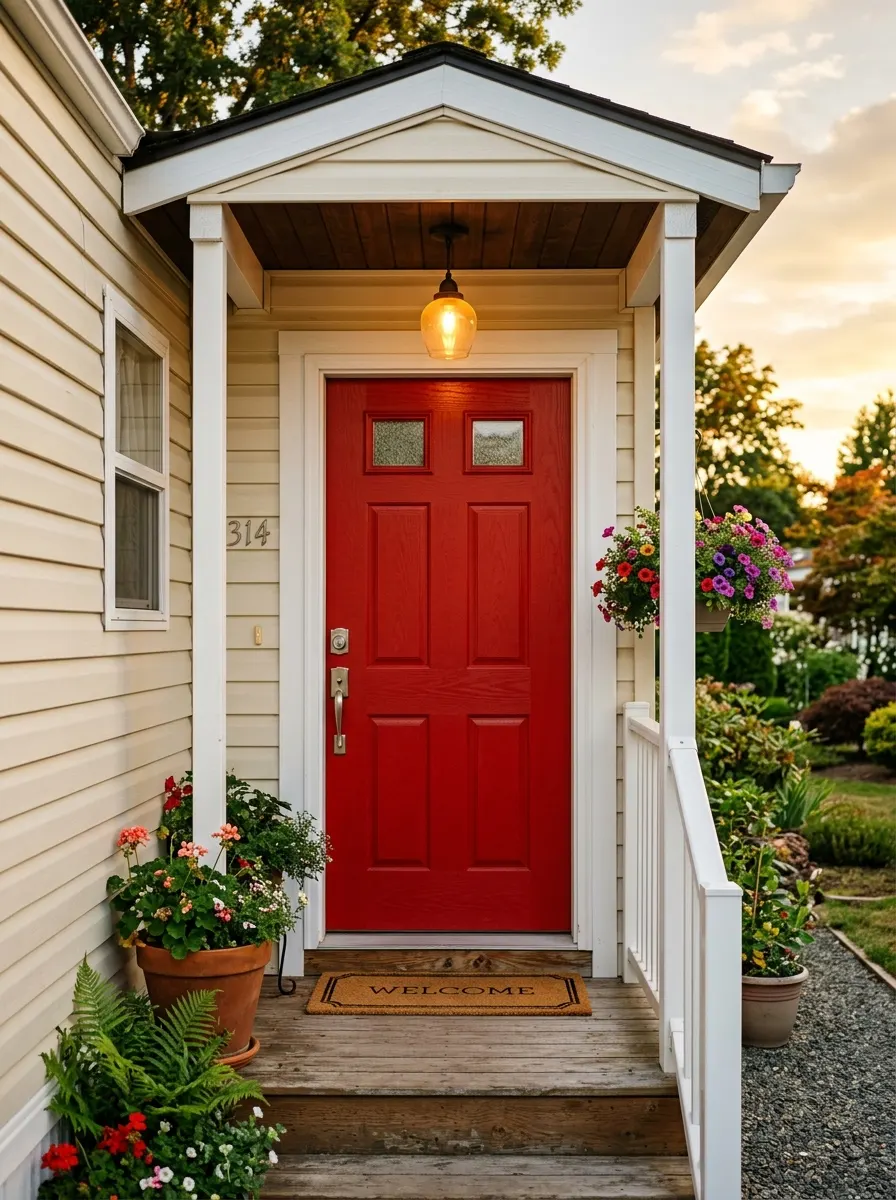
A confident, contrasting front door color is one of the highest-impact mobile home curb appeal strategies with one of the lowest price tags. The front door is the face of your home, and when it pops with a color that commands attention, every person driving or walking by registers the home as a composed, intentional space rather than a plain manufactured unit.
Colors like deep red, navy, forest green, and matte black all create that strong visual hierarchy that separates the entry from the rest of the facade. The key is choosing a shade that contrasts with your siding without clashing. When your door reads clearly from the street, the entire home’s composition snaps into focus. Perception shifts from “mobile home” to “that house with the great front door.”
The Key: Your front door is the anchor of your home’s visual hierarchy. A bold color tells every visitor exactly where to look first, communicating confidence and intention.
04
Covered Front Porch Addition
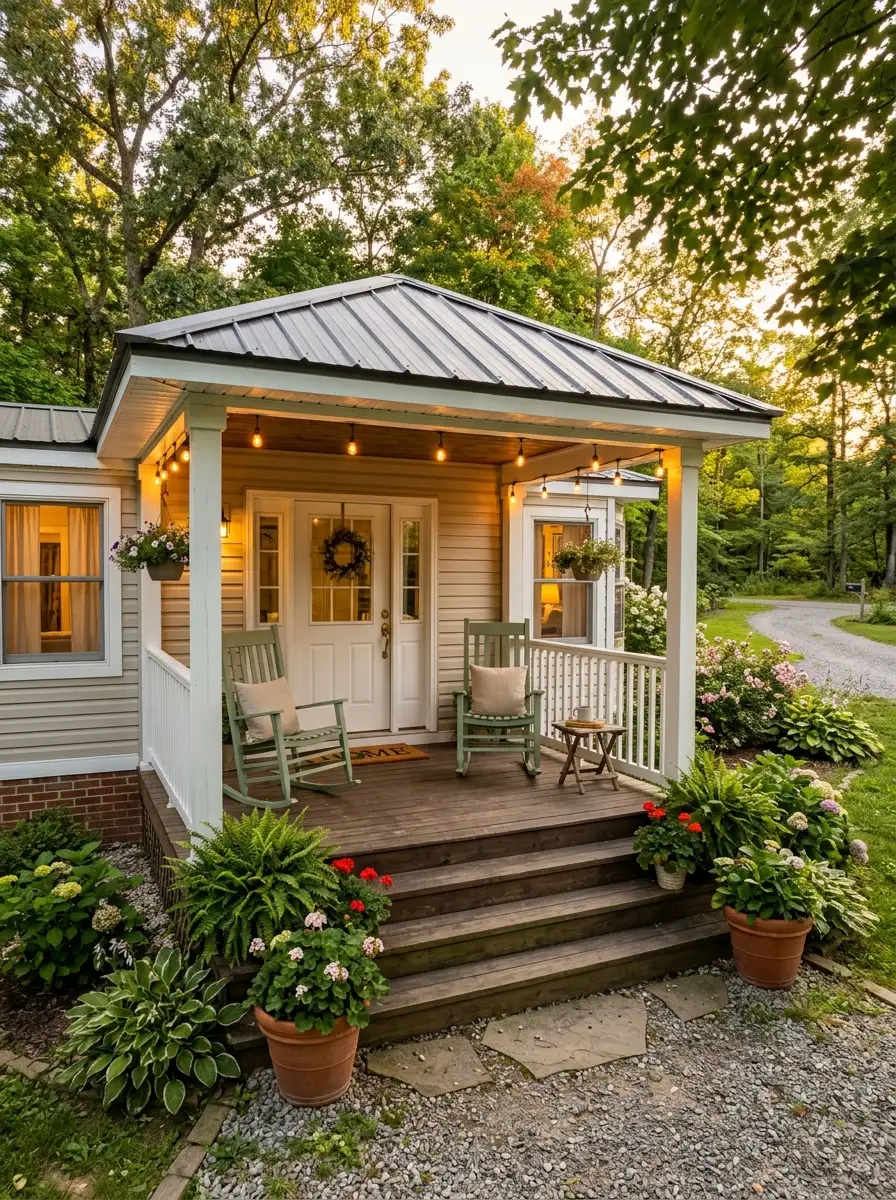
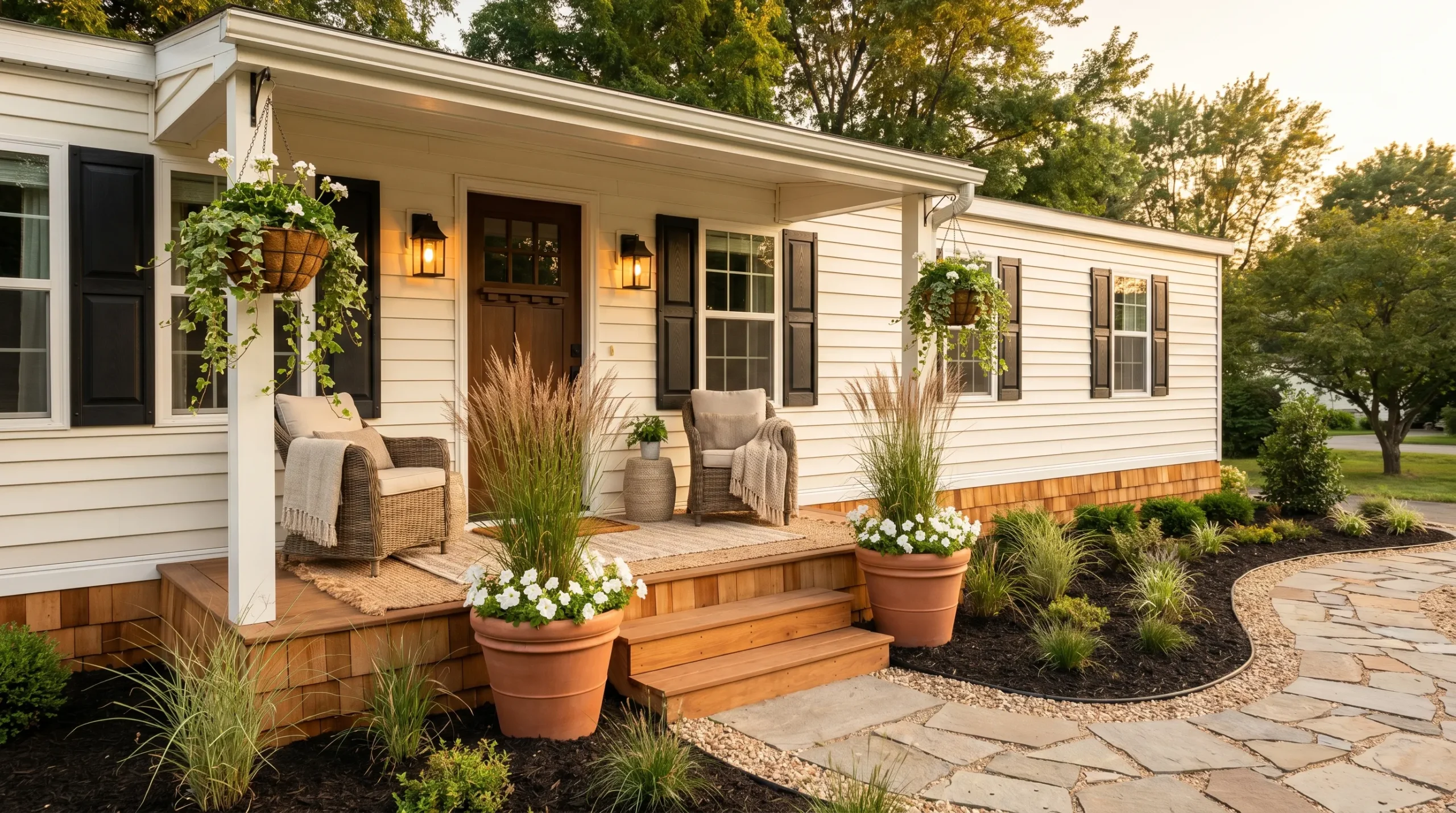
Nothing signals “real house” quite as powerfully as a covered front porch. As a trailer home exterior transformation, a porch addition simultaneously adds square footage, architectural depth, and the social symbolism of a home that welcomes visitors. It creates a visual transition zone between the street and the front door that manufactured homes almost never have on their own.
A well-designed porch with columns, a coordinated roof, and simple but thoughtful details redefines the home’s silhouette entirely. The columns add verticality. The roof creates shadow and depth. The floor extends the home’s perceived footprint. In my experience, a porch is the single addition that makes neighbors forget a home was ever manufactured and a few well placed porch details from our fall porch décor ideas can keep that porch looking intentional season after season.
The Key: A covered porch adds the architectural transition zone every real-looking home has, giving your exterior depth, shade, and undeniable residential character.
05
Foundation Skirting with Stone Veneer
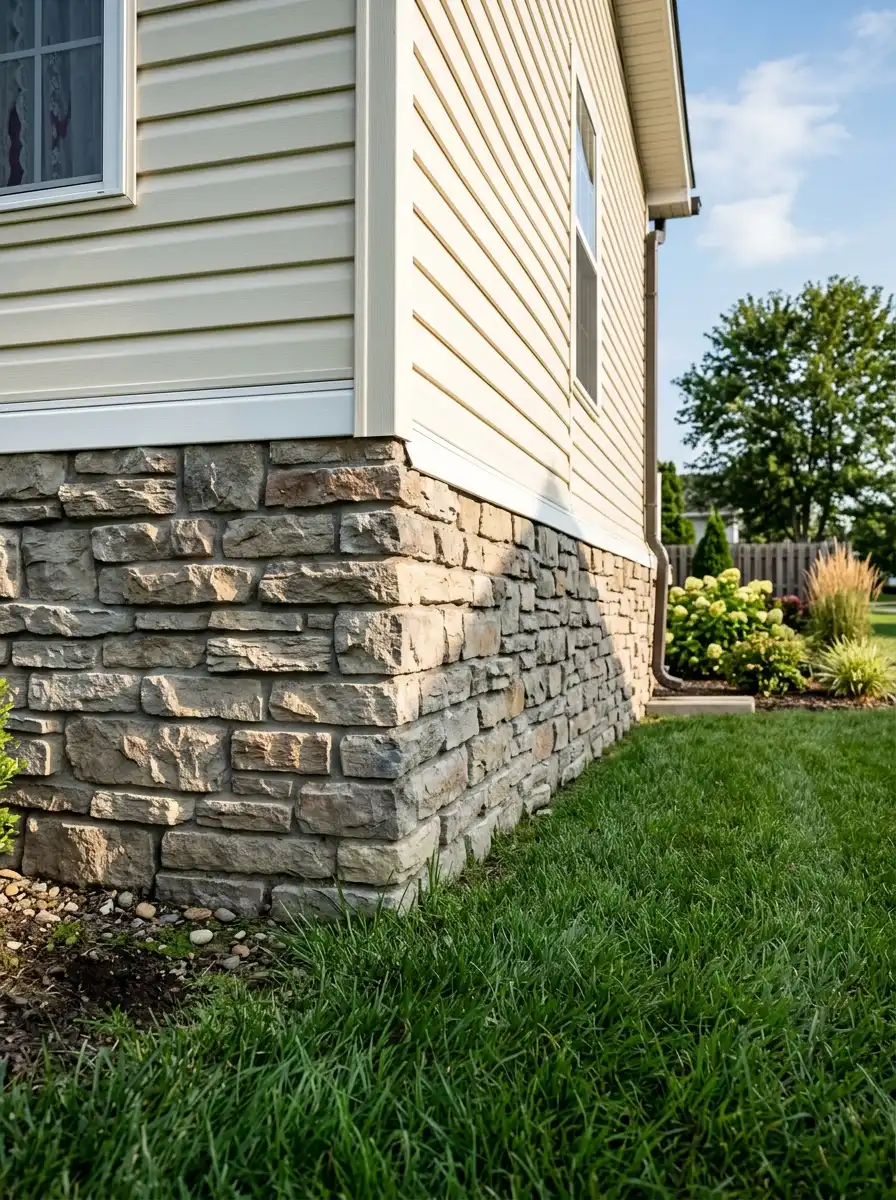
Exposed metal or vinyl skirting is the single feature that most loudly announces a home as a manufactured unit. Replacing or cladding it with stone veneer is one of the most powerful mobile home exterior ideas for making the home look like it grew from the ground rather than arrived on a truck. The grounding effect is immediate and undeniable.
Stone veneer skirting reads as permanence in a language the eye understands instantly. It creates a visual base for the entire structure, anchoring it to the earth the way a true foundation does on a site-built home. Choose a stone color that coordinates with your siding and roof for a cohesive palette that ties the whole exterior together. The investment is modest, but the return in perceived permanence is enormous.
The Key: Stone veneer skirting grounds your home visually and structurally, eliminating the most telling sign of manufactured housing in one straightforward upgrade.
06
Taller Narrower Windows Upgrade
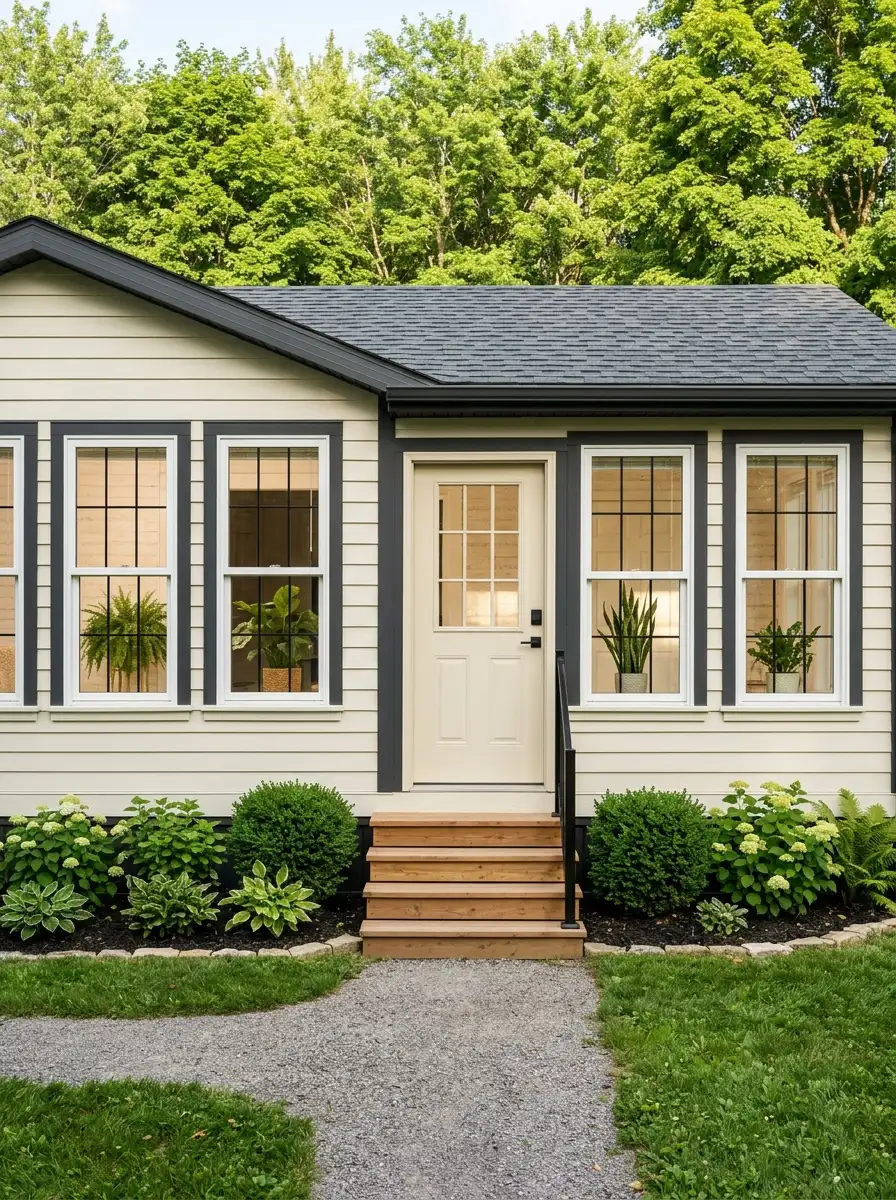
Replacing standard mobile home windows with taller, narrower profiles is a manufactured home exterior upgrade that reshapes how the eye reads the entire facade. Short, wide windows are the visual giveaway of manufactured housing; they emphasize the home’s horizontal stretch and make it look flat and low. Taller windows pull the eye upward and create vertical rhythm across the front wall.
Adding window grilles or divided light panels deepens the architectural effect, making the windows look like those found on traditional homes rather than factory-installed units. Deep exterior sills further add dimension and shadow, contributing to that sense of layering that makes a home look substantial. This upgrade changes the home’s character more dramatically than most homeowners expect until they see it completed.
The Key: Window proportion is one of the most powerful silent signals of home quality. Taller, narrower profiles shift the entire visual message from manufactured to site-built.
07
Landscaped Pathway to the Door
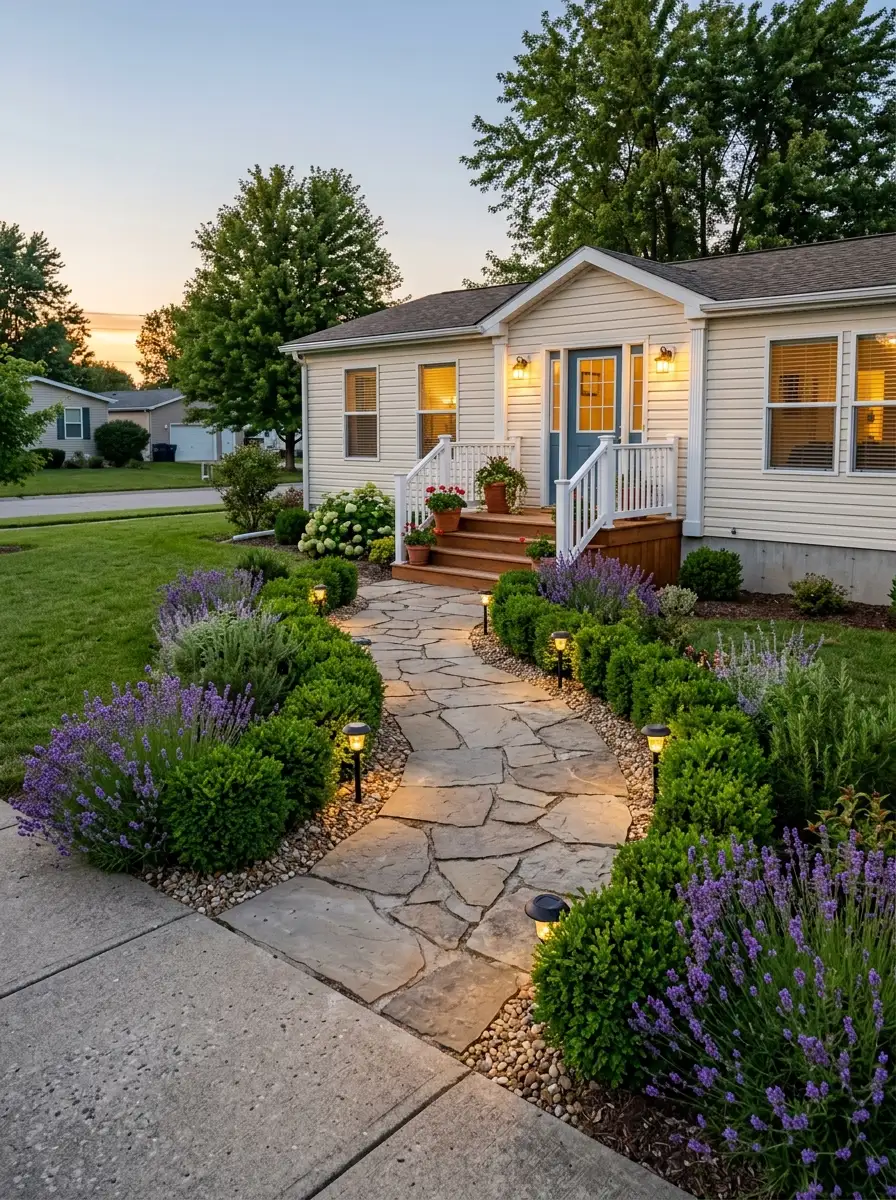
A well-designed pathway does more than guide foot traffic; it narrates the arrival experience from the street to the door. Among mobile home curb appeal strategies, a landscaped pathway delivers one of the highest returns because it reframes the entire approach to the home as a deliberate, designed sequence rather than an afterthought.
Curved pathways are especially effective because they slow the eye’s journey, creating anticipation and a sense of depth. Flanking the path with low evergreen hedges, flowering perennials, or ornamental grasses transforms the landscape from empty lawn to curated garden. Even a modest budget allows for a meaningful pathway using pea gravel borders, stepping stones, and simple solar lighting. The result is a home that appears planned from the ground up.
The Key: A landscaped pathway gives your home a designed arrival experience. It tells every visitor the exterior was thought through with care and intention.
08
Exterior Shutters and Window Trim
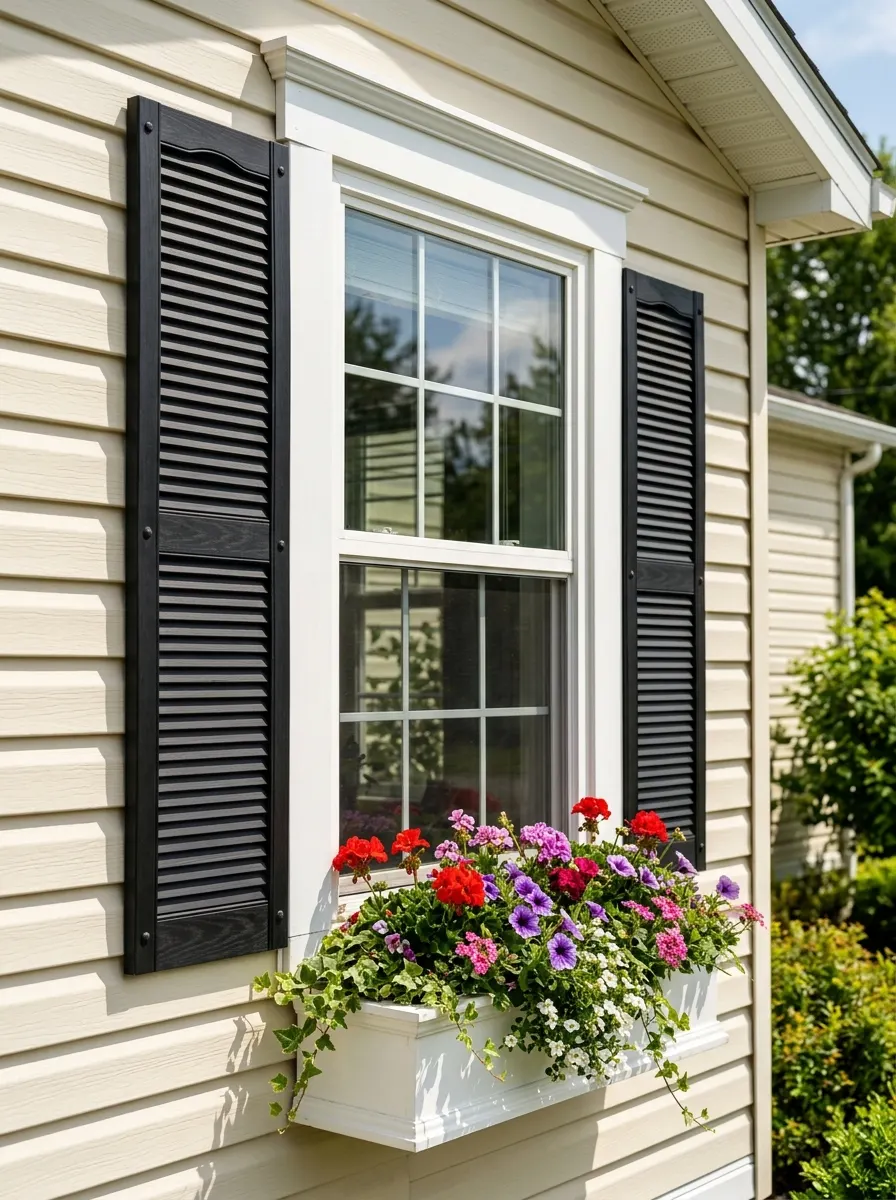
Exterior shutters and bold window trim add the architectural punctuation that mobile home facades typically lack. This is a budget-friendly mobile home outside makeover detail that delivers outsized visual impact because it introduces frame and shadow around every window opening, making each one read as a deliberate design element rather than a factory cutout.
Choose shutter widths that are proportional to the window: each shutter should appear wide enough to actually cover half the window if closed. Undersized shutters look decorative in the wrong way, drawing attention to themselves as artificial. Wide casing trim in a contrasting color further separates the window from the wall plane, creating depth and the same kind of shadow detail found on traditional homes. It is a detail-oriented upgrade with a genuinely remarkable return.
The Key: Proportional shutters with bold trim turn every window into an architectural feature, adding the kind of detail work that defines high-quality exterior design.
09
Pergola or Trellis at Entry
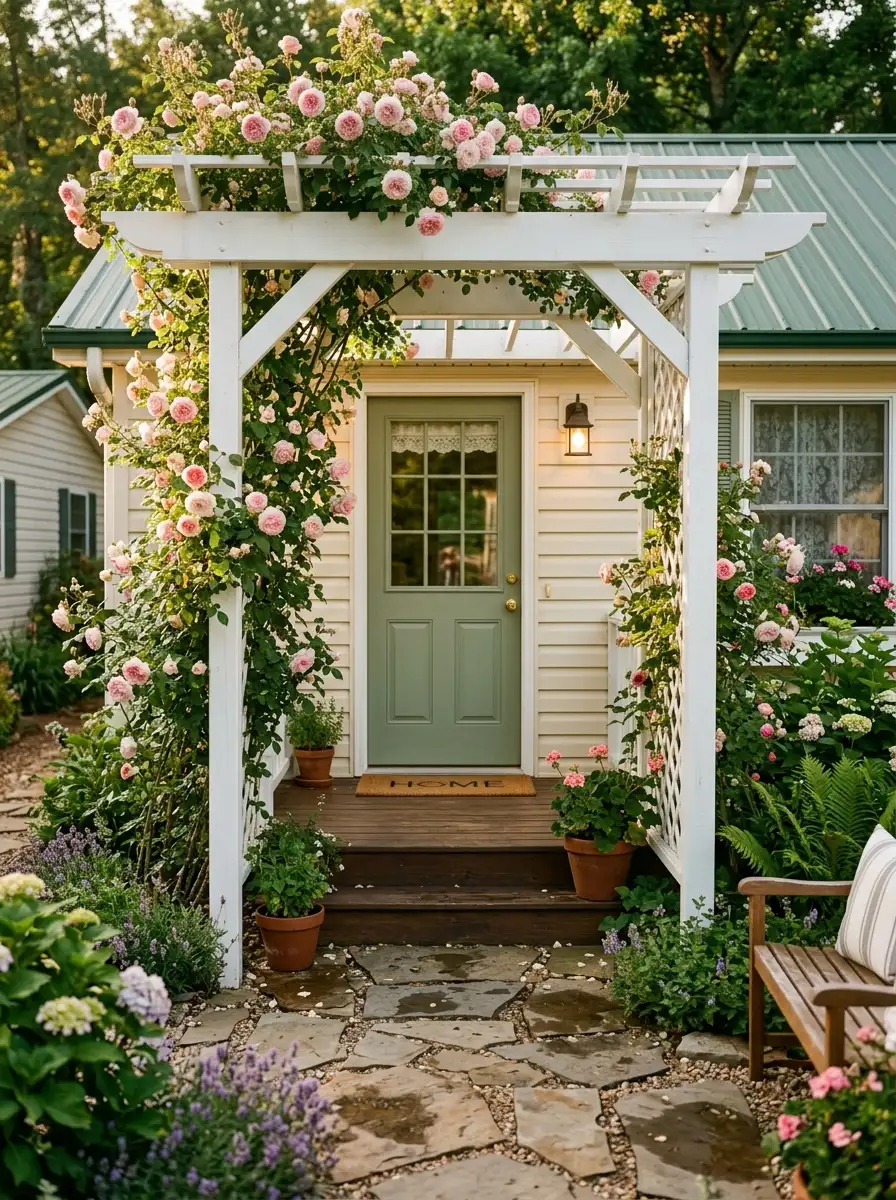
A pergola at the entry is among the most visually poetic mobile home exterior ideas because it creates a foreground element that introduces depth, shadow, and a sense of architectural arrival without requiring structural modification to the home itself. It breaks the flat wall plane and establishes a covered transition zone that signals the entry as a significant, designed space.
When climbing plants like roses, jasmine, or clematis are trained onto the pergola, the effect becomes genuinely stunning. The organic layer of greenery softens the manufactured home’s linear edges, adding a living, textured dimension that no siding material can replicate. From the street, the pergola reads first, drawing the eye toward the door in a graceful visual progression that feels completely intentional and beautifully residential.
The Key: A pergola introduces a designed foreground layer that adds depth, shadow, and architectural presence, qualities that transform a plain entry into a welcoming statement.
10
Exterior Paint with Two-Tone Scheme
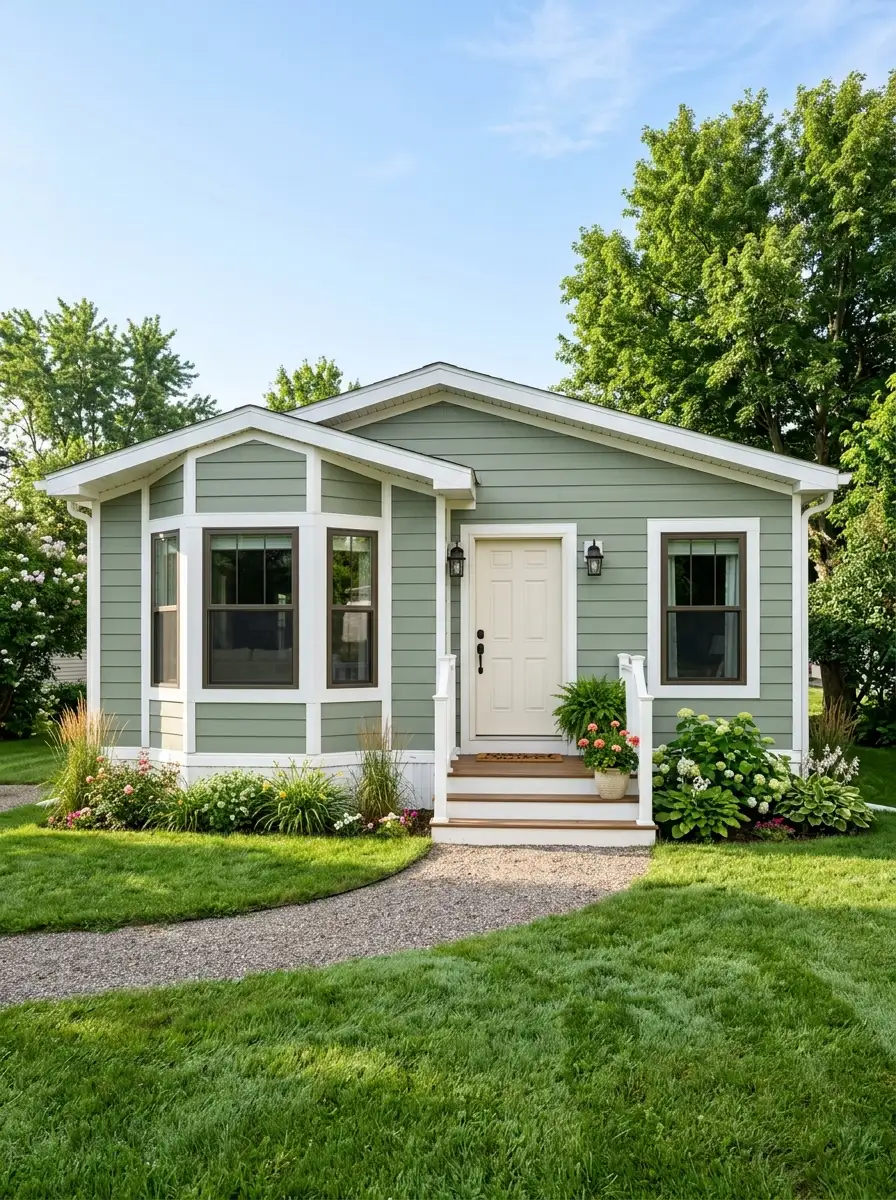
A two-tone exterior paint scheme is one of the simplest and most effective trailer home exterior transformation techniques because it introduces visual hierarchy through color alone. When your body siding, trim, and accents are all the same shade, the home reads as flat and featureless. Introducing a secondary color to all trim elements immediately creates definition, shadow, and architectural interest.
The most timeless approach pairs a mid-tone body color, think warm gray, sage green, or soft blue, with crisp white trim. The white draws the eye to the architectural framework of the home: the corner boards, fascia, window casings, and porch posts. This framing effect makes the home look more composed and intentional. I have seen this single change completely redefine how a neighborhood reads a manufactured home, simply by making the structure look considered and coordinated.
The Key: Two-tone paint creates instant architectural hierarchy by separating body, trim, and accent areas into distinct visual layers that add depth and intentionality.
11
Real Wood Porch Flooring
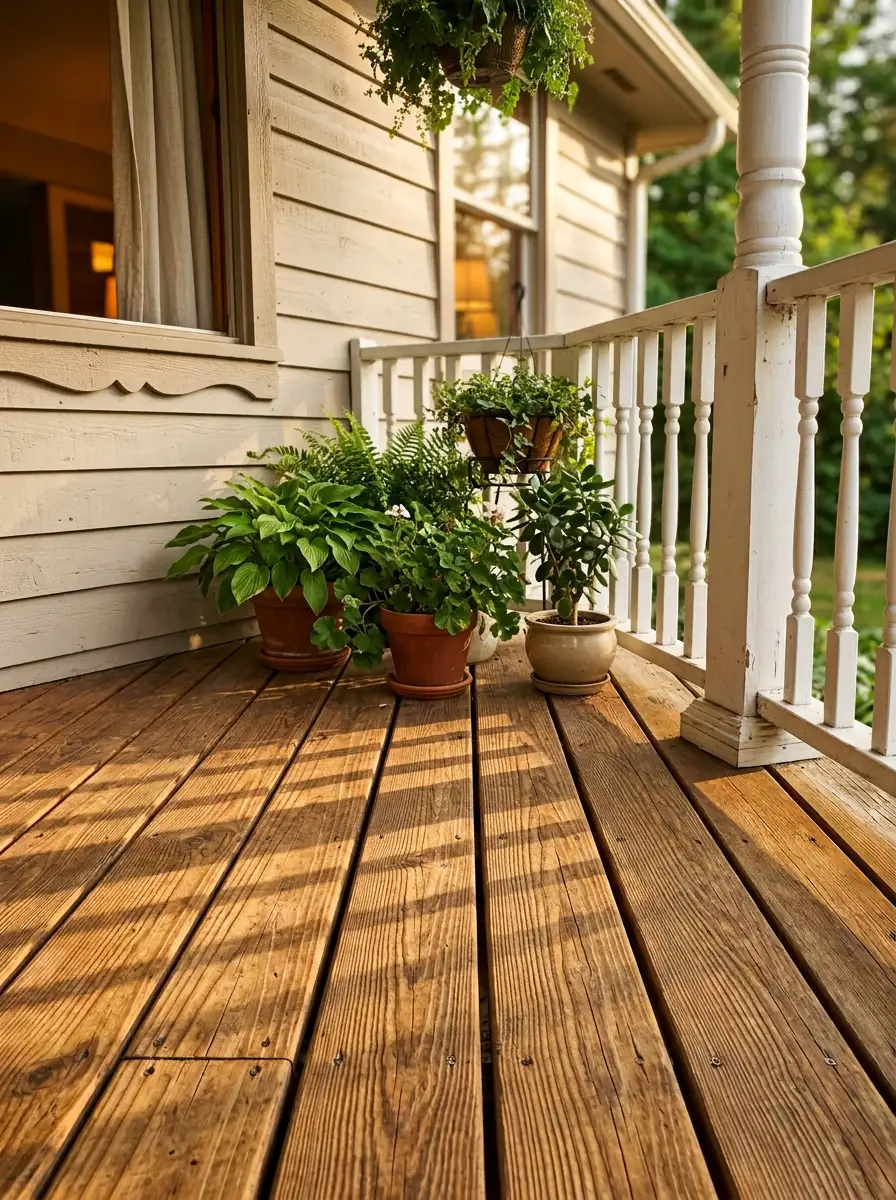
Swapping out hollow or concrete porch surfaces for real wood decking is a tactile and visual manufactured home exterior upgrade that changes how the space feels underfoot and how it reads from the street. Natural cedar or treated pine porch boards add warmth, texture, and the kind of organic detail that metal or vinyl substitutes simply cannot replicate.
Wood planks laid horizontally across a porch floor create a linear pattern that draws the eye inward, deepening the perceived size of the porch space. The natural grain and warm amber tones of cedar contrast beautifully with white painted railings, creating a color layering effect that photographs beautifully and reads as high-quality from any distance. Properly sealed and maintained, a wood porch floor adds lasting beauty and meaningful perceived value.
The Key: Real wood porch flooring introduces warmth, texture, and visual depth that synthetic materials cannot match, elevating the entire entry experience instantly.
12
Craftsman-Style Porch Columns
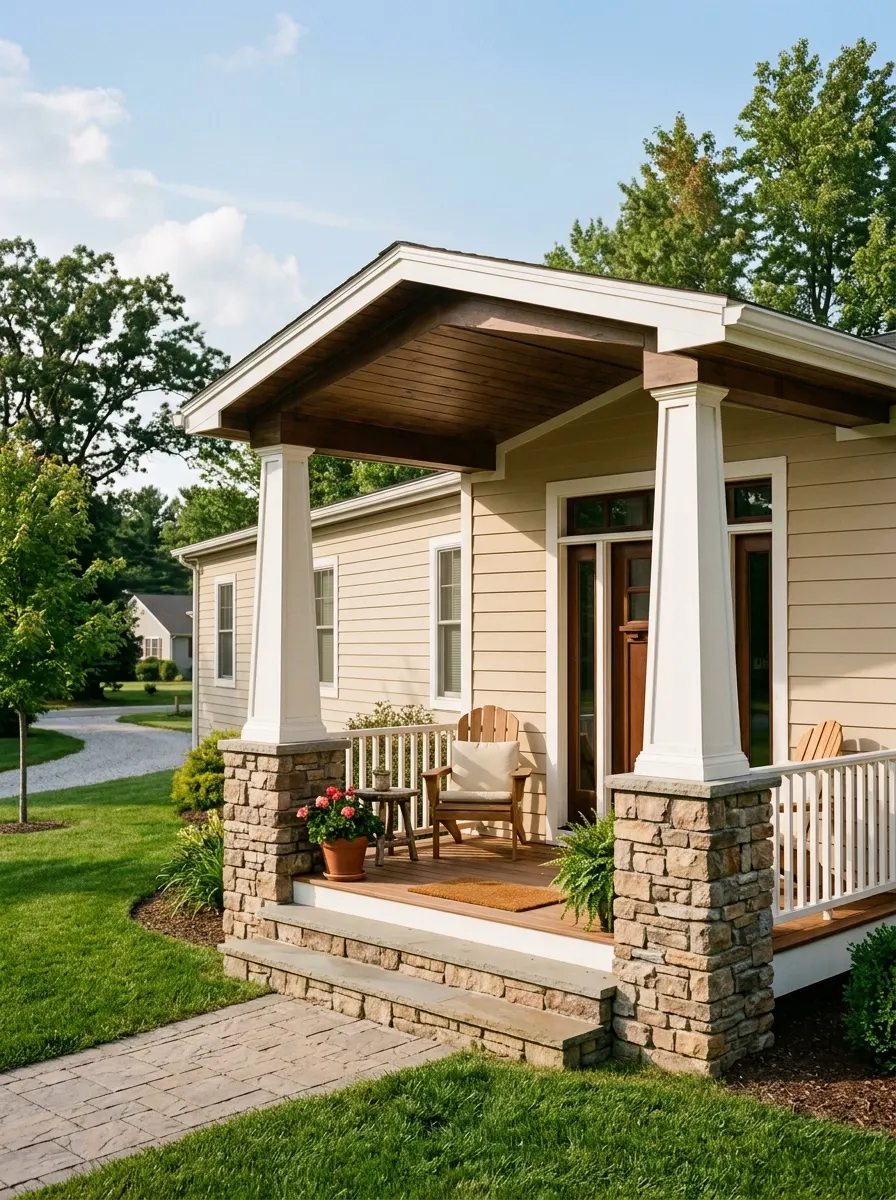
Tapered craftsman-style porch columns sitting on stone or brick bases are one of the most architecturally satisfying mobile home exterior ideas because they bring the visual vocabulary of traditional American homes directly to manufactured housing. The combination of the tapered wooden column and the masonry base reads as layered, permanent, and skilled in a way that simple round posts do not.
The column base alone elevates the design dramatically. It creates a horizontal emphasis at ground level that grounds the porch and connects it to the foundation skirting beneath, pulling the whole exterior into a cohesive composition. Painted white against a contrasting siding color, craftsman columns give any porch the kind of quiet architectural authority that makes the home feel designed rather than assembled.
The Key: Craftsman columns with masonry bases bring authentic traditional architecture to your porch and signal permanence through their layered, grounded composition.
13
Dormers or Roofline Detail Work
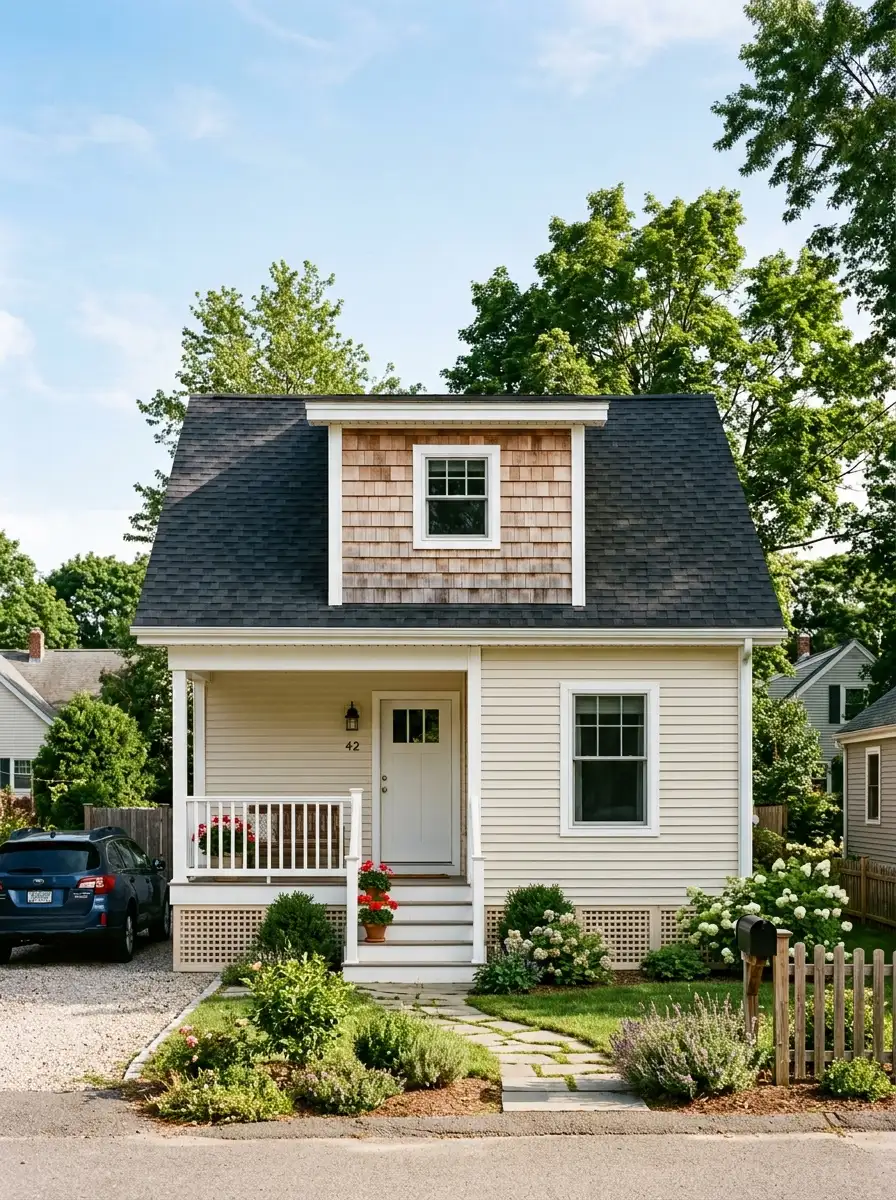
Dormers are one of the most architectural mobile home curb appeal additions because they break the horizontal roofline with vertical dimension that reads as structural investment. Even a single shed dormer centered on the front roofline transforms a flat-profiled manufactured home into something that looks like it could have a loft, a half-story, or at minimum a thoughtfully built upper structure.
The dormer face offers an opportunity for decorative siding materials like cedar shingles, board and batten, or contrasting paint that add textural variety to the overall composition. This material shift on the dormer face creates visual layering between the main body siding and the roofline detail, introducing exactly the kind of complexity that makes a home exterior look rich and considered. It is a relatively modest construction project with a transformative visual result.
The Key: A dormer breaks the flat roofline with vertical dimension and material variety, introducing real architectural complexity that signals genuine construction investment.
14
Planters and Raised Garden Boxes
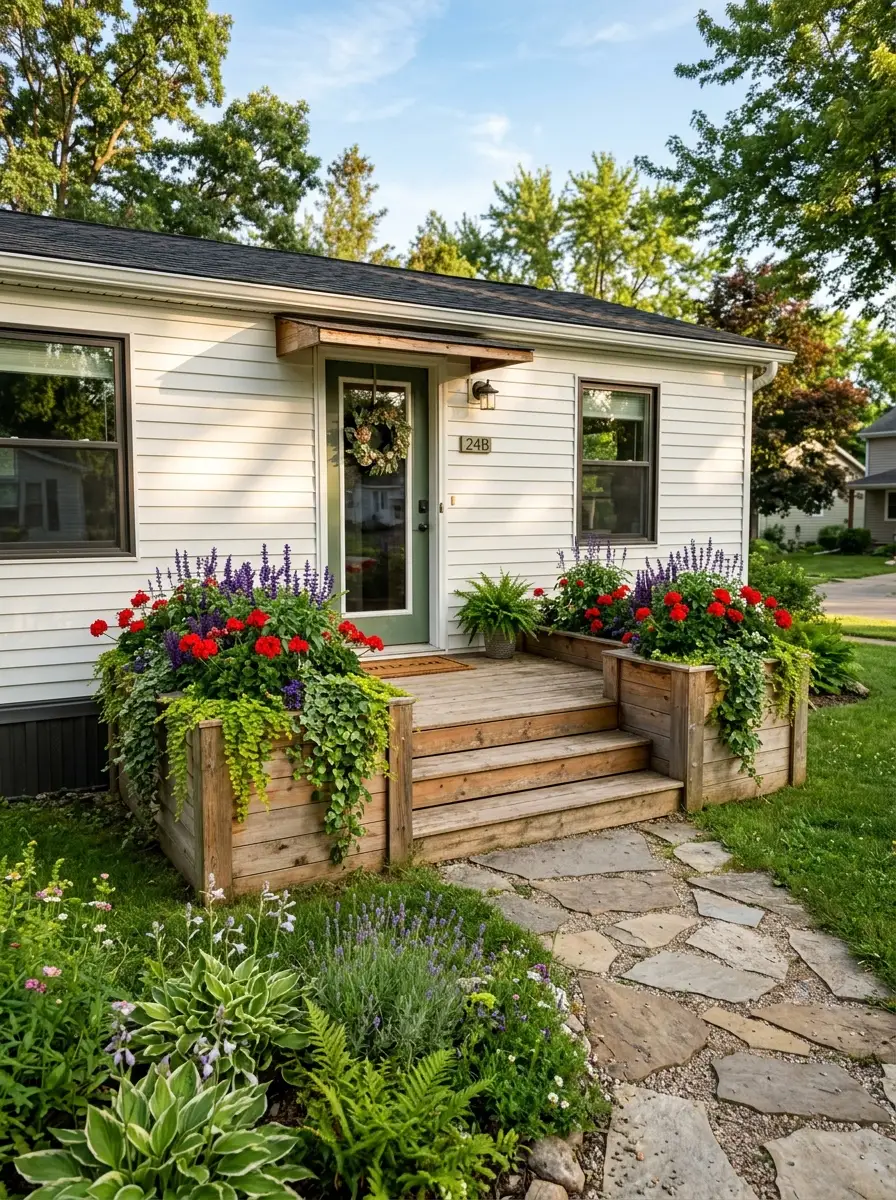
Raised planters and garden boxes do two things simultaneously: they add living color and texture to the facade, and they create dimensional elements that extend outward from the flat wall plane, introducing the layering effect that manufactured homes so often lack. Among mobile home exterior ideas, this one works because it is both beautiful and architectural.
Cedar or painted wood planters flanking the entry steps anchor that transition zone between pathway and porch with natural, organic warmth. Filled with a combination of tall structural plants and trailing varieties, they create a sense of abundance and care that signals a homeowner who takes pride in the property. The shadows cast by planter edges onto the home’s siding add depth to what might otherwise be a flat surface with no visual rhythm.
The Key: Raised planters extend the facade outward, creating shadow and depth while adding living color that makes the entire exterior feel tended, warm, and welcoming.
15
Outdoor Lighting Layered at Entry
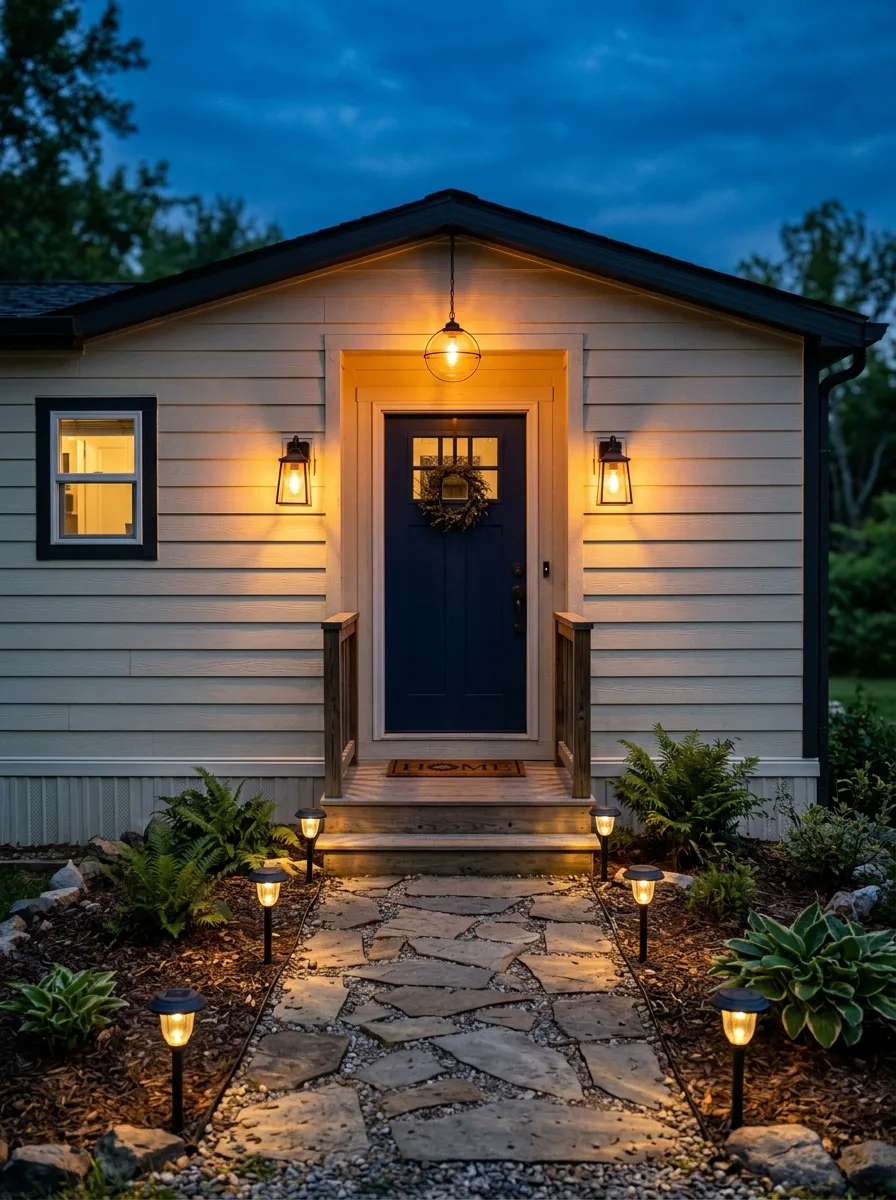
Layered outdoor lighting transforms a mobile home’s entry from a flat daytime surface into a dramatically composed nighttime focal point. This is one of the most underutilized mobile home outside makeover strategies, yet it delivers some of the highest visual impact for the budget. Three layers of light create depth: overhead pendants, eye-level wall sconces, and ground-level path lighting.
Each light layer plays a different role. Overhead pendants define the covered zone and create a cone of focused light on the door. Wall sconces frame the door symmetrically, reinforcing hierarchy and adding residential character. Path lights guide the eye from street to door with a warm, welcoming sequence. The combination creates the kind of depth and drama that expensive landscaping takes years to achieve. Lighting does it overnight.
The Key: Three layers of outdoor lighting create depth, focus, and residential warmth at the entry, transforming your home’s appearance after dark completely and affordably.
16
Decorative Fencing and Gate
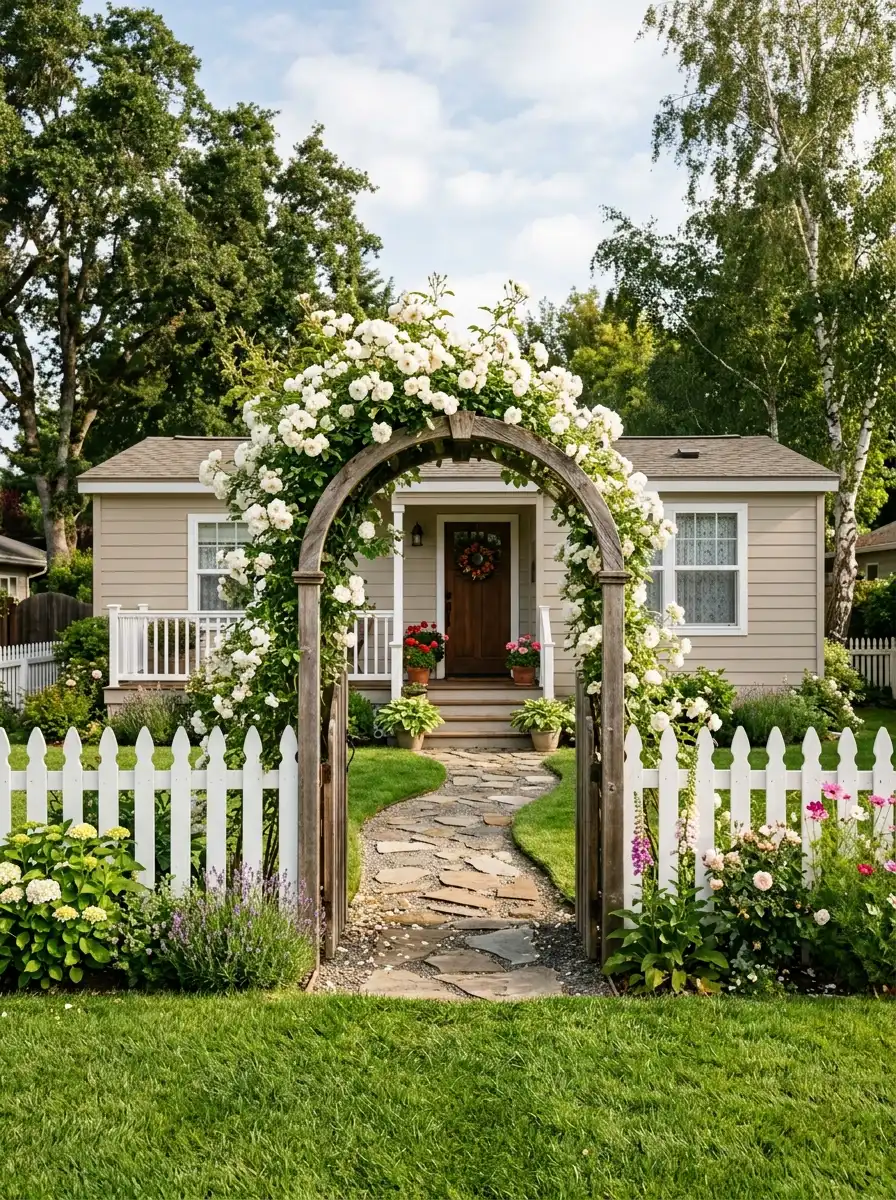
A decorative fence with a defined gate entry is one of those manufactured home exterior upgrades that changes how the entire property is perceived, not just the home itself. The fence line creates a property boundary that frames the home as a composed picture rather than a building sitting on a plain lot. It introduces the concept of territory and ownership that traditional homes communicate through their site planning.
A white picket fence in particular carries cultural associations with permanence, family, and pride of place that work powerfully in combination with a renovated mobile home exterior. The gate creates a moment of arrival, a threshold experience that makes guests feel they are entering a considered, intentional home environment. Together, fence and gate elevate the property’s perceived status in the neighborhood by a significant degree.
The Key: A fence and gate frame your property as a composed, defined home environment rather than a plain lot, dramatically elevating neighborhood perception.
17
Exterior Window Boxes with Flowers
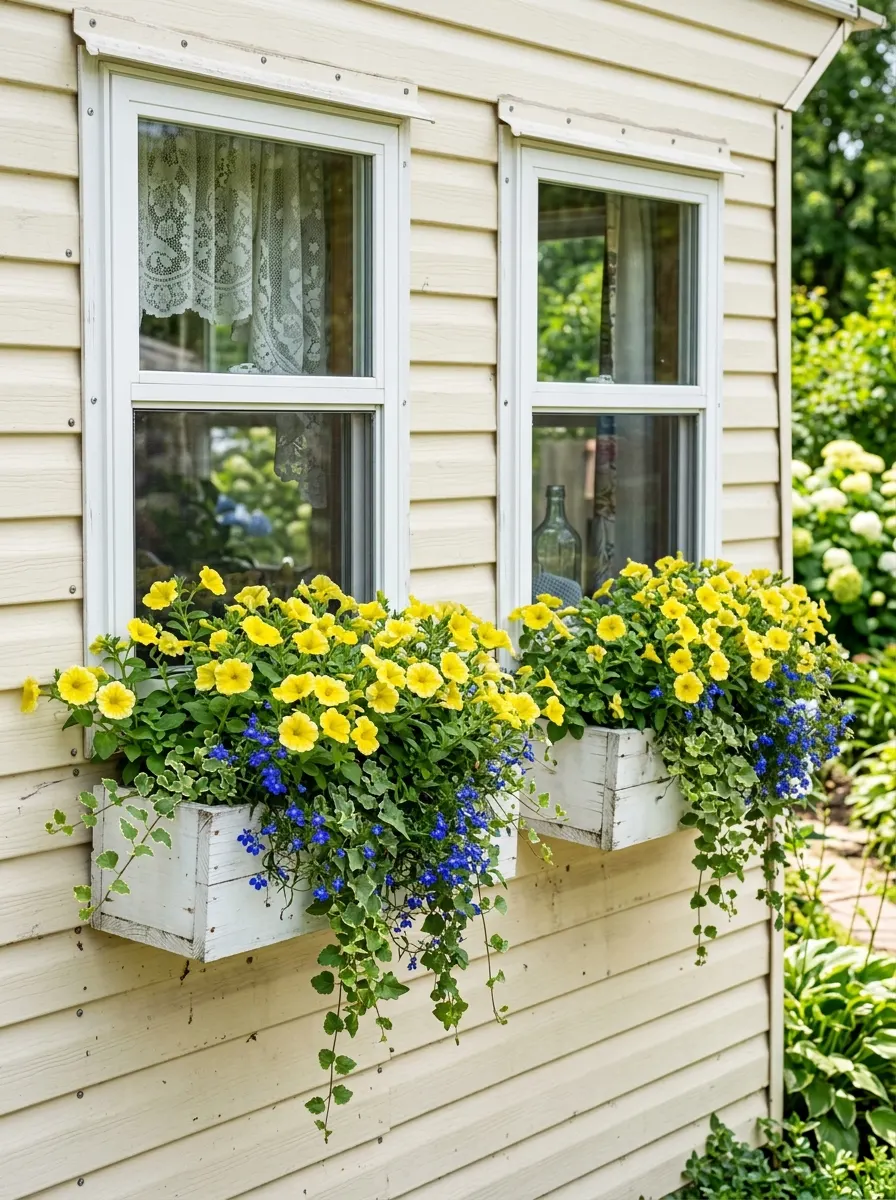
Window boxes are one of the most charming and cost-effective mobile home curb appeal upgrades because they add living color, dimensional depth, and a cascading texture that transforms the visual rhythm of any facade. A plain row of windows becomes an animated floral composition that draws the eye horizontally across the front of the home with genuine delight.
Well-planted window boxes also do practical design work. They create a visual break between the wall surface and the window, introducing a layer of organic material that adds depth to what is otherwise a flat plane. The combination of upright plants, mounding plants, and trailing plants within a single box creates height variation that makes the entire facade feel dynamic and alive. For a trailer home exterior transformation, few upgrades cost less and deliver more visual reward.
The Key: Window boxes add three layers of living texture to the facade: upright, mounding, and trailing plants that animate the wall and turn windows into garden features.
18
Garage or Carport with Matching Finishes
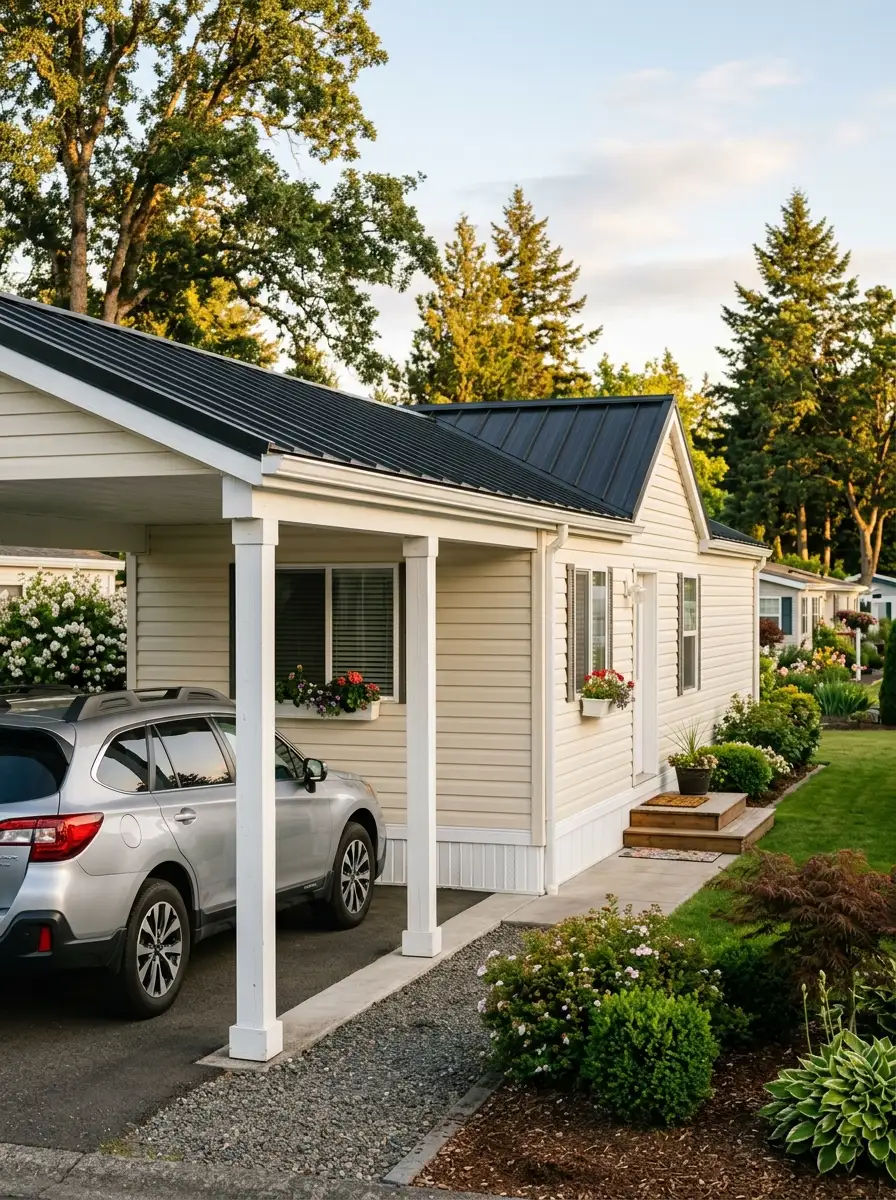
Coordinating a carport or garage to match the home’s roofing material, paint color, and trim detail is one of the most underappreciated mobile home exterior ideas because it creates visual unity across the entire property. When the carport reads as designed together with the home rather than added as an afterthought, the whole property elevates in perceived quality and permanence.
Matching roof materials are the most important element. A standing seam metal roof on both the carport and the main home instantly ties the structures together architecturally. Coordinating column colors to the home’s trim and using the same siding panel material on any solid walls completes the cohesive picture. The result is a property that looks professionally designed from the ground up rather than pieced together over time.
The Key: A coordinated carport that shares roofing, trim, and siding details with the main home creates unified architectural language that signals thoughtful, professional design.
19
Horizontal Lap Siding Replacement
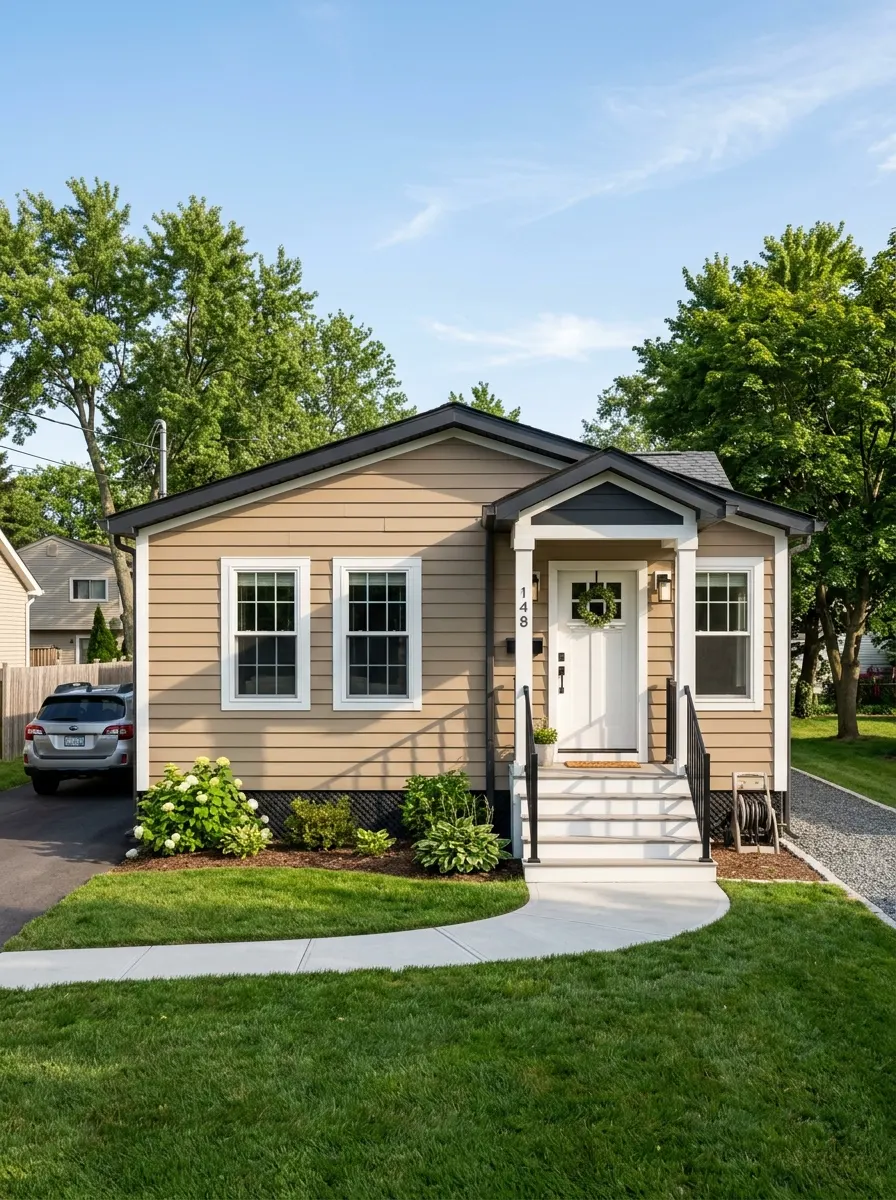
Replacing original mobile home siding with fiber cement lap siding is one of the most comprehensive manufactured home exterior upgrades available because it addresses material quality, shadow depth, and perceived permanence in a single project. Original mobile home siding is typically thin and reflects light flatly. Fiber cement lap siding has significant thickness, creating deep horizontal shadow lines that read as genuine architectural material.
James Hardie and similar fiber cement products carry warranties measured in decades, and they are genuinely indistinguishable from the siding found on traditionally built homes. The deep reveal between courses creates the kind of horizontal layering that gives manufactured homes a completely new identity. Paired with bold corner boards and coordinated trim color, new lap siding transforms the home’s personality from manufactured to built, permanently.
The Key: Fiber cement lap siding changes material identity entirely. Its deep reveal, durability, and texture make a mobile home’s exterior indistinguishable from site-built construction.
20
Steel Roof with Wide Eaves
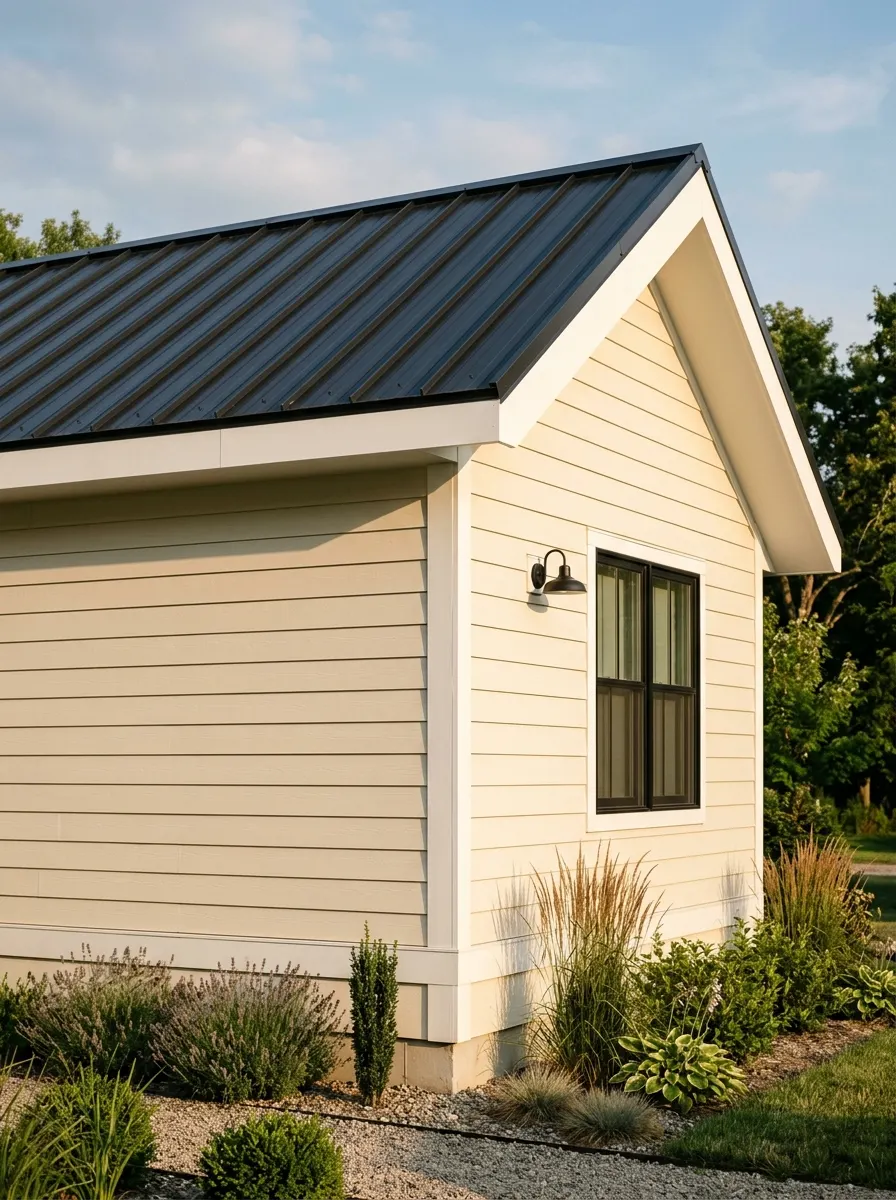
A standing seam steel roof with wide eaves is among the most durable and visually commanding mobile home curb appeal upgrades because it changes the roofline from utilitarian to architectural in a single material decision. The clean, vertical seam lines of a standing seam panel create a sophisticated visual rhythm across the roof plane that reads as high-quality construction from the street.
Wide eaves serve both aesthetic and functional purposes. Aesthetically, they add shadow depth below the roofline, creating a strong horizontal definition that frames the home beautifully. Functionally, they protect the walls from rain runoff, reducing moisture damage over time. A properly installed steel roof can last fifty years or more, making it an investment that pays off in both beauty and reduced maintenance costs across decades.
The Key: A standing seam steel roof with wide eaves delivers both architectural sophistication and lasting durability, redefining your home’s profile from the roofline down.
21
Decorative Shutters on All Windows
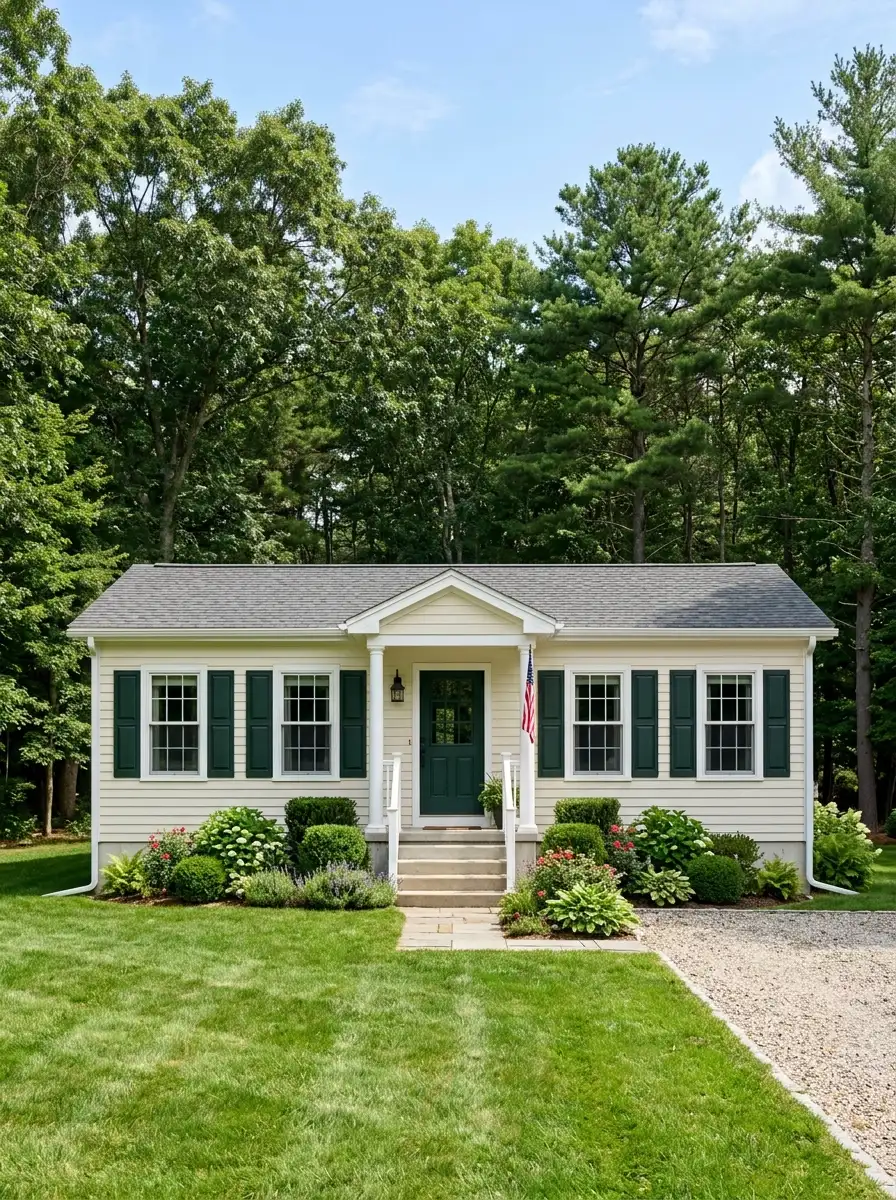
Installing decorative shutters on every front-facing window is one of the most classic and reliable mobile home exterior ideas because shutters perform specific architectural work on a facade: they frame, define, and add visual weight to windows that would otherwise sit flat against the siding. Done correctly across all windows, the effect is a facade that reads as composed and symmetrical in the way traditional homes do.
The most important rule is proportion. Each shutter should be sized to appear capable of covering the window if closed. Undersized shutters look decorative and arbitrary, which defeats their architectural purpose. Choose colors that contrast with both the siding and trim for maximum definition. Forest green, charcoal, black, and deep navy all work beautifully depending on your overall color palette.
The Key: Correctly proportioned shutters frame every window with architectural definition, creating the kind of composed, symmetrical facade that signals quality home design.
22
Coordinated Color Palette Across All Elements
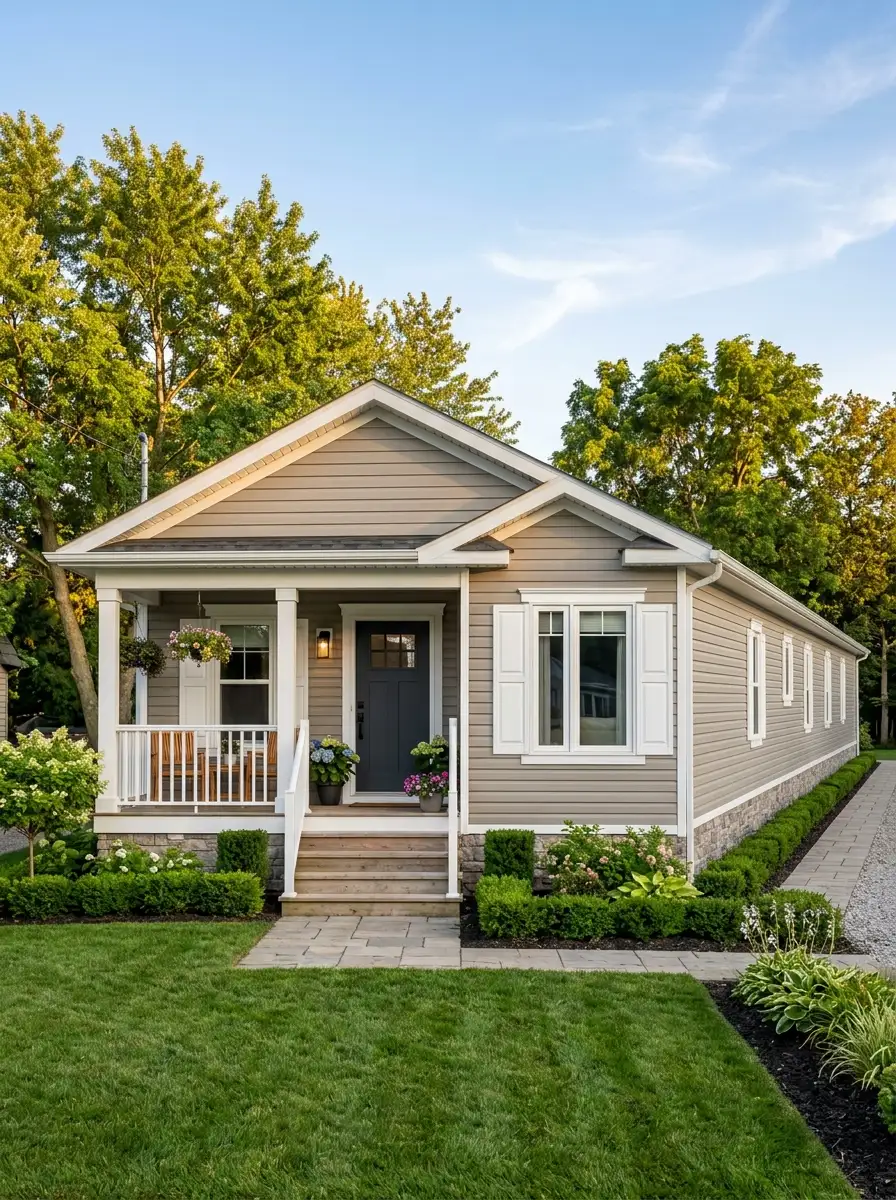
If there is one principle that ties all mobile home exterior ideas together, it is this: a cohesive, intentional color palette applied consistently across every exterior element is what separates a renovated mobile home from a site-built house in visual terms. The individual upgrades matter, but the color palette is the thread that makes them read as a unified, purposeful composition.
A three-color palette is the professional designer’s standard: a body color, a trim color, and an accent color for the front door and secondary details. When these three colors appear in coordinated relationship across siding, trim, shutters, columns, roof, and door, the entire exterior reads as designed from a single creative vision. This is the exact quality that most mobile homes lack and that most site-built homes naturally possess. Apply a consistent palette and everything you have upgraded will suddenly look twice as intentional.
The Key: A unified three-color palette is the finishing strategy that makes every individual upgrade cohere into a single, beautiful, composed exterior design vision.
These 22 mobile home exterior ideas prove that the gap between manufactured housing and a beautifully designed real house is almost entirely a matter of intention. It is not about the structure you started with. It is about the decisions you layer onto it: the roofline you add height to, the door you paint boldly, the columns you choose with care, and the palette you apply with consistency. Every one of these ideas is rooted in real design principles that work regardless of your home’s original form.
If you have been looking at your manufactured home and imagining what it could look like, this is your sign to start. Pick two or three ideas from this list that feel achievable this season and build from there. Save this post to your Pinterest boards so you can reference it when you are ready to act, and share it with a friend who is planning a mobile home outside makeover. A home that looks and feels like a real house is not out of reach. It is waiting for the right ideas and the confidence to begin.