WHIMSICAL kIDS BEDROOM
🏠 19 Real Ideas
⏱ Quick Read
🔥 Always Trending
19 Whimsical Kids Bedroom Ideas
You’ll Want to Read Before You Decorate
Every child deserves a bedroom that feels like it was pulled straight from their imagination. The colors, the textures, the hidden nooks — these aren’t just design choices. They’re the details that shape the way a child sees the world. If you’ve been searching for whimsical kids bedroom ideas that are as functional as they are magical, you’ve landed in exactly the right place.
This article walks you through 19 carefully curated ideas that work across different budgets, room sizes, and ages. Whether you want a full room transformation or a few simple updates, each idea here gives you something you can actually use. By the end, you’ll have a clear direction — and a whole lot of inspiration — to create a space your child will never want to leave.
01
Canopy Beds That Enchant
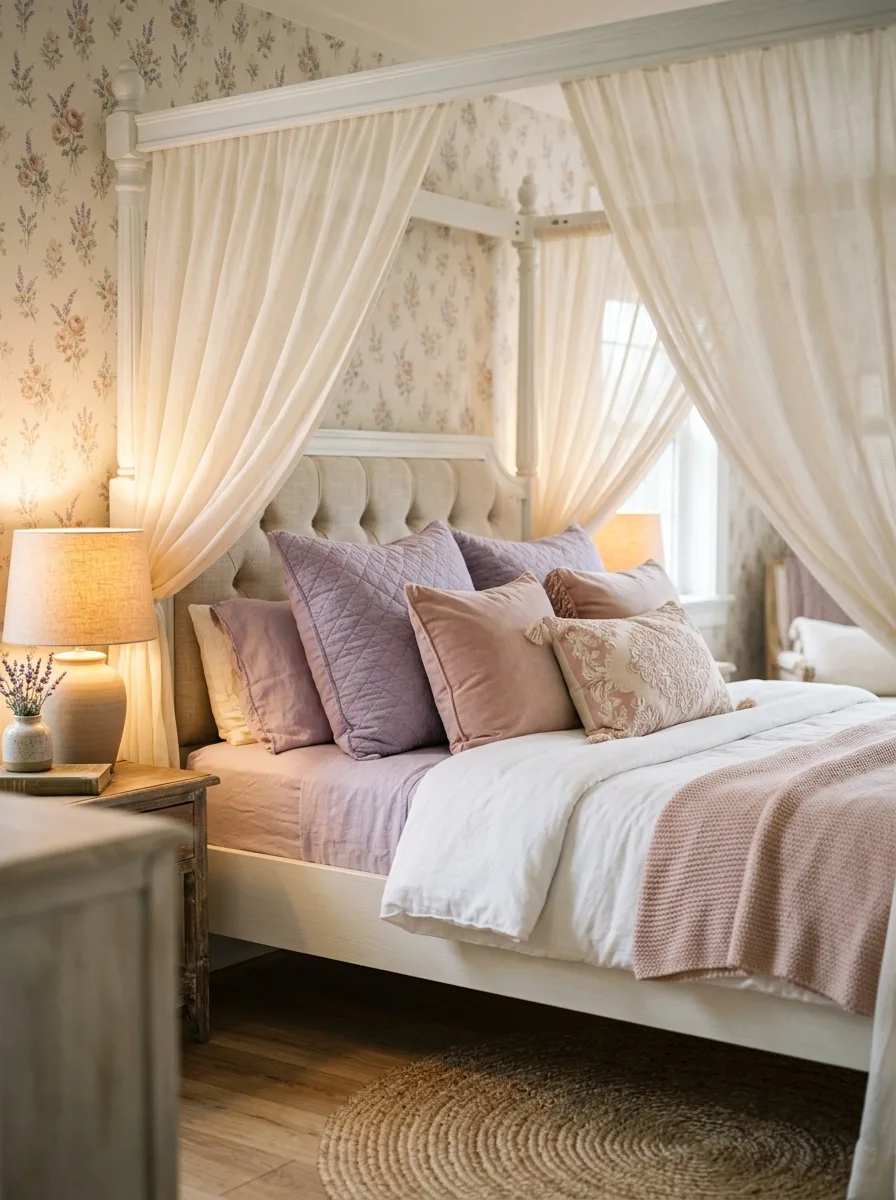
A canopy bed turns bedtime into an experience. There is something deeply magical about a child slipping beneath a soft curtain of fabric and feeling like they’ve entered their own private world. The right canopy doesn’t have to be expensive — a simple sheer panel draped over a basic bed frame can create the same enchanting atmosphere as a high-end design.
In my experience, canopy beds work best when the fabric color is kept soft and neutral. Ivory, white, or blush tones allow the rest of the room decor to shine. A small fairy light string woven through the canopy frame adds a gentle glow that children adore at bedtime. It signals winding down while still feeling like something from a storybook.
The Key: Choose lightweight, washable sheer fabric for your canopy. It stays beautiful through years of daily use and is easy to refresh each season.
02
Soft Color Palettes Win
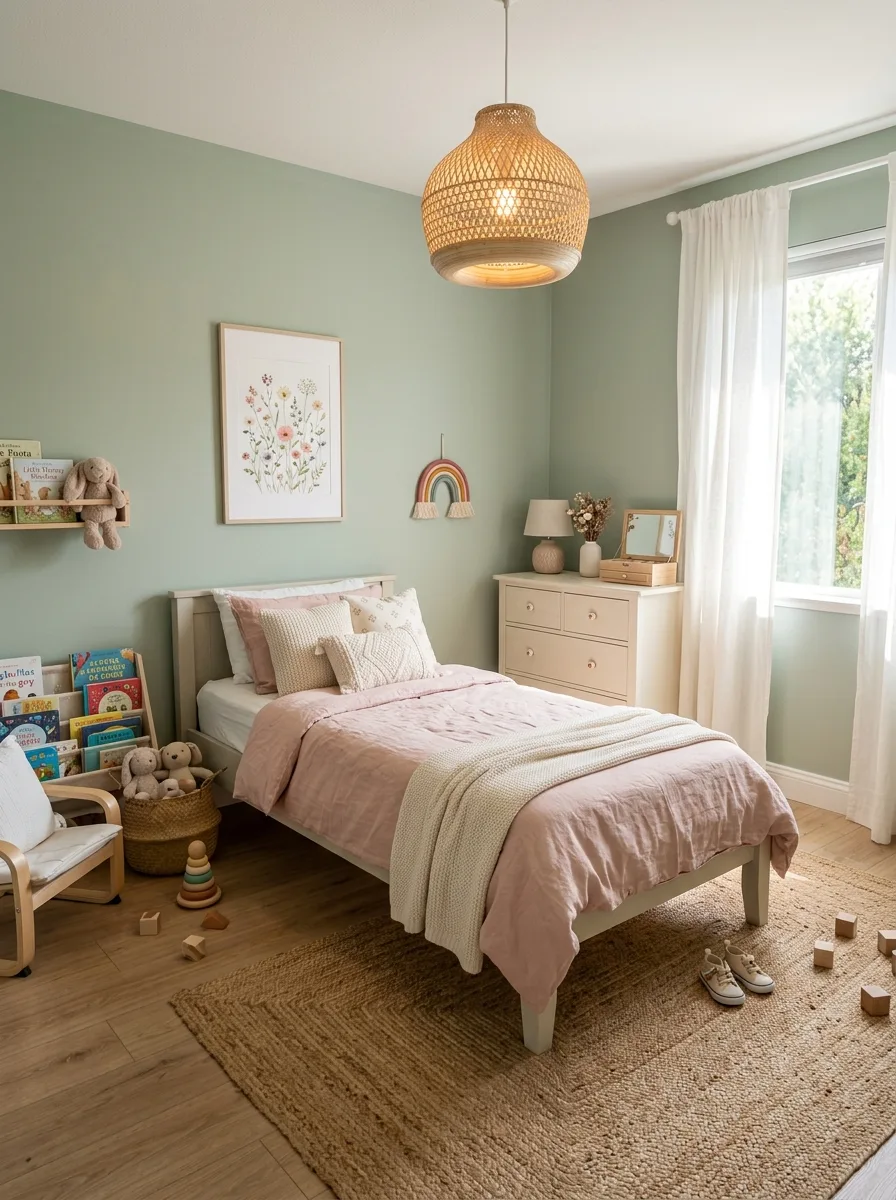
Color sets the emotional temperature of any room, and in a child’s bedroom, it sets the tone for sleep, play, and creativity. Soft palettes — sage green, dusty rose, warm lavender, or buttery yellow — create a calm backdrop that grows with your child. I have noticed that pastel rooms feel timeless even after the “theme” phase passes.
Pair a soft wall color with natural wood tones for an instant sense of warmth. A sage green wall with a honey oak bed frame and white accents is one of the most versatile combinations available. You can swap out bedding and artwork as your child’s tastes evolve without ever repainting. The base stays beautiful season after season.
The Key: Stick to one dominant wall color and use white or wood as your neutral. Introduce pops of color through removable décor, not permanent fixtures.
03
Cozy Reading Nooks
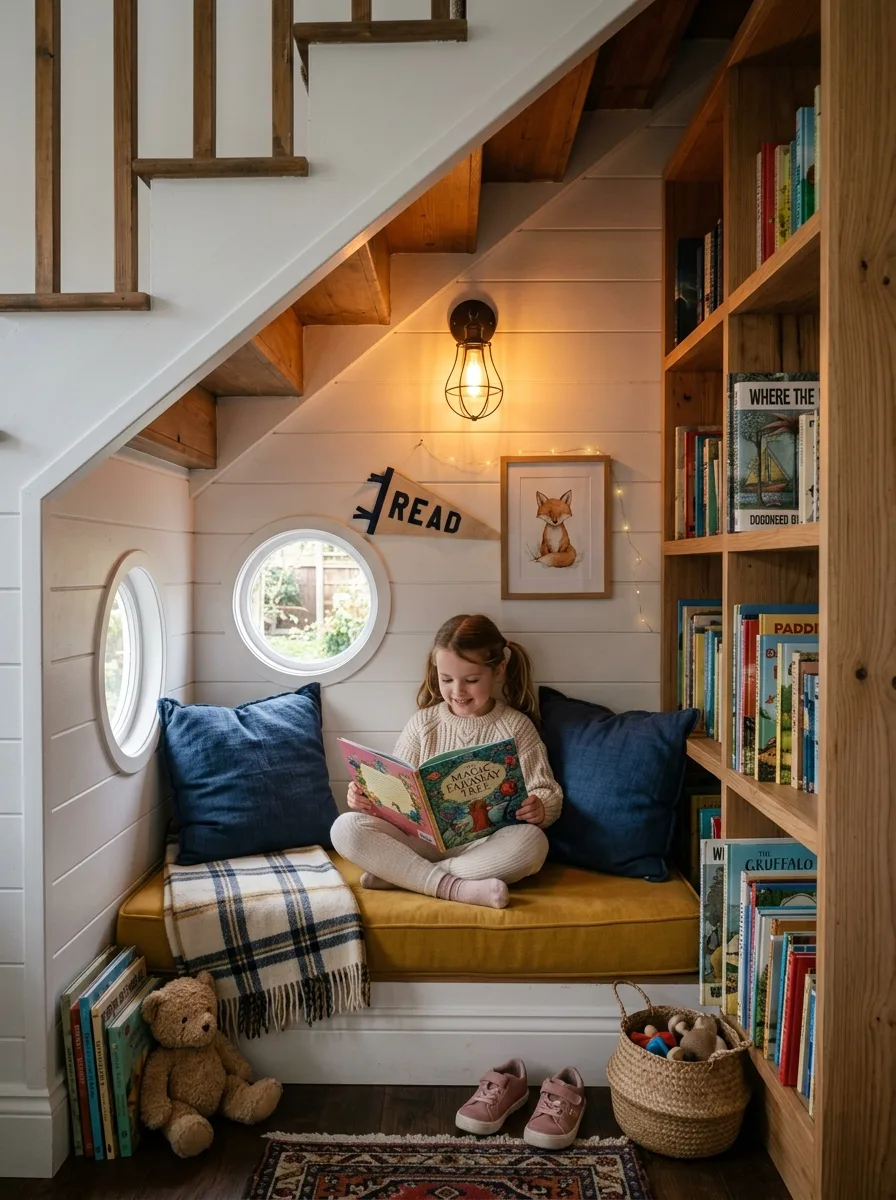
Every child who loves books needs a space that is entirely their own — a corner that says “this is where we read.” A reading nook doesn’t require a built-in or a big budget. A curtained alcove, a cushion on the floor between two bookshelves, or even a bay window seat with a pillow transforms a plain room into a literary retreat.
Keep the nook low to the ground so even young children feel ownership over the space. Add a basket nearby for easy book access and a clip light so they can read independently. I have seen this work wonders for reluctant readers — when the space feels special, picking up a book feels like a treat rather than a task.
The Key: The nook works best when it has one defined entry point, like curtains or a short wall, so children feel enclosed and focused rather than exposed.
04
Wallpaper as a Statement
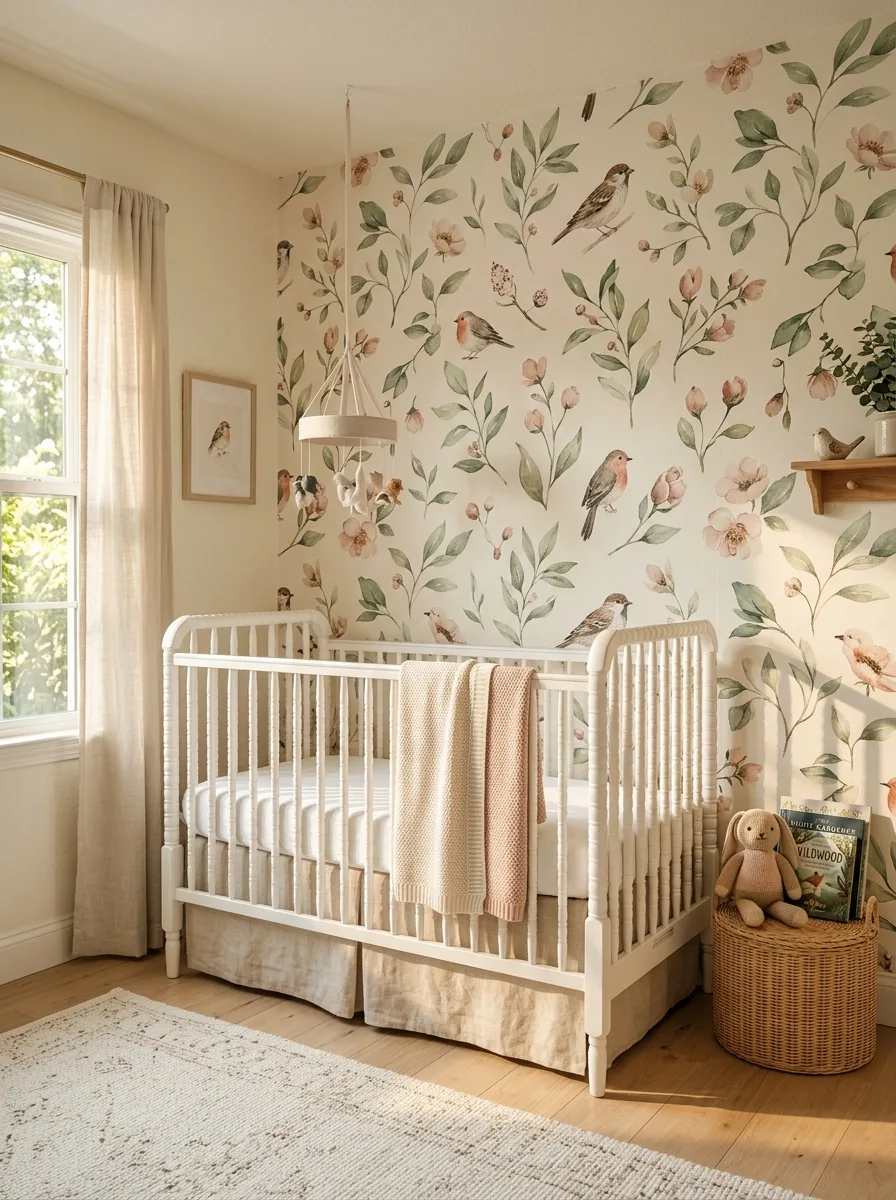
Wallpaper has made a full comeback — and in a kids bedroom, it is one of the fastest ways to add personality without overwhelming the room. A single accent wall behind the bed is all it takes. Peel-and-stick options have made this more accessible than ever, letting you commit to a pattern today and swap it out two years from now.
Botanical prints, star maps, soft geometric patterns, and illustrated animals are among the most popular choices. The key is to select a design with colors already present in your bedding or rug so the room feels pulled together. A wallpapered wall done well makes the entire room look professionally designed without a professional price tag.
The Key: Choose a wallpaper with at least two colors already in the room. This single rule makes the accent wall feel intentional rather than random or jarring.
05
Star and Moon Ceiling Magic
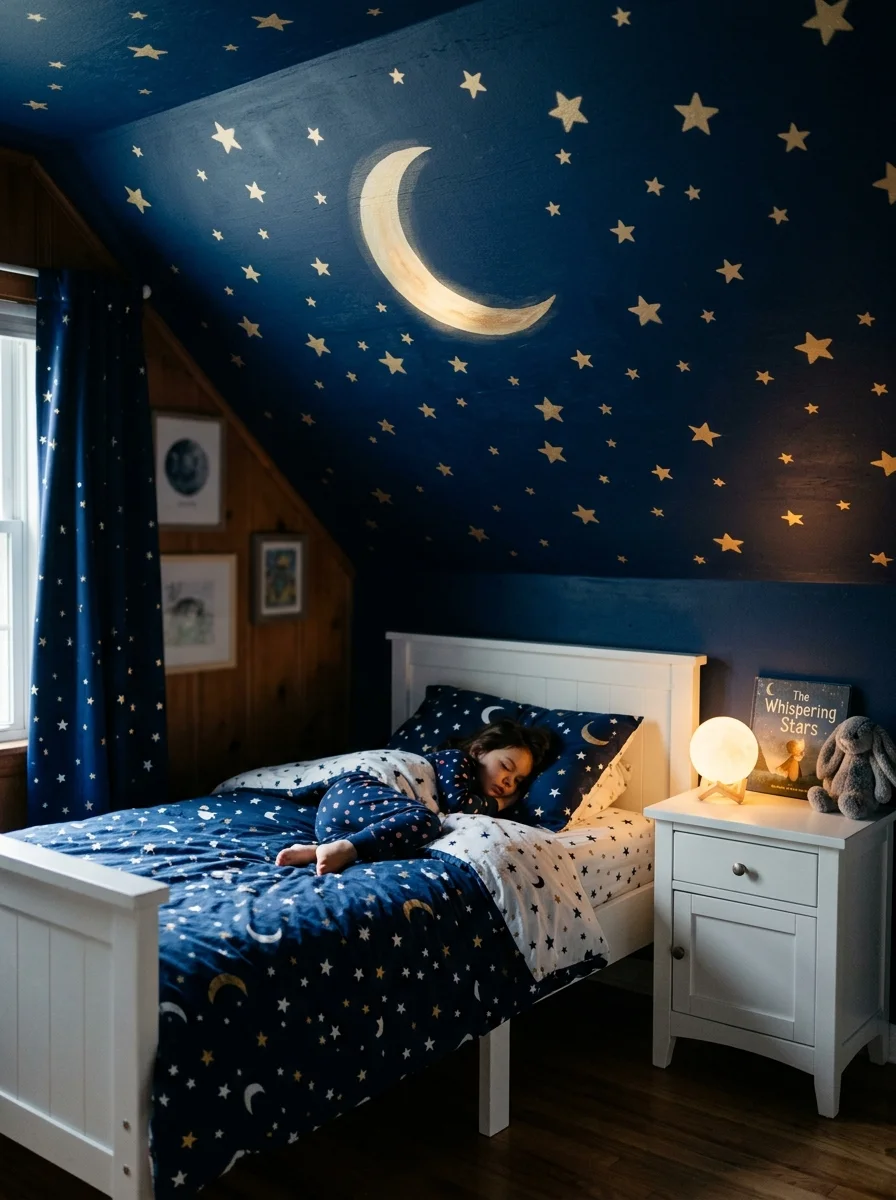
Looking up at a ceiling full of stars is one of those childhood experiences that stays with a person forever. A navy or deep charcoal ceiling with gold or silver star stencils transforms what is usually the most ignored surface in a room into the most magical one. It costs very little and creates an outsized emotional impact every single night.
Glow-in-the-dark star stickers are the easiest starting point and require zero painting skills. For a more refined look, use a star stencil and metallic gold paint on a matte navy background. Pair the ceiling treatment with a moon lamp on the nightstand and your child will look forward to bedtime in a completely new way.
The Key: Paint the ceiling before doing anything else in the room. It is far easier to protect floors and walls before furniture and bedding are in place.
06
Bunk Beds With Personality
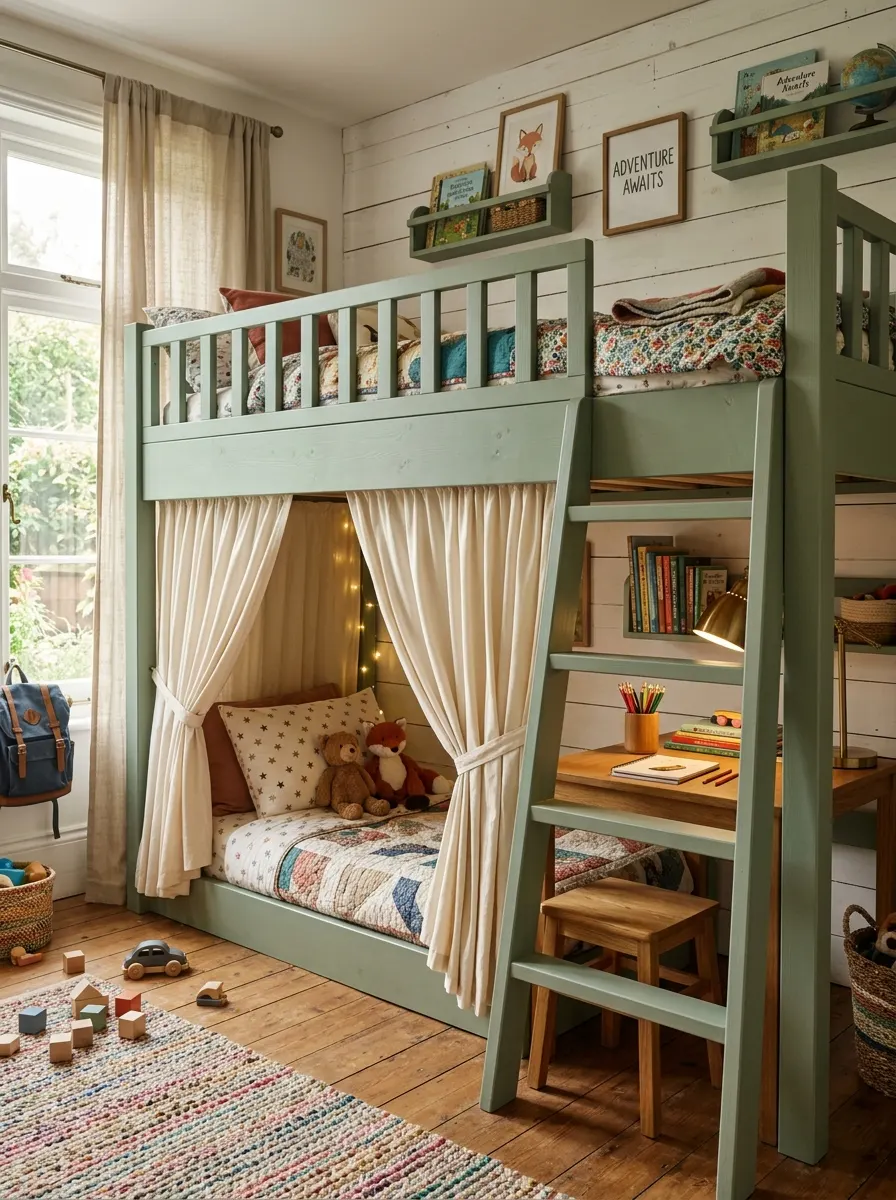
Bunk beds are not just space-savers — they are the most exciting piece of furniture in the house for most children. The right bunk bed design can serve as a sleep space, play zone, and study station all in one footprint. When chosen thoughtfully, a bunk bed grows with your children and adapts to changing needs across the years.
Adding a curtain to the lower bunk creates a private cave-like space that children treasure. A small reading light clipped to the frame, a pocket organizer for books and gadgets, and a soft mattress topper elevate the experience from basic sleeping spot to beloved retreat. These small additions cost very little but make an enormous difference in how the space feels.
The Key: Choose a bunk bed with a solid guardrail on both sides of the top bunk, not just one. Safety is non-negotiable, and a secure rail adds peace of mind.
07
Whimsical Kids Bedroom Ideas That Inspire
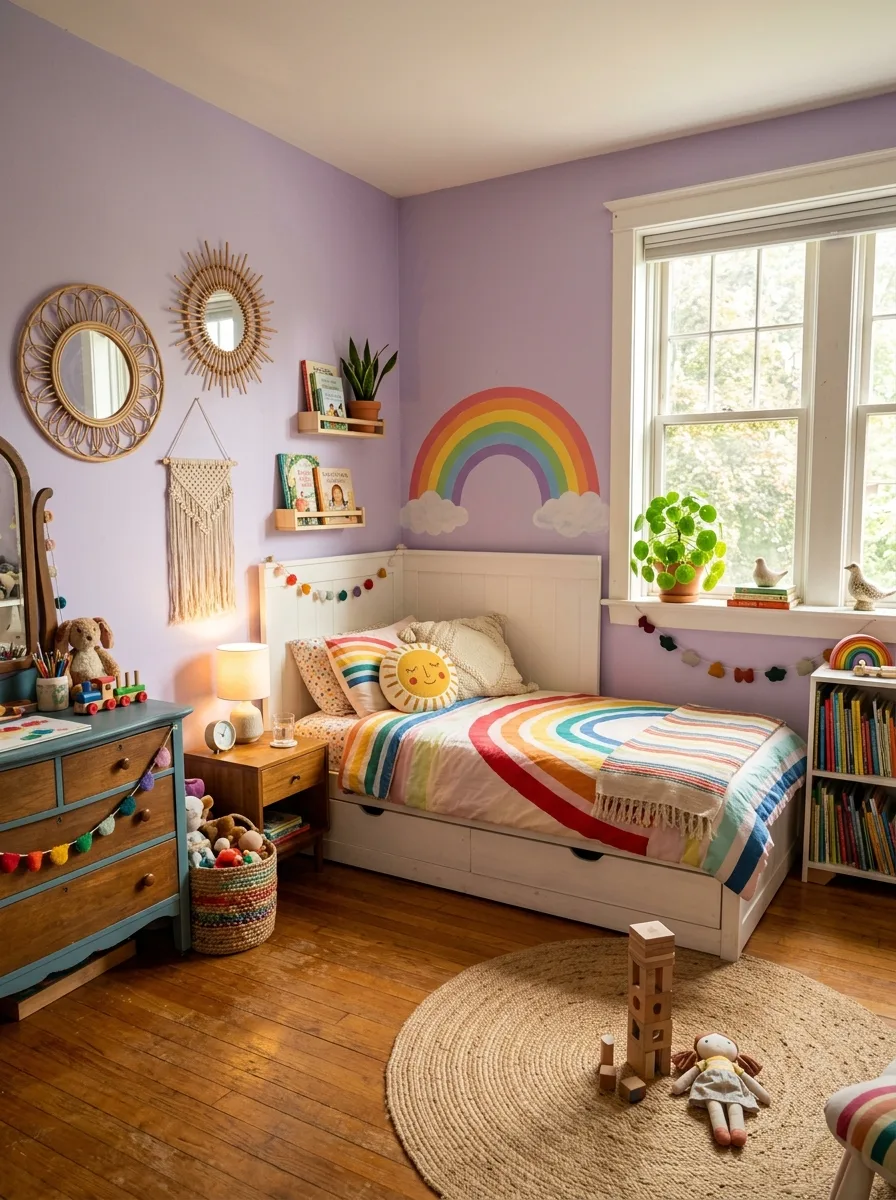
The best whimsical kids bedroom ideas have one thing in common — they reflect the actual child who lives there. Not a catalog page, not a trending palette, but the real personality of the person sleeping in that room. A freehand rainbow mural above the bed tells a story no purchased art print ever could. That personal detail is what makes a space truly magical.
Layering textures — a woven rug, a macramé wall piece, a rattan mirror — creates visual richness without adding clutter. Each element catches the eye at a different height and angle, making the room feel curated rather than overdone. I have seen this work even in the smallest rooms: three thoughtful textures make a 10-foot space feel like a designed interior.
The Key: Anchor every whimsical room with one large neutral element — a white bed, cream walls, or natural wood floor — so the playful details don’t compete with each other.
08
Nature-Inspired Woodland Themes
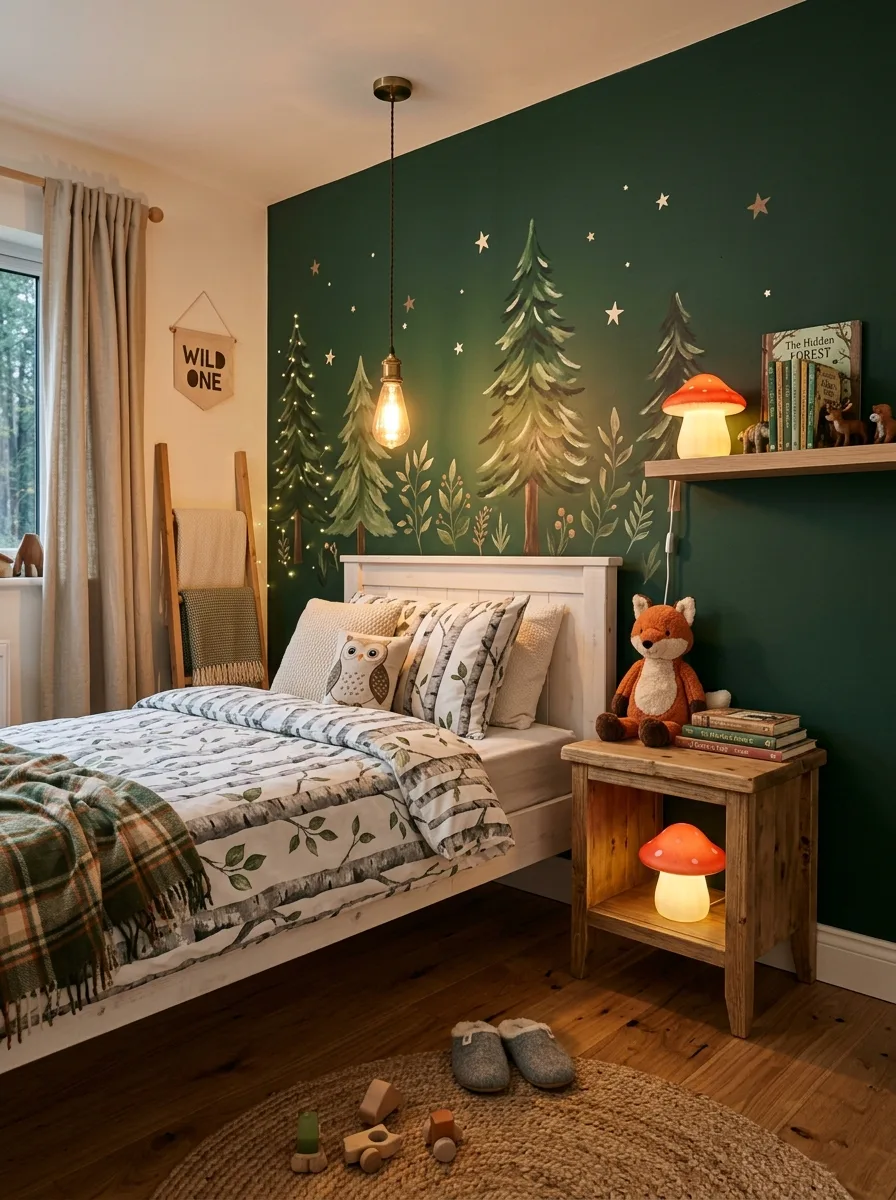
Woodland themes have endured for decades because they tap into something timeless — children’s deep connection to nature, animals, and the magic of forests. A forest green accent wall painted with simple pine silhouettes is one of the most achievable DIY transformations available. No artistic skill is required; a basic stencil set and a steady hand produce results that look professionally done.
Extend the theme through accessories: a stuffed fox or owl on the nightstand, a mushroom-shaped nightlight, and a tree stump stool as a side table all reinforce the narrative without requiring a complete furniture overhaul. Swap your existing duvet for a nature-print option and the room instantly reads as intentionally designed around a cohesive theme.
The Key: Choose two to three animals as your theme anchors — fox, owl, and deer work beautifully together. Repeat their likeness in art, plush toys, and small accessories.
09
Magical Wall Murals
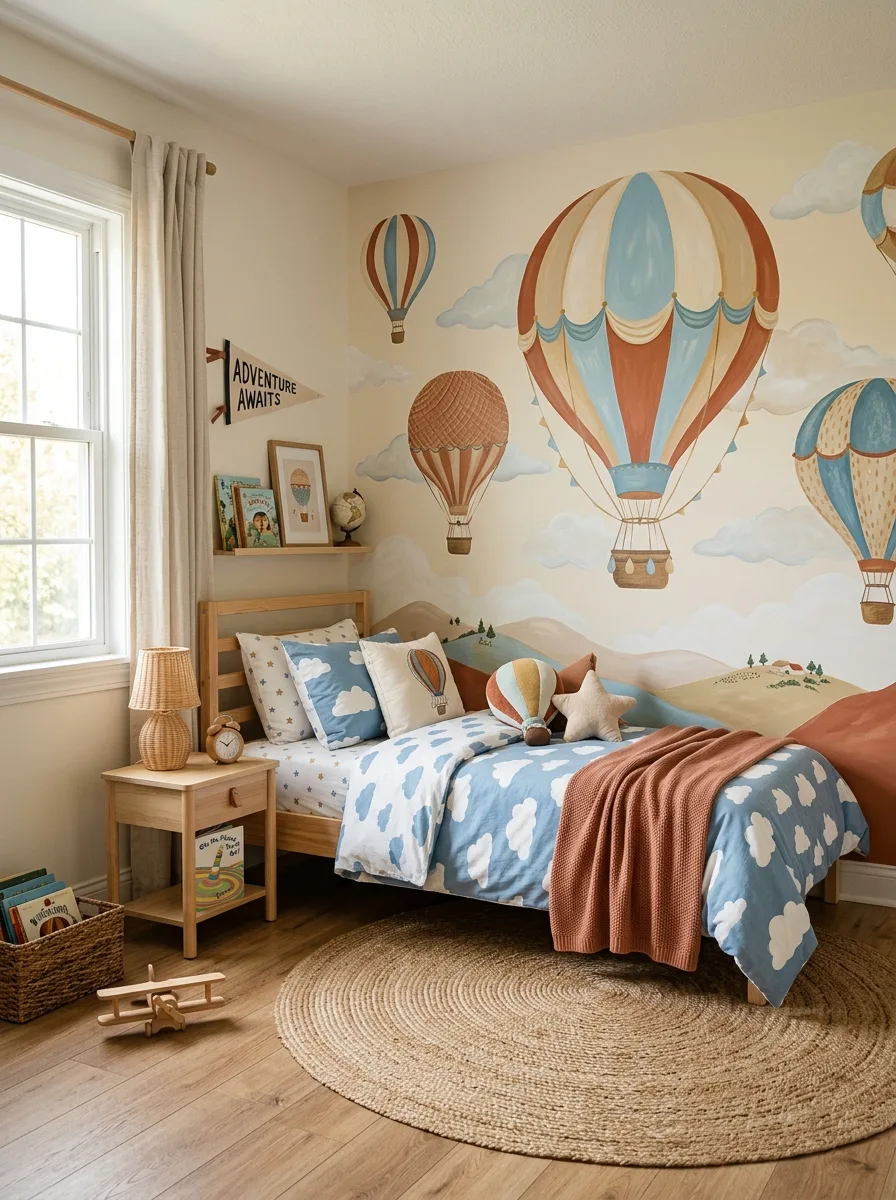
A wall mural does what no piece of purchased art can — it makes the room completely, irreversibly yours. Whether you hire a local muralist or try it yourself with painter’s tape and a projector trick, the result is a statement piece that becomes the visual heartbeat of the entire room. Every child who enters immediately knows what this room is about.
You don’t need to mural the whole wall. A focal zone — typically behind the headboard — is enough to create dramatic impact. Hot air balloons, climbing vines, a simple rainbow arc, a mountain horizon — all translate beautifully even for beginner painters. The imperfections add charm. Children notice the love in the effort far more than the precision of the execution.
The Key: Use a projector to trace the mural outline before picking up a brush. It removes all the guesswork and lets even non-artists achieve a clean, confident result.
10
Tent and Teepee Play Corners
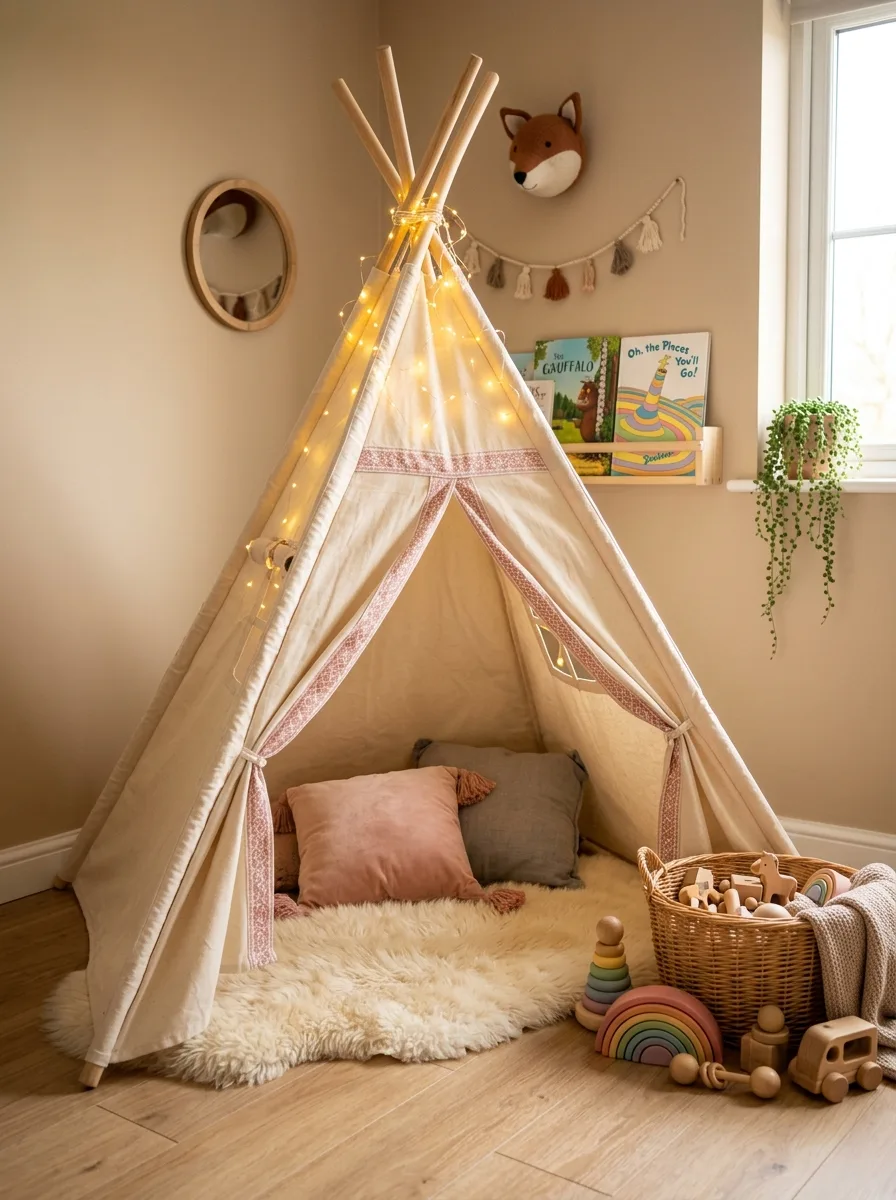
A teepee or tent corner is one of the simplest ways to give a child a sense of private space within a shared bedroom. Children naturally crave small, enclosed areas — it feels safe, imaginative, and entirely their own. A basic canvas teepee costs between $40 and $80 and requires no installation. You simply set it up and watch the play begin.
Personalize the inside of the teepee with a small battery-powered fairy light strand, a thin foam mat, and two or three small stuffed animals. These minimal additions transform the tent from a simple prop into a genuine hideaway. Children will spend hours inside — reading, playing pretend, or simply sitting with the feeling of having their very own secret world.
The Key: Place the teepee in a corner so two walls help define the space. Corner placement also keeps it stable and makes the interior feel more enclosed and intimate.
11
Personalized Name Signs
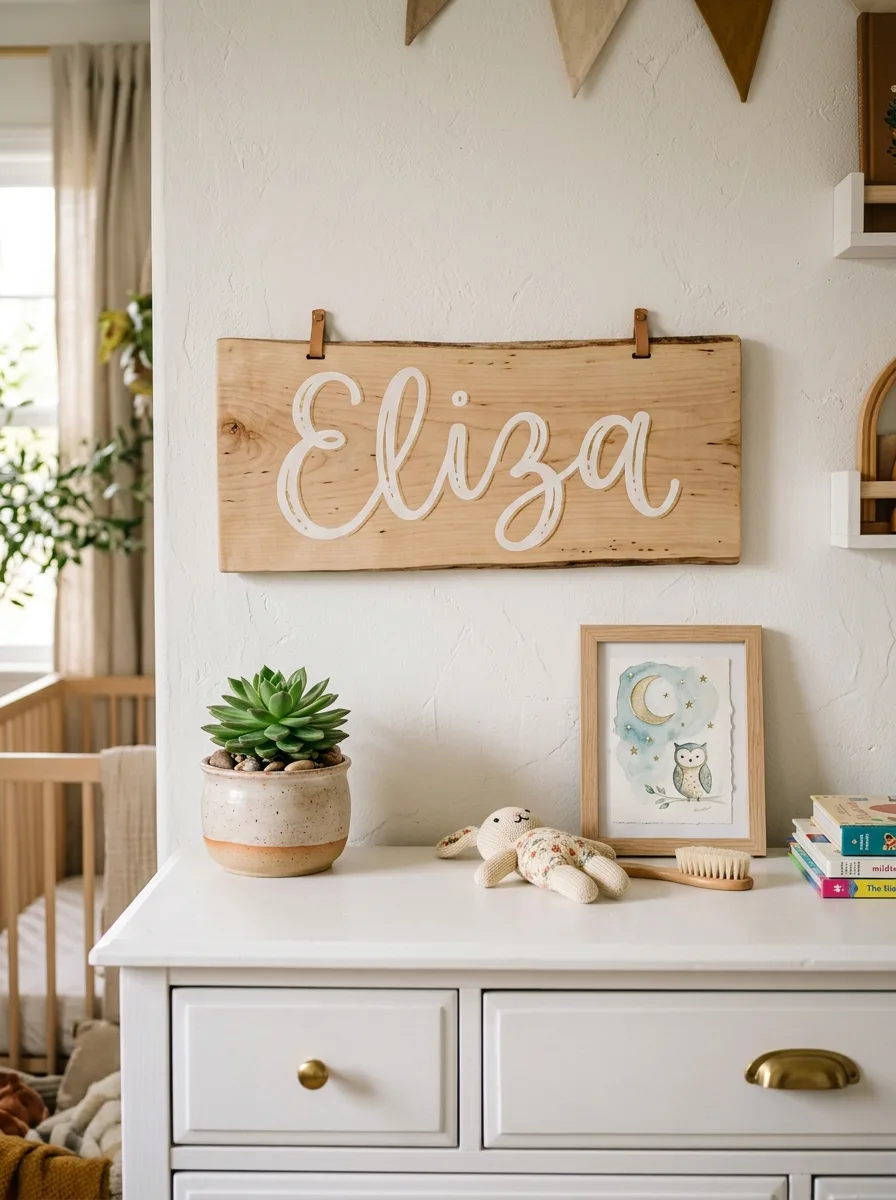
Few things make a child feel more seen than walking into a room and finding their name beautifully displayed on the wall. A personalized name sign is a small detail with enormous emotional impact. It signals: this space was made for you, specifically. Wooden letter signs, custom neon names, and hand-painted boards are all readily available — and surprisingly affordable on platforms like Etsy.
Mount the sign above the dresser, desk, or reading nook rather than directly above the bed. These positions keep the sign in a high-visibility zone where the child sees it throughout the day, not only at bedtime. Pair it with one or two small accessories in matching finishes — a photo frame or small plant — and it becomes a styled vignette rather than a solitary ornament.
The Key: Choose a font that matches the room’s personality — serif for classic elegance, sans-serif for modern clean, script for warm and whimsical. Font consistency ties everything together.
12
Clever Storage as Décor
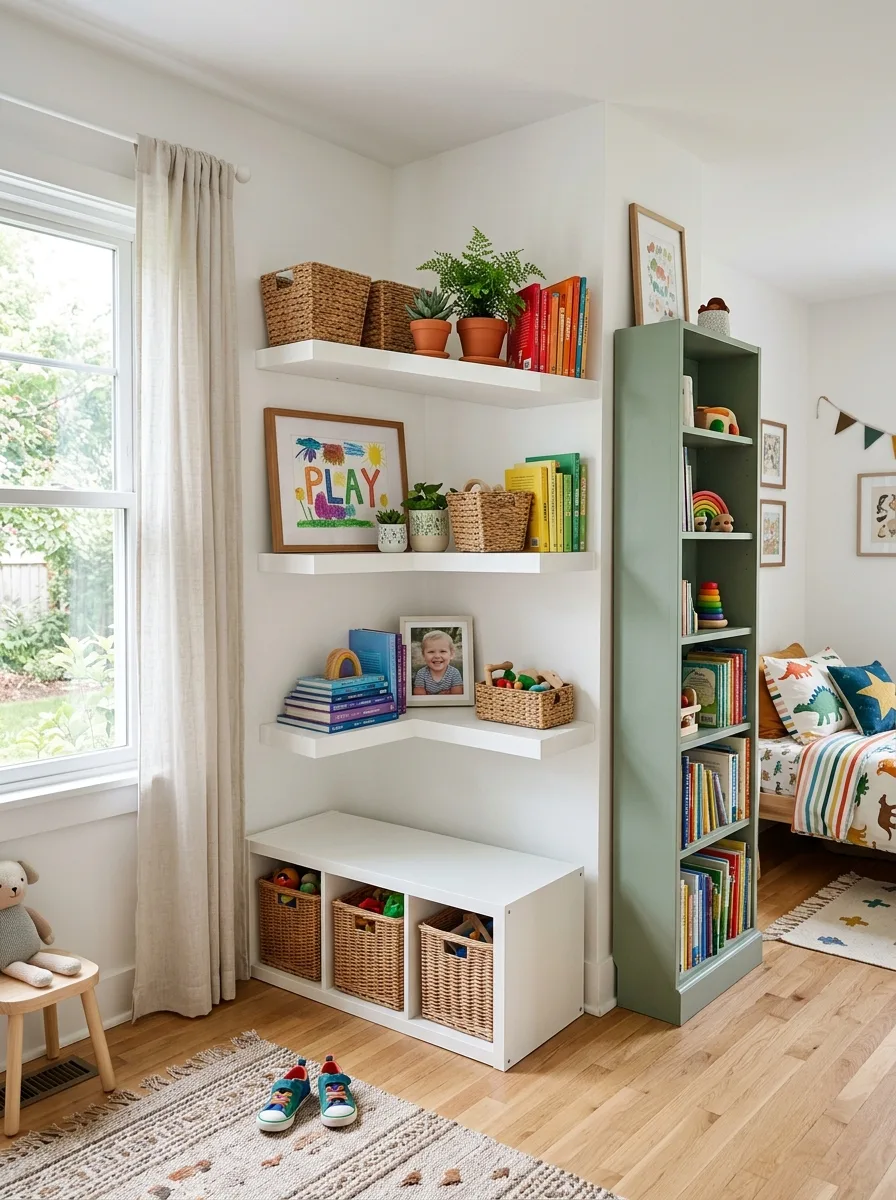
Storage doesn’t have to be hidden to be functional — in a well-designed kids bedroom, it can be one of the most visually interesting elements in the room. Open shelving with thoughtfully arranged items turns everyday objects into deliberate decor. Books sorted by spine color, small baskets for art supplies, and a few plants create a display that looks curated and lived-in at once.
The key to making open storage work is limiting the number of items per shelf. Three to five objects per shelf — maximum — prevent the display from looking cluttered. Rotate items seasonally to keep the room feeling fresh. A basket for “everything else” ensures that the visible surfaces always look intentional even when real life is less than perfectly tidy.
The Key: Use matching baskets across all shelves. Mixed basket styles create visual noise. One consistent material — rattan, cotton rope, or white plastic — keeps everything looking cohesive.
13
Fairy Lights as Architecture
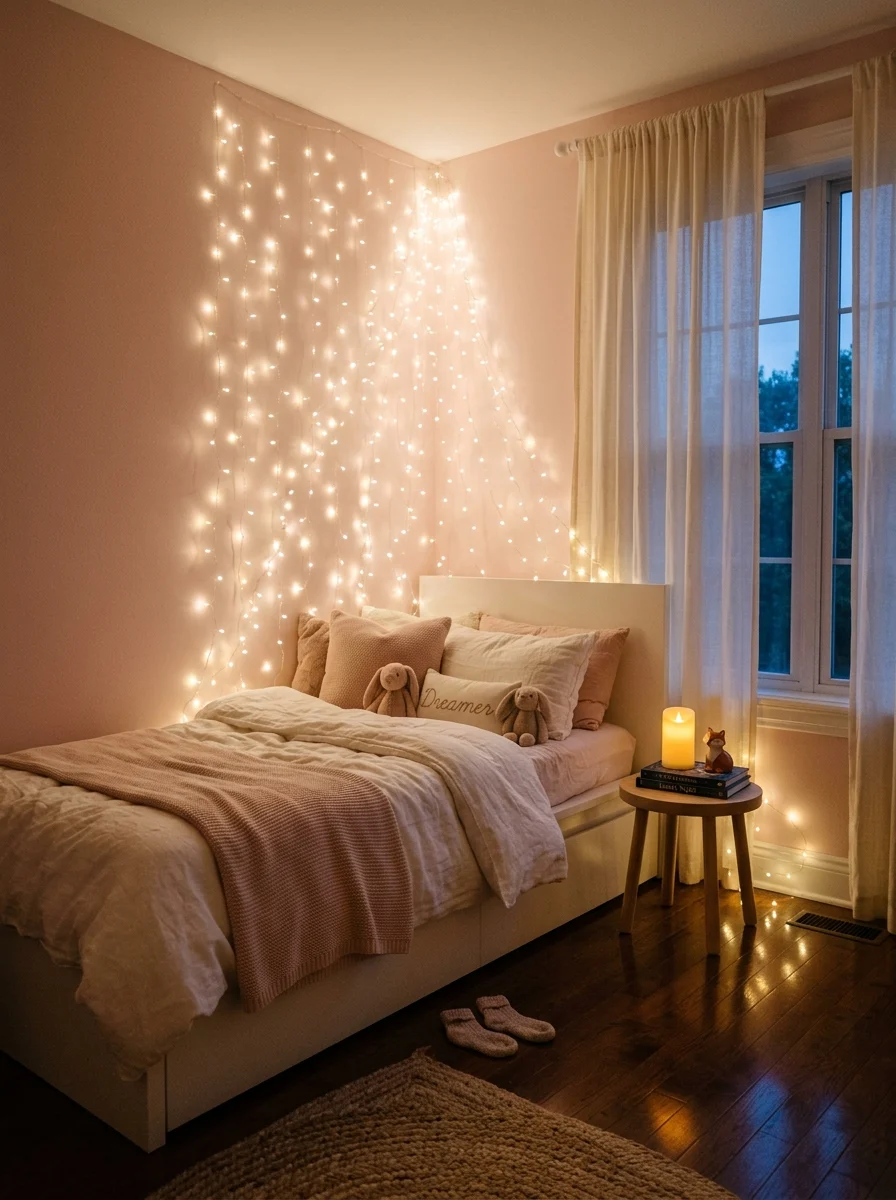
Fairy lights are the most underrated design tool in a kids bedroom. They cost almost nothing, require no installation beyond a few wall hooks, and transform the entire atmosphere of a room after dark. A curtain of warm white string lights hung behind the headboard turns a plain painted wall into an illuminated feature that children absolutely adore at bedtime.
Use warm white lights rather than cool white — warm tones are gentler on young eyes in the evening hours and create a more relaxing sleep environment. Plug-in options with a timer allow you to set the lights to switch off automatically after bedtime, so the ambiance supports the sleep routine rather than disrupting it. Simple, effective, and entirely child-safe.
The Key: Hang lights at varying heights rather than in a straight horizontal line. An organic, slightly uneven drape looks more intentional and far more beautiful in photographs.
14
Playful Rug Choices
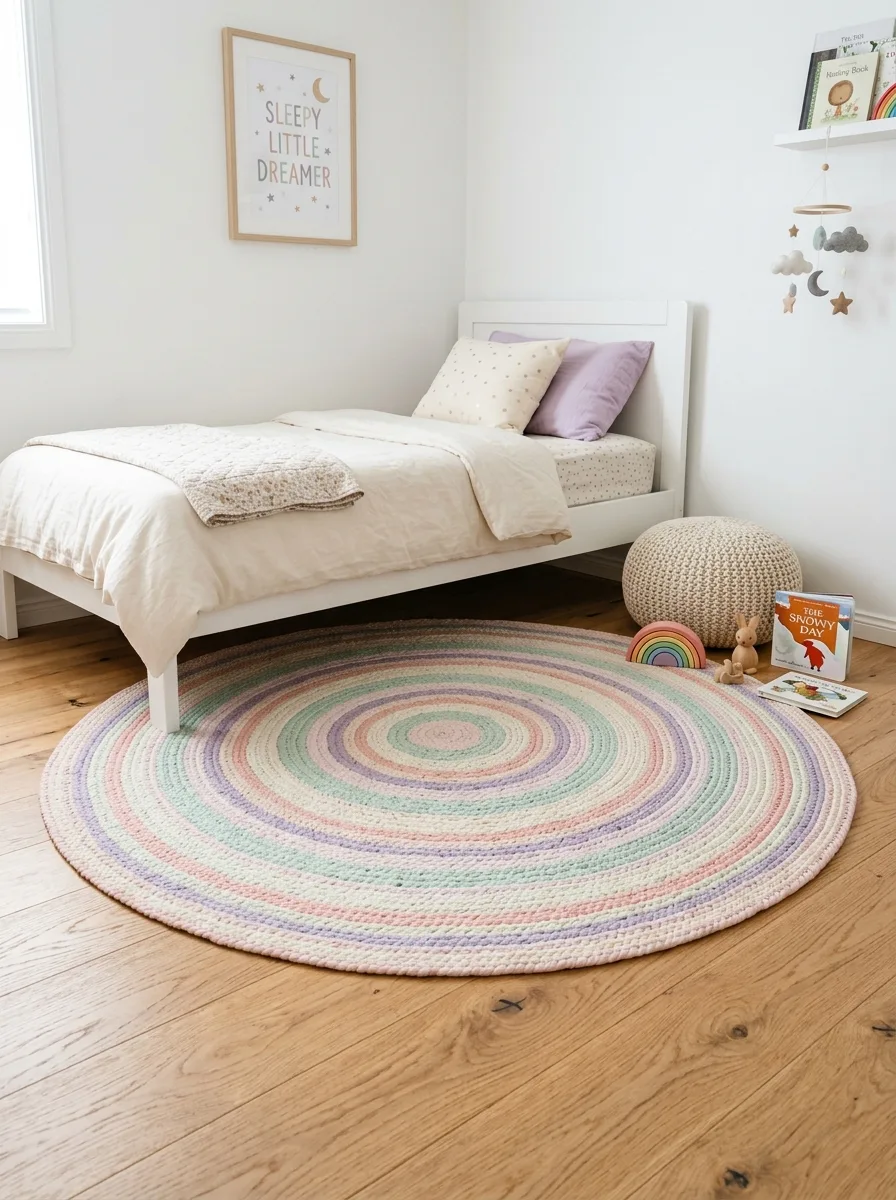
A rug anchors a kids bedroom the way nothing else does. It defines the sleeping zone, adds warmth underfoot, and introduces color and pattern in a way that can be swapped out as your child grows. Round rugs in particular work beautifully in kids rooms — they soften the boxy geometry of most bedrooms and add a sense of playful movement to the floor plane.
For families with young children, washability is non-negotiable. Look for rugs labeled machine washable or flat-woven for easy spot cleaning. A rug with a low pile is also safer — high-pile rugs catch toy wheels and small feet alike. In my experience, the rugs that hold up best are those made from cotton or polypropylene in a flat-weave construction.
The Key: Size up. A rug that is too small makes a room look unfinished. For a twin bed, a 5×8 minimum is recommended; for a full bed, go 6×9 or larger.
15
Growth Chart as Wall Art
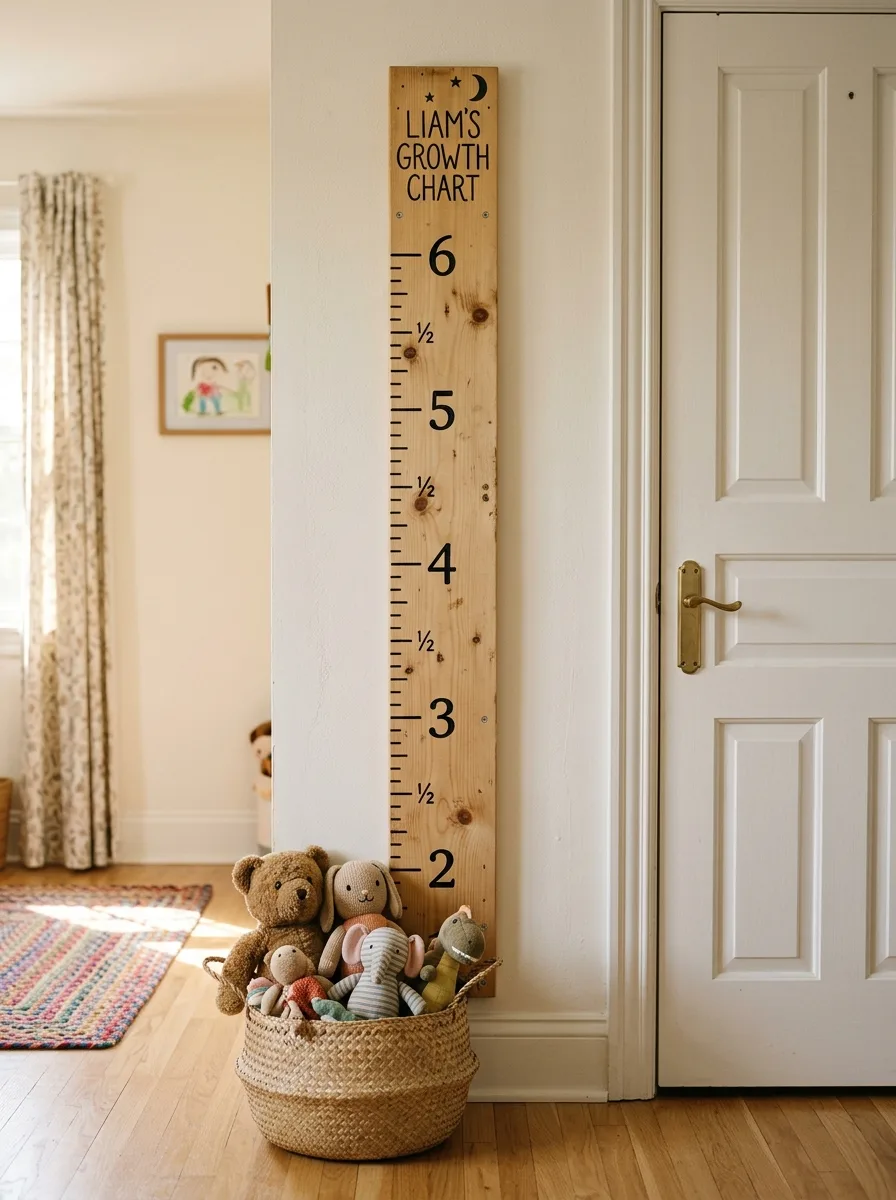
A growth chart is one of those rare decor pieces that becomes more meaningful with every year. What starts as a practical measurement tool slowly becomes a visual record of your child’s entire childhood — one pencil mark at a time. Wooden growth chart rulers in particular are beautiful enough to display prominently and sentimental enough to keep long after the children have grown.
Mount the chart beside a door frame or at the entry of the bedroom where it is easily visible and naturally encountered. Use a fine-tip permanent marker rather than pencil — pencil marks fade and can be accidentally erased. Date each mark and add a small note beside it when you can. In twenty years, those notes will be the most treasured details of all.
The Key: Choose a chart that starts at 24 inches, not 12. Children grow quickly and a chart that starts too low will be outgrown before it becomes a meaningful record.
16
Chalkboard Walls for Creativity
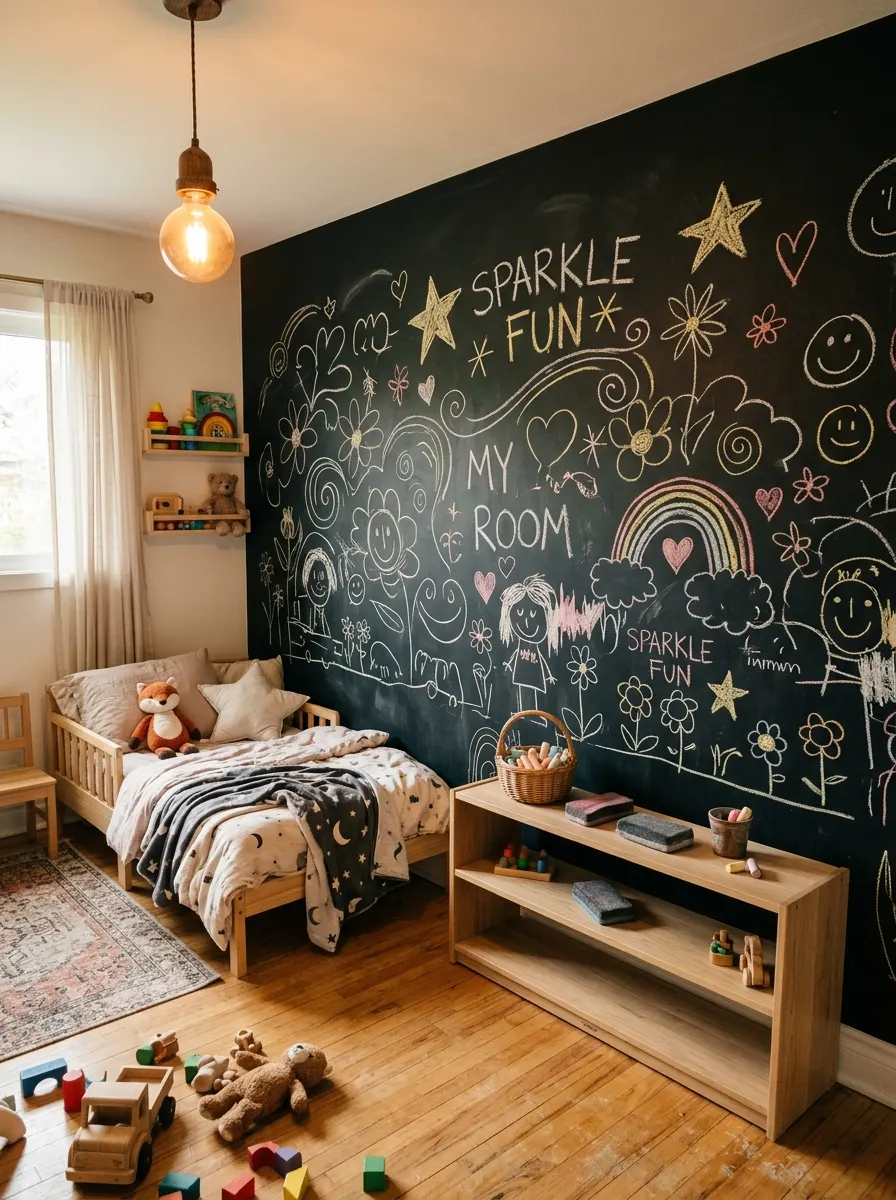
A chalkboard wall is every creative child’s dream — an ever-changing canvas that is entirely their own to fill, erase, and fill again. It requires just one coat of chalkboard paint over a properly primed wall and cures within 48 hours. The result is an interactive surface that keeps children engaged far more than any framed art ever could.
Reserve the chalkboard wall for an area away from the bed — a side wall or a corner space works best. This keeps the sleeping zone visually calm while giving the creative zone full expressive freedom. Stock a simple wooden tray or shallow basket with a variety of chalk colors. Children who have access to their own art wall use it constantly.
The Key: Prime the wall twice before applying chalkboard paint. Proper priming prevents the paint from absorbing unevenly and ensures a smooth, wipeable surface that lasts for years.
17
Under-Bed Storage Solutions
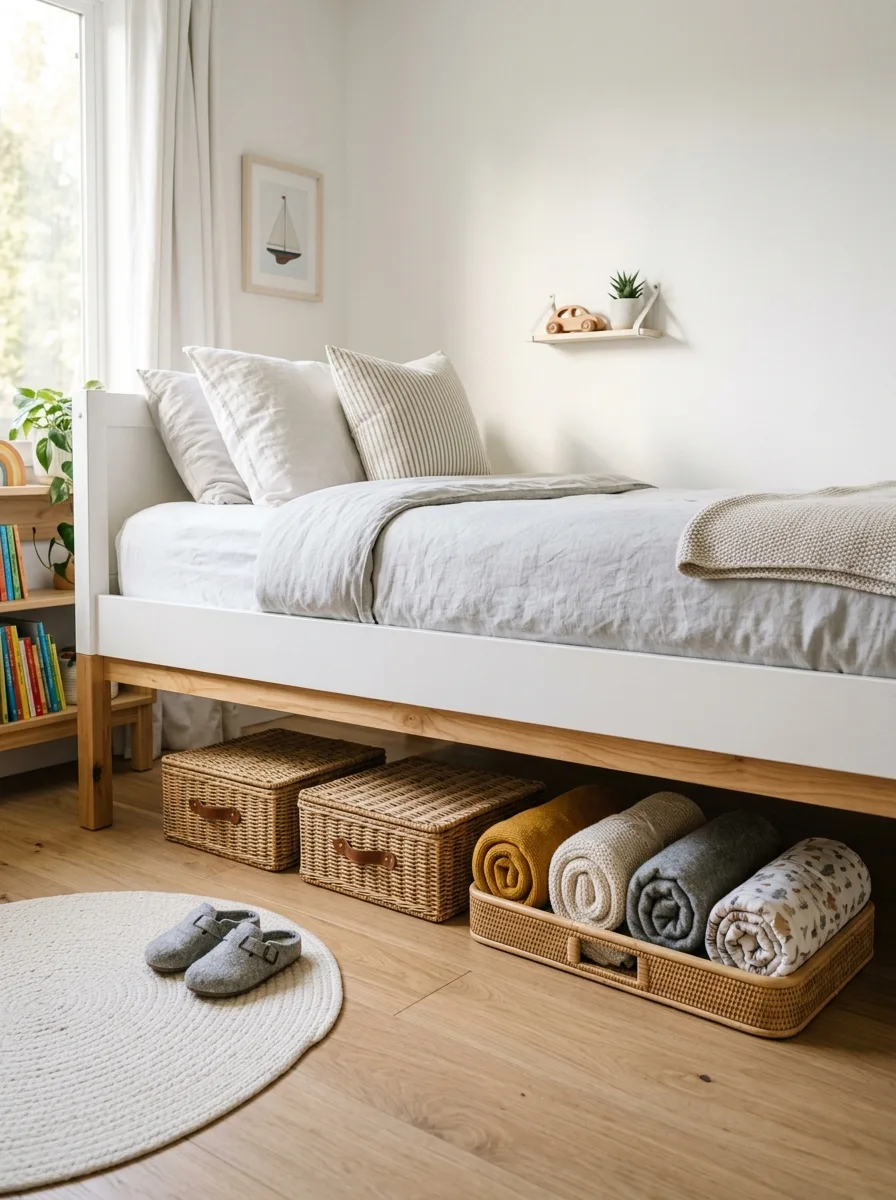
Under-bed storage is the most underused space in any bedroom — and in a kids room, it is especially valuable. Flat wicker baskets with lids, fabric-covered storage boxes, or low rolling drawers slide in and out effortlessly and can hold seasonal clothes, extra bedding, or off-rotation toys without adding visual clutter to the room’s main surfaces.
The secret to making under-bed storage work is consistent containers. Mixed bags, cardboard boxes, and mismatched bins create visual chaos every time the bed skirt lifts. Invest in two or three matching baskets and assign each one a category. When everything has a dedicated container, children can find things — and put them back — without help.
The Key: Choose a bed frame that sits at least 8 inches off the ground. Anything lower limits your storage to very flat items and makes retrieval awkward and frustrating.
18
Dreamy Lighting Layers
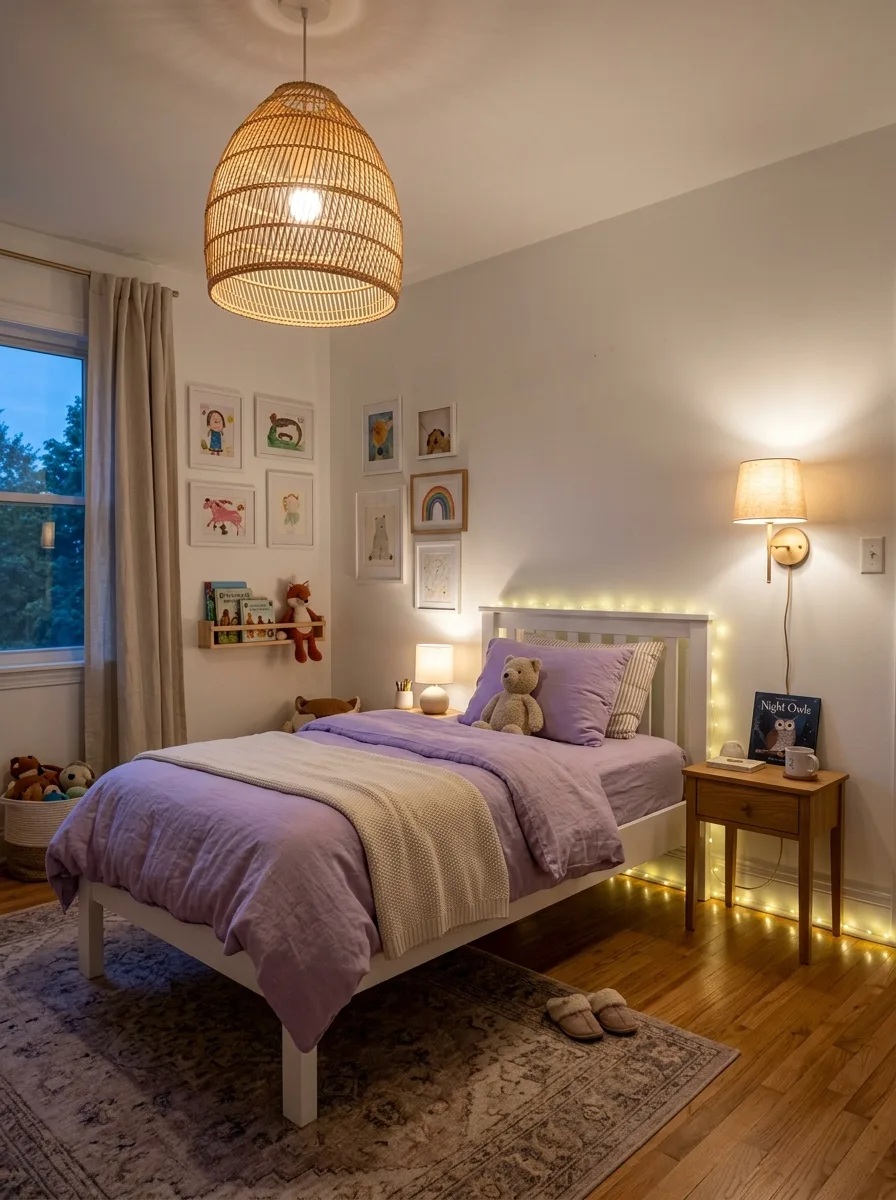
Lighting is the most overlooked element in children’s bedroom design — yet it is arguably the most powerful. A single overhead light on a bright white ceiling creates a flat, clinical feeling that works against both play and sleep. Layered lighting — ambient, task, and accent — allows the room to shift mood throughout the day based on what the child needs at each moment.
Start with a warm-toned rattan or fabric pendant for ambient light — it diffuses the glow and removes the harshness of bare bulbs. Add a clip or wall-mounted reading light at pillow height for task lighting. Then finish with a subtle accent layer: a plug-in nightlight, a moon lamp, or a low string light along the baseboard. Three sources. One seamless atmosphere.
The Key: All bulbs in the room should match in color temperature. Mix warm and cool bulbs and the room will feel disconnected even with beautiful fixtures. Stick to 2700K throughout.
19
Gallery Walls Kids Love
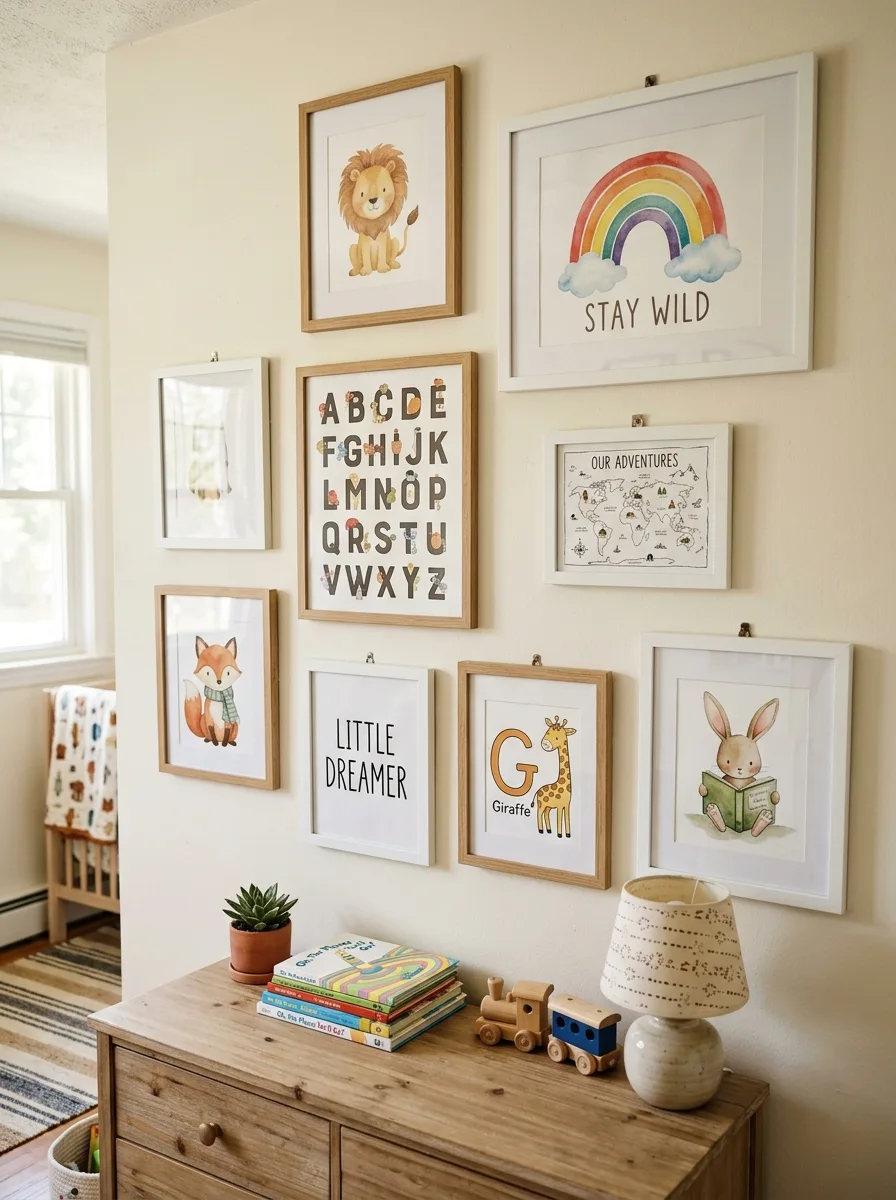
A gallery wall is the design equivalent of a scrapbook — a curated collection of things that matter to the child and tell their story in visual form. It doesn’t require expensive art. Illustrated animal prints, alphabet posters, a favourite map, a painted quote, and a framed photo or two compose a wall that is deeply personal and entirely original.
Mix frame sizes and styles deliberately — different widths and depths create visual depth. Using a unifying color for all frames (all white or all natural wood) prevents the eclectic mix of prints from feeling chaotic. Lay the arrangement out on the floor before hammering a single nail. Photograph the layout, then transfer it to the wall using the photo as a guide.
The Key: Place the largest, most visually dominant piece at the center of the arrangement and build outward from there. Center-anchored gallery walls always feel more intentional and composed.
There is a particular joy in finishing a child’s bedroom and watching their face when they walk in for the first time. Every detail you’ve thoughtfully chosen — the lighting, the colors, the personal touches — communicates something that words don’t easily say: that this space was designed with them at the center of every decision. That message lands deeply, even for very young children who may not yet have the language to describe what they feel.
Save this post before you close it. Come back to it when you’re ready to start, and share it with a friend who has been dreaming about refreshing their child’s room. These creative kids room ideas work across budgets, ages, and room sizes. If you’re looking for additional inspiration, these bedroom decor ideas can help you add personality and style to any space. Wherever you begin — with a single canopy or a full gallery wall — the most important thing is that you begin. Your child’s dream room is closer than you think.