Black and White Bathroom
🏠 18 Real Ideas
⏱ Quick Read
🔥 Always Trending
18 Black and White Bathroom Ideas
That Photograph Beautifully and Look Just as Good in Real Life
There is something about a black and white bathroom that stops people mid scroll every single time. The contrast is bold, the palette is timeless, and the look works in every home style from cozy cottage to sleek urban apartment. These spaces photograph beautifully because they are built on strong visual principles, and the best part is that they feel just as stunning in person. I personally love how this color pairing turns even the most ordinary bathroom into something that feels curated and intentional.
This article gives you 18 of the most inspiring monochrome bathroom ideas you can actually recreate, whether you are starting a full renovation or just refreshing your space on a budget. Each idea comes with real design insight, practical tips, and beginner friendly guidance. You will leave here knowing exactly what to do next and feeling genuinely excited to bring one of these looks to life in your own home.
01
Classic Hex Tile Floors
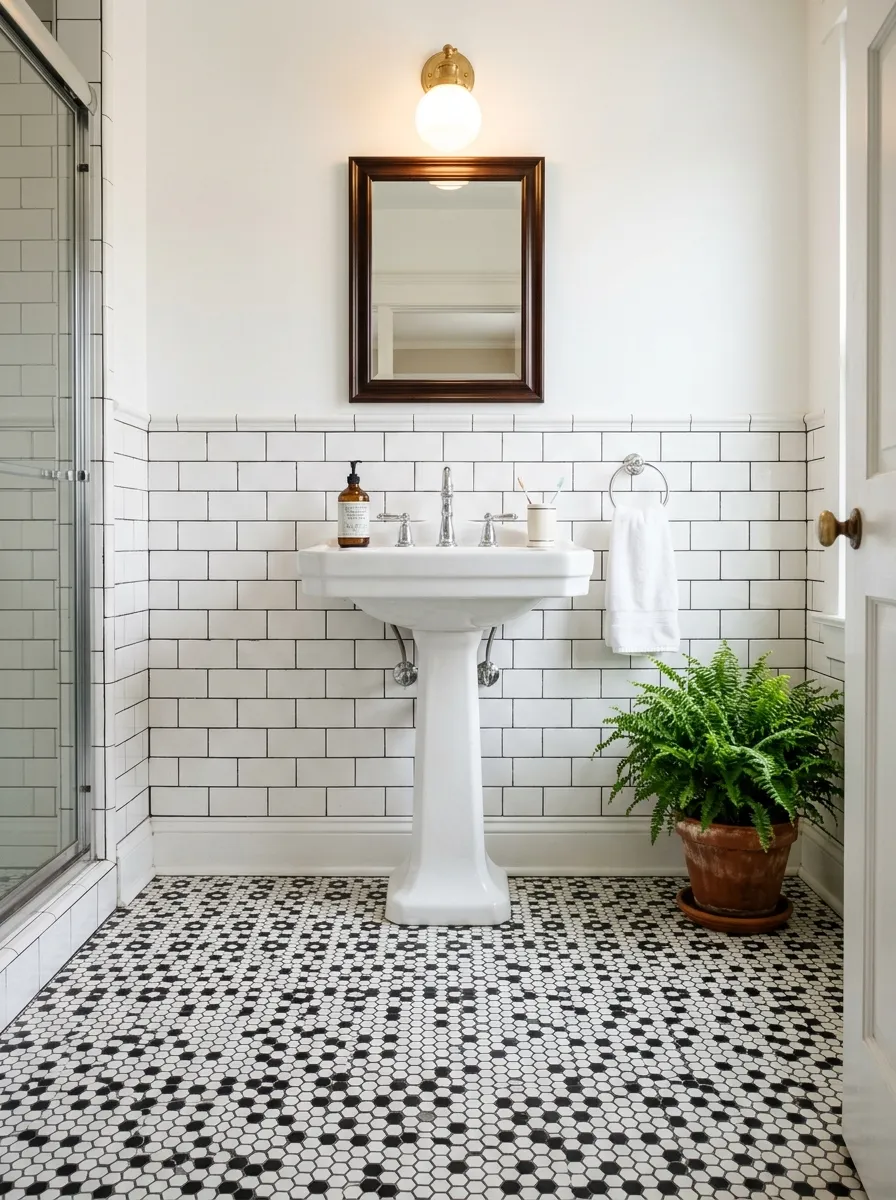
Few design choices feel as immediately satisfying as stepping into a room with a perfectly laid black and white hex tile floor. This pattern has been used in homes for over a century and has never once looked dated. It works in powder rooms, full bathrooms, and even small ensuite spaces. The geometry creates visual rhythm that draws the eye downward and makes the entire room feel more intentional. What I have found is that even a basic bathroom transforms the moment you swap out a plain floor for hex tiles.
The beauty of hex tiles is that they pair with almost everything. White walls let the floor take center stage, while a simple pedestal sink or a floating vanity keeps the rest of the room from competing. The black and white bath design reads as polished rather than overdone because the pattern does all the heavy lifting. Add a small plant, a chrome mirror, and a fluffy white towel and you have a bathroom that looks genuinely designed without a designer price tag.
The Key: Choose 1 inch or 2 inch hex tiles for a traditional look, and always use white grout to keep the pattern crisp and historically accurate.
02
Subway Tile With Black Grout
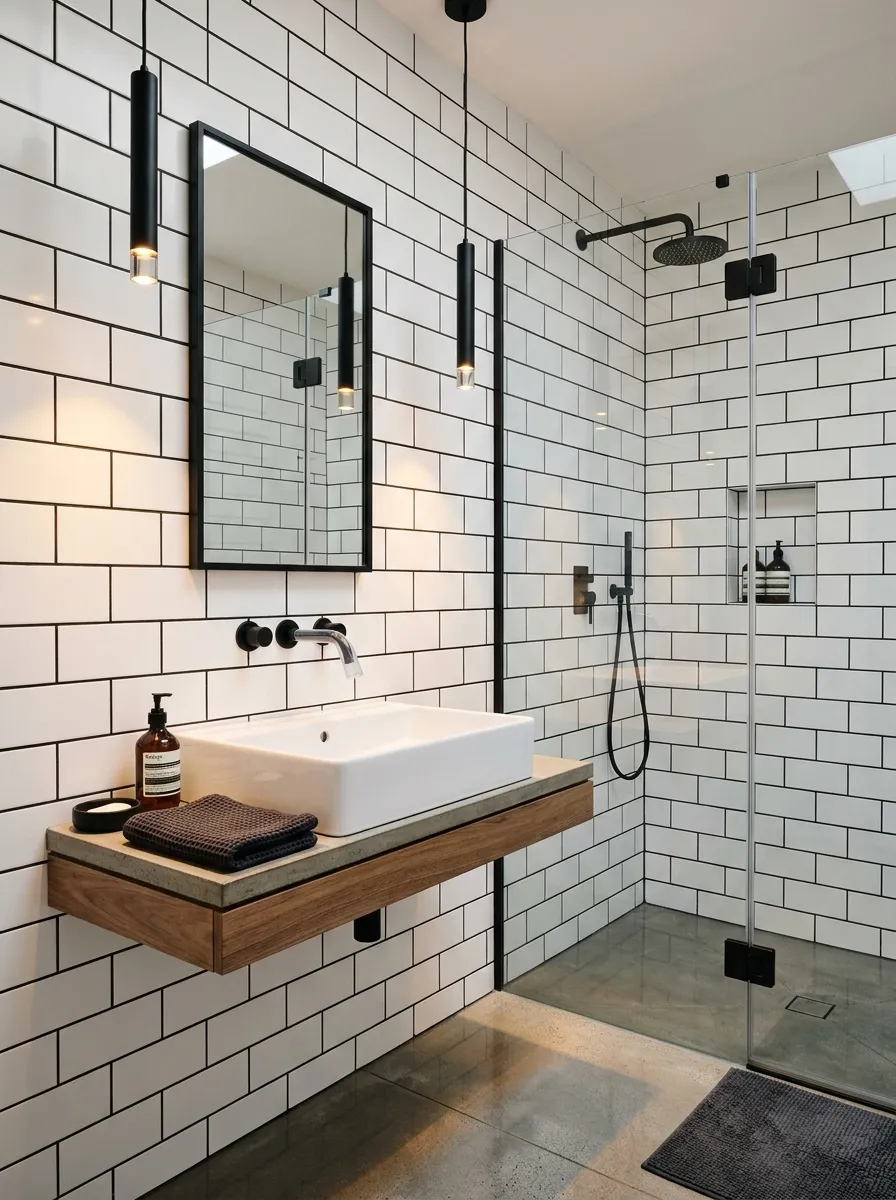
White subway tile has been a bathroom staple for decades, but pairing it with black grout completely changes its personality. Instead of feeling soft and vintage, the room takes on a graphic, editorial quality that photographs like a magazine shoot. The black grout lines trace every tile edge and create a bold grid pattern that adds structure and visual weight to what would otherwise be a very plain wall. In my experience, this is one of the most affordable ways to make a massive design impact in any bathroom.
The contrast between white tile and dark grout lines creates natural depth that cameras and eyes both love. This black white bathroom style works beautifully with matte black fixtures, chrome faucets, or brushed nickel for a softer tone. The wall becomes a backdrop that makes every other element pop, from a simple plant to a statement mirror. Keep the floor light to balance the wall pattern and the room will feel bright even with bold graphic lines everywhere. This same grout contrast technique makes a modern farmhouse bathroom feel characterful and Pinterest worthy with minimal investment.
The Key: Use unsanded grout for thinner lines to keep the look modern, or sanded grout for thicker lines if you prefer a more vintage grid effect.
03
Freestanding Tub Statement
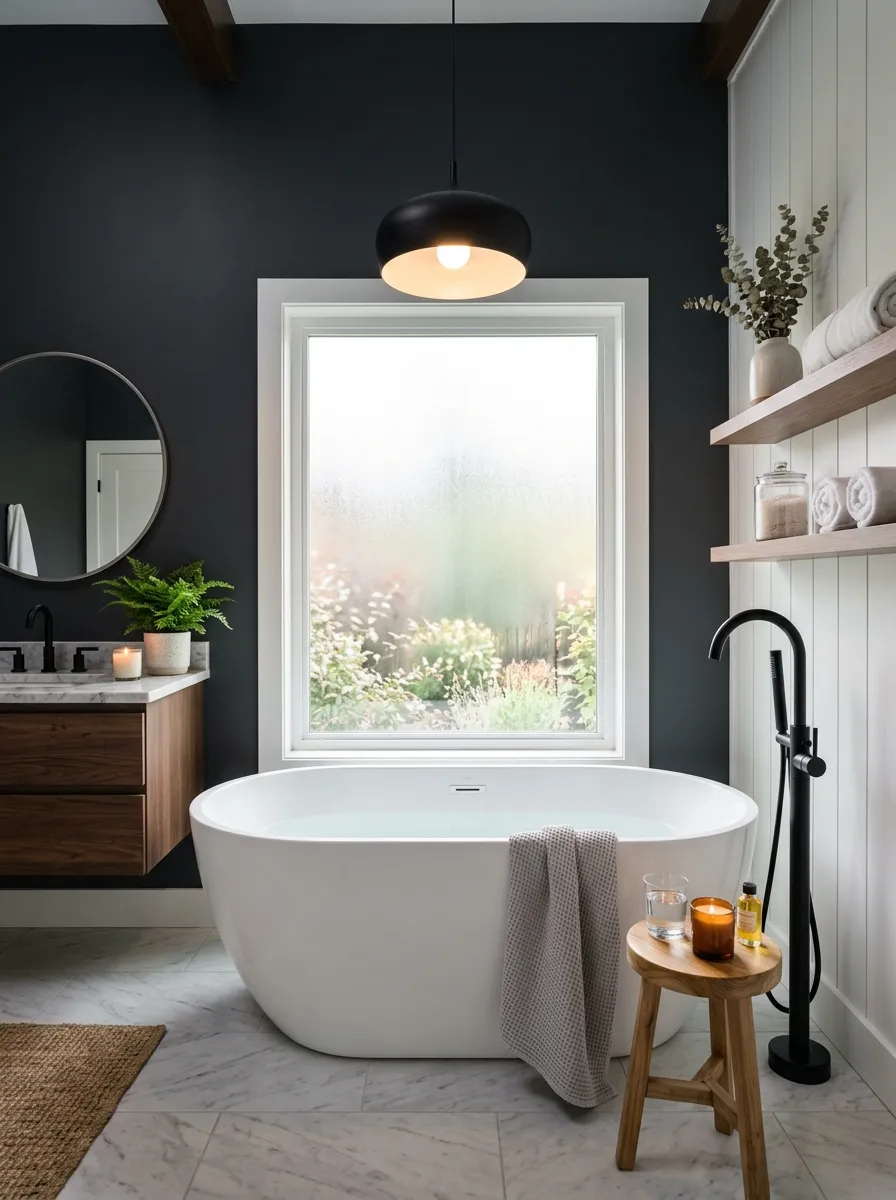
A freestanding tub is the single most powerful design move you can make in a black and white bathroom. It turns a functional room into a retreat and gives every photo of the space an immediate wow factor. The tub becomes a sculptural anchor, especially when placed against a dark or contrasting wall that makes the white surface pop like a piece of art. I always recommend going white for the tub body itself and then pulling contrast from the wall, floor, and fixtures around it.
The reason this setup photographs so well is that it creates a strong focal point with a clear foreground, midground, and background. Your eye travels from the tub surface to the wall behind it to the ceiling or window above, and each layer tells a story. In a two tone bathroom, pairing a white oval tub with a dark charcoal wall and a matte black floor filler faucet delivers that effortlessly luxurious look without needing much else in the room. A single trailing plant, a small wooden stool, and one candle finish it perfectly.
The Key: Place the tub at least 18 inches from the wall on all sides so it reads as a true sculptural element and not just a built in fixture replacement.
04
Bold Checkerboard Floors
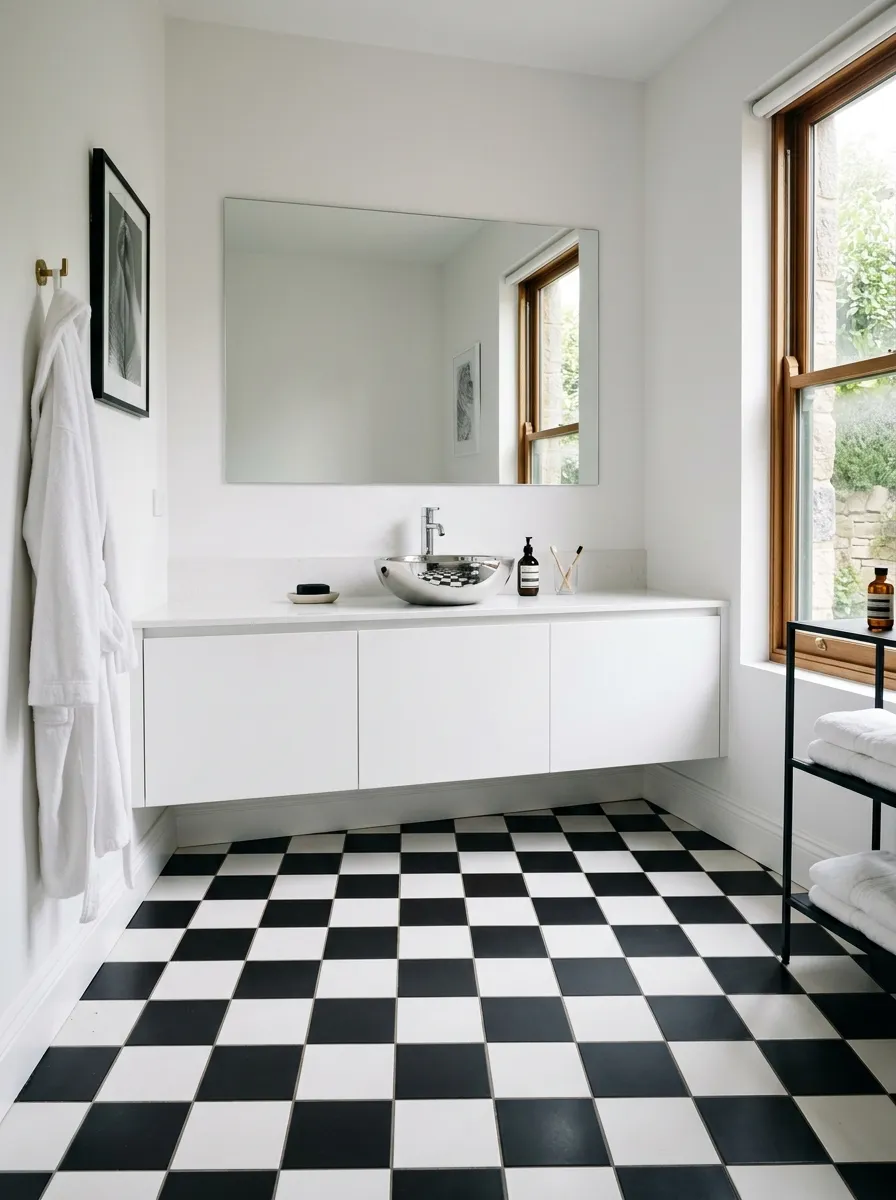
A checkerboard floor in a bathroom is not just a design choice. It is a statement of confidence. This pattern creates immediate visual drama and has a timeless quality that designers have relied on for well over 100 years. The key to making it work is keeping the rest of the room calm. White walls, simple cabinetry, and minimal accessories let the floor take all the attention it deserves. From what I have seen, bathrooms with checkerboard floors consistently outperform other patterns on Pinterest saves and engagement.
The scale of the tile squares matters enormously. Larger 12 by 12 inch squares create a bold, modern graphic quality and make small rooms feel bigger. Smaller 4 by 4 inch squares read as more traditional and intricate, adding a vintage charm that suits older home styles. Either size works beautifully in a monochrome bathroom as long as the surrounding finishes stay clean and uncluttered. Add a statement mirror with a black frame and you have a space that looks like it belongs on a design blog cover.
The Key: Use larger tile squares in small bathrooms to visually expand the floor space rather than chopping the room into tiny sections with small tiles.
05
Matte Black Fixtures Throughout
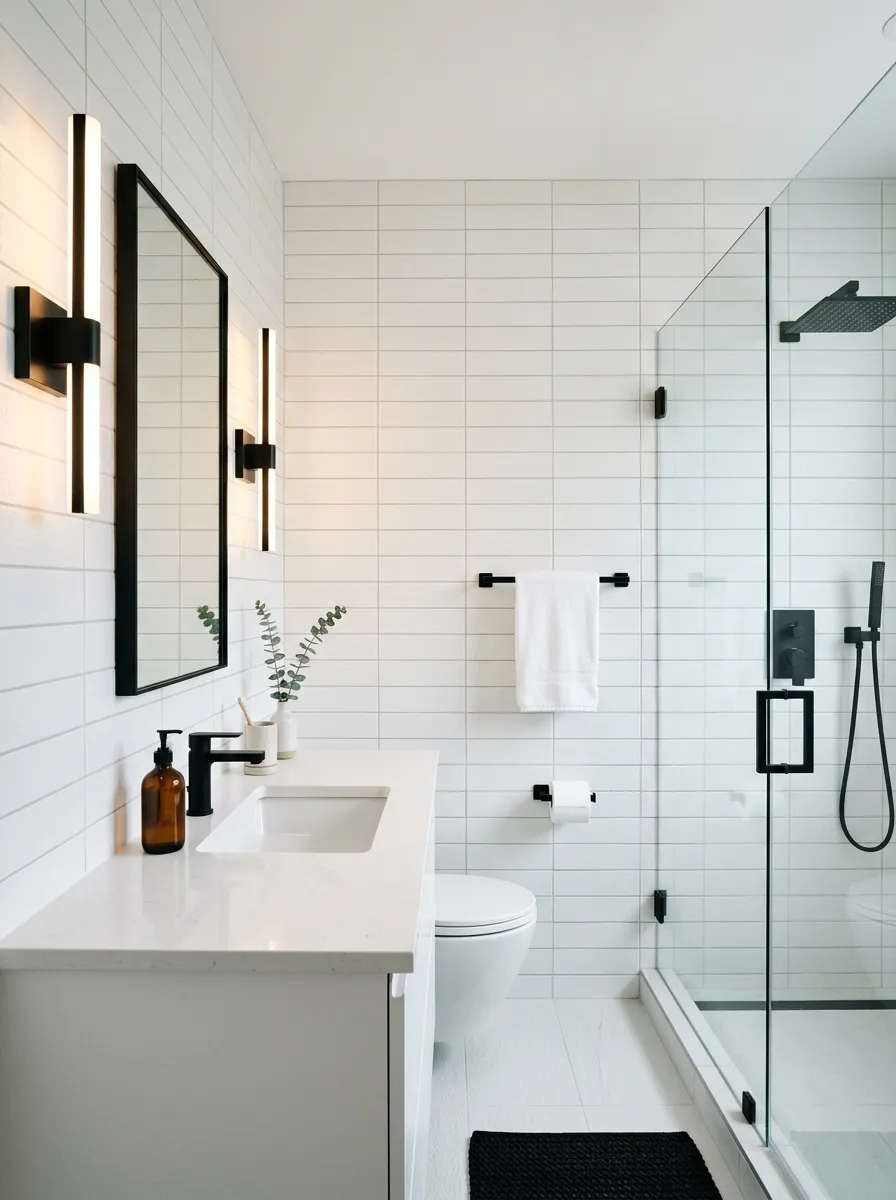
Switching every fixture in your bathroom to matte black is one of the fastest ways to elevate the entire space without touching a single tile. The consistent finish ties the room together and creates a sense of intentional design that chrome or mixed metals rarely achieve. Matte black does not reflect harshly under bathroom lighting, which means it photographs beautifully and looks just as good in everyday life. I have tested this approach in both large and small bathrooms and the result is always a space that feels designed rather than assembled.
The key to making full matte black fixtures work is pairing them with a clean white backdrop. White tiles, countertops, and walls let the black finishes read clearly and crisply. In a black and white bath design, fixtures act like punctuation marks, drawing the eye to every carefully chosen detail. Towel bars become architectural. Faucets become sculptural. Even the toilet flush plate becomes a design element worth noticing. Choose fixtures with simple geometric forms for maximum impact and minimum visual noise. That same all matte black hardware philosophy makes farmhouse bathroom spaces feel polished and cohesive without expensive upgrades.
The Key: When going full matte black, keep all fixtures from the same product line so the finish tone stays consistent across the room.
06
Herringbone Tile Accent Wall
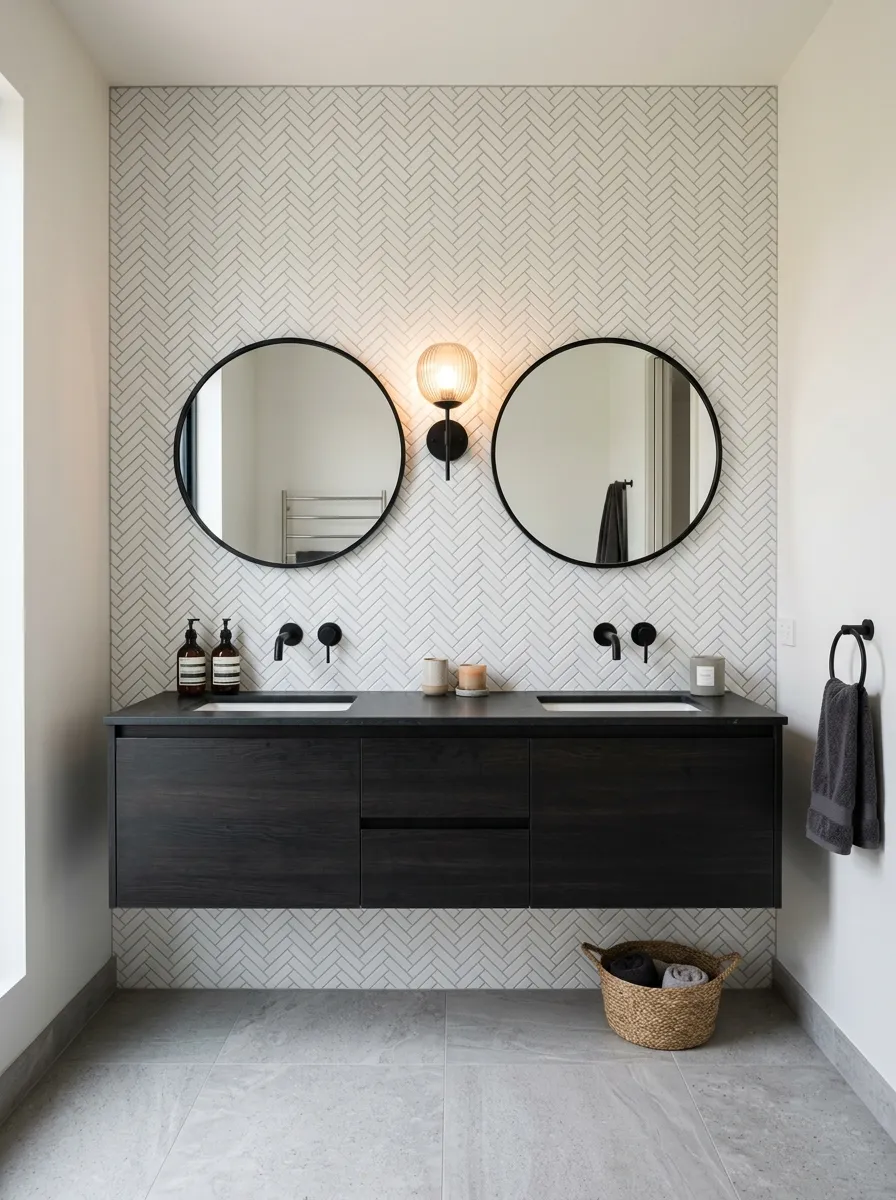
A herringbone tile accent wall brings texture and movement to a black and white bathroom without adding a single drop of color. The angled pattern catches light differently at every hour of the day and creates a tactile richness that flat painted walls simply cannot replicate. Placed behind a vanity, it frames the mirror and sink area like a piece of art and gives the entire wall a purposeful, gallery quality feel. I have noticed that herringbone walls consistently photograph beautifully because the diagonal lines create natural depth in every shot.
The contrast between a textured white herringbone wall and a smooth dark vanity is one of the most satisfying visual pairings in bathroom design. The rough texture of the tile grout lines plays against the sleek flat surface of the cabinet front and creates a push pull dynamic that keeps the eye moving. Use white or very pale grey grout to maintain the brightness and let the pattern show clearly. Add warm sconce lighting on either side of the mirror to cast gentle shadows across the tile surface and bring the texture to life even in the evenings.
The Key: Run herringbone tiles vertically rather than horizontally to make ceilings appear taller and the room feel more generous in height.
07
Clawfoot Tub With Vintage Charm
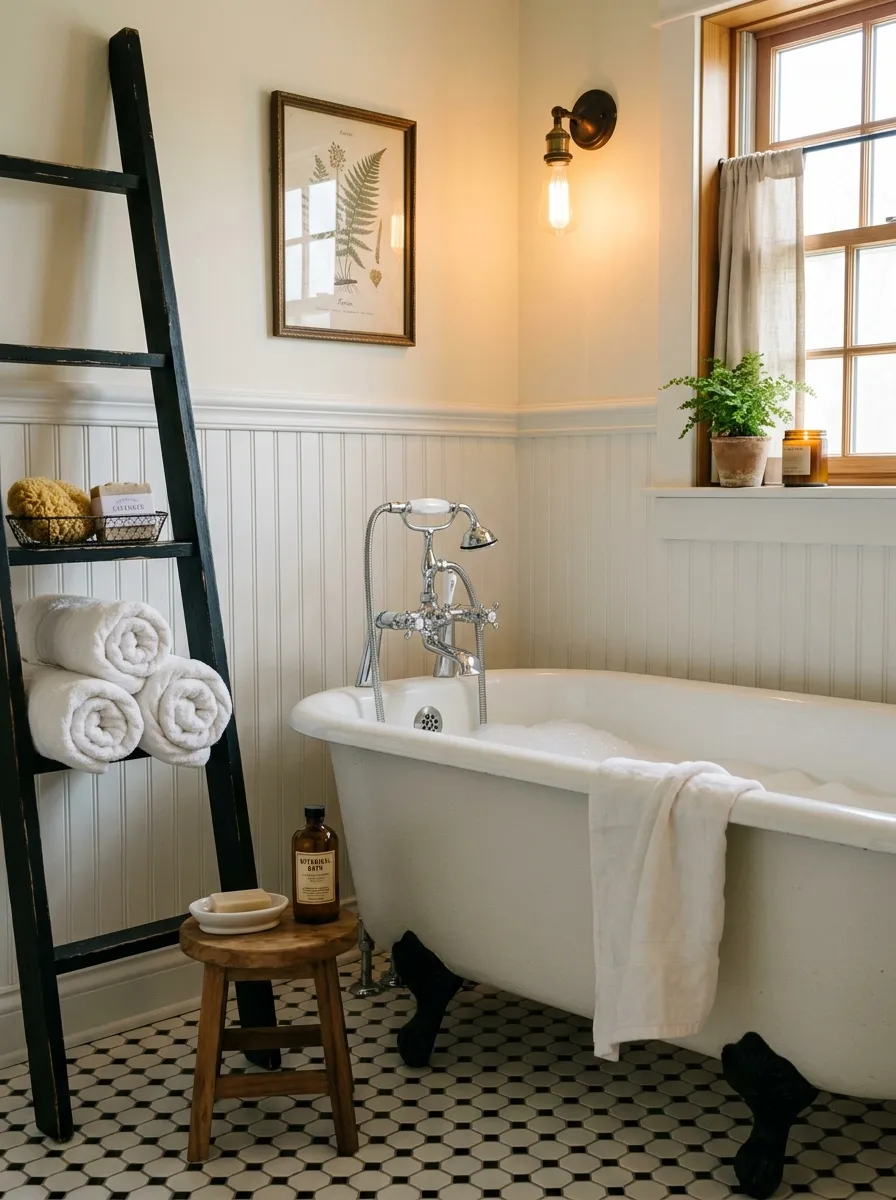
Few things in home design carry the romantic charm of a white clawfoot tub. Place one in a black and white bathroom with the right supporting elements and you have a space that feels like it belongs in a countryside inn or beautifully restored Victorian townhouse. The tub becomes the emotional center of the room, drawing every eye the moment you walk in. Its curved form against straight walls and geometric floor tiles creates a beautiful contrast between soft and structured forms. Anyone who loves this vintage tub energy will find equally beautiful inspiration in pink bathroom ideas too.
The real magic happens in the details around the tub. Black painted claw feet ground the white body and connect visually to the black tile elements in the floor or fixtures. A telephone handshower in chrome or brushed nickel adds authenticity to the vintage aesthetic. Pair the tub with white beadboard paneling on the lower walls and you have a room that whispers old world elegance rather than shouting for attention. Trust me on this one: a clawfoot tub is the most photographed piece of furniture in any home that has one.
The Key: Paint the exterior of the tub a deep matte black to create even more contrast if your surrounding walls and floors are predominantly white and light.
08
Floor to Ceiling Dark Tile Shower
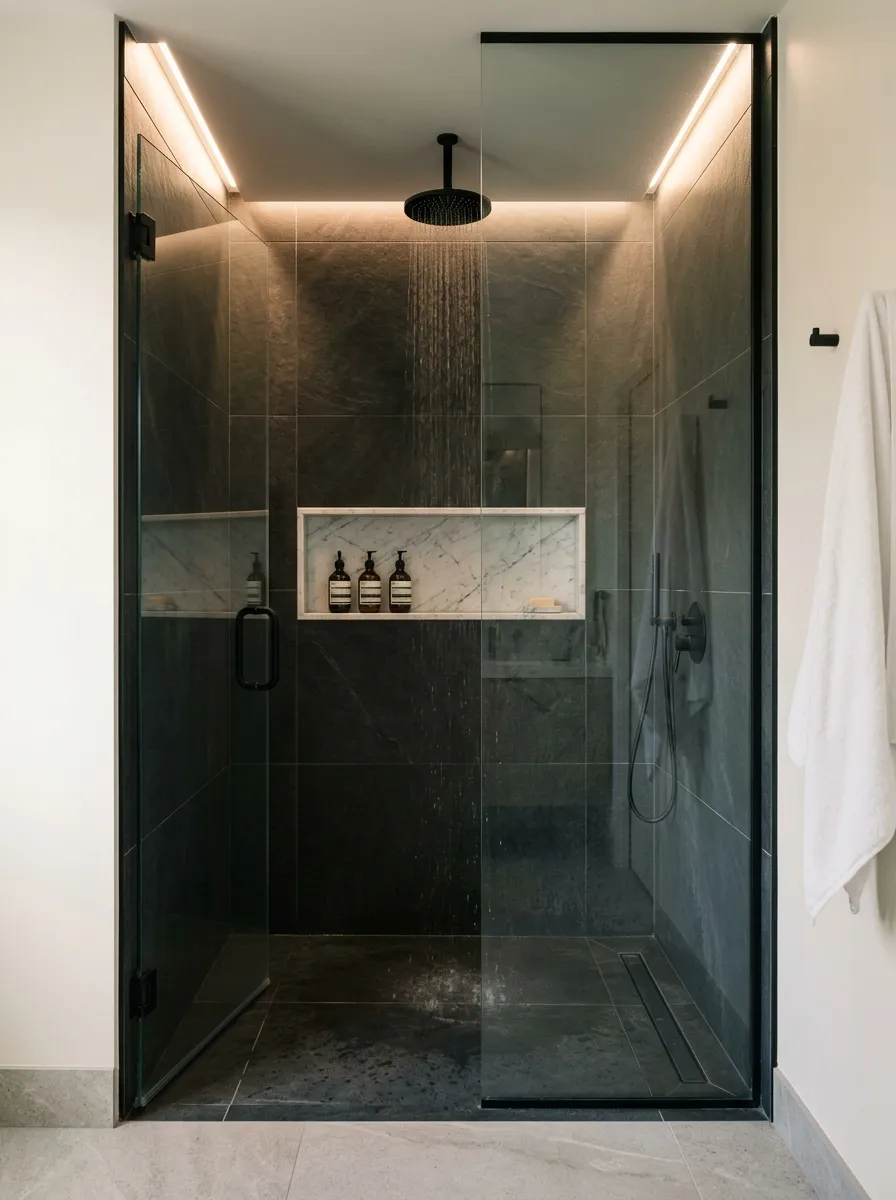
A walk in shower tiled floor to ceiling in deep charcoal or near black tile creates one of the most visually arresting moments in any black white bathroom style. The full immersion in dark tile transforms the shower from a functional corner into something that feels genuinely spa worthy. The contrast between the dark enclosed shower space and the lighter open bathroom beyond it gives the room incredible visual depth and makes the overall layout feel larger and more layered than it actually is.
The choice of tile finish matters as much as the color itself. Matte large format tiles absorb light and create a moody, enveloping atmosphere that feels indulgent and calm. Slightly textured tiles add grip underfoot and prevent the shower from looking like a dark hole. A white or light marble niche built into the shower wall provides a bright accent point that breaks up the darkness and adds practicality with beauty. Pair this with a matte black rainfall showerhead and a frameless glass door and the shower becomes the showpiece that everyone talks about first.
The Key: Install recessed LED lighting inside the dark shower ceiling to prevent the space from feeling cave like while maintaining the dramatic, moody aesthetic.
09
Black Framed Glass Shower Panel
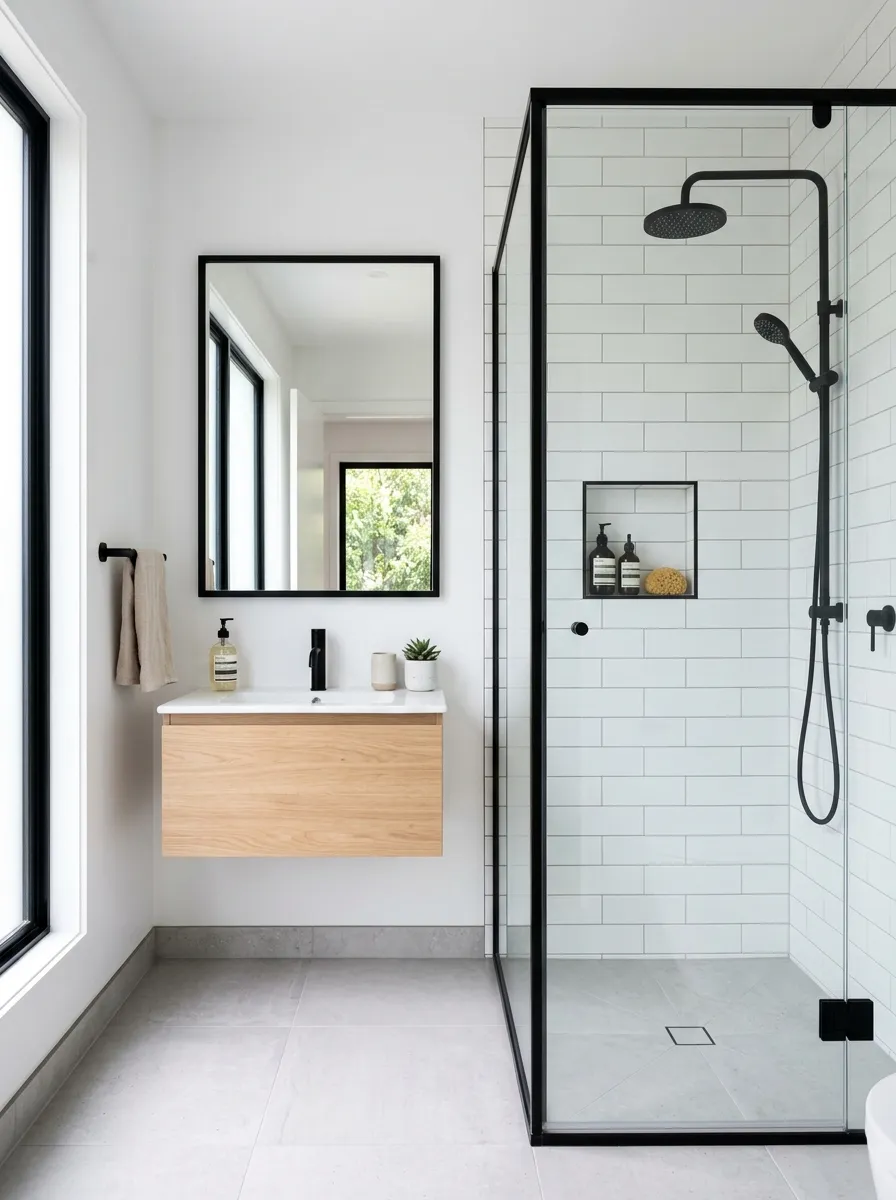
A black framed glass shower panel is the architectural detail that separates a good bathroom from a great one. The slim black metal frame acts like a picture border around your shower space, giving it definition and making everything inside it look more intentional. This is one of those details that you notice immediately in photos but also appreciate even more when you are standing in the room using the space every day. What I have noticed time and again is that black framed glass panels make white tile walls look significantly brighter and crisper.
The visual principle at work here is contrast through framing. The dark metal frame outlines the shower opening and creates a clear boundary between wet and dry zones, making even a compact layout feel considered and organized. Inside the shower, classic white subway tiles in a stacked or horizontal bond pattern keep the look clean and let the frame do all the expressive work. The result is a monochrome bathroom that feels effortlessly modern without dramatic tile choices or expensive fixtures. That same crisp framing principle gives a dark moody bathroom its sense of structure and atmosphere.
The Key: Choose a matte black frame over a gloss finish since matte coordinates with more fixture styles and shows water spots far less visibly.
10
Graphic Wallpaper Feature Wall
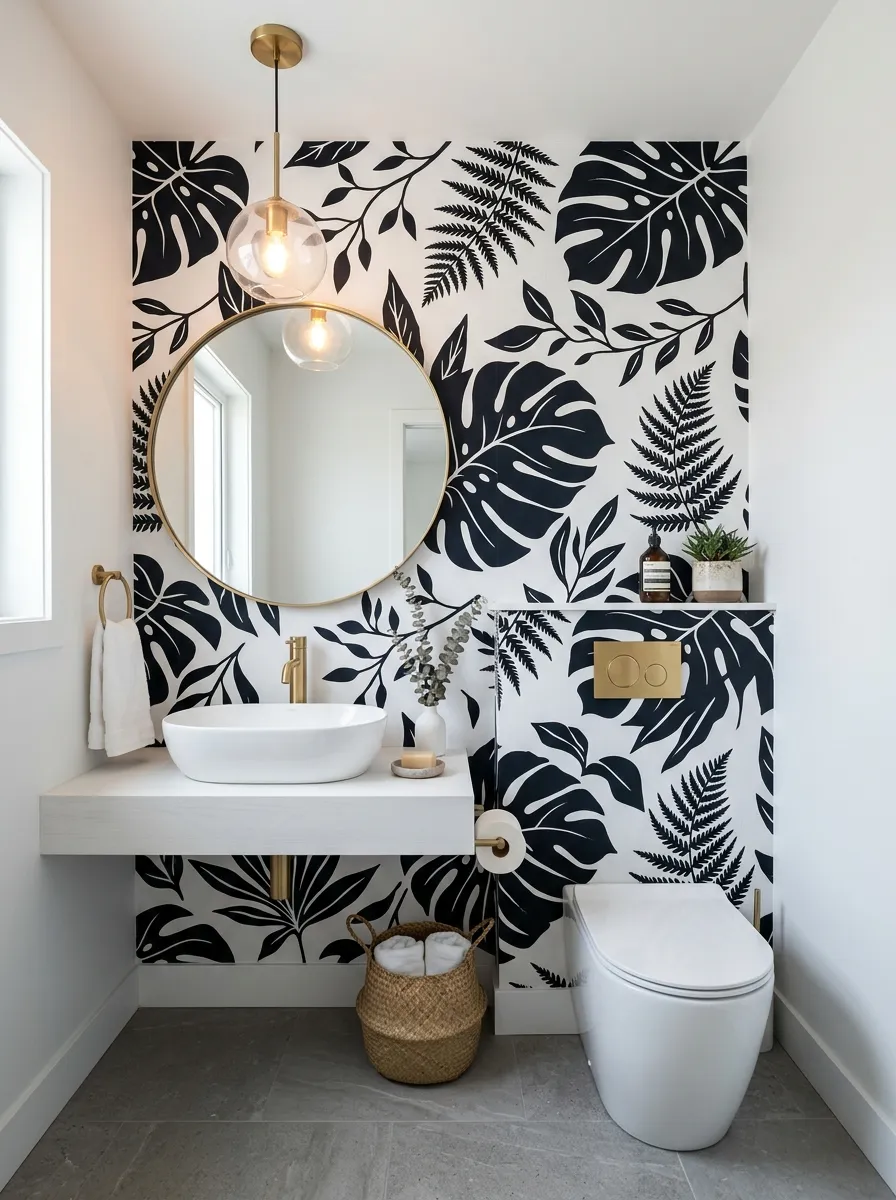
Wallpaper is the fastest way to add serious personality to a black and white bathroom without committing to a full tile project. A bold graphic wallpaper on a single feature wall behind the vanity or toilet area creates an immediate focal point that transforms the entire room in a single afternoon. The best black and white wallpaper patterns for bathrooms are those with high contrast botanical prints, large geometric designs, or art deco inspired motifs that hold their visual power even in a small space.
The key to making wallpaper work in a bathroom is placement and material. Stick to moisture resistant or fully washable vinyl wallpaper for any wet adjacent zones and avoid placing it directly inside shower splashback areas. One feature wall is genuinely enough, keeping the other walls in a clean matte white so the patterned wall gets all the attention it deserves. This approach works brilliantly in rental homes or starter bathrooms where tiling is not an option. Pair bold wallpaper with simple white fixtures and one warm light source and the room instantly looks like it was styled by a professional.
The Key: Choose wallpaper with a repeat pattern no smaller than 6 inches or the intricate details will read as visual noise rather than decorative interest.
11
Wainscoting With Dark Upper Walls
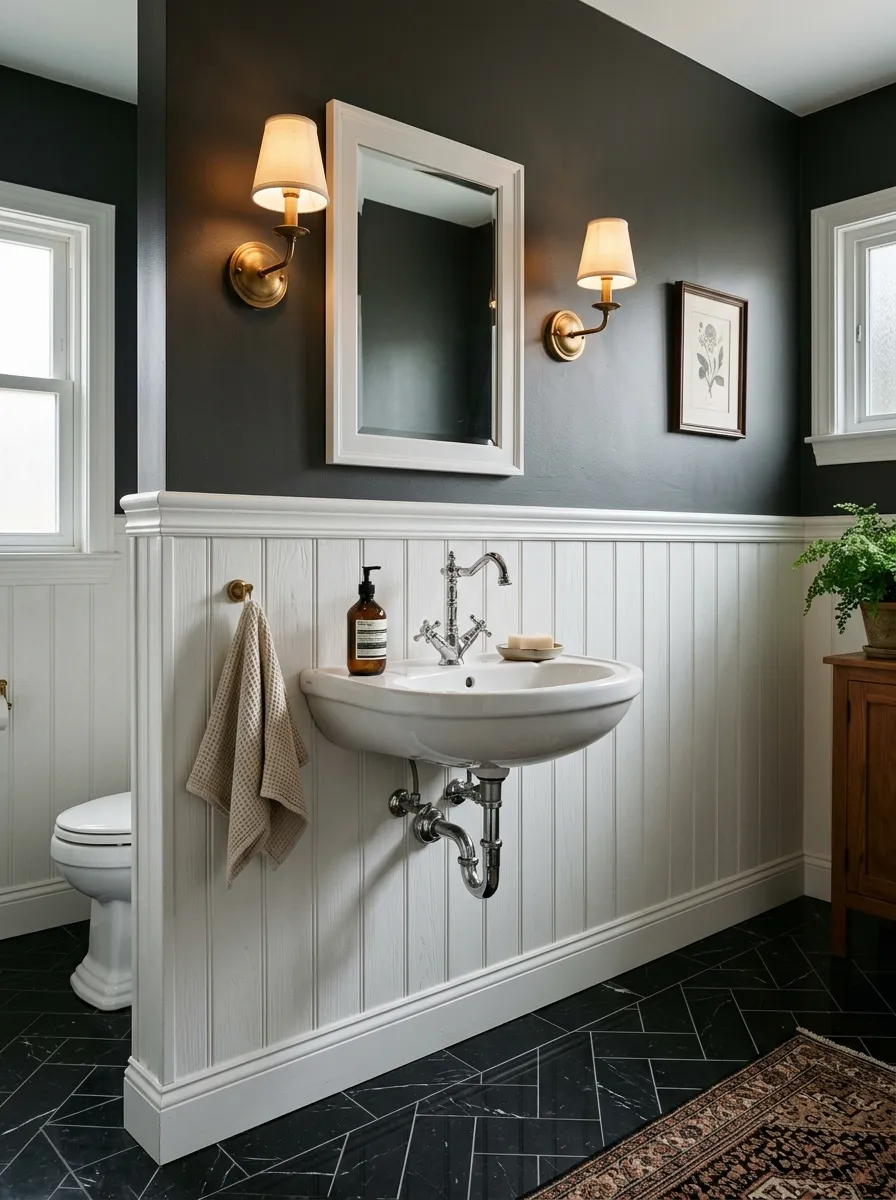
Wainscoting paired with a dark upper wall is one of the most elegant and underused design combinations in a black and white bath design. The paneled lower wall in crisp white creates a structured, almost formal foundation, while the deep charcoal or near black upper wall adds drama and makes the ceiling feel lower in the most cozy, intentional way. This combination works exceptionally well in bathrooms with standard ceiling heights because it creates the illusion of architectural detail that older homes have naturally.
The horizontal line where the wainscoting cap meets the dark upper wall creates a two toned quality without needing any tile at all. This is ideal for anyone working with a renovation budget since paint and paneling cost significantly less than floor to ceiling tile work. Finish the cap with a simple white chair rail molding for definition and you have a bathroom that looks designed from the ground up. Pair this wall treatment with a polished black marble floor and warm brass fixtures for a genuinely opulent result. This two tone treatment translates equally beautifully into dark moody design.
The Key: Paint the wainscoting cap rail the same crisp white as the paneling below it so the transition line is sharp and the two zones read cleanly.
12
Minimalist Floating Vanity
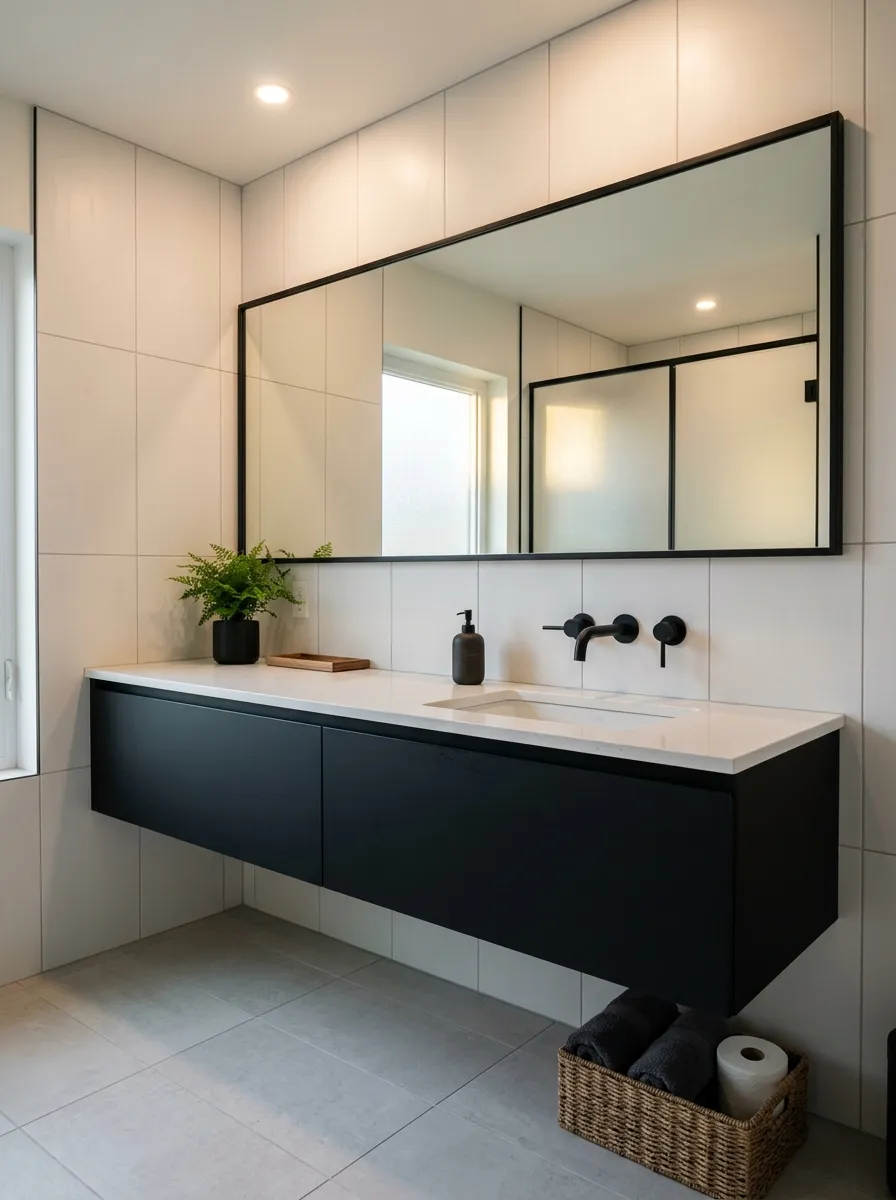
A floating vanity is the single most effective space expanding trick in a two tone bathroom and it looks extraordinary when done in matte black against a white tile wall. The exposed floor beneath the cabinet visually extends the floor space, making the room feel wider and more open than a floor mounted unit ever could. The dark body of the vanity provides strong visual grounding without the heaviness of a full floor to ceiling cabinet, and the floating silhouette adds an effortlessly modern quality that photographs beautifully from every angle.
The proportions of a floating vanity matter enormously. A longer vanity with a thinner body looks more architectural and refined than a short boxy unit. Pair it with an integrated white sink rather than a vessel sink to maintain the clean horizontal lines. A mirror that spans the full width of the vanity above reinforces the linear quality and makes the whole wall feel cohesive. I have used this combination in narrow bathrooms with impressive results because the unbroken horizontal line of vanity, countertop, and mirror draws the eye sideways and visually widens the room.
The Key: Mount the floating vanity between 15 and 20 inches from the floor for the most comfortable use height and the most pleasing visual proportion.
13
Terrazzo Accents and Surfaces
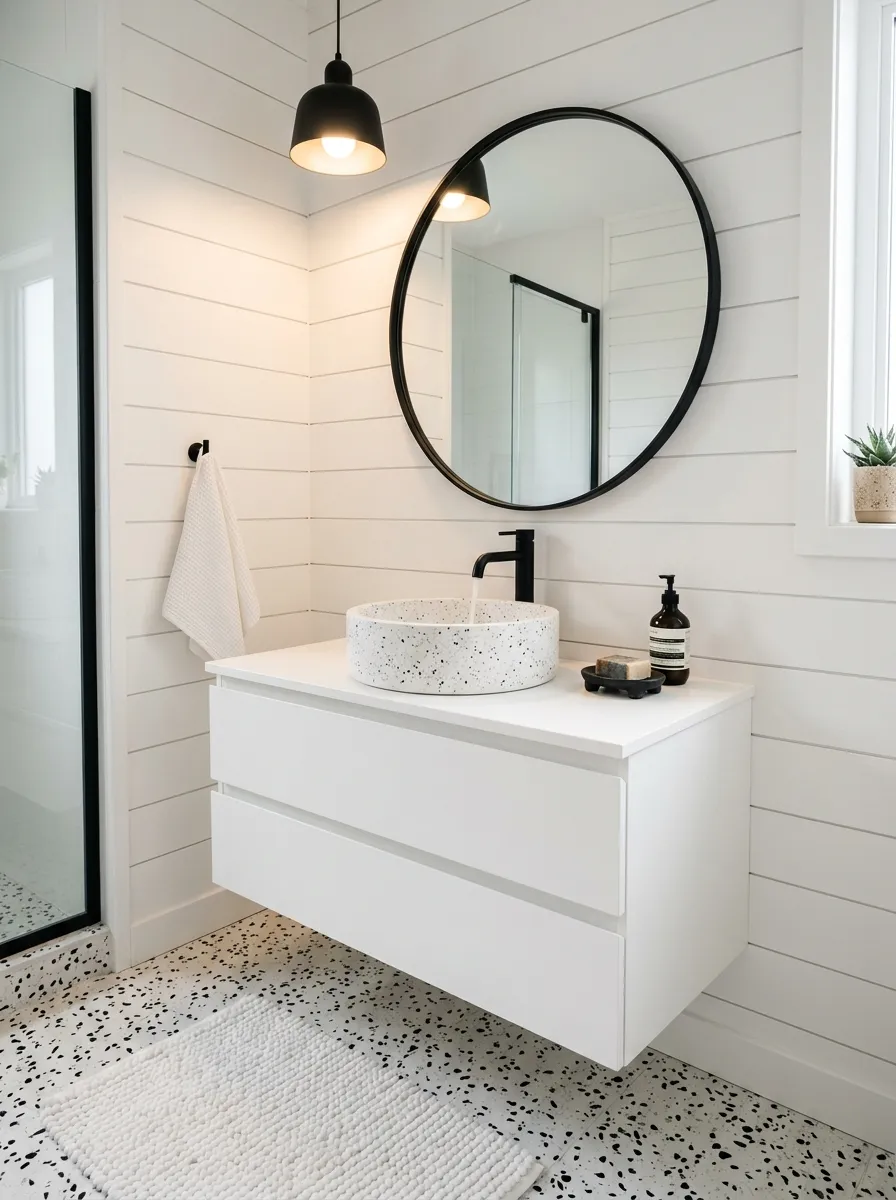
Terrazzo is having a very well deserved moment in bathroom design and it pairs perfectly with a monochrome bathroom palette. The material features chips of stone, glass, or marble set into a solid base and then polished smooth, creating a speckled surface that feels both luxurious and timeless. In black and white colorways, terrazzo brings organic variation to a palette that can sometimes feel very rigid. No two terrazzo surfaces are exactly alike, which means your bathroom has an instant sense of individuality that mass produced tile simply cannot replicate.
Using terrazzo for both the floor and a vessel sink creates a cohesive material story that elevates the entire room. The speckle pattern in the sink echoes the floor beneath it, tying the design together in a way that feels intentional rather than coincidental. Terrazzo photographs exceptionally well because its varied texture catches light differently and creates gentle visual movement in an otherwise minimal room. Pair it with flat white walls, a round black framed mirror, and matte black fixtures for a genuinely considered result. This same love of organic material makes a brown beige bathroom feel layered and warm throughout.
The Key: Seal terrazzo surfaces annually with a penetrating stone sealer to protect the porous material from soap, water, and staining in bathroom environments.
14
Black Accent Shelving and Storage
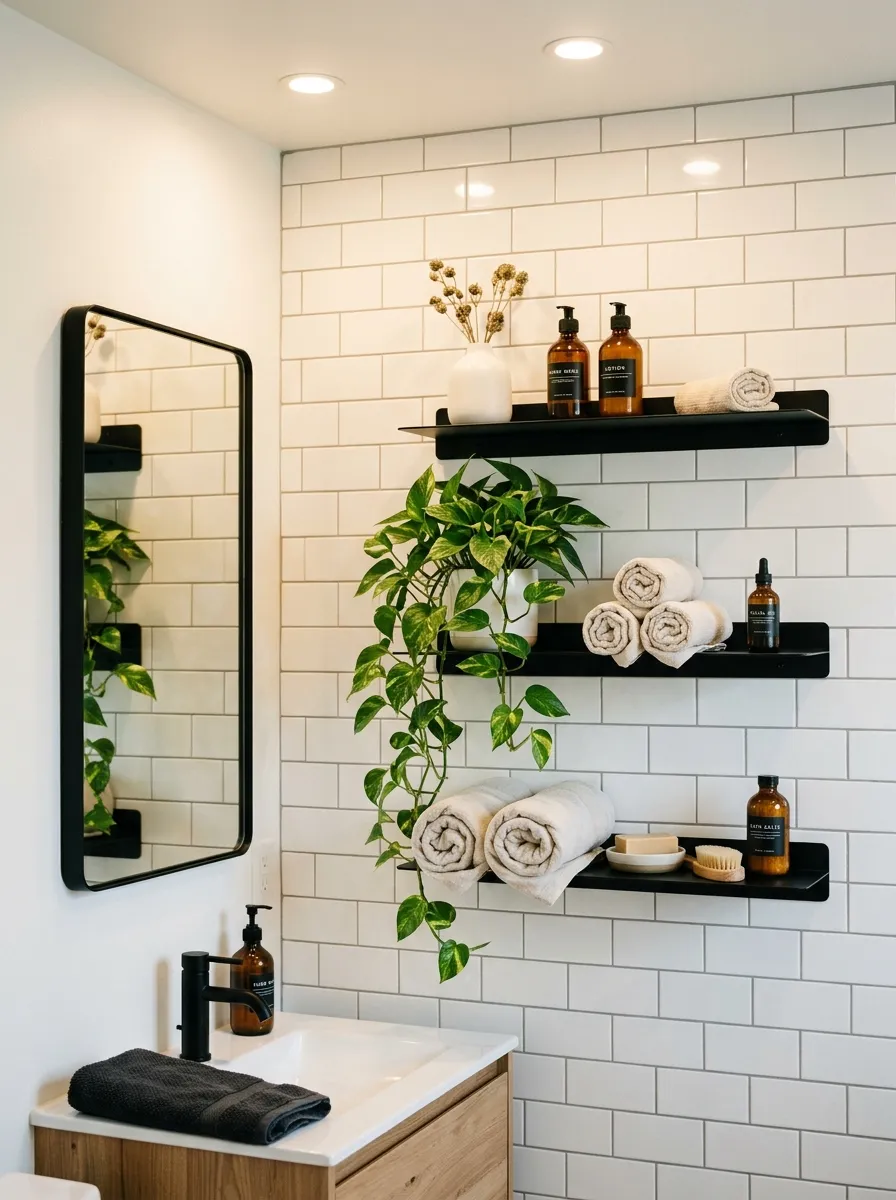
Black floating shelves in a white bathroom serve two purposes simultaneously: they provide practical storage and they create visual anchors that give the room a finished, gallery like quality. The dark shelf surface against a white tile wall creates instant contrast at eye level, drawing the gaze upward and making the room feel taller. Styling the shelves with a thoughtful mix of functional items and decorative objects turns everyday bathroom storage into something worth looking at and photographing every single day.
The secret to making black shelving work beautifully in a black and white bathroom is in how you style what sits on the shelves. Keep the objects predominantly white, cream, or natural so they stay cohesive with the overall palette. A small trailing plant introduces green without breaking the color story. Amber glass bottles add warmth and a touch of pharmacy vintage charm. Rolled linen towels look neat and add texture. The combination of these elements transforms a practical shelf into a styled vignette that makes your bathroom feel curated every single morning when you walk in.
The Key: Mount shelves at three different heights to create visual rhythm and avoid the sterile look of perfectly evenly spaced storage rows on a bathroom wall.
15
Patterned Cement Tile Floor
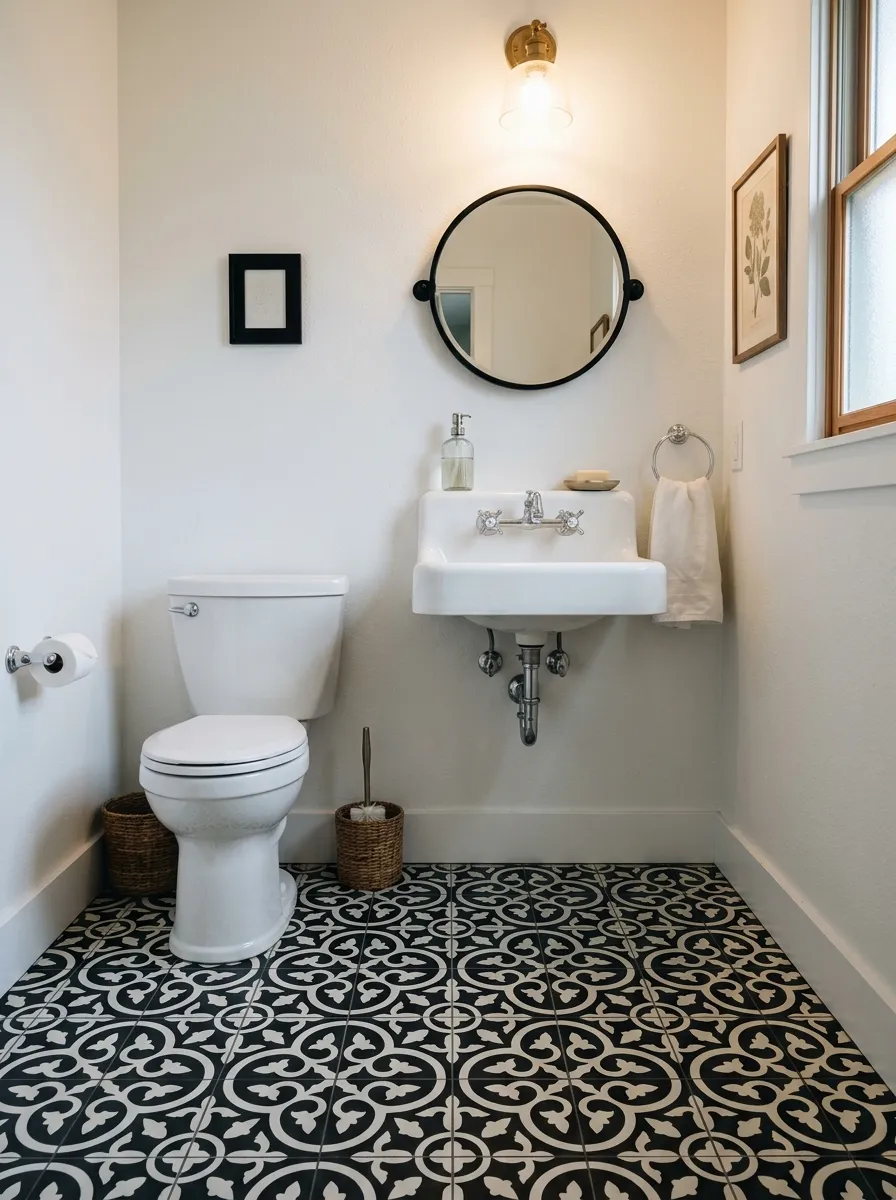
Patterned cement tiles bring a handcrafted, artisanal quality to a bathroom floor that no other material quite replicates. The designs are pressed by hand into pigmented cement and every tile carries a slightly imperfect quality that makes the floor feel genuinely special and unique. In black and white geometric patterns, these tiles create a rich visual surface that looks like a piece of Moroccan or Mediterranean architecture transported directly into your home. I personally love how these floors create such a strong impression while keeping the color palette completely within the black and white range.
The intricate surface pattern means the rest of the room can stay very simple and still feel beautifully complete. White painted walls, a basic wall mounted sink, and a small round mirror are all you need to let the floor speak for itself. This is perfect for bathrooms where you want maximum visual impact from a single design element without spending on multiple renovations at once. The black and white bath design achieved through one stunning floor choice proves that sometimes restraint in every other area is the most sophisticated approach of all.
The Key: Seal encaustic cement tiles before and after grouting and reseal every six to twelve months since the porous surface absorbs stains readily in wet environments.
16
Warm Wood Accents for Balance
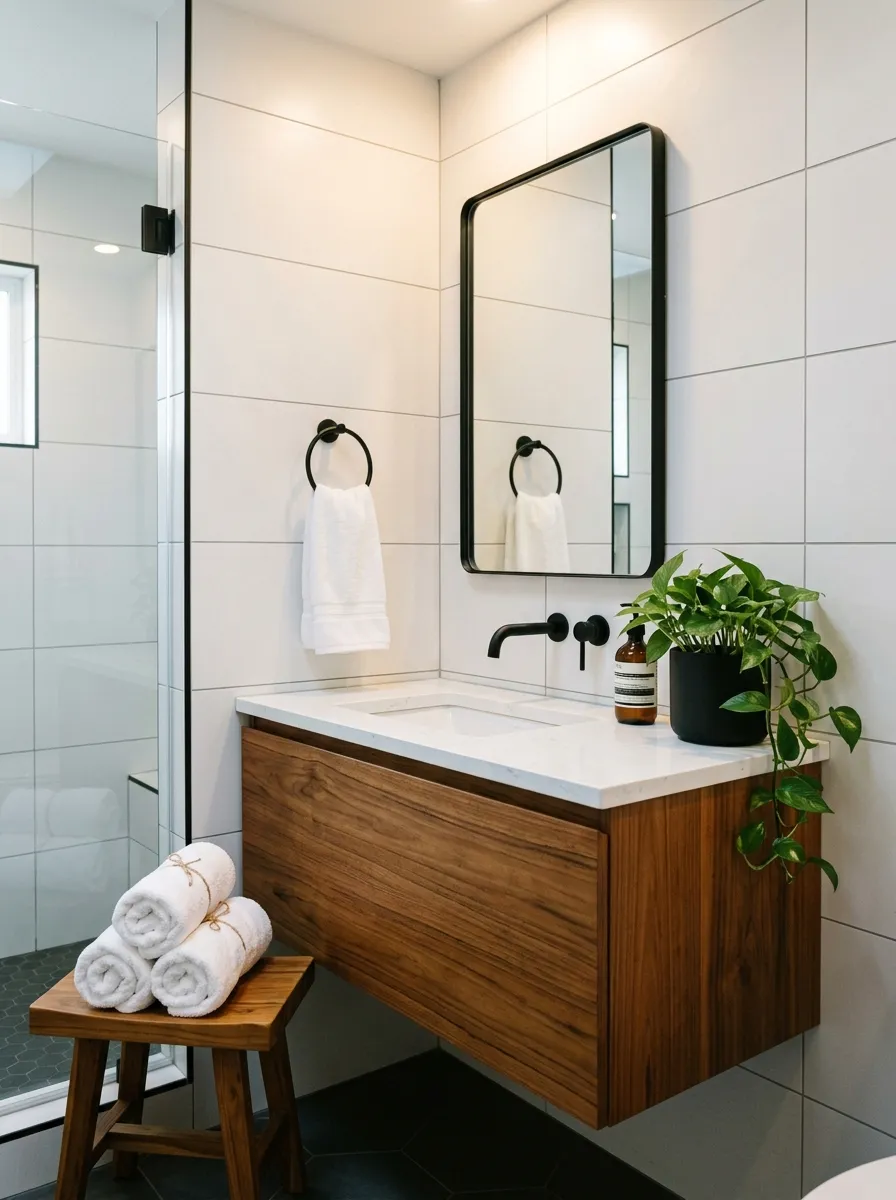
Wood accents are the secret ingredient that prevents a black and white bathroom from feeling cold, clinical, or like a hotel corridor. The natural warmth of teak, walnut, or oak against a sharp monochrome palette creates a sensory balance that makes the space feel genuinely inviting rather than just visually impressive. The contrast between organic grain and graphic tile is one of the most pleasant visual combinations in bathroom design. Experienced interior designers apply this principle almost automatically because it works every single time. That same warmth through wood instinct drives the most popular modern farmhouse bathroom ideas where walnut against white shiplap creates perfect balance.
Using wood in a vanity base is the most impactful way to introduce this warmth because it is the largest horizontal surface at eye level. The pale quartz or white countertop above the warm wood base creates a layered contrast that reads as sophisticated rather than simple. A small matching wooden bath stool beside the vanity extends the material throughout the room and ties the look together. Keep the wood elements sealed and moisture resistant and they will stay beautiful for years. One trailing plant in a simple black pot alongside the wood brings the outdoors in and completes the organic warmth story perfectly.
The Key: Choose teak or bamboo for bathroom wood elements since these species are naturally water resistant and require significantly less sealing than other hardwoods.
17
Black and White Bathroom With Brass Details
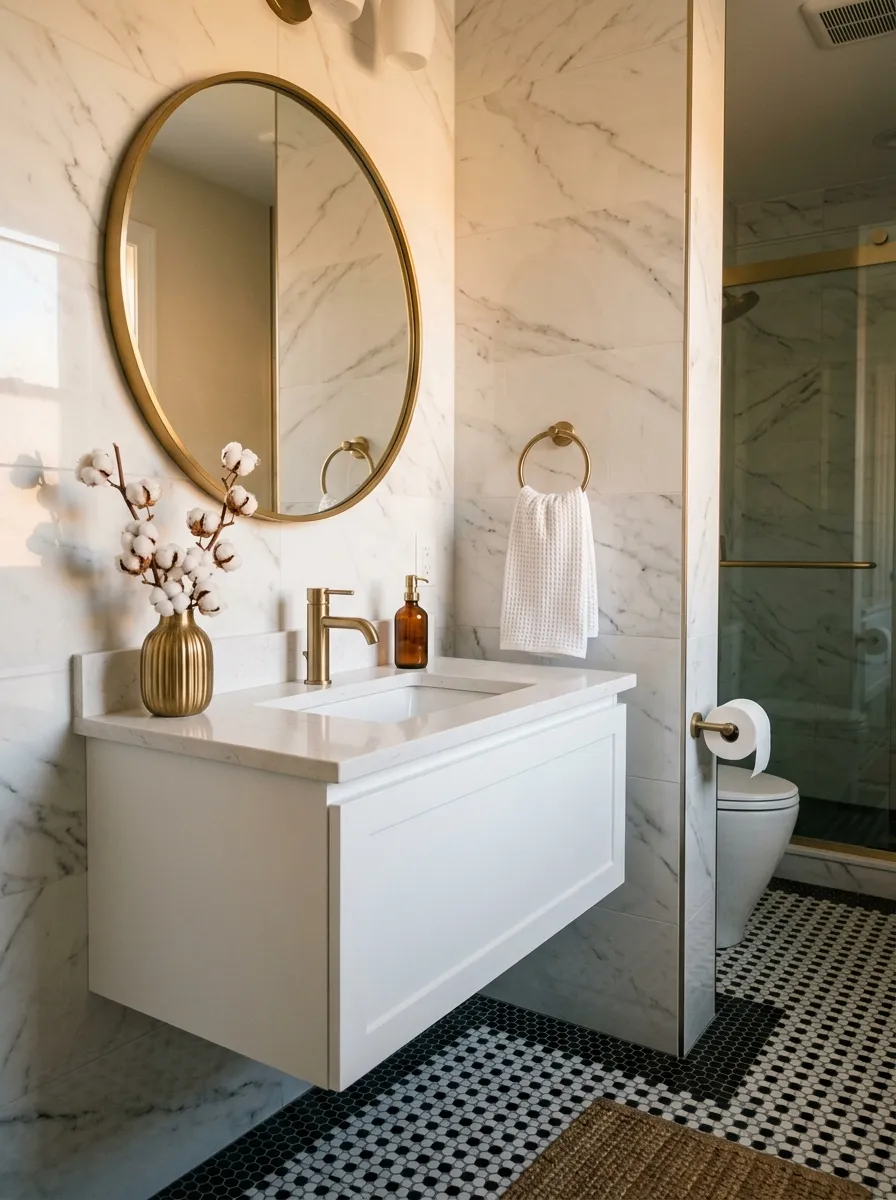
Adding brushed brass fixtures to a monochrome bathroom is one of the most effective ways to shift the energy from cool and graphic to warm and genuinely luxurious. The golden undertones of brass catch warm lighting and create a richness that chrome and matte black cannot replicate. This approach elevates the classic black and white palette by introducing a third metallic tone that reads as an accent rather than a competing color. The result is a room that feels considered and layered without straying from its essential two tone foundation.
Brass works beautifully alongside both tile and painted wall surfaces in a black and white bathroom. Against white marble look tiles, brushed brass faucets glow with a warmth that feels genuinely timeless. Against dark walls or charcoal tiles, the golden tone creates maximum contrast and drama. Keep brass consistent across all fixtures in the room so the finish reads as a deliberate design choice rather than an accidental mix. A brass framed round mirror above the vanity is the single most impactful brass investment you can make since it brings warmth to the most frequently used area of the space.
The Key: Always choose unlacquered or living brass if you want the finish to develop a natural patina over time, or opt for PVD brass if you prefer a consistent long term appearance.
18
Black and White Bathroom Small Space Magic
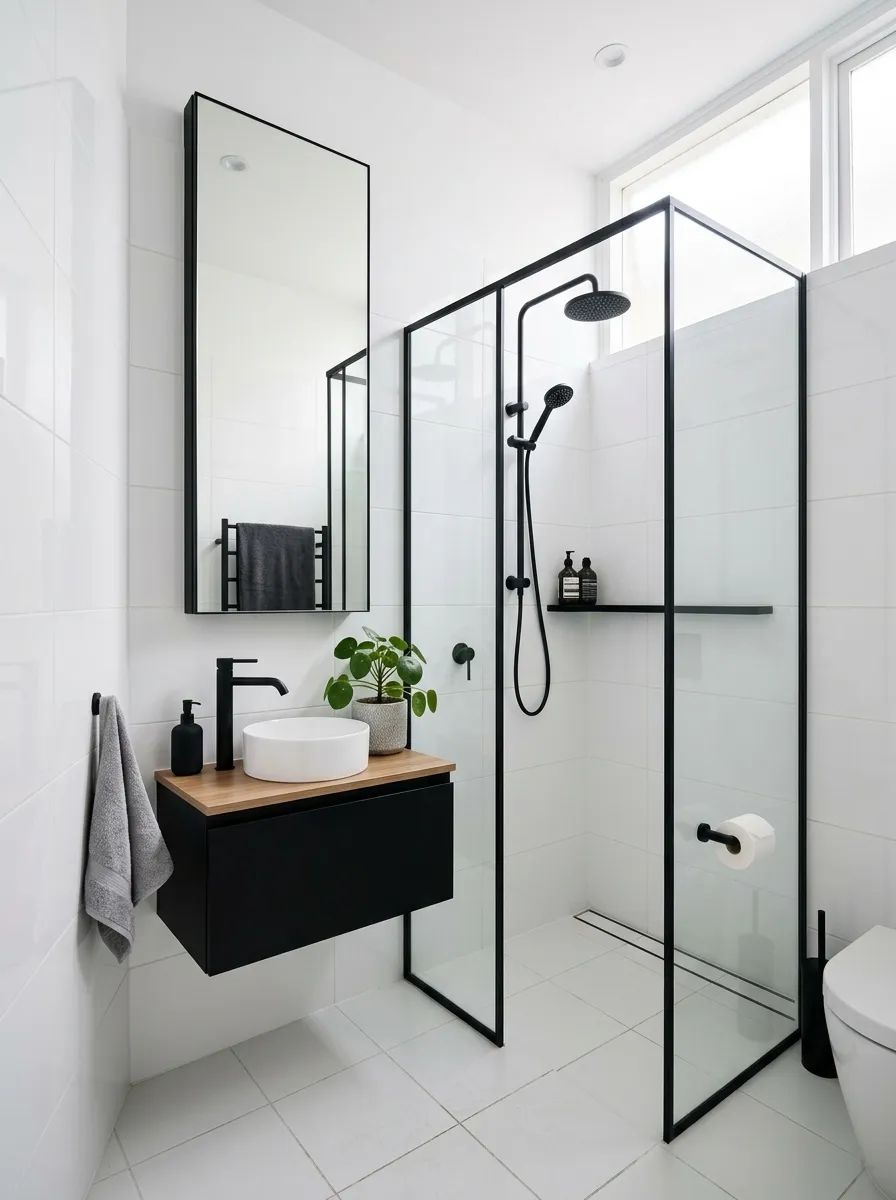
Small bathrooms are where a black and white bathroom palette truly proves its worth. The high contrast combination naturally makes compact spaces feel more defined and intentional, and the right tile and fixture choices can make a tiny room feel significantly more spacious than its actual square footage. Large format white floor and wall tiles with minimal grout lines create an unbroken surface that removes visual clutter and lets the room breathe. This is one of the most transformative and budget conscious tricks for small layouts. The same space maximizing principles apply equally powerfully to a small laundry room using light tones and clean lines.
Every decision in a small black and white space should serve both function and visual expansion. A slim floating vanity mounted close to the shower creates a clean, uncluttered floor plan. A vertically tall mirror draws the eye upward and makes ceilings feel higher. A black framed glass shower panel instead of a curtain keeps the sightlines open across the full width of the room. Matte black accessories in small sizes, like a slim towel ring and a simple robe hook, add the necessary dark contrast without visually weighing down the walls. The discipline required by a small space actually produces some of the most beautifully resolved black and white bath design results.
The Key: Use the same large format tile on both the floor and walls in a small bathroom to remove visual boundaries and make the space feel like one cohesive, expanded surface.
FREQUENTLY ASKED QUESTION
Every one of these black and white bathroom ideas proves that this palette is not just a trend. It is a genuine design foundation that can carry any style, any budget, and any room size with absolute confidence. From the handcrafted charm of cement tile floors to the sculptural presence of a freestanding clawfoot tub, each idea in this list offers a real, achievable way to create a space you will love waking up to every morning. Personally, I find that the most beautiful bathrooms are the ones where every choice was made with intention, and this palette makes that kind of clarity very easy.
Save this post to your Pinterest boards so you can come back to it whenever you are ready to start planning. Share it with a friend who is renovating their bathroom or dreaming about a fresh new look at home. The right idea at the right moment can change the entire direction of a project, and these 18 ideas are full of starting points worth exploring. Your most beautiful bathroom is closer than you think, and it starts with two colors and a whole lot of good decisions.