Wood fence
🏠 19 Real Ideas
⏱ Quick Read
🔥 Always Trending
19 Smart Fence Wood Choice Ideas
Comparing Cedar, Redwood, Pine, and Ipe for Beauty, Durability, and Long-Term Value
Not every homeowner gets the fence wood choice right the first time and the difference it makes is enormous. Stand in front of a cedar fence on a golden afternoon and you feel it immediately: warmth, intention, and a quiet kind of beauty that no vinyl panel ever delivers. The right wood does not just define your boundary line; it defines the entire mood of your outdoor space, your relationship with maintenance, and how proud you feel every time you pull into your driveway.
This article walks you through 19 smart, real-world ideas covering every major wood type for fencing cedar, redwood, pine, and ipe. Whether you are building from scratch, replacing weathered boards, or simply dreaming about an upgrade, you will leave here with clear answers, honest comparisons, and practical guidance to match your style, budget, and long-term goals. Good fences really do start with better decisions.
01
Cedar’s Warm Golden Tones
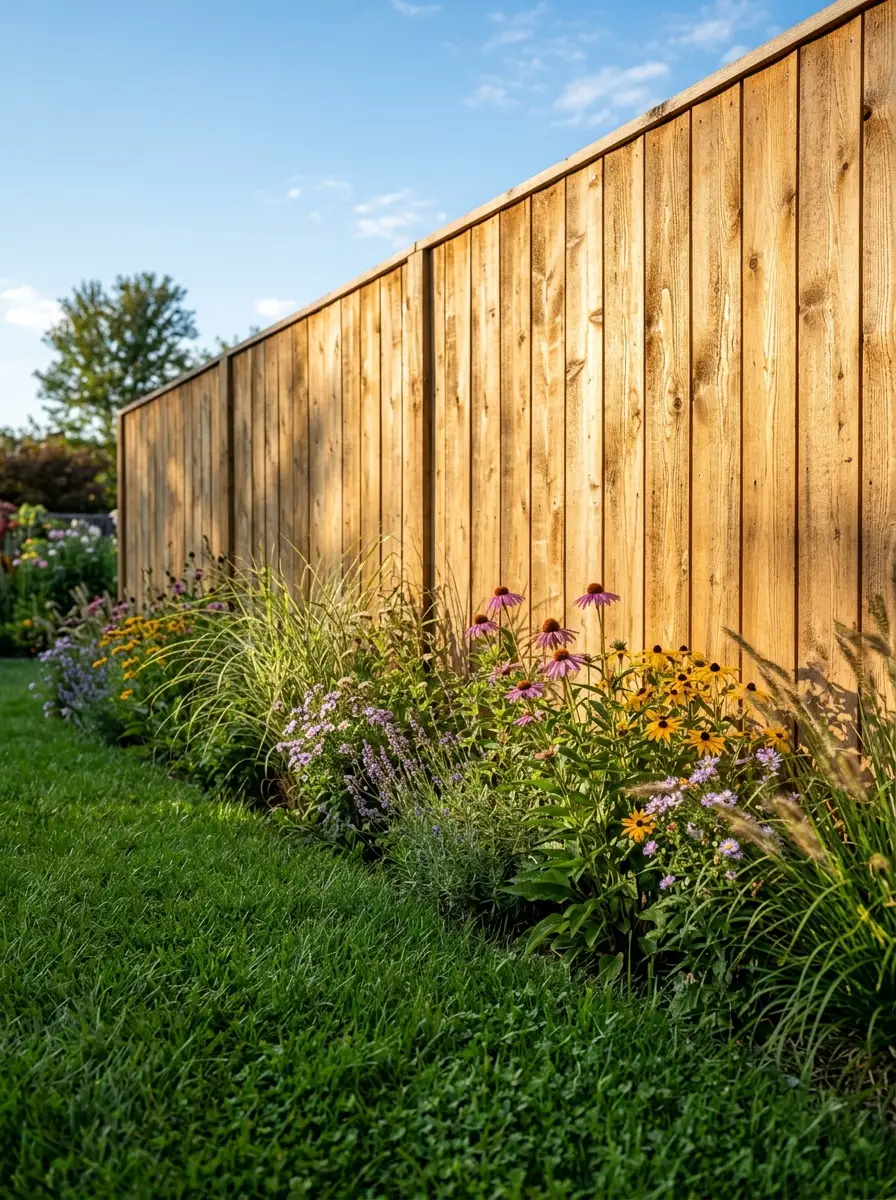
Cedar arrives at any yard carrying an effortless warmth that few other woods can replicate. Its honey-golden tones catch the light in a way that feels almost alive, shifting from amber in the morning to a deep caramel glow by late afternoon. That natural radiance makes it one of the most visually rewarding fence material selection options available to homeowners.
What sets cedar apart aesthetically is its remarkably fine, even grain. You get a surface that looks polished without requiring any staining. Pair it with natural stone pavers, drought-tolerant grasses, or climbing jasmine, and the whole yard feels curated rather than constructed. Cedar does not try to be the star it simply makes everything around it look better.
The Key: Cedar’s warm golden color pairs beautifully with natural landscaping, making it a reliable anchor for relaxed, organic outdoor spaces.
02
Silver Patina Over Time
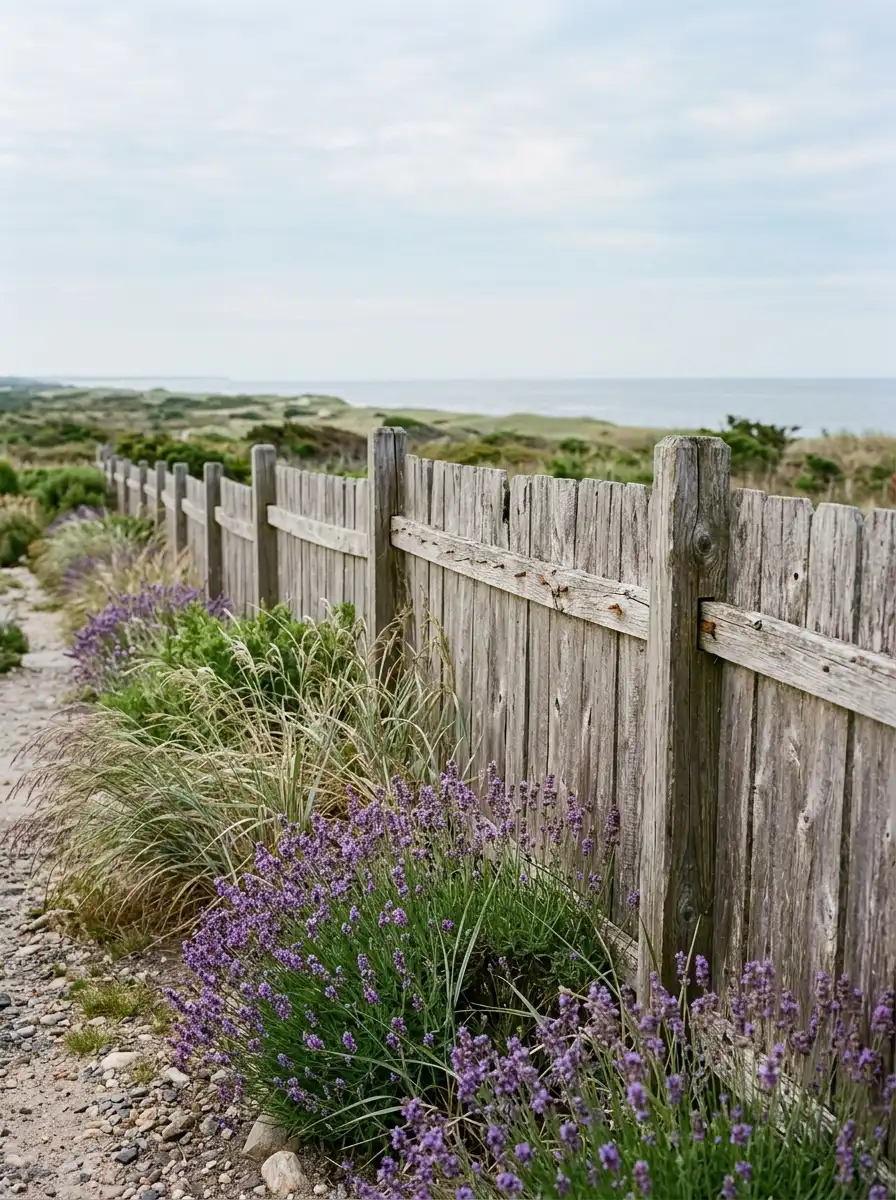
One of the most misunderstood aspects of choosing wood for fences is the natural graying process. Cedar does not deteriorate when it silvers it matures. Left unsealed, cedar transitions into a soft, driftwood-gray patina that looks at home beside coastal plantings, natural stone walls, and Japanese-inspired gardens. Many designers actually prefer this aged finish over the original golden tone.
The key is deciding your preference before installation, not after. If you love the silver look, save yourself maintenance work and simply let nature handle the transformation. If the original warmth matters to you, a regular oiling schedule will hold that tone for years. Either path produces a beautiful result, as long as you commit to a direction with intention.
The Key: Silver-gray cedar is not aging it is evolving into a coastal, sophisticated aesthetic that suits modern natural landscapes effortlessly.
03
Redwood’s Deep Reddish Drama
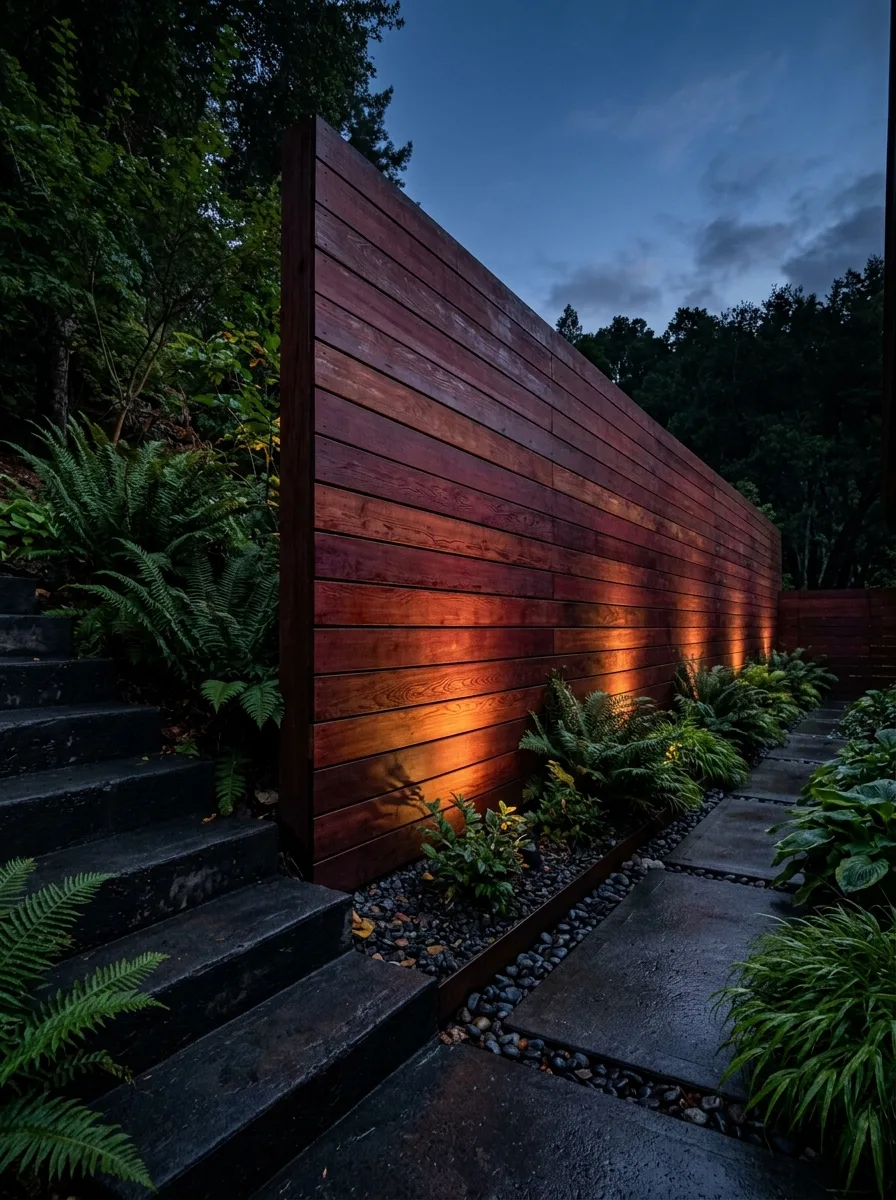
Few woods command attention the way redwood does. Its deep reddish-brown tones carry a natural richness that photographers and designers chase in luxury outdoor projects. This is a fence wood choice that does not ask for accessories it becomes the statement. Paired with concrete, dark stone, or architectural planters, redwood elevates an entire exterior with zero additional effort.
What makes redwood so visually powerful is the natural tannin that saturates its fibers, producing that signature warm burgundy hue. Unlike stained pine that mimics the look, redwood earns its color from within. In low light and at dusk especially, horizontal redwood planks create a layered, rhythmic effect that feels more like interior design than outdoor construction.
The Key: Redwood’s naturally deep color holds longer than most softwoods, making it a smart choice for homeowners who want visual impact without constant maintenance.
04
Redwood Meets Modern Architecture
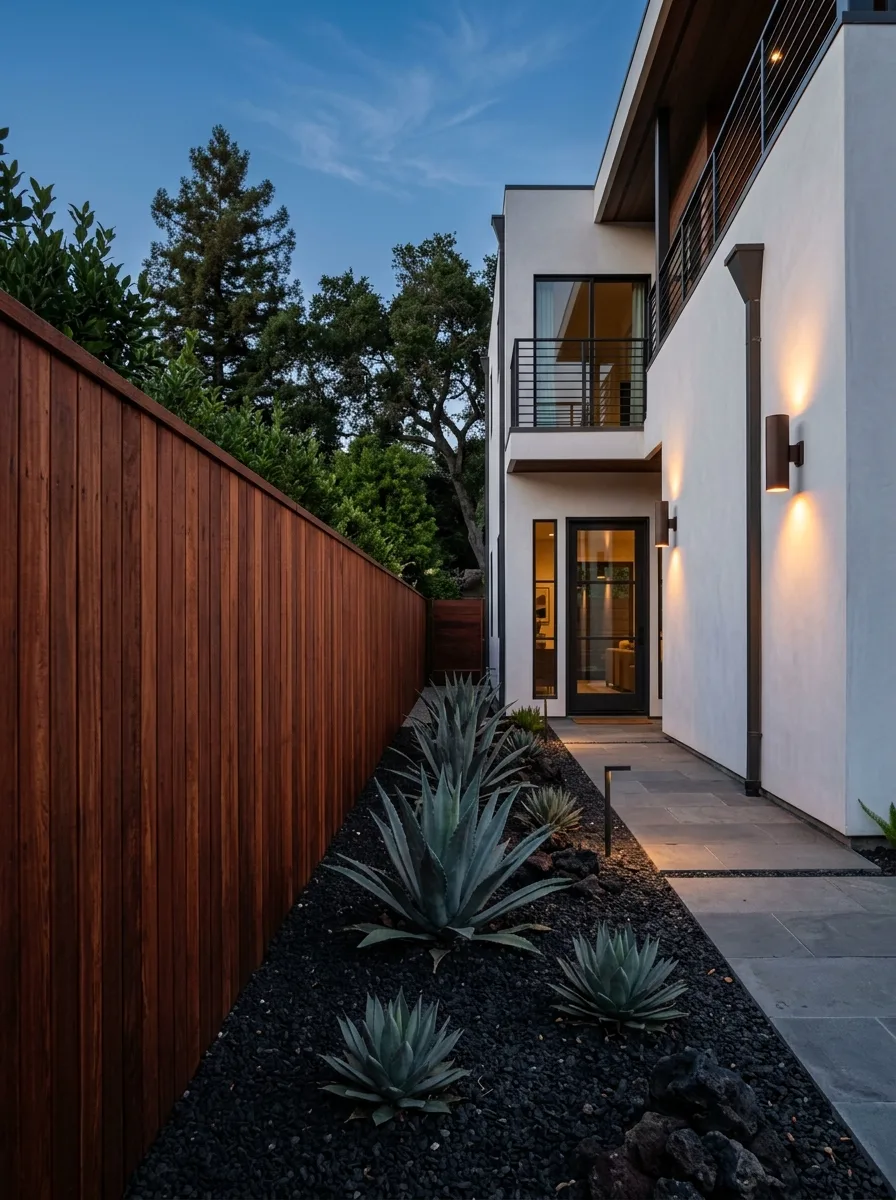
Redwood’s versatility is one of its most underrated qualities. While it looks extraordinary in naturalistic settings, it truly shines alongside clean, contemporary architecture. A tall vertical redwood fence beside white stucco or raw concrete creates a contrast that feels intentional and deeply sophisticated. This is fence material selection at the intersection of nature and design.
In my experience, redwood transitions between rustic and modern more smoothly than any other wood in this comparison. The grain is visible but refined, never too rough, never too polished. It gives modern homes warmth without sacrificing that sharp, structured aesthetic they rely on. If your home leans toward minimalist design with bold material choices, redwood deserves serious consideration.
The Key: Redwood bridges the gap between organic texture and architectural precision, making it ideal for modern and transitional home exteriors.
05
Pressure-Treated Pine Basics
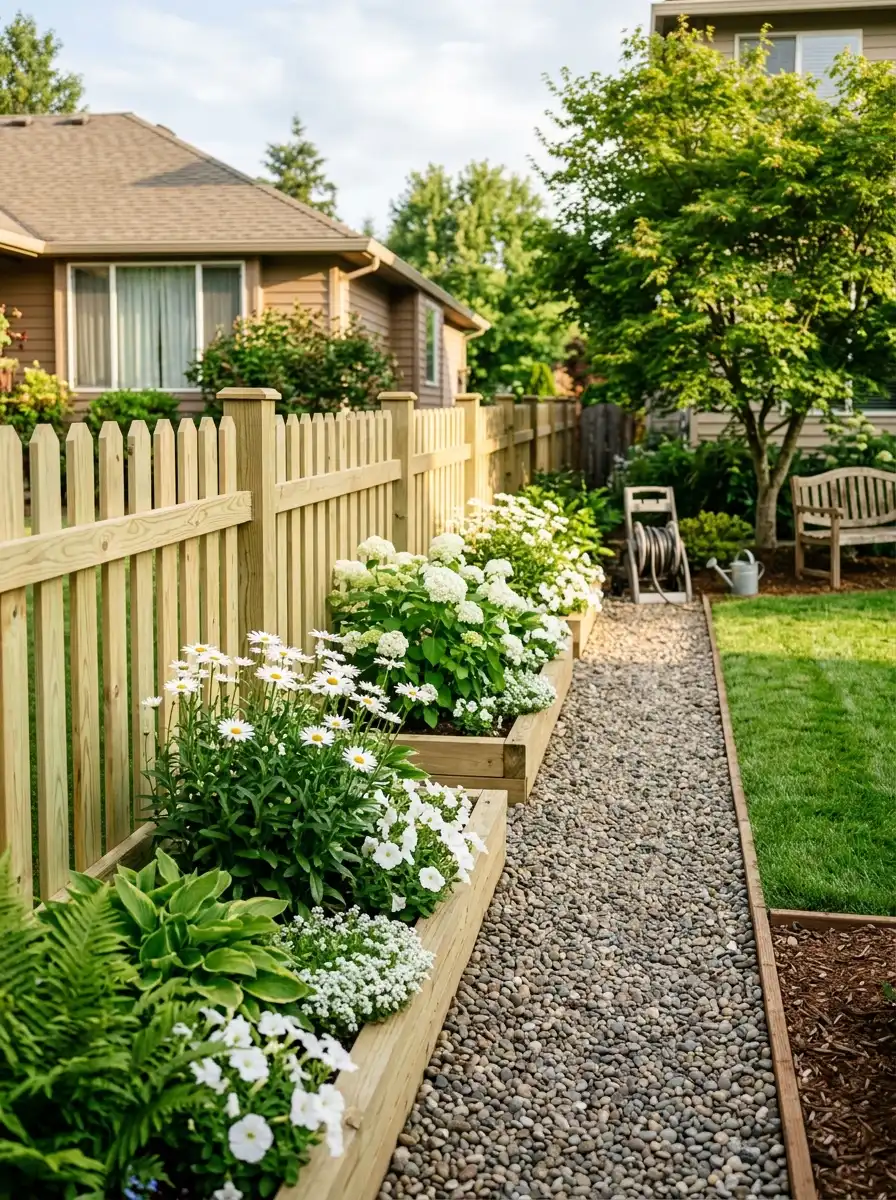
Pine is where practical homeowners start, and for good reason. Pressure-treated pine is widely available, budget-friendly, and far easier to work with than tropical hardwoods. For large-perimeter projects, rental properties, or first homes where budget is genuinely a consideration, pine is the most sensible wood type for fencing on the market today.
The pressure-treatment process infuses pine with preservatives that resist rot, moisture, and insects without relying on the natural tannins that make cedar and redwood so durable. The result is a wood that performs well outdoors as long as it is installed with proper drainage and airflow beneath the boards. It will not win beauty contests straight from the lumberyard, but it absolutely earns its place in practical landscaping.
The Key: Pressure-treated pine delivers solid outdoor durability at the lowest entry cost, making it the most accessible fencing material for budget-conscious homeowners.
06
Staining Pine for Style
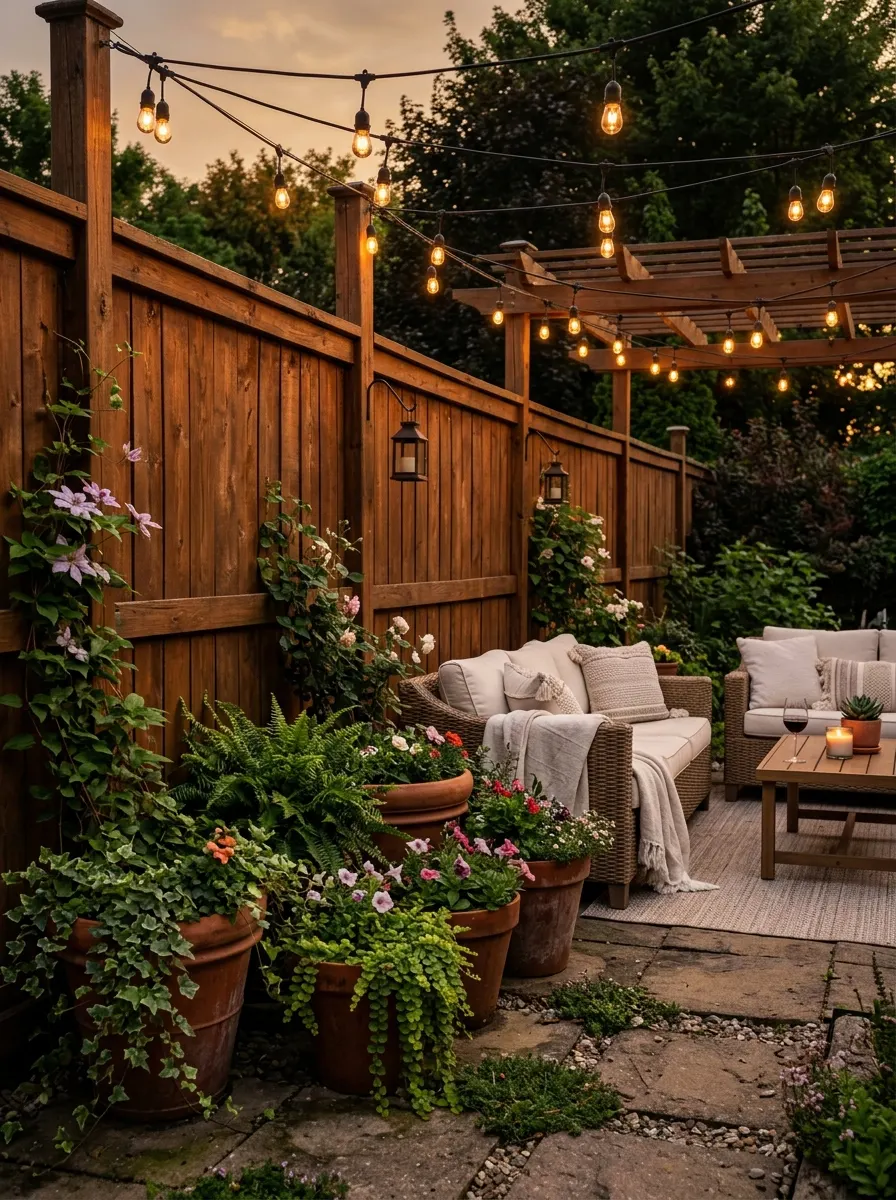
One of pine’s most underappreciated qualities is how beautifully it accepts color. A well-applied chestnut, walnut, or charcoal stain transforms raw pine into a fence that genuinely competes with higher-priced materials on first impression. This makes choosing wood for fences on a tight budget far more exciting than most homeowners initially expect.
The transformation is genuinely impressive. Stained pine holds tone well for two to three years before needing a touch-up, and the process itself is beginner-friendly. I have seen stained pine fences styled with string lights, climbing vines, and terracotta planters that looked every bit as intentional as a redwood installation costing three times the price. Pine rewards creative homeowners who invest effort over material budget.
The Key: A quality stain turns budget pine into a Pinterest-worthy fence that looks polished, warm, and far more expensive than its price tag suggests.
07
Pine’s Rustic Woodland Appeal
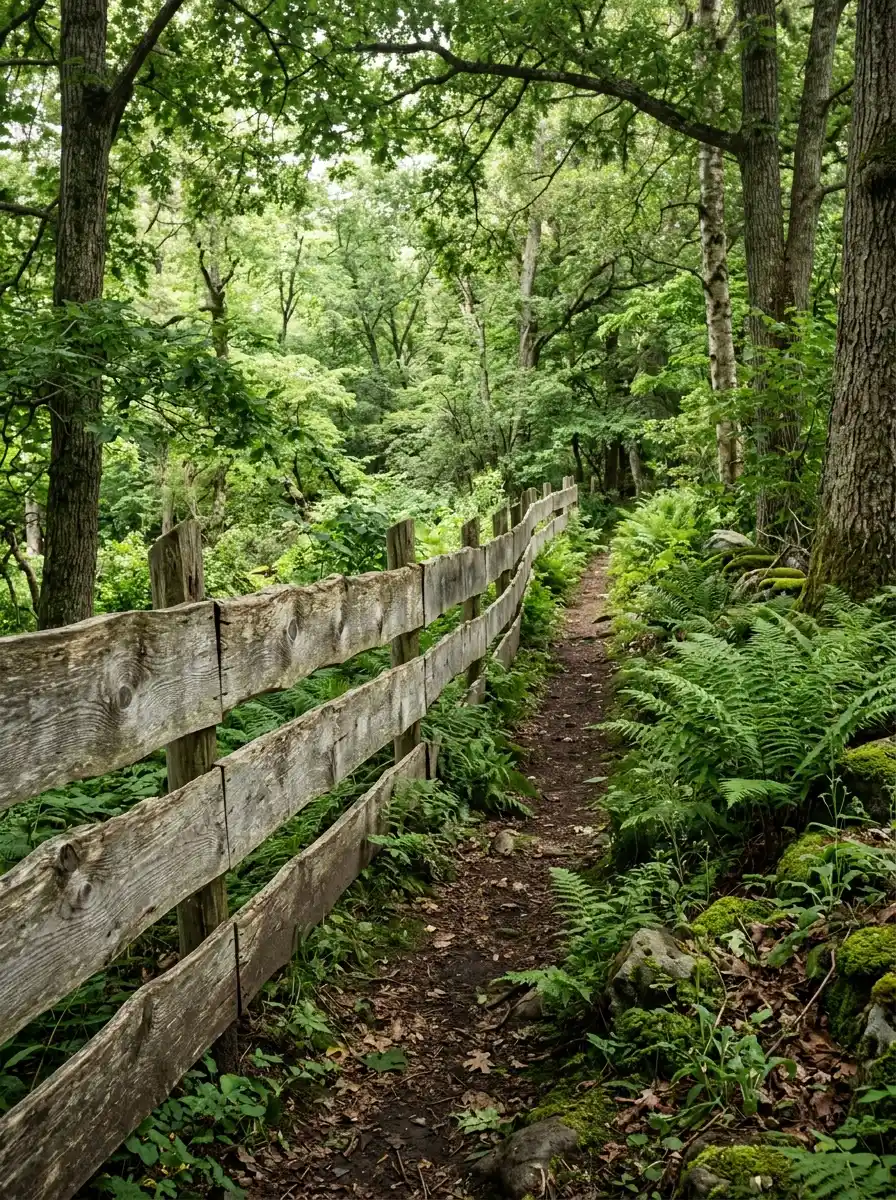
Not every yard wants to look polished. Some of the most beautiful outdoor spaces embrace a deliberately raw, organic character and raw pine in a natural setting delivers exactly that. When fence material selection is guided by a desire for rustic authenticity rather than refined aesthetics, untreated or lightly finished pine has a unique, unpretentious charm.
Visible knots, subtle grain variation, and the gentle weathering of raw pine boards create a fence that looks as though it grew from the landscape itself. In woodland gardens, cottage-style yards, or naturalistic spaces designed around native plantings, this character is not a flaw it is the whole point. Pine in this context stops being a budget compromise and becomes a deliberate aesthetic choice.
The Key: Raw pine in a naturalistic setting reads as intentionally rustic, making it a smart design choice for woodland, cottage, and organic garden aesthetics.
08
Ipe Hardwood Horizontal Slats
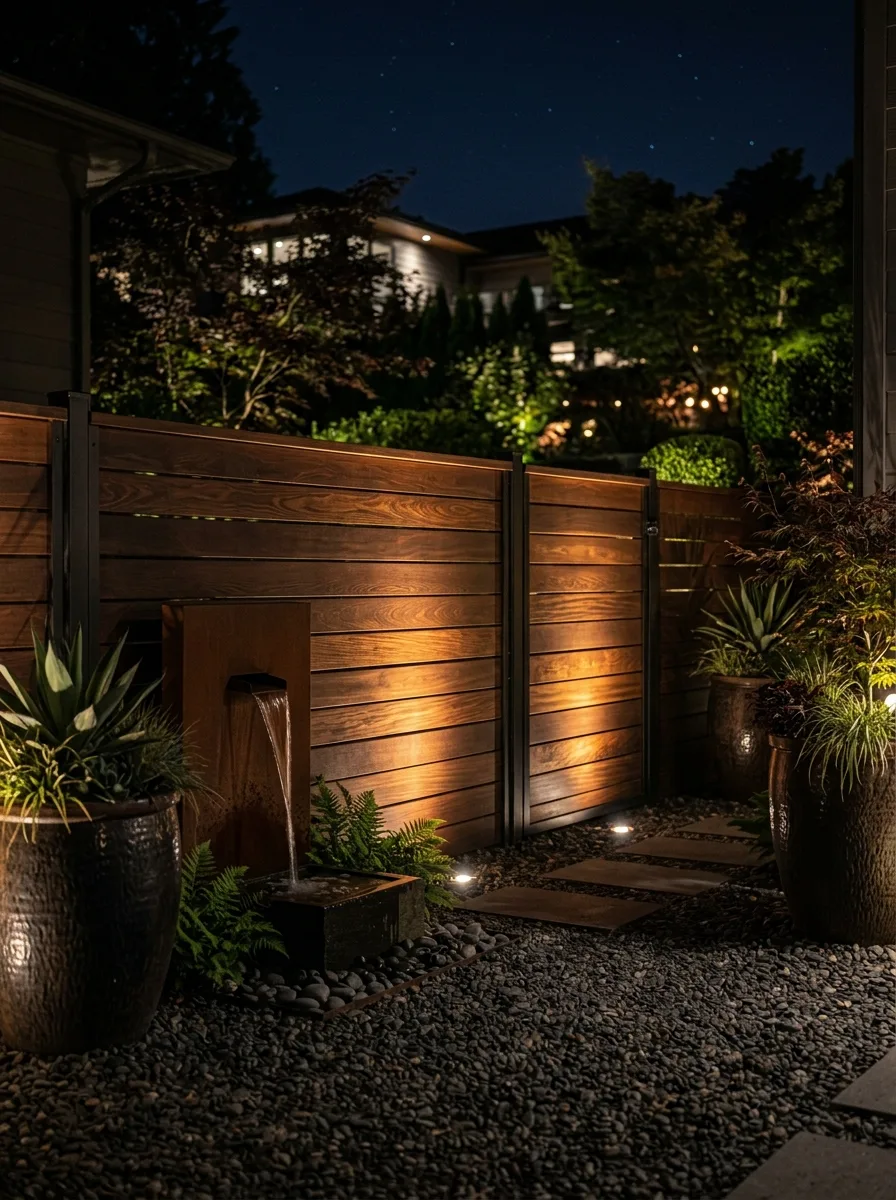
Ipe hardwood’s horizontal slat configuration is one of the most striking fence wood choice expressions available in outdoor design today. Wide planks set tightly together at eye level create a wall of deep, espresso-toned wood that functions as both boundary and architectural backdrop. Under outdoor uplighting, the effect is extraordinary smooth, refined, and undeniably luxurious.
The horizontal orientation also maximizes the visual impact of ipe’s fine, even grain. Unlike vertical board fences that draw the eye upward, horizontal slats extend the perceived width of outdoor spaces, making smaller yards feel more expansive and intentional. For modern homes with narrow side yards or compact courtyard gardens, this is a powerful design move.
The Key: Horizontal ipe slats create a wide, architectural visual effect that makes outdoor spaces feel larger, more refined, and deliberately designed.
09
Ipe’s Natural Fire Resistance
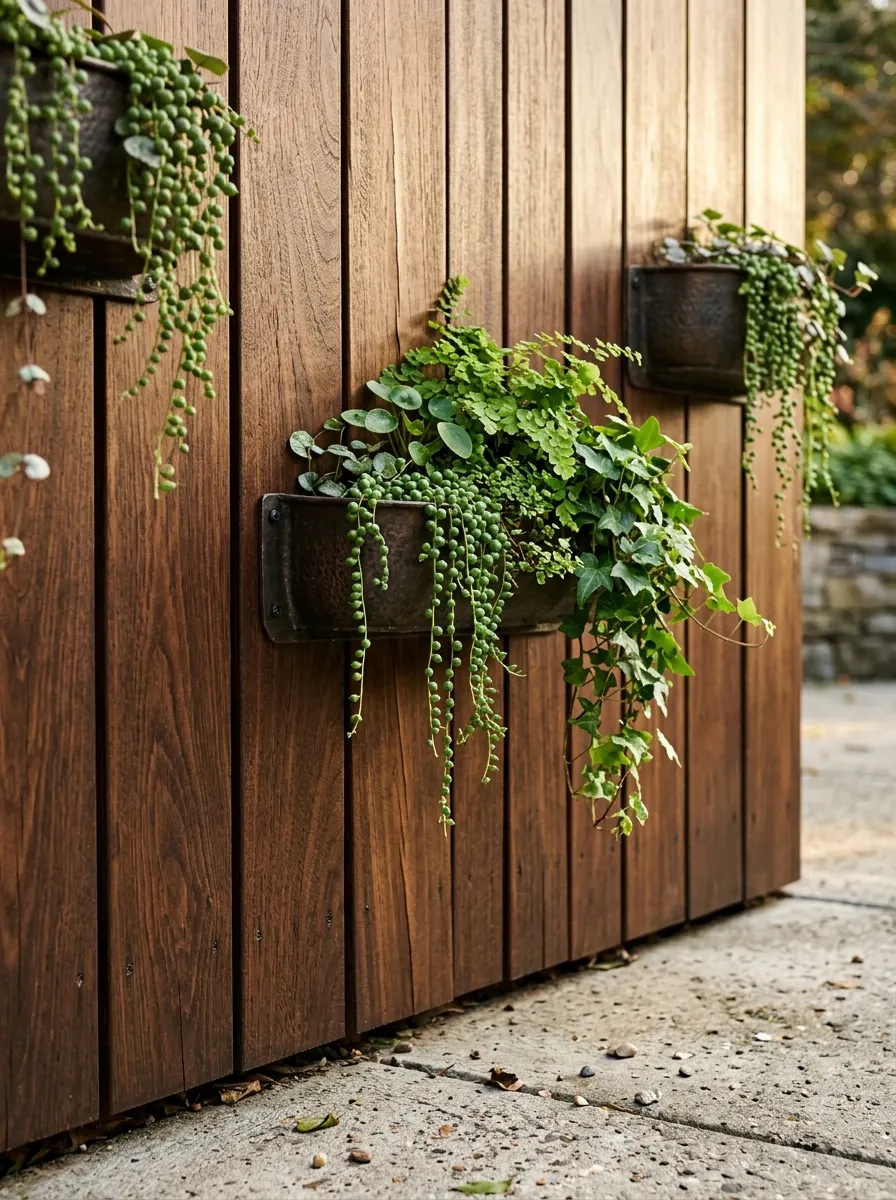
Ipe earns its premium price through performance that no softwood can match. Among its most remarkable qualities is natural fire resistance a property built into the wood’s extraordinary density, requiring no chemical treatment whatsoever. This makes it a compelling best wood for a fence candidate in fire-prone climates or wildfire-adjacent neighborhoods.
Beyond fire resistance, ipe’s density makes it naturally impervious to termites, rot, and mildew. It does not absorb moisture the way pine does, and it does not need the chemical preservatives that pressure treatment involves. For homeowners who prioritize both longevity and material purity, ipe represents the gold standard not just in fencing, but in all outdoor wood applications.
The Key: Ipe’s natural density provides fire resistance and pest immunity without chemical treatments, making it the safest and most durable wood fencing option available.
10
Comparing Cedar vs. Redwood
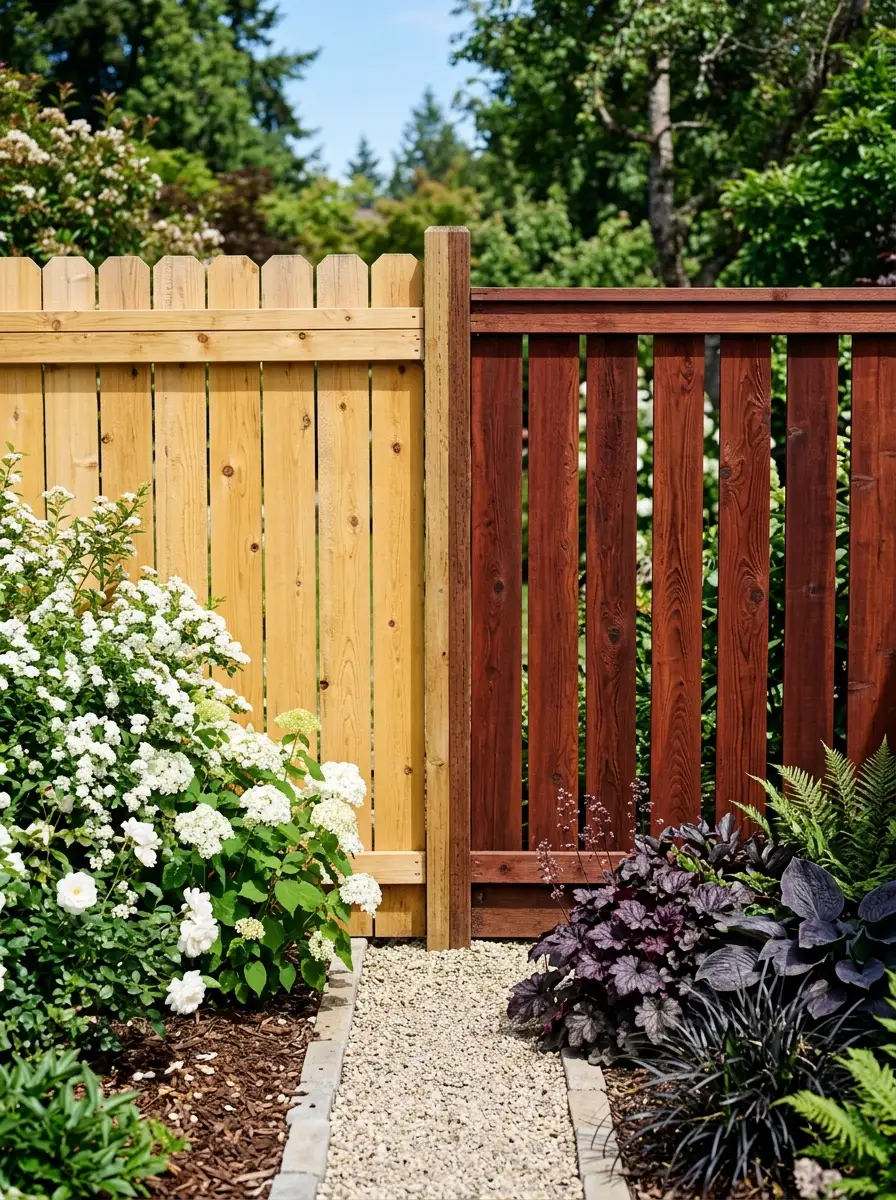
Choosing between cedar and redwood is one of the most common dilemmas in fence wood choice conversations. Both are naturally rot-resistant softwoods with genuine warmth and visual appeal, but they serve slightly different design intentions. Cedar offers a lighter, airier, almost coastal character. Redwood delivers depth, richness, and a grounded architectural presence.
From a durability standpoint, heartwood redwood holds its color and structural integrity marginally longer than cedar, particularly in humid climates. Cedar, however, is more widely available across North America and typically comes at a lower price point. The choice ultimately comes down to aesthetic preference and regional availability rather than one material being objectively superior to the other.
The Key: Cedar suits light, natural, and coastal aesthetics while redwood brings warmth and architectural weight to modern and transitional outdoor spaces.
11
Ipe vs. Pine Long-Term Value
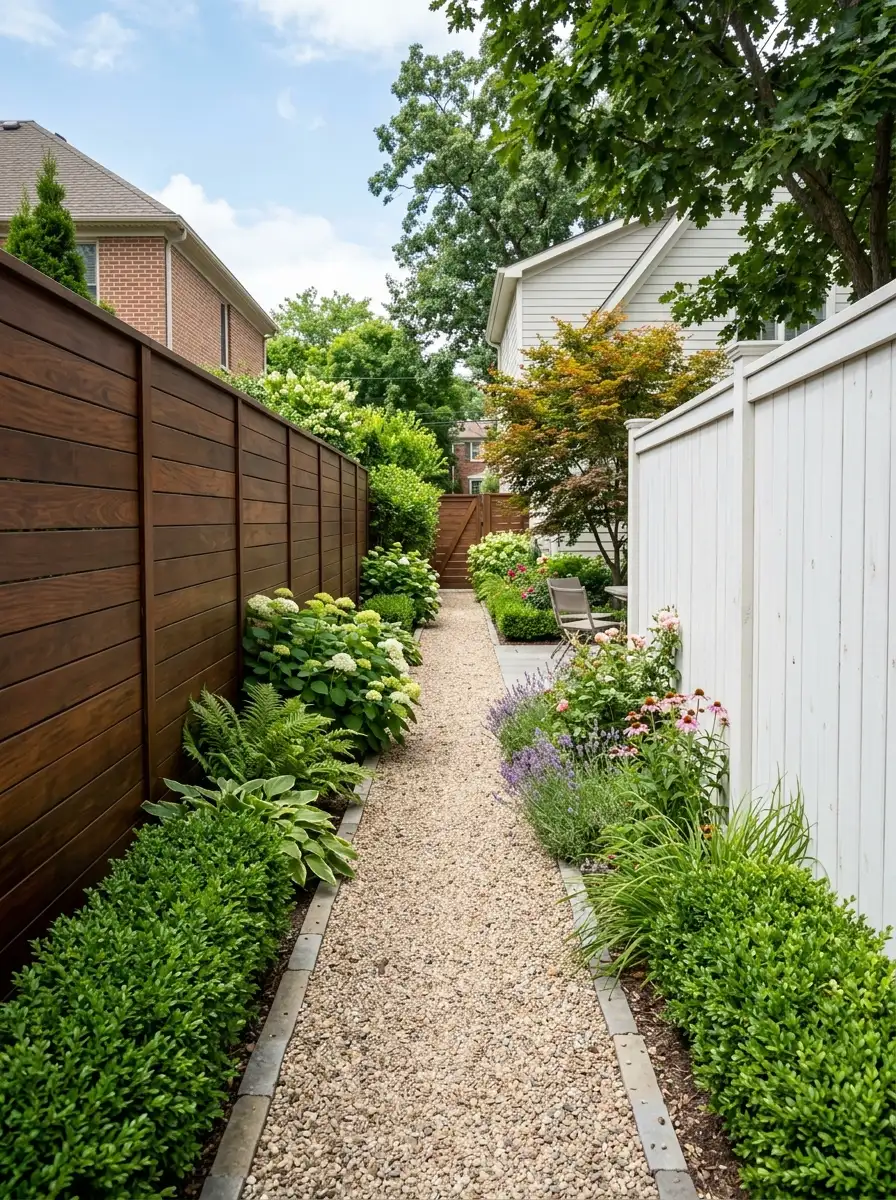
The cost gap between ipe and pine looks dramatic at purchase but the long-term value story is more nuanced than the initial price tag suggests. Pine requires staining, sealing, and occasional board replacement every several years. Ipe, installed correctly, lasts 30 to 50 years with minimal intervention. When you calculate cost per decade, the gap between these two fence material selection options narrows considerably.
For homeowners planning to stay in a property for 15 years or longer, ipe often proves the smarter financial decision despite its high upfront cost. For short-term residents, rental property owners, or those who enjoy periodic renovation projects, pine offers flexibility and low entry cost that ipe simply cannot match. Both choices are intelligent they just suit different ownership timelines and goals.
The Key: Ipe costs more upfront but delivers superior decade-by-decade value, while pine suits short-term ownership and renovation-friendly budgets best.
12
Horizontal vs. Vertical Board Styles
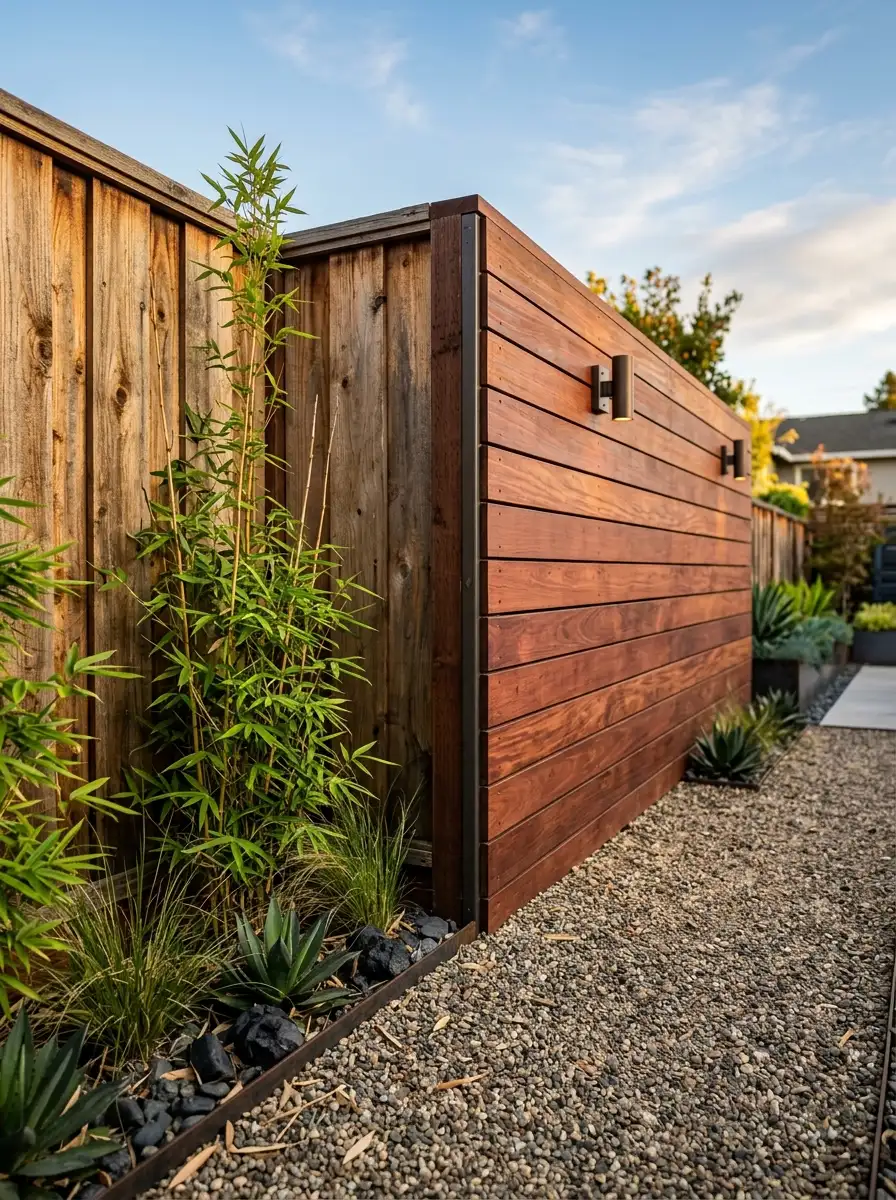
Board orientation is a design decision that works alongside your wood type for fencing choice to define the overall aesthetic of your yard. Vertical boards have a classic, traditional character they draw the eye upward, add visual height, and suit cottage, craftsman, and suburban home styles. Horizontal boards feel contemporary and expansive, lending a clean, modern edge to any exterior.
The choice of wood enhances each orientation differently. Cedar looks especially natural in vertical picket or board-on-board configurations. Redwood and ipe both shine in horizontal formats where their rich grain runs the full length of each plank for maximum visual impact. Pine works well in either orientation when stained or painted to complement the overall design direction.
The Key: Vertical boards add classic height while horizontal boards extend visual width match your board orientation to your home’s architectural style for the strongest result.
13
Cedar for Edible Gardens
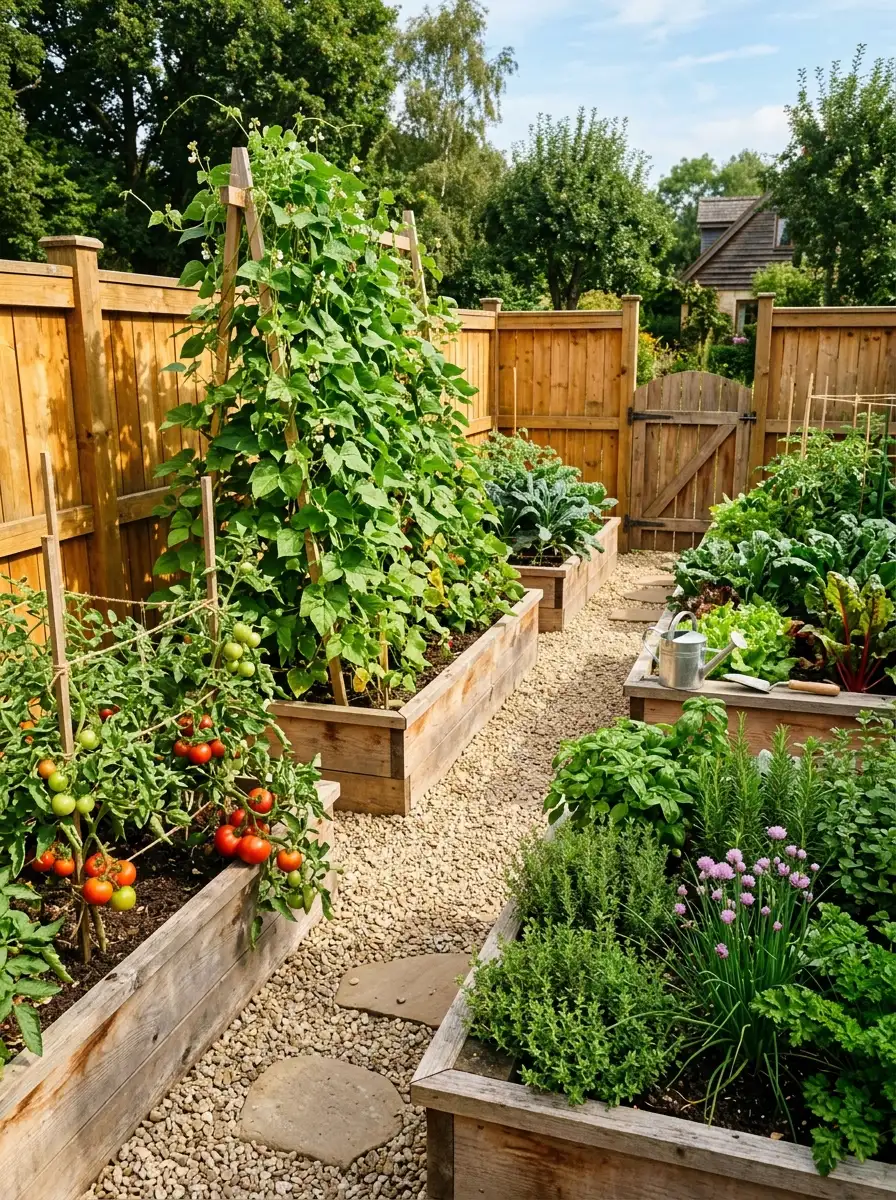
For edible gardens, the fence wood choice carries health considerations beyond aesthetics. Cedar is the near-universal recommendation among gardeners and landscape architects because its natural preservatives thujaplicins and tannins provide rot and pest resistance without any chemical treatment. This makes it completely safe for use beside food crops, herbs, and pollinator plantings.
Pressure-treated pine, by contrast, contains chemical preservatives that some gardeners prefer to keep away from edible plant roots and soil. While modern treatments have improved significantly from older formulations, the peace of mind cedar provides is genuinely valuable in a kitchen garden context. Cedar also weathers beautifully beside organic materials, compost beds, and natural mulch.
The Key: Cedar’s chemical-free natural durability makes it the safest and most beautiful fencing option for kitchen gardens and edible outdoor spaces.
14
Redwood in Humid Climates
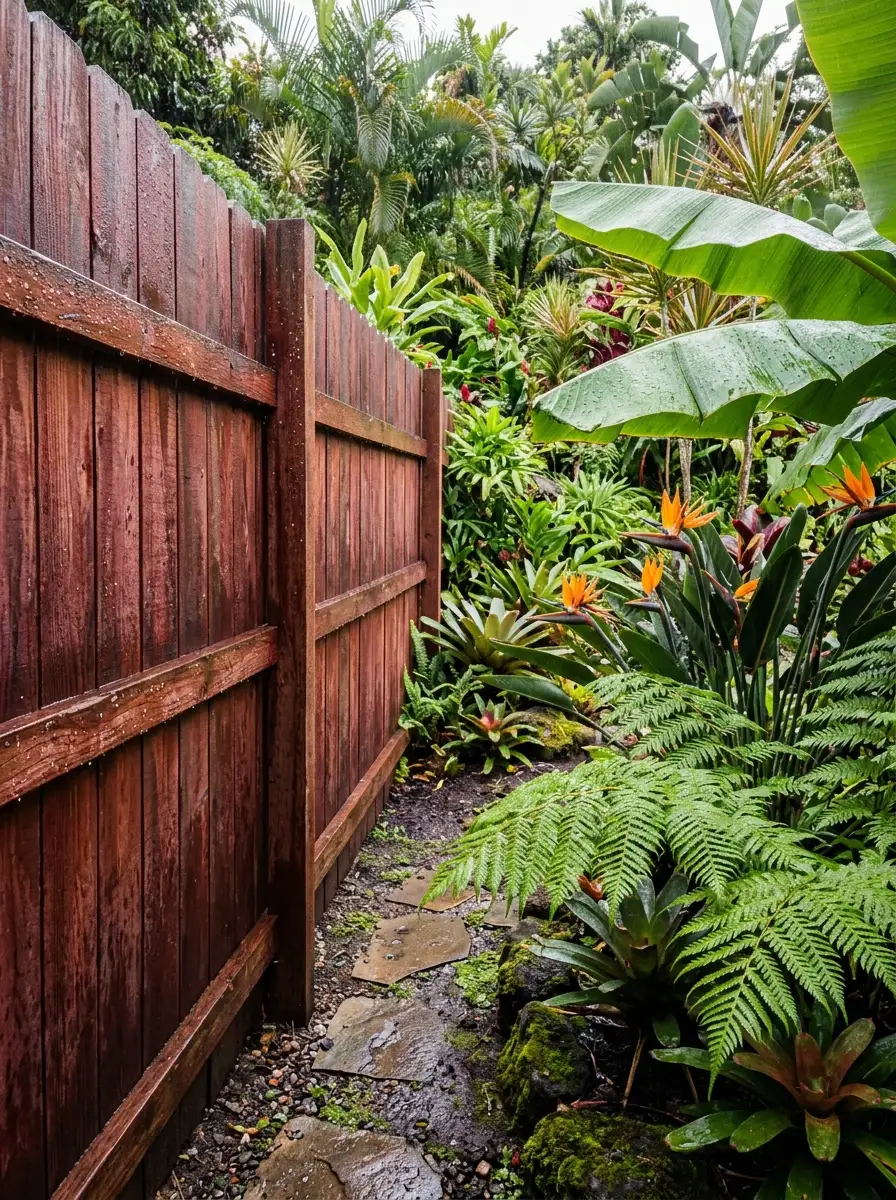
Humidity is one of fencing’s cruelest adversaries, and choosing wood for fences in wet or coastal climates demands careful material consideration. Redwood’s high tannin content gives it a natural edge in moisture-heavy environments, resisting the rot and fungal growth that defeats lesser woods far more quickly. I have noticed redwood fences in humid subtropical gardens holding their color and structure impressively through seasons that would wreck untreated pine within a few years.
This moisture resilience makes redwood especially valuable in the American Southeast, Pacific Northwest, and tropical-influenced climates where rainfall is frequent and relative humidity stays high year-round. When combined with proper post installation setting posts in gravel-drained holes rather than directly in soil redwood in humid environments delivers a service life that genuinely justifies its cost.
The Key: Redwood’s natural tannins make it one of the most moisture-resistant softwood fencing options, giving it a meaningful advantage in humid and coastal climates.
15
Ipe for Coastal Properties
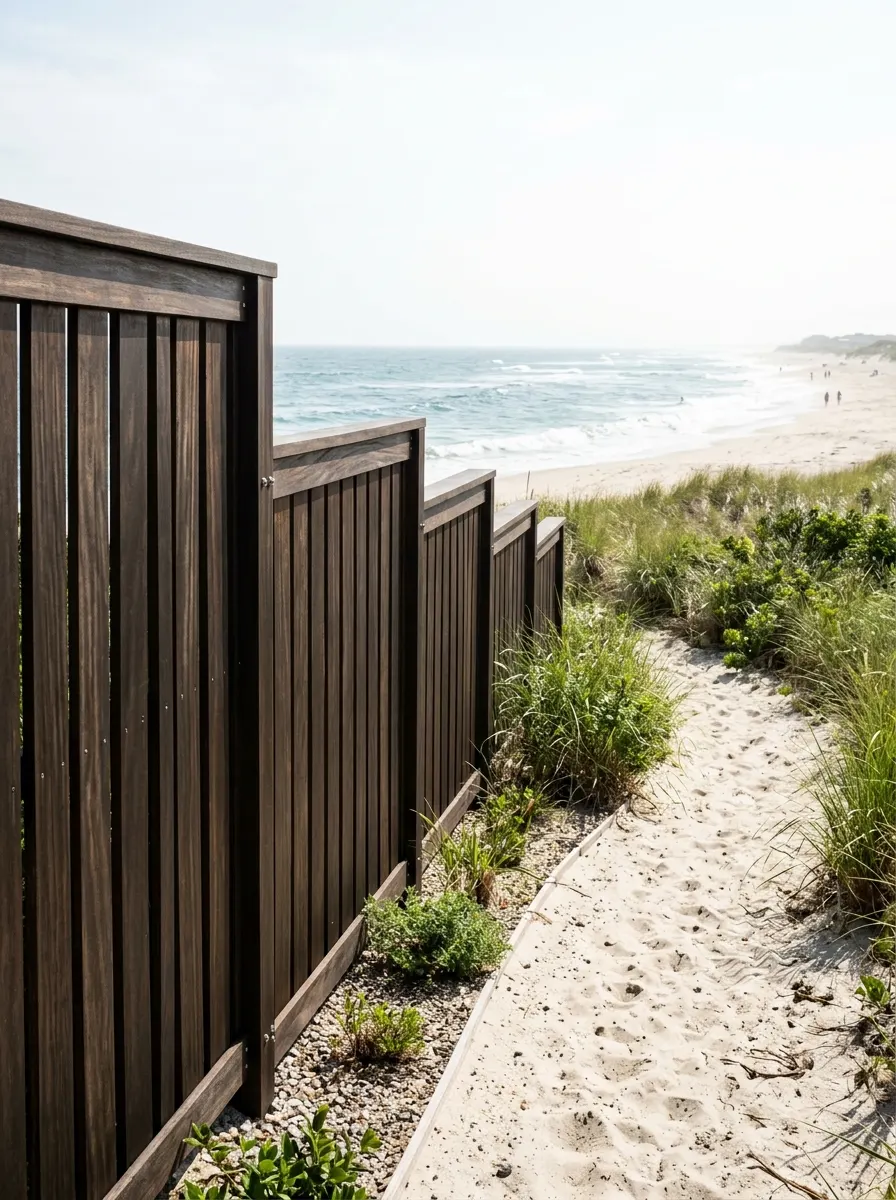
Coastal environments subject fencing materials to some of the most punishing conditions in residential landscaping salt air, high humidity, UV intensity, and wind-driven moisture. This is where ipe’s extraordinary density transitions from a luxury feature into a genuine practical necessity. As the best wood for a fence in coastal applications, ipe simply has no softwood competitor.
Salt air accelerates the degradation of pine and can speed moisture intrusion in cedar and redwood. Ipe shrugs off these conditions with a density that prevents moisture absorption and a natural oil content that resists salt corrosion. Beachfront homeowners who invest in ipe fencing routinely report decades of service with minimal intervention even in the most exposed oceanfront positions.
The Key: Ipe’s density and natural oil content make it the only wood fencing material that genuinely thrives in salt air coastal environments long term.
16
Budget Planning by Wood Type
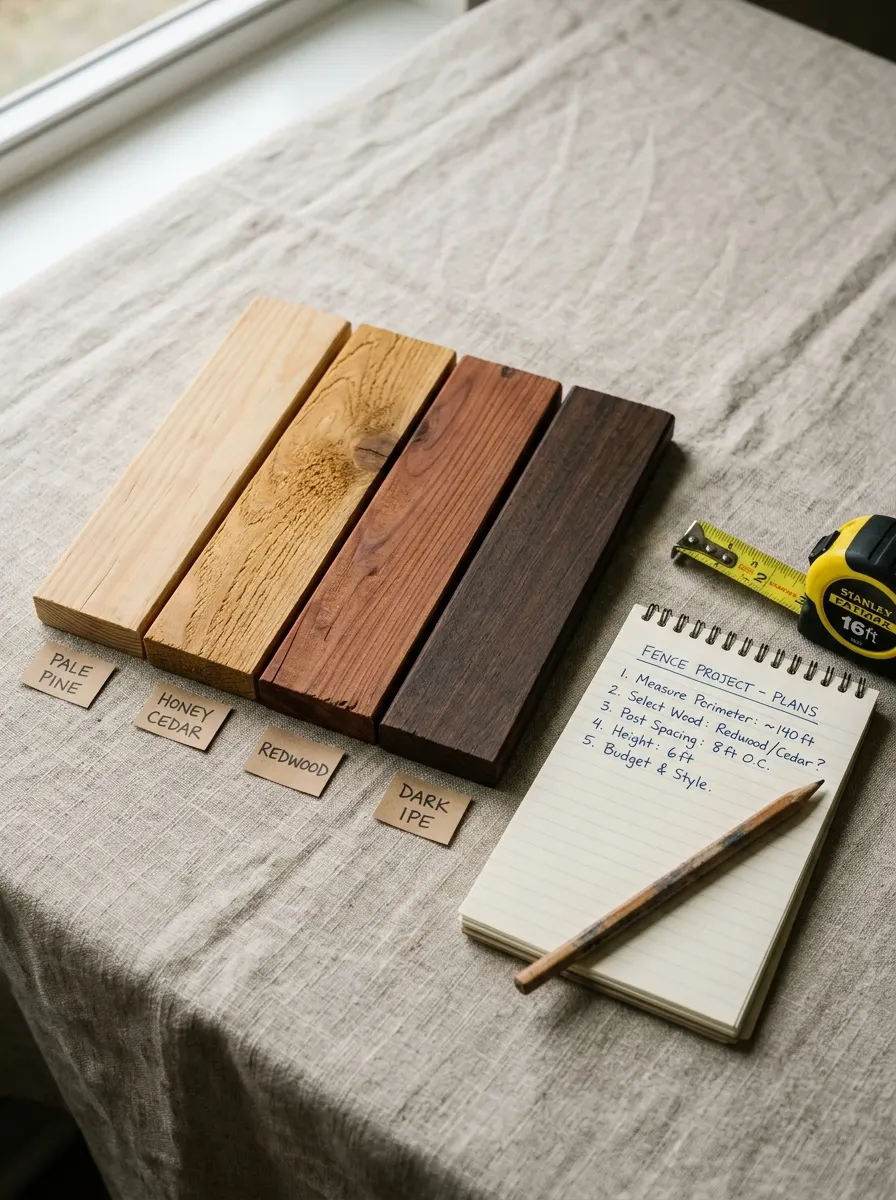
Understanding the cost landscape before committing to a fence wood choice saves significant frustration at the lumberyard. Pine sits at the most accessible price point, often 30 to 50 percent less per linear foot than cedar. Cedar occupies a mid-range position that most homeowners find an excellent value balance. Redwood runs somewhat higher, particularly for clear heartwood grades. Ipe commands a premium that can run two to four times the cost of cedar.
The smarter budget question, however, is total lifecycle cost rather than purchase price alone. Pine fencing that needs staining every two years and partial board replacement over a decade may ultimately cost more than a cedar installation requiring minimal upkeep. Budget planning that accounts for maintenance materials and labor over 10 to 20 years often changes the perceived affordability of each option considerably.
The Key: Total lifecycle cost not purchase price alone is the most accurate way to compare fence material selection budgets across cedar, pine, redwood, and ipe.
17
Maintenance Schedules Compared
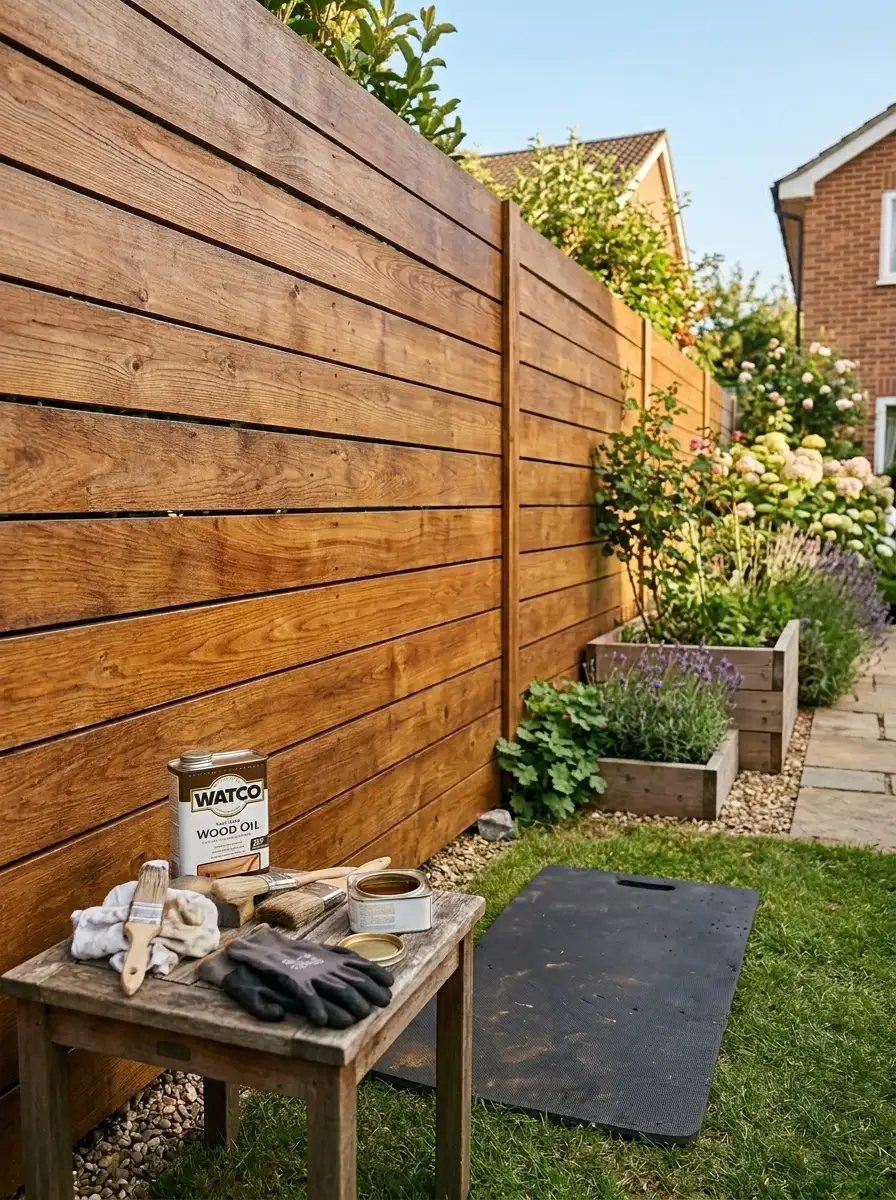
Maintenance expectations vary dramatically across the four main fence wood choice options, and matching your material to your personal maintenance appetite is just as important as matching it to your aesthetic vision. Pine demands the most frequent attention a water-repellent sealer applied within the first season and reapplied every one to two years to prevent mildew, splitting, and accelerated graying.
Cedar needs oiling every two to three years if you want to preserve its golden tone, though it handles neglect more gracefully than pine if life gets busy. Redwood follows a similar schedule to cedar but tends to hold its color between maintenance applications slightly longer. Ipe demands the least intervention of all those who embrace its silver patina can skip sealing entirely, while those who prefer the dark chocolate original color should plan for annual oiling.
The Key: Match your wood choice to your maintenance comfort level pine needs the most frequent care, ipe the least, with cedar and redwood sitting comfortably in between.
18
Mixed Material Fence Designs
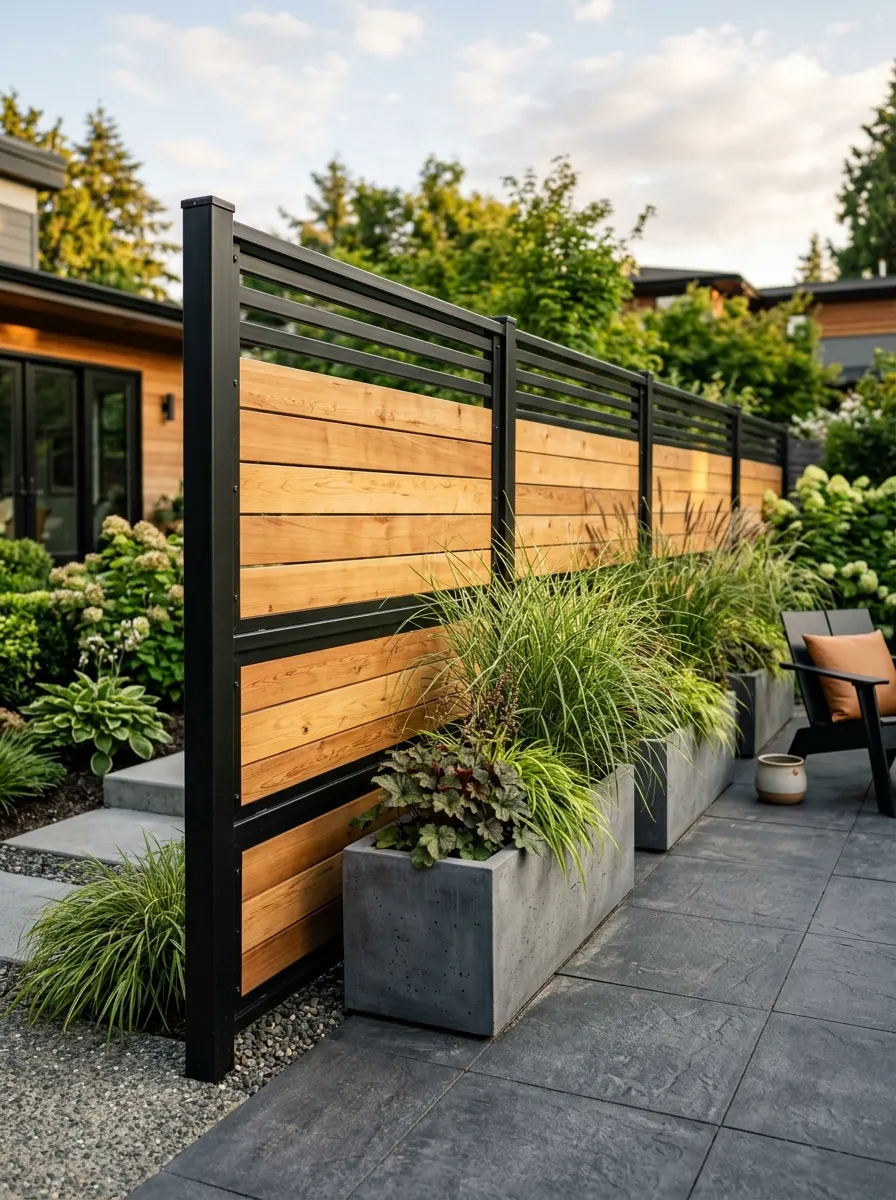
One of the most exciting directions in current fence wood choice design combines natural wood with metal framing or composite posts. Cedar, redwood, and ipe all pair beautifully with powder-coated steel or aluminum frames, creating fences that feel architecturally considered rather than simply functional. The contrast between warm organic wood grain and sharp dark metal geometry is a combination that photographs exceptionally well.
Mixed material designs also offer a practical advantage: steel or aluminum posts carry the structural load while the wood handles the aesthetic portion of the fence. This can actually extend the life of the wood panels by reducing the soil moisture exposure that wooden posts endure. For homeowners who want the beauty of natural wood with enhanced structural longevity, mixed material fencing is worth serious consideration. For more inspiration on combining privacy, structure, and style in outdoor spaces, explore these deck privacy ideas.
The Key: Combining natural wood panels with metal structural frames creates a design-forward fence that is both visually striking and structurally superior to all-wood installations.
19
Choosing Your Right Wood
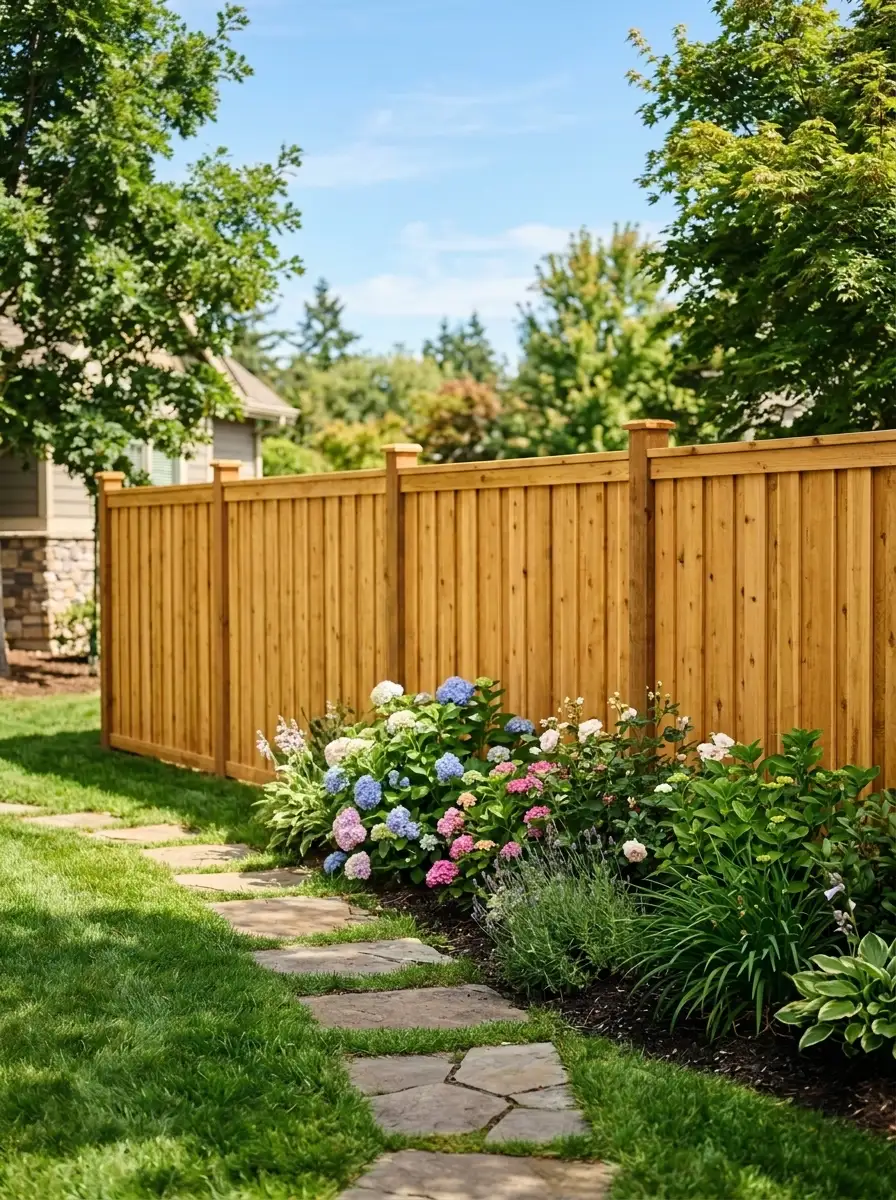
Every great outdoor space begins with an intentional fence wood choice and by this point, you have everything you need to make yours with genuine confidence. Cedar delivers warmth and accessibility. Redwood brings architectural richness and humidity resilience. Pine offers flexibility and budget-friendly reach. Ipe provides unmatched durability and a refined luxury finish for those who want a fence that outlasts almost everything else in the yard.
The decision is not about finding the objectively best wood it is about finding the best wood type for fencing for your specific home, climate, aesthetic vision, and maintenance lifestyle. A beautifully stained pine fence on a tight budget beats a neglected redwood installation every time. Commit to your choice, plan your maintenance schedule honestly, and invest in quality installation. The wood will do the rest.
The Key: The right fence wood choice depends entirely on your climate, aesthetic goals, and maintenance commitment there is no universal winner, only the best match for your situation.
Making a confident fence wood choice is one of the most rewarding decisions a homeowner can make for their outdoor space. From the relaxed coastal warmth of cedar to the drama of redwood, the adaptable practicality of pine, and the enduring luxury of ipe, each wood brings something genuinely meaningful to the table. I have seen modest yards transformed completely by the right material not because it was the most expensive option, but because it was the most considered one. Beautiful fences do not happen by accident; they happen when a homeowner takes time to truly think through what they want and why.
Save this post to your Pinterest boards so you have these ideas ready when your project begins. Share it with a friend who is planning a fence this season the right guidance at the right moment makes the whole process so much easier and more exciting. Whatever wood you choose, approach your fence as a design element that shapes how your entire yard feels, not just a boundary line. The difference between a functional fence and a beautiful one is simply intention, and now you have 19 smart ideas to inspire exactly that.