Front Yard Design
🏠 25 Real Ideas
⏱ Quick Read
🔥 Always Trending
25 Front Yard Design Ideas
Using the Golden Ratio to Create a Balanced, Beautiful, and Foolproof Landscape Layout
Have you ever walked past a front yard that stopped you mid-step? Not because of flashy decor or expensive plants, but because everything about it just felt right? That feeling is not accidental. It is proportion doing its quiet, invisible work, and the Golden Ratio is the timeless formula behind it. This ancient mathematical principle, found in seashells, sunflowers, and Renaissance art, is one of the most powerful tools you can bring into your front yard design today.
In this article, you will find 25 beautiful, practical, and beginner-friendly front yard landscaping ideas that use the Golden Ratio to guide every layout decision. Whether you are starting from scratch or refreshing a tired yard, these yard design ideas will show you exactly how to create balance, rhythm, and visual harmony without needing a design degree. Your most beautiful yard yet starts right here.
01
Golden Ratio Walkway Width
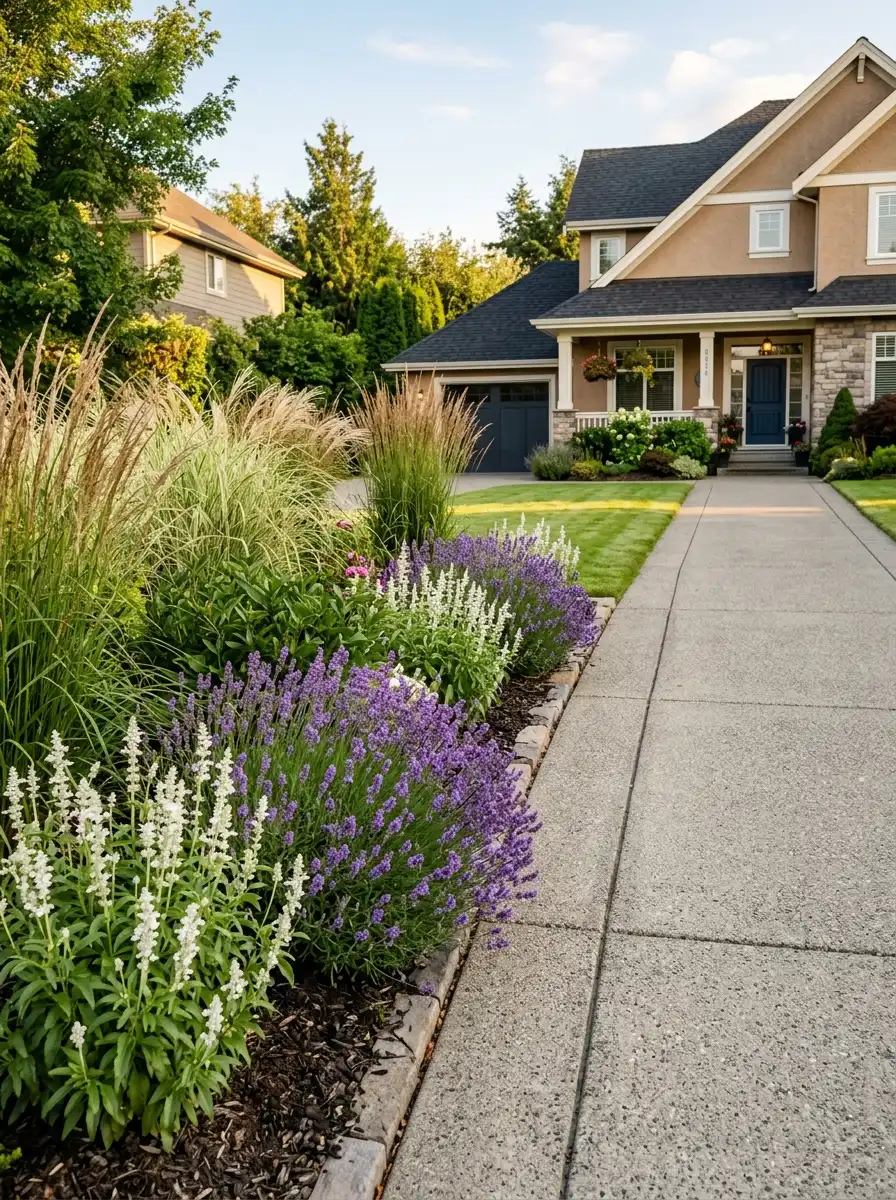
The walkway is the spine of your front yard design, and its width sets the visual tone for everything else. When the path width and the adjacent lawn width share a 1:1.6 ratio, the relationship between hardscape and greenery becomes naturally pleasing to the eye. Your brain registers the proportion without knowing why, and the yard feels calm, open, and welcoming from the very first glance.
To apply this, measure your planned walkway width, then multiply by 1.6 to find the ideal lawn width beside it. You do not need to be mathematically precise. A close approximation is enough to trigger that sense of harmony. Even a slight shift toward the golden proportion makes a dramatic difference in how finished and intentional your yard looks to every visitor.
The Key: In front yard landscaping, walkway-to-lawn proportions guided by the Golden Ratio create effortless visual balance that no amount of expensive decor can replicate.
02
One-Third Hardscape, Two-Thirds Lawn
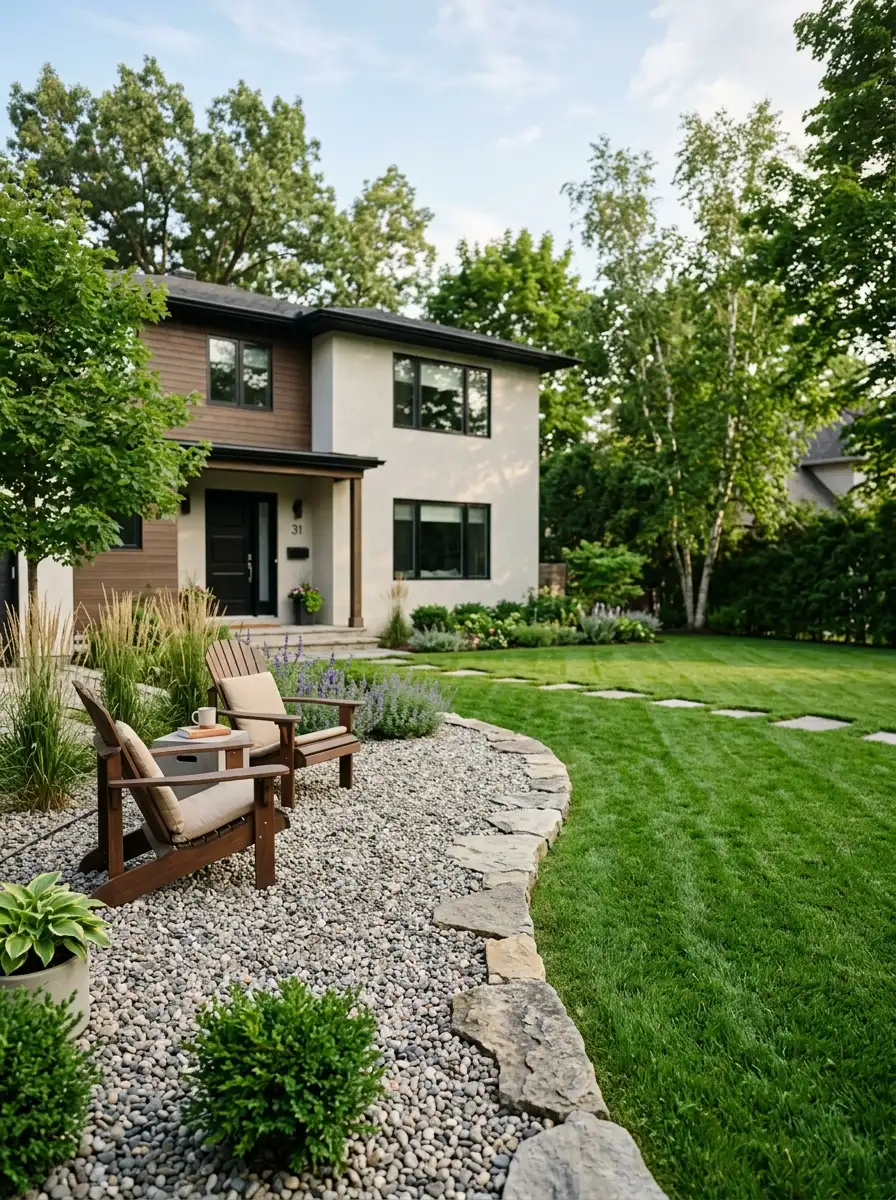
Chasing perfect symmetry is one of the most common mistakes in front yard makeover projects. True balance is about proportion, not mirroring. Dividing your yard so that one-third becomes hardscape and two-thirds remains soft greenery creates breathing room, hierarchy, and a relaxed open feeling that symmetrical layouts almost never achieve.
Imagine your yard as a wide rectangle. Mentally slice it into three equal strips. Dedicate one strip to pavers, gravel, or a small patio, and let the remaining two strips breathe as lawn or planted garden beds. The result feels intentional and spacious. Neighbors will assume a designer was involved, but the only secret is this simple one-third to two-thirds rule working quietly in the background.
The Key: Dividing your landscape layout into one-third hardscape and two-thirds greenery gives the yard natural flow and prevents the cluttered, overcrowded feeling that symmetry often creates.
03
Tiered Plant Heights Golden Steps
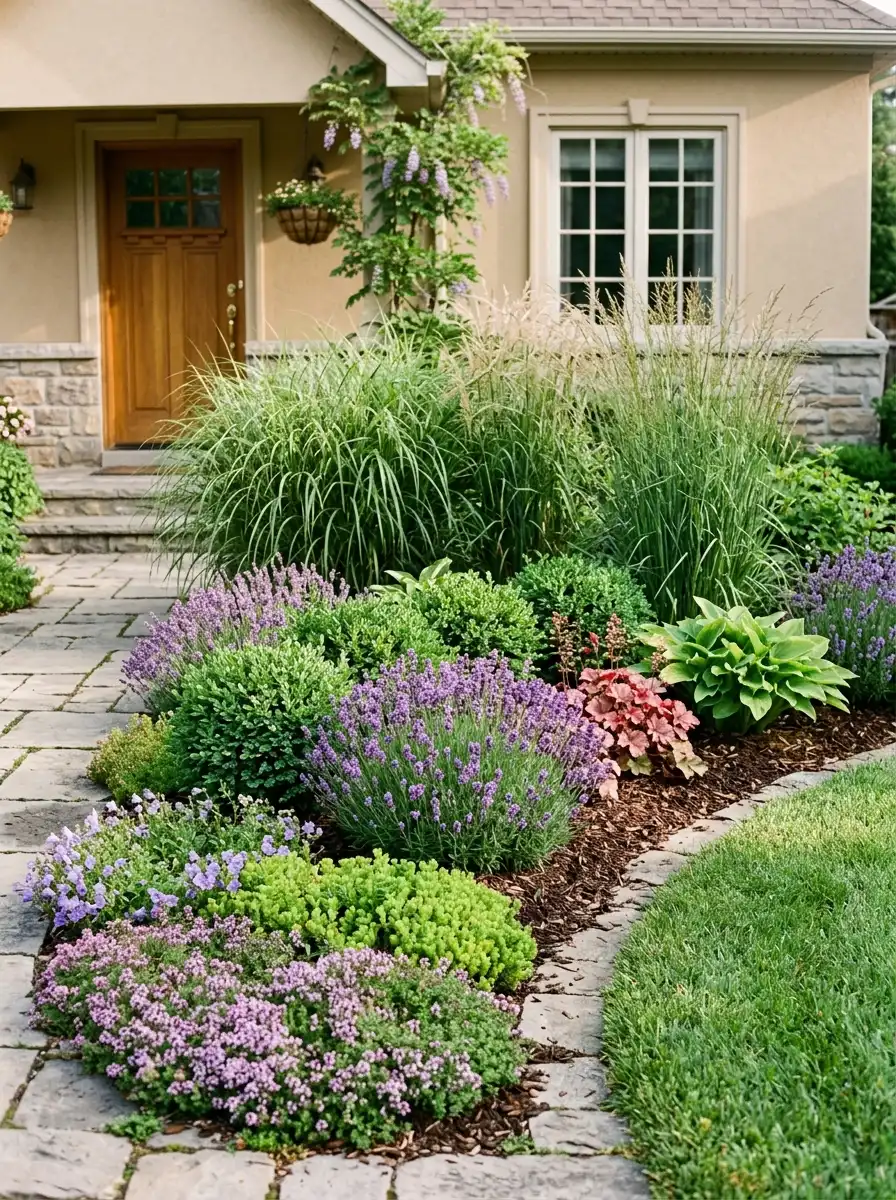
Plant layering is one of the most visually rewarding techniques in front yard design, and the Golden Ratio makes it foolproof. Start with your shortest plants at the front edge, using textured options such as those featured in these heuchera front yard ideas. Then choose a middle layer that is roughly 1.6 times taller than the shortest plants. Finally, select a backdrop layer that is 1.6 times taller than the middle tier. This creates a natural progression that draws the eye upward without feeling forced or staged.
The effect is extraordinary depth. Instead of a flat row of plants that all compete for attention, you get a layered scene that feels lush, full, and intentionally composed. Even a narrow bed transforms into something that looks professionally planted. This technique works with any plant palette, from cottage-style perennials to sleek modern ornamental grasses.
The Key: Golden Steps layering in front yard landscaping adds depth and dimension that flat planting beds simply cannot achieve, no matter how expensive the plants are.
04
Unequal Door Framing With Plants
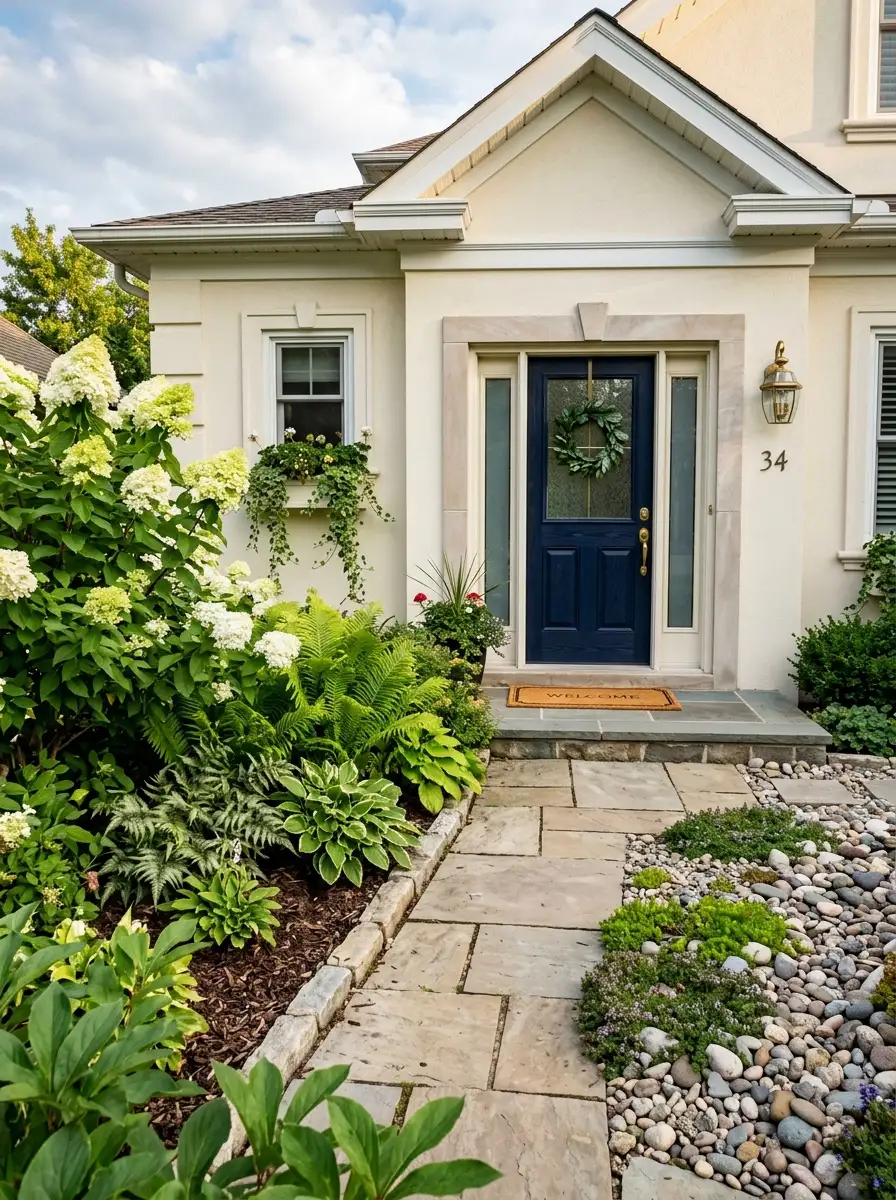
Perfectly matched plantings on both sides of a front door can feel stiff and predictable. Leaning into intentional imbalance, where one side holds roughly 1.6 times more visual weight in height, color, or fullness than the other, creates a dynamic and charming entrance. The eye naturally follows the asymmetry toward the door, which is exactly where you want attention to land.
This technique is one of the most impactful yard design ideas for improving curb appeal without a full renovation. Load one side with tall flowering shrubs or bold foliage, then let the opposite side breathe with low ground cover and a peek of stone or gravel. The contrast creates rhythm. The proportion creates harmony. Together, they give your front door the quiet drama it deserves.
The Key: In front yard design, unequal planting zones that follow the 1:1.6 ratio guide the eye toward the front door in a way that feels natural and deeply inviting.
05
Curved Garden Beds Golden Arcs
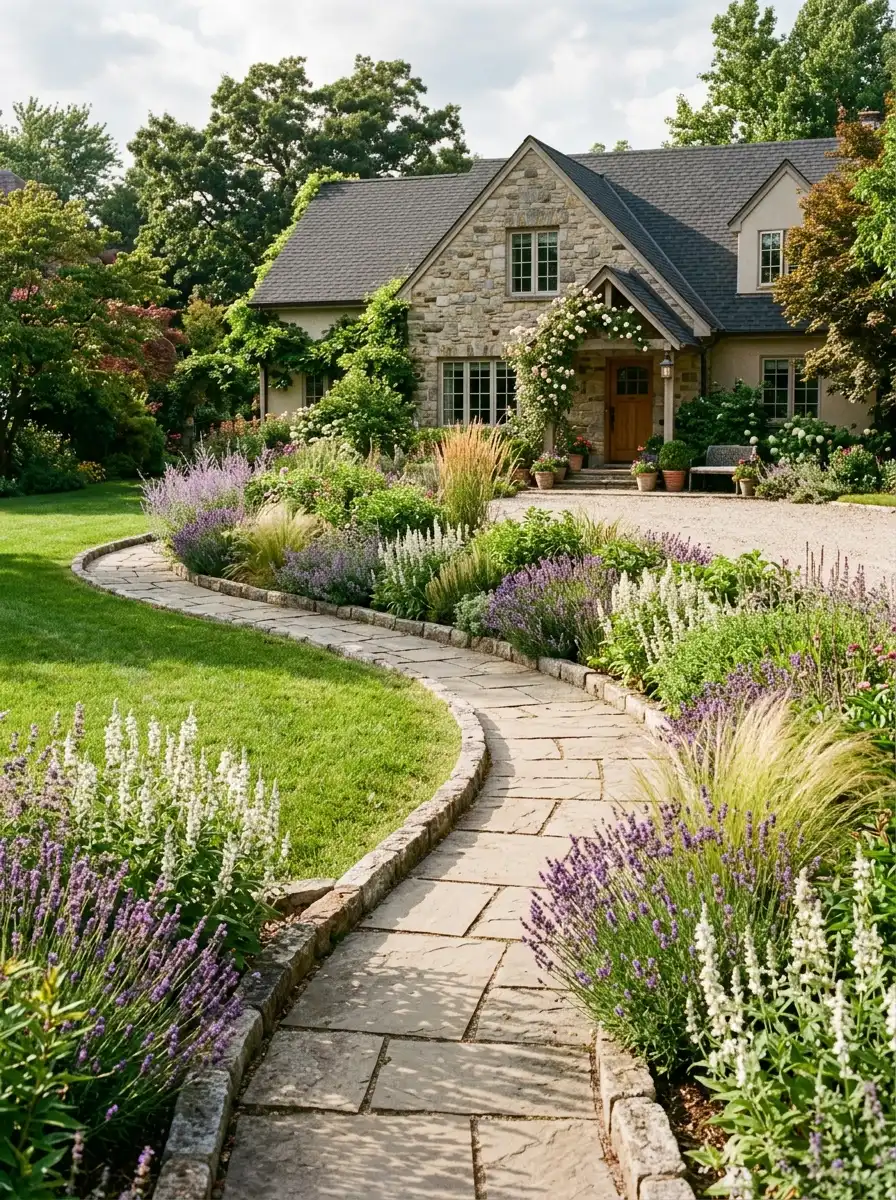
Curves give a front yard soul. They slow the eye down, invite exploration, and create a sense of movement that straight lines simply cannot replicate. When those curves are inspired by the Golden Spiral, they go from decorative to deeply satisfying. The curve begins narrow and gradually expands to roughly 1.6 times wider at its broadest sweep, mimicking the proportions found in nature’s most beautiful shapes.
Use a garden hose or a length of rope to sketch the curve directly on your lawn before cutting any edges. Start with a tighter bend near the entrance, then let it open gradually as it flows toward the street or the far corner of the yard. The result feels like the yard has been breathing and growing into that shape for years, which is exactly the kind of timeless quality the best front yard makeover projects achieve.
The Key: Golden arc curves in front yard landscaping create a sense of natural flow that makes the whole yard feel organic, unhurried, and beautifully composed.
06
Fibonacci-Spaced Outdoor Lighting
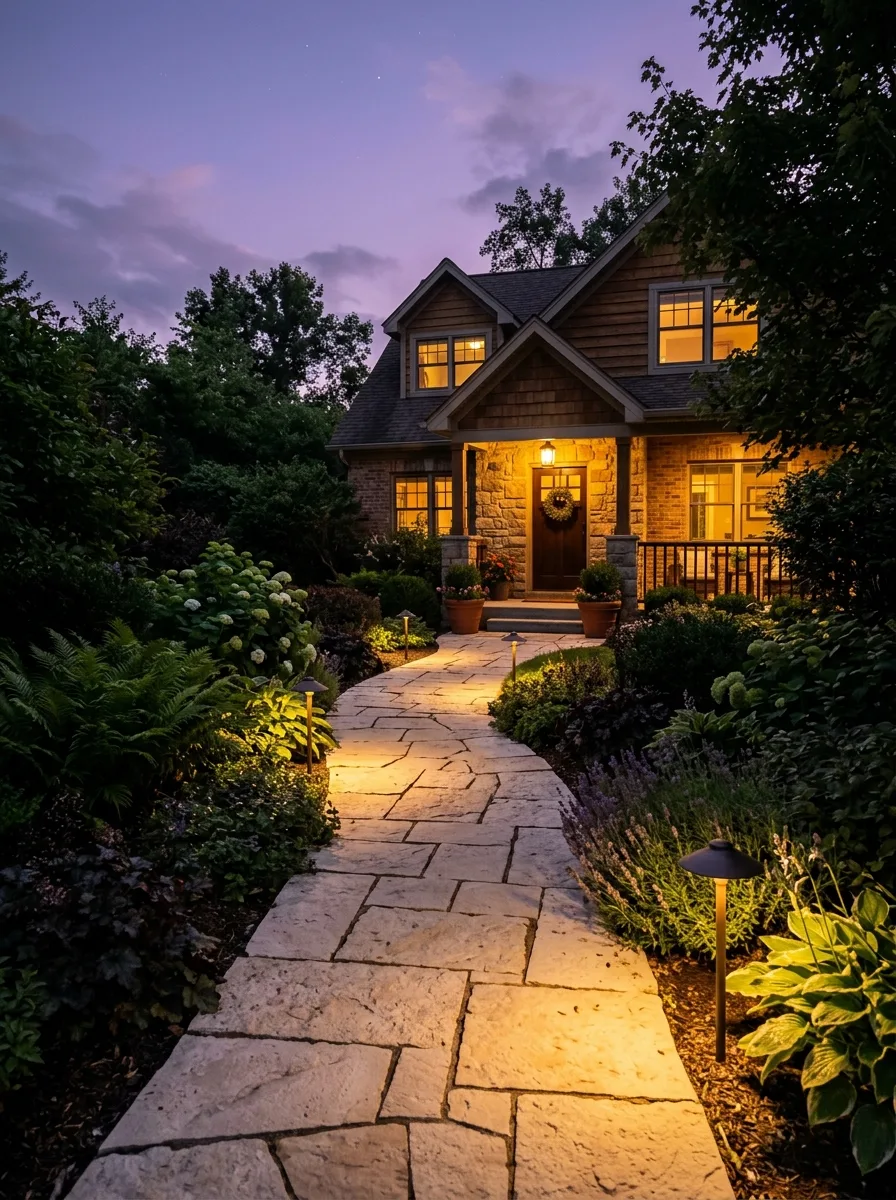
Evenly spaced lights look like an airport runway. Fibonacci-spaced lights feel like a song. Place your first path light near the front door, then let the gap between each successive fixture grow following the approximate sequence of 5 feet, 8 feet, and 13 feet. These intervals mirror the Golden Ratio and create a visual rhythm that draws visitors naturally forward without a single rigid step.
The effect is subtle but powerful. Rather than monotonous repetition, your lighting has moments of pause and moments of focus. The spacing makes the path feel longer, more interesting, and more intentional. It is one of the simplest upgrades any front yard design project can include, requiring no digging, no special tools, and no professional installer to make it work beautifully.
The Key: Fibonacci spacing in outdoor lighting turns a functional necessity into a design feature, giving your landscape layout rhythm and depth after the sun goes down.
07
Garden Bed Width Proportional to Lawn
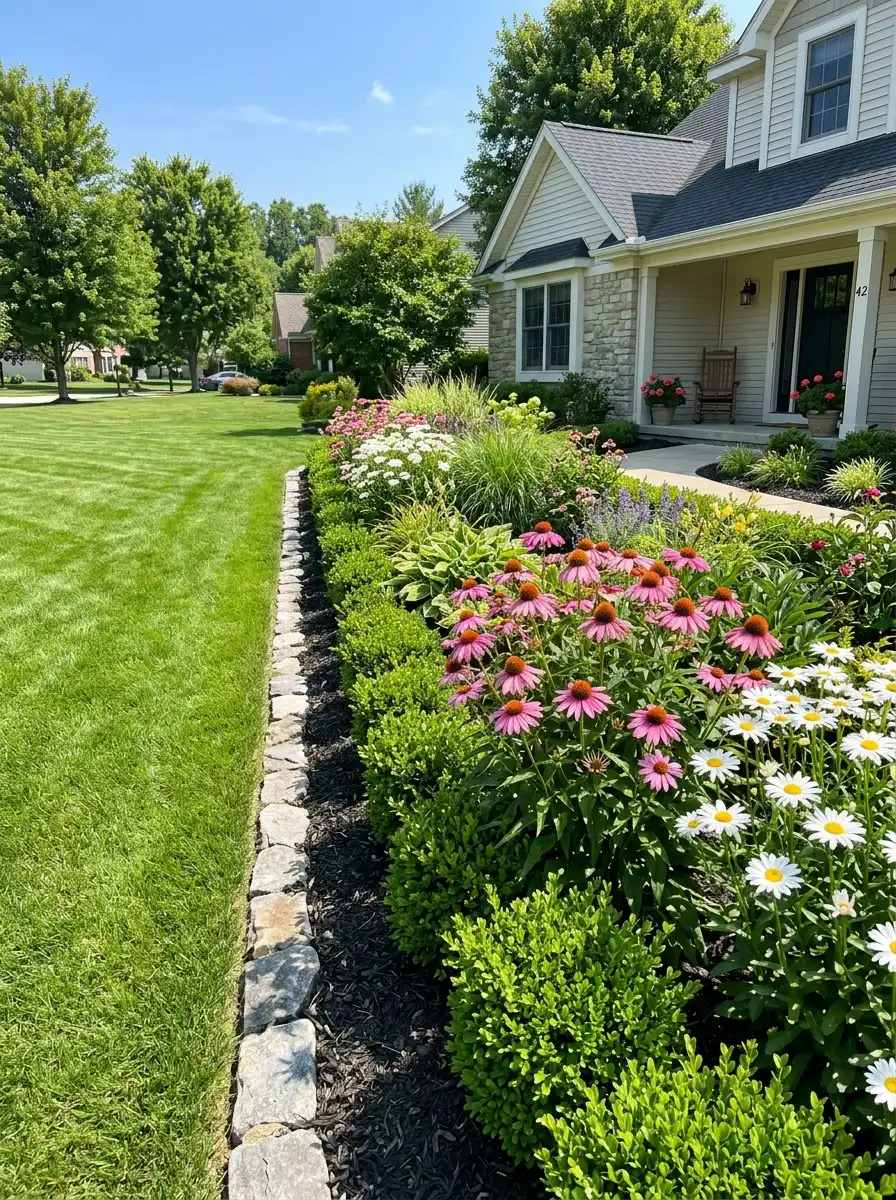
One of the most overlooked details in yard design ideas is the ratio between garden bed width and lawn width. When the bed is too narrow, it disappears. When it is too wide, the lawn feels squeezed and the yard looks overplanted. A bed that sits at roughly one-third the width of the adjacent lawn finds that sweet spot where both elements feel balanced and intentional.
Measure your lawn width, divide by three, and use that result as the target width for your planting bed. You will immediately notice how the two elements start to feel like partners rather than competitors. The lawn gets room to breathe, the garden bed gets enough depth to layer plants beautifully, and the overall front yard design reads as deliberate, polished, and easy on the eye.
The Key: Proportional garden bed width is the quiet foundation of great front yard landscaping. Get this ratio right, and every plant you add will look better because of it.
08
Focal Point Placement Off-Center
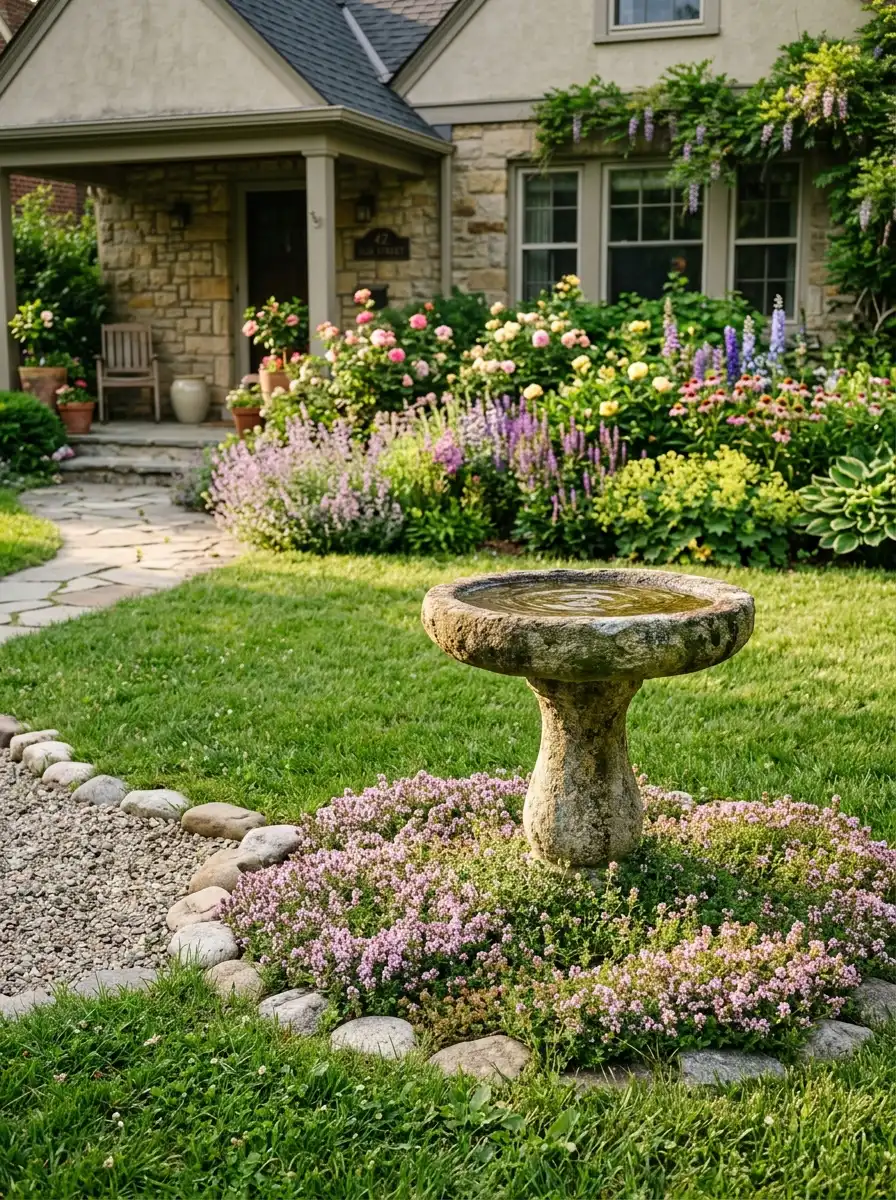
Placing a focal point dead center in a yard often feels static and formal, like a decorative afterthought. Moving that same element slightly off-center to a position that sits at roughly one-third or two-thirds of the yard’s width instantly makes it feel more dynamic, more natural, and more intentional. This is the Golden Ratio at work without a single measurement taken.
A birdbath, a statement tree, a large urn, or a sculptural shrub all become more compelling when they are positioned slightly away from center. The eye has somewhere to travel. The composition gains tension and release, which is exactly what makes a landscape layout feel alive rather than static. This shift costs nothing but planning and delivers one of the most noticeable visual upgrades a front yard makeover can achieve.
The Key: Off-center focal points in front yard design create visual tension and movement that perfectly centered placements rarely achieve, no matter how beautiful the focal object itself is.
09
Driveway Edge Planting Proportions
The edge of a driveway is prime real estate in any front yard design, but it is often underused or planted with a thin ribbon of groundcover that disappears visually. A planting strip that reaches a width of roughly one-third the driveway width gives the edge enough presence to feel intentional without overwhelming the hardscape. It softens the driveway edge and makes the transition from car to home feel welcoming rather than abrupt.
Choose plants that vary in height across the strip to add layering within the narrow space. Low sedums at the front, mid-height ornamental grasses in the center, and a taller salvia or Russian sage toward the back create that golden stair-step effect within a compact area. Even a modest two-foot-wide planting strip handled this way will elevate your front yard landscaping considerably.
The Key: A driveway planting strip at one-third the driveway width softens the hardscape edge and signals that every inch of your landscape layout has been thoughtfully considered.
10
Front Tree Canopy Height Ratio
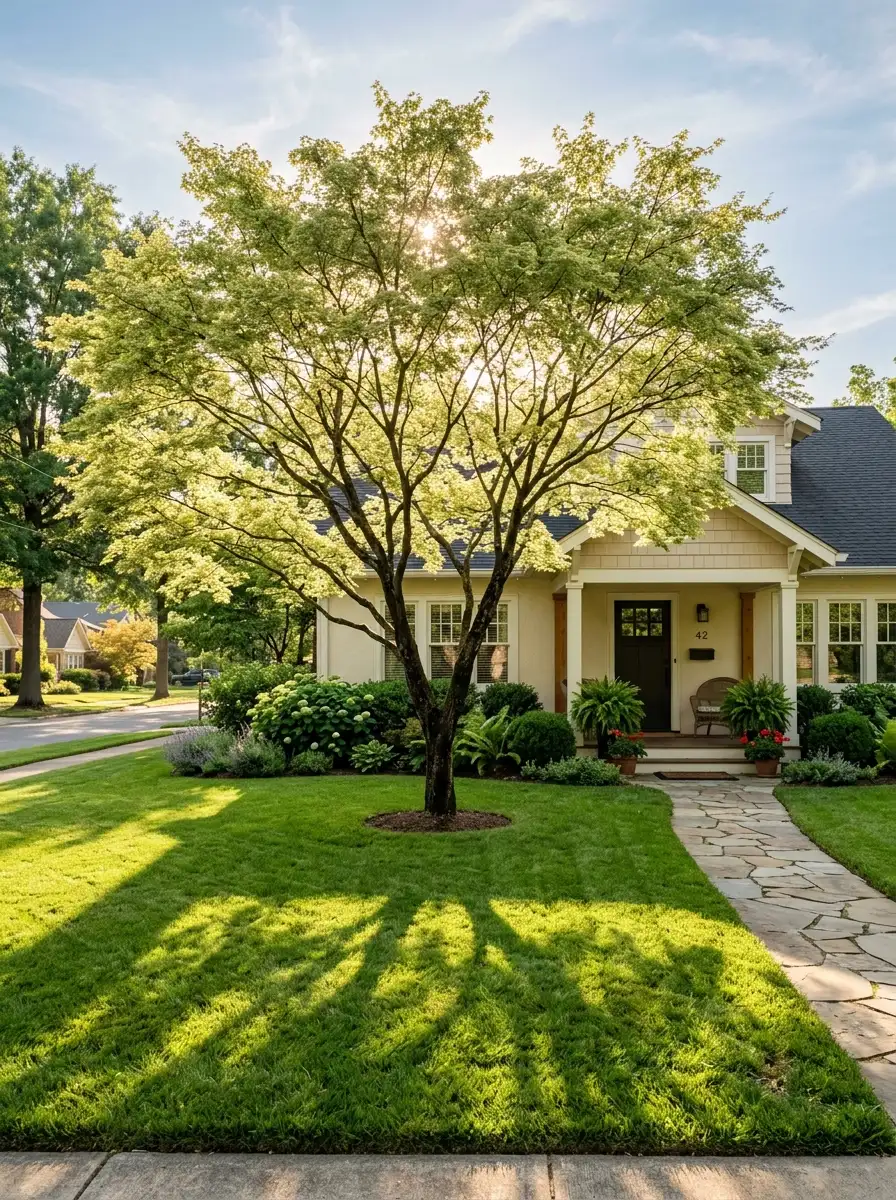
A tree is the most vertical element in most front yards, and its height relative to the house, shrubs, and lawn sets the proportion for the entire composition. When the tree’s canopy begins at roughly 1.6 times the height of the surrounding shrubs, the transition from low groundcover to mid-height plants to the tree feels seamless and natural rather than jumpy.
Choosing a tree with the right mature height for your specific yard is one of the smartest long-term investments in front yard design. An ornamental cherry, serviceberry, or Japanese maple offers beautiful canopy height without overwhelming a smaller yard. Position the tree to one side rather than centered, following the off-center placement principle, and you have a yard that reads as layered, generous, and effortlessly well-proportioned.
The Key: Selecting a tree whose canopy height sits at Golden Ratio proportion above surrounding shrubs gives your front yard landscaping a vertical structure that feels both natural and architect-designed.
11
Symmetry-Breaking Mulch Borders
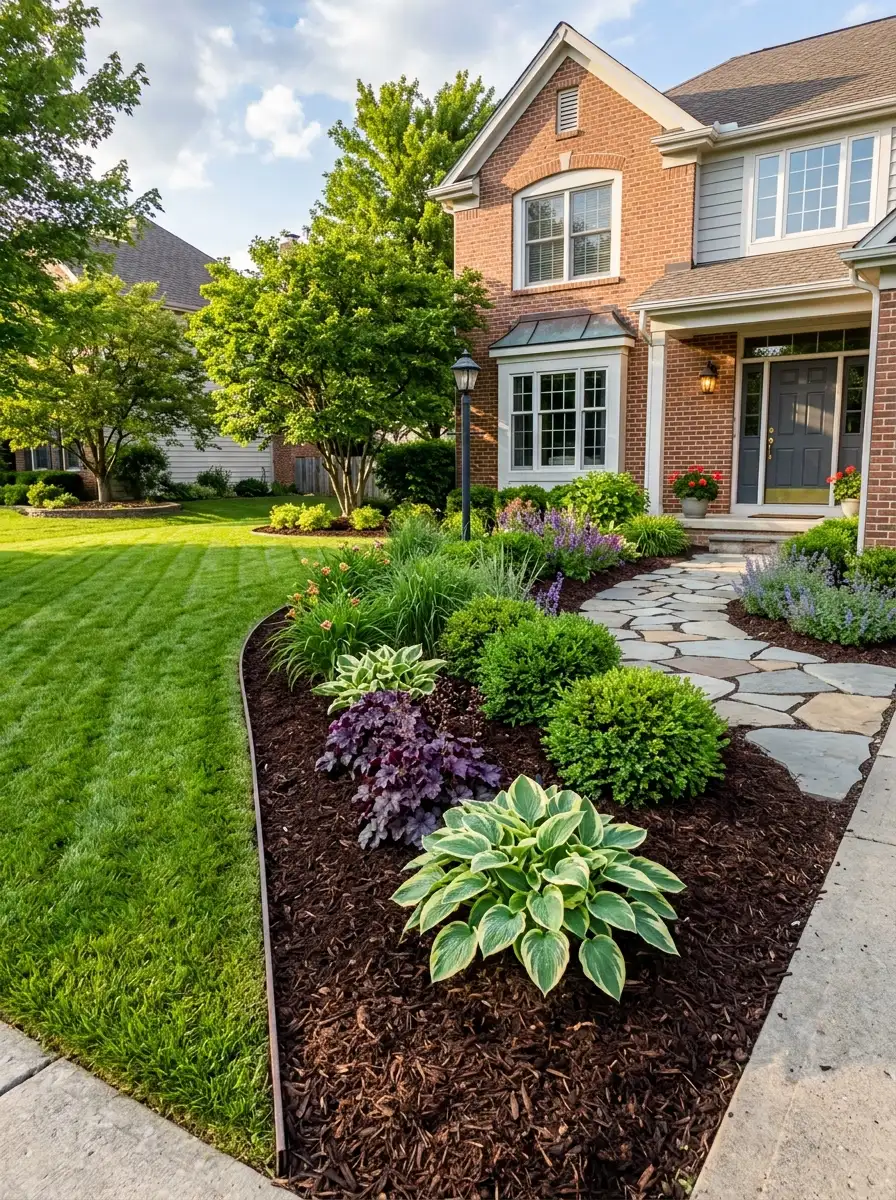
Mulch is often treated as a filler, something you lay down to keep weeds away and call it done. But when mulch coverage follows the proportional logic of the Golden Ratio, it becomes a design element in its own right. Allow one side of a bed to extend further than the other, creating a gentle asymmetry that feels intentional rather than accidental. The larger mulched area covering roughly 1.6 times the space of the smaller section adds rhythm and flow.
This approach to yard design ideas is particularly effective for front beds that run along the foundation of the house. Breaking the uniform rectangle into two unequal sections anchors the plantings within each zone and prevents the monotonous, hedge-trimmed-square look that dates so many front yards. The result is a yard that looks designed rather than maintained.
The Key: Asymmetric mulch borders guided by Golden Ratio proportions transform a basic maintenance task into a quiet but powerful element of front yard design composition.
12
Repeating Plant Groups Golden Sequence
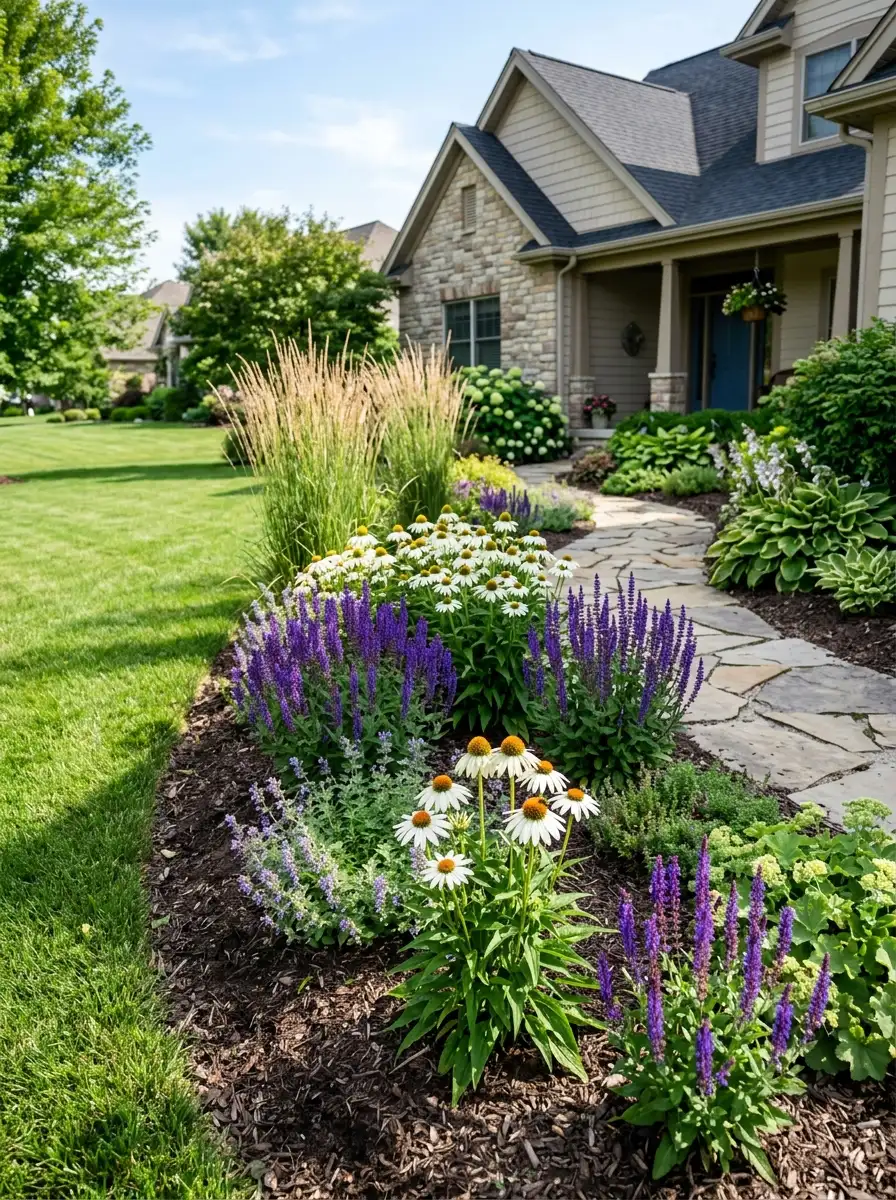
Grouping plants in numbers that follow the Fibonacci sequence, such as 1, 2, 3, 5, and 8, creates a planting rhythm that feels natural and cohesive across the entire bed. A cluster of 3 lavenders at the left edge, 5 echinacea in the center, and 8 ornamental grasses sweeping toward the right creates a visual crescendo that moves the eye beautifully from one end of the bed to the other.
This is one of the most practical yard design ideas for anyone planting a new bed or refreshing an existing one. It eliminates the guesswork of how many plants to buy and where to put them. The sequence does the planning for you. Each grouping size feels proportionate to the next, and the overall planting looks deliberately considered even on a modest budget.
The Key: Fibonacci-sequence plant groupings give front yard landscaping an instinctive rhythm that isolated, evenly spaced plantings can never replicate no matter how healthy the plants are.
13
Proportional Stone Path Stepping
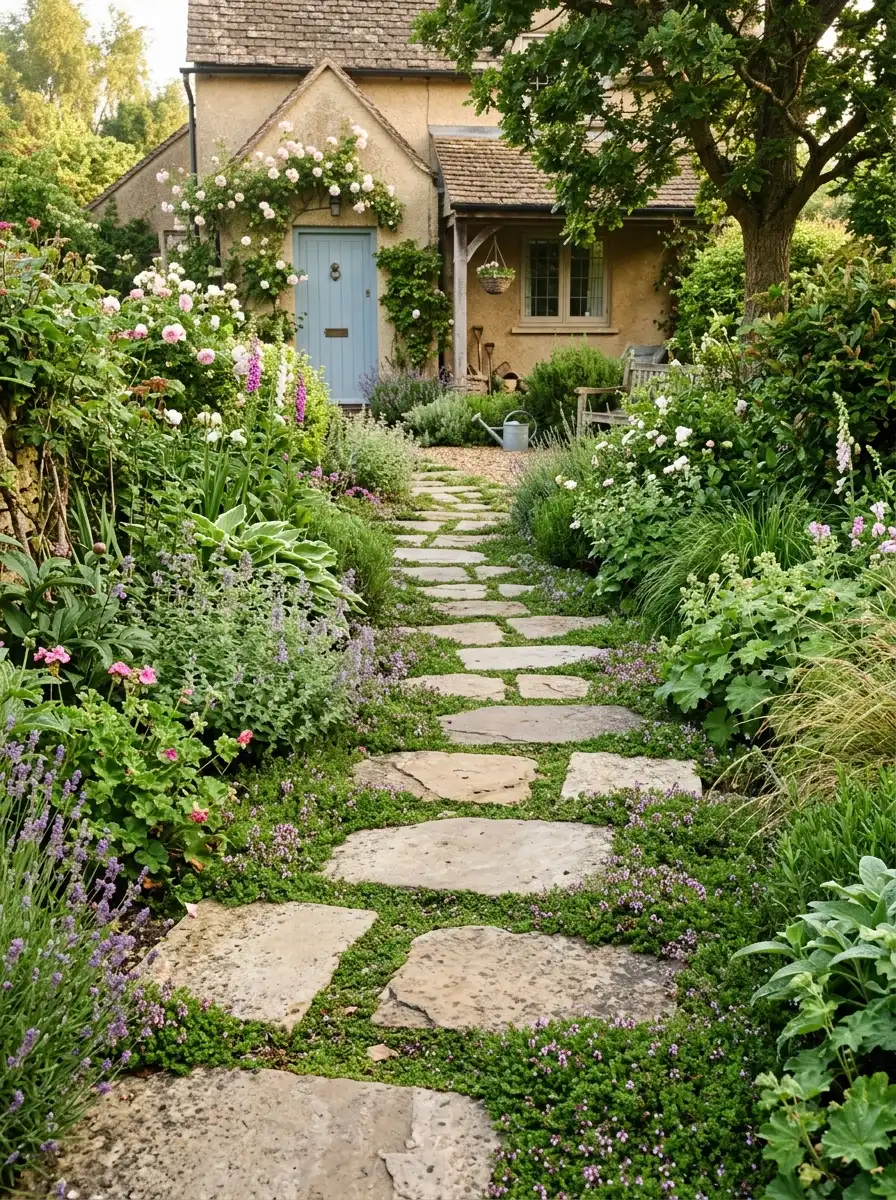
Stepping stones are as much about rhythm as they are about getting from point A to point B. When stones are evenly spaced, the path feels mechanical. When spacing gradually increases from tight near the door to wider near the street, following that approximate 1:1.6 ratio progression, the path feels like a gentle invitation rather than a directive. Every step feels naturally paced, never rushed or awkward.
Choose irregular flagstone shapes rather than perfectly square cuts for a more organic result. The slight randomness of natural stone combined with the intentional Fibonacci spacing creates a path that looks as though it evolved naturally over decades. This is the kind of detail that elevates a front yard design from attractive to genuinely memorable, and it requires no special skill to implement.
The Key: Graduated stepping stone spacing using Golden Ratio progressions makes a front yard path feel naturally inviting, turning a functional element into a quiet design statement.
14
Proportional Planter Sizing at Entrance
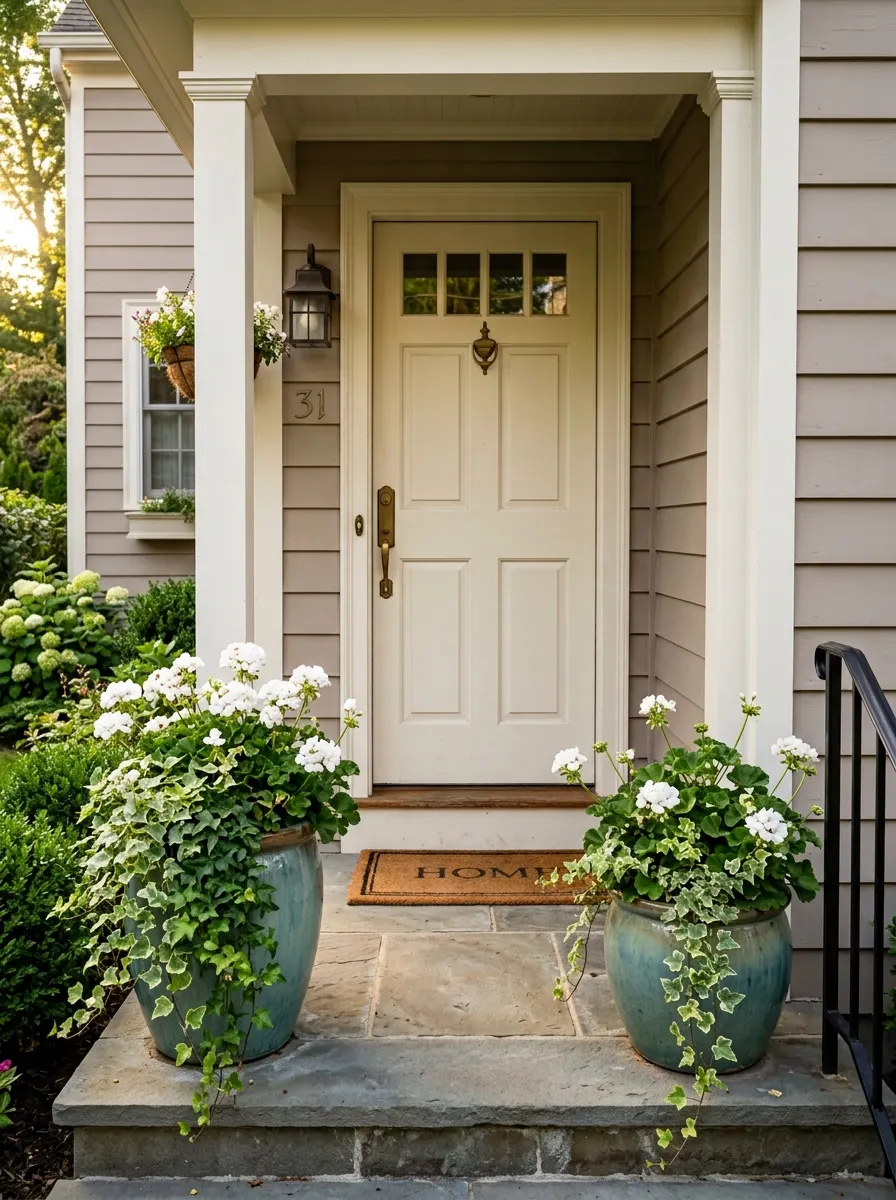
Matching planters on either side of a front door feel safe, but two planters of slightly different heights feel curated. If one planter stands at roughly 1.6 times the height of its companion, the pair creates visual interest without looking mismatched. The taller planter draws the eye upward while the shorter one grounds the composition, giving the entrance layering even within a small footprint.
This technique is particularly powerful for renters or homeowners who want to improve curb appeal without any permanent landscaping work. Planters are moveable, seasonal, and endlessly versatile. Swapping out plants between seasons keeps the entrance fresh while the proportional size relationship between the two containers remains constant, anchoring the front yard design visually across every season of the year.
The Key: Proportionally sized entrance planters following the 1:1.6 rule add the kind of layered, designer-curated look that identical matching containers simply cannot achieve.
15
Front Yard Fence Proportion Rule
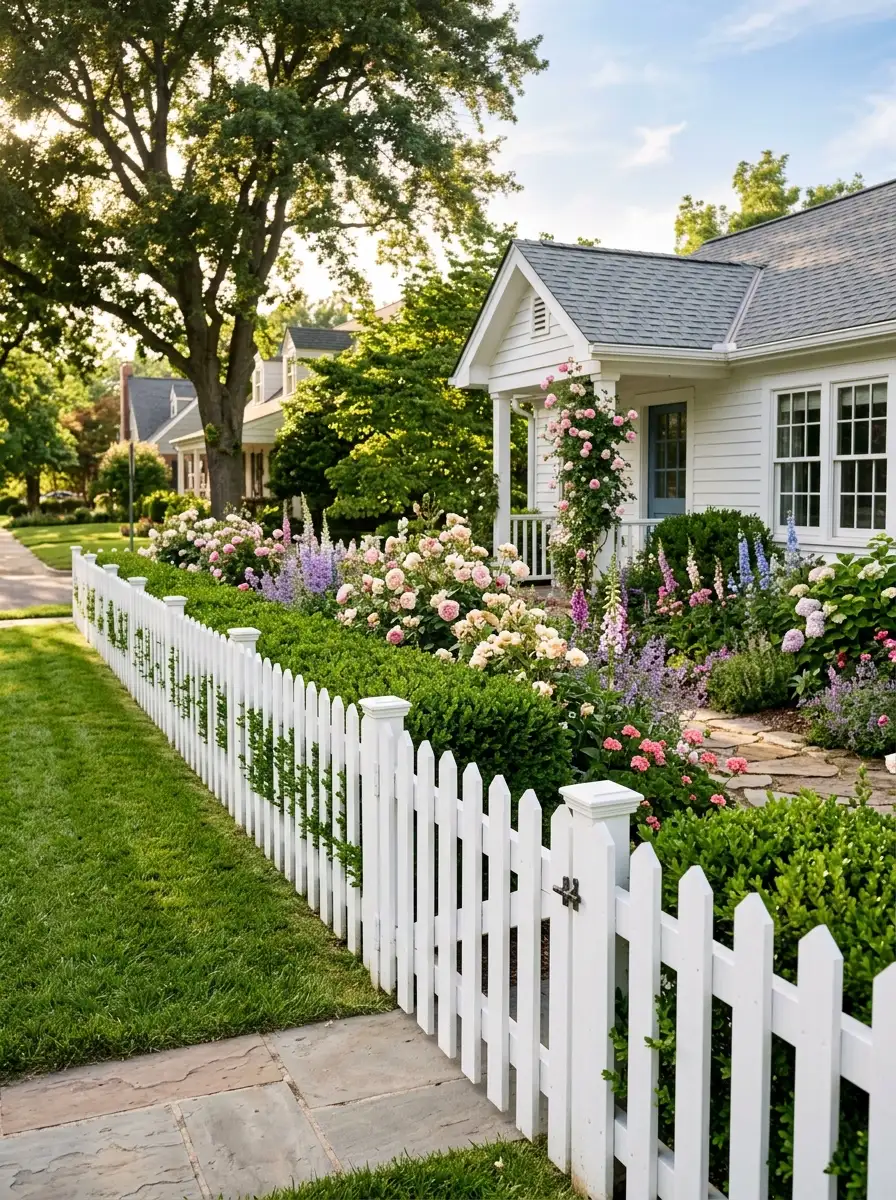
A fence that is too tall creates a fortress. A fence that is too low disappears entirely. When a front fence height sits at roughly one-half to two-thirds the height of the plantings or hedgerow growing behind it, the two layers work together rather than competing. The fence frames the greenery, and the greenery gives the fence a beautiful backdrop, creating a layered composition that reads as both welcoming and well-designed.
For most residential front yards, a fence between three and four feet tall works beautifully when the shrubs behind it reach five to six feet. The proportional relationship between these two heights creates the classic cottage-garden silhouette that stops people in their tracks on a casual neighborhood walk. This is the kind of detail that makes a front yard makeover feel complete and considered from every angle.
The Key: A fence height set in proportion to the plants behind it creates a layered front yard silhouette that signals careful design rather than an afterthought installation.
16
Front Yard Design With Gravel Zones
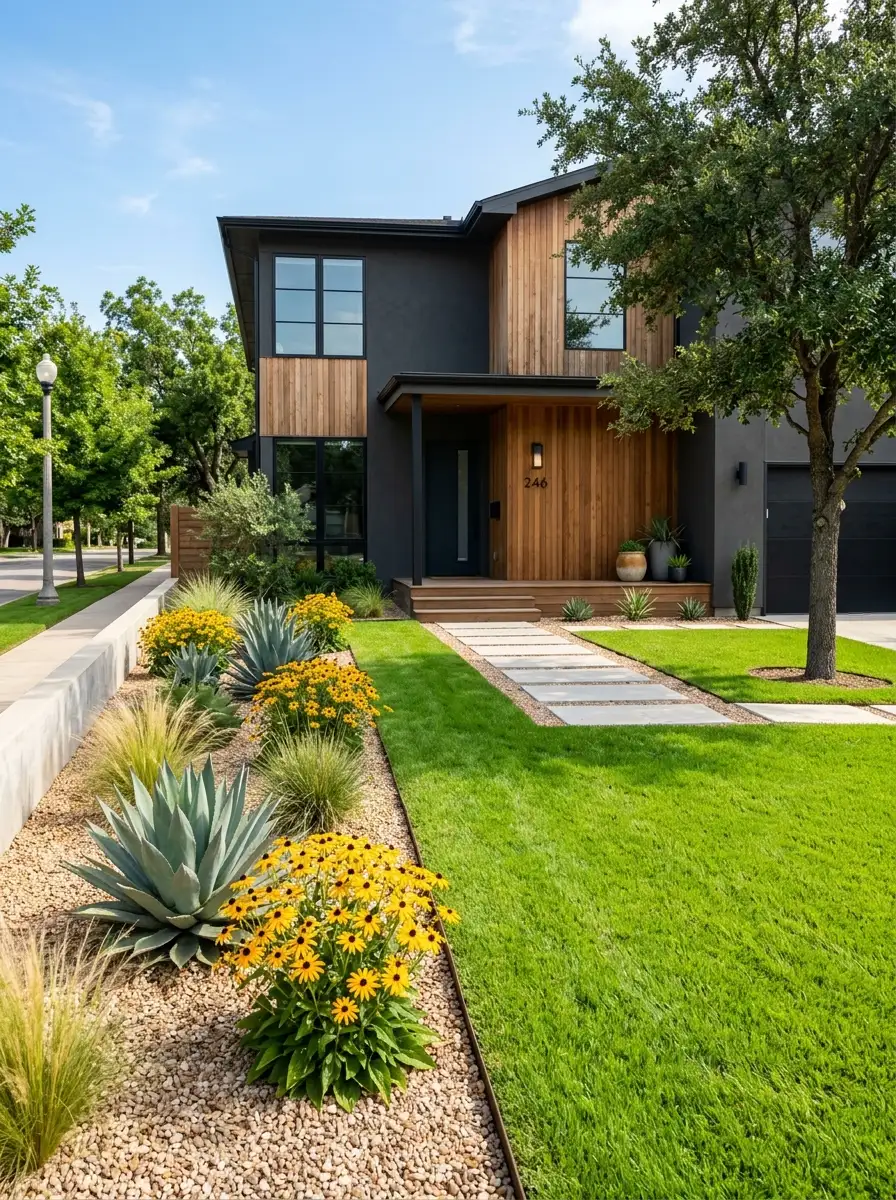
Gravel zones are one of the most practical and visually striking elements in contemporary front yard design, but their power depends entirely on proportion. A gravel area that occupies one-third of the total yard space and sits alongside two-thirds of living lawn or planted beds creates the ideal visual balance. Too much gravel and the yard feels industrial. Too little and it disappears as a design choice.
Choose a gravel tone that complements your home’s exterior. Warm pea gravel suits craftsman and cottage styles. Cool blue-grey crushed granite reads beautifully against modern dark facades. Fill the gravel zone with architectural plants that suit your climate, and the resulting contrast between hard and soft, between structured and organic, creates a landscape layout that feels both contemporary and naturally balanced.
The Key: A gravel zone covering one-third of the yard creates a modern, low-maintenance front yard design element that balances beautifully against the living green of lawn and plantings.
17
Hedgerow Length Golden Division
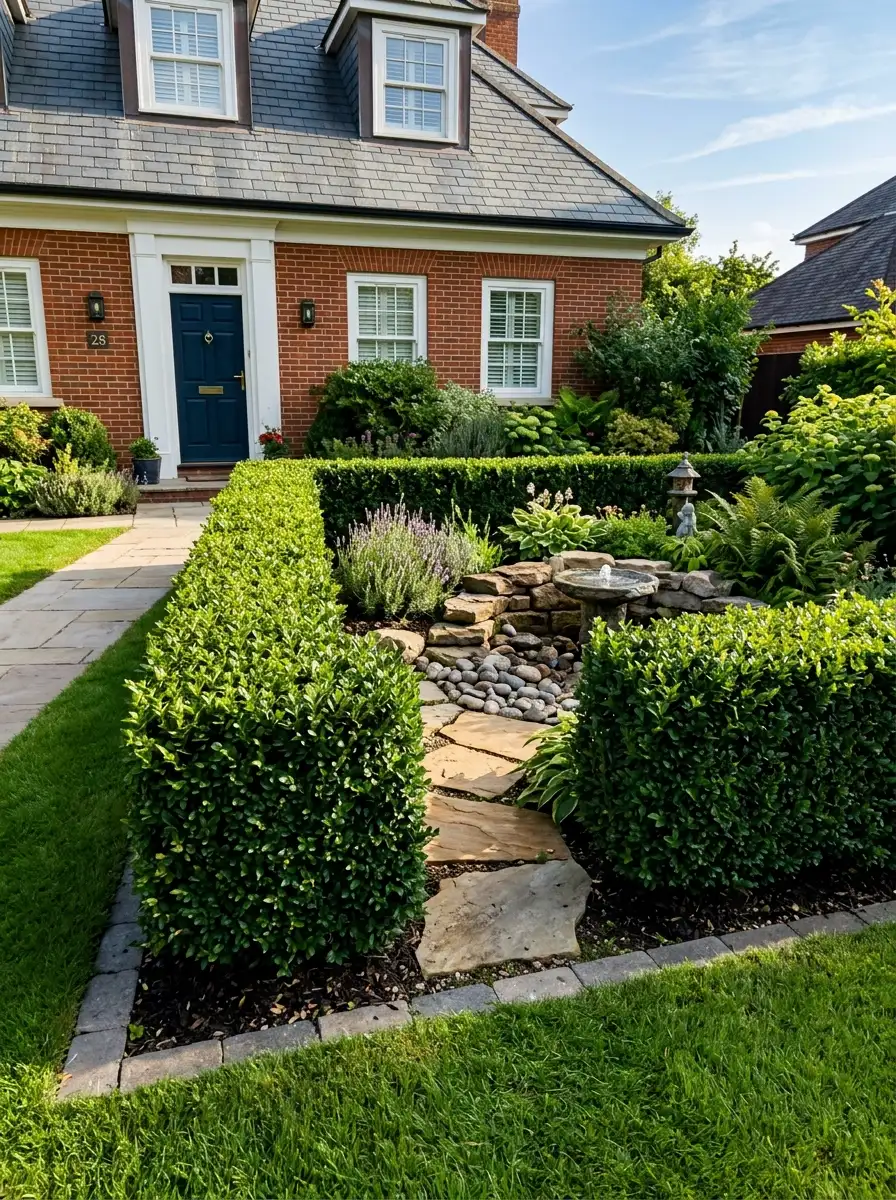
A continuous hedgerow can feel monotonous, a green wall that neither invites nor interests. Dividing that same hedge at the Golden Ratio point, roughly one-third from one end, and creating a deliberate gap or layered interruption transforms it entirely. The hedge becomes a composition rather than a boundary. The gap introduces rhythm, creates visual interest, and breaks what might otherwise read as a landscape wall.
Use the interruption to frame a garden feature, a statement stone, or a seasonal planting. The element visible through or beside the gap becomes a focal point precisely because the hedge directs the eye toward it. This is subtle but deeply effective front yard landscaping design thinking, the kind that makes visitors slow down without knowing exactly why.
The Key: Interrupting a continuous hedgerow at the Golden Ratio point transforms a plain boundary into a layered composition that adds rhythm and visual interest to any front yard makeover.
18
Layered Mulch Color Depth
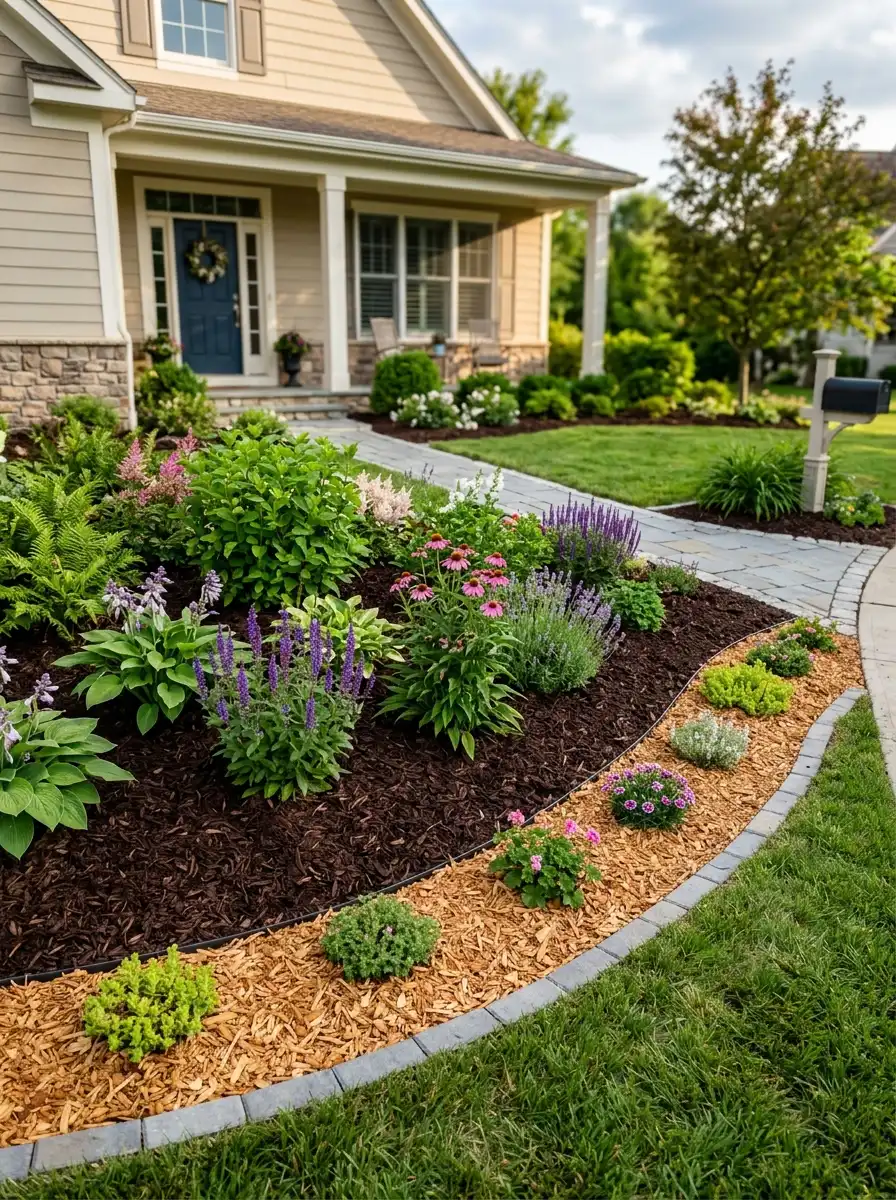
Using two complementary mulch tones within a single bed, with the larger portion covered in a deep bark mulch and a smaller accent strip at the front edge covered in a lighter color, creates a depth effect that makes the bed appear larger and more intentional. The larger zone covering roughly two-thirds of the bed and the accent strip covering one-third follows that same golden proportion logic and gives the bed a layered, editorial quality.
This approach to yard design ideas is particularly effective for foundation beds that run the full width of the house facade. The two-tone contrast breaks up the uniform appearance of single-color mulch and adds visual texture even before the plants reach their mature size. It is a low-cost technique that delivers a high-design result and requires no maintenance beyond the initial layering.
The Key: Two-tone mulch zones in a 2:1 proportion give front yard design beds the kind of layered depth that makes plantings look more abundant and considered from the curb.
19
Proportional Mailbox Planting Zone
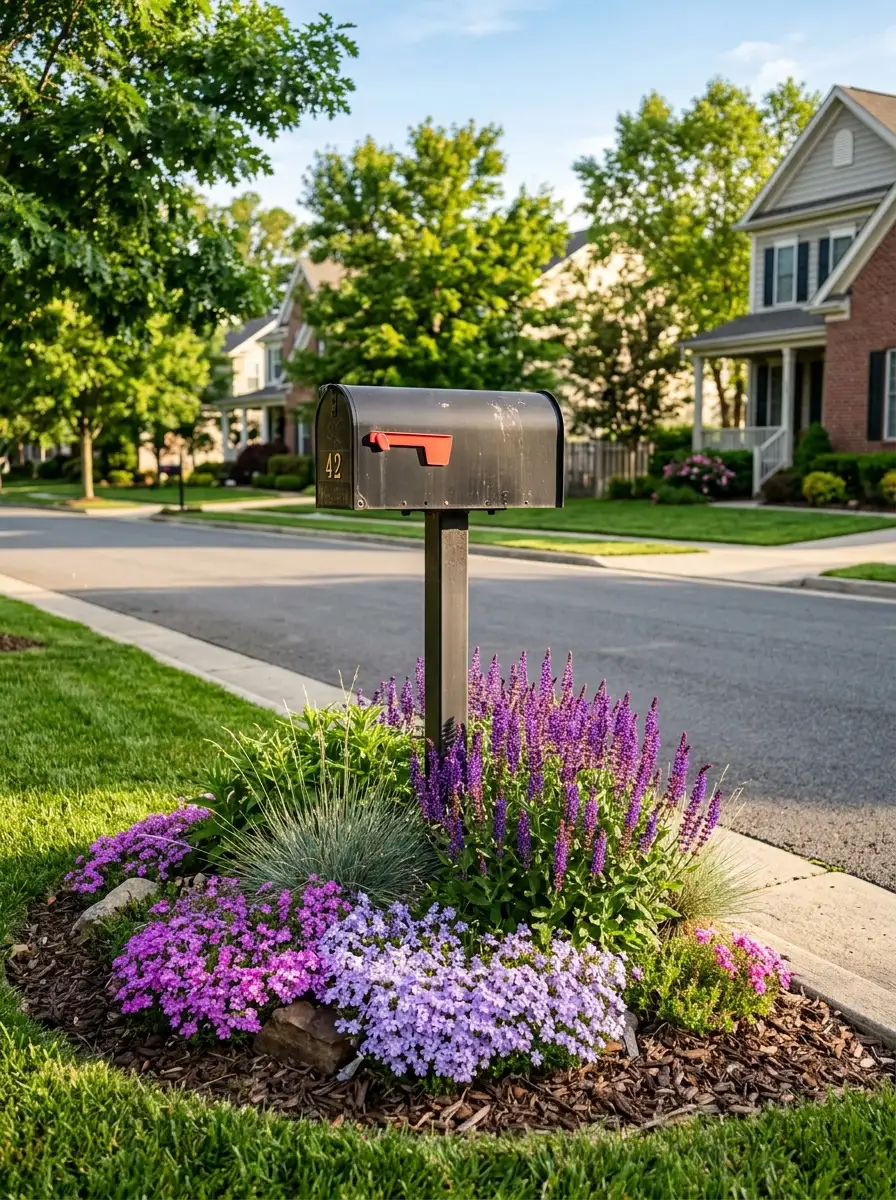
A mailbox without a planting zone looks like a pole. A mailbox with a small, proportional planting zone becomes an intentional design feature that anchors the street-side edge of your yard. The planting bed around the mailbox post should extend roughly 1.6 times the height of the mailbox box itself in its visual spread. This proportion makes the planting look generous without overwhelming the modest scale of the feature.
Keep the planting low at the front edge and allow it to rise slightly toward the post itself, following the Golden Steps principle from earlier. This small bed at the street’s edge also signals that the design thinking of your front yard landscaping extends all the way to the property boundary, making the entire yard feel cohesive and finished from every viewing angle.
The Key: A mailbox planting zone proportioned to 1.6 times the mailbox height turns a utilitarian post into an inviting design anchor at the edge of your front yard design.
20
Corner Planting Mass Proportion
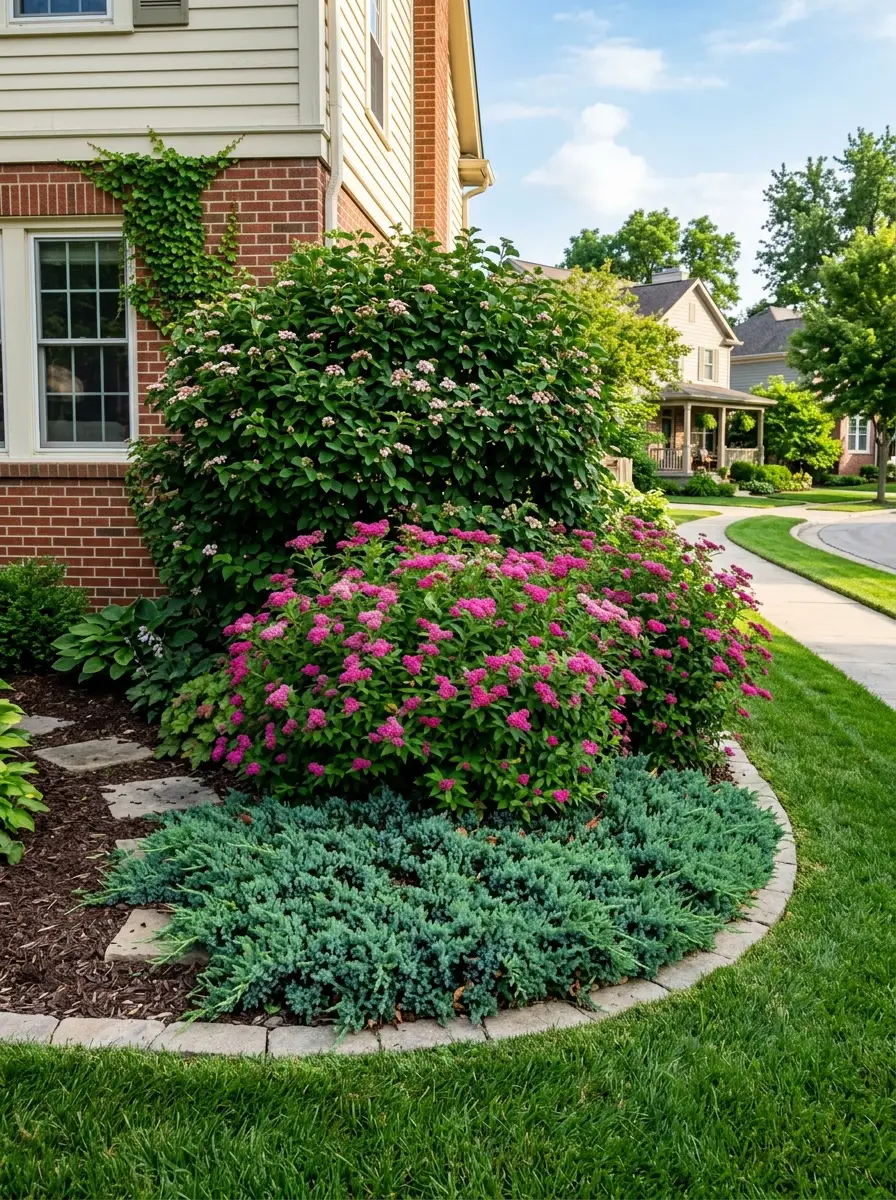
Corner plantings are the punctuation marks of front yard design. They define the edges of the yard and give the composition a clear visual boundary. A corner mass that extends roughly 1.6 times wider than it is deep creates a planting that reads as generous and grounded rather than squeezed into an awkward spot. Add height layering within the mass, from low groundcover at the outer edges to tall shrubs at the interior corner, and the planting becomes a mini landscape in itself.
This approach is especially effective at the property corners where the yard meets the sidewalk or street. A well-proportioned corner planting softens the geometry of the lot boundary, gives structure to the yard’s silhouette from across the street, and provides the kind of lush visual weight that makes a front yard makeover look substantially invested without requiring expensive hardscaping.
The Key: A corner planting mass proportioned at 1.6 times wider than its depth gives front yard landscaping the grounded visual weight that anchors the entire yard composition from the street.
21
Stone Wall Height vs. Lawn Ratio
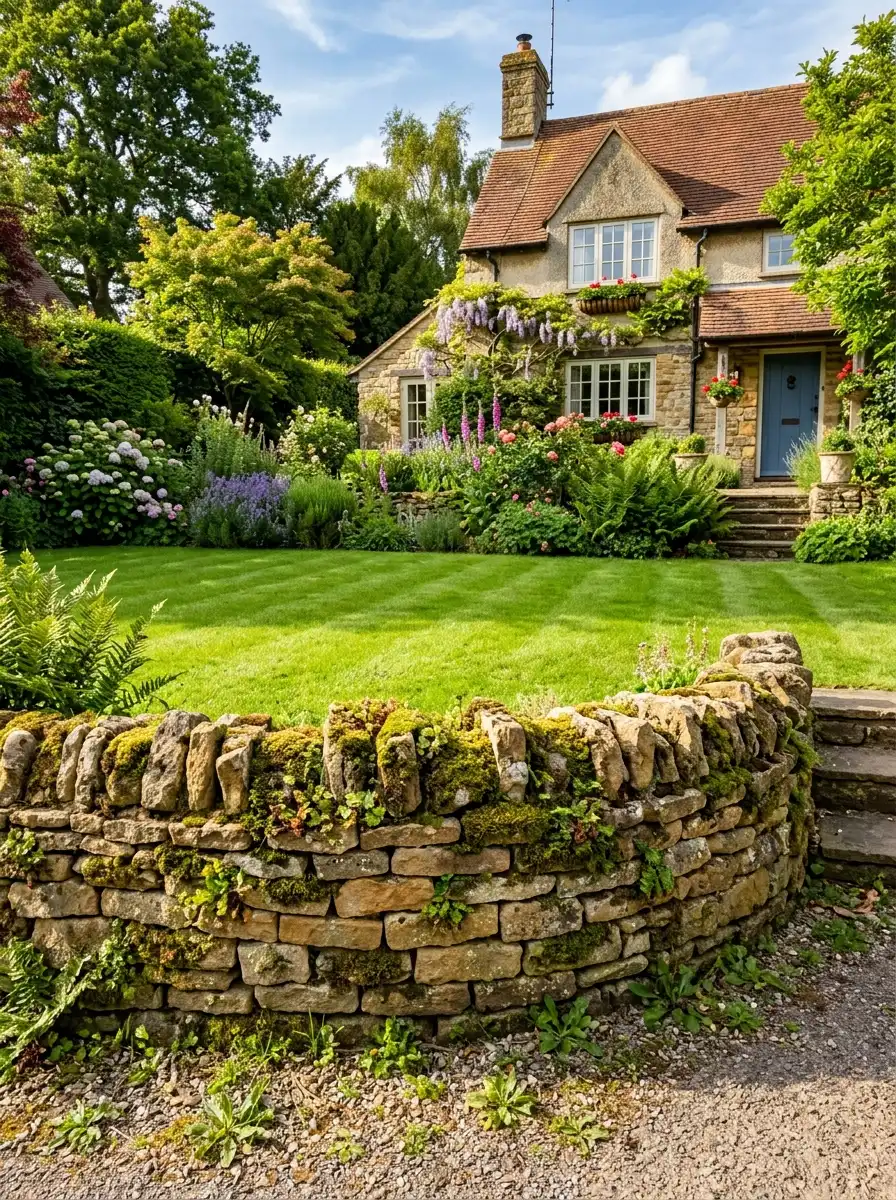
A retaining or decorative stone wall at the front of a yard introduces beautiful texture and elevation change, but its height must be proportional to the lawn or planting area it supports. A wall that reaches one-third to two-fifths the height of the lawn terrace behind it feels grounded and appropriate. Taller than that and the wall begins to dominate. Lower and it disappears.
This proportional relationship between the wall and the elevated planting or lawn zone above it is one of the most elegant applications of Golden Ratio thinking in front yard design. The wall becomes a plinth for the garden, and the garden becomes a crown for the wall. Together they create a sense of elevation and permanence that flat yards, however beautifully planted, cannot achieve.
The Key: A stone wall proportioned to one-third the height of the lawn or planting zone it supports gives your landscape layout the kind of elevated structure that reads as architectural and intentional.
22
Seasonal Color Block Proportion
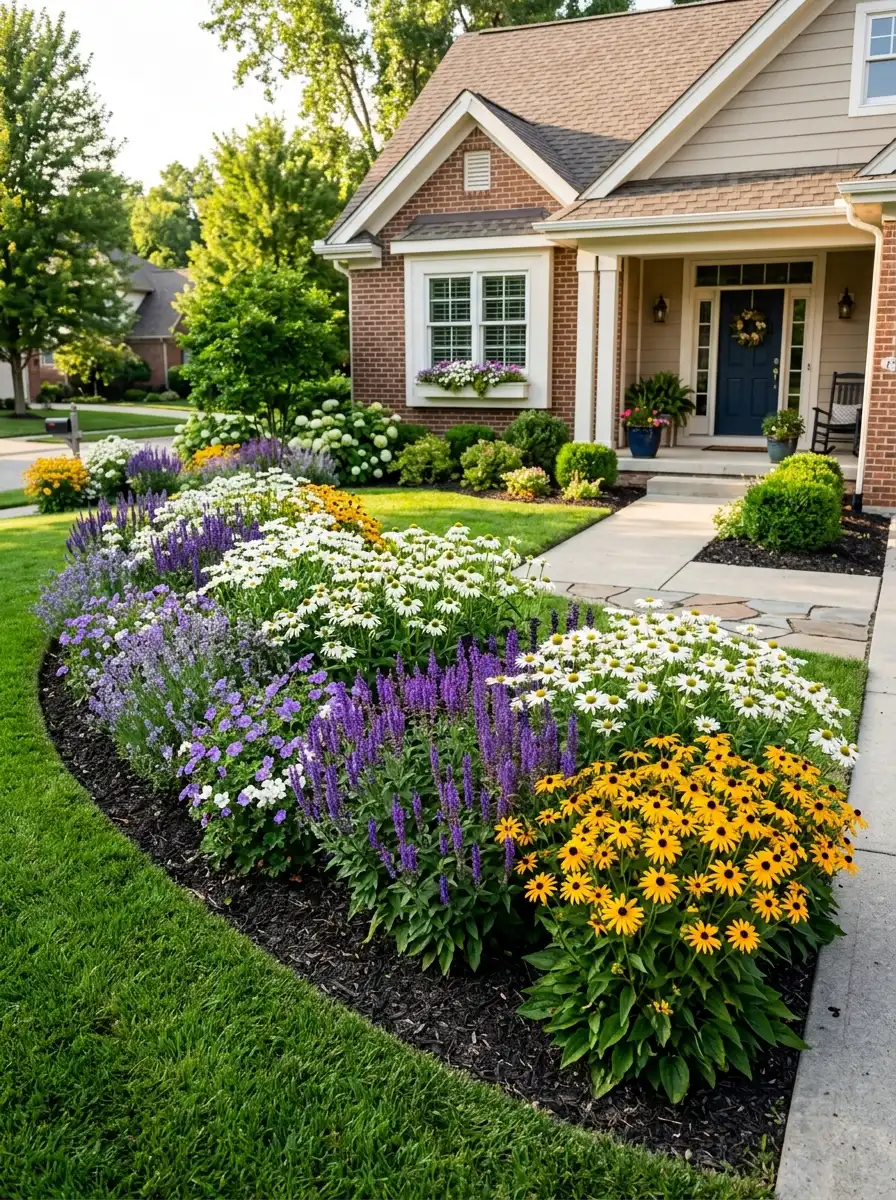
Color blocking in the garden works on the same principle as proportion in architecture. Devote two-thirds of a planting bed to your dominant color family and one-third to an accent color. The result is a bold, cohesive look that reads clearly from the street without feeling overwhelming. The dominant color anchors the composition, and the accent color provides enough contrast to make the whole bed feel lively and intentional.
This approach to yard design ideas works with every seasonal palette. In spring, pair the white tulips as the dominant and purple alliums as the accent. In summer, use lavender as your dominant and rudbeckia as your accent. In fall, ornamental kale dominates while bright red chrysanthemums provide the punctuation. The proportion stays constant while the plants and colors rotate with the seasons.
The Key: A two-thirds dominant and one-third accent color ratio in planting beds gives seasonal front yard design the bold, Pinterest-worthy look that catches attention from across the street.
23
Downscaled Focal Tree Proportion
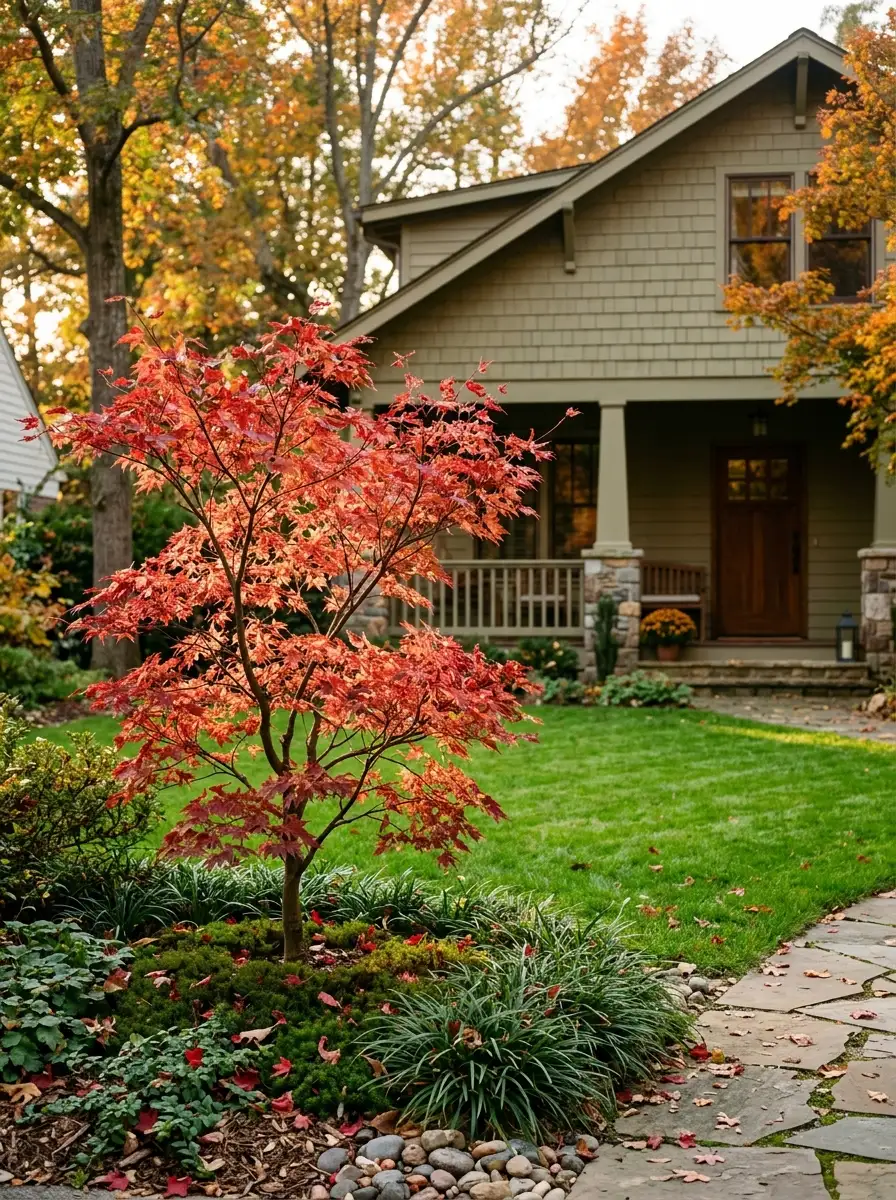
A focal tree does not need to be grand to be effective. In a small to medium front yard, a downscaled ornamental tree, something that matures at ten to fifteen feet, placed at the Golden Ratio position, roughly one-third from one side of the yard, provides all the vertical drama of a large shade tree without overwhelming the composition. The tree’s crown spreads in proportion to its modest trunk, and the relationship between tree, lawn, and bed stays balanced.
Japanese maple, serviceberry, and dwarf magnolia are all exceptional choices for this role in front yard design. They offer seasonal interest across spring, summer, and fall, provide canopy without excessive shade, and stay in proportion to most residential lots for decades. Position one at the one-third mark from the left or right edge, not centered, and the yard gains an instant focal point that organizes every other element around it.
The Key: A proportionally sized focal tree positioned at the one-third mark gives front yard landscaping a natural visual anchor without the scale competition that large shade trees create.
24
Porch Step Planting Scale
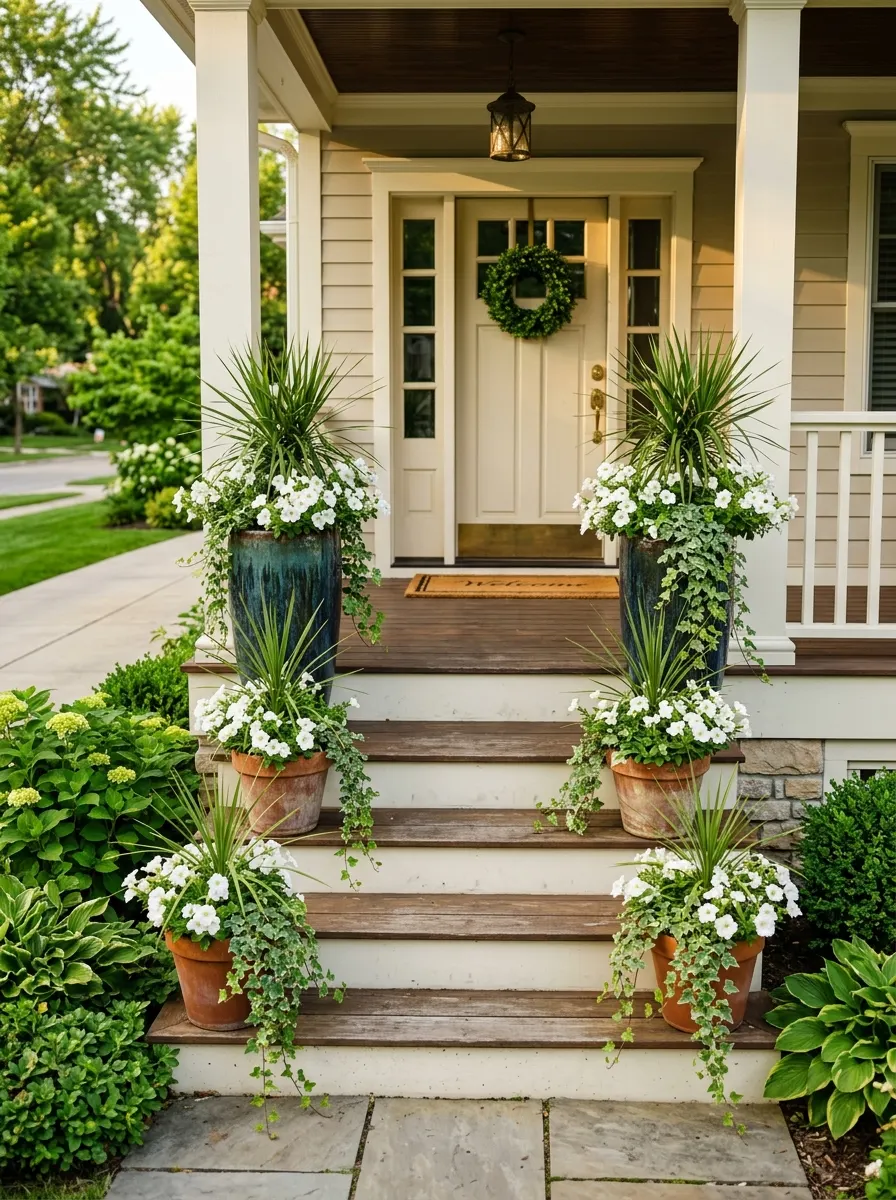
The steps leading to your front porch offer a natural tiered stage for proportional planting. Place the tallest container on the top step and reduce container size at each descending step, following a scale that reduces by roughly two-thirds from one step to the next. The visual effect is a cascading stair of greenery that draws the eye upward toward the door, reinforcing the entrance as the focal point of the entire front yard design.
Choose a single planting palette across all containers to keep the layering cohesive. Trailing plants at the top spill downward into the step below, physically connecting the tiers. Spiky architectural plants at the upper levels provide height, and low mounding fillers at the bottom steps ground the composition. This technique works equally well in formal and relaxed residential settings and requires only moveable containers to execute.
The Key: Proportionally scaled planters descending from porch top to bottom step create a layered entrance composition that makes the whole front yard makeover feel complete and intentional.
25
Golden Border Perennial Ribbon
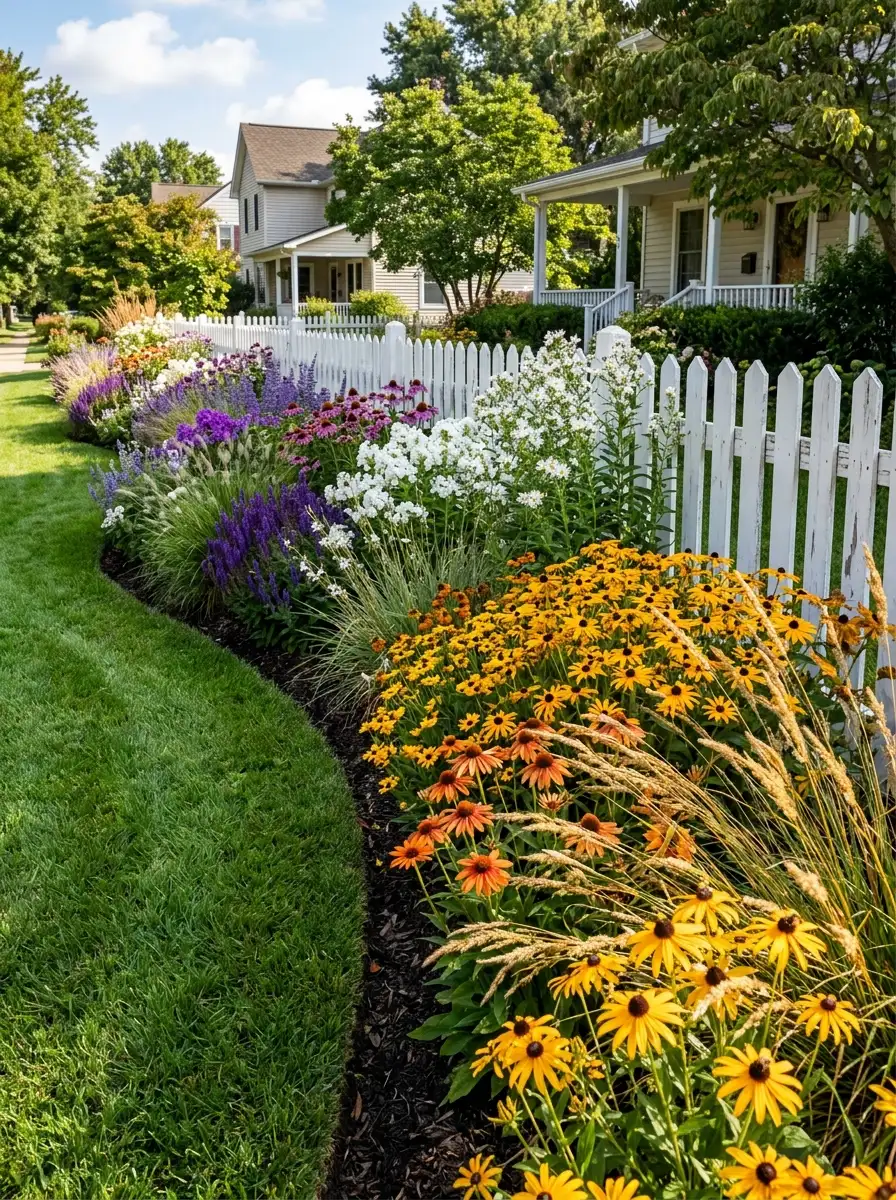
A perennial ribbon border running along a fence line or property edge is one of the most stunning and enduring features any front yard design can include. When the border is divided into a two-thirds cool-toned section and a one-third warm-toned section following the Golden Ratio, the color transition feels intentional and artful rather than random or chaotic. The cool section provides calm backdrop; the warm section provides energy and focal contrast.
Plant the border in drifts rather than individual specimens, grouping each variety in masses of 3 to 5 following the Fibonacci approach explored earlier. Allow taller plants to sit at the back and slightly cascade forward into the mid-height zone. The combination of color proportion and plant height proportion working together in a single ribbon border creates a front yard makeover feature that looks professionally designed and fills with seasonal interest from spring through fall.
The Key: A perennial ribbon border divided in Golden Ratio color proportions gives your front yard landscaping a flowing, editorial quality that anchors the entire yard composition beautifully.
There is something quietly thrilling about looking at your front yard and feeling like everything is exactly where it belongs. That is the gift the Golden Ratio gives you. It is not a rigid formula to stress over. It is a gentle guide that helps your front yard design find its natural balance. From the width of a walkway to the height of a focal tree, every proportion discussed in these 25 ideas works together to create a yard that feels cohesive, inviting, and beautifully alive. You do not need a design degree or a generous renovation budget to apply these principles. You need intention, a measuring tape, and a willingness to trust what your eye already senses is right.
If these ideas sparked something for you, save this post to your Pinterest boards so you can come back to it every season as your yard evolves. Share it with a neighbor, a friend, or a family member who has been dreaming about refreshing their curb appeal. I have found that the best gardens are the ones that grow slowly, season by season, with each new addition informed by a clear design vision. Start with one idea from this list and watch how it changes the feeling of your entire front yard. Your most beautiful landscape is closer than you think.