JAPANDI ENTRYWAY
🏠 14 Real Ideas
⏱ Quick Read
🔥 Always Trending
14 Japandi Entryway Ideas
You’re Probably Styling Wrong
There is a particular feeling you get when you walk into an entryway that just works. Everything is calm, nothing is out of place, and somehow the space feels like a quiet exhale. That is exactly what japandi entryway ideas are designed to create. Rooted in the marriage of Japanese wabi-sabi philosophy and Scandinavian hygge warmth, this style transforms even the smallest foyer into something that feels both grounded and inviting from the very first step.
In this article, you will find 14 of the most inspiring japandi entryway ideas, covering everything from slatted wood benches and arched mirrors to layered lighting and mindful styling details. Whether your space is narrow, open, or oddly shaped, these ideas will show you how to bring that signature calm into your home. Each section breaks down the core elements, practical tips, and expert insight to help you style your entryway with intention and ease.
01
Warm Slatted Wood Bench Nook
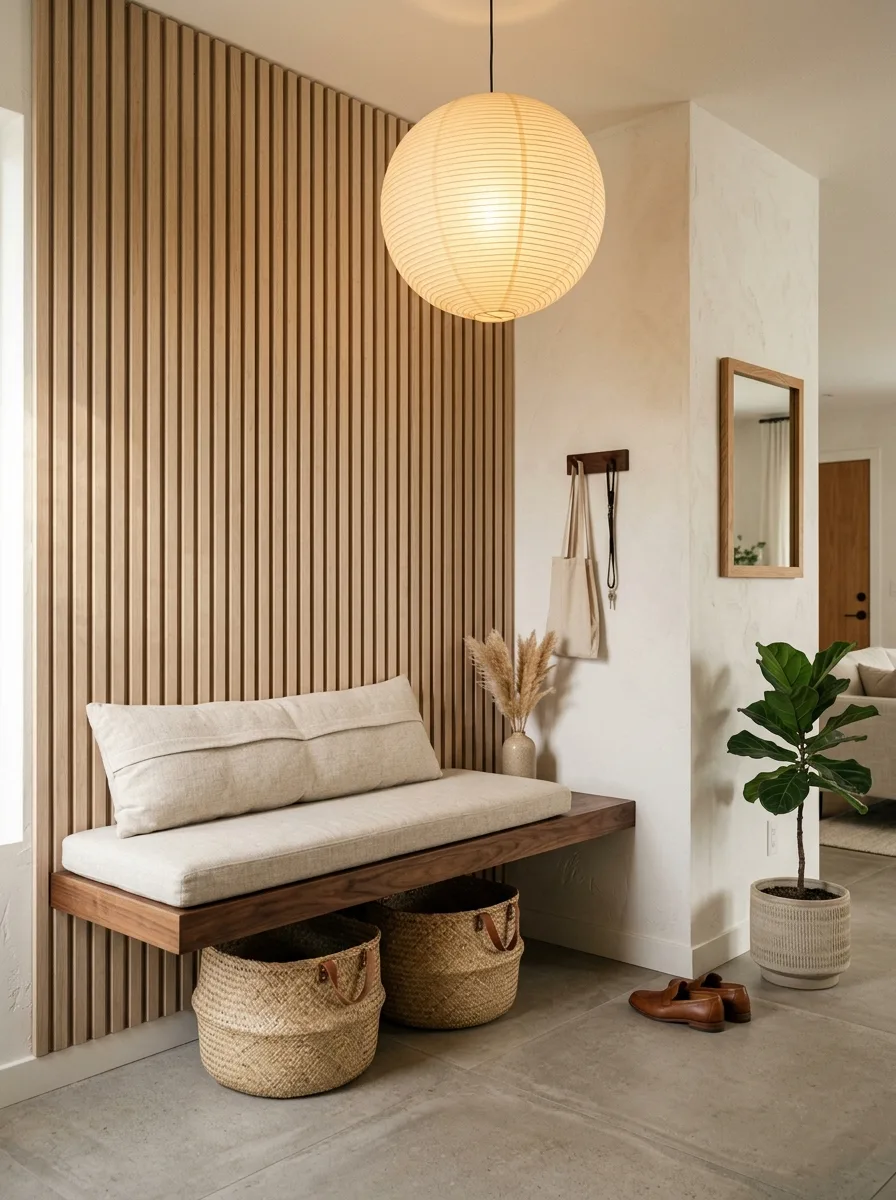
A slatted wood bench nook is one of those japandi entryway ideas that looks effortless but delivers on every level. The vertical slats add rhythm and height to the wall while keeping the palette completely natural. Combined with a floating bench, the visual weight stays low, making even compact entryways feel open, airy, and intentional without a single unnecessary detail.
Functionally, this setup is hard to beat. Storage baskets tuck neatly beneath the bench, hiding everyday clutter while adding organic texture. I have noticed that pairing structured wood lines with soft, woven materials creates the warmth that makes this style feel livable rather than cold. Choose 2 to 3 materials maximum and let the negative space do the rest of the work.
The Key: Keep your material palette tight. Slatted oak, linen, and woven textures together create that signature japandi balance of structure and softness.
02
Textured Plaster Wall With Arched Mirror
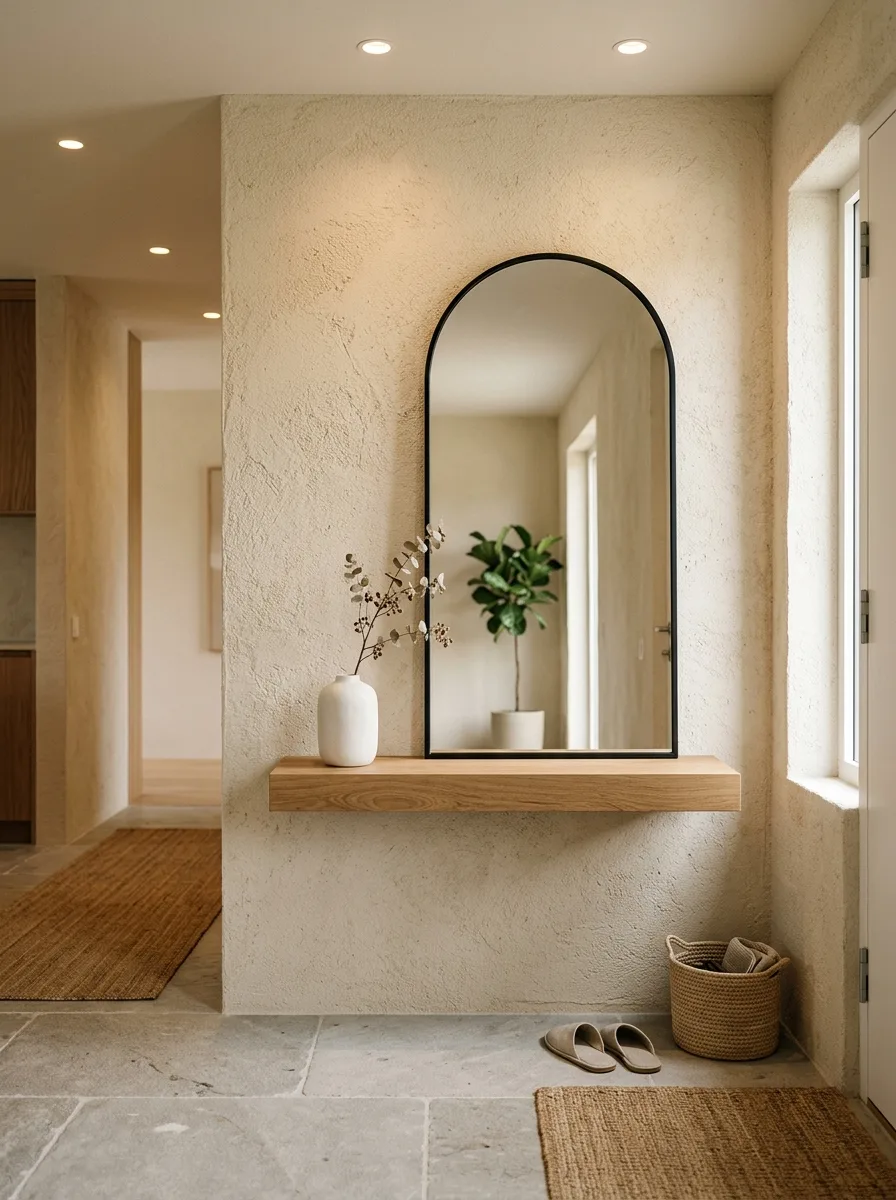
Raw plaster walls paired with an arched mirror are among the most striking japandi entryway ideas you can implement without a full renovation. The imperfect texture of the plaster surface introduces organic depth, while the clean arch of the mirror softens the entire wall. Together, they create the tension between raw and refined that defines this design philosophy at its best.
The arch is doing more than just looking beautiful. It reflects natural light, makes the entry feel twice as deep, and introduces a curved form that keeps the neutral palette from feeling flat. Style the shelf beneath with restraint: one ceramic, one dried botanical, and nothing else. Negative space is part of the composition here, not an oversight.
The Key: Curves are essential in a neutral japandi entryway. They prevent the space from reading as clinical and add a natural softness without color or pattern.
03
Layered Lighting for Hallway Depth
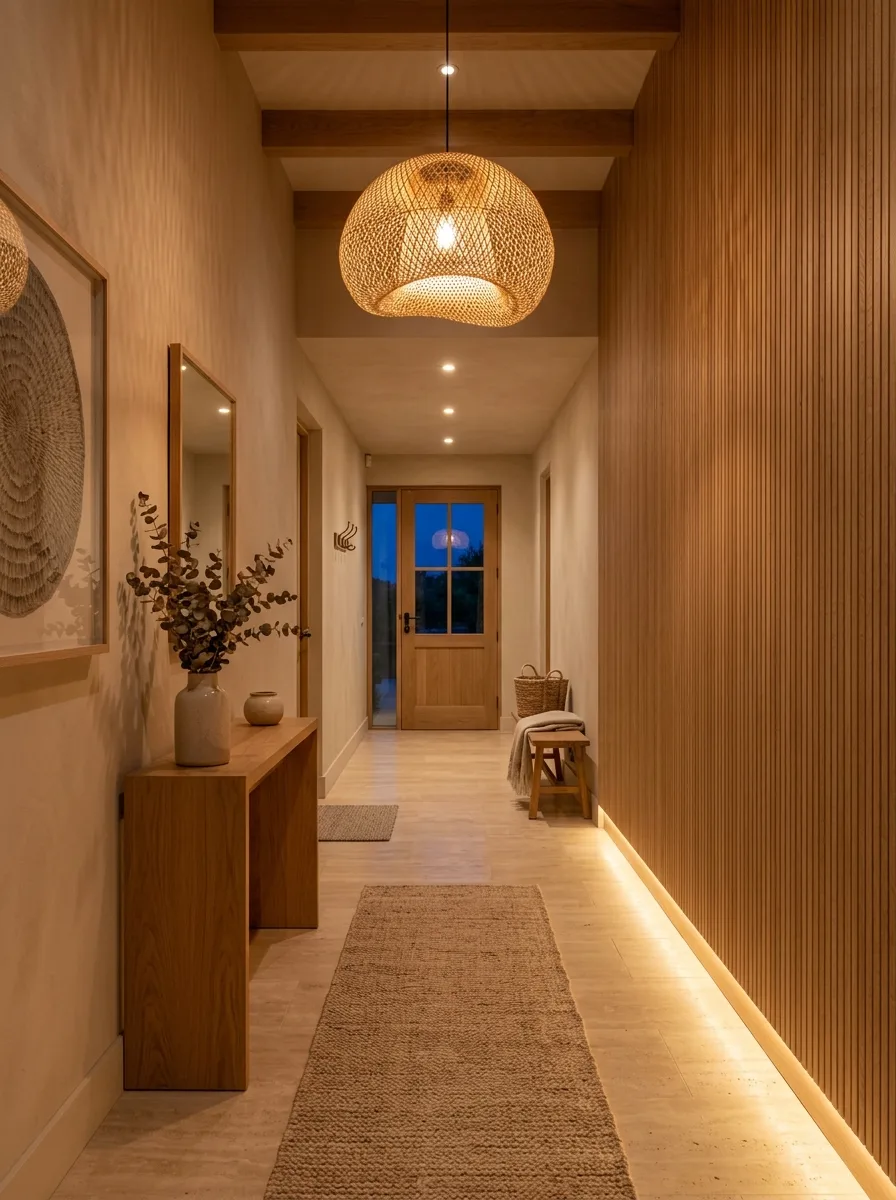
Lighting is the single most overlooked element in most entryways, yet it is what separates a beautiful japandi space from a flat, uninspiring one. The goal is never a single bright overhead fixture. Instead, layer three light sources: recessed ceiling spots for overall wash, concealed base strips for warmth and depth, and a sculptural pendant as the visual focal point.
This combination creates a glow that feels like early evening sunlight inside your home at any time of day. In my experience, warm white LED at around 2700K delivers the most flattering tone for japandi entryway design, complementing pale wood and plaster beautifully. Avoid cool white lighting entirely. It strips out the warmth that makes this style feel human and inviting.
The Key: Layer at least 3 light sources in your japandi entryway. A single overhead light flattens a space; layered lighting adds dimension and calm luxury.
04
Floating Shelf With Minimal Hook Rail
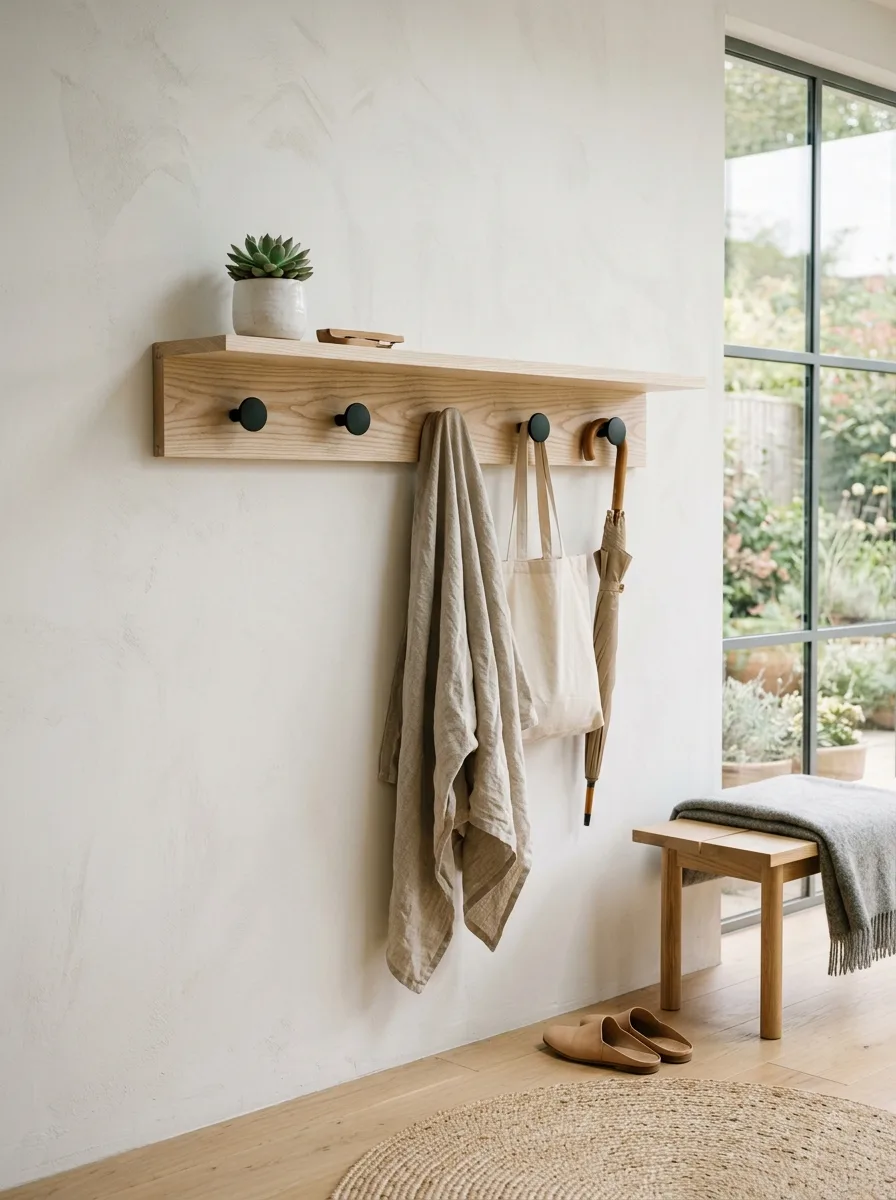
A floating shelf paired with a minimal hook rail might be the most practical of all japandi entryway ideas for small or narrow spaces. It solves the everyday storage problem without adding a single piece of furniture to the floor. The combination of horizontal shelf and evenly spaced hooks creates a visual rhythm that feels deliberately designed rather than improvised.
The styling on the shelf should be extremely restrained. One small plant, one ceramic piece, and perhaps a folded textile draped casually from a hook. Varying the height of the items keeps the arrangement visually interesting without making it feel busy. I have seen this approach completely transform a bare wall into a styled, functional entry point that photographs beautifully.
The Key: Rhythm matters. Evenly spaced hooks and a single floating shelf create the visual harmony that defines japandi entryway ideas at their most refined.
05
Japandi Entryway Ideas With Storage Bench
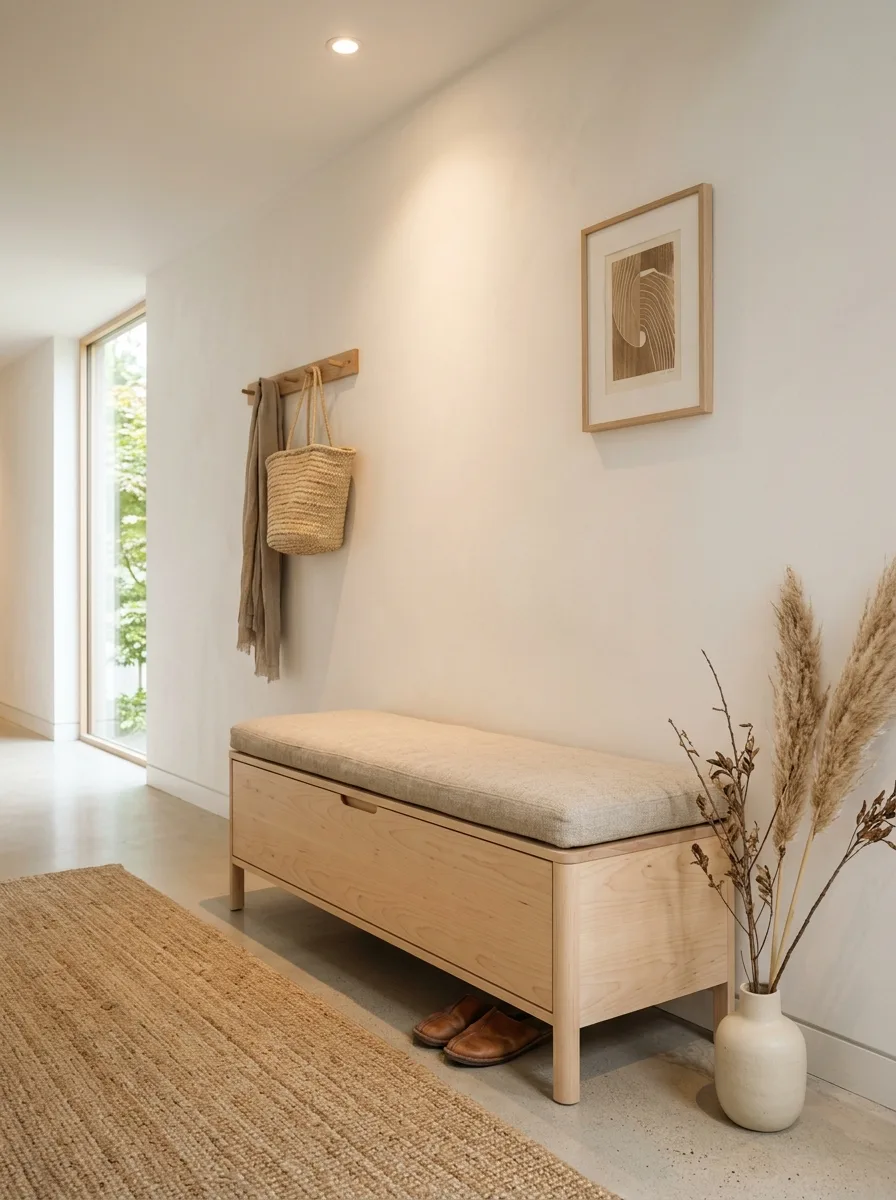
A storage bench with a hidden lift-top compartment is one of the smartest japandi entryway ideas for households that need real function alongside calm aesthetics. Everything that belongs in the entryway but should not be seen, shoes, scarves, bags, umbrellas, disappears inside. The exterior reads as a clean, sculptural piece of furniture that contributes to the serenity of the space.
Light birch or pale ash wood keeps the bench feeling airy rather than heavy. A linen cushion on top adds the softness that stops the piece from looking too utilitarian. Pair it with a single ceramic vase on the floor beside it for ground-level interest. The restraint in this styling approach is exactly what gives japandi entryway design its effortless quality.
The Key: Hidden storage is the foundation of japandi living. A bench that hides clutter lets the visible space remain calm, intentional, and completely stress-free.
06
Soft Neutral Entry With Bonsai Detail
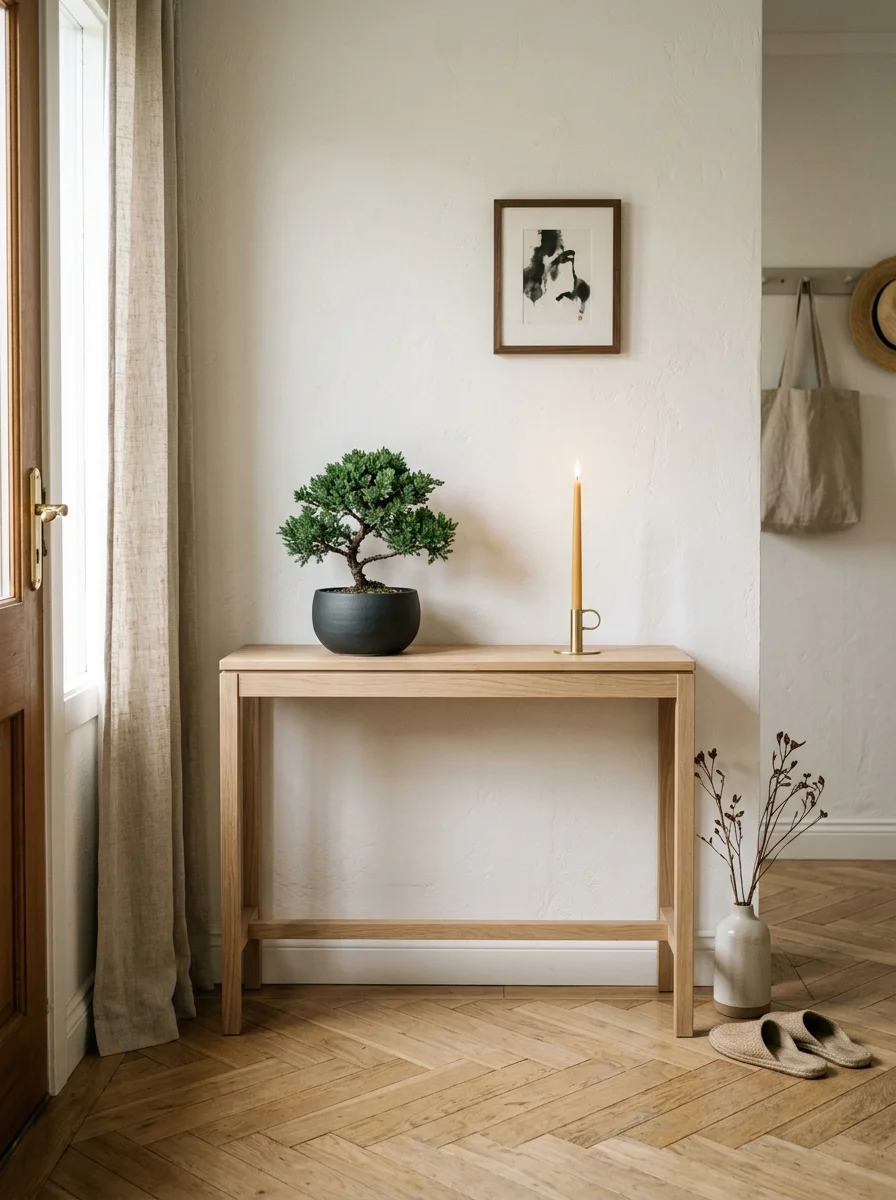
Few elements communicate the spirit of japandi entryway style as immediately as a carefully placed bonsai tree. It is a living object that requires patience, care, and intention, values that sit at the very heart of this design philosophy. Positioned on a slim console table at entry level, a bonsai creates an immediate focal point that is both calming and deeply meaningful.
The table beneath should be as minimal as possible. A console with slender legs and a thin tabletop keeps the visual weight light. Add only one companion piece, a taper candle in matte brass or a single stone. The bonsai earns all the attention. For more inspiration on creating calm, minimalist spaces, explore these Japandi living room ideas. Allow it that space and the whole entry feels like a thoughtful pause before the rest of the home.
The Key: A bonsai in your japandi entryway communicates wabi-sabi values instantly. It is the single most impactful living element you can introduce to the space.
07
Earthy Ceramic and Dried Botanicals
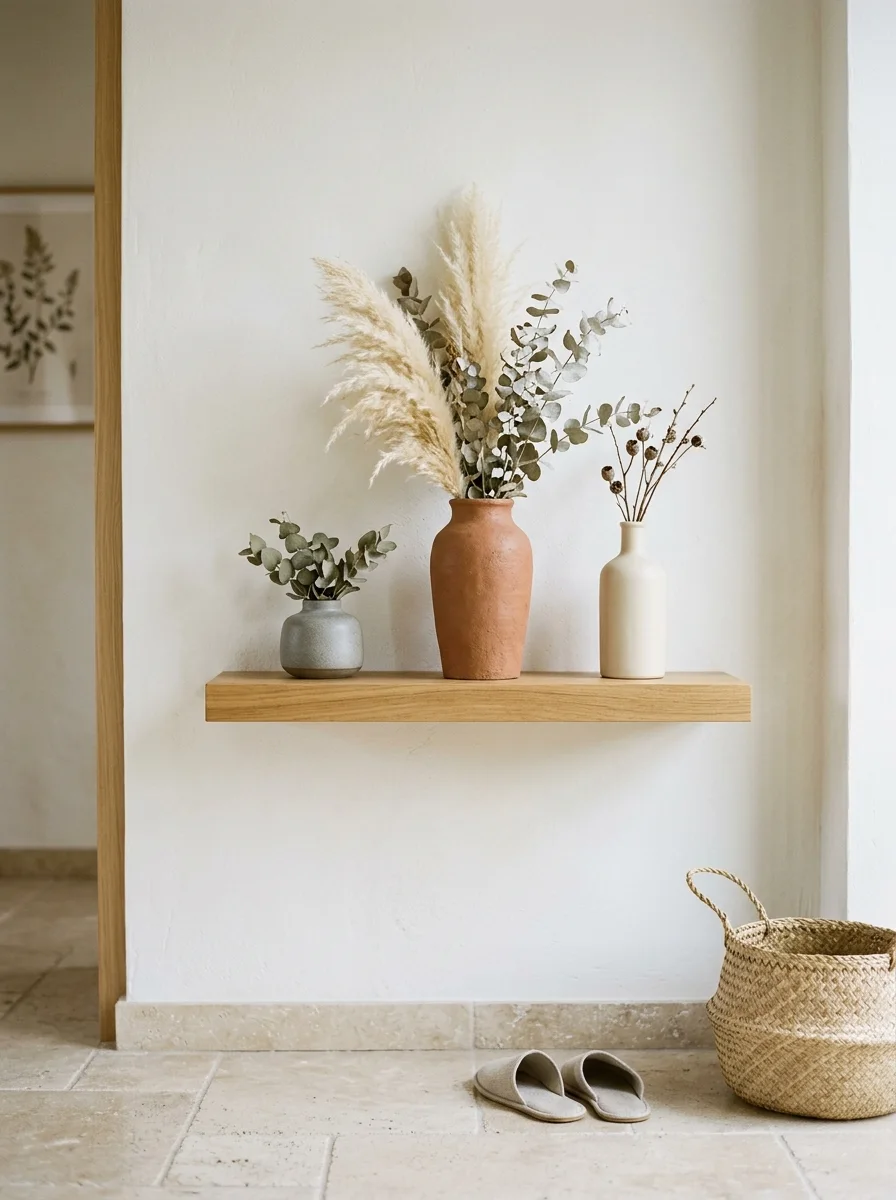
Earthy ceramics and dried botanicals are two of the most essential styling tools in any japandi entryway decor toolkit. Together they bring organic texture, subtle color variation, and the kind of timeless quality that never reads as trendy or overly curated. A trio of handmade vessels in graduating heights with loose stems of pampas or eucalyptus creates an effortlessly grounded shelf arrangement.
The key to making this look beautiful rather than messy is restraint in the number of pieces and generosity with negative space. Three ceramics maximum, two botanical varieties at most, and clear empty shelf on either side. The empty space around the objects is as important as the objects themselves. I have noticed that beginners consistently over-style this moment and lose the calm it is meant to create.
The Key: Dried botanicals bring organic texture without requiring maintenance. In japandi entryway decor, they offer warmth and imperfection that no synthetic piece can replicate.
08
Woven Basket Storage at Floor Level
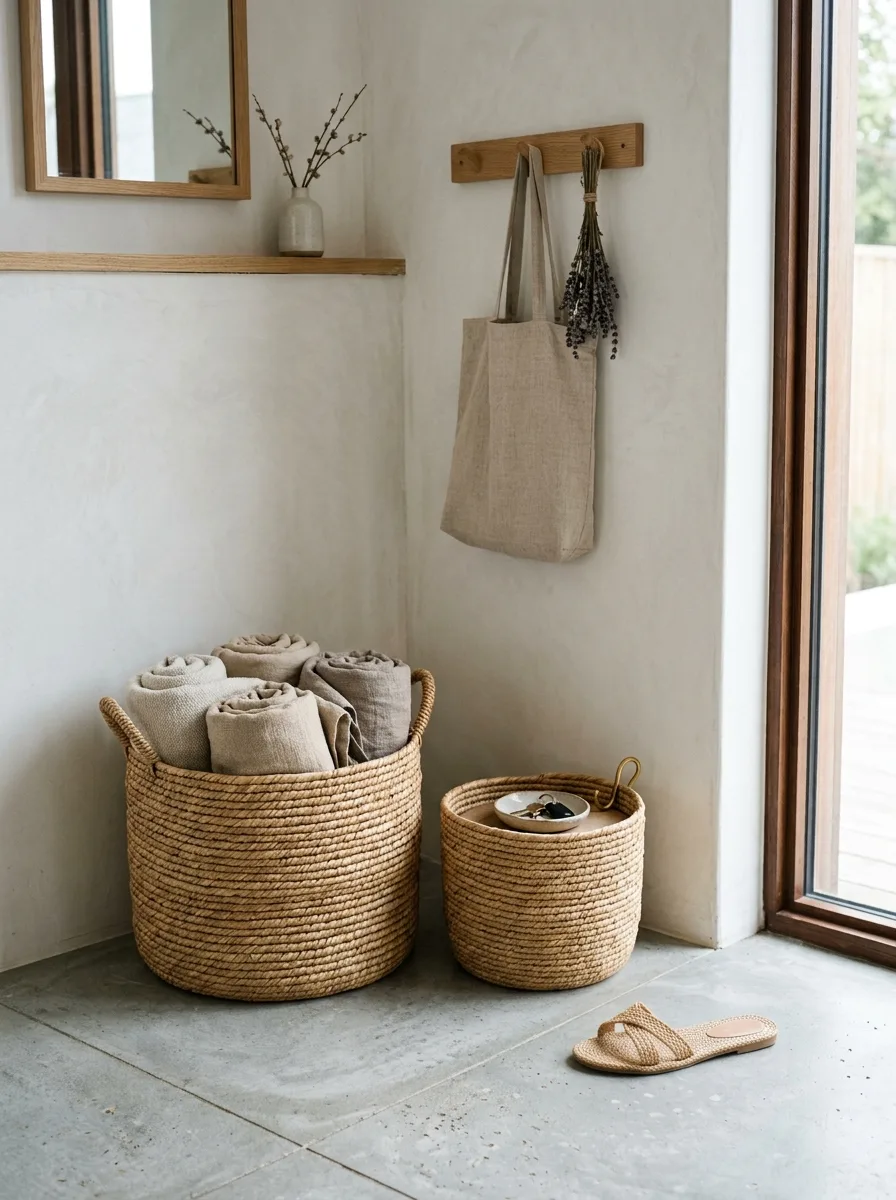
Floor-level woven baskets solve one of the most common japandi entryway challenges: where to put the things you use every day without disrupting the calm. Seagrass and rattan baskets in natural tones blend into the neutral palette seamlessly, adding texture at ground level that makes the space feel layered and intentional rather than sparse or empty.
Use one larger basket for bulkier items like blankets, umbrellas, or spare shoes, and a second smaller one for accessories. The pairing of two sizes creates a gentle visual rhythm without cluttering the floor. Keep the lids off if the contents are tidy; add lids if you prefer concealment. Either way, the organic material of the basket does the aesthetic work beautifully in any japandi entryway design.
The Key: Woven baskets at floor level complete the layering from ceiling to floor that makes a japandi entryway feel thoughtfully designed at every single height.
09
Reclaimed Wood Console With Stone Tray
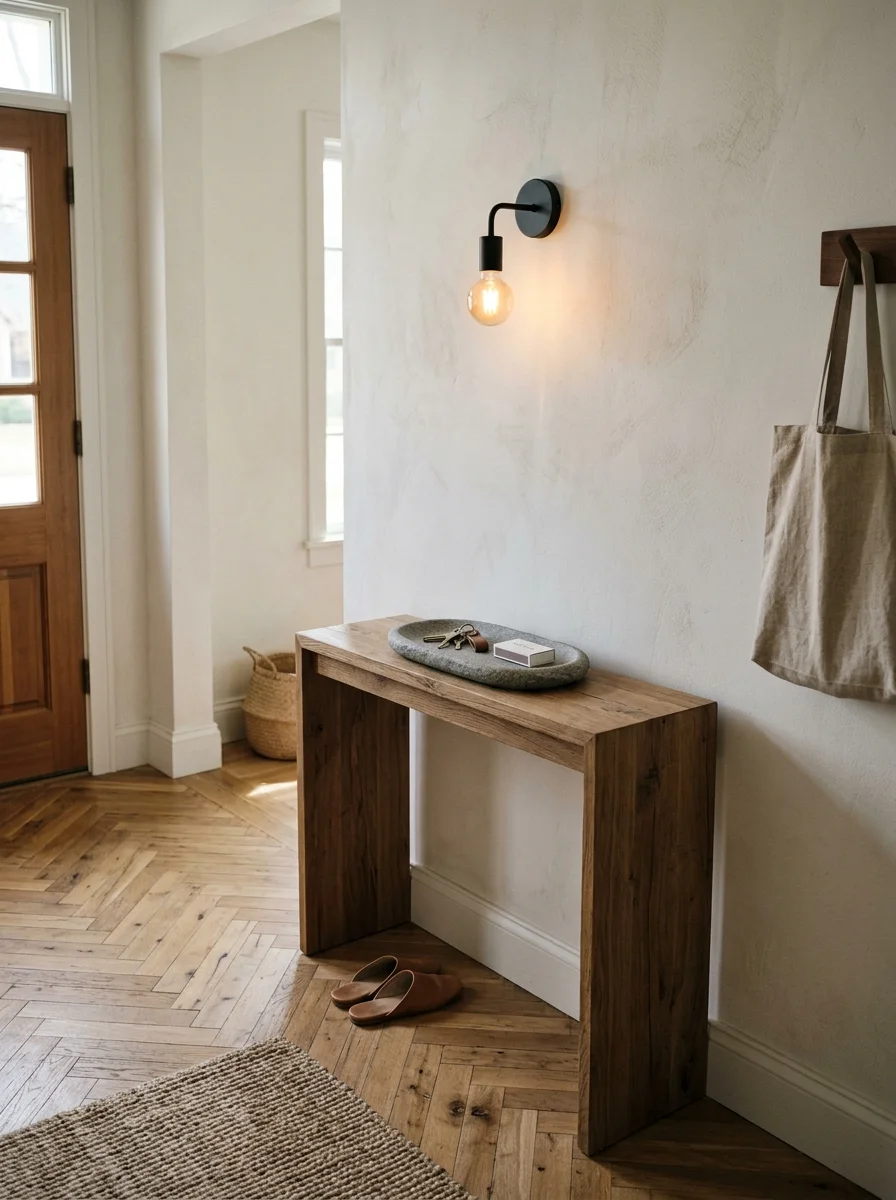
A reclaimed wood console table brings the wabi-sabi principle of finding beauty in imperfection into your japandi entryway without any effort at all. The natural grain, the slight variation in tone, the organic edge: these are not flaws to hide but features to highlight. Paired with a flat river stone tray for keys and essentials, this setup delivers everyday function wrapped in something quietly beautiful.
The stone tray anchors the tabletop beautifully. Its flat, cool surface contrasts with the warmth of the wood in exactly the way japandi entryway design intends: opposite materials in harmony. A single wall sconce above completes the composition. Keep the sconce simple, a matte white or aged brass fitting, and let the warm light it casts do the atmospheric work every evening.
The Key: Natural imperfection is intentional in japandi design. A reclaimed wood console communicates depth and authenticity that no factory-perfect piece can match.
10
Vertical Plank Feature Wall Entry
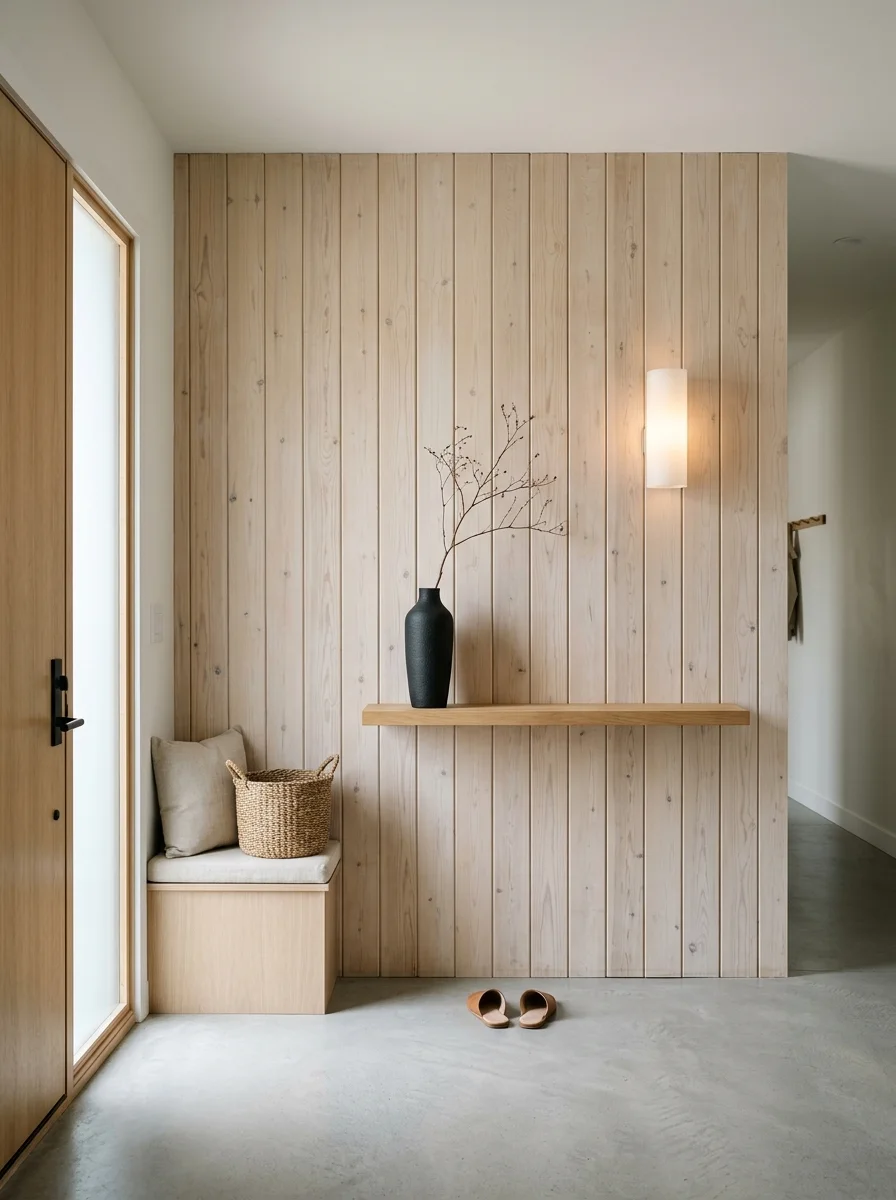
A vertical wood plank feature wall is one of those japandi entryway ideas that transforms the entire character of a space without requiring major construction. Whitewashed pine planks run floor to ceiling, creating instant height, texture, and warmth in a single material choice. The vertical orientation draws the eye upward and makes the ceiling feel higher, which is particularly valuable in compact entryways.
Style the floating shelf on this wall with extreme restraint. One tall matte black vase, one dried branch, nothing else. The drama of the dried branch against the whitewashed planks is enough. A frosted glass wall light mounted directly to the planks creates a warm, diffused glow that highlights the wood grain beautifully at any hour of the day or night.
The Key: Whitewashed wood retains natural warmth while keeping the palette light. It is one of the most effective japandi entryway design choices for creating both texture and brightness.
11
Soft Linen Curtain Room Divider
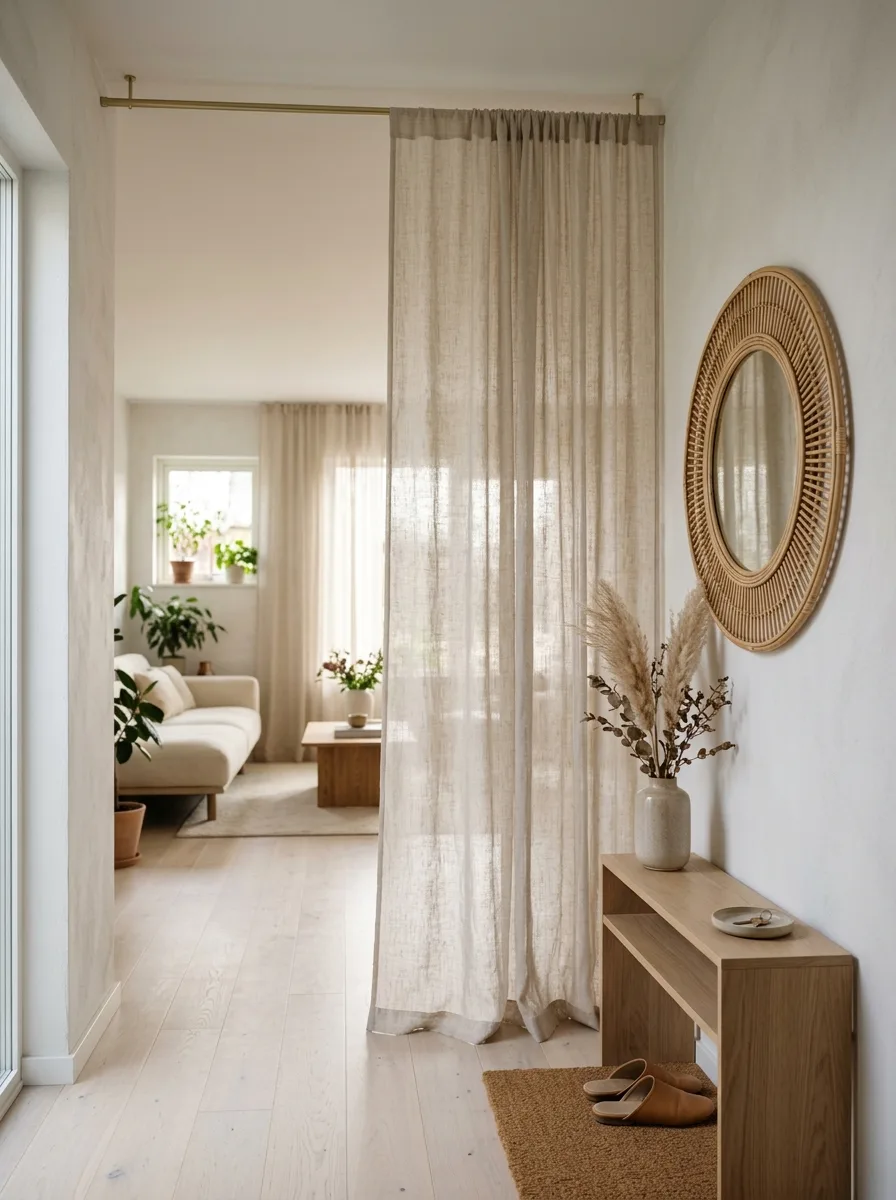
A full-length linen curtain used as a soft room divider is one of the most elegant and underused japandi entryway ideas available. Rather than a hard wall or a solid door, this approach defines the boundary of the entry with something lightweight, airy, and deeply textural. When light filters through natural linen, it creates a warm, diffused glow that makes the entire entry feel like a sanctuary.
Mount the curtain rod flush with the ceiling to maximize height and drama. Choose undyed or natural linen in the most unprocessed color available. The slight variation in weave and tone that comes with raw linen is exactly what gives this element its japandi entryway decor authenticity. A round rattan mirror beside the curtain echoes the organic mood and reflects light beautifully throughout the day.
The Key: Linen as a divider adds layered texture and filters light simultaneously. It defines zones without enclosing them, preserving the open, breathable quality of japandi design.
12
Stone Tile Flooring With Grid Mat
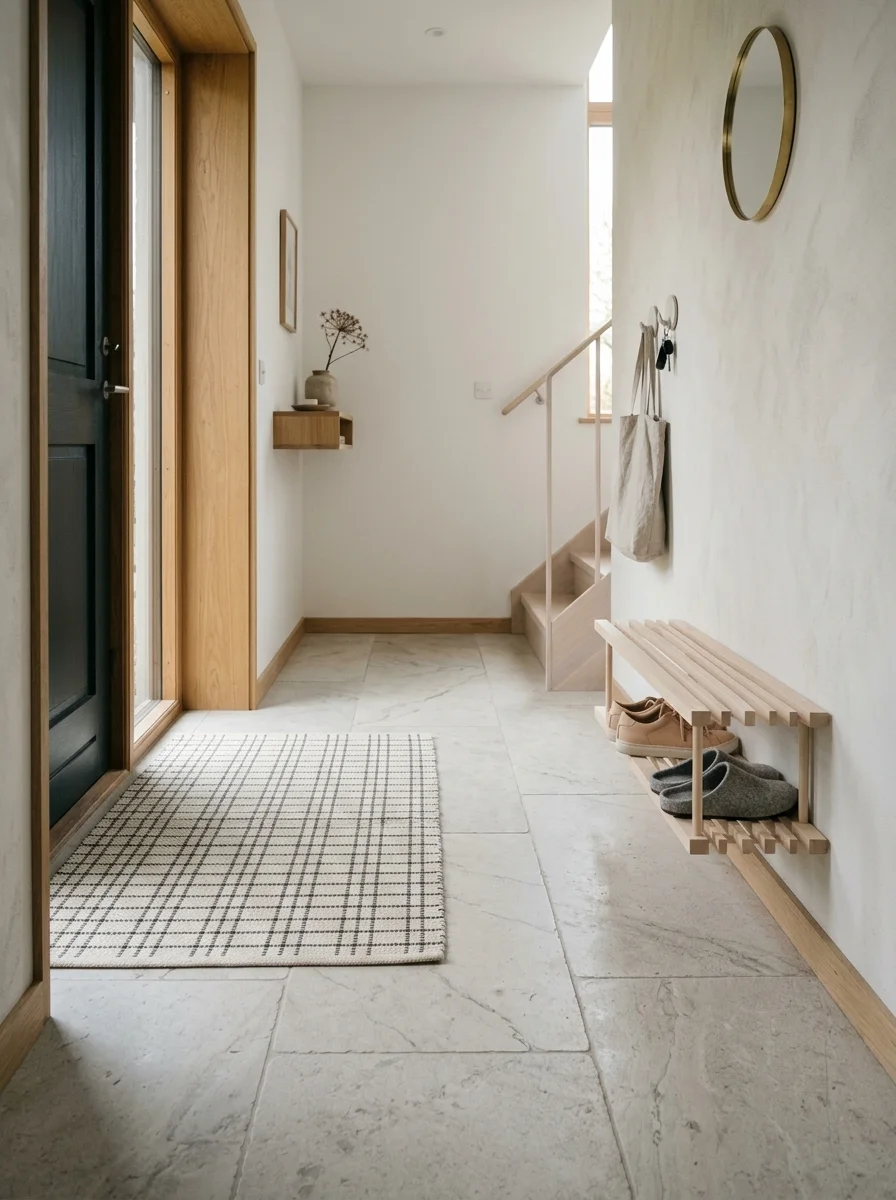
Flooring is the foundation of any japandi entryway and pale limestone or concrete-look tiles create exactly the right base. Their cool, smooth surface reads as refined without demanding attention, allowing the warmer wood and textile elements above to take the visual lead. Large format tiles with minimal grout lines keep the floor reading as one clean plane.
Layering a flat woven cotton mat at the door threshold adds the first layer of warmth and texture at ground level. Choose a geometric grid or simple stripe pattern in natural and charcoal tones. Avoid busy patterns or bright colors entirely. The mat grounds the space, catches dirt practically, and introduces a material contrast that is essential to good japandi entryway design without disrupting the overall calm.
The Key: Your floor sets the tonal foundation. Pale stone or concrete tiles keep the entry feeling cool and spacious, allowing warmer elements above to create balance.
13
Minimalist Coat Rack With Umbrella Stand
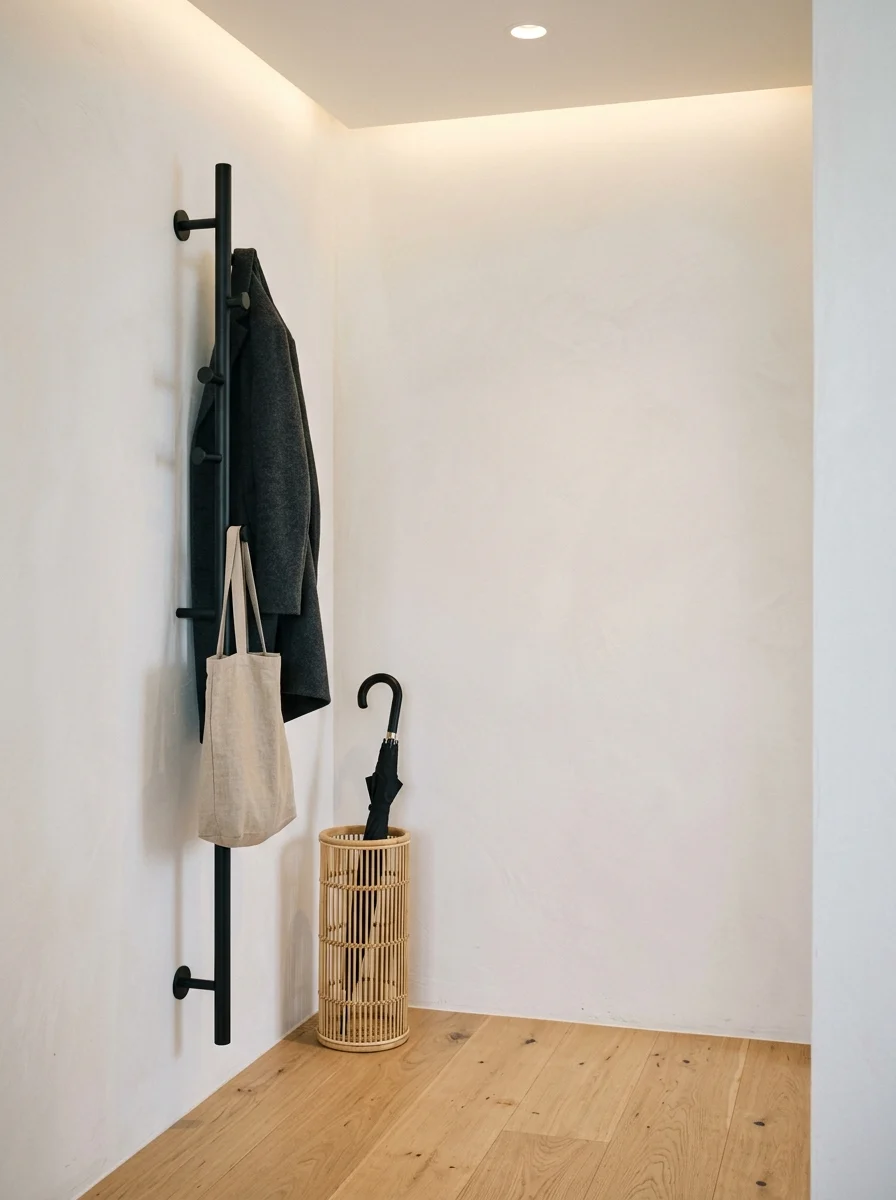
A slim, minimal coat rack and a bamboo umbrella stand might seem too simple to qualify as design choices, but in japandi entryway ideas, simplicity executed well is the entire point. A matte black powder-coated rack with pegs at varying heights adds functional storage while introducing a graphic, sculptural element against a pale wall. It looks intentional precisely because it is so simple.
The bamboo umbrella stand on the floor beside it introduces organic material contrast without taking up meaningful space. Bamboo and matte metal sit beautifully together in this palette. Keep coats to a maximum of two or three hanging at any time. The moment a coat rack becomes overcrowded, the japandi entryway décor feeling collapses. Regular editing of what hangs here is part of maintaining the style.
The Key: In japandi design, functional objects must also be beautiful. A well-chosen coat rack and umbrella stand contribute to the aesthetic as much as any decorative piece.
14
Ambient Glow With Shoji-Inspired Panels
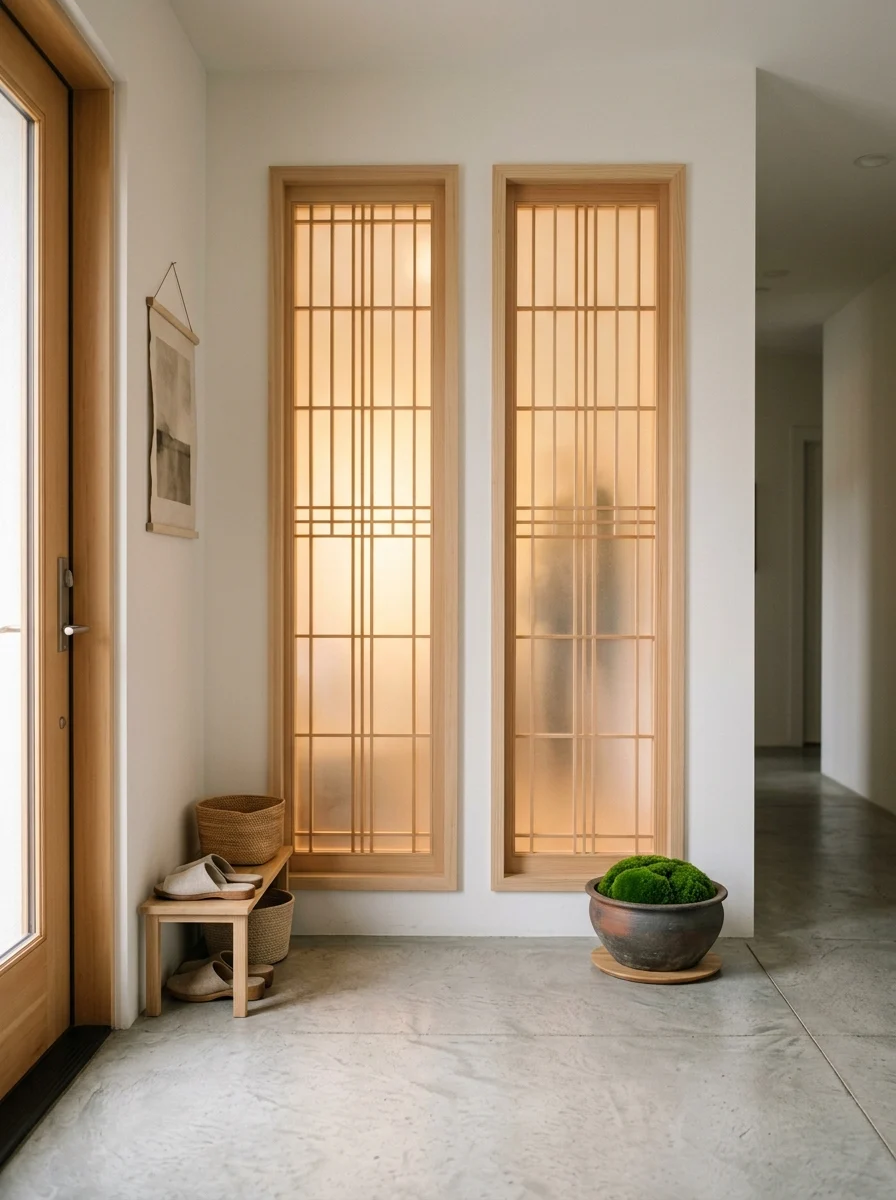
Shoji-inspired frosted glass panels alongside the front door are a deeply considered japandi entryway idea that solves light, privacy, and aesthetics in a single architectural move. The panels filter incoming light into a warm, diffused glow that fills the entry with exactly the soft luminosity this style is built on. At night, they create a beautifully lit welcome from outside as well.
The pale wood framing of the panels brings warmth and a clear reference to Japanese interior architecture. On the floor beside them, a single clay pot holding a moss ball, a kokedama, completes the meditative quality of the space. The kokedama brings life and a connection to nature that japandi entryway design consistently prioritizes. This combination creates an entry that feels calm, considered, and completely serene.
The Key: Shoji-inspired panels are the most architecturally committed japandi entryway idea here. They elevate the entire space by making light itself a design material.
Styling a japandi entryway is not about filling a space, it is about knowing exactly what to leave out. Every idea in this list works because it starts with restraint and builds outward from there, adding warmth through natural materials, calm through negative space, and personality through a handful of intentional objects. Whether you take on one of these japandi entryway ideas or layer several together, the result will be a first impression that feels genuinely peaceful every single time you come home.
Start with what matters most to you, whether that is a storage bench, a slatted wood wall, or simply better lighting, and build from there. Share this post with a friend who is ready to rethink their entryway, and save it to your Pinterest board so you can come back to it when you are ready for the next layer. The beauty of this style is that it grows better the more thoughtfully you approach it. Your entryway deserves that kind of care.