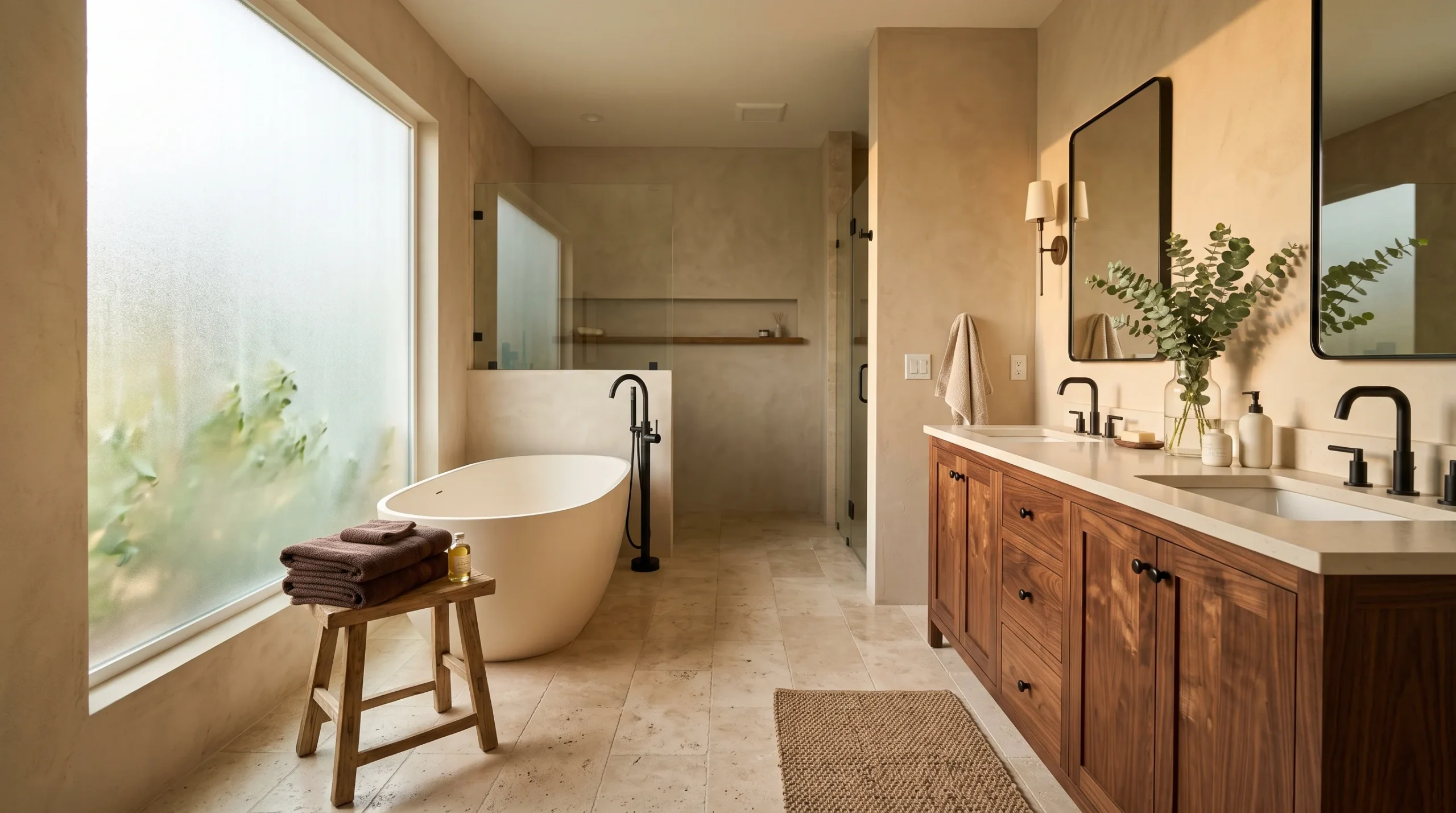
Nancy Meyers Home Aesthetic
🏠 18 Real Ideas
⏱ Quick Read
🔥 Always Trending
The Nancy Meyers Home Aesthetic Behind That Cinematic Feeling — 18 Secrets Revealed
There is something about watching a Nancy Meyers film and immediately wishing you lived inside the set. The Nancy Meyers home aesthetic is not about perfection or expensive showrooms. It is about rooms that feel genuinely inhabited by someone with quiet confidence and beautiful taste. That late-afternoon light, those layered textures, the books that have actually been read. If you have ever paused a scene just to study the kitchen in the background, you already understand the pull.
This article breaks down 18 specific secrets behind the Nancy Meyers interior style so you can bring that same cinematic warmth into your own home. Each secret covers a different room or design principle, with real ideas you can start using this weekend. Whether you are reworking a whole living room or just refreshing one corner, these are the moves that make a house feel like it belongs on a beautiful, unforgettable screen.
01
Linen Sofas Over Leather Always
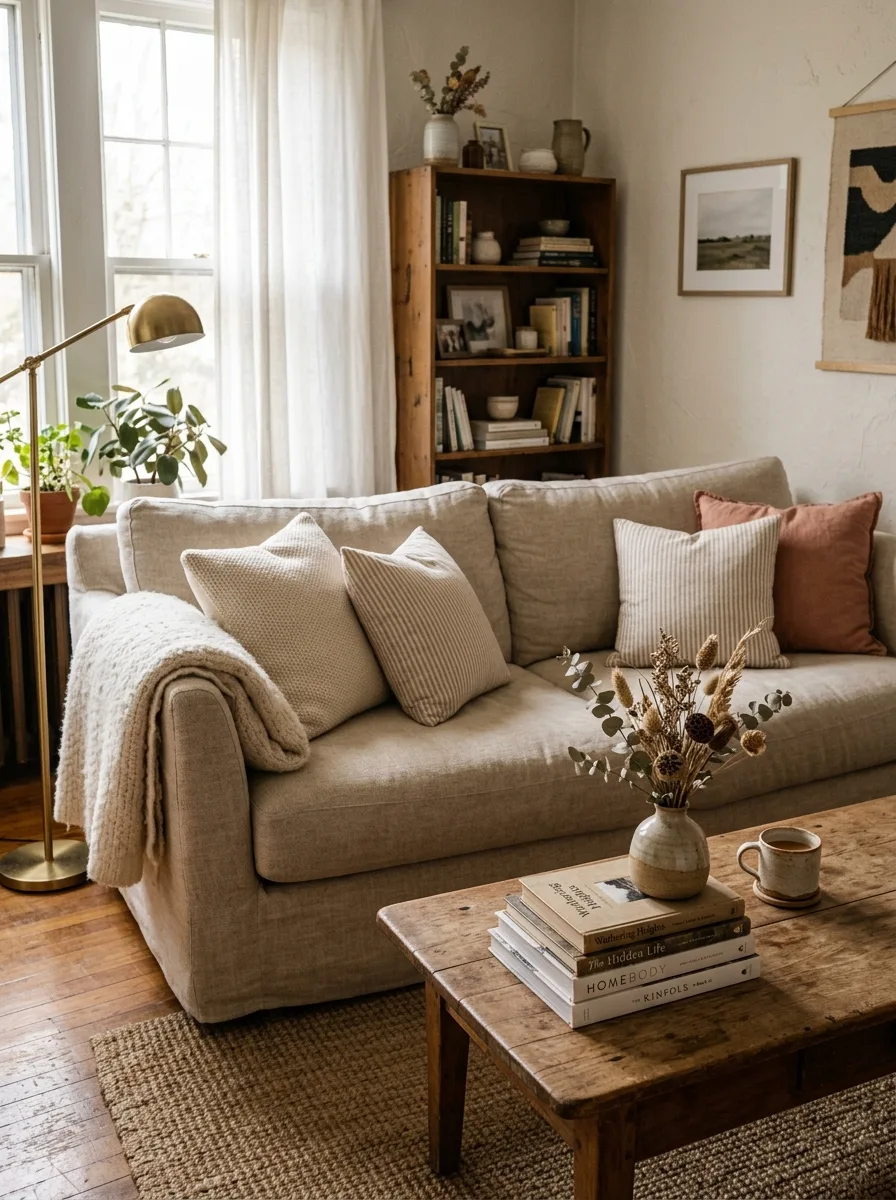
The moment you swap leather for linen, the whole room shifts register. Linen reads as lived-in from the first day, and that slightly imperfect slouch is exactly what the Nancy Meyers house look is built on. It invites people to sit deeply rather than perch politely, which is the whole point of a real living room.
Linen also photographs beautifully in natural light because the texture catches shadows in a soft, almost organic way. Layer two different pillow fabrics over a linen sofa, something striped alongside something plain, and you have the exact combination of ease and intention that this style depends on. Nothing needs to match precisely. It just needs to feel right together.
The Key: Choose an oatmeal, warm ivory, or soft sage linen sofa as your foundation piece and build every other textile outward from that one decision.
02
Aged Wood Brings Instant Character
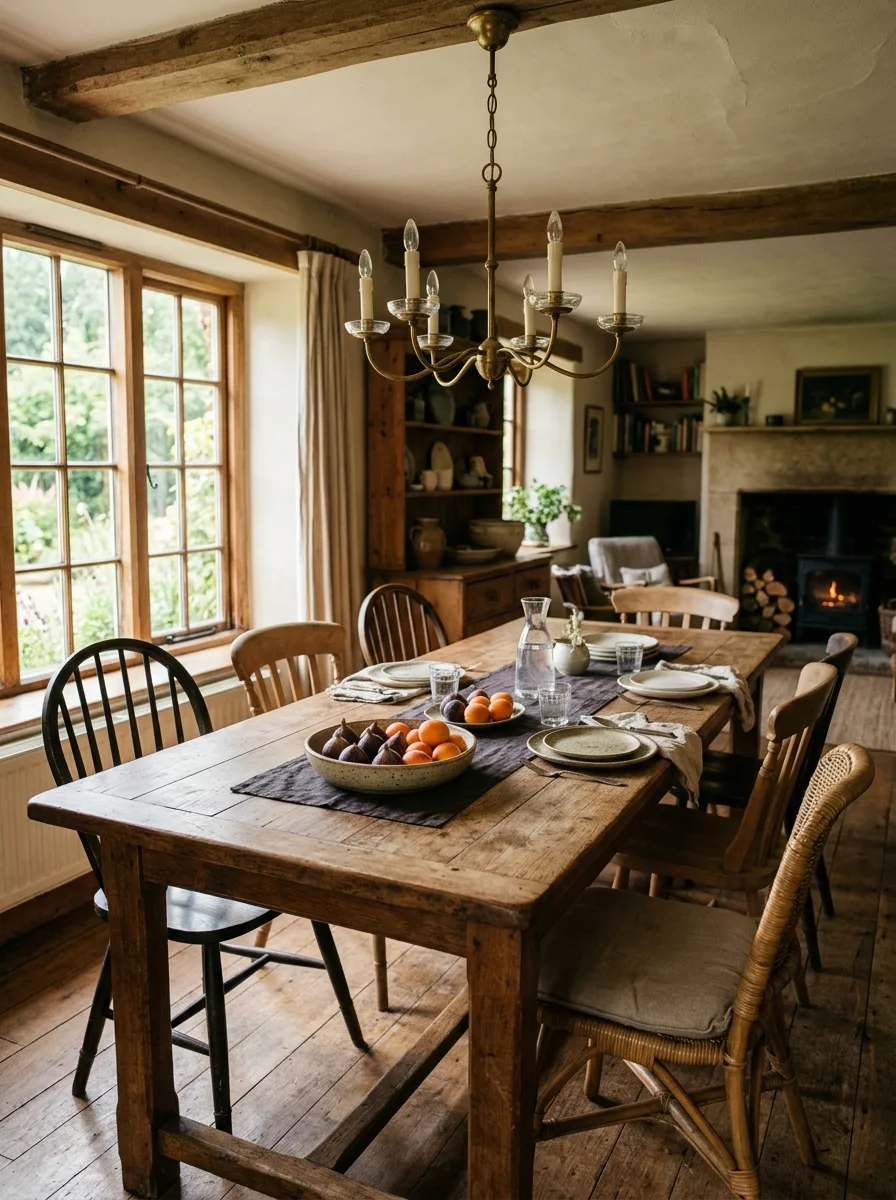
Nothing fast-tracks the Nancy Meyers inspired decor look quite like aged or reclaimed wood. A table with real grain, a cabinet that looks like it came from a French flea market, floorboards with visible wear across the high-traffic path. These are the details that communicate history, and history is what separates a collected home from a furnished one.
You do not need to spend a fortune to get this feeling. Thrift stores, estate sales, and online marketplaces regularly stock pieces with exactly the right amount of wear. A single large aged wood piece in a room, the dining table or a console behind the sofa, anchors the whole space with the kind of quiet authenticity that new furniture simply cannot manufacture.
The Key: One significant aged wood piece per room is all it takes. Try not to match it to anything else. Let it stand out on its own.
03
White Walls With Warm Undertones
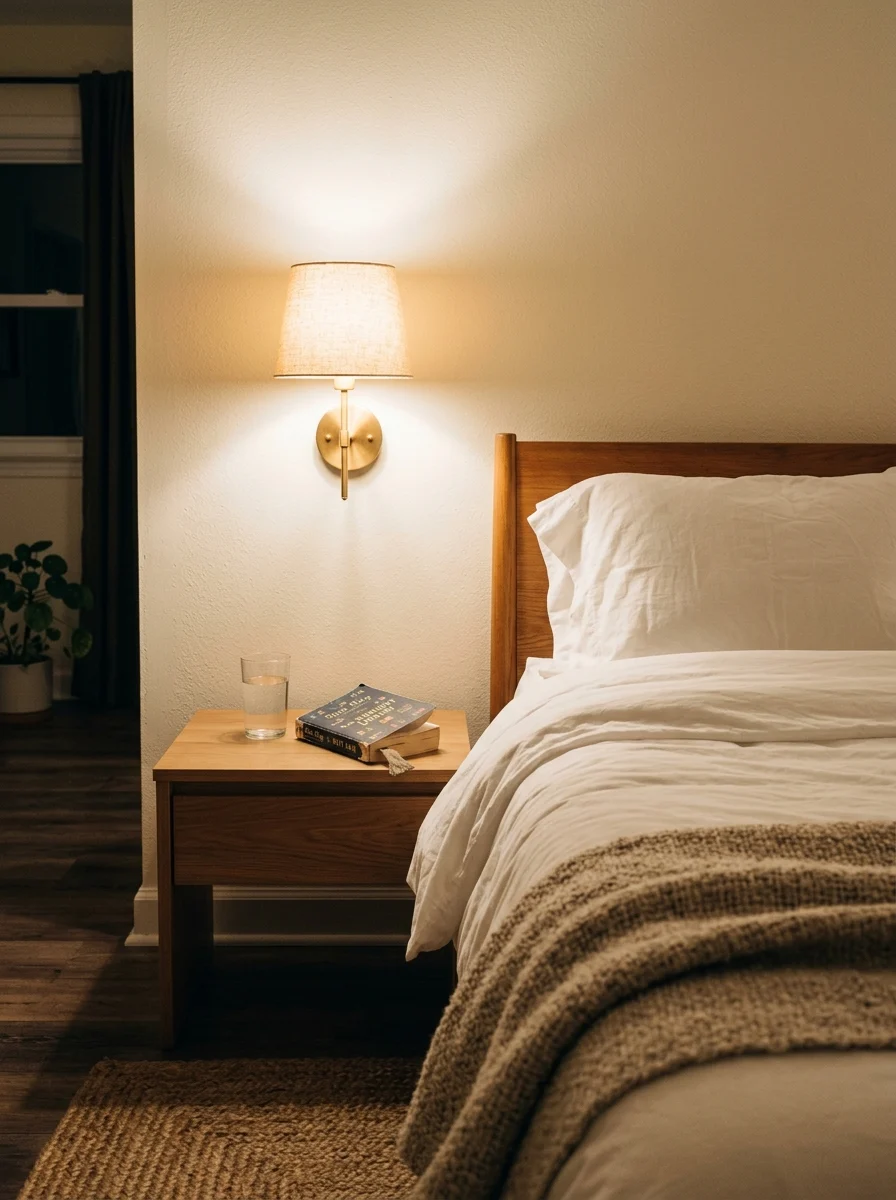
Cold whites flatten a room and drain warmth from everything around them. The secret behind the Nancy Meyers home aesthetic is almost always a white with a whisper of cream, warm beige, or the faintest blush underneath. That small shift changes how every other element in the room reads, making wood warmer, fabrics softer, and light more golden.
When choosing a white paint, test it in natural daylight at different times of day before committing. A paint chip that looks perfect at noon can pull grey or lavender once the afternoon light drops. The goal is a wall that makes every person standing in front of it look better, which is a very Nancy Meyers thing to care about deeply.
The Key: Look for whites with LRV values between 80 and 87. They read clean and bright without the harshness that sends warmth running out of a room.
04
Built-In Bookshelves Anchor a Room
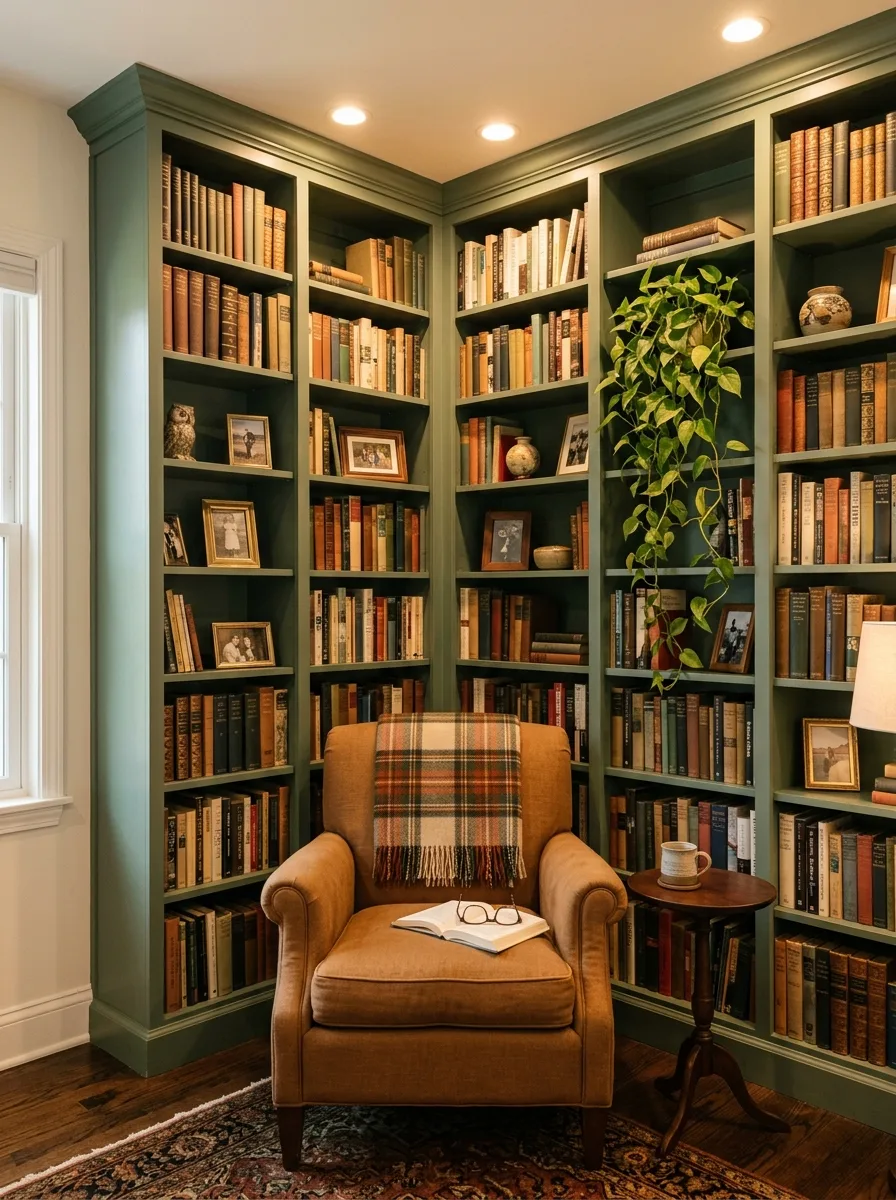
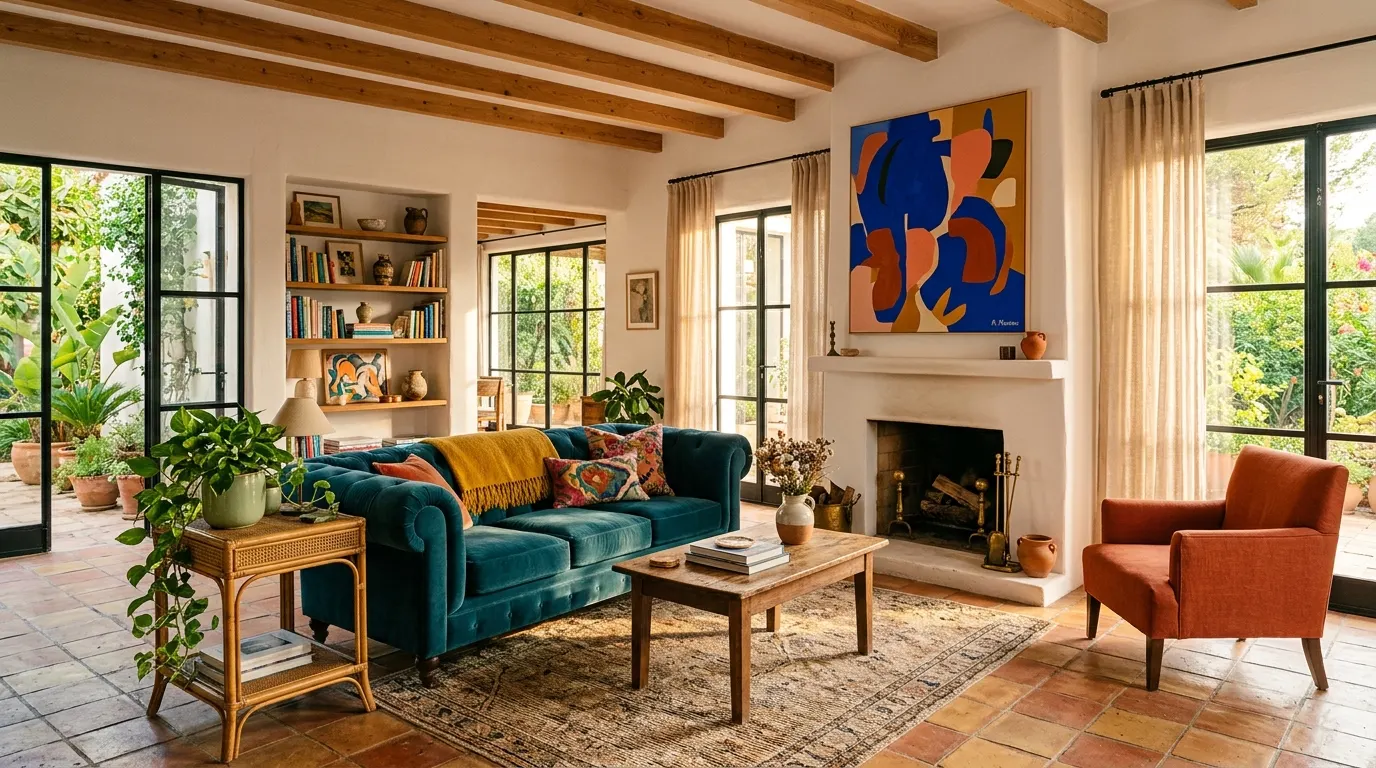
Built-in bookshelves are architectural, functional, and endlessly personal all at once. In the Nancy Meyers interior style, they show up painted in a soft color, filled with real books, and scattered with objects that feel genuinely meaningful rather than purely decorative. The styling is never too perfect. A tilted book here, a plant pushing against the shelf above it there.
Painting built-ins in a color different from the walls is a move that transforms the whole room. A dusty sage, a soft blue, or a warm terracotta on the shelving turns a practical storage solution into the most interesting piece of furniture in the space. The books themselves should look read, not staged, which means mixed spine colors and the occasional horizontally stacked pile.
The Key: Style one shelf per unit with personal objects rather than books alone. It is the mix of reading material and meaningful objects that makes shelves feel human.
05
The Kitchen as the True Heart
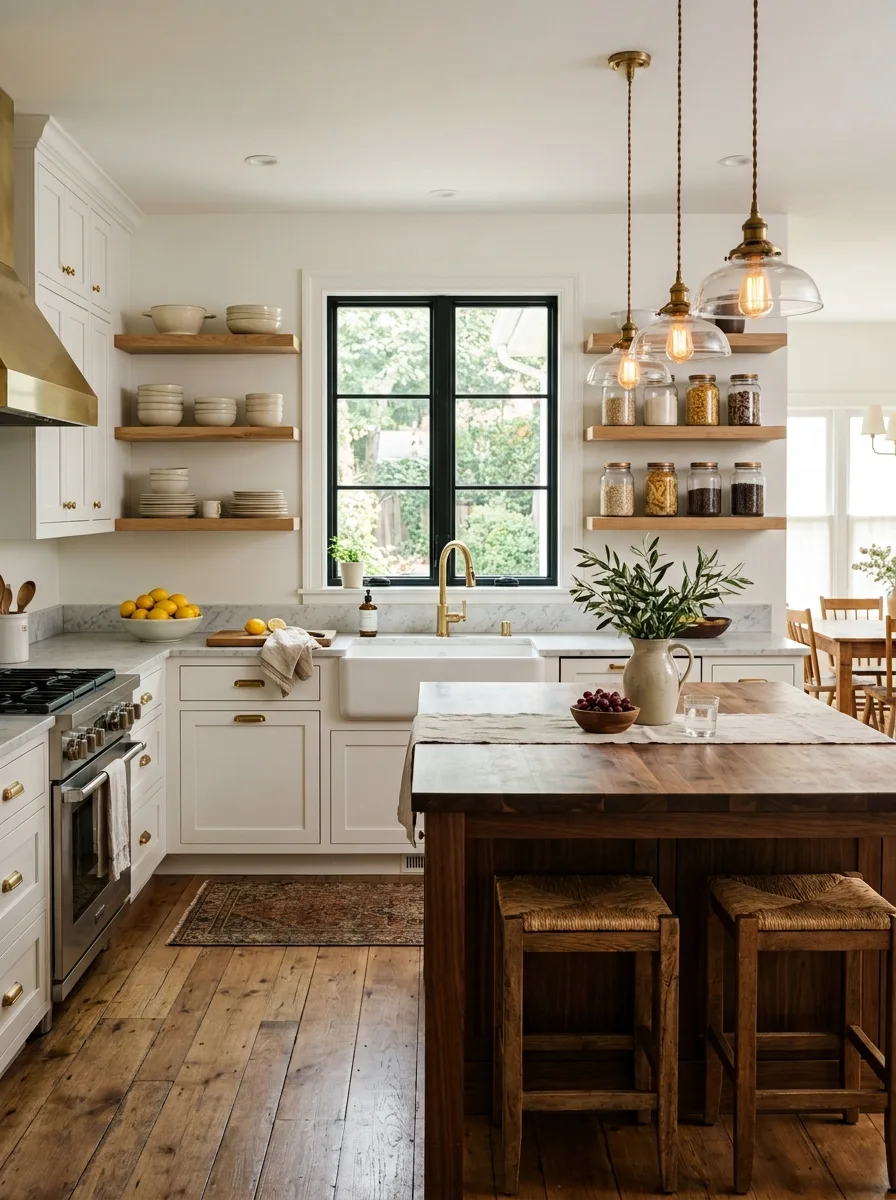
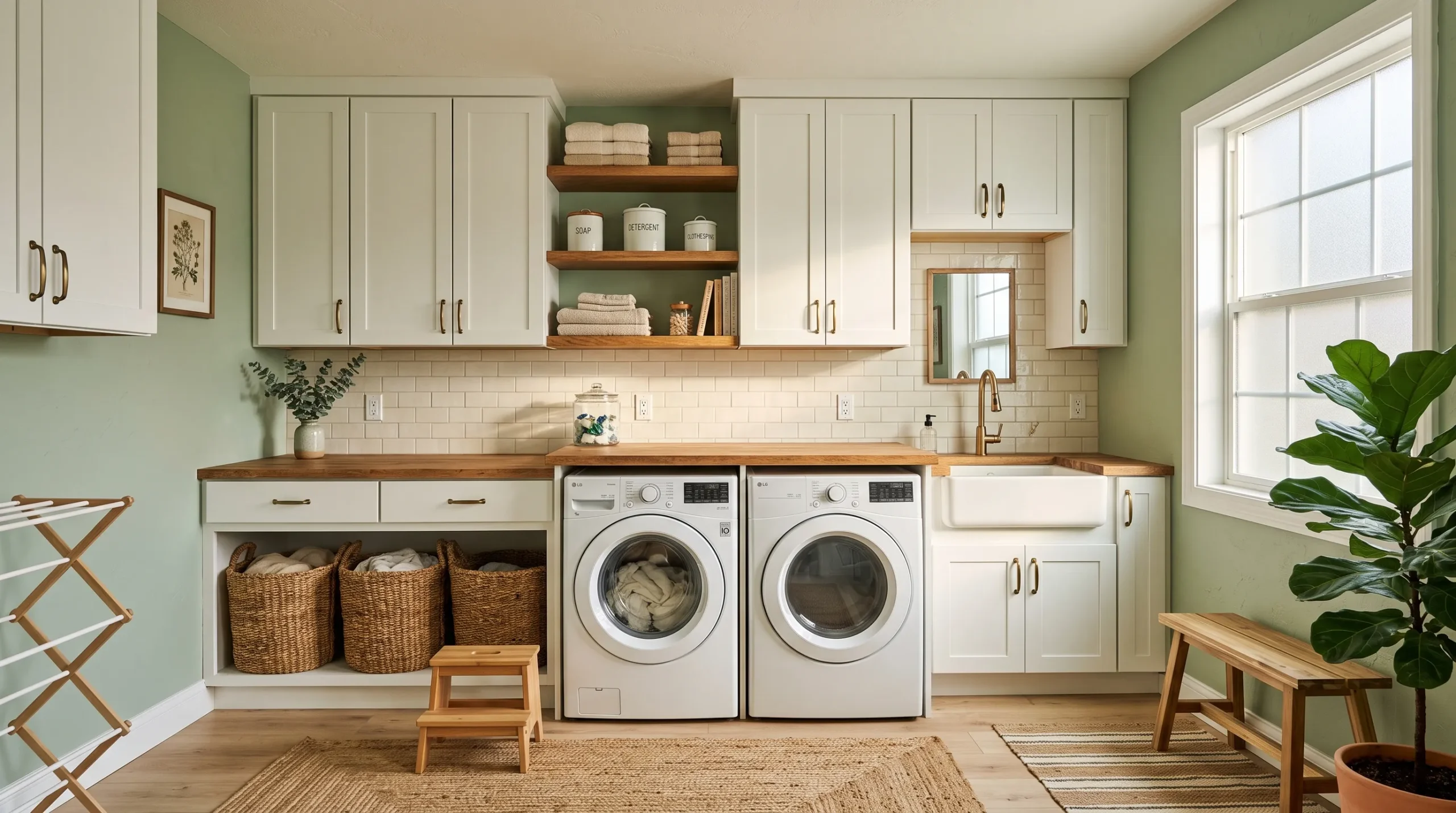
The kitchen is where the Nancy Meyers home aesthetic lives most naturally. It is generous, warm, and always looks ready for someone to walk in and start making something wonderful. Oversized islands, farmhouse sinks, open shelving stacked with plain white dishware, these are the components that communicate abundance without ostentation.
What separates this kitchen from a generic renovation is intentionality with the details. Unlacquered brass hardware that will patina over time. A drawer filled with good wooden spoons. A windowsill with fresh herbs growing in simple pots. None of these things cost much, but together they create the unmistakable sense that this kitchen has a real life happening inside it, one that began before you arrived.
The Key: Keep one countertop completely clear and use that space to display one beautiful object, a ceramic bowl of fruit, a vase of herbs, a stack of cookbooks with cracked spines.
06
French Doors Flood Rooms With Light
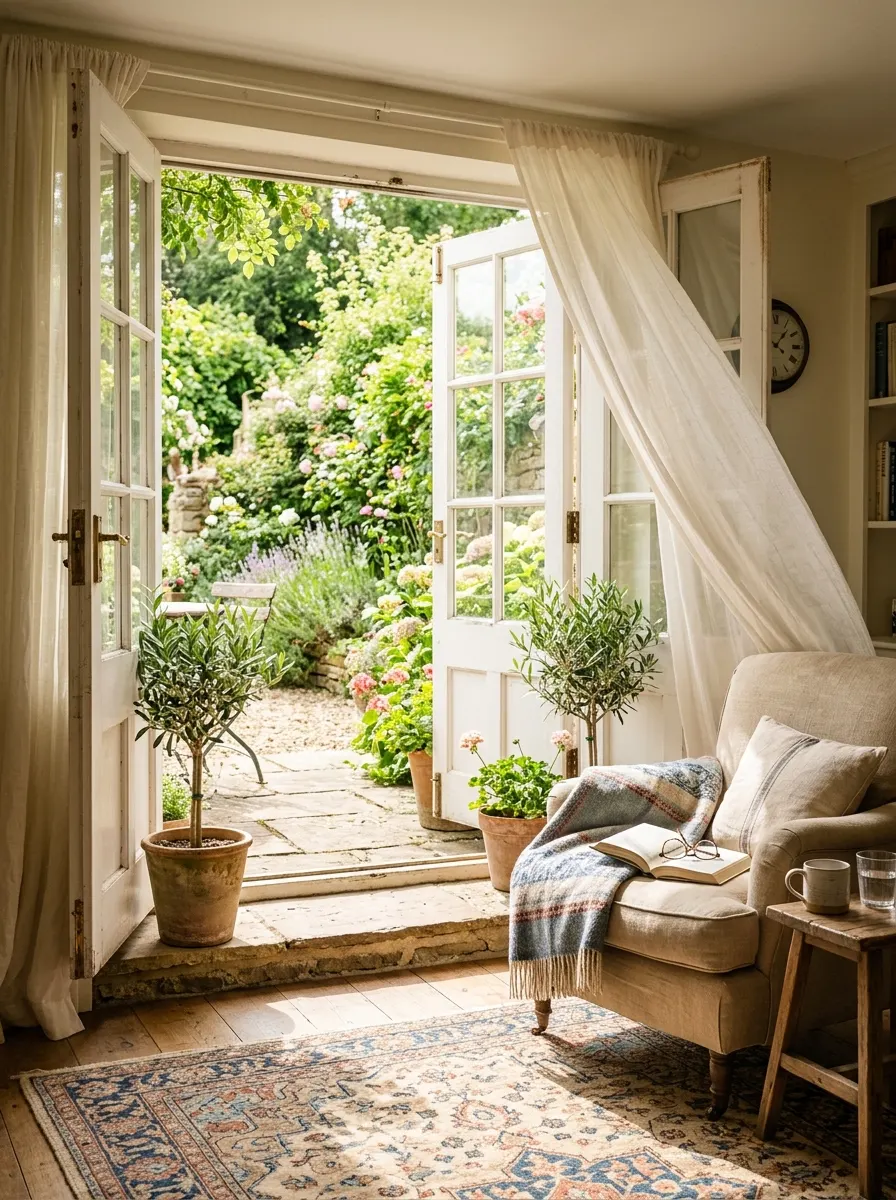
Light is the most essential ingredient in the cinematic home aesthetic, and French doors are the fastest way to let it flood a room properly. They blur the line between interior and exterior, making even a modest room feel grand and connected to something bigger. That visual extension is exactly how sets are designed to make small spaces feel expansive on screen.
If your home does not have French doors, the principle still translates. Wide doorways, large windows kept unobstructed by heavy drapes, and mirrors placed to catch and redistribute natural light all accomplish a similar effect. The goal is a room that looks different at seven in the morning than it does at four in the afternoon, because that responsiveness to changing light is what makes spaces feel truly alive.
The Key: Never hang heavy curtains on French doors or large windows. Sheer linen panels that filter rather than block are the only right choice for this particular look.
07
Layered Rugs Create Depth
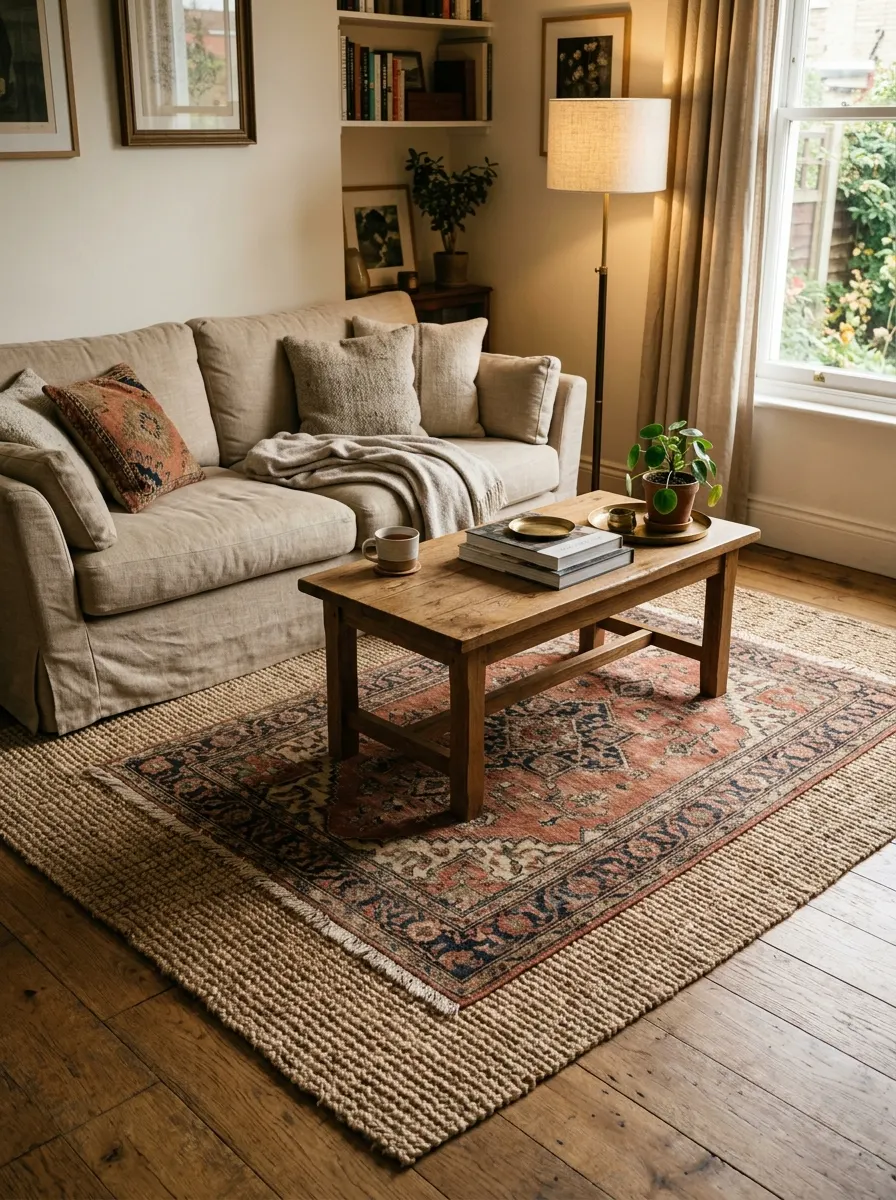
Layering rugs is one of those tricks that looks considered but is actually very low-effort once you understand the formula. Start with a large natural fiber rug, jute or sisal works beautifully, and then layer a smaller vintage or patterned rug on top. The combination adds texture, warmth, and the sense that the room has been arranged and rearranged by someone who genuinely loves it.
The key to making this work is scale. The bottom rug should be large enough that all the furniture legs land on it. The top rug should sit centered within the seating area, smaller by at least eighteen inches on all sides. This proportion is what makes the layering feel intentional rather than accidental, and it is the same logic the Nancy Meyers house look relies on throughout every room.
The Key: Choose a bottom rug in a neutral natural fiber and a top rug with at least one color that repeats elsewhere in the room. The connection is what ties everything together.
08
Flowers That Look Slightly Wild
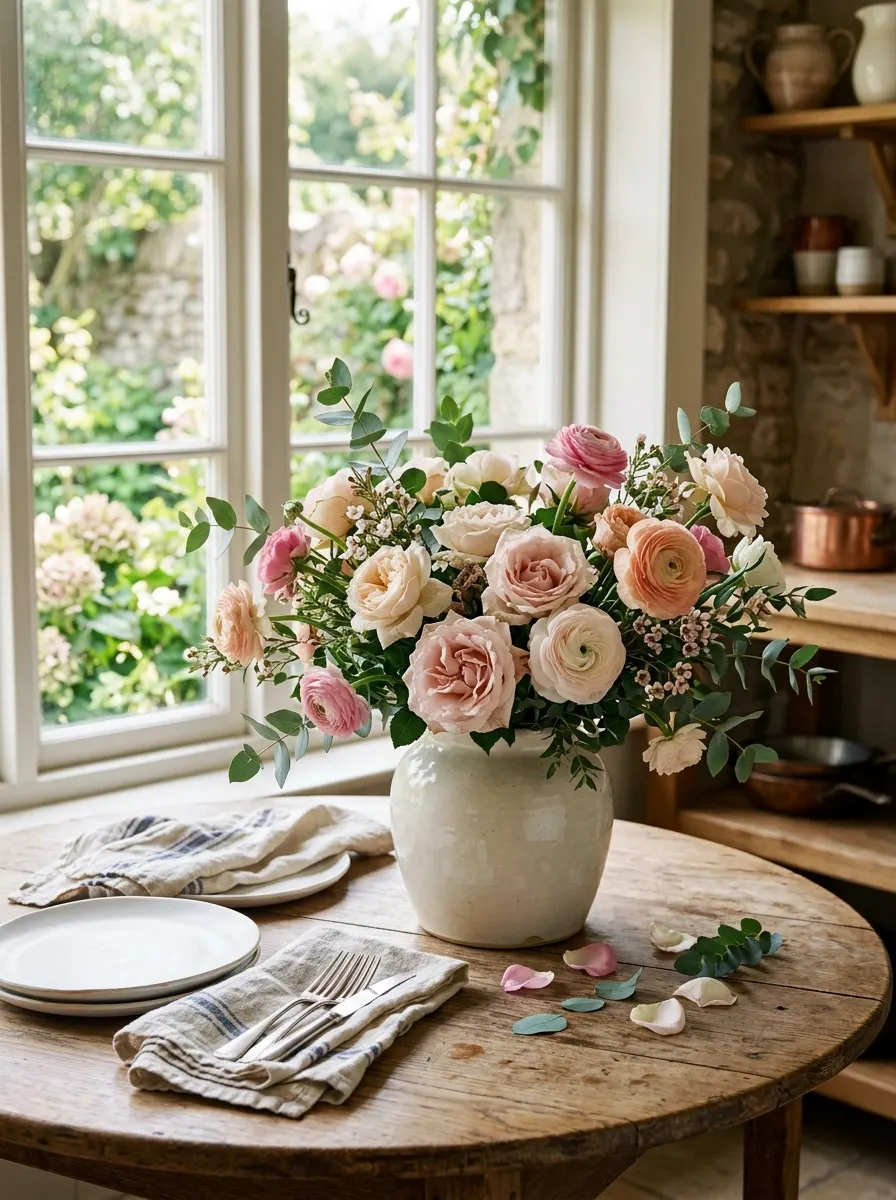
Flowers in a Nancy Meyers film are never too perfect. They are abundant, slightly loose, and look like they were cut from a garden that morning rather than arranged by a professional florist. That imperfection is the whole point. A tightly structured bouquet reads as formal and deliberate, while a loose arrangement reads as generous and alive, which is a completely different emotional register.
For the Nancy Meyers home aesthetic, choose flowers with movement, roses that are just past their tightest bud stage, ranunculus that have started to open fully, stems of eucalyptus that arc out past the arrangement’s edges. Use a wide-mouthed ceramic vase rather than a narrow glass one. Fill it more than you think looks right, then add three more stems. That slight excess is exactly the thing.
The Key: Add foliage stems last, after all the flowers are in. Greenery fills gaps and gives the whole arrangement that naturally gathered quality without any real technical skill.
09
Woven Textures Warm Every Room
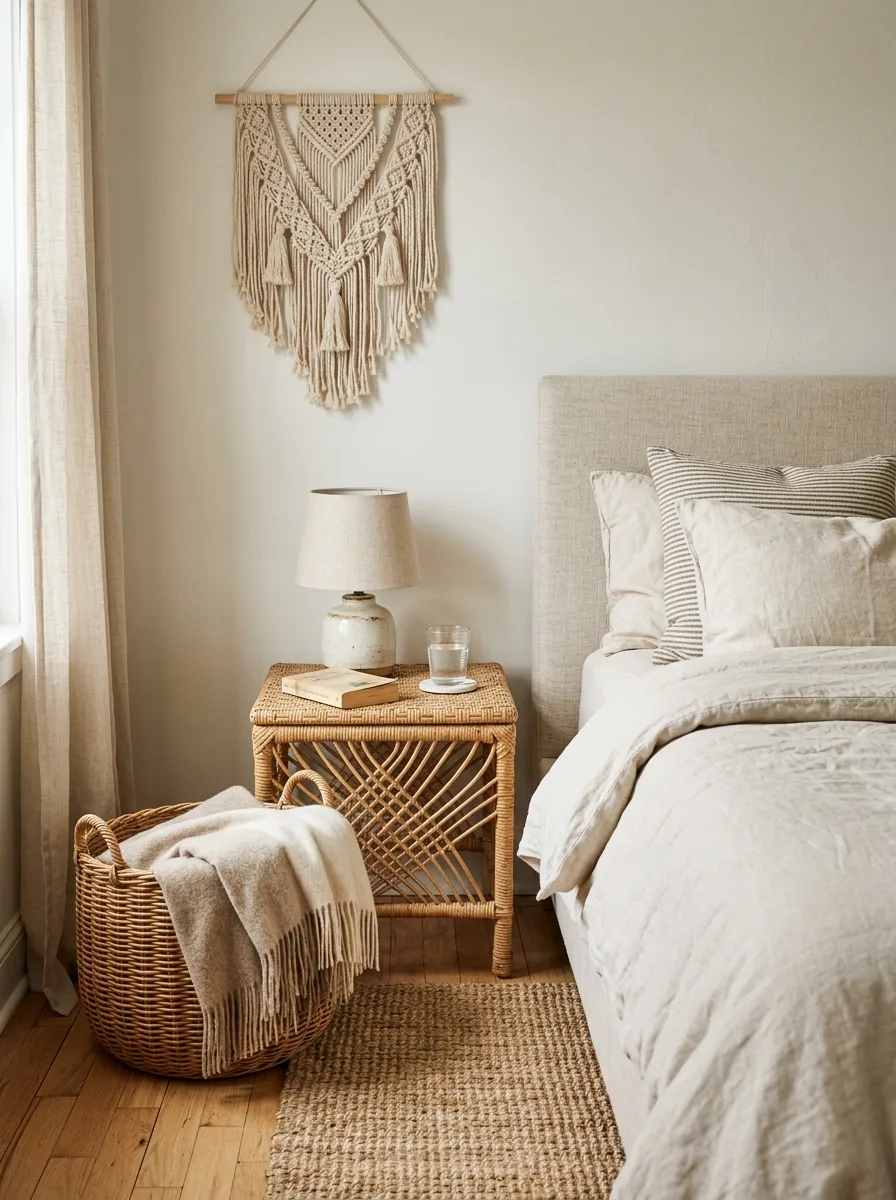
Woven textures are the quiet workhorses of this entire aesthetic. Rattan, cane, wicker, jute, and macramé each bring a natural, handmade quality that instantly softens any room and pushes back against the coldness that modern interiors can easily tip into. In a Nancy Meyers film, you will almost always spot a woven element in every room, sometimes multiple, layered without self-consciousness.
The genius of woven textures is that they work across every budget. A wicker basket from a craft store, a cane-front dresser found secondhand, a simple jute rug from a big-box retailer. None of these require significant investment, yet each one moves the room meaningfully toward the warmth and texture-layered quality that the cinematic home aesthetic is entirely built upon.
The Key: Use at least two different woven materials per room. Rattan and jute together, or cane and macramé, create more visual interest than any single texture can manage alone.
10
Painted Millwork Changes Everything
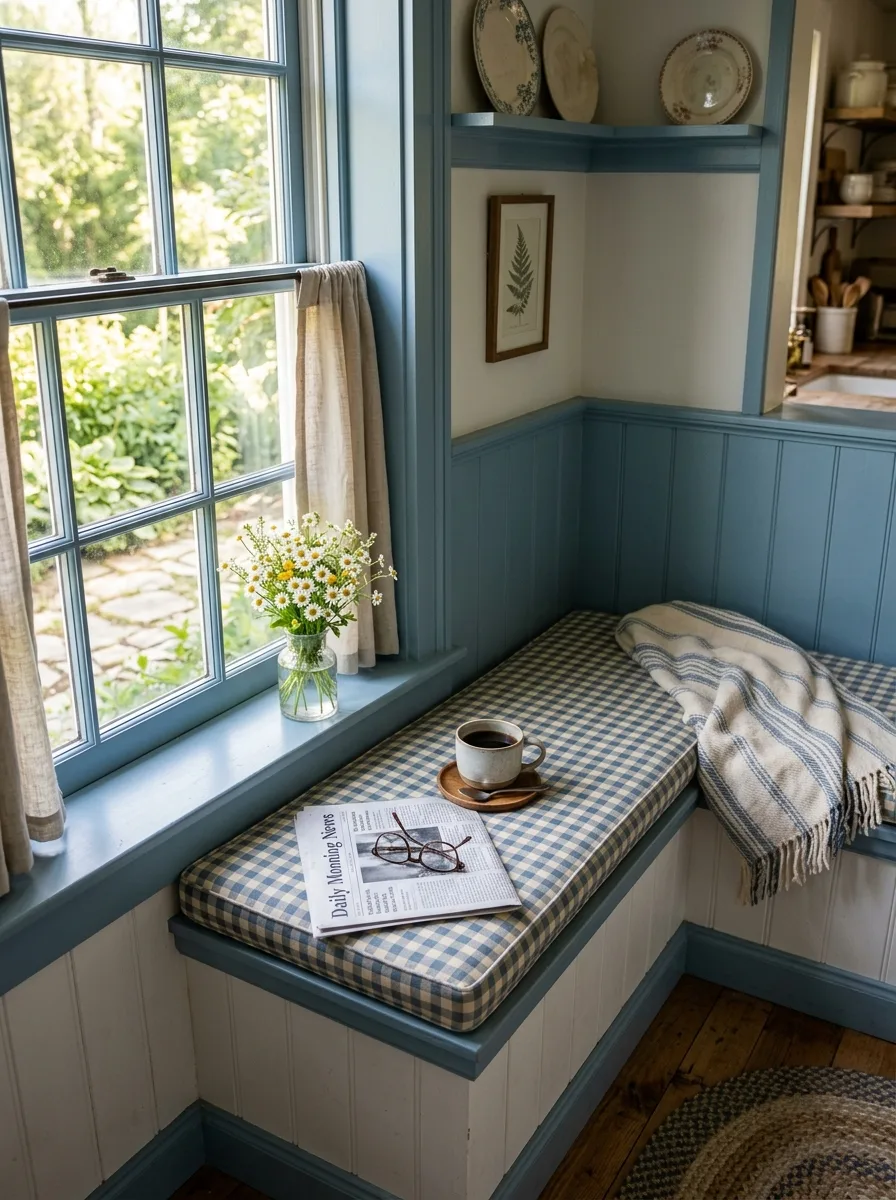
Painting all the millwork in a room the same color, trim, paneling, built-ins, and window casings together, is the single most transformative thing you can do to a space without touching the architecture. When everything is one unified tone, the room suddenly reads as intentionally designed rather than randomly assembled. It is architectural confidence expressed in a single can of paint.
For Nancy Meyers inspired decor, the color should feel considered but not precious. A soft dusty blue that reads almost grey in lower light, a warm sage that shifts toward olive in afternoon sun, a creamy antique white that makes every other element in the room feel richer by contrast. The actual color matters less than the commitment to painting everything together as one cohesive unit.
The Key: Always use eggshell or satin finish on millwork, never flat paint. The subtle sheen catches light in a way that makes painted woodwork look genuinely expensive and intentional.
11
Symmetry Calms a Layered Space
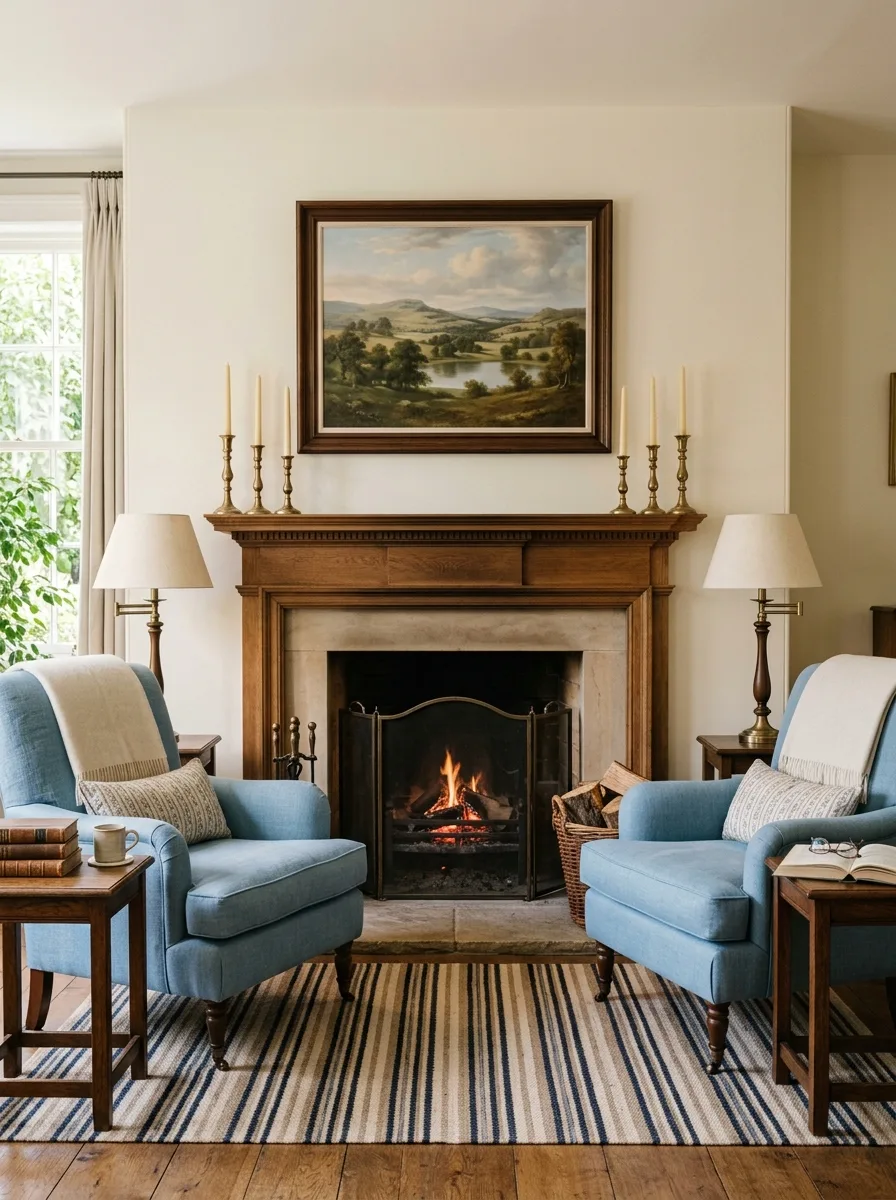
Symmetry is one of the most powerful tools in the Nancy Meyers home aesthetic precisely because it creates calm without austerity. A pair of matching armchairs flanking a fireplace, two identical pendants over a kitchen island, matching sconces on either side of a bathroom mirror. These repeated pairings give the eye a moment to rest inside a room that might otherwise have a great deal of pattern and layered texture going on around them.
The secret is to use symmetry as an anchor, not as a rule. One perfectly symmetrical arrangement per room, usually centered on the most architectural feature like a fireplace or a bed, allows everything else in the space to be more loose and layered without the whole room tipping into chaos. The symmetry provides structure. The rest provides soul.
The Key: Center your symmetrical arrangement on one strong architectural feature per room. The fireplace, the bed, or a significant window are all natural candidates for this anchor treatment.
12
Marble Surfaces Signal Quiet Luxury
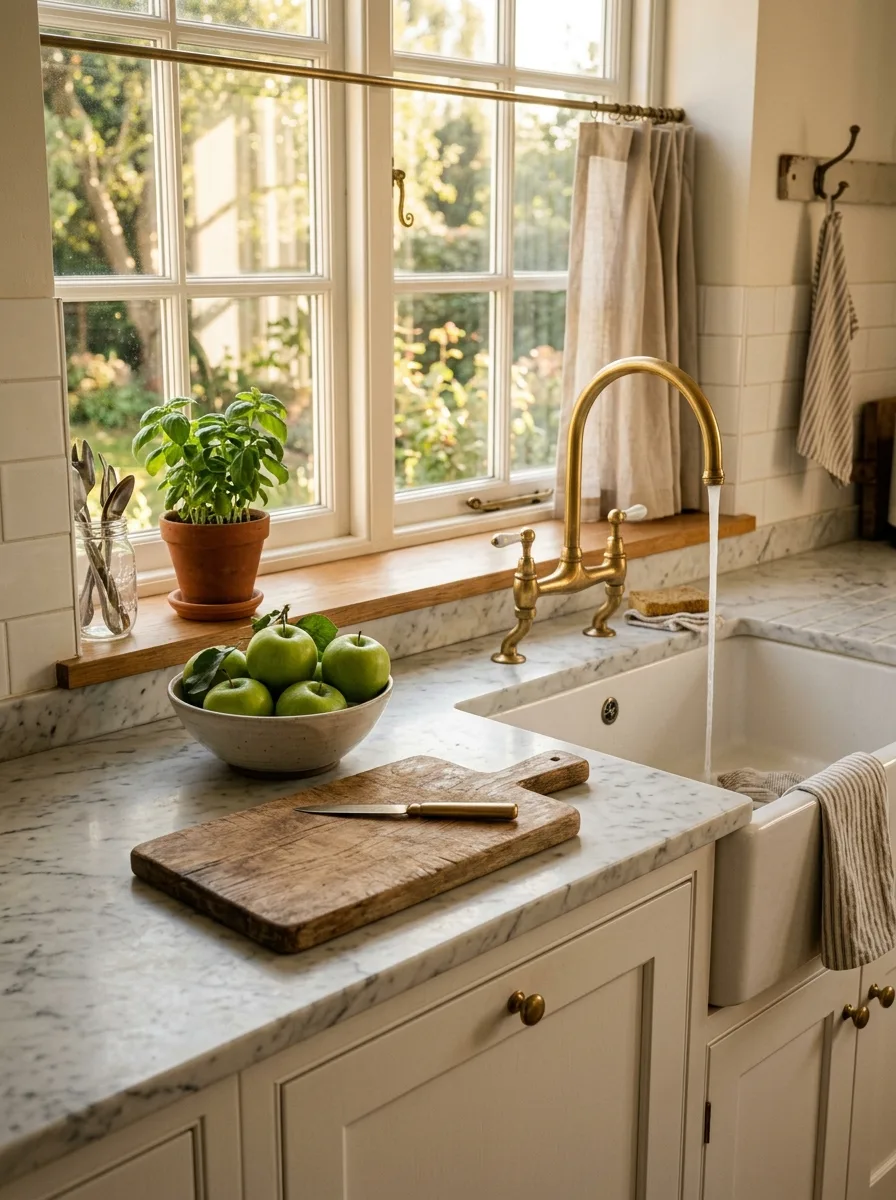
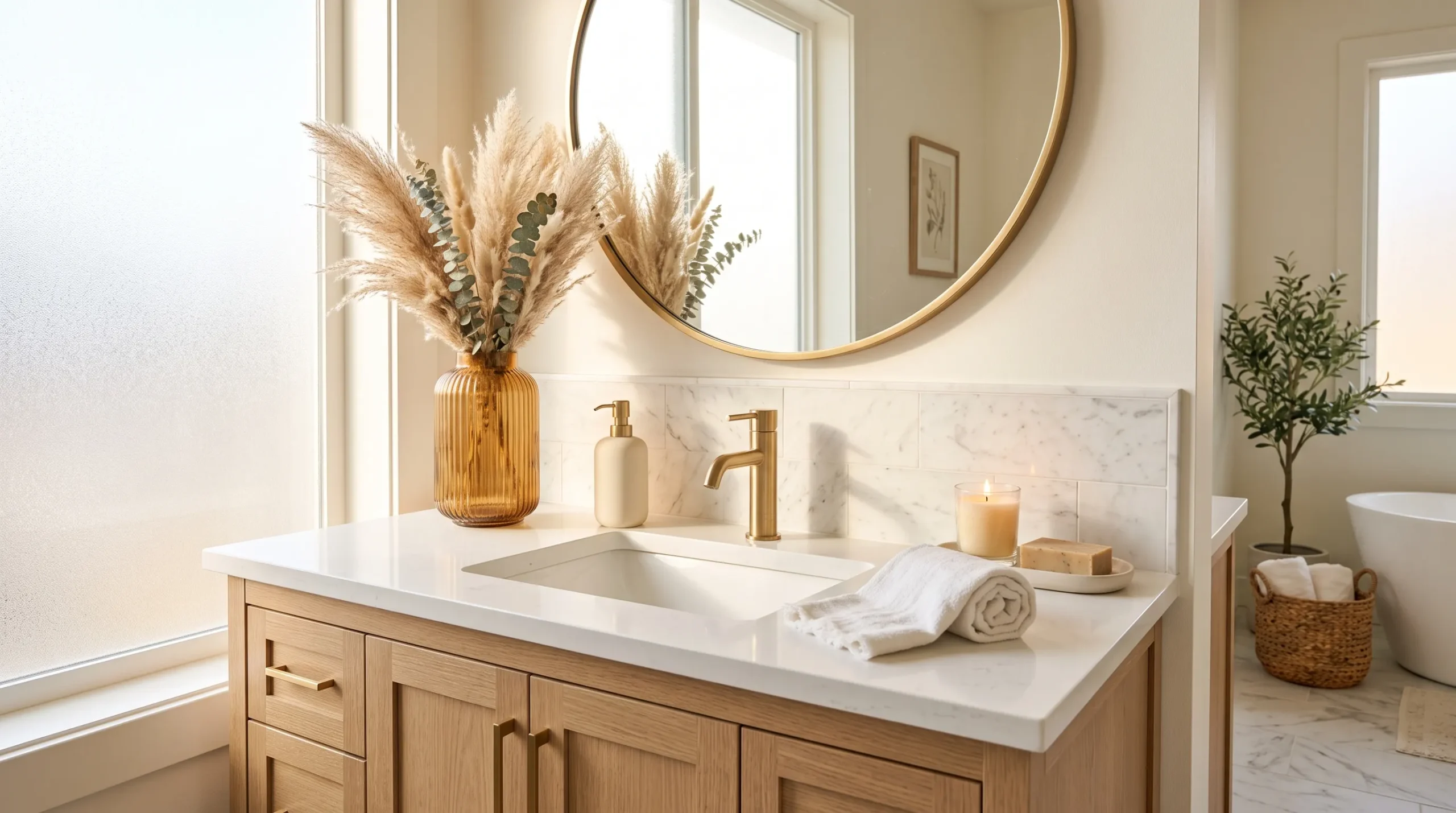
Marble carries a particular emotional weight in interiors. It signals that someone made a considered, lasting choice rather than a practical or budget-driven one, which is exactly the feeling behind the Nancy Meyers home aesthetic. Real Carrara marble with its visible grey veining, or even a high-quality marble-look porcelain, brings that note of quiet, unforced luxury that is completely central to this look — and if you are working within a tighter budget, these budget decor ideas for a luxurious home show exactly how to get the same feeling without the full material cost.
The key is letting marble be imperfect. Real marble stains, scratches, and etches over time, and every one of those marks tells the story of a kitchen that has actually been used for cooking, entertaining, and living. A marble surface with a small ring from a wine glass is more interesting than a pristine quartz alternative because it proves the room has a life happening inside it, which is always the goal.
The Key: If real marble feels like too much maintenance, choose a marble-look porcelain with visible veining for countertops but use real marble as a smaller accent, like a pastry board or a side table top.
13
Clawfoot Tubs Transform Bathrooms
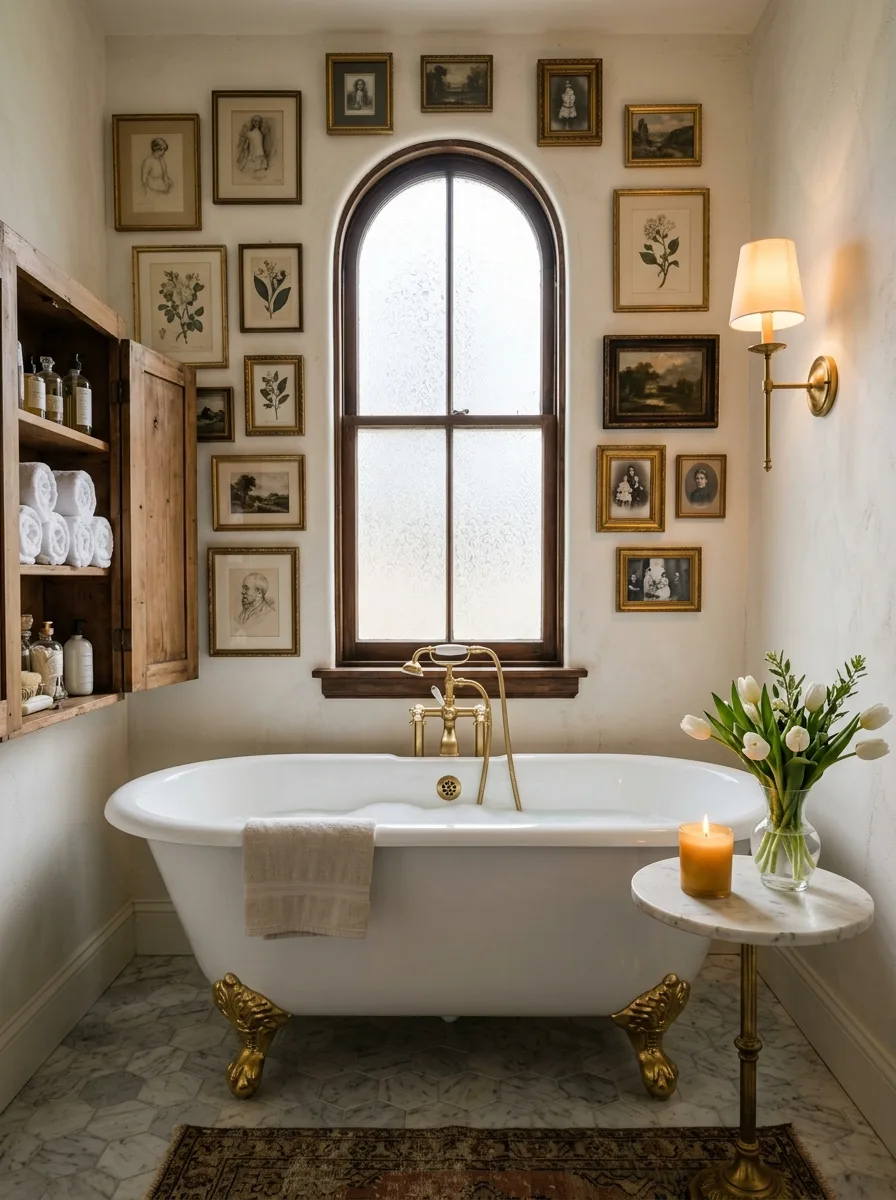
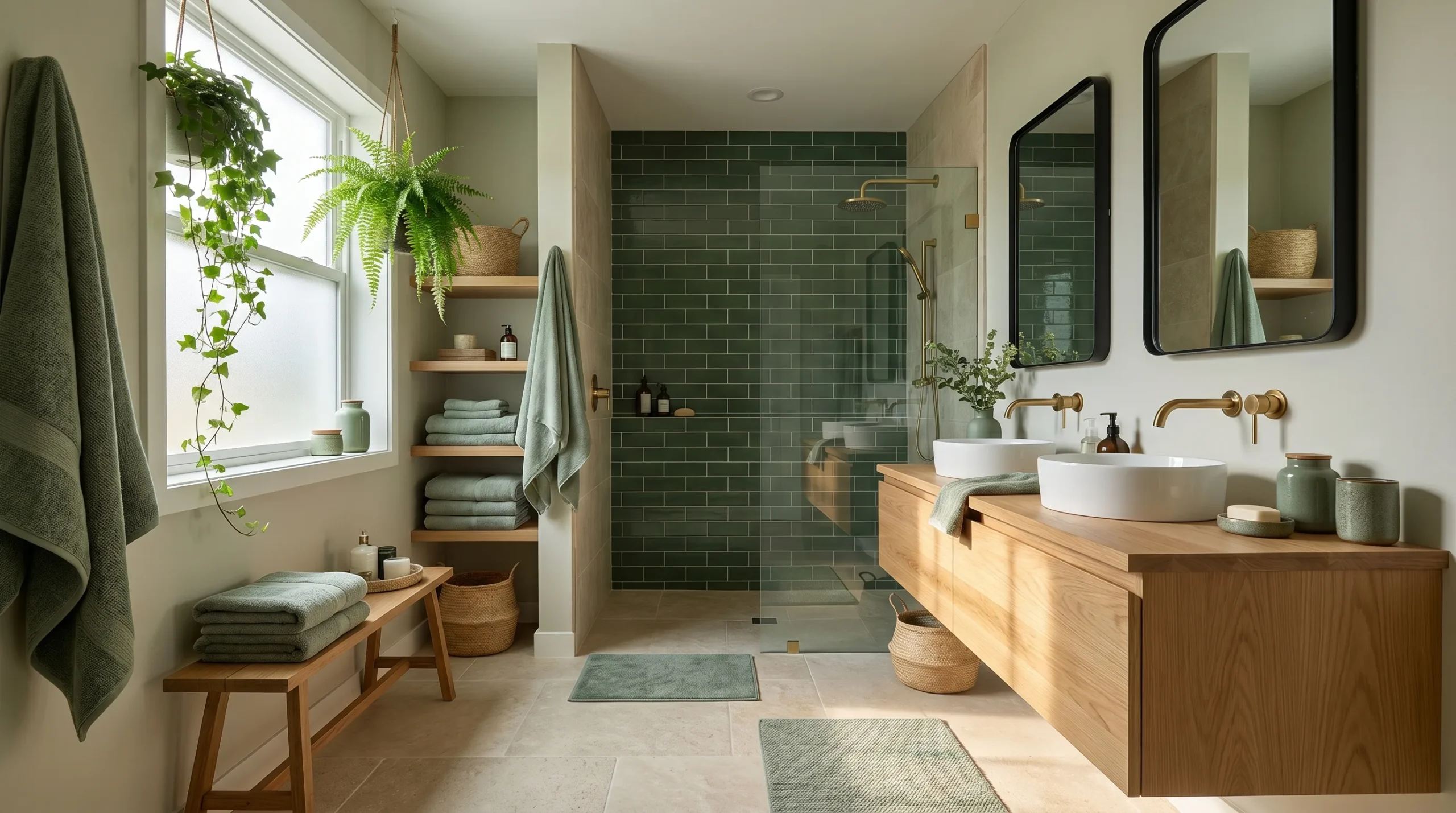
A clawfoot tub is the single most cinematic object you can put in a bathroom. It commands the room, communicates a preference for beauty over efficiency, and photographs in a way that no standard built-in tub ever could. In the Nancy Meyers interior style, the bathroom is treated as a room worth caring about as deeply as the living room, and the clawfoot tub is often where that commitment is most clearly expressed.
If a full clawfoot tub is out of reach, the surrounding styling choices can do a great deal of the same emotional work. A gallery wall hung above the tub, a small marble side table with a lit candle and fresh flowers, brass fixtures that glow warmly against white tile. These details collectively produce the feeling of a room that someone has genuinely loved and invested in, which is the entire point.
The Key: Treat your bathroom walls the way you would a living room. Hang art, add a small side table, and use a proper sconce rather than relying on overhead lighting alone.
14
Outdoor Spaces Deserve Real Comfort
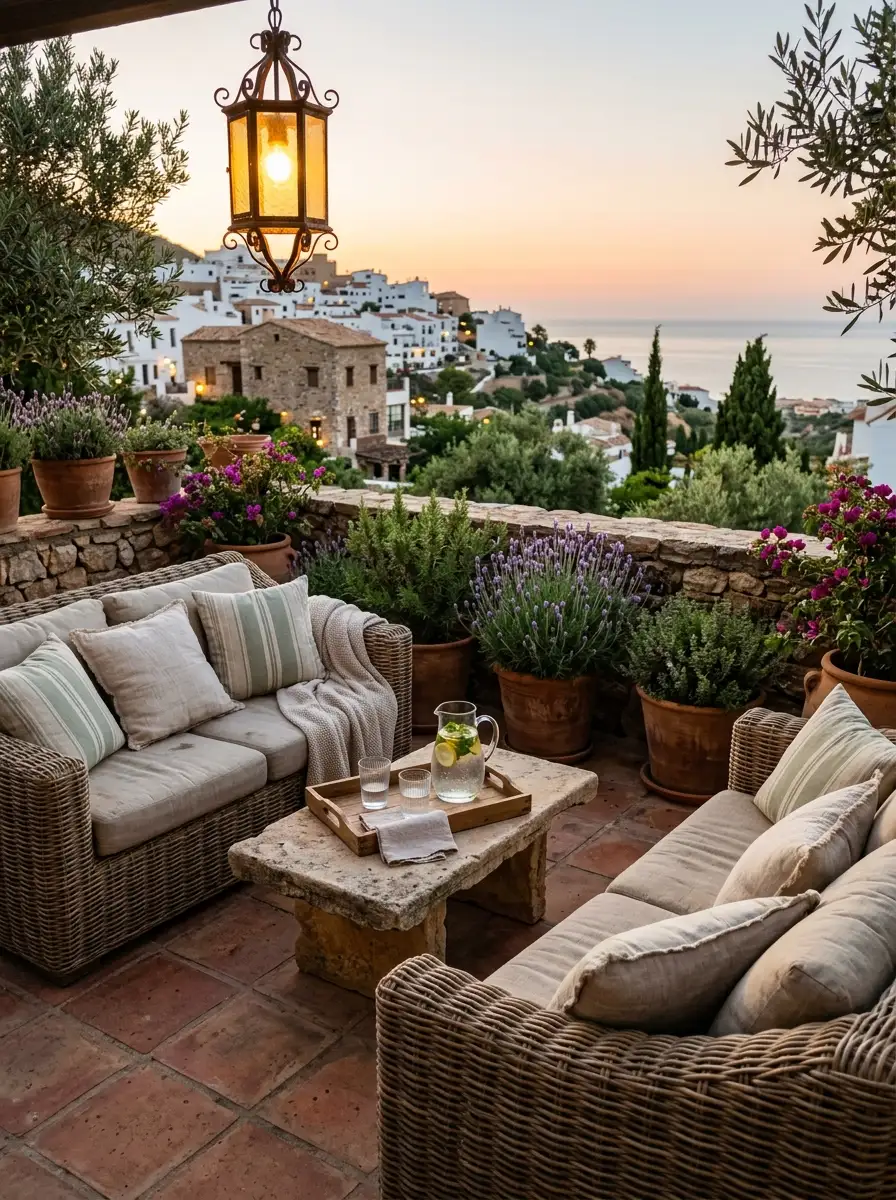
One of the most consistent lessons from the Nancy Meyers house look is that outdoor spaces deserve the same furniture investment as indoor rooms. Deep sofas, proper coffee tables, weather-resistant textiles in quality outdoor fabrics. Not folding chairs and a plastic table, but a real room that happens to have the sky as its ceiling and living plants as its walls.
When an outdoor space is furnished this generously, it fundamentally changes how often it gets used. People linger longer, conversations run later, the house expands in the best possible way. The investment does not have to be enormous. Rattan and wicker weather beautifully outdoors, terracotta pots cost almost nothing, and a single outdoor lantern changes the evening atmosphere completely without any electrical work at all.
The Key: Treat your outdoor terrace or patio as a complete room by starting with a proper outdoor rug. It defines the space and anchors the furniture exactly as it would do indoors.
15
Pendant Lighting Over Every Island
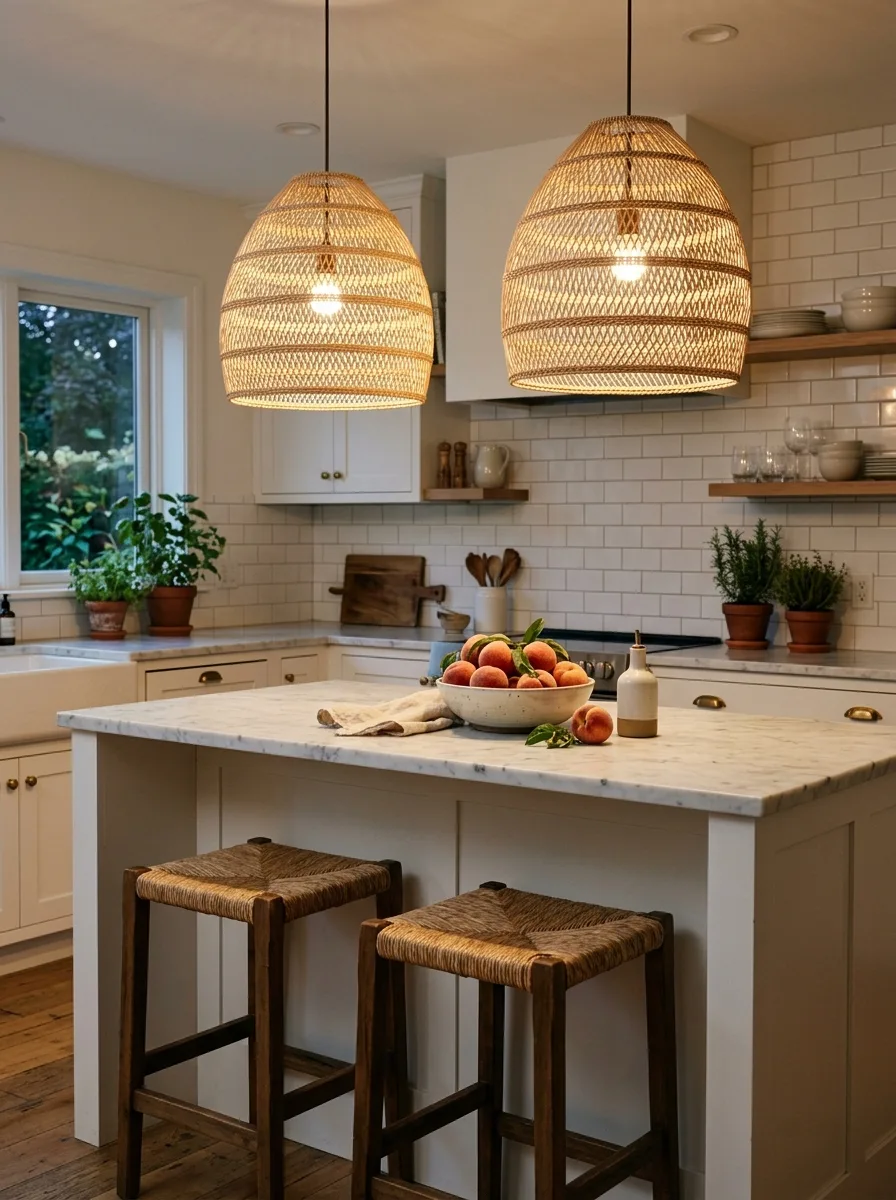
Pendant lights over a kitchen island are non-negotiable in Nancy Meyers inspired décor. Not small, decorative pendants hung too high, but substantial ones dropped low enough to actually create warm pools of light on the surface below. The scale and the drop height are everything. Get both right and the kitchen immediately feels like a place where good things are about to happen.
Woven rattan pendants are the natural choice because they bring texture into a room that can sometimes be dominated by hard, reflective surfaces. But any pendant with warmth, whether that is aged brass, smoked glass, or a fabric shade, works toward the same goal. The key is choosing a material that feels handmade or aged rather than sleek and contemporary, which would read against the entire mood.
The Key: Hang pendants so the bottom of the shade sits between 32 and 36 inches above the countertop. Any higher and they lose their intimacy. Any lower and they become a hazard.
16
Books Belong Everywhere
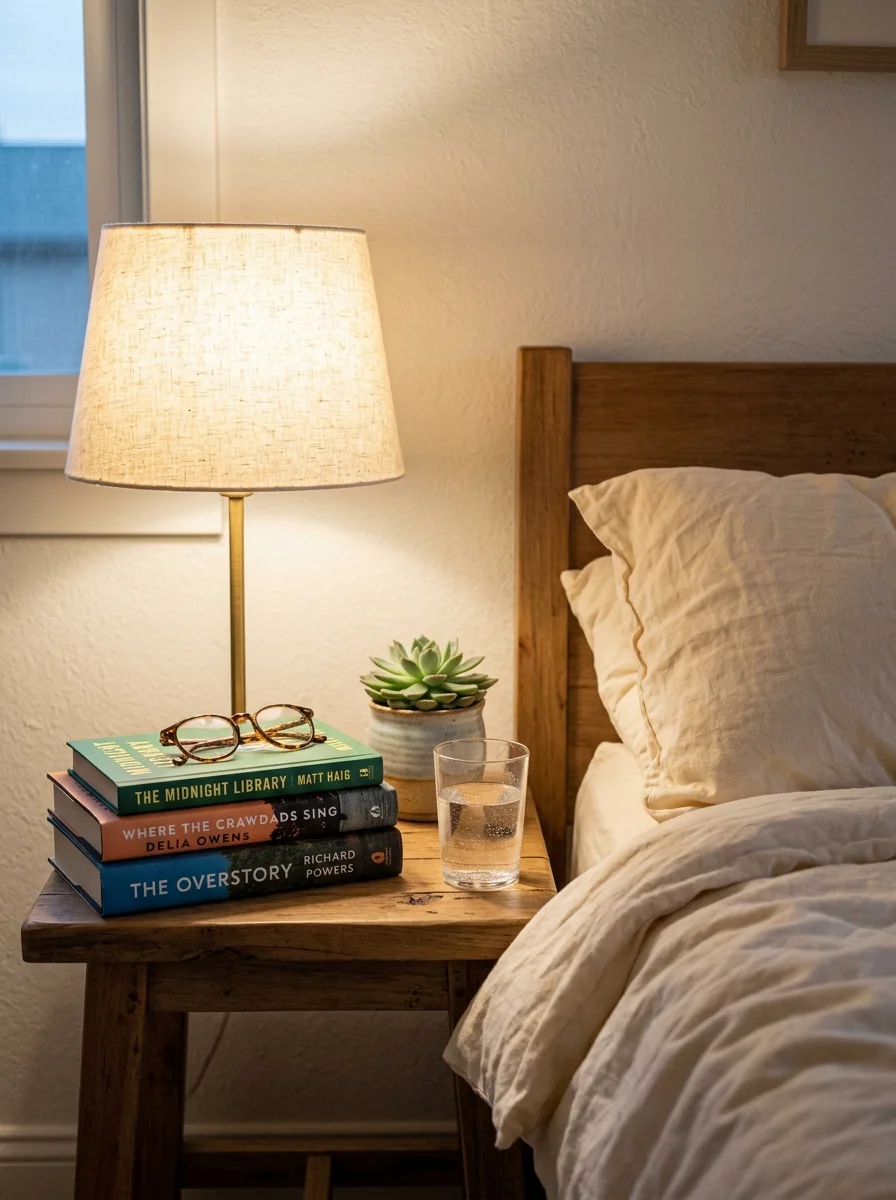
Books are not decoration in the Nancy Meyers home aesthetic, they are proof of a life being lived thoughtfully. They belong on bedside tables, stacked on coffee tables with a small plant on top, leaning against objects on a kitchen shelf. A home with visible books in multiple rooms tells a story about the person who lives there, and that narrative quality is exactly what makes these spaces feel so genuinely cinematic on screen.
The styling trick is to avoid organizing books too carefully. Mixed spine colors, some horizontal and some vertical, the occasional dog-eared corner visible. Books arranged with decorator-level precision stop looking like they have ever been read, which drains the whole effect. For the Nancy Meyers interior style, the mess is the point, a controlled, intentional, beautiful kind of mess that communicates real intellectual life happening quietly in every room.
The Key: Place a small stack of books in every room of your home, not just the study or living room. Even the bathroom benefits from a small curated pile on a side table.
17
Gingham Adds Warmth Without Weight
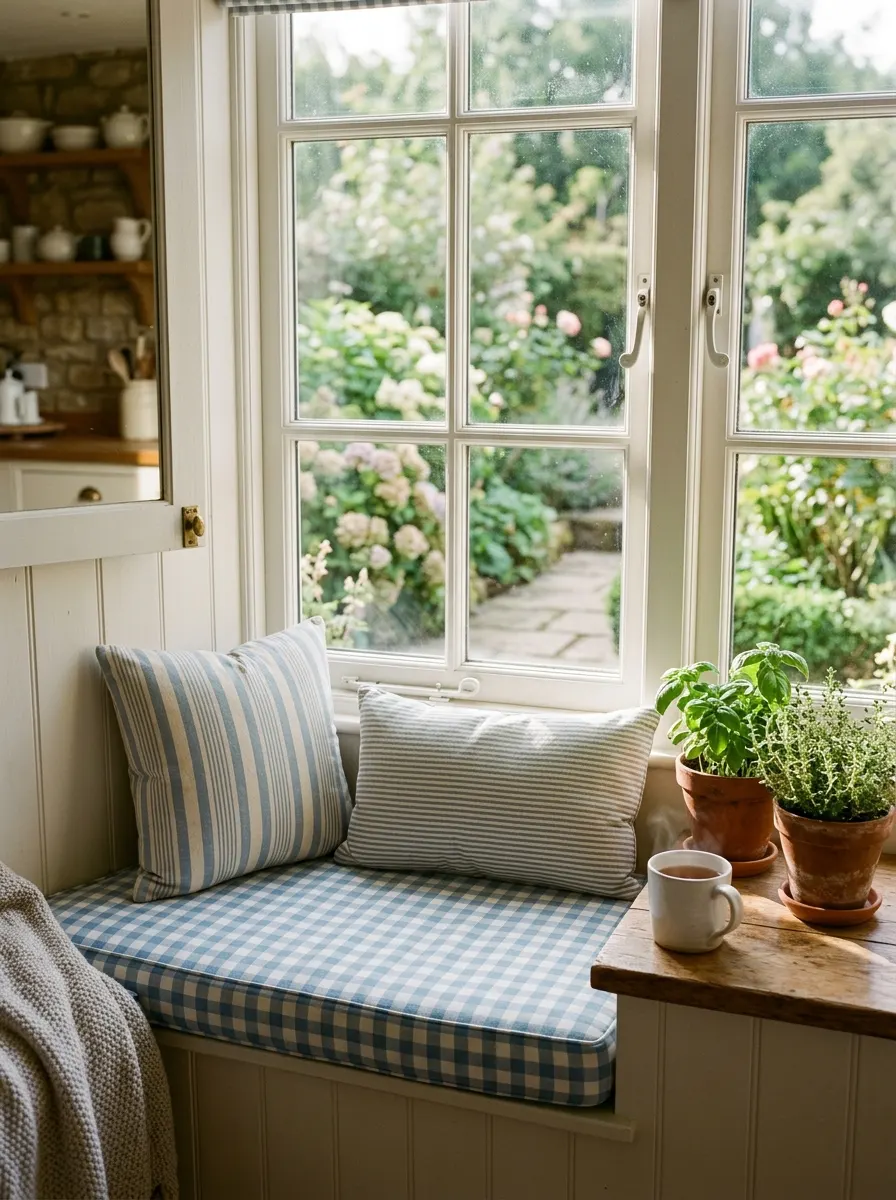
Gingham is the most underrated fabric in the Nancy Meyers home aesthetic. It reads as cheerful without being childish, traditional without being stuffy, and patterned without being aggressive. A gingham cushion on a window seat, a gingham tablecloth for a Sunday breakfast, a gingham curtain panel in a mudroom, each one of these small additions pulls the room toward warmth and personality in a way that plain fabrics simply cannot replicate.
The color choice matters more than the scale of the check. A soft blue and white gingham feels coastal and breezy, while a red and white version is more French farmhouse. Both work beautifully within the broader aesthetic, but whichever you choose, keep the rest of the fabrics in the room relatively calm so the gingham can do its cheerful work without competing.
The Key: Use gingham as an accent fabric rather than the dominant pattern in a room. One gingham piece alongside two plain textures and one stripe is the ideal combination for this look.
18
Imperfection Is the Final Secret
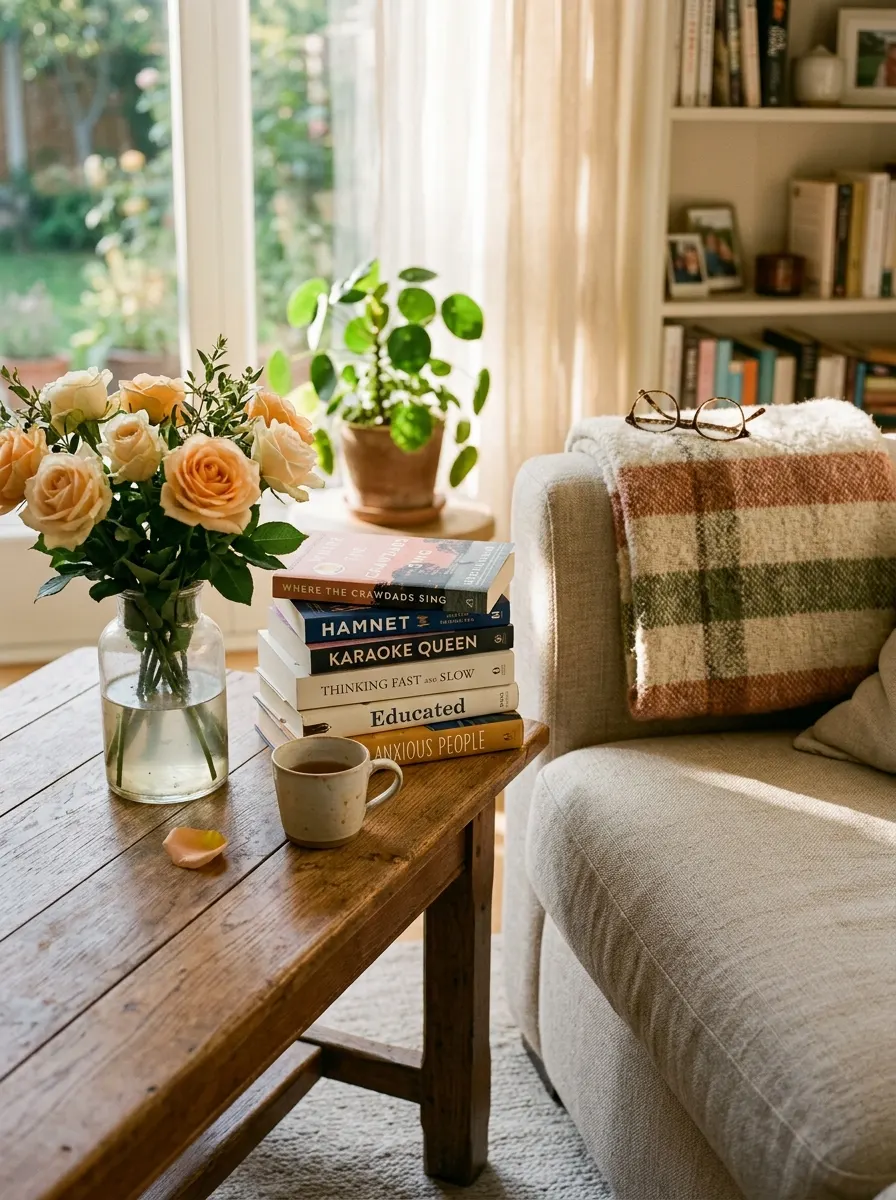
The final and most important secret in the Nancy Meyers home aesthetic is this: nothing should look too perfect. A blanket casually thrown over a sofa arm rather than folded. A stack of books slightly uneven rather than precisely aligned. Flowers that have been in the vase for three days rather than freshly arranged that morning. These small imperfections are what separate a room that is lived in from one that is merely photographed.
Imperfection in a beautiful home signals confidence. It says the person who lives here is not performing their taste for visitors but is simply surrounded by things they genuinely love and use. That quality, more than any specific furniture choice or paint color, is what makes this cinematic home aesthetic feel so deeply appealing on screen and so worth working toward in real life. The room does not exist for the photograph. The photograph exists to capture the life.
The Key: Before photographing or presenting your home to guests, resist the urge to tidy everything completely. Leave one casual imperfection in each room as evidence of real, beautiful living.
The Nancy Meyers home aesthetic is not about replicating a film set. It is about understanding what made those rooms feel so magnetic in the first place: warmth layered over warmth, texture placed beside texture, old things living comfortably next to new ones. Every single secret in this list comes down to one underlying principle: the room should look like it belongs to someone who genuinely loves being in it. When a space communicates that, it becomes cinematic all on its own, regardless of the lighting or the budget.
If these ideas inspired you, save this post to your Pinterest boards so you can come back to each secret when you are ready to work through it. There is no pressure to do everything at once. Pick the two or three that feel most achievable this month and let the rest follow naturally over time. Share this article with a friend who watches design films for the furniture, because they are going to want every one of these 18 secrets for themselves.