White Living Room
🏠 18 Real Ideas
⏱ Quick Read
🔥 Always Trending
18 White Living Room Ideas That
Prove Minimalist Design Can Still Feel Warm and Inviting
There is something about white living rooms that stops people mid-scroll. Clean, calm, and endlessly beautiful, white living room ideas have become one of the most searched and saved aesthetics on Pinterest for a reason. But there is a myth floating around that white rooms feel cold or sterile, and today we are busting that wide open. This article covers 18 specific, actionable ideas you can steal right now to create a white living room that looks polished yet feels genuinely lived-in and warm.
Every idea here is rooted in real design thinking, not just pretty pictures. You will discover how texture, tone, layering, and small but intentional choices make all the difference between a room that looks like a showroom and one that actually feels like home. Scroll through, take notes, and get ready to fall in love with your own living space all over again.
01
White Living Room Ideas with Rattan Accents
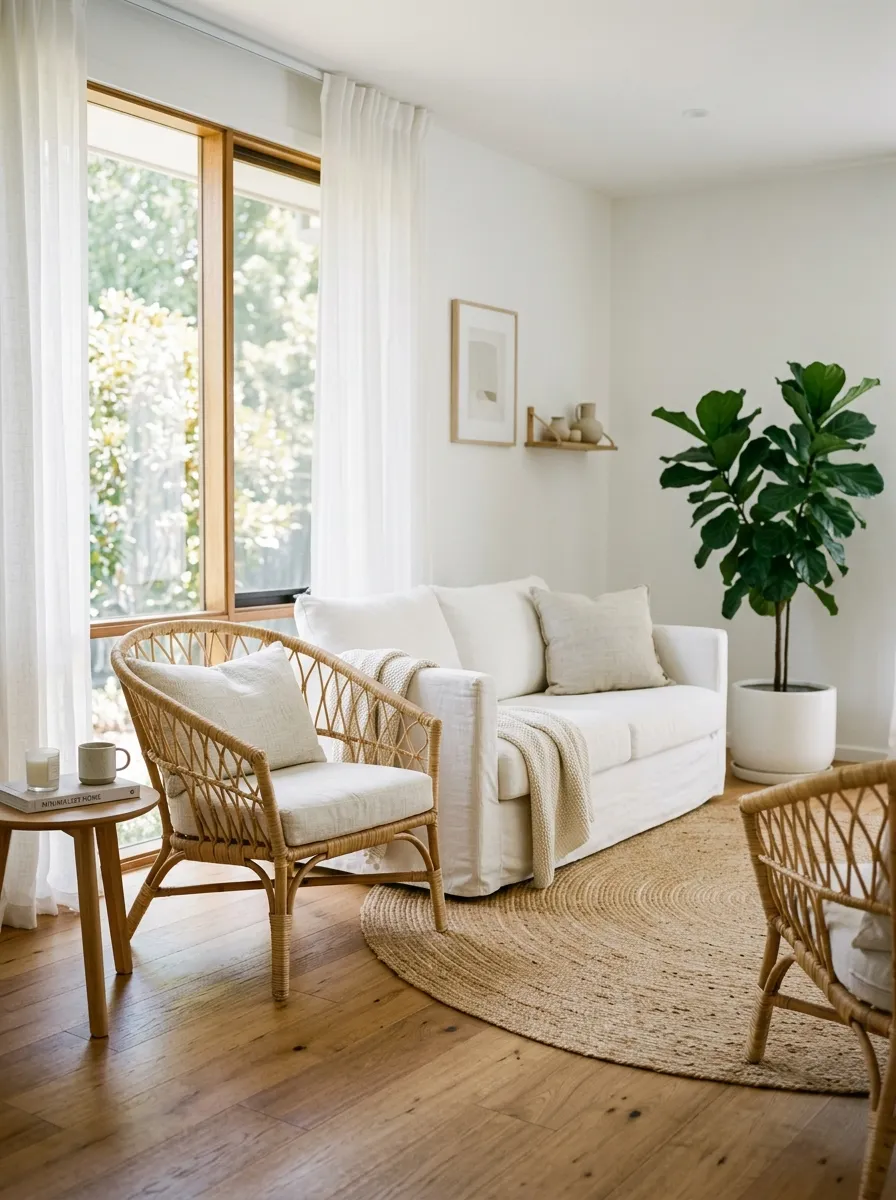
Rattan has a quiet magic that white rooms desperately love. The moment you pull a woven rattan chair into a crisp white space, the entire room exhales. That contrast between the smooth upholstered sofa and the handcrafted, organic texture of rattan creates a visual warmth that no paint color alone can achieve. I have seen this pairing work in small apartments and grand open-plan homes alike.
The trick is to let the rattan pieces carry the room without overpowering it. Two rattan accent chairs flanking a white sofa or a rattan pendant light overhead gives the eye something interesting to land on. In my experience, choosing rattan with a slightly lighter, honey-toned finish keeps things bright and cohesive rather than heavy. The result is a room that feels relaxed and effortlessly styled at once.
The Key: Rattan introduces organic warmth through texture alone, making it the single most powerful natural material to pair with crisp white walls and linen upholstery.
02
Black Contrast Against Pure White
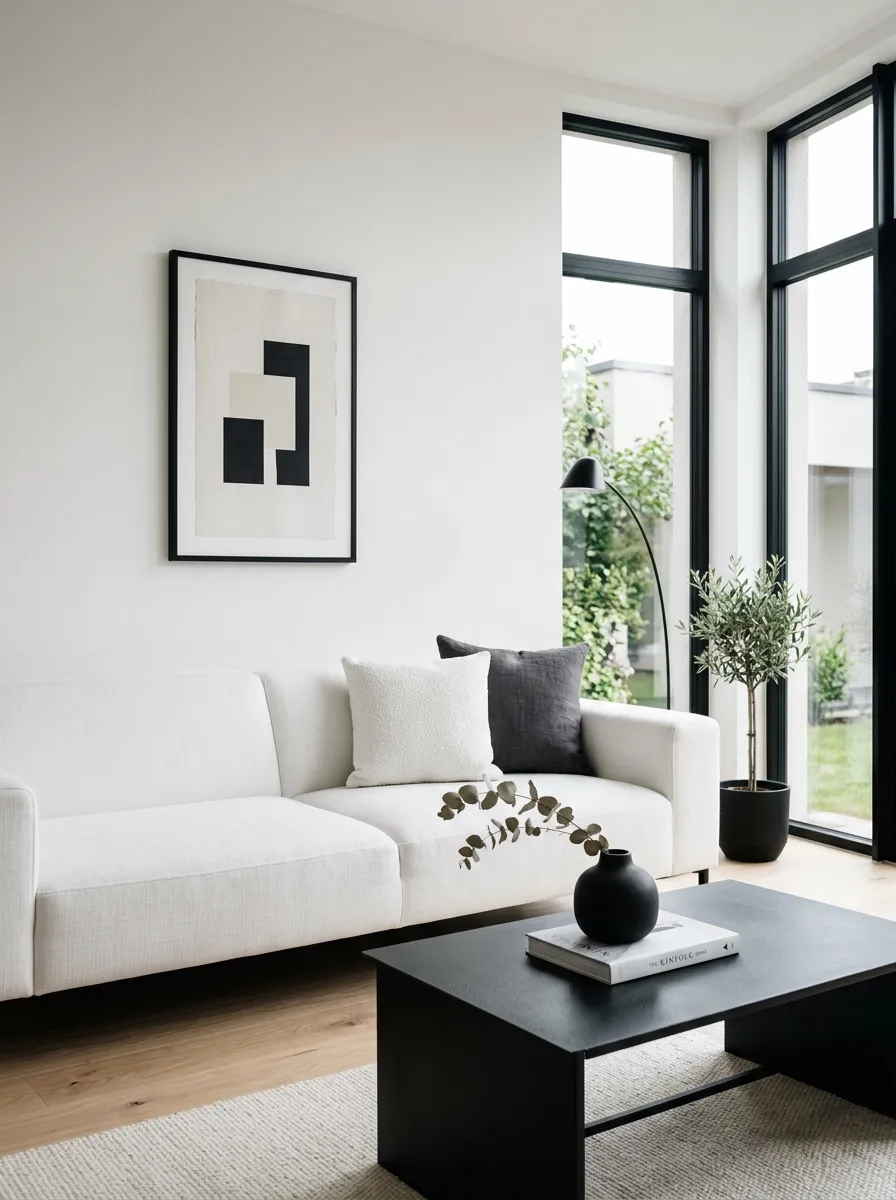
A white room without contrast can start to feel like a blank page that nobody has written on yet. Black accents are the answer, and they work with a precision that no other color can match. Even a single matte black coffee table or a set of black-framed windows immediately gives a white living room an architectural edge. The contrast creates depth, structure, and the kind of visual clarity that feels intentional rather than accidental.
The key is restraint. You do not need much black to make a powerful statement. A black metal shelf bracket, a slender black floor lamp, or a single bold art print in a black frame is enough. I have noticed that rooms with too much black start to feel dramatic rather than refined. Keep the ratio at roughly 10 to 15 percent black accents against the white backdrop and the balance stays clean, modern, and genuinely inviting.
The Key: Black acts as a visual anchor in an all white room, preventing the space from feeling washed out without adding color or warmth.
03
Warm Wood Tones as a Foundation
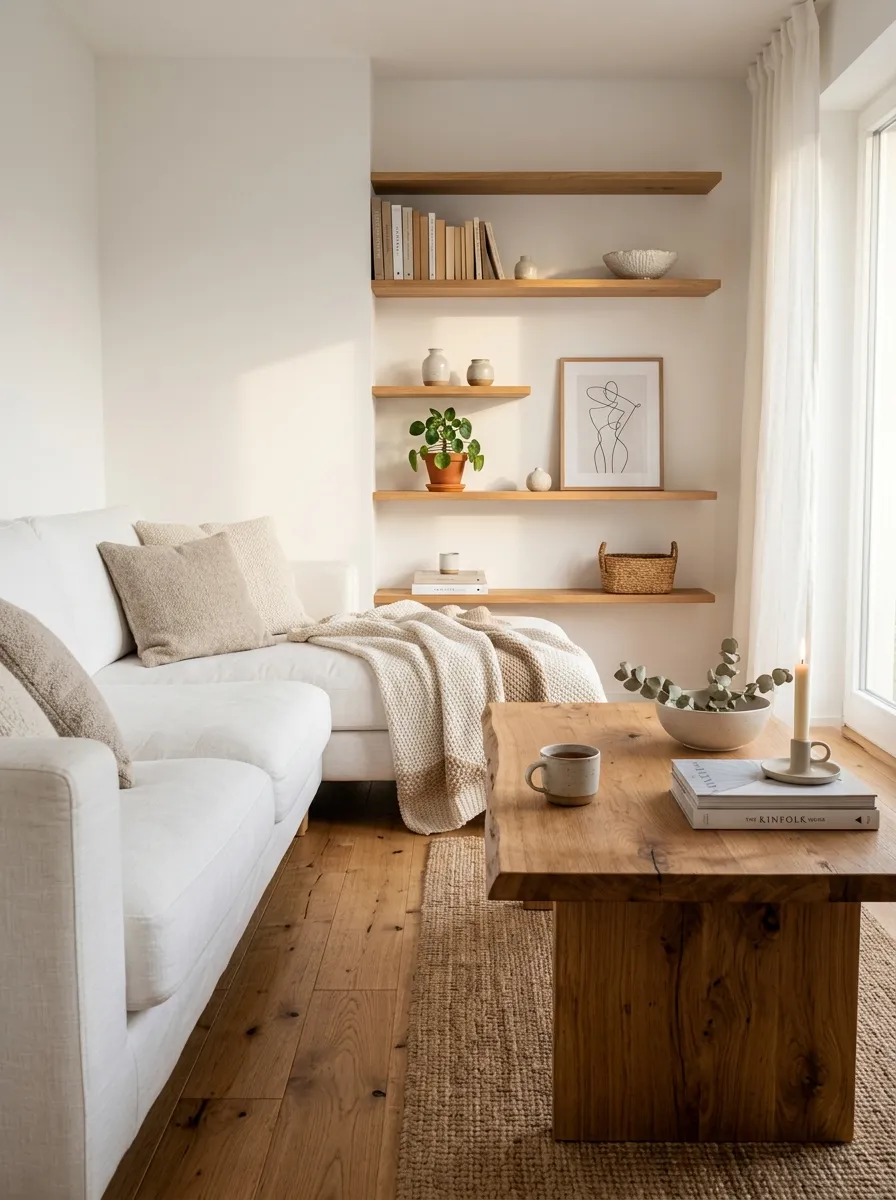
Wood is the easiest shortcut to warmth in any white room design ideas playbook. The natural grain, the honey tones, the way light plays across a real oak surface, it all adds an organic richness that white paint alone simply cannot create. A warm-toned hardwood floor immediately grounds a white living room, pulling the whole space together like a base note in a song you cannot stop humming. Wide plank floors work especially well because the broader surface shows off the natural variation in the wood grain.
Beyond floors, wood accents at different heights create a layered, complete feel. A raw-edge coffee table at seated eye level, floating oak shelves at standing height, and even exposed ceiling beams in older homes give the eye multiple stopping points. I have noticed that mixing lighter ash tones with deeper walnut creates the most interesting depth in a white room, as long as the overall palette stays in the warm, natural range rather than drifting cool or gray.
The Key: Layering wood accents at multiple heights, floor, table level, and wall-mounted shelves, creates a fully dimensional warmth that is impossible to fake.
04
Linen and Chunky Knit Layering
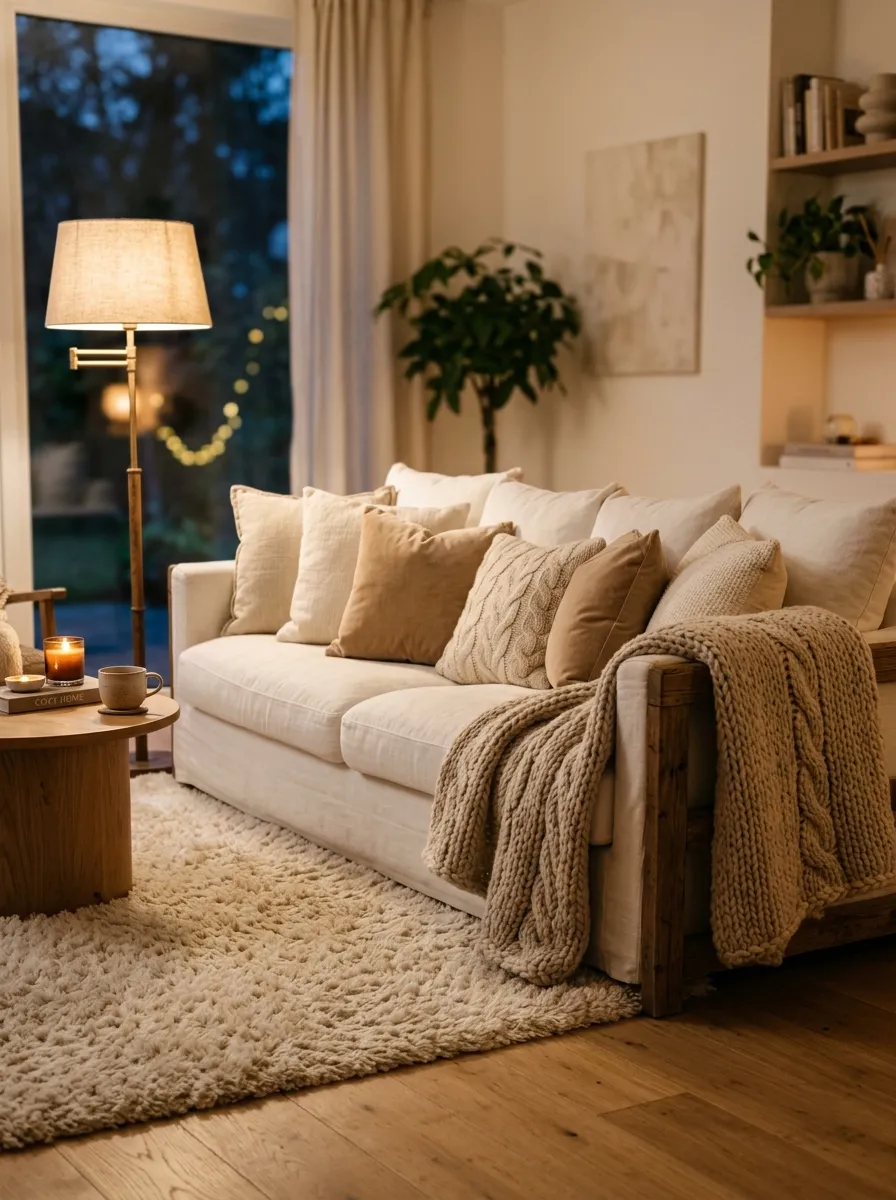
Texture is the secret ingredient that separates a cold white room from a cozy one, and linen combined with chunky knit is the most reliable combination in that toolkit. A natural linen sofa already has a beautiful woven texture that catches light in a way that flat cotton or synthetic fabric cannot. Drape a chunky knit throw casually over one arm and the room immediately looks like someone actually lives there, someone who enjoys being comfortable and unhurried.
Layering goes further when you mix pillow textures intentionally. A smooth linen pillow next to a nubby boucle one next to a slightly shiny velvet one gives the sofa a richness that draws people in. Underfoot, a high-pile rug softens the entire room acoustically and visually. In my experience, the cream and oatmeal end of the white spectrum works best here because it reads as warm white rather than stark white, which changes the whole emotional temperature of the room.
The Key: Mixing at least three different textile textures on one sofa, linen, knit, and boucle or velvet, creates the layered warmth that makes a white room feel genuinely lived in.
05
Leather Seating for Rich Contrast
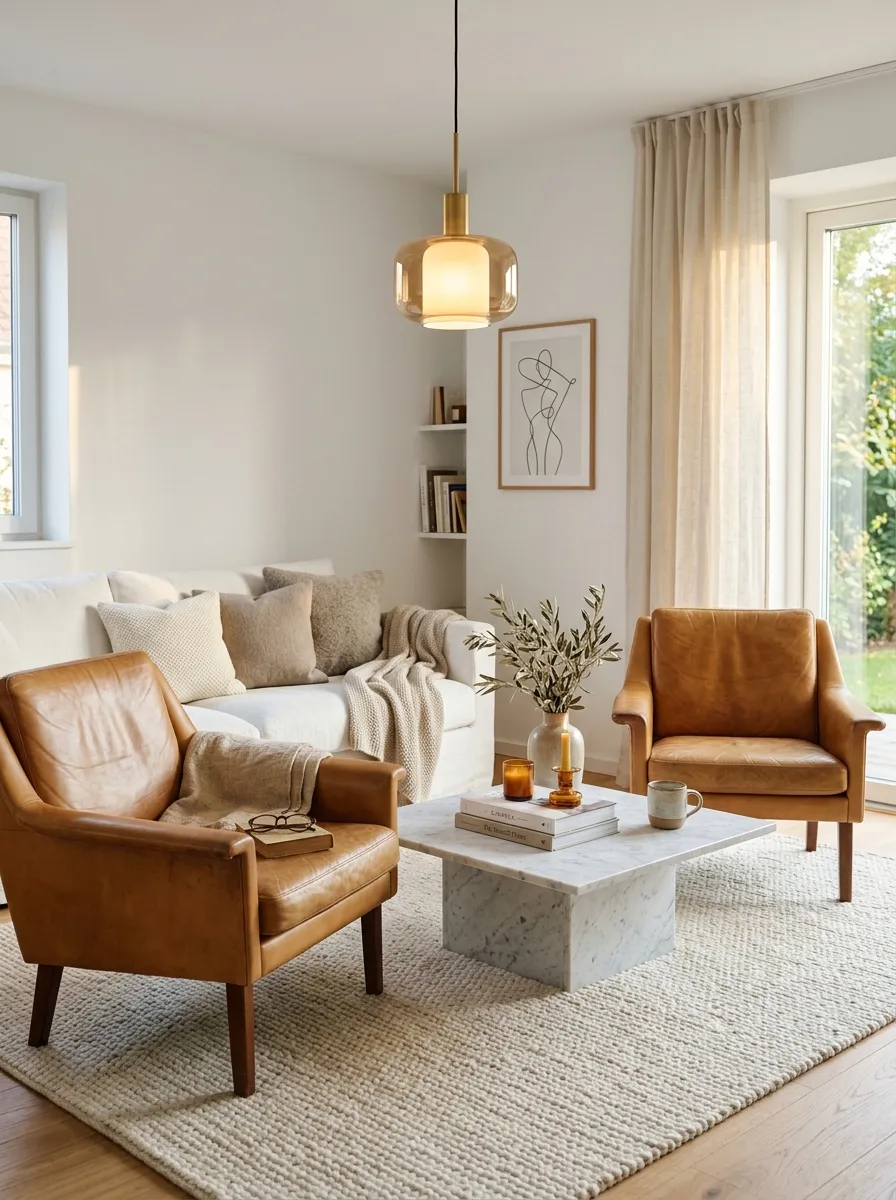
Leather in a white room does something that fabric simply cannot: it introduces richness through material rather than color. A pair of tan or caramel leather armchairs set against a white sofa and white walls creates a contrast that reads as warm and luxurious rather than stark. The natural variation in leather, the slight sheen, the way it softens over time, all of it adds a lived in quality that makes the room feel curated rather than cold.
The tone of the leather matters as much as the material itself. Tan, caramel, and cognac tones read as warm and welcoming against white. Avoid very dark brown or black leather in a purely white room if your goal is warmth, as those shades push the room toward dramatic rather than inviting. I have seen buttery tan leather chairs completely transform a white room that previously felt flat, adding soul and sophistication in one move without touching a single paint color.
The Key: Tan or cognac leather introduces organic warmth and material contrast in a white room without disrupting the clean minimalist palette.
06
Subtle Art with Tonal Depth
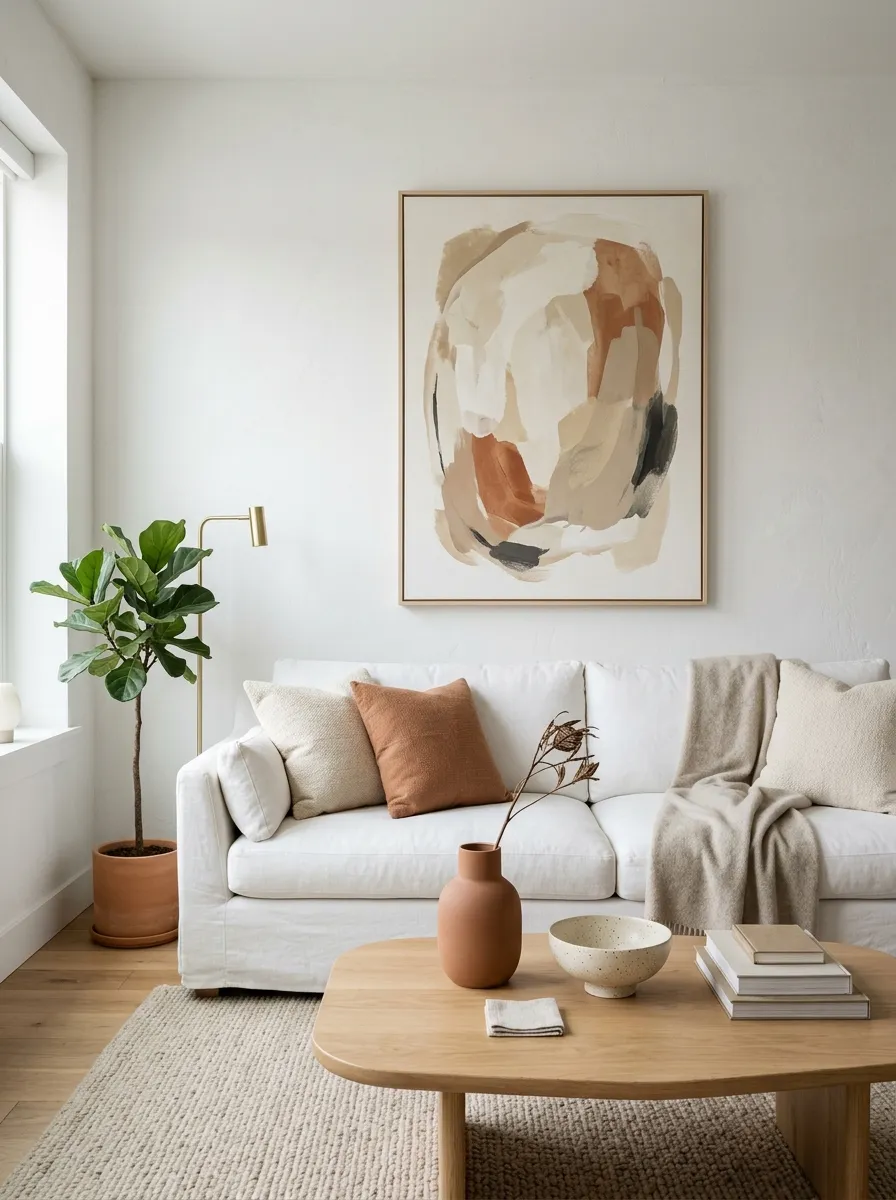
Art is often an afterthought in white living rooms, treated like decoration rather than design. But the right piece of art can do more work than almost any piece of furniture. A large canvas in soft earth tones, think cream, sand, warm beige, and the faintest blush, introduces color without committing to it. The art becomes the emotional center of the room while still letting the white backdrop breathe. If you love the idea of a room where restraint does all the heavy lifting, you might also enjoy these Japandi living room ideas that take the same philosophy even further.
The size of the art matters as much as the subject. An undersized print on a large white wall disappears and makes the room feel unfinished. Go bigger than you think you should and hang it at true eye level, which for most adults is about 57 inches from the floor to the center of the frame. I have noticed that tonal abstract art, pieces that work within a narrow color range rather than a broad one, integrates most gracefully into a minimalist white living room without competing for attention.
The Key: One oversized piece of tonal art in warm earthy hues acts as the emotional anchor of a white room without introducing jarring color.
07
Statement Fireplace as a Focal Point
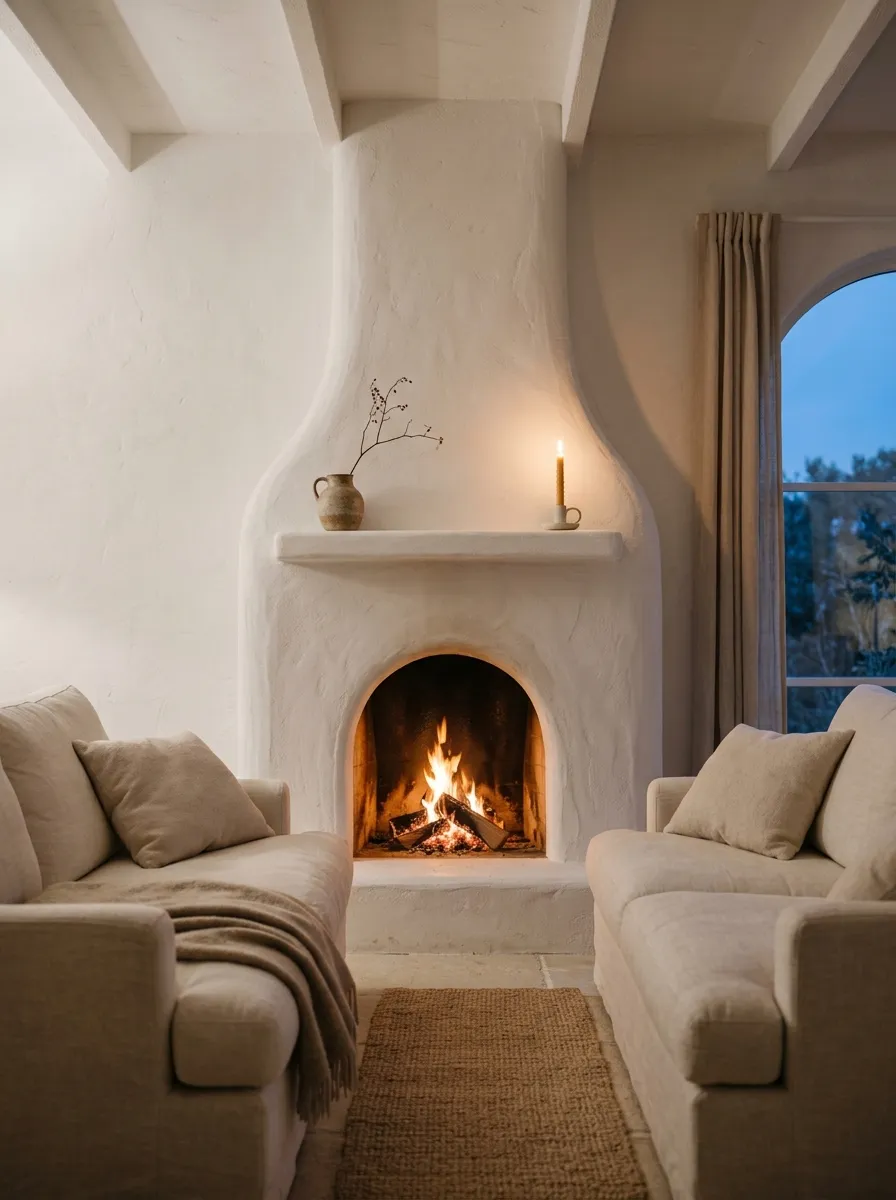
Every white living room needs one thing that the eye can rest on with satisfaction, and a fireplace is the most natural candidate in any room lucky enough to have one. A white plaster or limewashed stone fireplace disappears into the wall in the best possible way, creating a focal point through shape and texture rather than color. The warmth of the flame itself does the emotional heavy lifting, making the entire room feel shelter like and welcoming the moment it is lit.
Even without an active fire, the fireplace surround creates architectural interest in an otherwise flat white room. A sculptural plaster finish, a simple Venetian plaster mantel, or even a shiplap framed firebox gives the eye a reason to stop and settle. Style the mantel with restraint: one organic ceramic object, one taper candle, and nothing else. I have seen overly styled mantels compete with the fireplace instead of honoring it. Simplicity here always wins.
The Key: A fireplace becomes the most powerful focal point in a white room because it adds both visual architecture and actual warmth simultaneously.
08
Plush Area Rug as a Warm Base
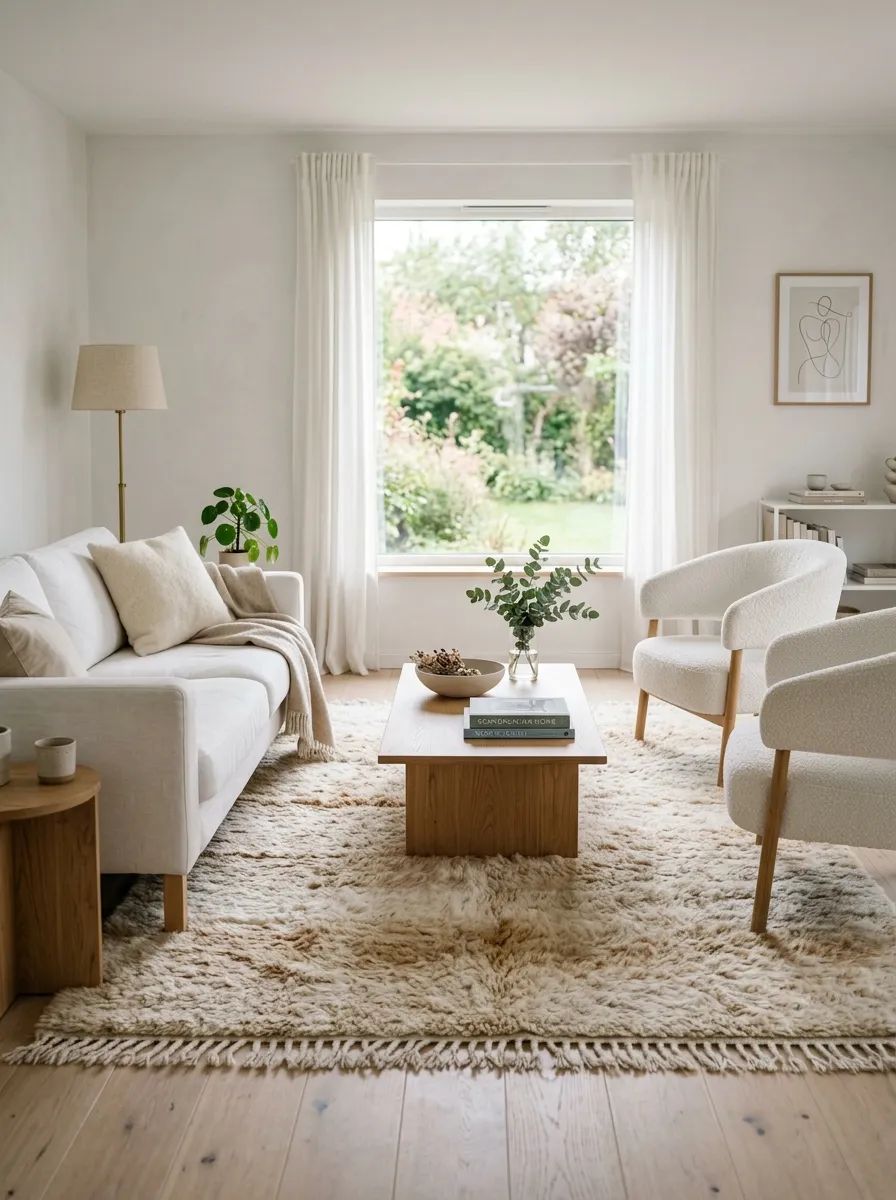
A rug is not decoration in a white living room; it is architecture. The right rug defines the seating zone, softens the acoustics, and introduces warmth underfoot in a way that no other element can replicate from above eye level. A large plush wool rug in ivory, natural, or warm caramel tones grounds the entire white room, giving it a sense of center and intention. Rooms without rugs often feel unfinished even when they are beautifully furnished, because nothing ties the floating pieces together.
Size is the most common mistake people make with rugs. The rug should be large enough that at least the front legs of every sofa and chair sit on it. A too small rug makes the furniture look like it is floating on an island rather than settled in a room. In my experience, the one size up rule applies universally: whatever size you are considering, go to the next size up. The room will feel more grounded, more generous, and more intentionally designed as a result.
The Key: A rug must be large enough for the front legs of all seating to rest on it; anything smaller makes the furniture arrangement feel accidental rather than anchored.
09
Greenery and Indoor Plants
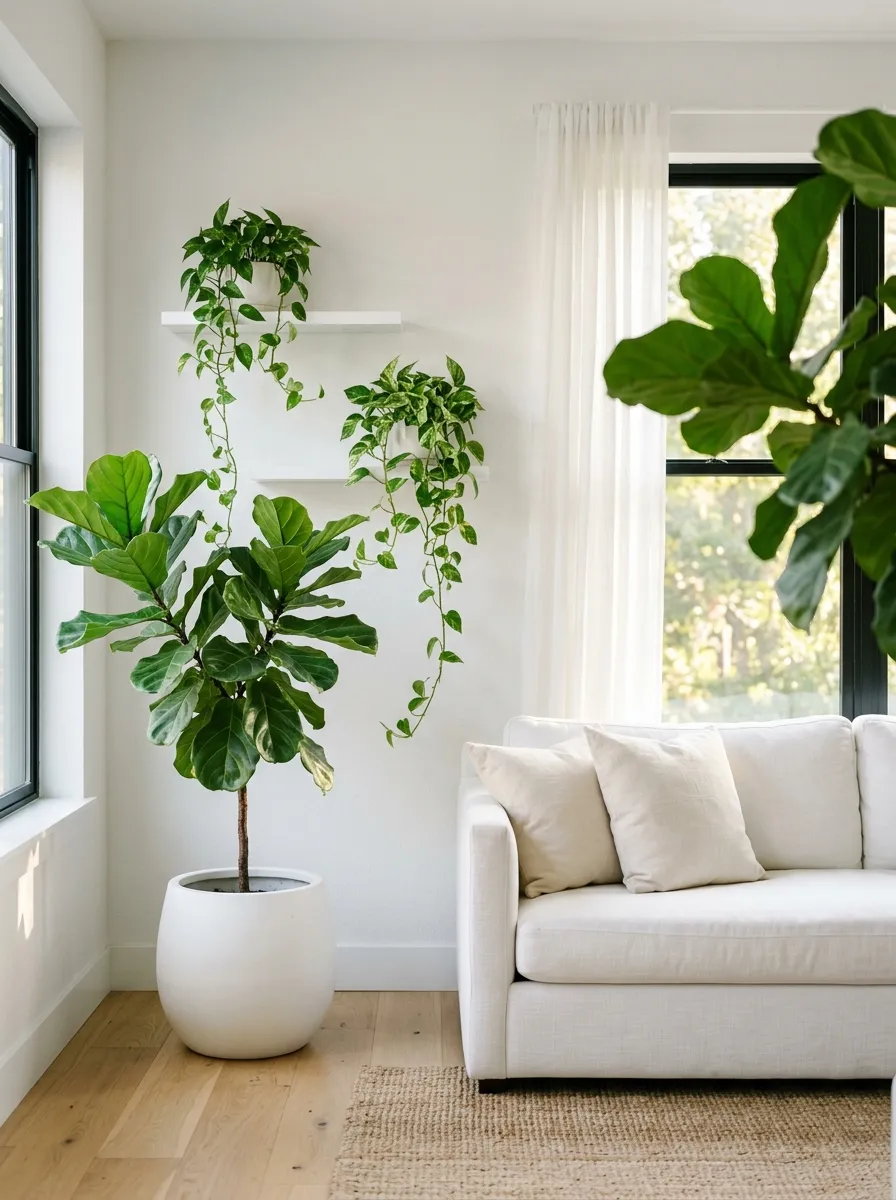
Plants do for a white room what a well chosen accessory does for a neutral outfit: they complete it. A large fiddle leaf fig or monstera in a matte white ceramic pot placed in the corner of a white living room introduces a lush, living quality that no piece of furniture or art can replicate. The deep green of healthy plant leaves against a white wall is one of the most satisfying visual combinations in all of interior design, quietly dynamic and endlessly refreshing.
Beyond the large statement plant, smaller plants at varied heights carry the green through the room without overwhelming it. A trailing pothos on a floating shelf, a sculptural snake plant beside the sofa, a small eucalyptus stem in a thin necked vase on the coffee table. I have noticed that white rooms with at least three plants at different heights feel alive and genuinely inhabitable in a way that plantless white rooms rarely do. The greenery signals that someone who enjoys living is here.
The Key: Positioning plants at three different height levels, floor, shelf, and table, distributes the green organically and prevents the staged one plant in corner look.
10
Layered Neutral Pillows and Throws
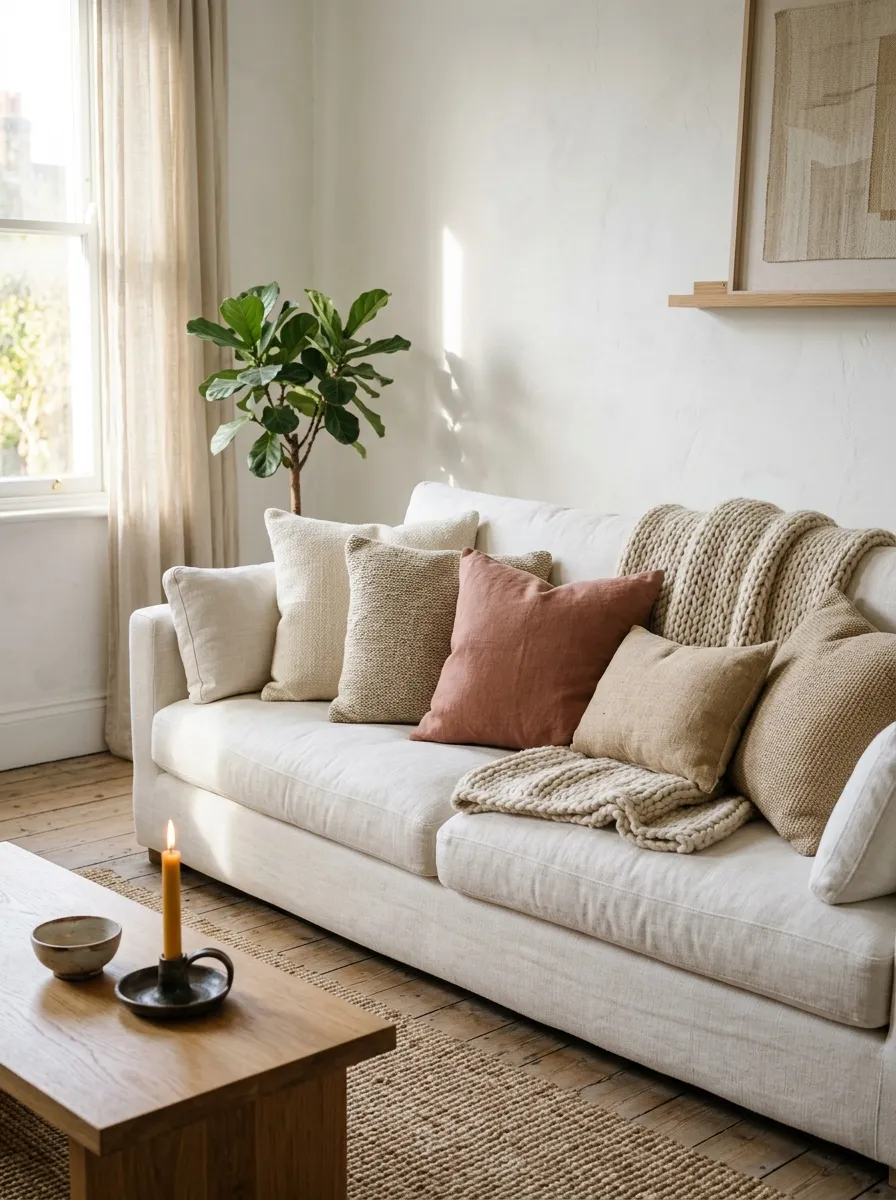
Pillows are the fastest and most affordable way to change the entire emotional quality of a white living room. A white sofa with four matching white pillows looks sterile. That same sofa with a mix of cream, oatmeal, warm sand, and a single clay toned pillow looks like a room someone genuinely curates. The secret is working within a tonal range rather than adding contrast colors, which keeps the room feeling calm while still feeling layered and visually interesting.
Vary the size and the filling. A large 24 inch pillow at the back, a 20 inch in the middle, and a smaller 16 inch lumbar pillow in front gives the arrangement a natural, intentional structure. Mix a smooth linen cover with a boucle or ribbed knit cover and the contrast in texture adds as much richness as color would. I have found that odd numbers of pillows feel more natural and relaxed than even ones, which can look arranged rather than lived in.
The Key: Working within a warm neutral tonal range for pillows, cream through sand through clay, adds richness without introducing the visual noise of contrasting colors.
11
Warm Ambient Lighting Layers
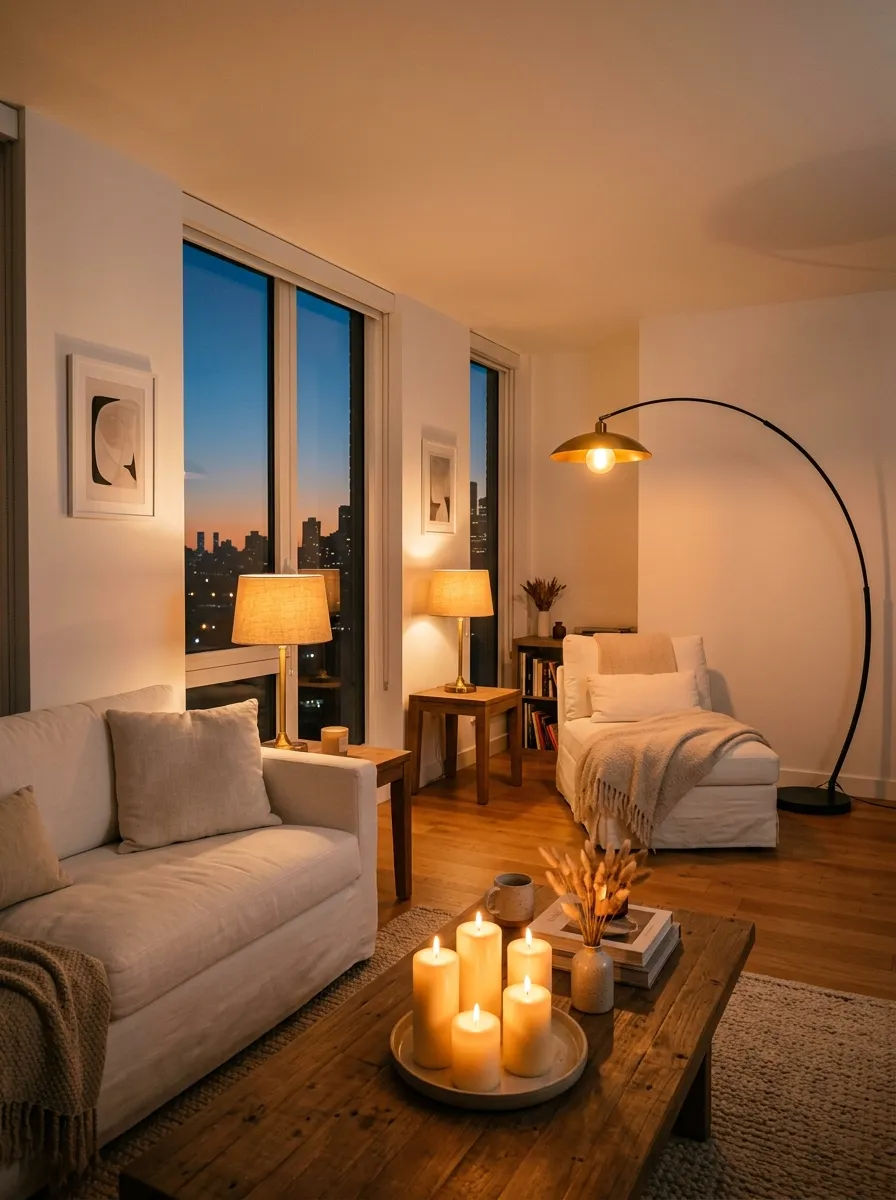
Lighting is the most underestimated design tool in a white living room. A single overhead light fixture turns a white room clinical and flat, washing out the texture and warmth of every soft furnishing in the space. Layered lighting, specifically warm toned bulbs at multiple heights, completely transforms the mood. A floor lamp in one corner, table lamps on side tables, and a cluster of candles on the coffee table together create a warmth that no paint color or textile can replicate after dark.
Bulb color temperature matters enormously in a white room. Bulbs at 2700K emit a warm amber glow that makes white walls read as creamy and inviting. Bulbs at 4000K or above push white walls toward the blue white end of the spectrum, which feels institutional rather than cozy. I have seen the same room transformed from cold to warm simply by swapping cool toned bulbs for warm ones and adding a second lamp. The investment is minimal; the difference is extraordinary.
The Key: Warm toned bulbs at 2700K combined with at least three light sources at different heights create the layered ambient glow that makes a white room feel like sanctuary.
12
Sculptural Ceramic Objects
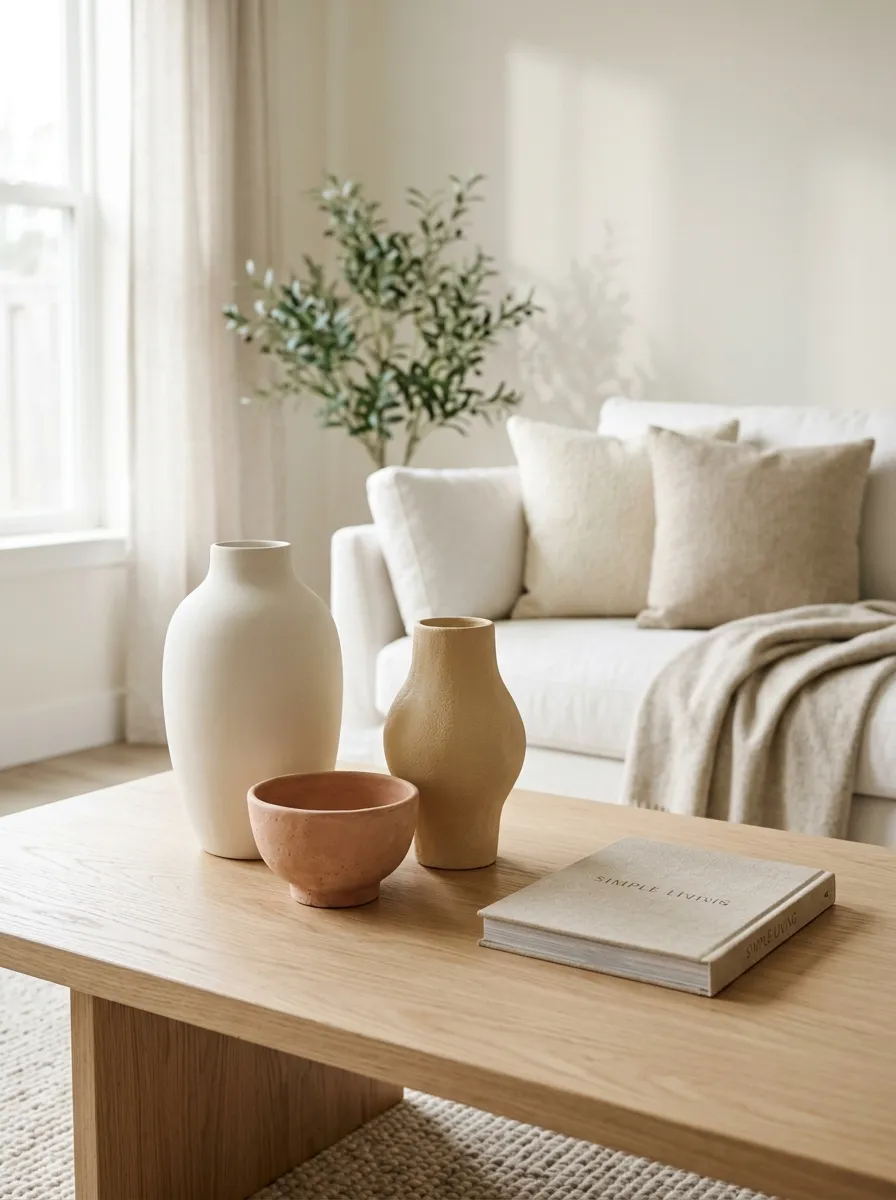
Ceramics occupy a unique design territory in a white living room: they are simultaneously functional, sculptural, and deeply personal. A grouping of three ceramic vessels at varying heights on a coffee table, one tall, one medium, one short, creates a considered composition that draws the eye without demanding it. The matte, handcrafted surface of a ceramic object has a warmth and imperfection that machine made objects cannot replicate, and that slight irregularity reads as human and inviting.
Color in ceramics works differently than color on walls or in textiles. A single terracotta toned ceramic vase on an all white coffee table introduces warmth through a point of focus rather than a broad wash of color. It is subtle enough to complement the white palette without pulling the room away from it. I have found that groupings of odd numbered objects always look more natural than pairs, and that mixing textures within the ceramic group, one glossy, one matte, one textured, adds the most depth.
The Key: A grouping of three ceramic objects at varied heights is the simplest, most effective coffee table styling formula for a white minimalist living room.
13
Sheer Linen Curtains for Soft Light
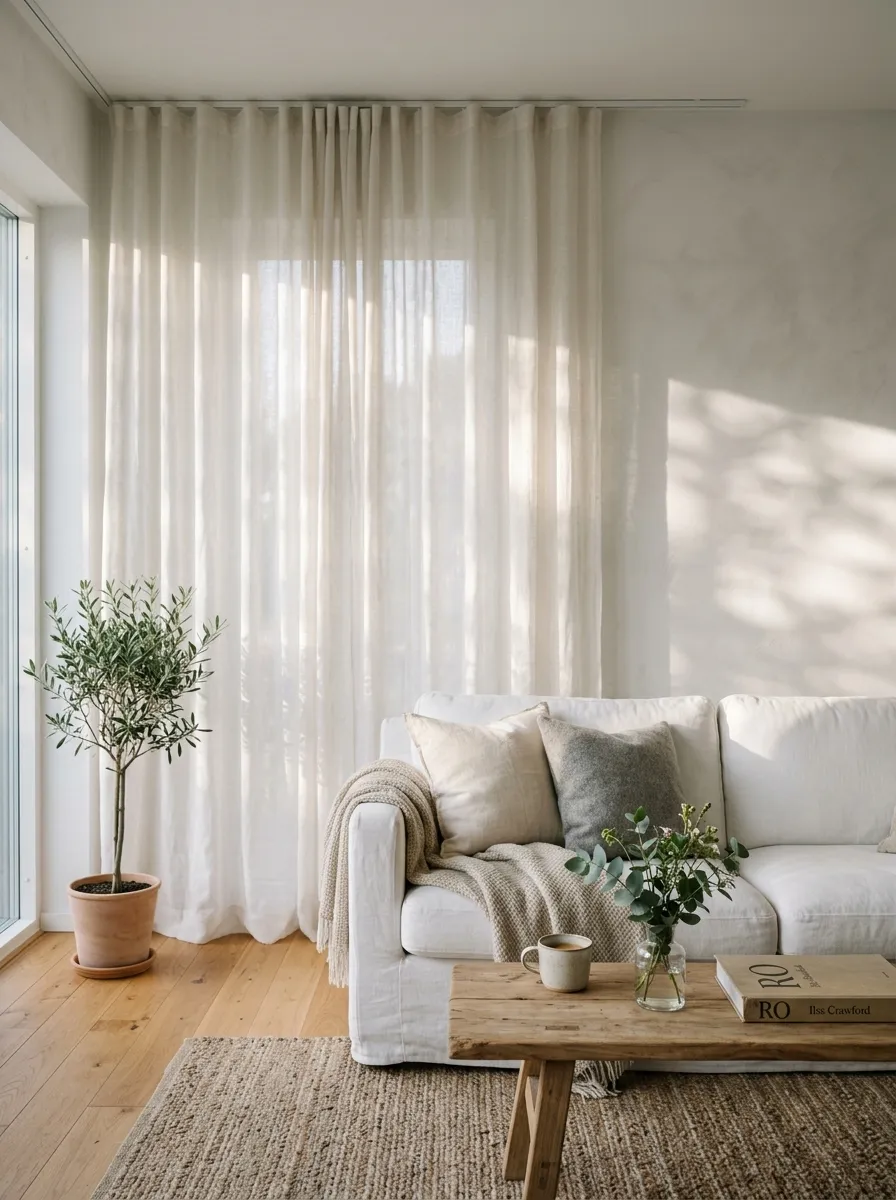
Curtains in a white living room are not about blocking light; they are about shaping it. Sheer linen curtains in an off white or natural undyed tone filter incoming daylight into something soft, diffused, and flattering. The light that comes through sheer linen has a quality that bare windows or blackout curtains cannot provide: it fills the room evenly, eliminates harsh shadows, and makes the white walls glow rather than glare. The room becomes luminous rather than bright.
Hanging curtains high and wide is the single most impactful curtain decision in any room. Mount the rod as close to the ceiling as possible and extend it at least six inches beyond the window frame on each side. This tricks the eye into seeing larger, taller windows than actually exist. The curtains pool slightly on the floor rather than stopping just below the sill, which adds an effortless, luxurious quality. I have noticed this one adjustment makes a modest window look intentional and architectural every time.
The Key: Hanging curtains at ceiling height and extending the rod well beyond the window frame makes any window look larger and more architectural than it actually is.
14
Mirrors to Expand and Brighten
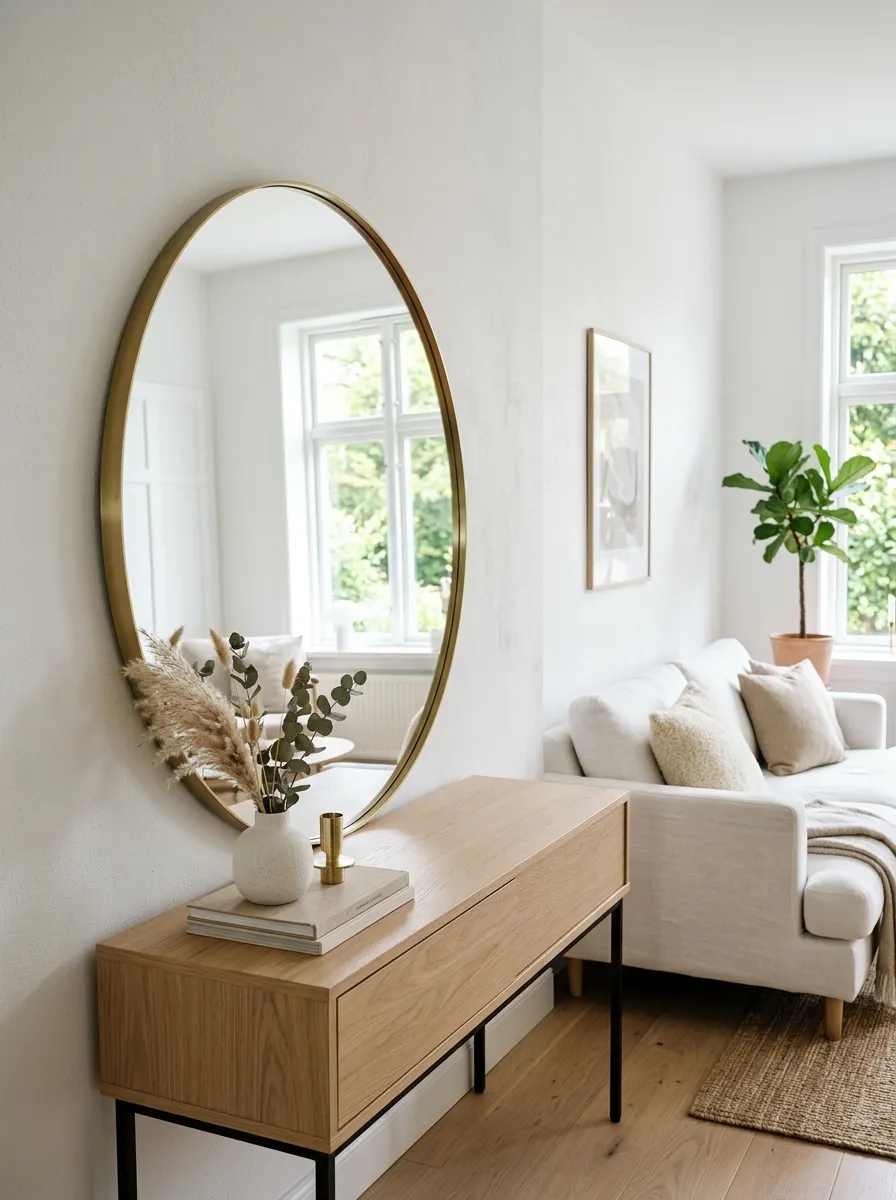
A mirror in a white living room is not a decorative choice; it is a structural one. Positioned to reflect a window or a light source, a large mirror effectively doubles the natural light in the room while also creating the illusion of greater depth and space. In a white room where the goal is luminosity and openness, this is one of the highest impact investments you can make. A round mirror in a thin brass or matte black frame adds a layer of refined simplicity that feels current and grounded simultaneously.
Leaning a large mirror against a wall rather than hanging it adds a casual, effortless quality that feels at home in a minimalist white room. It also allows you to adjust the angle subtly to optimize which reflection you are capturing, whether a window, the opposite room, or a beautiful light fixture. I have noticed that mirrors work hardest in white rooms when they are placed directly across from or at a 45 degree angle to a natural light source, bouncing that warmth through the entire space.
The Key: Positioning a mirror to directly reflect a window source multiplies natural light and creates a sense of space that no paint finish or furniture arrangement can replicate.
15
Accent Color Moments in Soft Blush or Sage
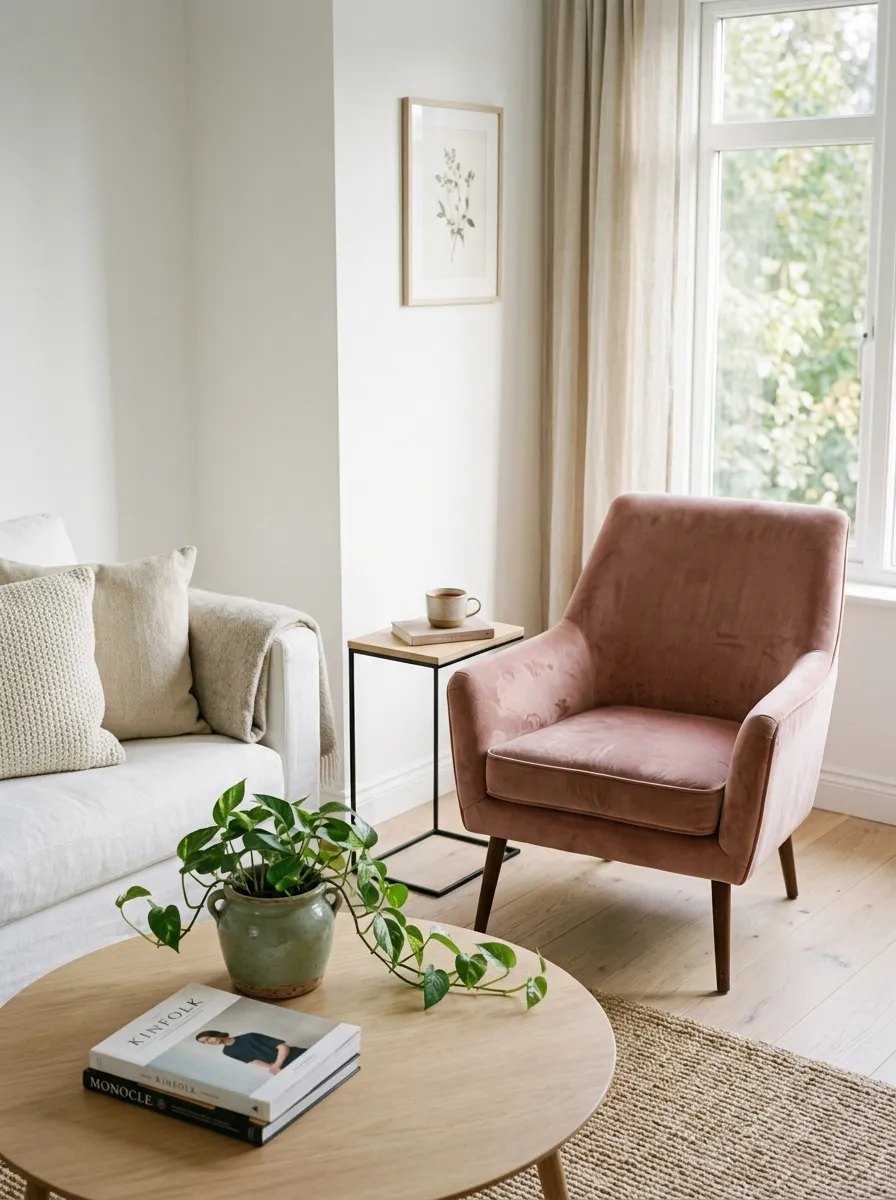
White does not have to be the only color in a minimalist white living room to maintain its clean, cohesive feel. The secret is choosing accent colors that live on the warm, muted side of the spectrum: dusty blush, soft sage, warm terracotta, or faded olive. These tones act as quiet companions to white rather than competitors. A single blush velvet armchair in an all white room does not disrupt the palette; it completes it, adding the human warmth that pure white alone cannot generate.
Repeating the accent color in at least two places creates cohesion rather than randomness. A blush armchair paired with a blush ceramic on the coffee table and a blush toned throw pillow makes the choice look deliberate rather than accidental. Sage green works the same way: a sage plant pot, a sage linen pillow, and a small sage candle together read as a considered color story. The restraint is what makes it elegant. I have seen rooms ruined by too many accent colors; one or two, repeated quietly, is always the right answer.
The Key: Repeating one muted warm accent color in at least two locations across the room transforms a single accent piece into a considered, cohesive color story.
16
Open Shelving with Curated Styling
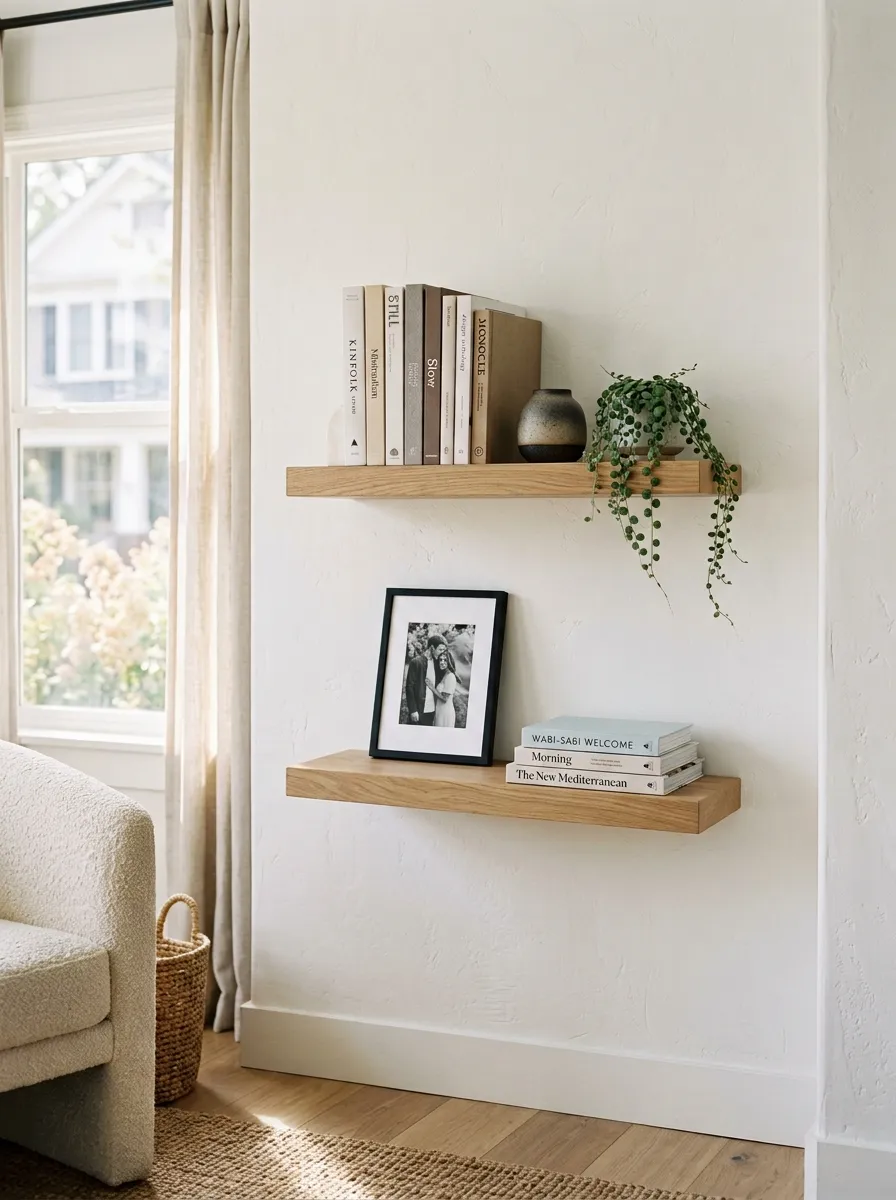
Open shelving in a white living room creates one of the most visually rewarding design moments available in residential interiors, when it is done with restraint. The mistake most people make is filling shelves completely, which turns them into storage rather than styling. The rule I return to consistently is to fill shelves to no more than 70 percent capacity. The negative space between objects is as important as the objects themselves; it is the breathing room that makes each item visible and meaningful.
Color coordinating the books by covering them in plain kraft paper or choosing volumes with neutral or warm toned spines keeps the shelves feeling calm and cohesive rather than chaotic. Mix vertical stacks with horizontal ones, and break up the books with a ceramic object, a small plant, or a framed photo turned slightly sideways. I have noticed that shelves styled with a deliberate mix of categories, something to read, something handmade, something living, feel the most curated and genuine of all shelf arrangements.
The Key: Filling shelves to only 70 percent capacity and mixing categories, books, ceramics, and one living plant, creates a curated look rather than a cluttered one.
17
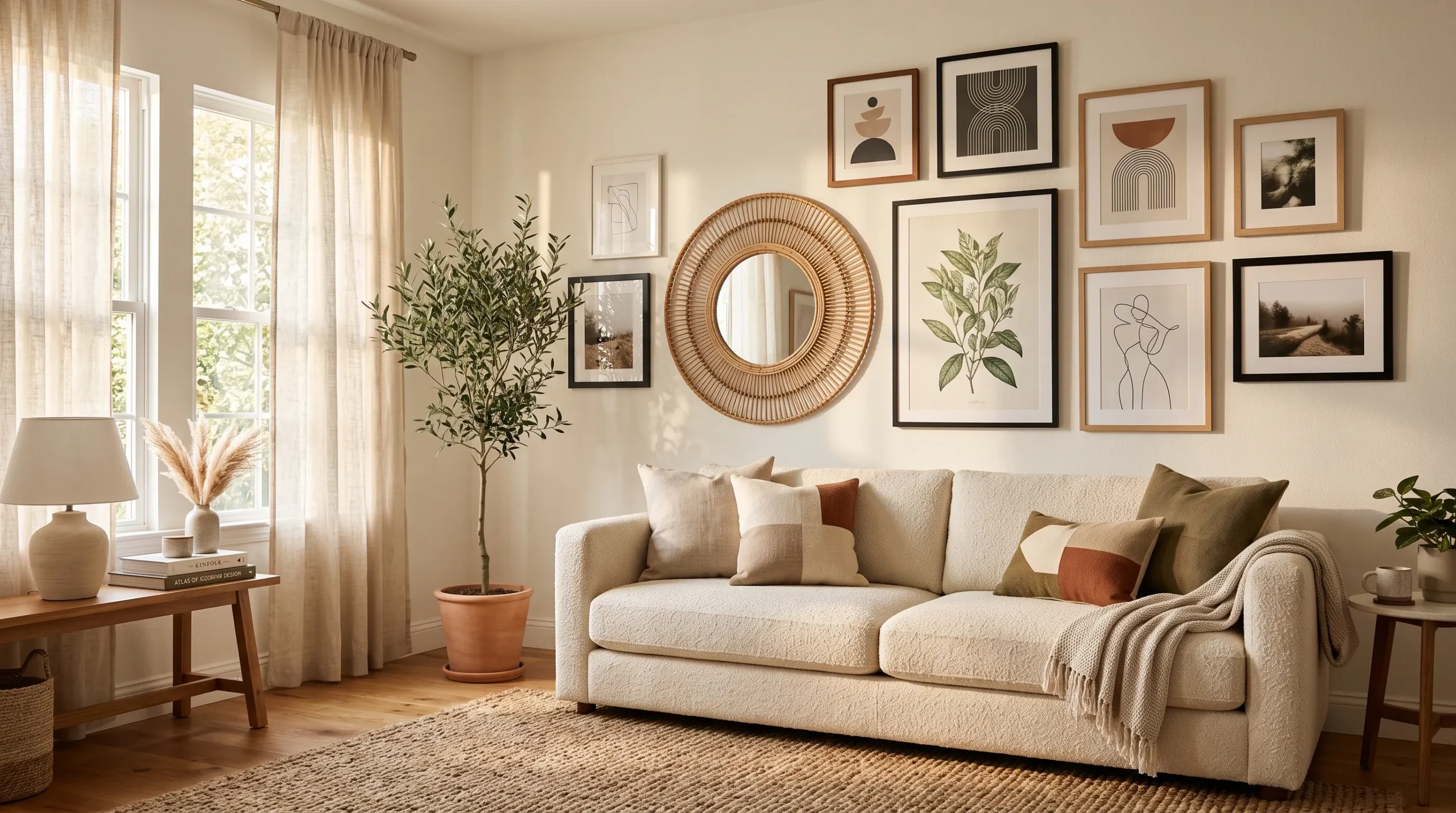
Minimalist Gallery Wall in Neutral Tones
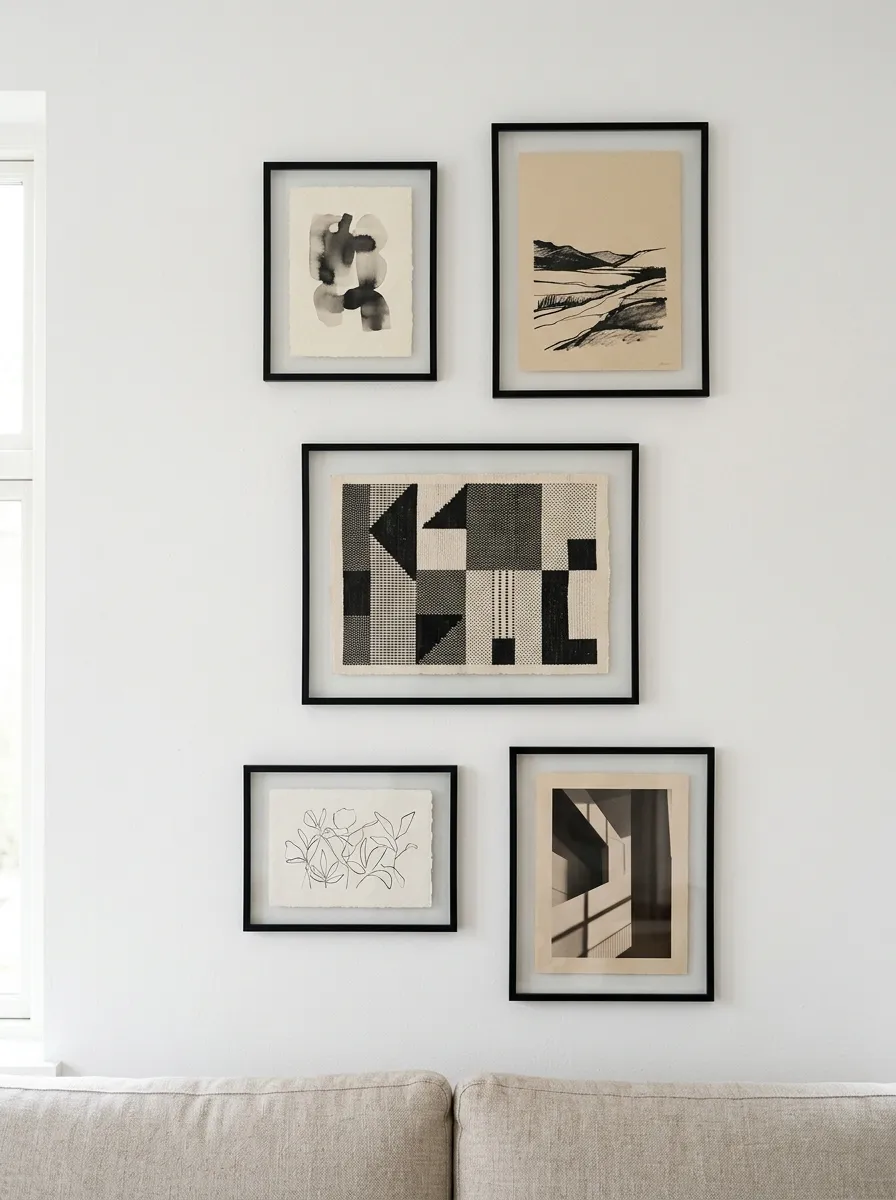
A gallery wall in a white living room sounds risky but executed with the right constraints it becomes one of the most personal and beautiful features in the room. The constraint that makes it work is tone: keep all prints within a narrow neutral palette of cream, soft sand, warm gray, and occasional pale ink. Avoid color photographs or bright graphic prints, which break the visual calm. Thin matching frames in matte black or natural wood keep the grouping cohesive without the frames competing with the art.
Spacing is the other critical factor. Generous gaps between frames, roughly three to four inches, give each piece room to breathe and prevent the gallery from looking like a cluttered wall rather than a considered composition. Start with the largest piece at the center and work outward, maintaining visual balance as you go. I have found that a mix of five to seven pieces in varied but complementary sizes creates the most satisfying gallery arrangement, feeling collected over time rather than purchased as a set.
The Key: Keeping gallery wall art within a narrow tonal palette and maintaining consistent three to four inch gaps between frames creates a considered composition rather than visual chaos.
18
Natural Fiber Baskets and Storage
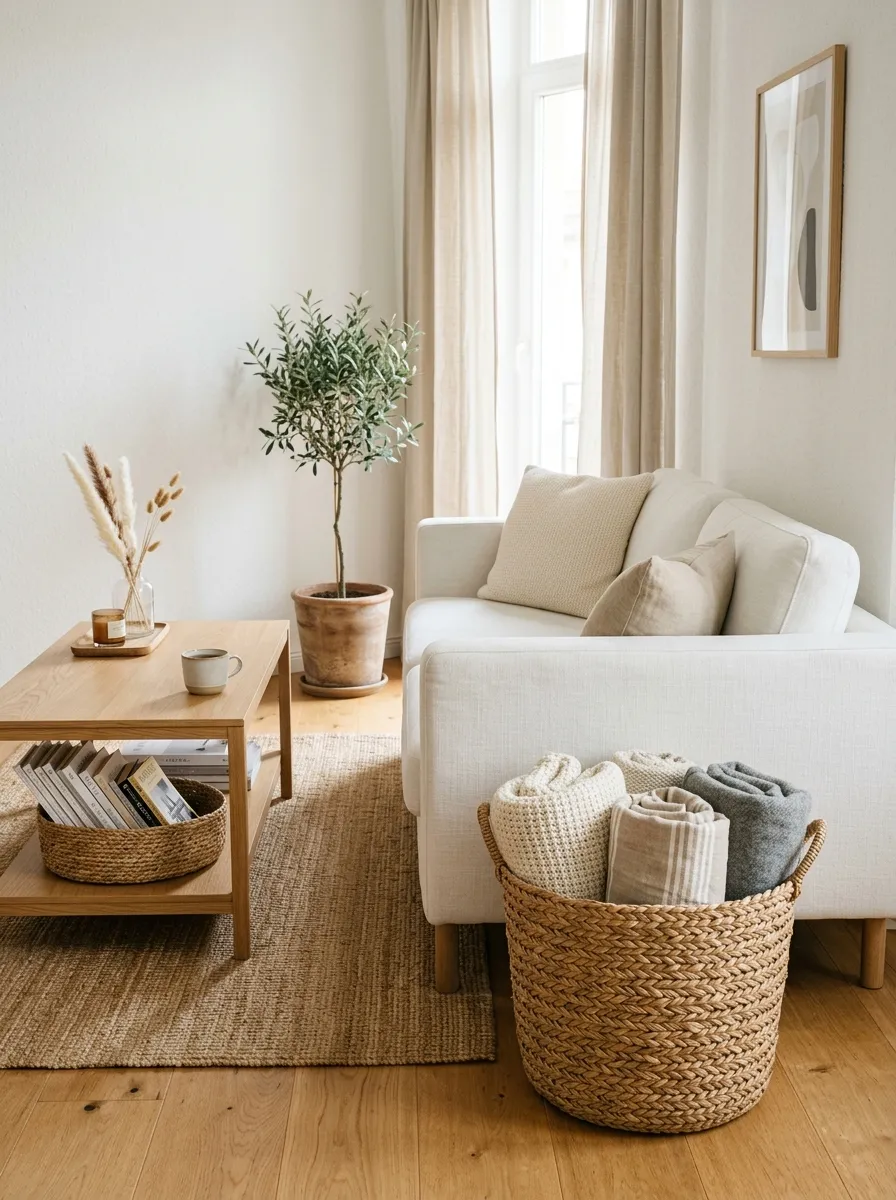
Storage in a white living room does not have to look utilitarian, and natural fiber baskets are the proof. A large seagrass or rattan basket tucked beside the sofa holding folded throw blankets is simultaneously functional and beautiful. It introduces organic texture at floor level, where white rooms most often look bare and unfinished, while solving the practical problem of where to put the throws that migrate around the room. The natural tan tone of woven fibers against a white wall is one of the warmest material pairings in interior design.
Smaller baskets serve the same dual purpose at furniture level. A woven basket on the lower shelf of a coffee table holding a few magazines and a TV remote keeps the visual calm of the white room intact while managing the small items that otherwise create clutter. I have noticed that replacing any visible plastic or synthetic storage container in a white living room with a natural fiber equivalent immediately makes the room feel warmer and more intentional. The material change alone does most of the design work.
The Key: Replacing synthetic storage containers with natural fiber baskets introduces warm organic texture at floor and furniture level while solving clutter simultaneously.
These 18 ideas prove something that experienced designers have always known: white living room ideas are not about coldness or sterility. They are about creating a canvas that lets warmth, texture, and personal style come forward without competition. From the humble rattan chair to the perfectly layered pillow arrangement, every idea in this article is a tool you can use to make your own white room feel genuinely welcoming. The color white gives you freedom that no other shade does. Use it with intention and the result will be beautiful every time.
If any of these ideas sparked something for you, save this article to your Pinterest board right now so you can come back to it when you are ready to shop or redesign. Share it with a friend who has been staring at a blank white room and feeling stuck. In my experience, the best rooms happen when someone stops overthinking and simply starts with one small change. A basket, a throw, a plant. Begin there, and watch how quickly the room you have always wanted starts to take shape.