MASTER bedroom
🏠 21 Real Ideas
⏱ Quick Read
🔥 Always Trending
21 Master Bedroom Makeover Ideas
That Make It the Chicest
Room in the House
Your bedroom should be the most beautiful room in your home and honestly, it doesn’t take a renovation to get there. Whether your space feels outdated, cluttered, or just uninspired, the right changes can completely transform how it looks and how it feels to live in every single day. These master bedroom makeover ideas are designed to do exactly that.
I’ve noticed that most people underestimate what a few deliberately upgraded elements can accomplish. New lighting, the right rug size, a statement headboard, a styled nightstand individually, each feels small. Together, they create a bedroom that feels curated, calm, and genuinely luxurious. In this guide, you’ll find 21 ideas spanning every corner of the room, from the bed to the walls to the window treatments, each one practical, visual, and immediately actionable.
01
Layered Linen Bedding
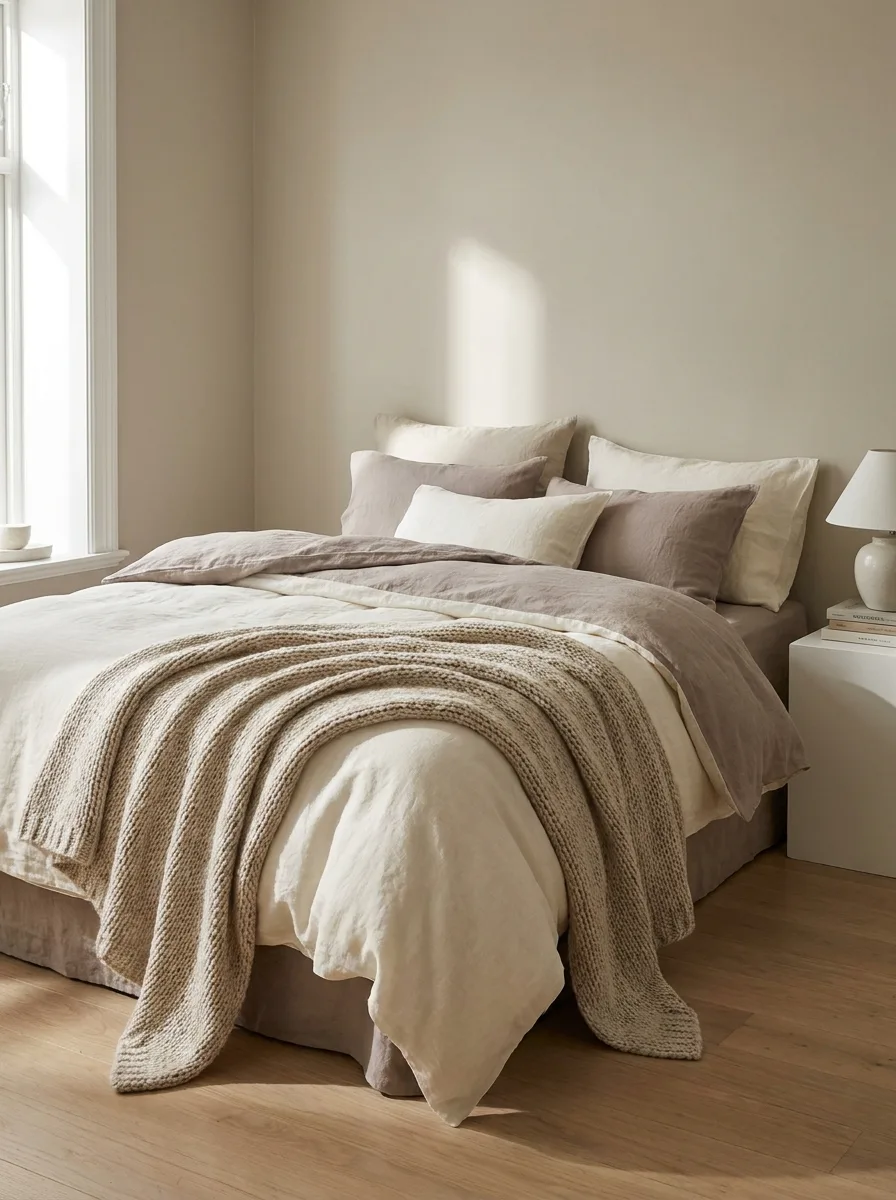
One change that transforms a bedroom faster than anything else is new bedding and linen does it best. It has this lived-in softness that synthetic fabrics simply can’t fake. The texture alone makes a room feel styled, calm, and intentional without trying too hard.
Layering works because your eye gets something to travel across. A flat, single-fabric bed looks fine, but a bed with a base sheet, a linen duvet, a folded blanket, and two textured pillows looks like it belongs in a boutique hotel. In my experience, even budget linen from a home store layers beautifully.
The Key: Linen does the heavy lifting. Layer two or three tones in the same warm or cool family and the bed becomes the visual anchor the whole room needs.
02
Statement Headboard Upgrade
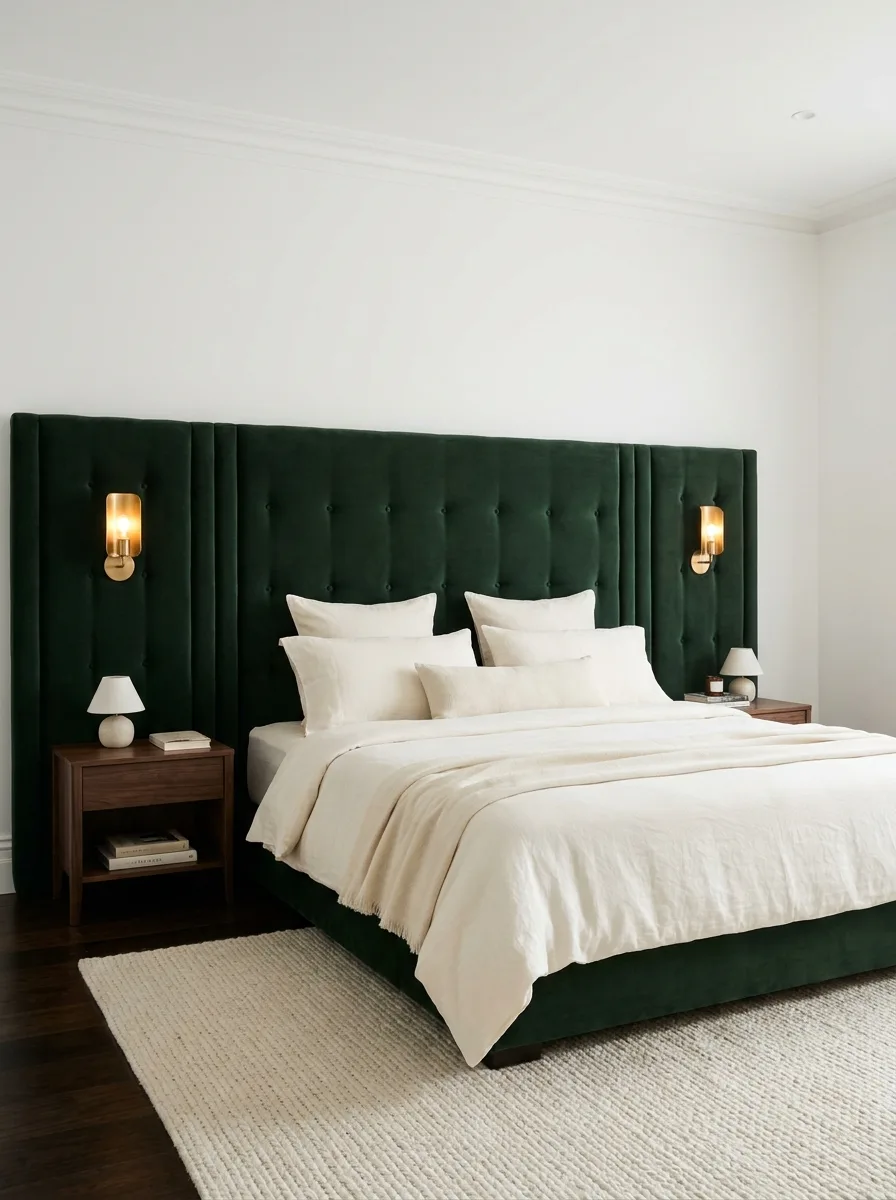
The headboard is often the most overlooked piece in a bedroom makeover, yet it carries more visual weight than almost any other element. A plain wooden frame disappears into the background. A tall upholstered headboard in a rich fabric becomes the first thing your eyes go to when you walk in.
I’ve noticed that switching to a statement headboard even without changing anything else makes the entire room feel more deliberate and designed. It anchors the bed, defines the sleeping zone, and gives the room a sense of luxury that doesn’t require a renovation. That’s a lot of impact from one piece.
The Key: Height matters as much as fabric. A tall headboard draws the eye upward and makes even a small bedroom feel more expansive and intentional.
03
Warm Ambient Lighting
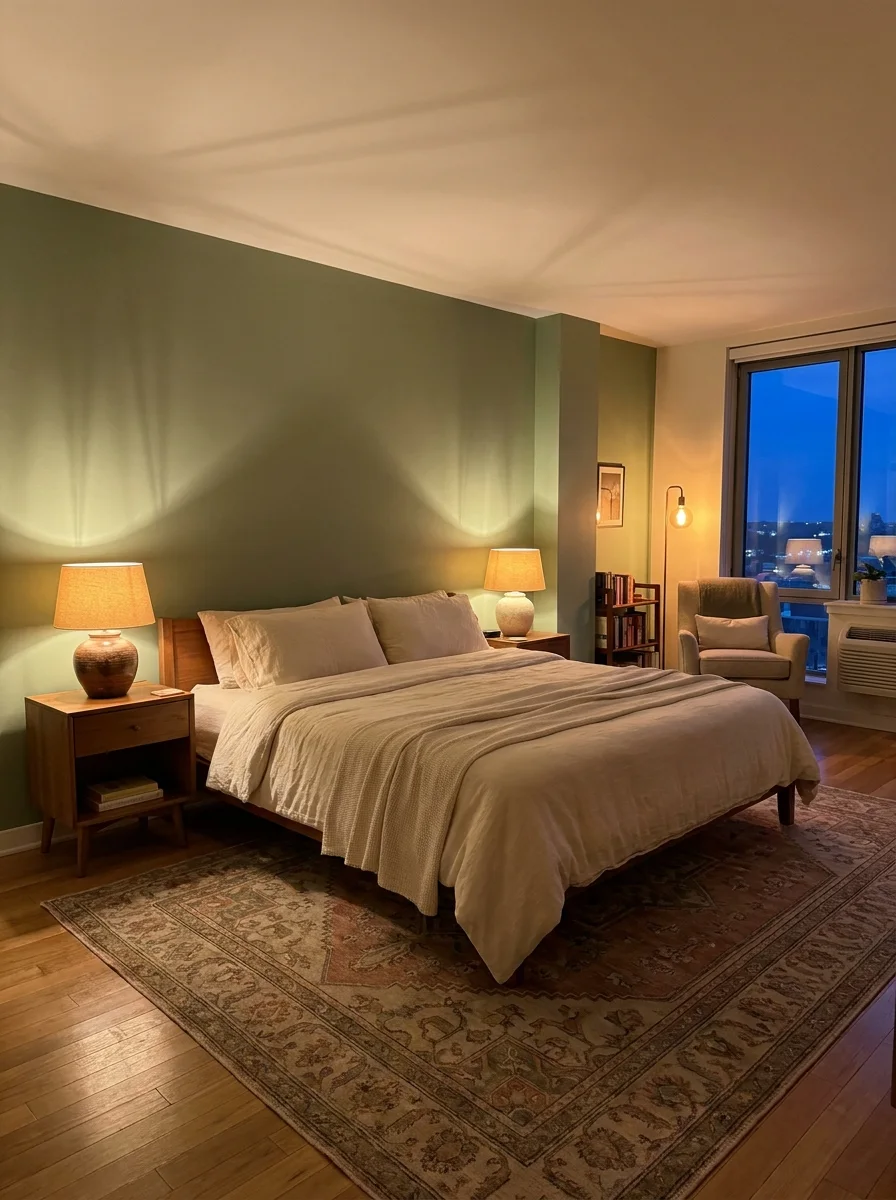
Lighting is the invisible ingredient in every beautifully designed bedroom. Most people keep the builder grade overhead fixture and wonder why the room never feels quite right. The answer is almost always the light source one ceiling light creates flat, even brightness that removes all the warmth and dimension from a space.
Layering light from multiple lower sources table lamps, floor lamps, even a small LED strip behind a headboard wraps the room in warmth instead of washing it out. I’ve seen this simple swap make a plain bedroom feel like a completely different space. Warm bulbs, two lamps at eye level, and a dimmer switch are all you need to start.
The Key: Switch from one overhead light to two warm bedside lamps and the room instantly feels softer, more intimate, and more intentionally designed.
04
Accent Wall with Texture
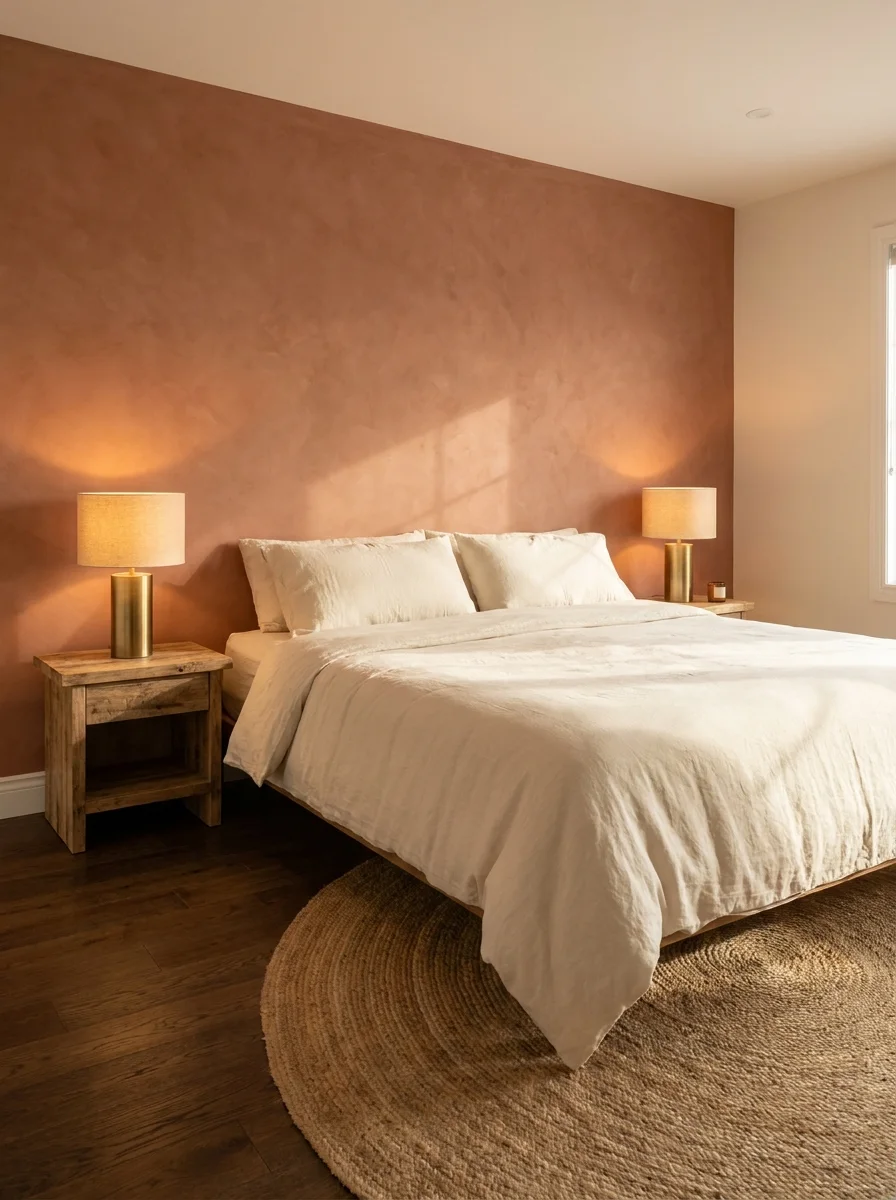
A single textured wall behind the bed does more for a bedroom’s overall feel than repainting the entire room. Texture catches light differently throughout the day, which means the wall looks slightly different in the morning than it does at night that kind of visual movement makes a space feel alive and layered rather than flat and static.
Limewash paint is especially popular right now because it creates that soft, aged, European plaster look with just a brush and a weekend afternoon. I’ve tried it in a small bedroom and the transformation was genuinely surprising the room immediately felt warmer, more sophisticated, and far more interesting than before. It costs very little and delivers a lot. This warm, earthy texture is exactly the foundation of Boho-style bedrooms see our full earthy Boho bedroom ideas for more ways to build on this look.”
The Key: Texture does what color alone cannot it adds dimension, light movement, and a handcrafted quality that makes a bedroom wall feel intentional and high-end.
05
Coordinated Nightstand Styling
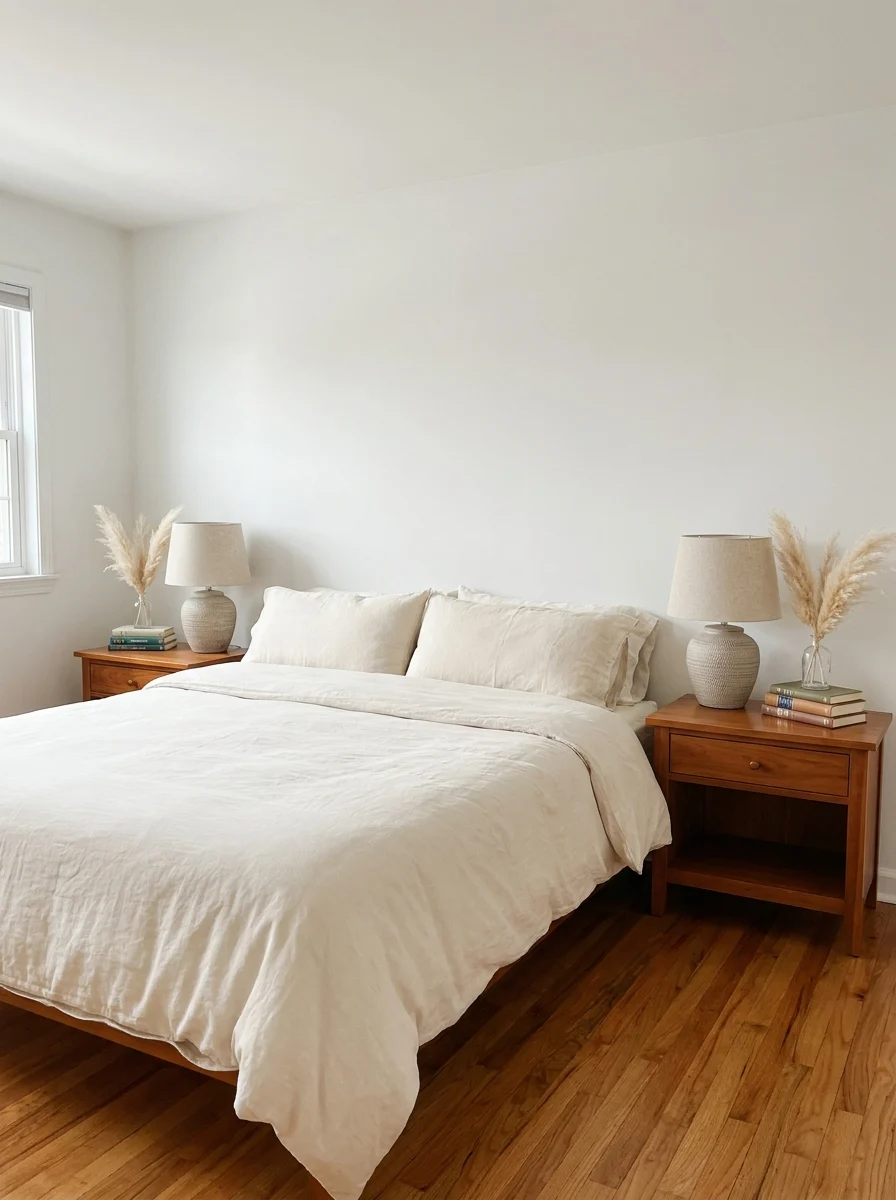
Nightstands are small surfaces with enormous styling potential, and most people either overcrowd them or leave them bare. Both extremes work against the room. A thoughtfully styled nightstand tells the same visual story as the rest of the bedroom it feels curated without looking staged, personal without looking cluttered.
The simplest formula that works every time is lamp plus one stack of two books plus one organic or decorative object. That’s it. In my experience, people are often surprised by how much impact three small objects can have when they are chosen with intention and placed with a little breathing room between them.
The Key: Symmetry is the fastest path to a styled-looking bedroom. Two matching nightstands with identical lamps and similar styling make the space feel designed, not just decorated.
06
Soft Area Rug Placement
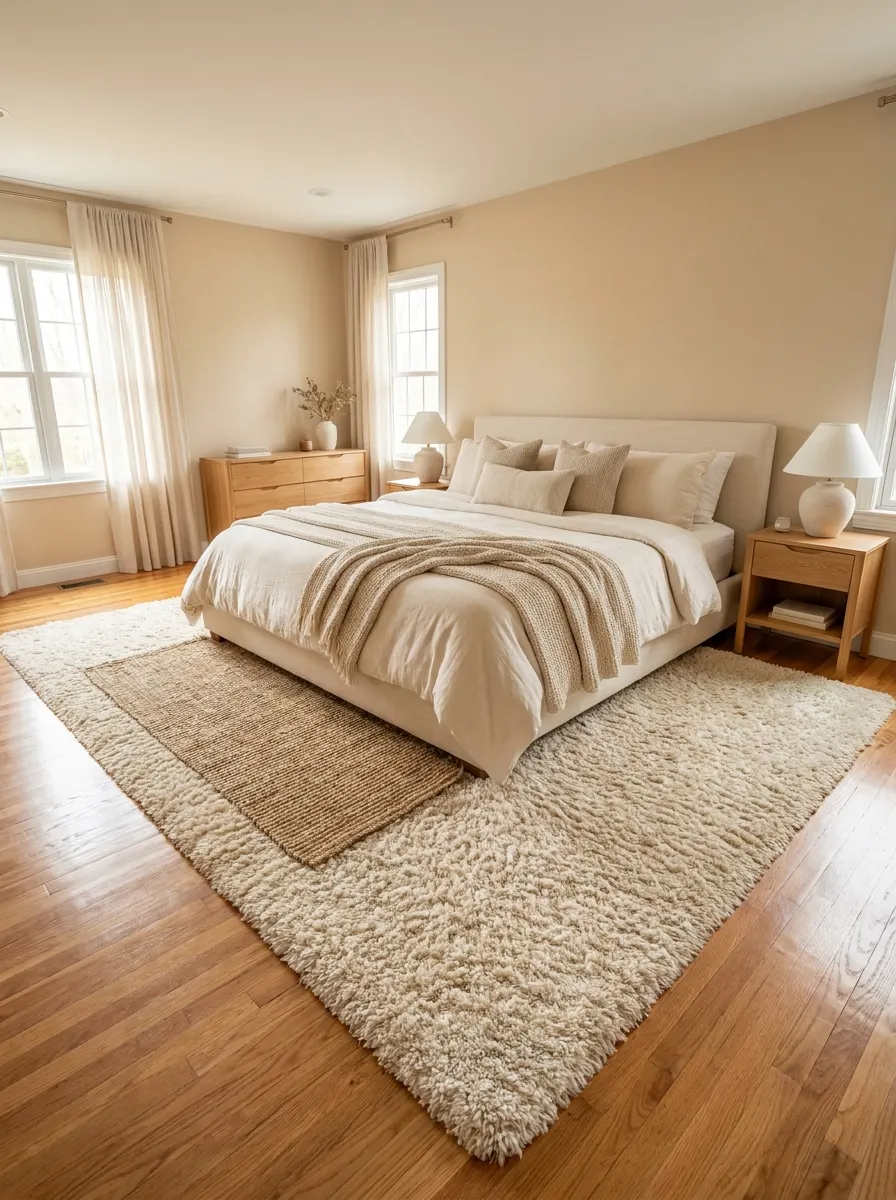
Nothing makes a bedroom feel more incomplete than a rug that’s too small. It floats awkwardly under the bed like an afterthought, and the eye immediately registers that something is off even if the person can’t name exactly what it is. Rug size is one of those details that works invisibly when it’s right and loudly when it’s wrong.
Getting the size right is simple once you know the rule: the rug should sit under the bed and extend comfortably on both sides so your feet land on soft material when you get up. That moment stepping onto something warm and soft first thing in the morning is a small daily luxury that completely changes how a bedroom feels to actually live in, not just look at.
The Key: Go bigger than you think you need. A rug that extends generously beyond the bed grounds the entire room and makes the space feel cohesive, finished, and intentional.
07
Decluttered Dresser Display
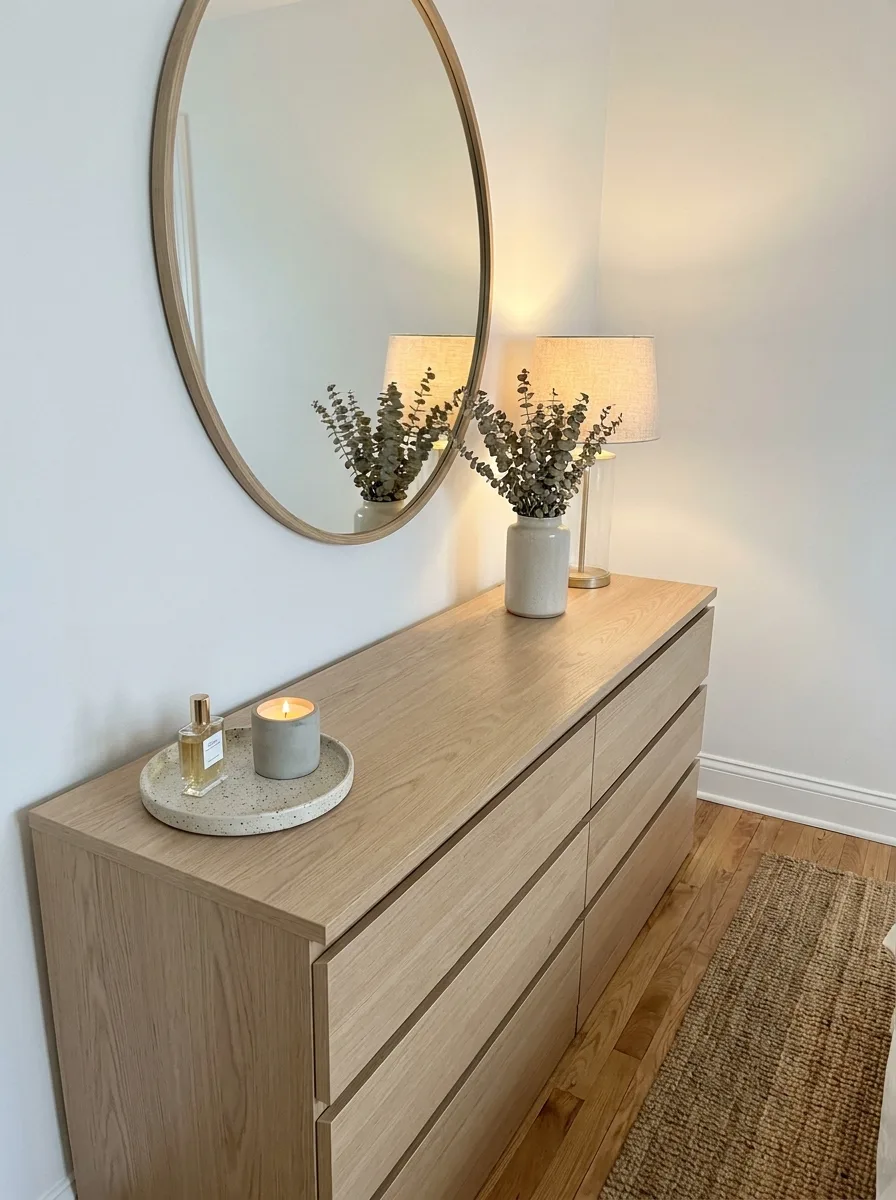
The dresser is one of the most functional pieces in a bedroom, which is exactly why it becomes a dumping ground so quickly. Receipts, chargers, jewelry, random objects they accumulate fast. But when that surface is cleared and styled with just a few intentional pieces, the entire room breathes differently. It signals order, and the brain responds to that with genuine calm.
A large round mirror mounted above the dresser is one of the highest-impact, lowest-cost upgrades in this entire list. It reflects natural light, makes the room feel larger, and gives the dresser wall the same finished, designed quality as the headboard wall. I’ve noticed that this one pairing styled dresser plus round mirror makes people feel like they’ve renovated when they’ve really just edited.
The Key: Editing is the skill. Remove everything from the dresser top, then add back only what earns its place. Three intentional objects on a clear surface always look better than twelve random ones.
08
Curtains Floor to Ceiling
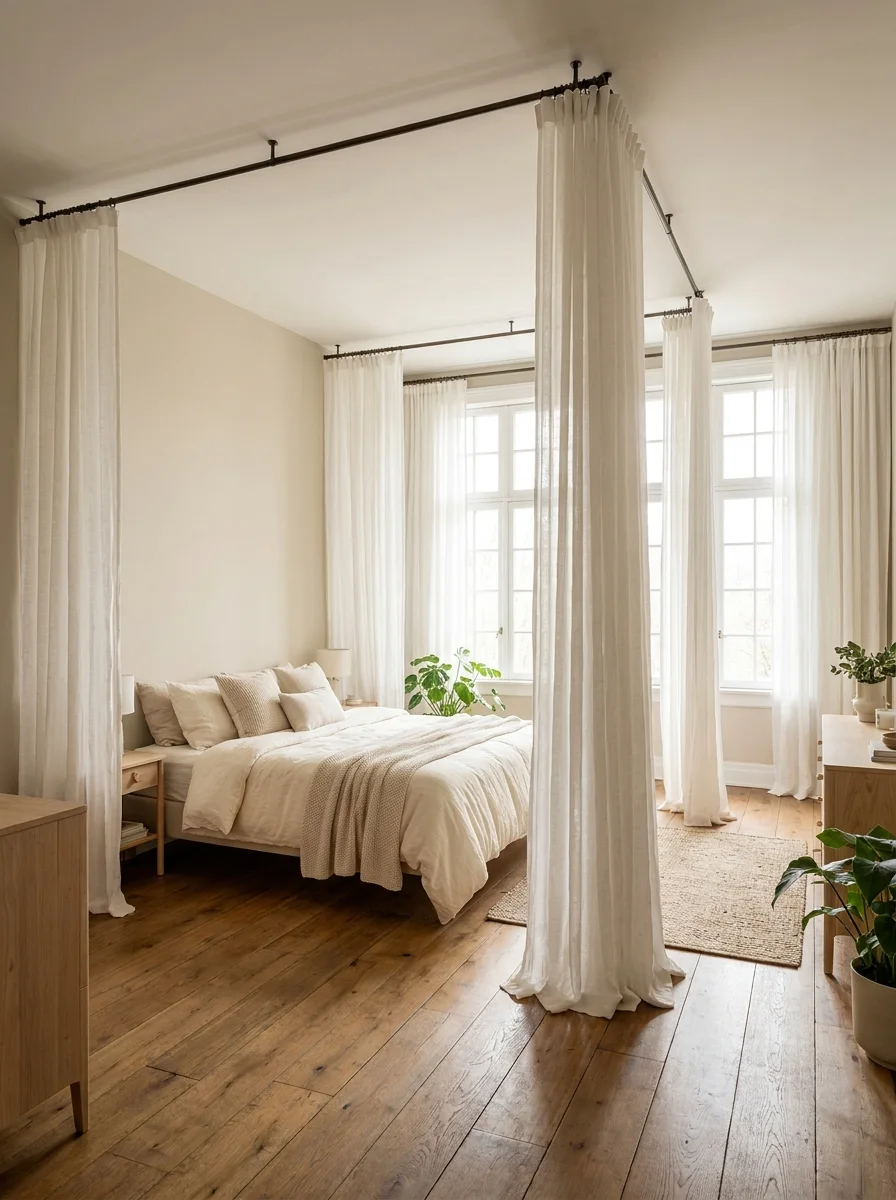
Curtains hung at window height are one of the most common interior design mistakes, and the fix costs nothing extra just rehang the rod higher. When curtains travel from ceiling to floor, they draw the eye upward along the full wall height. The room instantly feels taller, larger, and more intentionally designed. It’s a visual trick that professional designers use in almost every project.
The fabric matters too. Heavy blackout curtains have their function, but for visual impact, sheer white or cream linen is unmatched. It softens natural light into something diffused and warm, and it moves gently when there’s a breeze a small detail that adds life and calm to a space. I’ve seen this single change make a rental apartment bedroom look like a boutique hotel room.
The Key: Mount the rod at ceiling height, not window height. That one adjustment adds the illusion of extra feet to your walls and transforms how the entire room feels spatially.
09
Neutral Color Palette Refresh
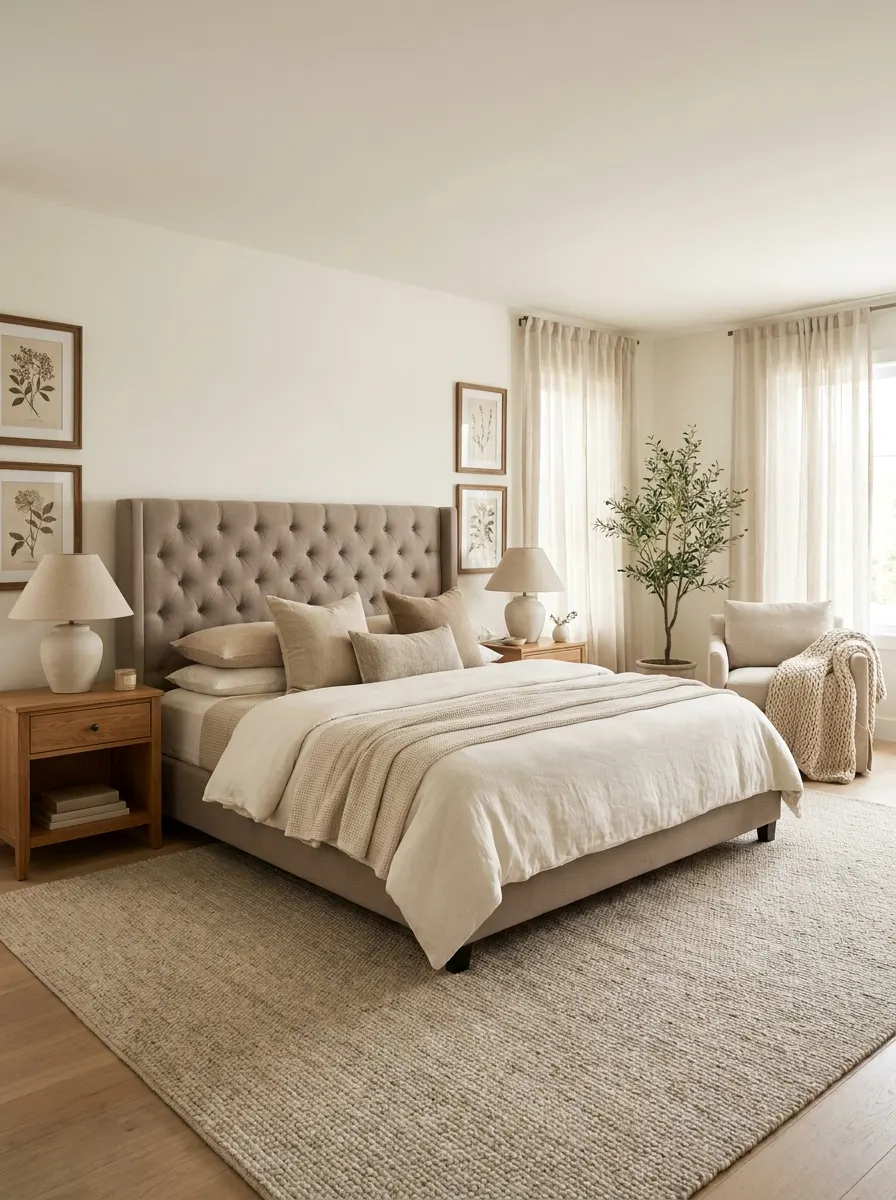
A neutral bedroom palette is not boring it’s a decision. It’s the conscious choice to let texture, light, and proportion do the visual work instead of color. The rooms that consistently feel the most luxurious and calming in home design tend to be the ones with the fewest colors and the most thoughtful layers of material and tone.
Getting neutrals right comes down to undertone. Warm whites with a cream or beige base work together naturally. Cool greys and stark whites, on the other hand, can clash in ways that are subtle but unsettling. I’ve noticed that rooms where people struggle to make neutrals look cohesive are almost always mixing warm and cool undertones without realizing it. Pick a temperature and stay in it throughout the room.
The Key: Warm neutrals always photograph better and feel cozier in person than cool grey-based palettes. Choose your undertone first warm or cool and build every other selection around that single decision.
10
Gallery Wall Above the Bed
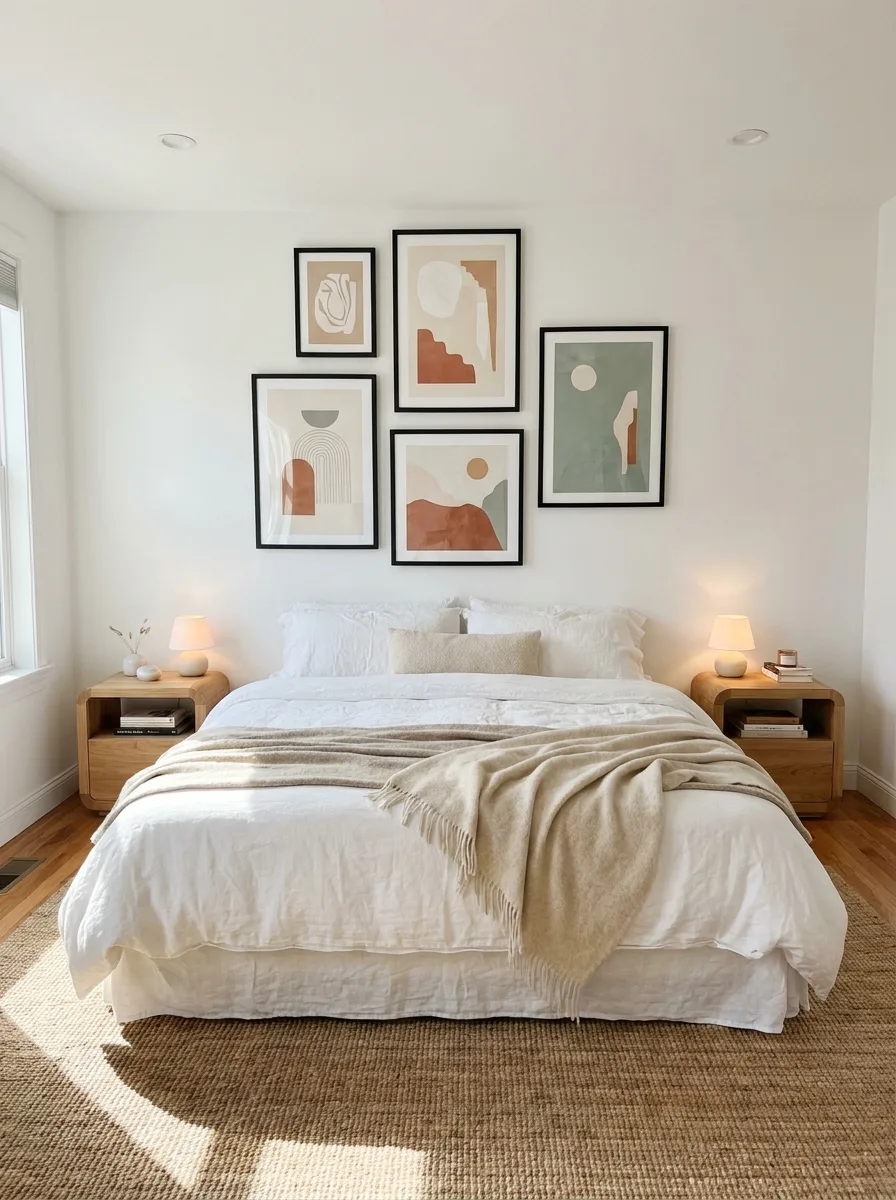
The wall above the bed is the largest blank canvas in a bedroom, and leaving it completely empty can make the space feel unfinished like the room ran out of ideas before it reached the ceiling. A gallery wall solves this instantly. It adds personality, color, and visual interest to the most prominent wall in the room without requiring a single renovation.
The secret to a gallery wall that looks curated rather than cluttered is consistency. One frame finish, a limited color palette within the prints, and deliberate spacing between frames these three decisions determine whether a gallery wall looks like a design choice or an afterthought. I’ve seen the same five prints look completely different depending on framing and spacing alone.
The Key: Consistency in frame finish is non negotiable. Mix sizes and orientations freely, but keep the frames in the same finish family and the whole arrangement reads as intentional.
11
Cozy Reading Corner
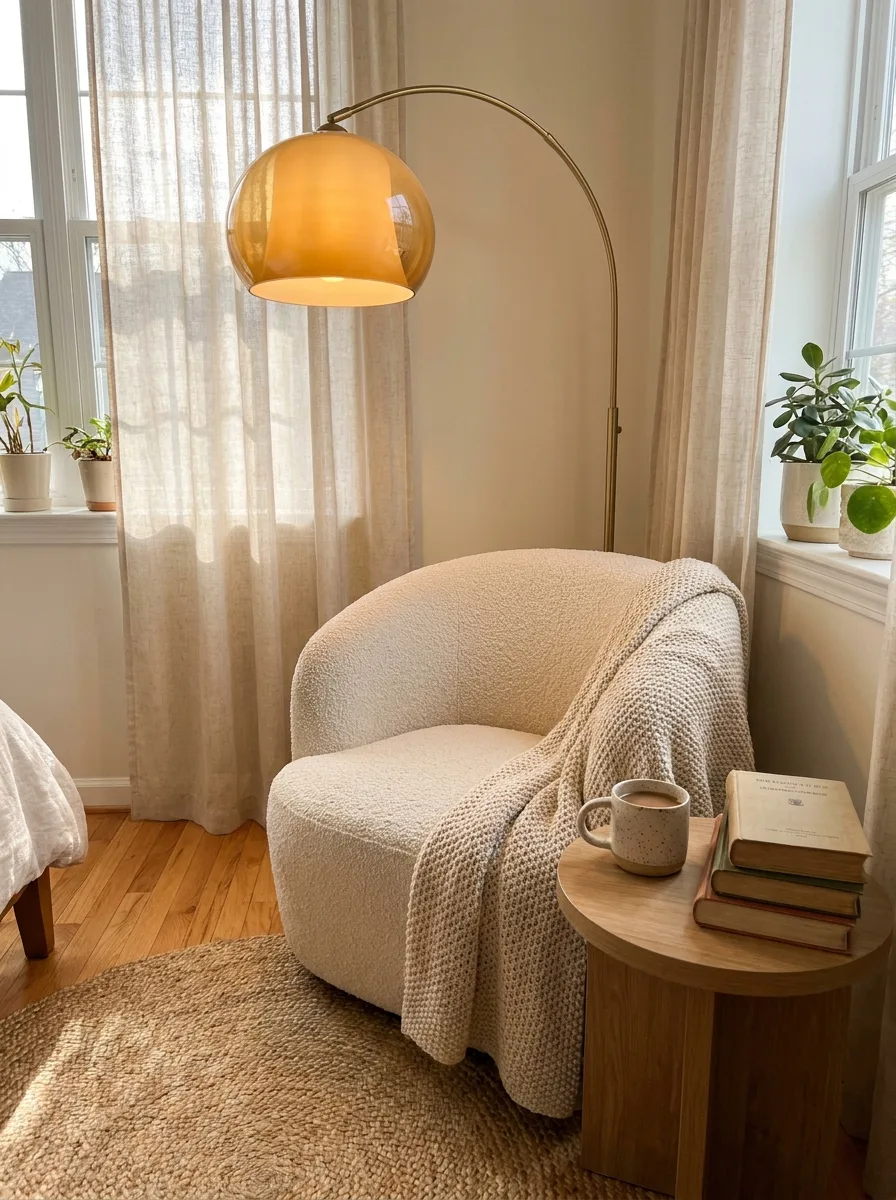
A reading corner signals something important about how a bedroom is meant to be used not just for sleeping, but for resting, thinking, and unwinding. That distinction changes the whole energy of the space. When there’s a chair, a lamp, and a small table waiting in the corner, the bedroom becomes a destination rather than just a room you pass through at the end of the day. The chair itself does most of the work. A curved boucle accent chair rounded, a plush fabric, an interesting leg is one of the most searched bedroom additions on Pinterest right now, and for good reason it adds softness, warmth, and a sculptural quality that a standard side chair simply doesn’t deliver.
The chair itself does most of the work. A curved boucle accent chair is one of the most searched bedroom additions on Pinterest right now, and for good reason it adds softness, warmth, and a sculptural quality that a standard side chair simply doesn’t deliver. In my experience, even a small corner with the right chair and a floor lamp can become the favorite spot in an entire home.
The Key: The chair is the hero. Choose one with visual weight a curved silhouette, a plush fabric, an interesting leg and the corner becomes a design moment that anchors the whole room.
12
Mirrored or Reflective Surfaces
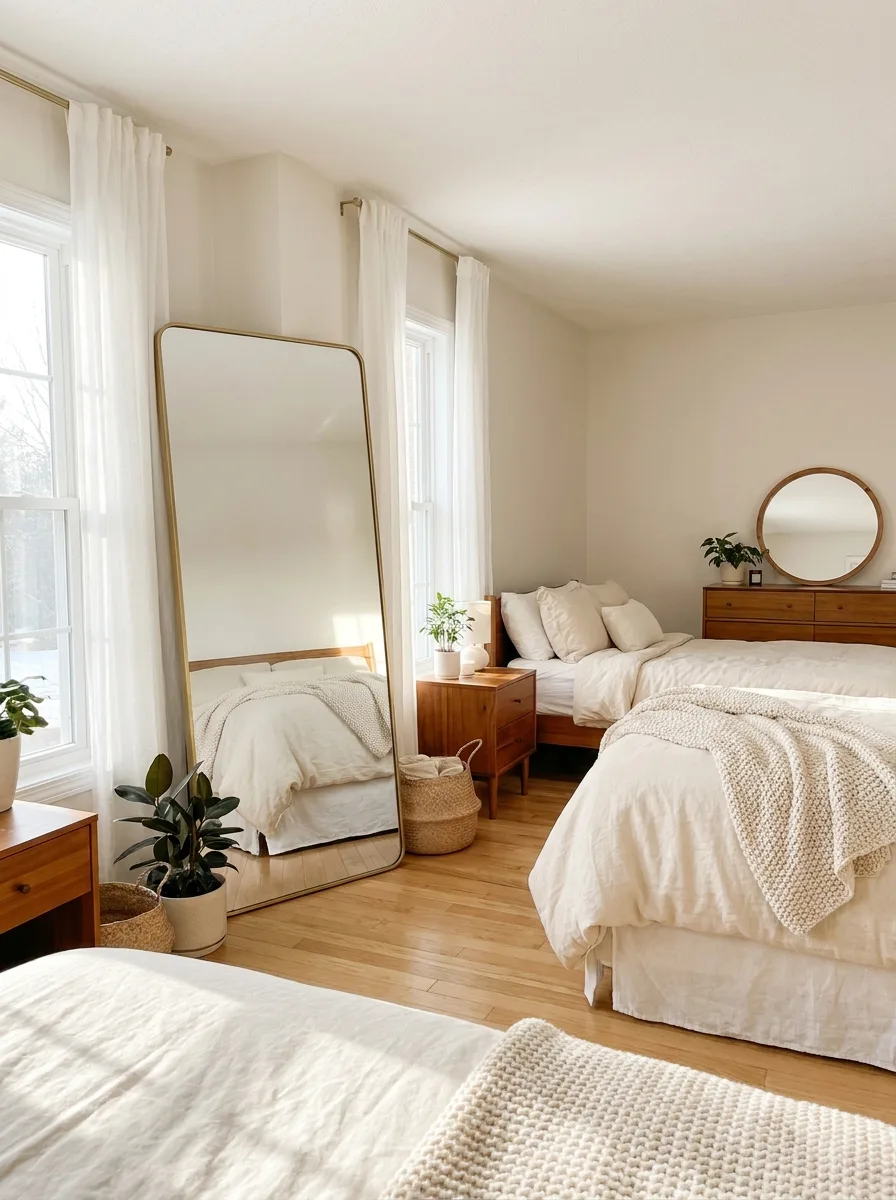
Mirrors are the interior designer’s quiet tool for making spaces feel larger, brighter, and more open without touching a single wall or adding square footage. The reflective surface bounces light around the room in a way that feels natural rather than artificial, and the depth created by the reflection tricks the eye into perceiving more space than actually exists.
Placement matters significantly. A large leaning mirror positioned beside or across from a window captures and reflects natural daylight throughout the room. A mirror placed on a dark or windowless wall, by contrast, reflects the wall itself which adds little. I’ve noticed that getting mirror placement right is the difference between a room that feels expansive and one that just has a mirror in it.
The Key: Position mirrors to capture and reflect a light source a window, a lamp, or a skylight. Mirrors placed thoughtfully multiply light. Mirrors placed carelessly just take up wall space.
13
Scent and Sensory Styling
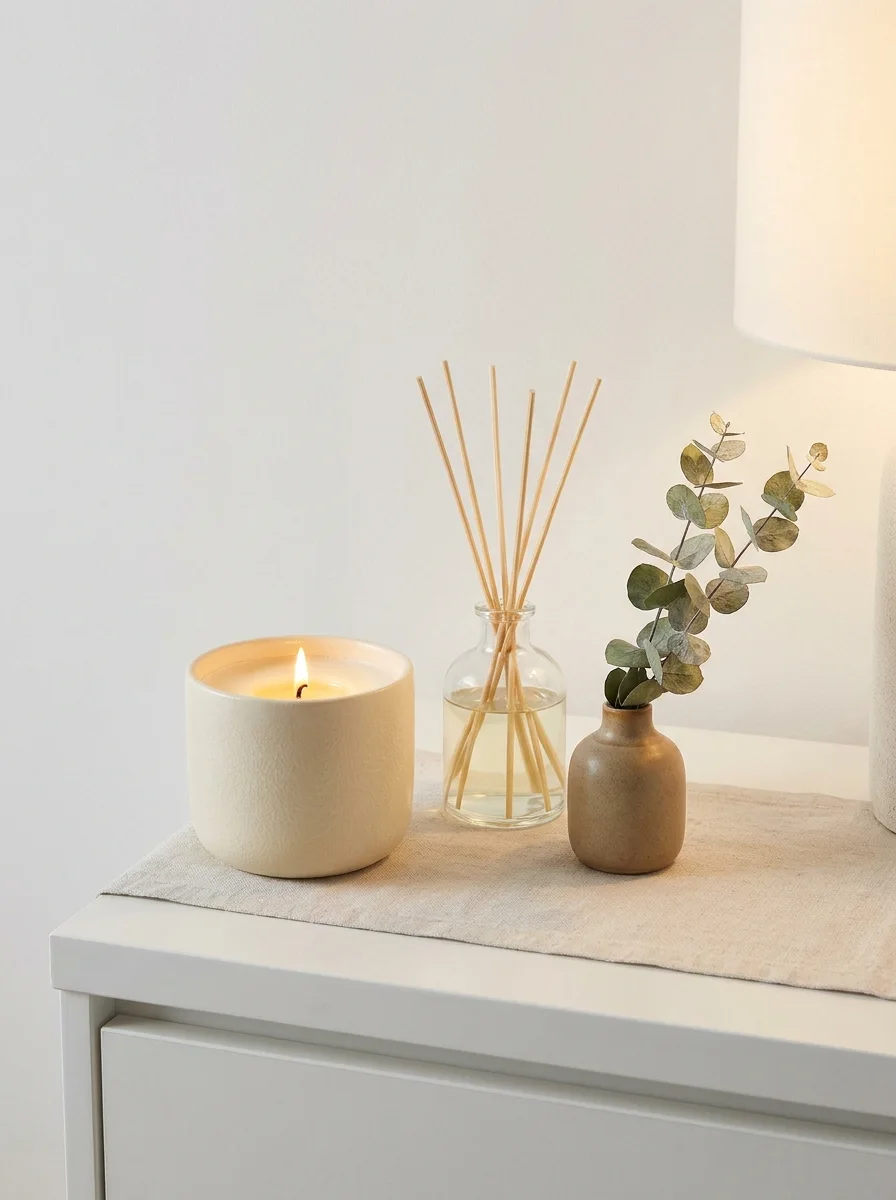
A well designed bedroom engages more than just the eyes. Scent is one of the most powerful mood signals a space can send, and it operates below conscious awareness you don’t notice the scent of eucalyptus and think “this smells nice,” you simply feel more relaxed and at ease in the room. That invisible quality is exactly what separates a bedroom that feels luxurious from one that just looks good in photos.
The styling of scent objects matters as much as the scent itself. A beautiful ceramic candle, a linen wrapped diffuser, or a small bunch of dried lavender tied with twine are all objects that add visual texture while doing a sensory job simultaneously. I’ve found that this dual function makes scent objects some of the most efficient styling tools in any room they earn their place twice.
The Key: Treat scent as a design layer, not an afterthought. The right candle or diffuser adds both fragrance and visual warmth choose vessels that look as intentional as everything else in the room.
14
Botanical and Natural Elements
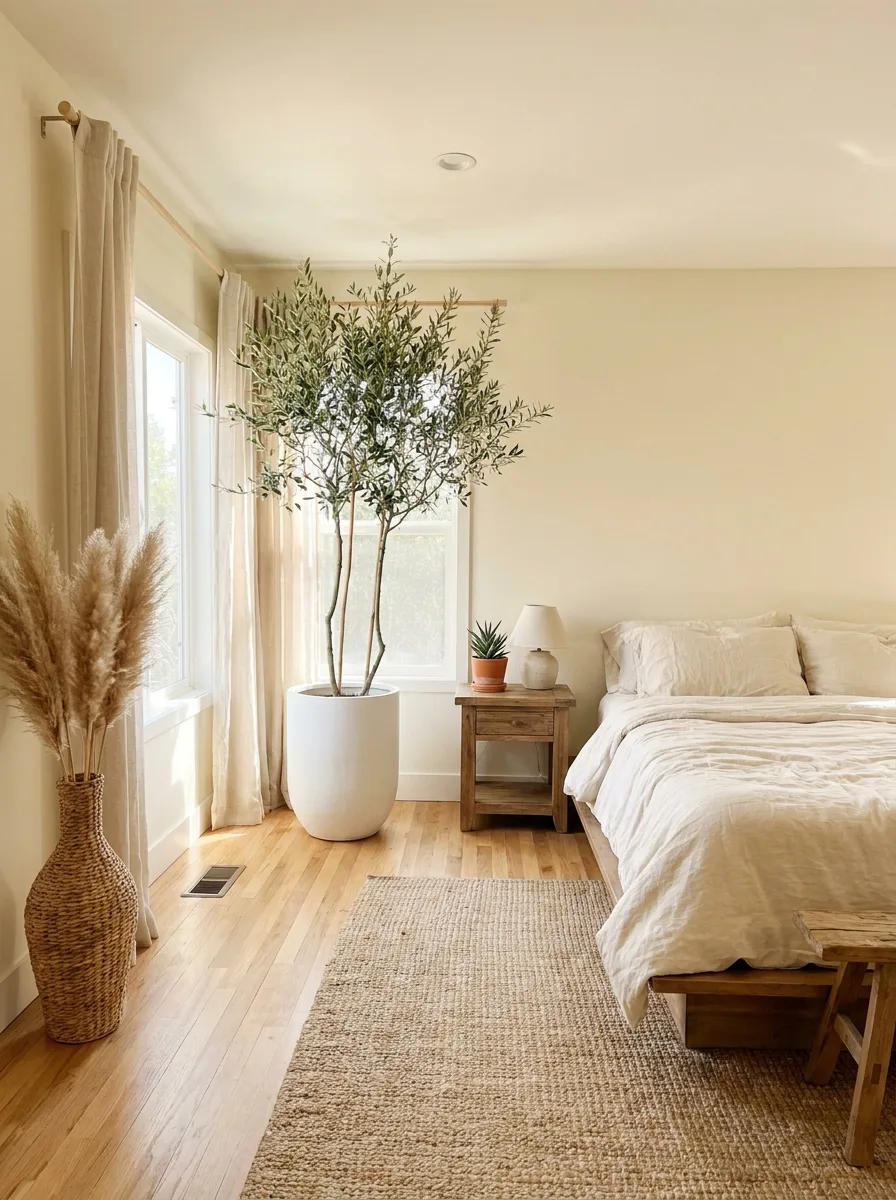
Bringing nature into a bedroom is one of those changes that works on every level simultaneously it improves the visual composition, adds organic texture, and creates a sense of living, breathing calm that no furniture piece can replicate. Plants soften the geometry of a room. They interrupt the hard angles of bed frames, dressers, and walls in a way that feels effortless and natural.
For those who don’t have a green thumb, dried botanicals are a completely maintenance free alternative that styles just as beautifully. Dried pampas grass in a tall floor vase, dried eucalyptus hung from a curtain rod, or a bundle of dried lavender on a nightstand all deliver the organic warmth of plant life without the watering schedule. I’ve seen dried arrangements look just as impactful as living plants sometimes more so.
The Key: One tall plant in a corner and one small element on a surface is all it takes. Height plus detail that pairing brings the natural world into the room in a layered, intentional way.
15
Organized Walk-In or Closet Refresh
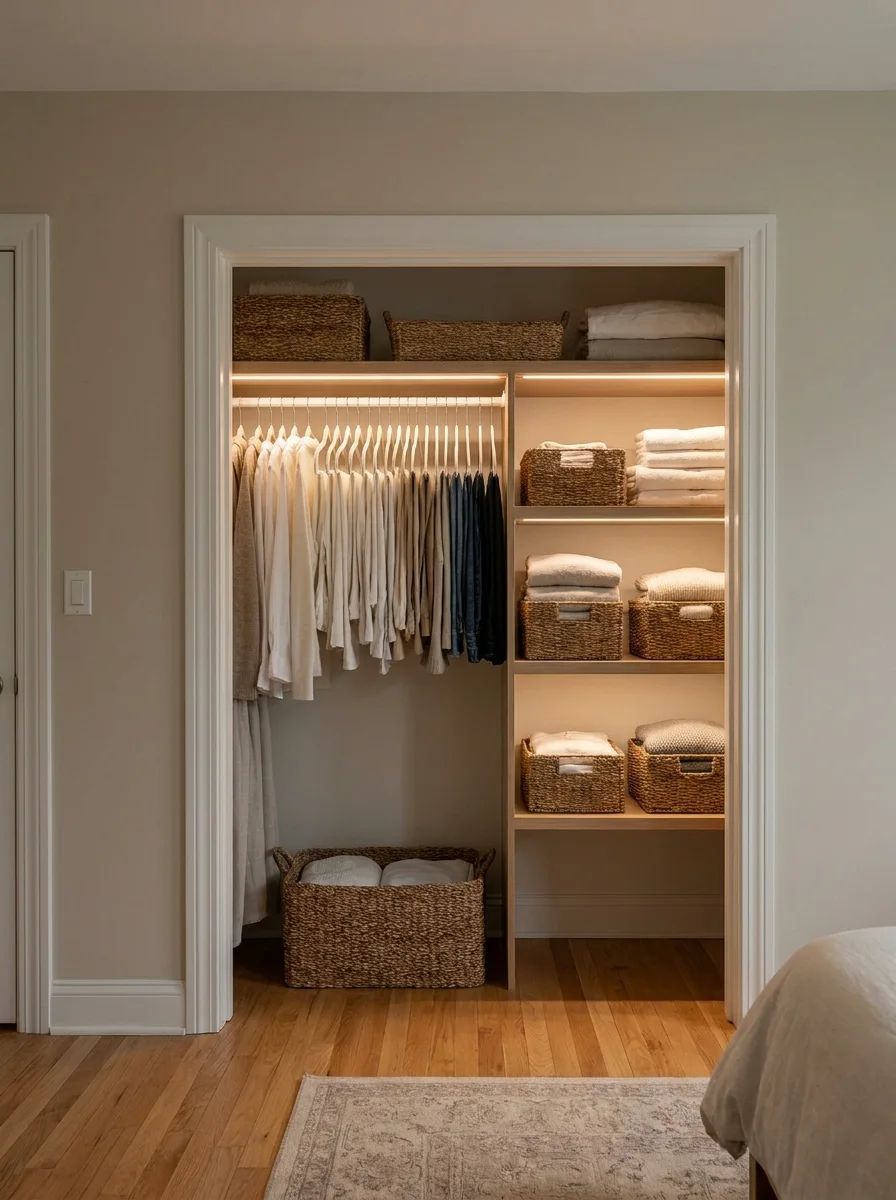
A cluttered or chaotic closet affects the energy of the entire bedroom even when the closet door is closed, you know what’s behind it, and that low-level awareness adds mental noise to a space that should feel restful. Conversely, an organized, cohesive closet creates a sense of control and calm that extends outward into the bedroom itself.
Organization is, in this sense, a form of interior design. The highest impact, lowest effort closet upgrade is replacing mixed hangers with a single set of slim velvet hangers in one color typically black, white, or natural. The visual uniformity is immediate and striking. Everything suddenly looks like it belongs together, like a boutique rather than a storage space. In my experience, this single swap takes under an hour and costs very little, yet it makes the closet feel completely transformed.
The Key: Visual consistency is the goal. Matching hangers, coordinating baskets, and even lighting create a closet that feels curated and that calm carries into the bedroom around it.
16
Layered Window Treatments
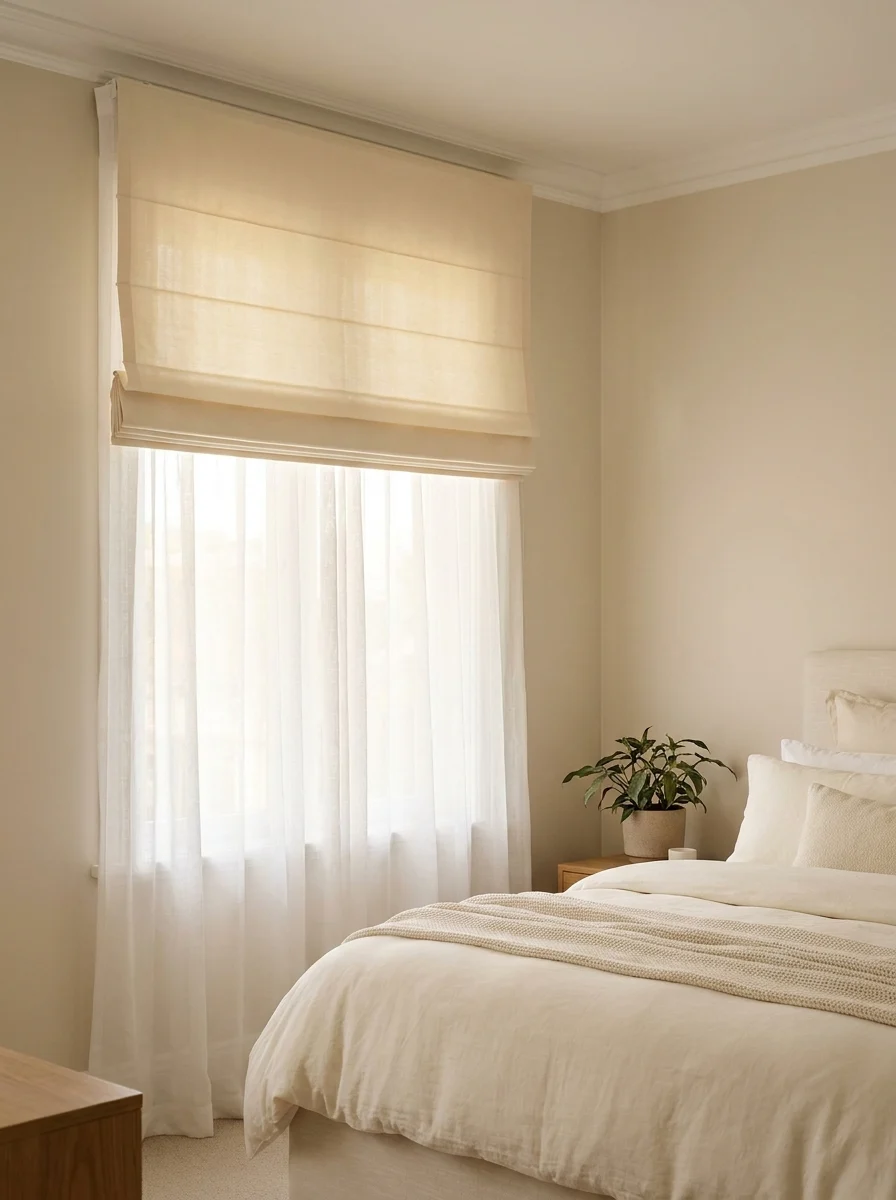
A single curtain panel at a window is functional but flat. Layered window treatments do something entirely different they create depth at the window, control light at multiple levels, and give the window wall a polished, finished quality that reads immediately as intentional design. It’s the difference between a window that’s covered and a window that’s styled.
The practical benefit is equally real. During the day, a sheer layer softens harsh sunlight into warm, diffused light that flatters the room and everything in it. At night, the heavier layer closes for full privacy and blackout. Two separate functions addressed by two coordinating layers that kind of considered design is what makes a bedroom feel genuinely well thought out rather than just decorated. Layered window treatments help you control light at multiple levels a principle that works just as powerfully in bathrooms and living spaces.
The Key: Layer for both light control and visual depth. A sheer plus a shade or drape gives you the softness of filtered daylight and the privacy of full coverage without sacrificing either.
17
Bench or Ottoman at Foot of Bed
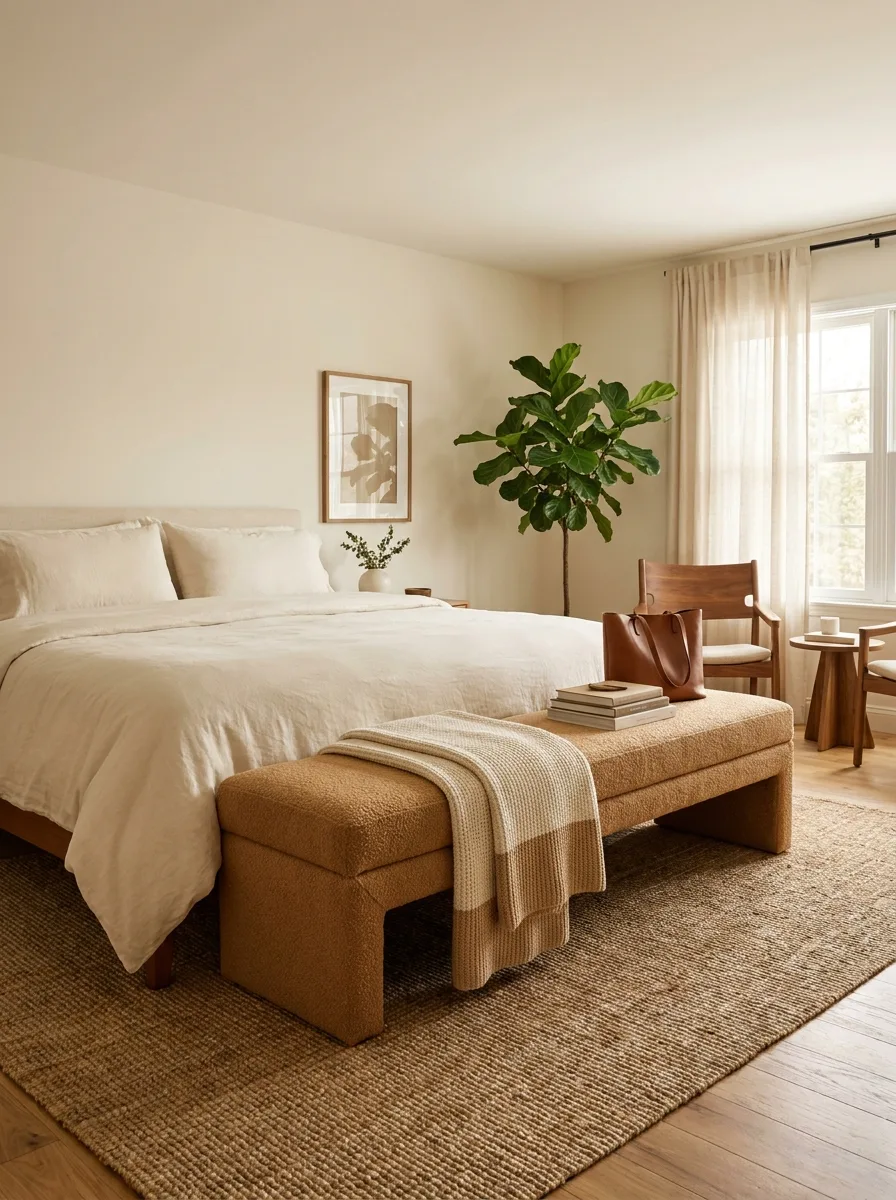
There is a reason that luxury hotel rooms almost always have a bench or ottoman at the foot of the bed it completes the composition. Without it, the bed floats in the space without a visual anchor at the front. With it, the entire bed setup becomes a cohesive, layered vignette that reads as considered and complete from every angle of the room.
Beyond aesthetics, the practical value is real. A bench gives you somewhere to sit while putting on shoes, somewhere to lay tomorrow’s outfit, and somewhere to drape a throw blanket in a way that looks intentional rather than abandoned. I’ve noticed that once people add a bench to their bedroom, they wonder how they ever lived without it it becomes one of the most used and appreciated pieces in the room.
The Key: The bench completes the bed. It is the visual full stop at the end of the room’s most important composition and without it, the bedroom always feels like it’s missing something
18
Personal Art and Meaningful Decor
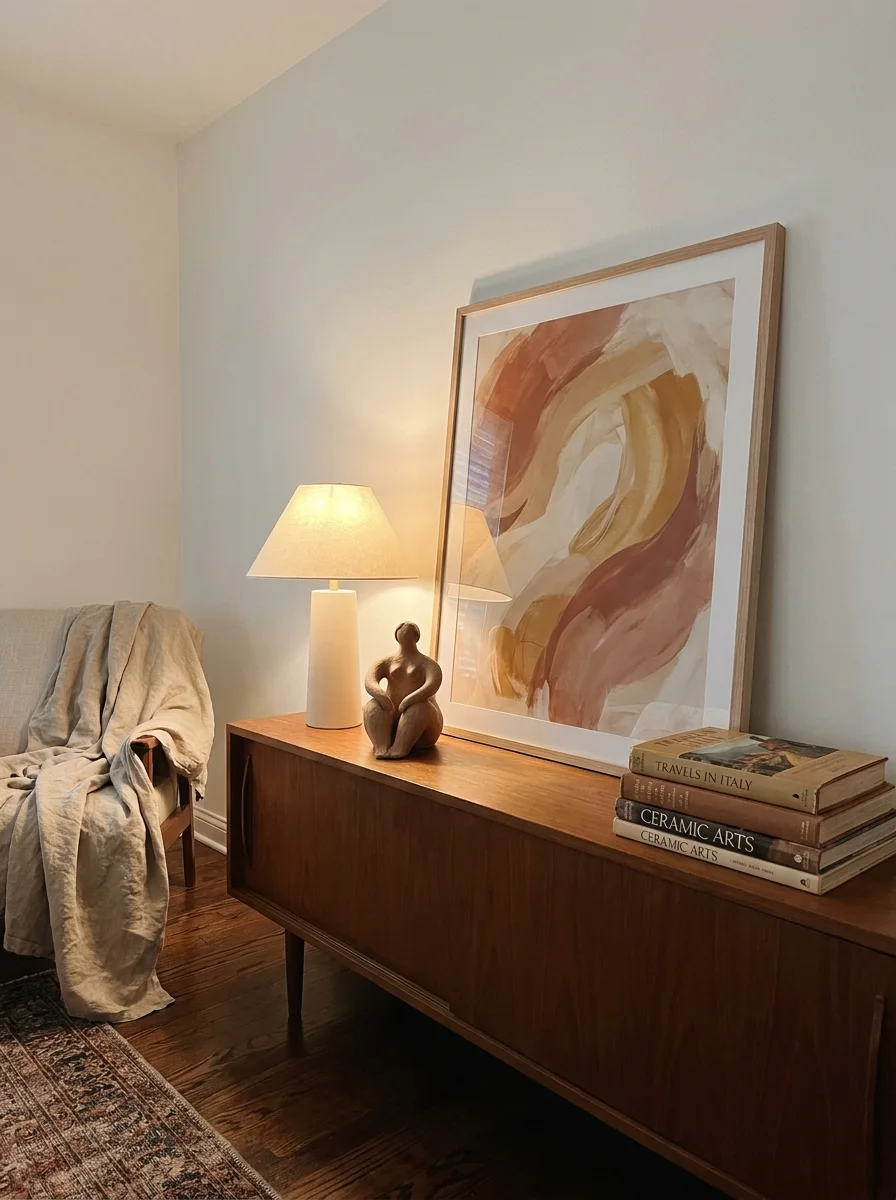
There is a difference between a bedroom that looks designed and one that feels like yours. Décor objects that carry personal meaning a piece of art bought on a trip, a ceramic made by a friend, a book that changed how you think add an invisible warmth to a room that no amount of perfectly chosen neutral linen can replicate. They signal that the space belongs to a real person with a real story.
The styling principle is simplicity. One large piece of art, thoughtfully placed, creates far more impact than five small pieces competing for attention. A single substantial canvas leaning against a wall on top of a low dresser or credenza looks effortlessly confident it doesn’t try too hard. I’ve found that this relaxed, editorial approach to displaying art often feels more personal and more elevated simultaneously.
The Key: One meaningful large piece outperforms ten small generic ones every time. Choose art that you genuinely connect with and display it simply the confidence of that choice reads immediately in the room.
19
Minimal and Intentional Furniture Layout
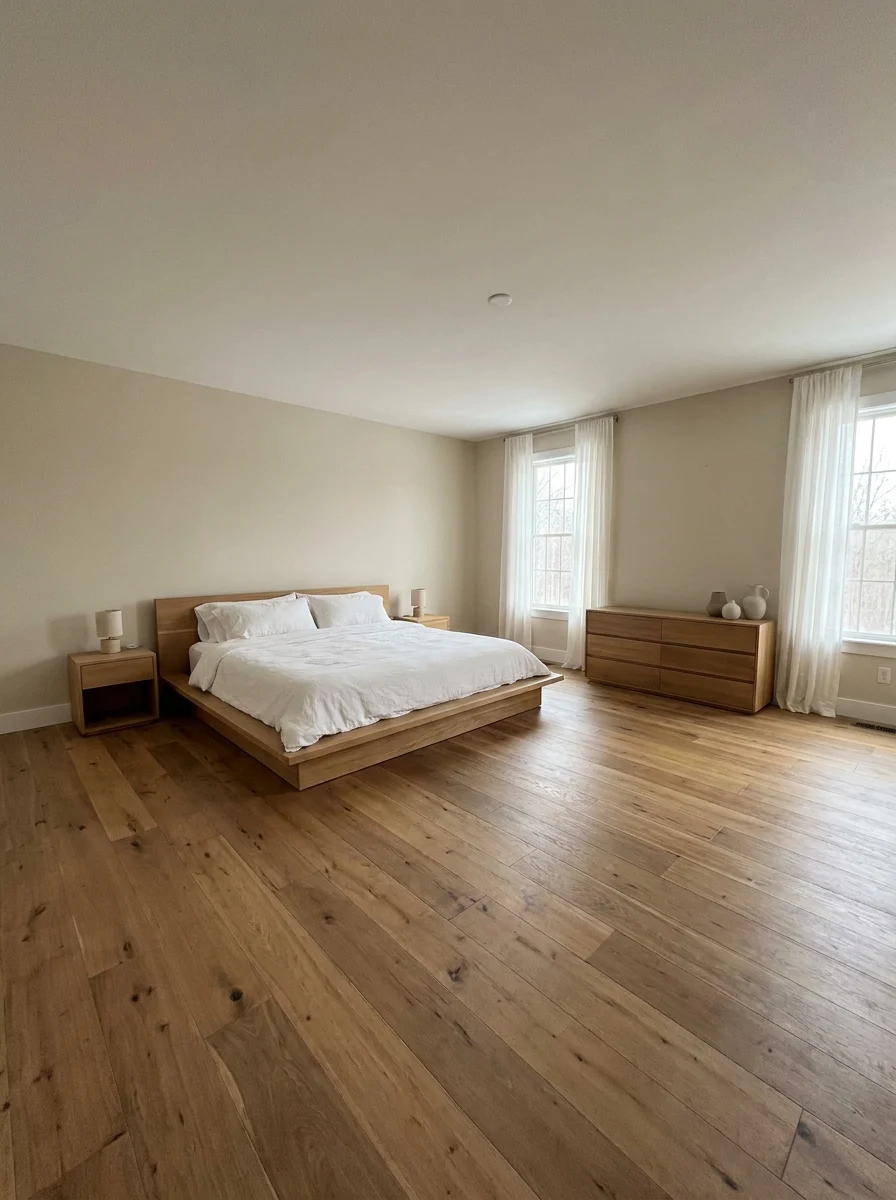
Furniture layout is one of the most impactful decisions in a bedroom makeover, yet it costs nothing to change. Most bedrooms accumulate pieces over time an extra chair, a second dresser, a trunk that doesn’t quite work and the room slowly shrinks around them. Removing what doesn’t serve the space is as much a design act as adding what does.
The bed should always be placed first and centered on the strongest wall usually the one directly opposite the door, or the wall without windows. Every other piece arranges itself in support of that anchor. I’ve noticed that rooms with too much furniture tend to have beds pushed into corners or placed off-center, which disrupts the visual balance that makes a bedroom feel restful and resolved.
The Key: The bed is the room’s anchor. Place it first, center it on the strongest wall, and arrange everything else in deliberate support of that one decision. The whole room will feel more resolved.
20
Canopy or Draped Fabric Ceiling
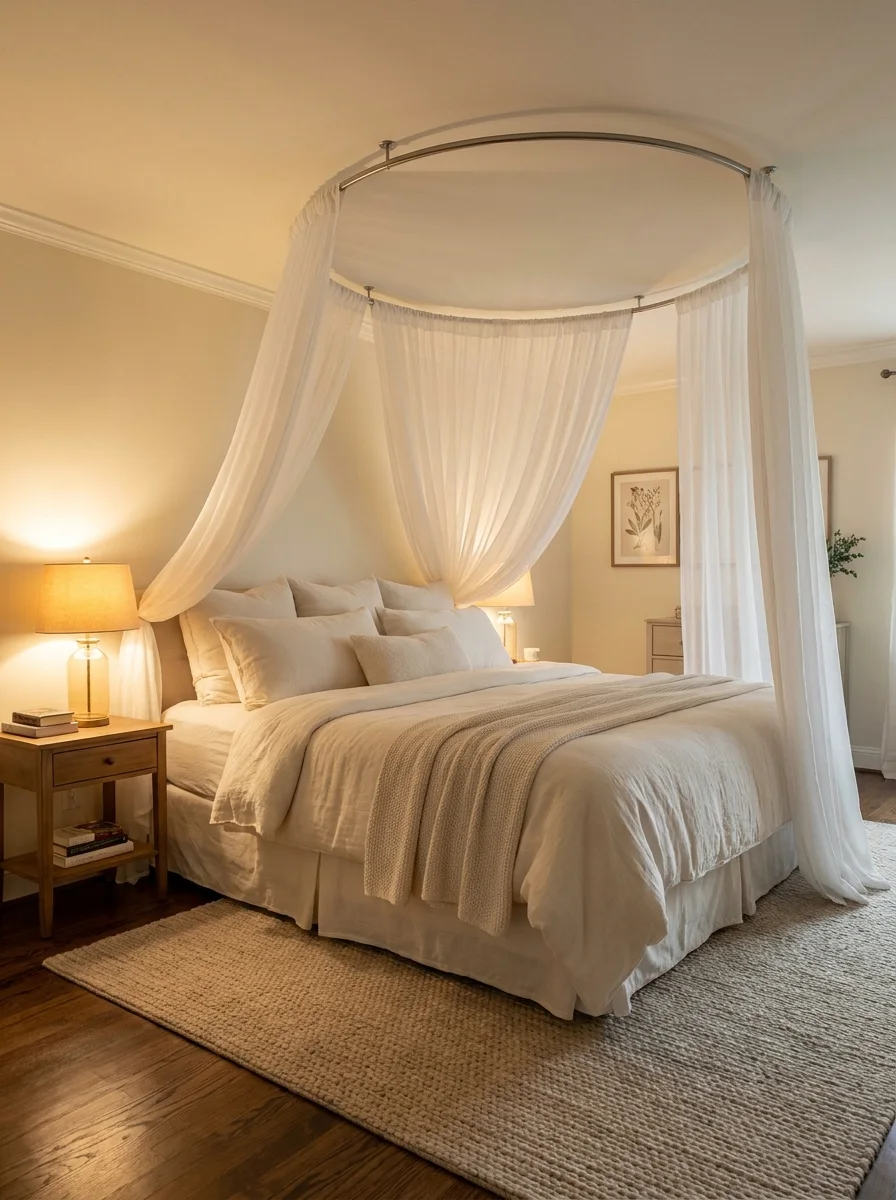
A canopy over the bed does something architecturally interesting it creates a room within a room. The bed stops being a piece of furniture and becomes a defined space, a retreat within the retreat. That sense of enclosure is deeply comforting, and it’s why canopy beds have been associated with luxury and rest across centuries of interior design history.
The modern approach keeps it simple. Rather than a full four-poster frame, a single ceiling-mounted ring with sheer fabric draped down on both sides creates the same effect with a fraction of the cost and effort. Installed in an afternoon with a ceiling hook and a length of white linen or muslin, it completely transforms the character of the room. I’ve seen this one addition make a plain white room look like something from an editorial spread.
The Key: The canopy creates a room within a room. That psychological sense of enclosure — of a defined, protected sleeping space makes the bed feel like a true sanctuary rather than just a place to sleep.
21
Cohesive Hardware and Metal Finish
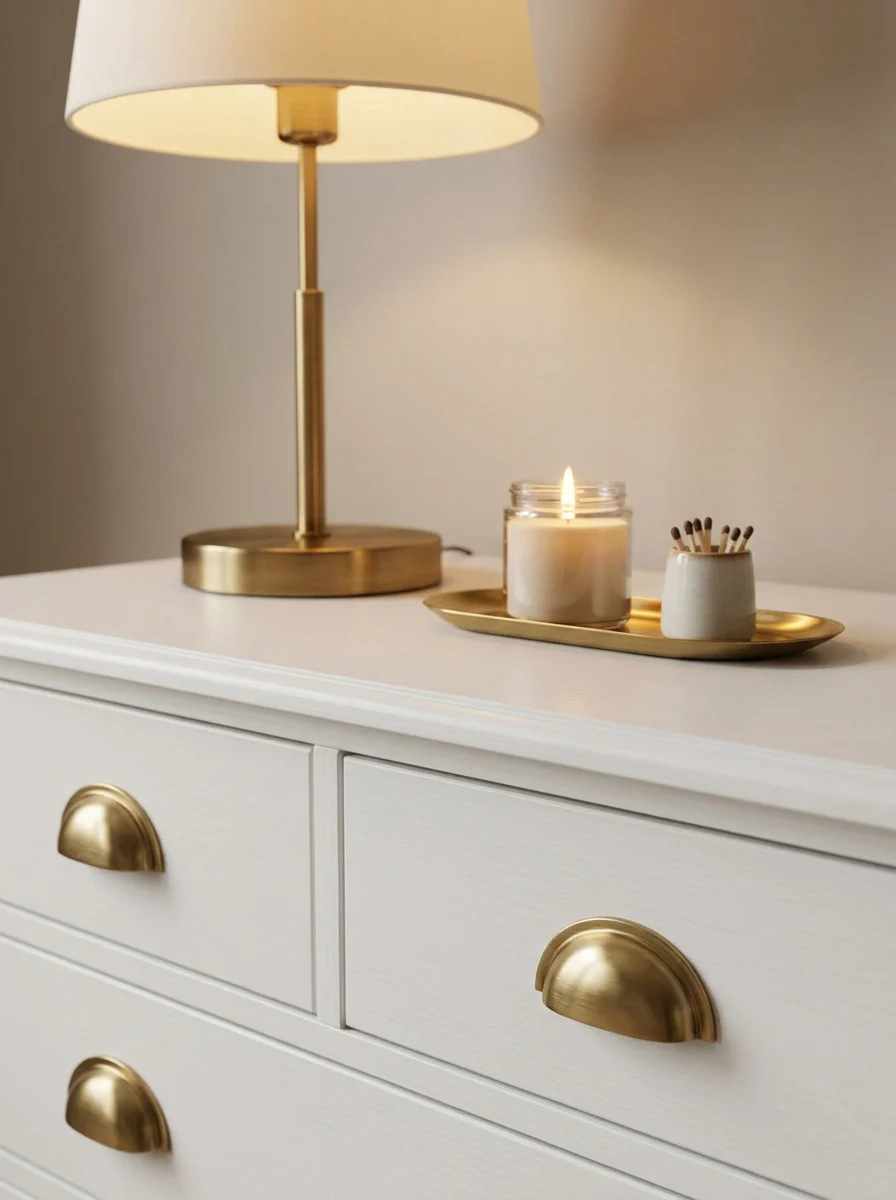
Cohesive metal finishes are one of the most discussed details in interior design conversations and one of the least implemented in real homes. The reason is that mixed metals accumulate gradually: a chrome lamp bought one year, a brass pull added another, a black curtain rod installed later. None of these choices seemed wrong individually, but together they create a low-level visual inconsistency that prevents the room from ever feeling fully resolved.
The fix is straightforward but requires intention. Choose one primary metal finish for the bedroom brushed brass, matte black, or brushed nickel work best with warm neutral palettes and work toward replacing or updating all the hardware touchpoints to match. You don’t need to do it all at once. Start with drawer pulls and lamp bases, since those are the most visible. The room will begin to feel more cohesive immediately.
The Key: One metal finish throughout a bedroom is the difference between a room that looks designed and one that looks assembled. It’s a small discipline with an outsized visual payoff.
FREQUENTLY ASKED QUESTIONS
Your dream bedroom is closer than you think. Every idea in this guide is designed to be achievable no full renovation required, no designer budget necessary. Just intentional choices, made one at a time, that build toward a space that genuinely feels like yours.
I’ve seen how small changes like these a textured accent wall, a well-placed mirror, a canopy above the bed can completely shift the energy of a room. It stops feeling like a place you sleep and starts feeling like a place you truly rest. That difference is worth every bit of effort.
If these master bedroom makeover ideas inspired you, save this post to your Pinterest board so you can come back to it anytime. Try one idea this weekend and share it with a friend who needs a bedroom refresh too.