Mid-Century Modern Living Room
🏠 18 Real Ideas
⏱ Quick Read
🔥 Always Trending
18 Mid-Century Modern Living Room Ideas
That Instantly Make Your Home
Look Expensive
What if your living room could look like it came straight from an interior design magazine — without a designer’s budget? Mid-century modern living room ideas have a quiet power to transform even the most ordinary space into something deeply stylish and inviting.
I’ve noticed this aesthetic works for almost every home because it blends function with real beauty. Clean lines, warm wood tones, and timeless furniture pieces create rooms that feel elevated yet liveable. Whether you’re starting from scratch or refreshing what you have, these 18 ideas will help you build a space that feels expensive, considered, and genuinely yours. Save this. You’ll come back to it.
01
Walnut Wood Warmth
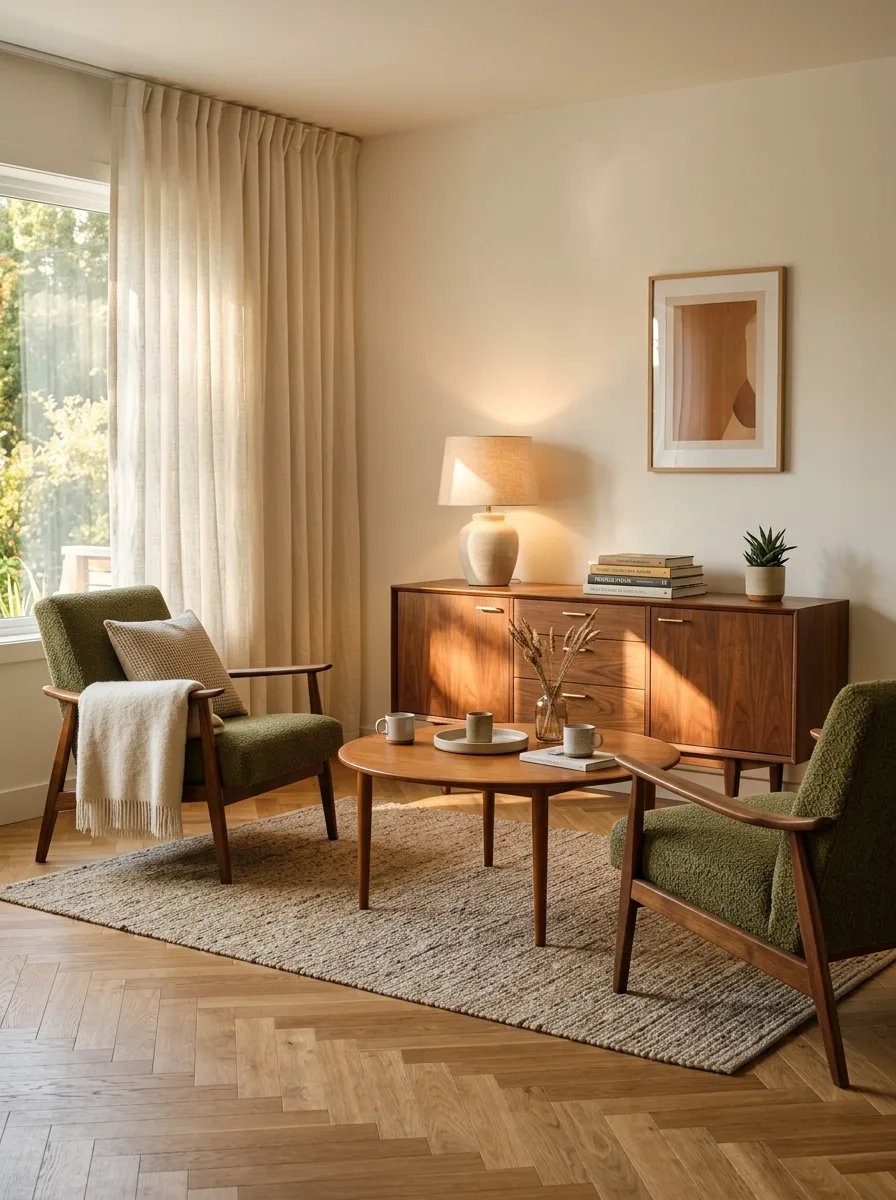
Nothing changes a room faster than introducing real walnut wood furniture. That deep, chocolate-brown tone with natural grain patterns adds an organic warmth that painted furniture simply cannot replicate. A low-slung walnut credenza or a tapered-leg coffee table becomes the visual anchor the whole room builds around.
In my experience, even one solid walnut piece — like a console or side table — shifts the entire mood of a space. Pair it with cream linen upholstery and warm lighting, and the room begins to feel curated rather than assembled. That contrast between soft textiles and rich wood is exactly what makes this style so enduring.
The Key: Choose furniture with slim, tapered legs in walnut or teak to instantly achieve that authentic mid-century silhouette.
02
Iconic Chair Moments
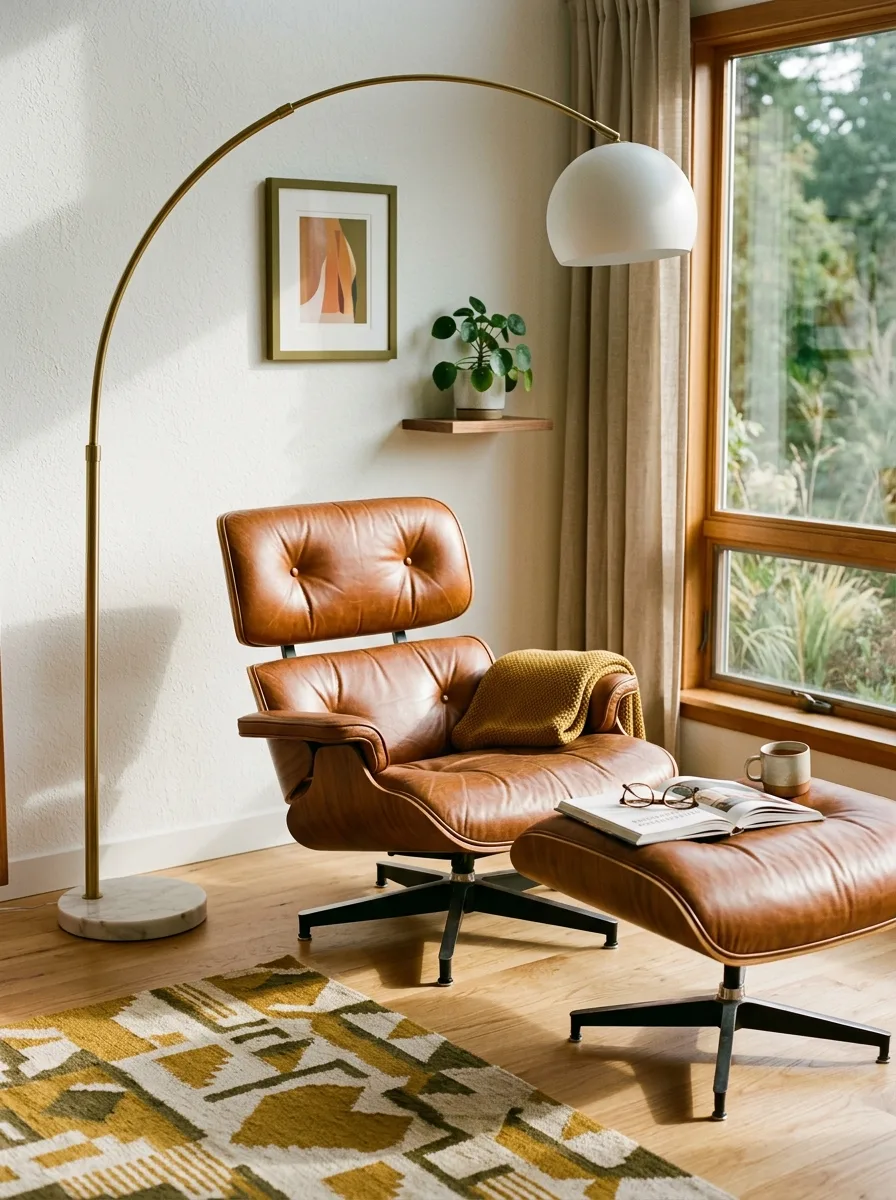
A single iconic chair does more for a room than people expect. It signals intention. It tells anyone who walks in that this space was thoughtfully designed. A low-slung lounge chair in cognac leather or a sculptural shell chair in warm olive instantly becomes the focal point people gravitate toward.
I’ve seen this work beautifully in small apartments where there isn’t room for a full furniture refresh. You place one chair in a corner with a floor lamp and a small side table, and suddenly that corner becomes a destination. It stops looking like dead space and starts looking like a room from a design blog.
The Key: Choose a lounge chair with organic curved lines and solid-color upholstery — it reads as luxury without trying too hard.
03
Warm Earthy Palettes
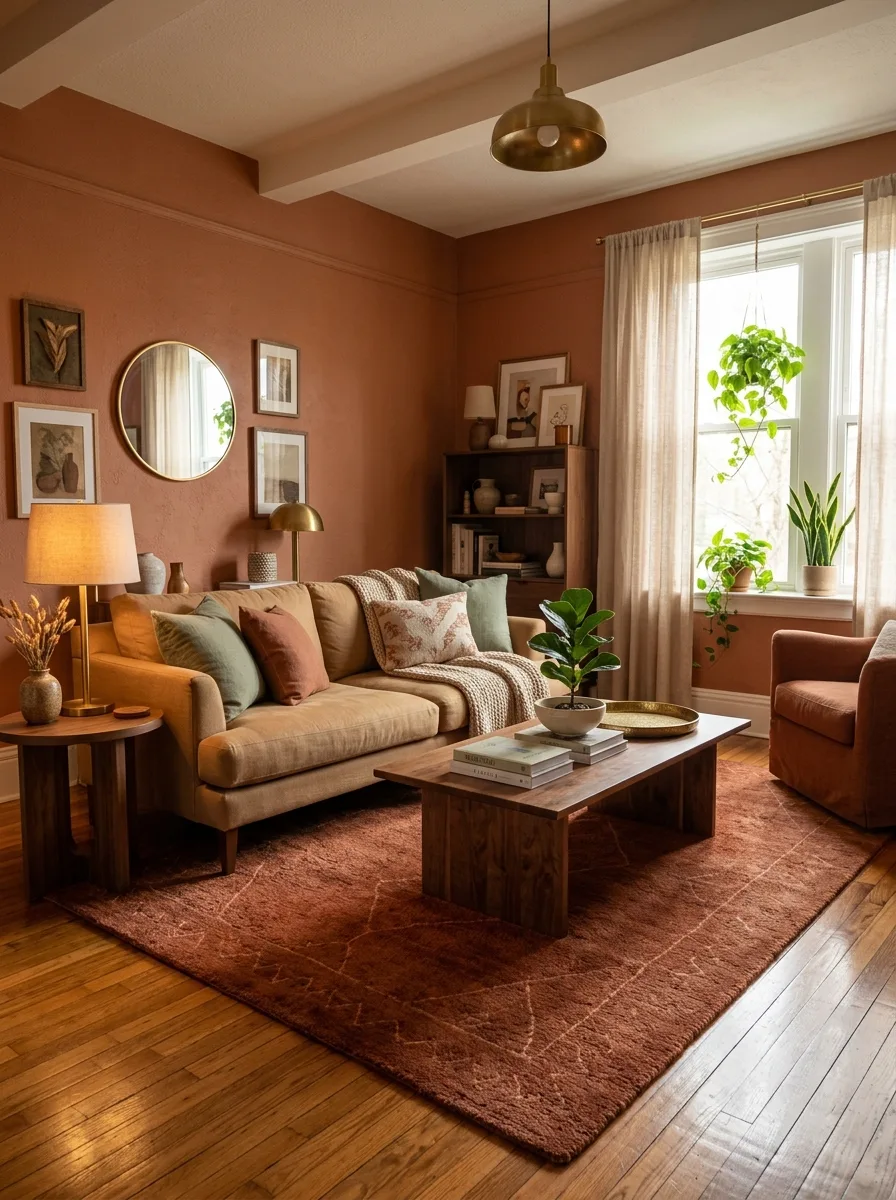
Color is where mid-century modern interiors come alive. Forget all-white walls. The rooms that stop the scroll on Pinterest are painted in terracotta, warm sage, dusty camel, or deep rust. These shades feel like they belong to the era — and they work just as powerfully today because they’re grounded in nature.
That’s why many designers recommend committing to a warm base tone rather than playing it safe with neutrals. When your walls already carry warmth, every walnut wood piece you bring in feels purposeful. Your rug, your throw pillows, your lamp shades — they all start to speak the same visual language, and the room instantly looks more polished.
The Key: Pick one warm base wall color and layer two or three tonal variations through textiles and wood finishes for depth.
04
Statement Lighting Glow
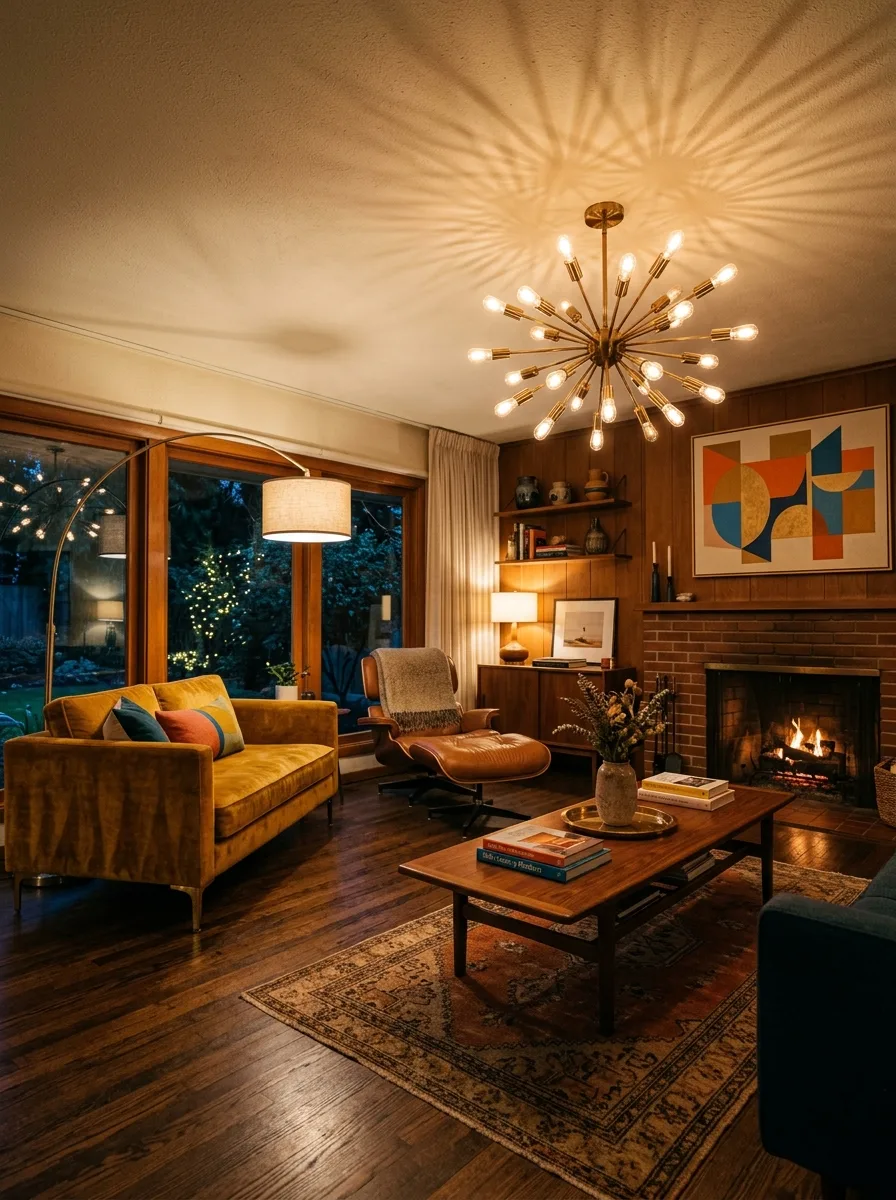
Lighting in a mid-century modern room is never an afterthought. It is part of the design. A brass Sputnik chandelier overhead completely transforms how a space reads — suddenly the ceiling has personality, and every piece of furniture below looks more expensive because of the warm glow surrounding it.
Arc floor lamps are another move worth making. That tall, sweeping form adds vertical interest and creates a pocket of warm light near a reading chair or sofa corner. I’ve noticed that rooms with layered lighting — one overhead fixture plus two floor or table lamps — always feel warmer and more lived-in than rooms relying on a single overhead source.
The Key: Layer at least three light sources at different heights to create the warm, editorial glow mid-century interiors are known for.
05
Geometric Rug Anchors
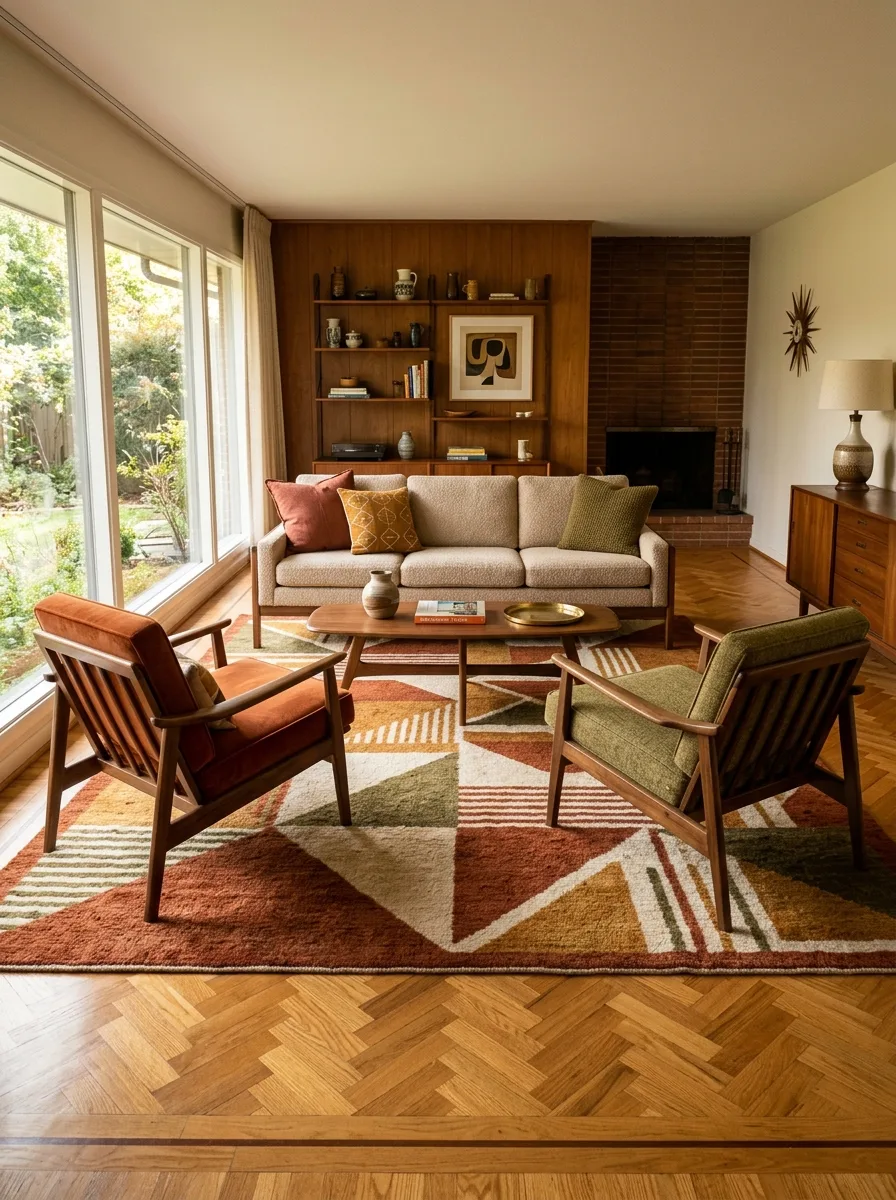
The rug is where the room finds its rhythm. A large geometric wool rug in rust and cream doesn’t just protect the floor — it creates a visual foundation that makes the entire seating arrangement feel intentional. Pull it too small, and the room looks disconnected. Go large, and everything clicks.
That bold pattern also adds visual energy without introducing clutter. You can keep your walls calm, your sofa neutral, and let the rug do the heavy lifting. In my experience, this is the single most effective decorating move for people who want a styled living room without overthinking every detail.
The Key: Size up your rug — all front sofa and chair legs should rest on it to anchor the seating area with visual confidence.
06
Mid-Century Low Profile Sofas
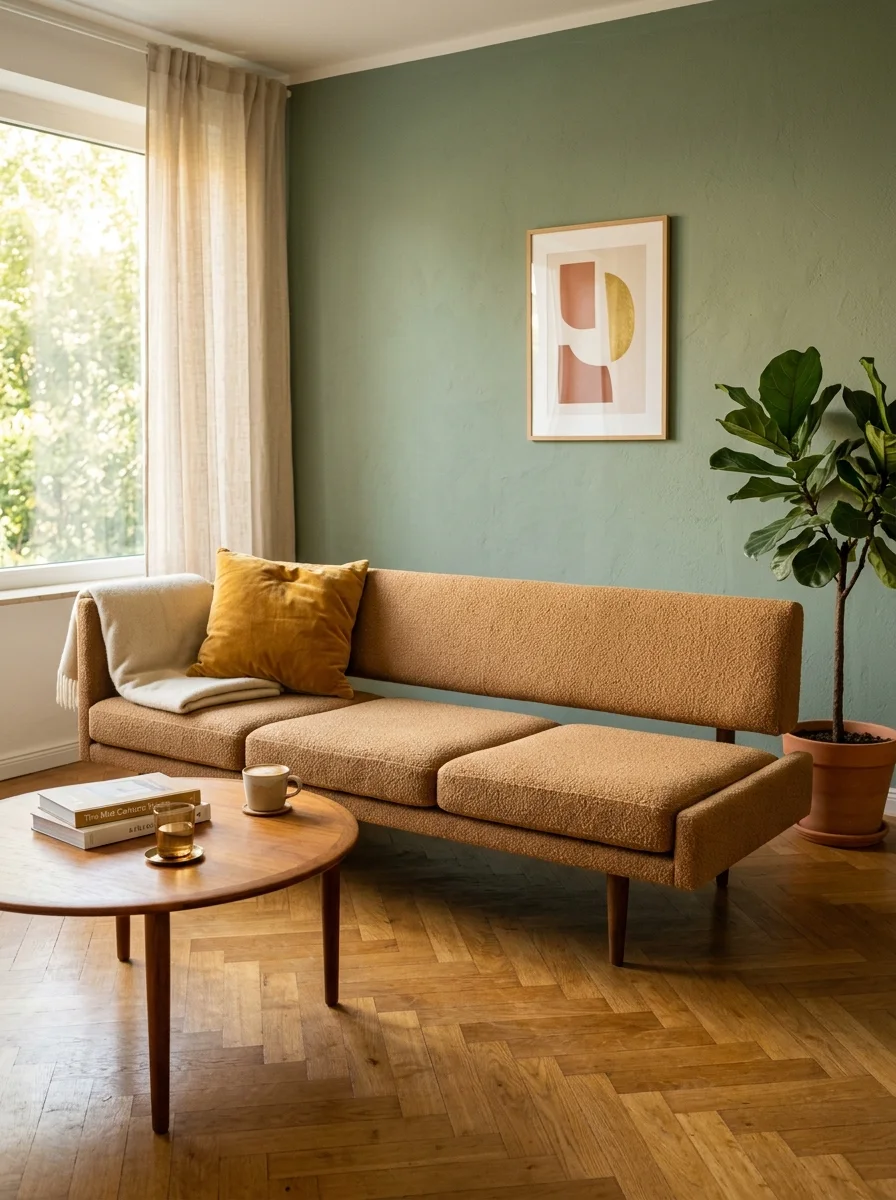
The sofa is the loudest furniture decision in any living room. In a mid-century modern space, you want it low, clean, and structured. A low-profile sofa with tapered walnut legs and a solid-color upholstery immediately communicates that this room has a point of view. It sits close to the floor. It has presence without heaviness.
Boucle fabric has made a serious comeback because it reads as textured luxury at first glance. Pair it with a smooth teak coffee table and the contrast between rough and polished makes both pieces look more considered. The sofa and coffee table relationship is one of the most important visual pairs in the whole room.
The Key: A sofa with tapered wood legs and clean bench-seat cushions creates the most authentic mid-century silhouette at any price point.
07
Teak Sideboard Styling
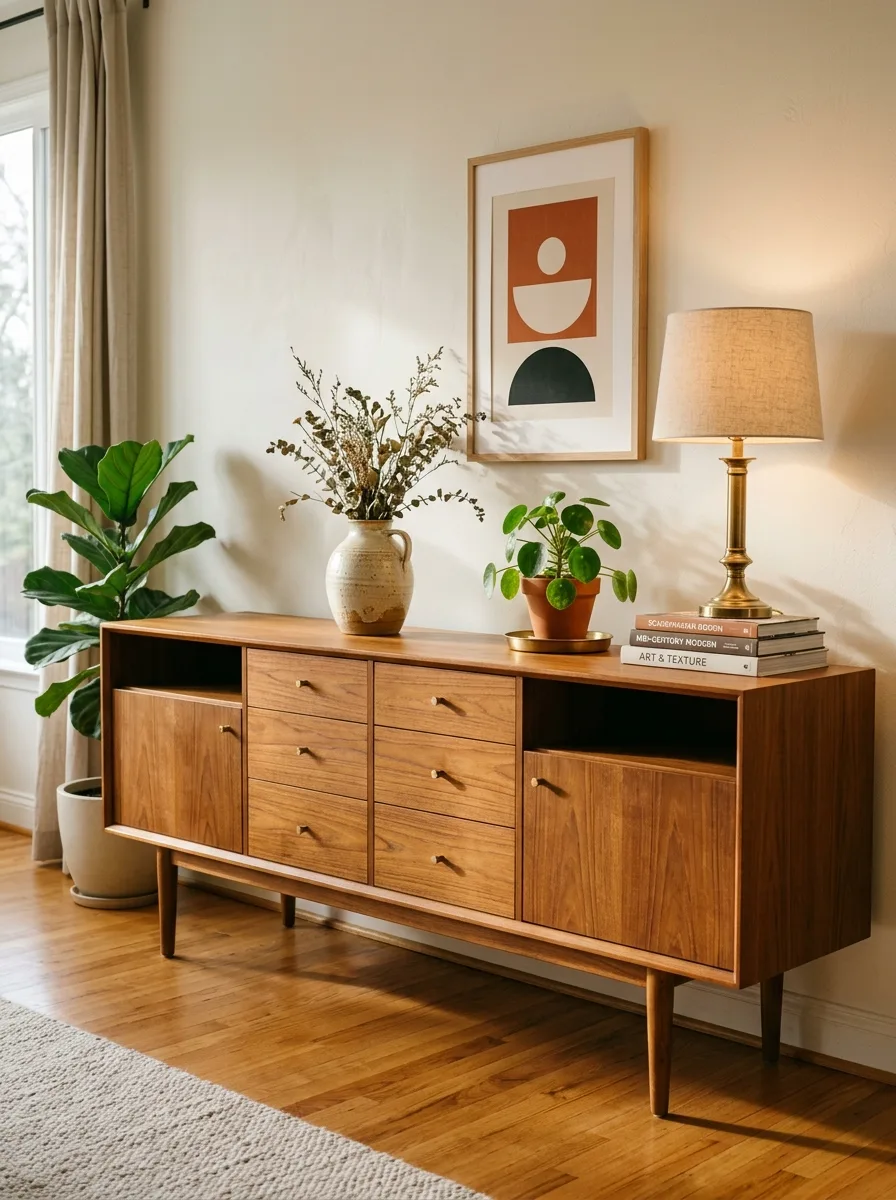
A teak sideboard does two things at once: it stores everything you need to hide and gives you a beautiful surface to style. That combination of function and beauty is exactly what mid-century modern design is built on. Nothing looks more intentional than a long, low sideboard with a curated collection of objects on top.
Style it in odd numbers. A tall ceramic vase, a small trailing plant, a brass lamp, and a stack of books — that’s all it takes. The key is variation in height. Flat arrangements look staged. Varied heights look lived-in and personal, which is exactly the mood you’re after.
The Key: Style your sideboard with three to five objects at varying heights to create a naturally curated vignette, not a showroom display.
08
Organic Shape Accents
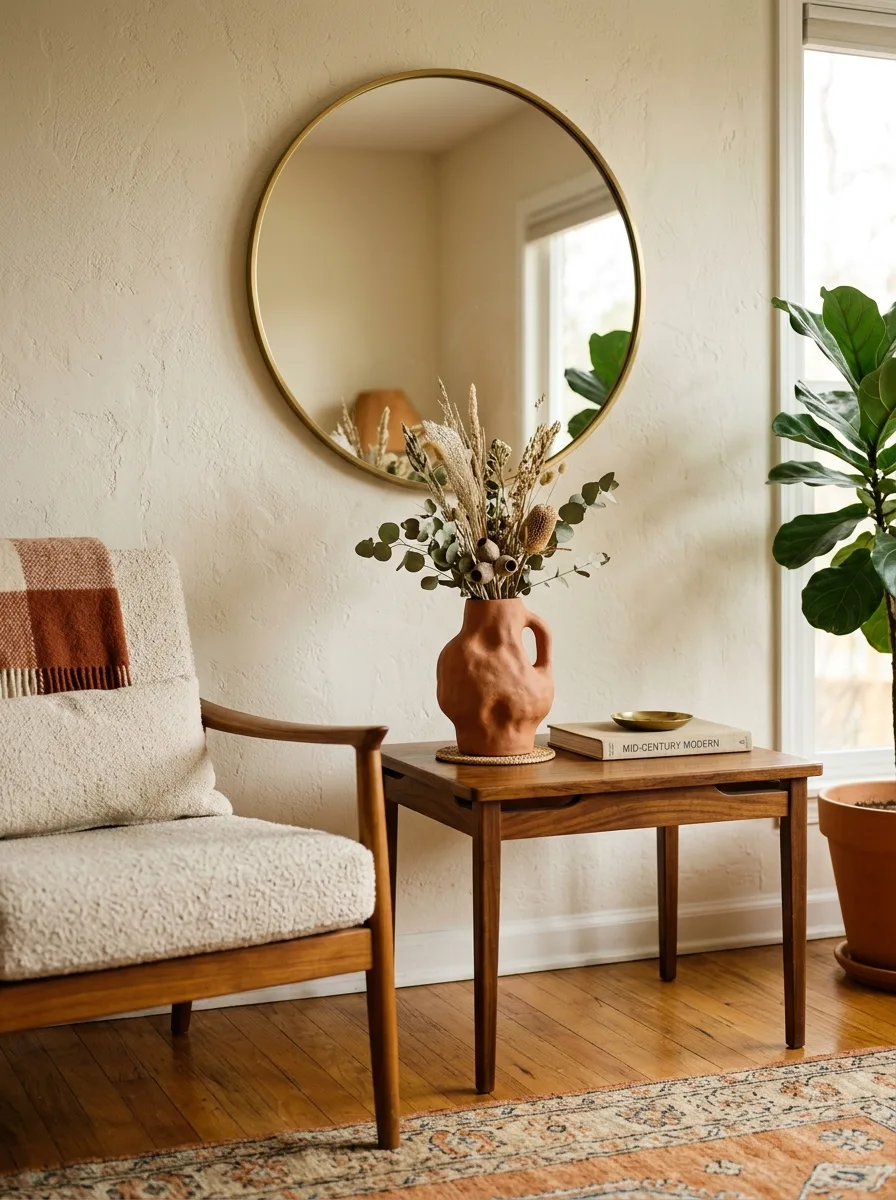
Hard lines and soft curves — that tension is central to why mid-century modern rooms look so interesting. The sofa is clean and structured. The mirror is round. The coffee table has a kidney shape. These organic forms prevent the room from feeling too rigid or architectural and bring a softness that makes the space feel genuinely inviting.
Sculptural ceramics are an underrated move in this style. A single handmade terracotta vase on a side table adds more warmth and character than a dozen decorative accessories from a big-box store. That irregular, hand-thrown quality says this room belongs to someone with taste — not just someone who followed a trend.
The Key: Introduce at least one organic or curved form — a round mirror, oval tray, or kidney-shaped table — to soften the geometry of the space.
09
Brass Metal Details
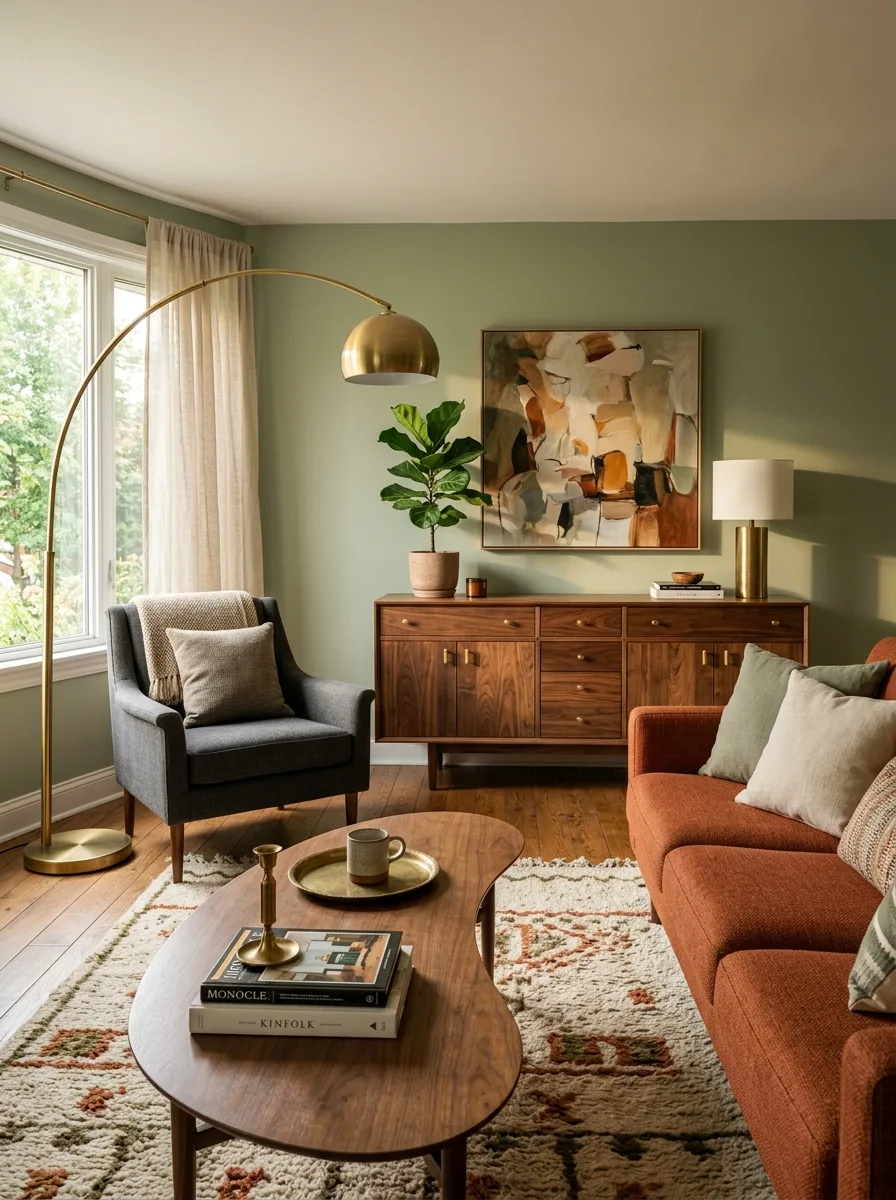
Brass is the metal of this aesthetic. Full stop. It has a warmth that chrome and nickel lack, and when it catches afternoon light in a room full of walnut wood and earthy textiles, the effect is genuinely beautiful. You don’t need to overdo it — even three or four brass accents create a through-line that makes the whole room feel designed.
Start small if you’re unsure. Swap a lamp base for a brass one. Add a brass tray to the coffee table. Replace cabinet hardware on your sideboard. These are low-cost moves that add up quickly. I’ve noticed that rooms with consistent metal finishes always look more pulled-together than rooms where metals are mixed randomly.
The Key: Stick to one metal finish — brushed brass — and repeat it in at least three places for a cohesive, intentional look.
10
Velvet Throw Pillows
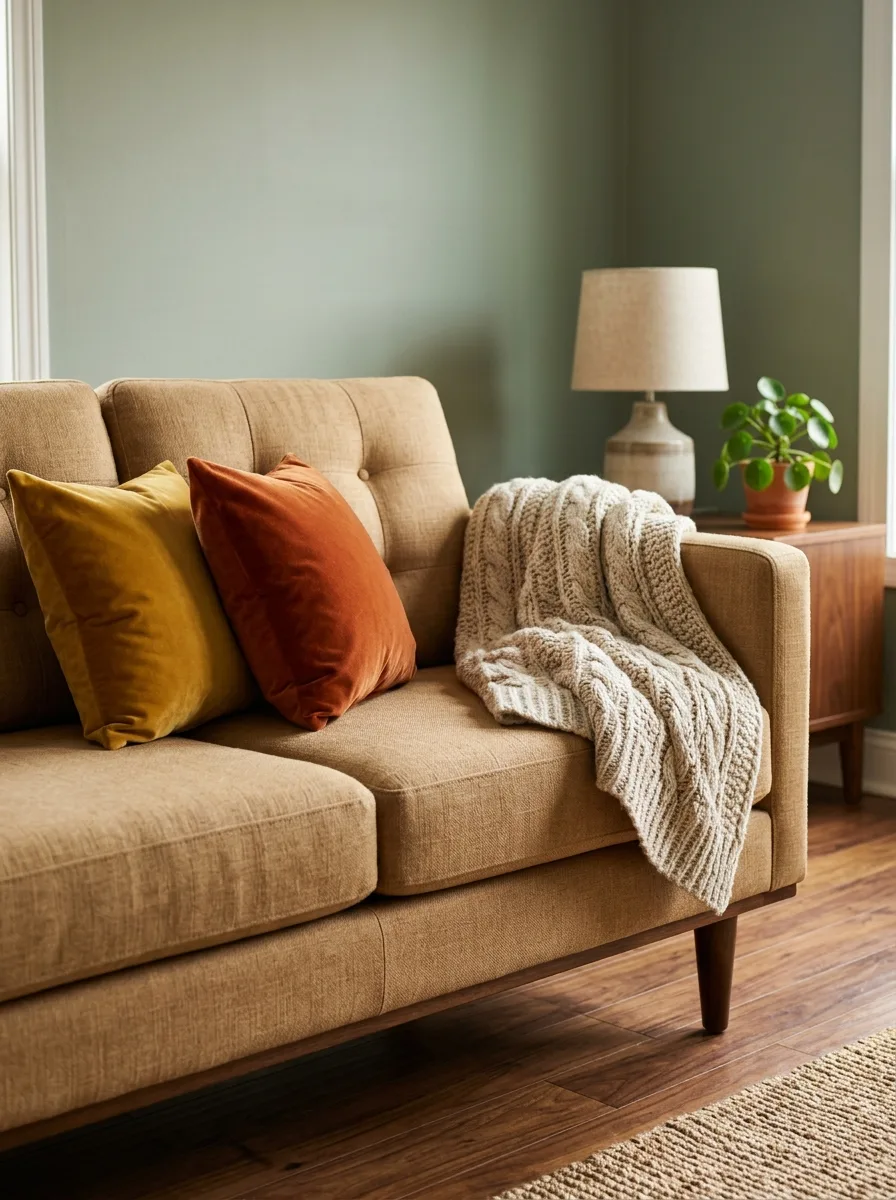
Throw pillows might sound like a small detail, but they carry enormous styling weight. Two velvet cushions in deep mustard or burnt orange transform a plain camel sofa into something that looks intentionally curated. The contrast between smooth velvet and linen upholstery creates a tactile richness you can see from across the room.
Keep it to two or three pillows maximum. This style is about restraint. A sofa piled with pillows looks chaotic — and chaos is the opposite of what mid-century modern is about. Two pillows and one casually draped throw in a complementary texture is all it takes to make a sofa look editorial-ready.
The Key: Choose two velvet pillows in warm, saturated tones and one draped throw for a sofa that looks effortlessly styled without overdoing it.
11
Abstract Art Walls
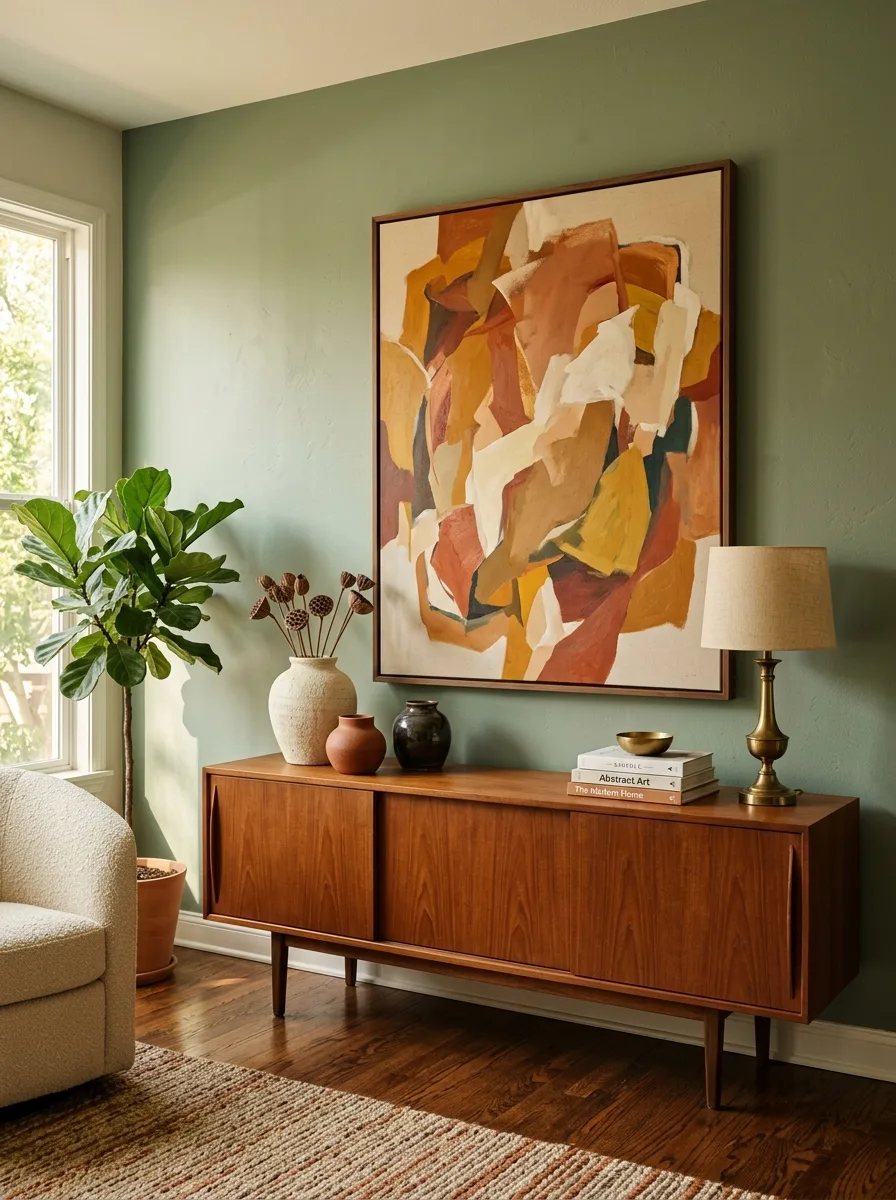
Abstract art is the punctuation of a mid-century modern room. It adds color, emotion, and a sense of personality without introducing pattern clutter. A single large canvas in warm ochre and terracotta tones above a sideboard becomes the visual anchor the entire wall builds around — and it makes the room feel complete in a way that nothing else quite does.
The frame matters as much as the art. A simple walnut or thin brass frame keeps the artwork in dialogue with the rest of the room’s materials. Chunky ornate frames belong in a different aesthetic. Here, the goal is for the frame to disappear and the art to speak.
The Key: Hang one large abstract canvas in warm tones above your main furniture piece — it creates instant gallery-level presence with minimal effort.
12
Indoor Plants Styling
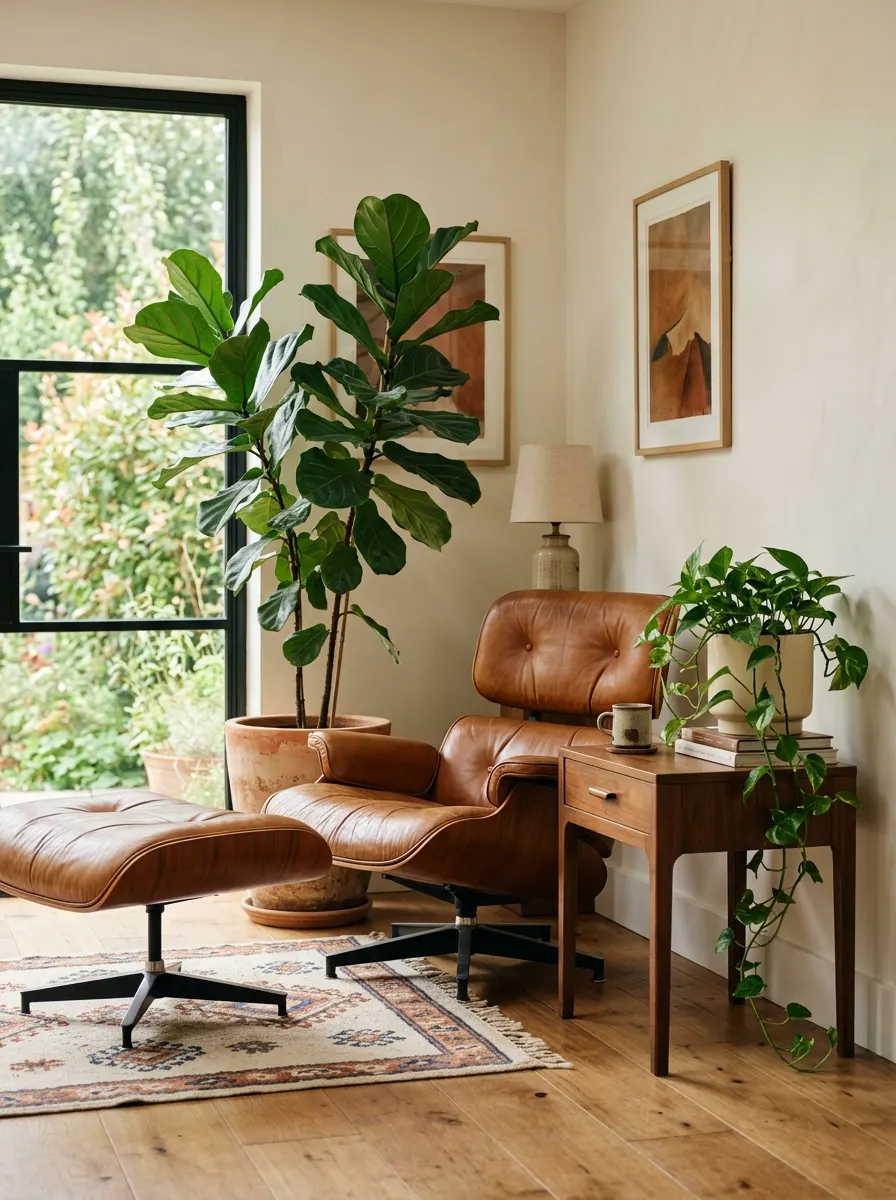
Plants are not decoration in a mid-century modern room — they are architecture. A tall fiddle leaf fig or rubber plant beside a low sofa adds vertical scale that balances the horizontal emphasis of the furniture. It draws the eye up and makes the room feel taller, more layered, and genuinely alive.
The pot choice matters as much as the plant itself. Terracotta pots in warm clay tones, matte ceramic in cream or sage — these materials stay in conversation with the room’s palette and materials. A bright white plastic nursery pot pulled into the corner of an otherwise beautifully styled room is a detail that quietly undermines everything else.
The Key: Choose one tall floor plant and one smaller table top plant for height variation — it creates visual rhythm between the ceiling and the furniture.
13
Sunburst Mirror Drama
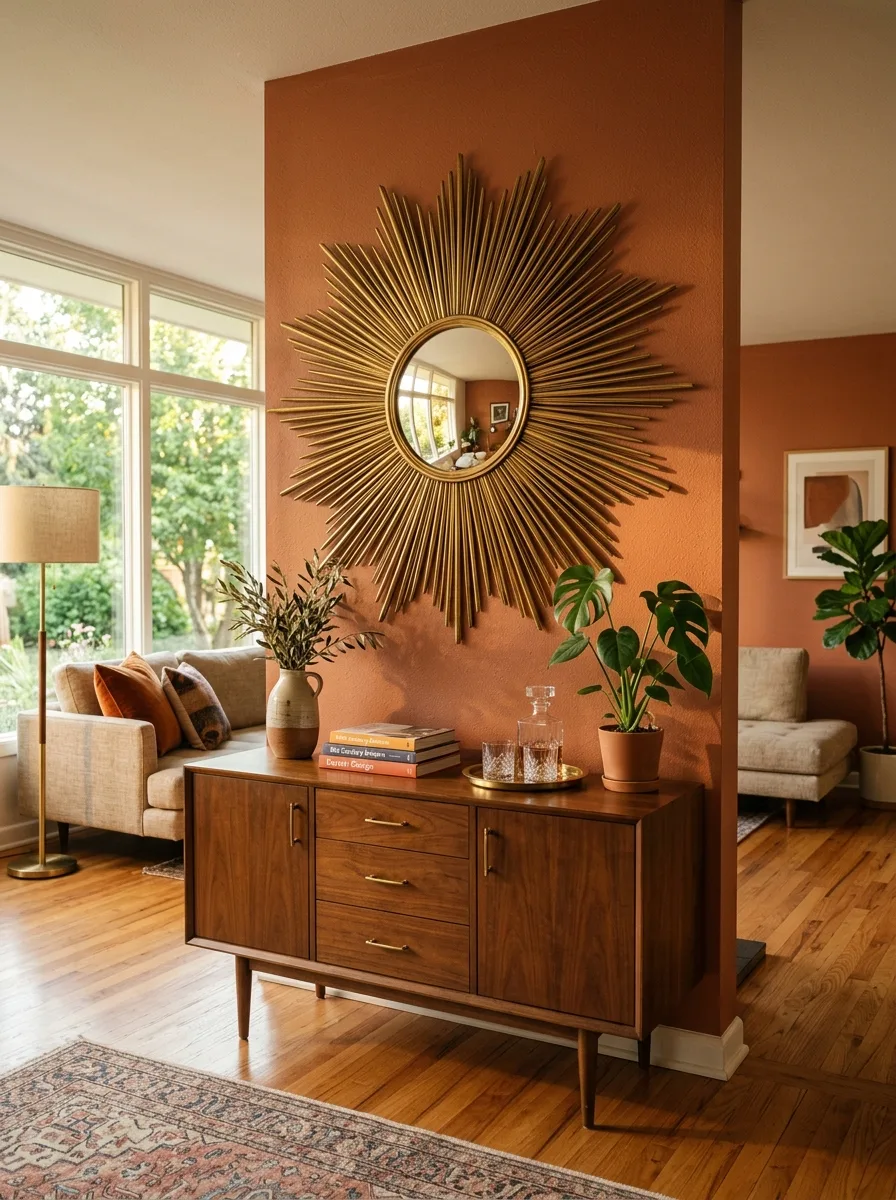
Few single pieces carry more visual impact than a brass sunburst mirror. It is sculptural, warm, and completely unmistakable. Hang it above a sideboard or fireplace and it immediately becomes the room’s focal point. It does not need anything else around it — the mirror is the moment.
Beyond aesthetics, a large mirror reflects natural light deeper into the room, making smaller spaces feel more open and luminous. That reflected warmth bouncing off brass rays creates a glow in the room that you notice without quite knowing why the space feels so inviting. It is one of the most effortless design moves in this entire aesthetic.
The Key: Hang the sunburst mirror where afternoon light will catch the brass rays — the reflection across the room creates a warmth money can’t simply buy.
14
Open Shelving Displays
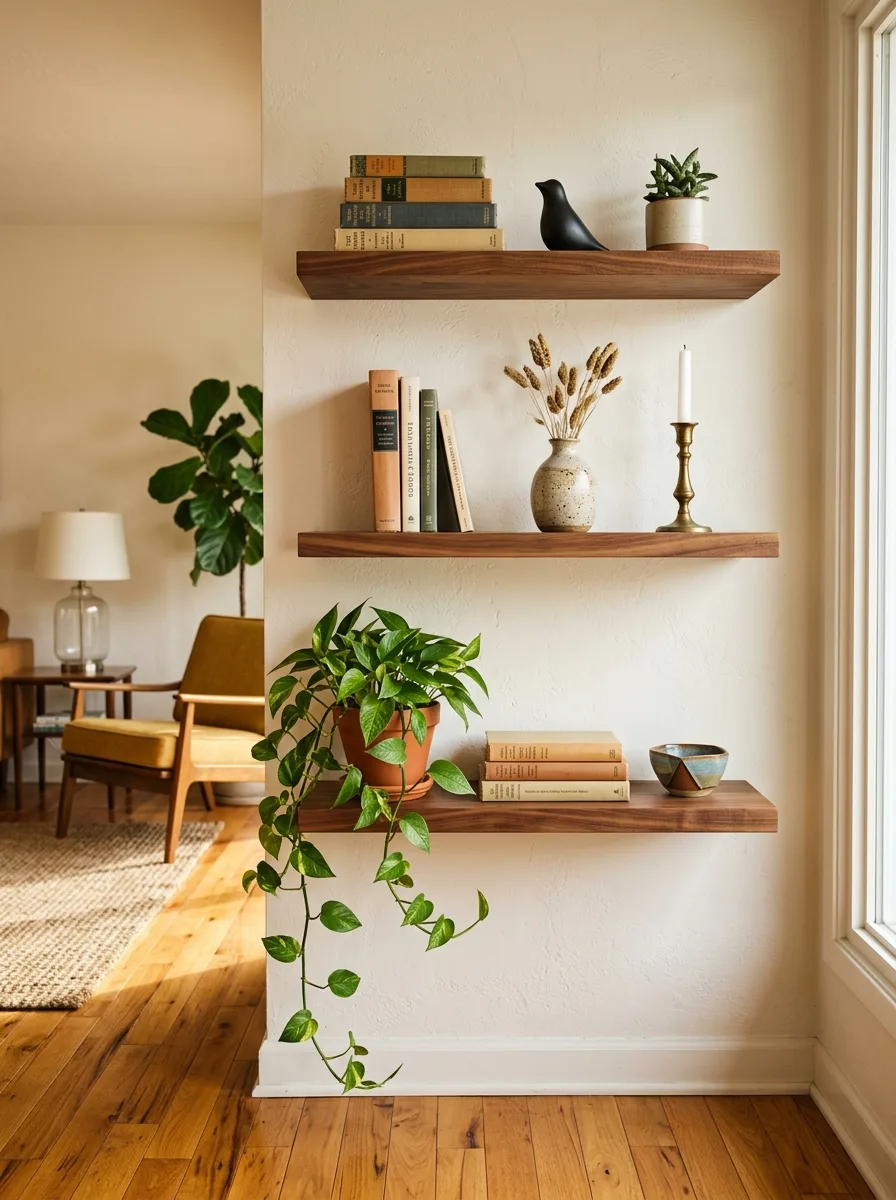
Open shelving in a mid-century modern room is both functional and deeply visual. Floating walnut shelves styled with a considered mix of objects — books, ceramics, a small trailing plant, a brass candle holder — create a wall feature that feels personal and curated rather than decorated.
The secret is restraint. White space between objects is not empty — it is part of the composition. Crowded shelves look chaotic. Shelves with breathing room between groupings look considered and intentional. That’s why many designers recommend treating each shelf like a small tableau rather than a storage surface.
The Key: Leave 30–40% of each shelf empty — negative space makes your styled objects look intentional rather than cluttered and make a mid-century look.
15
Hairpin Leg Tables
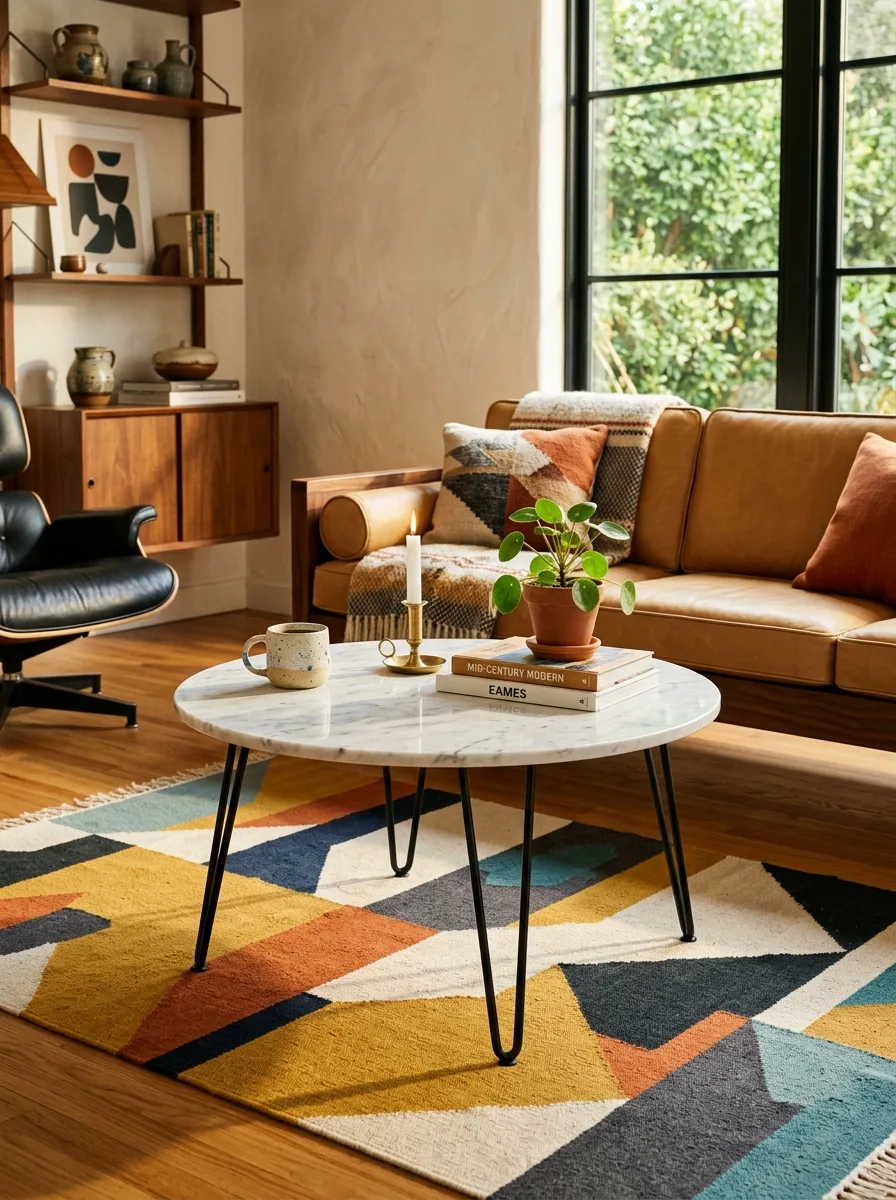
Hairpin legs are one of those design details that immediately read as mid-century modern to anyone who sees them. Their slim, architectural form adds structure without weight, making any table feel lighter and more sophisticated than four standard block legs ever could. A marble coffee table on hairpin legs becomes simultaneously vintage and contemporary.
What makes them practical as well as beautiful is versatility. You can apply hairpin legs to almost any surface — a vintage door becomes a desk, a marble slab becomes a dining table. In my experience, this is one of the most affordable ways to introduce authentic mid-century character into a room that needs it.
The Key: Choose hairpin legs in black or brass depending on your metal finish — keep it consistent with the rest of the room’s hardware for cohesion.
16
Curtain and Window Styling
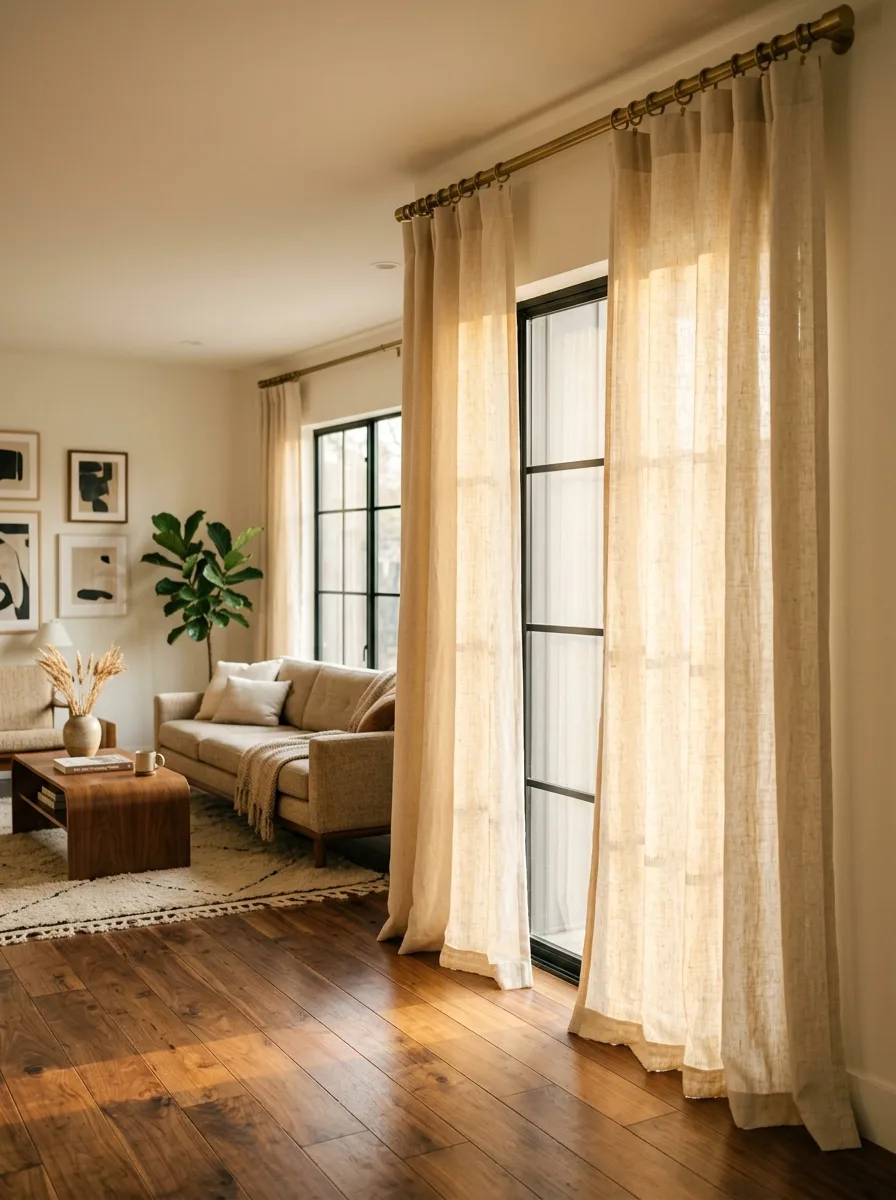
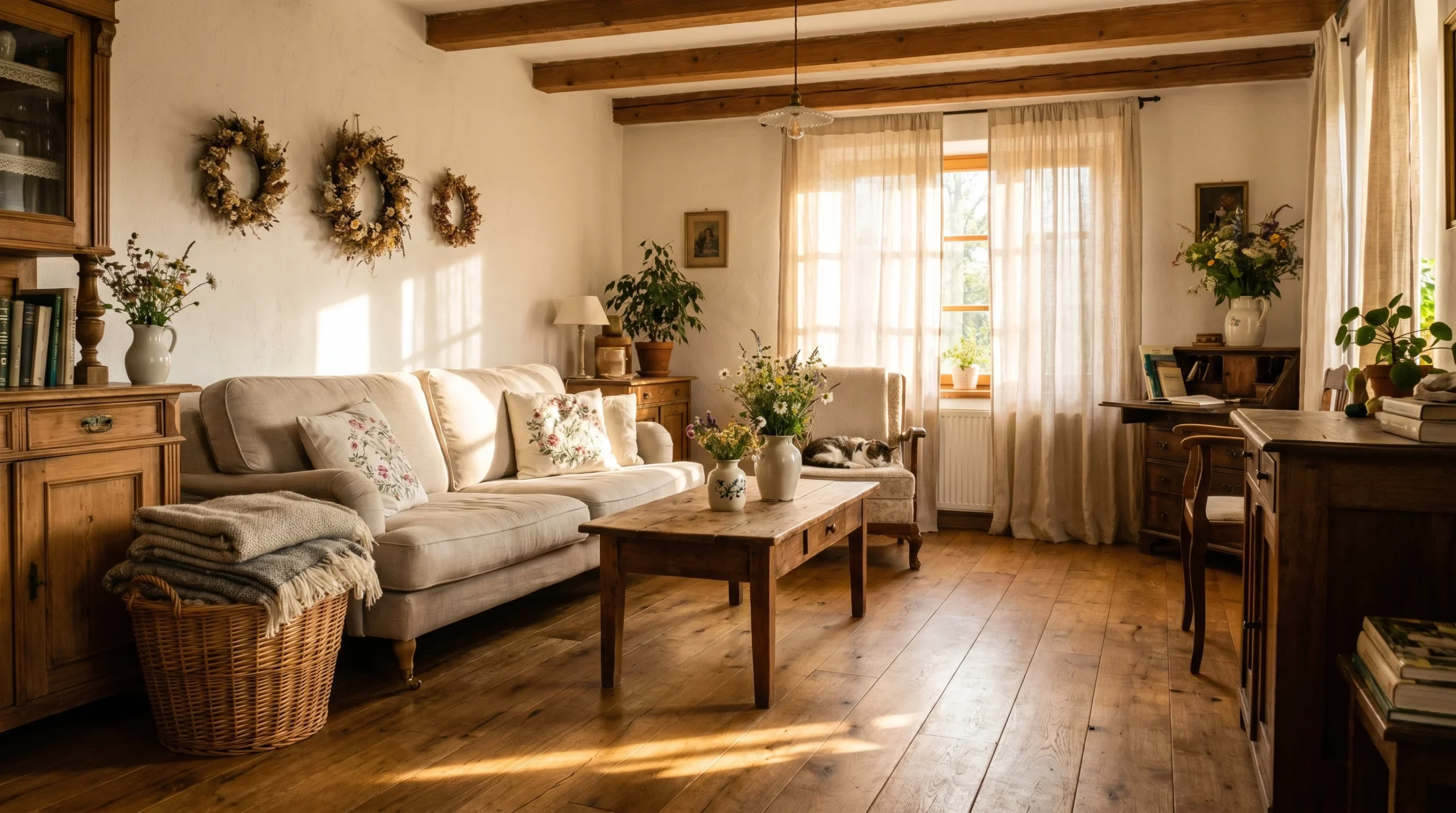
Curtains are one of those details that can make a room feel either effortless or unfinished depending on how they’re hung. Floor-to-ceiling linen curtains hung close to the ceiling immediately create a sense of height and grandeur that transforms even a modest room. The fabric pools gently at the floor for that relaxed, organic look.
Avoid hanging curtain rods directly above the window frame. That common mistake cuts the perceived ceiling height in half. Mount the rod two to four inches below the ceiling line, let the linen fall to the floor, and watch the room feel like it grew by a foot overnight. It’s one of those simple changes that makes an enormous visual difference.
The Key: Mount curtain rods two to four inches below the ceiling and use floor-length panels to visually double the height of any room.
17
Curated Coffee Table
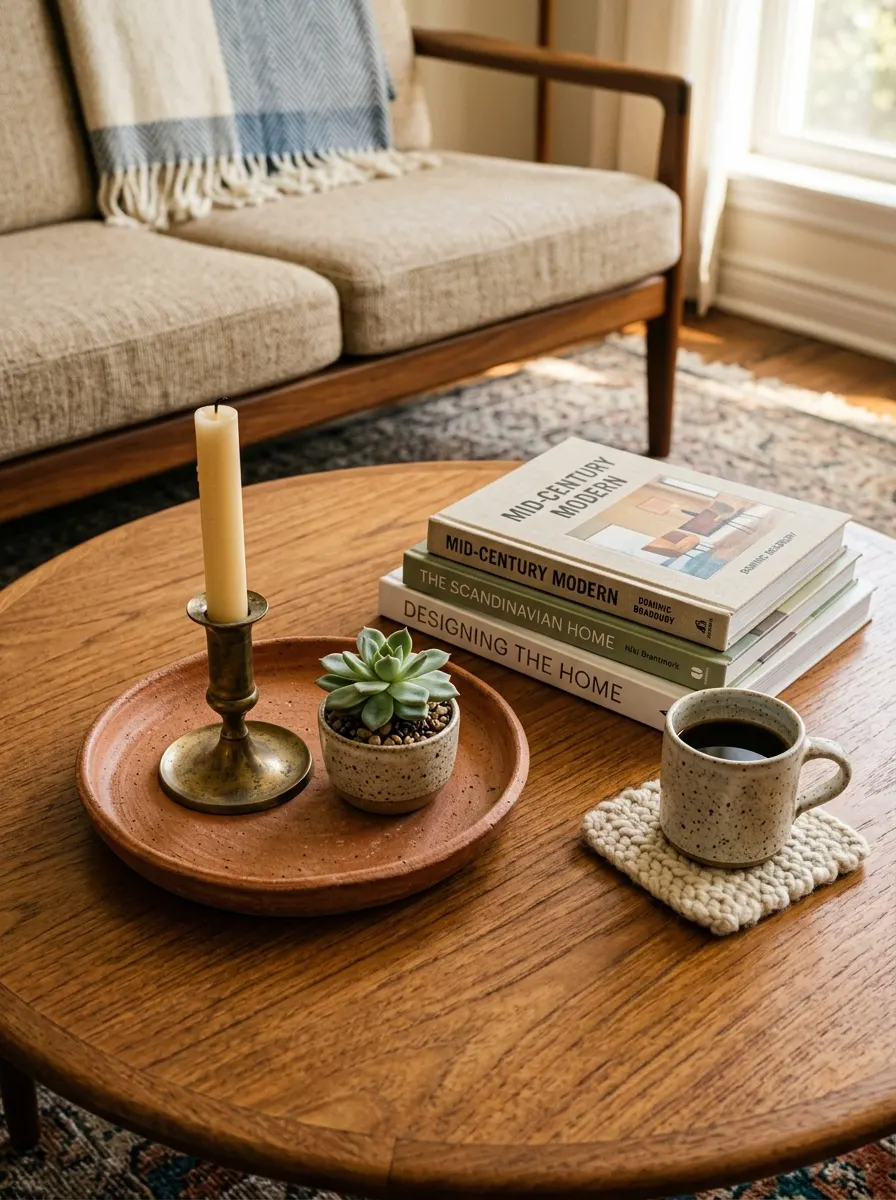
A well-styled coffee table is the closest a living room gets to jewellery. It is small in scale but enormous in visual impact. A terracotta tray holding a brass candle, a small succulent, and a stack of design books — that simple arrangement transforms a plain wood surface into a composition worth photographing.
The tray is the key. It corrals objects and gives the arrangement a boundary, which immediately makes it look intentional rather than randomly placed. Without the tray, even beautiful objects can look like they were set down and forgotten. With the tray, everything belongs and everything looks chosen.
The Key: Always anchor your coffee table styling with a tray — it creates visual order and makes even simple everyday objects look deliberately placed.
18
Layered Lighting Zones
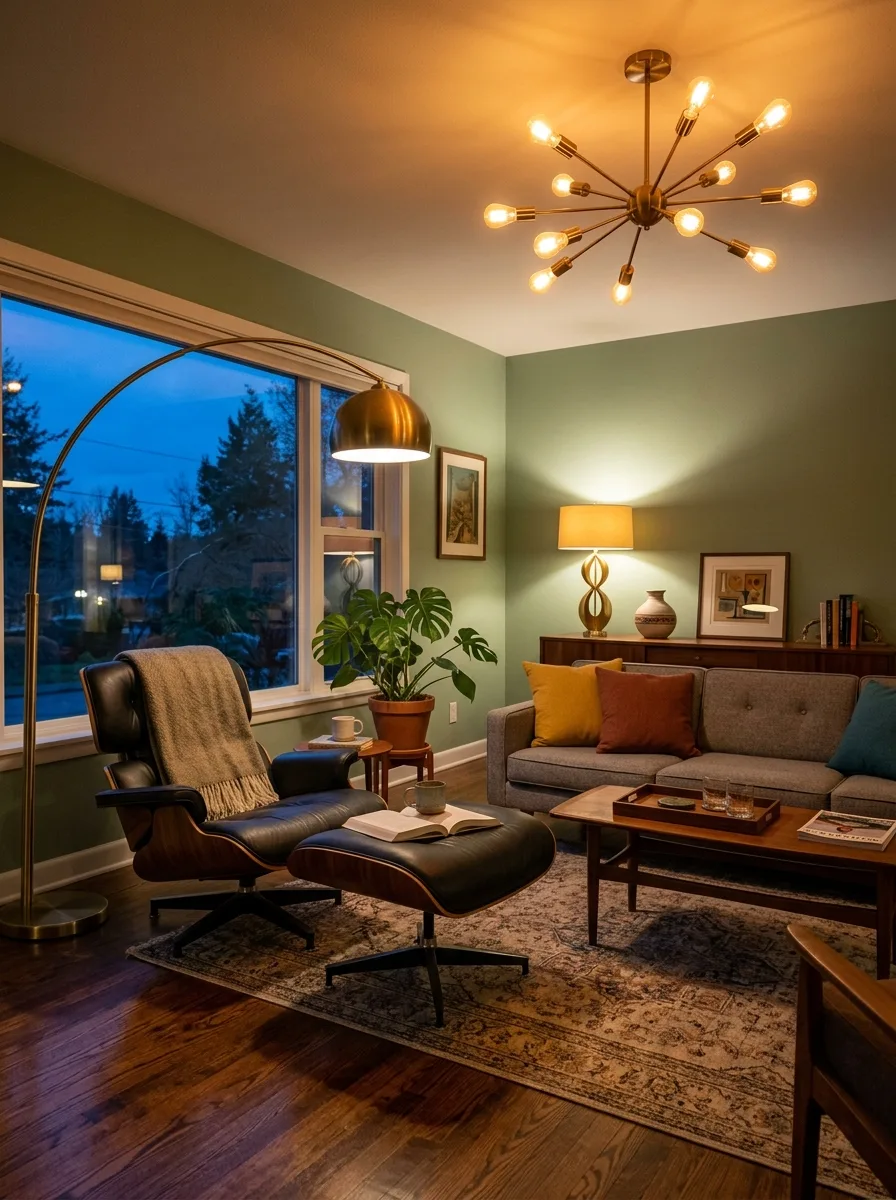
Lighting is the final layer that brings every other design decision to life. A Modern Living room with beautiful furniture, warm colors, and considered décor can still feel flat if it relies solely on a single overhead light source. Three layers of lighting — overhead, floor lamp, and table lamp — create a depth and warmth that makes a room feel genuinely atmospheric.
This is particularly true in the evenings. With a dimmer on the overhead fixture and a warm-toned arc lamp glowing beside the reading chair, the room transforms from a styled space into something that feels genuinely restorative. That is ultimately what mid-century modern living room ideas are about: spaces that are as beautiful to live in as they are to look at.
The Key: Install dimmer switches on your overhead lighting — the ability to lower intensity at evening completely transforms how a room feels and functions.
You now have 18 beautiful, actionable ideas to bring mid-century modern style into your living room. The best part? You don’t need to do all of them at once. Start with one walnut piece, one warm paint color, or one statement chair — and watch how quickly the room begins to shift. That’s the magic of this aesthetic. Each decision compounds. Each layer adds. Before long, the room starts to feel like it was always meant to look this way.
Mid-century modern living room ideas work because they are rooted in beauty that is also deeply practical. And if you ever want to soften this look even further, our Japandi living room ideas blend that same warm-wood philosophy with a quieter, more minimal touch.. Save this article, share it with a friend who’s renovating, and come back whenever you need fresh inspiration. Your most beautiful room is closer than you think.