Fireplace Design
🏠 20 Real Ideas
⏱ Quick Read
🔥 Always Trending
20 Fireplace Design Ideas
Built Around the Three Pillars of Color, Space, and Flame
There is something quietly powerful about a fireplace that is designed with intention. Walk into a room where the color, space, and flame all work together, and you feel it before you can even name it. That feeling is not accidental. It is the result of thoughtful fireplace design ideas that treat the hearth not as a leftover detail but as the emotional anchor of the entire room, the one element every other piece of furniture quietly defers to.
This article walks you through 20 inspired approaches to fireplace decor that draw from three core pillars: how color sets the tone, how space shapes presence, and how the flame itself becomes a living design element. Whether you are starting from scratch or reimagining an existing fireplace, each idea here gives you a clear and practical direction to follow. Save this one, you will want to come back to it.
01
Earthy Tones Around the Hearth
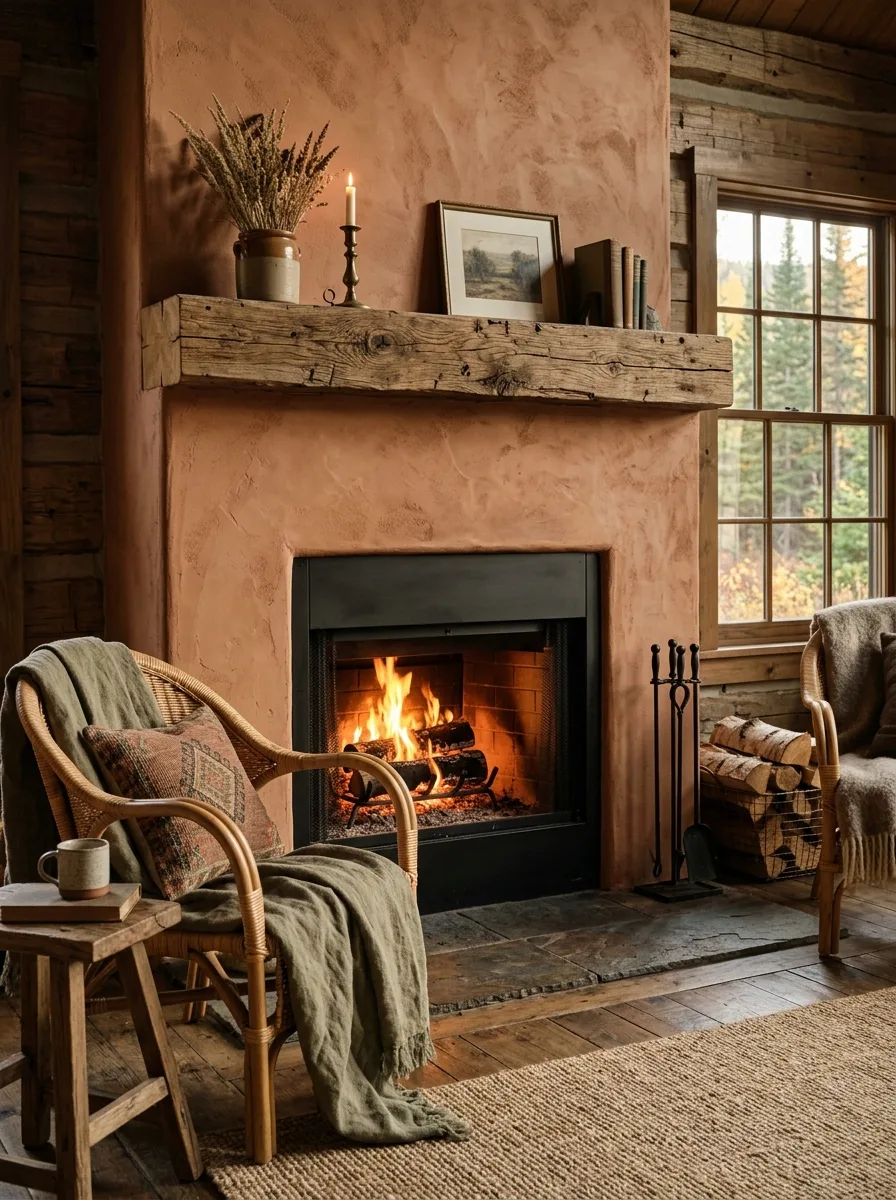
Rich terracotta, soothing olive, and warm brown set the emotional temperature of a fireplace long before the first flame is lit. These tones have an organic softness that makes even a large, imposing fireplace feel like it belongs in the room rather than dominating it from a distance.
Pair earthy hues with natural textures like linen, rattan, and rough-sawn wood and the result is a cohesive world that feels grounded and lived-in. The fireplace stops being a feature and starts being a feeling, which is exactly the effect that the best fireplace ideas quietly achieve without calling attention to themselves.
The Key: Let warm terracotta and olive tones lead your palette so the fireplace reads as a natural extension of the room, never an afterthought sitting apart from it.
02
Bold Dark Contrast Statement
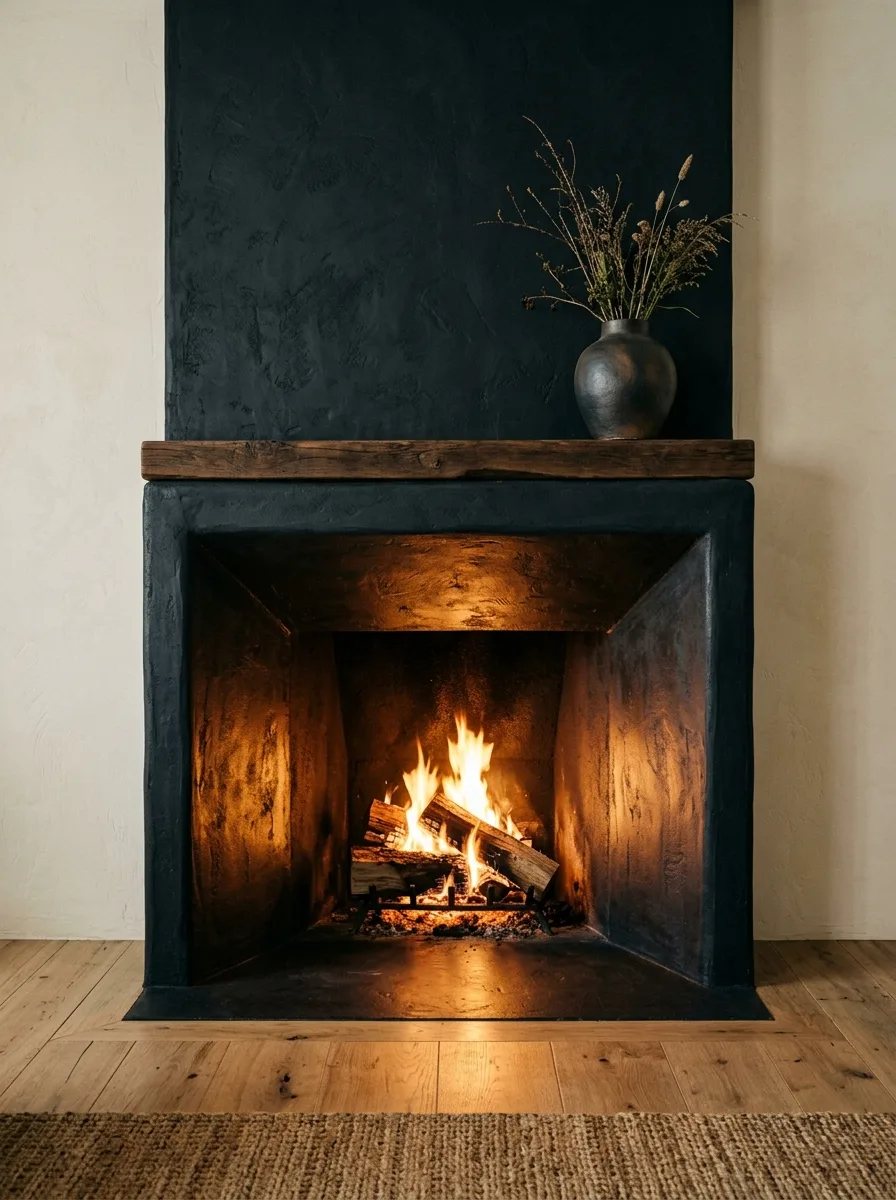
When the rest of the room breathes in light neutrals, a dark fireplace surround acts like a sculptural anchor that gives the eye exactly one place to land. Charcoal, espresso, and midnight black bring a confidence to the space that instantly reads as designed rather than decorated.
The contrast also works as a spatial trick. A dark fireplace set against pale walls appears to recede and expand simultaneously, giving the room a sense of depth that lighter finishes rarely achieve. This approach is one of the most powerful living room fireplace design moves available, and it works even in a modestly sized space when the surrounding palette is kept deliberately quiet.
The Key: Keep walls and furniture in pale, low-contrast tones so the dark fireplace becomes the single bold punctuation mark the room revolves around.
03
Clean Neutral Fireplace Surround
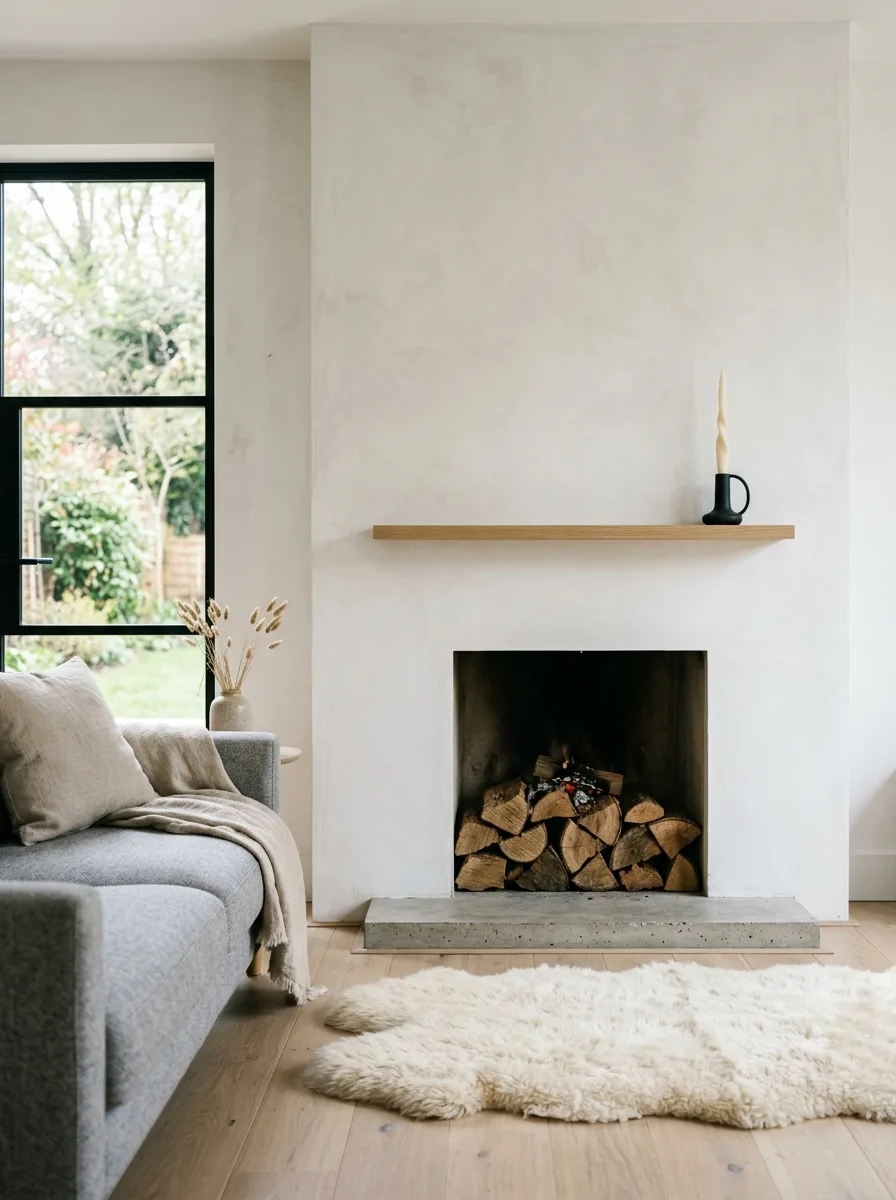
Soft ivory, subtle greige, and crisp white do something counterintuitive in fireplace decor: instead of making the hearth disappear, they let the flame become the only living, moving element in the room. The contrast between a still neutral surround and active fire is quietly spectacular.
Texture is what keeps a neutral fireplace from reading as blank. Limewash plaster, polished limestone, and smooth Venetian plaster all catch light differently throughout the day, giving the surround visual interest without any color. In smaller rooms especially, this approach is a relief, creating breathing room that makes the space feel larger and far more composed.
The Key: Choose a textured neutral finish like limewash or polished plaster so the fireplace surround holds visual interest even when the fire is not lit.
04
Natural Stone Fireplace Palette
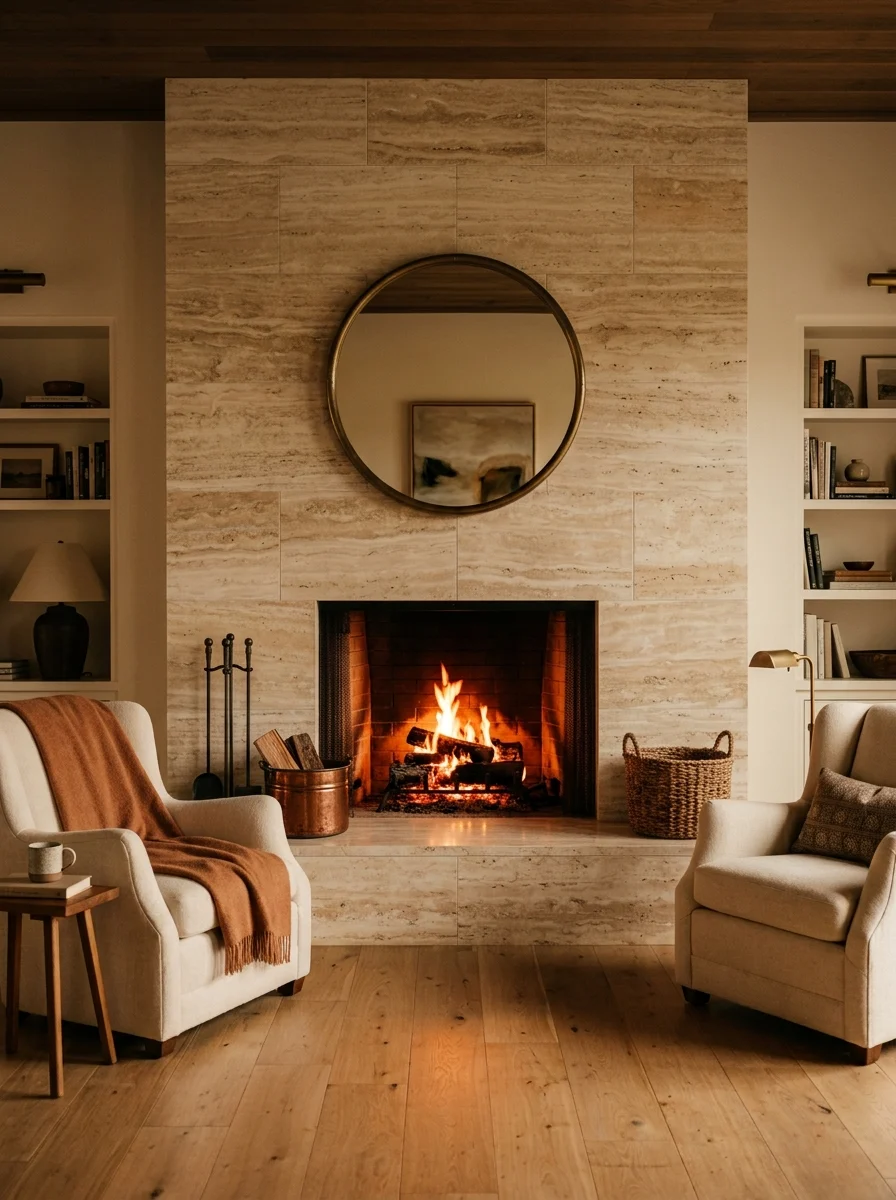
Natural stone carries its own color story, and the wisest approach is to follow its lead rather than fight it. Warm travertine pulls the room into sandy, sun-warmed territory. Cool grey slate leans the entire palette toward calm and contemporary. Creamy limestone settles everything into a quiet, classical elegance that feels timeless.
When stone dictates the color scheme, the rest of the room falls into place with surprising ease. Upholstery, rugs, and woodwork all find their references in the stone itself, creating a cohesion that planned palettes sometimes struggle to achieve. This is one of the most grounding hearth design ideas available, because the material does the coordination work for you.
The Key: Pull two accent colors directly from the stone’s natural variation and use them consistently in upholstery and accessories to unify the whole room.
05
Classic Brick Fireplace Reimagined
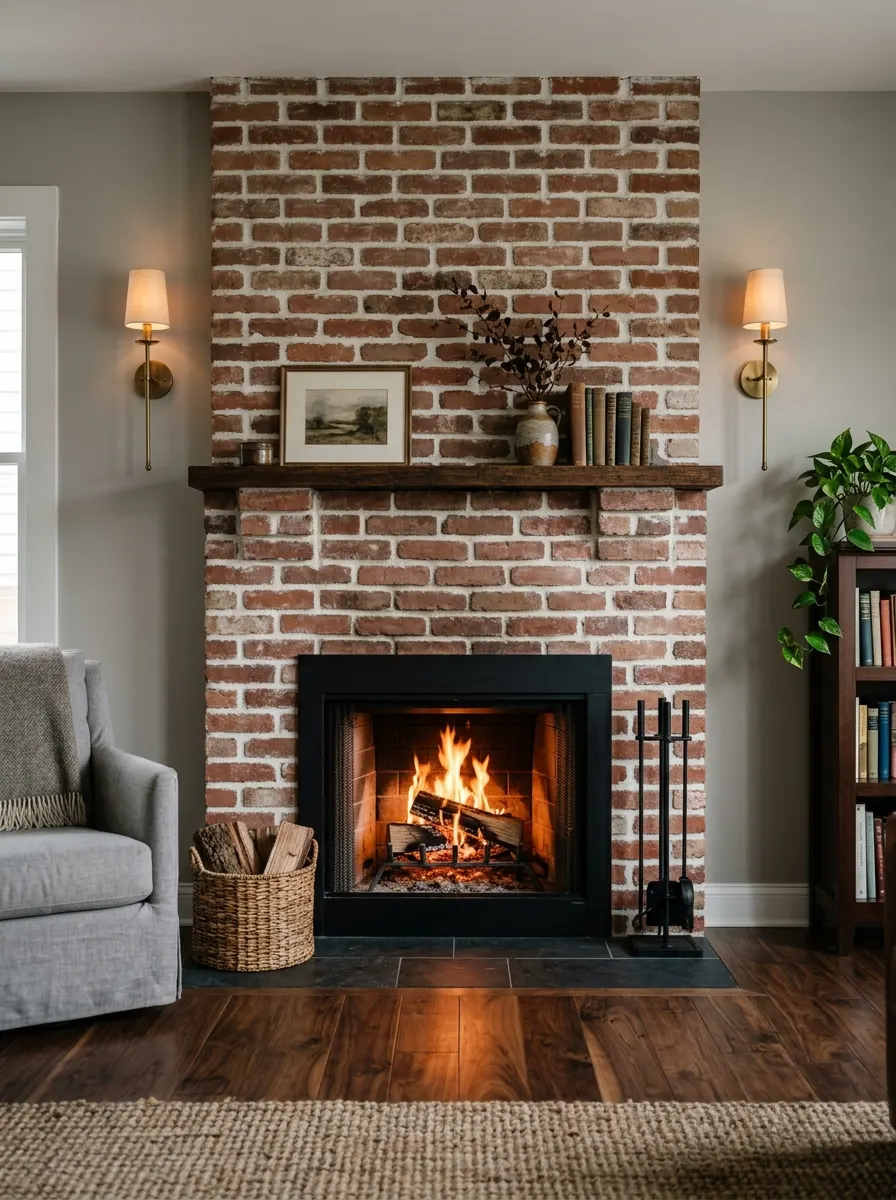
Brick arrives at the conversation with opinions. Loud terracotta reds, soft burnt oranges, and whitewashed neutrals each demand that the rest of the room respond thoughtfully rather than reactively. The mistake most people make with brick is trying to soften or override its personality rather than simply directing it.
The smarter play is to let brick be the room’s warm anchor and cool everything around it deliberately. A crisp white or warm grey wall, simple upholstery, and one or two brass or matte black accents give the brick the clear supporting cast it needs to shine. If you enjoy the timeless appeal of brick and want to take that aesthetic outside, our post on red brick house exterior color schemes is a compelling companion read.
The Key: Pick one accent metal, either brass or matte black, and repeat it in the sconces, hearth tools, and a small accessory to create cohesion around a bold brick fireplace.
06
Painted Mantel Fireplace Focus
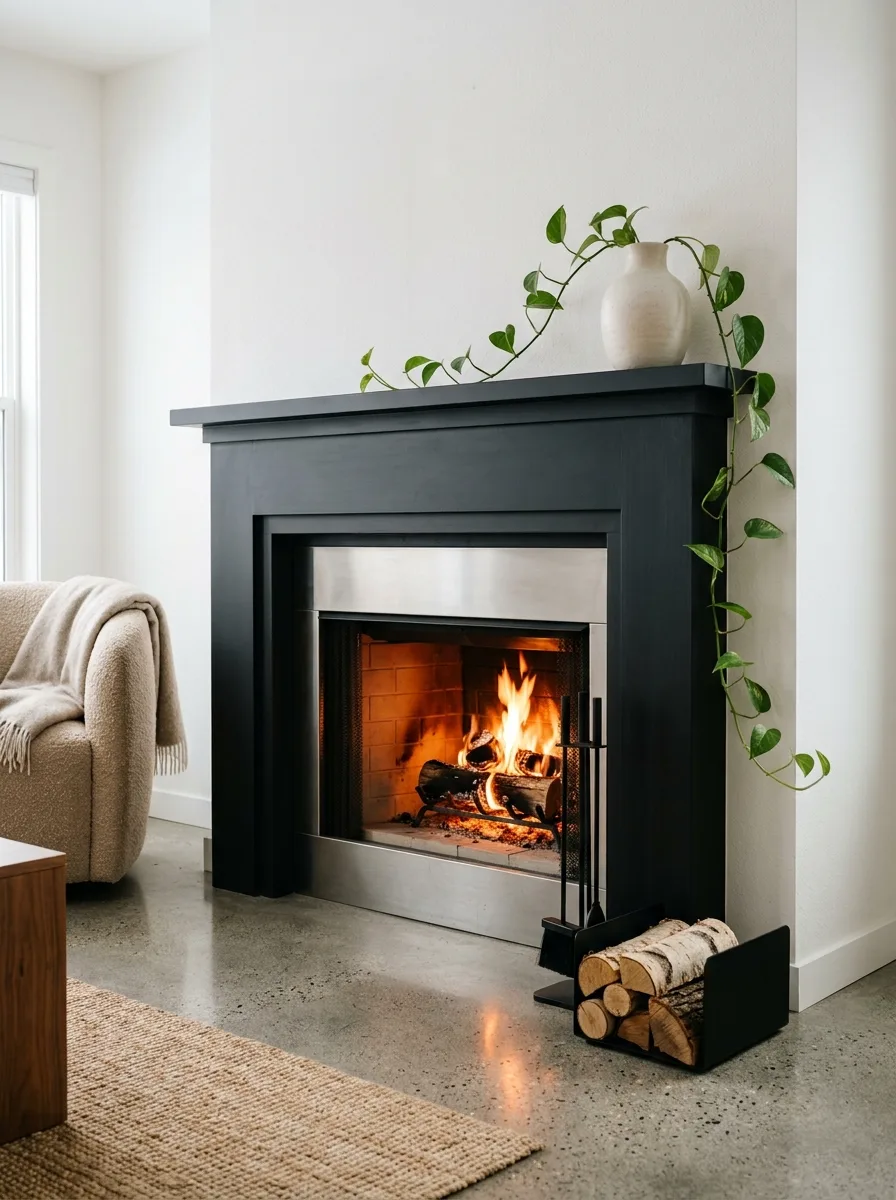
A painted mantel strips the fireplace surround back to its architectural shape and lets that geometry do the work. Matte black painted surrounds act as grounding focal points that hold a light room together with quiet authority. A pale white or greige paint finish has the opposite effect, allowing the mantel to recede so the flame takes complete ownership of the space.
What painted finishes sacrifice in texture they make up for in flexibility. The surround can shift with the room over time without a costly renovation. For anyone working with a dated or mismatched fireplace, a fresh coat of paint in the right tone is consistently one of the most effective fireplace ideas for an immediate transformation with minimal investment.
The Key: Treat the painted mantel as a structural element by keeping mantel styling to one or two deliberate objects rather than filling every inch of the shelf.
07
Minimalist Fireplace with Negative Space
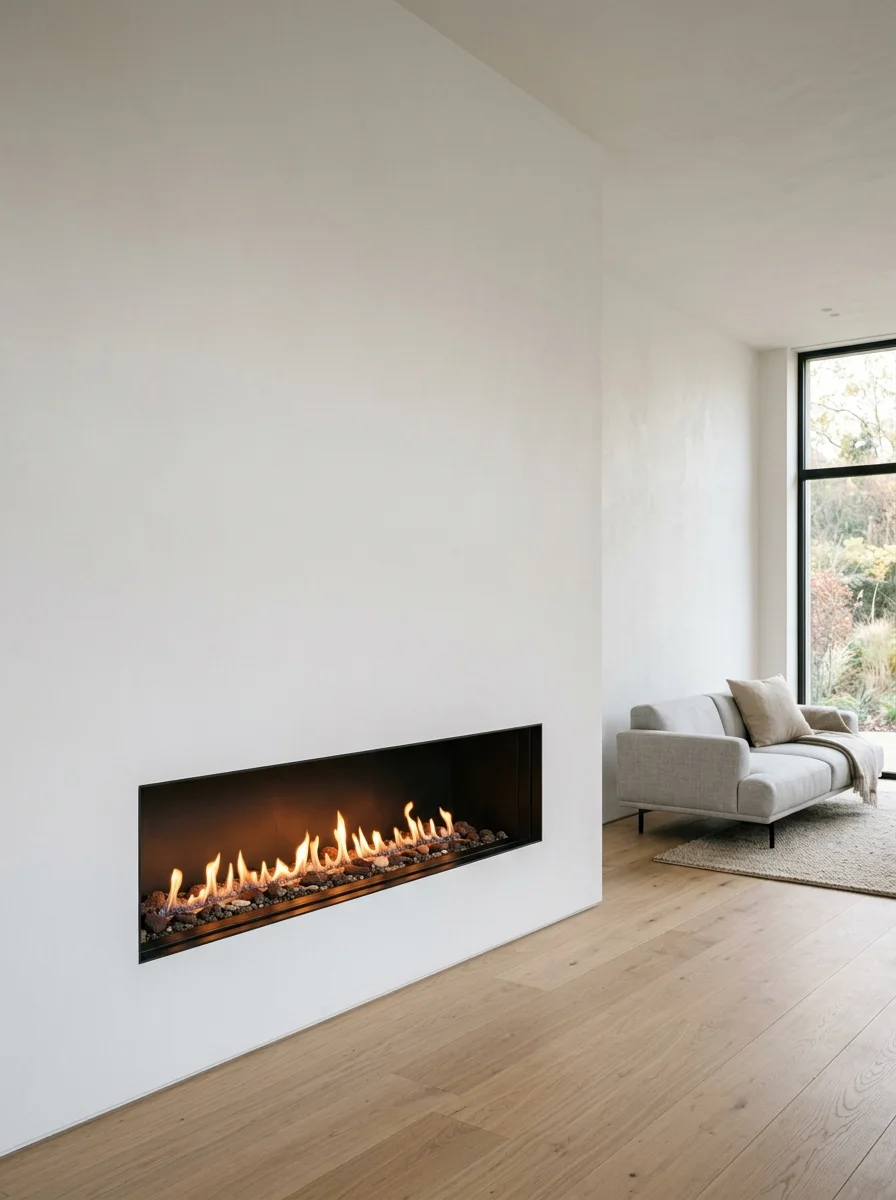
Intentional emptiness around a fireplace is not a design oversight. It is one of the most sophisticated choices available. When a hearth is given wide, uncluttered wall space on all sides, it steps out of the category of furniture arrangement and into the category of architecture. The flame becomes an installation, not a feature.
Negative space also solves a common problem: fireplaces that compete with too many surrounding elements lose their power. Clearing the field and letting the surround breathe restores the fireplace to its proper position as the room’s primary focal point. This approach to living room fireplace design consistently photographs beautifully and feels even better in person, where the calm is palpable the moment you walk in.
The Key: Resist placing anything on the wall within at least eighteen inches of each side of the fireplace surround to preserve the intentional breathing room that makes it commanding.
08
Symmetrical Mantel Shelf Styling
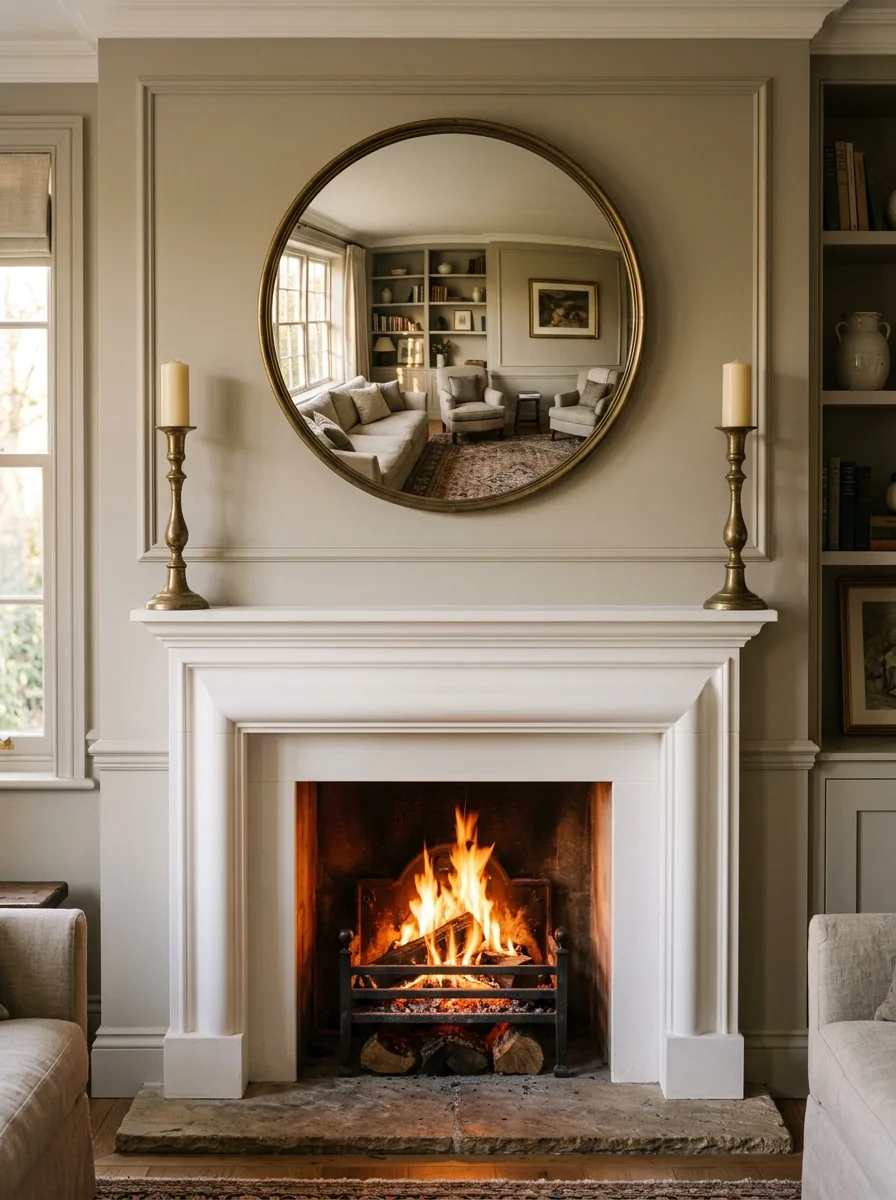
Symmetry above a mantel creates instant visual calm. When two identical objects anchor each end of the shelf and one centered piece ties them together, the eye settles rather than wanders. This structure works with nearly any style, from classical to transitional, because it is about proportion and visual weight rather than any particular aesthetic.
A round mirror centered above the mantel amplifies the effect by reflecting the glow of the flame back into the room, making the fireplace feel larger and more luminous. Among fireplace decor approaches, symmetrical mantel styling is one of the most forgiving for beginners because the visual logic is built into the structure itself. Follow the rule of reflection and repetition and the arrangement nearly styles itself.
The Key: Use objects with matching heights at each end of the mantel and vary only the center piece to create symmetry that still feels curated rather than rigid.
09
Sconce Lighting Beside the Hearth
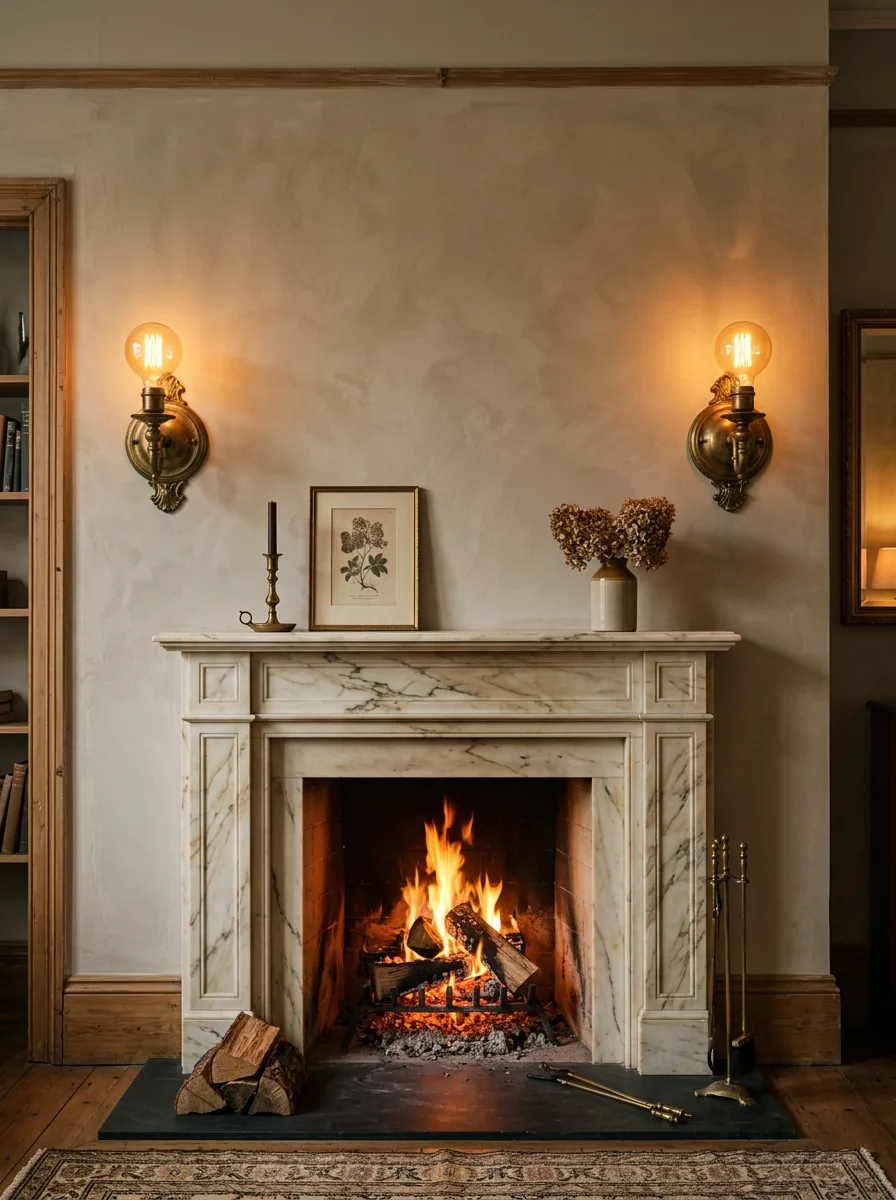
Sconces placed on each side of a fireplace do something a single overhead light source cannot: they draw the eye upward and outward simultaneously, making the hearth wall feel taller and wider without changing a single physical dimension. The vertical rhythm they introduce is one of the simplest ways to give a fireplace more architectural presence.
Warm white bulbs around 2700K are essential here. Cool white light fights the amber of an active flame and creates a visual tension that reads as unsettling rather than dramatic. Brass, matte black, and fluted glass all work as sconce finishes depending on the overall room direction. As part of a layered hearth design ideas approach, sconces are rarely the loudest element but almost always the most noticed once they are present.
The Key: Mount sconces at eye level when seated, roughly fifty-four to sixty inches from the floor, so the light contributes warmth at the most human and intimate scale.
10
Built-In Shelving Around the Fireplace
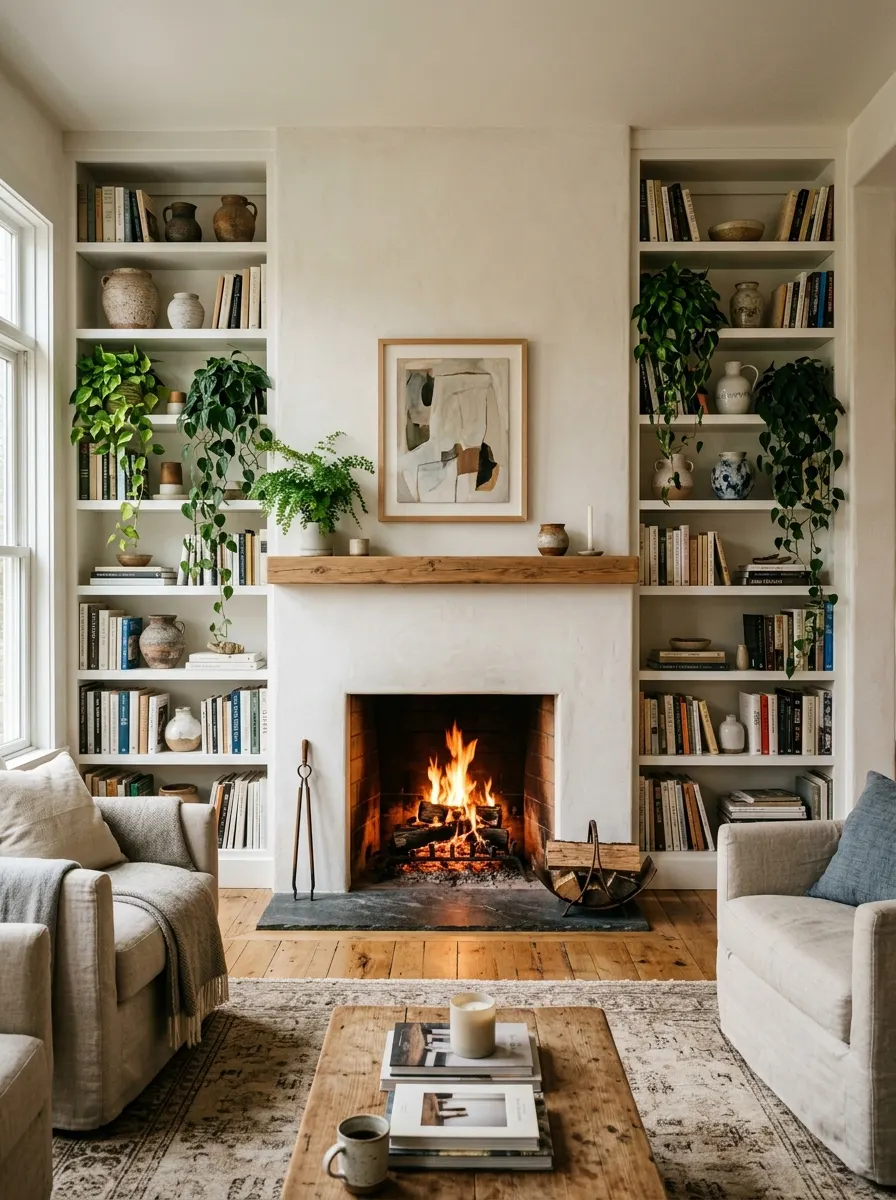
Built-in shelving that flanks a fireplace on both sides accomplishes three things at once: it anchors the fireplace architecturally, gives the room built-in storage, and creates a gallery-like surround that frames the hearth as a centerpiece. The effect transforms a wall with a fireplace into a complete design moment that feels intentional from every angle.
The key to making this work is restraint in the shelving itself. Overfilled shelves draw the eye away from the flame rather than toward it. A curated mix of books standing upright, a few ceramic vessels, and one or two trailing plants keeps the shelving feeling alive without competing with the fire. This is one of the most satisfying fireplace design ideas for rooms that need both personality and purpose.
The Key: Leave at least one empty shelf bay on each side of the fireplace so the shelving breathes and does not visually crowd the hearth it is meant to frame.
11
Modern Floating Mantel Design
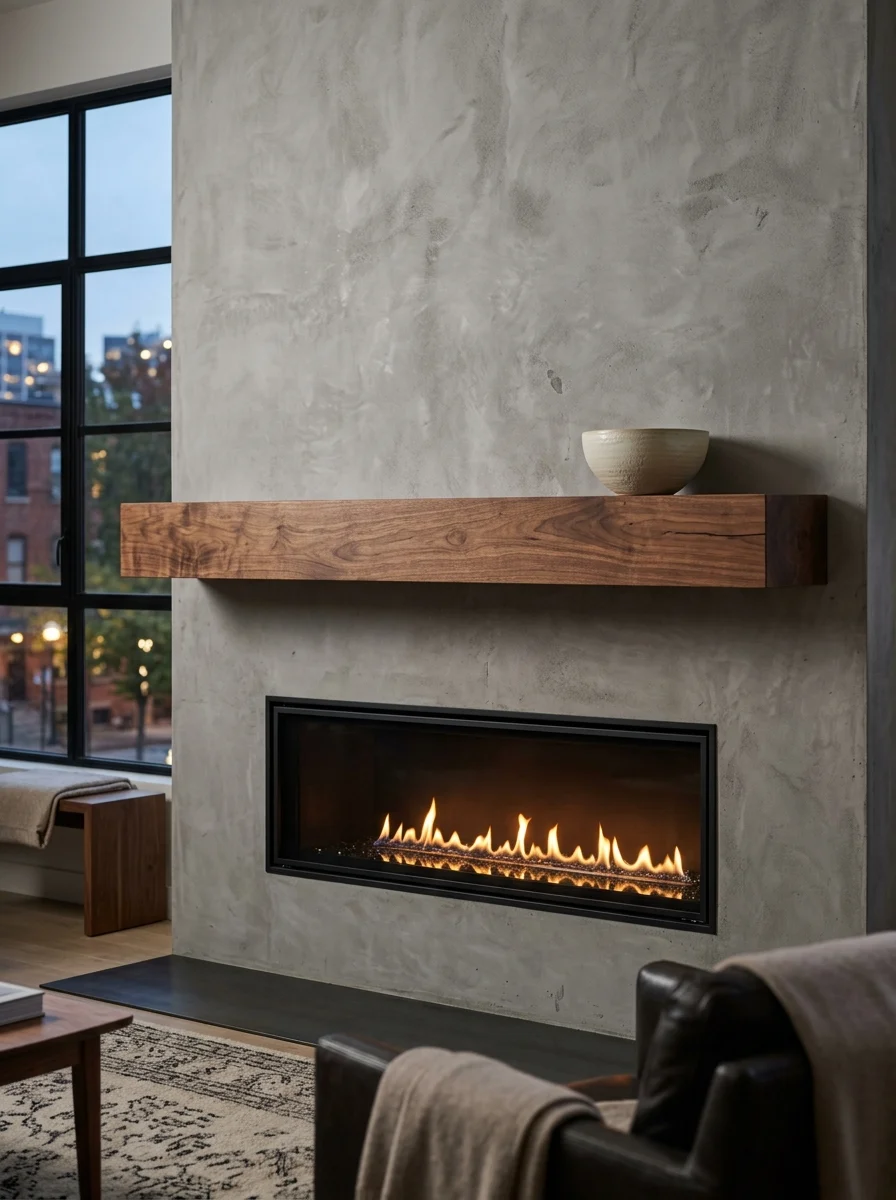
A floating mantel, with no visible support and no surround beneath it, makes one of the clearest design statements available. It declares that the wall and the firebox do not need to be dressed up, that the flame is enough on its own, and that a single shelf of the right material and proportion is all the punctuation the space requires.
Solid walnut and reclaimed hardwood are the most common choices because their grain and weight read as considered rather than accidental. Against concrete plaster or a raw white wall, the contrast is quiet but commanding. For anyone pursuing contemporary fireplace ideas that feel distinctive without relying on trend-based decoration, a floating mantel in the right material delivers exactly that result with remarkable longevity.
The Key: Size the floating mantel so it extends six to eight inches beyond the firebox on each side for proportion, and never overhang it so far that the shelf dwarfs the flame below.
12
Marble Surround Fireplace Elegance
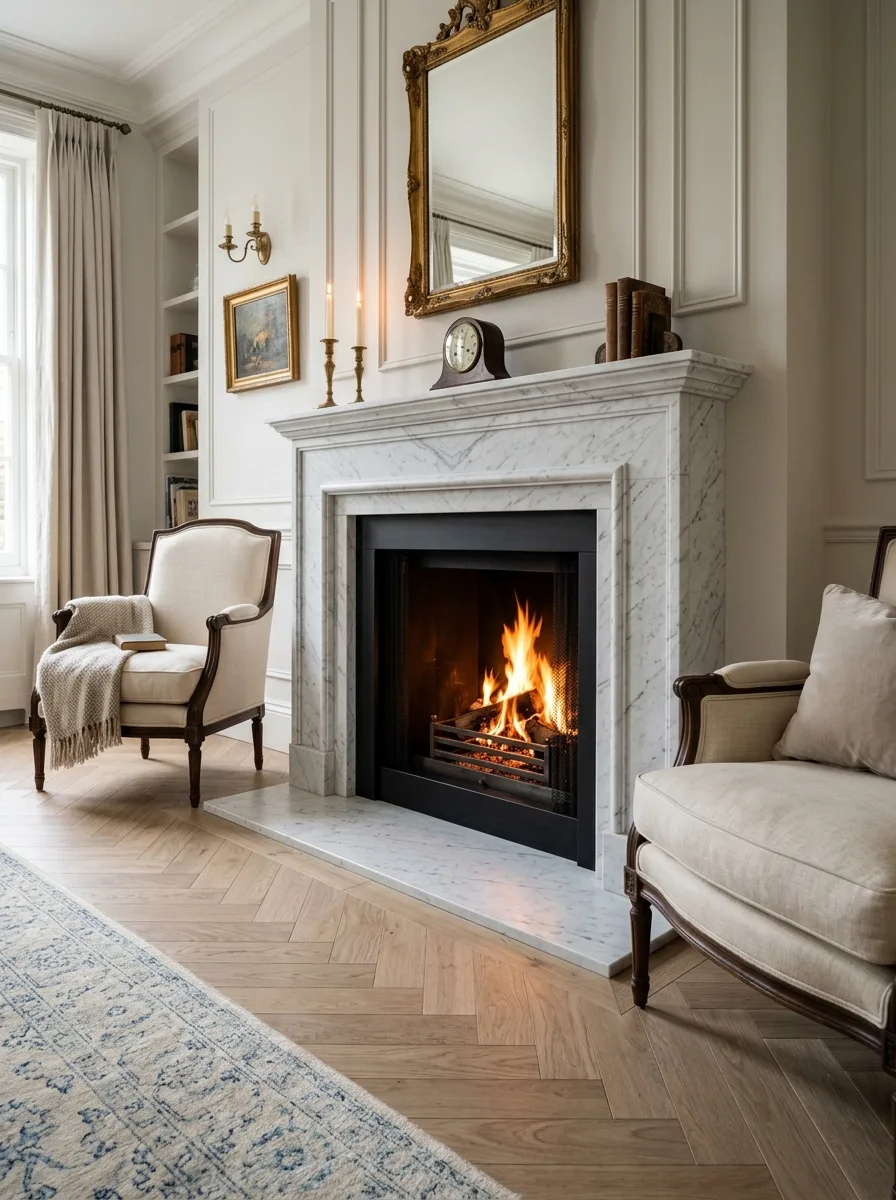
Marble brings a material authority to a fireplace that is almost impossible to replicate with any other finish. The veining, the weight, the cool surface temperature in contrast with the warmth of the flame, all of it creates a sensory richness that photographs beautifully but feels even more powerful in person where the material quality is immediately apparent.
Carrara marble in white and soft grey is the most versatile choice because it works equally well in classical, transitional, and contemporary settings. Bookmatching the marble panels on the surround so the veining mirrors itself on each side adds a bespoke quality that elevates even a relatively modest fireplace decor project into something that reads as genuinely considered and refined.
The Key: Match the marble’s grey veining to at least one other element in the room, such as a rug undertone or cushion fabric, so the surround integrates rather than stands apart.
13
Fireplace with Layered Lighting
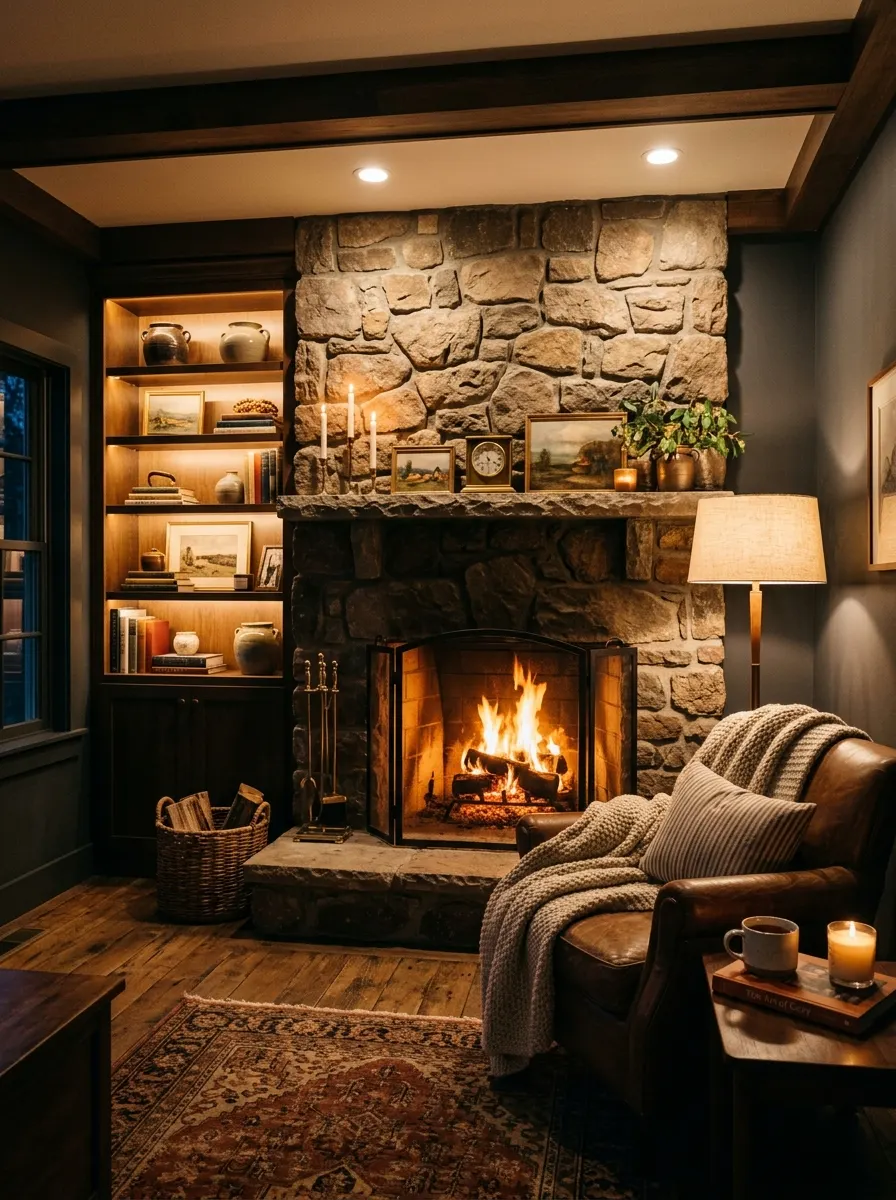
Lighting a room around a fireplace is an act of choreography. The flame already produces its own light, warm, flickering, and alive, so every other light source in the room needs to support rather than compete with it. Recessed ceiling lights on dimmers, a floor lamp angled to graze the wall, and LED strips behind built-ins all serve different depths of the room without ever fighting the fire for attention.
The result of this approach is a room that feels completely different at different hours. In daylight it reads as a well-designed living space. At dusk with the fire lit and every artificial light source dialed low, it transforms into something that feels almost theatrical without any theatrics applied. This layered approach consistently enhances living room fireplace design by giving the flame the visual stage it deserves.
The Key: Keep all artificial light sources around a lit fireplace on dimmers and set them to no more than thirty percent brightness so the flame remains the brightest and warmest point in the room.
14
Fireplace Nook with Cozy Seating
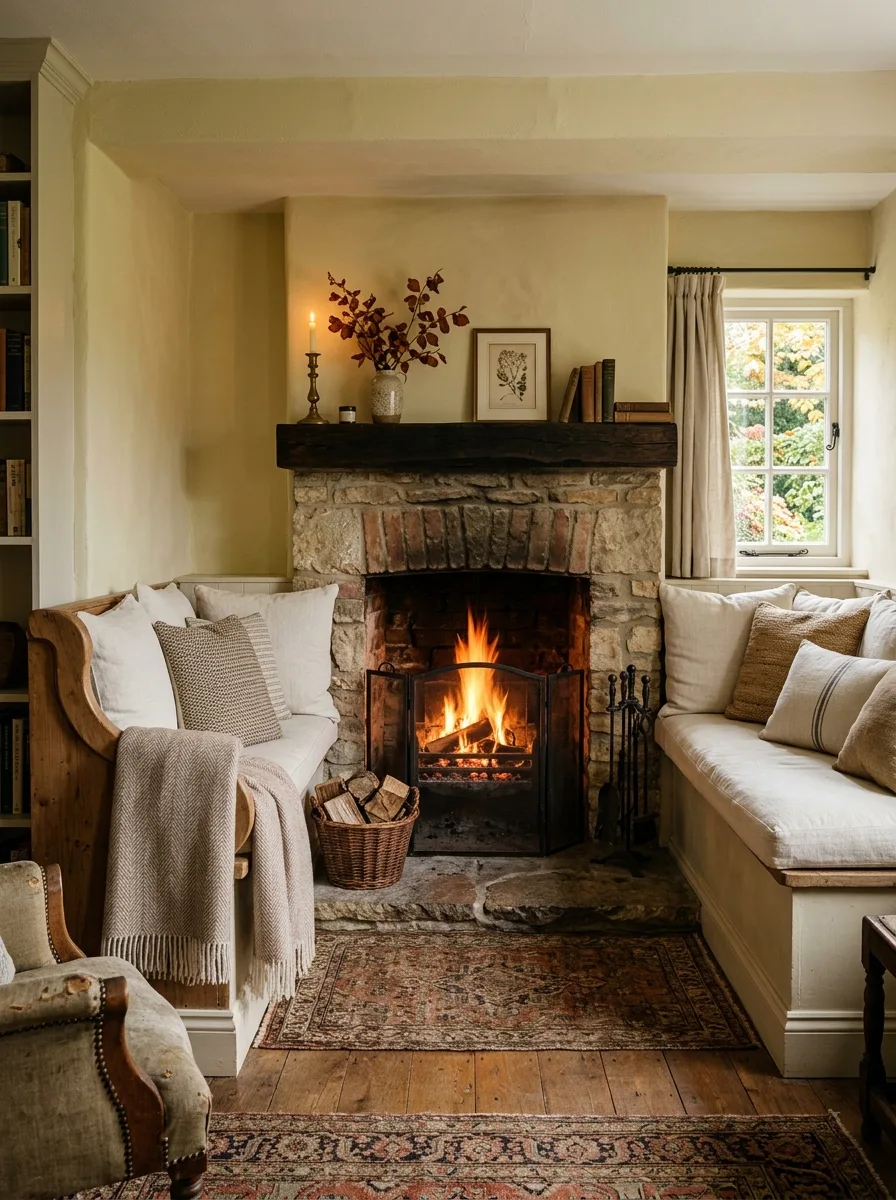
When a fireplace is designed not just as a surface to look at but as a space to sit within, it crosses from decoration into experience. A built-in bench seat extending from each side of a hearth turns the fireplace wall into a destination rather than a backdrop, a place people move toward rather than simply face from across the room.
The scale of the seating matters enormously here. Cushions should be deep enough for genuine comfort and upholstered in fabrics that complement rather than match the fireplace surround exactly. This kind of nook arrangement is among the most intimate and effective hearth design ideas because it positions the fire at the center of human activity rather than at the periphery of it.
The Key: Ensure the bench seating extends far enough from the firebox to meet local safety clearance requirements while still feeling genuinely close and enveloping to those seated.
15
Fireplace Design Ideas with Color Blocked Walls
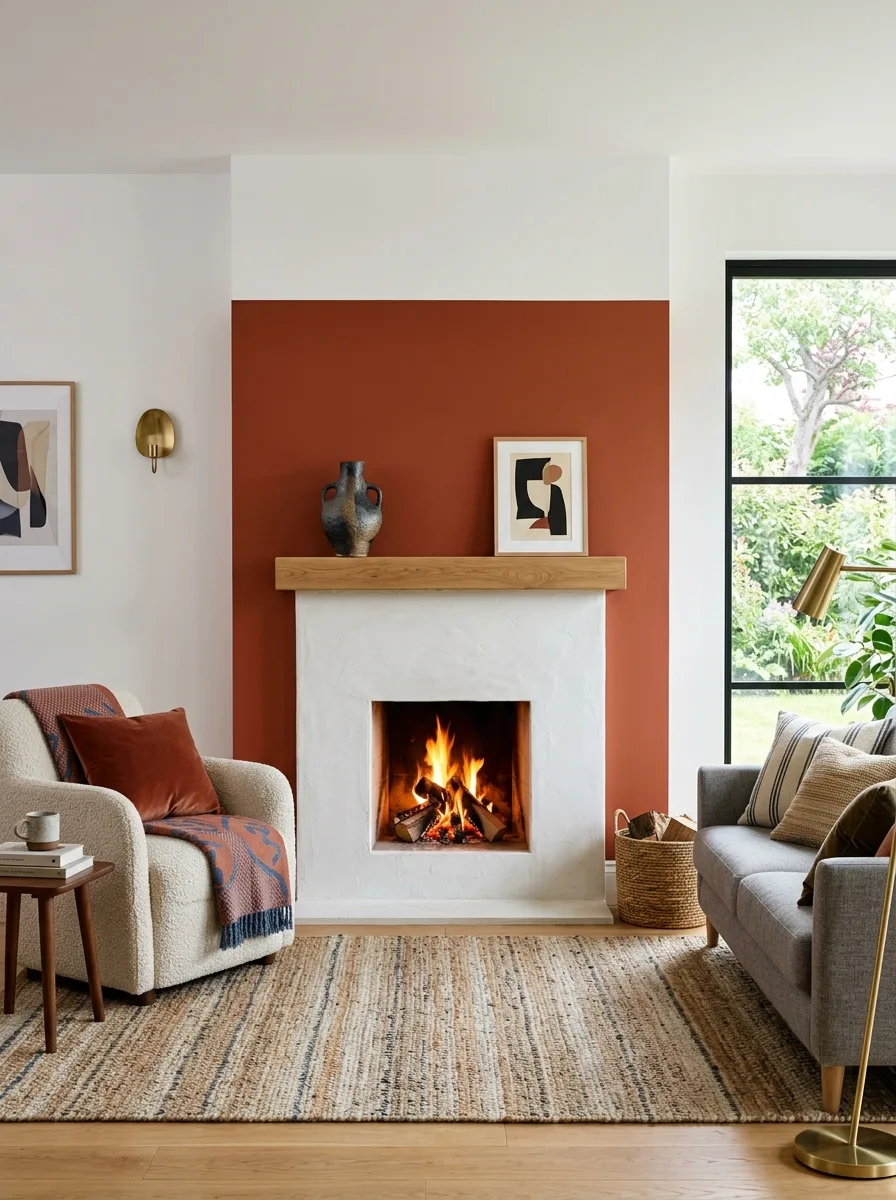
Painting only the wall section behind and around the fireplace in a bold accent tone while keeping adjacent walls neutral creates the effect of a designed frame without any physical molding or millwork required. The color block draws the eye directly to the fireplace and announces that the hearth wall is a curated moment rather than simply part of the broader room.
Terracotta, sage green, dusty rose, and deep slate are all colors that work particularly well for this technique because they have enough warmth or depth to read as intentional rather than accidental. For those looking for fireplace design ideas that feel fresh and current without a major structural renovation, color blocking the hearth wall is one of the most impactful changes achievable with a few hours and a paint roller.
The Key: Limit the color block to the fireplace wall only and keep the transition line clean and straight so the effect reads as bold and deliberate rather than unfinished.
16
Floor to Ceiling Fireplace Surround
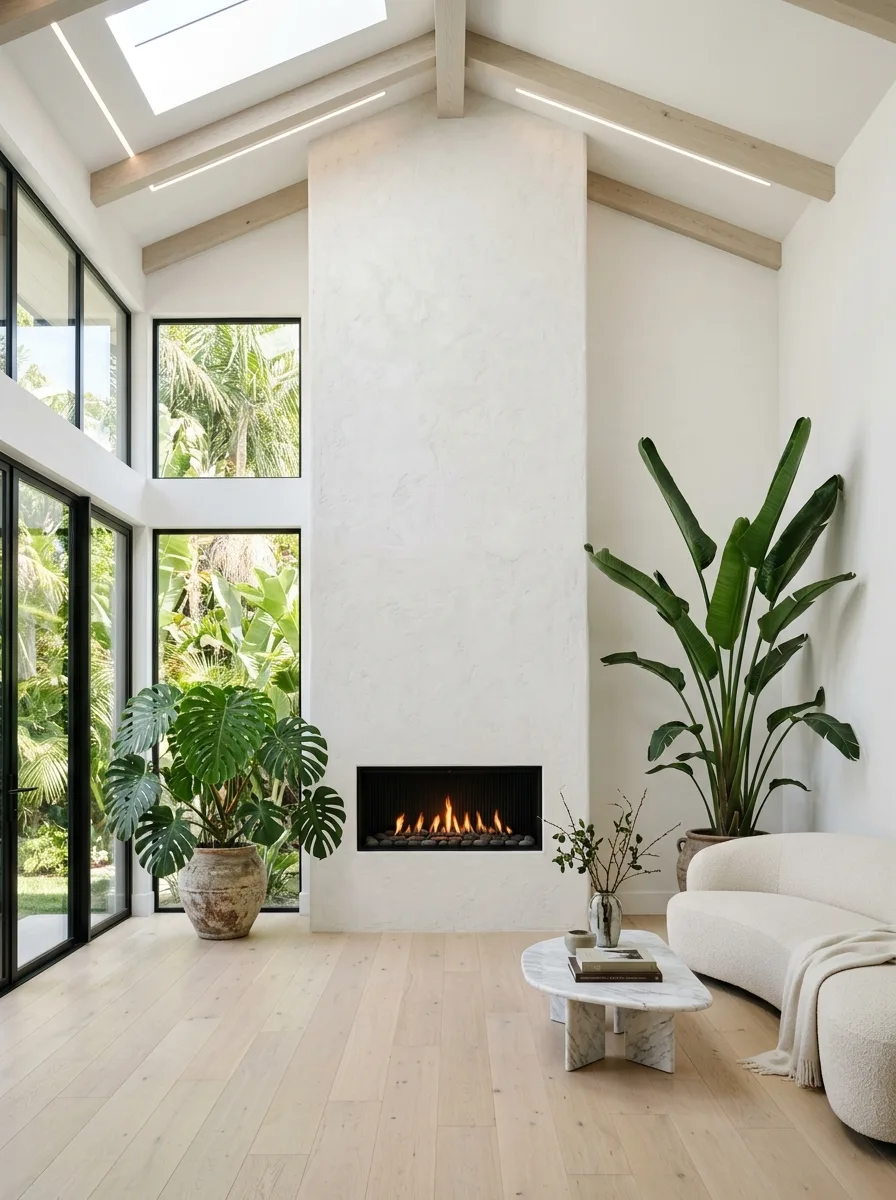
A fireplace surround that travels from the floor to the ceiling does not decorate a room. It becomes the room’s primary architectural feature, the element around which all furniture, lighting, and color decisions orbit. The scale commands attention in a way that a standard mantel height surround simply cannot, and when executed cleanly it reads as a genuine architectural investment.
White plaster is the most versatile finish for this scale because it reflects light evenly across a large surface without visual noise or competition. The flame at mid-height within a full-height plaster tower creates a dramatic vertical composition where the fire feels framed rather than simply burning. This is a cornerstone of confident living room fireplace design that prioritizes architecture over accessory.
The Key: Keep the floor-to-ceiling surround in a single, uniform finish with no breaks or decorative interruptions so the vertical power of the design remains uncompromised.
17
Rustic Reclaimed Wood Fireplace Frame
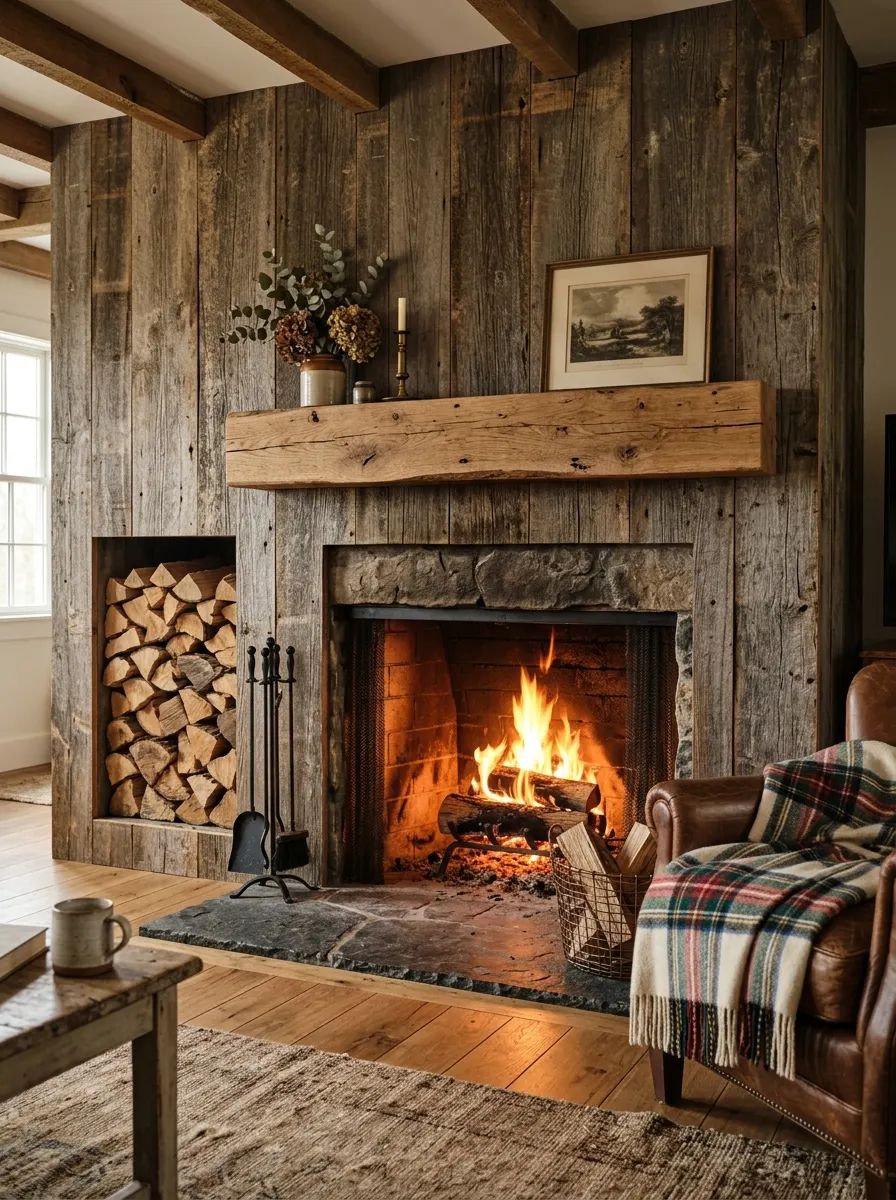
Reclaimed wood around a fireplace carries the visual weight of history. The knots, saw marks, and weathered grey-brown tones of barn wood introduce a texture that no new material can authentically replicate, and that authenticity gives the fireplace a sense of permanence that elevates the whole room without any decorative additions required.
A live-edge mantel in the same material family completes the composition by adding organic shape at the top of the surround, where the eye naturally settles. Stacked logs in an adjacent alcove reinforce the rustic narrative and double as practical storage. Among fireplace decor approaches rooted in warmth and character, a reclaimed wood frame is one of the most reliably beloved choices for any room that leans into natural, story-rich materials.
The Key: Source reclaimed wood planks in consistent widths and arrange them in a running bond pattern to give the rustic surround a structured visual rhythm rather than a haphazard look.
18
Modern Electric Fireplace Integration
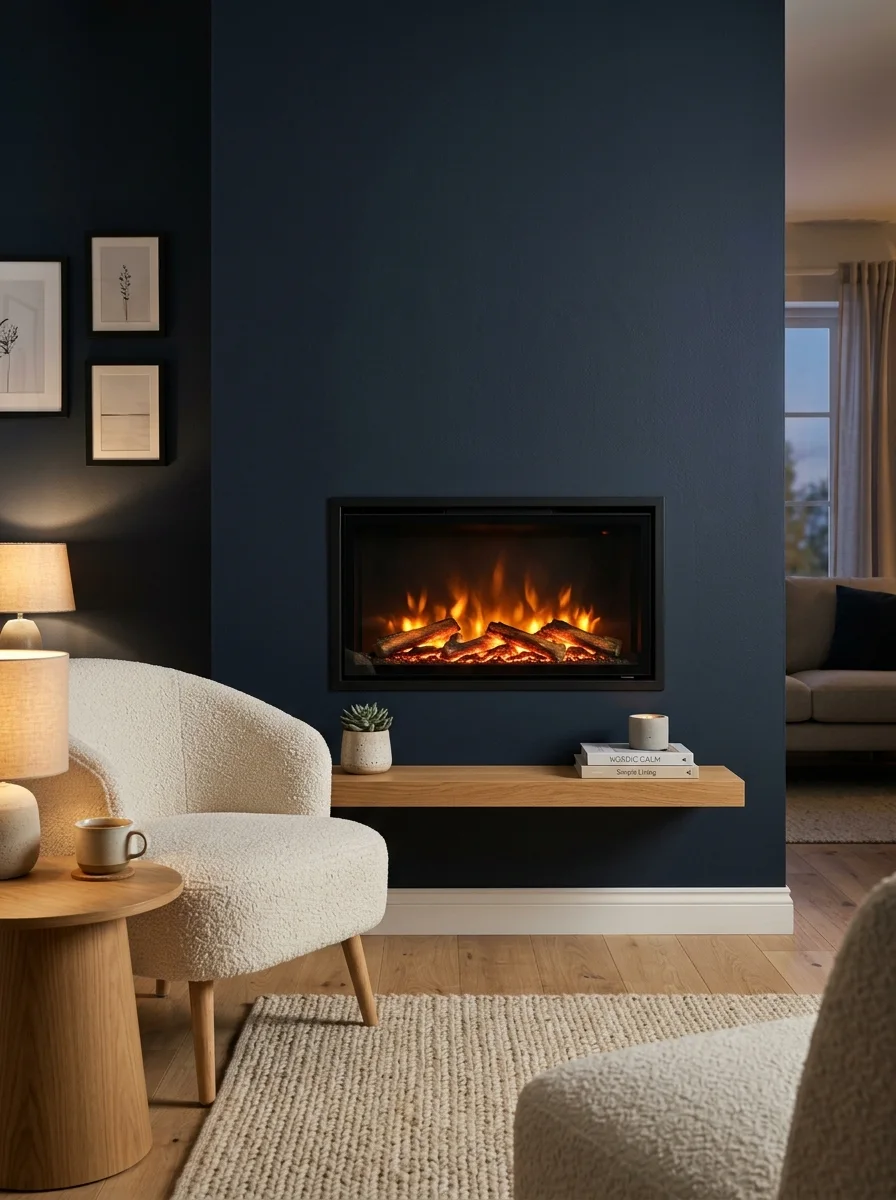
Electric fireplaces have crossed into genuine design territory. The best current inserts produce layered flame simulations with adjustable color temperature and ember effects that read as convincing from a comfortable viewing distance and deliver the visual warmth of a real flame without any combustion requirements.
The design opportunity is the surround, which can be anything at all since there are no heat or ventilation constraints to work around. A navy blue accent wall with a flush-mounted electric insert creates a graphic composition that feels deliberately contemporary. For apartments and rental spaces especially, integrating an electric fireplace is among the most accessible fireplace design ideas for introducing both visual warmth and a focal point where neither previously existed.
The Key: Choose an electric fireplace insert with a realistic multi-layer flame effect and pair it with a surround material that provides enough contrast for the flame simulation to read clearly.
19
Fireplace with Art Display Above
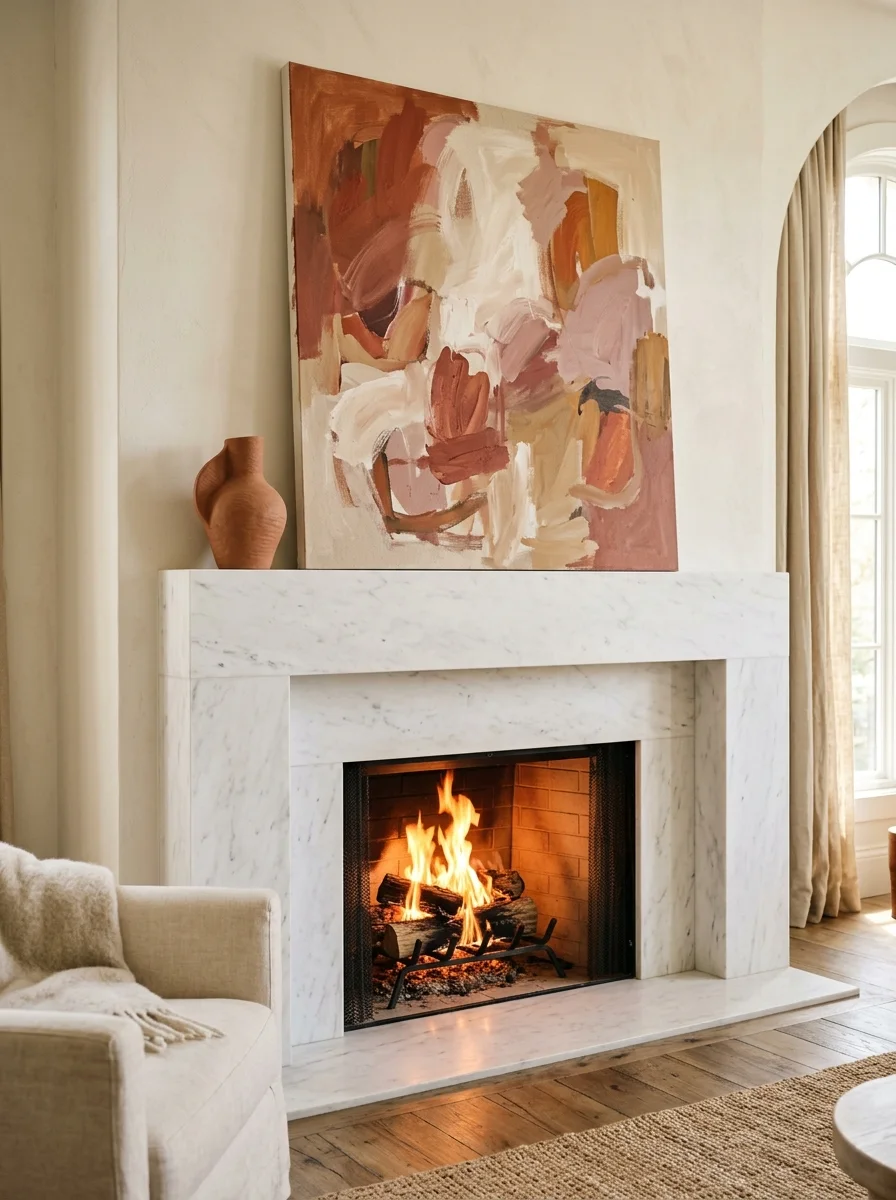
Leaning a large canvas against the wall above a fireplace mantel rather than hanging it creates a relaxed, gallery-quality composition that feels confident without the precision and permanence of a fixed installation. The scale of the art matters more than any other single decision: a painting that fills most of the wall space above the mantel connects visually with the firebox below and treats the entire wall as one unified composition.
Color is the linking element between the art and the fire. Abstract works with warm amber, terracotta, or burnt orange tones echo the palette of the flame itself and create a visual conversation between the art and the active fire below it. This combination consistently produces some of the most photogenic and emotionally satisfying hearth design ideas because it layers two sources of warmth, one painted and one lit, into a single compelling focal point.
The Key: Choose art that shares at least one warm tone with the flame below it so the painting and the fire feel compositionally connected rather than coincidentally placed together.
20
Seasonal Fireplace Decor Rotation
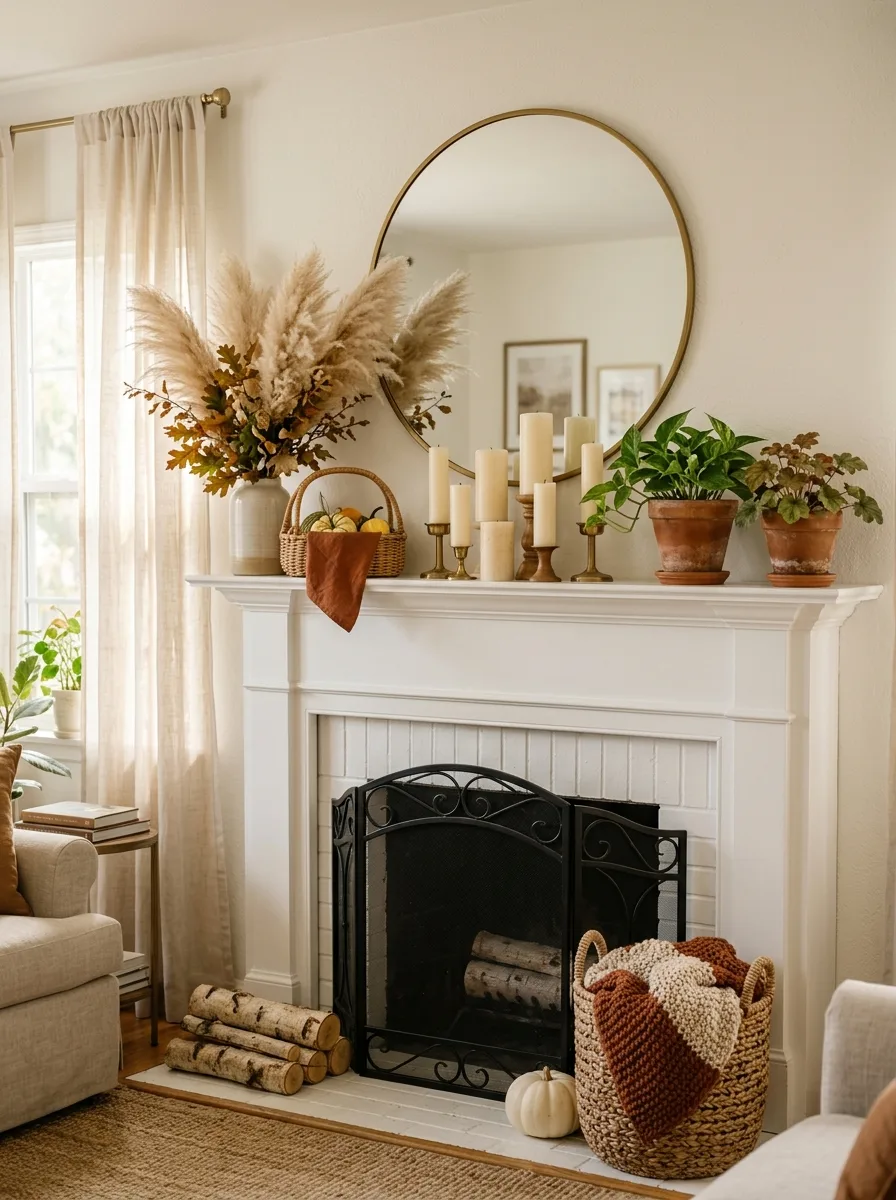
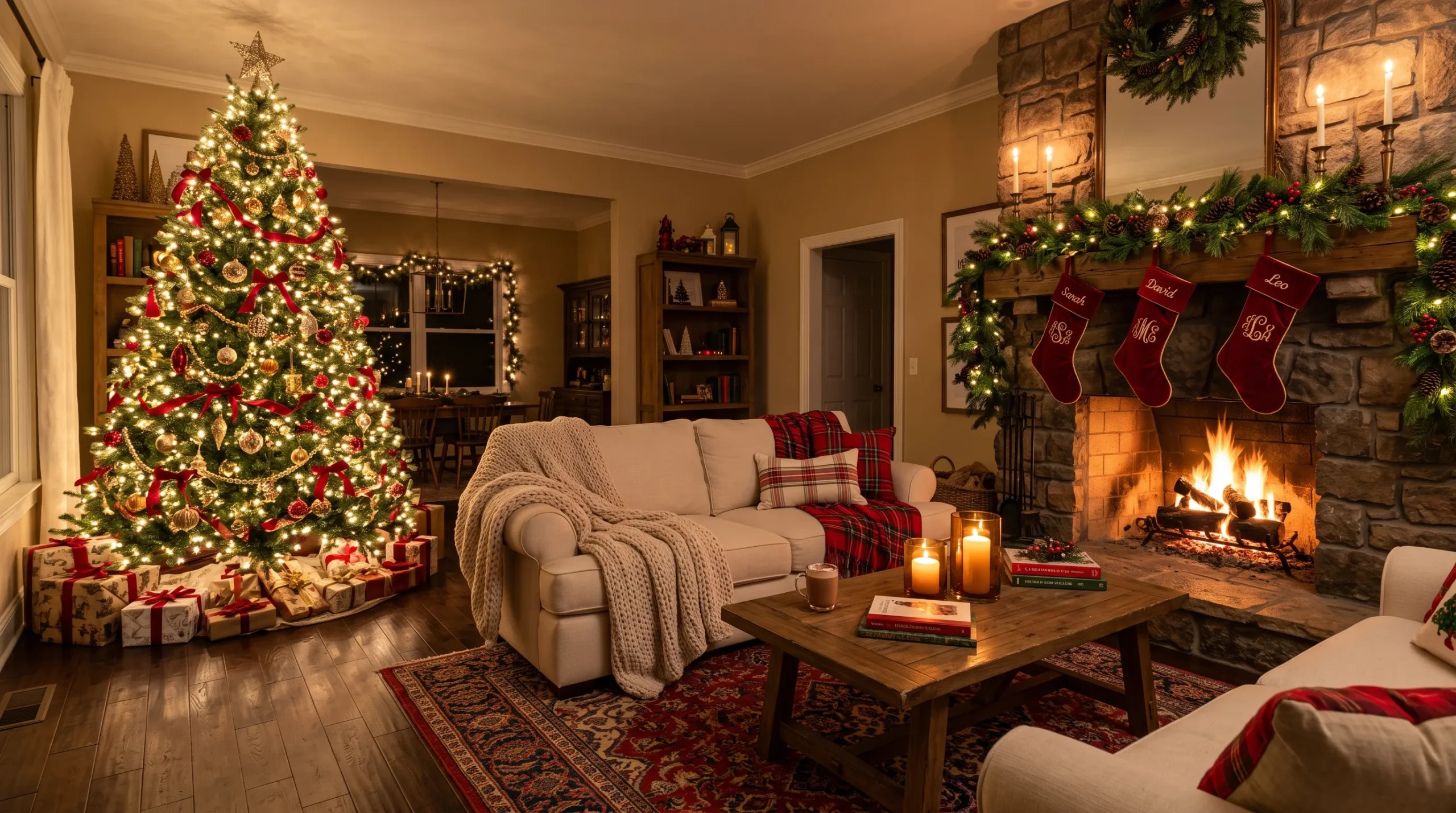
A fireplace that shifts with the seasons proves that the hearth is a living part of the room rather than a fixed feature that gets styled once and ignored. In the months when the fire is not lit, the firebox itself becomes a display opportunity, and the mantel becomes a rotating gallery that reflects the light, texture, and color of whichever time of year it currently is.
Autumn calls for pampas grass, pillar candles, and terracotta. Winter brings pine, brass, and rich burgundy tones. Spring invites fresh greenery and ceramic vessels in sage or soft white. Summer simplifies everything to sculptural objects and minimal styling that lets the room breathe. Rotating your fireplace design ideas seasonally keeps the focal point of the room feeling fresh and connected to the world outside, which makes even the most familiar space feel newly considered throughout the year.
The Key: Store seasonal fireplace styling kits together in labeled boxes so rotating the mantel and firebox display at each season change takes under thirty minutes rather than becoming a scattered project.
Every fireplace has potential waiting inside it, and the twenty ideas in this article are proof that unlocking it rarely requires a major renovation. Color sets the emotional temperature before a single flame is lit. Space, when given generously around the hearth, gives the fire room to be the focal point it was always meant to be. And the flame itself, supported by the right lighting, the right surround, and the right styling, transforms from a utility into a genuine design element that anchors the entire room.
Save this collection of fireplace design ideas to your Pinterest boards so you can return to it every season as your home evolves and your taste develops further. Share it with a friend who has been staring at a fireplace that is not quite working and is not sure why. The answers are here, and they are far simpler than most people expect. A fireplace that feels right is not a lucky accident. It is a few intentional decisions made in exactly the right order, and now you have all of them.