Deck Skirting
🏠 17 Real Ideas
⏱ Quick Read
🔥 Always Trending
17 Budget-Friendly Deck Skirting Ideas
That Create an Expensive Look Without Overspending
Walk around most neighborhoods and you will spot the same thing: gorgeous decks sitting on top of bare, exposed foundations that drag the whole look down. It is the one detail most homeowners overlook, yet it is the single upgrade that separates a finished outdoor space from an unfinished one. The good news? Great deck skirting ideas do not require a designer budget. They require smart choices, a little creativity, and the right inspiration to get started.
This article walks you through 17 of the most stunning yet affordable approaches to covering that gap beneath your deck. Whether you love clean modern lines, rustic charm, or something bold and eye-catching, there is a style here that fits your home and your wallet. By the time you finish reading, you will have a clear picture of exactly how to make your deck base look like it cost twice what it did.
01
Classic Lattice Panel Refresh
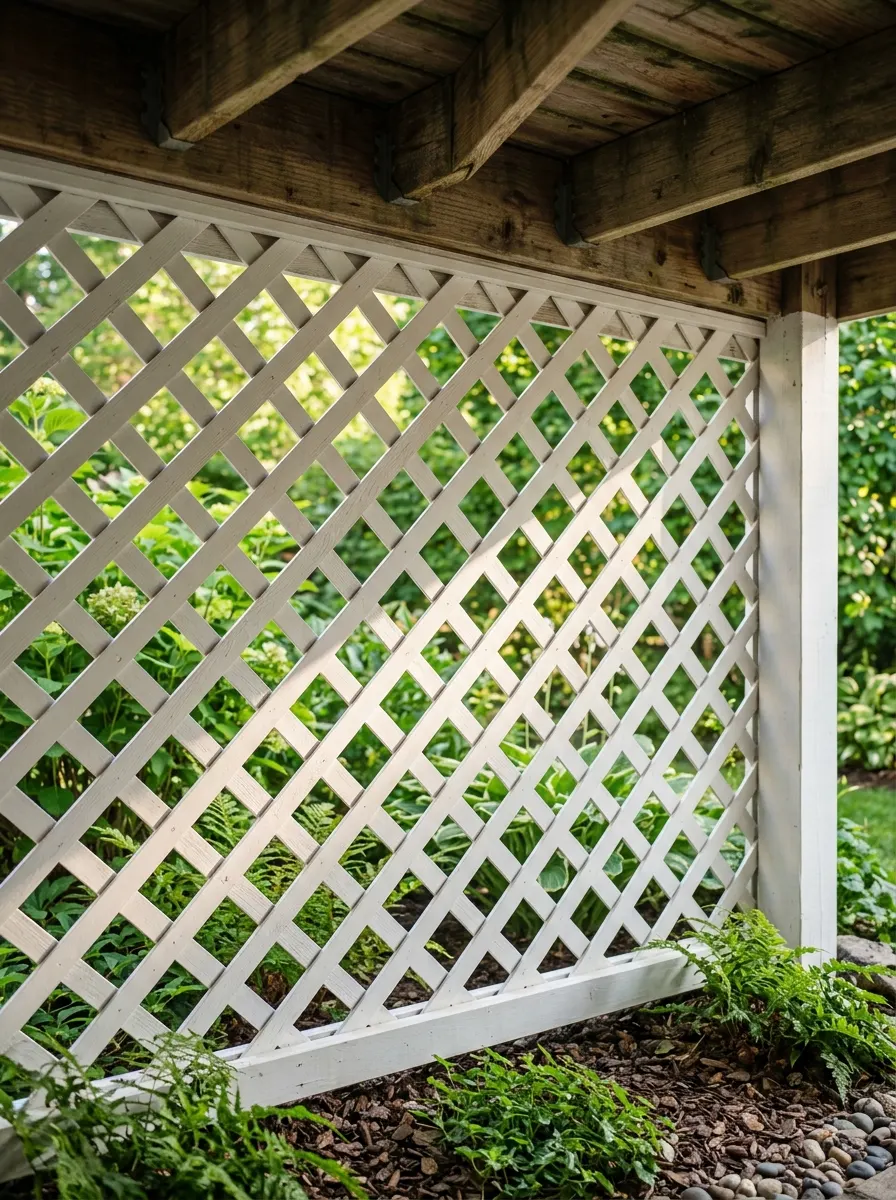
Lattice is one of the most recognized deck skirting designs on the market, and for good reason. It is affordable, widely available, and incredibly versatile. The trick to making it look elevated rather than ordinary is all in the finish. A fresh coat of crisp white or deep charcoal paint immediately lifts lattice from basic to intentional.
What seals the deal is proper framing. Adding a painted border around each lattice panel gives the whole installation a structured, architectural feel. In my experience, homeowners who take that extra step with trim always end up with results that look custom-built rather than off-the-shelf. The difference is remarkable for minimal extra cost.
The Key: Paint lattice in a bold or contrasting tone and add framed trim around each panel to transform affordable material into a designer-level finish.
02
Horizontal Wood Slat Skirting
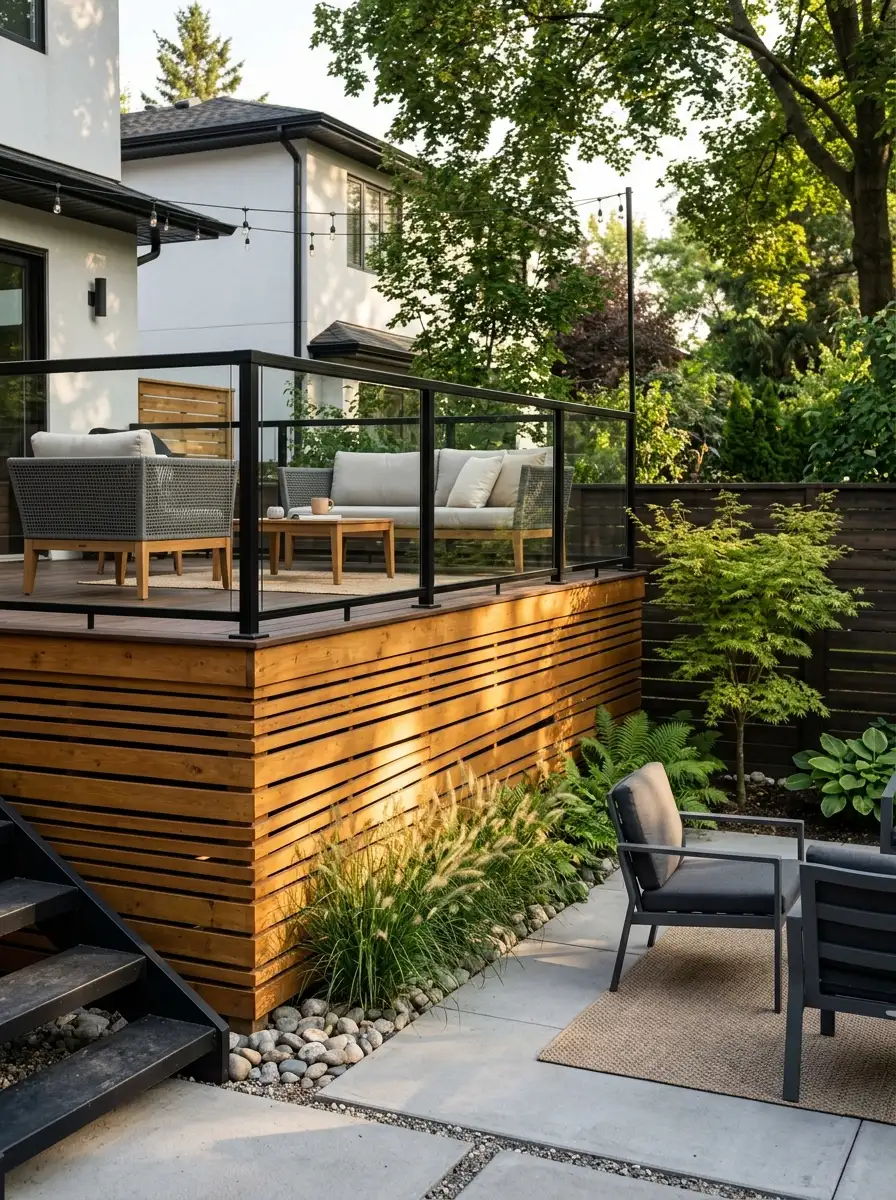
There is something instantly sophisticated about horizontal slats. The strong parallel lines draw the eye across the width of your deck, making the entire structure appear wider and more intentional. This is one of those deck skirting ideas that photographs beautifully and holds up exceptionally well over time when sealed correctly.
The spacing between each board is just as important as the boards themselves. Consistent gaps of about half an inch allow airflow underneath the deck while adding visual rhythm to the surface. Pair this with a semi-transparent stain in a warm walnut or cedar tone and the result feels genuinely custom, even if the lumber came from a basic home improvement store.
The Key: Consistent board spacing and a quality stain turn standard lumber into horizontal slat skirting that looks professionally designed and finished.
03
Vertical Board Privacy Panels
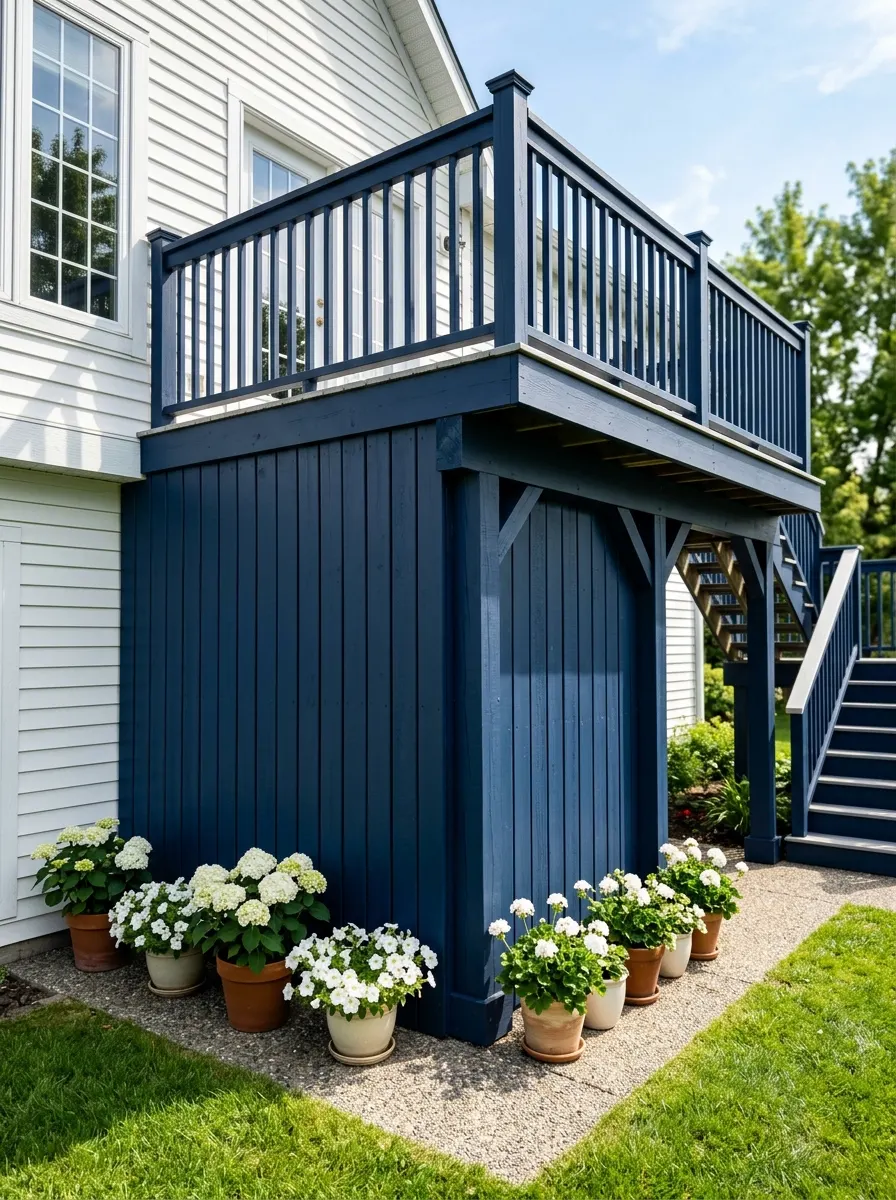
Vertical boards bring a different energy than horizontal ones. They draw the eye upward, giving the deck base a taller, more substantial appearance. This approach works especially well for raised decks where the gap beneath is significant. Painted in a deep tone like navy, forest green, or charcoal, vertical board skirting for decks makes an immediate style statement.
Beyond aesthetics, solid vertical boards provide excellent privacy for the storage space underneath your deck. Many homeowners use this area for outdoor tools, seasonal items, or garden equipment. Incorporating a small hinged access panel within the skirting keeps things practical without interrupting the clean visual line of the boards.
The Key: Deep-painted vertical boards create height, privacy, and bold visual impact while using one of the most budget-friendly materials available.
04
Corrugated Metal Farmhouse Style
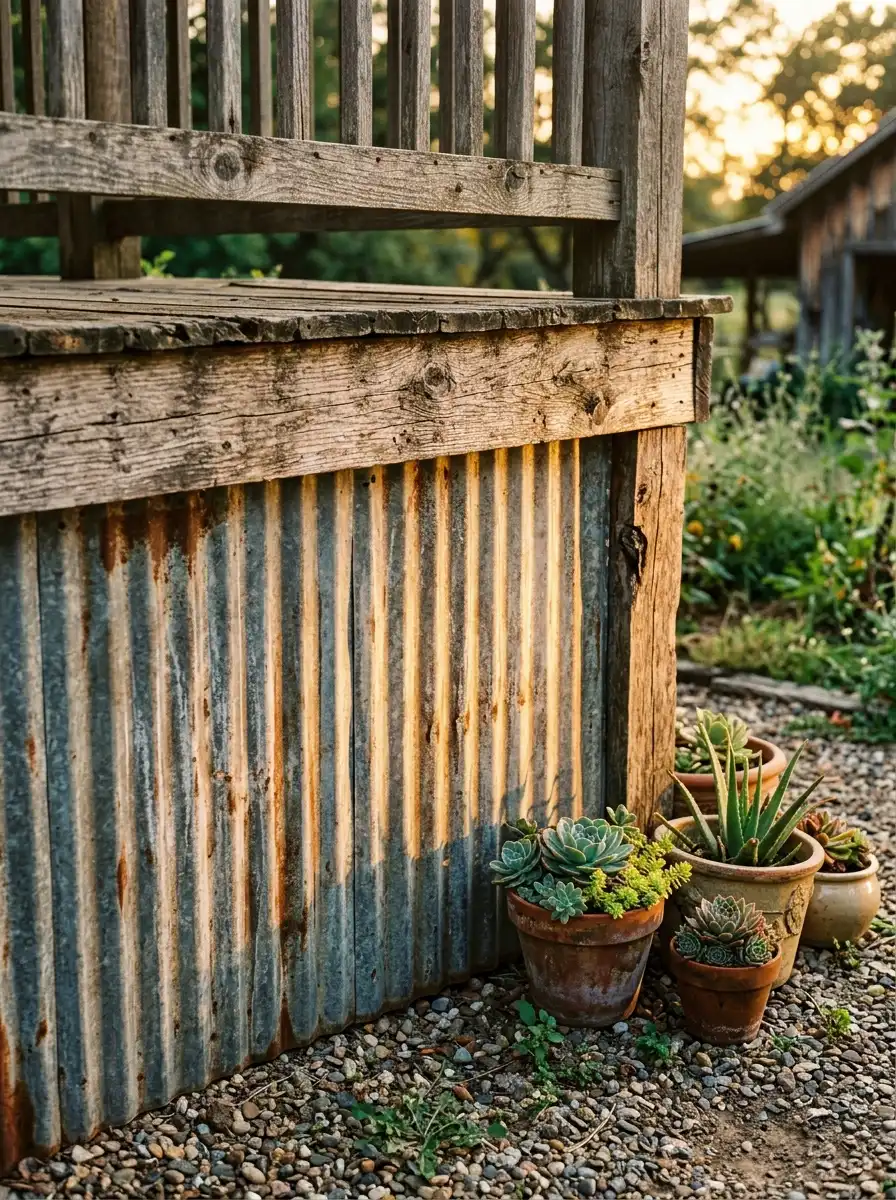
Corrugated metal has moved well beyond barns and sheds. As under deck skirting, it delivers a raw, textured farmhouse aesthetic that pairs beautifully with natural wood decking above. The reflective surface catches light throughout the day, adding dimension and visual interest that flat materials simply cannot replicate. If you are planning a full outdoor refresh, it pairs especially well with a coordinated deck stain color that ties your skirting and deck surface together into one cohesive look.
The cost is a genuine advantage here. Corrugated metal sheeting is among the most affordable skirting materials available, and it installs quickly with basic tools. For a polished finish, frame the panels with painted timber or black steel channel trim. The contrast between the industrial metal and the warm wood framing is exactly the kind of intentional design detail that makes a deck look custom-built.
The Key: Frame corrugated metal panels with dark painted timber trim to balance the industrial texture and achieve a curated farmhouse-modern aesthetic.
05
Shadowbox Panel Deck Skirting Ideas
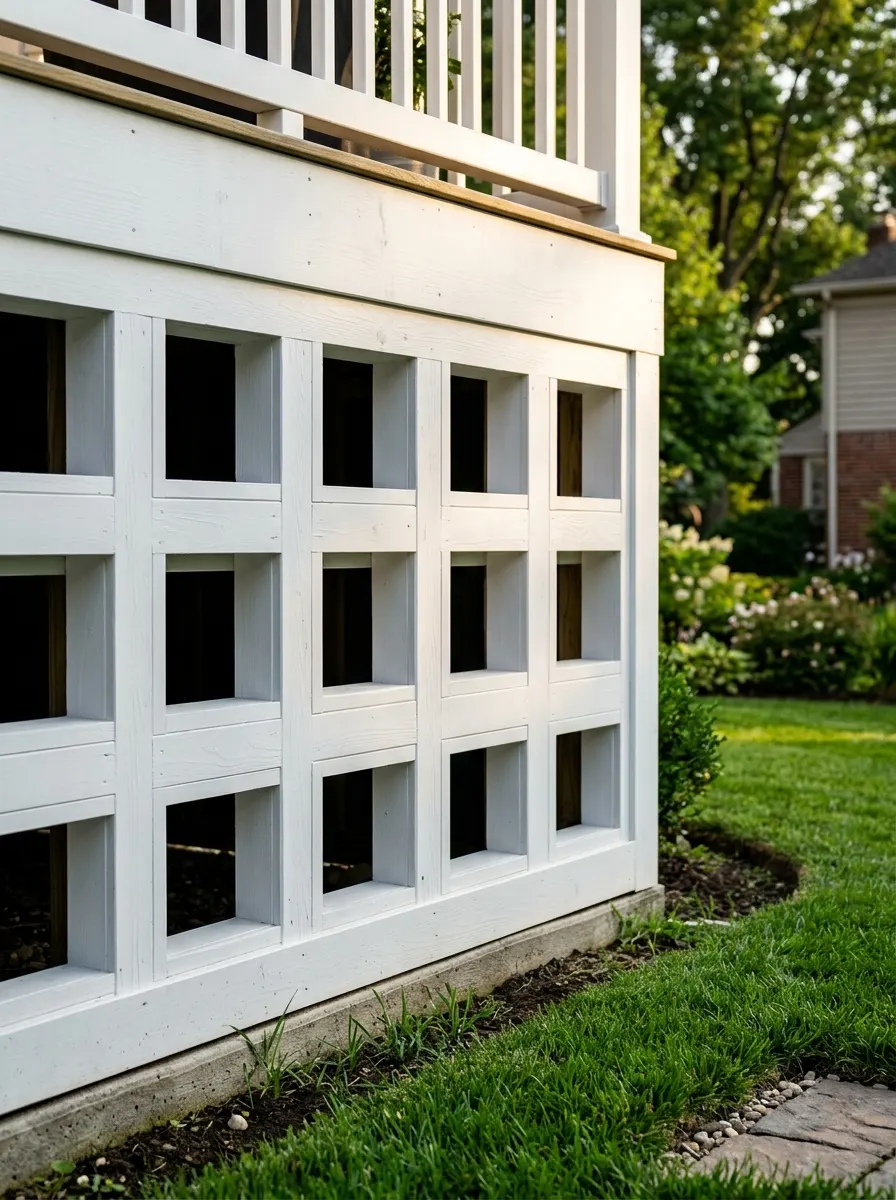
Shadowbox panels are the quiet secret of designers who want maximum visual impact for minimal material cost. By attaching small trim frames to flat plywood panels, you create a raised relief pattern that catches light and casts sharp, architectural shadows throughout the day. These deck skirting designs look genuinely expensive at a fraction of the price.
The effect shifts beautifully as the sun moves. Morning light creates soft definition while afternoon angles produce dramatic depth that makes the panels look almost three-dimensional. Paint the entire surface in a single tone, whether warm white or deep greige, and let the shadow do all the decorative work. It is a trick borrowed directly from high-end exterior trim detailing.
The Key: Attaching simple trim frames to flat plywood creates a shadowbox texture that mimics high-end architectural detail using the most basic materials.
06
Reclaimed Wood Rustic Charm
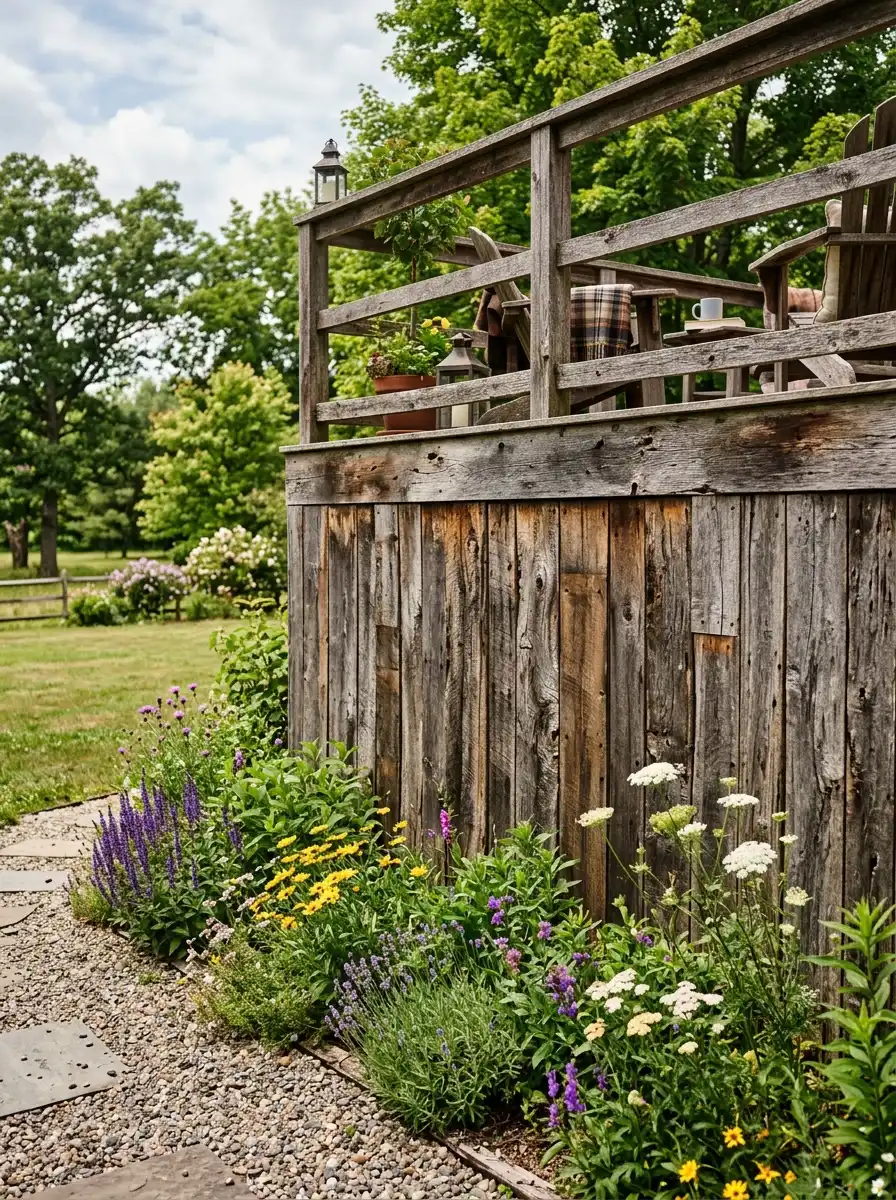
Reclaimed wood brings something no new material can manufacture: genuine character. The varied tones, grain patterns, and natural weathering create a deck base covering that looks intentionally curated rather than assembled from a big box store. Salvage yards, demolition sites, and online marketplace listings are all excellent sources for affordable reclaimed timber.
I have seen this approach transform even modest deck builds into something that draws real compliments from neighbors. The key is consistency in the thickness and height of each board while embracing the natural variation in color and texture. Sealing reclaimed wood with an outdoor-rated penetrating oil finish protects it from moisture while preserving every beautiful imperfection.
The Key: Sealing reclaimed wood with a penetrating oil finish preserves natural character and weathered grain while protecting it from outdoor moisture damage.
07
Stone Veneer Facade Skirting
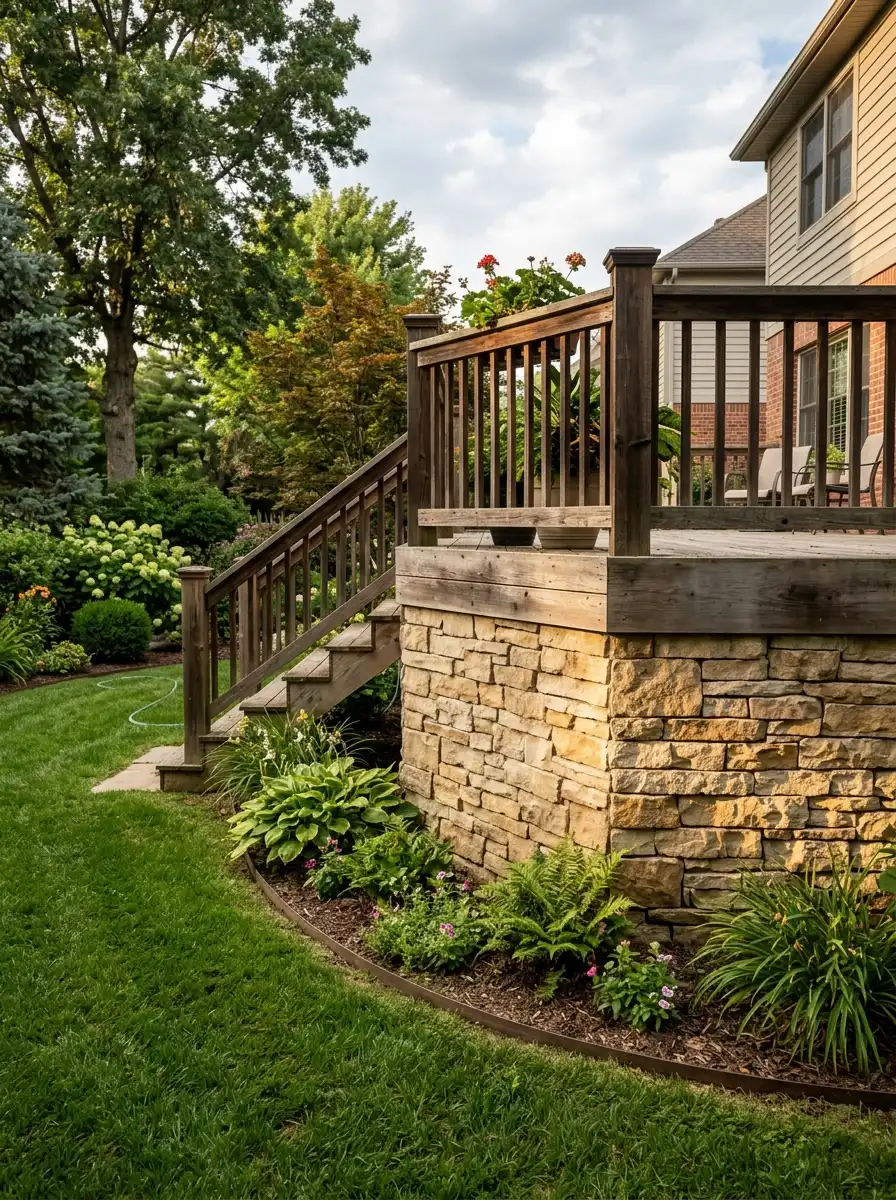
Stone veneer gives your deck the kind of substantial, grounded presence usually associated with high-end home construction. Lightweight adhered stone panels have made this look accessible at a fraction of traditional masonry costs. Applied directly to a cement board substrate around the deck perimeter, stone veneer skirting for decks creates a truly permanent and impressive finish.
The visual weight that stone adds to a deck base is difficult to replicate with any other material. It anchors the structure visually and makes the deck feel like an intentional extension of the home rather than an add-on. Warm tones like buff, sandstone, and aged brick complement most exterior paint colors beautifully and improve curb appeal considerably.
The Key: Lightweight adhered stone veneer panels create a high-end masonry look at a fraction of traditional stone installation costs with far less labor.
08
Painted Plywood Geometric Cutouts
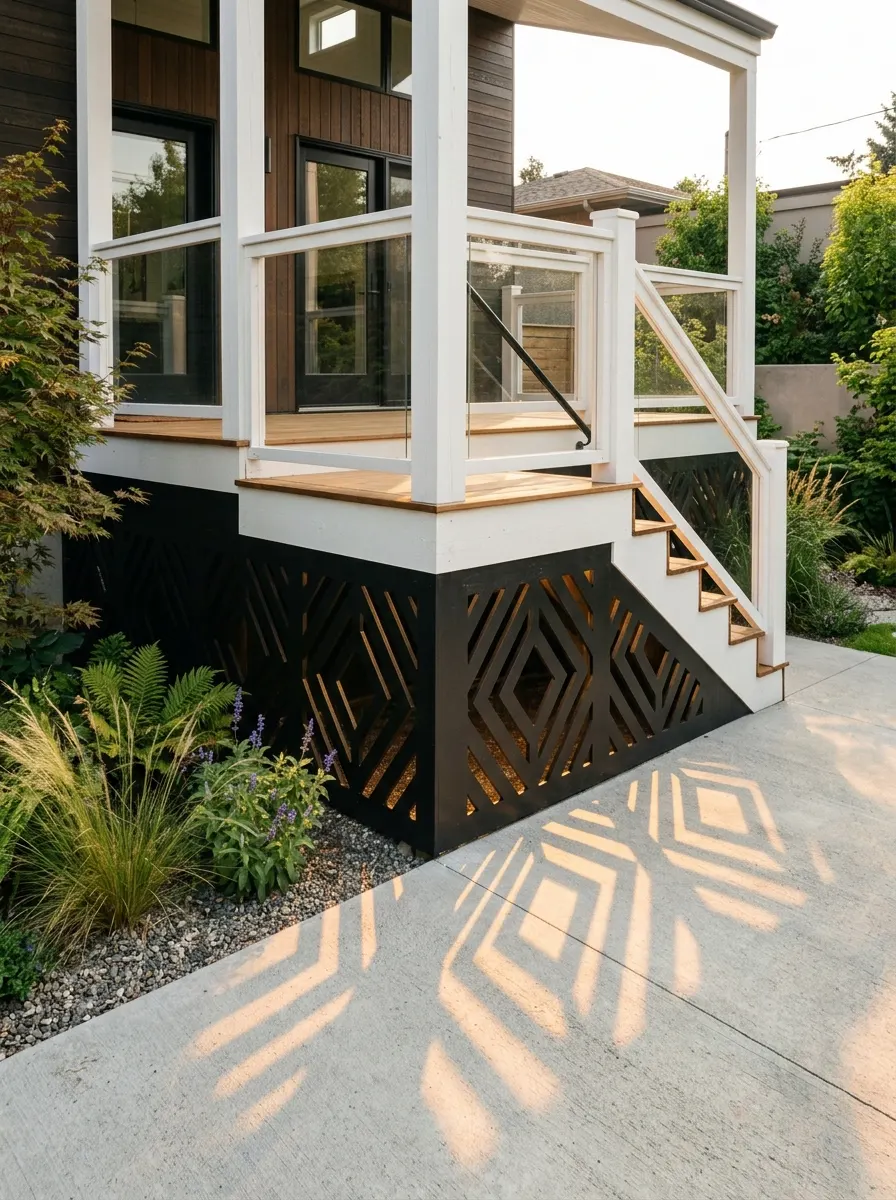
Plywood is one of the most underestimated materials in the deck skirting ideas toolkit. With a jigsaw, a steady hand, and a coat of exterior paint, you can cut custom geometric patterns that look like they came from a landscape designer’s studio. Diamond shapes, chevron rows, and repeating circles all translate beautifully into skirting panels.
The graphic boldness of a dark-painted cutout panel against a lighter deck structure creates exactly the kind of high-contrast visual that makes outdoor spaces feel designed rather than simply built. The cutouts also serve a practical purpose, allowing airflow beneath the deck. Paint in matte black or deep forest green for a modern aesthetic that photographs strikingly well.
The Key: Geometric cutout plywood panels painted in bold dark tones create a graphic, designer-level skirting effect using only basic sheet materials.
09
Bamboo Screen Tropical Panels
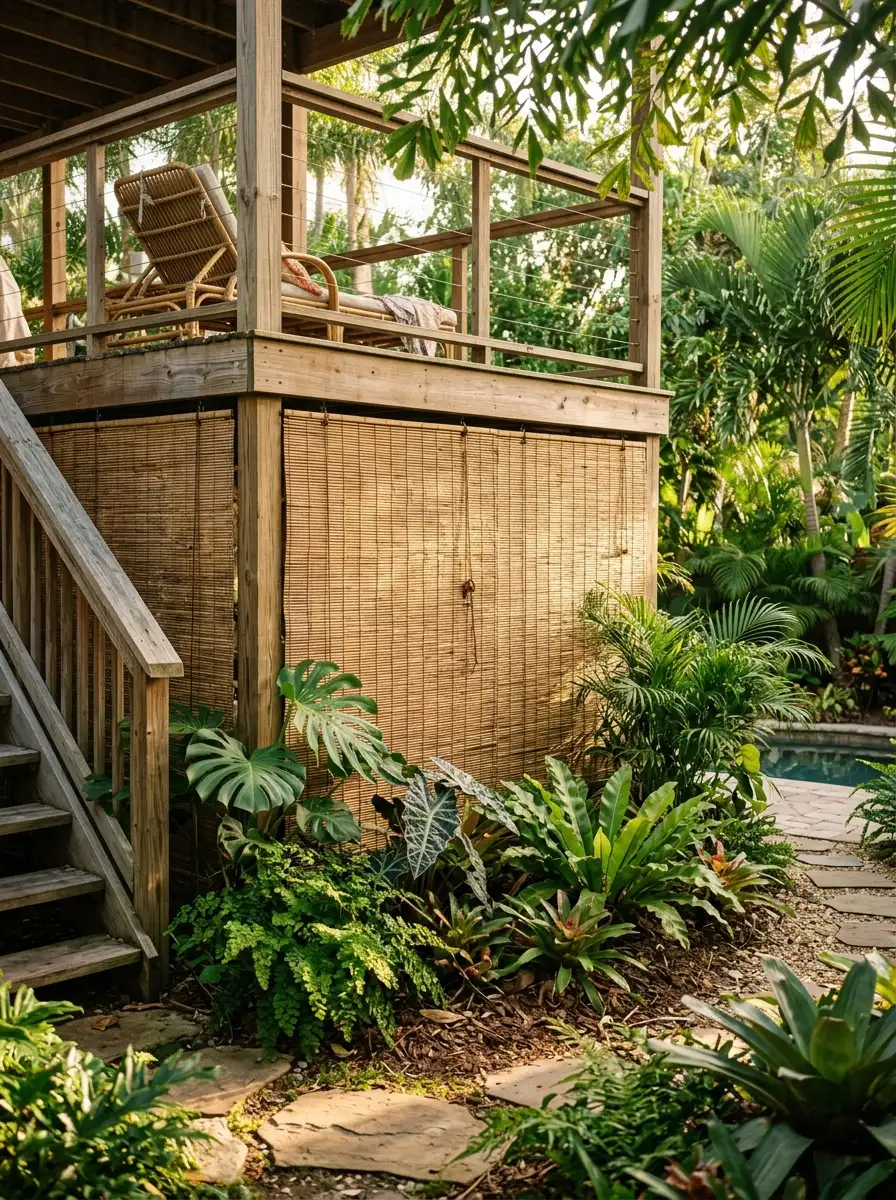
Bamboo roll screens are one of the fastest and most affordable ways to cover a deck base with immediate visual impact. Available at most garden centers and online retailers, these rolls cut easily to size and attach directly to a simple wood frame beneath the deck. The natural texture and warm honey tones create a genuinely resort-inspired feel.
This approach works particularly well for decks surrounded by tropical or cottage-style plantings. The organic texture of bamboo connects the deck structure to the surrounding landscape in a way that painted panels never quite achieve. For longevity, look for rolls treated with a UV-resistant coating and reapply a bamboo oil sealant each spring to keep the color rich.
The Key: UV-treated bamboo roll screens installed on a simple wood frame offer instant tropical deck skirting that installs in an afternoon for minimal cost.
10
Two-Tone Painted Wood Skirting
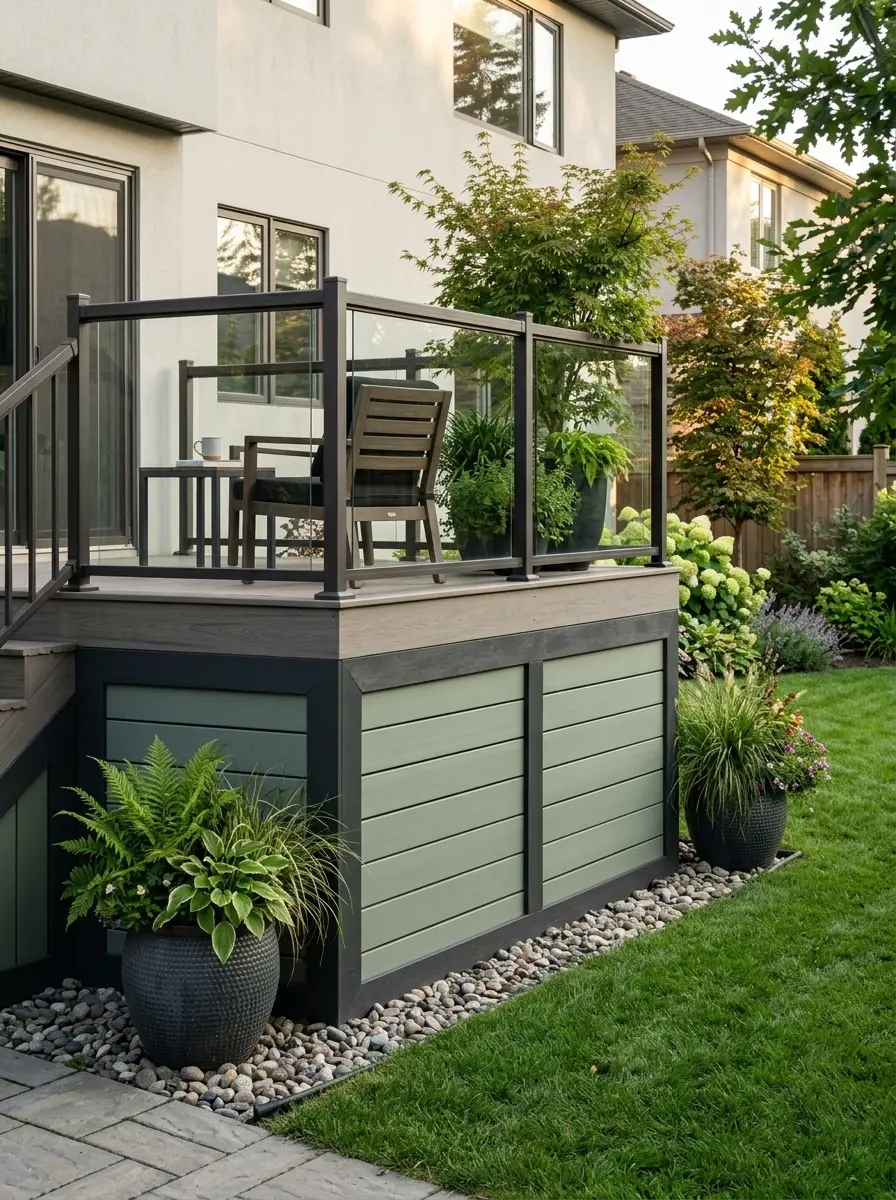
Color blocking is one of the most powerful visual tricks in exterior design, and it costs nothing beyond an extra can of paint. Painting the frame of your deck skirting in a dark tone while keeping the infill boards in a lighter hue creates a layered, architectural effect that looks genuinely intentional. These deck skirting ideas fool the eye into reading expensive where the budget was modest.
The dark frame acts as a visual anchor, making the entire base feel grounded and structured. The lighter infill draws the eye inward and adds depth to an otherwise flat surface. Sage green paired with charcoal, soft white against navy, or warm cream beside deep walnut brown are all combinations that translate exceptionally well from interior design into outdoor spaces.
The Key: Painting the outer frame dark and the infill a lighter tone creates instant color blocking that makes basic wood skirting look like a designer decision.
11
Cedar Shingle Textured Skirting
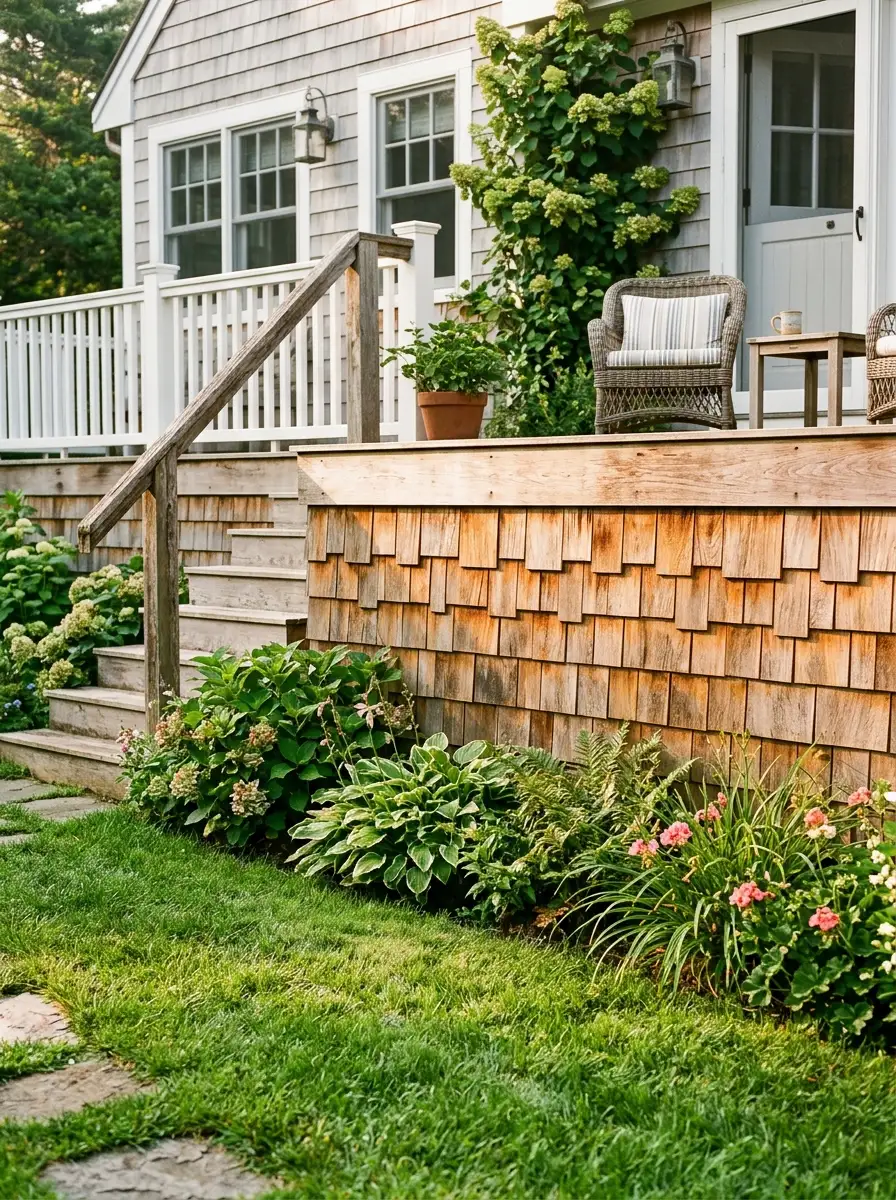
Cedar shingles bring a tactile richness to deck skirting that flat panels simply cannot match. The overlapping layers create genuine depth and cast subtle shadows that shift throughout the day. Architecturally, shingles connect the deck base to the visual language of cottage, coastal, and craftsman-style homes in a way that feels completely authentic.
Cedar is naturally resistant to rot and insects, which makes it one of the more practical choices for under deck skirting without requiring heavy chemical treatment. Left to silver naturally over time or sealed to preserve the warm honey tone, cedar shingles age gracefully in all climates. The installation is approachable for most DIYers with basic carpentry skills.
The Key: Cedar shingles install in overlapping rows that add genuine texture and natural rot resistance, making them a practical and beautiful skirting choice.
12
Wrought Iron Style Metal Panels
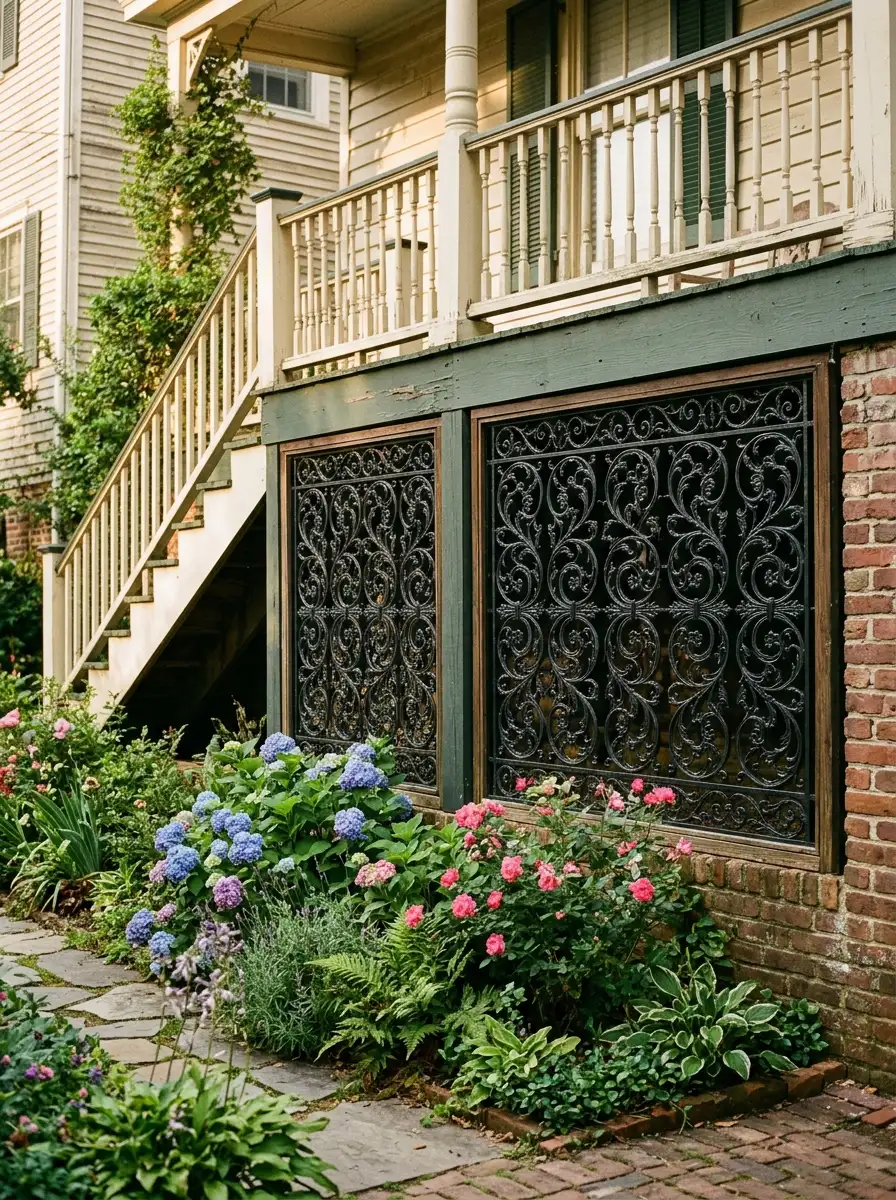
Decorative metal panels with scrollwork or lattice-style cutout patterns bring a formal, elevated quality to deck skirting that few other materials can match at the price point. Pre-fabricated steel or aluminum decorative panels are widely available, cut cleanly, and install with basic screws. Powder-coated in matte black, they read as genuine wrought iron from any distance.
This is one of those deck skirting designs that instantly suggests craftsmanship and permanence even when the material cost is modest. The intricate patterns catch light beautifully at different times of day and create striking shadow projections on the ground beneath. Paired with a traditional painted deck and flower borders, the overall effect is genuinely gracious and polished.
The Key: Powder-coated decorative metal panels installed in a simple frame deliver the formal elegance of wrought iron skirting at a fraction of the fabrication cost.
13
Herringbone Pattern Wood Skirting
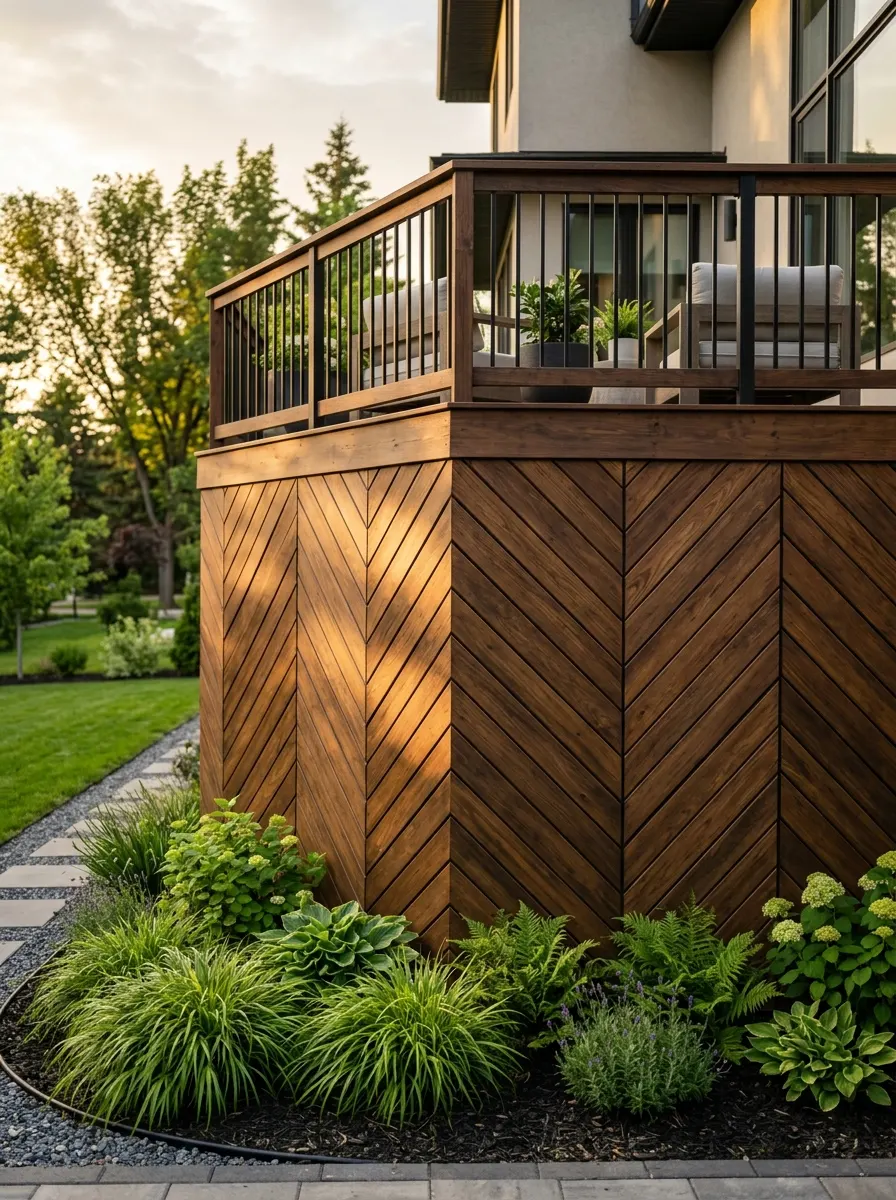
A herringbone pattern elevates basic lumber into something that genuinely stops people mid-stride. The diagonal lines intersecting at precise center seams create a visual complexity that reads as highly skilled craftsmanship, even though the individual cuts are straightforward with a miter saw and a careful layout. This is among the most visually rewarding budget deck skirting ideas available.
The direction of the pattern also plays with perception. Diagonal lines across the width of the deck base create a sense of motion and energy that horizontal or vertical boards never generate. Stained in a rich walnut tone and framed with a contrasting painted border, a herringbone skirting panel becomes an architectural focal point rather than an afterthought.
The Key: A herringbone layout transforms standard lumber into a complex-looking pattern that conveys skilled craftsmanship using basic diagonal cuts with any miter saw.
14
Woven Willow or Reed Screening
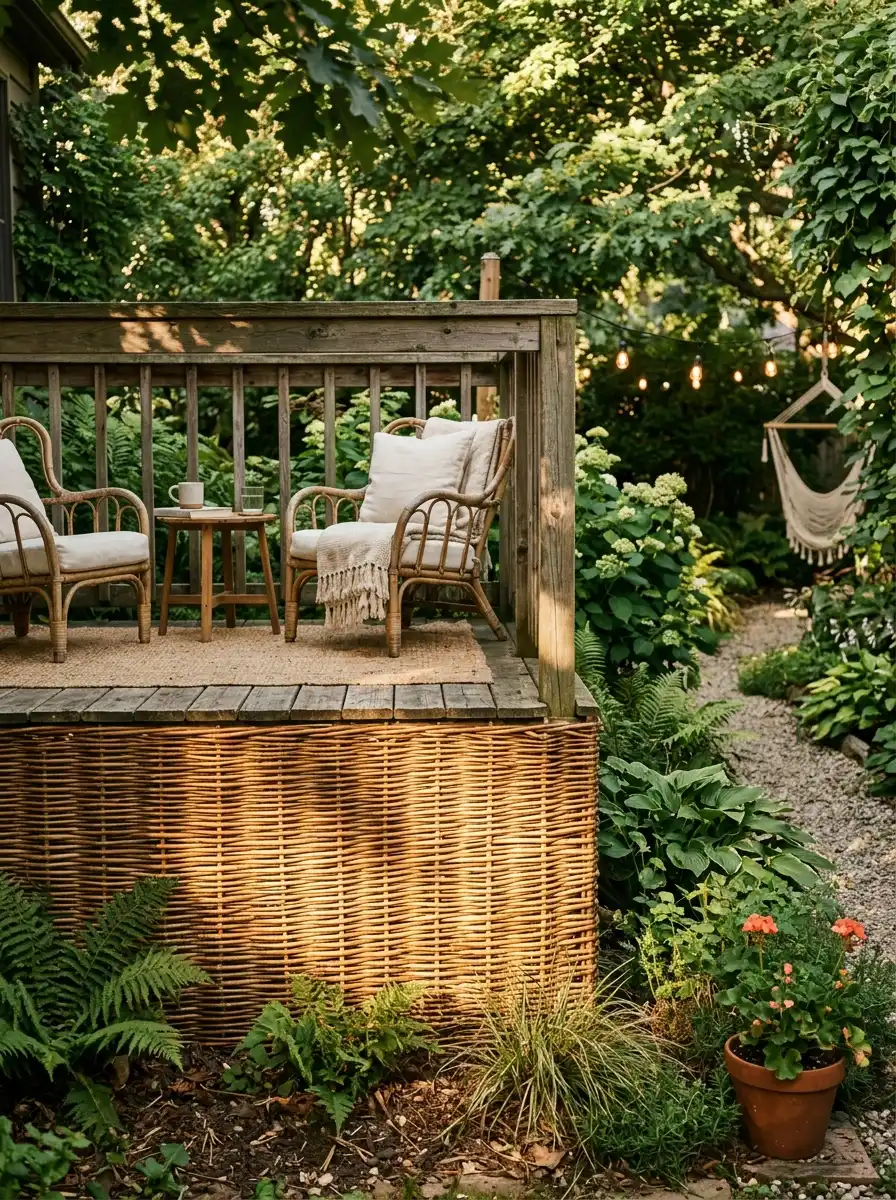
Woven willow and reed screening offers one of the most organic, textural deck base covering options available. The natural weave pattern creates a warm, handcrafted appearance that suits cottage gardens, boho outdoor spaces, and naturalistic landscapes beautifully. Rolls are sold by the linear foot at most garden centers, making this one of the easiest and most affordable skirting solutions.
The visual texture of woven reed is unlike anything manufactured. No two sections look identical, which gives the finished skirting a genuinely bespoke quality that painted panels cannot replicate. Framed with simple painted timber and anchored securely at the base, woven willow screening creates an earthy, refined result that aligns beautifully with the current trend toward natural, nature-connected outdoor living.
The Key: Woven willow screens mounted within a simple painted timber frame deliver an organic, artisan-quality skirting look at garden center pricing.
15
Board and Batten Cottage Skirting
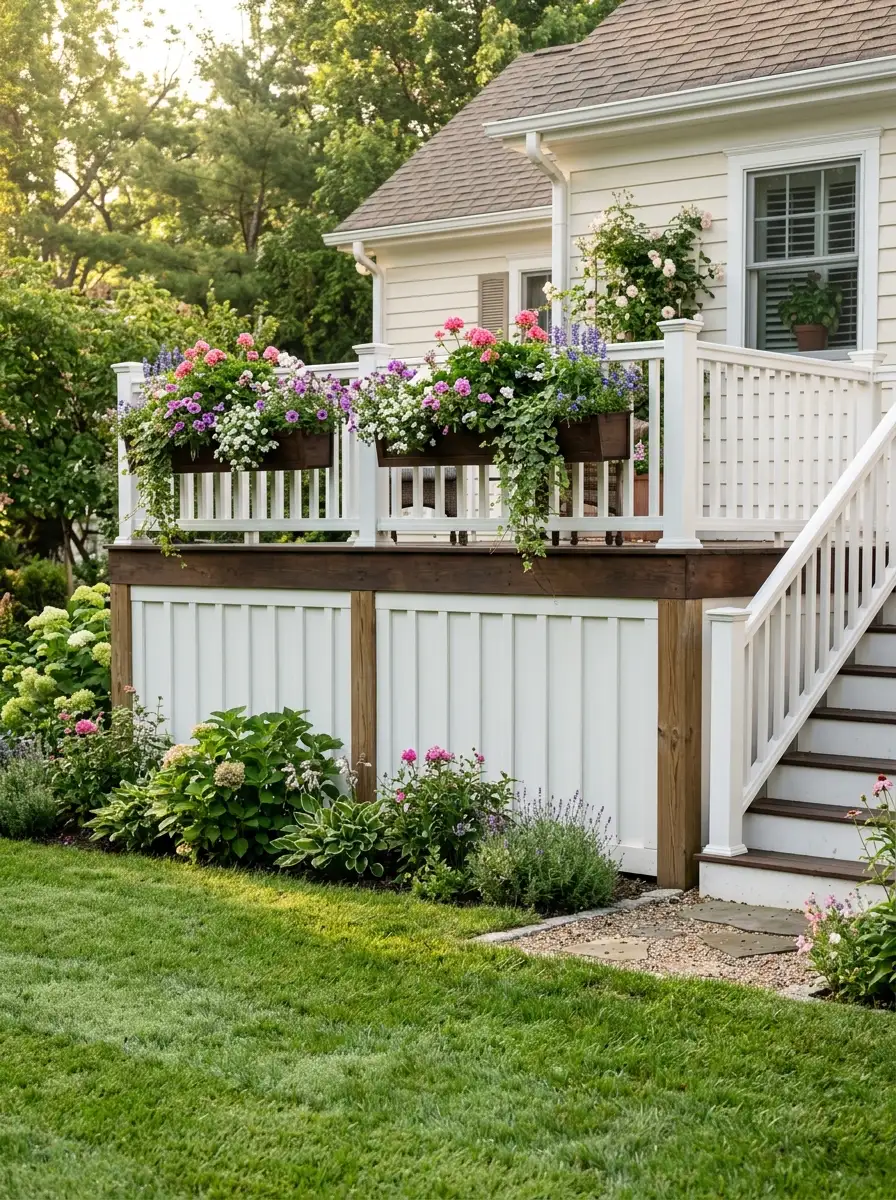
Board and batten is one of the most timeless exterior cladding patterns in residential architecture, and it translates perfectly to skirting for decks. Wide flat boards installed vertically and covered with narrow battens at every seam create a textured, layered surface that adds genuine architectural character to even the simplest deck structure.
Painted in crisp white or warm cream, board and batten skirting gives a deck the same polished, cottage-inspired quality seen on high-end homes. The vertical orientation draws the eye upward, making the deck appear taller and more substantial. This is a style that ages beautifully, suits a wide range of home exteriors, and requires only basic lumber and a few afternoons to complete.
The Key: Vertical board and batten skirting combines simple lumber with a timeless architectural pattern to deliver cottage-style charm on a beginner-friendly budget.
16
Living Plant Wall Skirting Base
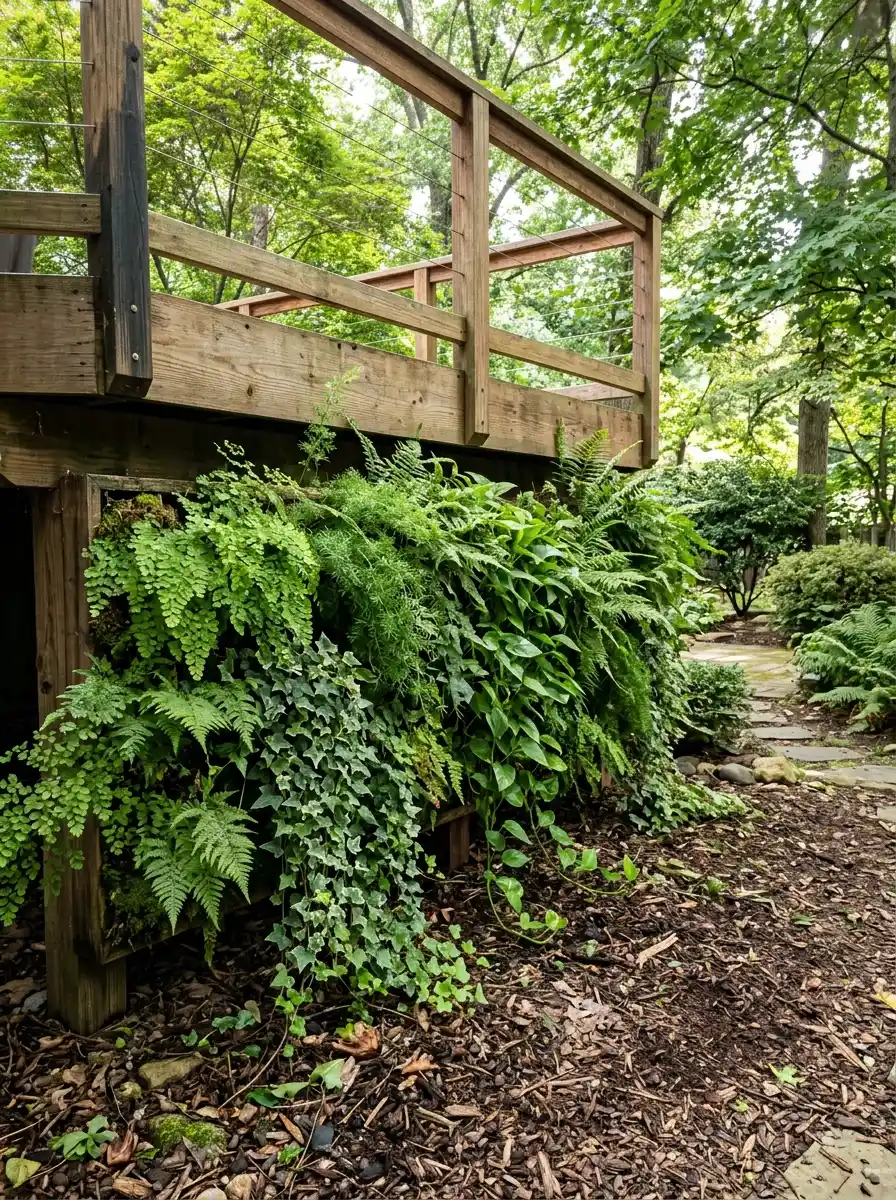
A living plant wall along the deck base is one of the most genuinely beautiful and low-cost approaches to under deck skirting imaginable. A simple wire or trellis grid attached to the perimeter gives climbing plants a structure to follow. Over one growing season, trailing ivy, climbing hydrangea, or lush ferns can cover an entire deck base in rich green texture.
This approach literally grows in value over time rather than degrading. The maintenance commitment is minimal beyond occasional trimming, and the visual reward is extraordinary. In my experience, a planted deck base consistently draws more compliments than any constructed skirting material because it blurs the line between structure and landscape in the most natural way possible.
The Key: A wire trellis grid gives climbing plants a framework to fill within a single season, creating a living skirting that improves every year for almost no cost.
17
Mixed Material Eclectic Skirting
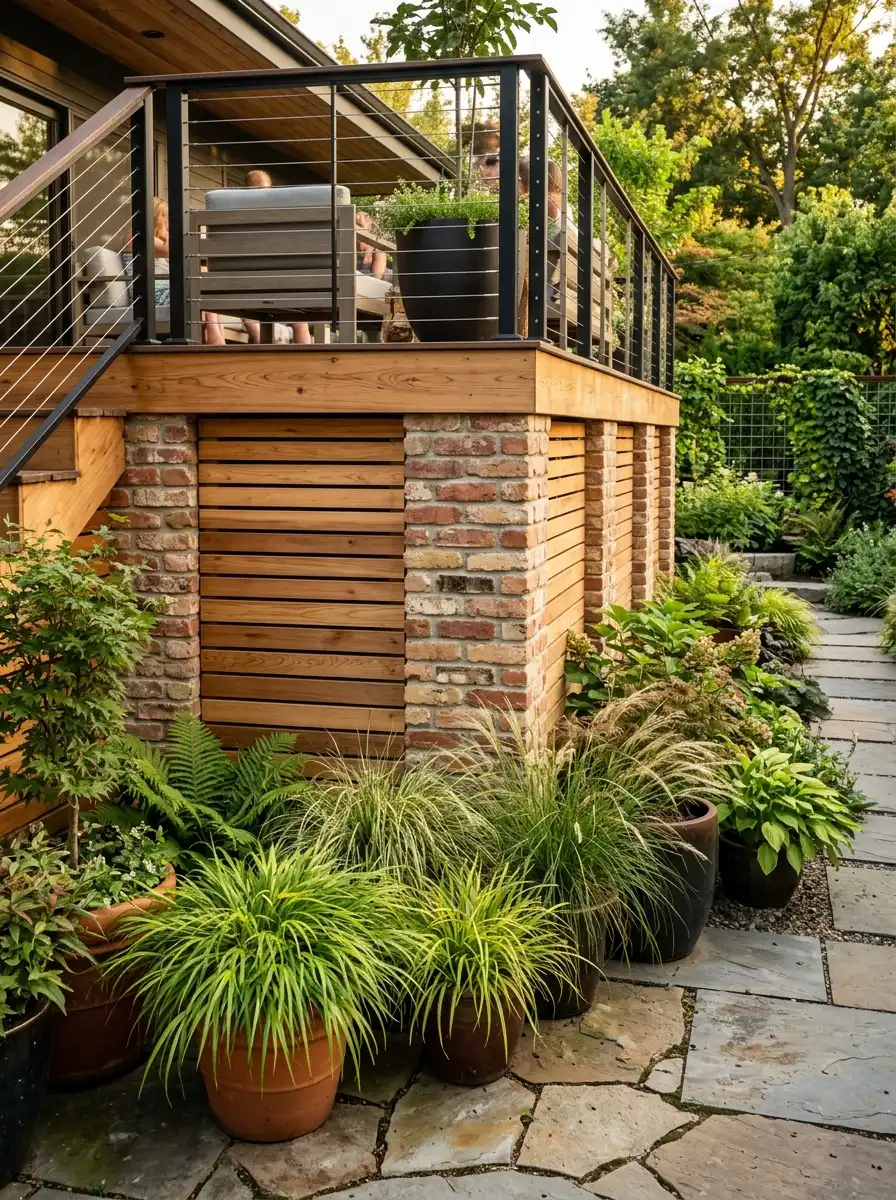
Mixing two complementary materials within a single skirting design is an advanced move that pays off remarkably well when executed with intention. Combining horizontal wood slats with sections of stone veneer, alternating metal panels with painted plywood, or pairing bamboo with cedar trim creates a layered, collected quality that feels truly custom. These are the kinds of deck skirting ideas that make guests stop and ask who designed your space.
The secret is keeping a consistent color palette across both materials so the combination reads as intentional rather than mismatched. Choose materials that share a tonal family, such as warm neutrals or cool grays, and let texture carry all the visual variation.
The Key: Pairing two materials within a shared color palette creates a layered, custom skirting look that reads as intentional design rather than improvised patchwork.
You just walked through 17 genuinely creative ways to dress up one of the most overlooked parts of any outdoor space. The great thing about these deck skirting ideas is that every single one of them is achievable on a real-world budget without sacrificing an ounce of visual impact. Whether you gravitate toward the graphic boldness of geometric cutouts, the organic warmth of reclaimed wood, or the timeless charm of board and batten, there is a style here that fits both your home and your comfort level.
The takeaway is simple: the space beneath your deck deserves just as much thought as the deck surface itself. A well-finished base ties the whole structure together and signals to everyone who sees it that every detail was considered. If this post gave you the inspiration you needed to finally tackle that project, save it to your Pinterest boards so you can come back to it whenever you are ready. And if you know someone who has been putting off finishing their deck base, share this with them today. They will thank you for it.