Easter Décor
🏠 18 Real Ideas
⏱ Quick Read
🔥 Always Trending
18 Easter Décor Ideas
That Look Straight Out of a Luxury
Pinterest Board
Easter decorating has quietly become one of the most beautiful seasonal moments in the entire home décor calendar. And the best Easter décor ideas have nothing to do with plastic baskets or garish novelty bunnies. They are soft, considered, and genuinely elegant — fresh flowers, painted eggs, linen textures, and natural materials that make a home feel like spring arrived and decided to stay. I’ve noticed that the rooms people save most on Pinterest at Easter are the ones that feel luxurious without looking overdone. That balance between festive and refined is exactly what this list is designed to help you achieve. All 18 ideas. Every room. Every budget. Save this and let the planning begin.
01
Painted Egg Centerpiece
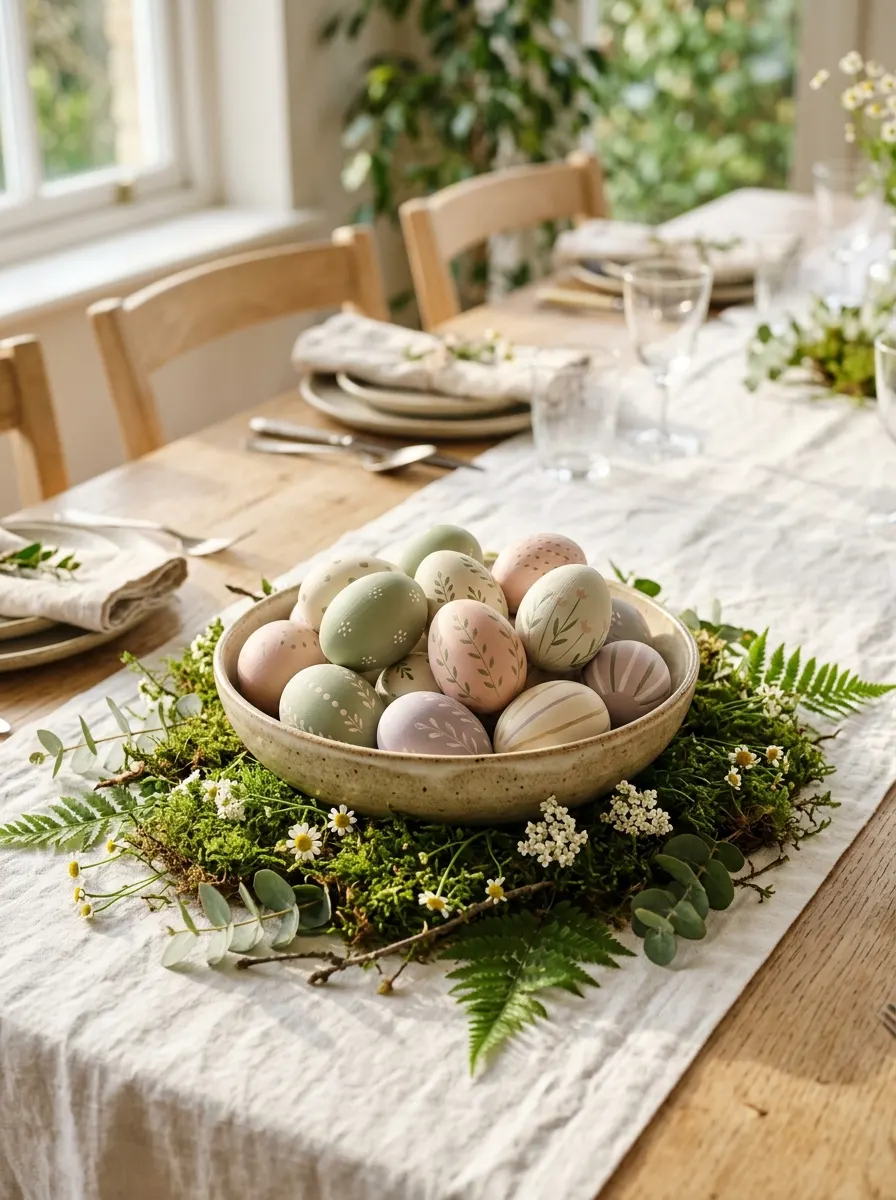
A bowl of beautifully painted eggs at the center of a dining table does something almost nothing else in Easter decorating achieves — it manages to feel seasonal and sophisticated at the same time. Matte pastel tones in sage, blush, and lavender, nestled in fresh moss inside a wide cream ceramic bowl, create a centerpiece that looks like it belongs in a luxury interiors magazine rather than a holiday craft project.
The moss is the detail that elevates this from simple to styled. That living green base makes the eggs appear to have been gathered from a garden rather than arranged on a table. Scatter a few small white flower heads — fresh chamomile, dried gypsophila, or simple daisy heads — around the base of the bowl and the whole arrangement takes on a softness and life that no fabric or faux element can replicate.
The Key: Use a wide, low bowl so eggs sit visible and accessible from every seat — elevation and openness matter far more than height when styling an Easter egg centerpiece.
02
Spring Wreath Door
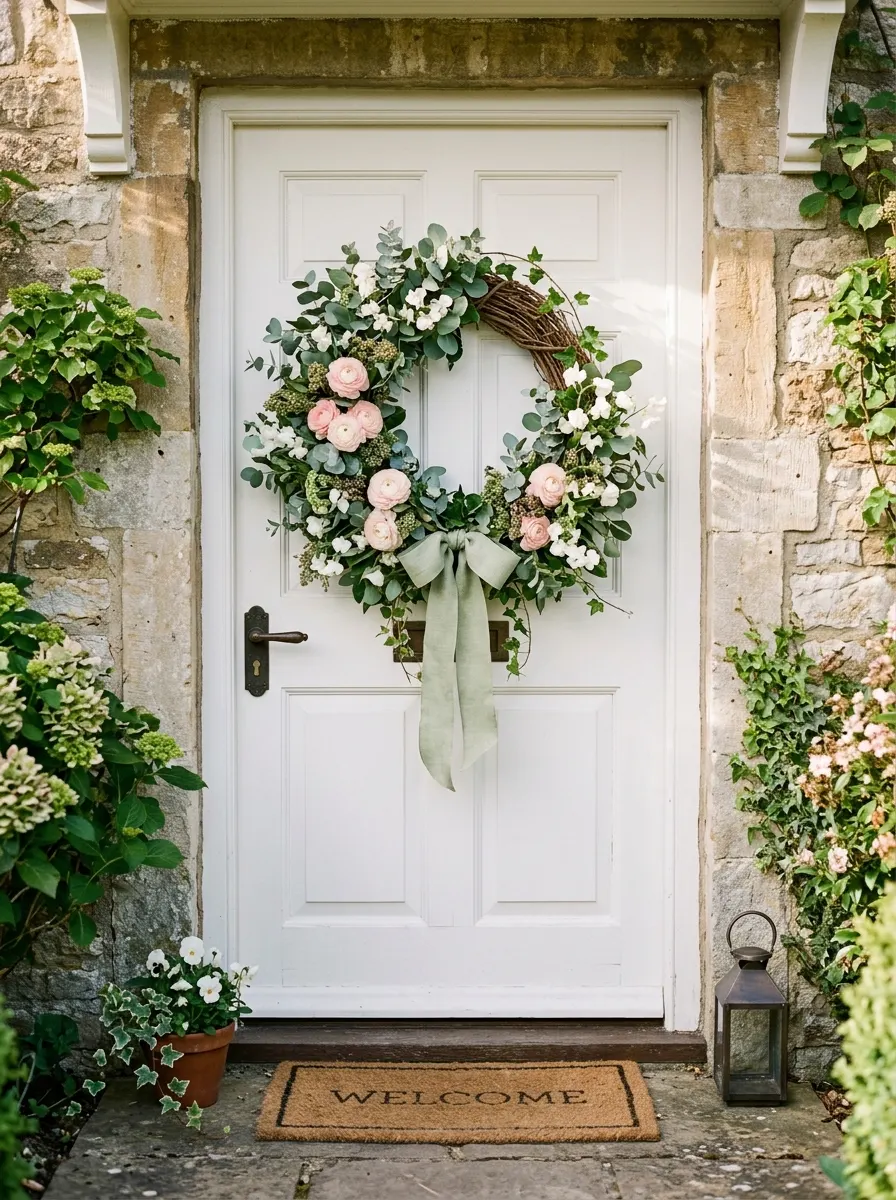
An Easter wreath on the front door is the first thing guests see and the detail that sets the tone for every seasonal choice inside. A fresh wreath of blush ranunculus, white sweet peas, and trailing ivy on a grapevine base communicates immediately that this home takes its spring decorating seriously — and that what’s inside is worth the visit.
The ribbon finish is what separates a beautiful wreath from a truly luxurious one. A wide linen ribbon in soft sage, tied in a loose, relaxed bow rather than a structured knot, adds the kind of understated elegance that transforms a floral arrangement into a design statement. That contrast between organic botanicals and the soft structure of the bow creates exactly the refined, Pinterest-worthy quality you’re after.
The Key: Choose a grapevine wreath base at least 18 inches in diameter — smaller wreaths lose visual impact on a standard front door and look proportionally slight from the street.
03
Linen Table Runner
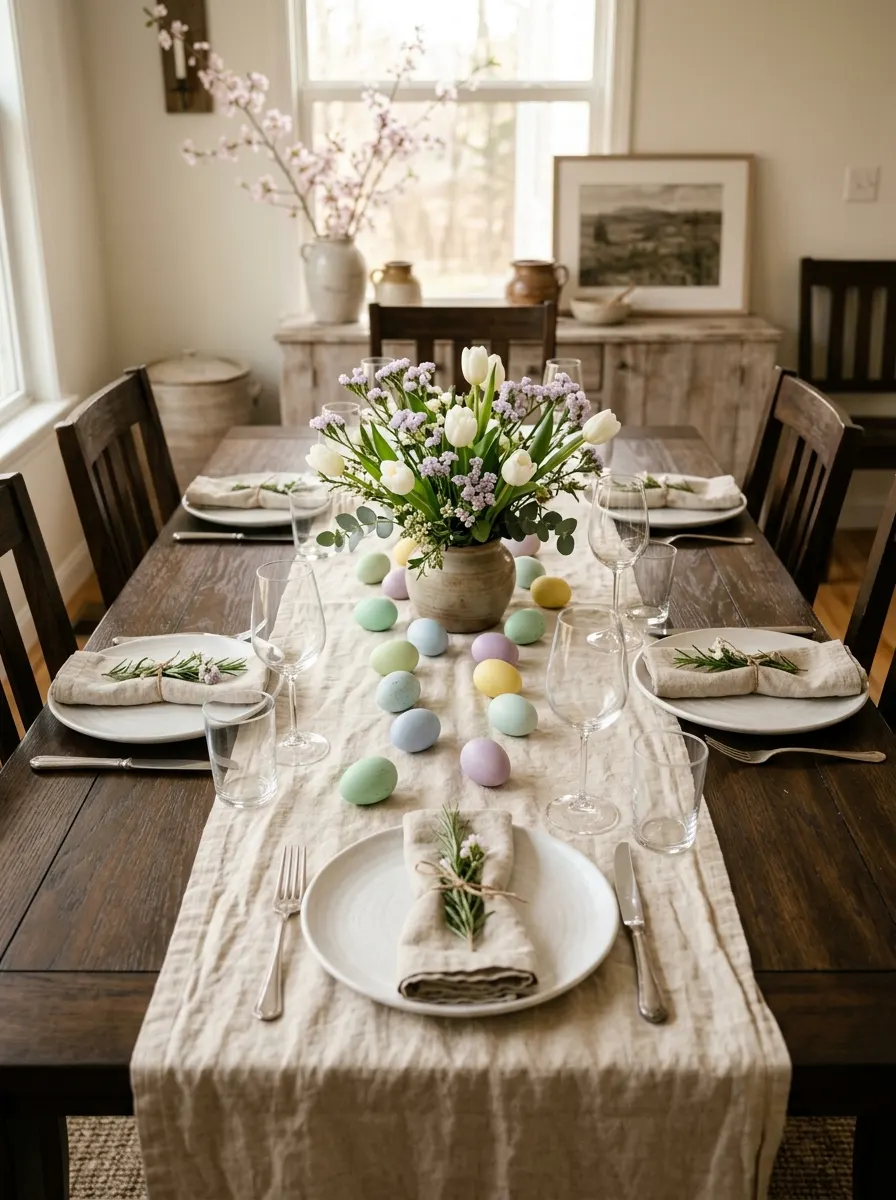
A linen table runner is the single most transformative Easter table investment you can make — and at under twenty dollars, it is one of the most affordable. That warm cream fabric running the length of the table immediately creates a foundation that makes every other element on the surface look more considered. The slightly rumpled quality of natural linen signals ease and elegance simultaneously.
Scatter small painted eggs along the runner between place settings and the whole table becomes a unified Easter scene rather than a collection of separate pieces. I’ve noticed that the most beautiful Easter tablescapes are always built from a single unifying base — linen, moss, or a botanical runner — that makes the entire surface feel cohesive before a single flower or candle is added.
The Key: Lay the linen runner slightly off-center so it extends further on one long side — the asymmetric placement looks more organic and editorial than a perfectly centered runner every time.
04
Moss Nest Accents
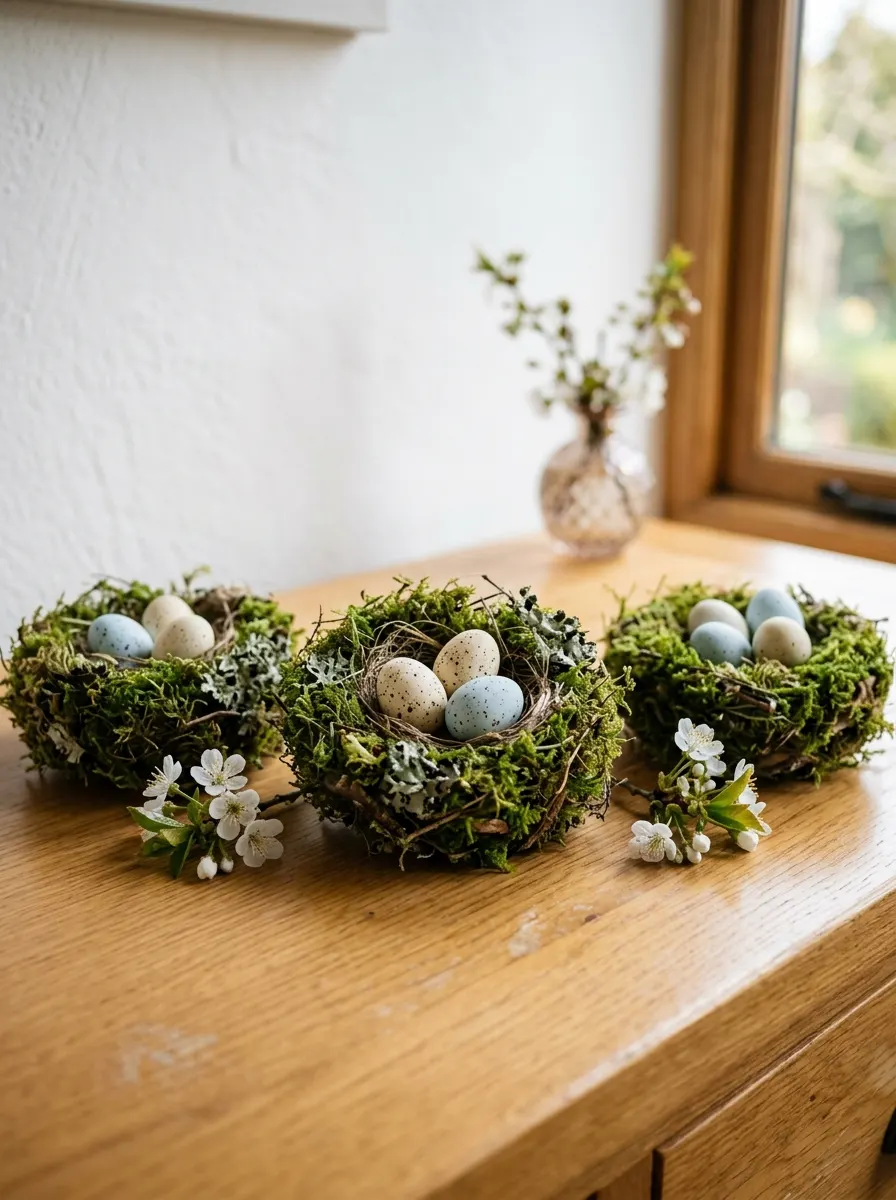
Moss nests are Easter decorating at its most quietly beautiful. That small bundle of green moss, shaped into a natural cup and cradling two or three speckled eggs, tells a spring story that no purchased seasonal accent can match. It looks found rather than made — which is exactly the quality that makes people stop and look twice when they see it on a console or shelf.
The speckled egg choice matters enormously. Painted wooden eggs or natural quail eggs in pale blue, cream, and sage tones read as considered and natural. Bright plastic eggs in neon colors belong to a completely different aesthetic. The moment you make this substitution, the same moss nest moves from craft table to luxury interiors territory — a transformation that costs nothing but attention.
The Key: Shape moss nests while the moss is slightly damp — wet moss is pliable and holds the cup form naturally as it dries, while dry moss crumbles and resists shaping without adhesive.
05
Pastel Bud Vase Collection
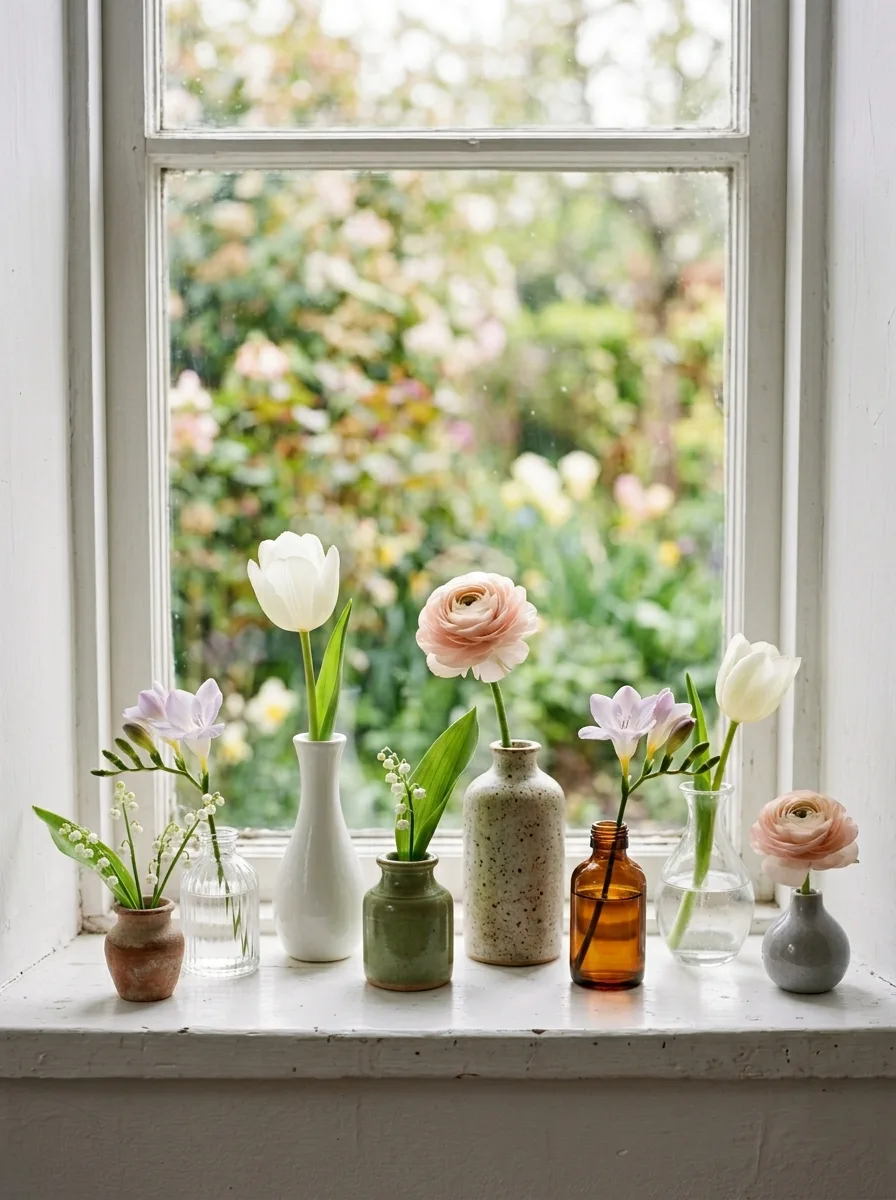
Eight small bud vases on a windowsill, each holding a single perfect spring stem, create a display that is the opposite of traditional Easter decorating — and significantly more beautiful for it. That restraint, that decision to give each flower its own space and its own moment, creates an arrangement that reads as curation rather than decoration. It belongs on a luxury interiors blog more than a holiday craft site.
The windowsill is the perfect location because spring backlighting transforms the display. Morning light passing through a white tulip petal or a pale freesia bloom reveals translucent veining and color gradients invisible in other lighting conditions. That luminous, backlit quality is what makes bud vase collections on windowsills so consistently viral on Pinterest throughout the Easter and spring season.
The Key: Choose vases with varying neck widths as well as varying heights — different openings create different stem angles and natural lean, which makes the overall collection feel genuinely organic rather than uniformly placed.
06
Bunny Bookend Styling
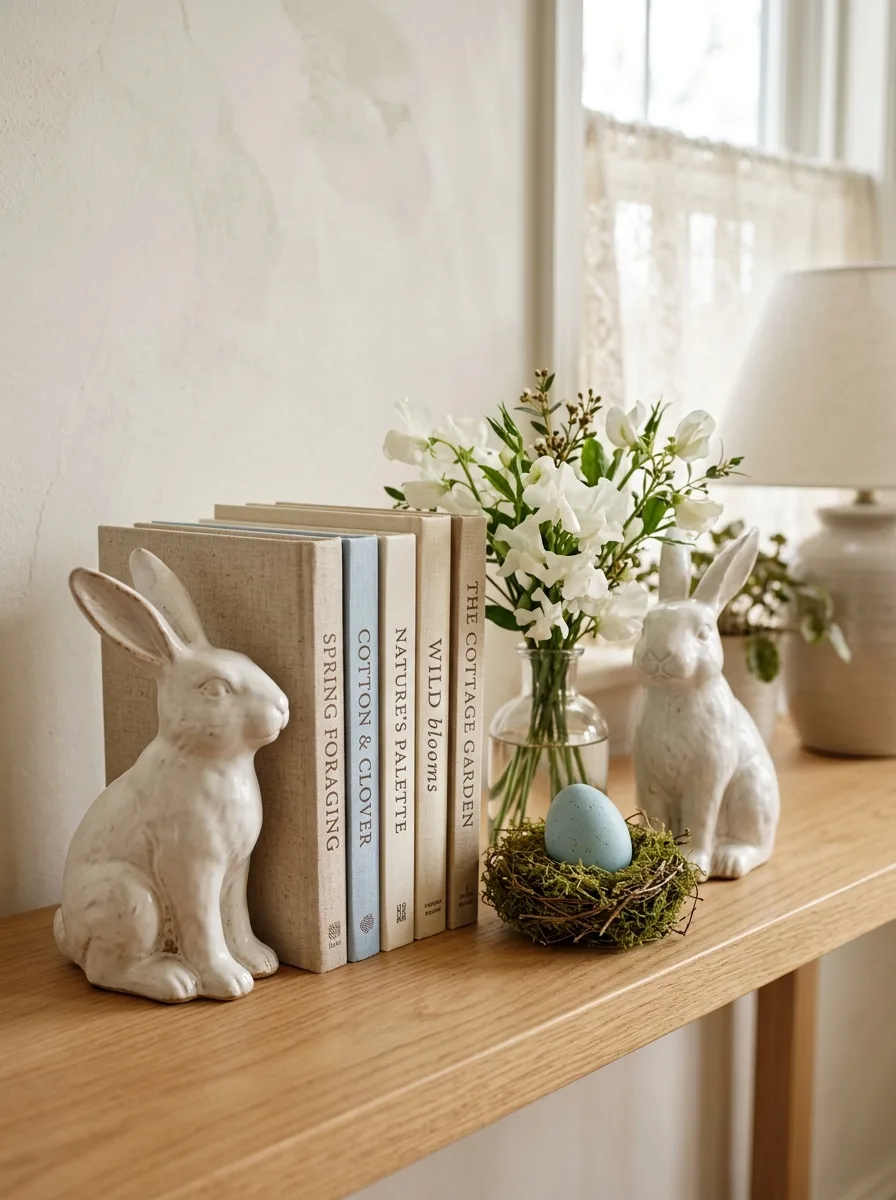
Ceramic bunnies get Easter decorating wrong when they are overtly cartoonish or garishly colored. They get it completely right when they are matte white, quietly architectural, and used with intention. Two white ceramic bunnies flanking a small stack of books and a vase of sweet peas on a shelf look genuinely sophisticated — they read more as collected objects than seasonal novelties.
The bookend function is the detail that makes this feel designed rather than themed. Functional objects on shelves signal that someone thought about how the shelf works, not just how it looks. That purposefulness is exactly what elevates Easter decorating from busy to beautiful. Give every seasonal piece a reason to be where it is, and the whole room rewards the decision.
The Key: Choose ceramic bunnies in matte white or unglazed bisque finish — these neutral, low-sheen materials read as permanent, curated objects rather than clearly seasonal holiday decorations.
07
Floral Egg Wreath
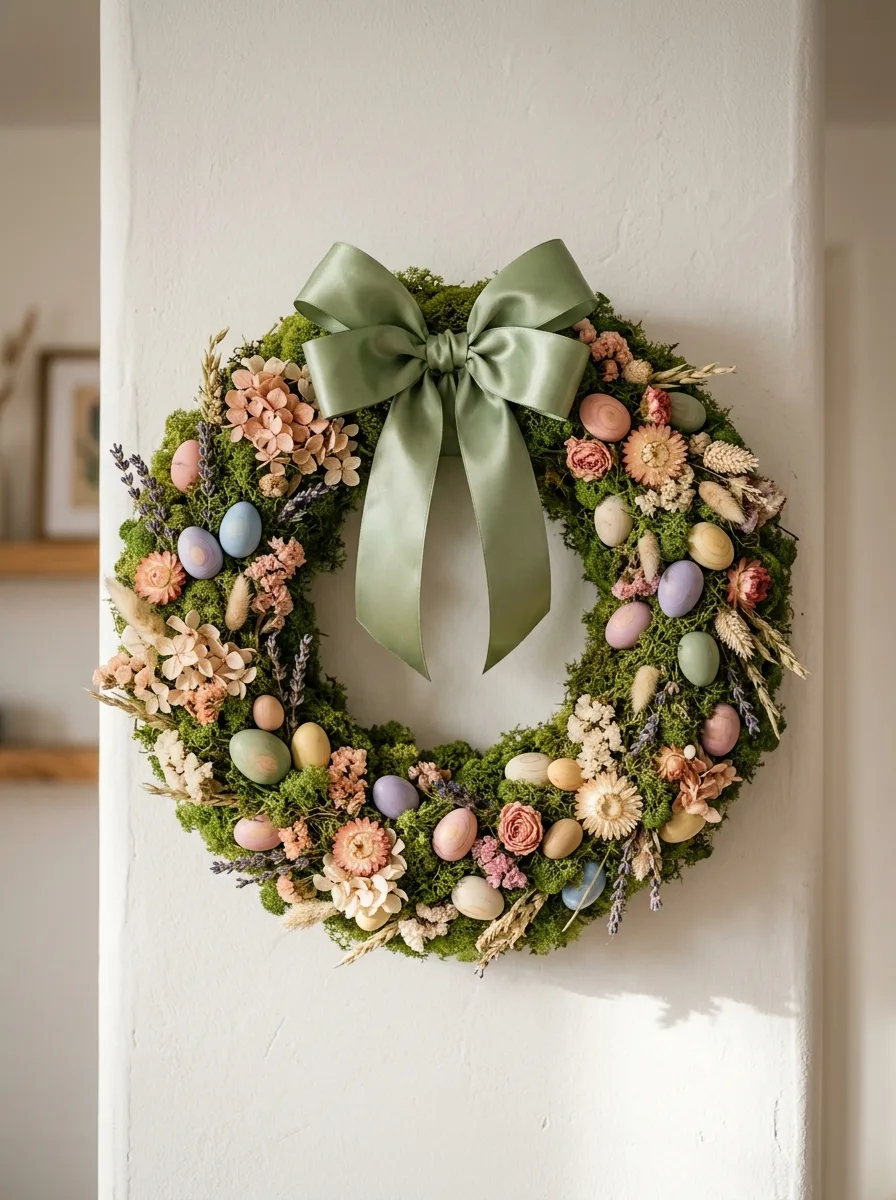
An Easter egg wreath made from moss, dried botanicals, and painted wooden eggs is the kind of decoration people assume cost three times what it actually did. That fully covered moss base — dense, green, and lush — makes every egg and flower pressed into it look intentionally placed and genuinely precious. It is a wreath that belongs on an interior wall as much as a front door.
The moss base is what makes this achievable for anyone. Press sheet moss onto a foam ring with pins or craft glue, then work in dried flower heads and small painted eggs at natural intervals — some clustered, some solitary. Finish with a wide sage satin bow at the top and the whole piece looks like something from a premium artisan market. It takes one afternoon and lasts for years.
The Key: Cover the foam ring base completely with moss before adding any other elements — gaps in the base layer show through even a densely decorated surface and undermine the lush, abundant quality the wreath depends on.
08
Hyacinth Pot Grouping
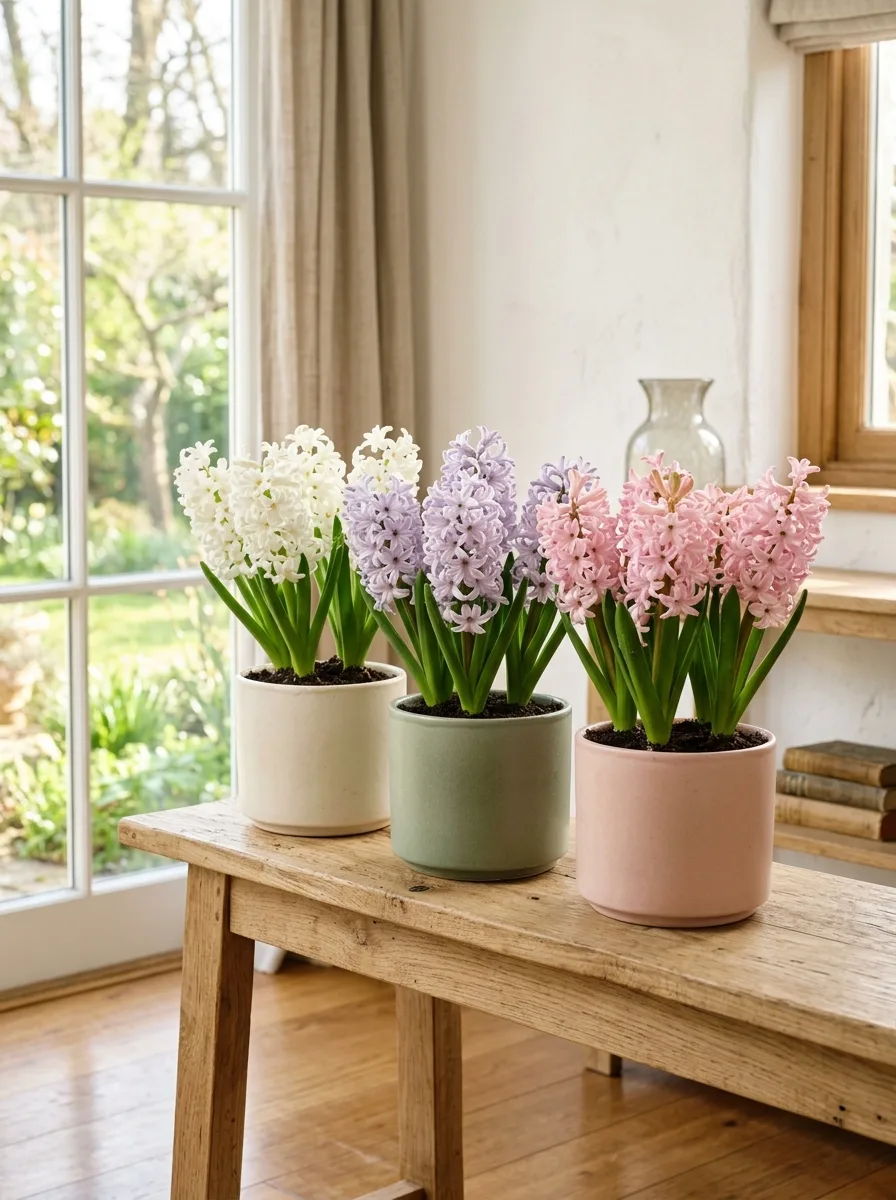
Nothing communicates spring as completely as a hyacinth in full bloom. That dense cluster of tiny flowers, that extraordinary fragrance that fills an entire room, that saturated pastel color — hyacinths do more for the atmosphere of an Easter home than almost any other single element. Three pots grouped together on a console table, each in a different pastel tone, create a display that engages sight and smell simultaneously.
Matte ceramic pots make the difference between this looking like a grocery store flower display and a considered interior moment. The same hyacinths in plastic nursery pots sit at a completely different aesthetic register than hyacinths lifted into quality ceramic vessels. That single upgrade — pot to ceramic — costs a few dollars and transforms the entire presentation into something genuinely beautiful.
The Key: Group hyacinth pots so they nearly touch at the base — tight clustering creates the appearance of one abundant planting rather than three separate pots, which reads as far more intentional and luxurious.
09
Easter Mantel Styling
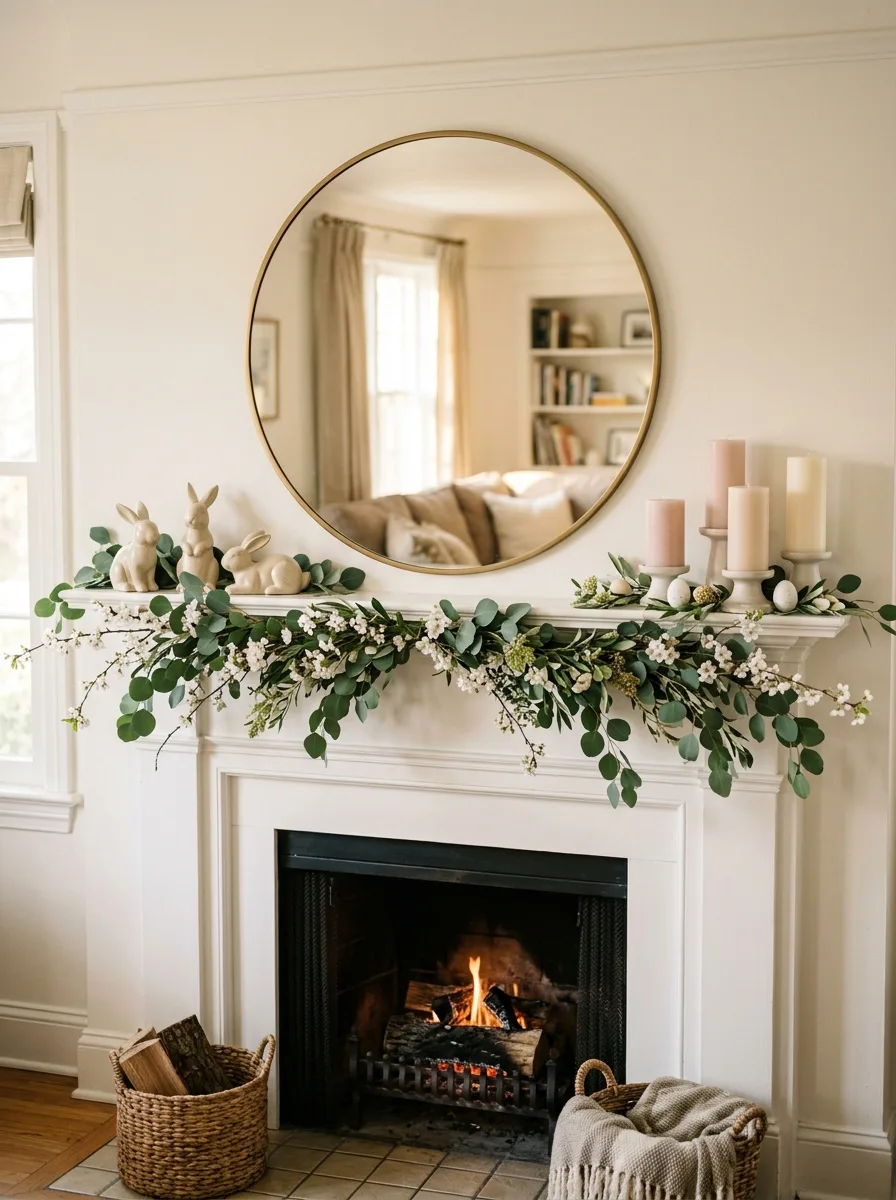
A well-dressed Easter mantel is the most impactful single surface in the home during the spring season. That horizontal stage — framed by a large mirror above — displays everything at eye level and creates a theatrical backdrop that pulls the whole room together. Fresh eucalyptus draped loosely across the shelf, a cluster of blush pillar candles at one end, three cream ceramic bunnies at the other — it is both festive and deeply elegant.
I’ve noticed that the most beautiful Easter mantels always follow the same underlying principle: anchor both ends and leave the center breathing. A busy, fully loaded mantel looks cluttered. A center-heavy one looks unbalanced. Anchoring each end with a different element — tactile at one side, botanical at the other — creates the visual rhythm that makes a mantel look intentionally styled rather than loaded with seasonal objects.
The Key: Drape eucalyptus garland loosely with slight dips between anchor points rather than stretching it taut — relaxed draping looks organic and abundant, while taut garland looks like tinsel and reads as rushed.
10
Terracotta Egg Vessels
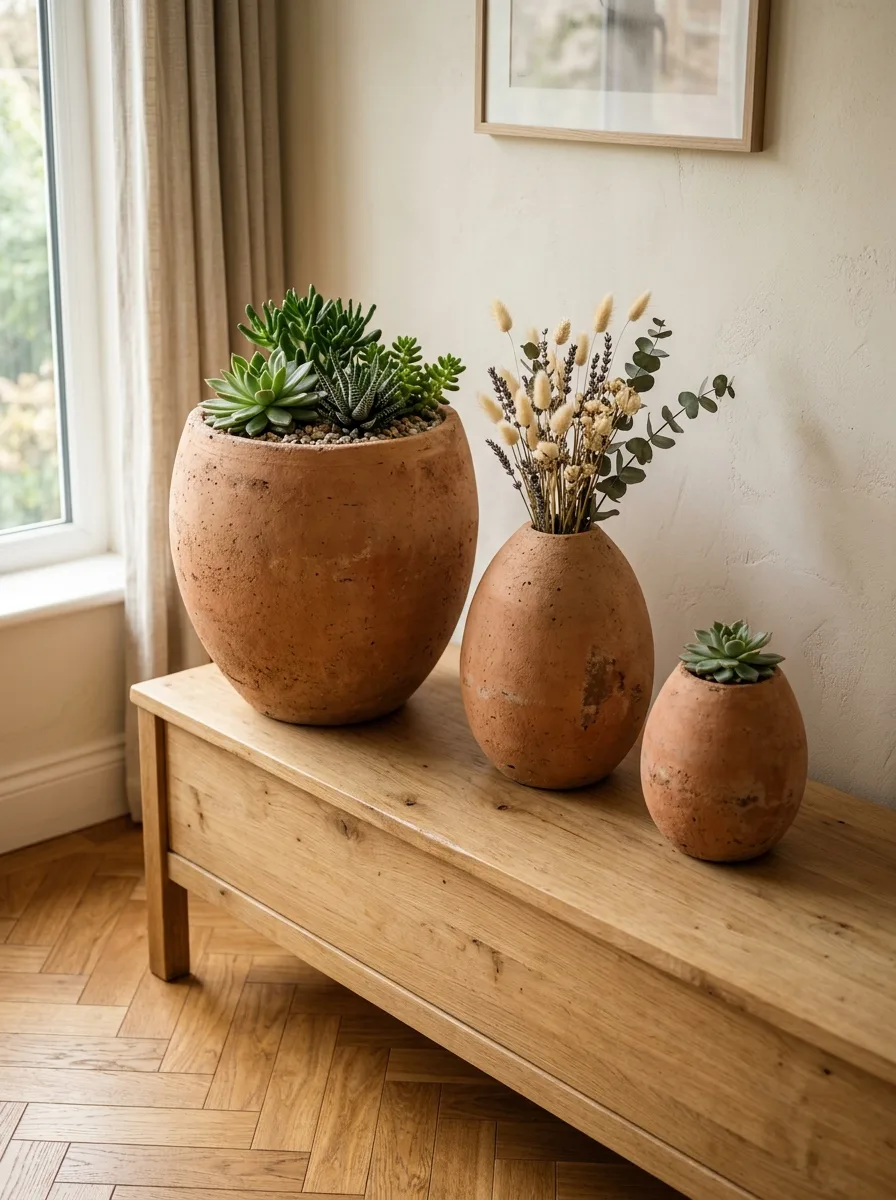
Oversized terracotta egg vessels are the Easter decoration that stops people and makes them ask where you found them. That sculptural, architectural quality — a giant egg shape in warm unglazed clay — reads as art object rather than holiday decor. Grouped in three sizes on a sideboard or dining table, they create a statement that is simultaneously seasonal and completely timeless.
The living element inside makes them even more beautiful. Tuck a small succulent, a moss ball, or a sprig of fresh herb into the open top of each vessel and the terracotta warms instantly with organic life. That contrast — hard, earthy clay against soft, green growing thing — is one of the most visually compelling material combinations in spring decorating and one of the most frequently pinned.
The Key: Group the three egg vessels with the largest slightly set back from the other two — the slight depth variation creates a three-dimensional arrangement that looks styled from every viewing angle, not just straight-on.
11
Speckled Egg Place Settings
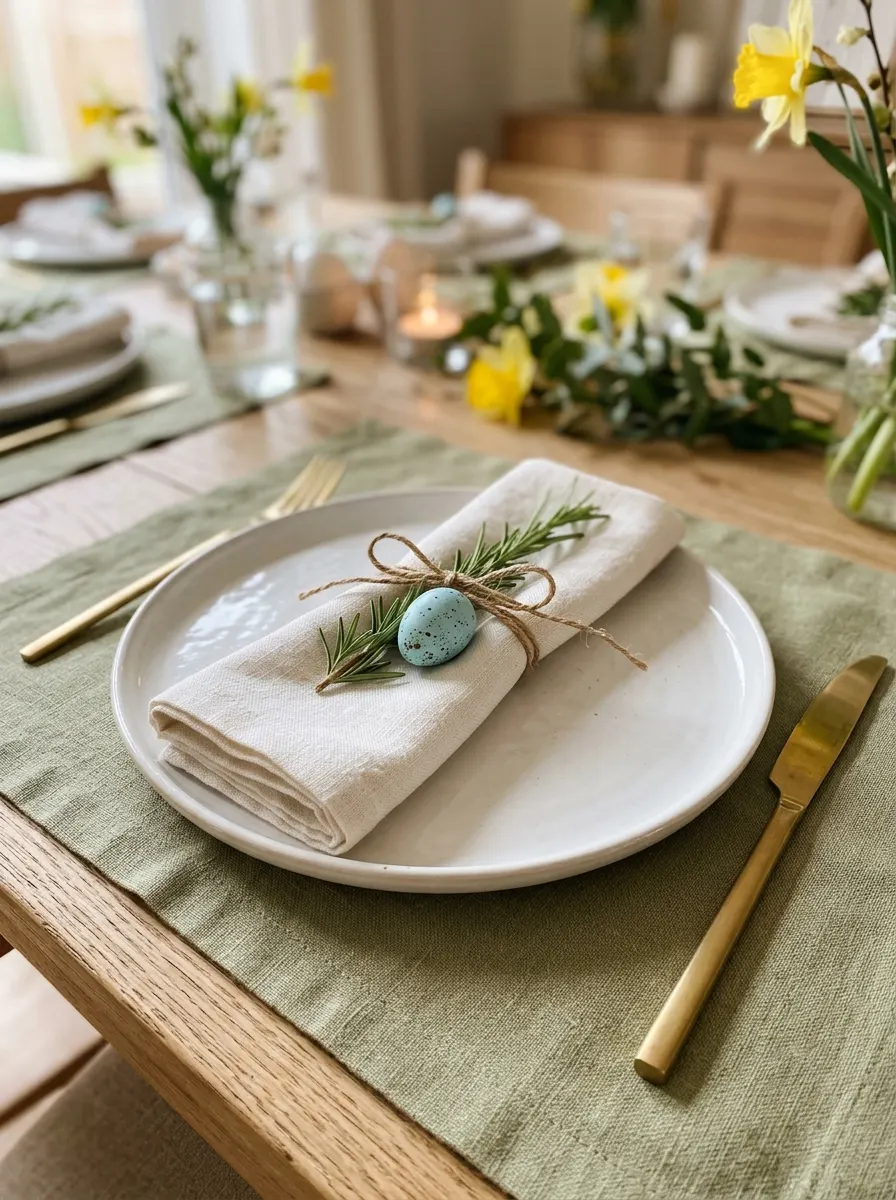
Place settings are where Easter decorating becomes genuinely personal. Every guest sits down to their own small moment — a speckled egg resting on a linen napkin tied with twine, a sprig of rosemary tucked under the bow. It is a detail that costs almost nothing to execute and creates a memory that outlasts the meal itself. That is the standard every great Easter table detail should meet.
The twine-tied napkin is the move that unifies the whole table. It creates consistency across every place setting while the individual herb sprigs and eggs add slight variation. That balance — unified framework, subtle individual differences — is what makes a table look both deliberately designed and genuinely warm rather than cold and over-staged.
The Key: Tie napkins with a single length of natural twine rather than ribbon for a more organic, artisan quality — ribbon reads as formal and structured while twine reads as gathered and personally considered.
12
Pressed Flower Eggs
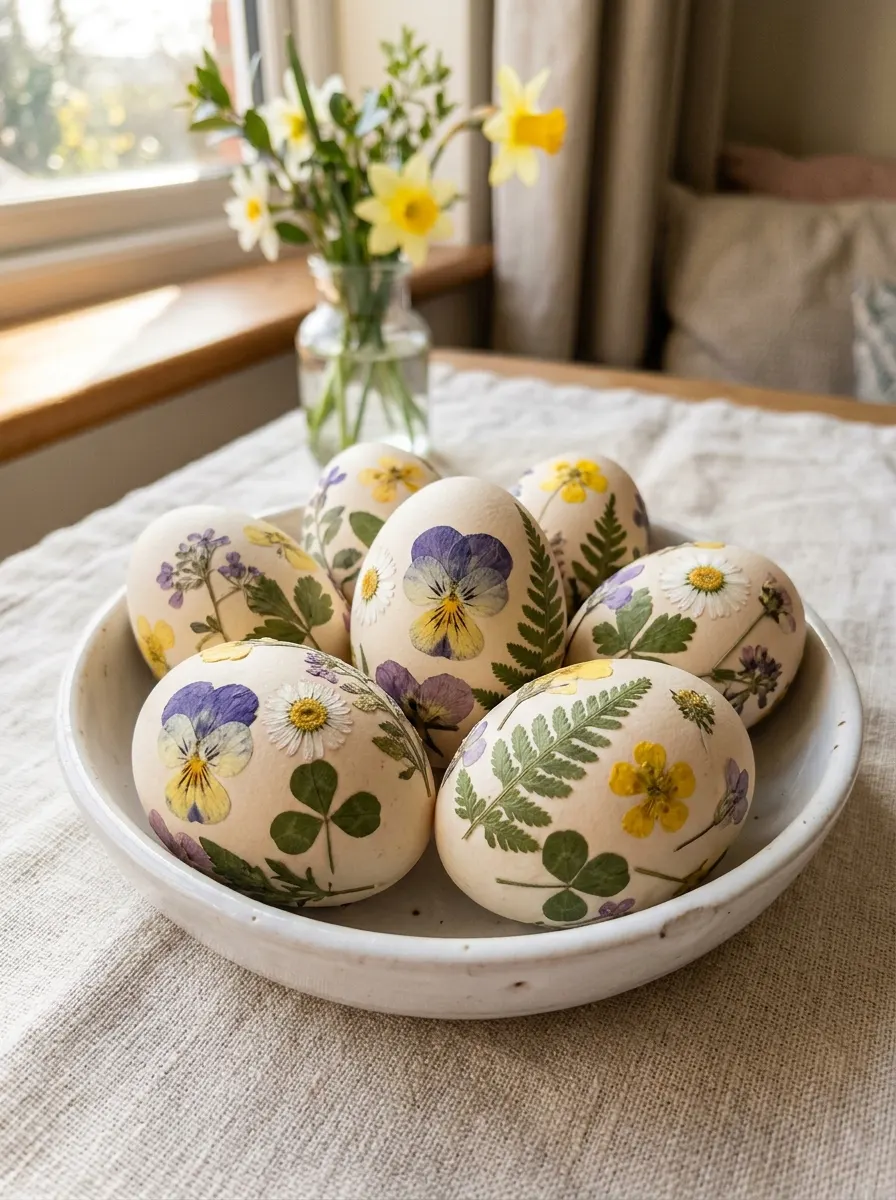
Pressed flower eggs are the Easter decorating project that makes people genuinely stop and look closely. Those tiny botanical forms pressed flat against a pale cream egg surface — a small viola, a fern frond, a miniature daisy — create something that looks less like a seasonal craft and more like a miniature work of art. Displayed in a shallow dish or nestled in moss, they become the most talked-about detail on any Easter table.
The technique is far simpler than the result suggests. Press flowers between book pages for a week, brush a thin coat of decoupage medium onto a blown egg, lay the pressed flower gently on the surface, then seal with another thin coat. Repeat around the egg. Let dry completely. The final result is a perfectly smooth, preserved botanical surface that holds its beauty through multiple seasons.
The Key: Press flowers in a heavy book for at least seven days before using — fully flattened, bone-dry botanicals adhere smoothly without wrinkling or bubbling under the decoupage medium.
13
Pastel Ribbon Garland
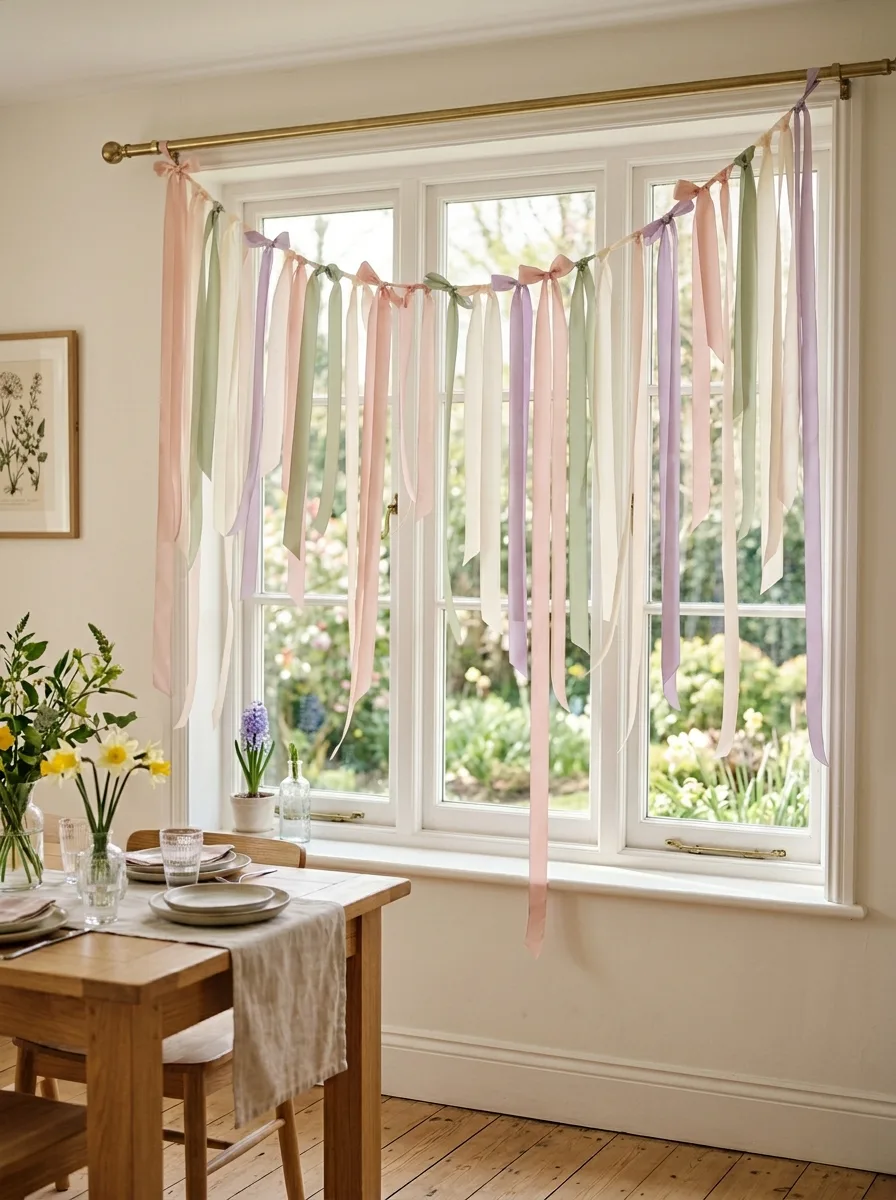
A pastel ribbon garland strung across a window is the Easter room decoration that surprises people with how much atmosphere it creates from such a simple material. Afternoon light filtering through cascading lengths of blush and sage satin ribbons fills the room with soft color and gentle movement — a living, shifting decoration that responds to every breeze and every change in light throughout the day.
The secret is the variation. Ribbons cut at three or four different lengths and tied closely together along a thin rod create the cascading, layered effect that makes this look designed rather than improvised. A uniform row of equal-length ribbons looks flat. A varied, cascading fall of different lengths looks like it was conceived by someone with genuine visual instinct.
The Key: Use a mix of satin and matte ribbon finishes alongside each other — the contrast between sheen and flat surfaces creates visual depth that all-satin or all-matte garlands entirely lack.
14
Garden Cloche Displays
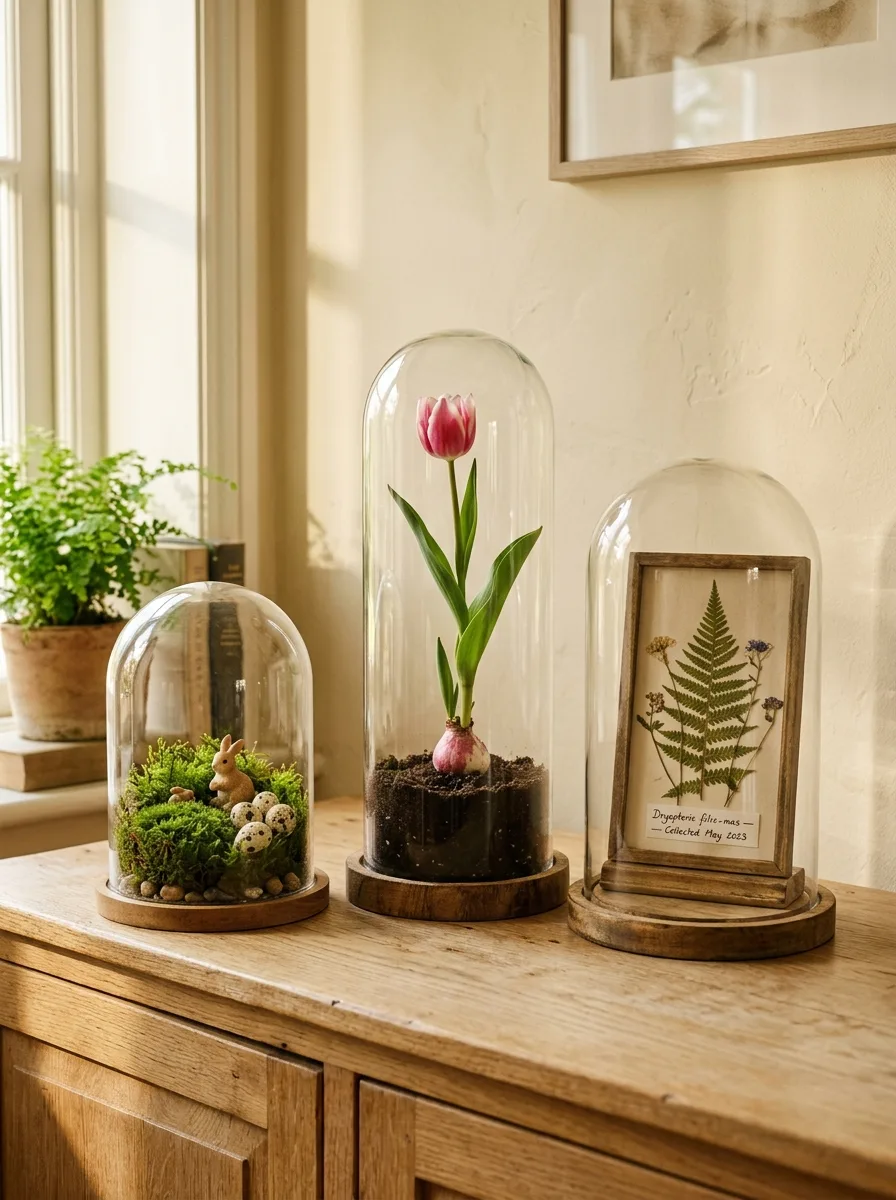
Glass cloches are the Easter decorating secret that interior designers rely on and most people haven’t yet discovered. A plain moss nest with two speckled eggs sitting openly on a shelf looks decorative. The exact same nest under a glass cloche looks like a museum specimen — precious, protected, intentionally presented. That transformation requires no new objects, only a different way of displaying what you already have.
Group three cloches of different heights together and the effect multiplies. Give each one a different interior — a moss landscape in the first, a single forced tulip bulb in the second, a pressed botanical card in the third. Three different stories, three different scales, united by the same glass dome format. The grouping creates genuine visual intrigue that makes people move closer to look at every detail inside each one.
The Key: Choose cloches in three meaningfully different heights — the height variation should be dramatic enough to read clearly from across the room, not just noticeable up close.
15
Willow Branch Vases
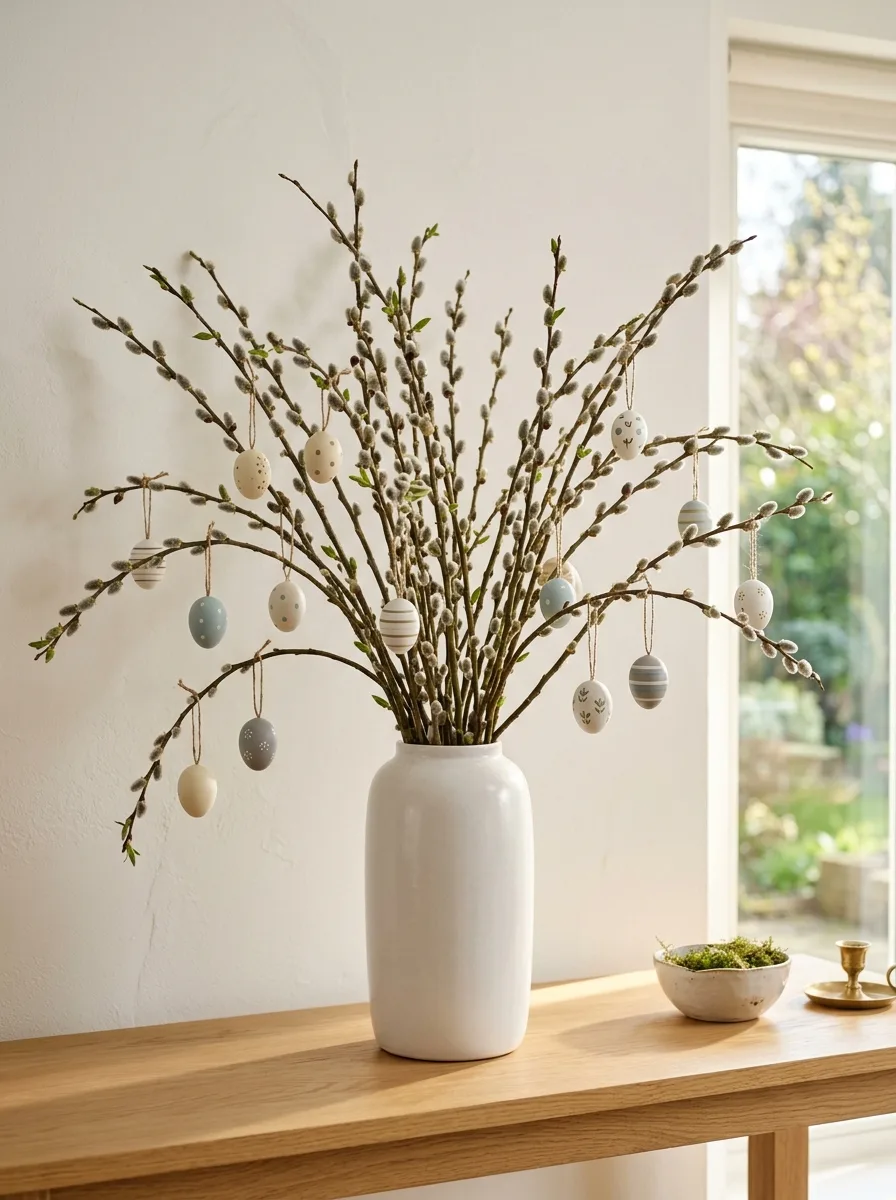
Budding willow branches in a tall vase are Easter decorating at its most naturally beautiful. Those long, arching stems with their soft silver catkins create an arrangement that belongs to the season without announcing itself loudly. It is subtle, organic, and architectural — exactly the qualities that make seasonal decorating feel genuinely elevated rather than overtly themed.
Hanging small painted eggs from several branches on thin natural twine transforms the vase into a living Easter tree — a tradition with deep seasonal roots across European Easter celebrations. The eggs swing gently in the air movement of an occupied room, and that slight motion makes the whole arrangement feel alive in a way that static decorations never achieve. It is one of the most distinctly beautiful Easter decorating ideas you will ever try.
The Key: Hang eggs from branches using varying lengths of twine — short, medium, and long drops create dimensional depth and prevent the flat, uniform appearance of eggs hung at a single height.
16
Floral Crown Table Rings
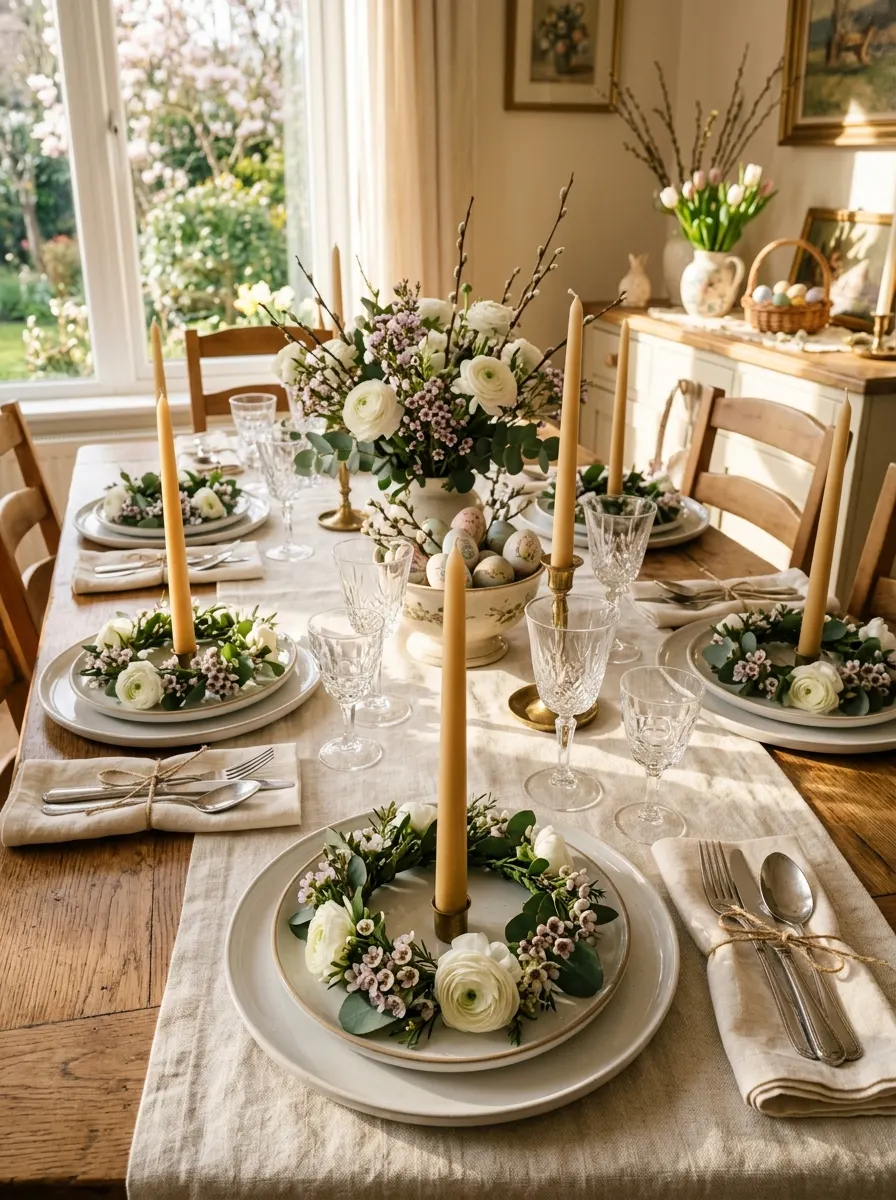
Miniature floral crown rings around the base of taper candles at each place setting turn an Easter table into something genuinely extraordinary. Every person sits down to their own small floral moment — a ring of white ranunculus and eucalyptus surrounding the candle at the center of their setting. The table covered in these rings, all lit and glowing, looks like something from a luxury event design feature.
The construction is simpler than it appears. Wrap a small length of flexible wire into a ring, then attach small floral picks of ranunculus, wax flower, and eucalyptus using floral tape, working around the ring until fully covered. The technique takes about fifteen minutes per ring and the result — multiplied across eight place settings — creates one of the most impactful Easter table displays imaginable.
The Key: Make all candle rings from the same two or three flower varieties for visual consistency — a unified floral palette across the whole table creates a cohesive, designed quality that mixed varieties disrupt.
17
Ceramic Egg Hunt Trail
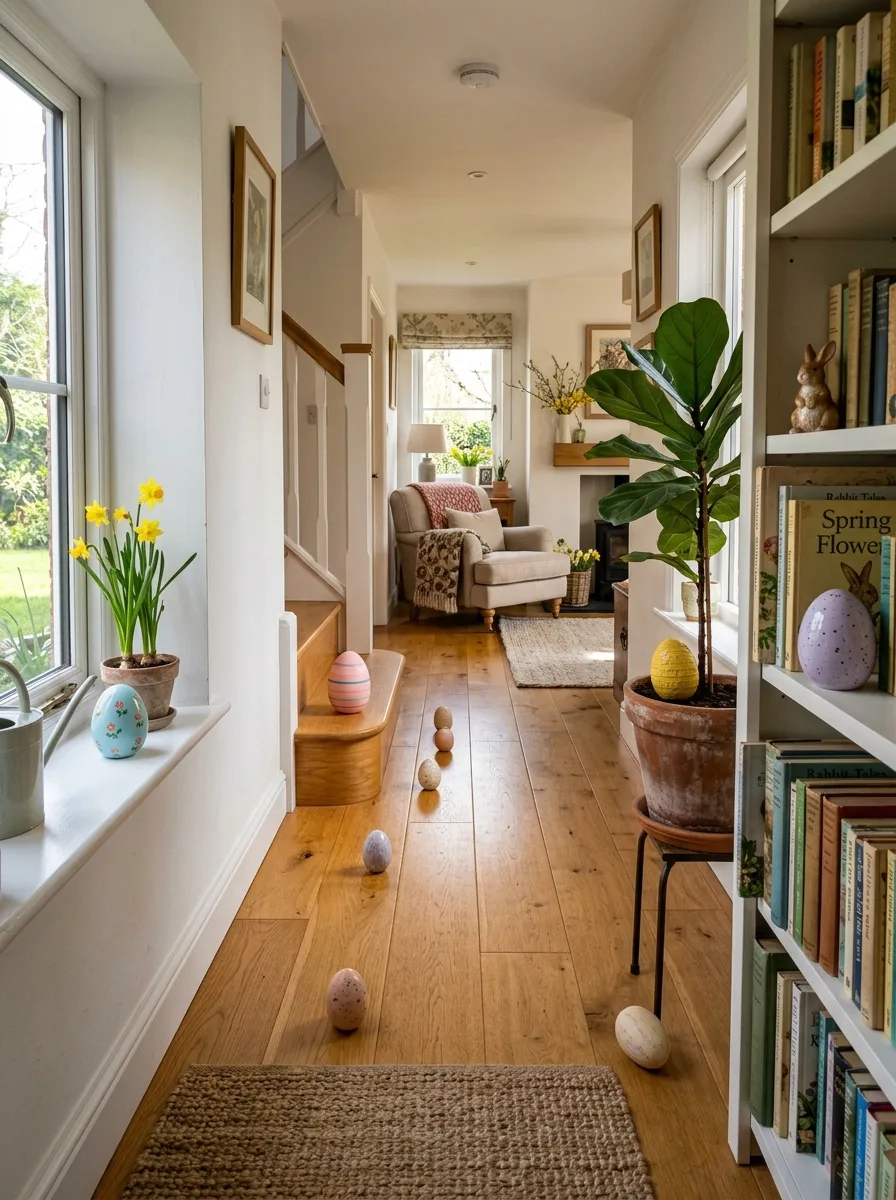
An indoor Easter egg hunt using ceramic and painted wooden eggs is both a genuinely fun Easter activity and an excuse to style your home in the most beautiful, considered way. Because every hiding spot is also a photograph — an egg resting in a plant pot, tucked between books, balanced on a stair tread — the hunt becomes a full home styling exercise as much as a seasonal celebration.
I’ve noticed that the hunts people remember most are the ones where the eggs felt genuinely hidden rather than just placed on surfaces. An egg nestled deep in a plant’s foliage, or balanced inside a ceramic bowl among river pebbles, or tucked behind a book with just the curve of its shell visible — these moments of discovery create real delight that a row of plastic eggs on a dining table simply cannot replicate.
The Key: Photograph each egg in its hiding spot before guests arrive — the trail of images creates a beautiful keepsake record of your decorated home and provides a reference if any eggs remain undiscovered.
18
Amaryllis and Egg Arrangement
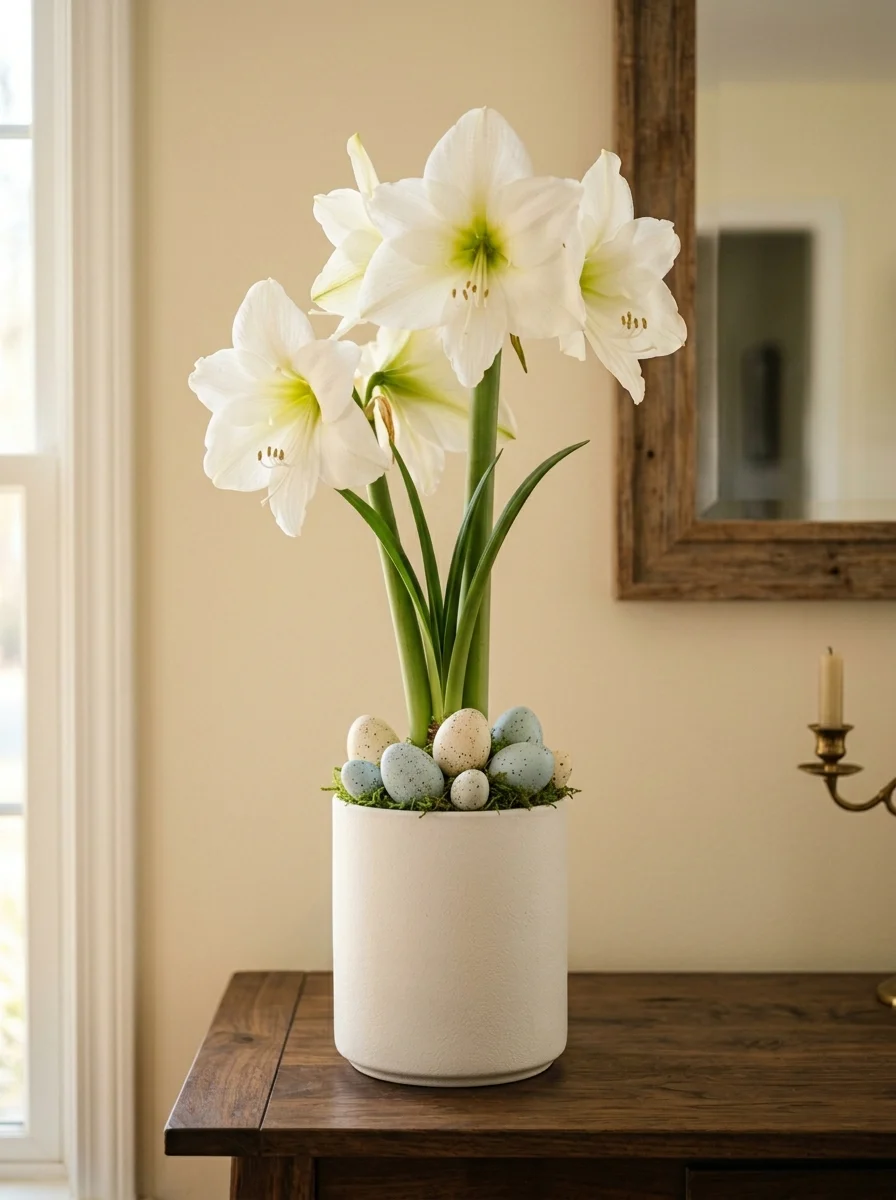
White amaryllis rising tall from a ceramic vase, surrounded at the base by a ring of fresh moss cradling speckled eggs, is the Easter arrangement that makes every other decoration in the room feel like it belongs to a supporting cast. It is dramatic, architectural, and completely seasonal — a statement that combines the bold scale of the amaryllis with the intimate, nest-like quality of the egg-and-moss base in a single, stunning composition.
This is the arrangement to place in the most visible spot in your home. The entryway console, the dining room sideboard, the mantelpiece center. It commands attention from across the room and rewards close inspection equally. The contrast between those tall, theatrical blooms and the quiet, grounded nest of moss and eggs at the base is what makes it genuinely cinematic — two completely different scales of beauty occupying the same vessel, in perfect balance.
The Key: Press the moss ring firmly around the vase base before placing eggs — a tightly packed moss collar holds eggs securely in position and creates the lush, abundant nest quality the arrangement depends on visually.
Easter decorating at its best is not about filling every surface with seasonal novelty. It is about choosing beautiful, natural materials — fresh flowers, painted eggs, linen, moss, and ceramic — and placing them with genuine intention. Every one of these Easter decor ideas is achievable with a weekend afternoon, a trip to a craft store or florist, and a willingness to trust your own eye for beauty. Start with one idea that genuinely excites you. Build from there. Take photographs of your decorated spaces and share them — because the rooms you create deserve to be seen. Save this article to your Pinterest boards, pass it to someone planning their Easter table, and remember: the most beautiful seasonal home is always the one made by hand, with care, in a single inspired afternoon.