Winter Floral Arrangements
🏠 19 Real Ideas
⏱ Quick Read
🔥 Always Trending
19 How to Create Winter Floral Arrangements That Feel Completely Cinematic and Stunning
There is something about a beautifully arranged winter bouquet that makes a room feel completely transformed. Not just decorated — transformed. Winter floral arrangements carry a drama that warm-season flowers rarely do. The bare branches, the deep burgundies, the frost-white blooms against dark foliage — every element feels intentional and cinematic in a way that sunflowers and daisies simply cannot match. I’ve noticed that people who create winter arrangements for the first time are always surprised by how much they prefer them. This guide covers 19 ideas that will help you build seasonal designs ranging from effortless and organic to deeply theatrical and stunning. Every style. Every budget. Every room. Save this and let’s start creating something beautiful.
01
Amaryllis Statement Vase
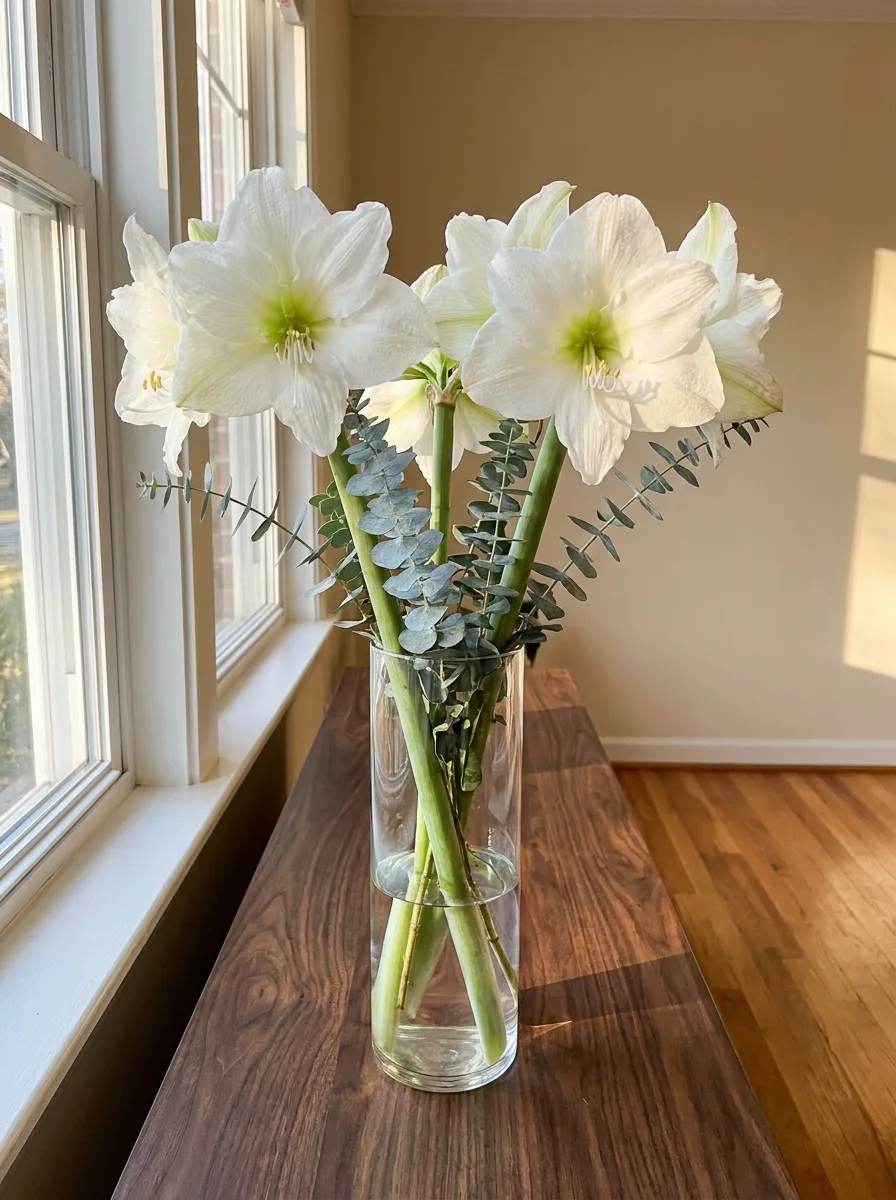
Few flowers stop people in their tracks the way amaryllis does. Those wide, trumpet-shaped blooms on tall, bare stems have a theatrical quality that makes even a single stem in a glass vase look like a considered design choice. They don’t need much around them — which is exactly what makes them perfect for winter floral arrangements that prioritize drama over complexity.
White amaryllis against a dark backdrop — a walnut table, a deep charcoal wall, black iron hardware — creates a contrast that photographs with the same stark, editorial beauty you see in high-end home magazines. Pair three stems together in a tall cylindrical vase with loose eucalyptus filling the gaps and the result looks like something a professional florist spent considerable time creating.
The Key: Choose amaryllis stems with at least one fully open bloom and one still-closed bud — the combination of open and emerging flowers extends visual interest over a full week.
02
Birch Branch Drama
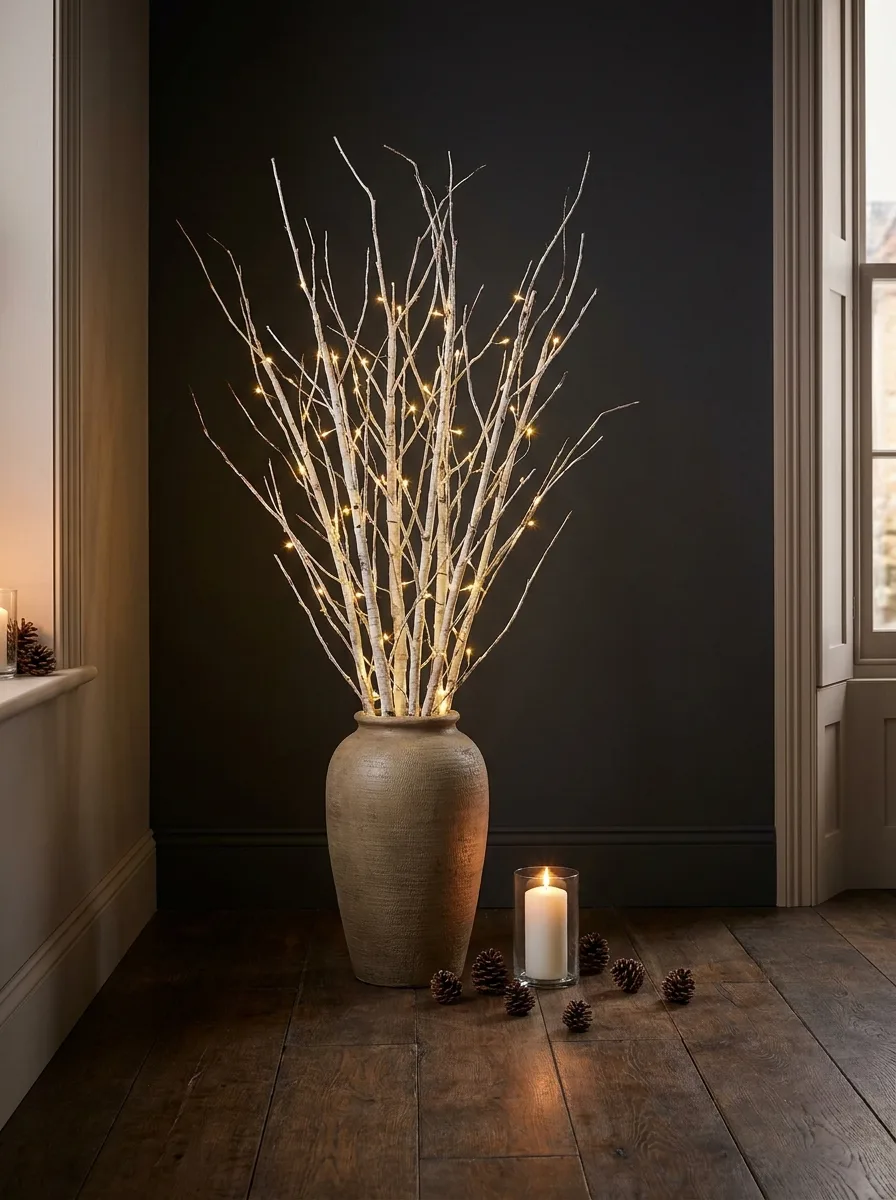
Bare birch branches in a tall ceramic vase create an installation rather than an arrangement. That height — sometimes four or five feet of branching white wood rising from a vessel — brings a scale to a room that flowers alone rarely achieve. They turn a corner of a dining room or entryway into something genuinely striking and completely seasonal.
Thread a strand of warm amber fairy lights loosely through the upper branches and the arrangement becomes something else entirely after dark. The light catches the white bark, casts branching shadows on the wall behind, and creates a warm, almost magical atmosphere that makes everyone who enters the room stop and look up. I’ve seen this work beautifully even in the smallest apartments where floor space is limited but vertical space is abundant.
The Key: Choose branches with interesting, irregular splits and angles — a dynamic, asymmetric branch silhouette creates far more visual drama than perfectly straight, uniform sticks.
03
Burgundy Rose Clusters
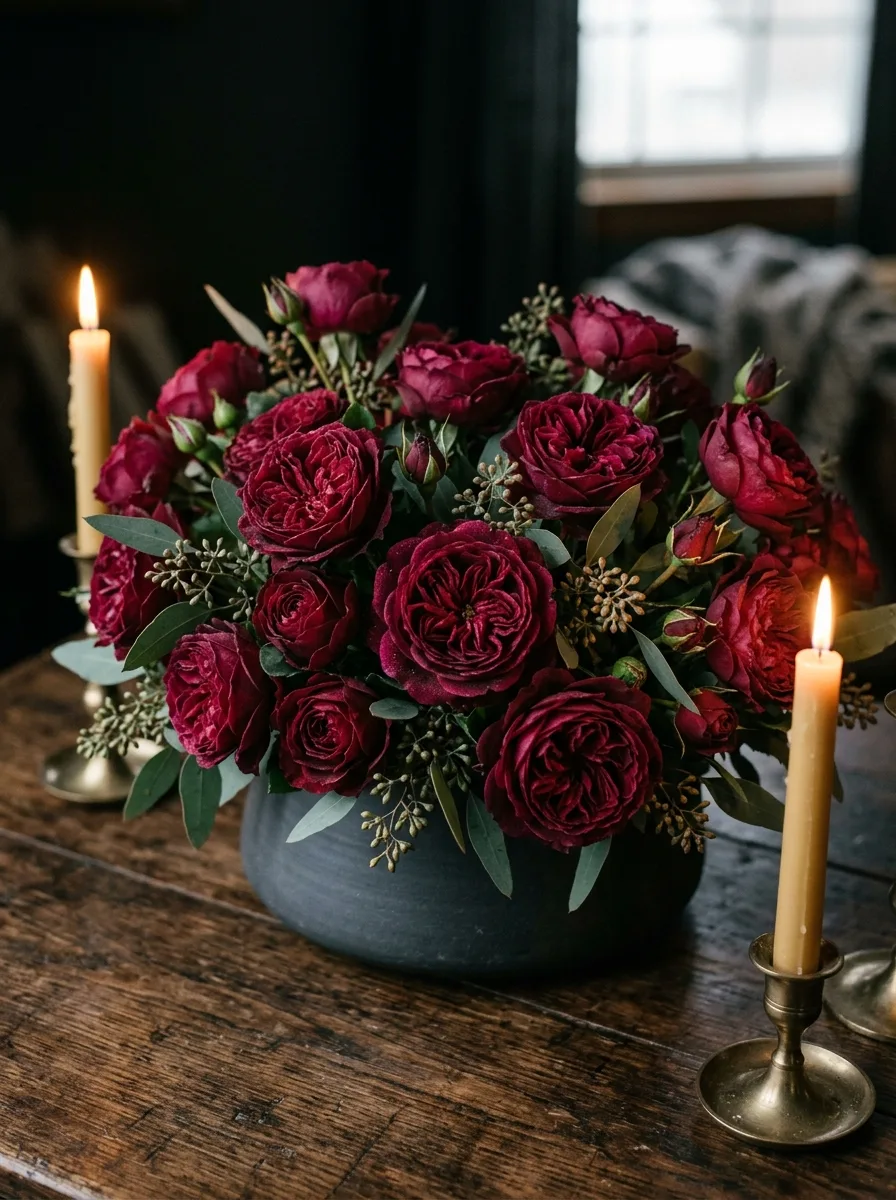
Deep burgundy roses have a quality in winter light that no other season captures quite the same way. That rich, almost wine-dark color absorbs the low, warm light of December and January and glows with a velvety depth that photographs with genuine cinematic beauty. A wide bowl of them, low and abundant, becomes the gravitational center of any table it sits on.
The key to making this look designer-level is the foliage. Dark seeded eucalyptus, near-black leaves, or deep green ivy woven between the stems makes the burgundy appear even richer by contrast. Without that dark foliage frame, the arrangement reads flat. With it, every bloom seems to glow from within, and the whole bowl looks like something from a winter editorial shoot.
The Key: Cut rose stems at a sharp 45-degree angle and place immediately in cool water — clean, angled cuts maximize water uptake and keep blooms full and open for five to seven days.
04
Frosted Pinecone Vessels
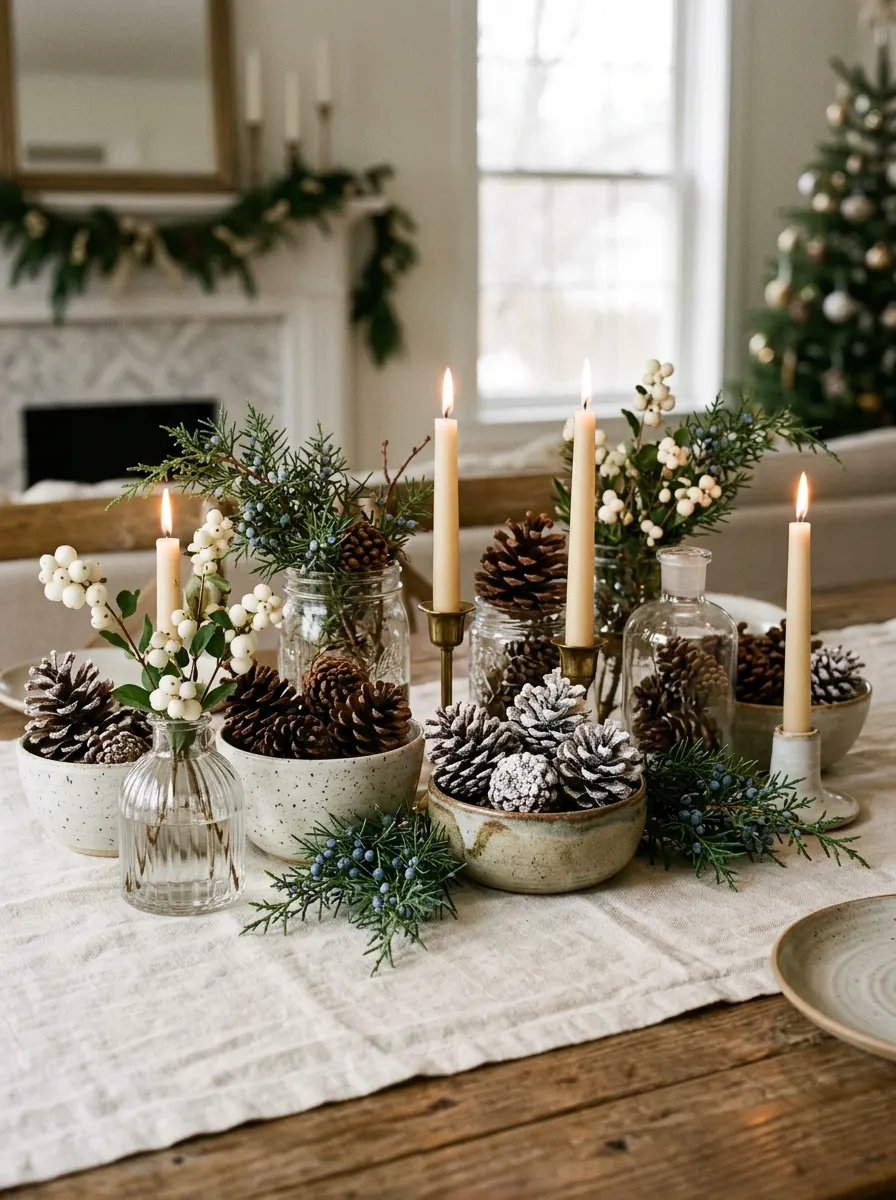
Frosted pinecones are one of those seasonal decoration ideas that look far more expensive and effortful than they actually are. Spray a handful of pinecones with matte white paint — just a dusting, not full coverage — arrange them in a collection of glass and ceramic vessels, tuck in a few juniper sprigs, and the tablescape reads as genuinely designed. It takes about twenty minutes total.
What makes this arrangement so enduring is the texture. Pinecone scales catch light in a hundred different directions simultaneously, creating a surface that shifts and glimmers as you move around the table. Cluster vessels in odd numbers — three or five — and vary the container heights so the grouping has visual rhythm. Then add taper candles between them and the whole scene comes alive after dark.
The Key: Use matte white spray paint applied lightly from 18 inches away — a dusted, uneven frost looks far more natural and beautiful than fully painted, opaque-white pinecones.
05
Ranunculus and Greenery
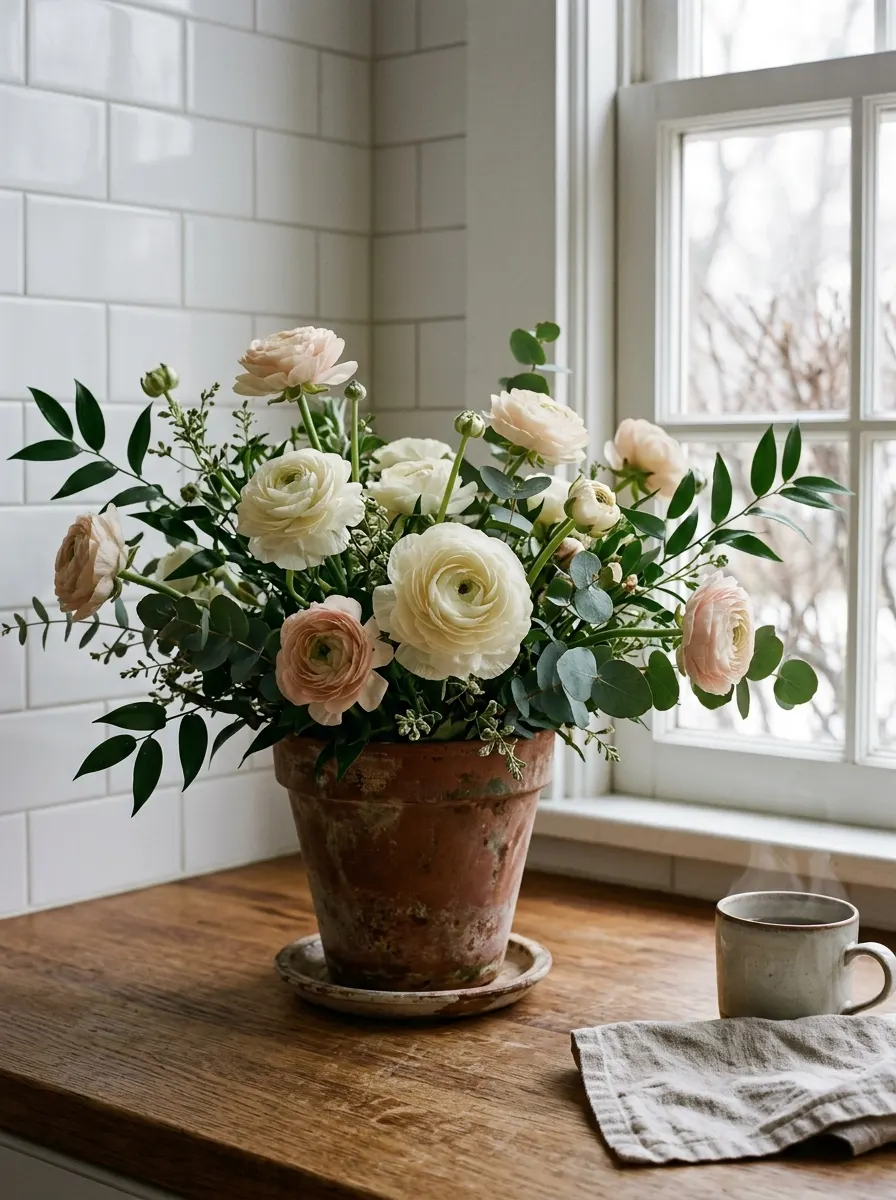
Ranunculus is the flower that makes non-flower people suddenly want to arrange flowers. Those hundreds of layered petals, that papery softness, that blush-to-cream gradient — they have a quality that is almost too beautiful to be real. A loose, garden-style handful of them in a weathered pot looks effortlessly romantic in a way that more formal arrangements rarely achieve.
The looseness is what makes ranunculus arrangements so beautiful and so accessible for beginners. Unlike roses, which need precise placement, ranunculus look their best when they’re simply gathered and placed naturally, with stems at varying heights and blooms turning in different directions. Add dark green Italian ruscus between the stems and the delicate petals suddenly appear even more refined by contrast.
The Key: Allow ranunculus stems to curve naturally rather than forcing them upright — the gentle, nodding quality of their natural posture is exactly what gives arrangements their organic, garden-gathered character.
06
Evergreen Wreath Bowl
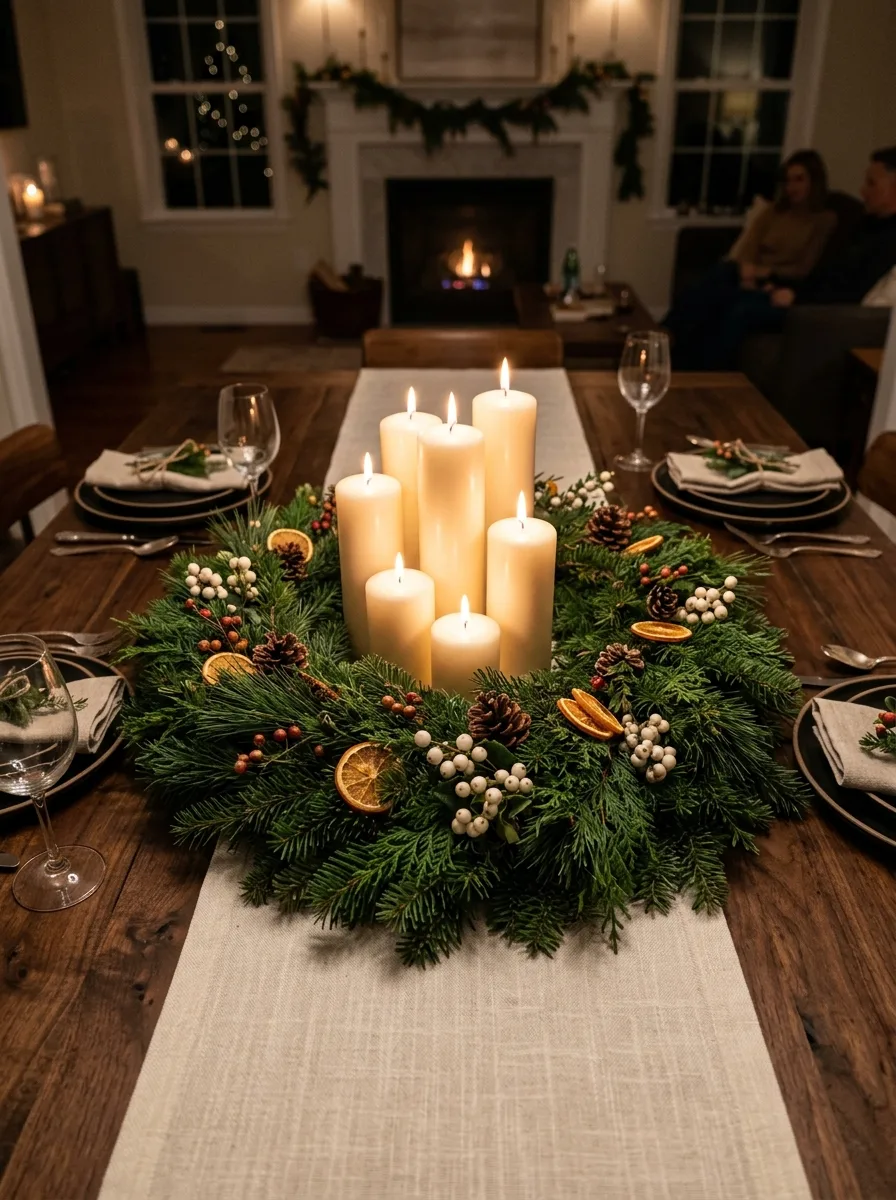
A flat evergreen wreath used as a table ring rather than a door decoration is one of those ideas that completely reframes how you think about seasonal materials. Lay it on a long table, cluster three pillar candles of varying heights in the center, and tuck in pinecones and white berry sprigs among the branches. The result is a centerpiece worthy of any dinner table from November through January.
Fresh evergreen has a quality that dried and faux materials cannot replicate — that cool, resinous scent, that particular deep-green color that shifts in candlelight, the way individual needles catch and hold the glow. I’ve noticed that rooms with fresh greenery arrangements feel more genuinely seasonal than rooms decorated entirely with purchased seasonal decor, regardless of how expensive that decor is.
The Key: Place candles inside pillar holders rather than directly into the wreath — the barrier prevents heat from scorching needles and dramatically reduces any fire risk from the dried arrangement.
07
White Hellebore Moments
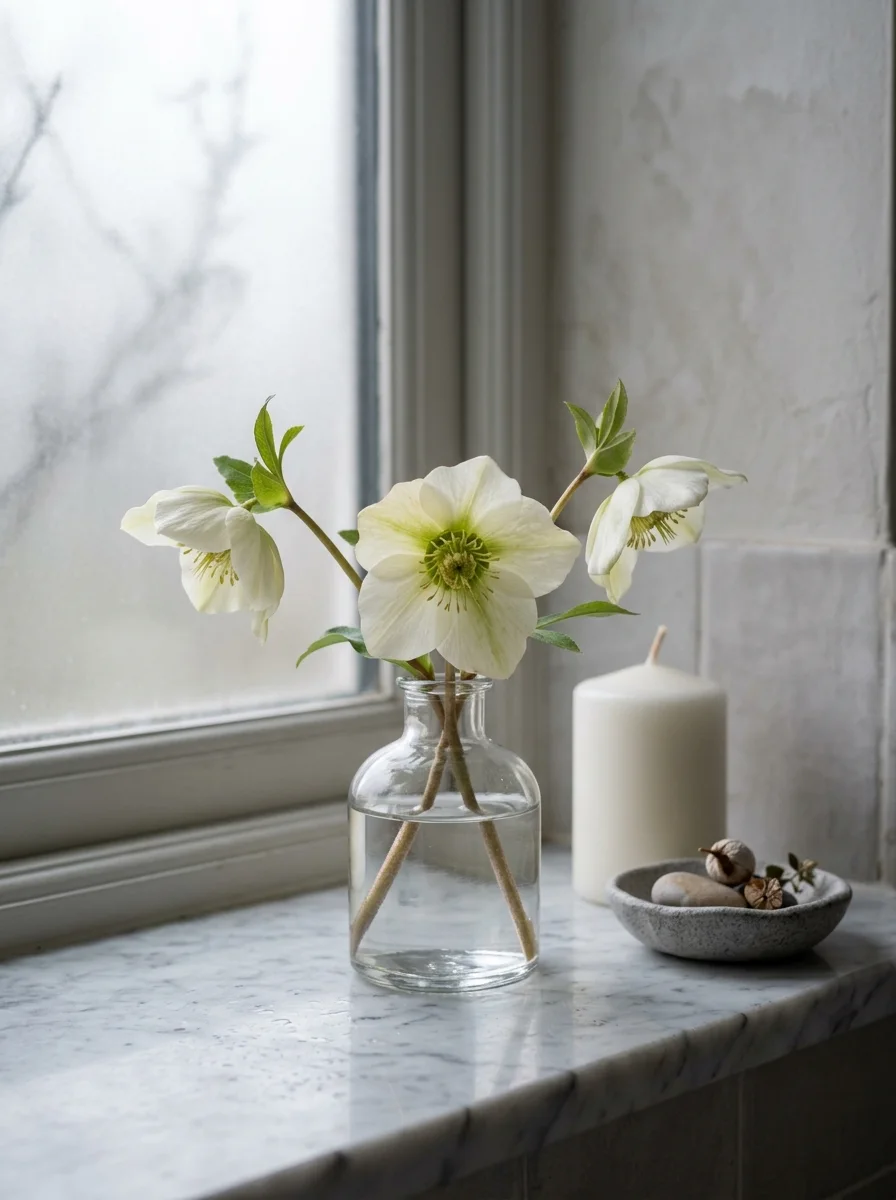
Hellebores are the quiet choice — the flower that people who know flowers reach for in winter. Those nodding, downward-facing blooms have a particular modesty that makes them feel rare and considered rather than showy. Three stems in a simple glass bud vase, placed beside a white candle on a marble shelf, create a moment of stillness so beautiful it genuinely stops people mid-step.
Their translucency is what makes hellebores so photogenic. Hold a white hellebore bloom near a window and the light passes through the petals almost as if through tissue paper, revealing the delicate veining inside. That quality — fragile, ephemeral, quietly luminous — is exactly the mood that the most beautiful winter floral arrangements aim for and rarely achieve as naturally as hellebores do.
The Key: Float hellebore blooms face-up in a shallow dish of water if stems are too short — the floating arrangement showcases the full face of each bloom and lasts just as long as vased stems.
08
Dried Pampas Luxury
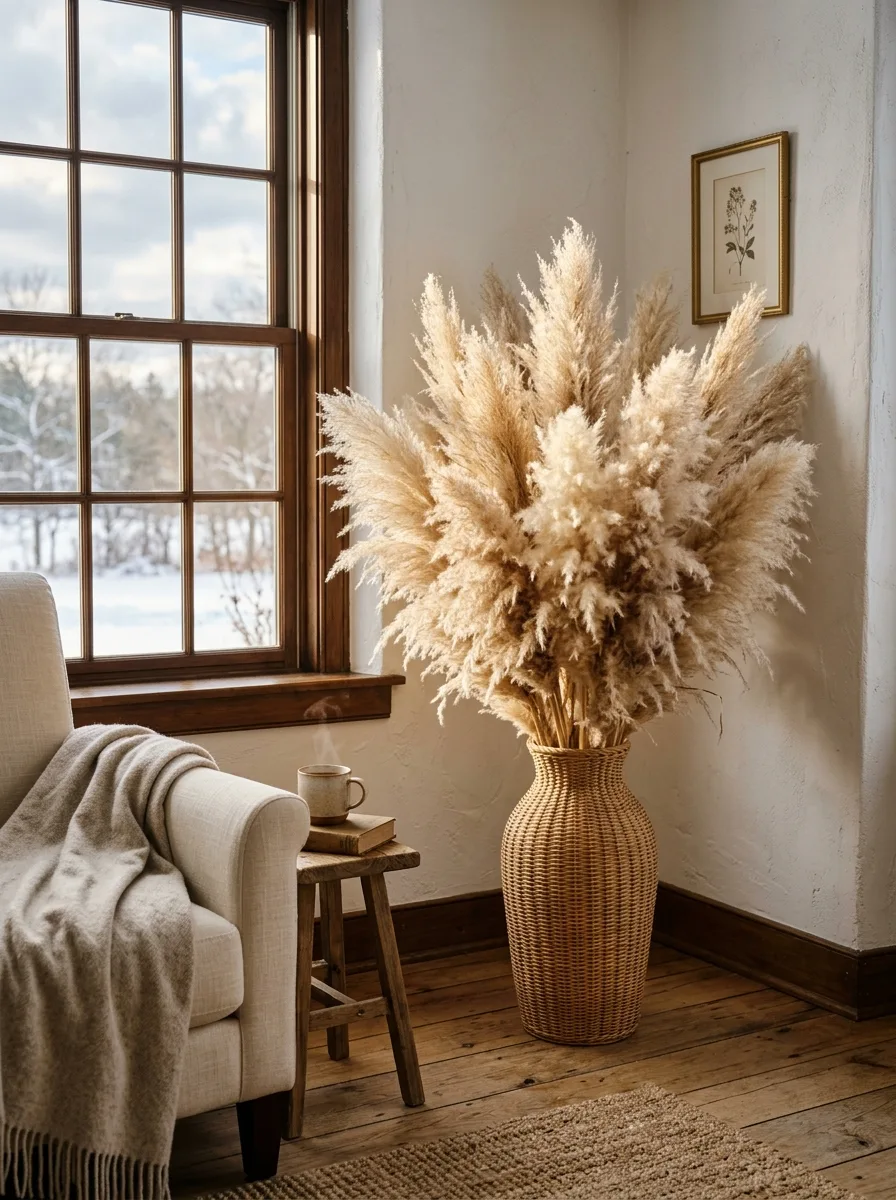
Dried pampas grass has a warmth and volume that almost no other dried material achieves. Those feathery, full plumes in cream and champagne catch light and move in the slightest air current — and that movement, that gentle swaying, is what makes a pampas arrangement feel alive even though every stem is completely preserved. It brings softness and scale to a corner in a way that fresh flowers rarely manage.
A tall rattan or ceramic vase with twelve to fifteen stems creates a genuine statement — not a token arrangement but a full, abundant display that reads as the room’s natural focal point. The trick is going larger than you think you need. A sparse pampas arrangement looks unfinished. A generous, overflowing one looks intentionally designed, effortlessly beautiful, and exactly right for the season.
The Key: Arrange pampas stems at varying heights with the tallest in the center and shorter stems cascading outward — the tiered silhouette creates a full, dome-like form that looks abundant from every angle.
09
Copper Vessel Grouping
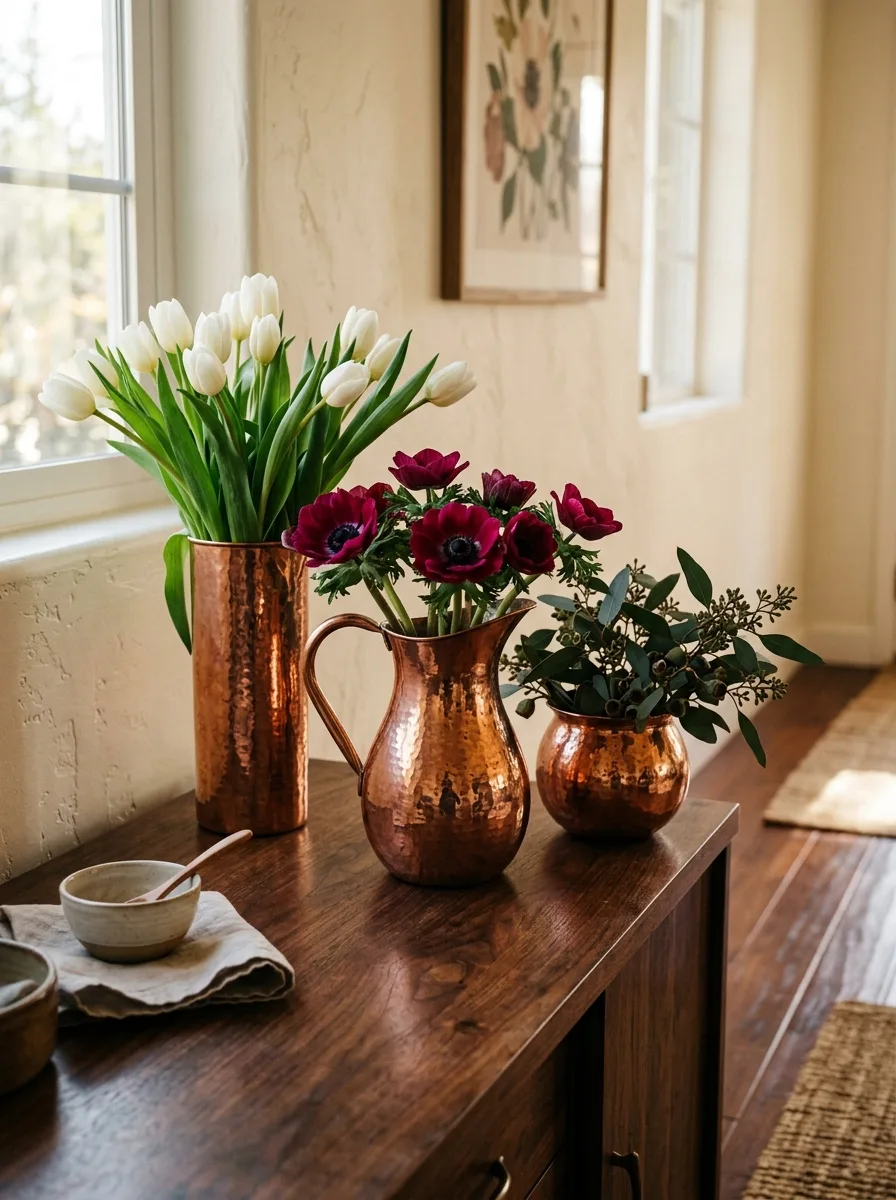
Three copper vessels grouped on a sideboard — each holding something different, each a different height — create an arrangement that looks less like decoration and more like a carefully assembled still life. That copper warmth against dark wood, that mix of white tulips and burgundy anemones and loose eucalyptus, the way the metal glows in afternoon winter light. It is simple and genuinely stunning.
Varying what grows in each vessel is the detail that makes this look considered rather than random. One stem type per vessel, each chosen to contrast the others in color or form. Tall and architectural in the largest vessel. Full and rounded in the middle one. Trailing and loose in the smallest. That visual conversation between the three creates a cohesion that makes the grouping feel designed rather than assembled.
The Key: Group copper vessels so they touch or nearly touch at their bases — tight clustering reads as a deliberate composition, while wide spacing makes vessels look separately placed rather than arranged.
10
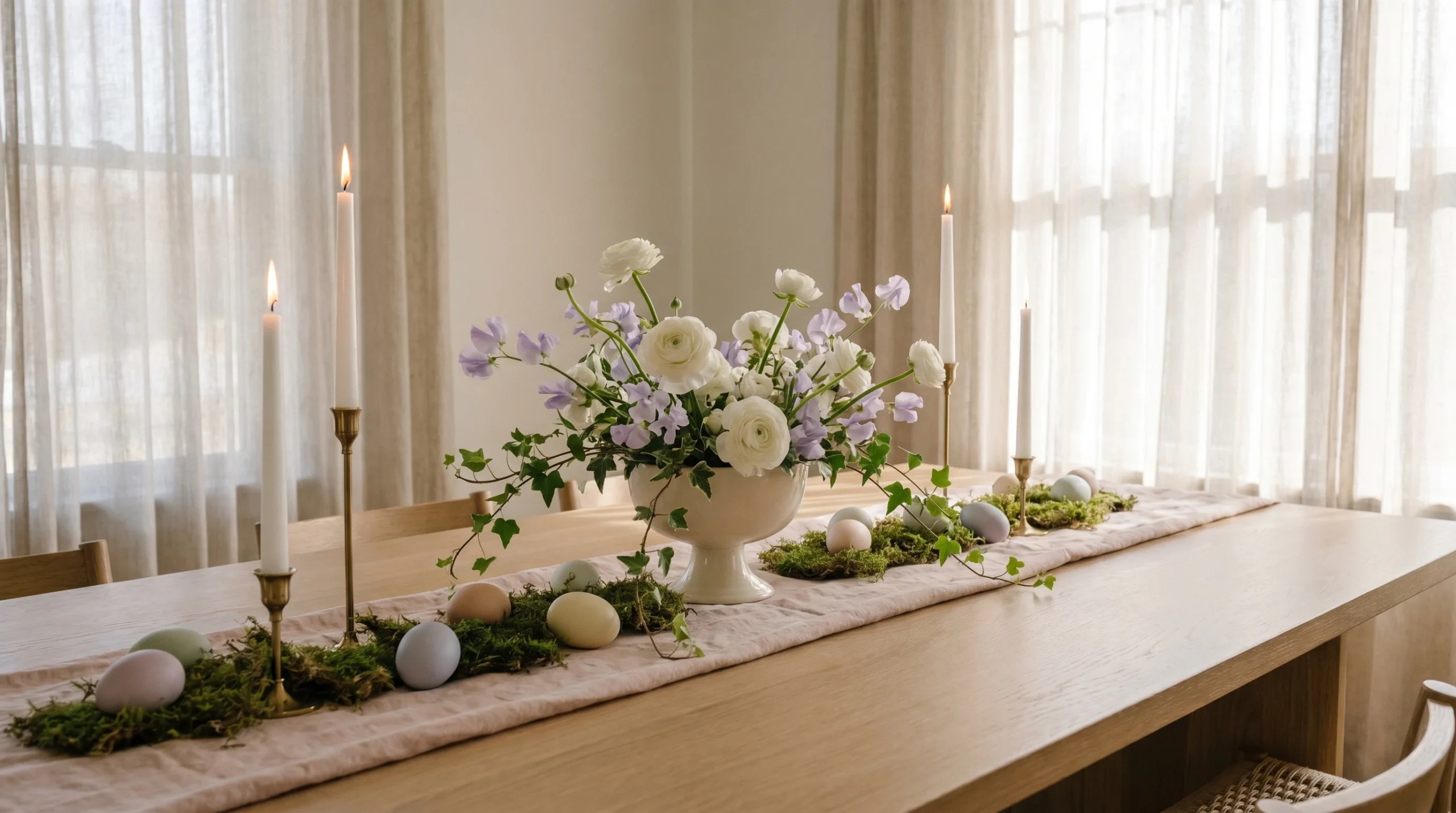
Candle and Bloom Tablescape
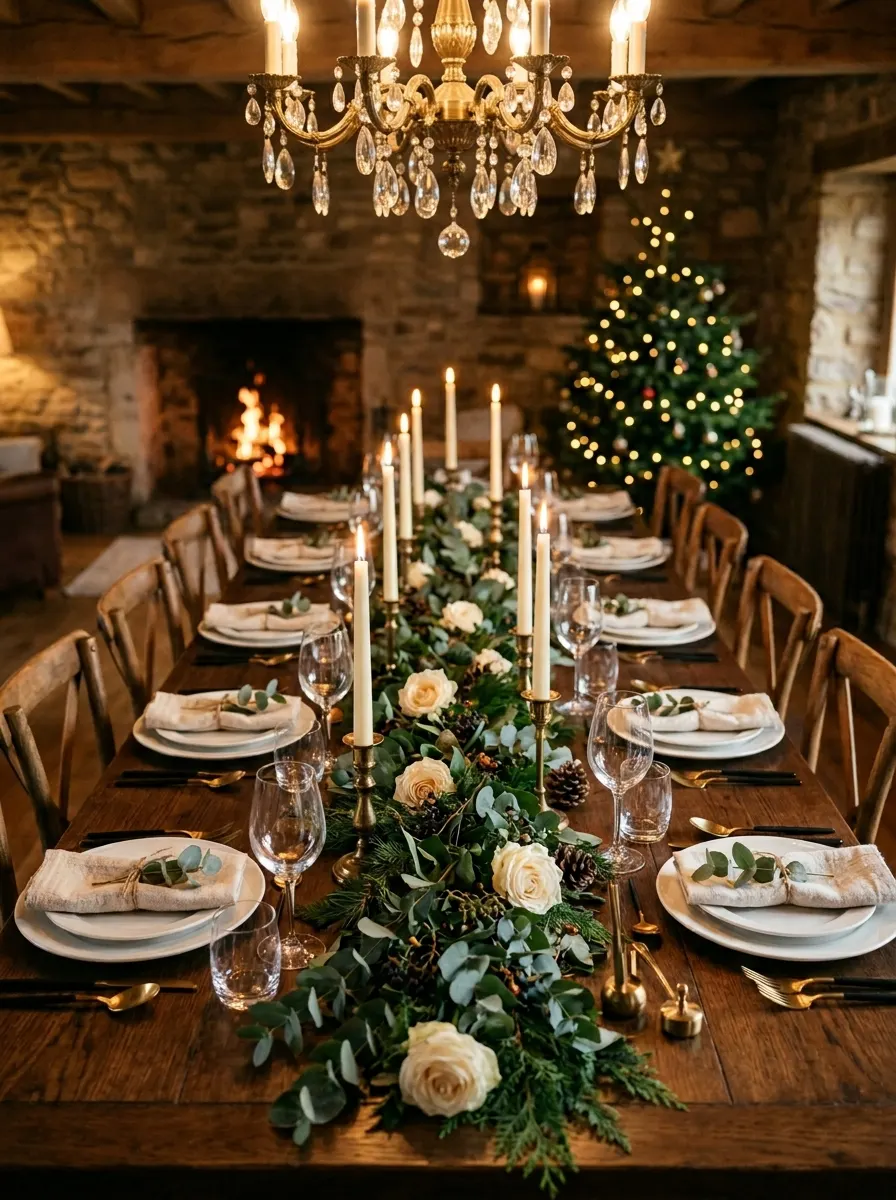
A floral table runner is the most transformative thing you can do to a dining room without touching any other surface. That continuous line of greenery, scattered blooms, and glowing taper candles running the full length of the table turns an ordinary dinner into something people genuinely remember. It makes the table the event rather than simply the surface things sit on.
The arrangement looks most beautiful when it reads as loosely gathered rather than precisely placed. Lay the foliage base first in a casual, overlapping layer. Then tuck in the flowers at natural intervals — some clustered, some solitary. Space the tapers evenly and light them last. That order of operations creates a runner that looks abundant and romantic without looking forced or formally arranged.
The Key: Build the foliage runner first as a complete base layer before adding any flowers — laying blooms onto an established green foundation is far easier than trying to weave greenery around already-placed stems.
11
Icy Blue Hydrangeas
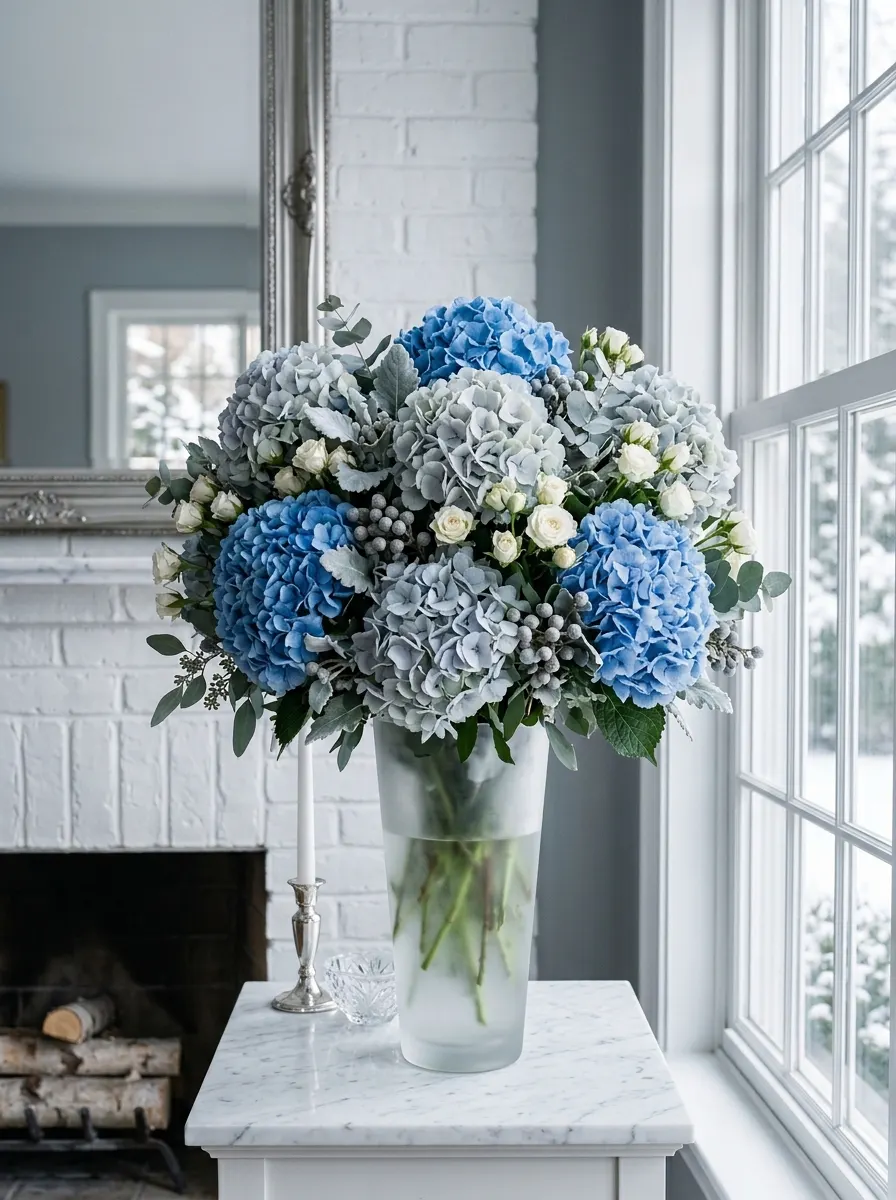
Icy blue and pale grey hydrangeas are the most winter-specific of all blooms — their cool, muted tones seem to belong specifically to grey January light. Arrange a generous armful in a tall frosted vase on a mantelpiece and the effect is both elegant and deeply seasonal. That pale blue against white painted brick, caught in flat winter daylight, looks genuinely breathtaking.
Hydrangeas have a characteristic generosity of form — each bloom head is large enough to fill visible space that five or six smaller flowers would struggle to cover. That makes them one of the most efficient flowers for creating full, lush-looking winter floral arrangements on a modest budget. Six to eight stems in the right vase creates a display that looks like fifteen stems of anything else.
The Key: Cut hydrangea stems very short and pack them tightly into a wide-mouthed vase — this creates the full, abundant dome shape that makes hydrangea arrangements look luxurious rather than sparse.
12
Dried Orange Garland
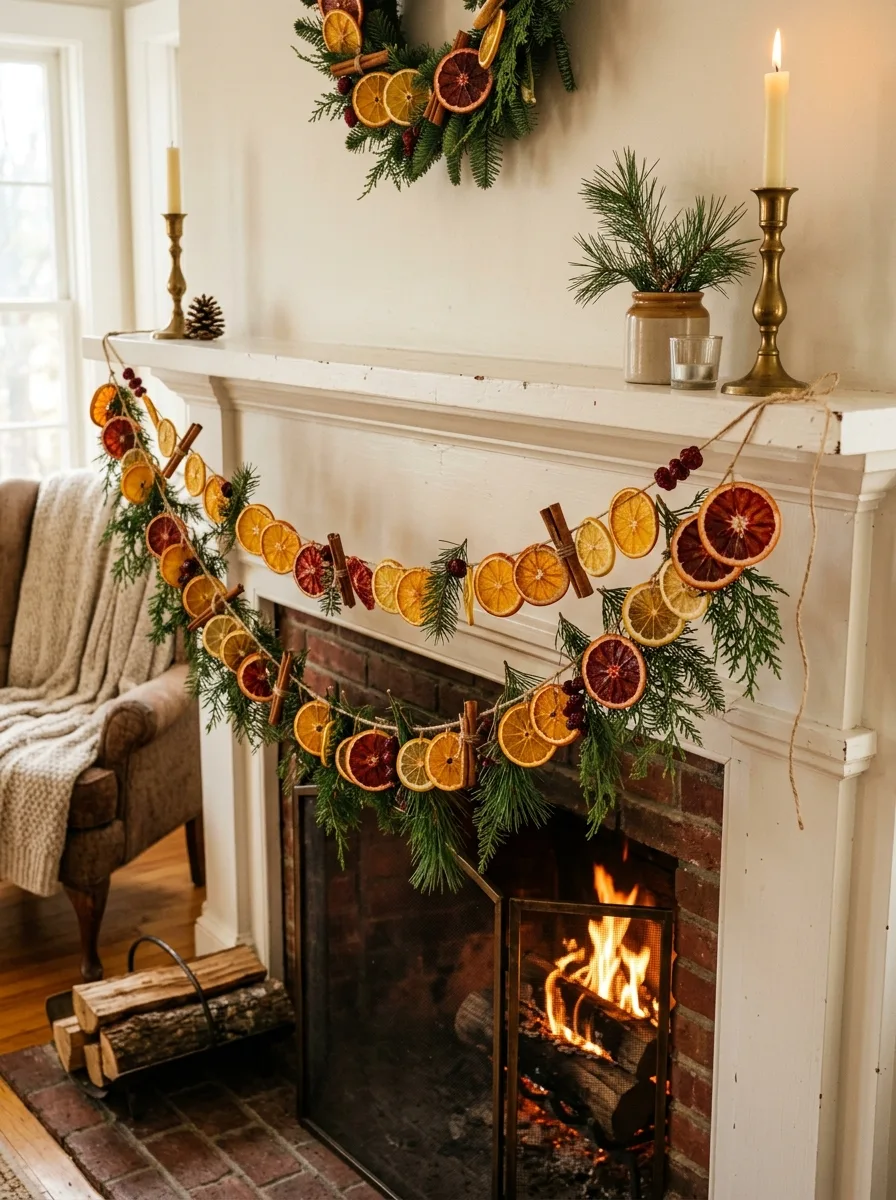
Dried orange garlands are one of those seasonal creations that engage all the senses at once. The warm amber and crimson tones of sliced citrus, the subtle fragrance of dried peel and cinnamon, the textural contrast of smooth fruit and rough twine — every element contributes something that makes the garland feel genuinely handmade and deeply seasonal rather than simply decorative.
Drape one across a mantelpiece, wound through evergreen sprigs and cinnamon sticks on natural twine, and it becomes one of the most personal and visually rich decorating details in the home. I’ve seen this simple garland stop conversations in their tracks when guests notice it — people always want to know how it was made, and the answer is always simpler than they expect.
The Key: Slice citrus between three and five millimeters thick for drying — too thin and slices become brittle and crack during handling; too thick and they take far longer to dry evenly throughout.
13
Anemone Dark Beauty
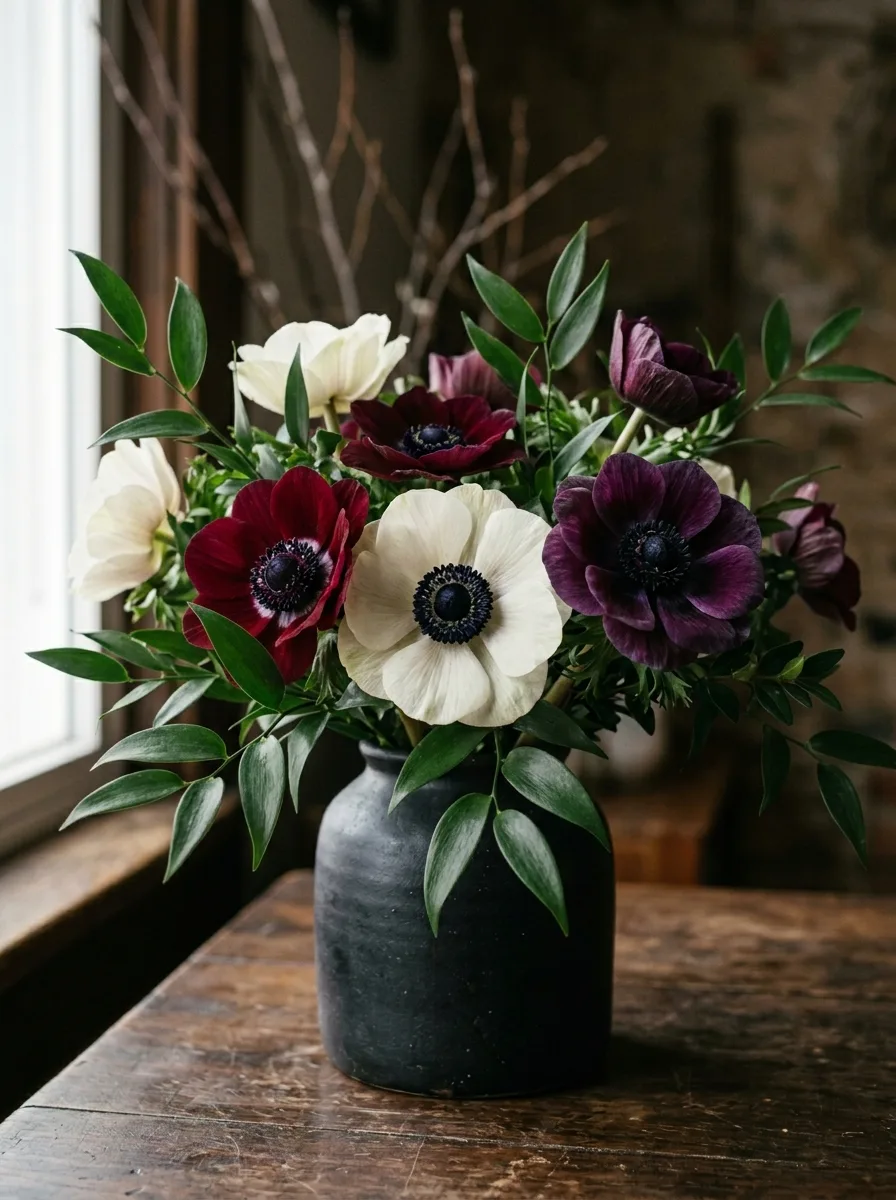
Anemones are among the most visually striking flowers available in winter — and most people walk past them in the market without giving them a second glance. That ink-black center against white or deep plum petals creates an almost graphic contrast that photographs with more editorial impact than most other winter blooms. In the right vessel, a loose bunch of anemones looks like something from a fashion magazine rather than a floral shop.
The vessel matters enormously here. A matte black ceramic vase lets the flowers become the full visual story — nothing competes, nothing distracts. Arrange anemones loosely, allowing stems to cross naturally and blooms to face in different directions. That organic, casual placement suits their slightly wild form far better than tight, structured arranging. This is one of those flowers that looks best when it looks like it just arrived from a garden.
The Key: Arrange anemones while still in bud and let them open gradually in the vase — watching each one unfurl over two to three days is one of the most rewarding experiences in winter floristry.
14
Moss and Twig Terrariums
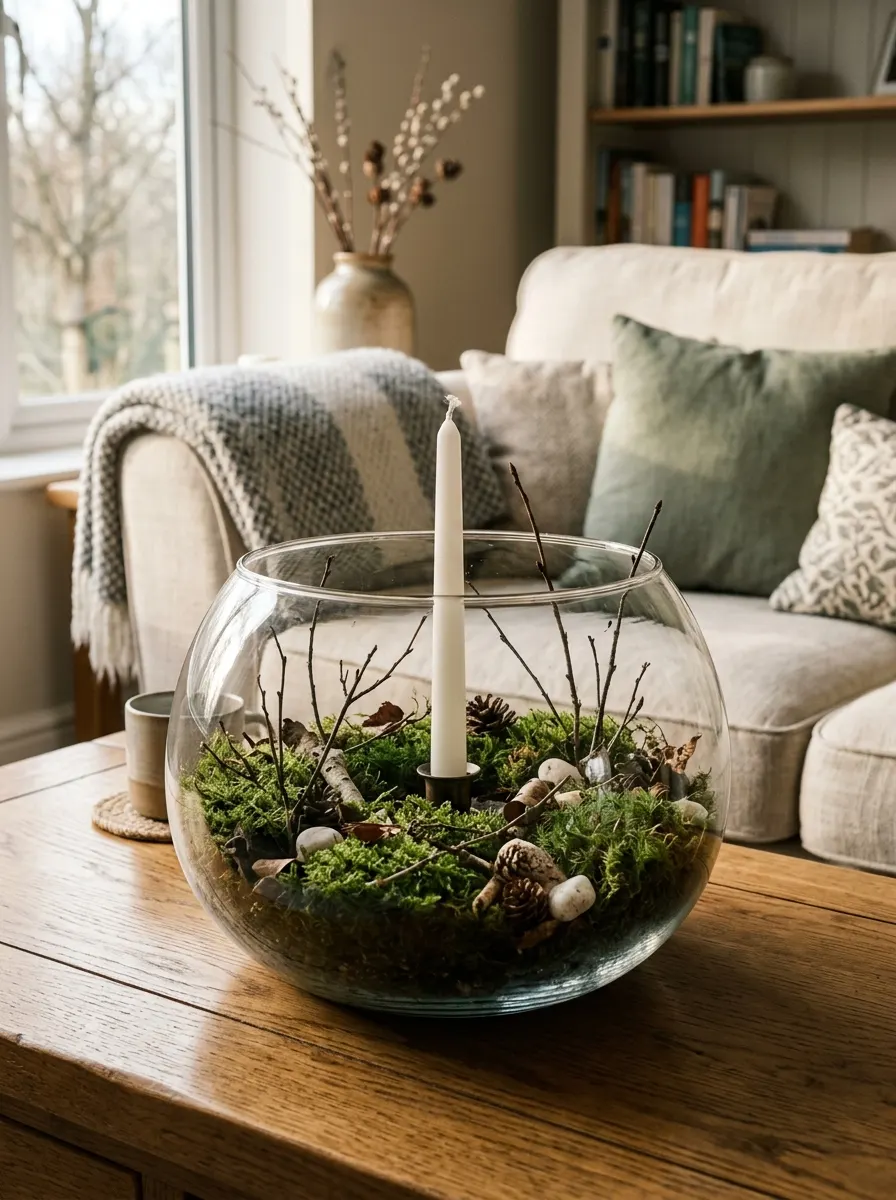
A glass terrarium filled with a winter woodland scene is one of those arrangements that people can’t quite explain why they find so compelling — and the answer is narrative. Sheet moss, tiny bare twigs, white pebbles, a few scattered pinecones — together they tell a story of a forest floor after snowfall. That quiet, miniature world draws people close in a way that conventional arrangements rarely do.
The single taper candle rising from the center of the terrarium makes the whole scene cinematic after dark. Candlelight through glass, illuminating moss and casting twig shadows — it creates a warm, intimate glow that makes any room feel genuinely magical during the darker winter months. Build this in twenty minutes and it will become the most-commented-on detail in your home all season.
The Key: Layer white pebbles at the base before adding moss — the drainage layer prevents any moisture from pooling and keeps sheet moss fresh and green far longer in an enclosed glass environment.
15
Tulip Season Stretch
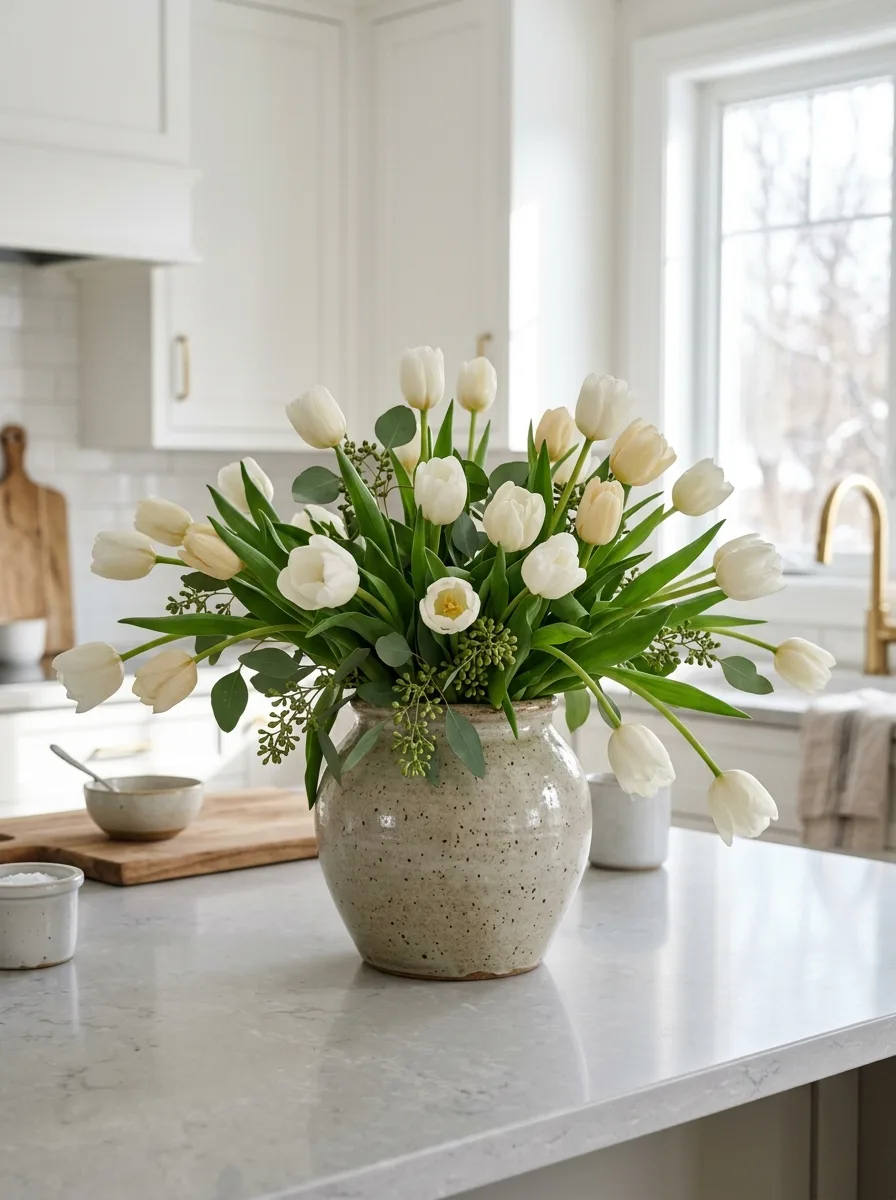
Tulips are winter’s most democratic flower — inexpensive, widely available, and genuinely beautiful when given enough room to do what they naturally do. That natural arching and reaching, that tendency to lean and curve after cutting, is not a flaw to correct but a quality to showcase. A wide-mouthed stoneware vase lets twenty tulips spread into their natural posture, and the result looks lush, organic, and genuinely alive.
White and cream tulips in winter light have a particular luminosity — those petals are almost translucent in a bright room, glowing at the edges where the light passes through. An arrangement of them on a kitchen island or dining table brings a clean, uncluttered beauty that suits the spare aesthetic of winter interiors beautifully without demanding the same cost as more unusual seasonal blooms.
The Key: Wrap tulip bunches tightly in paper for several hours in water before arranging — this training period keeps stems straighter longer and gives you more control over the arrangement’s initial shape.
16
Snowberry Branch Stems
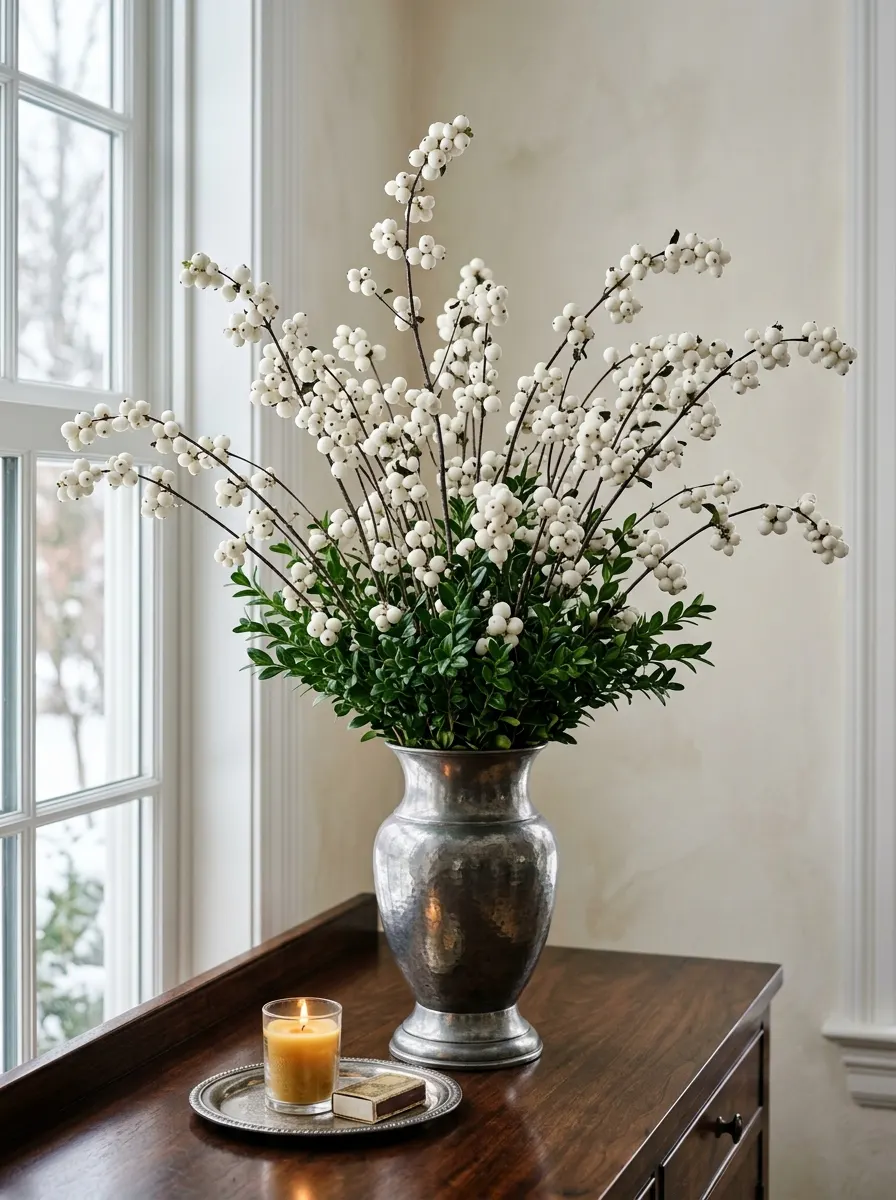
Snowberry branches are one of winter floristry’s quietest statements — and one of its most memorable. Those round, chalk-white berries clustered on dark, arching stems have a graphic quality that feels both botanical and artistic simultaneously. A few branches in a pewter vase, with dark boxwood at the base for grounding, creates a sophisticated winter arrangement that requires almost no arranging skill to achieve.
The arching, branching form of snowberry stems means they create natural negative space inside the vase — that visible air between stems is part of the composition rather than a gap to fill. Resist the urge to crowd the vessel. Three to five strong branches, placed with intention, create a more elegant result than a tightly packed bunch. This restraint is what separates genuinely beautiful winter floral arrangements from busy, over-filled ones.
The Key: Arrange snowberry branches before adding any foliage and establish the full branch silhouette first — the branching form is the entire visual story and foliage should only support it, never obscure it.
17
Forced Bulb Beauty
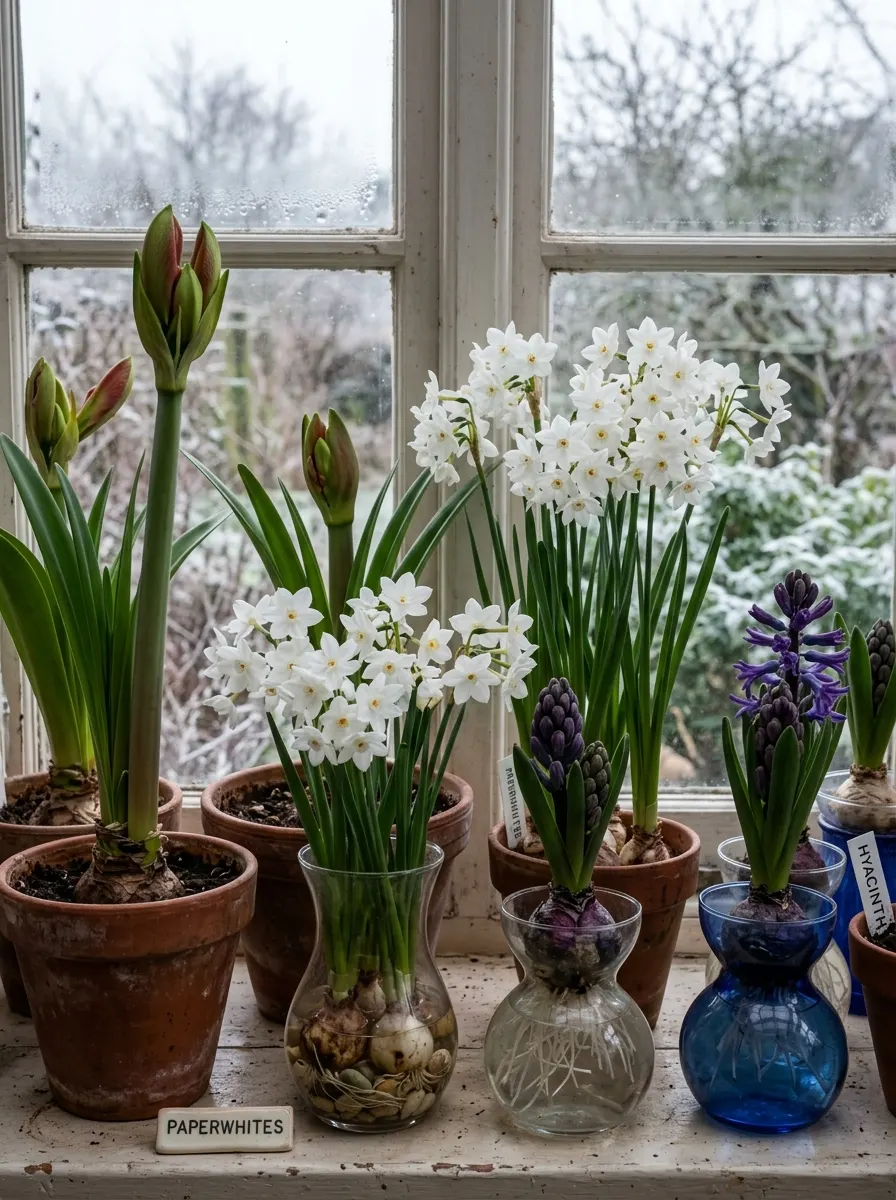
Forced bulbs are winter’s most patient pleasure. Plant paperwhites in a glass vase in early December and watch them push roots, then stems, then bloom over the following weeks — transforming from a brown papery bulb into a cluster of fragrant white flowers in less than a month. That progression, that visible growth in the depths of winter, creates a connection to the natural world that no cut flower arrangement can replicate.
Stagger your starting dates. Begin amaryllis in November, paperwhites in December, hyacinths in January, and you create a continuous rotation of blooming through the coldest months of the year. A windowsill of bulbs at different stages — some just sprouting, some in full bloom, some setting seed — becomes one of the most genuinely beautiful and living arrangements a winter home can have.
The Key: Start paperwhite bulbs in pebbles and water with the bulb base just touching the water surface — this prevents rot while encouraging vigorous root development and the strongest, most fragrant stems.
18
Minimalist Single Stem
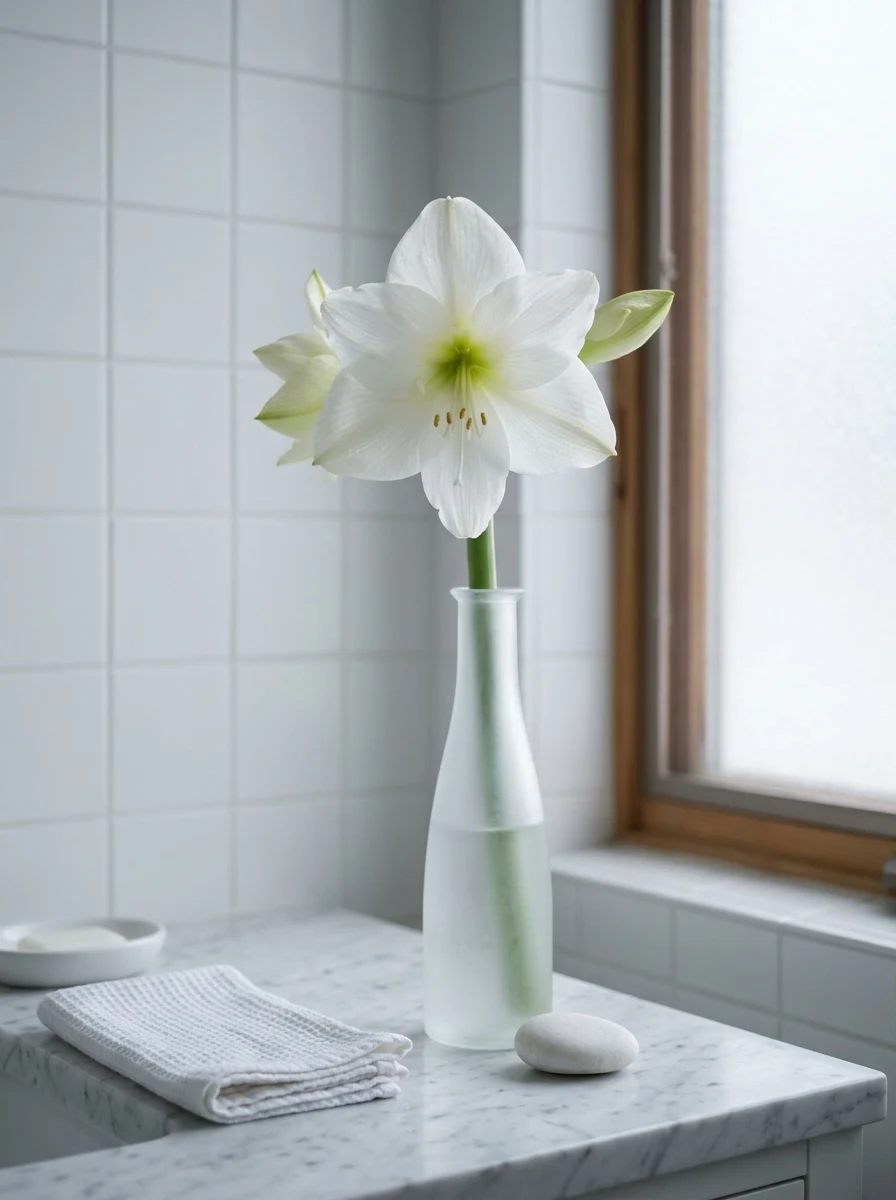
Sometimes one stem says more than thirty. A single white amaryllis in a tall frosted glass vase, placed on a marble bathroom counter where the grey winter light catches it in the morning — that is a more beautiful thing than many full arrangements. The restraint, the deliberate simplicity, the one perfect bloom given complete visual space to exist. It feels considered in a way that only minimalism achieves.
This approach suits rooms that already carry strong character — a well-tiled bathroom, a thoughtfully styled bedroom shelf, a spare home office corner. In spaces like these, a single extraordinary stem becomes a focal point rather than a decoration. The vessel must be right, the stem must be extraordinary, and the surrounding space must remain uncluttered. Three conditions that together create the quietest and most elegant of all winter floral moments.
The Key: Choose a vessel whose neck diameter barely exceeds the stem width — a close-fitting vessel holds a single stem perfectly upright and creates a clean, gallery-like presentation without any additional support.
19
Festive Centerpiece Tower
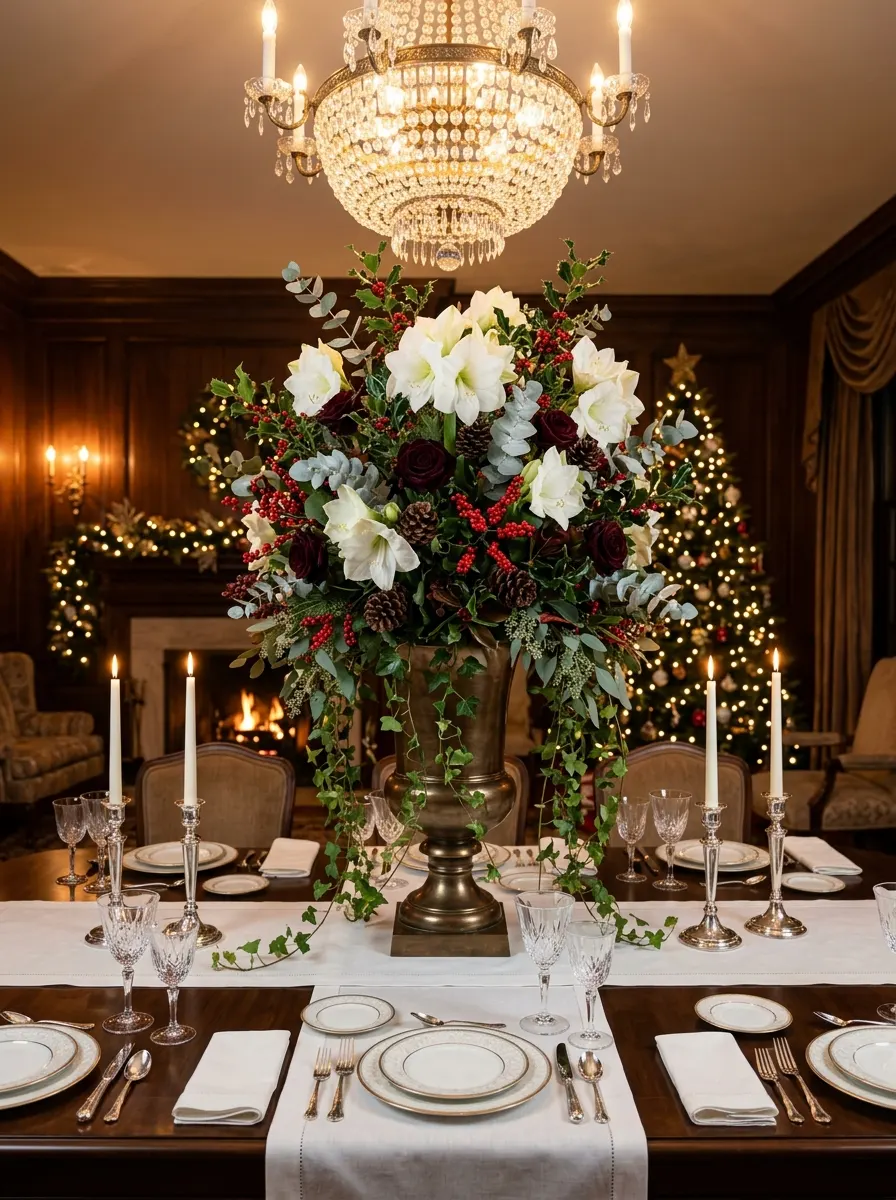
A tall pedestal centerpiece tower is the arrangement that turns a dining room into a proper occasion. That elevated height — flowers rising above eye level at the table — creates a presence that makes every dinner beneath it feel formally celebrated and deeply festive. It is the arrangement that guests photograph first when they sit down and the one they remember longest after the evening ends.
The key to a successful tower is working with the height rather than fighting it. Choose flowers with strong vertical stems for the top — amaryllis, eucalyptus branches — and reserve fuller, rounder blooms like roses for the mid-section where they read most beautifully. Let ivy or trailing greenery fall naturally over the pedestal’s edge. That trailing element softens the arrangement’s formality and connects it visually to the table below.
The Key: Build the tower starting with foliage to establish the overall silhouette, then place statement blooms, then fill gaps with secondary flowers — this layered construction creates professional density at every height.
Winter is the season that rewards beautiful, thoughtful arrangements more than any other. The light is lower and more dramatic. The rooms are warmer and more intimate. And the materials — birch branches, amaryllis, burgundy roses, snowberries, dried citrus — carry a richness and depth that simply doesn’t exist in spring or summer floristry. These 19 ideas for winter floral arrangements are your starting point, not your ceiling. Pick one that excites you. Gather the stems, find the right vessel, and let the arranging itself be as enjoyable as the finished result. Save this article to your Pinterest boards, share it with someone who loves flowers, and remember: the most beautiful arrangement you’ll ever make is the one you build with your own hands this winter.