Cottage Kitchen
🏠 24 Real Ideas
⏱ Quick Read
🔥 Always Trending
24 Cottage Kitchen Ideas
That Bring Timeless Charm, Warmth, and Everyday Functionality
There is a reason the Cottage Kitchen keeps showing up at the top of every Pinterest board and home decor search. It is not just a trend. It is a feeling, one that makes you want to slow down, brew something warm, and stay a little longer. These kitchens carry a quiet magic that no sleek, ultramodern space can replicate, because they are built around comfort, story, and the kind of beauty that only deepens with time. In my experience, the rooms that truly feel like home always have at least one cottage element hiding in them.
The good news is you do not need a country estate or a full renovation to capture this look. Whether your kitchen is large or small, rented or owned, there are ideas here that will help you build exactly the kind of space you have been dreaming about. This article walks you through 24 specific, actionable ideas that cover everything from cabinet colors and hardware choices to lighting, textiles, open shelving, and the small touches that pull every detail together into something that feels genuinely lived in and loved.
01
Creamy White Painted Cabinets
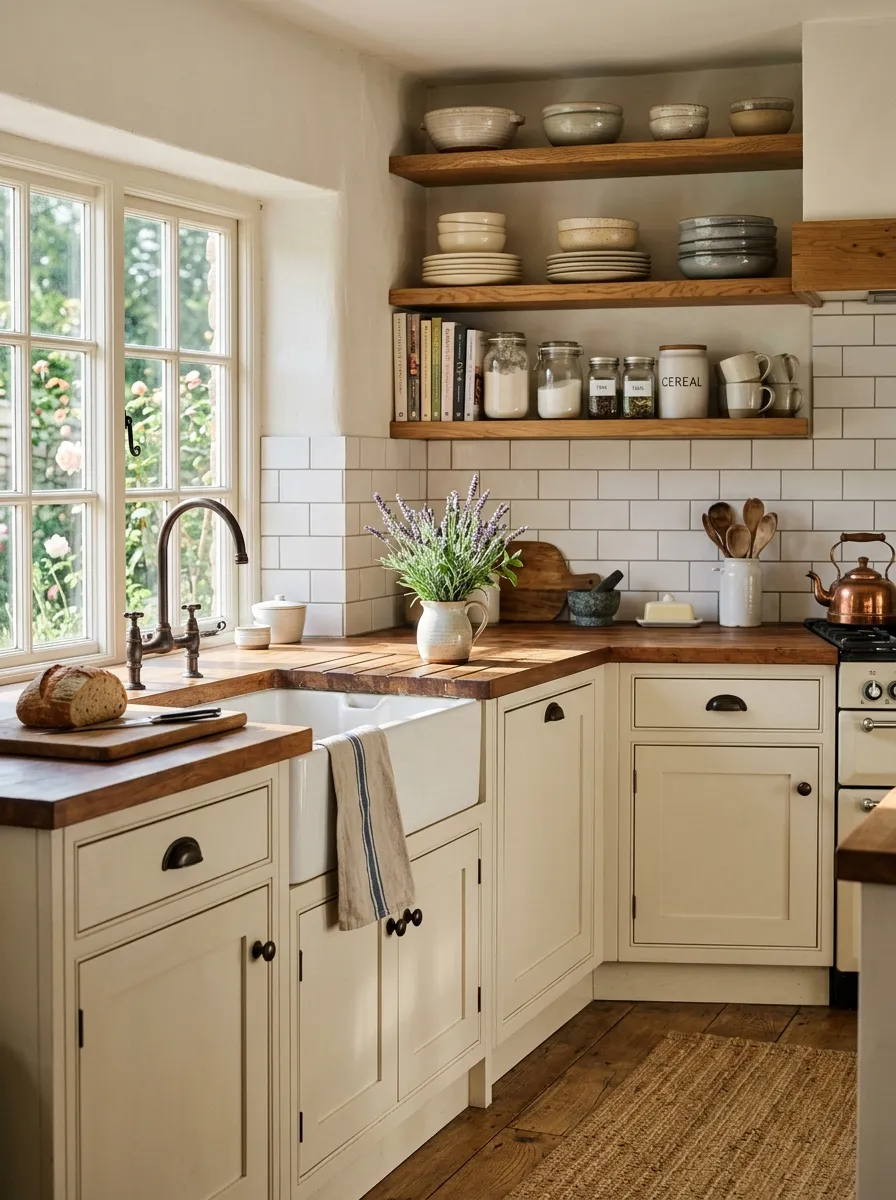
Creamy white cabinets are the foundation of nearly every stunning Cottage Kitchen out there, and for excellent reason. They reflect natural light beautifully, they never feel cold or clinical, and they age in a way that only adds character over time. The slight warmth of cream over pure white is what gives this look its gentle, inviting personality.
Pair creamy cabinets with oil rubbed bronze or unlacquered brass hardware to enhance that timeless quality. A butcher block or soapstone countertop keeps the palette grounded while adding natural texture. What I have found is that the moment you swap stark white for a soft cream tone, the entire kitchen shifts from looking designed to looking genuinely loved.
The Key: Choose a cream with a yellow or beige undertone rather than a pink one to keep your palette warm and cohesive across seasons and lighting conditions.
02
Open Wooden Shelving
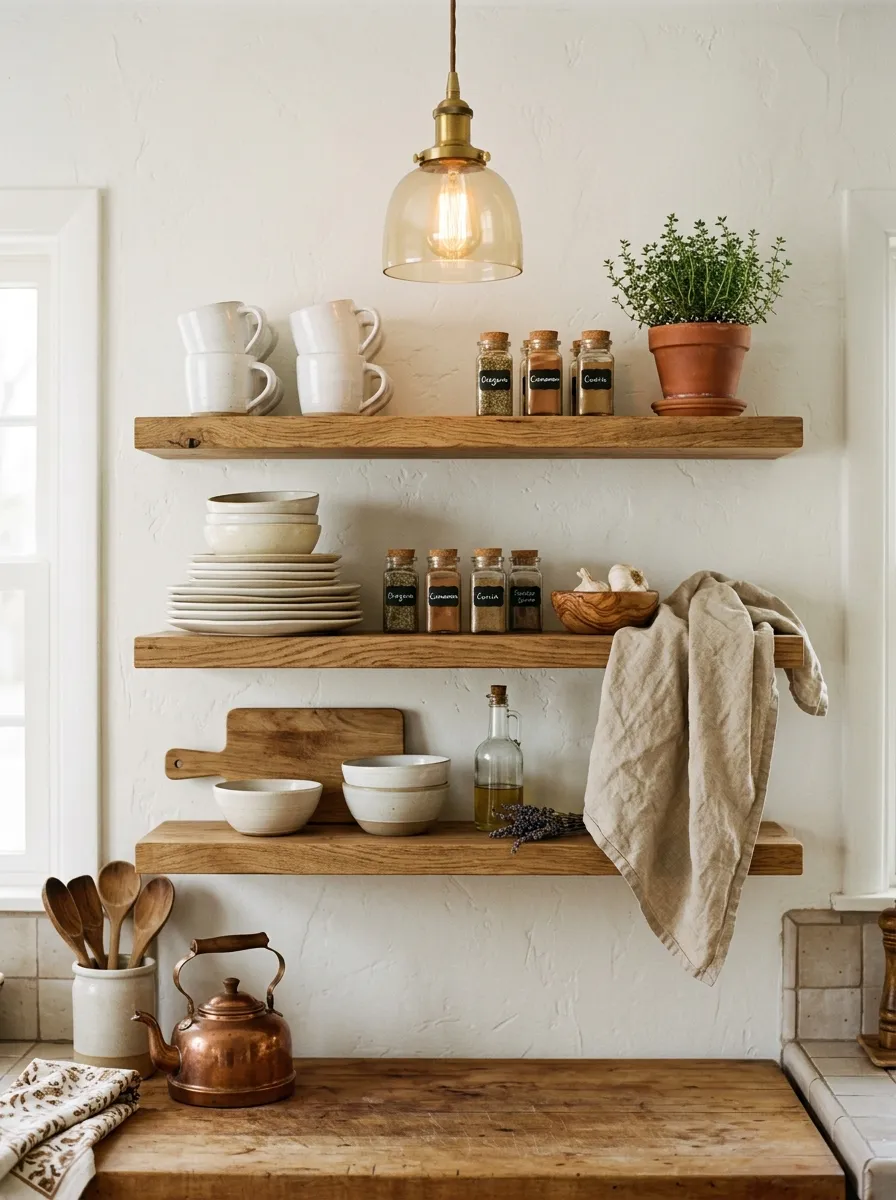
Open wooden shelves do something closed cabinets simply cannot: they turn your everyday dishes into décor. In a cozy kitchen context, this is one of the most impactful changes you can make because it immediately breaks the visual heaviness that upper cabinets create and replaces it with something that feels lighter, more personal, and more intentional. The same open shelf instinct that makes a cottage kitchen feel so personal also translates beautifully into the best retro kitchen setups, where colorful dishware on open shelves becomes the personality of the entire room.
The key to making open shelves work is curation. Stack white or neutral ceramics, tuck in a few glass jars filled with grains or spices, and always add one small living element like a trailing plant or fresh herb. What you keep on display should feel purposeful, not random. Every item earns its place on those shelves, and the result is a kitchen that feels genuinely styled without looking staged.
The Key: Use floating shelves cut from solid oak or walnut for durability and visual warmth since thin particleboard shelves sag under dish weight and lose their beauty quickly.
03
Farmhouse Apron Sink
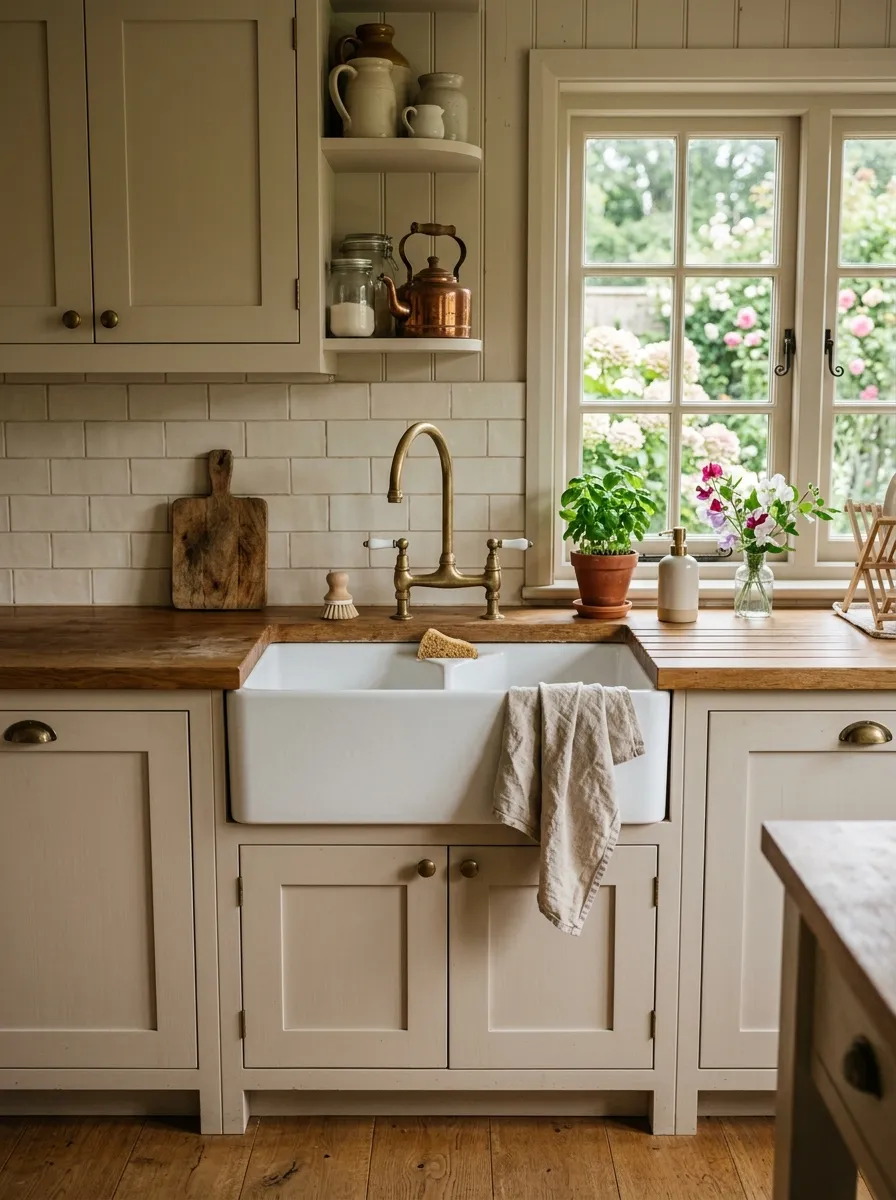
Few single fixtures define the cottage kitchen design look as immediately as a farmhouse apron sink. That deep, exposed front basin carries decades of history, the kind of detail that signals a kitchen built for real cooking, real gatherings, and real life. It is instantly recognizable and endlessly practical at the same time.
White fireclay is the most popular and durable choice, and it holds up beautifully against daily use. Pair it with a simple gooseneck faucet in unlacquered brass or matte black for maximum personality. I have seen this combination transform even the most ordinary kitchen layout into something that immediately draws every guest toward it the moment they walk through the door.
The Key: Install the apron sink so its front face sits flush or slightly proud of the cabinet face for the authentic look since a recessed installation loses the signature visual impact.
04
Shiplap Walls and Ceilings
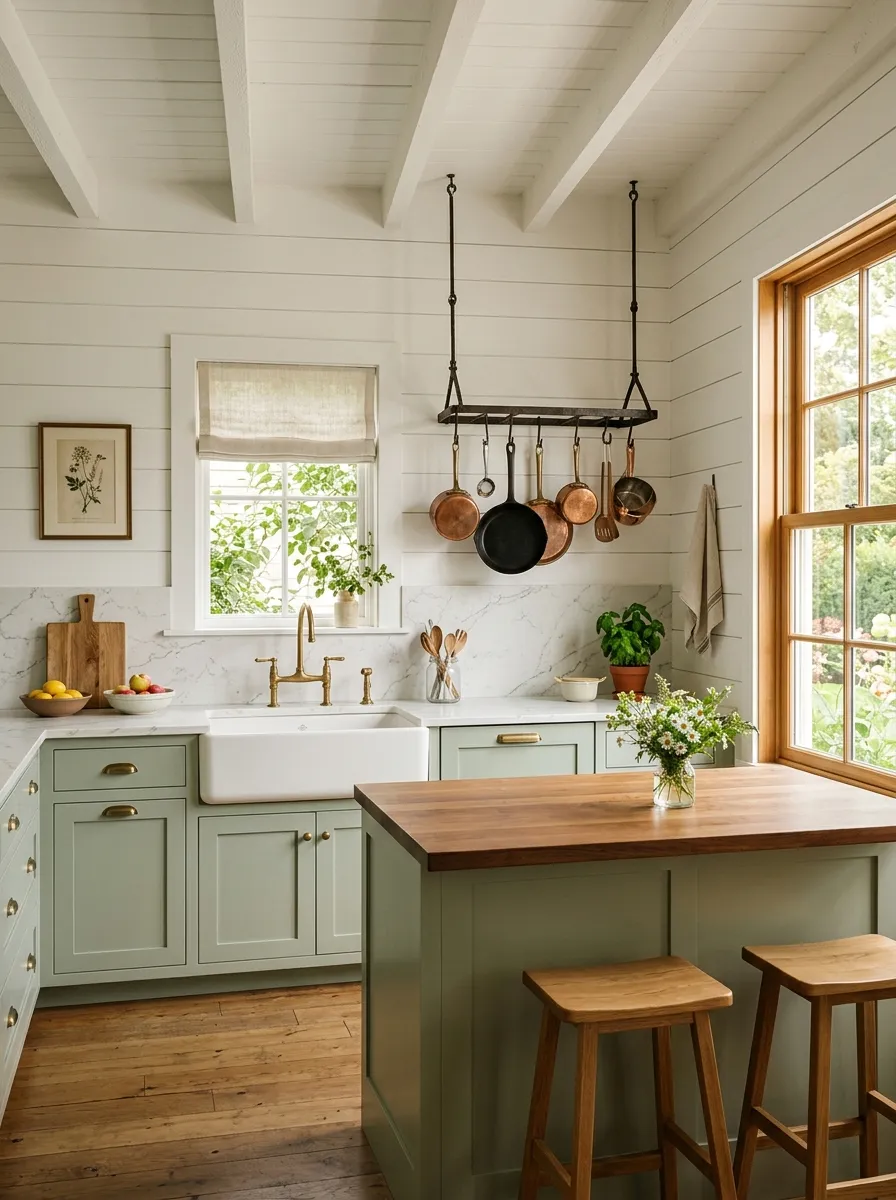
Shiplap is one of those architectural details that does heavy lifting without making noise. In a cottage style kitchen, it adds horizontal texture that draws the eye around the room, makes ceilings feel taller, and gives walls a depth that flat painted drywall simply cannot match. It reads as rustic without feeling rough and polished without feeling cold.
Painted in soft white, shiplap becomes the perfect neutral backdrop for colored cabinets, open shelving, and vintage accessories. You can also run it along a single feature wall or up onto the ceiling for a wraparound effect that makes a small kitchen feel much more designed. From what I have seen, even a single shiplap accent wall behind open shelving can completely redefine the personality of an ordinary kitchen.
The Key: Use real wood shiplap rather than MDF panels in kitchens since moisture and steam over time will warp thin MDF while solid pine or cedar holds up properly.
05
Sage Green Cabinet Color
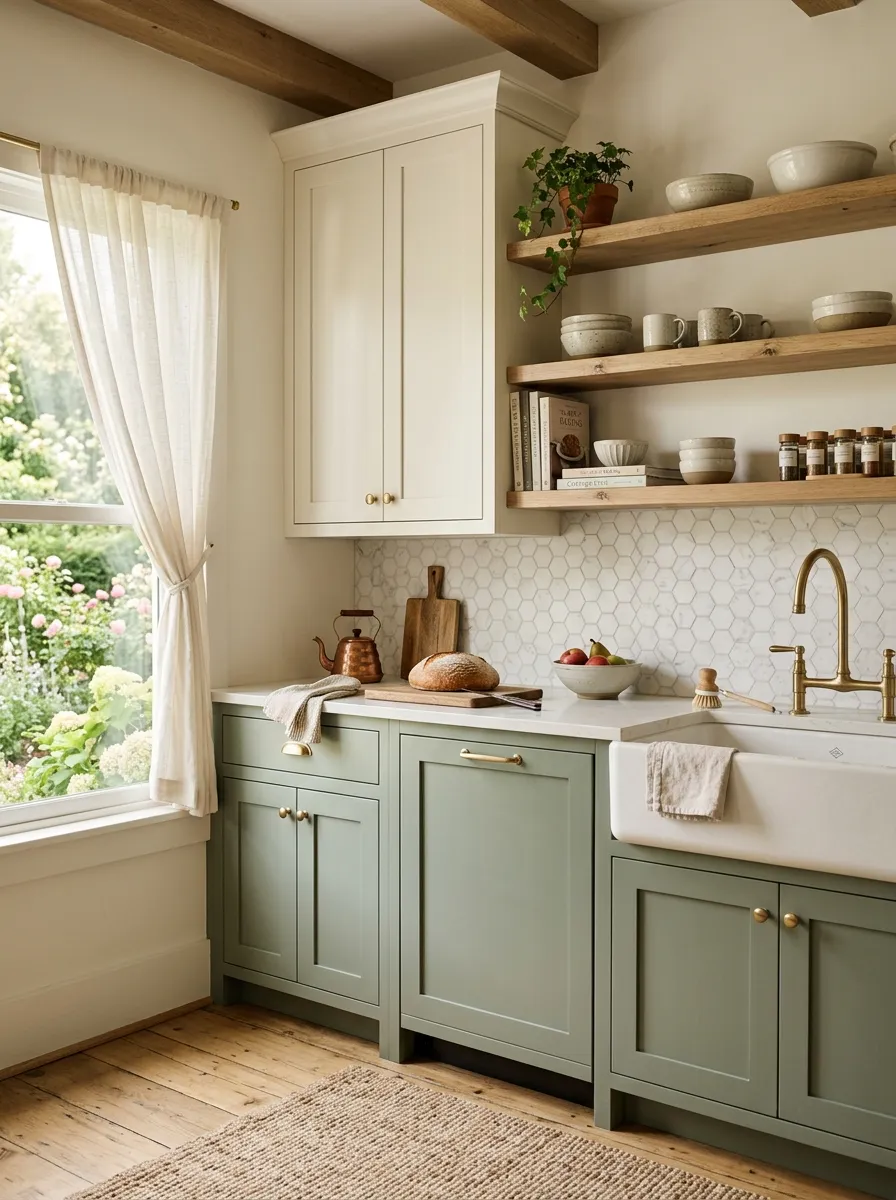
Sage green might be the single most beloved cabinet color in the Cottage Kitchen world right now, and it has earned every bit of that reputation. It reads as earthy and calming, bridges the gap between vintage and contemporary effortlessly, and works with nearly every countertop material and hardware finish available. It also happens to look stunning in natural light.
The most successful sage kitchen pairings use white or cream on the upper cabinets to keep the space feeling light, then let the sage do the character work below. Brushed gold or antique brass hardware deepens the warmth. I personally love how sage green makes a kitchen feel like it belongs to someone with genuinely good taste without trying very hard at all, which is exactly the cottage kitchen spirit. That same sage and warm white energy is one of the most beloved two tone cabinet combinations for anyone who wants a soft, nature inspired kitchen palette.
The Key: Choose a sage tone with gray undertones rather than purely green ones since true green can read differently under artificial light and clash with warm wood tones in the evening.
06
Butcher Block Countertops
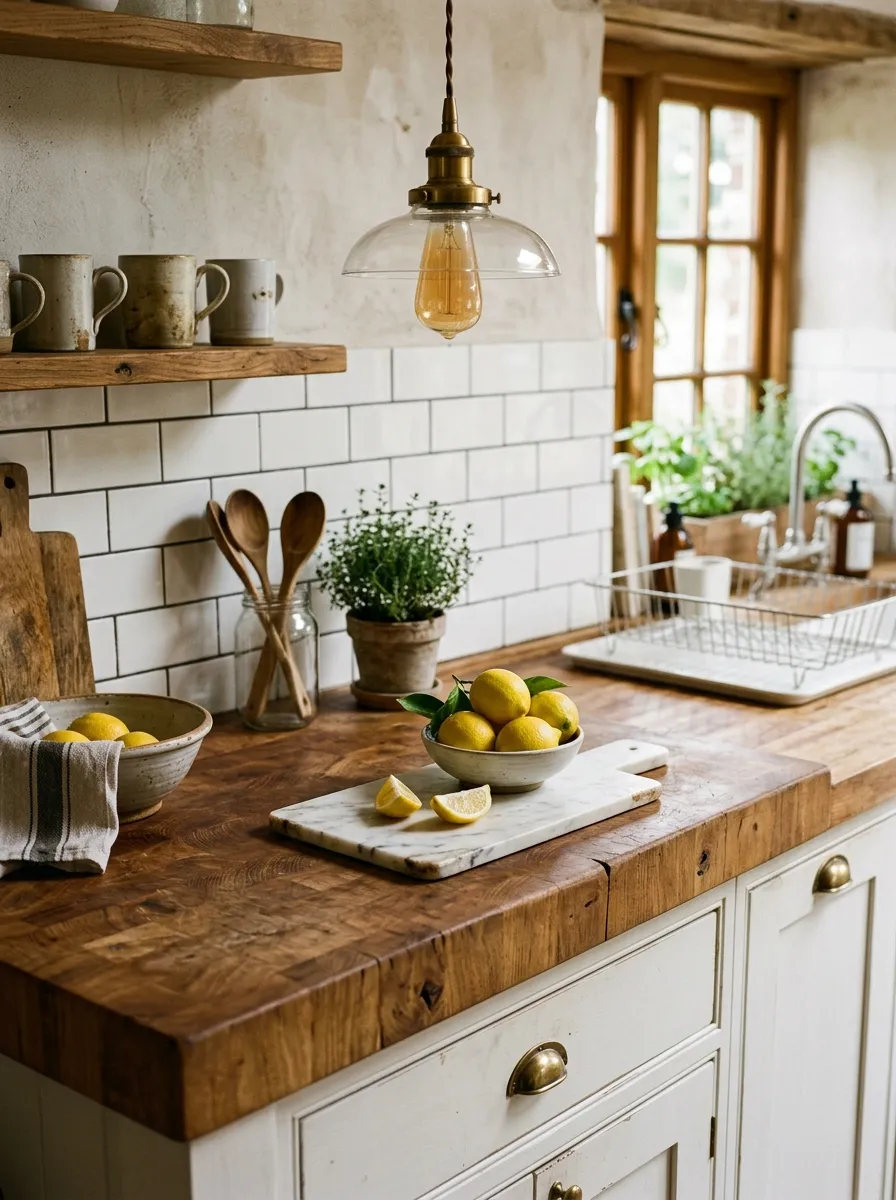
Butcher block countertops bring the kind of warmth to a kitchen that stone or laminate simply cannot replicate. The natural wood grain, the slight imperfections, the way the surface develops character with every scratch and oil treatment: these are all things that feel fundamentally at home in a cozy kitchen ideas setting because they age like real life does, beautifully and honestly.
End grain butcher block is the most durable option and the most visually interesting since the grain runs perpendicular to the surface and creates those beautiful circular patterns. Oil it with food grade mineral oil every few months to keep the wood nourished and protected. After trying this myself, I can confirm that a well maintained butcher block countertop actually improves in appearance with age rather than deteriorating.
The Key: Seal the area immediately surrounding the sink with a food safe polyurethane or epoxy finish since constant water exposure near faucets will cause untreated wood to warp and crack.
07
Vintage Hardware Accents
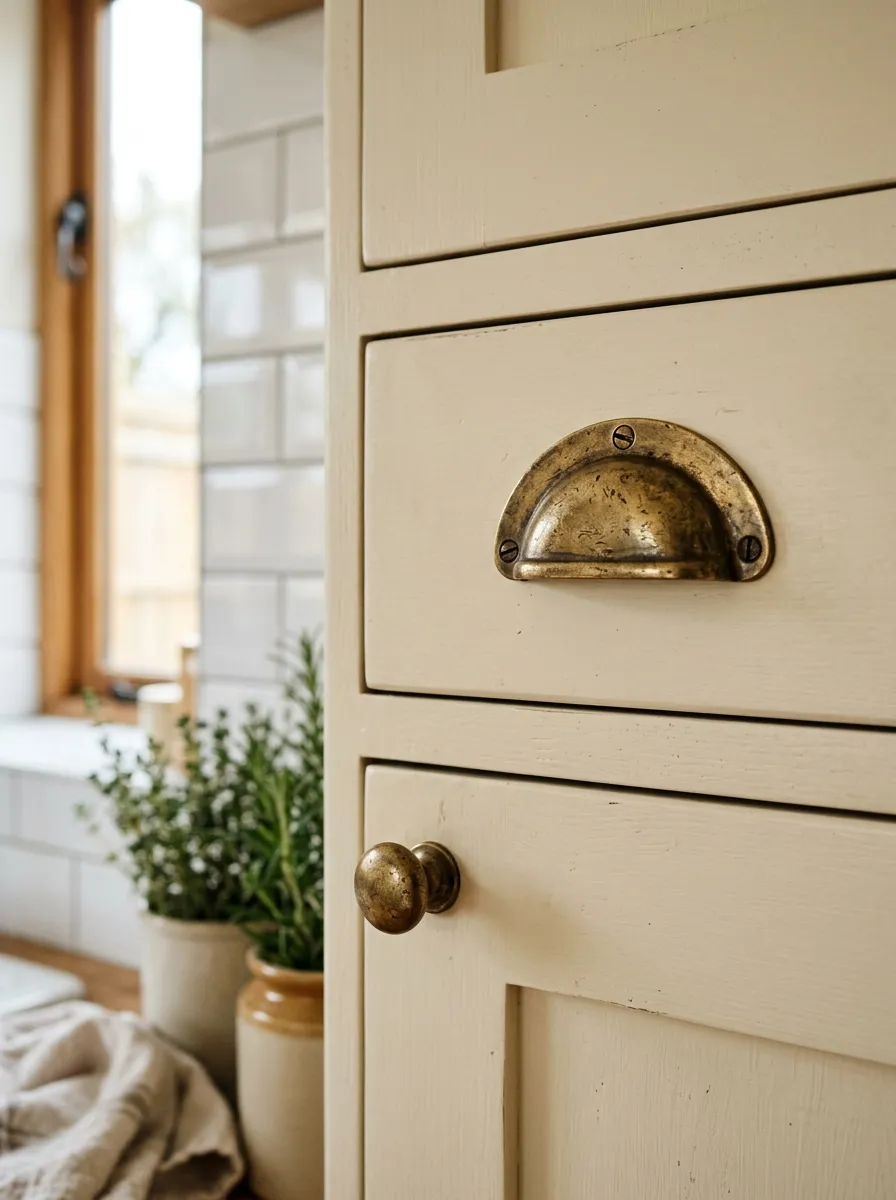
Hardware is the jewelry of your kitchen, and in a cottage kitchen design space, the right hardware choice elevates every cabinet from functional to characterful. Antique brass, oil rubbed bronze, and unlacquered brass are the three finishes that consistently deliver that authentic vintage quality cottage kitchens are known for. Each develops a natural patina over time that only improves the look.
Cup pulls and bin pulls are particularly well suited to the cottage aesthetic since they reference historic kitchen hardware while remaining entirely practical. Mixing two complementary finishes, such as unlacquered brass knobs with oil rubbed bronze bin pulls, adds layered depth without looking confused. One thing I have learned is that upgrading cabinet hardware is the fastest, most affordable way to shift the entire personality of a kitchen toward something more considered and charming.
The Key: Stick to one metal family, either warm metals like brass and bronze or cool metals like chrome and nickel, across your kitchen to maintain visual cohesion throughout the space.
08
Exposed Ceiling Beams
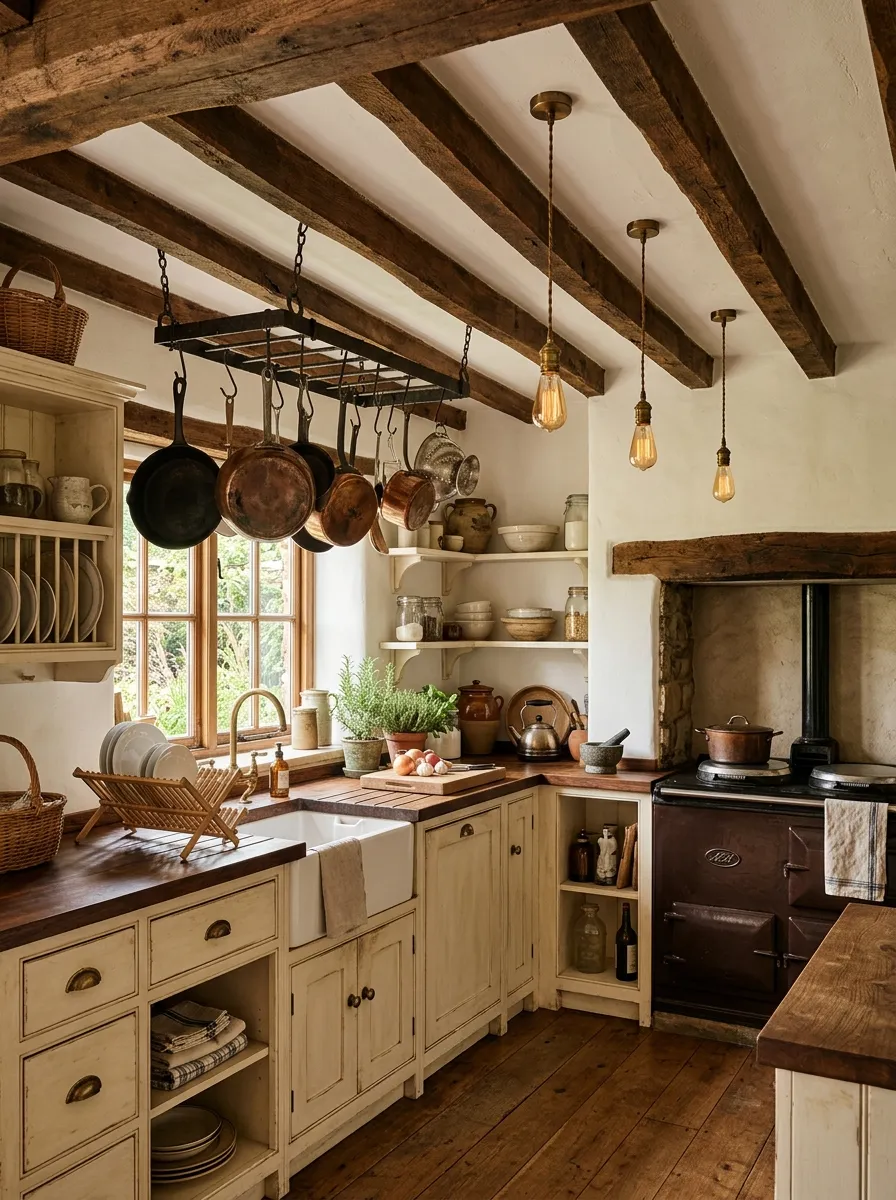
Exposed ceiling beams do something architecturally profound in a kitchen: they draw the eye upward and give the space a sense of age and permanence that no amount of styling at counter level can achieve. In a farmhouse kitchen charm setting, beams signal craftsmanship, history, and the kind of home that was built to last, which is the ultimate cottage aspiration.
Dark stained beams against a white or cream ceiling create maximum contrast and visual drama without darkening the room. Lighter, whitewashed beams work beautifully in smaller kitchens where you want the texture without the weight. Hanging a simple iron pot rack from two parallel beams is a classic move that combines storage with display and turns an architectural feature into an active part of the kitchen’s working life.
The Key: Install faux beams using hollow wood box beams if your ceiling cannot support solid structural timber since properly installed box beams are visually indistinguishable from real ones.
09
Floral Curtains and Textiles
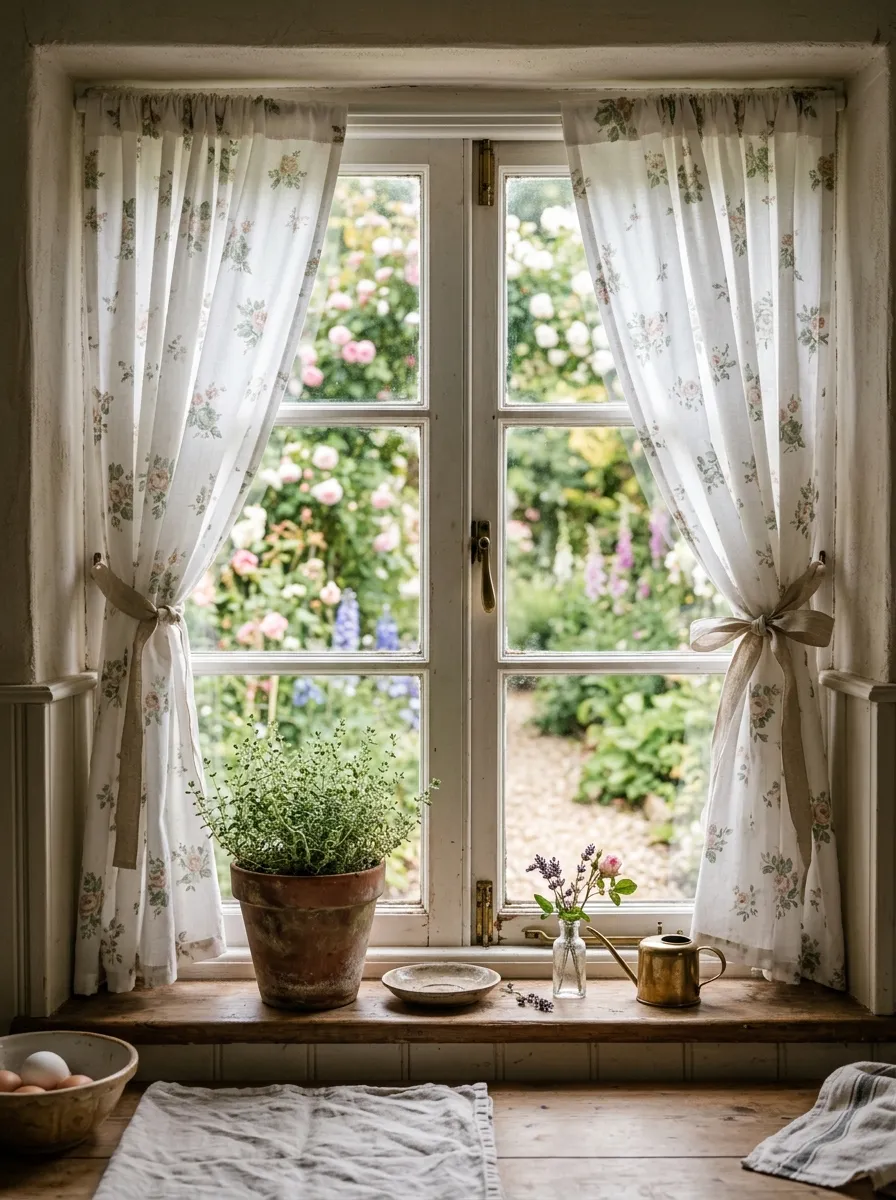
Textiles are the fastest and most affordable way to shift a kitchen from cold to truly warm, and in a cottage kitchen, curtains are the star of that transformation. A simple pair of cotton or linen curtains in a small scale floral print brings instant personality, softens the hard edges of cabinets and countertops, and references the garden outside even when the window is closed. That same love of pattern and soft textiles in a warm, organic space is what makes a beautifully decorated farmhouse laundry room feel so genuinely special rather than purely functional.
Keep the scale of the floral pattern proportional to your window size. Small kitchen windows call for tiny repeat patterns while larger windows can handle a bolder botanical. I always recommend hanging curtain rods slightly higher and wider than the actual window frame since this simple trick makes windows appear larger and floods more light into the space even when the curtains are drawn.
The Key: Wash your kitchen curtains in cold water and air dry them before hanging to pre shrink the fabric and prevent the annoying hemline drop that happens after the first washing at home.
10
Ceramic Tile Backsplash
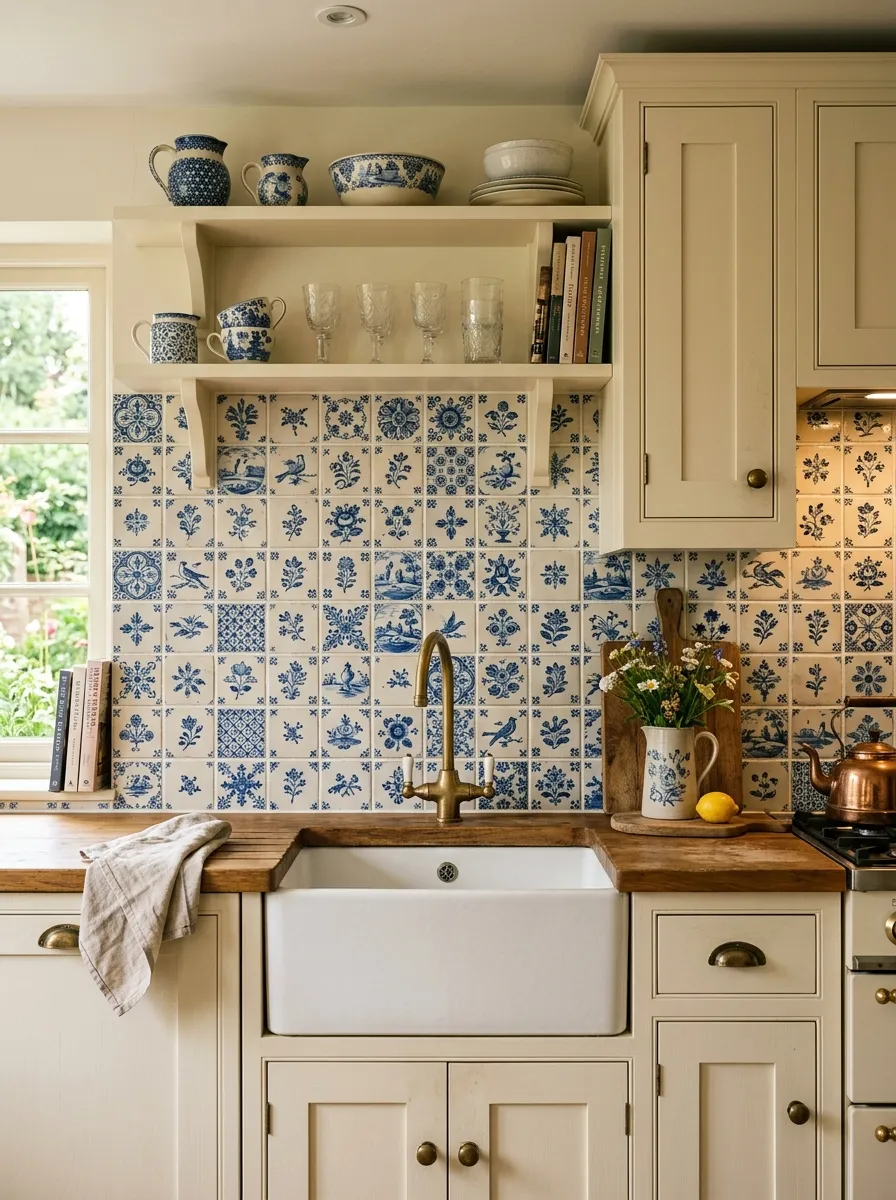
A ceramic tile backsplash in a cottage style kitchen is one of those design decisions that rewards you every single day because good tile is genuinely beautiful to look at. Classic subway tile is always reliable, but hand painted ceramic tiles in blue and white floral patterns or terracotta botanical motifs are what truly separate a generic kitchen from one that feels curated and personal.
The beauty of ceramic tile in cottage spaces is the glaze variation. No two handmade tiles look exactly alike, and those slight differences in color depth and surface texture are precisely what create that artisan, old world quality that mass produced tiles simply cannot fake. Trust me on this one: the extra investment in handmade ceramic tile pays back visually every time you cook, wash dishes, or simply stand in your kitchen.
The Key: Use wide grout lines of approximately 3/16 inch with a cream or warm gray grout color on handmade tiles since tight grout lines fight the inherent variation and make the backsplash look unintentional.
11
Rattan and Wicker Accents
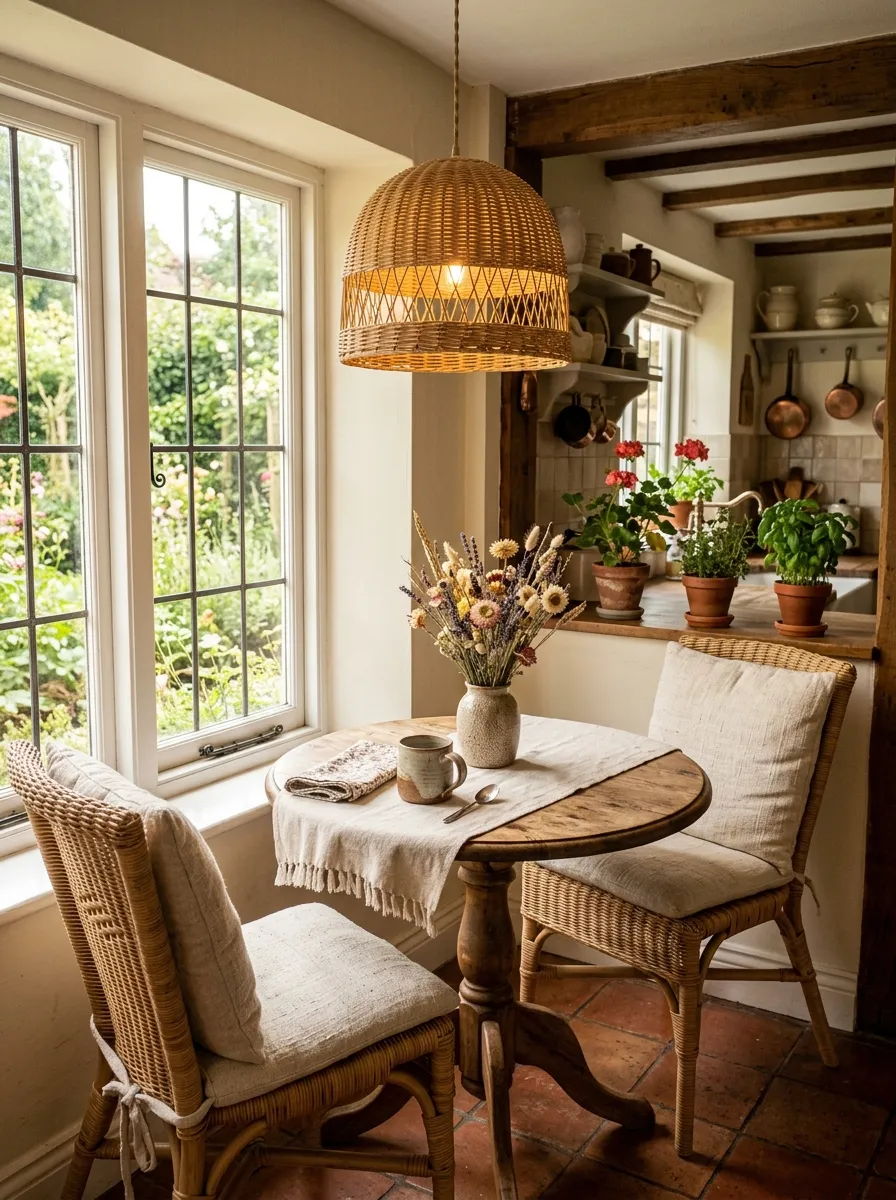
Rattan and wicker are natural texture anchors that bring an organic warmth to cozy kitchen ideas without adding visual weight or clutter. A rattan pendant light above a kitchen table or island is one of the most versatile and budget friendly upgrades possible since it works in nearly every color palette and adds immediate coziness the moment it is installed.
Beyond lighting, wicker baskets tucked beneath open shelves, wicker trays on countertops, and rattan chairs at a breakfast nook all contribute to that layered, collected quality that defines great cottage interior design. From what I have seen, rattan in particular photographs beautifully, which makes it a permanent fixture in the most Pinterest saved cottage kitchens online.
The Key: Choose rattan in a natural honey or bleached finish rather than a dark or painted finish since lighter rattan reflects warmth in any light condition and ages far more gracefully than stained versions.
12
Vintage Plate Display
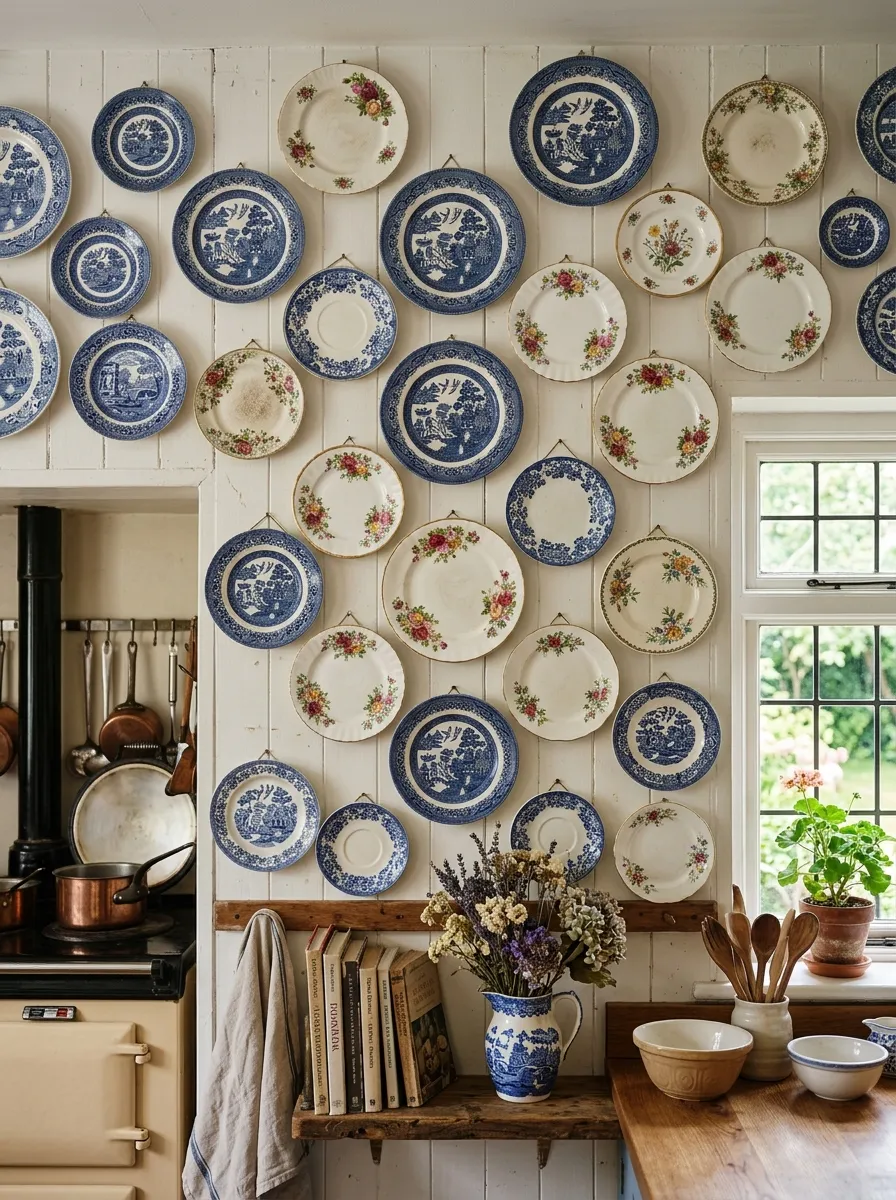
A vintage plate display wall is the kind of detail that transforms a kitchen from a room into a story. In farmhouse kitchen charm style decorating, collected transferware, ironstone, and floral china plates hung at varying heights create an eclectic gallery wall that references generations of home cooking and family life. No two displays look exactly the same, which is exactly the point.
The most successful plate walls use a unifying element such as color, in this case blue and white, to create cohesion across very different patterns and sizes. Mixing dinner plates with salad plates and decorative chargers adds rhythmic variety. I have noticed that the most striking plate walls always include at least one plate that is slightly unexpected, perhaps an oval shape or an unusual border pattern, which keeps the eye moving and curious.
The Key: Use dedicated plate hanging hardware rather than improvised wire hooks since proper plate hangers grip the rim without stress points and prevent valuable pieces from falling and breaking.
13
Herb Garden on the Windowsill
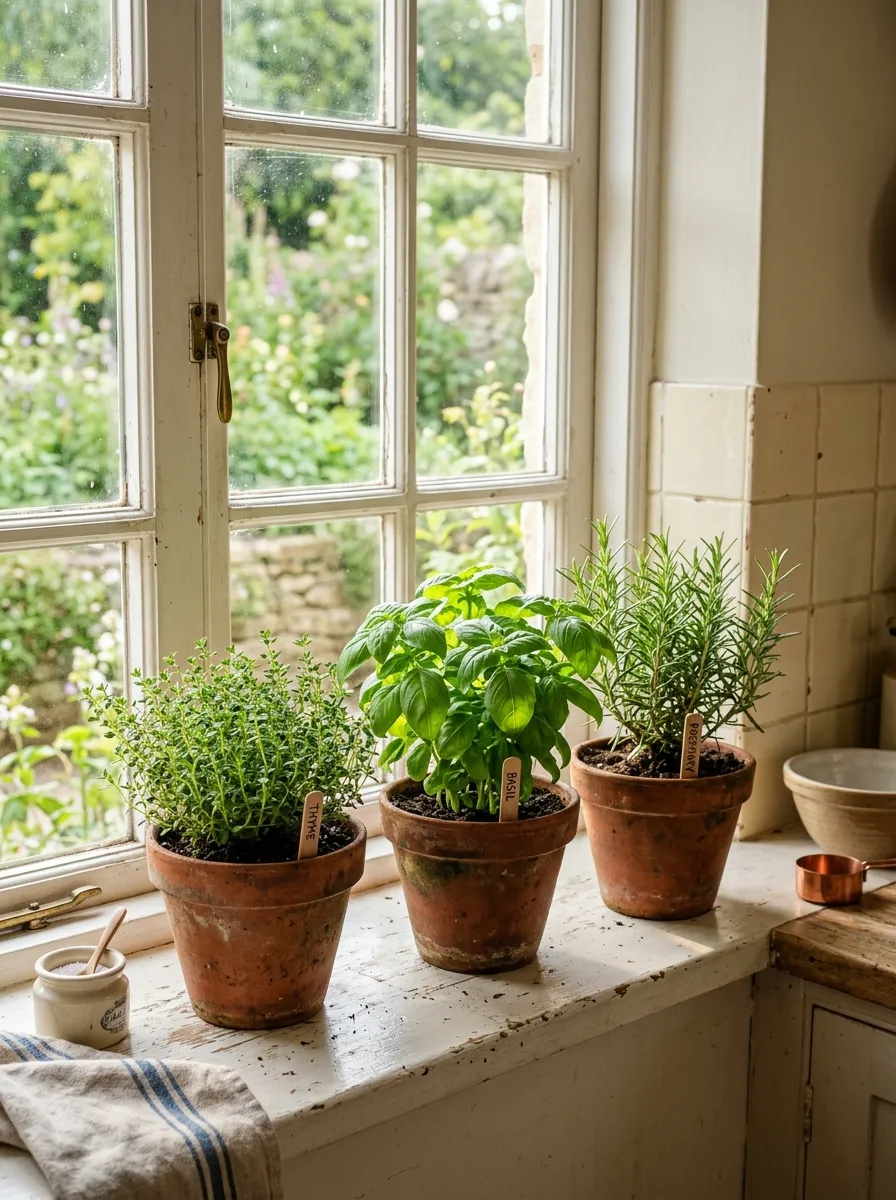
Nothing in a cottage kitchen earns its space more fully than a windowsill herb garden. It is simultaneously practical, beautiful, and deeply connected to the cottage lifestyle of growing, cooking, and living close to the natural world. Terracotta pots in graduating sizes lined up along a sunny windowsill create a vignette that looks like it belongs in a published design book while costing almost nothing. This same love of living greenery and terracotta on a windowsill is also one of the most charming details in a beautifully decorated farmhouse laundry room that uses a herb garden sill to bring the same freshness into a utility space.
Basil, rosemary, thyme, and mint are the most reliable kitchen herbs since they are hardy, useful daily, and visually varied enough to be interesting together. The earthy red of terracotta against a white or cream window frame is one of the most reliably charming color pairings in cottage decor. I personally love walking into a kitchen where the first thing you smell is living herbs rather than cleaning products.
The Key: Place herb pots on a small waterproof tray to protect your windowsill from drainage water since repeated moisture exposure will peel paint and swell wood over time.
14
Vintage Pendant Lighting
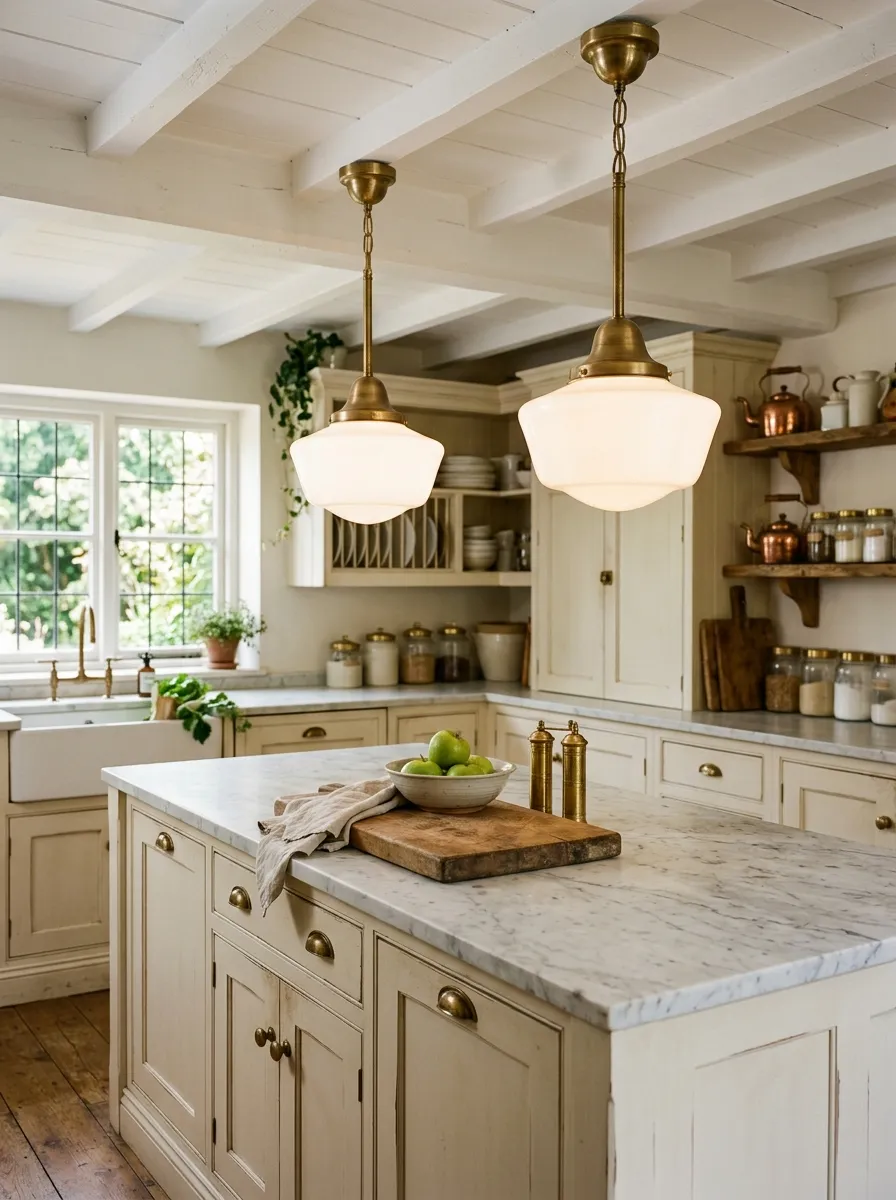
Lighting is what sets the mood in any room, and in a cottage kitchen design space, vintage inspired pendant lights are the most effective single fixture choice you can make. Schoolhouse pendants with white glass globes and brass or bronze stems, milk glass pendants, or simple cage pendants with Edison bulbs all carry that period quality that signals intentionality and warmth.
The height of your pendant installation matters as much as the style. Hang pendants so their bottom edge sits approximately 30 to 36 inches above the counter surface for comfortable task lighting that does not obstruct sightlines. Pairing two matching pendants above an island creates symmetry while a single larger pendant centered over a round table adds drama and intimacy. What I have found is that switching to warm Edison style LED bulbs in vintage fixtures completes the look perfectly.
The Key: Install pendants on a dimmer switch rather than a standard on off switch since dimmable kitchen lighting allows you to shift from bright task mode to warm ambient entertaining mood instantly.
15
Brick Backsplash or Accent Wall
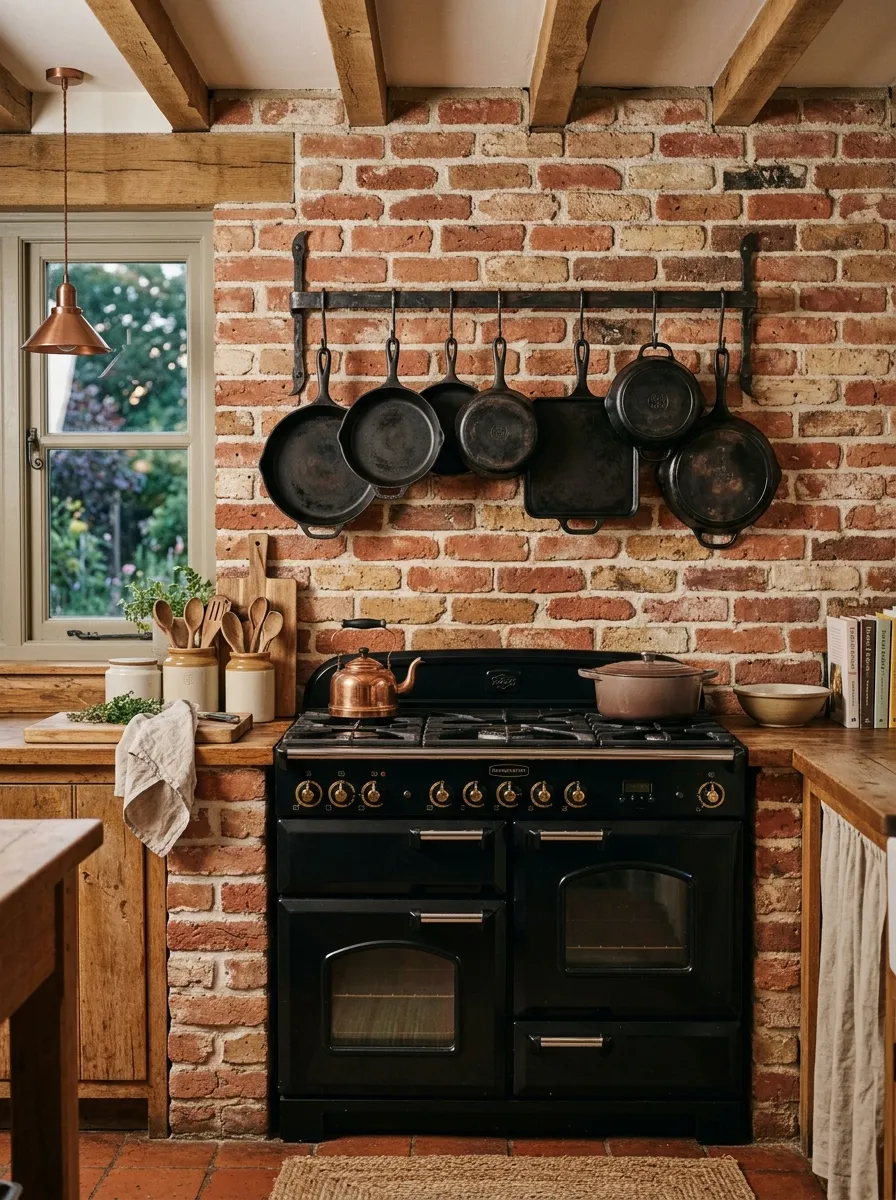
A brick backsplash brings a history to your cottage style kitchen that tile and stone simply cannot manufacture because brick carries actual age in its texture, color variation, and mortar lines. Whether you have real exposed brick behind your range or install a thin brick veneer, the effect is the same: instant depth, instant warmth, and an anchor point that every other material in the kitchen works around.
The warm red, tan, and orange tones of standard brick harmonize naturally with cream cabinets, copper fixtures, and dark wood elements. A wrought iron pot rack mounted directly into the brick above the range is a supremely functional and visually dramatic combination that references centuries of kitchen tradition. I have tested this pairing in multiple spaces and it never fails to become the most photographed feature in the room.
The Key: Seal exposed brick walls in a kitchen with a matte breathable masonry sealer since unsealed brick absorbs grease and cooking vapors that are nearly impossible to clean from the porous surface.
16
Painted Wood Floors
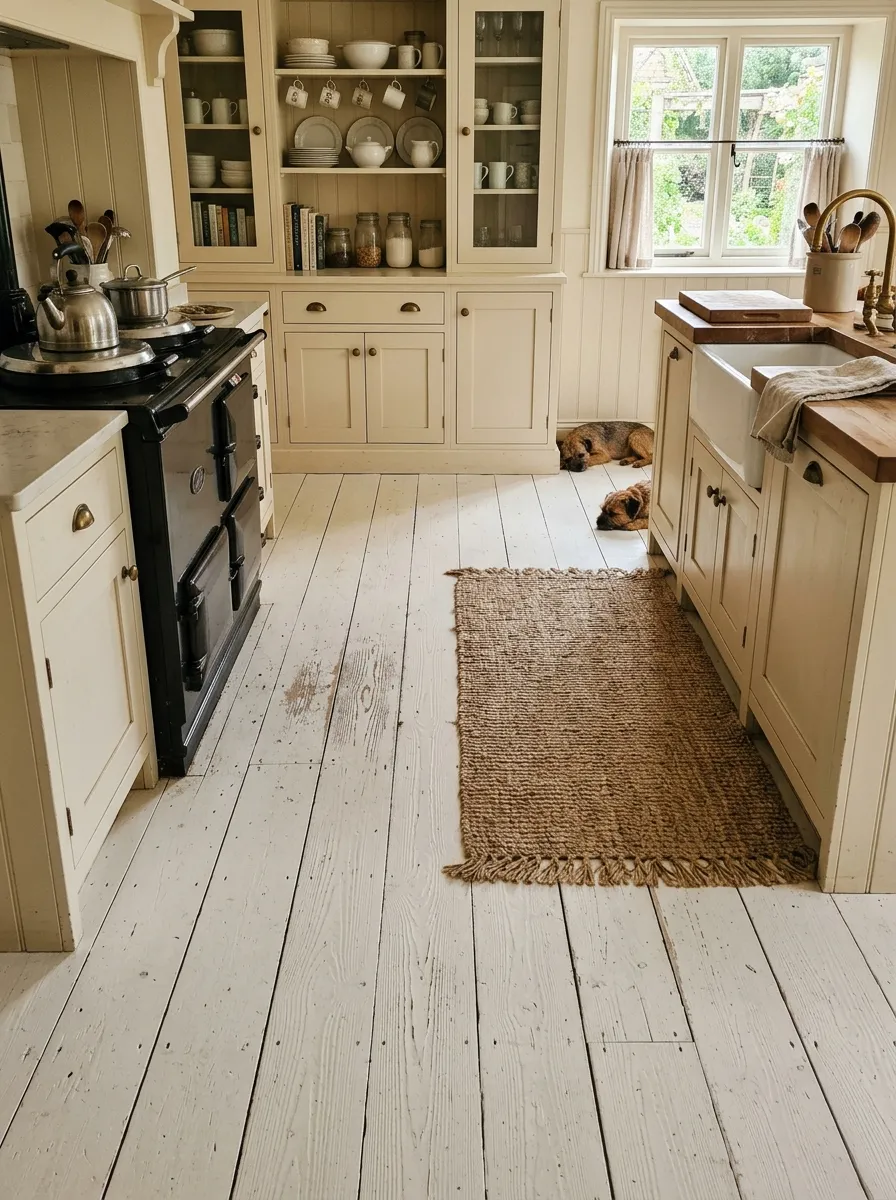
Painted wood floors are one of the most distinctly cottage flooring choices available, combining the warmth of natural wood with a soft, matte finish that immediately signals a comfortable and unpretentious home. White or off white painted floors in particular brighten smaller kitchens dramatically while adding that beloved worn, layered quality that develops with every scuff and footprint.
The beauty of painted floors is in their character over time. A new painted floor looks charming, but one that has lived through a few years of kitchen life looks genuinely beautiful. Jute or wool rugs layered in front of the sink and stove protect high traffic areas while adding another layer of natural texture. One thing I have learned about cozy kitchen ideas is that surfaces that age gracefully are always worth choosing over those that show wear as damage.
The Key: Use a porch and floor enamel paint rated for foot traffic rather than standard wall paint on kitchen floors since wall paint will chip and scratch visibly within weeks of regular use.
17
Freestanding Furniture Pieces
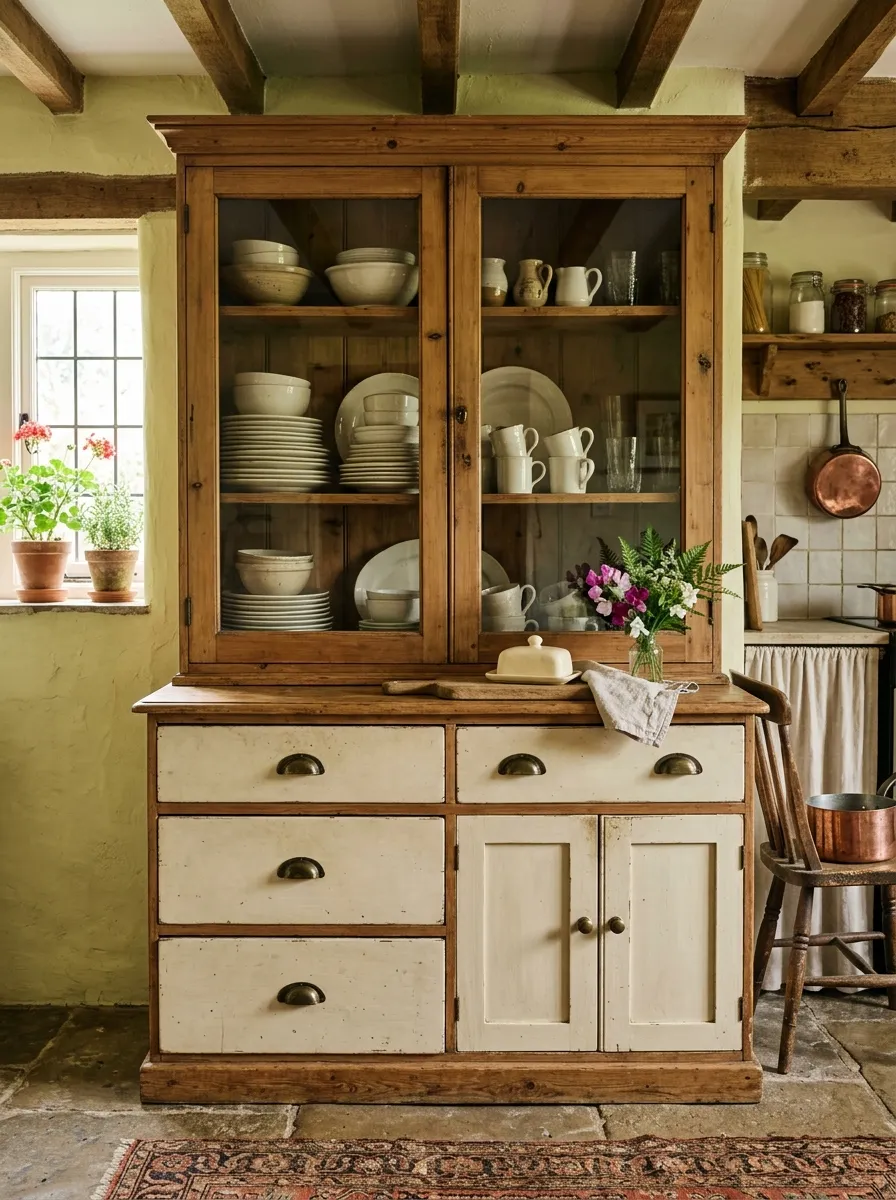
One hallmark of authentic Cottage Kitchen design is the presence of at least one freestanding furniture piece mixed among built in cabinetry. A repurposed antique pine dresser used as a hutch, a vintage farmhouse table as an island, or a painted armoire as a pantry: these elements signal a kitchen that was assembled with love and intention rather than ordered from a showroom floor as a complete package.
Freestanding pieces bring that sense of collected history that no amount of perfectly matched cabinetry can replicate. They also offer enormous flexibility since they can move rooms or move with you entirely when life changes. I always recommend beginning a cottage kitchen renovation by sourcing one standout antique or vintage furniture piece first and then building the rest of the space around it rather than treating it as an afterthought.
The Key: Secure tall freestanding furniture pieces to the wall with furniture straps regardless of how heavy they appear since kitchen activity creates subtle vibrations that can shift unsecured pieces over time.
18
Checkered Black and White Floors
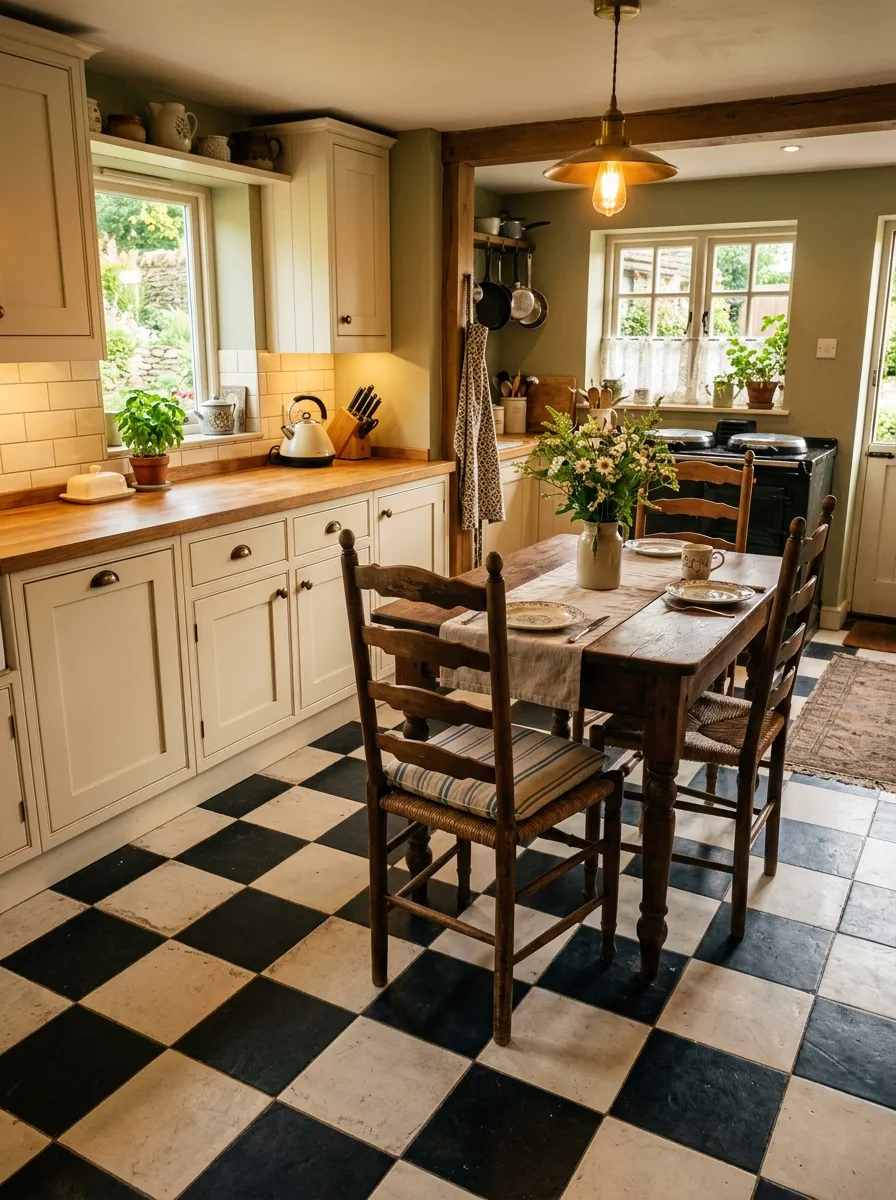
A black and white checkered floor is one of the most classic and enduring choices for farmhouse kitchen charm style spaces, and it has remained beloved for well over a century for a very good reason. It adds graphic energy and visual structure that grounds every other softer element in the kitchen, from cream cabinets to floral curtains to rattan pendants, without competing with any of them. This same checkered floor is one of the defining signatures of the most iconic retro kitchen designs, where the classic black and white grid sets the entire nostalgic mood instantly.
Modern checkered floors come in ceramic tile, vinyl plank tile, and even painted versions on existing wood floors. The most successful cottage applications use a slightly smaller check scale of approximately 12 by 12 inches rather than oversized 18 by 18 inch versions since smaller checks feel more proportional and vintage in lower ceiling cottage spaces. From what I have seen, this floor pattern photographs beautifully and consistently generates high save rates on Pinterest.
The Key: Lay checkered tile on the diagonal rather than square to the walls since diagonal placement makes the same floor pattern feel more dynamic and also visually widens narrow kitchen spaces.
19
Built In Banquette Seating
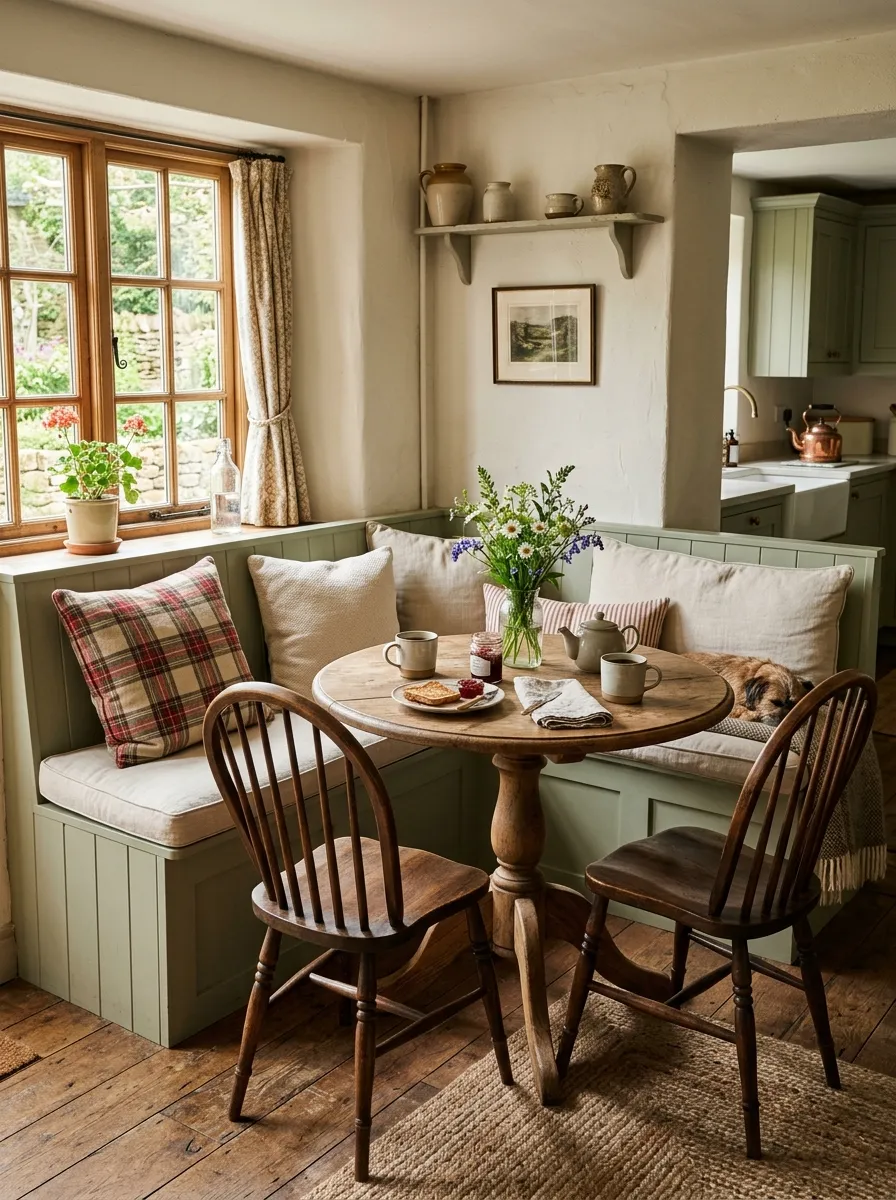
A built in banquette transforms an underused corner of your Cottage Kitchen into the most beloved spot in the house: the place where coffee happens in the morning, homework happens in the afternoon, and conversation happens at the end of every day. It is a feature that pays emotional returns far beyond its construction cost because it creates a dedicated gathering space within the kitchen itself.
Build the banquette with lift up seat storage beneath the cushions to maximize the practicality of the corner space. Paint it to match either your lower cabinets or a complementary accent color for cohesion. Pair it with two or three Windsor chairs or a small pedestal table to complete the nook. Personally, I think a kitchen without a sitting spot always feels slightly incomplete, like there is nowhere to pause and simply be in the room.
The Key: Build banquette seat depth at a minimum of 18 inches to ensure comfortable seating since shallow banquettes feel perched and uncomfortable and discourage the long lingering meals that make them worth building.
20
Copper and Brass Cookware Display
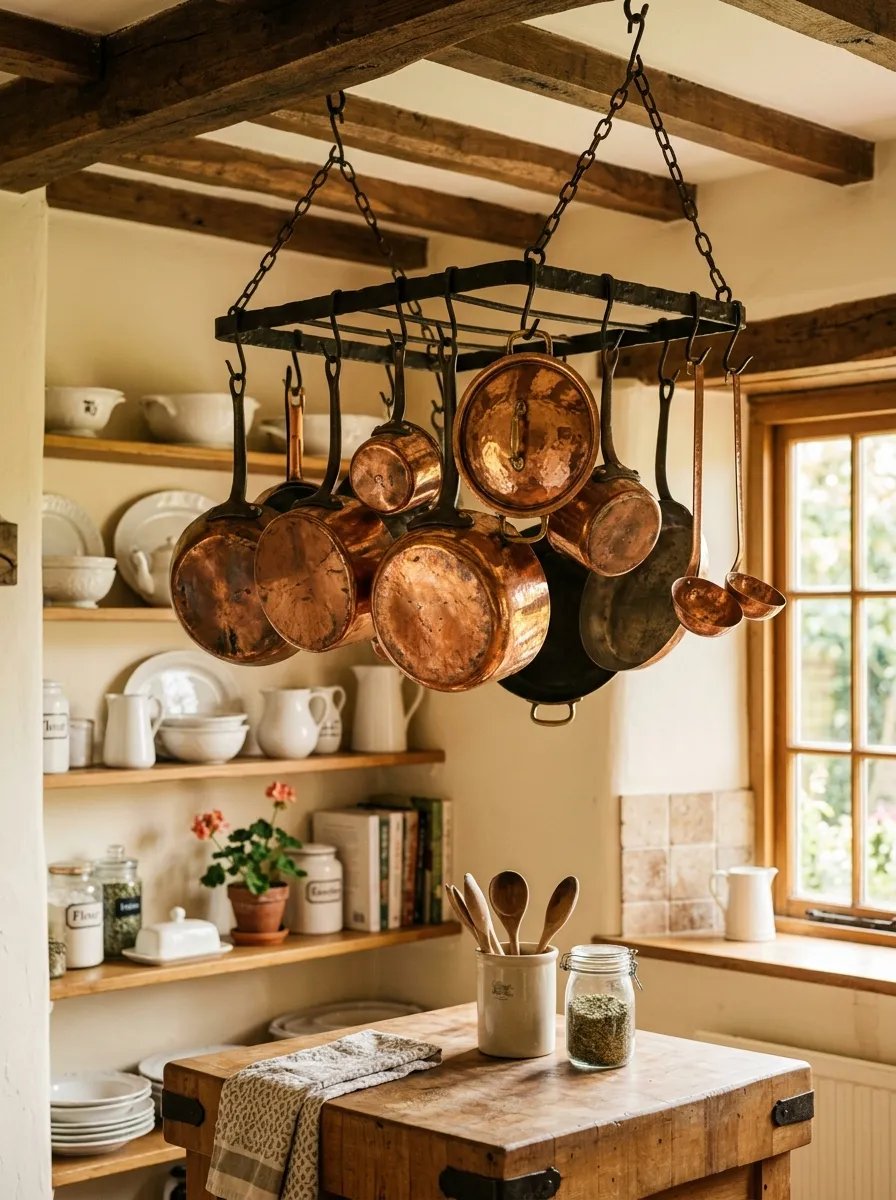
Displaying copper and brass cookware in a cottage kitchen design is one of those decisions that simultaneously solves a storage problem and creates a visual showpiece. A collection of copper pans hanging from a wrought iron ceiling rack above the island or stove catches light from every angle throughout the day and creates that warm, golden glow that makes a kitchen feel genuinely alive.
Copper also has the advantage of developing a beautiful natural patina over time, shifting from bright orange gold to deeper amber and rose tones as it ages. This patina signals authentic use and real cooking history, which is the very soul of cottage kitchen design. I have noticed that even a small collection of three or four copper pieces, whether pots, colanders, or measuring cups, is enough to anchor the warm metallic story of an entire kitchen.
The Key: Polish copper cookware only when you want the bright shine since many cottage kitchen enthusiasts intentionally allow patina to develop as it adds depth and authentic character to the display.
21
Stone or Slate Flooring
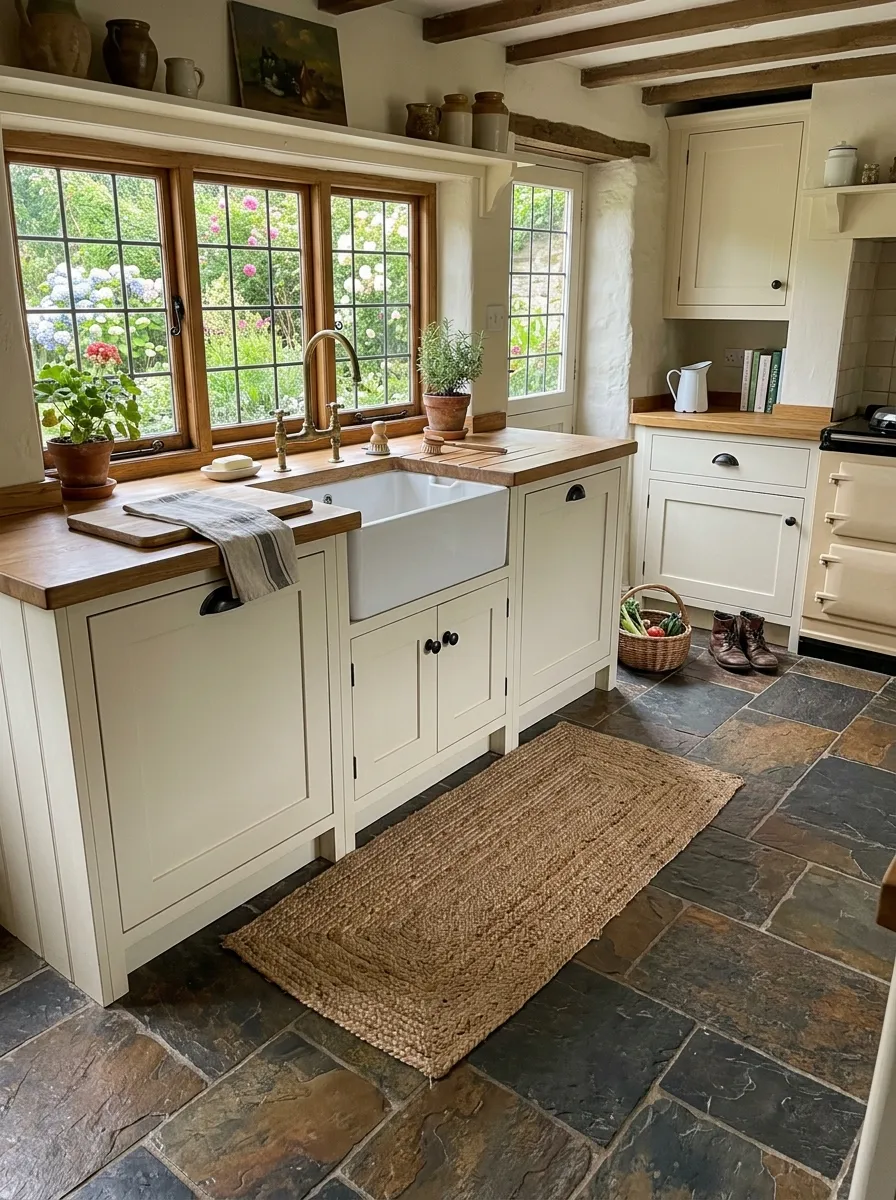
Stone and slate flooring brings a cottage style kitchen all the way down to the earth, grounding every softer element above it with something genuinely ancient and enduring. Natural slate in particular with its layered color variation of charcoal, brown, rust, and green tones creates a floor that looks more beautiful with every year of use rather than tired or worn.
Stone floors also stay cool in summer and work beautifully with underfloor heating in cooler months, making them one of the most practical long term flooring investments for a working kitchen. The irregular texture of natural slate provides gentle slip resistance as well. What I have found is that in cottage kitchens, stone floors become the quiet foundation that makes every other material choice look more considered and intentional simply by association.
The Key: Seal natural slate floors with a penetrating stone sealer annually since unsealed slate is highly porous and will absorb cooking grease, food stains, and liquids that are nearly impossible to remove once they penetrate the stone.
22
Painted Dresser as Kitchen Island
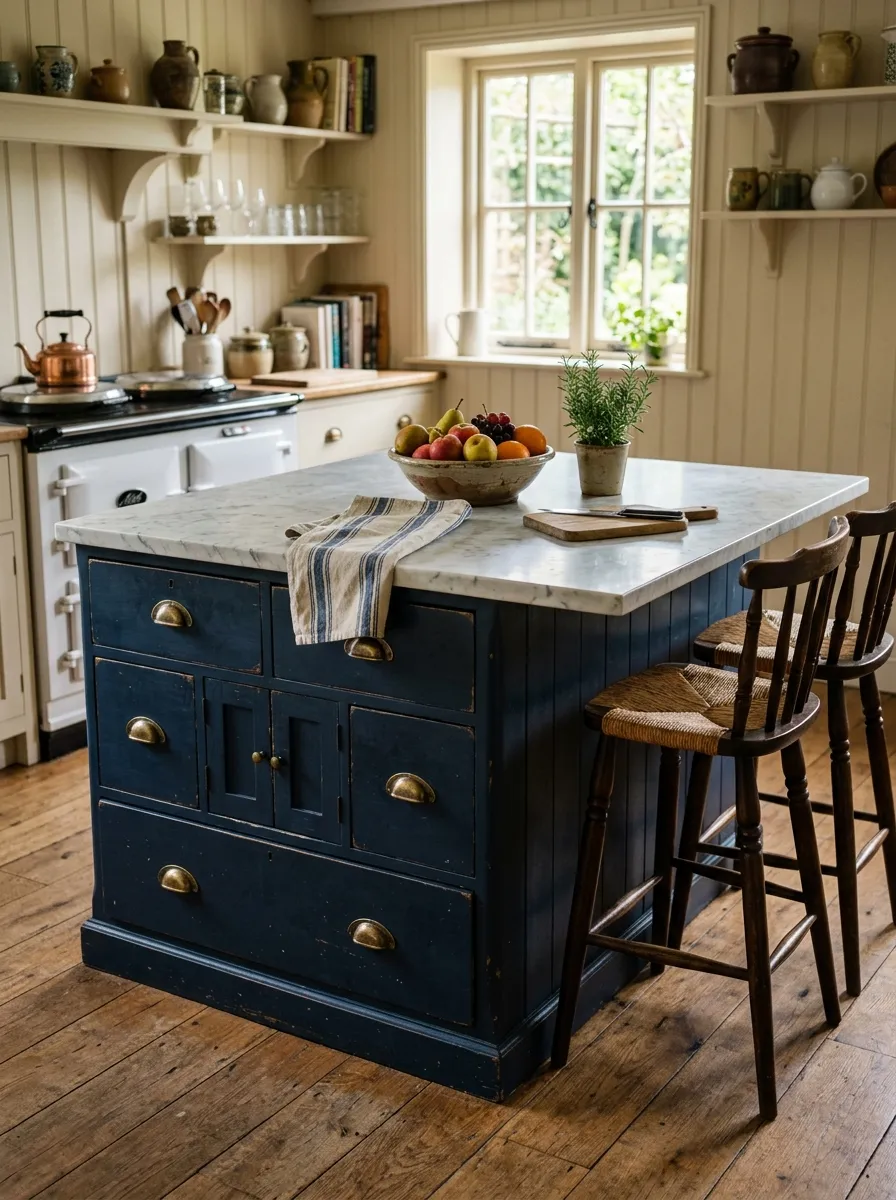
Using a painted antique dresser as a kitchen island is one of the most genuinely creative and budget friendly moves in all of cozy kitchen ideas for the cottage style. It immediately creates that collected, one of a kind quality that no amount of custom cabinetry can manufacture because it is literally unique. The contrast of a painted piece against surrounding cabinetry also adds visual depth and interest to the kitchen layout. This same love of using unexpected, freestanding pieces to add character is what drives the best DIY home projects that transform a space beautifully without requiring a full renovation budget.
Top the dresser with a thick marble slab, a butcher block, or even a zinc sheet for a functional working surface that adds material contrast. The original drawers provide excellent storage for linens, flatware, or baking tools. I always recommend this approach for people who want a genuinely distinctive kitchen island without spending on custom millwork since the final result is invariably more interesting than anything mass produced.
The Key: Have the dresser top leveled and the legs reinforced by a carpenter before installation since antique dressers were not built to withstand the lateral pressure of daily kitchen work or barstool use.
23
Linen and Cotton Textiles Throughout
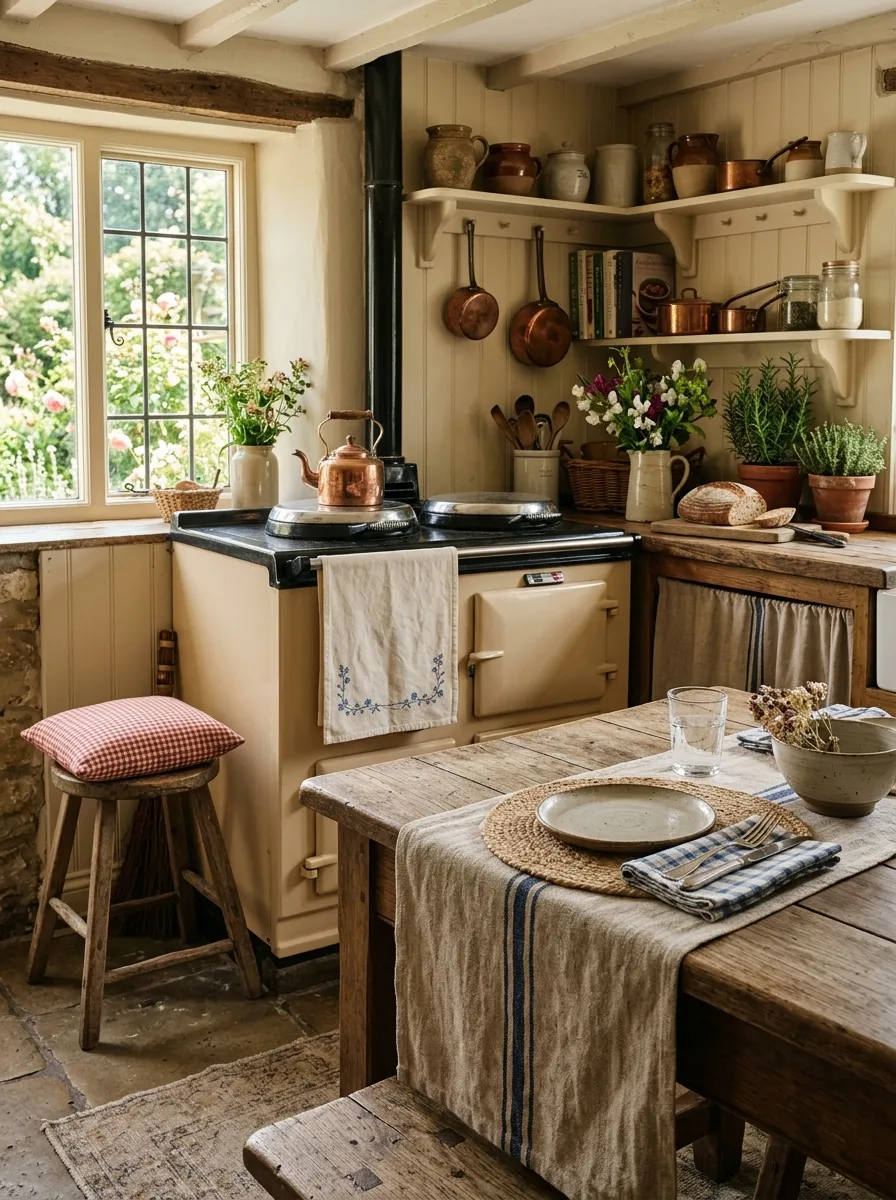
Textiles are the element most often overlooked in kitchen design and the one that makes the single biggest difference to how warm and livable a farmhouse kitchen charm space actually feels. In cottage kitchens specifically, layering different natural fabrics across multiple surfaces creates that soft, gathered quality that photographs beautifully and feels even better to be inside.
Focus on linen and cotton since both materials age beautifully, launder easily, and carry an inherent natural quality that synthetic textiles cannot replicate. A striped linen table runner, an embroidered cotton tea towel, a small gingham check cushion on a stool, and a woven placemat under your fruit bowl: these are small investments that collectively transform the sensory experience of your kitchen from hard and functional to genuinely comfortable and welcoming.
The Key: Wash all kitchen linens together in cool water and line dry rather than machine dry since machine heat causes natural linen and cotton to shrink unevenly and lose the relaxed drape that makes them look beautiful.
24
Cottage Kitchen Garden Window
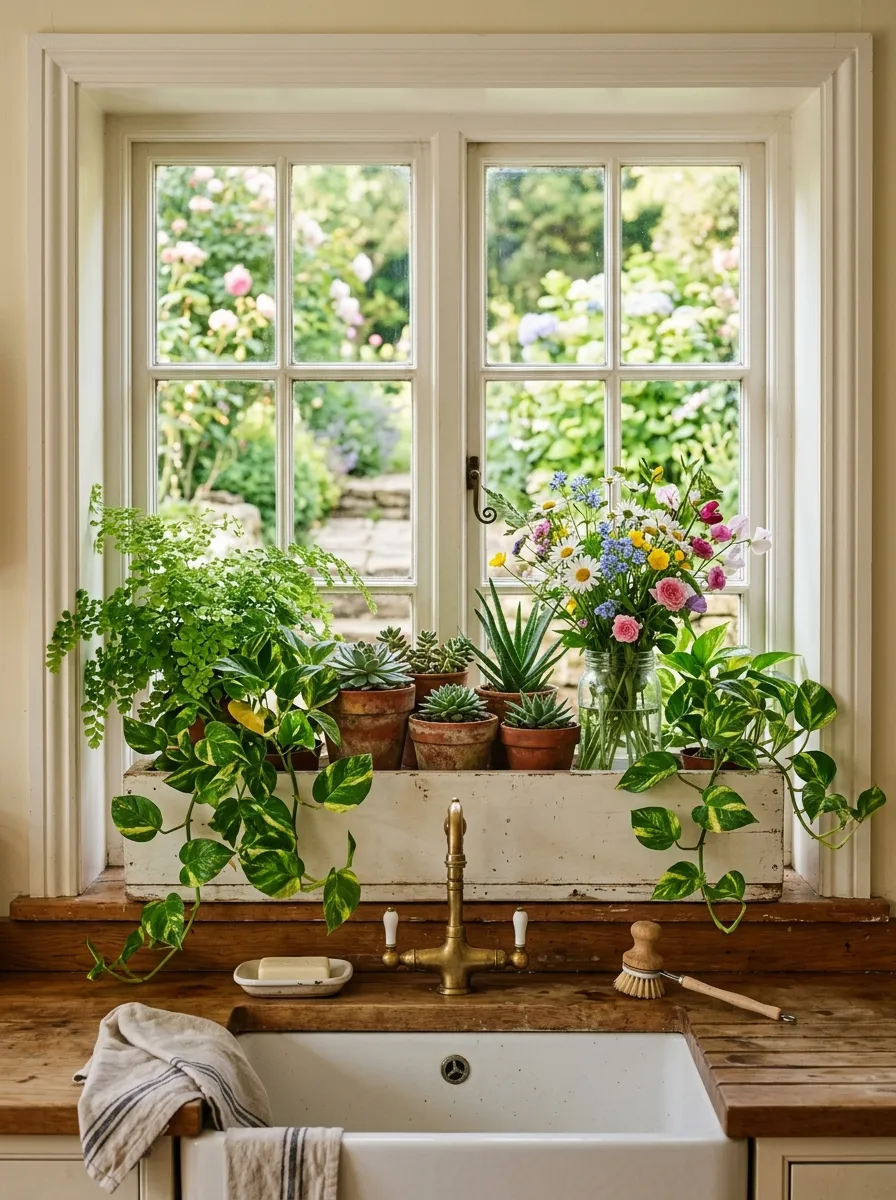
A garden window installed above the kitchen sink is the most dramatically cottage detail you can add to any kitchen because it blurs the boundary between the indoor kitchen and the living natural world outside. It extends out from the wall like a small greenhouse, capturing light from three sides and creating a lush growing space that brings year round greenery and life directly into the heart of the home. This same passion for bringing nature indoors through greenery, plants, and organic texture is beautifully explored in a full guide to houseplant corners in every room of the home.
Fill a garden window with trailing pothos for cascading greenery, compact ferns for texture, small succulent arrangements for low maintenance color, and a glass jar of fresh cut flowers from the garden for seasonal charm. The light that filters through this kind of layered planting creates beautiful dappled shadow patterns across the kitchen that shift throughout the day. I cannot stress this enough: a well planted garden window above the kitchen sink is one of the most soul satisfying details any cottage kitchen can have.
The Key: Install a garden window on a south or east facing wall to maximize growing light since north facing windows receive insufficient direct sun to sustain most kitchen herbs and flowering plants year round.
Every one of these 24 ideas shares the same quiet philosophy at its heart: that a Cottage Kitchen should feel like a place where real life happens beautifully. Not a showroom, not a magazine shoot, but a room that smells like herbs and warm bread, that shows the marks of daily use as badges of honor, and that welcomes everyone who walks through the door without apology or formality. These are the kitchens that hold the memories that matter most, because they were designed not just to look good but to live well inside every single day.
If even three or four of these ideas have sparked something in you, that is enough to start. Save this post to your Pinterest boards so you can come back to it whenever you are ready for the next step in your kitchen transformation. Share it with a friend who has been dreaming of a cottage kitchen makeover of their own. The ideas in this article are here to help you build something genuine, and whatever you choose first, I hope it brings you the same warmth and everyday joy that cottage design has always been about.