Deck Stain Color
🏠 18 Real Ideas
⏱ Quick Read
🔥 Always Trending
18 Expert Deck Stain Color Ideas
for Every Wood Type to Avoid Mismatched Tones and Create a Beautiful, Cohesive Finish
Have you ever picked a gorgeous stain at the hardware store, applied it carefully to your deck, and then stood back in complete confusion when the result looked nothing like what you imagined? You are not alone. The truth is, wood has its own personality, and the way it absorbs color is deeply tied to its grain, density, and natural undertones. Choosing a stain without understanding your specific wood type is one of the most common reasons decks end up looking off, patchy, or unintentionally clashing with everything around them.
That is exactly why these deck stain color ideas were put together with each major wood type in mind. Whether you are working with cedar, pine, redwood, ipe, or something in between, this guide walks you through the right color choices, what to avoid, and how to get a finish that feels intentional rather than accidental. Read on and finally get the confident, cohesive results your outdoor space deserves.
01
Cedar with Warm Chestnut Tones
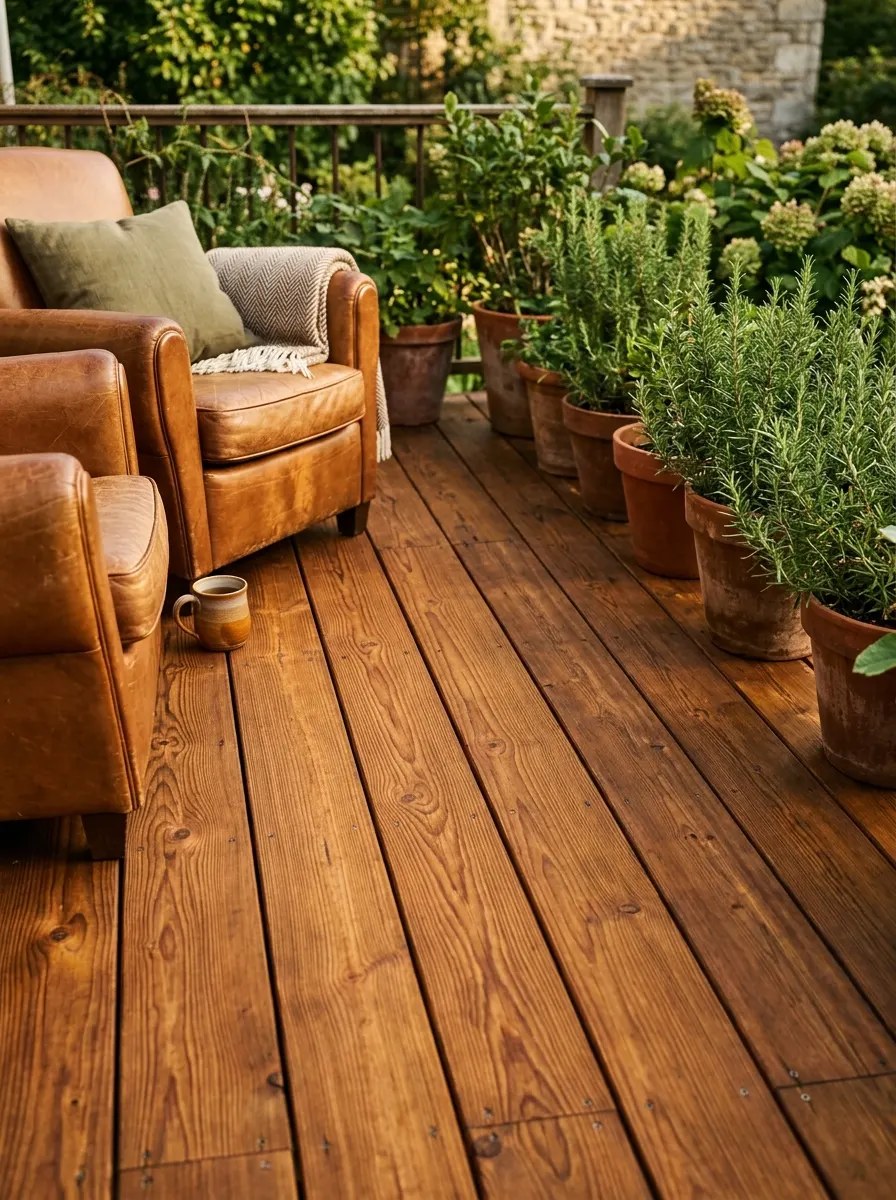
Cedar carries strong reddish undertones that influence every stain color you apply. Choosing a warm chestnut brown works beautifully because it adds depth without fighting the wood’s natural warmth. The result feels rich, layered, and completely intentional rather than accidental.
In my experience, chestnut on cedar produces one of the most satisfying transformations in outdoor spaces. The grain stays visible, the color feels elevated, and the whole deck ties neatly into surrounding greenery or neutral siding without looking forced or overdone.
The Key: Chestnut tones harmonize with cedar’s red base to create a warm, sophisticated finish that honors the wood’s natural character beautifully.
02
Cedar Softened with Slate Gray
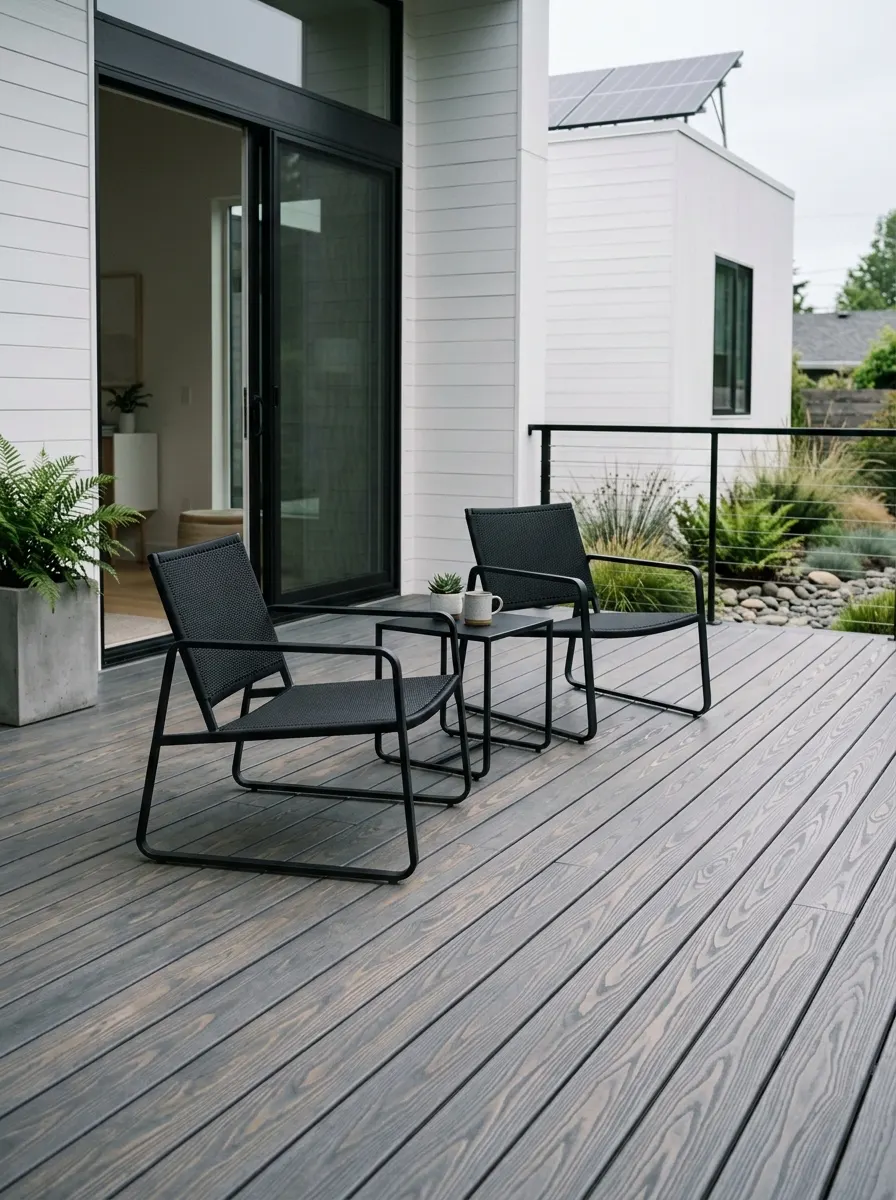
Slate gray on cedar may seem unexpected, but it works exceptionally well when you want a modern, architecturally clean result. The cool gray counterbalances cedar’s warmth, producing a finish that feels refined and current rather than rustic or overly traditional.
I have noticed this combination works best on homes with black window frames, white or light siding, and minimal landscaping. The contrast between cedar’s natural grain and the muted gray creates a striking visual tension that feels very intentional and designer-approved.
The Key: Slate gray transforms cedar from country-warm to cool and architectural without losing the wood grain texture that makes it interesting.
03
Cedar Finished in Dusty Taupe
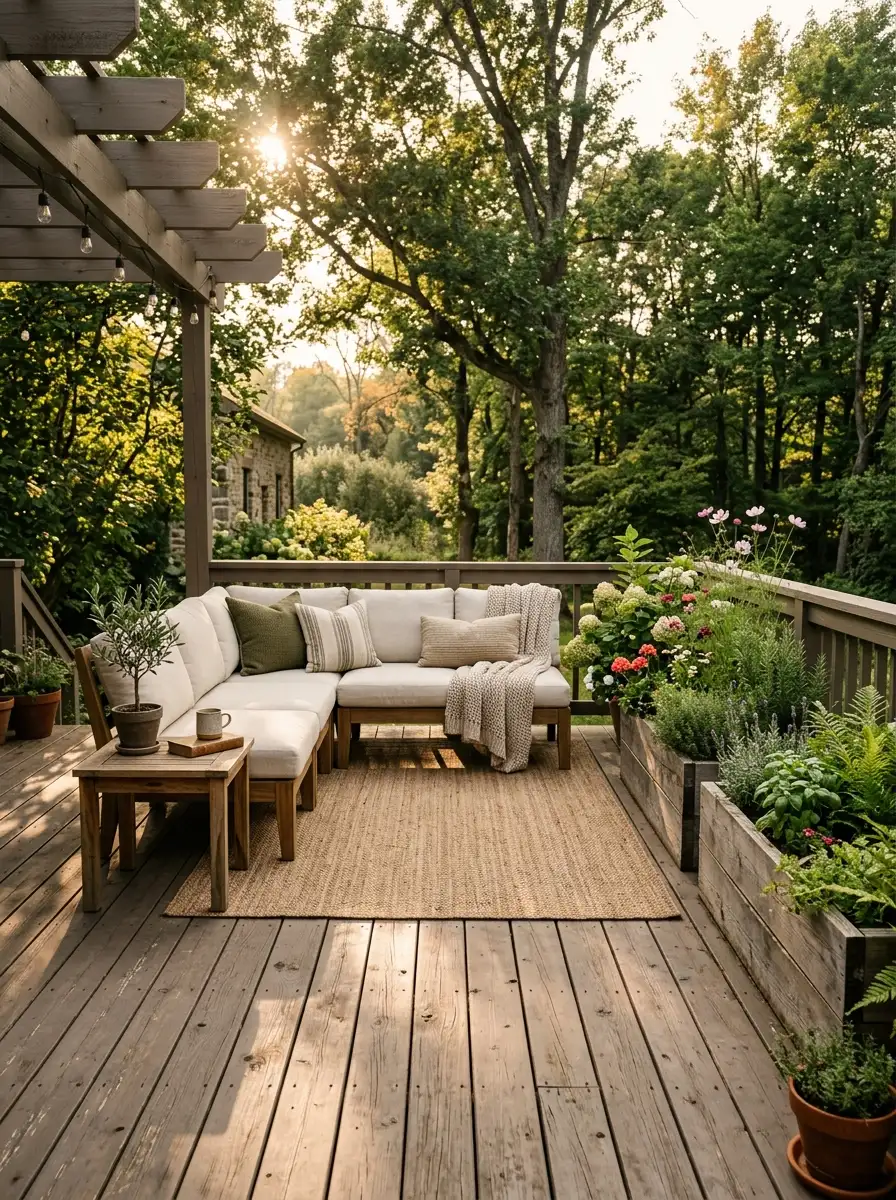
Dusty taupe sits beautifully on cedar because it bridges warm and cool without committing fully to either. It tempers cedar’s redness just enough to create a grounded, balanced look while keeping things soft and welcoming rather than sleek or industrial.
This is one of those stain color ideas for decks that truly shines on farmhouse-style homes or properties with creamy painted siding and natural landscaping. The taupe reads as neutral in some lights and warmly earthy in others, which gives the deck a beautiful, chameleon-like quality throughout the day.
The Key: Dusty taupe offers the perfect warm-cool balance on cedar, producing a grounded finish that feels effortlessly polished and livable.
04
Pine Stained in Medium Warm Brown
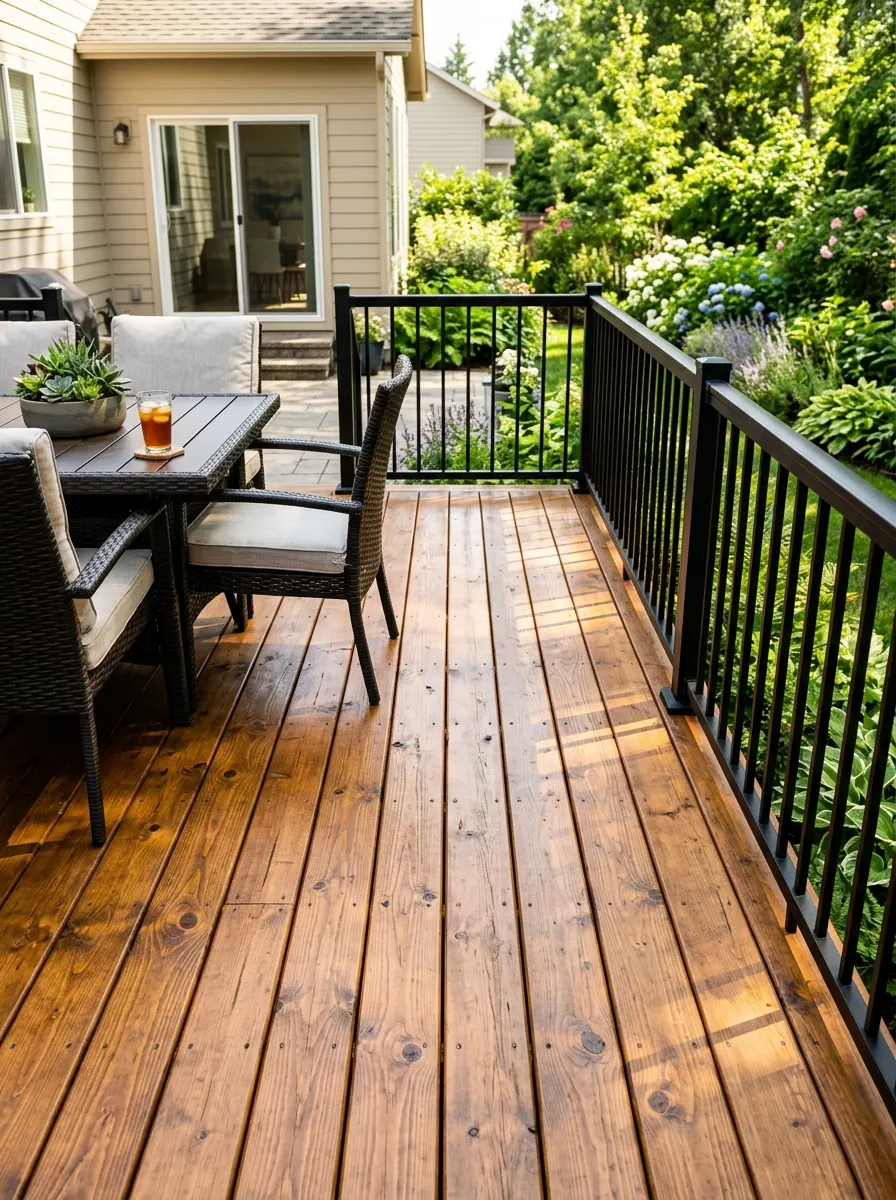
Pressure-treated pine can feel raw and utilitarian straight from the lumberyard, but a medium warm brown stain changes everything. It anchors the wood’s natural greenish-yellow tones, adds visual warmth, and gives the surface a finished, intentional look that holds up beautifully through every season.
The grain and knots remain visible beneath the stain, which actually adds character rather than looking like a flaw. Paired with black railings or natural stone accents, a warm brown pine deck feels polished enough for everyday living and relaxed enough for summer entertaining.
The Key: Medium warm brown corrects pine’s awkward undertones while enhancing its grain, delivering a result that feels warm, finished, and completely intentional.
05
Pine Enhanced with Chestnut Gold
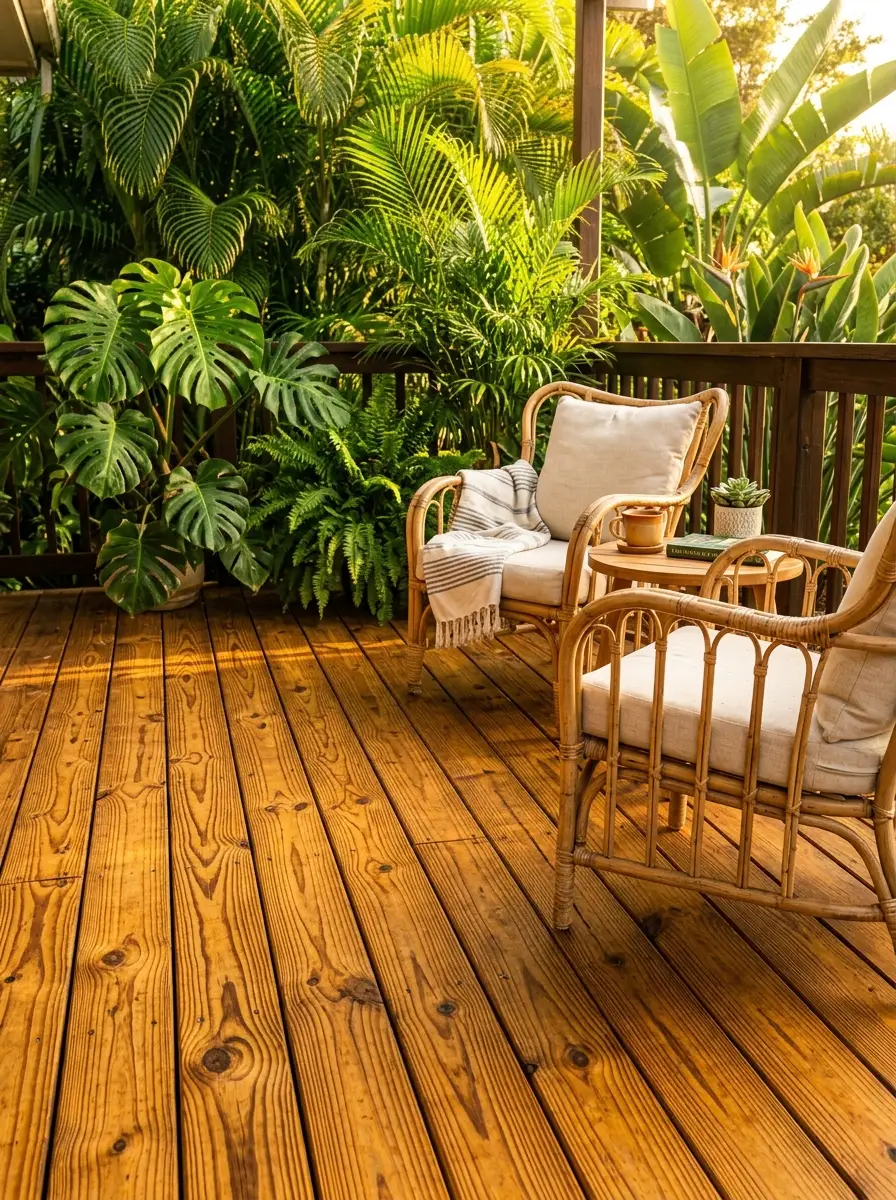
Chestnut gold is a standout choice for pressure-treated pine because it amplifies the wood’s natural golden undertones rather than suppressing them. The finish reads as sun-drenched and warm without crossing into brassy or orange territory, which is exactly the balance pine needs.
I have seen this color transform even the most basic pine decks into spaces that feel designed and cohesive. Paired with woven furniture, tropical plants, and warm-toned textiles, chestnut gold creates an outdoor living area that feels genuinely inviting from every angle.
The Key: Chestnut gold celebrates pine’s golden character with a richly warm finish that feels sunny and refined without reading as orange.
06
Pine with a Weathered Oak Finish
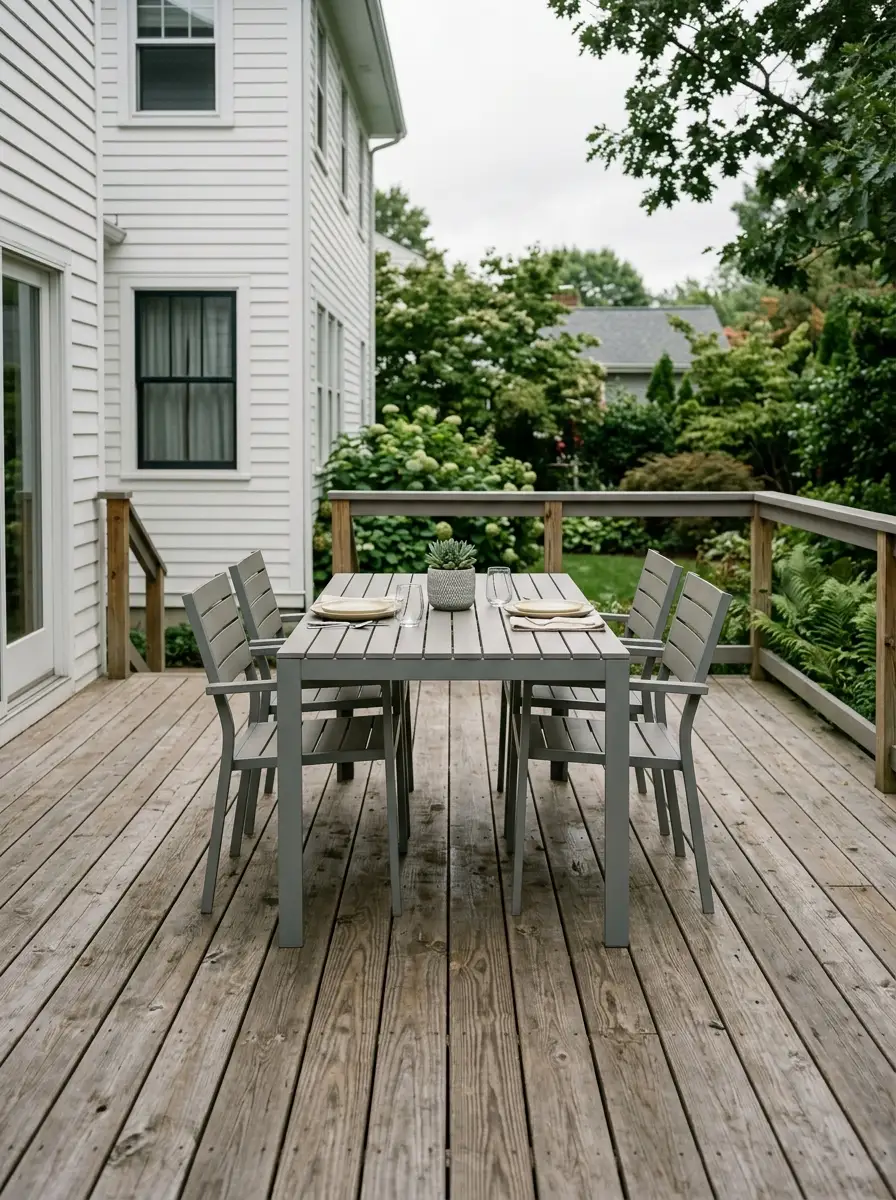
Weathered oak strikes a rare balance on pressure-treated pine: it introduces a gentle smoky patina without going cold, gray, or visually flat. The result is a finish that looks lived-in and considered at the same time, which is surprisingly difficult to achieve with pine.
This finish works especially well for homeowners who love the look of aged wood but want something cleaner and lower-maintenance than truly distressed timber. Paired with gray metal furniture and white or light siding, weathered oak on pine reads as effortlessly modern.
The Key: Weathered oak softens pine’s raw appearance with a mature, earthy patina that feels sophisticated without going overly cool or flat.
07
Redwood Finished with Clear Oil
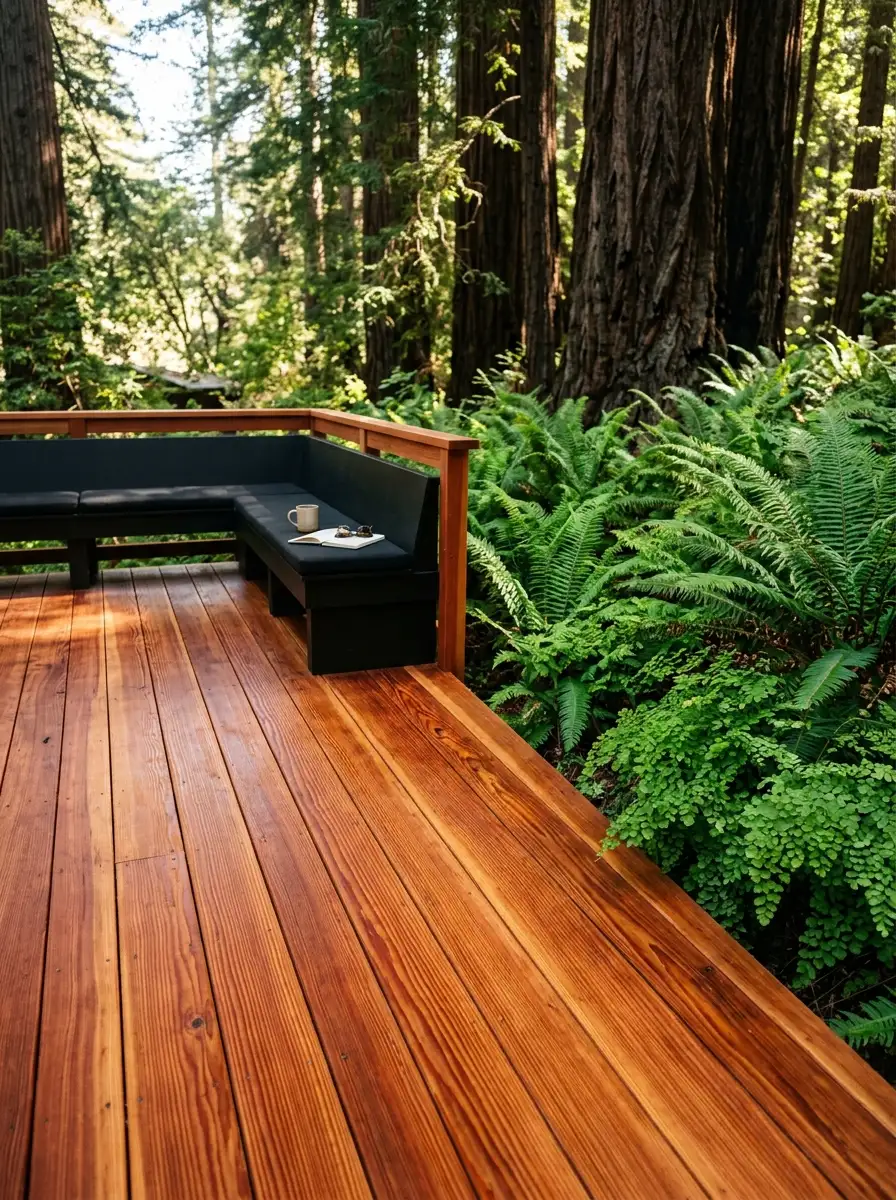
Redwood is one of the few woods that looks genuinely stunning with nothing more than a clear oil finish. The natural color moves from pale cinnamon to deep brick red within the same board, and a clear oil simply deepens and protects those tones without covering anything up.
This approach is one of the most popular wood deck stain ideas for homeowners who want their outdoor space to feel natural, premium, and completely unfussy. The grain stays completely visible, the color reads as rich and warm, and the whole result feels more like art than maintenance.
The Key: Clear oil on redwood allows the wood’s own breathtaking color variation to remain the star while providing essential UV and moisture protection.
08
Redwood in Light Mahogany Stain
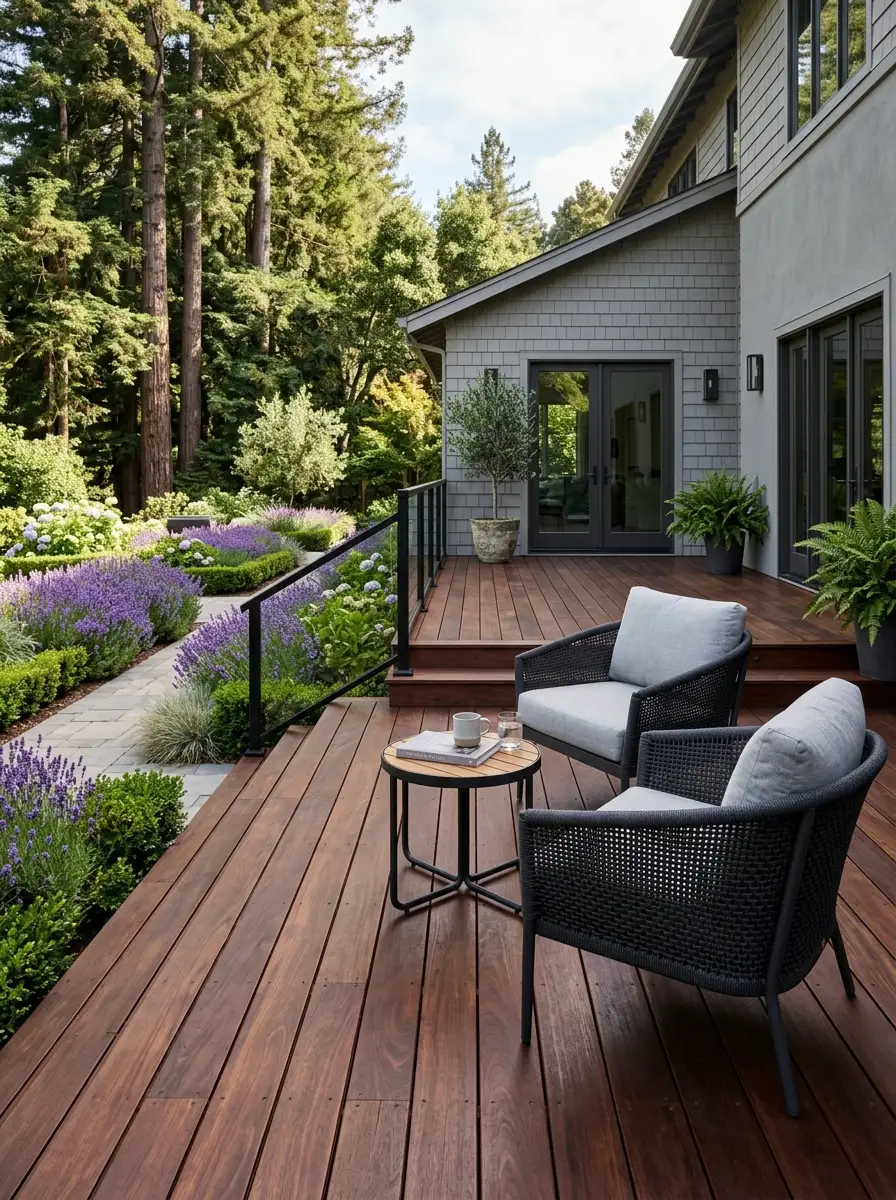
Light mahogany deepens redwood just enough to add a sense of formality without masking any of the wood’s natural grain or color variation. It darkens the overall tone while keeping a semi-transparent quality that lets the wood’s character breathe beneath the surface.
This is one of those deck stain color ideas that pairs especially well with formal garden settings, structured landscaping, and neutral or gray siding. The warmth-precision balance reads as high-end and curated without feeling overdone or stuffy.
The Key: Light mahogany adds a layer of formal richness to redwood that feels genuinely elevated and suits more structured, designed outdoor environments perfectly.
09
Redwood Stained in Cinnamon Brown
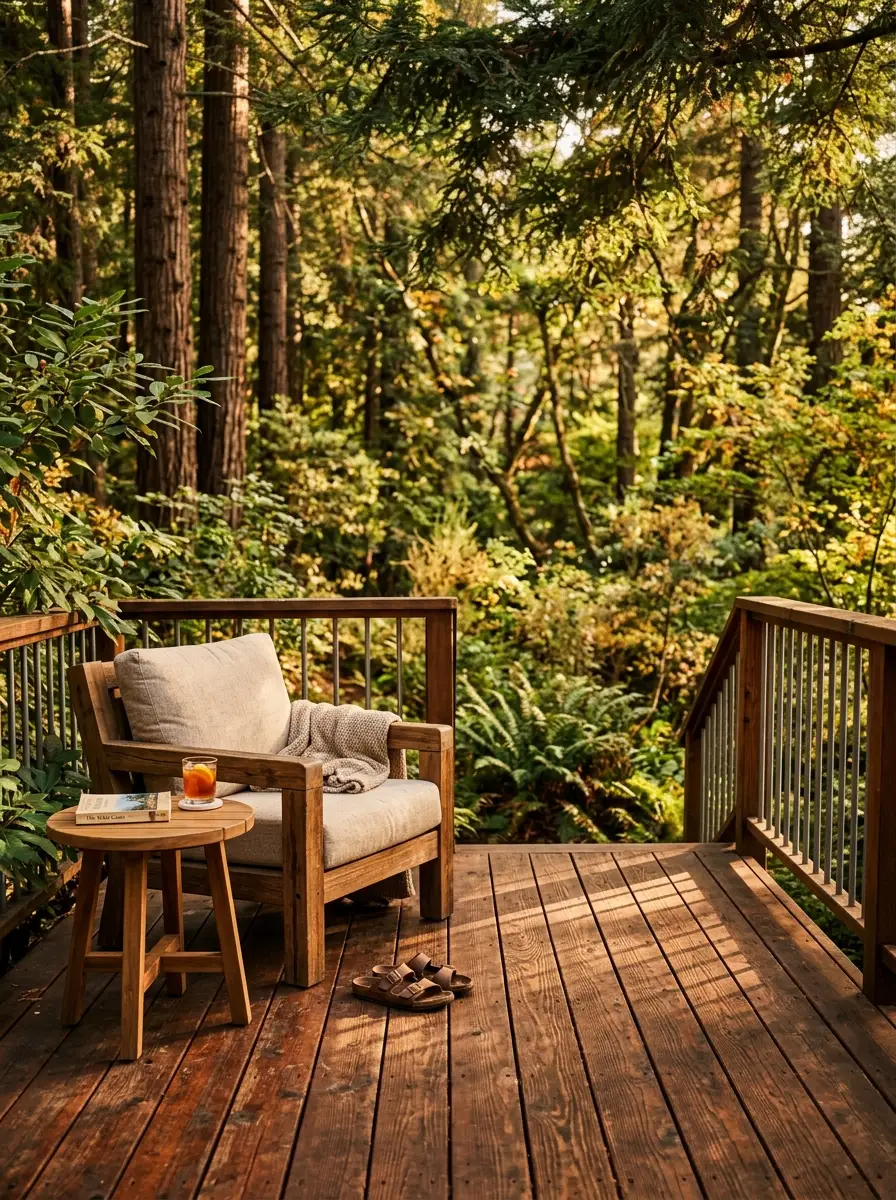
Cinnamon brown takes redwood’s natural tones and deepens them into something genuinely rich and layered. It adds warmth and spice without turning orange or muddy, which is exactly the kind of fine line that makes this color feel so satisfying when it is executed correctly.
I have noticed this combination works its best magic in dappled light or golden-hour sun, where the stain and the wood grain create a moving, textural quality that feels almost alive. Paired with native wood furniture and layered greenery, cinnamon brown on redwood creates an outdoor space that feels both lush and serene.
The Key: Cinnamon brown richly enhances redwood’s existing warmth, producing a toasted, organic finish that feels deeply comfortable in natural outdoor settings.
10
Ipe Treated with Penetrating Oil
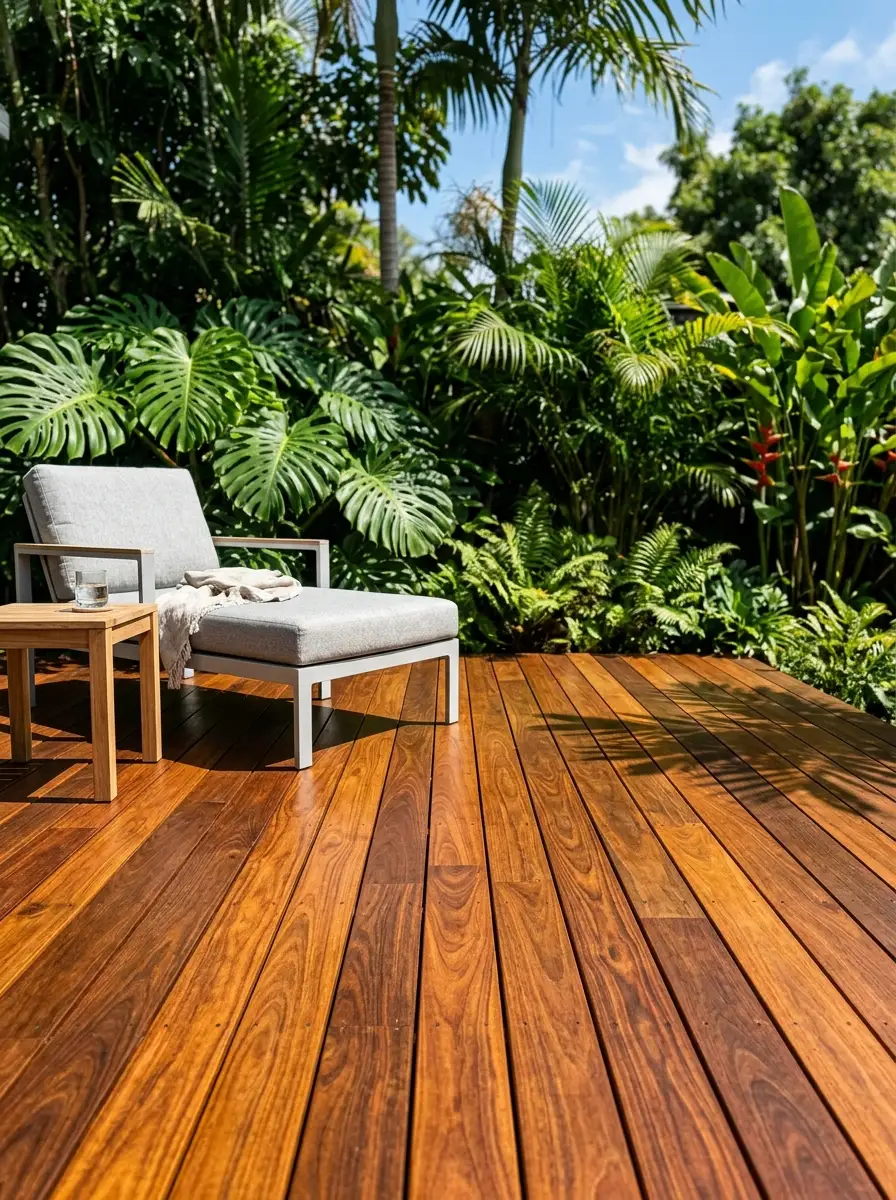
Ipe and other tropical hardwoods are notoriously resistant to stain absorption, which means heavy pigmented products simply sit on the surface and peel. A penetrating oil works entirely differently: it moves into the wood at a microscopic level, feeding the fiber and enhancing the natural color from within.
The result is a surface that glows warmly without looking coated or artificial. The rich chocolate and red-brown tones in ipe’s grain become more vivid and defined, and the overall look reads as polished, sun-kissed, and completely premium without any of the obvious fingerprints of a heavy finish.
The Key: Penetrating oil works with ipe’s density rather than against it, bringing out the wood’s own luxurious color from the inside out naturally.
11
Ipe with Driftwood Gray Oil Tint
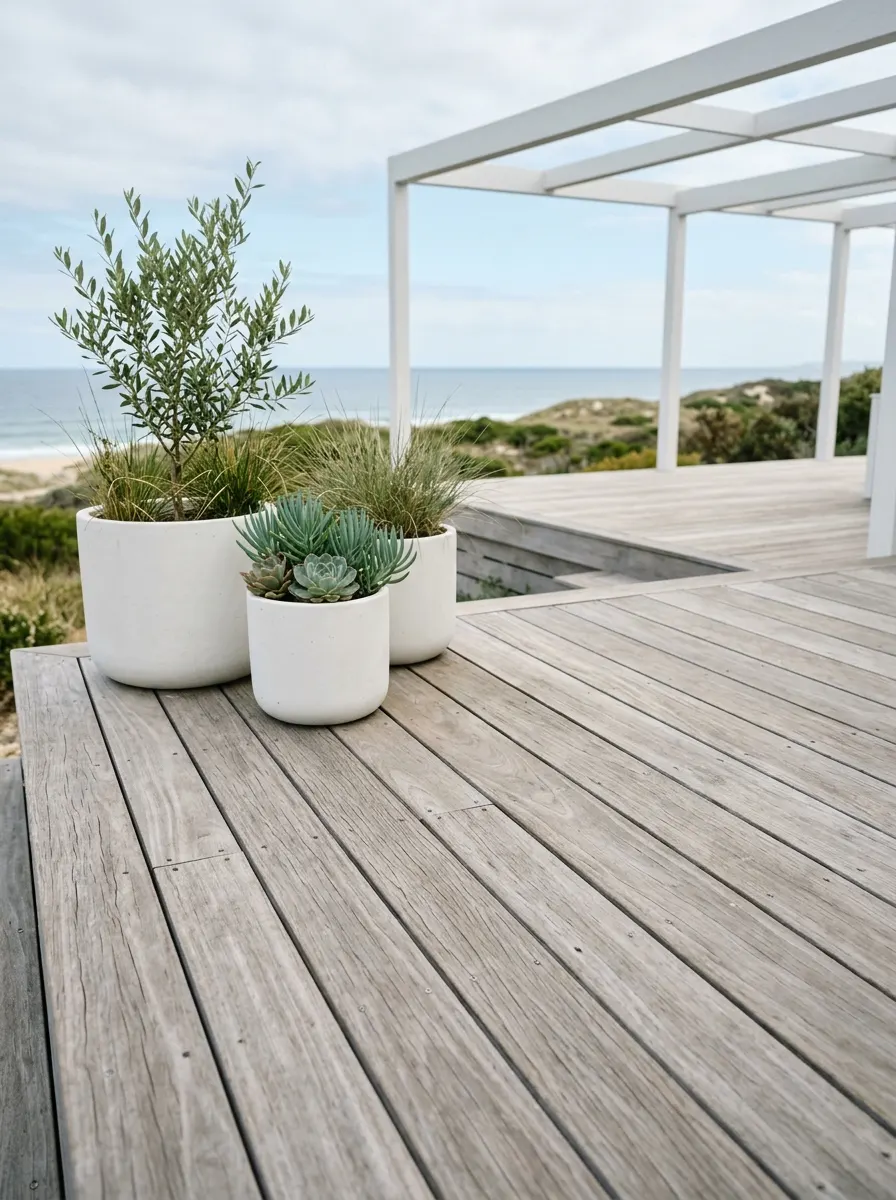
A driftwood gray oil tint on ipe softens the wood’s intense warmth into something that reads as coastal and architecturally calm. The tint is light enough to let the grain remain fully visible while gently shifting the color story from deep tropical to quietly elegant and beachy.
This approach suits outdoor spaces surrounded by white structures, clean modern lines, and tropical foliage particularly well. The result feels simultaneously relaxed and upscale, which is an unusual balance that very few finishes on tropical hardwood manage to achieve this naturally.
The Key: Driftwood gray oil tint mellows ipe’s intensity without masking its grain, creating a finish that is serene, coastal, and undeniably sophisticated.
12
Ipe Finished with Teak Oil
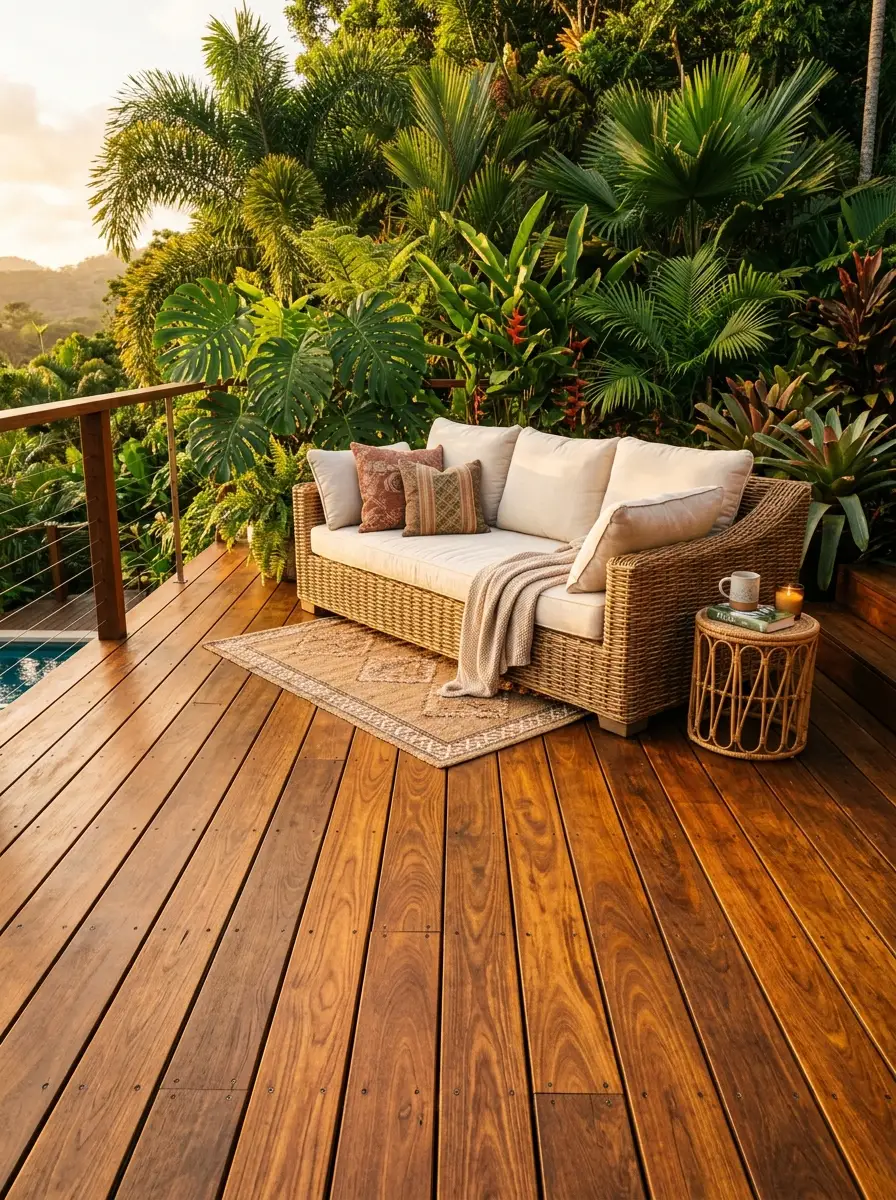
Teak oil on ipe brings out the copper and honey undertones in the wood with a richness that feels deeply vibrant and layered. Unlike heavier stains, teak oil lets the board-to-board color variation remain visible, which creates a beautiful sense of movement and organic depth across the whole deck surface.
This is one of the most satisfying deck stain color ideas for tropical hardwood because it celebrates what makes ipe special rather than covering it up. Paired with dense tropical planting and warm ambient lighting, a teak-oiled ipe deck feels genuinely extraordinary.
The Key: Teak oil deepens ipe’s natural copper and honey tones into a richly vibrant, textured finish that celebrates the wood’s inherent luxury and depth.
13
Douglas Fir in Golden Honey Stain
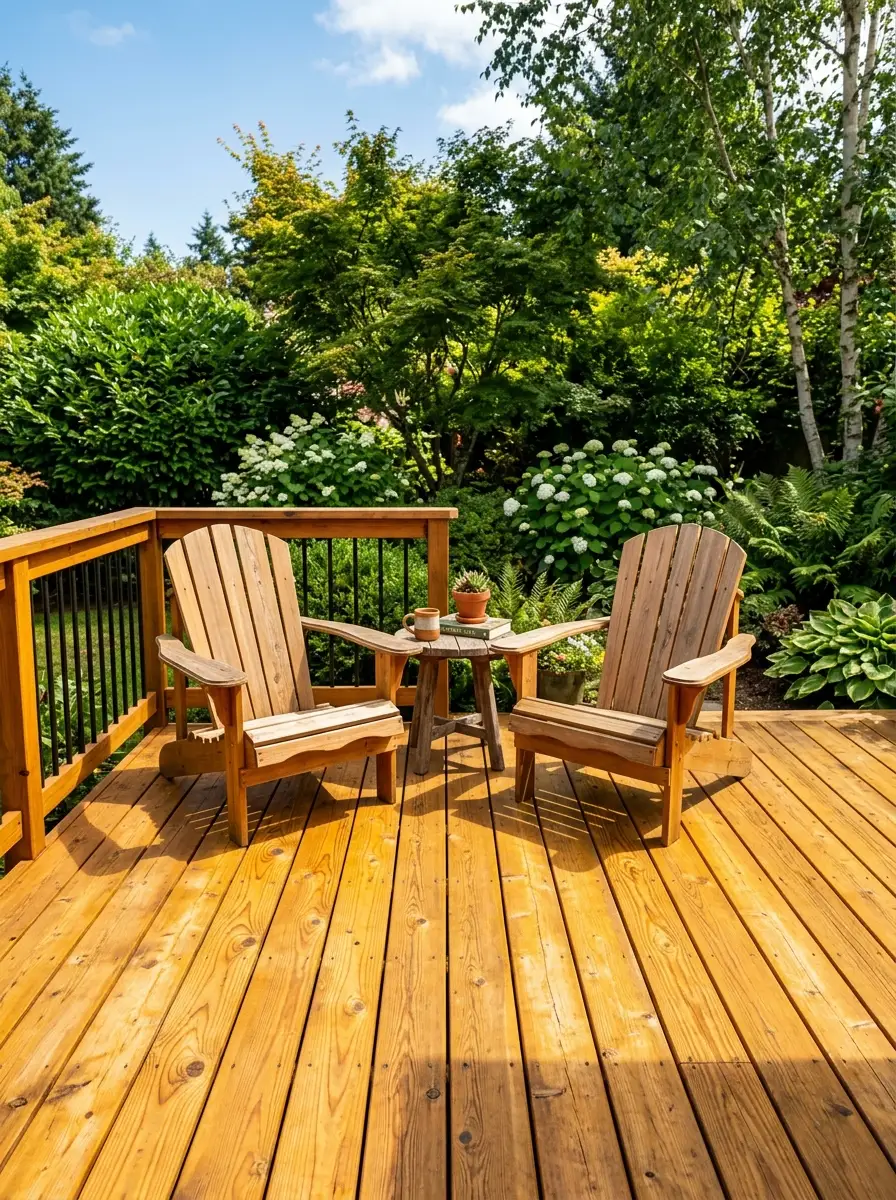
Douglas fir has an open, pronounced grain with warm yellow undertones that respond beautifully to golden honey stains. Rather than suppressing the wood’s natural character, honey stain leans into it, amplifying the amber warmth and making the grain pattern a genuine design feature.
The knot patterns in Douglas fir become even more visible and charming beneath a honey stain, which adds rustic texture and personality to the overall deck surface. This color works especially well in relaxed outdoor settings surrounded by mature garden plantings and natural wood accents.
The Key: Golden honey stain celebrates Douglas fir’s natural warmth and grain personality, turning every knot and amber streak into a beautiful design detail.
14
Douglas Fir with Cedar Tone Stain
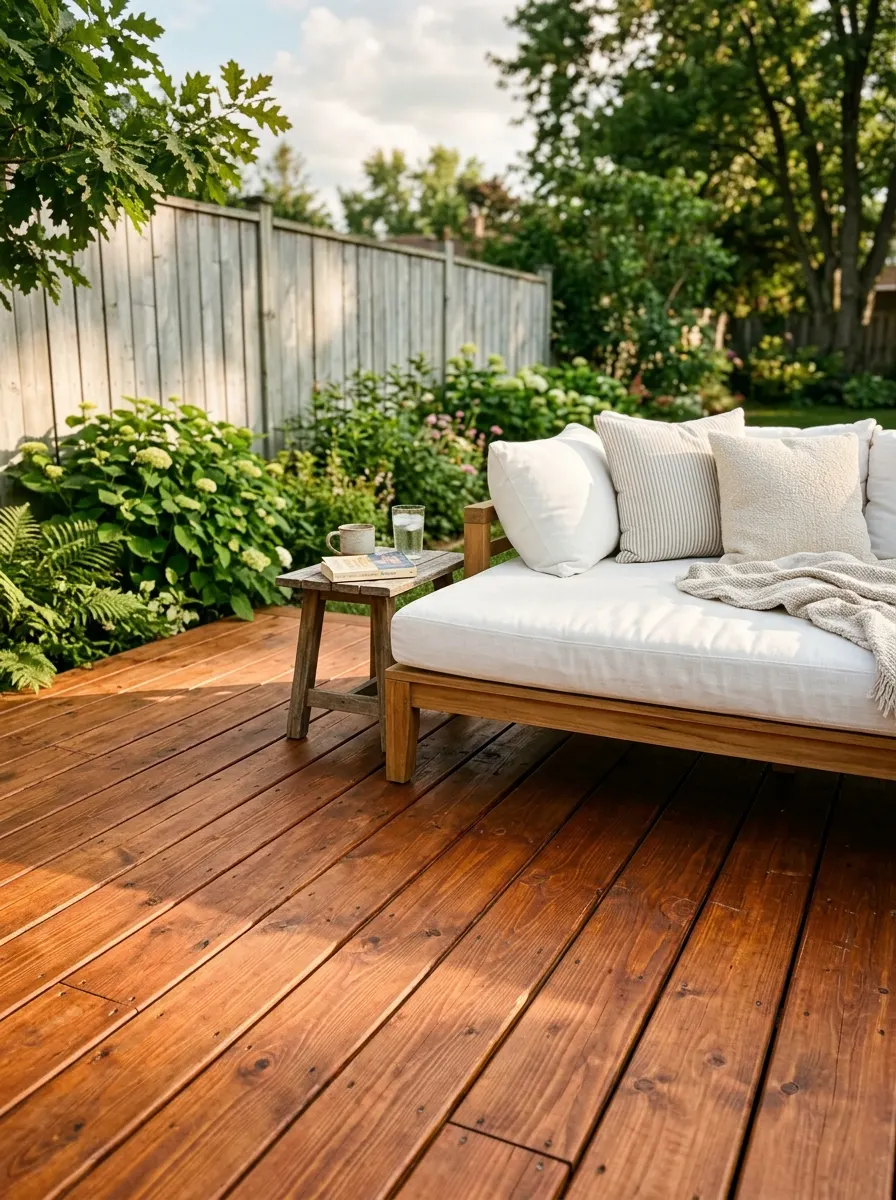
A cedar-tone stain on Douglas fir creates a wonderfully warm, slightly reddish-amber finish that reads as natural and premium. It deepens the fir’s yellow undertones into a richer register without going orange, which is a delicate balance this particular stain handles very confidently.
For outdoor spaces with white or light gray fencing, cedar-tone stain on Douglas fir creates a beautiful contrast that makes both elements look more intentional. The finish stays semi-transparent enough to let the grain breathe while adding the visual warmth that makes a deck feel genuinely welcoming.
The Key: Cedar tone stain enriches Douglas fir’s yellow undertones into a warm amber register that feels natural, elevated, and cohesive across any outdoor setting.
15
White Oak with Cool Gray Stain
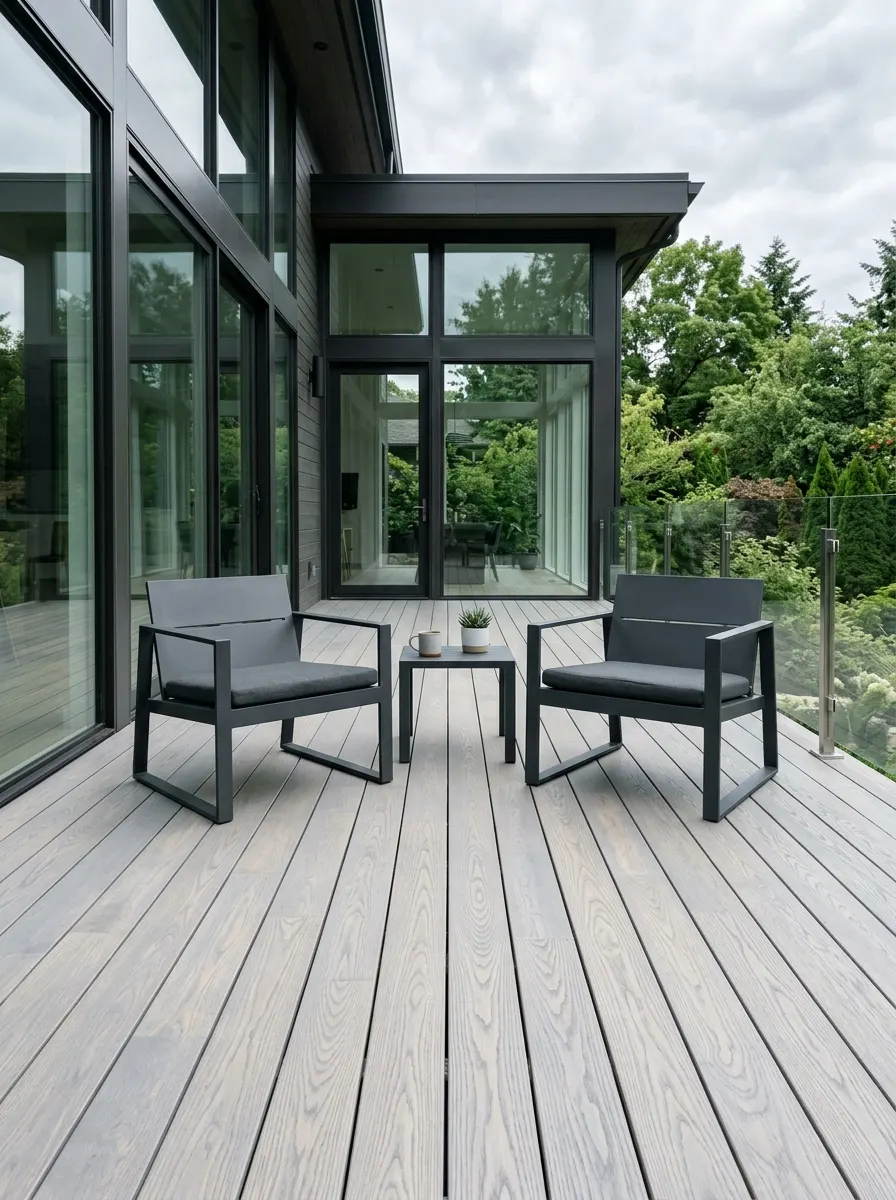
White oak’s natural color sits in a golden-beige range with fine, tight grain lines that respond graciously to cool gray stains. The gray tempers the warmth just enough to produce a finish that reads as cleanly modern and architectural without losing the organic quality that makes white oak appealing in the first place.
This is one of the most versatile deck stain color ideas for contemporary homes because cool gray on white oak suits a wide range of exterior colors and outdoor furniture styles beautifully. It is the kind of finish that photographs exceptionally well and ages gracefully.
The Key: Cool gray stain on white oak creates a sleek, modern finish that retains the wood’s natural grain character while elevating the overall outdoor aesthetic.
16
White Oak Stained in Warm Greige
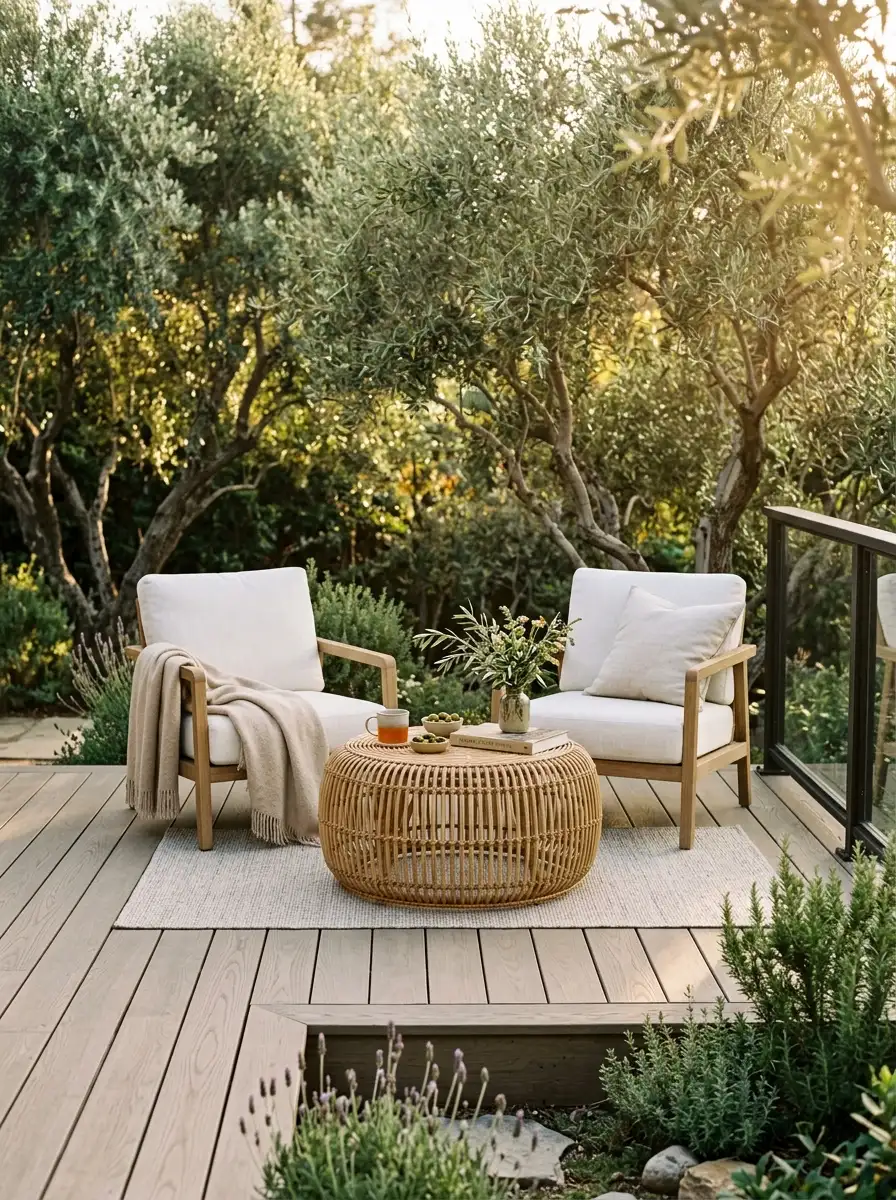
Greige, the beloved blend of gray and beige, is one of the most satisfying stain choices for white oak because it picks up both the golden warmth and the subtle gray in the wood’s own grain. The result is a finish that feels simultaneously warm and neutral, making it exceptionally easy to style around.
I have seen greige on white oak pair beautifully with olive trees, linen outdoor textiles, and rattan furniture for an outdoor space that feels calm, curated, and completely effortless. It is the kind of finish that makes a deck feel like a natural extension of a well-styled interior.
The Key: Warm greige honors white oak’s dual-toned grain with a finish that feels both grounded and airy, working beautifully with almost any outdoor palette.
17
Teak Sealed with Natural Teak Oil
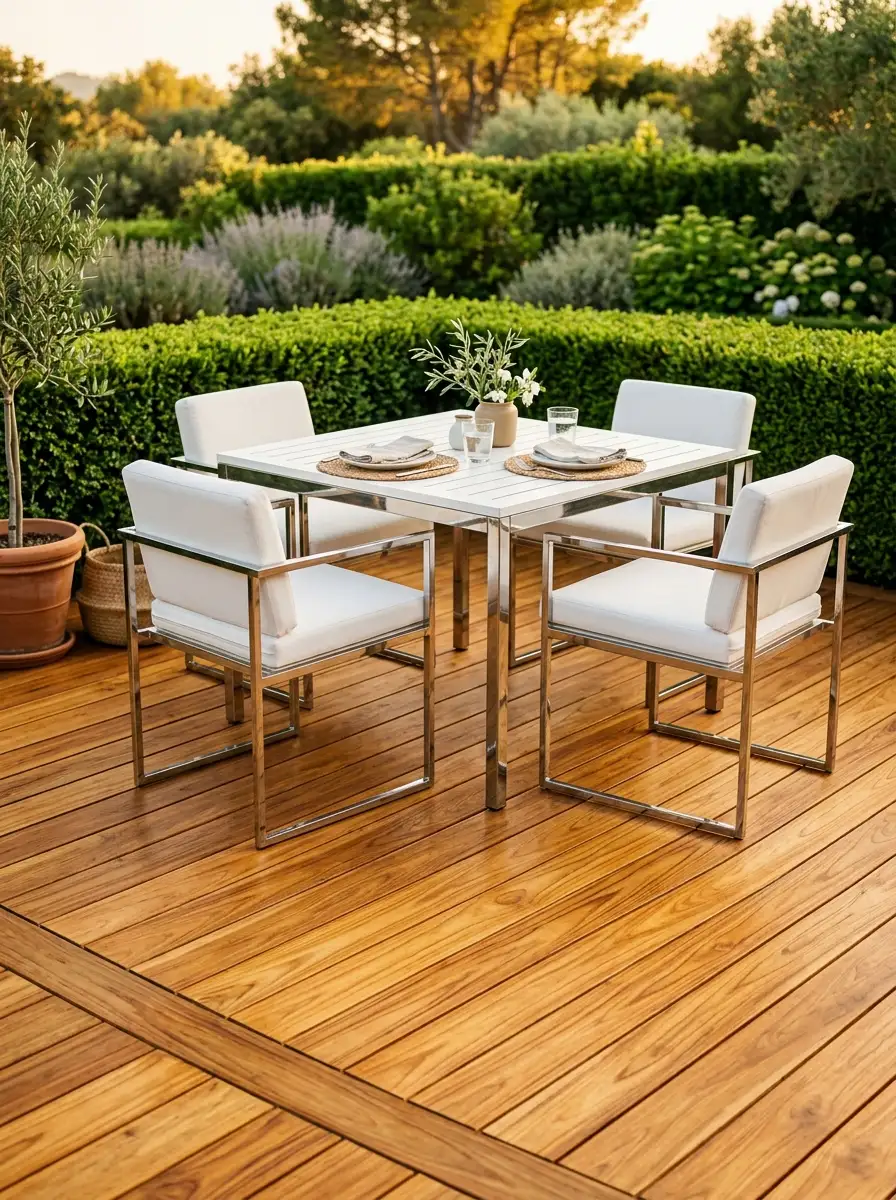
Teak is one of the few woods that truly needs nothing more than a quality teak oil to look completely extraordinary. The oil penetrates deeply, nourishing the dense grain and bringing out a golden-honey warmth that is teak’s most celebrated quality. The satin sheen that results feels polished without looking artificial.
This is one of those deck stain color ideas that is actually about restraint rather than transformation. You are not changing what teak looks like; you are simply helping it look like the best possible version of itself. The result is always warm, rich, and undeniably premium.
The Key: Natural teak oil preserves and amplifies teak’s iconic golden-honey tone, keeping the wood nourished, protected, and genuinely beautiful for years.
18
Mixed Wood Decks with Unified Stain
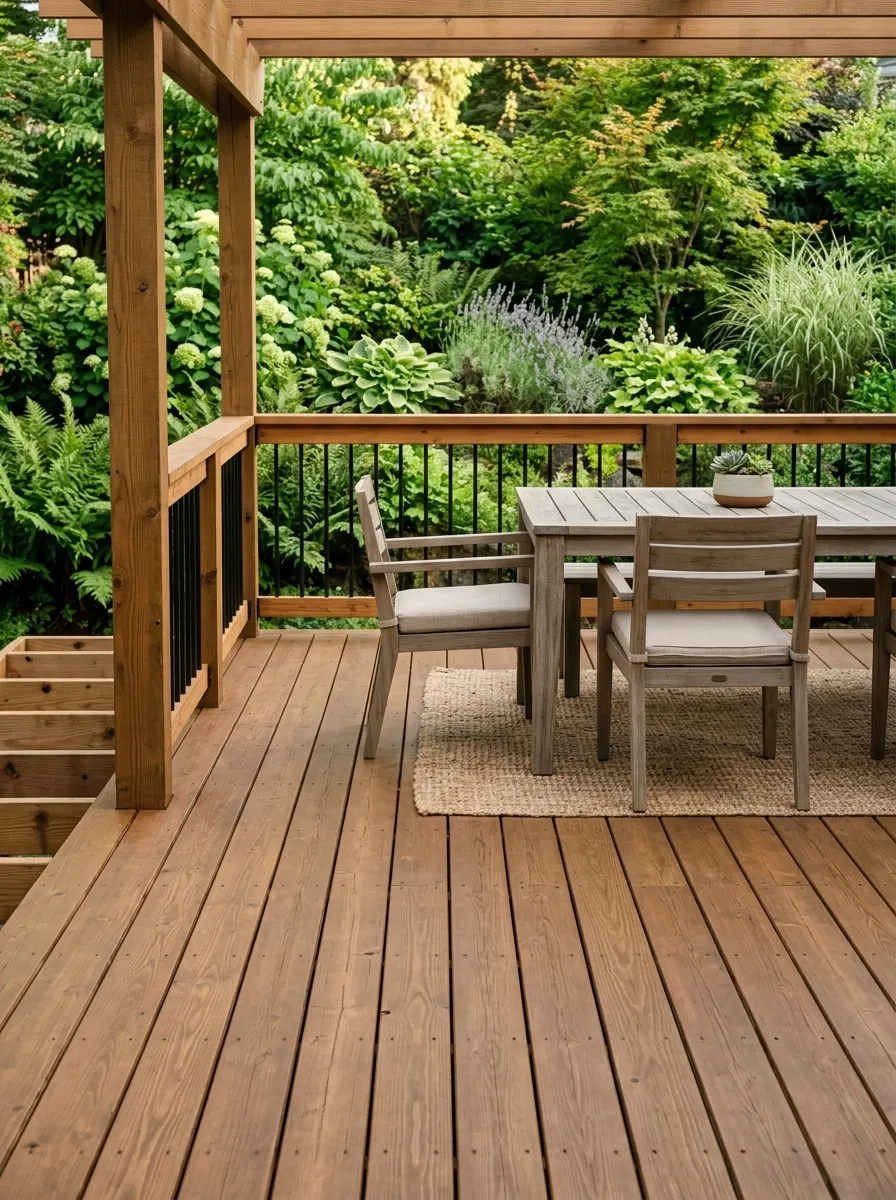
Mixed wood decks are one of the most common design challenges in outdoor spaces, particularly when pine framing meets cedar decking or when older boards get replaced with newer timber that does not match. The key to success here is choosing a single unifying stain color that both woods can absorb at similar rates without looking blotchy or mismatched.
A warm earthy brown in a semi-transparent formula is one of the most reliable choices for blending mixed wood decks because it works beautifully within the undertone range of most softwoods. You can also find a great resource on coordinating outdoor color palettes to help tie the whole space together from deck to landscaping. The goal is never to make both woods look identical but to bring them into a harmonious color family that feels like a deliberate design decision.
The Key: A single unifying semi-transparent stain in a warm earthy tone is the most effective way to blend different wood species on a mixed deck beautifully.
Choosing the right deck stain color ideas for your specific wood type is one of the most impactful decisions you will make for your outdoor space. As this guide has shown, there is no single best stain color for every situation. Instead, success comes from understanding what your wood brings to the table naturally and then choosing a finish that works with those qualities rather than against them. Whether you are enhancing cedar’s warmth, anchoring pine’s rawness, protecting ipe’s density, or unifying a mixed wood deck, the right color makes every difference between a deck that looks accidental and one that looks beautifully considered.
The ideas in this article give you a confident, clear starting point no matter which wood type you are working with. Take the guessing out of the process, test your favorites on a spare board first, and then commit with real confidence. If this post helped you see your deck in a new way, save it to your Pinterest boards so you can come back whenever you need it, and share it with a friend who is planning their own outdoor refresh this season!