Heuchera Front Yard
🏠 17 Real Ideas
⏱ Quick Read
🔥 Always Trending
17 Full Sun Perennials for Low-Maintenance Container Gardens That Thrive With Minimal Care
Picture this: it is the height of summer, your patio is glowing in golden afternoon light, and containers bursting with vibrant color greet you without a single moment of daily tending. No wilting drama, no complicated watering schedules, no stress. That is the quiet magic of choosing the right full sun perennials from the very start. These plants are built for blazing heat and bright light, and they reward you generously.
In this article, you will discover seventeen brilliant sun-loving perennials that thrive in containers with surprisingly little effort. Whether you have a compact balcony, a sprawling deck, or a simple front step, this curated list covers every style, color, and bloom time you could want. Each pick is resilient, beautiful, and perfectly matched for gardeners who want outstanding results without the exhausting upkeep that most planting guides seem to demand.
01
Sedum Varieties Worth Growing
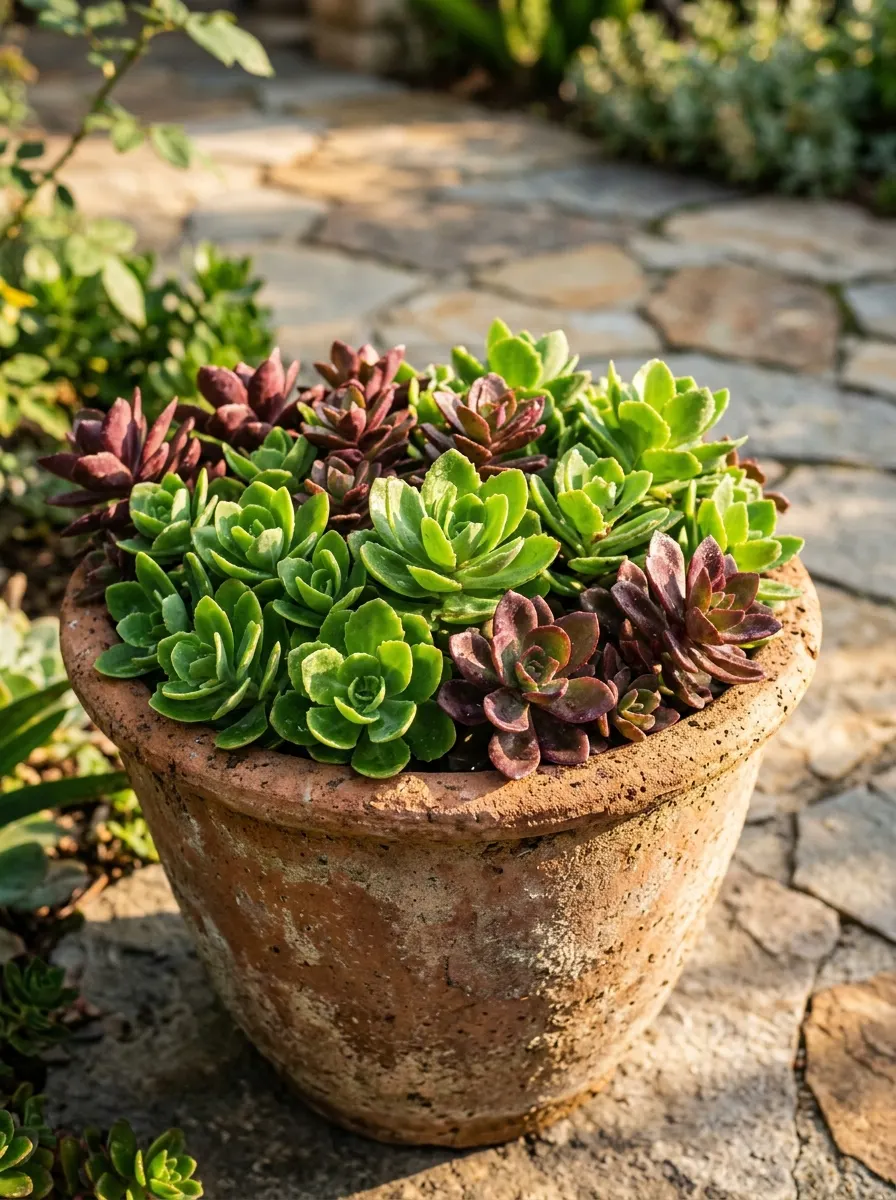
Among the most dependable full sun perennials available, sedum stonecrop stands out for its sheer no-fuss personality. Its thick, succulent-like leaves store moisture efficiently, so missed watering days are never a crisis. Varieties like ‘Autumn Joy’ and ‘Lime Zinger’ deliver changing textures and colors across an entire growing season.
Sedum thrives in well-draining containers and genuinely prefers being slightly underwatered over soggy conditions. In my experience, a simple gritty potting mix keeps it healthiest through long, dry stretches of summer heat. Late-season blooms attract pollinators without any intervention from you whatsoever.
The Key: Choose sedum for containers that get intense heat exposure, since its water-storing leaves make it one of the most self-sufficient drought-tolerant perennials available.
02
Dianthus for Fragrant Color
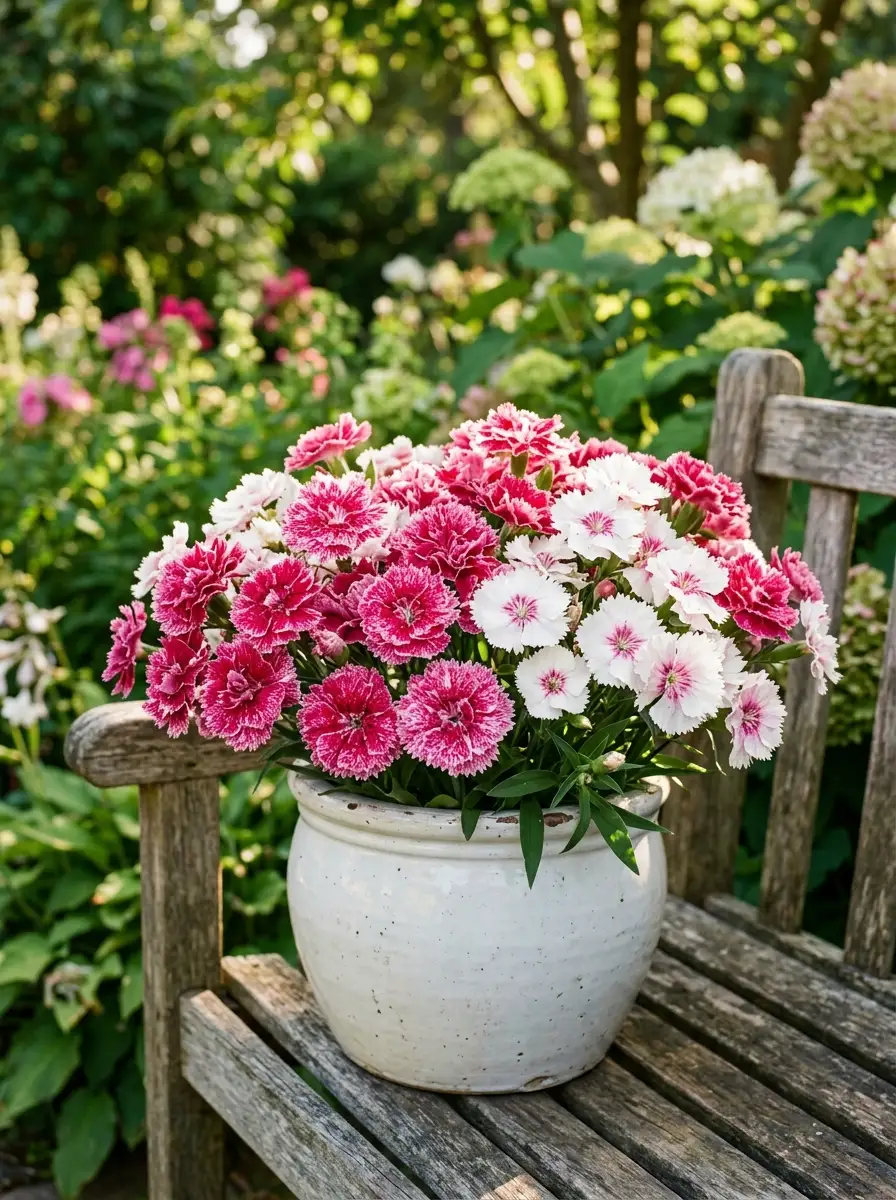
Few low-maintenance perennial plants offer both continuous color and genuine fragrance as effortlessly as dianthus. Known affectionately as pinks, these tidy mounding plants produce frilly flowers in shades of rose, red, and white for months on end. Modern cultivars are bred specifically to tolerate heat without constant attention or deadheading.
Place them in a sunny container with excellent drainage and they will reward you with a sweet, spicy scent all season. I have noticed that deadheading even occasionally extends their bloom period noticeably, though the plants perform beautifully even when completely left alone between waterings.
The Key: Select a heat-tolerant dianthus cultivar labeled “reblooming” to enjoy continuous color from late spring well through midsummer without extra care.
03
Coneflowers Attract Pollinators
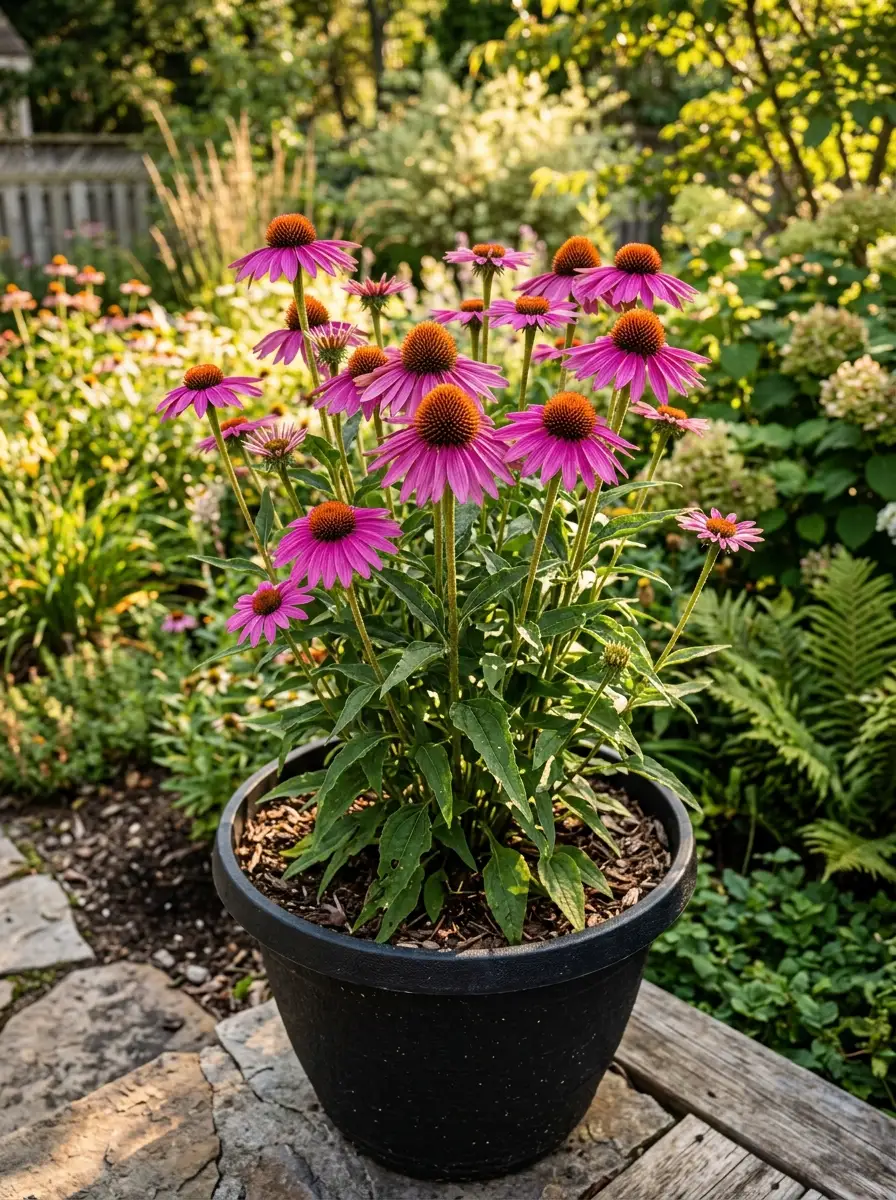
Echinacea coneflowers are among the finest perennials for containers when you want wildlife appeal alongside striking visual impact. Their bold daisy-like blooms attract butterflies, bees, and goldfinches from midsummer through early fall. Once established, they handle drought with remarkable grace and never demand fussing.
Choose a deep container to give their strong taproots space to anchor properly. In my experience, planting three coneflowers together in a generous pot creates a fuller, more dramatic display than single plants. Even faded blooms add interesting texture well into autumn.
The Key: Deep pots are non-negotiable for coneflowers since their roots grow downward; a container at least 12 inches deep keeps them healthy and blooming reliably.
04
Daylilies Bloom Continuously
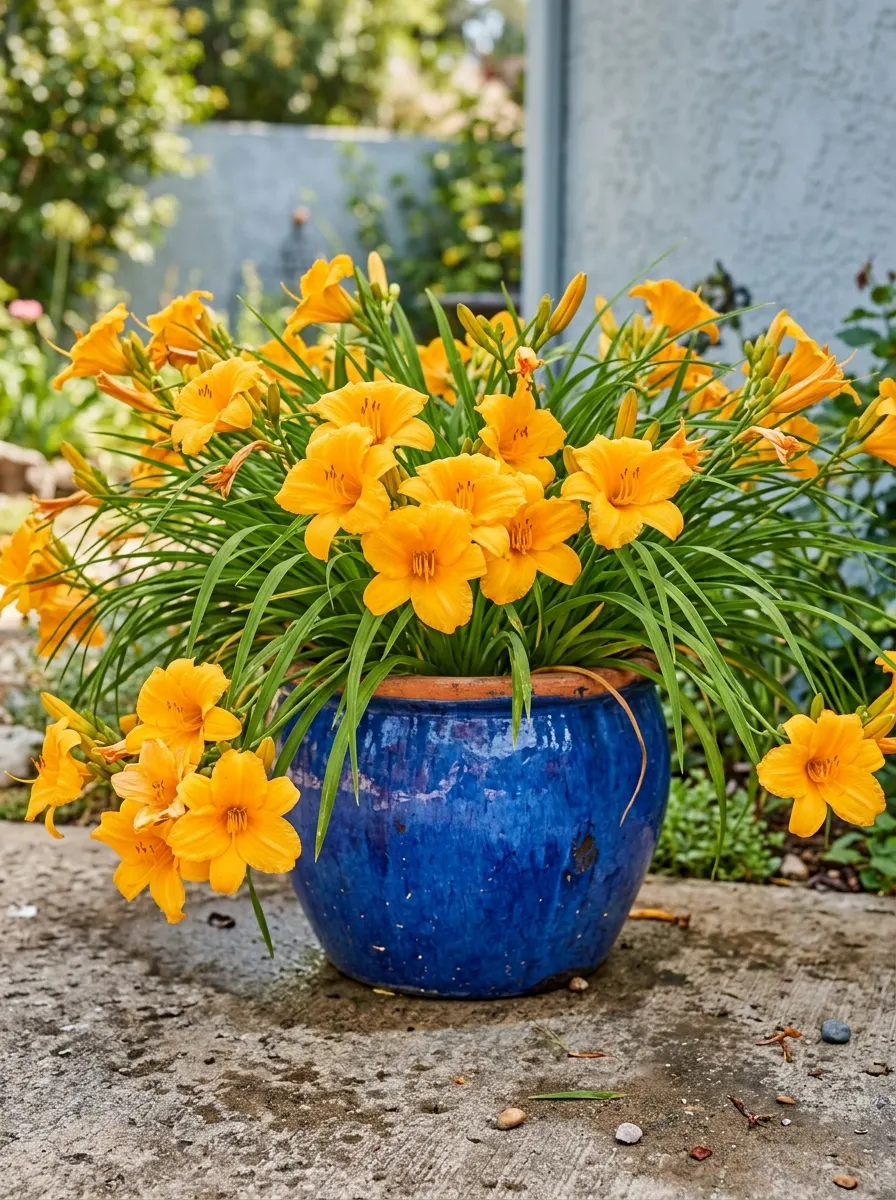
Do not be fooled by their delicate trumpet-shaped blooms; daylilies are genuinely tough full sun perennials that perform brilliantly in containers season after season. Each individual flower lasts a single day, but a healthy plant produces a continuous succession of new buds for weeks. Re-blooming varieties extend the show even further.
They handle heat and humidity without complaint, bouncing back even after stretches of neglect. I have seen established daylily containers go unfed and unwatered for ten days during a heatwave and emerge looking nearly untouched. A decent-sized pot and a sunny position are truly all they need.
The Key: Choose re-blooming daylily varieties labeled “everblooming” to keep containers looking full and colorful from early summer right into late August.
05
Lavender Creates Sensory Impact
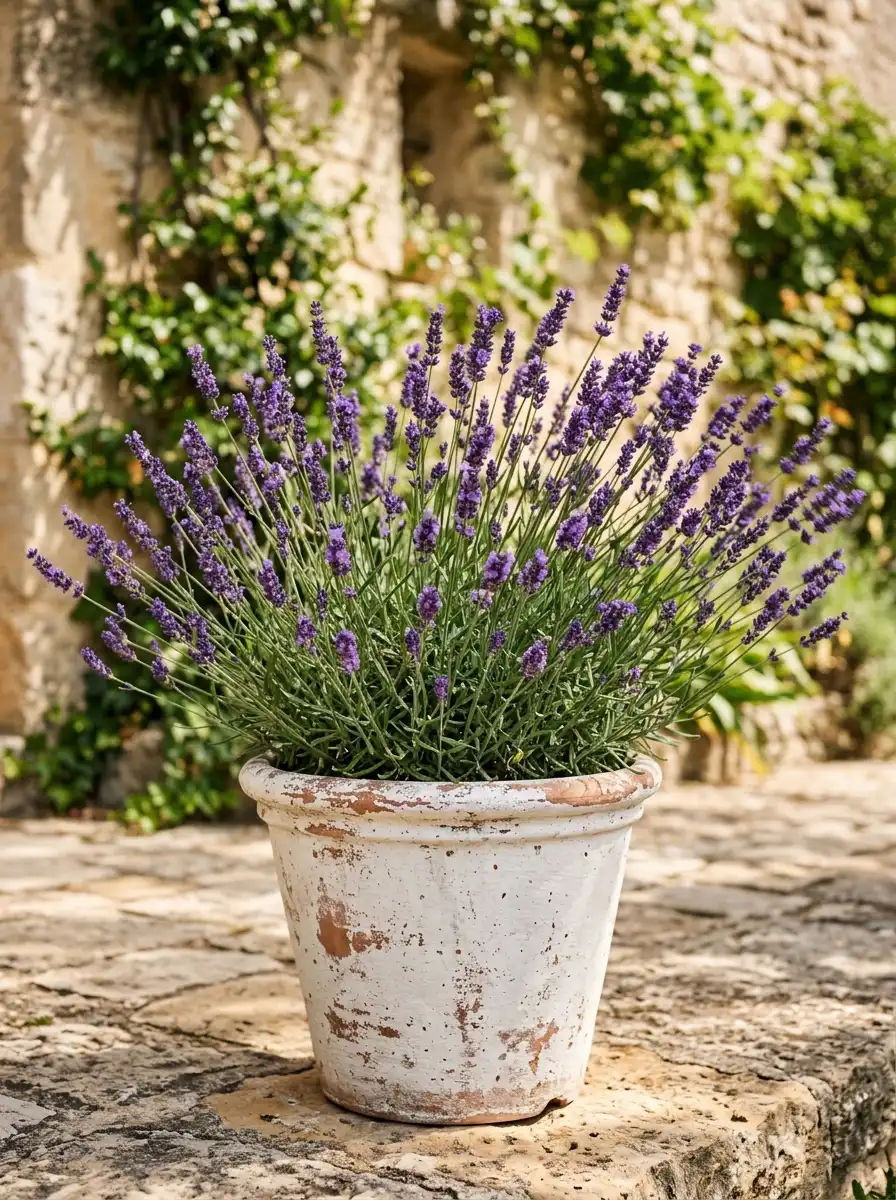
Lavender is one of those sun-loving perennials that rewards the hands-off gardener more than the overly attentive one. It thrives on neglect, minimal watering, and bright unfiltered sun. A gritty, sandy potting mix mimics the dry Mediterranean conditions it naturally craves and prevents the root rot that poorly drained containers cause.
Once established, lavender tolerates skipped watering sessions without showing stress. The calming purple spikes look stunning all season and release a soothing fragrance every time the breeze moves through them. As a bonus, deer tend to leave it entirely alone.
The Key: Use a container with multiple drainage holes and fill the bottom layer with coarse gravel before adding a sandy potting mix to guarantee lavender never sits in wet soil.
06
Salvia Blooms All Season
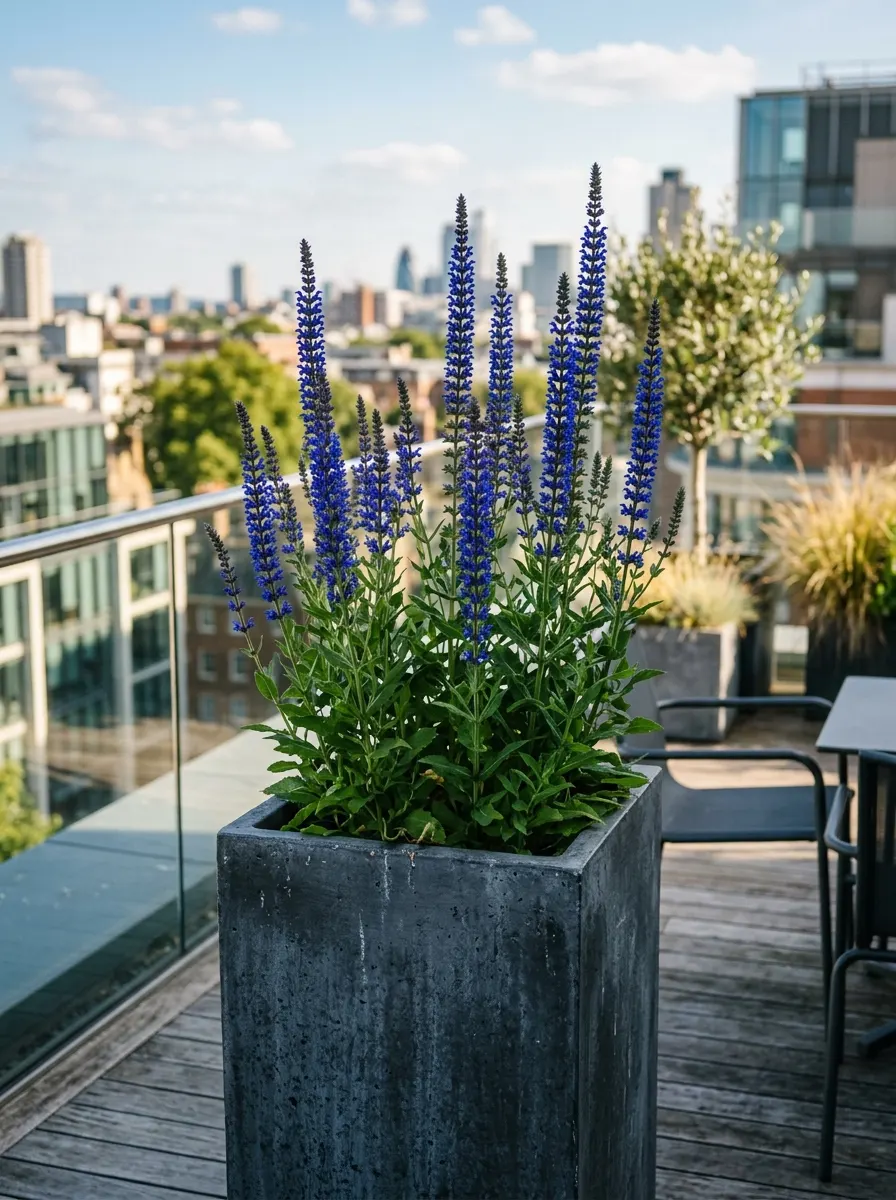
Salvia earns its reputation among drought-tolerant perennials because it delivers continuous color from late spring through fall with almost zero intervention required. Its tall, slender flower spikes add excellent vertical drama to container arrangements while simultaneously drawing hummingbirds and bees.
Unlike many flowering plants, salvia does not need regular deadheading to keep producing blooms, which makes it a dream for genuinely low-effort gardens. Heat and dry spells barely faze it. I have noticed that planting salvia alongside shorter mounding plants in the same large container creates a beautiful layered effect.
The Key: Plant salvia in the center or back of container arrangements to use its tall vertical spikes as a natural focal point that anchors the entire planting design.
07
Yarrow Handles Blazing Heat
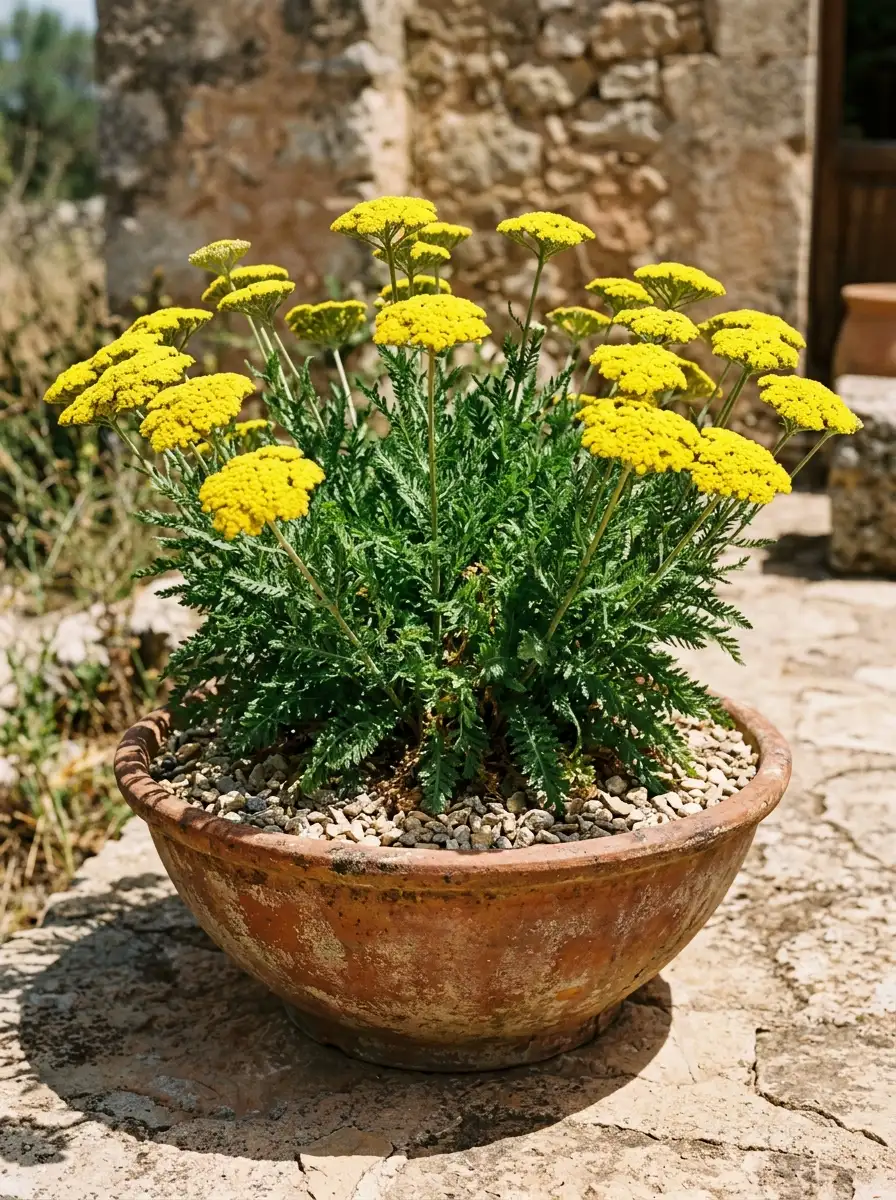
Yarrow is one of the most underrated perennials for containers that most gardeners overlook entirely. Its feathery, fern-like foliage provides gorgeous texture even before the flat-topped flower clusters emerge in shades of gold, red, cream, and soft pink. It performs best in full, blazing sun and lean soil conditions.
Drought tolerance is one of yarrow’s greatest strengths. I have watched it stand tall and vibrant through scorching summer days that flattened less resilient plants nearby. The spent flower heads remain attractive even after blooming, and the stems cut beautifully for fresh arrangements.
The Key: Avoid rich, heavily fertilized potting mixes for yarrow since overly fertile soil causes the stems to flop; lean, gritty soil produces stronger, upright growth every time.
08
Black-Eyed Susans Stay Cheerful
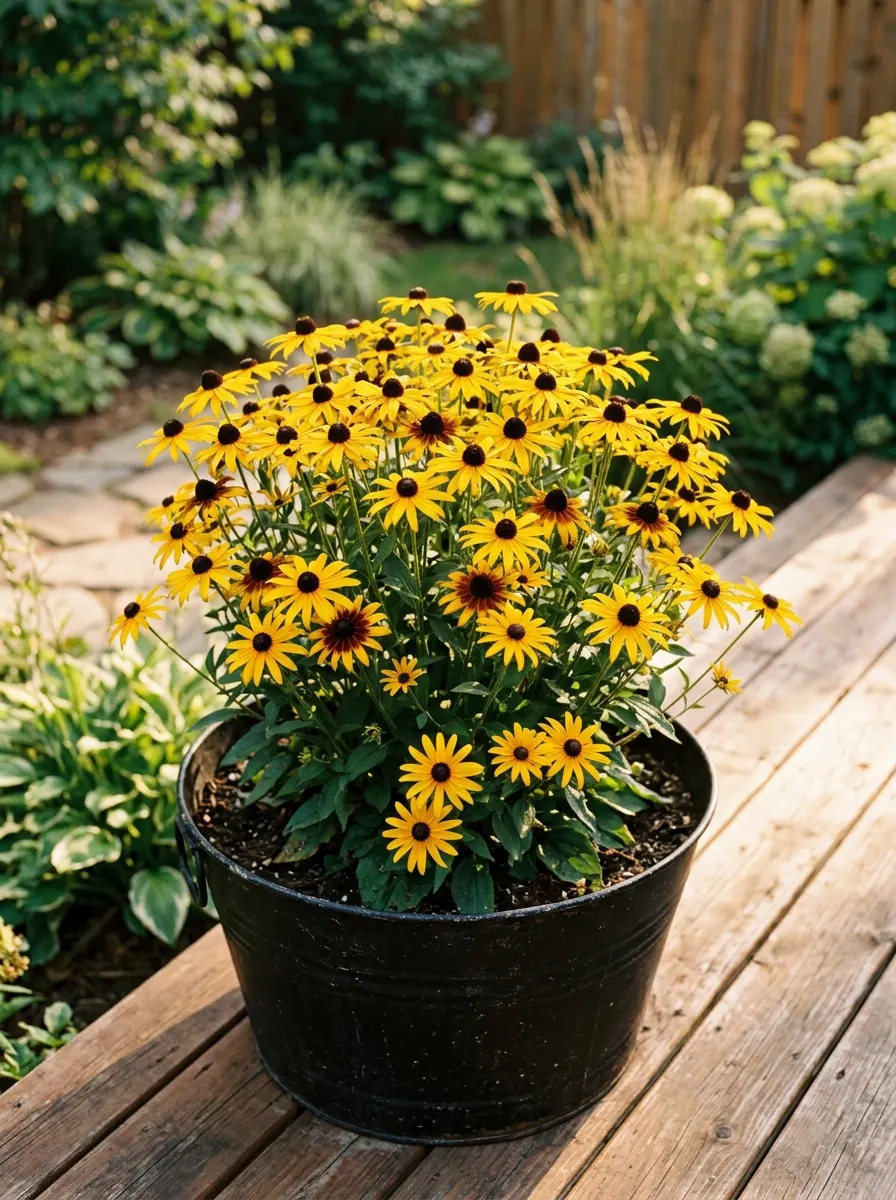
Black-eyed Susans rank among the most cheerful and adaptable full sun perennials you can grow in containers. Their bold golden-yellow petals surrounding a rich brown center create a classic summer look that never feels tired or overdone. They handle heat and humidity with quiet ease, blooming reliably from midsummer into fall.
Established plants become surprisingly drought-tolerant and rarely need supplemental feeding once settled into their containers. The blooms work beautifully cut for indoor vases, and birds feed on the seedheads through winter. I have found that compact varieties like ‘Little Goldstar’ perform especially well in smaller pots.
The Key: Choose compact rudbeckia varieties specifically labeled for container use since standard landscape varieties grow too tall and top-heavy for stable pot planting.
09
Blanket Flower Loves Heat
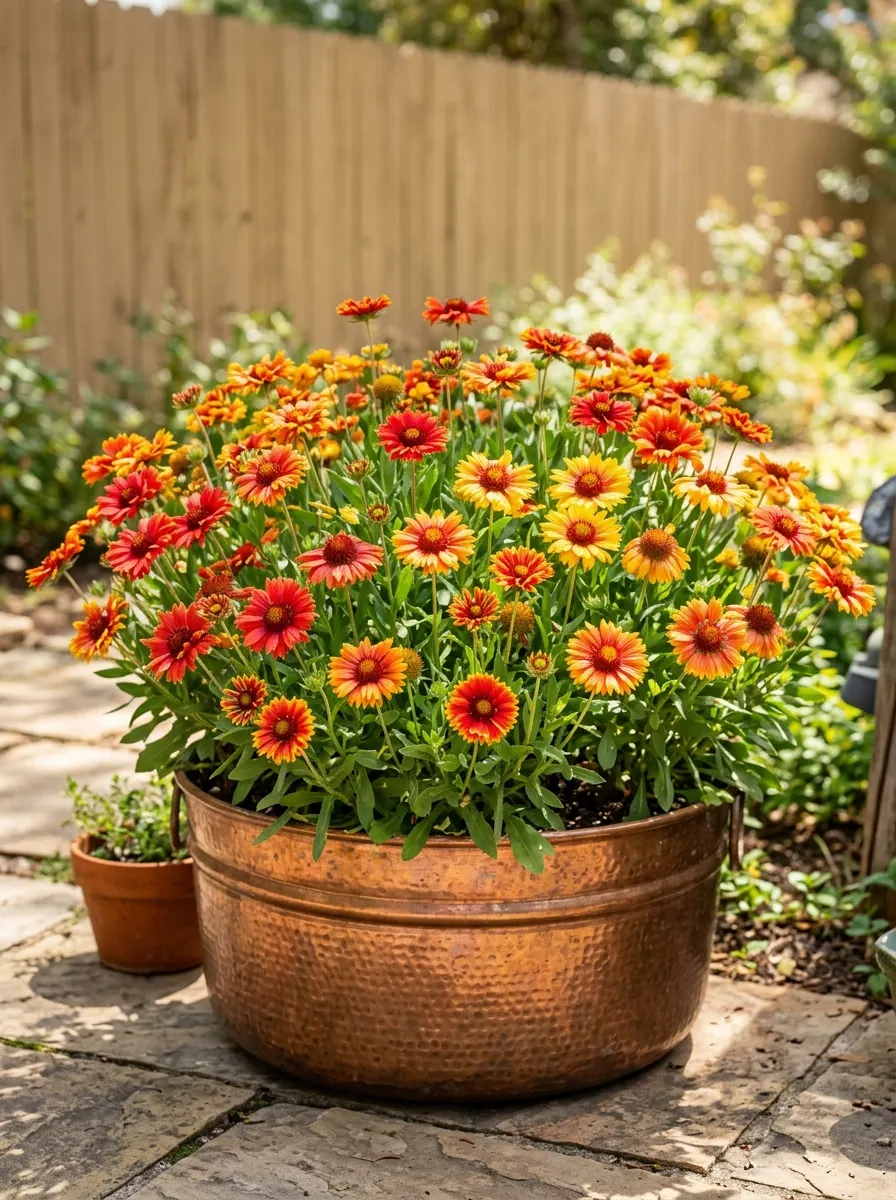
Blanket flower, or gaillardia, is one of the most heat-obsessed low-maintenance perennial plants you will ever discover. Its fiery pinwheel blooms in layers of orange, red, and gold look like miniature sunsets clustered together in a pot. The blooming season runs from late spring through the first frost with almost no prompting required.
Well-draining containers are its single biggest requirement since blanket flower genuinely dislikes sitting in wet soil. Beyond that, it asks very little and gives back enormously. Butterflies flock to the blooms, and the rustic, vibrant color palette suits every outdoor style from farmhouse to modern.
The Key: Always use a potting mix with added perlite for gaillardia containers since consistently moist soil shortens its lifespan significantly, while dry-ish conditions keep it thriving.
10
Catmint Provides Non-Stop Blooms
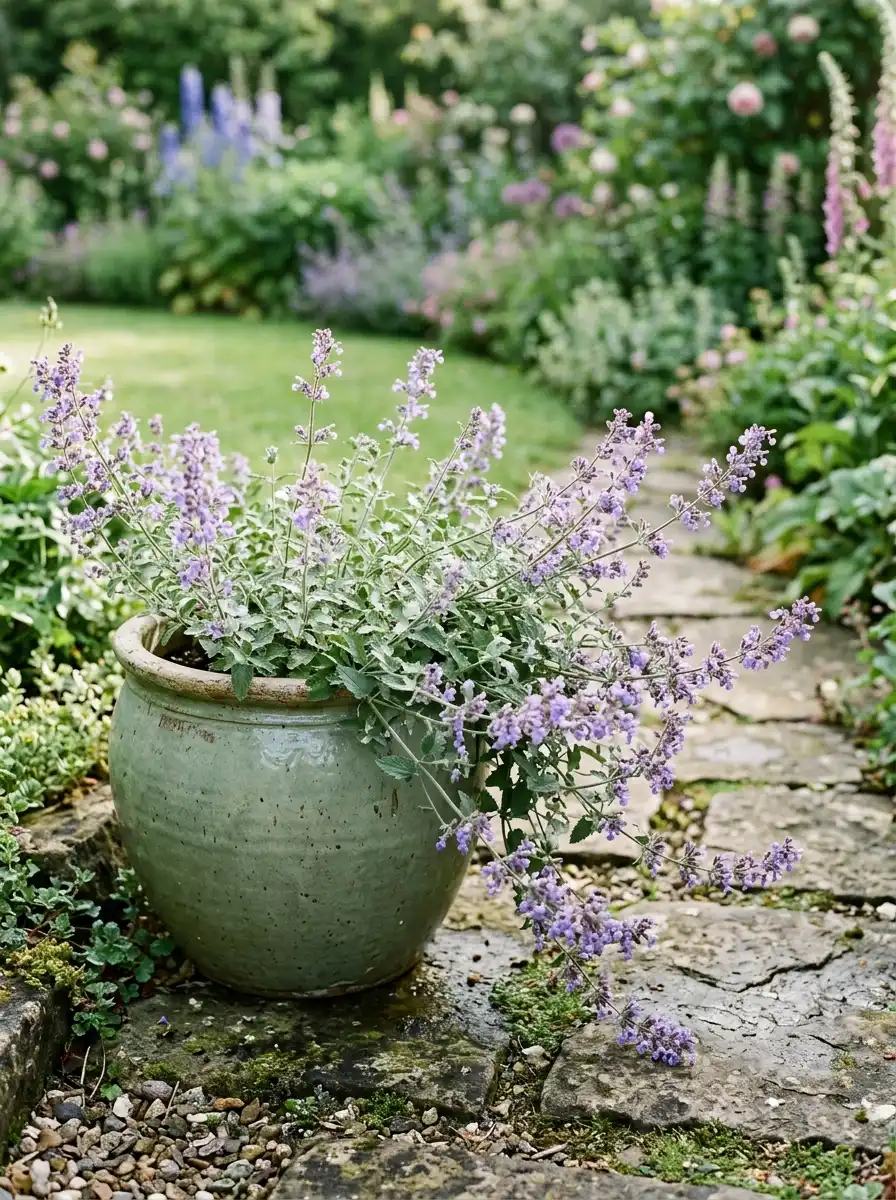
Catmint is a revelation for gardeners who want near-constant blooms with next to zero effort. Its soft lavender-blue flower spikes and silver-green foliage create a naturally relaxed, cottage-garden mood in any container arrangement. As one of the most reliable sun-loving perennials, it blooms from late spring through fall without needing any deadheading.
Catmint is also highly drought-tolerant and fills out containers beautifully as it matures. It pairs well with bolder, upright plants since its mounding, slightly trailing habit softens edges naturally. For gardeners who love textural contrast in outdoor spaces, our post on ornamental grasses for landscapes explores equally effortless options that complement catmint perfectly in mixed displays.
The Key: Catmint works as an excellent lower-growing companion plant for tall full sun perennials like salvia or echinacea in large mixed containers, filling gaps with continuous color.
11
Agastache Brings Hummingbirds
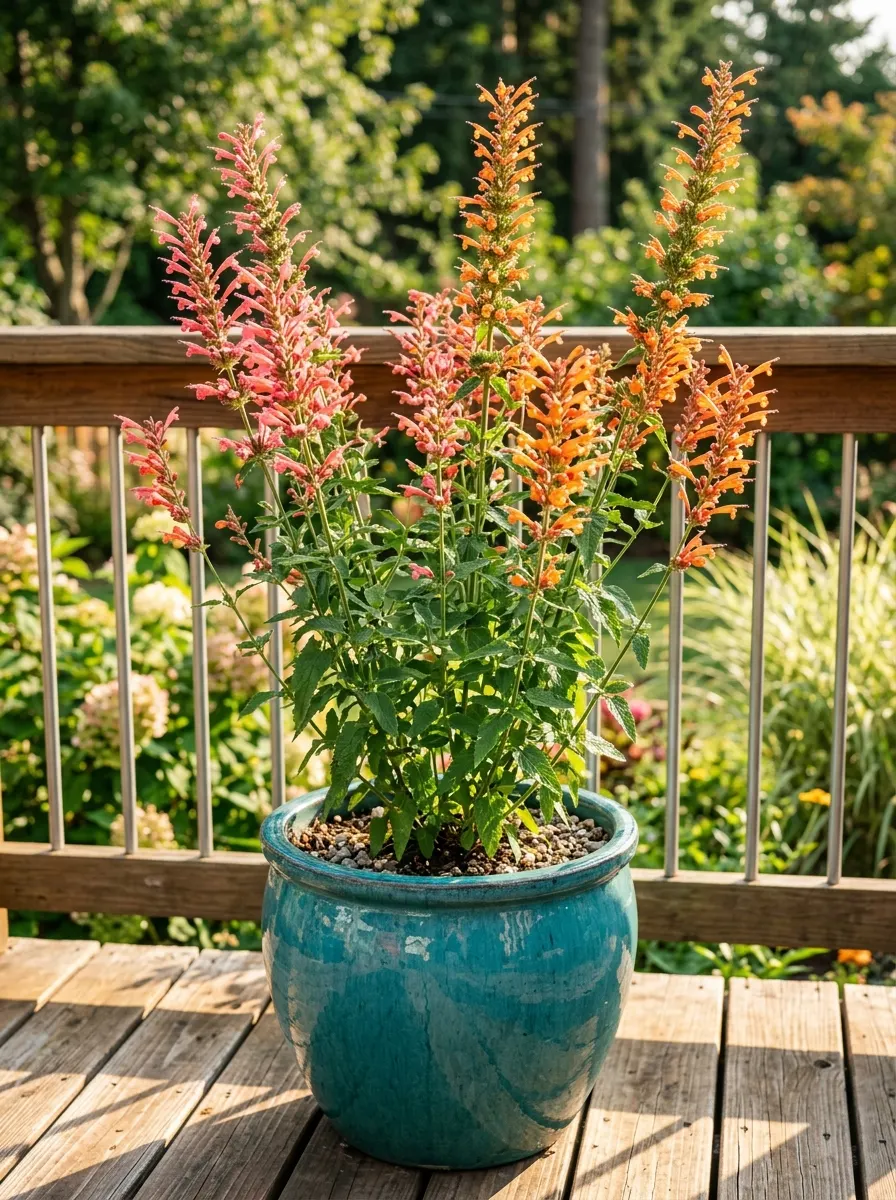
Agastache, sometimes called hummingbird mint, is a standout among drought-tolerant perennials that also happen to be spectacular in containers. Its long tubular flower spikes in shades of orange, coral, and purple attract hummingbirds and pollinators from the moment they open. The foliage smells faintly of anise when brushed, adding unexpected sensory appeal.
Heat is genuinely no problem for agastache; it thrives in the intense sun that discourages lesser plants. It blooms from midsummer through fall and self-cleans without deadheading. A well-draining container mix and full sun are essentially its only requirements for a full season of brilliant performance.
The Key: Agastache performs best when planted in containers that allow its roots to warm up quickly, so dark-colored pots placed in the sunniest possible position maximize blooming.
12
Penstemon Thrives in Tough Spots
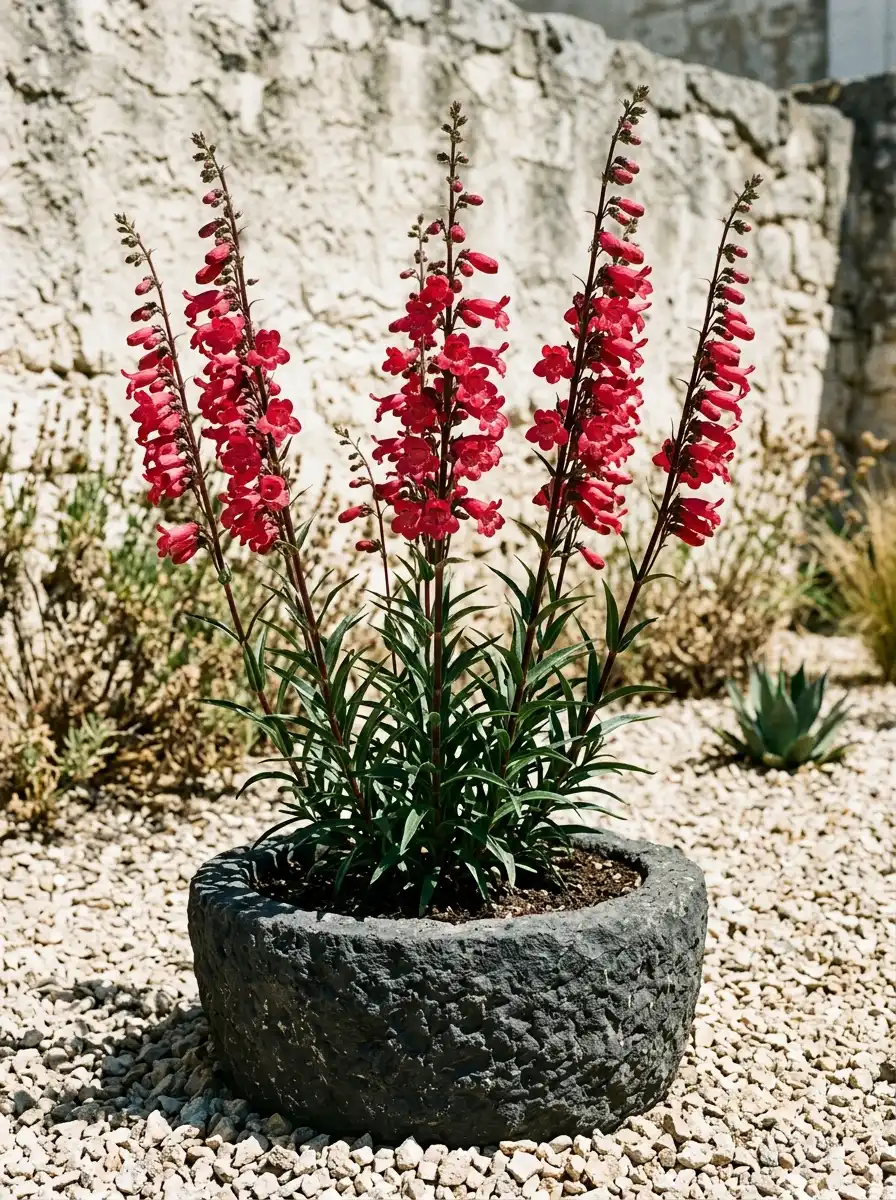
Penstemon earns a permanent spot on any list of outstanding perennials for containers thanks to its tough constitution and long-lasting, tubular blooms. Shades range from soft pink and lavender through deep red and burgundy, making it easy to coordinate with any existing outdoor color scheme. It blooms for weeks in full sun with minimal watering.
Once established, penstemon handles dry conditions remarkably well. Good drainage is its primary requirement since wet roots during winter or heavy summer rains can cause problems. Beyond that, it asks very little in exchange for consistent, showy color from late spring through midsummer.
The Key: Choose native penstemon varieties over tropical hybrids for container gardening since native selections offer superior cold hardiness and return reliably the following spring.
13
Rudbeckia Glows All Season
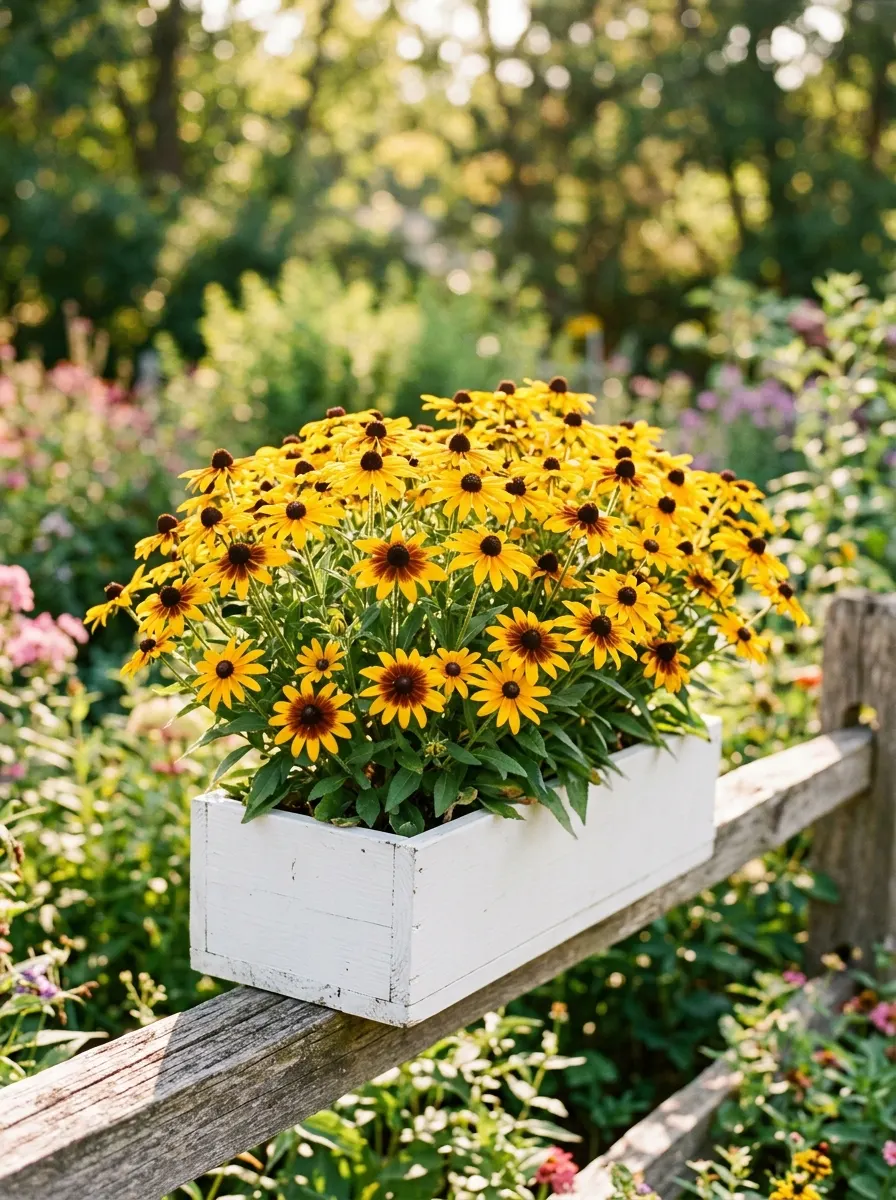
Rudbeckia, beyond the classic black-eyed Susan species, includes compact cultivars tailor-made for container living. Varieties like ‘Goldsturm’ and ‘Little Henry’ produce masses of warm golden blooms from midsummer through fall without needing much from their gardener. As reliable full sun perennials, they simply get on with the job regardless of heat.
They are also surprisingly adaptable to modest neglect. A reliable watering rhythm helps them establish quickly, after which drought periods rarely cause lasting harm. The contrast between their bright petals and rich dark centers creates a bold, graphic visual that looks outstanding in almost every container style.
The Key: Compact rudbeckia cultivars labeled “dwarf” or “container-friendly” save you the frustration of top-heavy plants that tip pots over in summer wind or afternoon rainstorms.
14
Coreopsis Stays Golden
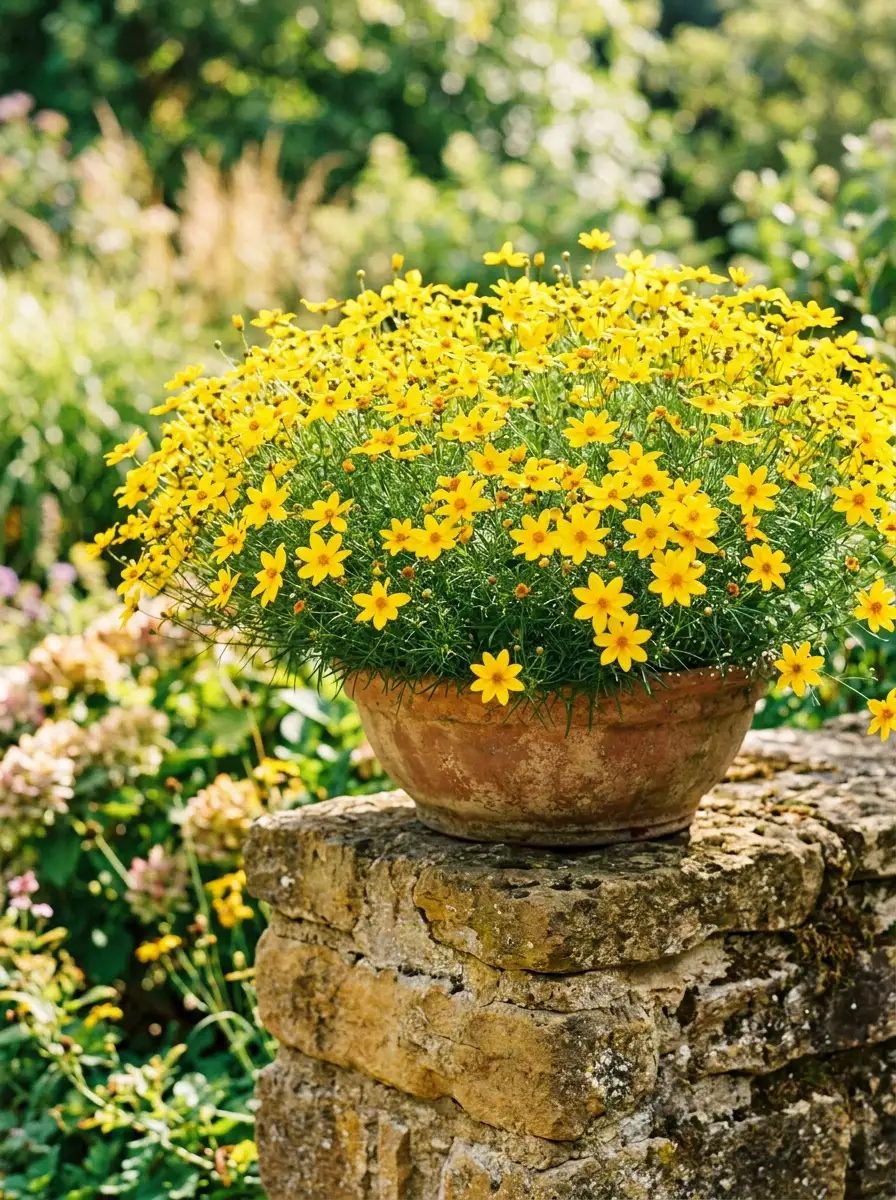
Coreopsis is one of the longest-blooming low-maintenance perennial plants available for sunny container gardens. Its cheerful yellow, gold, or bi-colored flowers open from late spring and keep coming through fall with almost embarrassing generosity. Threadleaf varieties produce a soft, airy cloud of fine foliage that looks beautiful even before a single flower opens.
Full sun and good drainage are its two non-negotiables; everything else is flexible. Minimal watering, no fertilizing beyond a single spring feed, and occasional deadheading to tidy things up are the extent of its care requirements. I have found it pairs beautifully with ornamental grasses in mixed container arrangements.
The Key: Coreopsis thrives when slightly root-bound in a container, so resist moving it to a larger pot too soon since some crowding actually encourages heavier, more consistent flowering.
15
Gaura Dances in the Breeze
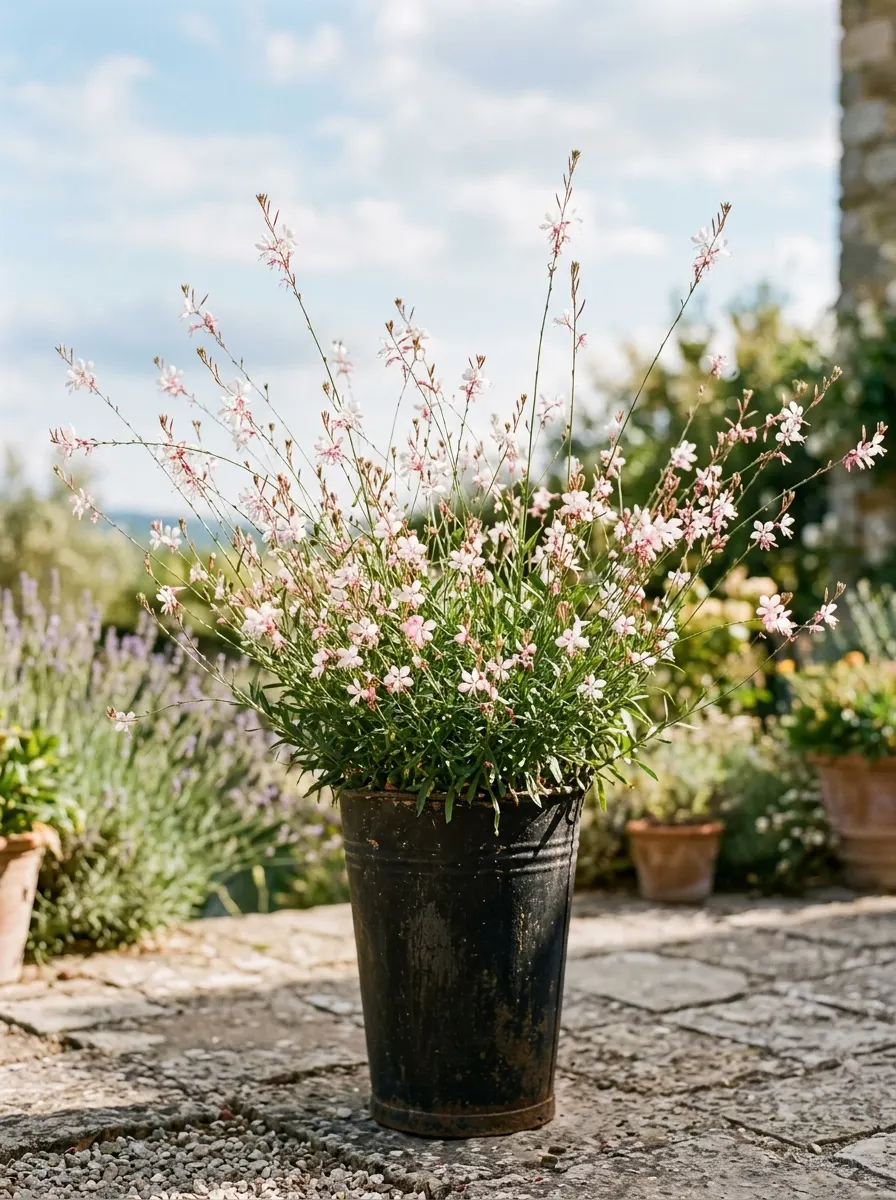
Gaura, now reclassified as Oenothera lindheimeri, brings an irresistible movement quality to container gardens. Its slender stems hold delicate white or pink butterfly-shaped blooms that dance in every passing breeze, creating a living, animated effect. Among sun-loving perennials, gaura is exceptionally drought-tolerant once its roots settle in.
Explore creative container garden combinations to pair gaura with bolder, more structured plants for maximum visual contrast. It fills vertical space elegantly without becoming heavy or overwhelming neighboring plants. A well-draining mix and direct sun are the entire extent of its care demands throughout a long season.
The Key: Gaura performs best when planted alone in a tall, narrow container that shows off its swaying habit, rather than crowded into wide planters where its movement gets lost.
16
Achillea Fills Gaps Beautifully
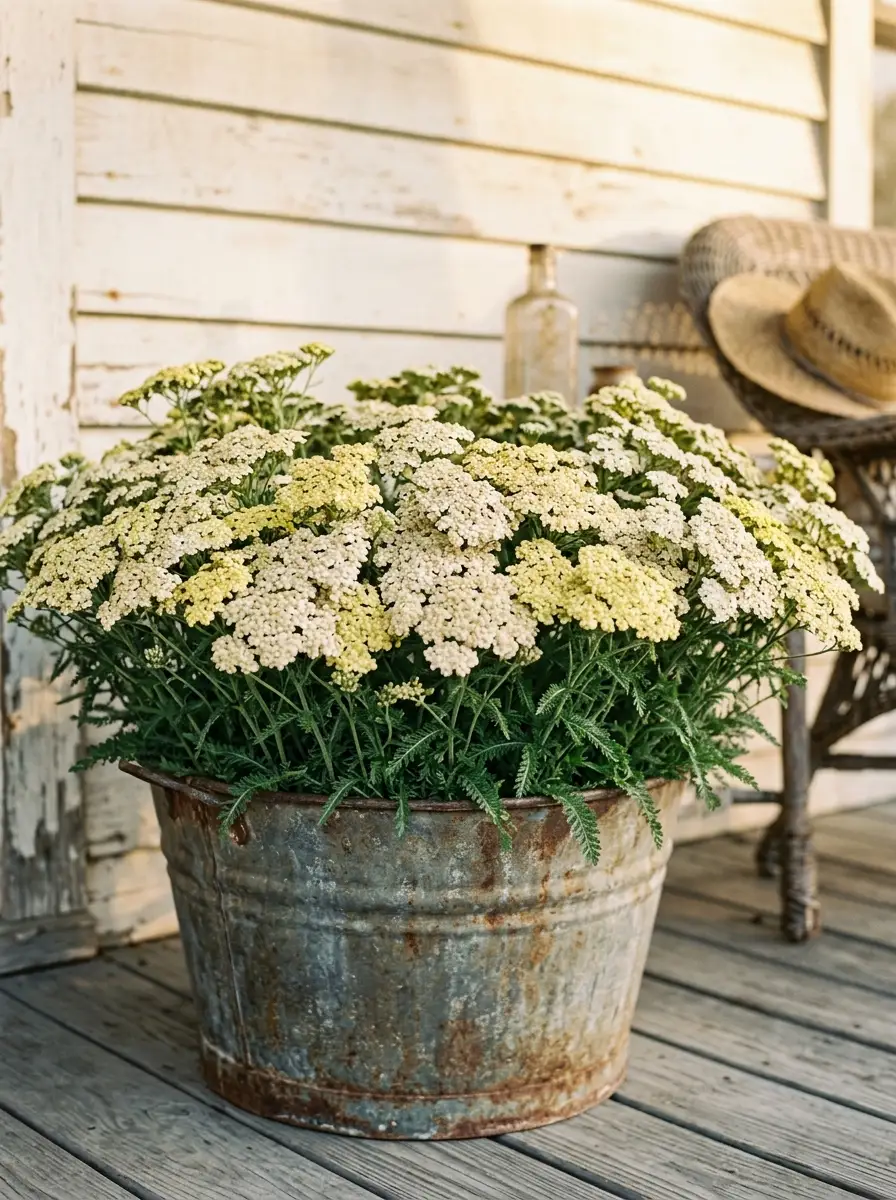
Achillea millefolium, the classic yarrow, deserves a second spotlight specifically for its gap-filling ability in mixed container designs. Its dense, flat-topped flower clusters sit low and wide, covering the soil surface beautifully while taller drought-tolerant perennials rise above. Available in cream, soft yellow, peach, and dusty rose, it coordinates effortlessly.
Beyond good looks, achillea is remarkably self-sufficient. It tolerates poor soil, intense heat, and irregular watering without complaint. The flowers dry beautifully on the plant and can be harvested for indoor arrangements, giving the container a purposeful double life beyond simple visual appeal.
The Key: Mixing two achillea colors in the same container, such as cream alongside soft rose, creates an elegant blended look that appears thoughtfully designed without requiring advanced planning.
17
Russian Sage Adds Drama
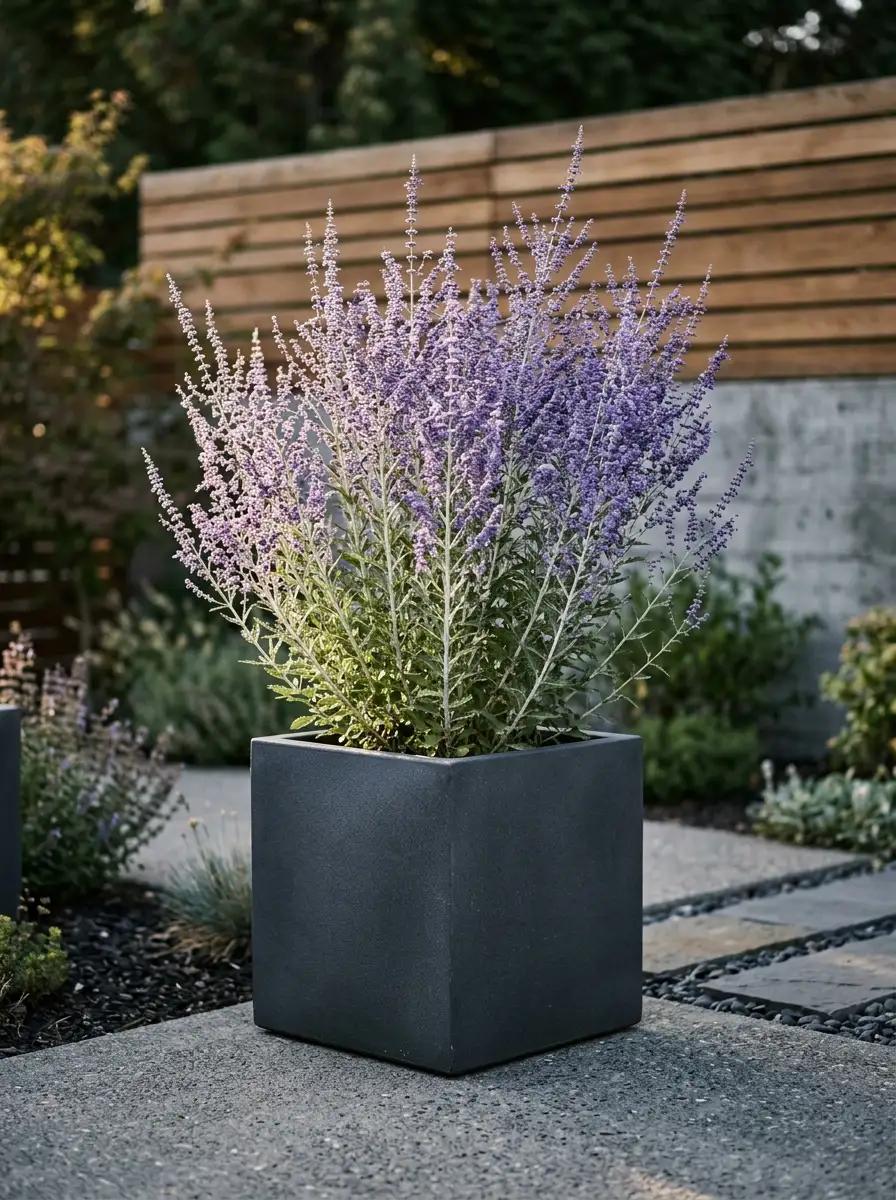
Russian sage closes this list with genuine drama and elegance that few other full sun perennials can match. Its silver-white stems and hazy clouds of violet-blue flowers create an almost ethereal visual from midsummer through fall. It thrives in baking heat and thrives on neglect, making it a perfect anchor plant for large container arrangements.
Despite its refined, almost painterly appearance, Russian sage asks very little. Dry conditions, sharp drainage, and maximum sun are the entire recipe for success. The silvery stems remain interesting even after blooming stops, extending the container’s visual appeal well into autumn.
The Key: Use Russian sage as the dramatic focal point in oversized containers paired with low-growing companions like coreopsis or sedum to balance its airy, tall presence.
Choosing the right plants is the single most powerful thing you can do for a low-maintenance container garden. These seventeen full sun perennials prove that stunning outdoor spaces do not require daily devotion, complicated routines, or gardening expertise. Each one on this list is built to perform in heat, tolerate occasional neglect, and come back stronger the following season. The real secret is matching the right plant to the right container and letting nature take over from there.
If you have been dreaming of a patio or balcony that looks professionally designed without demanding every spare moment of your summer, start here. Pick two or three plants from this list that match your climate and color preferences, pot them up in well-draining containers, and place them in your sunniest spot. Save this post so you can return to it when your first choices succeed and you are ready to add more. Then share it with a fellow gardener who deserves a gorgeous, relaxed outdoor space this season.