Boho Kitchen
🏠 19 Real Ideas
⏱ Quick Read
🔥 Always Trending
19 Boho Kitchen Ideas
That Create a Warm, Collected Space Full of Travel Inspired Character
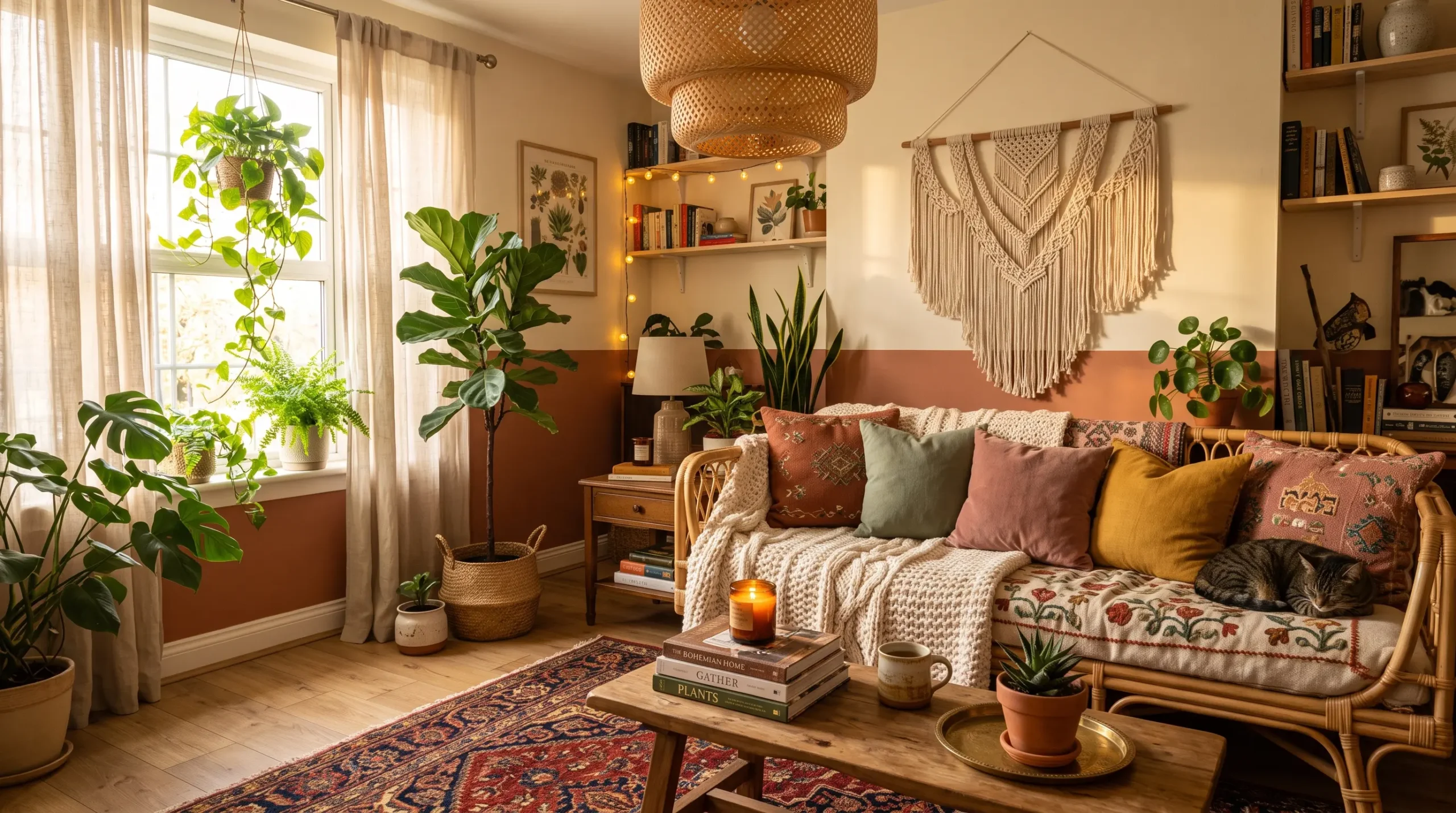
Your kitchen does not have to look like it came straight out of a catalog. Some of the most beautiful spaces feel like they were built slowly, piece by piece, with things brought home from flea markets, travels, and grandmother’s attic. A Boho Kitchen is exactly that kind of space. It is warm, layered, a little unexpected, and completely full of character. In this article, you will find 19 ideas that show you how to create that collected, travel inspired kitchen you have been dreaming about.
What makes a boho kitchen decor approach so powerful is that there are no strict rules, only guiding principles. I personally love the way this style invites you to mix textures, blend cultures, and let your shelves tell a story. Whether you are starting from scratch or layering new pieces into an existing kitchen, these ideas will give you a clear, inspiring path forward. Save this post on Pinterest and share it with a friend who is ready to bring some soul into their home.
01
Layered Neutral Textures
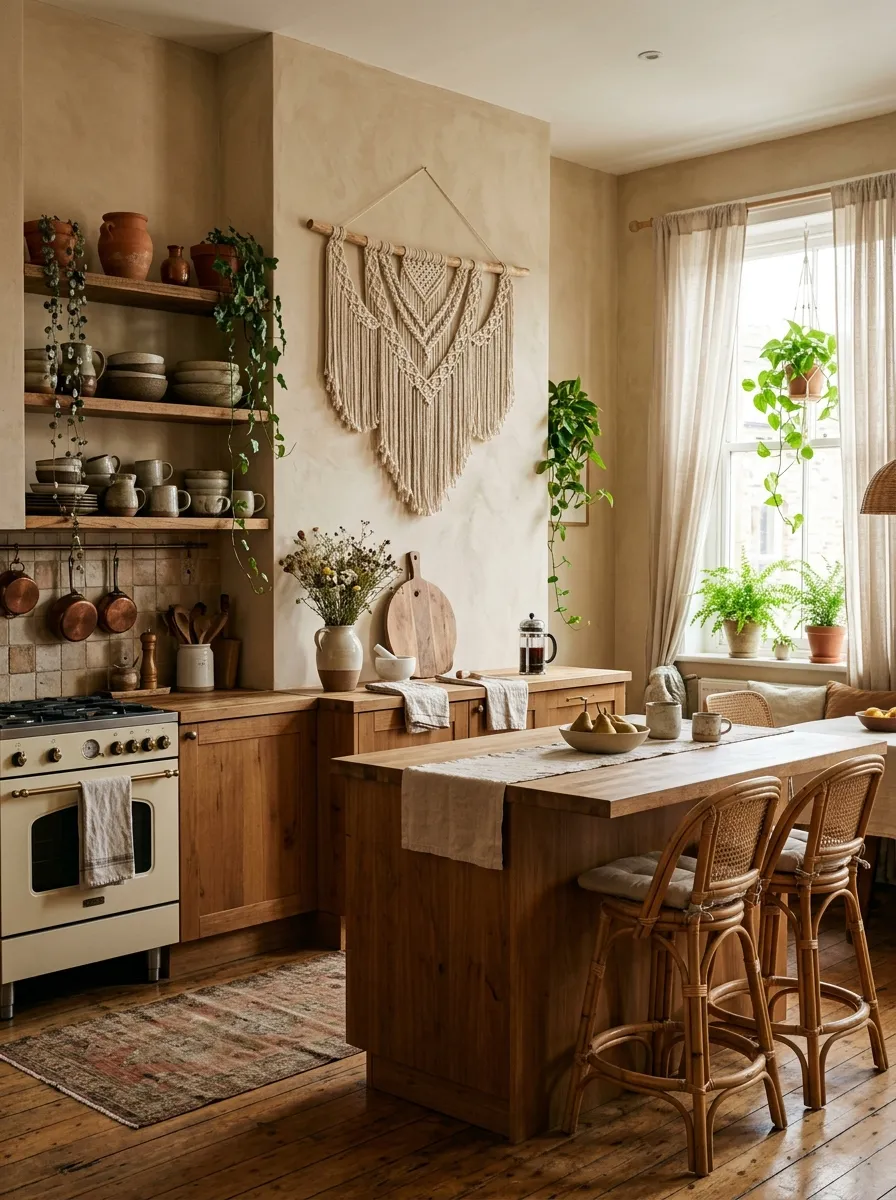
Texture is the secret language of a great Boho Kitchen, and a neutral palette is where that language sings the loudest. When you strip away bold color, every material suddenly has to earn its place. Think chunky ceramic mugs beside smooth stone counters, nubby woven stools next to matte plaster walls, and handmade baskets sitting alongside natural wood shelving. The contrast between soft and rough, shiny and matte, is what gives this kind of kitchen its irresistible warmth and depth.
In my experience, the most inviting neutral Boho kitchens use exactly three anchor textures repeated across the room. Start with natural wood for the shelving and counters, add woven fiber in your pendants, stools, or baskets, and finish with plaster or stone on the walls or backsplash. Keep your palette tight within the beige, sand, and wheat family, and your space will feel calm even when layered with many pieces. Every item you choose should feel like it came from somewhere, not something ordered in a single afternoon. This same quiet, texture forward approach is the foundation of every beautifully resolved warm neutral kitchen that feels genuinely luxurious without needing a single bold color to make its presence felt.
The Key: A tight neutral palette plus three repeating anchor textures creates a boho kitchen that feels curated, warm, and endlessly livable without ever looking cluttered.
02
Global Artifact Shelving
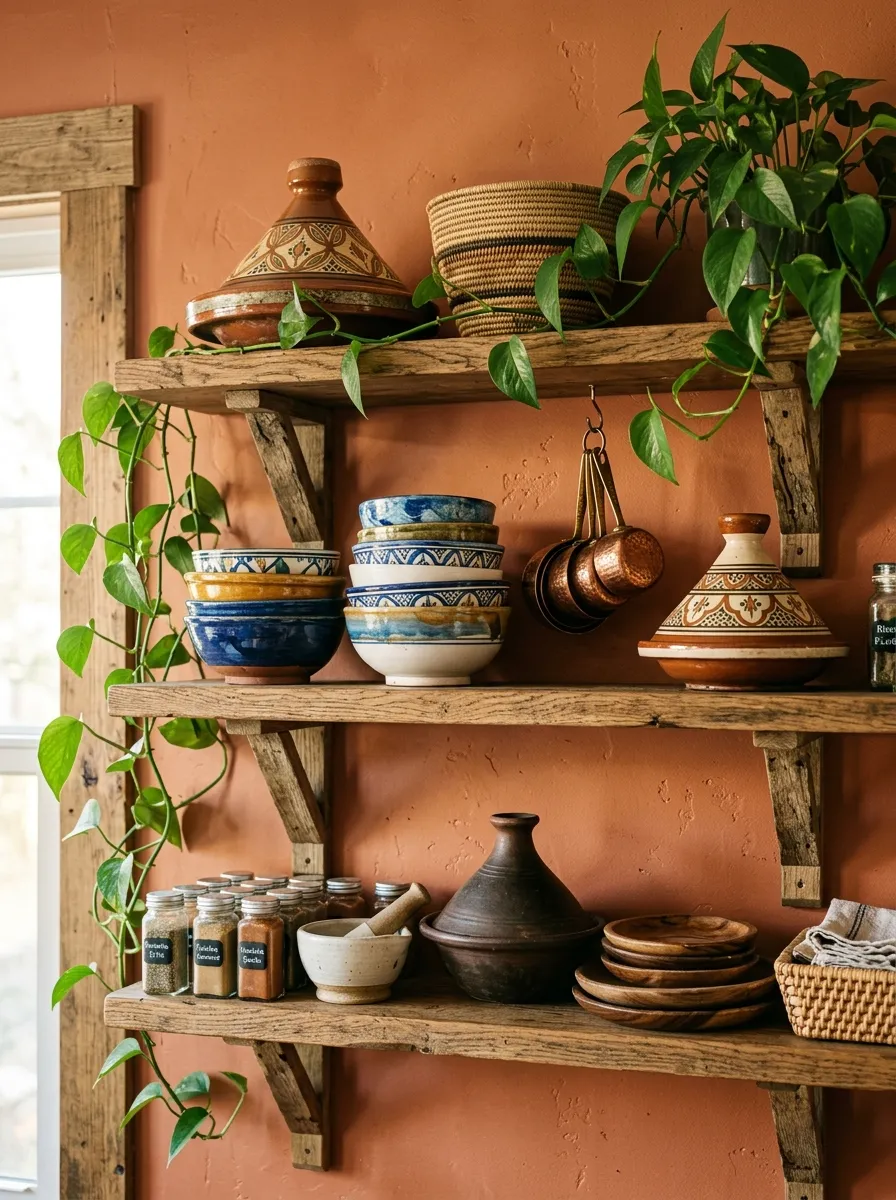
Open shelving in a bohemian kitchen is not just storage. It is your opportunity to turn every visible inch of your kitchen into a curated display of the places you have been and the things you love. Moroccan tagines, African woven baskets, hand painted tiles brought home from a market in Portugal, a clay pot picked up from a local artisan. These pieces do not need to match. They need to feel like they belong together, connected by warmth, material, or story rather than a matching set.
From what I have seen, the kitchens that feel the most collected and personal always anchor their open shelves with a consistent color temperature. Even if your pieces come from ten different countries, keep them in the warm family of terracotta, copper, gold, and natural wood tones. This invisible thread of warmth ties everything together visually. Vary heights and silhouettes so your eye keeps moving across the shelf, and always leave a small plant or trailing vine to soften the lines between objects.
The Key: Anchor global artifact shelves with a warm color temperature so pieces from different origins feel like they belong to the same beautiful story.
03
Rattan Pendant Lighting
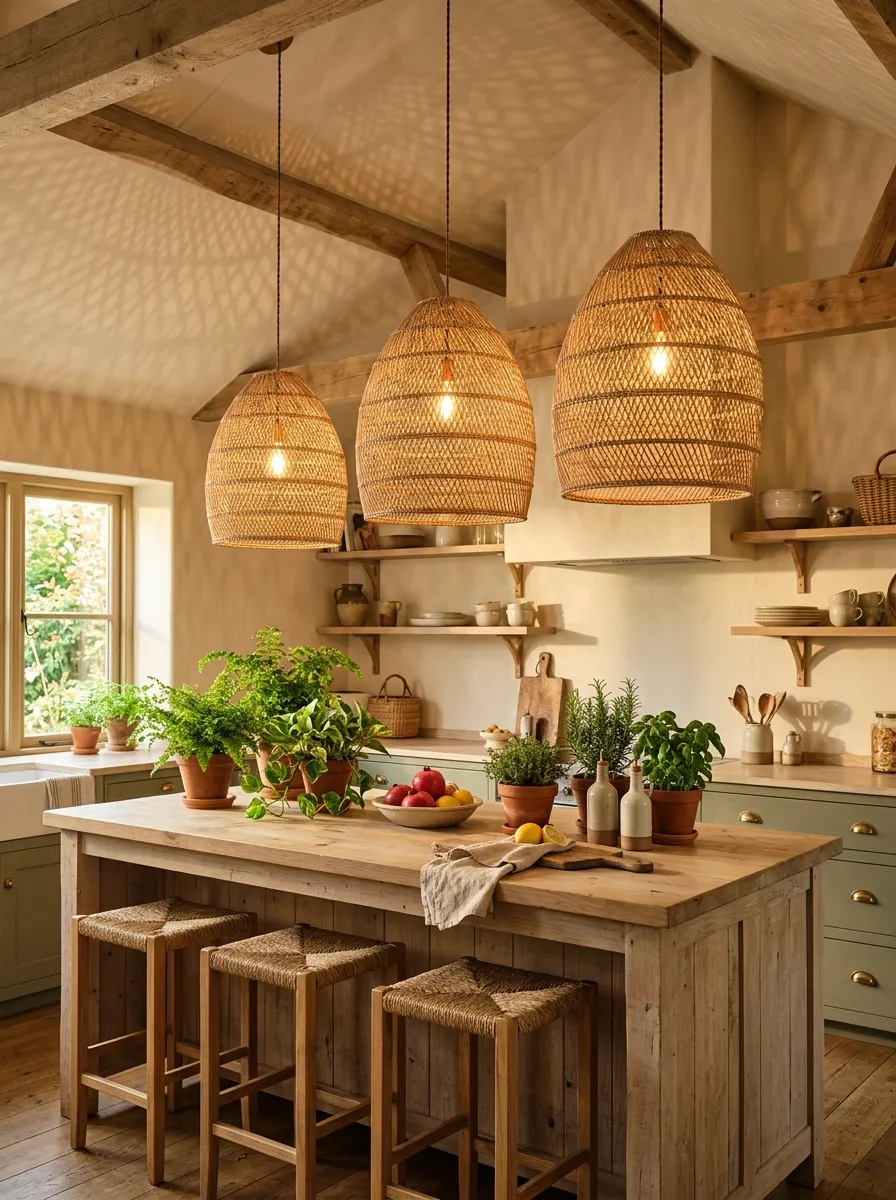
Lighting in a Boho kitchen style does not just illuminate a room. It transforms the entire feeling of the space. Rattan pendant lights are one of the single most powerful additions you can make because they bring in natural material, warm tone, and visual texture all at once. The woven pattern of rattan casts the most beautiful intricate shadow play across your ceiling and walls when light shines through it, creating that golden, lantern lit feeling that instantly makes any kitchen feel like a far away place.
I always recommend hanging rattan pendants in clusters of two or three above an island or dining table, varying the drop heights so they feel organic rather than perfectly symmetrical. The slight visual imperfection is what gives this look its handcrafted soul. Pair them with warm bulbs in the 2200K to 2700K range rather than cool white, because warm light makes terracotta, wood, and woven materials glow in a way that is genuinely irresistible. This one change can shift a plain kitchen into something that feels ancient, warm, and completely alive. That same warm bulb, layered-light instinct is also what makes every cottage kitchen feel so deeply cozy and genuinely welcoming rather than just visually styled.
The Key: Rattan pendants at staggered heights with warm toned bulbs create dramatic shadow texture and instantly give a kitchen its Boho soul.
04
Kilim Rug Grounding
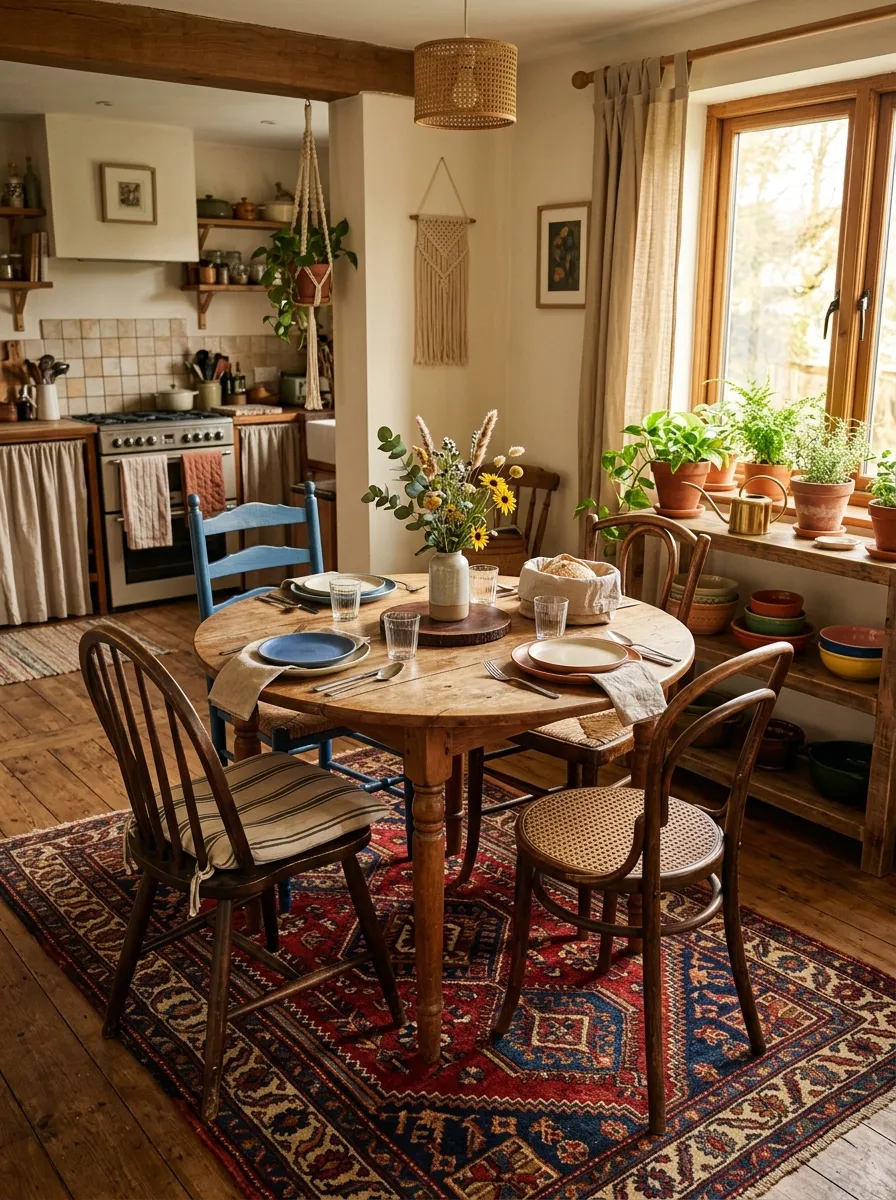
A kilim rug placed beneath your kitchen table or in front of your sink does something that no other single element can do as efficiently. It grounds the entire room. In a bohemian kitchen, the rug is often the piece that ties every other element together, pulling the warm tones from your pottery, the pattern from your tile, and the color from your plants into one cohesive, layered anchor. A well chosen kilim also brings that essential travel worn quality, the feeling that this piece has a history and a place of origin beyond the store shelf.
What I have found is that even the most neutral kitchens come alive the moment a kilim runner appears. You do not need to redecorate everything. The rug introduces pattern, warmth, and cultural depth on its own, and the rest of the room simply rises to meet it. Choose kilims with warm undertones in rust, ochre, navy, or cream to work well with wood and terracotta. Size matters too. A rug that is too small will float awkwardly. Go larger than you think you need and let it anchor the furniture above it generously.
The Key: A kilim rug grounds a Boho kitchen by pulling together color, pattern, and warmth in one layered piece that makes the whole room feel traveled and intentional.
05
Terracotta Color Palette
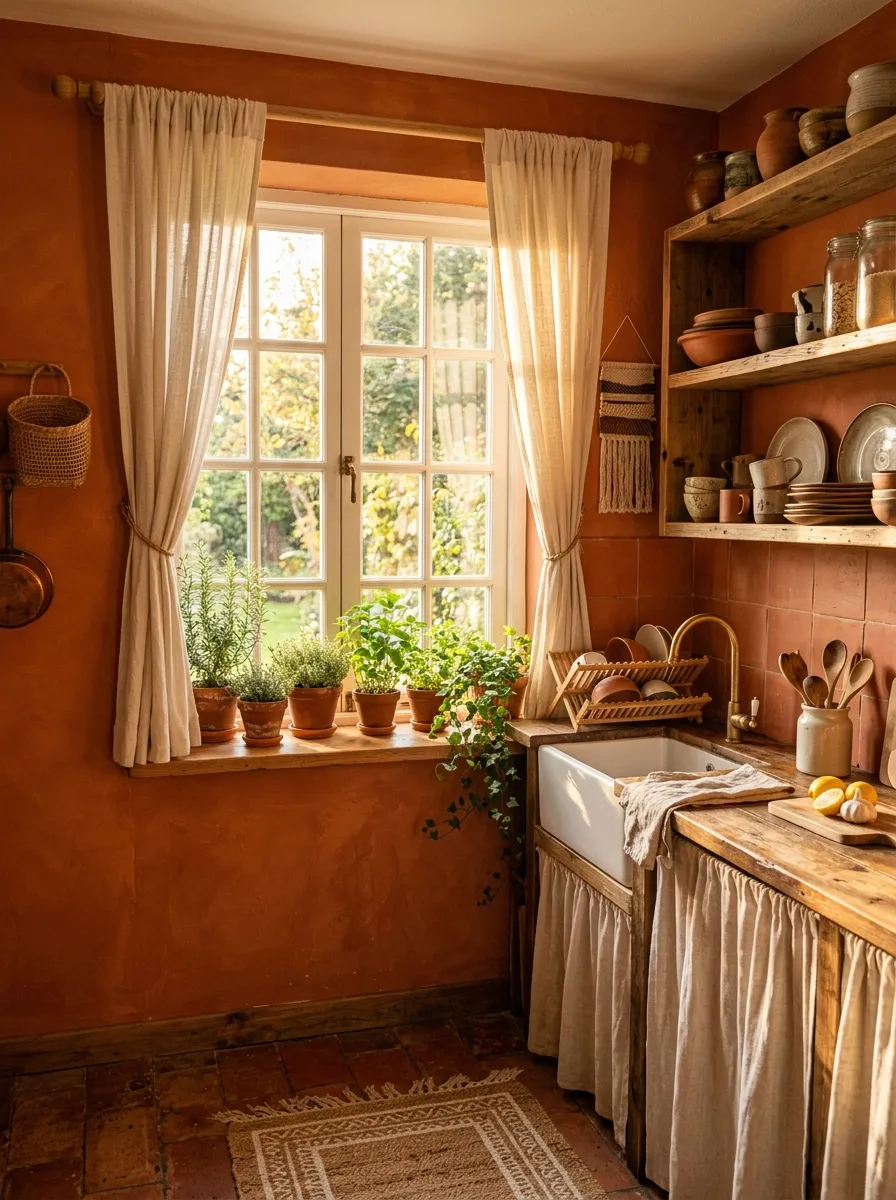
Terracotta is the heartbeat of the Boho Kitchen. It is the color that makes a space feel simultaneously ancient and alive, grounded in the earth and full of warmth. When you bring terracotta into your kitchen through wall paint, tile, pottery, or even just a collection of clay pots on your windowsill, the entire room shifts into a register that feels deeply human and comforting. There is a reason terracotta has been used across cultures for thousands of years. It does not age. It only deepens.
After styling many bohemian spaces, I’ve learned terracotta works best layered across multiple surfaces. Paint the walls, add clay tile on the backsplash, and place terracotta pots on open shelves growing fresh herbs. When the same warm orange tone repeats in different materials, the palette feels rich and intentional. Pair it with cream, warm white, and olive green for a truly timeless look. This earthy, sun-baked palette is what gives every Tuscan kitchen its unmistakable warmth and timeless character.
The Key: Repeating terracotta across walls, tile, and pottery creates a cohesive, earth anchored Boho kitchen palette that feels rich and deeply warm.
06
Copper Kitchen Accents
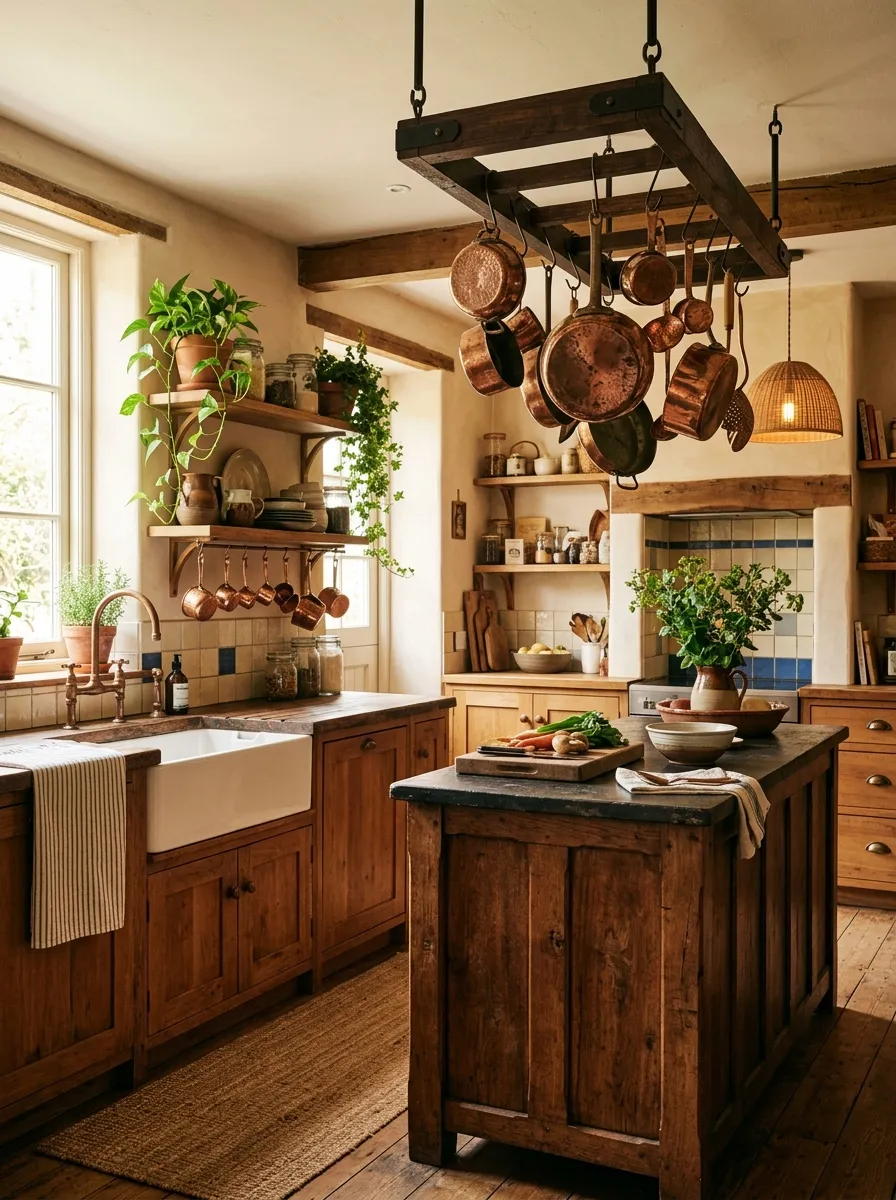
Copper in a kitchen is not just a finish choice. It is a statement about warmth, craft, and beauty in everyday function. Hanging copper pots from a ceiling rack above your island turns your most practical kitchen tools into a piece of living art. The warm metallic glow of copper plays beautifully against wood, terracotta, and woven textures, pulling all those earthy tones together and adding just enough shimmer to keep the space from feeling too matte or heavy. It is the finishing touch that makes a Boho cooking space feel genuinely luxurious without spending much at all.
After trying this myself in several styled kitchens, I can tell you that the key to making copper work is repetition. One copper pot hanging alone can feel like an accident. But a copper faucet, a pot rack, a set of measuring cups on a hook, and a few copper bowls on the open shelving? That reads as an intentional design choice that gives the whole room a cohesive glow. You do not need everything to be copper. You just need it to appear in at least three distinct places so the eye registers it as a thread running through the room.
The Key: Repeat copper in at least three distinct spots in your Boho kitchen so it reads as an intentional design element rather than a single decorative accent.
07
Macramé Wall Art
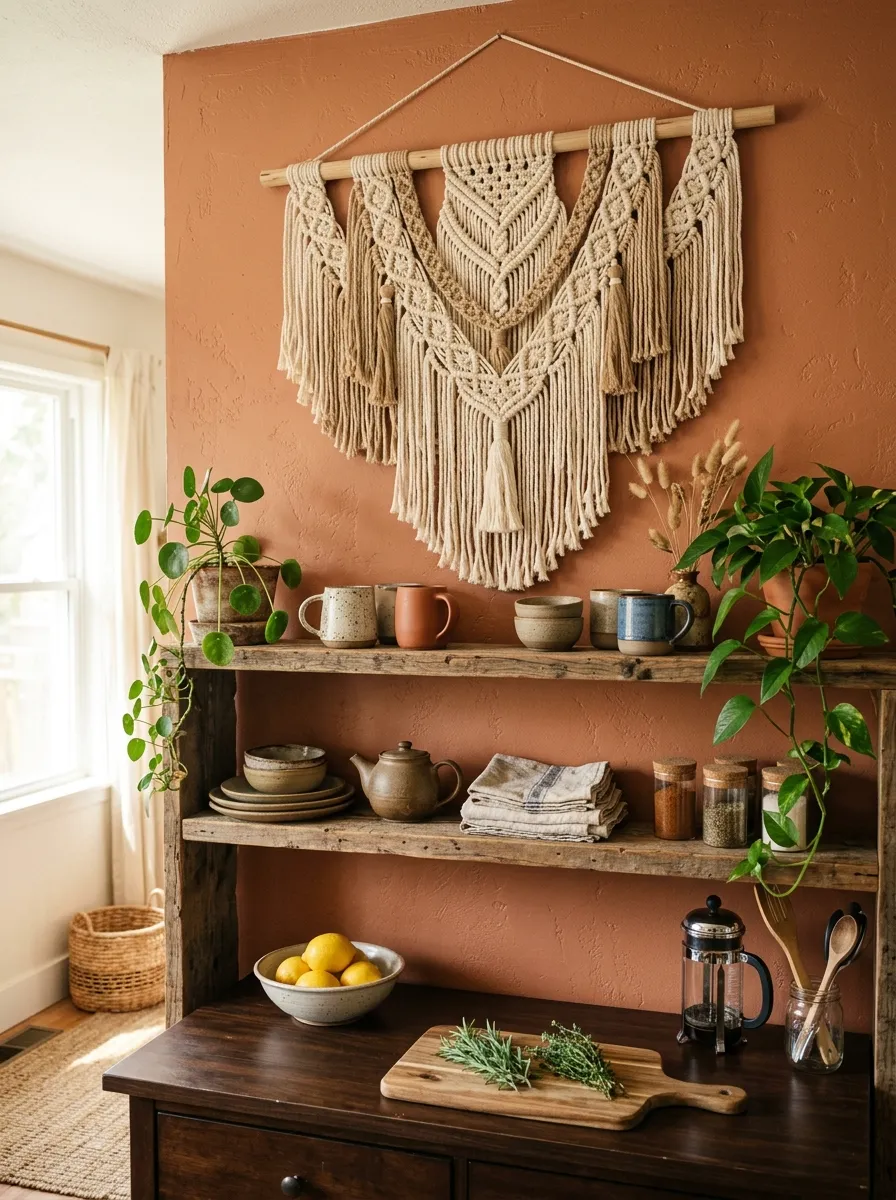
There is something about macramé in a kitchen that immediately signals the person living here cares about texture, craft, and home. A large handwoven macramé wall hanging above open shelving creates a focal point, adds vertical interest, and introduces softness into a space dominated by hard surfaces. In a bohemian kitchen, handmade textile art is not just decorative it is essential. This same love of handcrafted organic art is celebrated across the most creative retro kitchen spaces too.
I have tested this in many different kitchen sizes and the results are consistent. Even a small macramé piece above a window or beside a shelving unit completely changes the feel of the room. The natural cotton fibers soften echo and sound, making the kitchen feel more intimate. The organic, irregular pattern of the knots adds visual movement that manufactured wall art rarely achieves. Choose pieces with wooden dowels or driftwood at the top to reinforce the natural material story you are building across the rest of your Boho kitchen.
The Key: A handwoven macramé wall hanging adds the softness, craft, and vertical focal point that transforms a kitchen from decorated to deeply and warmly personal.
08
Mismatched Ceramic Collections
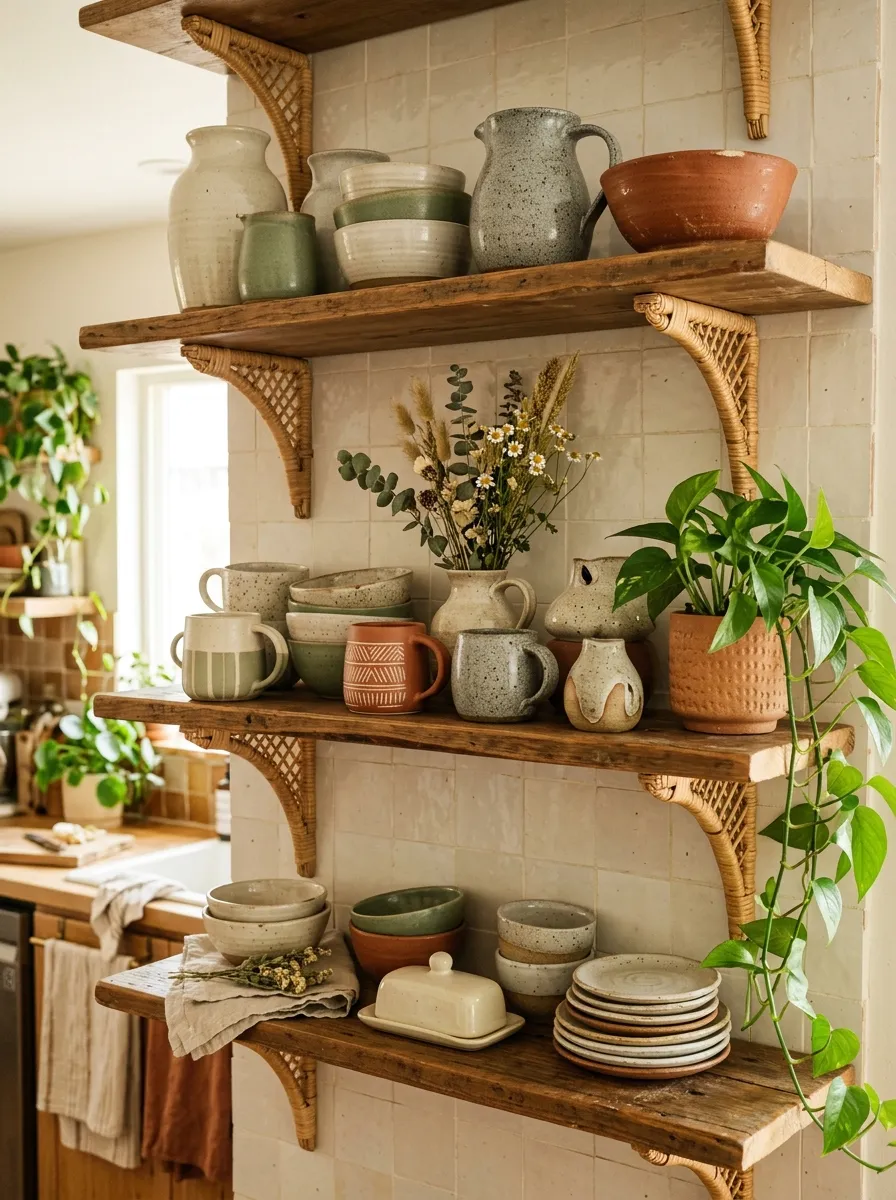
A collection of mismatched handmade ceramics displayed on open kitchen shelves is one of the most powerful ways to instantly convey the collected, traveled feeling that defines great Boho kitchen decor. The beauty of this approach is that the imperfection is the point. No two pieces need to match. What they need to share is a material warmth, a handmade quality, and a tonal family that ties them together across all their differences. Think speckled cream mugs beside sage green bowls beside terracotta pitchers. Different shapes, different origins, one visual family.
What I have noticed in the most beautifully styled Boho kitchens is that the owners build their ceramic collections slowly and intentionally over time. They pick up a mug from a ceramicist at a weekend market, find a bowl at a thrift shop, bring back a small pitcher from a trip. Each piece carries a little story, and together they create a display that no catalog could replicate. Start with what you have, and add pieces over time that share a warm, earthy color tone. Vary the silhouettes so there is always movement and visual interest as the eye travels across the shelf.
The Key: Mismatched handmade ceramics in a shared warm color family create a Boho kitchen shelf display that feels genuinely collected, personal, and full of quiet stories.
09
Woven Basket Storage
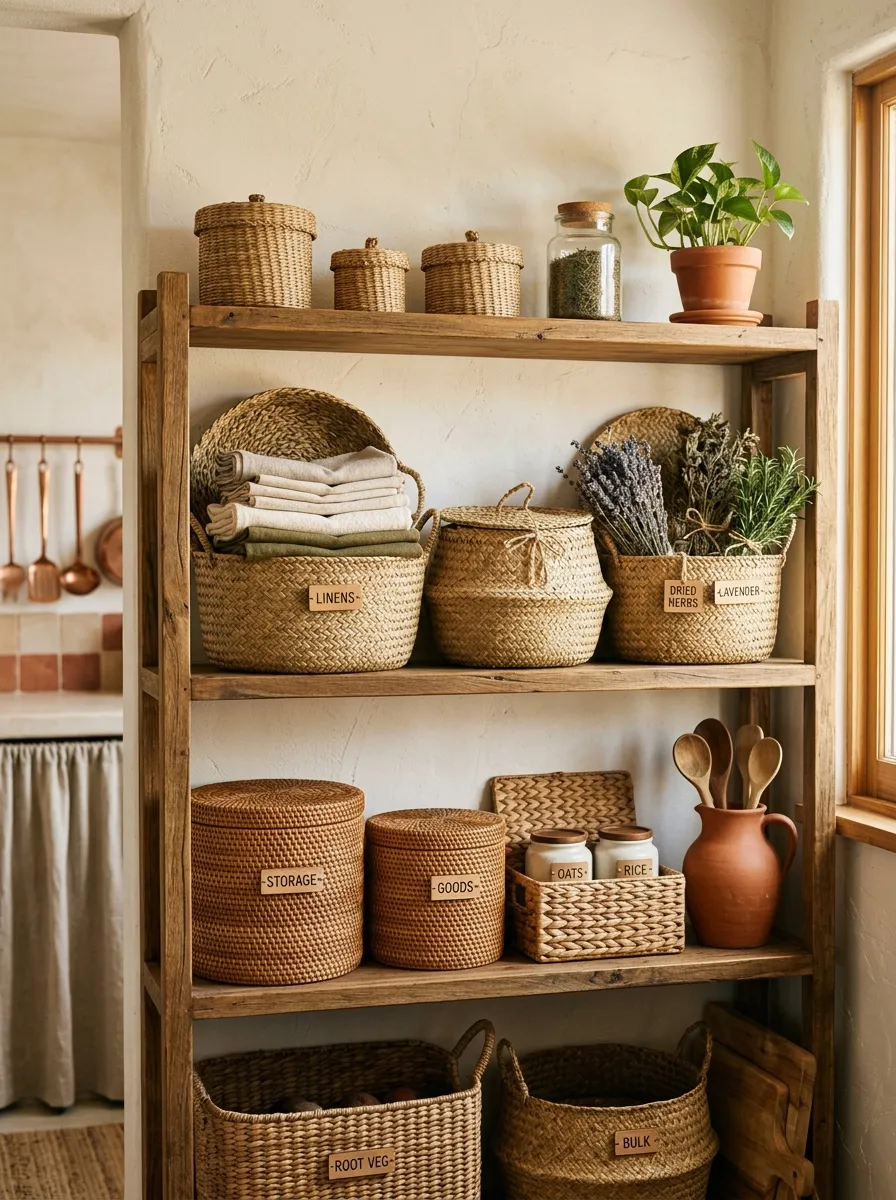
Storage in a Boho kitchen style should never look sterile. Woven baskets are the solution to the practical problem of where to put things while also being one of the most beautiful design elements in your entire kitchen. Seagrass baskets, rattan bins, woven trays, lidded weave boxes. All of these serve a function while simultaneously adding natural texture, warmth, and that essential handcrafted quality that mass produced plastic containers can never achieve. The minute you swap out your plastic bins for woven ones, the kitchen shifts in register entirely.
I have used this approach in kitchen makeovers countless times and the transformation is immediate. Vary basket sizes and use them at multiple heights on your shelving a tall lidded basket for bread, a shallow tray for garlic, a deep round basket for potatoes. Each serves a purpose while creating visual rhythm that is both practical and beautiful. Label them with ceramic or linen tags to stay organized. This same instinct shapes a warmly styled farmhouse entryway feel purposeful and inviting.
The Key: Woven baskets in varied sizes transform practical kitchen storage into a layered, textured display that looks intentionally beautiful rather than simply functional.
10
Trailing Plant Displays
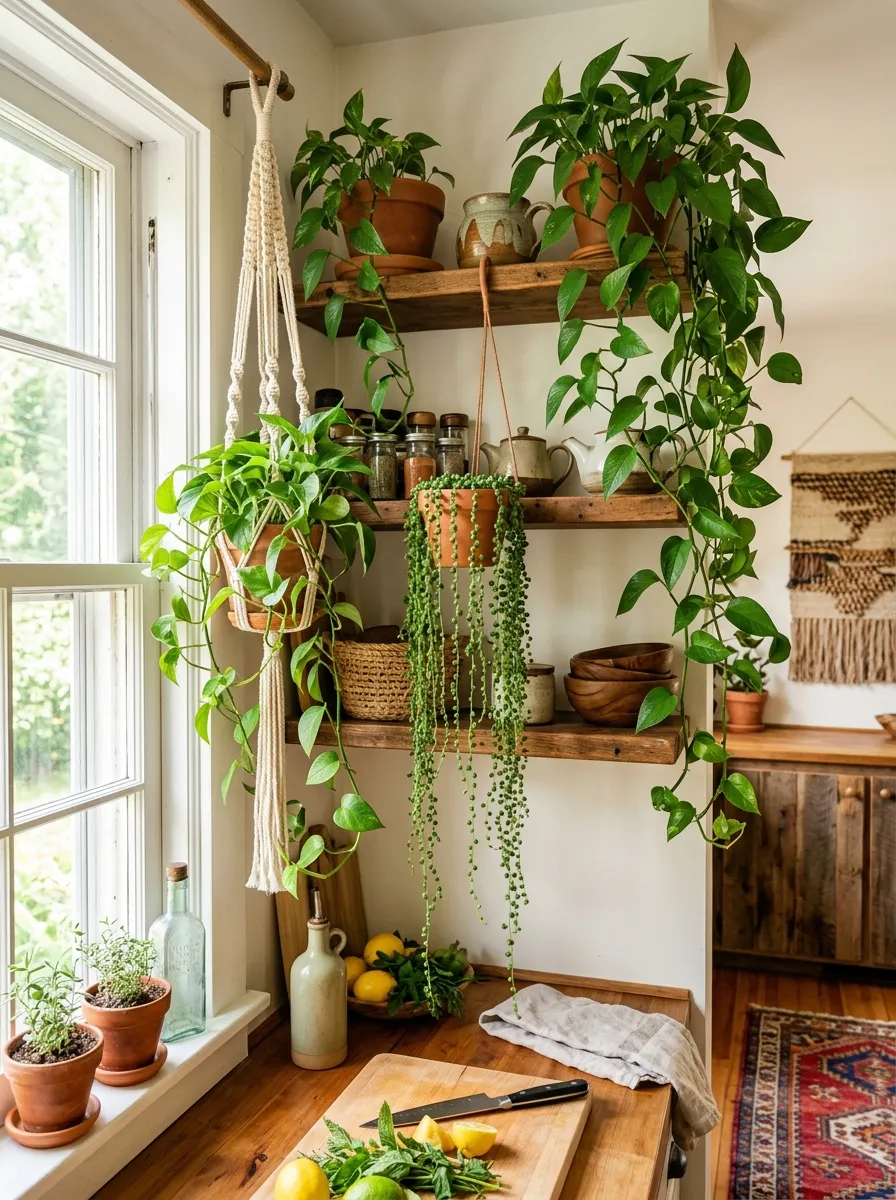
No faster way exists to make a bohemian kitchen feel alive than trailing plants. Pothos cascading over open shelves, string of pearls draping from a macramé planter, a monstera reaching toward the window from a terracotta pot these plants add movement, softness, and the feeling that the kitchen is truly breathing. No other décor element achieves that living, organic quality so effortlessly. Anyone wanting to extend this approach through every room will find deep inspiration in this dedicated plants corner resource.
Personally, I think the best plant displays in Boho kitchens use a mix of three categories. Trailing plants that hang or drape, upright structural plants that reach toward the light, and low growing herbs on the windowsill. This variety creates visual layers at different heights, and together they fill the kitchen with life from floor to ceiling. Choose hanging planters made from macramé or woven rattan to keep the material story cohesive. Cluster your pots in odd numbers, because even groupings feel too formal and symmetrical for the free spirited Boho aesthetic you are building.
The Key: Mixing trailing, upright, and low growing plants at different heights fills a Boho kitchen with organic layers that feel genuinely alive and effortlessly warm.
11
Boho Kitchen Open Shelving
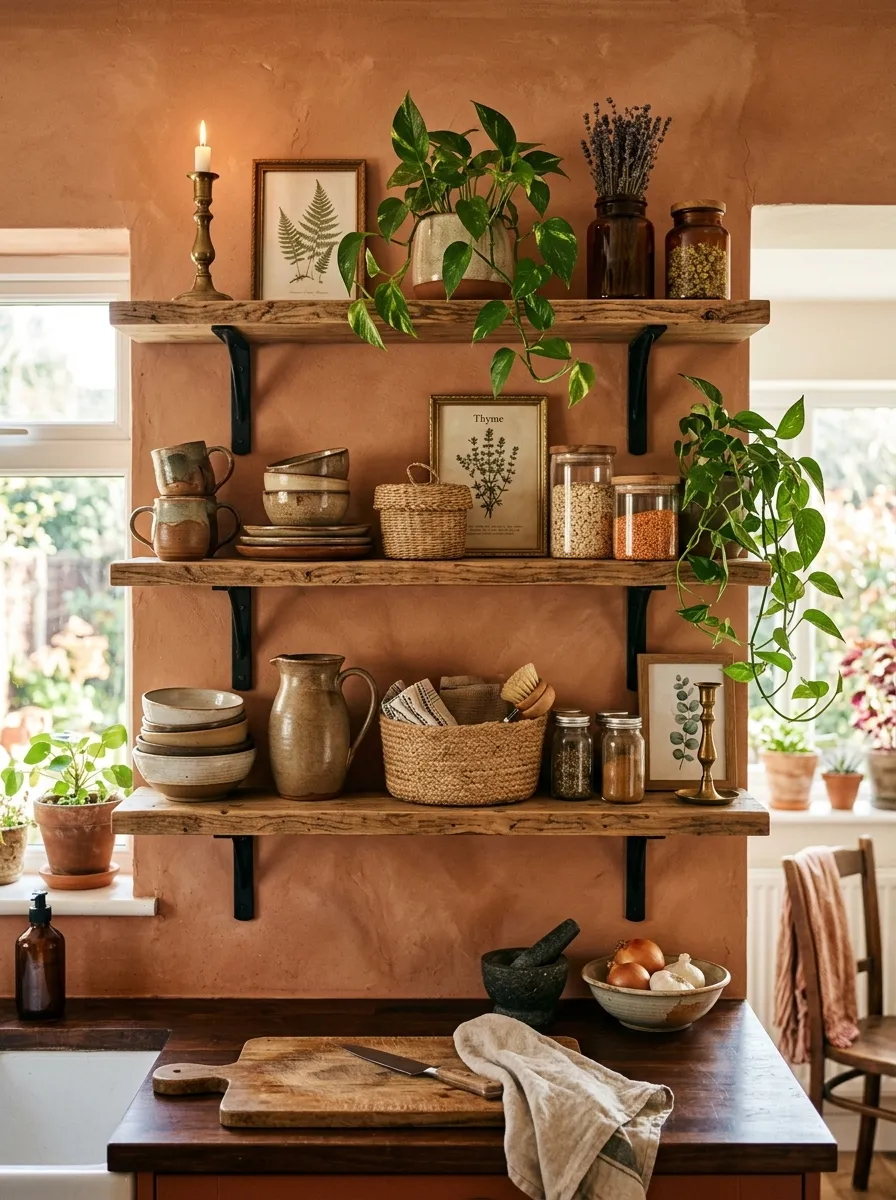
Open shelving in a Boho Kitchen is the most personal design choice you can make, because what you put on those shelves is a direct reflection of what you love. Raw edge wooden boards on black iron brackets are the most popular configuration because the combination of natural imperfect wood against the industrial edge of the bracket creates that essential Boho tension between organic and structured. Every shelf becomes a small installation of the things you use, the things you have found, and the things that make you happy every time you see them.
From what I have seen, the kitchens with the most beautiful open shelving always follow one simple principle. They treat each shelf as its own small scene. The bottom shelf holds the heaviest, most practical items. The middle shelves hold the prettiest everyday pieces. The top shelf holds the rarest, tallest, most decorative elements. This vertical hierarchy creates natural visual flow that guides the eye upward and makes even a small set of shelves feel rich and thoughtfully layered. Add a trailing plant at the end of one shelf to soften the transition between the shelving unit and the surrounding wall.
The Key: Treat each open shelf as its own small scene with a clear visual hierarchy from practical to decorative that guides the eye naturally upward through the display.
12
Vintage Market Finds
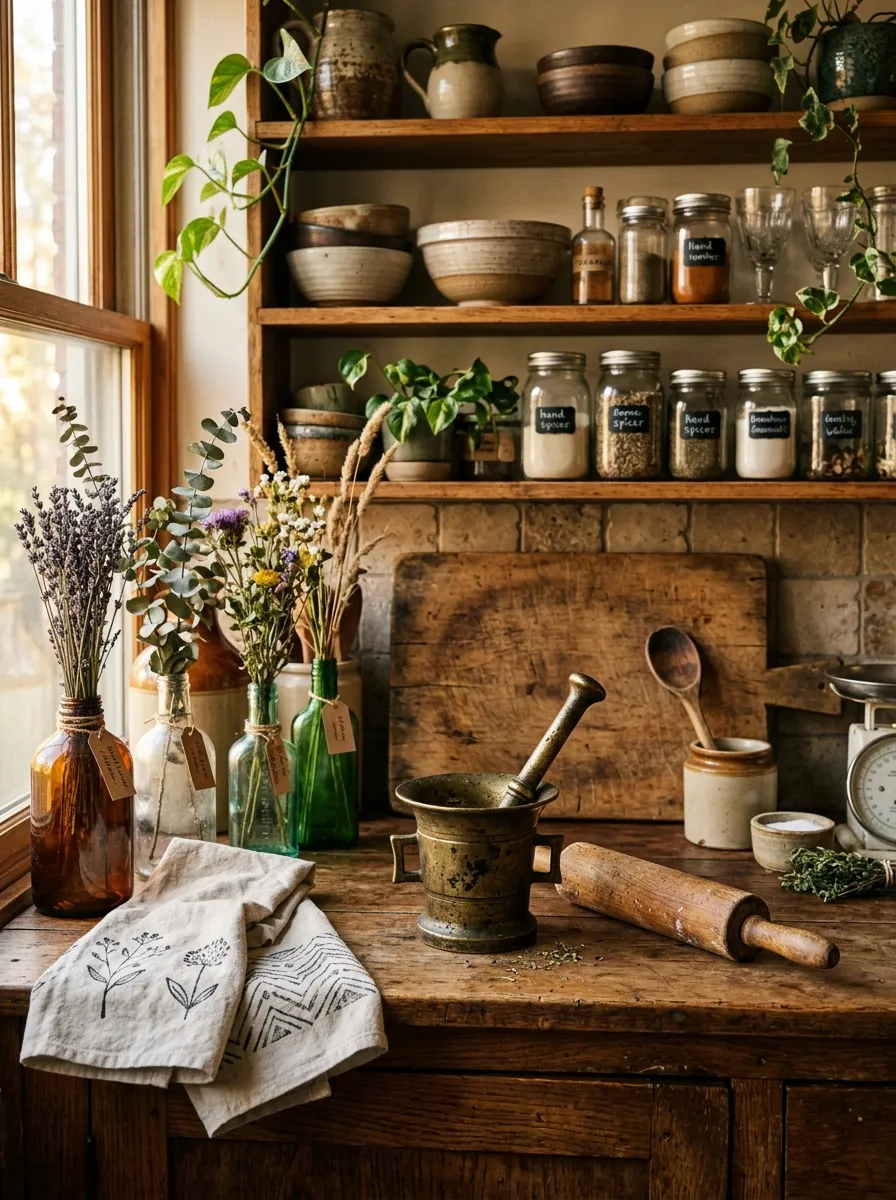
Nothing gives a Boho kitchen more soul than pieces carrying history. The brass mortar and pestle found at a Sunday market, the antique rolling pin from an estate sale, the worn cutting board with a patina only decades of use can create these objects are beautiful because they remind you a kitchen is for living, not just looking. Aged pieces bring energy that new items simply cannot. That same love of repurposing beautiful objects drives every truly satisfying weekend DIY project.
I have noticed that the collectors who build the most magnetic Boho kitchens are not trying to find expensive pieces. They are looking for objects with patina, character, and warmth. A chipped enamel mug. A vintage tin canister with its original label barely intact. A stack of worn linen towels from a grandparent’s era. These things cost almost nothing but they contribute enormously to the feeling of a space that has been built slowly and loved deeply over time. Mix these finds among your newer pieces and the whole kitchen benefits from their earned authenticity.
The Key: Vintage market finds bring irreplaceable patina, history, and warmth to a Boho kitchen that new pieces cannot replicate no matter how beautiful or well made they are.
13
Patterned Tile Backsplash
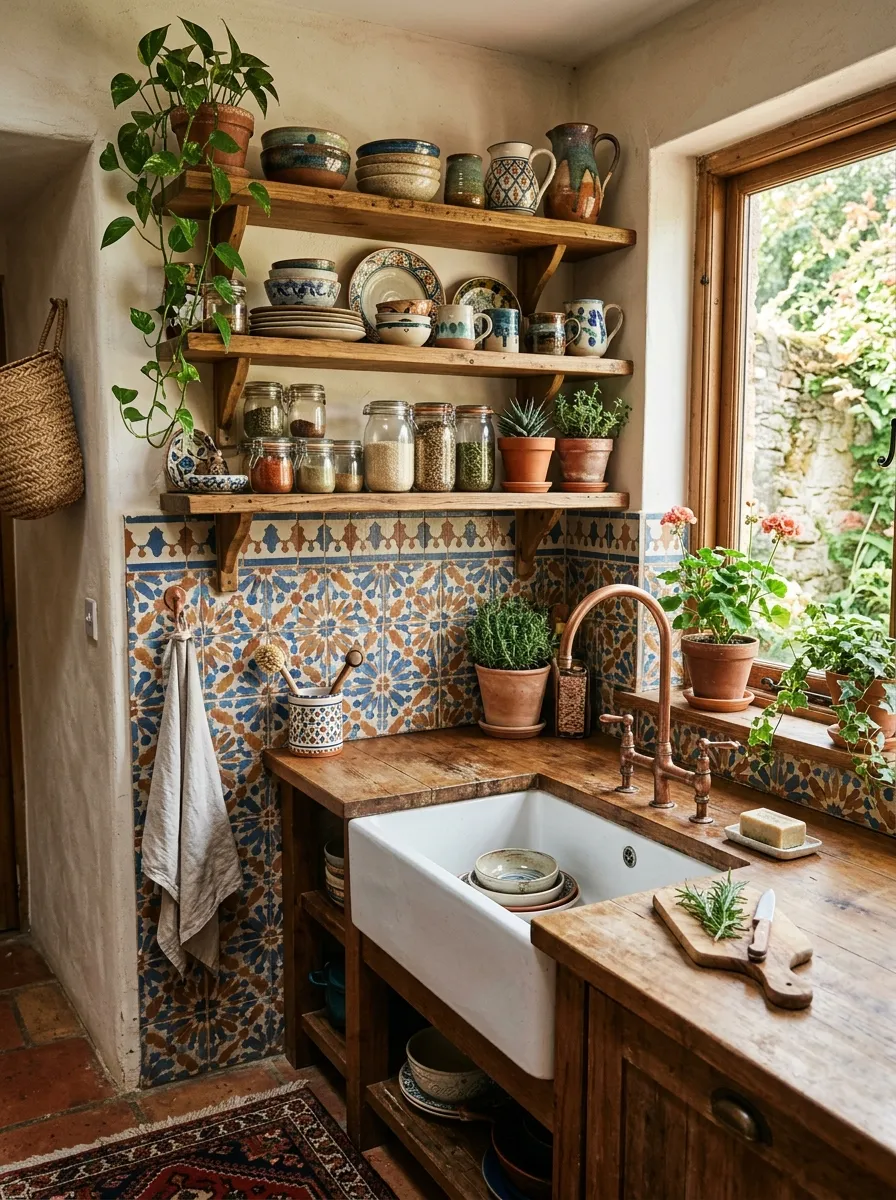
A patterned tile backsplash is one of the most transformative investments you can make in a Boho cooking space. Where a plain subway tile says “functional,” a hand painted Moroccan geometric tile says “I have been somewhere and I have brought it home.” The pattern introduces movement, color, and cultural story into the most used surface in your kitchen. And because the backsplash sits between your counters and your upper cabinets, it occupies the exact eye level zone where your gaze naturally falls throughout the day. Make that zone beautiful and the kitchen rewards you every time you cook.
One thing I have learned is that a patterned tile backsplash works best when the rest of the kitchen keeps its surfaces relatively calm. Let the tile be the loudest voice in the room. Keep cabinets in a neutral cream or warm white, choose simple hardware, and pull the tile’s accent color into your ceramics and textiles rather than adding more pattern elsewhere. This way the backsplash reads as the intended focal point rather than just one of many competing elements. Moroccan zellige, hand painted cement tiles, and traditional Indian block printed tiles are all beautiful choices that carry genuine cultural heritage and warmth.
The Key: Let your patterned tile backsplash be the loudest voice in the kitchen by keeping surrounding surfaces calm and echoing the tile’s accent colors elsewhere in the room.
14
Warm Wood Cabinetry
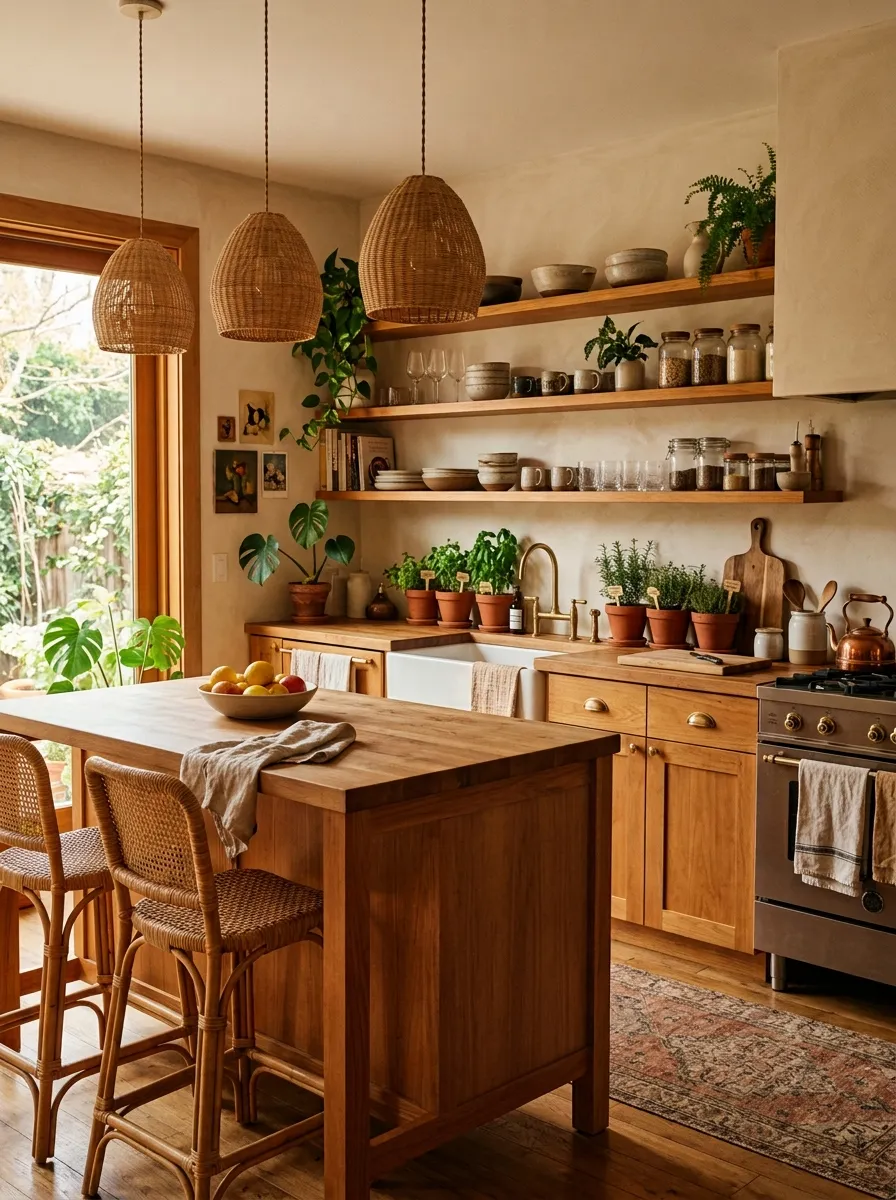
Wood cabinetry in a warm honey, walnut, or oak tone is the single most grounding foundation you can give a bohemian kitchen. Unlike painted cabinetry, wood brings the outdoors in through its grain, its variation, and its natural warmth. No two panels look exactly alike, and that gentle imperfection is precisely what the Boho aesthetic celebrates. Wood cabinetry ages beautifully too. It deepens and enriches over time rather than showing wear as damage. It becomes more beautiful the longer it lives in your kitchen and the more it absorbs the warmth of daily cooking life.
Trust me on this one: pairing warm wood cabinetry with brass hardware, butcher block countertops, and rattan pendant lights creates a material palette that is deeply cohesive and endlessly beautiful. The brass echoes warm wood undertones. The butcher block extends the natural story horizontally. The rattan repeats the organic fiber theme overhead. Together these four elements form the essential Boho material vocabulary that makes every decorative layer ceramics, plants, textiles land beautifully. This same warm foundation grounds the most stunning colorful kitchen designs too.
The Key: Warm wood cabinetry paired with brass, butcher block, and rattan creates a cohesive natural material foundation that makes every Boho kitchen layer land more beautifully.
15
Eclectic Dining Chair Mix
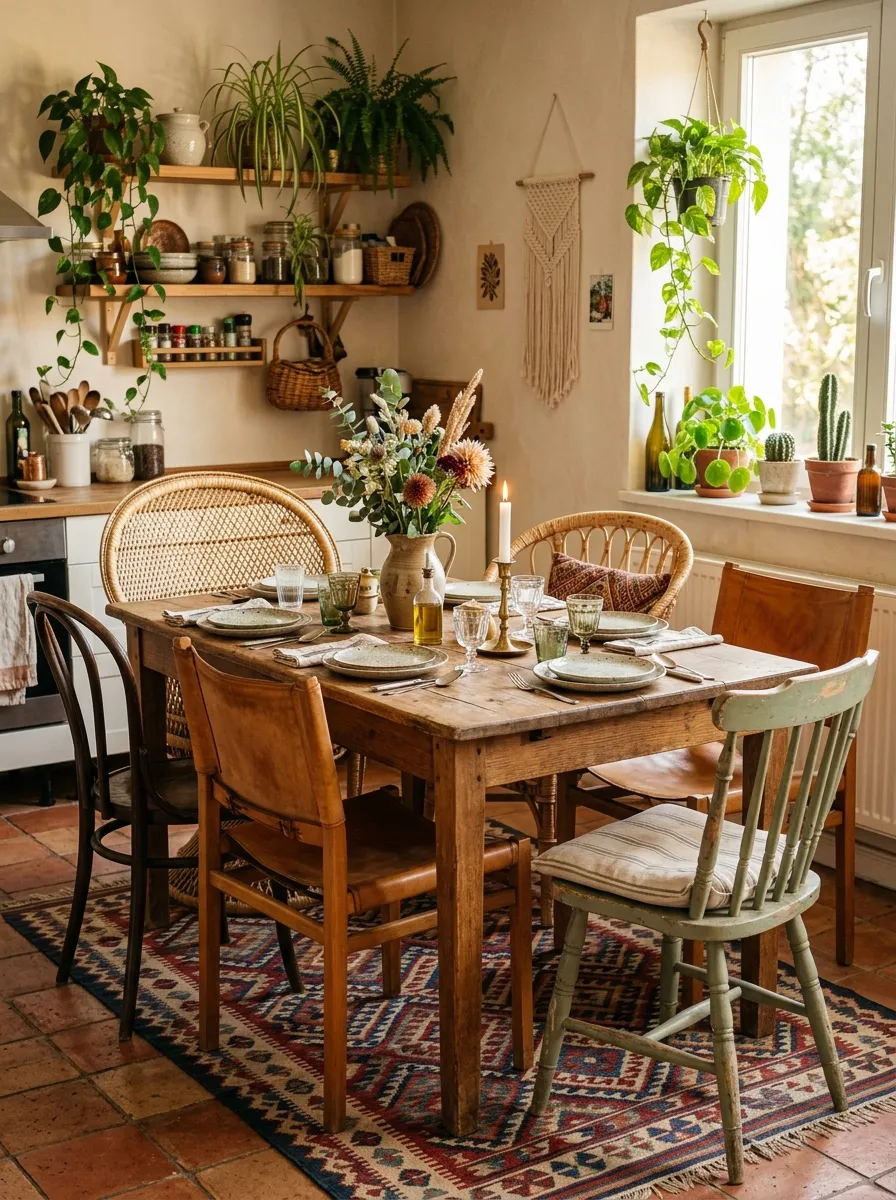
Mismatched dining chairs around one shared table is one of the most joyful and welcoming things you can do in a Boho kitchen style dining area. There is something deeply human about a table where no two chairs are the same. It says that this space has been gathered over time, that different people have sat here, and that the kitchen is a place where everyone is welcome regardless of whether they match the aesthetic perfectly. A vintage bentwood chair beside a woven rattan seat beside a painted wooden chair in faded sage creates a visual feast that a perfectly matched dining set never could.
What I have found works best is choosing chairs that share one connective element even while they differ in everything else. They might all be natural wood tones while their shapes vary completely. Or they might all be different materials but all roughly the same height and scale so the table feels balanced. The kilim rug underneath ties all the different legs and frames together into one cohesive zone. Choose your most comfortable chair as your anchor piece and then gather the others around it, allowing each one to contribute its own personality to the shared table.
The Key: Mismatched chairs united by one shared element, whether tone, scale, or material, create a Boho dining area that feels warmly gathered rather than randomly assembled.
16
Herb Garden Windowsill
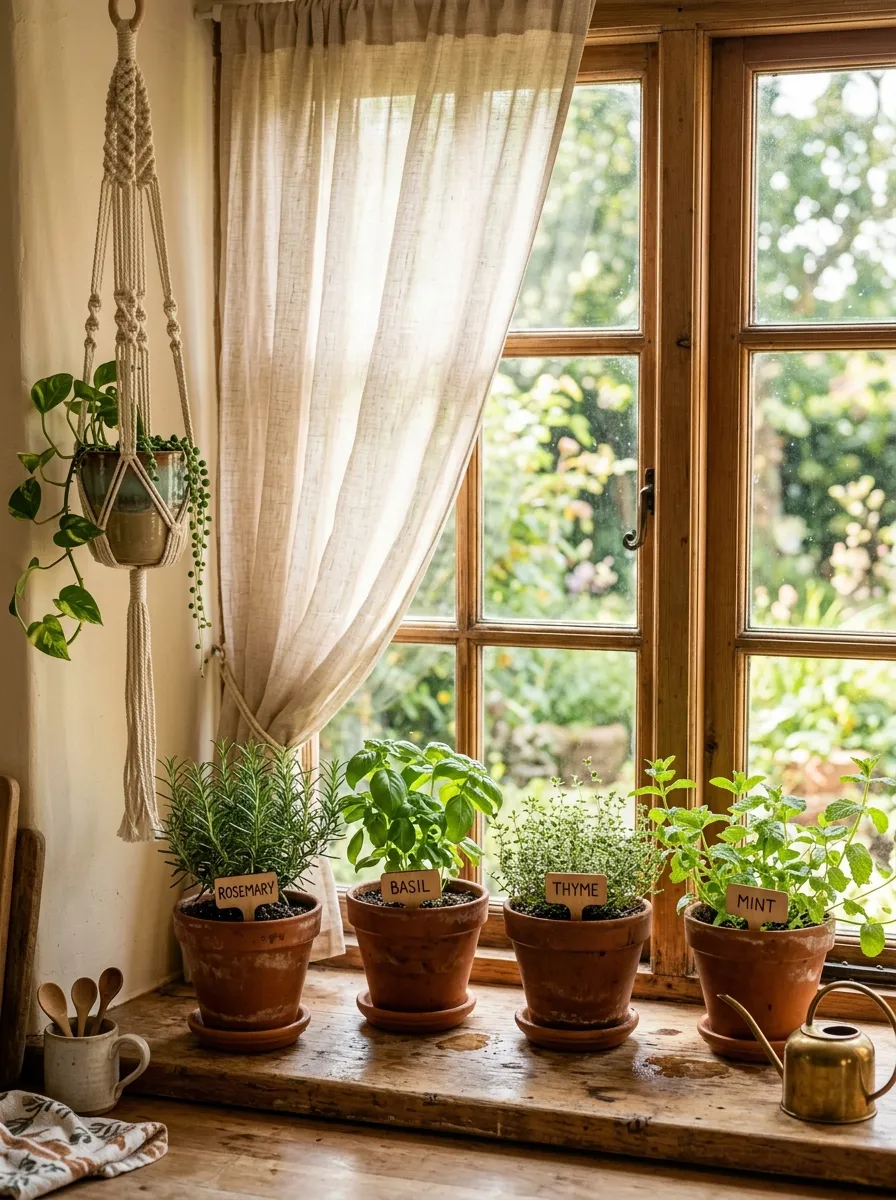
A windowsill herb garden in a Boho Kitchen is where function and beauty become completely inseparable. A row of terracotta pots holding rosemary, basil, thyme, mint, and a few edible flowers on your kitchen windowsill does three things at once. It fills the kitchen with the living green energy that Boho styling requires. It releases the most beautiful scent into the room as you brush past. And it gives you fresh herbs for cooking that genuinely make your meals taste different and better than anything dried in a jar ever could. Practical beauty at its very best.
I personally love the way a windowsill herb garden changes with the seasons. In spring and summer the pots are full and lush, the herbs spilling over the edges of their terracotta containers, filtering the morning light into soft green patterns on the kitchen wall. In winter, a few hardy rosemary plants hold on while dried herb bundles hung from the shelving above take over the aromatic duty. This seasonal shift makes the kitchen feel alive and connected to the rhythms of the outside world in a way that no synthetic element can mimic. Always choose terracotta pots for the windowsill. The material breathes, the roots stay healthier, and the orange red clay color is perfect against any Boho palette.
The Key: A windowsill herb garden in terracotta pots brings functional beauty, living color, and seasonal rhythm to a Boho kitchen in the most natural and effortless way possible.
17
Linen and Textile Layers
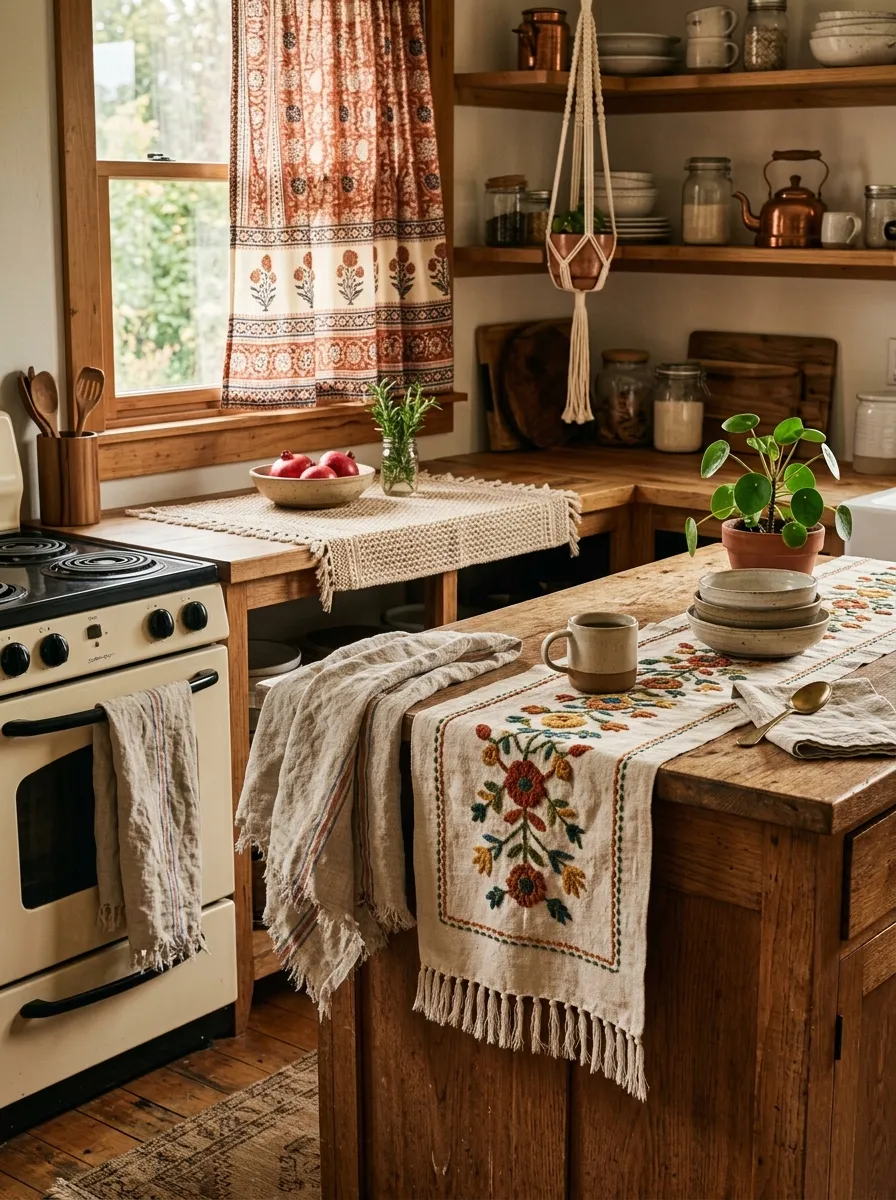
Textile layering is one of the most underestimated tools in building a truly warm and collected Boho kitchen decor scheme. Linen dish towels, block printed curtains, woven cotton placemats, hand stitched table runners, a woven pot holder left casually on the counter. Each of these small fabric moments adds a layer of tactile softness and handcrafted warmth that hard surfaces alone can never provide. Textiles absorb sound, soften light, and create that cozy intimacy that makes a kitchen feel like the kind of place where people linger long after the meal is finished.
I have seen kitchens transform completely just through the addition of carefully chosen textiles. A plain window with a block printed linen curtain in terracotta and cream becomes the most beautiful thing in the room. A bare counter with a hand stitched table runner becomes an invitation to sit down and stay. Choose natural fibers wherever possible, linen, cotton, jute, and wool, because synthetic textiles never achieve the softness and drape that natural ones do. Mix prints and textures freely but stay within your warm palette so the different patterns feel like they belong to the same collected story.
The Key: Natural fiber textiles layered throughout the kitchen add irreplaceable tactile warmth, softness, and the kind of lingering comfort that hard surfaces can never provide alone.
18
Collected Travel Objects
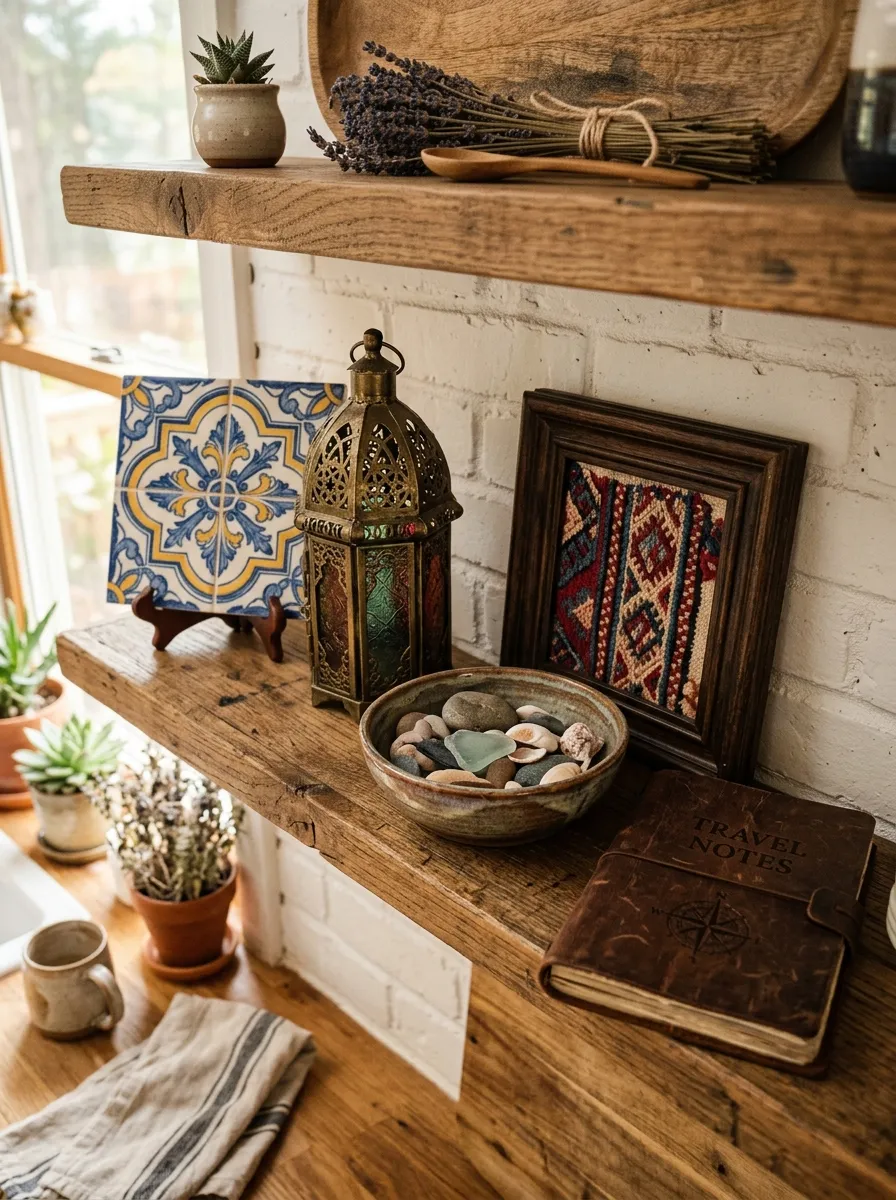
The true spirit of a bohemian kitchen lies not in what you buy but in what you bring home. A hand painted ceramic tile from a market in Lisbon. A small brass lantern from a street in Marrakech. A scrap of block printed textile from a trip to Rajasthan framed in a simple wood frame and hung on the kitchen wall. A smooth river stone collected from a walk that you cannot even fully remember. These objects are not decor in the traditional sense. They are physical memories displayed with intention, and they give a kitchen a depth and personality that no store collection could ever replicate.
What makes this approach work beautifully in a kitchen is that travel objects do not need to be grand or expensive to carry meaning. A shell in a ceramic bowl. A folded piece of patterned fabric draped over the edge of an open shelf. A small woven bag hung on a hook near the back door. These humble, personal pieces bring an entire story into the room, and visitors who see them will always ask where they came from. That conversation is part of what makes a Boho kitchen feel like a living, human space rather than a designed set. Display your travel finds with intention but without fussiness and let them simply be what they are.
The Key: Personal travel objects displayed with intention in a Boho kitchen create a depth of character and storytelling that no store bought collection can ever fully replicate.
19
Handmade Pottery Statement Pieces
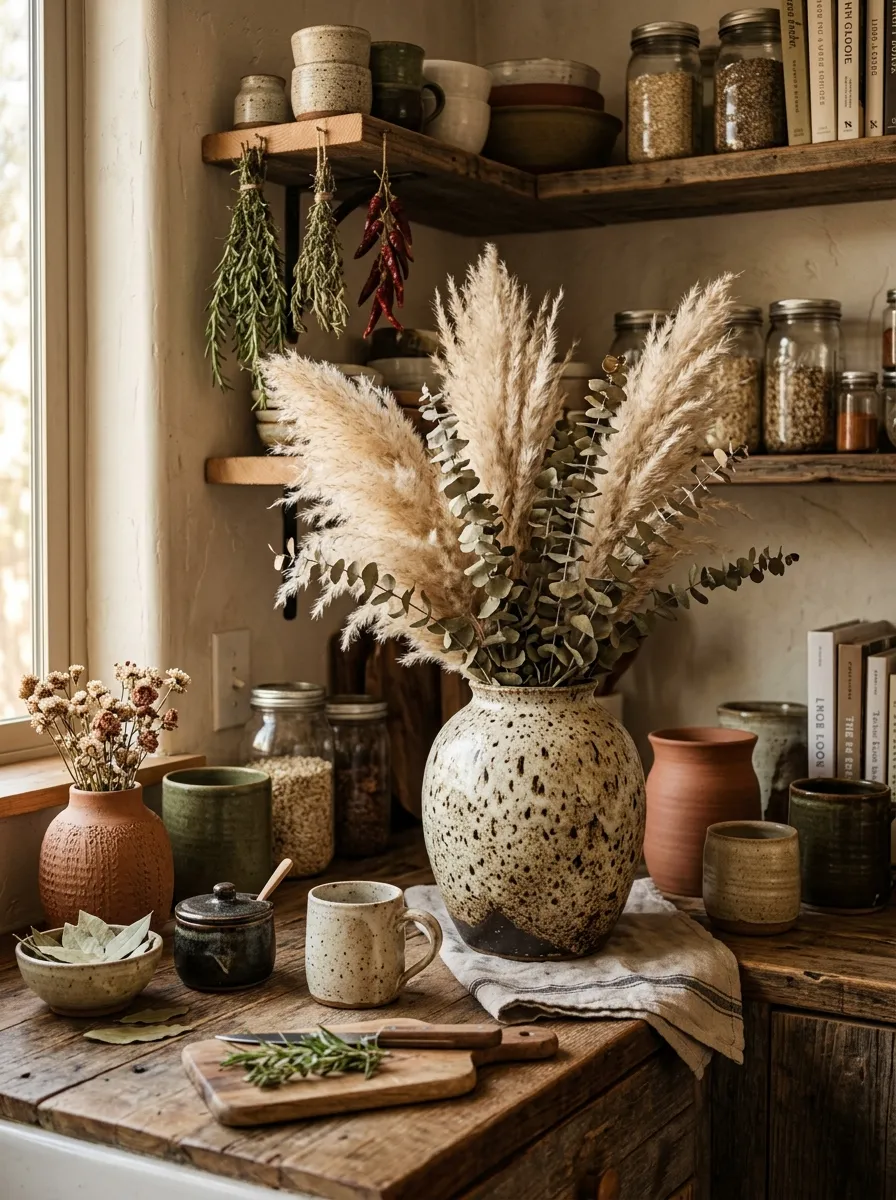
Every great Boho Kitchen deserves at least one statement piece, and handmade pottery fulfills that role better than any other category of object. A large wide mouthed stoneware vase in a speckled cream and dark brown glaze holding dried pampas grass and eucalyptus branches on your counter is not just beautiful. It is a conversation. The irregular glaze surface, the slight asymmetry of the form, the way the pampas grass arches and bends in the kitchen light. These elements together create a living, breathing centerpiece that changes as the light shifts throughout the day.
From years of working with handmade pottery, I’ve learned size matters enormously with statement pieces. Most people underestimate the scale they need a piece that feels large in the shop looks small in a full kitchen. Go bigger than instinct suggests, especially for floor vases or counter centerpieces. Pair your statement piece with smaller handmade pieces in similar glazes arranged around it. The smaller pieces frame the star without competing. This same go bigger confidence makes every retro kitchen feel boldly personal and visually unforgettable.
The Key: Choose handmade pottery statement pieces one size larger than feels comfortable. In a kitchen context, a generous scale reads as intentional confidence rather than excess.
FREQUENTLY ASKED QUESTION
Your Boho Kitchen is not built in a single afternoon and it is never truly finished, and that is exactly what makes it so beautiful to live with. The 19 ideas in this article give you a clear and joyful framework for layering texture, bringing in warmth, and filling your kitchen with the collected, travel inspired character that makes a space feel genuinely and deeply like yours. I have seen firsthand how even small changes, a kilim rug, a set of copper pots, one handmade pottery piece, can completely shift the feeling of a room. Start with one idea that excites you most and let the rest follow naturally.
Pin this article to your Pinterest boards so you can return to it as your kitchen evolves over time. Share it with a friend who has been dreaming of a warmer, more personal kitchen space. Every piece you add, every market find you bring home, every trailing plant you let cascade over the edge of a shelf, all of it builds toward a kitchen that tells the story of your life in the most beautiful possible way. Trust the process, trust your eye, and trust that warmth and character always win over perfection.