JAPANDI dining room
🏠 17 Real Ideas
⏱ Quick Read
🔥 Always Trending
17 Japandi Dining Room Ideas
That Make Neutral Palettes Feel
Alive & Intentional
If you’ve ever stared at a neutral dining room and felt something was missing — you’re not alone. Japandi dining room ideas solve exactly that problem. This style blends Japanese wabi-sabi philosophy with Scandinavian simplicity to create spaces that feel calm, warm, and deeply intentional all at once. I’ve noticed that most people assume neutral means boring — but the right combination of natural materials, considered lighting, and restrained styling proves otherwise every single time. In this article, you’ll discover 17 beautifully practical ideas that transform an ordinary dining space into something worth saving, sharing, and most importantly, living inside every single day.
01
Warm Oak Dining Table
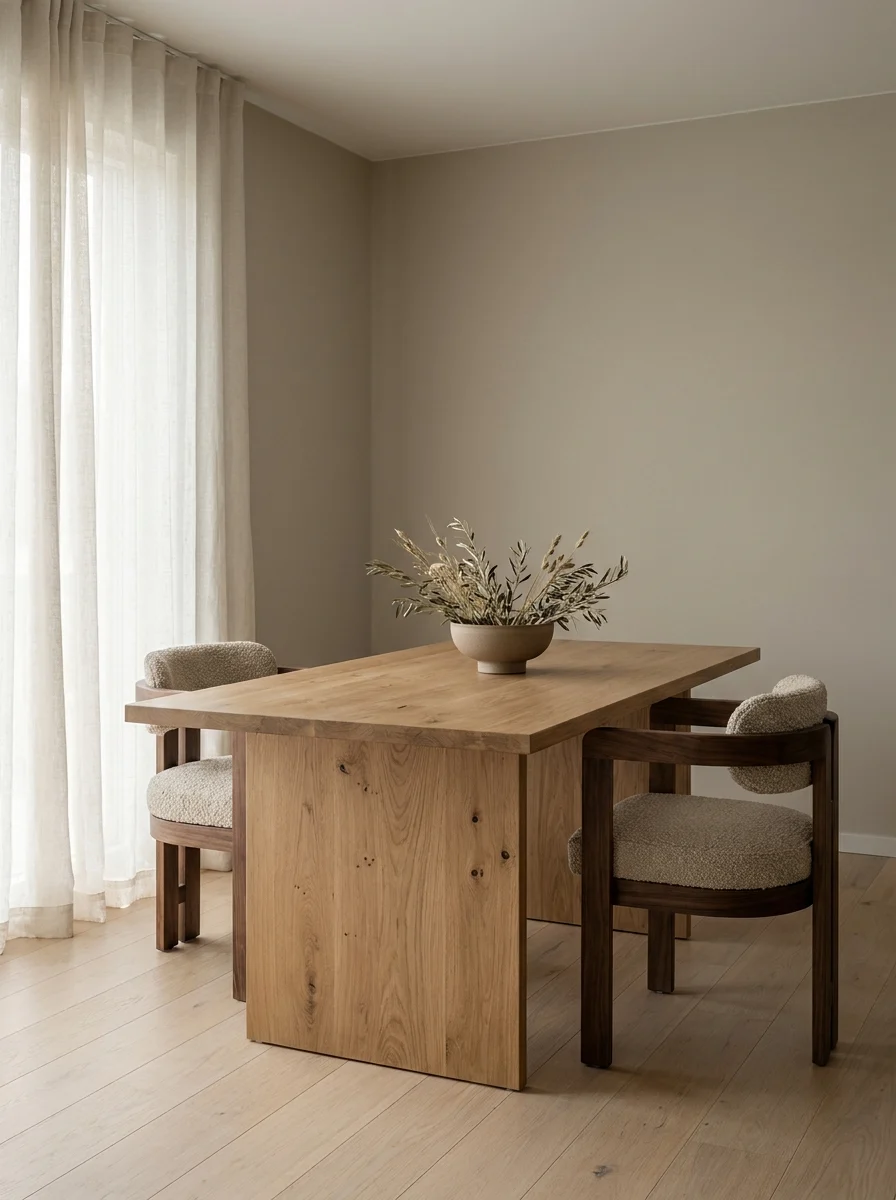
There’s something quietly grounding about a solid oak dining table — it brings warmth into a room without trying too hard. The natural grain does all the visual work, making even the simplest table setting feel intentional and complete. I’ve noticed it instantly elevates a space that could otherwise feel too cold or flat.
In a Japandi dining room, materials tell the story. An oak table communicates slow living, permanence, and a connection to nature — all core values of the style. Pair it with minimalist chairs and a single ceramic center piece, and the table becomes the quiet, confident heartbeat of the entire room.
The Key: The natural grain of solid oak does more decorative work than any accessory can. Choose a table with visible texture — it carries the room without adding visual noise.
02
Wabi-Sabi Ceramic Centerpiece
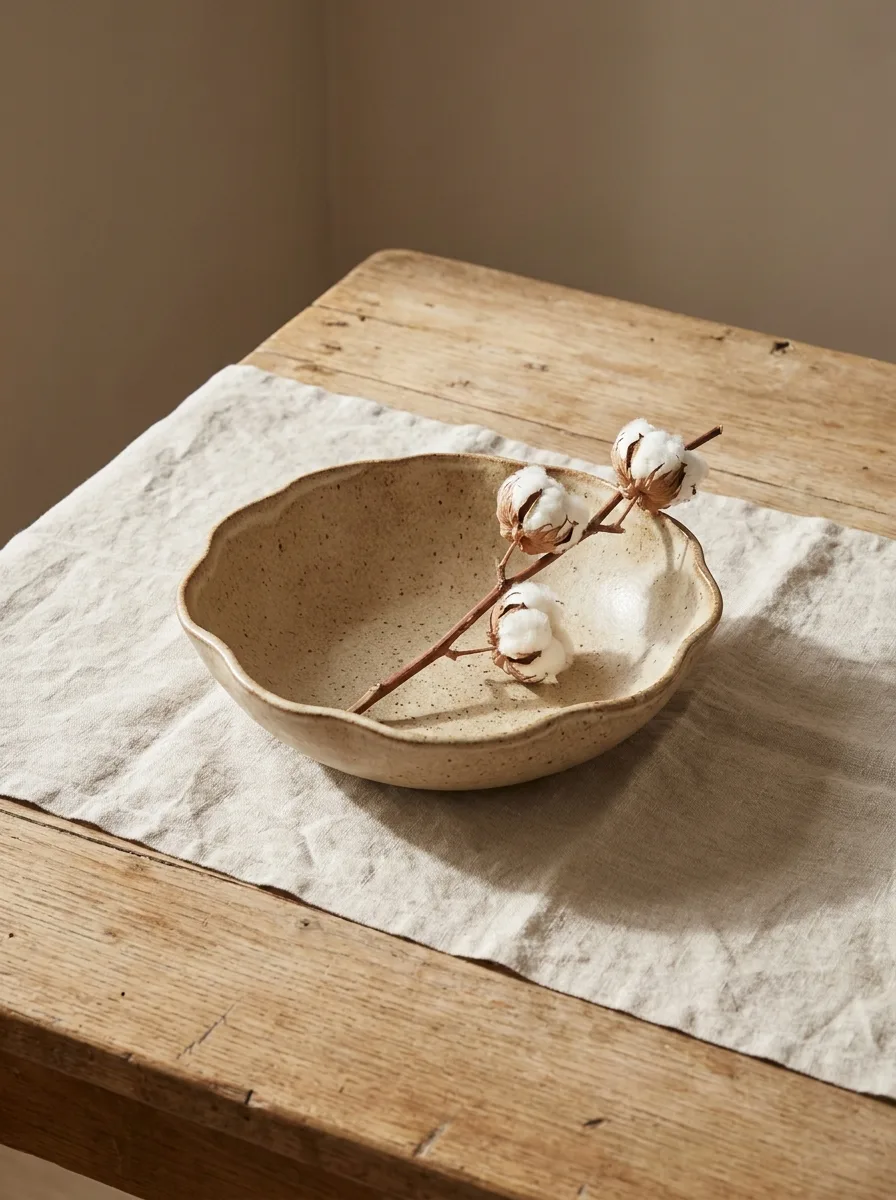
A handmade ceramic centerpiece is one of the most powerful, low-effort moves in a Japandi dining space. Its imperfect edges and muted glaze immediately communicate intentionality — that someone chose this piece with care. That sense of quiet curation is exactly what separates a styled room from a simply furnished one.
The beauty of a wabi-sabi ceramic is that it does more with less. One bowl, one dried stem, soft light from a nearby window — that’s a complete visual story. In my experience, readers and clients are always surprised by how much atmosphere a single imperfect object can create in a dining space.
The Key: Imperfection is intentional here. A handmade ceramic with an uneven rim or organic glaze finish signals wabi-sabi philosophy and gives your Japandi table its most authentic detail..
03
Slatted Wood Accent Wall
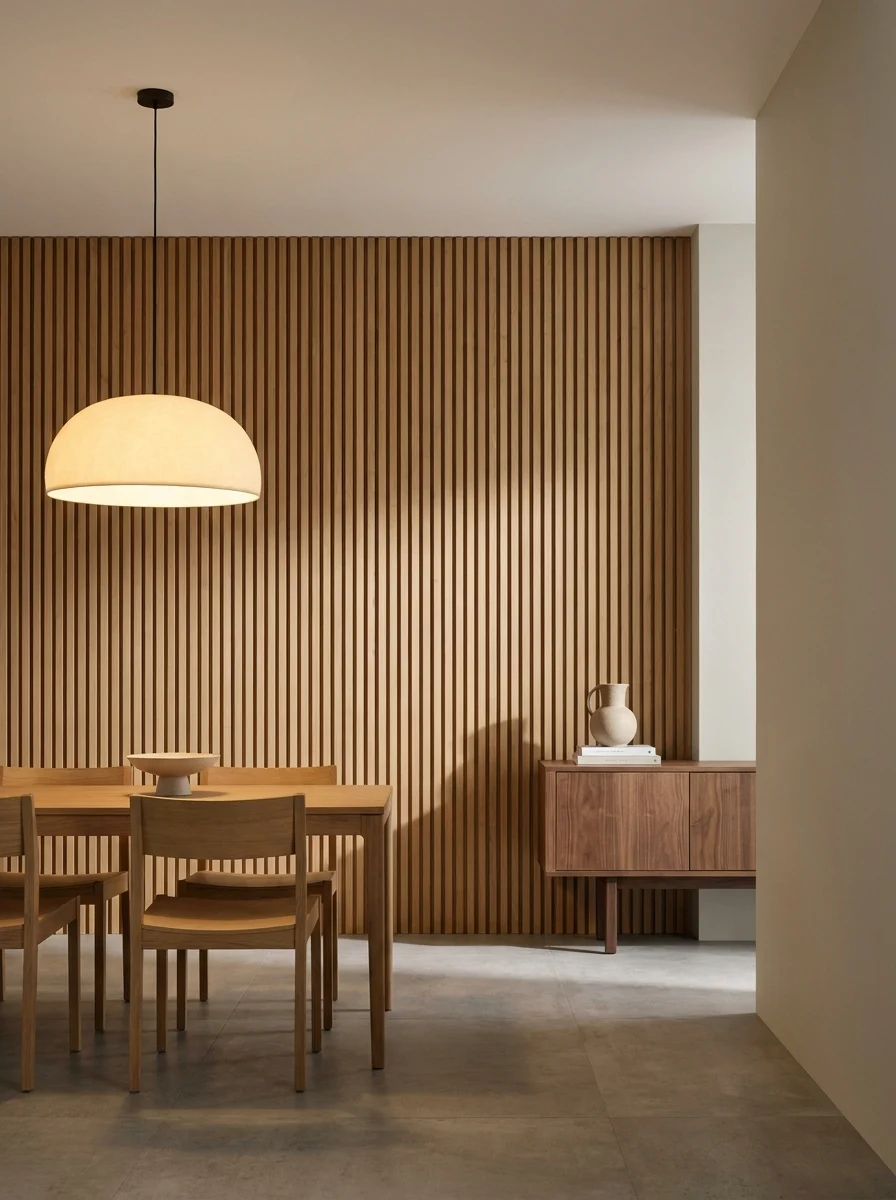
A slatted wood accent wall does something no paint color or wallpaper can — it adds real dimension. The play of light and shadow between each slat shifts throughout the day, creating a living backdrop that feels architectural and deeply textured. That’s why many designers recommend it as the single best Japandi wall upgrade.
Beyond aesthetics, slatted panels also improve acoustics — a subtle but genuinely useful benefit in a dining space where conversation matters. Installed floor-to-ceiling behind the dining table, the panel acts as a natural focal point, framing the entire room without competing with the furniture or accessories placed in front of it.
The Key: A slatted wood wall doesn’t just add texture — it anchors the room. Position it directly behind your dining table to create a built-in focal point that makes the whole space feel intentionally designed.
04
Linen Curtain Wall Treatment
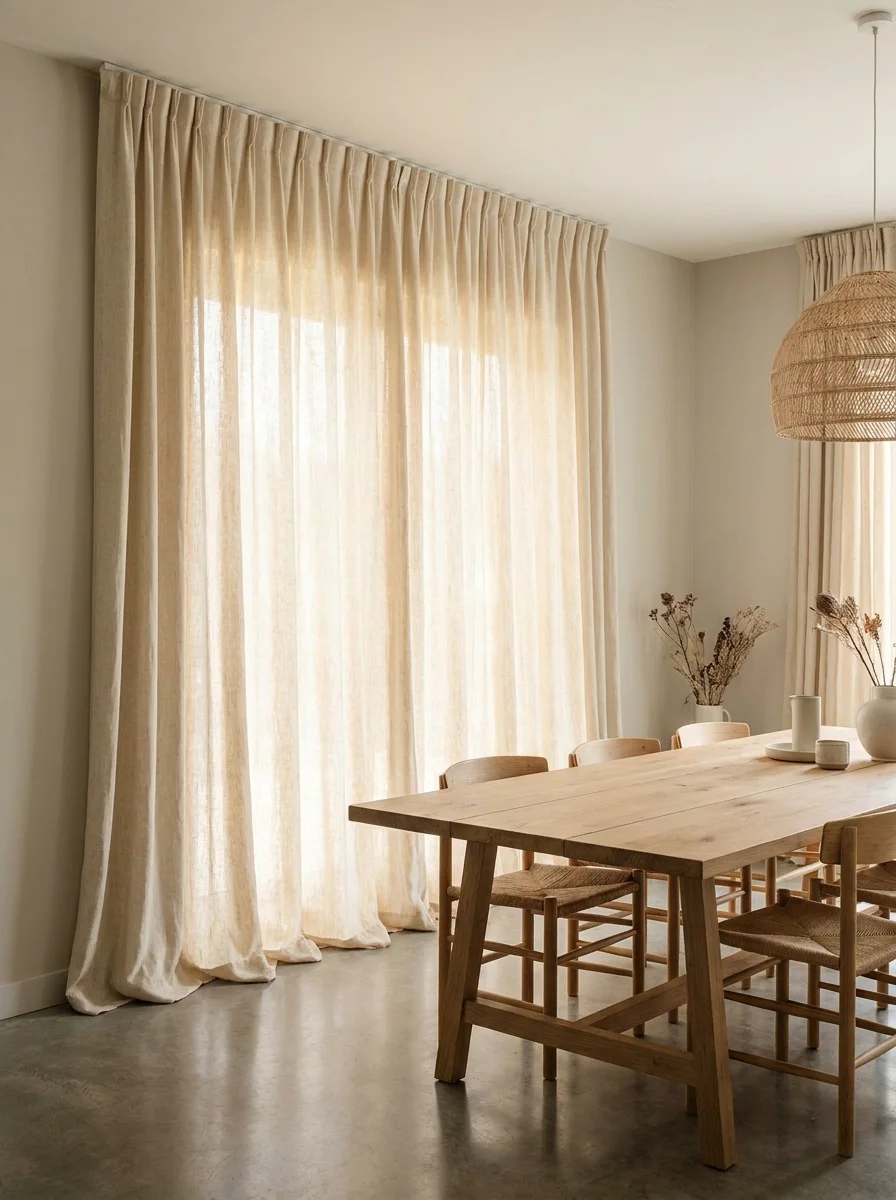
Linen curtains are one of the most underrated tools in a Japandi dining room — they do quiet, powerful work. Hung floor to ceiling, they draw the eye upward, soften hard architectural lines, and wrap the room in a warmth that feels entirely natural. The fabric itself becomes a texture worth noticing.
What makes linen especially effective in this style is its imperfect drape. It doesn’t hang stiffly or look too polished — it folds and creases in ways that feel lived-in and real. I’ve noticed that even a single panel on one wall can shift the entire mood of a dining space dramatically.
The Key: Hang linen curtains from ceiling to floor, not window frame to sill. That extra length is what creates the effortless, elevated look that defines a truly considered Japandi space.
05
Pendant Light in Natural Materials
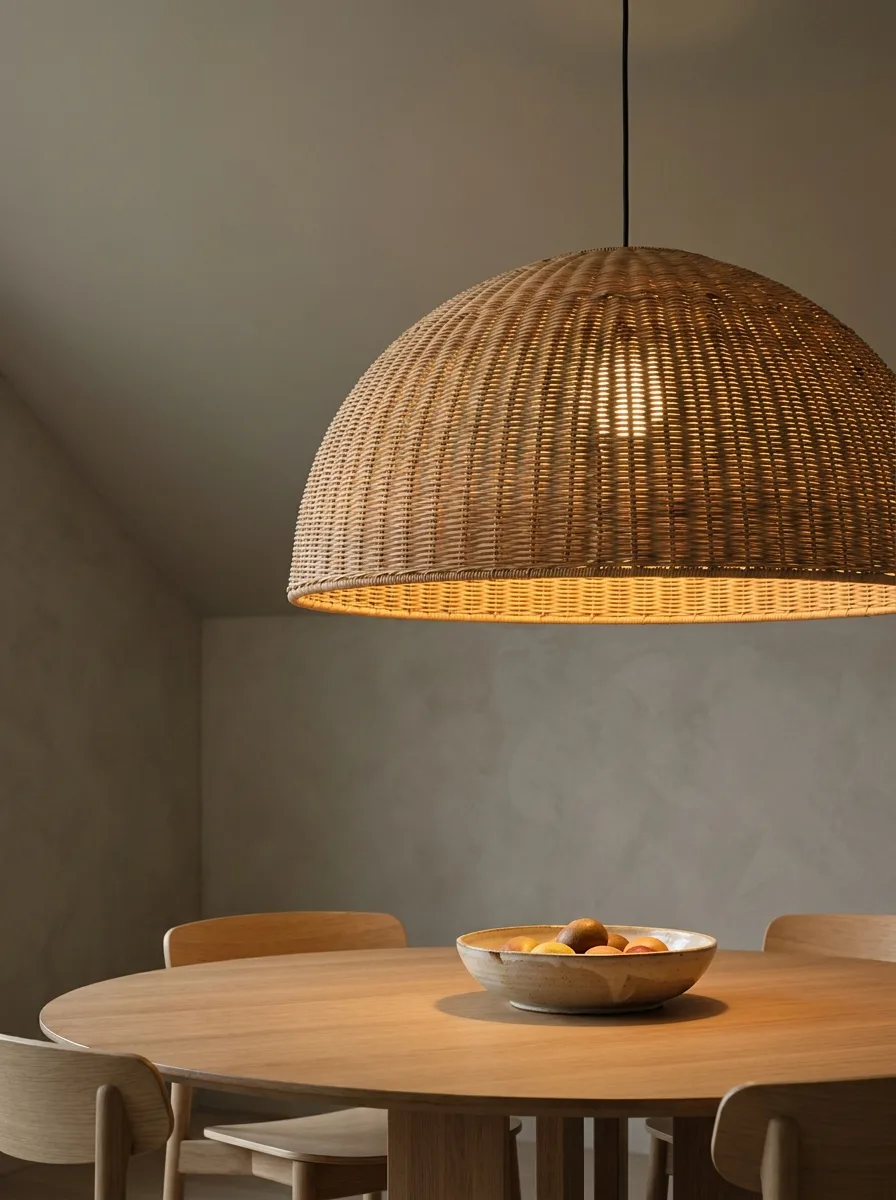
Lighting in a Japandi dining room should feel warm, low, and intentional — and a natural material pendant delivers all three. A woven rattan shade doesn’t just direct light downward; it filters it, casting soft dappled patterns across the table and walls that shift gently as the evening progresses. That ambient quality is genuinely hard to replicate.
Beyond its visual role, the pendant also signals material consistency — one of the core principles of Japandi design. When the light fixture speaks the same material language as the table, the floor, and the walls, the room feels cohesive rather than assembled. That’s why many designers treat the pendant as a structural design decision, not an afterthought.
The Key: Your pendant light isn’t just a fixture — it’s a material statement. Choose natural woven textures that echo the wood and linen already in the room to complete the sensory loop of the space.
06
Low Walnut Sideboard
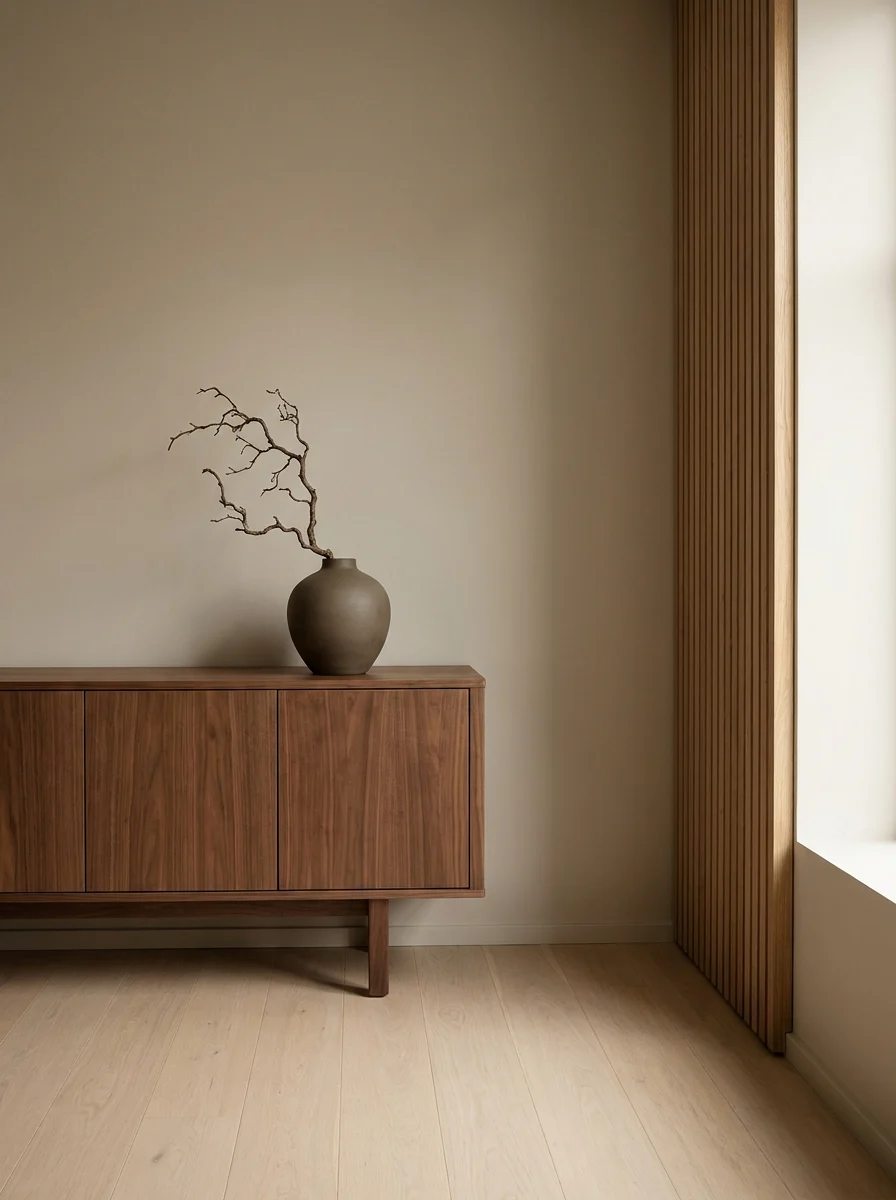
A low walnut sideboard brings grounded elegance to a Japandi dining room in a way that taller furniture simply cannot. Its horizontal profile keeps the room feeling open and breathable, while the deep grain of walnut adds just enough richness to prevent the neutral palette from reading as flat or lifeless.
What sits on top of the sideboard matters as much as the piece itself. In Japandi styling, the surface is treated like a small stage — one considered object, one quiet moment. I’ve seen a single matte vase with a dried branch turn a plain sideboard into the most photographed corner of an entire home.
The Key: Style the sideboard top with restraint — one object, maximum two. The empty space around it isn’t wasted; it’s part of the composition, and it’s what makes the piece feel curated rather than cluttered.
07
Neutral Linen Table Runner
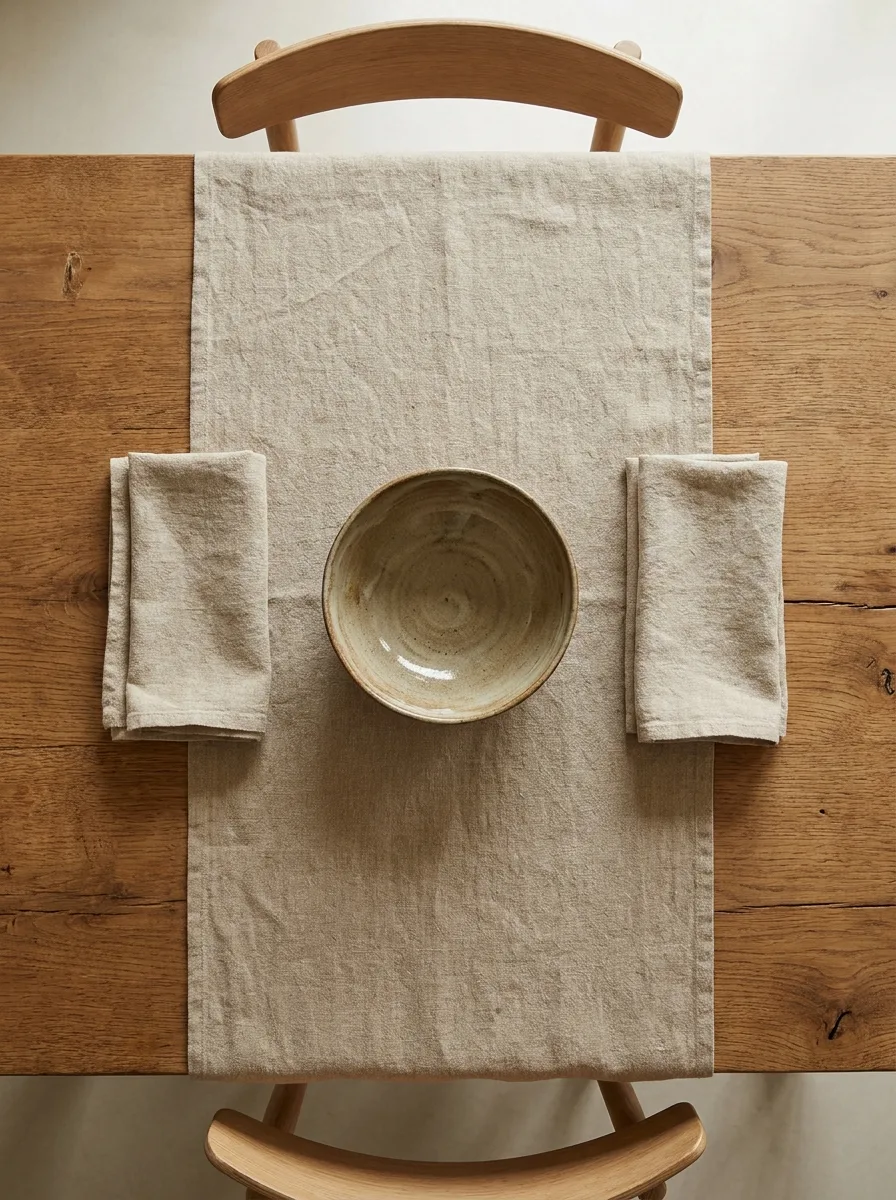
A table runner is one of the simplest ways to make a dining table feel finished and intentional without overdecorating. In a Japandi space, the right runner does quiet but important work — it grounds the centerpiece, softens the hard surface of the table, and adds a layer of warmth that nothing else quite replicates.
Linen is the ideal material choice here because it improves with use. It softens, it wrinkles naturally, and it develops a relaxed character over time — all qualities that align perfectly with wabi-sabi philosophy. I’ve noticed that an unwashed, slightly rumpled linen runner often looks more beautiful and considered than a crisp, perfectly pressed alternative ever could.
The Key: Don’t overthink the runner placement. A slight overhang on both ends and one imperfect fold is all it takes — that relaxed, unstudied quality is exactly what Japandi table styling is built on.
08
Matte Black Tableware Accents
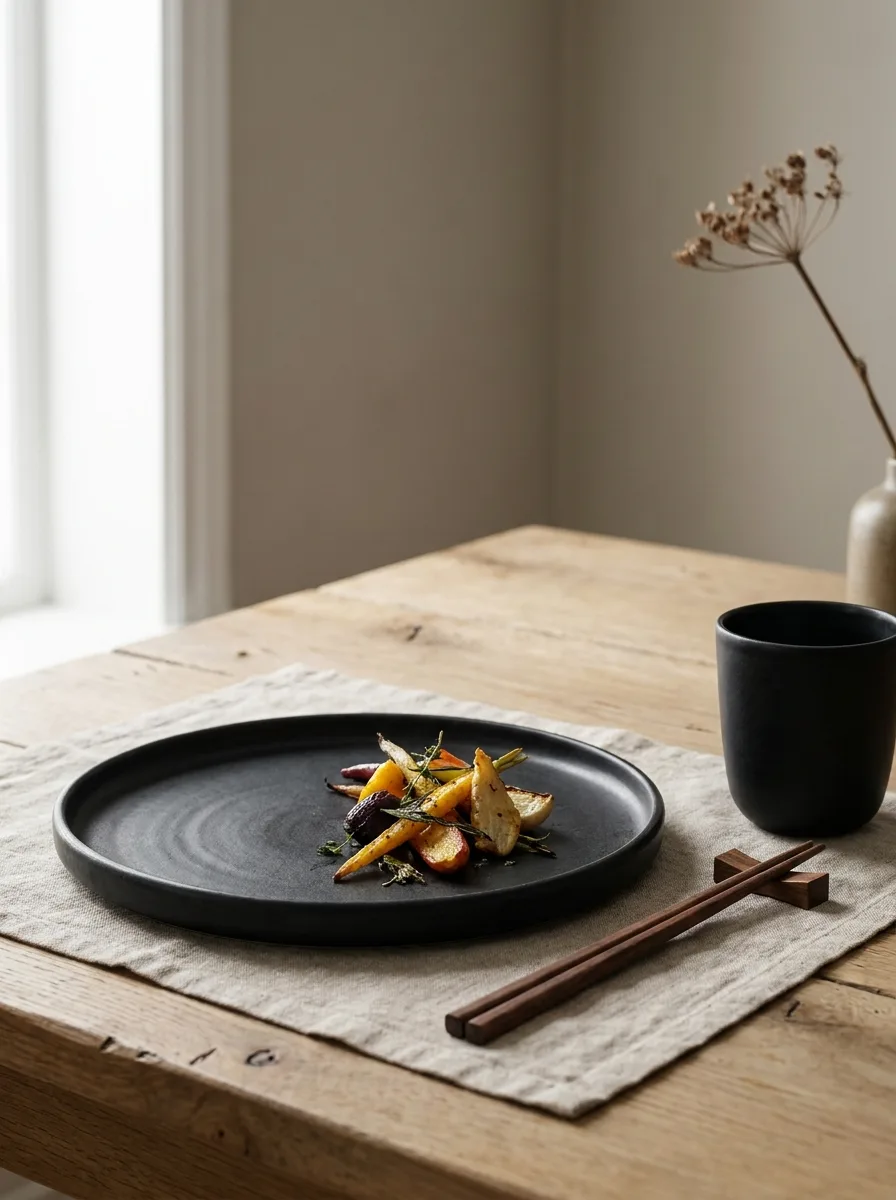
Matte black tableware is the quiet punctuation mark a Japandi dining table needs. Without it, an all-neutral palette can feel soft to the point of being undefined. One matte black plate or cup anchors the table, sharpens the composition, and gives the eye a deliberate resting point among all the warmth and texture around it
The key is restraint. Matte black works in a Japandi dining room because it’s used as an accent, not a theme. That’s why many designers recommend introducing it through tableware first — it’s the most low-commitment, high-impact way to test contrast in a space before committing to darker furniture or fixtures.
The Key: Matte black tableware works because it contrasts without clashing. One or two black pieces per setting is the exact amount needed to sharpen the table’s visual composition without disrupting the calm of the overall palette.
09
Indoor Moss or Bonsai Display
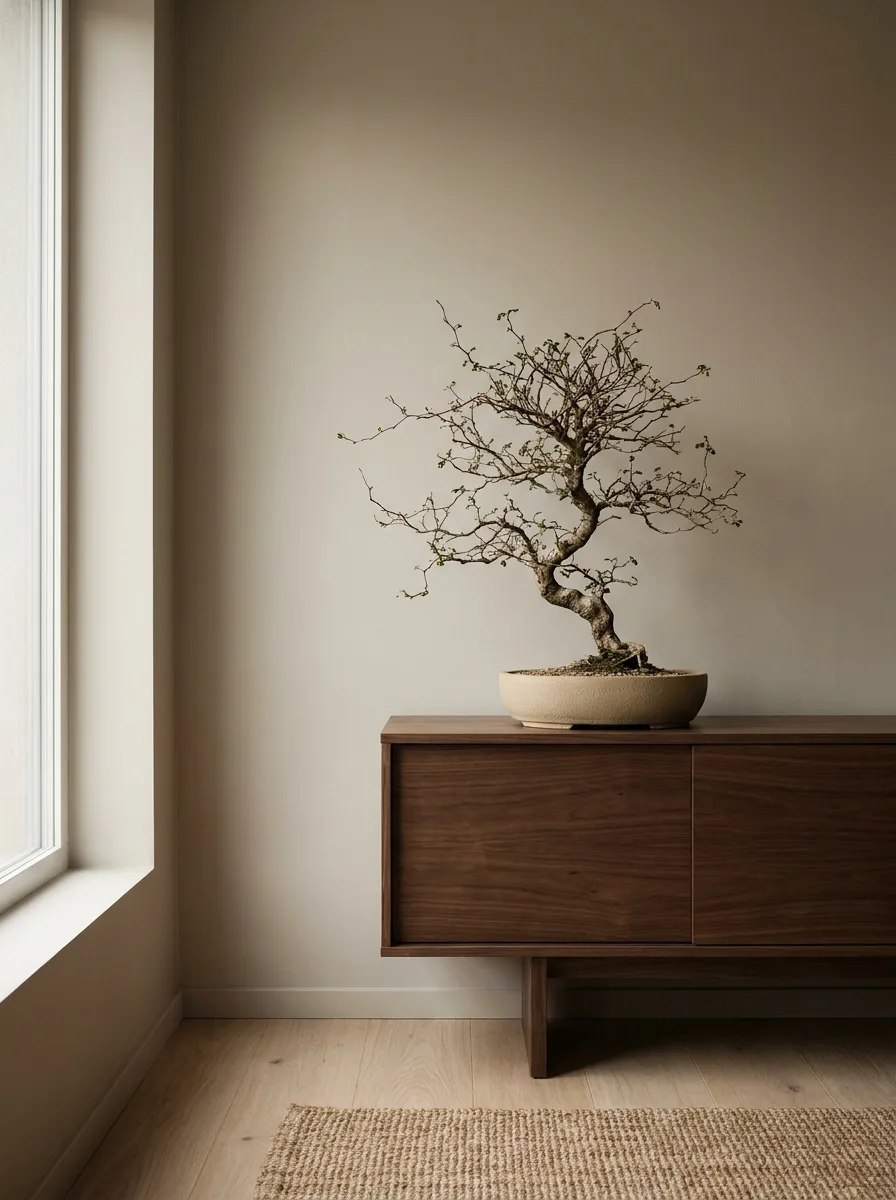
A bonsai doesn’t just bring greenery into a room — it brings philosophy. The slow, deliberate shaping of a bonsai tree mirrors the Japandi principle of intentional living: nothing is accidental, everything is considered. Placed on a sideboard or in a corner, even a small specimen becomes a quiet focal point with remarkable presence.
For those who prefer no maintenance at all, preserved moss is an equally powerful alternative. It holds its color and texture indefinitely, requires no watering or light, and delivers the same organic warmth as living greenery. In my experience, a shallow tray of preserved moss on a dining table reads as one of the most effortlessly styled Japandi details possible.
The Key: One plant, one pot, one spot. Japandi plant styling is about singular presence — a single bonsai or moss display placed with intention communicates far more than a cluster of plants ever could.
10
Shoji-Inspired Room Divider
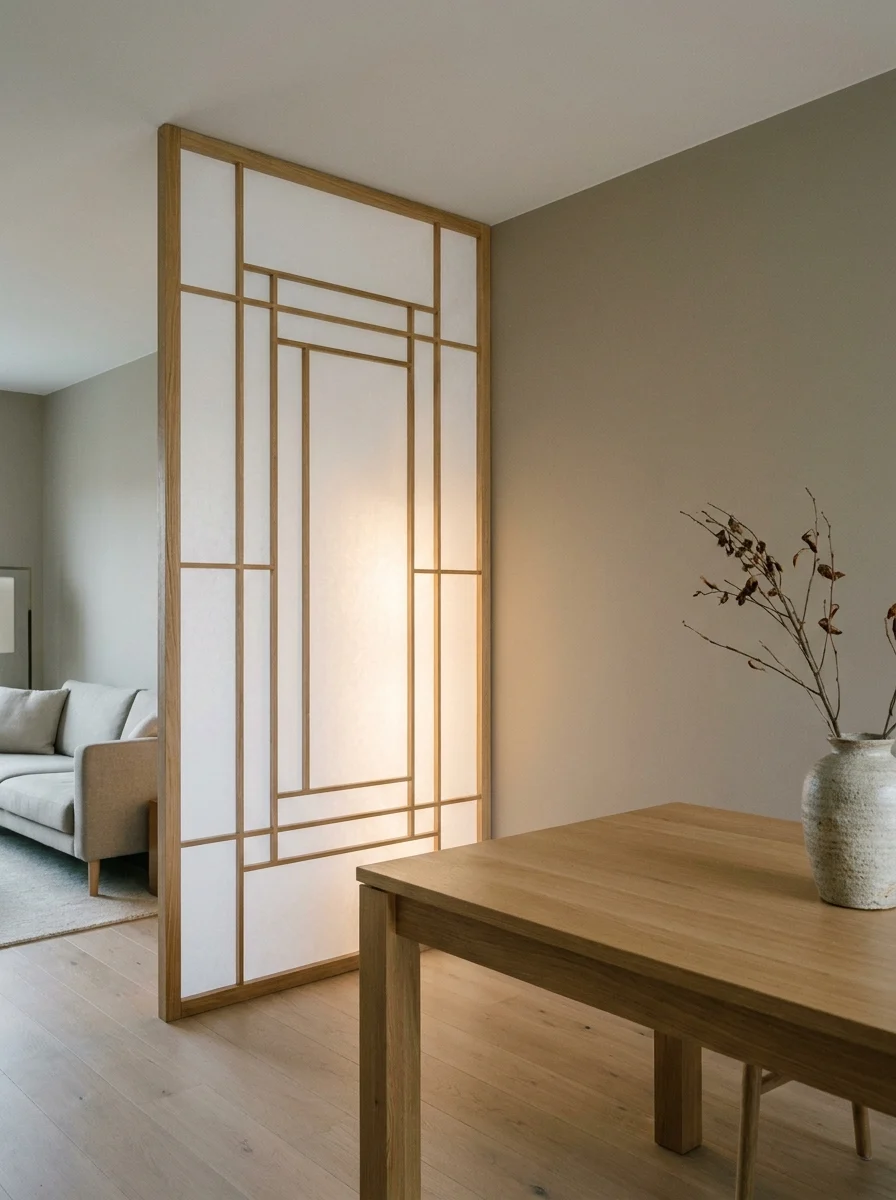
A shoji-inspired divider does something structurally valuable in open-plan homes — it defines the dining zone without closing it off. The translucent rice paper panels allow light to pass through freely, maintaining airiness while creating a soft visual boundary that feels intentional and architecturally considered. It’s one of the most elegant space-defining tools in Japandi design.
Beyond function, the divider also adds a layer of cultural authenticity. The geometric wood grid references traditional Japanese interior architecture — a detail that deepens the meaning of the style rather than simply mimicking its surface aesthetics. That’s why many designers recommend it as one of the most meaningful investments in a Japandi dining room.
The Key: A shoji divider doesn’t just divide space — it filters light and frames the dining area as its own intentional zone. That sense of defined purpose is what elevates a Japandi room from styled to truly designed.
11
Concrete or Stone Flooring
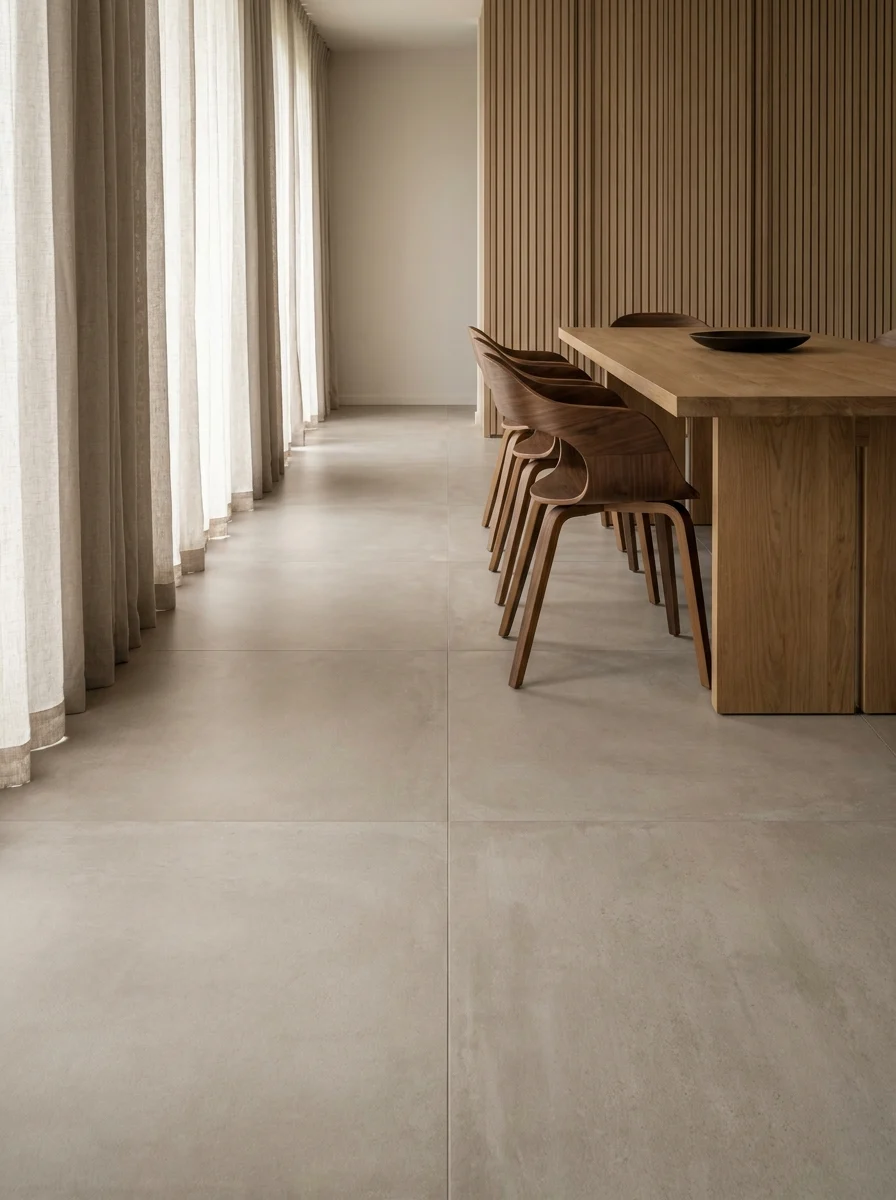
The floor is the largest surface in any room, and in a Japandi dining space it deserves the same intentional treatment as the furniture above it. Concrete or stone-look porcelain tiles create a calm, expansive base that lets every other element — wood, linen, ceramic — breathe and read clearly without visual competition from below.
What makes this flooring choice so effective in Japandi spaces is its ability to feel both minimal and luxurious simultaneously. The cool smoothness of concrete against the warm grain of an oak table is a textural contrast that feels deliberate and sophisticated. I’ve seen this combination anchor even the simplest dining setups with remarkable confidence and calm.
The Key: Choose large-format tiles with the fewest grout lines possible. The less interruption across the floor surface, the calmer and more expansive the room will feel — a foundational principle of Japandi spatial design.
12
Minimalist Wall Art in Neutral Frames
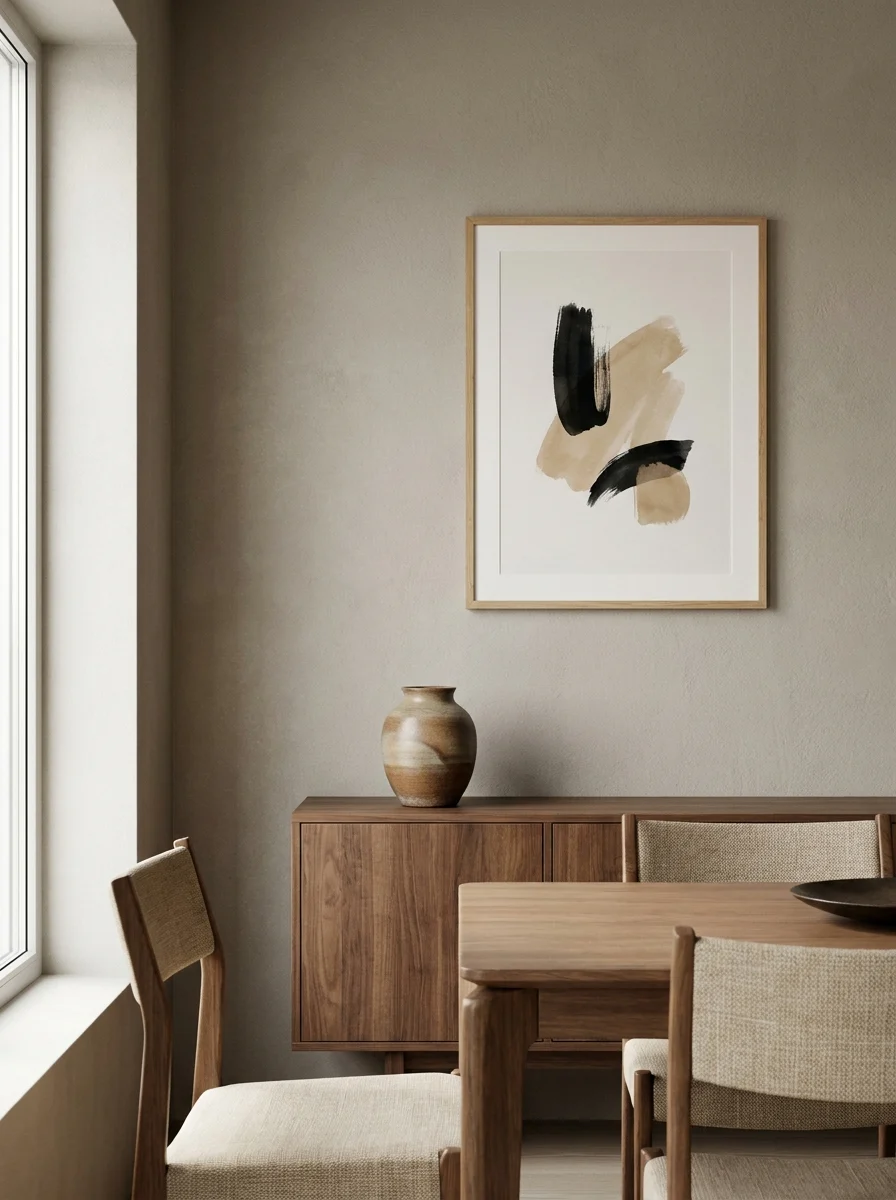
Art in a Japandi dining room isn’t about filling wall space — it’s about placing one meaningful piece where it can be truly seen. A single framed print above the sideboard, hung at eye level with careful intention, creates a quiet focal point that anchors the wall without competing with anything else in the room.
The choice of print matters as much as its placement. Abstract ink work, spare botanical studies, or soft landscape forms in black, charcoal, or warm earth tones all carry the contemplative quality that Japandi spaces are built on. In my experience, the artwork that stops people mid-conversation is almost always the simplest, most restrained piece in the room.
The Key: One artwork, one wall, one moment of stillness. A single well-chosen print in a slim natural frame does more for a Japandi dining room than an entire gallery wall ever could.
13
Curved Dining Chairs in Natural Fabric
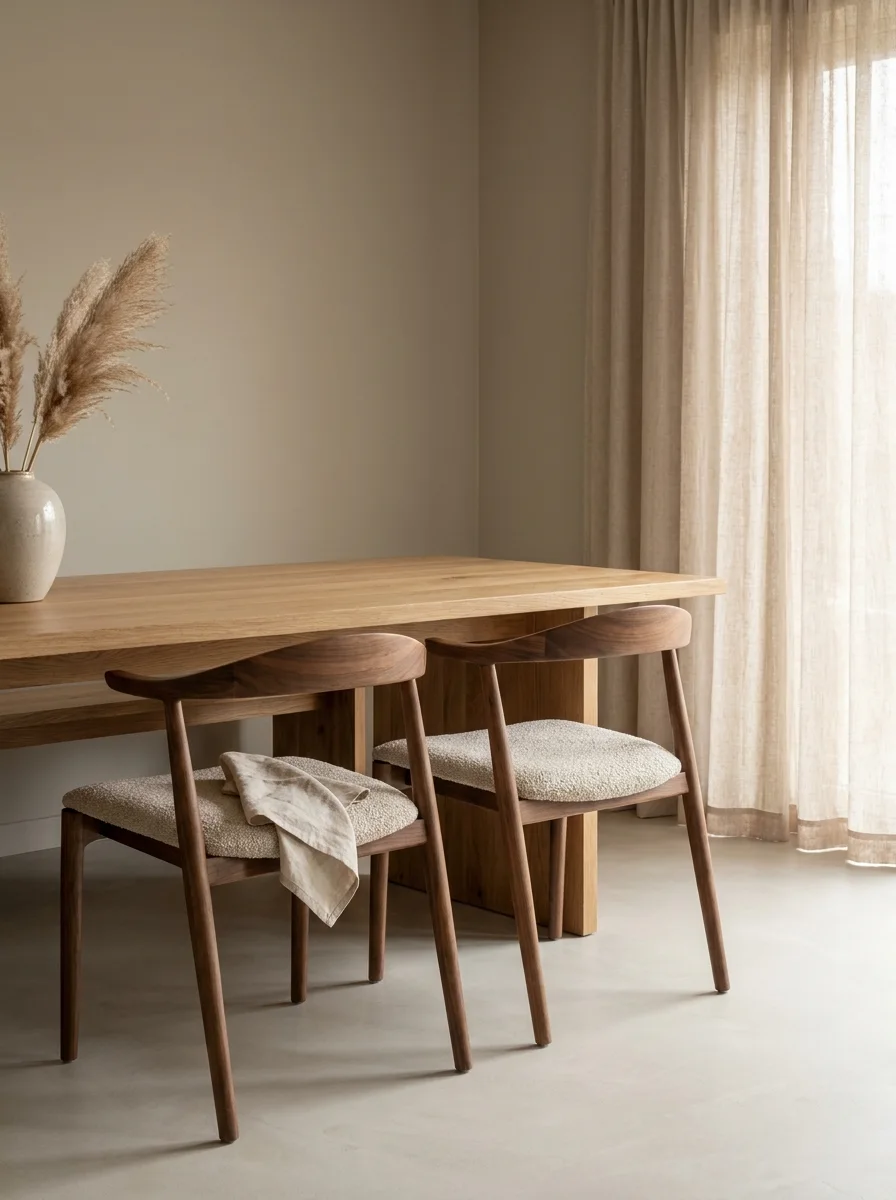
Curved dining chairs are one of the most impactful single upgrades in a Japandi dining room. Their gentle, organic backrest shape immediately softens the room’s geometry — making the entire space feel more human, more approachable, and more considered. Paired with a clean rectangular oak table, the contrast between straight and curved feels perfectly balanced and intentional.
The upholstery choice matters just as much as the silhouette. Boucle and linen fabrics bring tactile warmth that invites people to sit longer and linger at the table — something I’ve noticed makes a genuine difference in how a dining room actually gets used day to day, not just how it photographs from across the room.
The Key: The curve is doing important visual work here. It softens, humanizes, and balances a room full of straight lines and flat surfaces — don’t trade it for a simpler chair shape just to save budget.
14
Japandi-Style Open Shelving
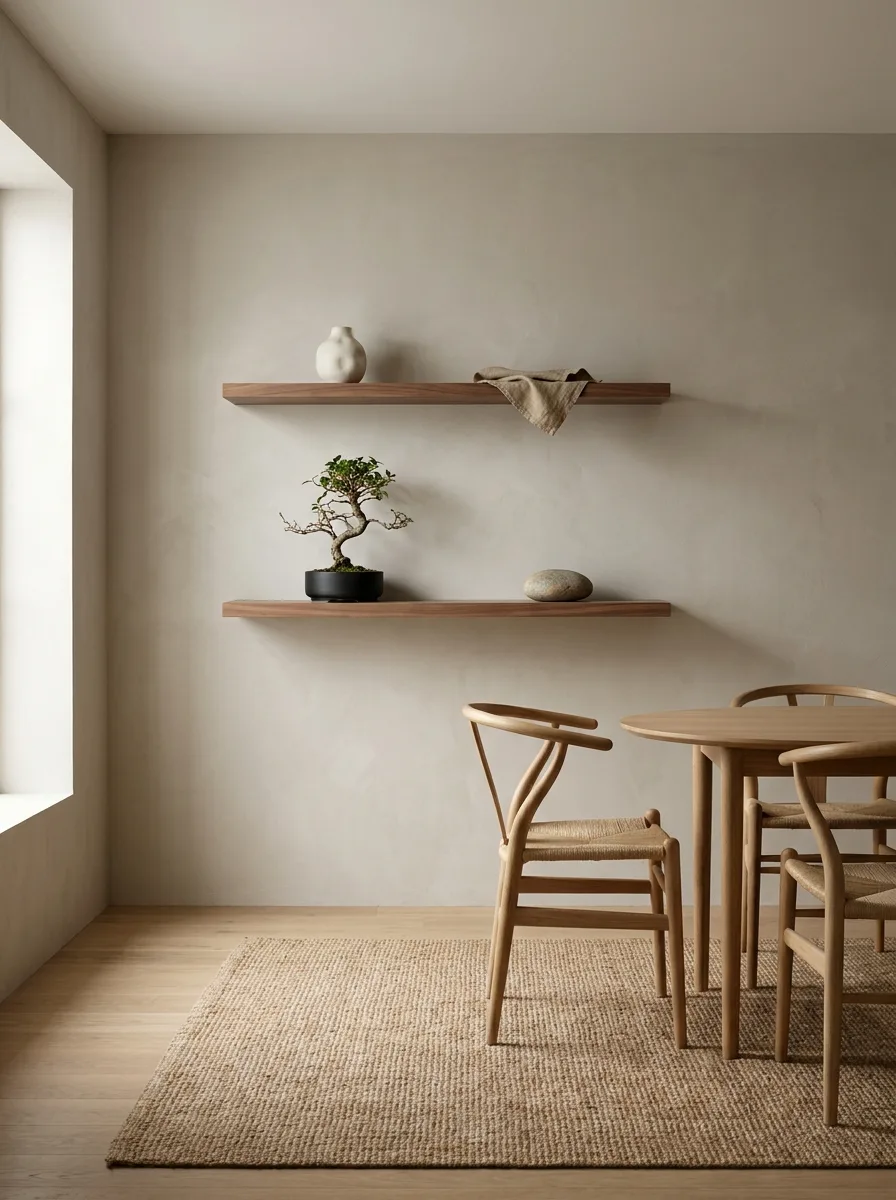
Open shelving in a Japandi dining room is an exercise in intentional editing. Every object on display is a conscious choice — and the empty space between those objects is just as deliberate. Done correctly, two floating walnut shelves styled with three or four carefully chosen pieces can become the most visually compelling wall in the entire room.
The mistake most people make with open shelving is filling it. In Japandi styling, the shelf is not storage — it is a curated display. I’ve seen this transform dining rooms completely: removing half the objects from an overcrowded shelf and suddenly the remaining pieces feel precious, considered, and worth a second, slower look.
The Key: Style your shelves to 60% capacity, not 100%. The remaining 40% of empty shelf space is not wasted — it is the design decision that makes everything else on the shelf look intentional and worthy of attention.
15
Stone or Ceramic Table Lamp
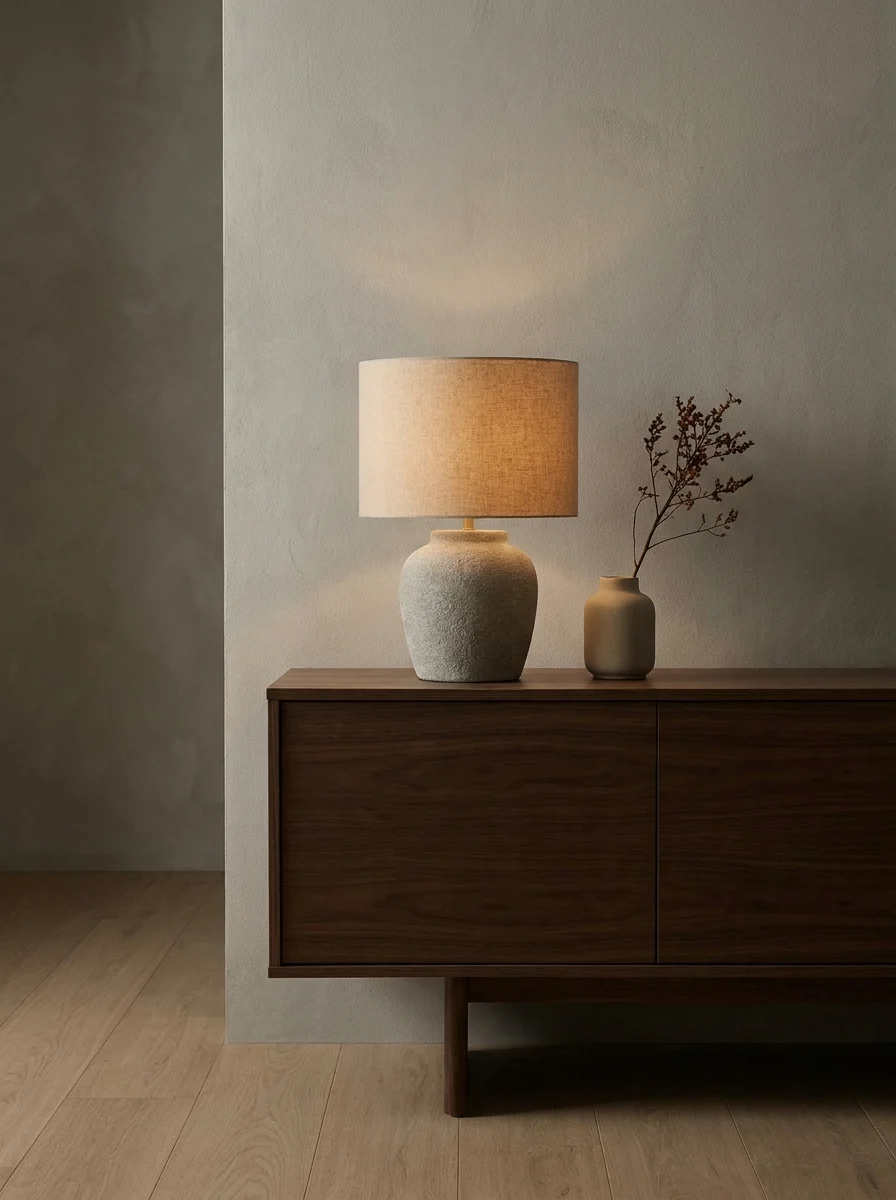
Overhead lighting alone is never enough in a Japandi dining room — it flattens the space and removes the sense of warmth and intimacy the style depends on. A ceramic table lamp on the sideboard changes everything. Its low, directional glow creates a second layer of light that makes the room feel lived-in, calm, and genuinely inviting after dark.
The lamp base itself is a material statement. A matte stone or ceramic form in a neutral tone sits quietly on the sideboard without demanding attention — it simply belongs. That quality of fitting naturally into the room rather than standing out from it is exactly what separates a well-chosen Japandi accent from a decorative object that disrupts the calm.
The Key: A table lamp isn’t supplementary lighting in a Japandi dining room — it’s essential. Without that second layer of warm, low-level glow, the room loses its evening atmosphere entirely, no matter how well everything else is styled.
16
Dried Botanical Wall Arrangement
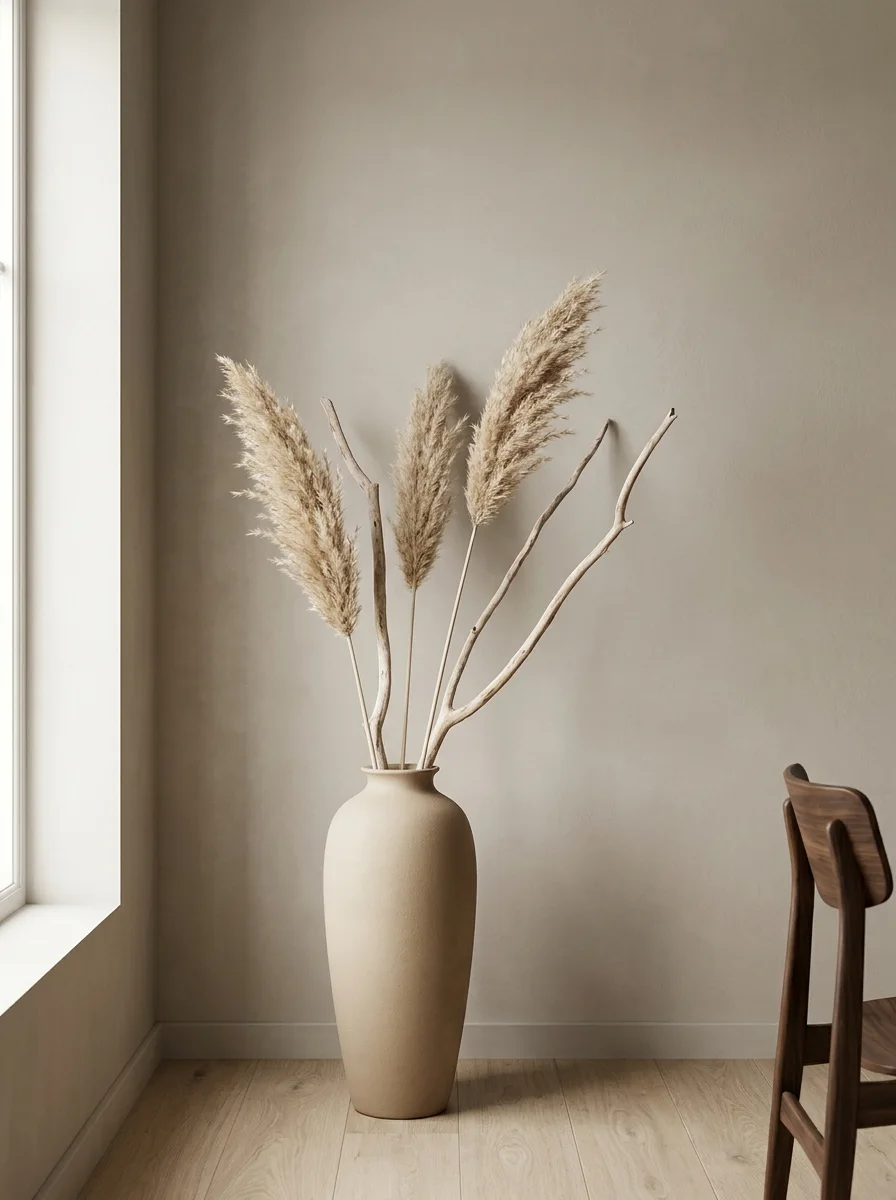
Dried botanicals occupy a unique space in Japandi design — they are simultaneously sculptural, natural, and deeply low-maintenance. A loosely gathered arrangement of pampas stems or bleached branches in a tall ceramic vase beside the dining table adds vertical presence and organic texture in a way that no purchased artwork or furniture piece can replicate.
What makes dried botanicals so effective in this style is their honesty. They don’t pretend to be fresh flowers — they show exactly what they are, at exactly the stage they’re at. That transparency aligns perfectly with wabi-sabi philosophy. I’ve noticed that a single tall dried arrangement in the right corner can make an entire dining room feel completely resolved.
The Key: Keep the arrangement loose, tall, and asymmetrical. A stiff, over-styled botanical display loses the natural, effortless quality that makes dried stems work in a Japandi space — the slight imperfection is the entire point
17
Warm Greige Wall Palette
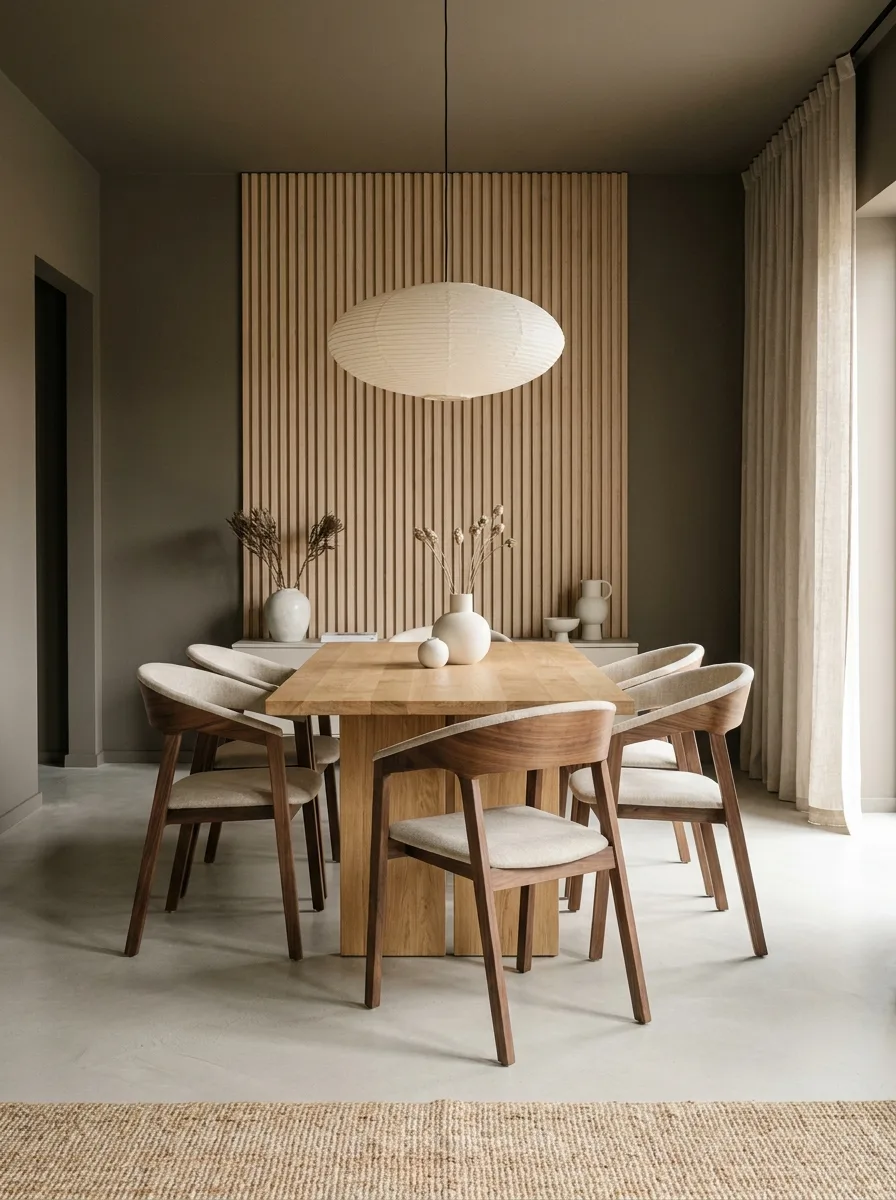
Wall color in a Japandi dining room is not a background decision — it is a foundational one. Warm greige does something no other neutral achieves: it unifies every element in the room under one quiet, cohesive tone. Wood reads warmer, ceramics look more considered, and linen textiles feel softer — all because the wall behind them is doing its job.
The real strength of warm greige is its adaptability across light conditions. In morning daylight it feels airy and soft. By lamplight in the evening it deepens into something richer, almost enveloping. That range — from light to intimate within a single day — is exactly why so many Japandi dining rooms begin and end with this one quiet, confident color choice.
The Key: Warm greige is not just a wall color — it is the atmosphere itself. Get the wall tone right and every piece of furniture, every textile, and every ceramic in the room immediately looks like it was always meant to be there.
Transforming a dining room doesn’t require a renovation, a large budget, or starting from scratch. As these Japandi dining room ideas show, it takes intention — one material choice, one carefully placed object, one layer of warm light at a time. Small decisions compound into something genuinely beautiful when they all speak the same quiet, considered design language. I’ve seen how a single slatted wall panel or a handmade ceramic centerpiece can completely shift the atmosphere of a space that felt unresolved for years. If even one idea here sparked something for you, save this post on Pinterest so you can return to it. Try one idea this week, share it with a friend who loves thoughtful interiors, and enjoy the calm that follows.