JAPANDI living room
🏠 25 Real Ideas
⏱ Quick Read
🔥 Always Trending
25 The Calm Japandi Living Room Look
That Absolutely Everyone Is
Trying to Copy
A calm home never goes out of style. That’s exactly why Japandi Living Room ideas are filling Pinterest boards and inspiring so many modern homes right now. The combination of warm textures, soft lighting, and simple natural materials creates spaces that feel peaceful without looking boring or empty.
In my experience, even a few thoughtful changes can completely shift the atmosphere of a living room. I’ve noticed people feel more relaxed when spaces feel open, warm, and visually balanced instead of overcrowded with decor. This collection of ideas will help you create a softer, more inviting space using realistic design upgrades that work beautifully in both small apartments and larger family homes. Each idea is practical, beginner-friendly, and surprisingly easy to recreate yourself.
01
Warm Oak Layers
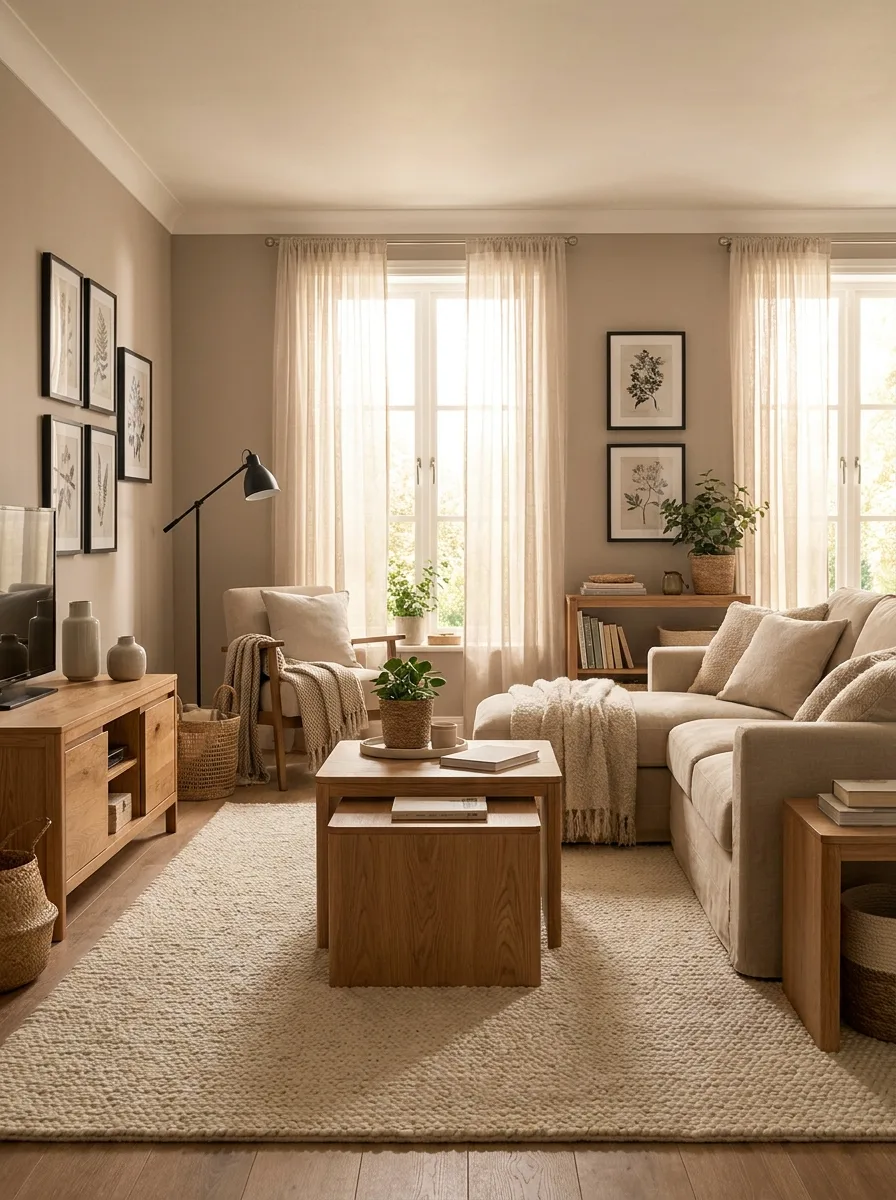
Nothing makes a room feel calmer faster than warm natural wood layered throughout the space. In my experience, oak furniture works especially well because it reflects light softly while adding organic warmth. Even a simple coffee table or media console can completely change the overall atmosphere without requiring a full redesign.
This look also helps the room feel more connected and balanced visually. The combination of warm timber, soft fabrics, and muted colors creates a relaxed environment that feels easy to maintain daily. Many homeowners trying to recreate a Japandi Living Room focus first on textures because they instantly create that peaceful designer-inspired finish.
The Key: Warm wood tones create the foundation of this look. Without natural texture, minimalist spaces can quickly start feeling cold or unfinished.
02
Soft Linen Seating
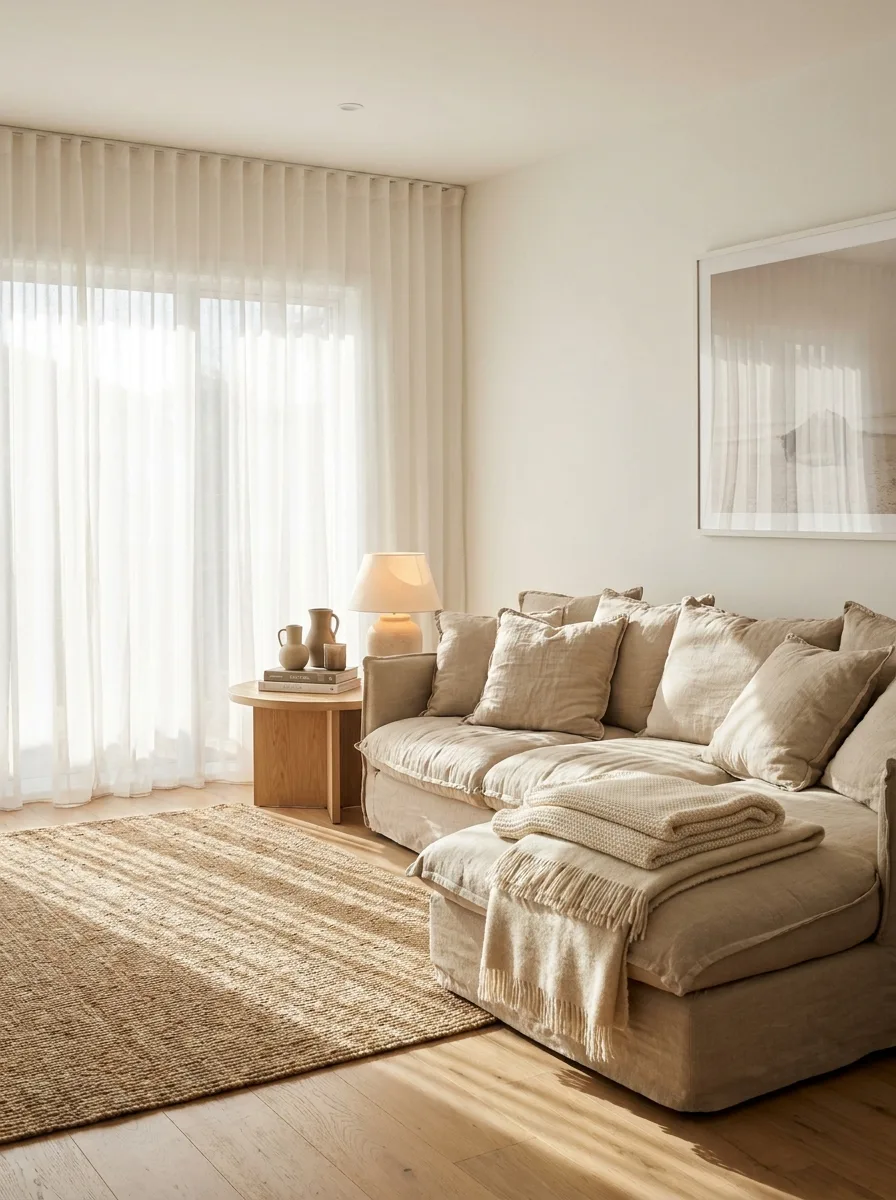
Soft seating changes the emotional feeling of a living room more than most people expect. A linen sofa creates that comfortable lived-in look while still feeling elevated and refined. I’ve seen this work especially well in homes where modern furniture previously felt too sharp or formal for everyday family life.
This style also works beautifully because it encourages simplicity without sacrificing comfort. Instead of adding excessive decor, the texture of the fabric itself becomes part of the design. That’s why many designers recommend relaxed upholstery when creating calm interiors inspired by Japandi Living Room trends and Scandinavian simplicity.
The Key: Texture matters more than color here. Soft woven fabric creates warmth that sleek materials simply cannot replicate in a minimalist setting.
03
Low Profile Furniture
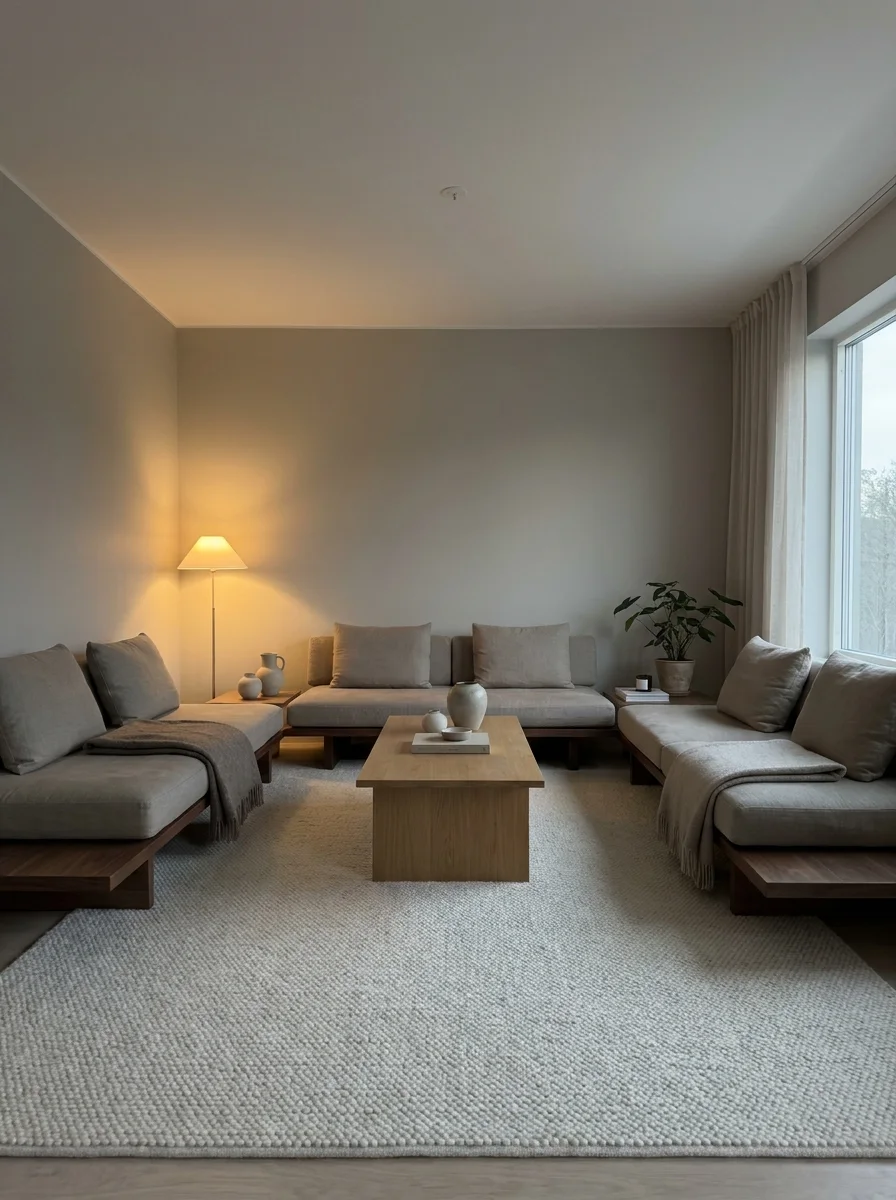
Low furniture creates a quiet sense of balance that immediately changes how the room feels. Instead of towering pieces dominating the space, everything feels more connected to the floor and visually relaxed. In my experience, this approach works especially well in apartments where heavier furniture can quickly make rooms feel crowded.
The visual openness also allows lighting and textures to become more noticeable throughout the room. Clean lines paired with lower seating naturally support the calm aesthetic homeowners want today. That’s one reason this layout style appears constantly in beautifully designed Japandi-inspired interiors across Pinterest and modern home magazines.
The Key: Keeping furniture visually low creates openness without removing comfort. The room feels calmer because the eye can move easily across the entire space.
04
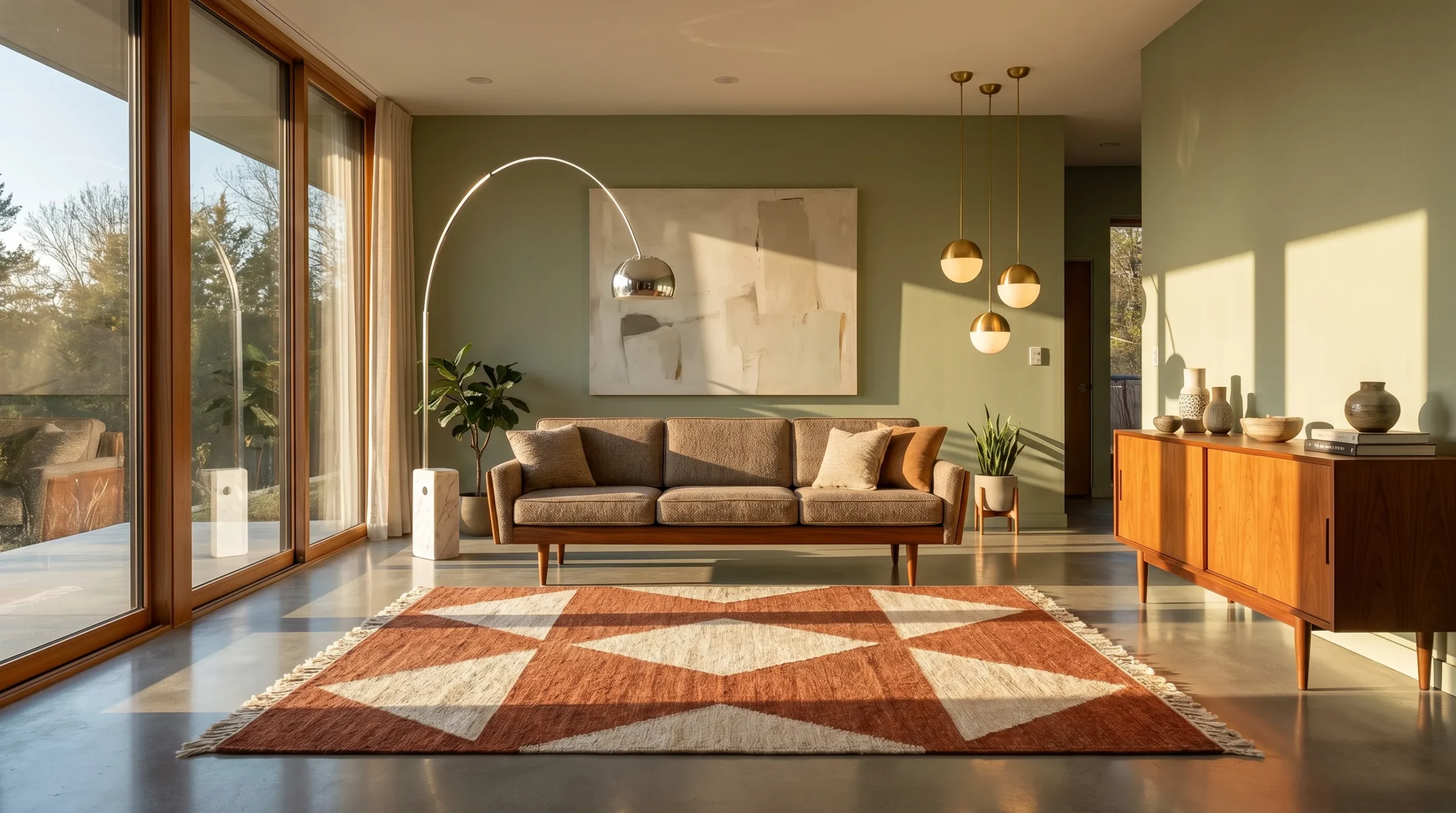
Textured Neutral Rugs
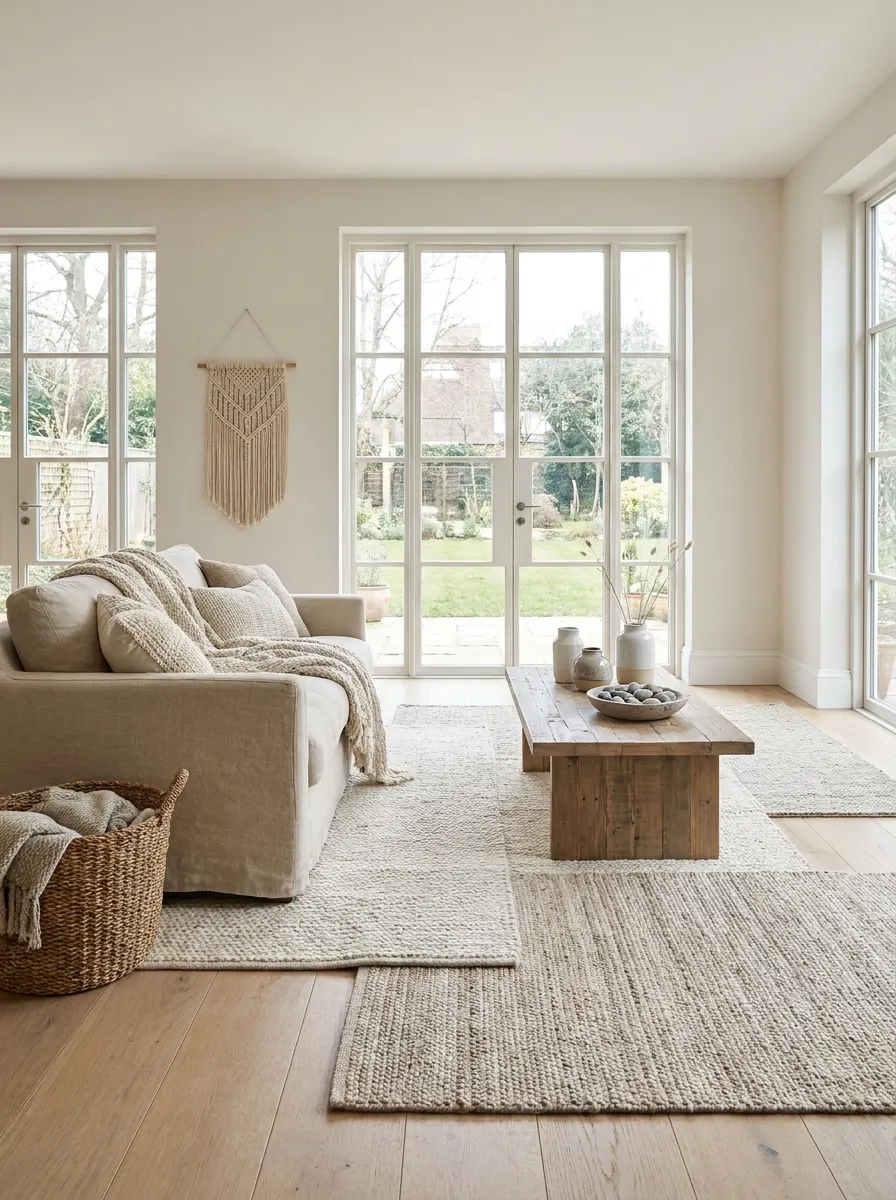
A textured rug quietly changes the entire mood of a living room. Even simple furniture feels more intentional once layered over natural woven fibers. I’ve noticed that homes with minimalist styling often feel unfinished until some form of soft grounding texture is added beneath the seating arrangement.
This approach works especially well because it creates warmth without relying on busy colors or heavy decor. A Japandi Living Room usually feels balanced through texture rather than excessive styling. That’s why many designers prefer wool, jute, or blended woven materials that soften the room naturally while still maintaining a clean visual appearance.
The Key: Texture creates warmth faster than color. A beautifully layered rug instantly makes minimalist spaces feel welcoming instead of empty.
05
Black Accent Details
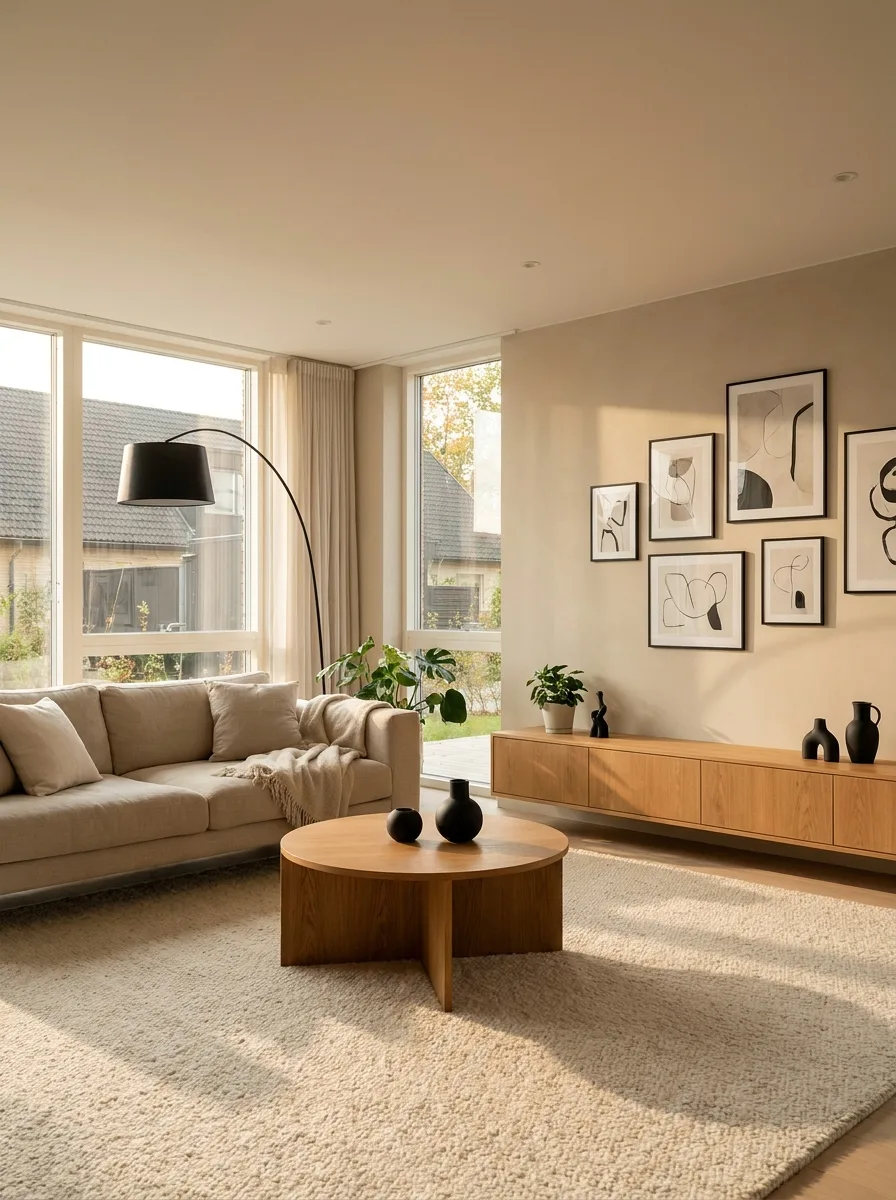
Without some contrast, neutral interiors can sometimes feel visually washed out. Small black details solve that problem beautifully while keeping the room calm and sophisticated. In my experience, even one floor lamp or a few thin frames can completely sharpen the overall design without making the space feel heavy.
The reason this works so well is because dark accents guide the eye naturally around the room. They create structure while still allowing softer textures and warm tones to remain the main focus. Many Japandi Living Room designs use this balance carefully to maintain simplicity while still feeling layered and intentional.
The Key: Contrast adds structure. A few carefully placed black details prevent soft neutral spaces from feeling overly flat or unfinished.
06
Minimal Open Shelving
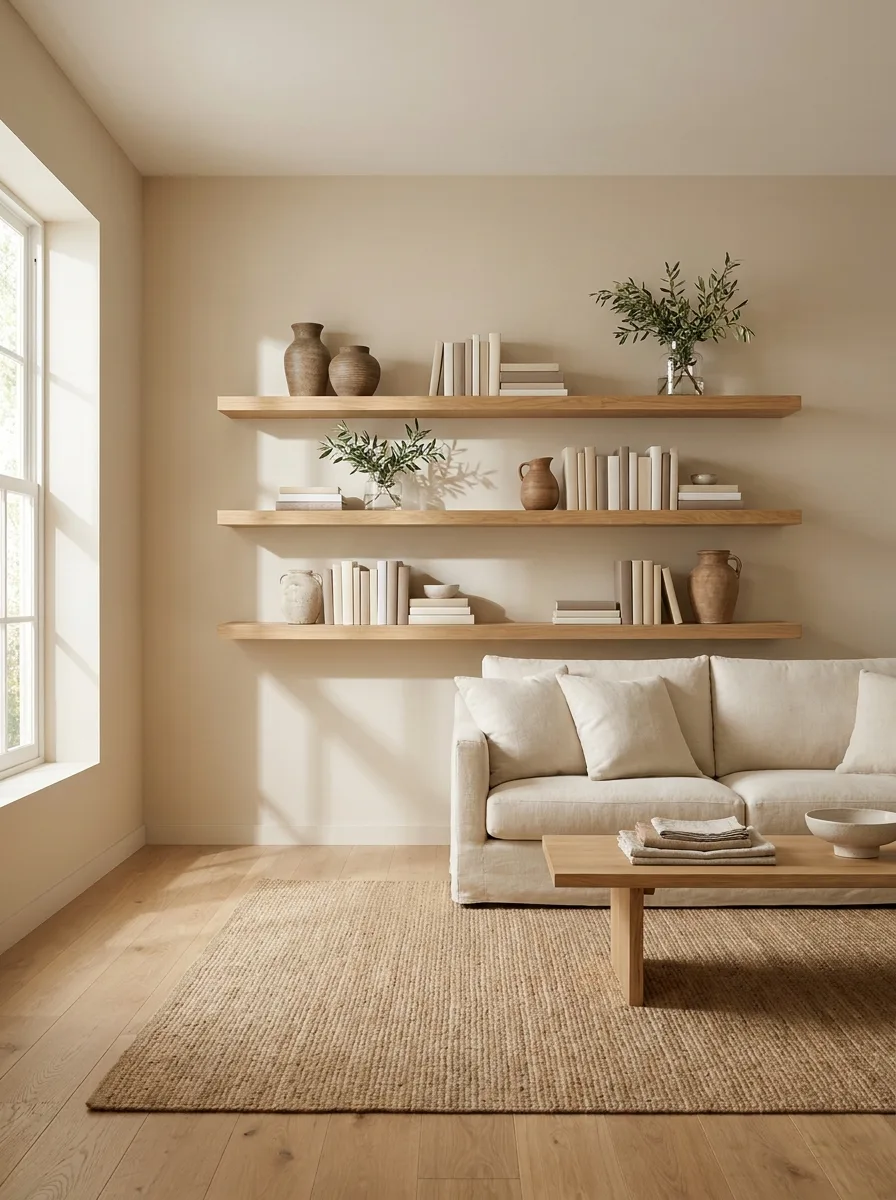
Open shelving works best when there is restraint in the styling. Instead of filling every surface, a few carefully chosen pieces create a cleaner and calmer atmosphere. I’ve seen this work especially well in smaller living rooms where bulky cabinets often make the space feel visually crowded and heavy.
This design approach also encourages homeowners to display only meaningful or beautiful pieces. Natural ceramics, books, and organic decor help add personality while still keeping the room minimal. That’s why many designers recommend open shelving for creating interiors that feel both practical and visually peaceful without excessive decoration.
The Key: Empty space matters just as much as the decor itself. Shelves feel calming when objects have room to breathe visually.
07
Earth Tone Wall Palette
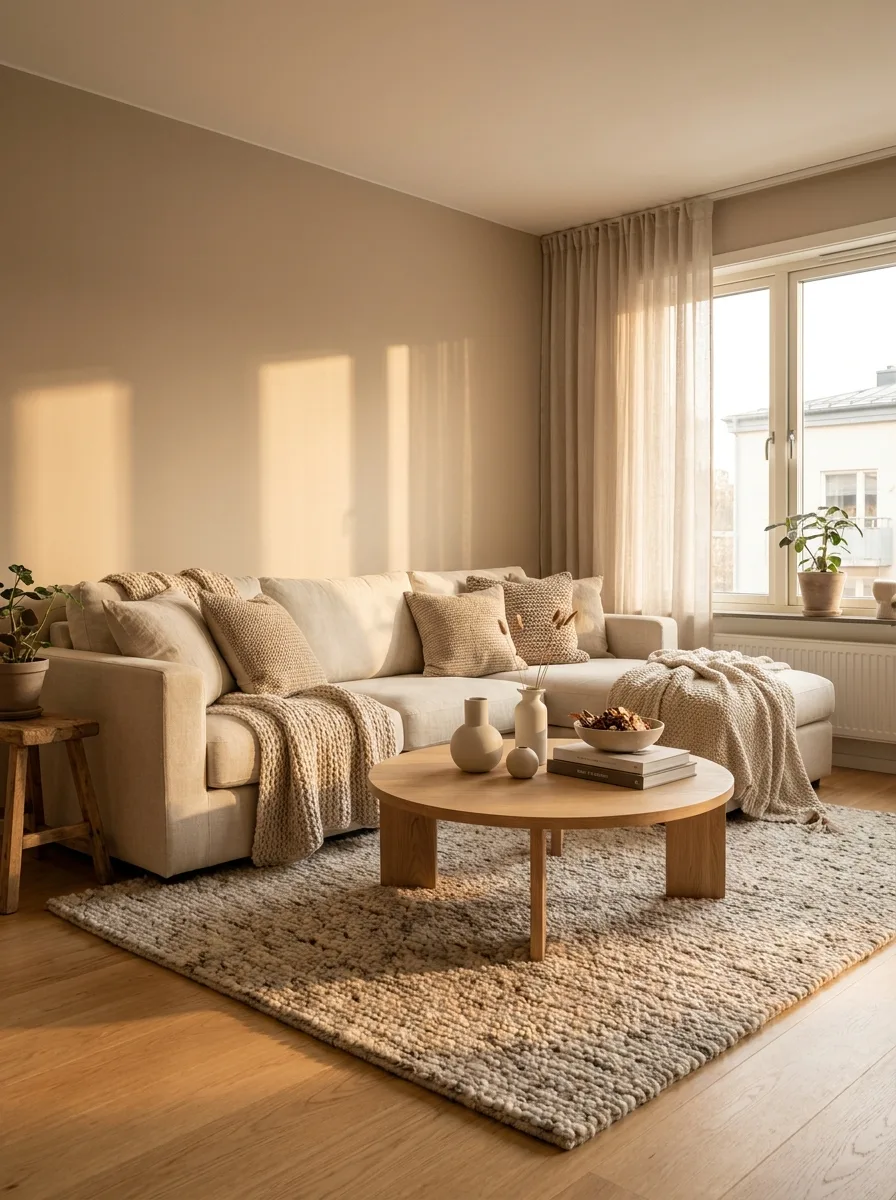
Wall color changes the emotional tone of a room faster than almost anything else. Soft earthy shades help create the peaceful atmosphere people love in modern minimalist homes. In my experience, warmer neutrals feel far more welcoming than stark white walls, especially once natural wood and layered textures are introduced.
These muted tones also work beautifully because they adapt easily throughout the day as lighting changes naturally. Morning sunlight feels soft while evening lamp light becomes especially cozy. That’s why many homeowners recreating a Japandi Living Room choose warm beige, clay, or mushroom tones instead of cooler gray palettes.
The Key: Warm neutral walls create the backdrop that allows every texture and natural material to feel softer and more balanced.
08
Paper Shade Lighting
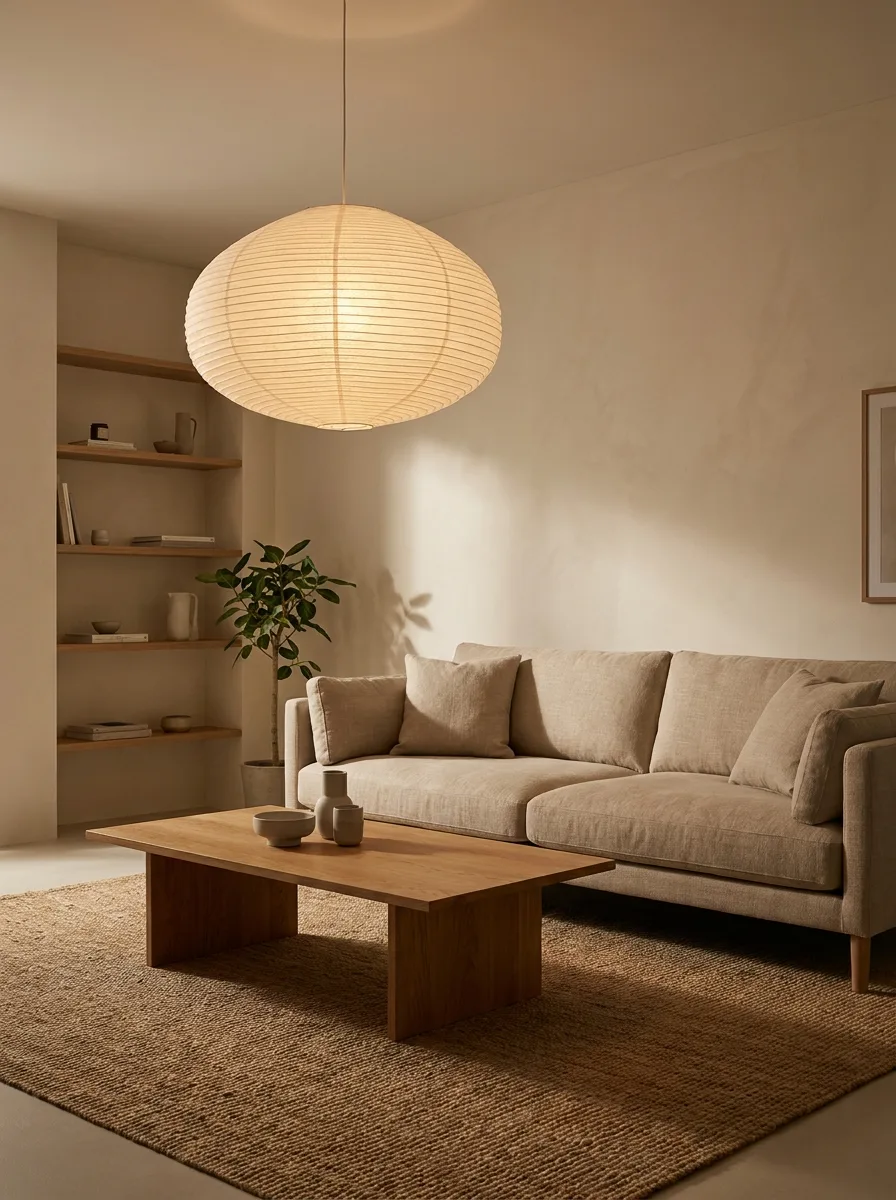
Lighting completely changes how calming a living room feels at night. Harsh overhead bulbs often destroy the soft atmosphere people want in minimalist spaces. I’ve found that paper lanterns and diffused lighting create a gentler glow that immediately makes the room feel warmer and far more inviting after sunset.
This look also works because the fixtures themselves feel light and organic instead of visually heavy. Soft lighting allows natural wood, woven fabrics, and matte finishes to stand out beautifully. That’s why many designers recommend layered warm lighting when creating relaxed interiors inspired by Japanese and Scandinavian design principles.
The Key: Soft lighting creates emotional warmth. Even the most beautiful room feels incomplete if the lighting feels cold or overly bright.
09
Stone And Ceramic Decor
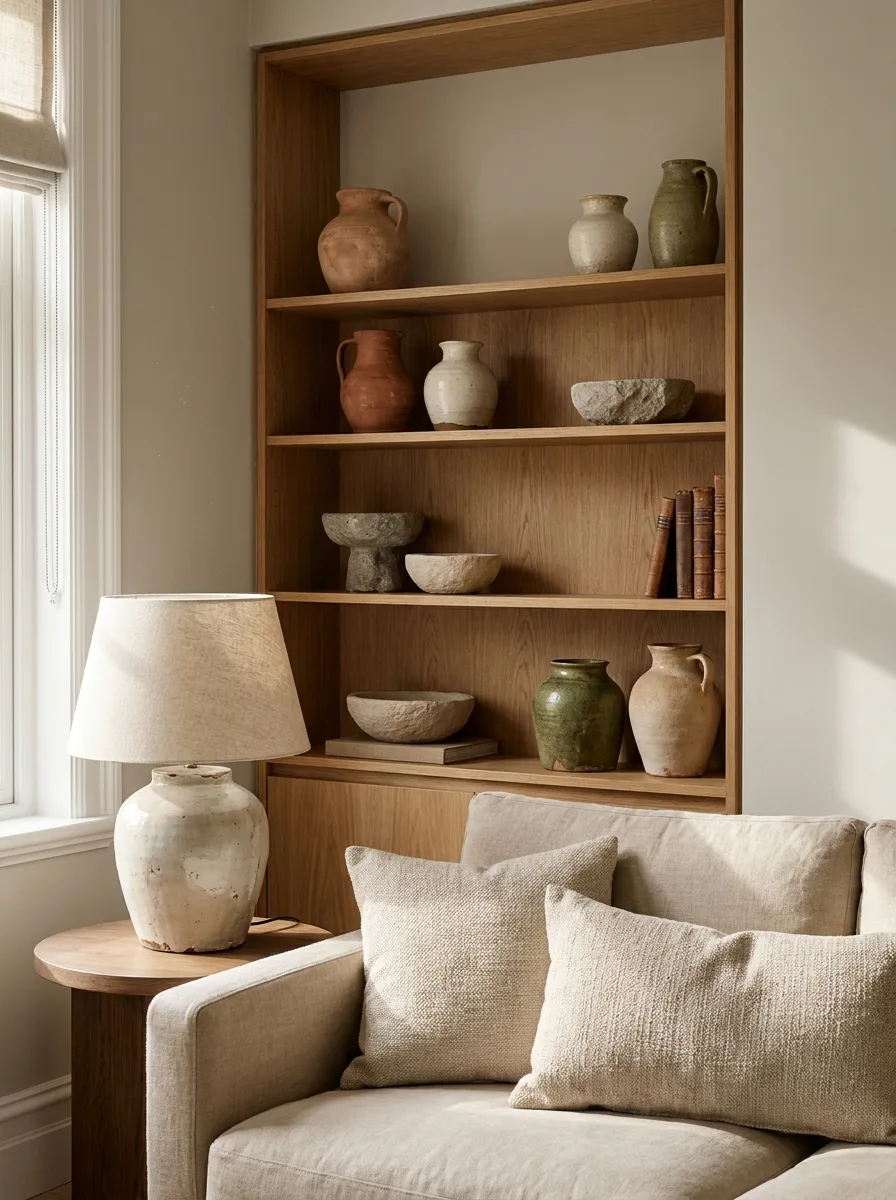
Decor feels far more elevated when the focus stays on texture instead of excessive color or patterns. Handmade ceramics and stone pieces create subtle visual interest while keeping the room calm. I’ve noticed these natural materials instantly make minimalist interiors feel more authentic and thoughtfully collected over time.
This approach also supports the balanced simplicity that defines many Japandi-inspired spaces today. Instead of filling surfaces with trendy accessories, fewer sculptural pieces create a stronger visual impact. That’s why designers often recommend handcrafted decor that feels organic, imperfect, and connected to natural materials found throughout the room.
The Key: Organic imperfections make minimalist spaces feel human. Handmade textures add quiet personality without disrupting the calm atmosphere.
10
Light Wood Flooring
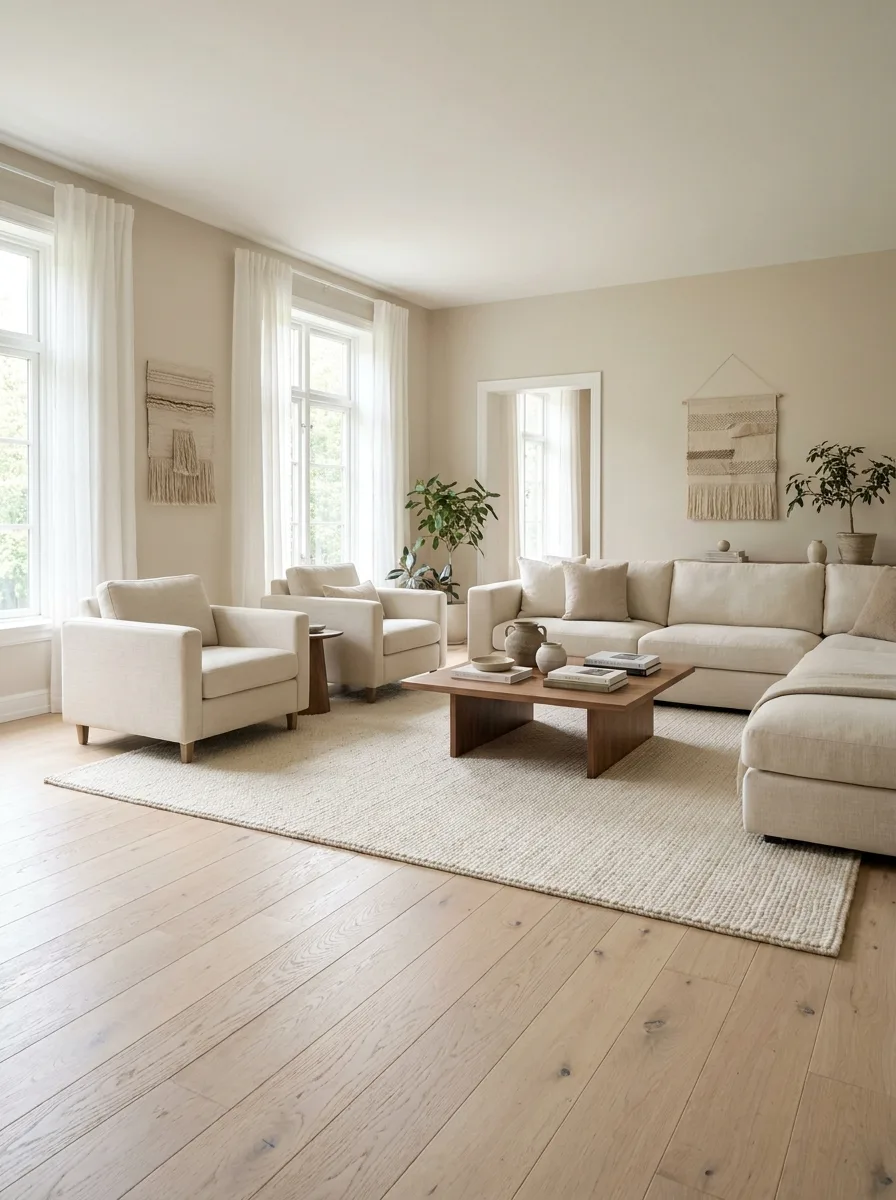
Flooring quietly influences the entire feeling of a home more than most people realize. Light wood creates openness while still feeling warm and natural under soft lighting. In my experience, pale oak flooring works especially well because it supports minimalist styling without making the room feel cold or overly modern.
This design choice also makes furniture, and layered textures stand out more naturally. Warm woods, neutral fabrics, and soft lighting all feel more balanced against lighter floors. That’s why many Japandi Living Room designs rely on pale timber finishes to maintain that calm, airy atmosphere people love saving on Pinterest.
The Key: Flooring sets the visual tone for everything else. Light natural wood instantly creates openness while keeping the space warm and grounded.
11
Curved Coffee Table Styling
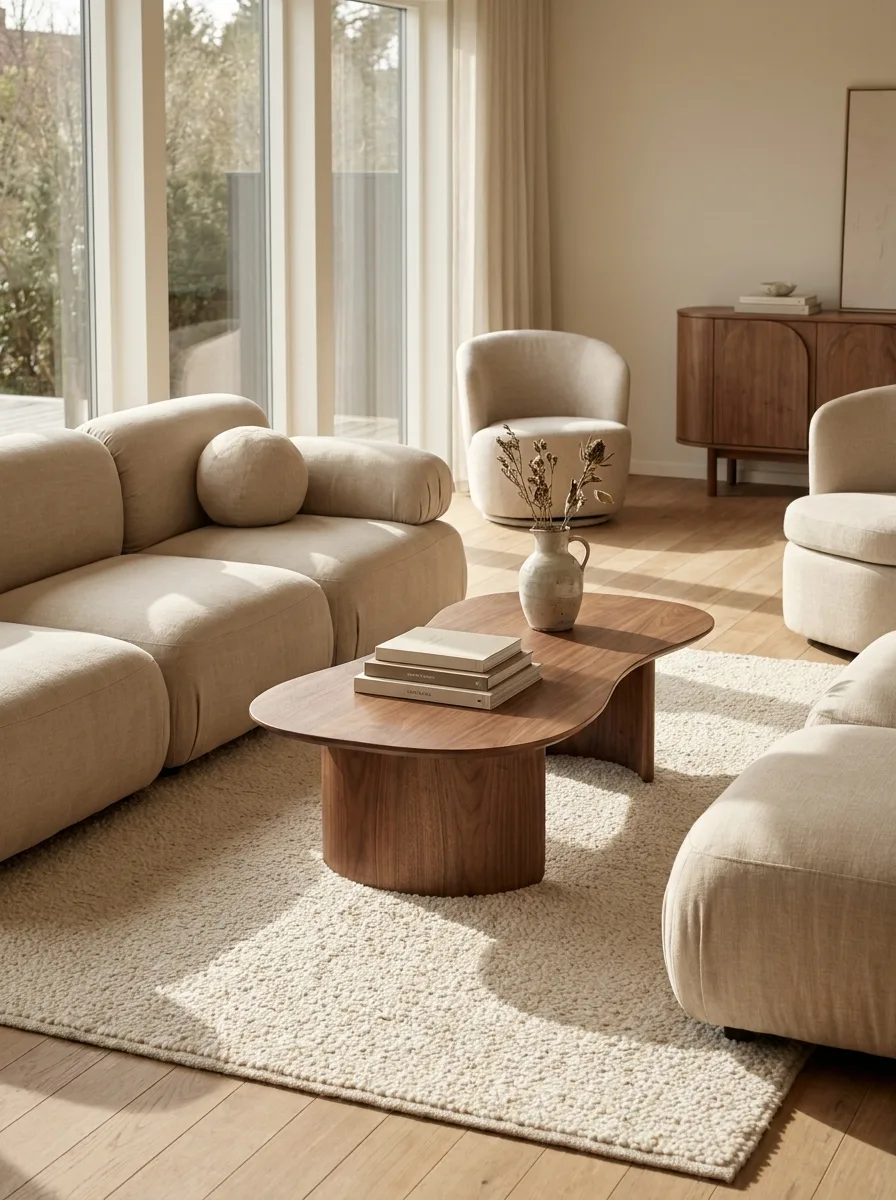
Curved furniture instantly changes how a room feels emotionally. Rounded edges soften modern interiors and help minimalist spaces appear more approachable. I’ve seen this work especially well in living rooms filled with straight lines where one curved coffee table creates enough contrast to make the entire layout feel calmer and more balanced.
This style also improves movement through the room, especially in tighter layouts or family spaces. Softer silhouettes feel less rigid while still maintaining clean design. That’s why many designers now incorporate rounded furniture shapes into Japandi-inspired interiors to add warmth without sacrificing simplicity or visual harmony.
The Key: Curves soften minimalism. One rounded furniture piece can completely balance a room filled with structured lines and neutral tones.
12
Layered Natural Textiles
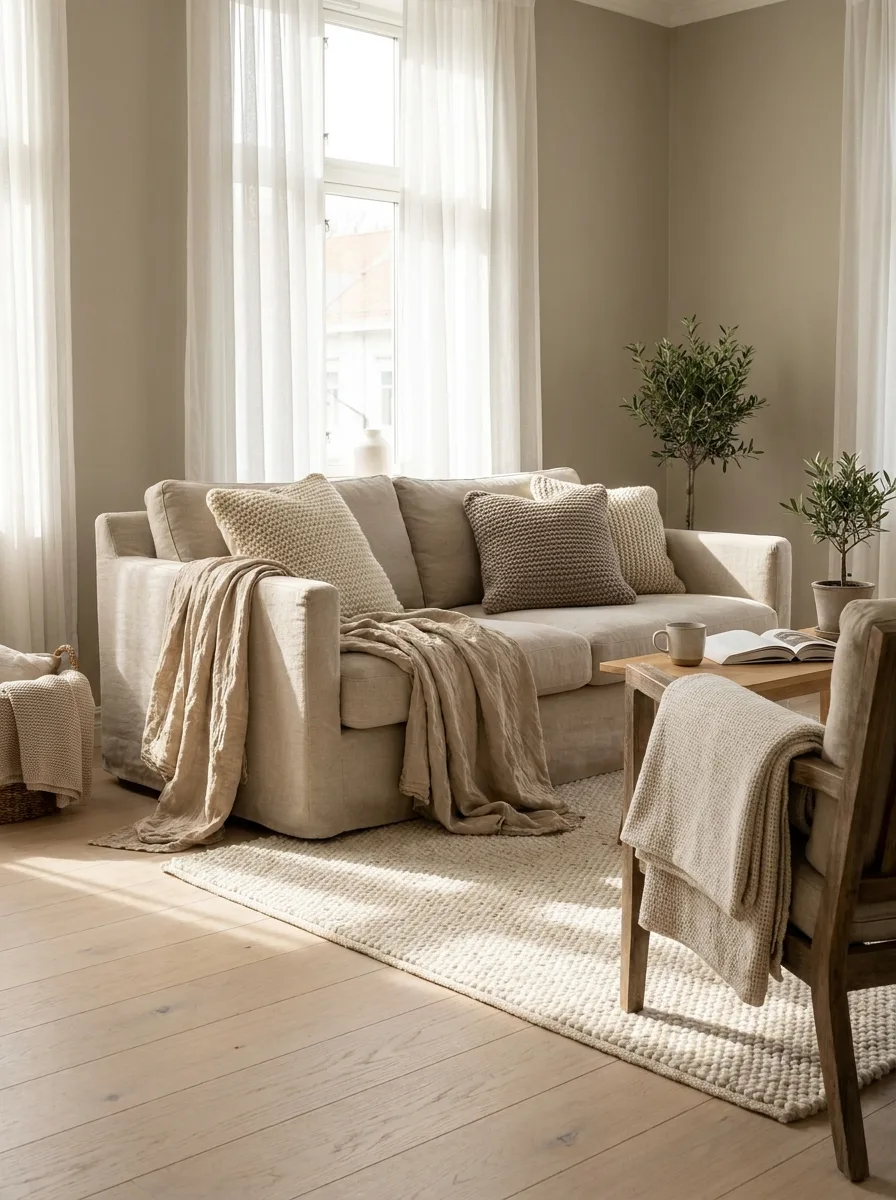
Minimal spaces often depend heavily on texture to avoid feeling flat or unfinished. Layered fabrics create comfort while still keeping the overall design clean and intentional. In my experience, combining linen, wool, and cotton works especially well because each material reflects light differently and adds subtle visual depth naturally.
This approach also makes the room feel far more livable during everyday use. Soft throws and textured cushions encourage relaxation while supporting the calm aesthetic homeowners want. That’s why many designers recommend natural textiles first when creating cozy interiors inspired by Japandi Living Room styling and Scandinavian simplicity.
The Key: Texture creates comfort. Layering soft natural fabrics helps minimalist rooms feel warm, lived-in, and visually complete without excess decoration.
13
Floating Media Console
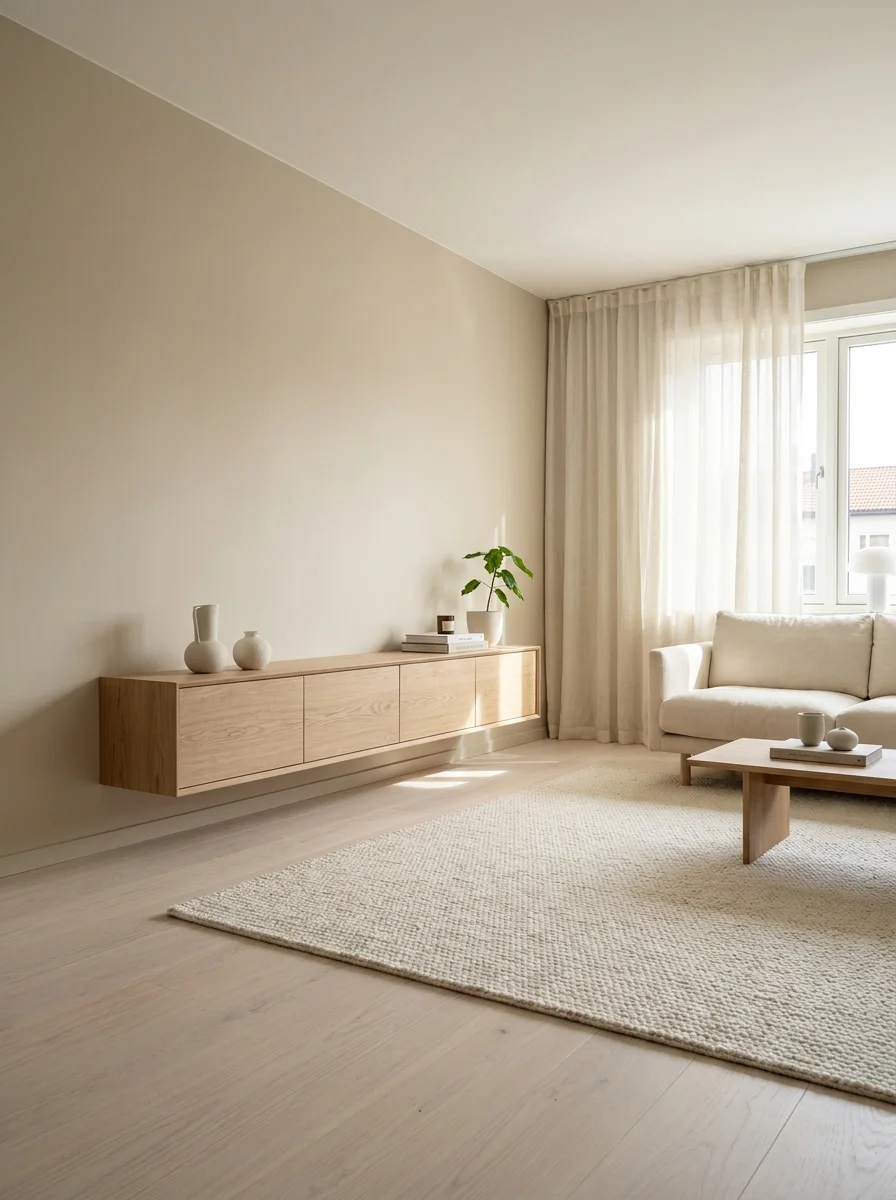
A floating media console creates openness without requiring major renovation or expensive furniture changes. The extra visible floor space immediately helps the room breathe visually. I’ve noticed this works especially well in compact homes where traditional bulky cabinets can quickly make the living area feel crowded and heavy.
This setup also supports the clean simplicity people want in modern interiors today. Hidden storage keeps cables, remotes, and electronics out of sight while maintaining a polished appearance. That’s why many designers recommend floating furniture when creating calming minimalist spaces inspired by Japanese and Scandinavian design principles.
The Key: Visible floor space creates visual openness. Floating furniture keeps minimalist interiors feeling light instead of weighed down by bulky storage.
14
Oversized Window Curtains
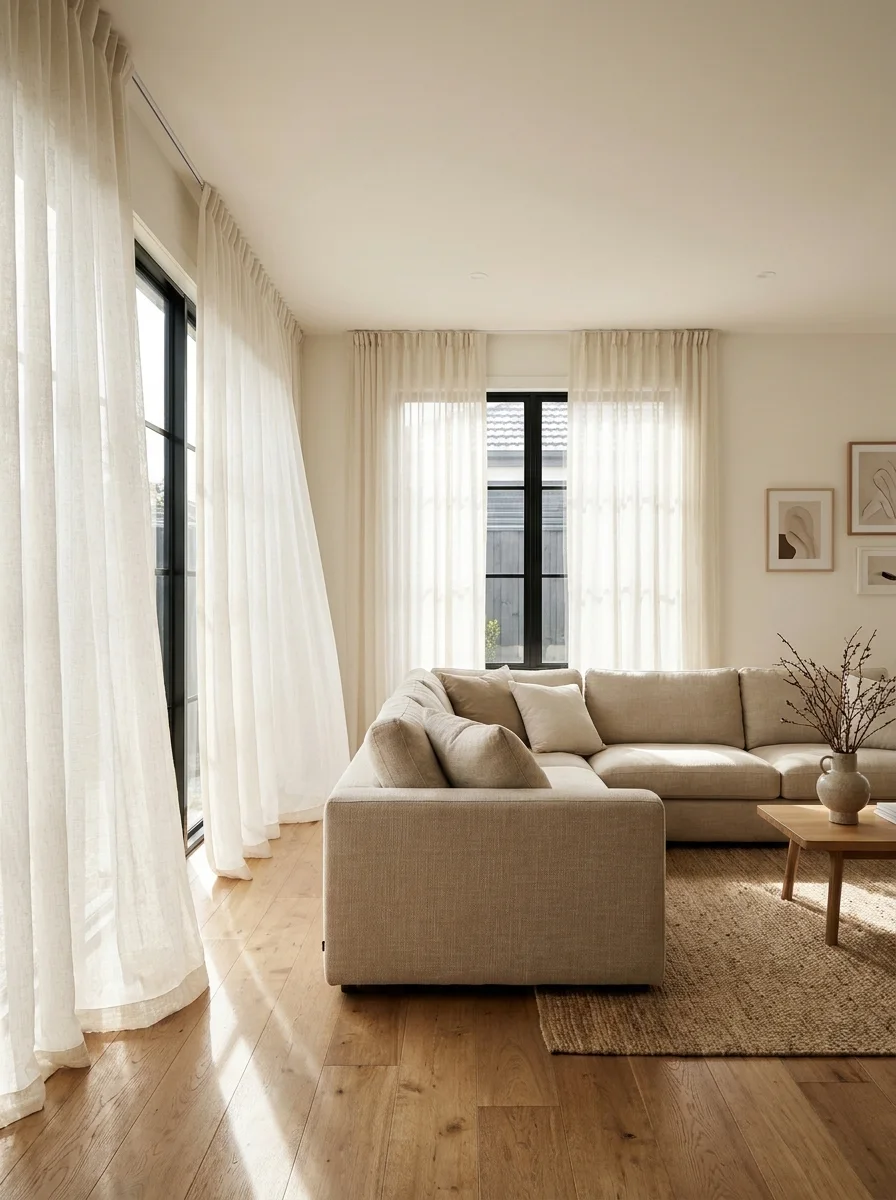
Window treatments often determine whether a living room feels finished or incomplete. Floor-to-ceiling curtains create softness that balances clean furniture lines beautifully. In my experience, sheer linen panels work especially well because they filter sunlight gently while still allowing the room to feel bright and naturally open throughout the day.
This design choice also creates a more elevated visual effect without requiring expensive decor changes. Tall curtains naturally draw the eye upward and make smaller homes feel larger. That’s why many homeowners recreating a Japandi Living Room prioritize airy neutral drapery to enhance both comfort and architectural balance.
The Key: Height changes perception. Full-length curtains instantly create elegance while making the room feel larger, softer, and more visually balanced.
15
Muted Olive Accents
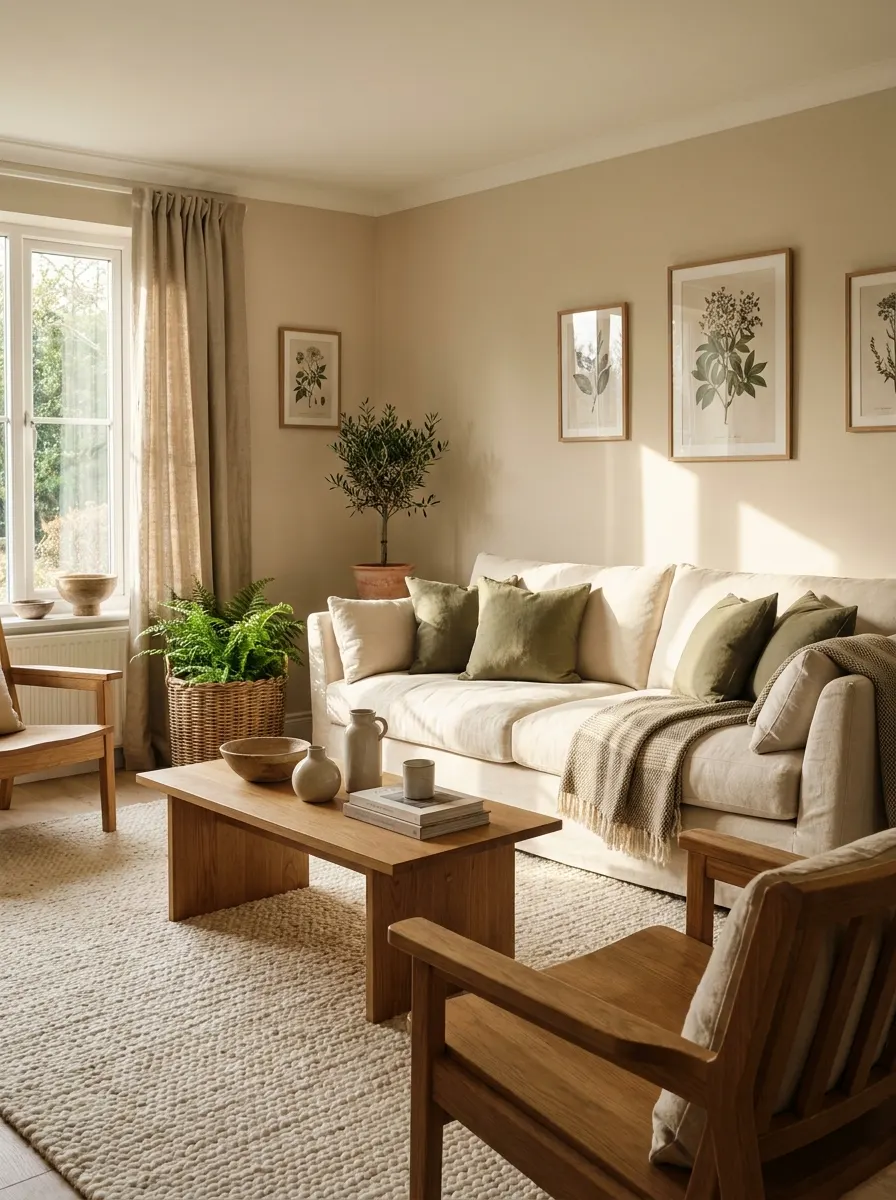
Adding color to a minimalist room can feel intimidating, especially when trying to maintain a calm atmosphere. Muted olive accents solve that problem beautifully because they feel organic rather than overpowering. I’ve seen this work well in many homes where homeowners wanted more warmth without introducing bright or trendy colors.
These soft green tones also connect naturally with wood, stone, and woven materials already common in Japandi-inspired spaces. The result feels balanced and timeless instead of heavily decorated. That’s why many designers recommend earthy greens as one of the safest ways to introduce subtle personality into minimalist interiors.
The Key: Muted olive tones add life without visual chaos. Soft earthy color keeps neutral interiors feeling calm, natural, and timeless.
16
Balanced Empty Space
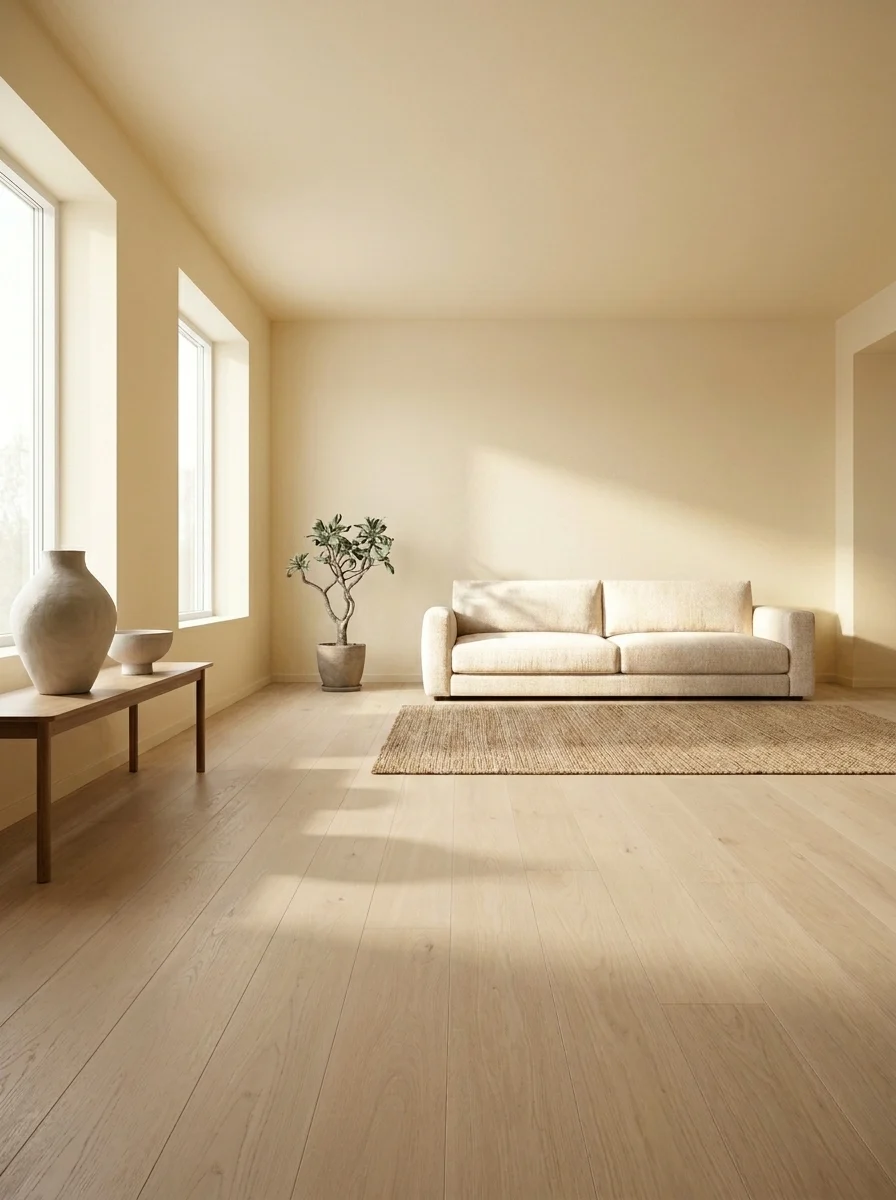
One of the biggest mistakes people make is trying to fill every corner of the room. Balanced empty space creates calm by giving the eye room to rest naturally. In my experience, removing even one unnecessary piece of furniture can dramatically improve how open and peaceful a living room feels immediately.
This approach also allows beautiful materials and textures to become the focus instead of visual clutter. Minimalist interiors feel most luxurious when they appear intentional rather than overly decorated. That’s why many designers recommend editing the room carefully instead of continuously adding more accessories or furniture pieces.
The Key: Empty space is part of the design. Rooms feel calmer when every object has breathing room around it visually.
17
Neutral Wall Art
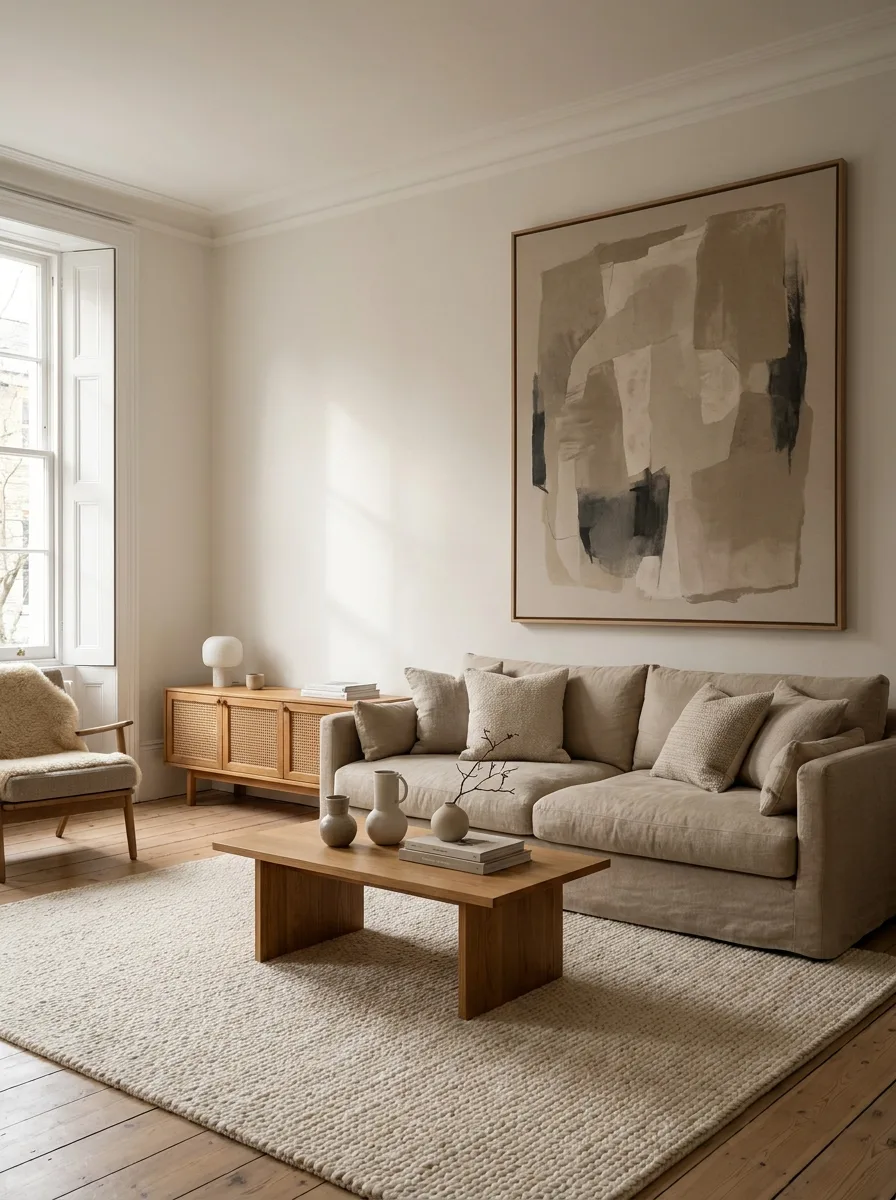
Wall art can easily disrupt a calming room if the colors or patterns feel too intense. Neutral artwork works beautifully because it adds softness and visual interest without stealing attention from the overall design. I’ve found oversized abstract pieces especially effective in minimalist spaces that need subtle personality.
This styling approach also keeps the room feeling timeless instead of trend-focused. Soft shapes and earthy colors support the peaceful atmosphere homeowners want while still making the space feel thoughtfully finished. That’s why many Japandi-inspired interiors use minimal artwork with muted tones and simple framing details.
The Key: Art should support the atmosphere, not dominate it. Neutral pieces create calm visual texture while maintaining the room’s soft balanced feeling.
18
Warm Ambient Corners
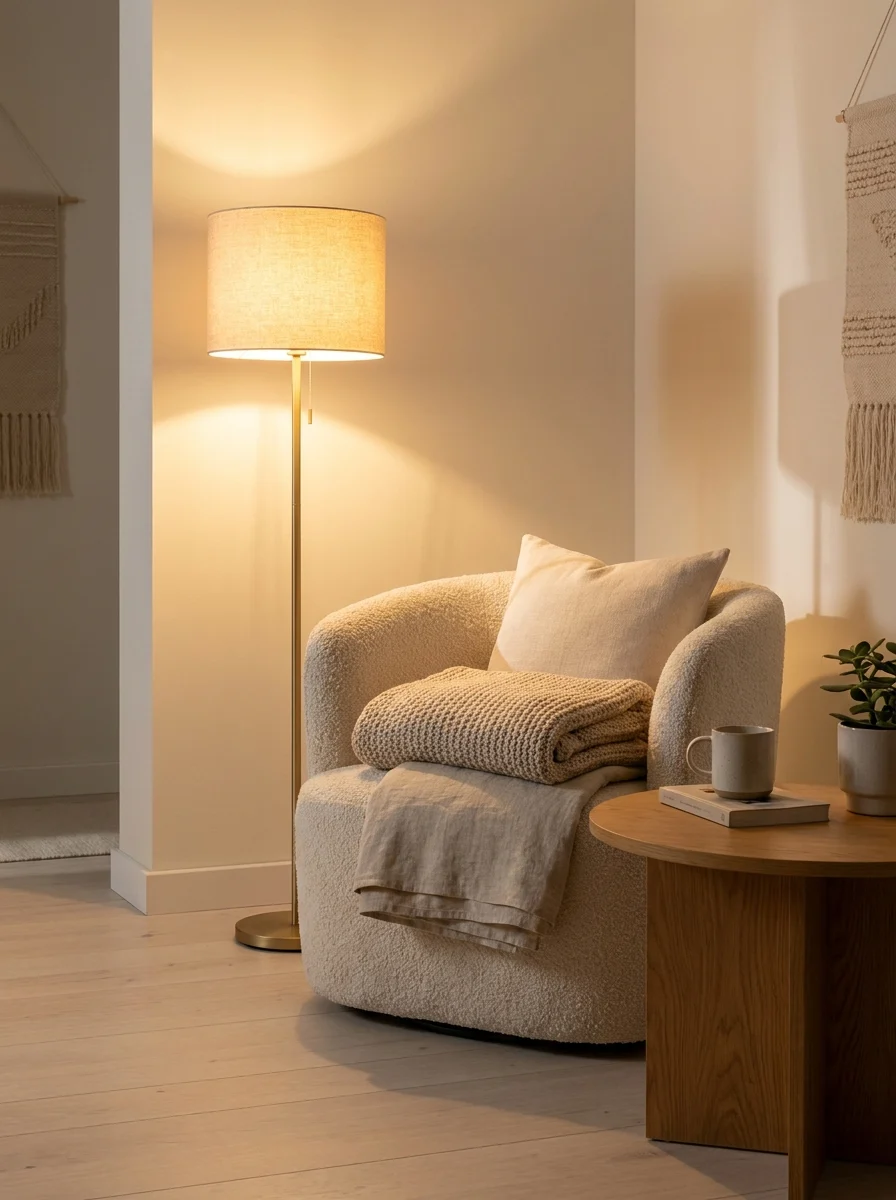
A living room should feel just as inviting at night as it does during the day. Warm ambient corners help create that cozy evening atmosphere without requiring major design changes. I’ve noticed even one soft floor lamp beside a textured chair can completely transform how relaxing the entire space feels after sunset.
These smaller zones also make open living areas feel more personal and functional. Instead of relying only on overhead lighting, layered warm lamps create depth and softness throughout the room. That’s why many designers recommend building quiet lighting moments into minimalist interiors instead of leaving corners visually empty.
The Key: Lighting creates emotional comfort. A softly illuminated corner instantly makes minimalist spaces feel warmer and more liveable every evening.
19
Slim Wood Slat Walls
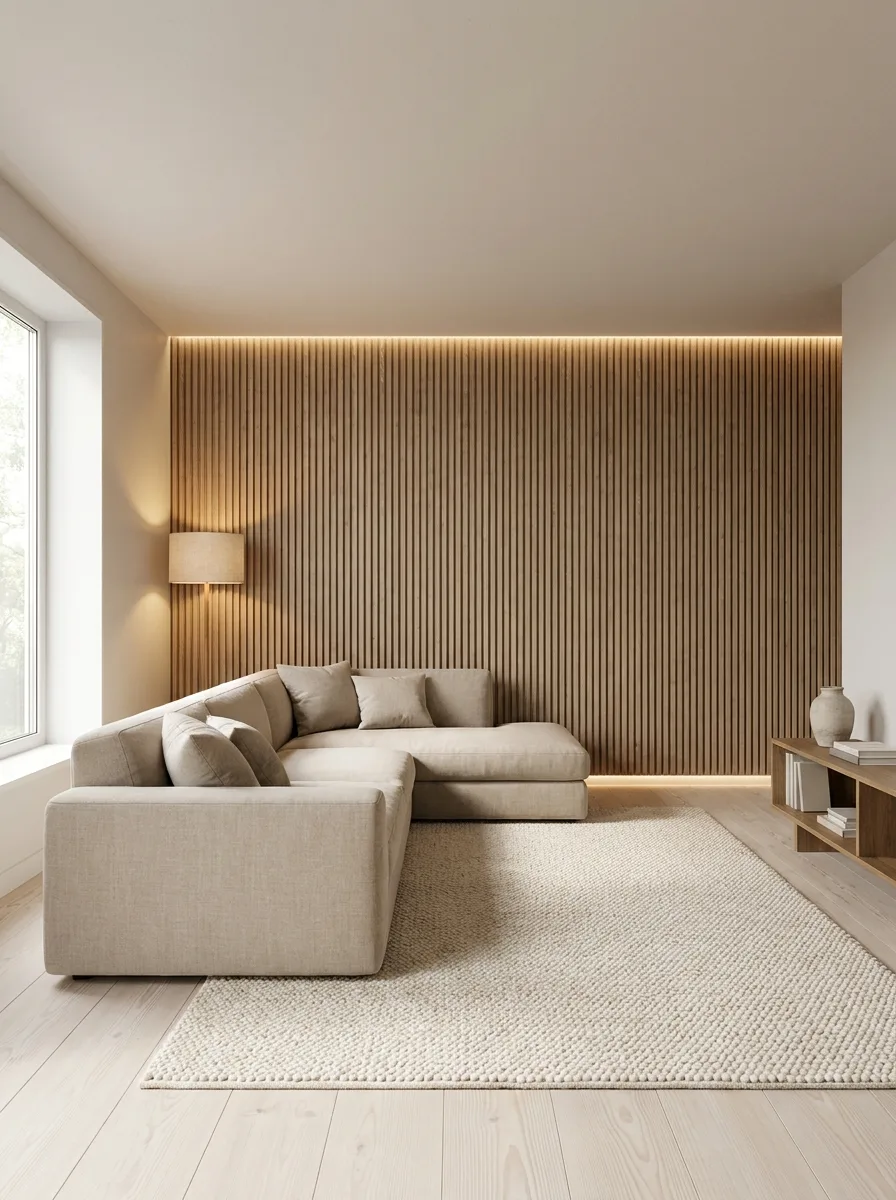
Architectural texture often creates a stronger impact than adding more decorative accessories. Slim wood slat walls introduce warmth and dimension while keeping the room visually calm. In my experience, this detail works especially well behind sofas or media units where the room needs a subtle focal point without clutter.
The vertical lines also help create a cleaner and more polished appearance overall. Instead of relying on bold color or artwork, the natural wood texture becomes part of the design itself. That’s why many modern Japandi-inspired interiors incorporate slatted wood details to add quiet depth and refined simplicity.
The Key: Architectural texture creates interest without clutter. Slim wood slats add warmth and structure while preserving the room’s calm minimalist atmosphere.
20
Stone Coffee Table Contrast
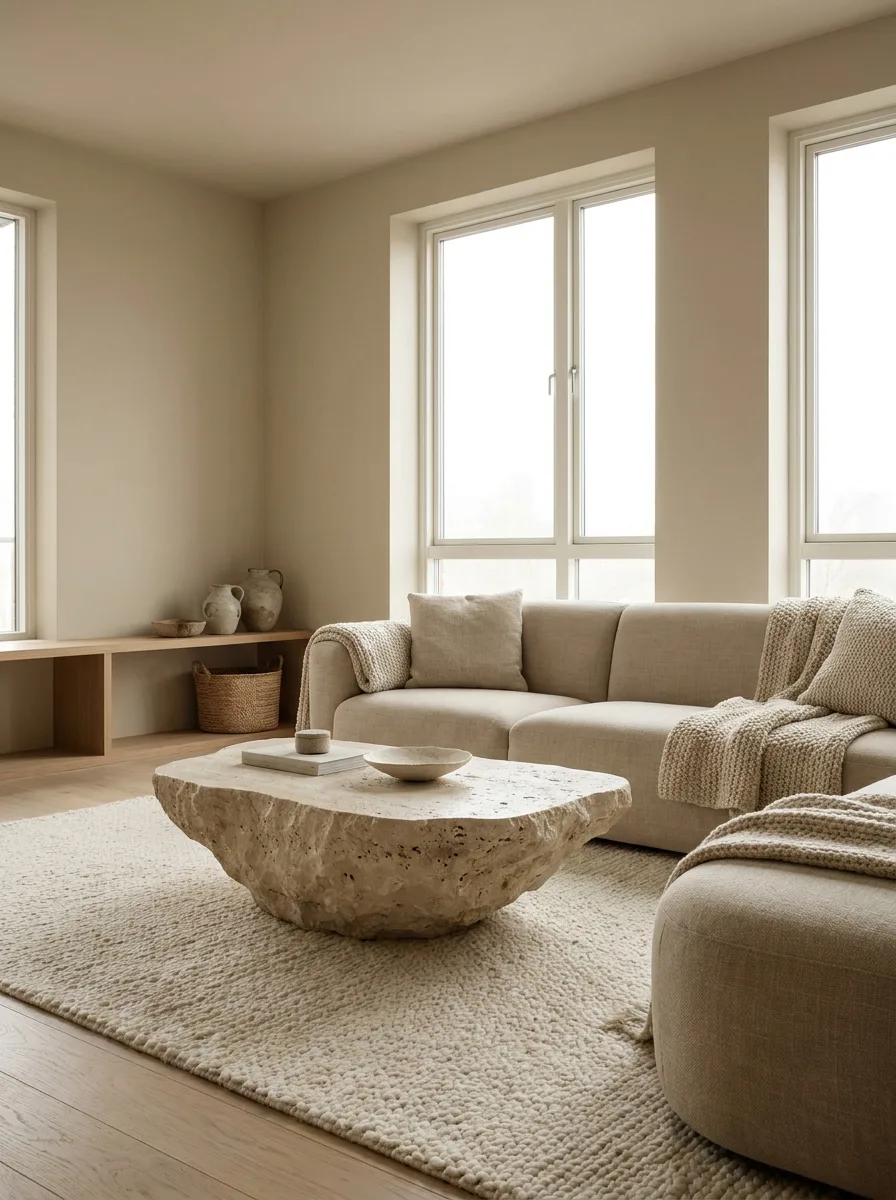
Soft interiors benefit from a little contrast, especially when everything feels visually similar in tone or texture. A stone coffee table introduces structure while still feeling organic and calm. I’ve seen this work beautifully in neutral spaces where one sculptural piece creates balance without overpowering the relaxed atmosphere.
Natural stone also supports the earthy layered feeling homeowners love in modern minimalist homes. The raw texture feels timeless and grounded against softer fabrics and warm wood finishes. That’s why many designers mix smooth linens with heavier stone elements to create more visual depth inside Japandi-inspired living rooms.
The Key: Contrast creates balance. Stone surfaces bring grounding texture that prevents soft neutral rooms from feeling overly delicate or flat.
21
Indoor Olive Tree Styling
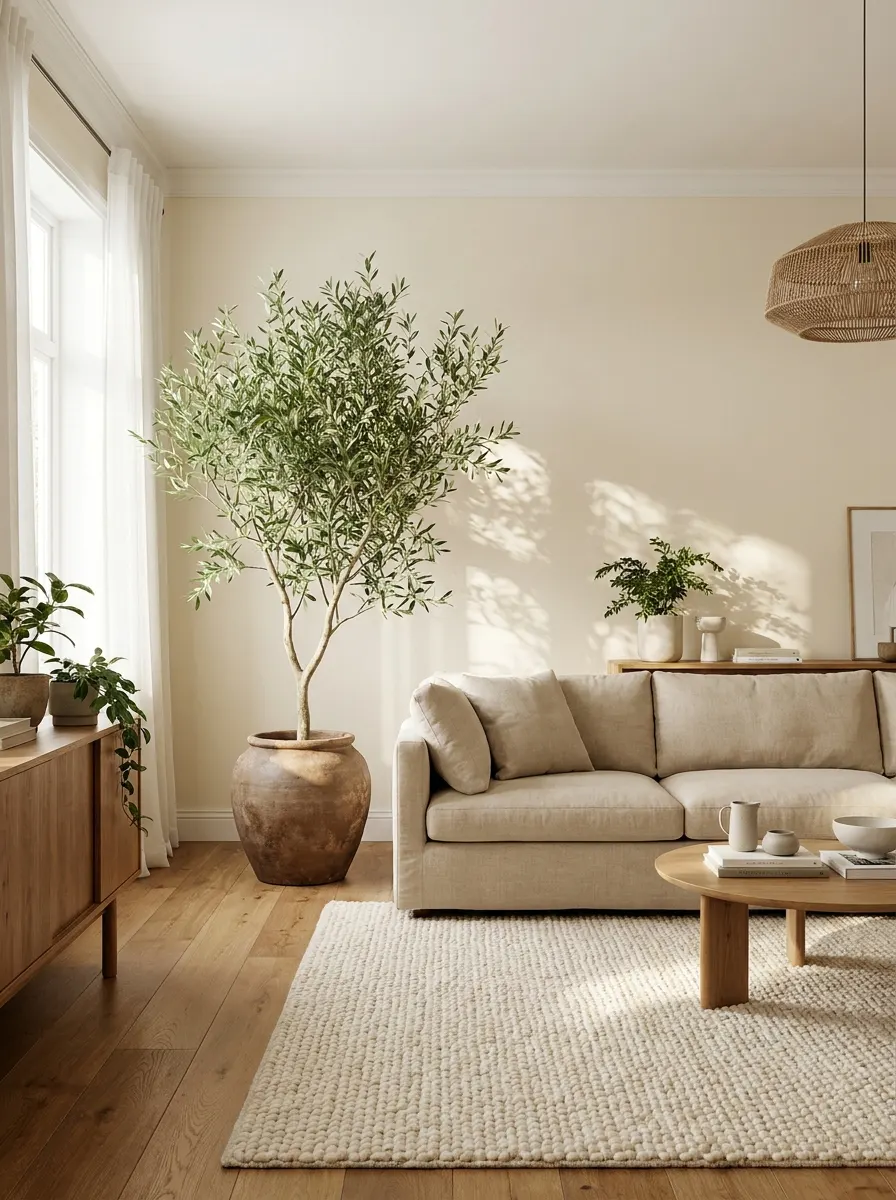
Minimalist rooms sometimes need something organic to keep the space feeling fresh and inviting. An olive tree works beautifully because it adds softness and natural color without overwhelming the calm palette. In my experience, this single addition often makes the entire living room feel more complete instantly.
The delicate branches also introduce movement and texture that balances clean furniture lines naturally. Unlike oversized tropical plants, olive trees feel subtle and timeless in neutral interiors. That’s why many designers recommend them for Japandi-inspired spaces where greenery should support the atmosphere instead of becoming the main focus.
The Key: Greenery should feel subtle and integrated. An olive tree adds life while maintaining the soft balanced feeling minimalist spaces require.
22
Deep Seat Lounge Layout
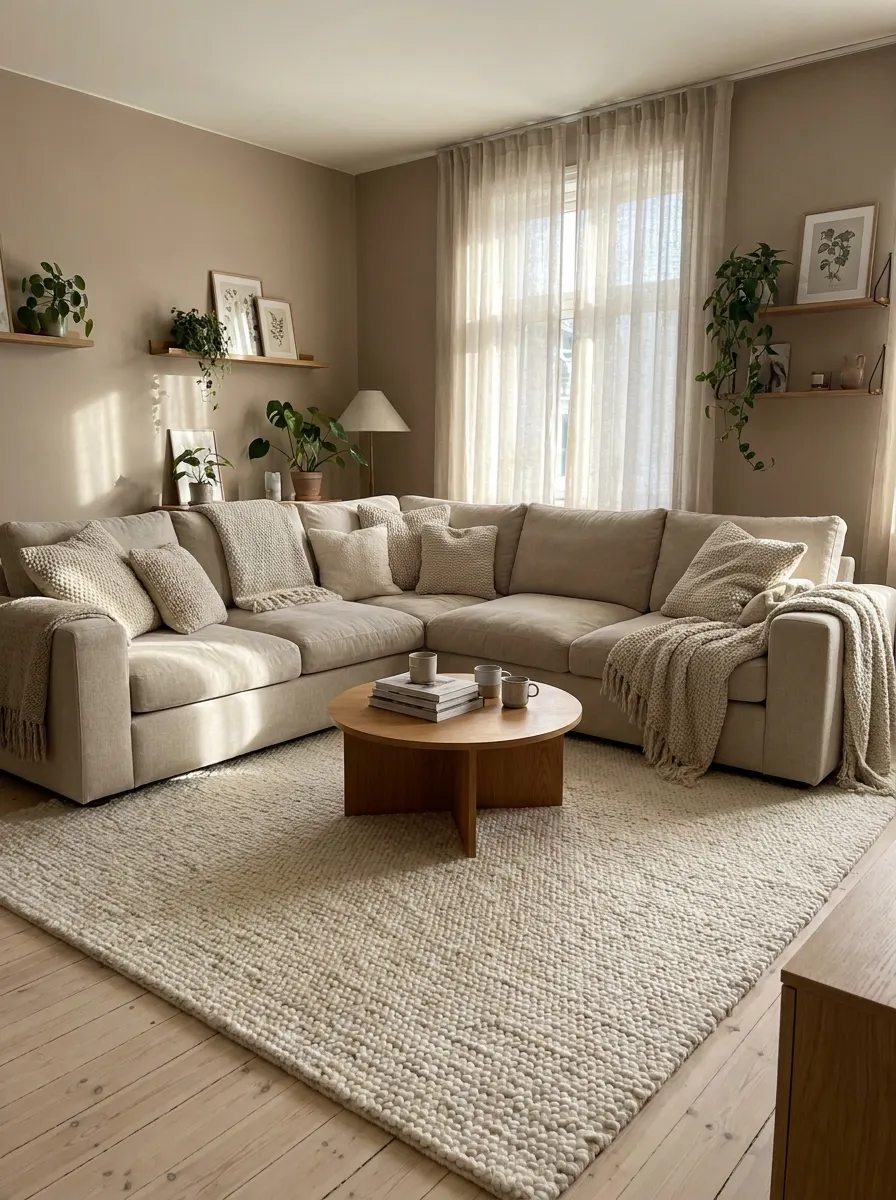
Minimalist design should still feel comfortable enough for real everyday living. Deep seating helps create that balance by making the room feel relaxed instead of overly formal. I’ve noticed homeowners spend far more time using living spaces that feel soft, inviting, and genuinely comfortable during daily routines.
This style also supports the calm atmosphere people want without requiring excessive decoration. Oversized seating naturally fills the room with warmth through proportion and texture alone. That’s why many designers recommend lounge-style furniture when creating Japandi-inspired interiors that prioritize both visual simplicity and practical comfort.
The Key: Comfort matters visually too. Deep relaxed seating helps minimalist rooms feel welcoming instead of cold or overly styled.
23
Mixed Wood Tone Balance
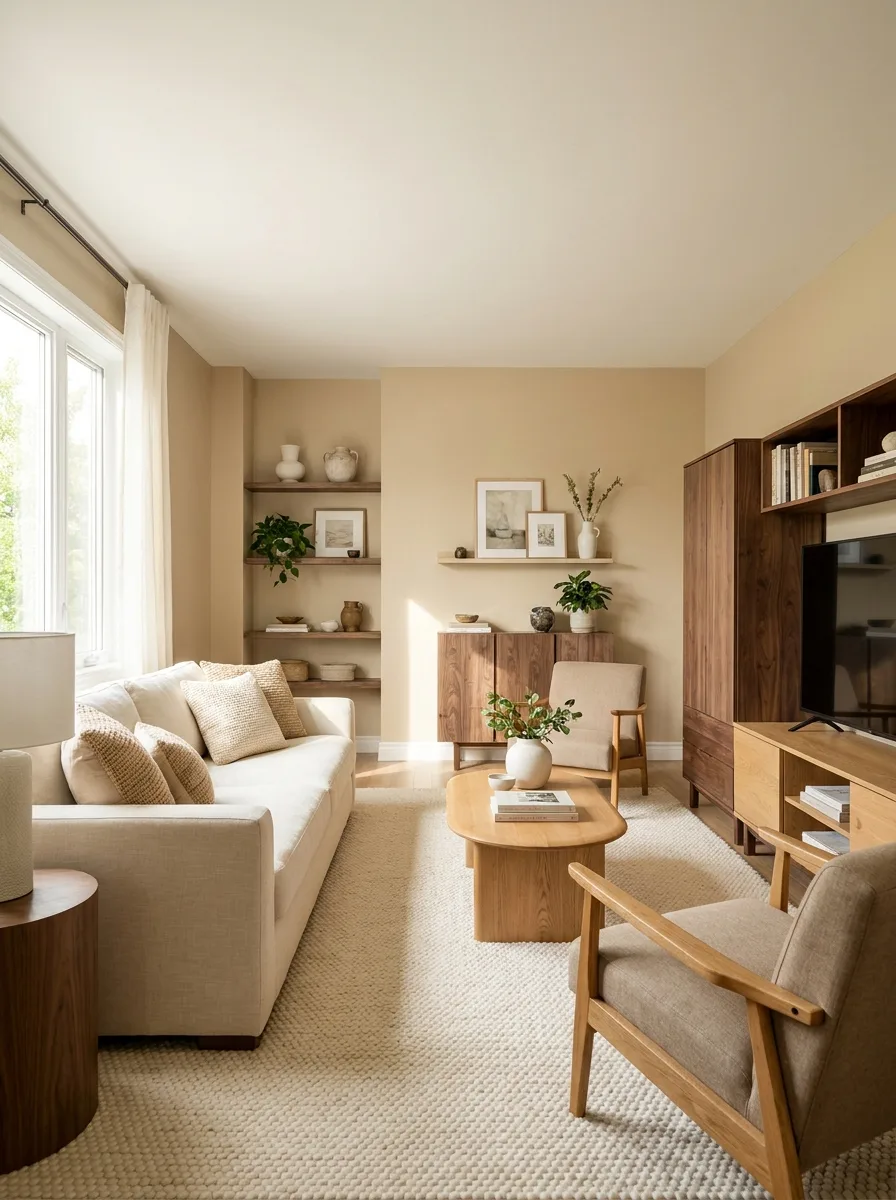
Perfectly matching every wood finish can sometimes make a room feel overly staged or unnatural. Mixing tones creates a softer layered look that feels more relaxed and authentic. In my experience, combining light oak with warmer walnut works especially well because the contrast remains subtle and calming.
This approach also makes minimalist interiors feel more personal and lived-in over time. Different finishes add depth while still supporting the neutral palette beautifully. That’s why many designers recommend thoughtfully layered wood tones instead of trying to coordinate every furniture piece exactly the same way.
The Key: Slight variation creates warmth. Mixed wood finishes help minimalist rooms feel natural, layered, and professionally styled without looking forced.
24
Built-In Bench Seating
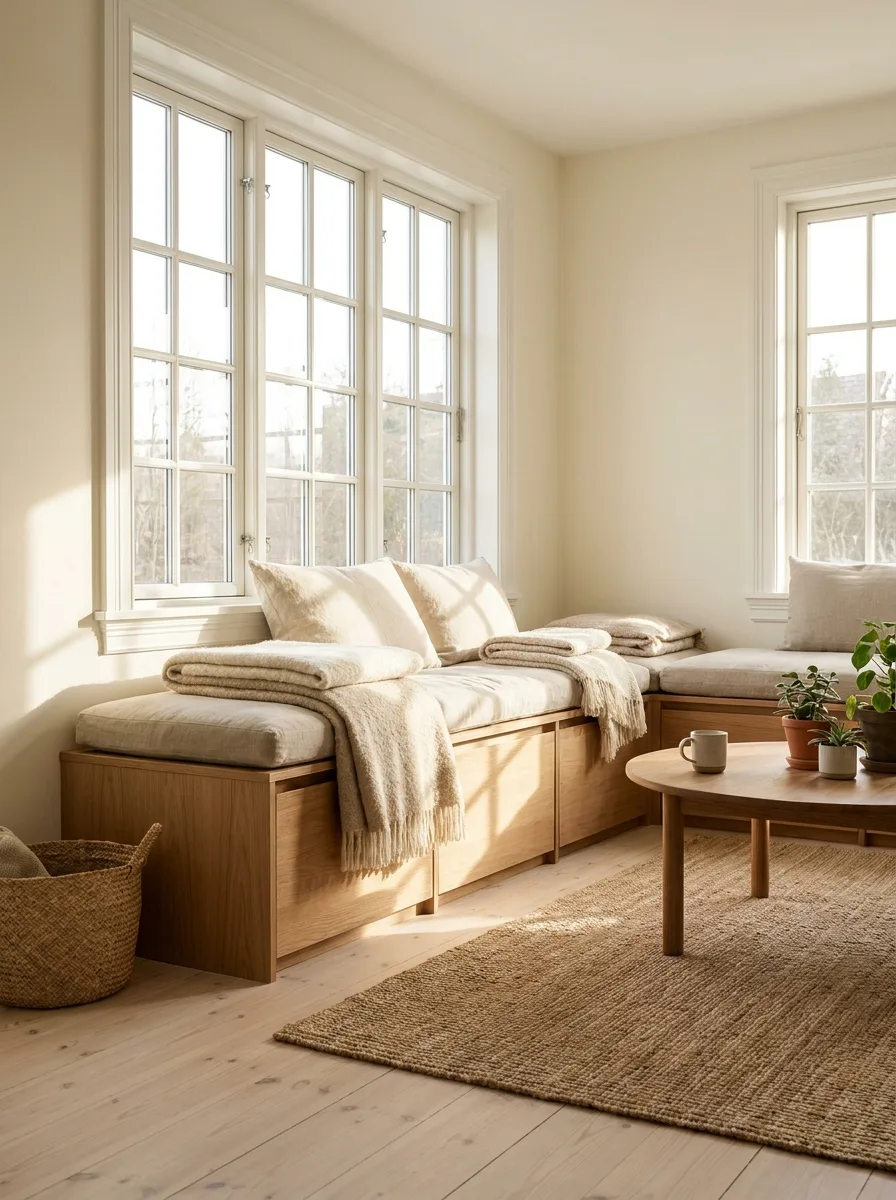
Built-in seating creates a custom designer look while also improving functionality inside smaller living rooms. Instead of adding bulky extra chairs, integrated benches keep the space visually open and organized. I’ve seen this work especially well beneath windows where natural light helps create a calm and inviting reading corner.
This setup also encourages a more intentional furniture layout overall. The clean architectural lines support minimalist styling while layered cushions add warmth and softness. That’s why many homeowners drawn to Japandi-inspired interiors love built-in seating for its balance of practicality, simplicity, and cozy visual appeal.
The Key: Integrated furniture creates calm flow. Built-in seating saves space while making the room feel custom, intentional, and beautifully balanced.
25
Hidden Storage Styling
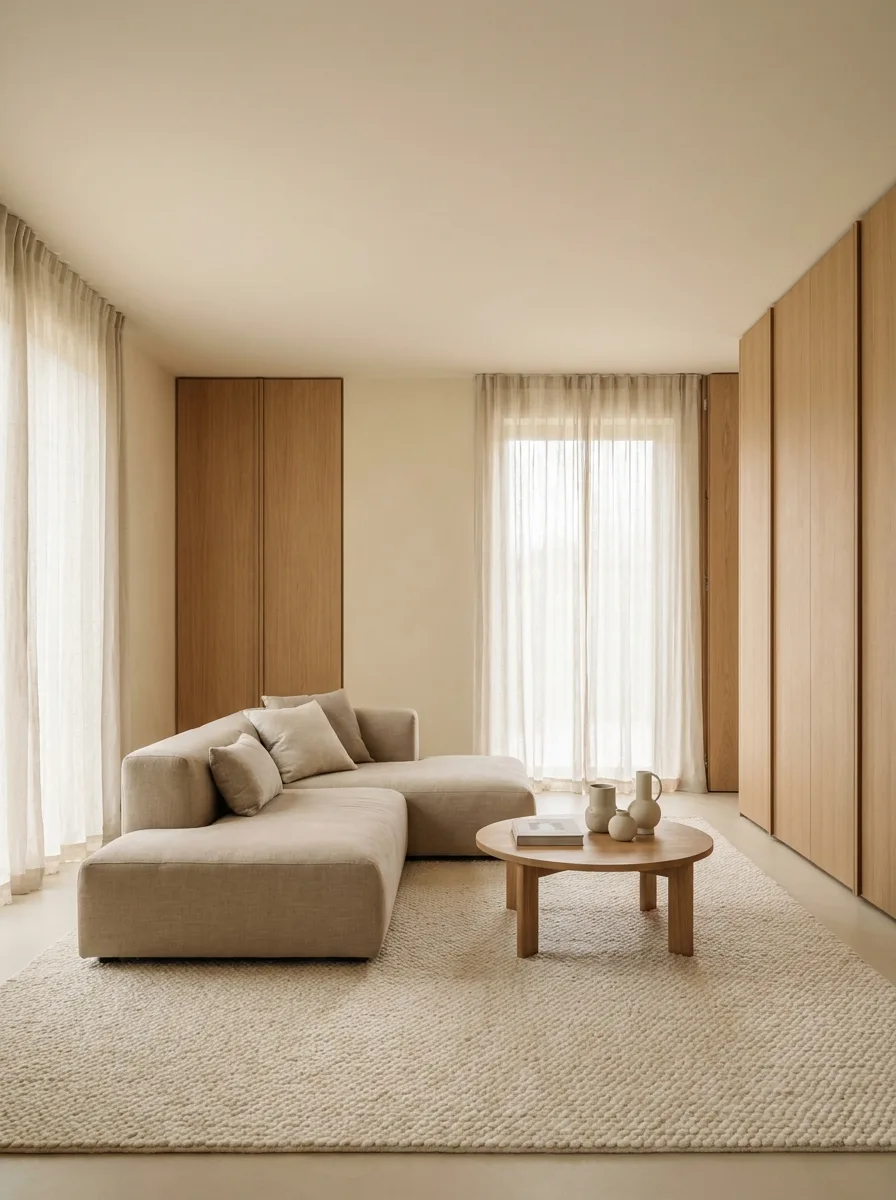
Clutter quickly disrupts the calm feeling minimalist interiors are designed to create. Hidden storage helps maintain visual balance without sacrificing practicality for everyday life. In my experience, rooms instantly feel lighter and more peaceful once smaller items, electronics, and unnecessary accessories are stored completely out of sight.
This approach also allows the focus to stay on textures, lighting, and natural materials instead of visual distractions. Clean surfaces create a stronger sense of simplicity and calm throughout the room. That’s why many designers prioritize concealed storage solutions when building Japandi-inspired living spaces that feel both functional and beautifully organized.
The Key: Calm interiors depend on visual simplicity. Hidden storage protects the peaceful atmosphere while still supporting real daily living needs.
Creating a calmer home does not always require a complete renovation or expensive furniture upgrades. Small changes like softer lighting, layered textures, warm wood finishes, and thoughtful storage can completely transform how a space feels every single day. I’ve seen how even one simple update can make a living room feel more peaceful, welcoming, and visually balanced.
These Japandi Living Room ideas are designed to help you create a space that feels beautiful, functional, and genuinely comfortable to live in. Save your favourite ideas to Pinterest for future inspiration, try a few changes in your own home, and share this article with someone ready to create a calmer and more intentional space.